Round Trip Heart (ロマンス, Yuki Tanada, 2015)

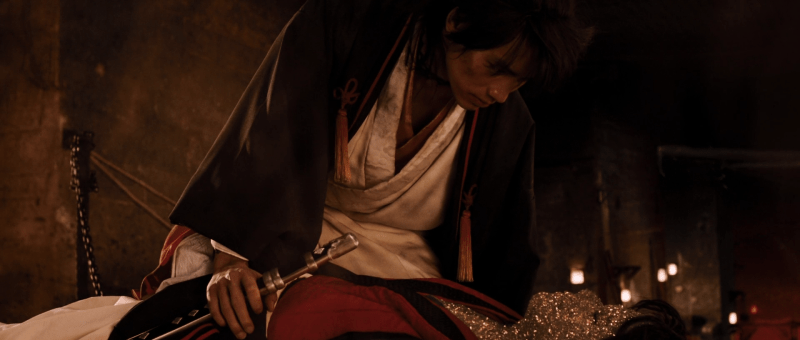
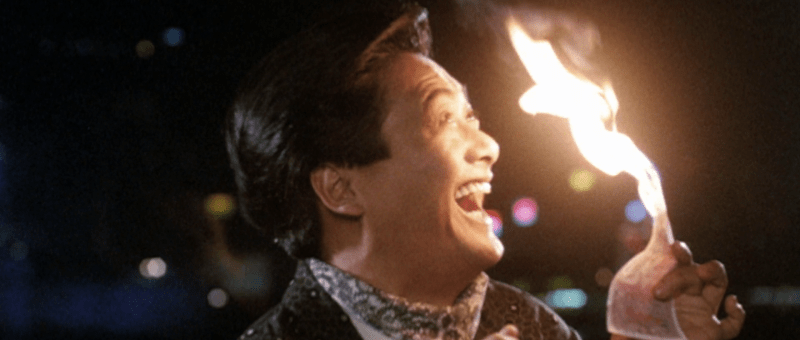
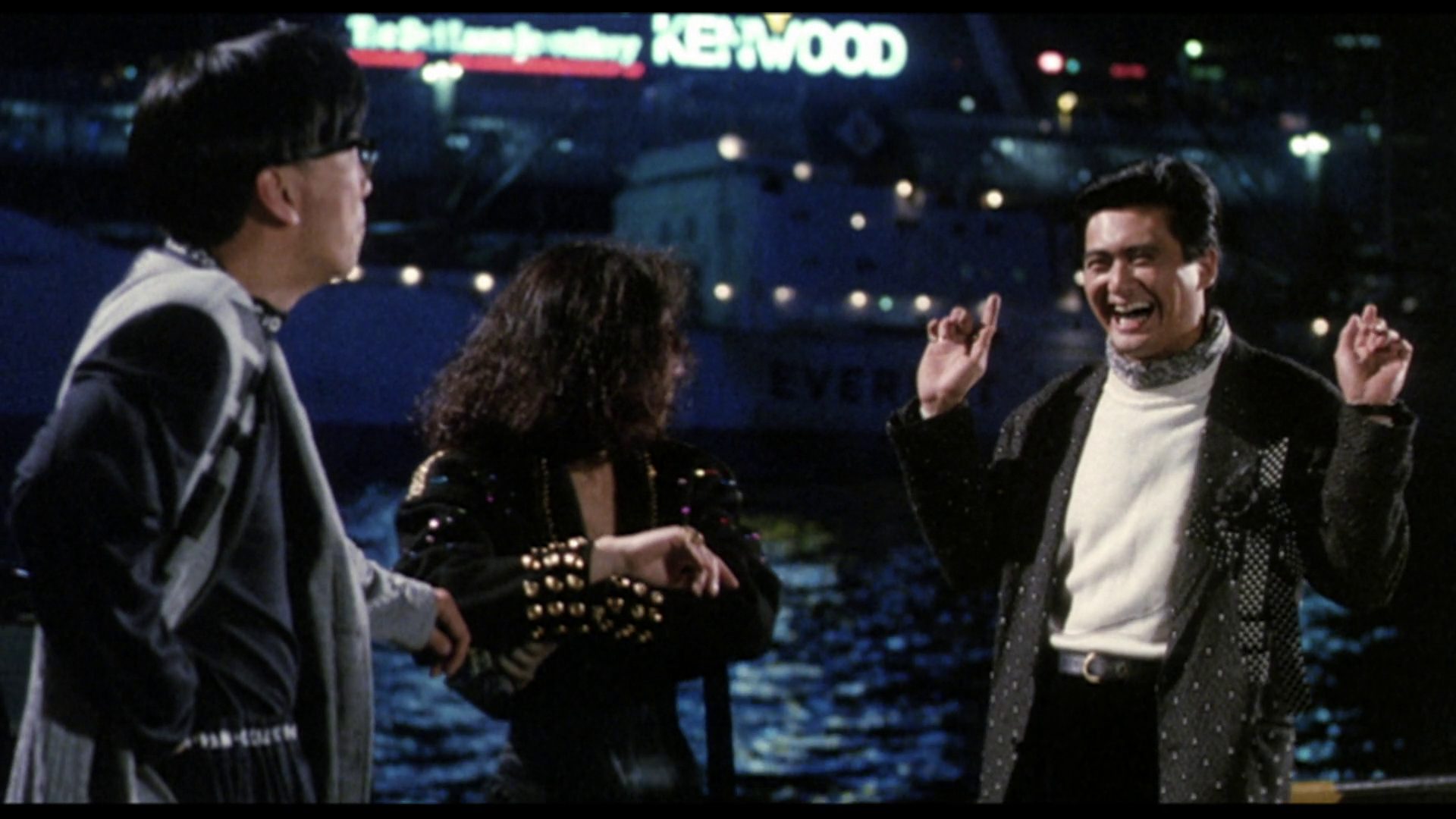
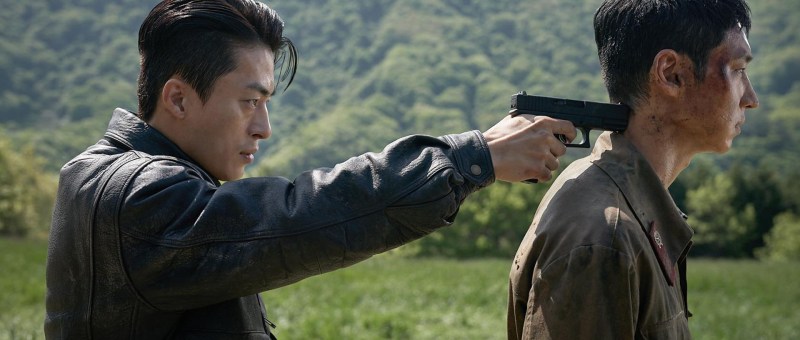
“Somewhere in Japan, there’s someone waiting for me” sing the heroes of Yuki Tanada’s Round Trip Heart (ロマンス, Romance), each a little lost and unwilling to go home looking for something but also afraid to find it. In any case, they can only begin by stepping off the rails and taking a detour through their shared sense of loneliness bonding as they look for new directions and an accommodation with a disappointing reality. 

Ironically enough, Hachiko (Yuko Oshima) is a top operator of the refreshment cart aboard the Romance Car heading from Tokyo to the country by train. Hachiko claims to love trains because of their sense of certainty. After all they travel on rails, have a clear destination, and will definitely return after reaching the end of their journeys. She meanwhile feels a little lost and empty in her life of forced politeness with a feckless boyfriend who asks her for money before she heads off to work. An unexpected letter from her estranged mother, Yoriko (Megumi Nishimuta), and a strange encounter with a weird old man who tries to steal a packet of biscuits however force her change course, getting off the train and heading back into the past. 

Sakuraba (Koji Ookura), the biscuit pilferer, is a 45-year-old failed film producer on the run from the police and myriad loansharks. His sense of loneliness mirrors Hachiko’s own in that he is divorced with a 9-year-old daughter he hasn’t seen in two years and lifetime’s worth of regrets. Hachiko becomes for him a kind of surrogate daughter as he inappropriately reassembles the torn up letter and convinces Hachiko that it implies her mother may attempt to take her own life suggesting that they journey to the place it mentions, Hakone, where the family once spent a pleasant holiday. 

Familial breakdown is reason for their shared sense of displacement yet Hachiko has projected all of her resentment onto her mother who never got over her father’s decision to leave while Sakuraba fears that his daughter has grown to hate him and harbours a secret desire to restore his family but is too consumed with shame to approach them. By going to Hakone in search of her mother, Hachiko begins to reevaluate her childhood memories perhaps understanding a little more of her mother from the perspective of a grown woman rather than that of a small child who had sometimes felt left out by her parents’ closeness while they were together and rejected by her mother’s need for romantic validation once her father had left. In one particular scene we see Yoriko wearing dark glasses with what looks like a bruise over her eye while taking Hachiko to a restaurant where she orders steak only for her daughter presumably because she cannot afford two meals explaining that her boyfriend has broken up with her because of her lingering attachment to Hachiko’s father. 

The memory forces her back into a moment of resentment feeling as if her mother was only ever nice to her when men let her down, poignantly recalling her neediness in lamenting that everyone always leaves her while asking Hachiko to promise she never would. Sakuraba too complains that everybody leaves him though in his case in the wake of his repeated failures as a film producer and subsequent dealing with loansharks and other shady characters. Just as Yoriko had continued to dream of romantic fulfilment, Sakuraba continues to dream of success in film but crucially as a path back towards his family as perhaps finding a man might have been for Yoriko though she was never able to let go of the idealised image of her husband pining for the familial closeness of their Hakone trip. 

Even so the force that governs their lives is fatalistic passivity, Hachiko riding the rails to their certain destinations and back again, while Sakuraba makes every decision by tossing a coin, an action rendered meaningless by his inability to tell heads from tales. Only by rejecting their passivity in getting off the train and giving up the coin tricks can they begin to face themselves, deciding to set out and look for those who may be waiting for them rather than just sitting around waiting for something to happen. Then again perhaps if you sit in the same place long enough, what you’re looking for will eventually find you so long as you’re on the right track. 


Trailer (English subtitles)

Mistress Dispeller (以爱之名, Elizabeth Lo, 2024)

Can a relationship ever recover from infidelity? Elizabeth Lo’s mainly observational documentary follows one of China’s many “mistress dispellers”, which is to say an intermediary who attempts to halt affairs and repair families. While it’s tempting to view their existence as morally censorious, Teacher Wang’s approach at least leans towards empathy and as she says is geared towards encouraging the unfaithful partners to want to return to their spouse of their own volition rather than punishing them for what others may consider immoral behaviour or forcing them to do the “right” thing by staying in a marriage that may not be working.

In fact, she has a lot of empathy for the mistress at one point suggesting that she is most likely the person suffering the most in this situation because she is trapped in an incomplete, unfulfilling relationship which has no real possibility of coming to fruition. The conclusion she comes to about Mr Li’s mistress Feifei is that she is most likely just lonely while she herself later reflects that she gravitates towards relationships with unavailable men because of low self-esteem, feeling as if she does not really deserve a full relationship or all of someone’s love. 

The documentary in part links this sense of inadequacy to China’s contemporary marriage mores in which it is very much a buyer’s market and women are considered to have passed marriageable age in their mid-20s. 30-something Feifei feels she has little chance of striking a striking a connection with an eligible bachelor and is relegated to the realms of mistresses while brief flashes to dating agencies and parks where people place ads for potential matches suggest that divorcees and widowers with children maybe the only realistic options for a woman in her position. A lady answering the phone in a matchmaking agency remarks that she’s glad her client is based in Beijing because she’s simply too tall to find a willing match in the local area.

That aside, it might be difficult to see what Feifei sees in Mr Li, a typical middle-aged gentleman she describes as kind and affable. It doesn’t seem that money is a factor in their relationship, nor is she a kind of status symbol for Li who says that being with her is like being in the sun while it’s clear he’s become bored with the mundanity of domestic life. Though materially comfortable, the long married couple appear to have grown apart despite Mrs Li’s conviction that their relationship had previously been close and harmonious to the extent that they were the envy of their friends.

Of course, from her position there is a sense of humiliation and betrayal along with anxiety surrounding her living circumstances and husband’s future plans. She enlists Wang on her younger brother’s recommendation and submits herself to her process which involves introducing her as a “friend” and engineering a series of scenes which allow Teacher Wang to probe Mr Li to figure out his feelings surrounding his affair. In some ways, the process of the documentary is similar. Lo states that Mr Li and Feifei were brought on board believing they were taking part in a documentary about modern love but repeatedly reconfirmed their consent as the film evolved. 

Feifei herself begins to wonder if something’s afoot, feeling as if Teacher Wang, whom she believes to be Mr Li’s cousin, is somehow guiding them but also grateful that she seems to be helping her. We can sense the potential influence of the documentary in Teacher Wang’s anxiety on bringing the wife and the mistress together, explaining that people don’t generally agree to this and it’s not part of her usual process. Nevertheless, it rejects the potential sensationalism of the situation for a more rational discussion from each of the women’s perspectives bringing a sense of closure to both. This is the only real time we become aware of the film crew behind the camera which otherwise sits statically with incredible access to the discussions between all parties lending their honesty an uncanny quality. Even so, with the situation resolved in the best possible way, it seems that no one is really happy even as the Lis attempt to rebuild their relationship and Feifei attempts to move on. Lo hints at the pressures of the contemporary society from outdated patriarchal social codes, a lack of respect for women in general, lingering legacies of the One Child Policy, and the looming authoritarianism of the state, but finally comes down to three lonely people desperately seeking fulfilment but united only in their aloneness.


Mistress Dispeller had its world premiere at this year’s Venice Film Festival.

Original trailer (English subtitles)

A Long Shot (老枪, Gao Peng, 2023)

The hero of Gao Peng’s A Long Shot (老枪, lǎo qiāng) is forever reminding himself to “regain your focus”, yet in other ways it’s something that he’s making an active choice not to do and that others wish he wouldn’t. Set amid the chaos of China’s mid-90s economic reforms, the film suggests that Xue Bing has little other option than to tune himself out and avoid being a direct part of the corruption all around him as he has little power to stop it.

In a prologue set five years before the main action, Xue Bing (Zu Feng) had been a sharpshooter on the national team but is told that he has experienced hearing loss which may affect his balance and is subsequently let go. The hearing loss is perhaps symbolic of the fact that Xue Bing does not listen to the lies and double talk around him and maintains an integrity that is nothing but irritating to his morally compromised colleagues. On the other hand, he later tells Xiao Jun (Zhou Zhengjie), a teenage boy to whom he’s become a kind of father figure, that staring at a bull’s eye all your life isn’t good for your eyes hinting at his problematic hyper focus in which he’s just trying to keep his head down and do the best job he can under the circumstances.

But the circumstances are grim for everyone. Now with shaggy hair and a look of disappointment in his eye, Xue Bing works as a security guard at a moribund ferroalloy factory where the workers haven’t been paid in years as the nation goes through a number of complex economic reforms that are changing the face of the nation and giving rise to a new class of wealthy elites who’ve gained their riches through immoral and exploitative means. With people not being paid, thefts are a common occurrence but the security guards have turned to taking bribes, tacitly turning a blind to equipment going missing if the thieves are willing and able to pay a small fee. Xue Bing doesn’t like to go along with this and avoids joining in, but is powerless against the other guards including his boss Chief Tian (Shao Bing). 

The film frames the factory as a microcosm of the wider society which has become a vicious circle of corruption. But on the other hand, the workers guards, and even in the management see themselves as taking what was rightfully theirs but has been unfairly denied them. The workers steal from their employer because their wages weren’t paid, the guards aren’t getting paid either so they extort the workers and rip off the company, while the management know the factory’s effectively bust so they’re asset stripping while they still can. Chief Tian runs into one of the thieves who’s since started a “trading company” having taken some cues from a Russian working at an equally moribund shipyard where he’s no longer monitored by the authorities and has been selling off warships as scrap hinting at the disintegration of post-war communism and the resulting capitalist free for all that followed. 

Xiao Jun, the son of a woman Xue Bing thinks he’s in a relationship with but the reality is somewhat ambiguous, is caught amid this crossfire as a young man coming of age in complicated times. He resents the corruption he sees around him and bonds with Xue Bing thinking he’s a straight shooter only to be disappointed by his defeated complicity which he also sees as a kind of unmanliness. Xiao Jun’s mother, Jin (Qin Hailu), had been trying to run her own business but later gets a job in a nightclub that seems to be sex work adjacent thanks to her relationship with another corrupt businessman, Mr Zhao. She remarks to Xue Bing that there are so many ways to earn a living these days she doesn’t understand why anyone would go back to the factory, laying bare the wholesale change in the society. Xiao Jun has taken up with a gang of seeming delinquents who frequently loot the factory complex, but even they are only taking what they think is theirs as one of the boy’s fathers was killed in a workplace accident and the family was only given a certificate of commendation rather than financial compensation for the father’s lost wages without which they are unable to support themselves. 

The guards have been told they’ll finally get paid after the company’s 40th anniversary celebrations, with corrupt manager Sun telling Tian he’ll need his help to keep the others in line when he presses him and is finally told they’ll only get two months’ worth of the back pay they’re owed. Xue Bing is told Sun was selling off the lathe machines in order to pay the workers, and it seems like he believes them naively falling for their greater good narrative while Xiao Jun seems on a collision with adult hypocrisy refusing to sign a false confession to get the managers off the hook. Gao lends Xue Bing’s world a greying hopelessness in which the only two choices are to close his eyes and ears or go down fighting, closing with a lengthy shootout in which firecrackers mingle with gunshots masking the sound of rebellion from a continually unheard underclass.


 A Long Shot screened as part of this year’s New York Asian Film Festival.

Fish Memories ((真)新的一天, Chen Hung-i, 2023)

The sometime narrator at the heart of Fish Memories ((真)新的一天, (zhēn) Xīn de tiān) says that she wishes her memory were like that of a fish, no longer than seven seconds, and that she were able to be free of her traumatic past by forgetting it. But of course, she is unable to forget and like her boyfriend, Shang, and the middle-aged man with whom the pair eventually form a twisted relationship, a kind of orphan drifting in the wake of parental failure.

Businessman Zi Jie (Frederick Lee) also seems to drifting, seemingly dissatisfied with his financially comfortable but emotionally empty existence. He later says that his own parents only cared about about money and sent him away to Singapore when he was a teenager only for their business to then fail. He feels as if he’s done better than them, at least, but when asked how to avoid loneliness he answers only “earning money, spending money, earning money”. He has a girlfriend of around his own age, but bristles when she expresses a desire for greater intimacy and ends up pushing her away while beginning to bond with Shang (Hank Wang), a teenager he meets in a convenience store while picking up a parcel. He runs into the boy a few more times and ends up developing a friendship with him and also his same age girlfriend Zhen Zhen (Lavinia) who is still in high school and claims to have been sexually assaulted by one of her teachers who’s apparently done the same thing to several other girls with no apparent consequences.

Zi Jie’s relationship with the teens straddles an awkward divide, partly parental and partly friendly. He seems to partially regresses in their company, drinking incredibly expensive wine but also sitting around playing video games and agreeing to childish dares such as the one in which he ends up swapping places with Shang, waking up in his walkup apartment and dressing in his clothes. Shang’s living environment is not ideal, Zi Jie balks at the stairs while the place is cramped and filled with junk and Shang evidently rarely does no laundry but to Zi Jie it represents a kind of freedom. Of course, he can always return to his luxury apartment which still has power even during an outage which is an option not open to Shang who nevertheless seems to increase in confidence while wearing Zi Jie’s fancy tailored suit. Several times he approaches his rundown apartment block and looks to the sky as if echoing his sense of aspiration though that turns out not to be the reason he’s interested in Zi Jie. 

When he first gave him a car ride, Shang blunts told Zi Jie he wouldn’t sleep with him because he liked girls, remarking that Zi Jie looked “a bit gay”, but a sexual relationship does eventually evolve between the trio even as they also form an unconventional family unit. When they sit down to breakfast together with the doors onto the courtyard open and the sun drifting in with idyllic view behind, Zhen Zhen remarks that it’s the kind of moment she’s been waiting for all her life despite the awkwardness of this quasi-incestous and definitely inappropriate relationship given that the teens are underage and Zi Jie is a wealthy middle-aged man keeping them in his apartment.

But it’s perhaps when the streams start to cross that things begin to go wrong, Zi Jie making a huge miscalcutation while in the teens’ world that provokes a tragic event biding each of them together though only in the darkest of ways. The three of them are each in their way trapped in a tank, no more free than the fish they place inside it and in the end able to find freedom, of one kind or another, by remembering and acknowledging the truth. Repressing his sexuality and chasing only empty financial success has evidently left Zi Jie a hollow, broken man seeking to reconnect with his younger self through his relationship with Shang which in its way also prevents him from acknowledging the vast gulf that exists between them in their differing circumstances but also unites them in a shared feeling of irresolvable loneliness and the legacy of parental abandonment in a sometimes indifferent society defined by economic success.


Fish Memories screens 8th September in Melbourne as part of this year’s Taiwan Film Festival in Australia.

Original trailer (Traditional Chinese / English subtitles)

Wolves of the Night (夜の狼, Yoichi Ushihara, 1958)

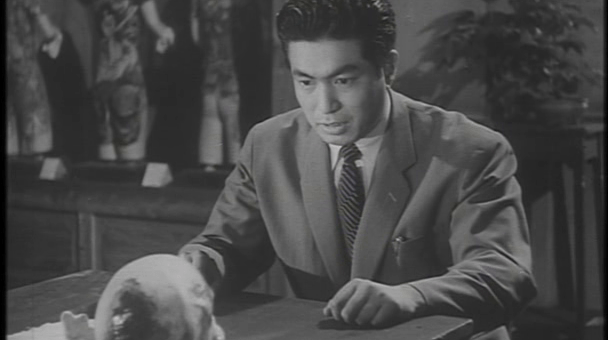
A cold-hearted yakuza starts to get second thoughts when confronted with the misery his actions create in Yoichi Ushihara’s slice of Nikkatsu Noir, Wolves of the Night (夜の狼, Yoru no Okami). Though the hero is ostensibly Tsukida (Ryoji Hayama), the conflicted gangster unable to reconcile himself with the fact that he has fallen in love with a women he himself destroyed, it’s equally about the women who get caught in the crossfire of a burgeoning gang war and are each victims of male greed and indifference.

In any case, gang boss Tachibana (Somesho Matsumoto) brings a lot of this on himself. The secondary narrative revolves around a woman, Takako (Mari Shiraki), who borrowed money from the Manji gang to build her bar, but now that it’s complete Tachibana swindles her by calling in the debt and foreclosing on the property, passing ownership to Tsukida with instructions to kick Takako out. She, however, doesn’t take well to this and is resentful of Tachibana for screwing her over so she vows revenge. Her original attempt to get it by seducing Tsukida doesn’t work out, so she recruits a yakuza from a rival gang to extort them claiming that they have mole and he’ll only reveal their identity when they hand over the cash. This plan has some pretty tragic consequences and not least for Tachibana himself, but none of this would have happened if he hadn’t behaved so badly in cheating Takako out of the bar she worked so hard to build. He’d also told Tsukida that the bar owner was a beauty and it was understandable if wanted to try seducing her. 

But by this point Tsukida has developed a fondness for Katsumi (Izumi Ashikawa), a young woman he first meets when she’s caught by some of his guys offering herself for sex work in their territory. The other ladies describe Katsumi as “odd” and “an outsider”. It’s clear from her behaviour and the way she’s dressed, not to mention a lack of awareness of the rules of the gang, that she’s never done this before and is terrified. Tsukida calls his men off and tells her to go home, but later realises that it’s his own fault she was put in this situation because he was responsible for collecting the debt her parents owed to Tachibana taken out because her father is bedridden. Tsukida seems shaken by the old lady’s intense resentment, but still takes their money if attempting to convince Tachibana not to pursue them any further because they have nothing left to give, correctly assuming that Katsumi resorted to sex work to get the money. 

It maybe the sense of guilt that proved the last straw as the old couple then take their own lives but rather than freeing her lead Katsumi on a lonely path of self-destruction driven only by her hated for Tachibana and Tsukida. The fact that she later becomes ill further emphasises her positioning as a symbol of a despoiled nation poisoned by the ruthless inhumanity of the post-war society, along with literal a embodiment of Tsukida’s guilty conscience. Tsukida rejects Takako as a person more like himself, an example of corrupted femininity using her body to manipulate men in a world in which a woman has little other power, and instead is drawn to Katsumi who was once innocent, demure, and cheerful but who he himself has destroyed through his own greed and heartlessness.

Spending some time in hospital following a failed suicide attempt seems to heal her in body body and soul, though the total about face in Katsumi’s feelings for Tsukida seems somewhat bewildering even if he did visit her every day and presumably win her over despite her resentment towards him for contributing to her parents’ deaths. Nevertheless, it’s his feelings for Katsumi that see Tsukida longing to quit the yakuza and retreat to the country to live a small, honest life with her free of the city’s corruption. But as so often in the movies, it’s not that simple and this time it’s a tragic consequence born of male failure and insecurity that eventually costs him his shot at a normal life even as his frenemy, a local policeman he often sees in the same bar and gives him unsolicited advice about how he should quit the yakuza, remains surprisingly supportive suggesting that his redemption may merely be on hold rather than cancelled. In any case, though shooting almost entirely on stage sets, Ushihara makes good use of stock footage of contemporary Ginza as a place of bright lights and equally dark shadows where gangsters lurk on every corner and mercy is in desperately short supply.

Mash Ville (매쉬빌, Hwang Wook, 2024) [Fantasia 2024]

The Hwaseong of Mashville (매쉬빌), a far out rural backwater, is a kind frontier town drenched in moonshine and melancholy where the local pastime is loneliness. You can almost see what attracted the murderous cultists at the film’s centre to their strange conviction that a convoluted ritual will save a world that’s fallen into chaos with “pure love”, were it not that one of them also remarks on how foolish he feels remembering himself as man who once believed all were equal before the law. 

The law in these parts is a laughing policeman who doesn’t like it when things happen outside of his jurisdiction, but actually does not very much at all to prosecute the “pseudo-religion” he later tells a colleague he’s been tracking while arriving to clear up their mess. Otherwise, there are two other concurrent crimes that should probably be pressing on his time including the deadly moonshine pedalled by liquor entrepreneur Se-jeong and his two bearded brothers, and the strange case of a young woman charged with acquiring a fake zombie corpse for a movie shoot only to turn up with what she suspects is an actual dead body. A rather strange set of events brings them all into the same orbit while preventing them from leaving Hwaseong where the cultists, who are all male but dress in female hanbok for otherwise unexplained reasons, are still on the prowl looking to complete their zodiac of sacrificial victims. 

Then again, the cultists may be victims too. Their former leader soon turns up in town apparently regretting his life’s work while explaining cryptically that the darkness is in his bag, which turns out to be full of money. We sees the eyes flash of Hyun-man, a local man, when he opens it as if he were corrupted in one instant though this day of being targeted by religious extremists already seems to have taken its toll on him. In the opening sequence, he’d celebrated a kind of birthday with two friends, asking only for a hug but both men refused him. He’s also one of the few villagers that didn’t leave on a trip to the hot springs which lends Hwaseong a lonelier air than it might otherwise have had. 

Even the brothers are longing for someone, yearning for the return of their mother who abandoned them many years ago and if Se-jeong’s dream is to be believed sending them the incredibly inappropriate gift of Wild Turkey whiskey when they were just kids waiting for her to come home. Se-jeong feels he can’t leave Hwaseong because a part of him’s waiting for his mother to come back, but the other half is perhaps just afraid to do so. In any case, a mistake by his strange brothers seems to have turned his whiskey into poison, so his hand’s been forced even if it weren’t for all the other weird goings on.

The irony maybe that pure love really does save the world, Se-jeong reflecting that he might have been in love for the first time in his life while finally gaining the courage to move on from Hwaseong in acceptance of the fact his mother likely won’t be returning anyway. His brothers almost got inducted into the cult, mistaken as fellow priests and strangely captivated by the weird ritual movements the killers perform of over the bodies acknowledging that there is something relaxing in thrusting their hands up into the air while curious enough about the ritual to see it through despite its grimness and moral indefensibility. 

Like the cult’s beliefs, not much makes a lot of sense though Hwang lends his strange small town enough crazy vibes to make it all hang together in a place in which whiskey itself appears to be close to a religion and as much of a salve for the world’s unkindness as anything else. “You need to quit drinking,” one his brothers ironically tells Se-jeong when he tries tell him about his recent emotional experiences though in another way he may actually have been saved by an unexpected miracle provoked by the ritual which didn’t work in the way it was intended but may have banished darkness from Se-jeong’s life at least, freeing him from a life in “mash ville” and the kind of the liquor that causes the dead to rise.


Mash Ville screened as part of this year’s Fantasia International Film Festival.

Trailer (English subtitles)

Pilot (파일럿, Kim Han-gyul, 2024)

“You can’t say things like that anymore,” the men of Pilot (파일럿) are fond of chuckling but still they think them and on a baseline level are unable to understand what’s wrong with what they see as merely offering a compliment. Adapted from the 2012 Swedish film Cockpit, Kim Han-gyul’s non-romcom takes its cues from films like Tootsie and Mrs Doubtfire to explore the inherent sexism and misogyny at the heart of contemporary Korean society if perhaps problematically doing so through the means of a male redemption story.

In any case, Han Jung-woo (Jo Jung-suk) is mindless more than anything else later claiming that sometimes it’s better “to say yes and go with the flow” than risk creating unpleasantness. Seemingly excelling at everything, he graduated top his class at the Korean Air Force Academy and was fought over by several large airlines becoming a minor celebrity and apparent pilot influencer. But behind the scenes, he’s somewhat false and self-involved as evidenced by his attempt to show off a video of himself tearfully paying tribute to his mother for raising him and his sister alone but refusing to answer a telephone call from her at the same time. His celebrity fame comes back to bite him when a video of team dinner in which he rejected his boss’ comment about the new intake of stewardesses not being pretty enough by referring to them as a beautiful bouquet is leaked online. The clip goes viral with his boss getting the brunt of the abuse and while he is not visible many are able to identify him by his voice. The airline soon goes bust and unsurprisingly no one else is willing to hire him. 

The issue is that neither his boss nor Jung-woo understand what was wrong with what they said. They just parrot back that what they said was nice so they can’t see the problem with it but fail to understand that their comments are demeaning because they belittle women’s talents and reduce them to objects for male appreciation. Hyun-seok (Shin Seung-ho), who attended the Air Force Academy with Jung-woo, gets him an interview at his airline but it’s run by a female CEO (Seo Jae-hee) who happens to be the sister of his old boss and is apparently on a mission to make her company more egalitarian by having at least 50% female pilots so she’s only hiring women. Nevertheless, she also asks sexist questions at the interview looking closely at a female candidate’s age and asking her if she is married or in a relationship, whether she intends to have children and when. The female candidate fires back a pre-prepared speech that she’s uninterested in marriage and is not planning to have her eggs frozen or anything like that so she can devote herself fully to the job. 

Hyun-seok expresses sympathy, echoing Jung-woo’s earlier comment that all that matters in flying is skill and people should be hired for their merits not their gender. But it’s impossible not to read into his words that he thinks women are inherently not as capable as men and wouldn’t be getting the job at all if it weren’t for this affirmative action, which is to say it’s all about gender after all and only men are suited to the job. He says as much later on when the plane he’s piloting runs into trouble while he’s unwittingly co-piloted by Jung-woo in his female persona Jung-mi, having posed as a woman in order to pass the interview. “Men should step up during times of emergency, not women,” he screams while losing the plot as the plane plunges and refusing to hand over the controls to his female co-pilot until Jung-woo takes them by force. 

Despite being slightly younger and believing himself to be a modern man, Hyun-seok is still incredibly sexist and openly flirts with Jung-mi to the point of sexual harassment even while she bluntly tells him that she isn’t interested. Jung-woo had been flattered and overjoyed the first time someone called him “miss” on the street and alluded to his unconventional, broad-shouldered beauty but quickly discovers that that gets old and becomes aware of how “annoying” or even scary some men can be in their entitled treatment of women, and by extension the various ways in which his own treatment of women may not have been appropriate. Becoming Jung-mi allows him to become himself, rediscovering his love of flying no longer so hung up on the external validation of internet fame and more interested in and considerate of those around him in the absence of the kind of toxic masculinity that infects men like Hyun-seok.

Though his wife divorces him when he loses his job if more because of his persistent emotional neglect than disappointment or financial worry, he becomes more aware of and sympathetic towards his son who, just as he had says yes and goes with the flow by saying a toy aeroplane was fine despite having been engrossed in the Barbie aisle seconds before but presumably afraid of disappointing his father if he told him he’d rather have a doll instead. Nevertheless, the film strangely refuses to engage with ideas of gender and sexuality and becoming Jung-mi does not really unlock Jung-woo’s femininity even if it evidently makes him a better and more considerate person, while his sometime love interest Seul-gi (Lee Ju-myoung) is more or less queer coded and her attempts to stand up for herself as a woman and an equal are not always well respected by the film. Even so the betrayal of CEO Noh who is revealed to be a ruthless businesswomen perfectly willing to exploit other women and throw them under the bus if necessary highlights the ways in which entrenched patriarchy pits women against each other. 

Thus the underlying misogyny of the present society is fully exposed, if ironically by a man experiencing what it is really like to live as a woman which is to be ignored and disrespected, judged by appealingness to men and obedient temperament while skills go undervalued or worse are viewed as a threat to often fragile masculinity. Though the film largely avoids making Jung-woo’s cross-dressing a joke in itself, it does find humour in the absurdity of the demands of performative femininity in a rigid and conformist society in which a woman is rarely permitted to sit in the cockpit of her own life.


International trailer (Simplified Chinese & English subtitles)

Successor (抓娃娃, Yan Fei & Peng Damo, 2024)

Embodying the contradictions of the modern China, Successor (抓娃娃, zhuā wáwa), the latest from the FunAge team sees a billionaire father recreate a utopian vision of crushing poverty amid the socialist values of China pre the 90s reforms but only so that his son can develop a desire to become a capitalist fat cat. For all that, however, it’s also a reaction against micromanaging parents, life under oppressive state control, and a high pressure, conformist society obsessed with very narrowly defined visions of success that are increasingly at odds with what a younger generation might want.

The surprising thing is how easily the young boy, Jiye, is able to straddle these two worlds while only gradually beginning to realise that it’s odd his neighbours keep asking him complex maths questions and he’s always running into foreigners who conveniently want to know the way to the local post office. Ostensibly, the Ma family live in an old-fashioned courtyard that according to the sign over the front entrance was constructed in 1958. As the film opens, Jiye’s teacher has brought a wealthy man to their home, in fact the father of one of Jiye’s classmates, who offers to sponsor his education while each of them look mystified around the flat which seems to exist in a kind of time warp. Jiye’s father, Chenggang (Shen Teng), sends them the packing explaining that they live exactly as they want to and don’t need anyone’s help. 

Yet Jiye is fascinated by his friend’s iPad and aware of the world outside works even as his parents try live like it’s the 1960s, sitting round reading good socialist literature which is also recommend to Jiye by the man who owns the bookshop downstairs and is actually one of Changgang’s many hidden “teachers”. But unbeknownst to him, there’s a lift behind his parents’ closet door that leads to a huge control centre where his every move is being monitored. Chenggang is actually a fantastically wealthy businessman who wants Jiye to develop good character so that he can take over his business after getting into a prestigious university.

In a very high tech and invasive way, it’s a reflection of the confused ideology being forced on Jiye by unseen external forces. Once he’s a little older and able to see that his world is definitely not normal, he begins to feel as if some mysterious force is indeed controlling his life but attributes it to vague notions of fate or cosmos rather than wider authoritarianism or parental manipulation. Chenggang is convinced this is the proper way to educate his son, to give him both old-fashioned socialist values and a heathy desire to overcome his poverty and live in a fancy mansion. He feels this way in part due to his dissatisfaction with a grown-up son from a previous relationship who failed his exams and was sent to America in disgrace. Somewhat uncomfortably, one of the reasons Chenggang is so disappointed in Dajun (Zhang Zidong) who continues to crave his approval is that he’s gay and in a committed relationship with an American man who probably should have given more thought to his Chinese name. 

In order to keep up the pretence, Chenggang never tells Jiye that he has a half-brother though he does allow him to see his maternal grandparents on occasion though they, evidently very wealthy themselves, do not approve of Chenngang’s parenting and resent being unable to spoil their grandson in the way they’d like. Chenngang may have a point here, though his chief objection being that the little Jiye was already quite chubby from being relentlessly pampered lands in the realms of fat shaming rather than a serious questioning of indulgent parenting in the wake of the One Child Policy.. He didn’t want him to grow up to be selfish and entitled or to have a distorted sense of the value of money but also seems to have a conviction that the boy will just laugh and say thank you when he finds out his entire life has been a lie and his parents made him suffer needlessly when they were in reality vastly wealthy. 

But what Jiye emerges with is, perhaps surprisingly, a more wholesome sense of rebellion, stepping out from the cosseted false reality his parents had given him and prepared to chart his own course. In an undercutting of the apparent homophobia which surrounds Dajun, the film also refreshingly, and perhaps subversively given the usual treatment of LGBTQ+ themes in mainstream Chinese cinema, suggests that he has done the same and was right to do so validating his relationship with Peter while a kind of solidarity emerges between the brothers in the shared defiance of the path their parents had set down for them. Often hilarious in its surreal humour and penetrating in its satire, the film echoes a sense of dissatisfaction amid contemporary youth no longer so hung up on outdated ideology and craving more individual freedom in a society in which lives can ultimately feel oppressively micromanaged by shady, unseen forces.


International trailer (Simplified Chinese / English subtitles)

Tokyo Lullaby (東京夜曲, Jun Ichikawa, 1997)

A meditation on lost love and middle-aged regret, Jun Ichikawa’s Tokyo Lullaby (東京夜曲, Tokyo Yakyoku) weaves a melancholy path through a lonely city but finds in it a sense of comfort or perhaps serenity in the gentle rhythms of ordinary lives that somehow become something greater. A diffident translator in love with an unhappily married middle-aged woman slowly uncovers a deep well of unresolved longing largely thanks to those around him who will remember for those who do not wish to speak. 

Ichikawa signals his intentions early on, transitioning from a nighttime shot of the city to a small cafe where a woman is sitting in the foreground looking forlorn while customers behind her discuss the reappearance of Koichi (Kyozo Nagatsuka), the son of the man who owns the electronics store opposite, who had walked out on his family several years previously but has abruptly returned. From this short scene, we can perhaps infer that there is some connection between Koichi and the woman, Tami (Kaori Momoi), though we aren’t quite sure what it is. In any case, the cafe, which bears the name of her late husband Osawa, becomes a kind of nexus uniting the lives of the various community members who each come there to play go and discuss the past. 

Like Tami, Koichi is reticent and melancholy. He says nothing of where he’s been and his wife, Hisako (Mitsuko Baisho), asks him no questions. She later tells the writer, Tei, whose affections she does not return, that she doesn’t really care about how Koichi is living his life because she is busy living her own and likes to do as she pleases. His sister asks him if he plans to stay this time, but Koichi can’t answer her seemingly uncomfortable in himself and unable either to stay or to go. Walking on crutches his injured foot seems to symbolise his emotional unsteadiness literally unable to find sure footing or move forward with his life. 

Piecing the tale together, Tei figures out that Koichi and Tami were once together but she suddenly married someone else who had a terminal illness and passed away shortly afterwards around the time that Koichi first went walkabout. Hisako, meanwhile, had been in love with Osawa though he loved Tami who did not love him. Somehow it’s all very complicated and incredibly simple, the way they’ve sabotaged their own lives and happiness though it couldn’t have been any other way. Tei watches something similar play out in the neighbourhood. One of the young men who works at the electronics shop had been dating a girl who worked at the record store, but he abruptly begins pursuing Ng, a Chinese woman who works at the cafe, and eventually marries her leaving the record store girl heartbroken. 

Things change and they stay the same. Ng takes over the cafe, Koichi’s foot heals while he also manages to resurrect the family business by turning it into a shop that video games as if taking a symbolic step into modernity that suggests this time he’ll stay just as Tami decides it’s time for her to leave. Paths cross endlessly, Ichikawa frequently cutting away to tiny vignettes of other cafe goers as their stories weave through each other, each one note in the great symphony of the city without which life would be impossible. Yet what’s more important is what is not said, the silences that exist between people and perhaps within them too. Things that are understood, and those which are not. 

Tami explains that she looked for answers but all she found was junk until the relief of boredom became her only frame of happiness. Only by escaping the city does it seem that she’ll be happy while Koichi seems as if he’s getting itchy feet and Tei, joining the cycle, decides to move on rather than remain in painful proximity to Hisako who as she said has her own life and does not seem to want to share it with anyone much less him. The pain of the past cannot fully be healed, only borne amid the cheerful scenes of city life, children playing, people doing business, the sun shining and elderly couples meeting in cafes. Pain and loneliness seem to be the natural conditions of urbanity, but Ichikawa paints them with a kind of rosiness, merely the sadness that unpins the lullaby of a city which is always changing yet remains the same in its unwalled alleyways and those that exist only in the deepest recesses of memory. 


Original trailer (no subtitles)

Black Dog (狗阵, Guan Hu, 2024)

When a dusty sign pops up in Guan Hu’s Black Dog (狗阵, gǒu zhèn) advertising the upcoming 2008 Beijing Olympics, you’d be forgiven for thinking it’s a relic of a long forgotten past. On the edge of the Gobi desert, Chixa has a post-apocalyptic aesthetic, a kind of reverse frontier town for a society in retreat. It takes on an almost purgatorial quality for prodigal son Lang (Edward Peng Yu-Yan) who returns after spending nearly a decade in prison for an incident that seems like may not have been entirely his fault but for which he continues to face enmity and a petty vendetta from a local gangster/snake farmer Butcher Hu.

Lang himself is aligned with the stray dogs who have begun to reclaim the town which has long since been abandoned by industry. The moribund zoo where his father has taken to living is testament to the prosperity the area may once have had though now it’s a ghost town of China’s industrialising past strewn with the disused factories of Socialist era dealt a deathblow by the economic reforms of the ‘90s. Yet we’re also told that the reason the stray dogs must be expelled is so the town can be redeveloped and new factories take the place of the old which does not seem to hold the kind of promise for the townspeople one might expect. 

Constant references to the Olympics and its slogan “Live the Dream” only emphasise the irony. Geographically distant from Beijing, Chixa exists in an entirely different space from the Chinese capital and appears as if it were about to collapse in on itself. Half the town is plastered with demolition signs and in the end it’s the people who are displaced as much the dogs. Guan often rests on ominous visions of the strays standing on a small hilltop and then recalls the image in the film’s closing scenes as the dogs are replaced by townspeople watching a once in a generation total eclipse on the eve of the opening of the games.

With nothing much else to do, Lang, a former rockstar and motorcycle stuntman in the town’s more prosperous days which themselves even seem to echo the 1950s more than the late ‘90s, joins the campaign to beat the canines into retreat at the behest of local gangster Yao (played by director Jia Zhangke) but begins to identify and sympathise with them especially once it becomes obvious that the new regulations are exploiting dog owners by forcing them to pay to have their animals registered. Those who can’t or won’t have their pets confiscated, Lang silently rescuing one girl’s little’s pet pooch while her grandmother tries to argue with the dog catchers before they take them all to what is effectively a concentration camp for dogs. The film’s Chinese title is in fact “Dog Camp,” and it becomes clear that it’s Lang who’s stuck there, trapped by his past and the dismal realities of the socioeconomic conditions of late 2000s China.

Hoping to earn a little extra cash he decides to try catching a wanted fugitive, the Black Dog of the title who is mistakenly believed to have rabies only to end up bonding and identifying with it. At several points, Lang echoes the movements of the dog such as placing his head on the chest of his dying father as the crowd below his hospital room prepare to welcome the opening the Olympics via a large screen in the town square. His relationship with the dog begins to restore his sense of compassion and humanity while a tentative connection with a young woman equally trapped by her transient existence and toxic relationship with a fellow circus performer opens his eyes to new possibilities of a life of freedom on the open road no longer bound by the constraints of a society in flux. Elegantly lensed grainy photography and the occasional use of synth scores lend the film an elegiac, retro quality that recalls the cinema of the fifth generation while casting a subversive eye over the compromises of the modern China itself trapped by its past and trading on former glory from which stray dogs like Lang can find escape only by running from the pack. 


Black Dog is in UK cinemas from 30th August courtesy of CineAsia.

UK trailer (English subtitles)