Children of the Beehive: What Happened Next (その後の蜂の巣の子供たち, Hiroshi Shimizu, 1951)

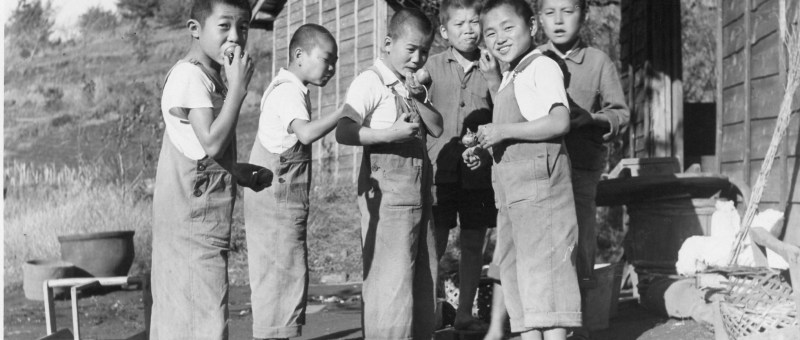
All things considered, Hiroshi Shimizu’s Children of the Beehive ended with the happiest ending it was possible to have to in the Japan of 1948 despite the tragedy that colours its final scenes. Yet for some reason, Shimizu returns three years later to ask what happened to the orphan boys afterwards having adopted several war orphans himself. What results is a strangely meta experience of documentary-style fiction focussing on the sense of community that has arisen at the Beehive. 

The excuse for this is a visit from a journalist for a magazine who wants to ask what’s happened to the boys since then. Yoshibo, who did not die, once again takes centre stage along with Shin who continues to be a leader among the boys while Ho also takes a prominent role as the facility’s cook. Echoing Introspection Tower, the key element is that the orphanage is dependent on the children’s labour which is seen as character-building and a means for them to develop a social conscience though the former soldier now looking after the kids reveals that there are no real rules, the children do as much as they want. They are given access to education through regular visits from tutors, the soldier explaining that it was awkward for the older children whose education had been interrupted to be in classes with kids much younger than them. Most of the boys are currently engaged in building a cabin to be used as a schoolroom and study base.

But the soldier also resents the journalist’s coming. In a meta touch, the journalist came because of the film and then several more kids turn up after seeing the magazine article along with one adult man who declares it’s his lifelong dream to cultivate the land while looking after orphans. A rather cynical Shin points out that’s what everybody says, while a sign on the chalkboard inside instructs the kids to ask visitors to leave politely rather than scaring them away. The soldier’s objections are easily understandable given that the magazine article also provokes the arrival of well-meaning people who want to help but generally end up creating more problems. Two young women turn up with the intention of spending their holiday helping out and get stuck in without even really asking but quickly upset the routines and rhythms that have been set up at the beehive. The soldier explains that the children value their work and enjoy it so a pair of adults doing their jobs for them isn’t helping, rather it makes them feel as if they’ve been deprived of something or haven’t been doing their work properly. The other problem with do-gooders is they obviously can’t stay longterm so there will be another period of adjustment to go through when they eventually leave. 

The presence of the two women also adds a note sexism that hadn’t been present before though this time around there are also female orphans who didn’t feature in the first film including Reiko who is Ho’s kitchen rival eventually kicking him out claiming it’s ”women’s work” with the approval of the two women. Ho later counters her by repeating the same thing but claiming that he told her what do as if trying to claim his right to superiority as a male. Meanwhile, the openness of the first film seems to have ben diluted in the unwillingness to accept newcomers given the scarcity of resources. Shin talks the others into accepting a pair of orphans who appear to have been bullying him only for them to run off with the other boys’ things leaving him feeling responsible in his decision to bring them into the group. 

In any case, the main thrust of the film is concerned with how the orphans live now and captures their cheerful industry through a series of episodes from working together to catch a racoon to being given a science lesson accompanied by a cute animated sequence of a butterfly. A strange subplot in which the mother of one of the boys long assumed to have died contacts the magazine but eventually decides against meeting her son on learning he is happy at the Beehive hints at post-war displacement and reinforces the idea that the children are completely dependent on this community and the mutual solidarity of their fellow orphans which might also in its way explain why some may later decide to leave. Shimizu’s lengthy tracking shots along with the misty rural landscape lend the Beehive an elegiac quality even while insisting that the war orphans are living happily in a kind of commune largely divorced from the chaotic and increasingly selfish post-war society. 


Children of the Beehive: What Happened Next screens at Japan Society New York on 31st May as part of Hiroshi Shimizu Part 2: The Postwar and Independent Years.
Home Sweet Home (我が家は樂し, Noboru Nakamura, 1951)

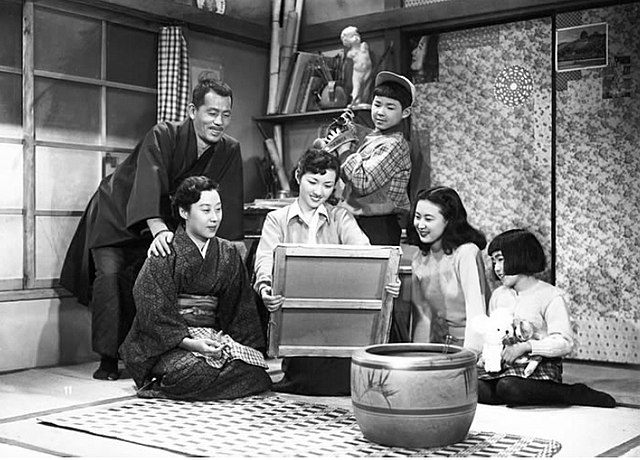
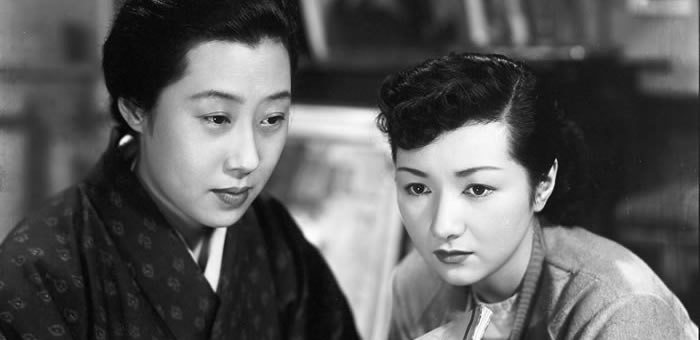
There must have been a lot of families like the Uemuras in the Japan of 1951. As film’s title implies, their home is a happy one and though they may not have much they make the most what they have and are cheerful and loving towards each other. Still, the world stores up trouble for them perhaps because they are so very defiant of their circumstances. In many ways a classic shomingeki, Home Sweet Home (我が家は樂し, Waga Ya wa Tanoshi) was the film that put Noboru Nakamura on the map and finds Japan at a kind of crossroads edging past post-war privation towards a broadly consumerist society.

We can get a sense of that in the constant needs of four children in the Uemura family, patriarch Kosaku (Chishu Ryu) picking up his young son Kazuo (Katsumasa Okamoto) after baseball on his way home and noticing that his mitt is almost worn through only to get there and spot his daughter’s boots are getting pretty thin too. It’s clear they struggle for money despite Kosaku’s steady job for which he is about to receive a 25-year good service commendation as wife Namiko (Isuzu Yamada) supplements the family income by taking in sewing at home while we later find out that she’s already sold most of her kimono to help make ends meet and is considering selling her wedding ring to pay for middle daughter Nobuko’s (Keiko Kishi) school trip to Kyoto.

But her hard-nosed sister Kayo (Mutsuko Sakura) tells her that secondhand kimono have lost their value with so many new ones now available. In the immediate post-war era, rice and kimono were the only things that had held their value and so selling one could bring in a lot of money quickly. Conversely, after receiving a sizeable bonus along with his commendation, Kosaku and Namiko visit a department store which has a large range of affordable clothing for sale though the kimono fabric Kosaku picks out for Namiko is still fairly expensive so she instinctively puts it back insisting that they buy the presents they promised the children first. 

That was probably a good move, seeing as the rest of the money is stolen from them on their way home to a congratulations party the children are busy setting up. Kosaku asks why someone would rob people like them, honest, hardworking types who don’t have much to begin with but as Namiko sensibly points out pickpockets don’t really think like that and how would they know anyway. The subtext is that times are still hard for a lot of people even if there are now more exciting, definitely non-essential things appearing on shelves for people with disposable income to buy and a new kimono, though out of fashion, is no longer so out of reach for the ordinary housewife. 

The loss of the money might seem as if it should place a wedge between husband and wife, but bar a moment of disappointment cured by the realisation that oldest daughter Tomoko (Hideko Takamine) has been considerate enough to place hot water bottles in their futons, they resolve to muddle through together and in any case they’re no worse off than they were before. Tomoko herself is conflicted, feeling as if as a young woman in her early 20s she should give up her dreams of becoming a painter and get a job to support the family but Namiko always tells her not to. She encourages each of her children to follow their dreams, perhaps a sign of a new post-war liberation, telling her sister that she’d happily sell all her kimono so that Tomoko could go on painting. Later we discover that she also dreamed of becoming an artist and that though Kosaku had encouraged her to keep it up, a housewife’s day is never done and there was simply no time left for herself. Painting is just another thing she sacrificed for her family and Namiko seems to be determined that Tomoko won’t have to do the same not that she particularly regrets her decision.

Tomoko only really comes to understand her mother’s sacrifices on noticing that the cupboards really are bare, she’s sold everything that could be sold and pawned her ring though the colleague that owned the house they were renting has encountered some financial difficulties of his own and going to to sell to the grumpy old man who bought the house across the way. The Uemuras are such obviously good people that it feels so unfair that so much bad luck has come their way all at once though it is their goodness that eventually saves them when the old man is touched by seeing youngest daughter Mitsuko (Kazuko Fukui) playing with his dog. He later comes to admire Tomoko’s painting of his garden though he’d put a fence up to stop her peering in. The scars of the post-war era are visible in the damage to Uemura’s front wall which would have blocked the way but now perhaps enables them to become good neighbours after all. Though the film may lack some of the visual flair present in Nakamura’s later work, it more than makes up for it with genuine sentiment and the implication that in the end the world is basically good and rewards those who are the same even if it sometimes tests their resilience.


Nightshade Flower (夜来香, Kon Ichikawa, 1951)

A couple who met briefly in Manchuria are reunited in Kobe five years later but find their joy short-lived amid the vagaries of the post-war society in Kon Ichikawa’s tragic romance, Nightshade Flower (夜来香, Ieraishan). The film takes its name from a song “夜来香” known as “Ieraishan” in Japanese, a transliteration of the Mandarin pronunciation (yèláixiāng) in katakana, which was released in a Chinese-language version in Shanghai in 1944 performed by Manchurian Japanese actress Yoshiko Yamaguchi (山口淑子) who also went by the names Ri Koran/Li Hsiang-lan (李香蘭) and later Shirley Yamaguchi at various times in her career. A song of lost love, it seems to echo a sense of despair among the wartime generation who cannot reconcile their pasts with the post-war present. 

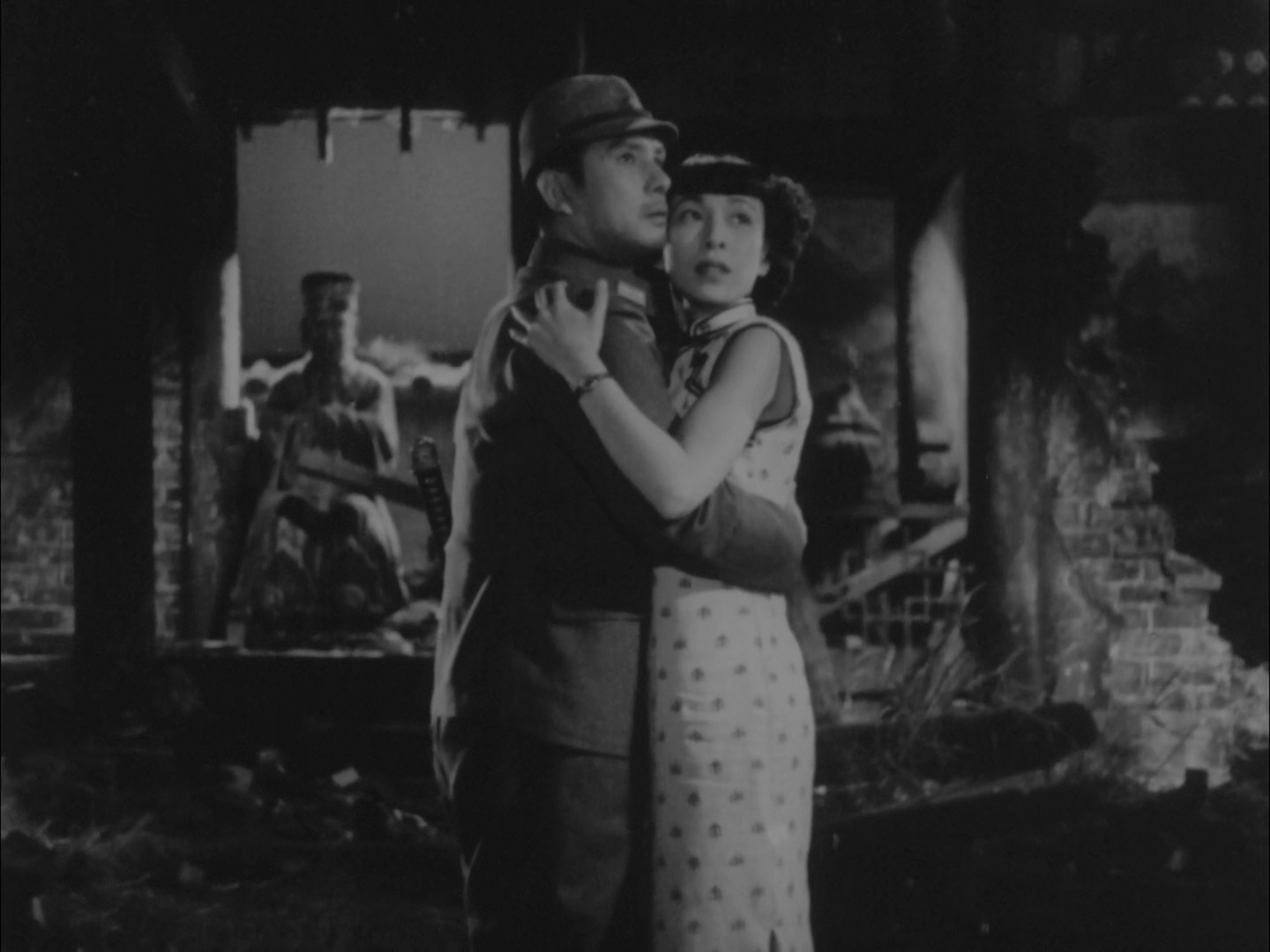
Akiko (Asami Kuji), a sex worker, first meets Seki (Ken Uehara), an army doctor, when he pulls her out of the way of an oncoming vehicle in a crowded market place in Northern China in June, 1944. As she is dressed in cheongsam and angrily shouts at him in Mandarin, he assumes her to be Chinese and carries on along his way while she remains ambivalent about the encounter especially as the sleeve of her dress has been torn. In any case, it’s clear that the situation has become precarious and most of the Japanese population are preparing for evacuation. The owner of the brothel where Akiko and her friend Gin (Harue Tone) are employed has hopes of carrying on her business further behind the lines where army bases are still in operation though the pair would prefer to head home as soon as possible, jumping off the repatriation truck organised for them by the madam with the intention of returning to the city and boarding the next one bound straight for the mainland. 

But Gin falls off a cliff and injures her leg, leaving Akiko to go in search of a doctor incongruously rocking up at Seki’s medical clinic. Though she is originally unwilling to have him treat Gin, she soon comes around and the pair begin seeing each other with Akiko pledging to stay behind after putting Gin on a truck. Nevertheless the pair are separated during an air raid with Akiko believing that Seki has been killed in a direct hit to the shrine they were sheltering in when he left their foxhole to check on a crying baby. Five years later, Seki has returned to Kobe to look for Akiko but has had no luck while staying with the family of one of his men, Toshio (Yuji Kawakita), who has fallen into post-war despair and given up his promising future in medicine to peddle black market drugs with shady fixer Kameyama (Reikichi Kawamura). 

The crisis comes when Seki realises he is losing his sight, apparently a delayed reaction to the head injury he sustained in Manchuria which was not fully treated due to the war’s end. Though he reunites with Akiko, he believes that he can no longer have a future with her because of his impending blindness and in fact that his life is now over. Akiko meanwhile has also fallen into despair. Believing Seki was dead she gave up on the idea of finding him and has returned to sex work, she and Gin working in a small backstreet bar and living in adjacent rooms of a rundown tenement block. Seki had always known that she was a sex worker, but she believes he may now reject her because she has failed to live up to the promise she made him of living a more “honest” life ironically because without him she had no reason to do so. 

Meanwhile, Seki is intent of saving Toshio whom he had first met as a naive private openly crying over the death of his mother having picked up a venereal disease after losing his virginity to a sex worker in an attempt to overcome his grief. Toshio is an embodiment of the despair felt by young men who went to war as innocent teenagers and are filled with disillusionment and confusion. Though Toshio is luckier than most who struggle to find work in the difficult post-war economy, he came from a middle-class medical family and if he finishes his training of which he only has a year left he would inherit his father’s clinic, he no longer sees a future for himself and actively rejects his privilege as an act of self-harm by taking up with Kameyama and becoming involved with crime. He resents his father for remarrying soon after his mother died, taking the family maid as his second wife, and is reluctant to marry their nurse, Chiyo (Chiaki Tsukioka), who is also Kameyama’s younger sister, as everyone expects him to despite otherwise carrying on an affair with her which later results in a pregnancy. He says that he wants to earn his own living and be his own man but claims he cannot see the bright future Seki speaks of for him and continues along a dark path of crime and vice. 

The constant rumblings of the train along with its flickering light strongly foreshadow the tragic denouement but also hint at the automatic motion of society that damns the trio and frustrates their attempts to move on from the war and find happiness in its aftermath. Even so, to modern eyes the motif of Seki’s literal blindness which robs him of the ability to perceive a happy future with Akiko cannot but seem a little ableist even as Akiko points out that many men lost their sight in the war but are living good lives with wives and children and that she does not see his disability as a barrier to their ability to make new lives for themselves in the post-war society much as he doesn’t regard her past in sex work as a reason to reject her.

Even so, Seki is dragged into the post-war morass after becoming involved with Kameyama in a futile attempt to save Toshio only to discover that Kameyama has betrayed them by getting them both to work on the same job as a payment for a debt taken out by Seki on Toshio’s behalf to free him from his life of crime. Ichikawa embraces a sense of melodrama with frequent closeups and an underlying theatricality, but also captures something of post-war confusion in the noirish fog that surrounds Akiko as she considers one last job to pay for probably useless medical treatment to save Seki’s sight. The cruelty of the ending is in its way too difficult to bear but perhaps apt for the view from 1951 in which the possibility of escaping the legacy of wartime corruption lies only in painful memories. 


Miss Oyu (お遊さま, Kenji Mizoguchi, 1951)

“I never realised how heavy this kimono was” a young woman exclaims towards the conclusion of Kenji Mizoguchi’s Miss Oyu (お遊さま, Oyu-sama), adapted from the Junichiro Tanizaki short story The Reed Cutter, finally collapsing under its weight having committed what amounts to an act of spiritual suicide in an internalised betrayal. Mizoguchi’s highly selective adaptation excises much of Tanizaki’s trademark perversity and targets instead the repressive social codes of the era which proceed to ruin three lives in frustrated affection, shame, and self-harming guilt. 

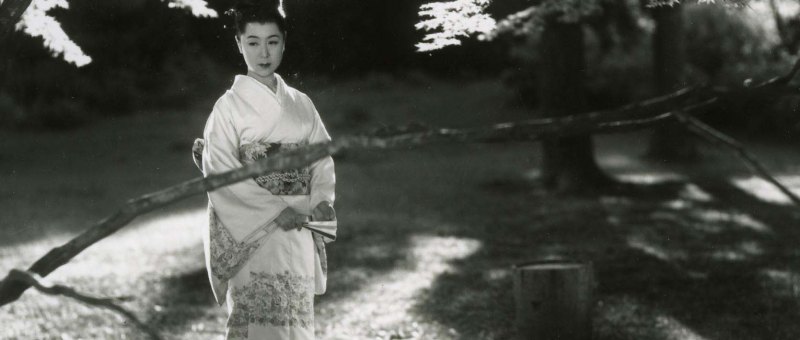
The trouble begins when Shinnosuke (Yuji Hori), a young man in search of a wife, mistakes his prospective bride for her sister and is forever smitten. Oyu (Kinuyo Tanaka), a widow with a young son, is only accompanying her younger sister, Oshizu (Nobuko Otowa), but is perhaps herself taken with the handsome suitor whom she repeatedly brands a “fine gentleman”. Having objected to all of Oshizu’s previous matches, she encourages her sister to marry this one not least because of his physical proximity that would allow the pair to visit each other regularly. The pain on Oshizu’s face is however readily apparent as Oyu relates the amusing incident to their brother, the younger sister clearly consumed with an inferiority complex in the shadow of the beautiful and elegant Oyu. 

It’s never quite clear to what extent Oyu is aware of her sister’s feelings, if she says these things thoughtlessly or with an intent to wound though she obviously cares deeply for Oshizu. Similarly the extent of her feelings for Shinnosuke remains oblique. As a woman well aware of her beauty and its power, perhaps she simply enjoys being desired or is so accustomed to male attention as to barely notice that Shinnosuke has fallen in love with her. Then again perhaps she knows all too well and for the sake of politeness pretends not to though in that case the decision to encourage her sister to marry him would seem perverse or suggest that she is attempting to deny her own feelings which she may not even understand by rendering Shinnosuke a “brother” in an attempt to remove him from the pool of potential romantic suitors. 

Even so there is an underlying quality of incestuous desire of Oshizu for her sister to whom she remains devotedly besotted, willing to sacrifice her own happiness in the hope of ensuring Oyu’s. After agreeing to marry Shinnosuke, she explains to him that she intends their marriage to be purely symbolic. She refuses to consummate their union on the grounds that it would be a betrayal of Oyu whom she knows to be in love with Shinnosuke while realising that he has married her only to be connected with her sister. When the trio take a trip together the strangeness of the ménage à trois is brought home by the confusion of the hotel maid who assumes that Oyu and Shinnosuke are the married couple, commiserating with Oshizu for being a third wheel. While Oyu childishly makes light of it, Oshizu is hurt and confused, jealous in two directions but pleading with Shinnosuke to be only his sister rather than a wife. 

Yet the wrongness of the arrangement is signalled on Oyu’s return home when she discovers not only that her son, Hajime, has fallen mortally ill in her absence but that rumours have begun to circulate about her unusual relationship with her brother-in-law. It is impossible to avoid the implication that Oyu is being punished firstly for betraying her maternity in having gone on holiday without her son to experience freedom as a woman, secondly for feeling sexual desire, and thirdly for feeling it for a married man who is now technically a brother in being her sister’s husband though as we know no one’s sexual desires are currently being fulfilled in this incredibly complicated and destructive arrangement. 

Though Tanizaki might have been more interested in exploring the darker aspects of human sexuality, Mizoguchi pulls back from the author’s trademark perversity to take aim at the repressive social codes of a patriarchal society which brought such a fraught situation into being. Oyu is unable to marry Shinnosuke because she is bound to her late husband’s family and by the responsibility to her son whom she would have to leave behind even if she were given permission to take another husband. Once her son dies, her ties to marital family are severed and they, disapproving of the rumours surrounding her unconventional relationship with her sister and brother-in-law, send her back to her brother who is also reluctant to accept her. On learning of the reality of her sister’s marriage, she decides to accept a proposal from a sake merchant in another town but the separation breeds only more destruction. Oshizu and and Shinnosuke move to Tokyo and three years later are living in poverty, Shinnosuke now dishevelled and dressing in Western suits with a modern haircut and a scraggly, half-hearted moustache. Oshizu’s eventual pregnancy which confirms that theirs is now a “full” union while Oyu’s is “symbolic” only the slows implosion of the trio’s repressed desires. 

Mizoguchi stops short of arguing for a transgressively new arrangement that would have allowed the trio to live together as a family but nevertheless attacks the repressive social codes that prevent them from speaking honestly about their feelings and force them into self-sacrificing acts of subterfuge which create only more suffering. He dramatises the claustrophobia of their lives through the obvious artificially of the stage sets which stand in such stark contrast to the expansive beauty of nature albeit sometimes unruly but always free, while lending their tragic tale a hint of the parabolic in its mists and rugged gardens as Shinnosuke finds himself alone under the cold light of the moon on a distant shore, a romantic exile from a repressive society. 


The Idiot (白痴, Akira Kurosawa, 1951)

“He was too good for this world” a matriarch finally concedes of the pure soul at the centre of Akira Kurosawa’s The Idiot (白痴, Hakuchi), though like most she had found his goodness unnerving. Adapted from the Dostoyevsky novel, Kurosawa’s poetic morality play is like much of his contemporary work a meditation on the post-war future but perhaps also an admission that this “faithless world” isn’t meant for pure souls and that goodness too can be destructive in its incompatibility with a world ruled by cruelty and selfishness. 

Relocated to a wintery Hokkaido, the film opens with former soldier Kameda (Masayuki Mori) travelling north to stay with a relative after a spell in a psychiatric hospital in Okinawa. Having been sentenced to death for war crimes in what he claims was a case of mistaken identity and then unexpectedly reprieved, Kameda suffered a nervous breakdown but also describes himself as having been reborn, as if everything that had happened to him up to that point had happened to someone else. Ever since then he’s been a pure soul, selfless and ethereal but also with, as someone later puts it, an eerie power to see into people’s hearts that leaves some feeling shamed or uncomfortable in the stinging light of his goodness. 

In the outdated language of the time, he is called an “idiot” because of his epilepsy which has he says caused him epileptic dementia. In the title cards that open the film, it is said that goodness is often conflated with idiocy as if to be good is only to be naive for sophistication necessarily favours calculation over feeling. He is an outcast firstly because of the stigma surrounding his condition and secondly because of the way his goodness reflects on others, leaving them feeling exposed or perhaps judged and found wanting. 

He finds his mirror in a young woman, Taeko (Setsuko Hara), who is loved by a man he met on the train, Akama (Toshiro Mifune), but is herself an outcast because she has been the mistress of a wealthy man, Tohata (Eijiro Yanagi), since she was only 14 years old. On seeing a photograph of her in a shop window near the station he remarks that she seems very unhappy, later explaining that in her eyes he saw only long years of lonely suffering that reminded him of the eyes of a young soldier executed by firing squad who looked back at him with eyes filled with reproach that he must be sacrificed for the folly of the war. But whereas Kameda’s awakening as a pure soul has opened him up to the world, Taeko’s internalised shame has made her cold and indifferent. Kameda’s recognition of her as another pure soul grants her the courage to escape one kind of suffering in abandoning the wealthy man who has ruined her life, but only provokes further destruction in her conviction that Kameda is the one man she can never love for she will only ruin him. 

Kameda, meanwhile, falls in love with the daughter of his relative, Ayako (Yoshiko Kuga), who is proud and largely unable to express her feelings honestly often saying the direct opposite of what she actually means. She too has her idea of goodness, breaking with her childhood sweetheart Kayama (Minoru Chiaki) when he is tempted by an offer from Tohata to enter into a sham marriage with Taeko for appearance’s sake in return for a large sum of money and guaranteed social advancement. Though Ayako originally rejects Kameda because of the shame and humiliation she would feel married to a man with a disability, she nevertheless fails in love with him but is unable to accept the equality of his love in his inability to abandon Taeko to whom he has come to represent a kind of salvation. 

Ayako later comes to believe that it was she who was truly the “idiot” in her petty jealousy lamenting that “if only we could all love without hatred” as Kameda had done though it was in the end his selfless love that sealed his fate, while for Akama it was perhaps the opposite in realising that he would never possess Taeko’s heart and that the only reason she returned to him was because she thought him to be a man of so little importance that ruining him was of no consequence and ruin him she did in the madness of his love. Guileless, Kameda is also a pauper cheated out of his inheritance by a relative and then again exploited by a duplicitous businessman, his poverty another proof of his goodness while others squabble over money. Having escaped an authoritarian father and come in to his inheritance, Akama wagers his fortune trying to buy Taeko from Tohata by gazumping Kayama who later redeems himself by letting the money burn but never really escapes the stain of his temptation. 

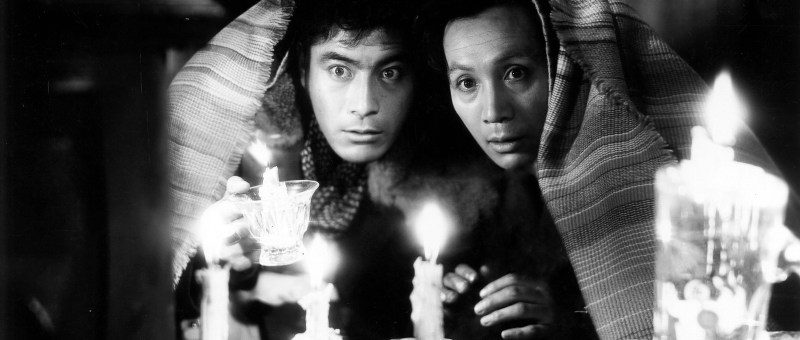
Kurosawa frames the tale as high gothic, filled with eerie winds and mist and fire in the midst of snow. The stove of Akama’s otherwise dark and gloomy mansion seems to flare with the intensity of confrontation as the passions of these four tortured souls rise and fall while each seeking a kind of salvation which necessarily cannot satisfy all. Originally intended to run in two parts over 265 minutes, the film was famously too big for producers at Shochiku for whom Kurosawa was working outside of his regular studio Toho. They cut 100 minutes to suit their exhibition needs, excising most of the prologue and inserting a number of clumsily placed intertitles absent from the rest of the film while undercutting the sense of mounting dread in the tragic backstories of each of these doomed romantics. But even in this compromised version, Kurosawa captures something of the gothic fatalism that surrounds Kameda, an innocent lamb in a world of wolves as Akama describes him, whose boundless, selfless love has no place in this faithless world. 


The Idiot screens at the BFI Southbank, London on 13th & 21st January 2023 as part of the Kurosawa season.

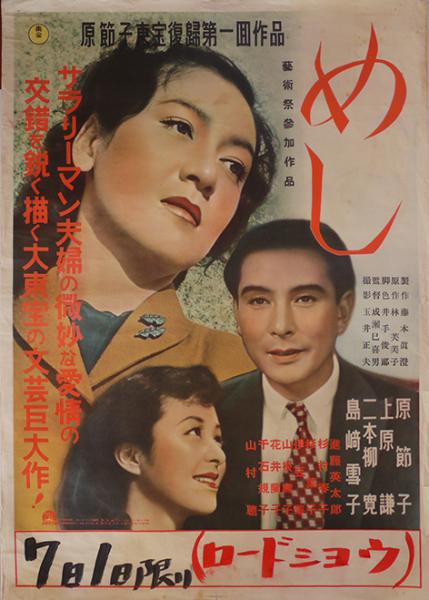
Repast (めし, Mikio Naruse, 1951)

“Must every woman grow old and die feeling empty?” asks the unhappy heroine of Naruse’s 1951 melodrama Repast (めし, Meshi) only to conclude that yes, she must, but that this in fact constitutes “happiness” as a woman. The first of Naruse’s Fumiko Hayashi adaptations Repast arrived in the year of the author’s death and is inspired by a short story left unfinished at the time of her passing. Screenwriter Sumie Tanaka was apparently convinced that the film should end with a divorce, as Sound of the Mountain would two years later, and consequently left the project after the studio mandated a more “sympathetic” ending. Superficially happy as it might seem, however, the conclusion is as bleak as one might expect from Naruse in which the heroine simply accepts that she must recalibrate her idea of happiness to that which is available to her and learn to find fulfilment in shared endeavour with her husband. 

As she explains in her opening voiceover, Michiyo (Setsuko Hara) married her husband Hatsunosuke (Ken Uehara) five years ago in Tokyo against her family’s wishes and has been living on the outskirts of Osaka for the past three. Marital bliss has quite clearly worn off. As we see from the repeated morning scenes of the local community sending their sons off to school and husbands to the office, every day is the same and all Michiyo ever seems to do is cook and clean. The only words Hatsunosuke says to her are “I’m hungry”, and the only source of solace in her life is her cat, Yuri. Yet even this constant state of unhappy frustration is disrupted by the unexpected arrival of Hatsunosuke’s spoilt and immature niece Satoko (Yukiko Shimazaki) who has apparently run away from home in rebellion against an arranged marriage. 

There is obviously a blood relation between Hatsunosuke and Satoko, but Michiyo’s jealously is not exactly unreasonable given the young woman’s childish flirtation with her uncle, perhaps an adolescent extension of her propensity to pout and preen to get her own way. Aside from all that, finances weigh heavily on Michiyo’s mind. Other than her drudgery, the constant source of friction in the relationship is Hatsunosuke’s low salary and lack of career success. Satoko’s family are a little wealthier and having been brought up in relative comfort she has little idea of the real world and is often tactless, remarking on Hatsunosuke’s worn out tie much to Michiyo’s chagrin. Hatsunosuke is happy enough to have her, but Michiyo is wondering if there’s enough rice in the jar to see them through and Satoko never stops to consider that they’re feeding her for free even falling asleep when Michiyo enjoys her one and only day off reuniting with old friends rather than preparing dinner as she’d been asked. Perhaps aware of the disruptive effect of her presence, Satoko pours salt on the wound by constantly asking her uncle if Michiyo doesn’t like her or is angry, further placing a wedge between husband and wife. 

For all that, however, Hatsunosuke would not be accounted a “bad” husband for the time save perhaps for his lack of career success. He is not cruel or violent, merely insensitive and distant, taking his wife for granted and unable to see that she is deeply unhappy while otherwise internalising a sense of guilt and failure in his inability to adequately provide for her. She meanwhile sometimes takes her dissatisfaction out on him in barbed comments about his low salary, her barely hidden contempt never far from the surface. Yet as her mother later points out in encouraging her go back to him he is “reliable, discreet, and honest”, qualities borne out by his later refusal to go along with a dodgy scheme organised by the old elite along with his nervous rebuttal of the attentions of the “mistress” from across the way. 

At heart a conservative woman, Michiyo too looks down on Ms Kanazawa (Kumeko Otowa) for her taboo status as the illicit lover of a wealthy man which is only in a sense her way of seizing her future as an independent woman running her own bar. Satoko, a woman of the modern era, sees less of a problem with it and is far less judgemental, though her own attempts are destined to end in failure thanks to her inability to work out that her present lifestyle is far above her current reach. Retreating to her Tokyo home, Michiyo looks for other options, admiring the apparently happier relationship between her younger sister and brother-in-law who now run the family shop. She asks a sympathetic cousin, Kazuo (Hiroshi Nihonyanagi) who provides an alternate love interest, to help her find work but encounters the brutalising line outside the local employment office and then an old friend now a war widow desperate for employment because her benefits are about to run out and she has a young son to support. Later she spots the same woman handing out flyers, suddenly realising the fallacy of her fantasy of starting again as an independent woman. She pens a letter to her husband admitting that she’s realised how vulnerable she is without his protection, but remains undecided enough to avoid sending it. 

Hearing that Satoko, still childish but perhaps not quite as naive as she assumed her to be, has been laying her claws into Kazuo the final nail seems to have been struck. Michiyo knows she will return to Osaka, but does so not because she has rekindled her love for her husband but because she has accepted there are no better options. Hatsunosuke is dull, but he is in a sense reliable, and honest to the extent that he may be about to be rewarded for his moral unshakability. He cares enough about her to show up in Tokyo hoping, but not insisting, she will return with him which is perhaps as close to a declaration of love that one could hope for. On reflection she decides that a woman’s happiness is found in sharing the journey with her husband, accepting that she must subsume her own desires into his and cannot hope to expect emotional fulfilment other than that found in his satisfaction. Even for a Naruse film, and one as peppered with moments of slapstick humour as this one is, it’s an extraordinarily bleak conclusion subtly hinting at the iniquities of life in a patriarchal society in which the best a woman can hope for is a life of unrewarded drudgery. 


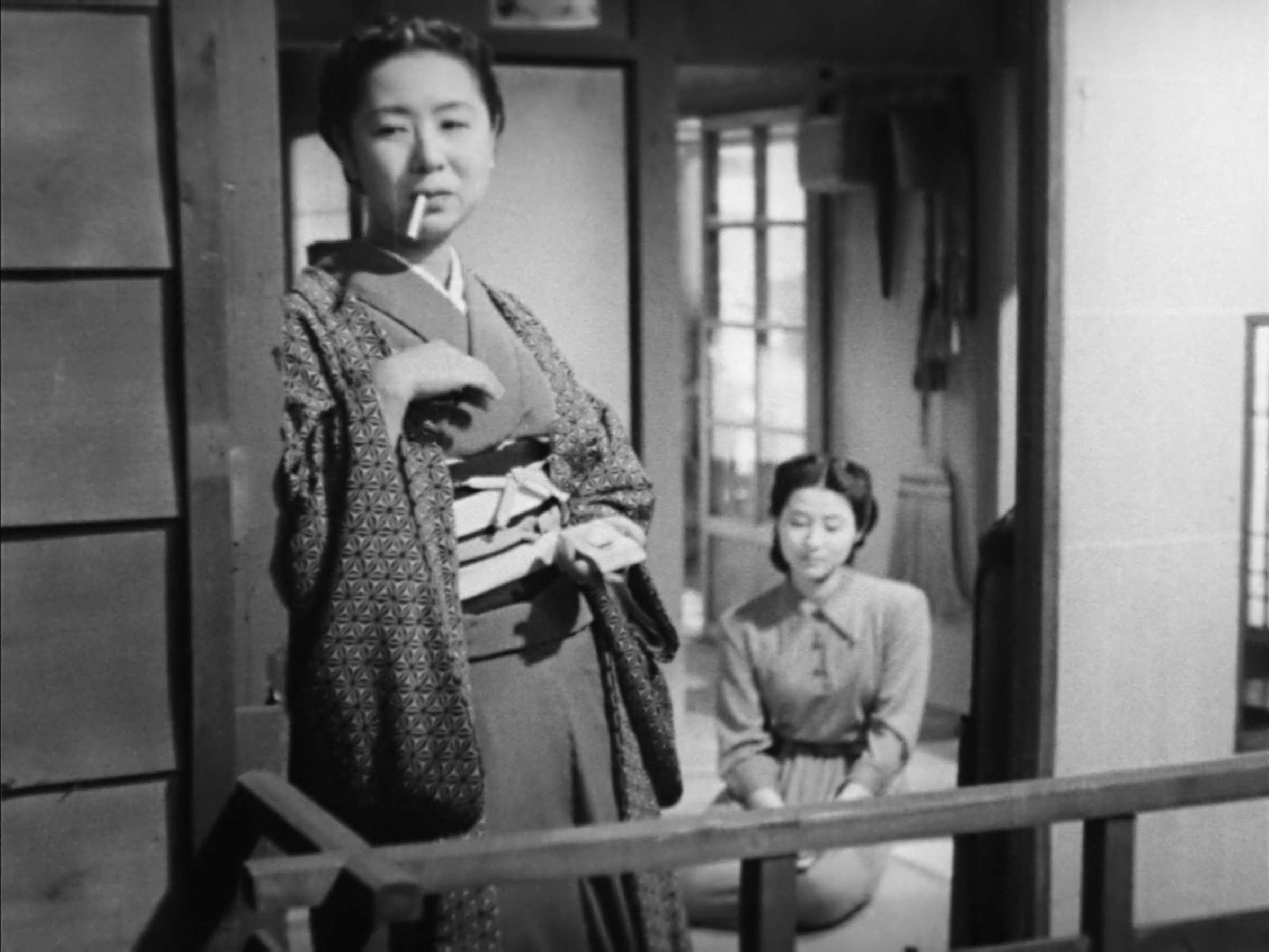
Ginza Cosmetics (銀座化粧, Mikio Naruse, 1951)

1951’s Ginza Cosmetics (銀座化粧, Ginza Kesho) is often said to mark a kind of rebirth in the career of director Mikio Naruse whose output in the 1940s was perhaps unfairly denigrated not least by Naruse himself. As in much of his golden age work and in anticipation of When a Woman Ascends the Stairs, Ginza’s heroine is a resilient bar hostess whose brief hopes of escape through romance are doomed to failure, but it’s also, like the slightly later Tokyo Profile (Hiroshi Shimizu, 1953) and Tales of Ginza (Yuzo Kawashima, 1955) an ode to the upscale district and all the defeated hopes of its illusionary glitz and glamour. 

Yukiko (Kinuyo Tanaka), the heroine, is a single-mother approaching middle age and working as a hostess in a Ginza bar. Her landlady who runs a nagauta school on the ground floor and constantly complains about her feckless though goodnatured unemployed husband seems to think she could do better, pointing out that she is an educated woman who seems slightly out of place in the rundown backstreets of this otherwise aspirational area. Even for educated women, however, there may not be many other opportunities in the straitened and socially conservative post-war economy especially for those without connections, and Yukiko also needs to provide for her young son Haruo (Yoshihiro Nishikubo), born out of wedlock after an affair with a customer with whom she had fallen in love but abandoned her when she became pregnant. 

As a slightly older woman who has been working at the Bel Ami bar for many years, seemingly from war to occupation, Yukiko is both looked up to by the younger women and resented as a stern older sister who does not approve of the way some of them ply their trade. She’s taken one, Kyoko (Kyoko Kagawa), who often babysits for her, under her wing, cautioning her against making the same mistakes that she once made in taking the kinds of men that come into the bar at their word. “Men are all animals” she warns her, supporting her desire not to give in to her parents’ attempts to arrange for her not a marriage but a “position” as a mistress. Unlike Yukiko, Kyoko still has hope of leaving the Ginza bar world behind to become a respectable wife even if those hopes are fading with the relative unlikelihood of finding a “good” man with a salary good enough to support a wife who is not already married and can be understanding of her bar girl past. 

The bar world may be on the fringes of the sex trade, but the bar girls are not necessarily sex workers even if some of the younger women are clearly engaging in the kinds of casual sex work of which Yukiko clearly disapproves even while not against consensual romantic liaisons. For her own part, she finds herself in the awkward situation of a continuing non-relationship with a failed businessman, Fujimura (Masao Mishima), who was fairly wealthy during the war but apparently no longer. Yukiko attributes this to him being in someway too good to prosper, though having money in the war which disappeared afterwards perhaps implies the opposite. She does not love him and seems to find his presence a little irritating, but feels indebted because he stood by her when she was pregnant and alone. In any case, he has a wife (whom he apparently resents) and children (whom he claims to adore) and so she feels at best conflicted, especially as the tables have turned and it’s him now constantly asking her for money. Money is not something Yukiko has a lot of, but she isn’t mean and often consents to losing it with a resigned shrug as she does by taking on Kyoko’s bar debt after a customer runs out on the bill and then tricks Yukiko into buying more drinks while waiting for a “friend” to arrive. 

Men, it seems, will always be predatory and unreliable. On hearing from her boss and longtime friend that the bar is in trouble and may have to close, Yukiko ends up acting on an introduction from an acquaintance, Shizue (Ranko Hanai), to meet a “stingy” industrialist who had expressed an interest in her. Shizue has escaped the bar world by becoming a wealthy man’s mistress and with it has claimed a kind of independence. He splits his time between Tokyo and Osaka, leaving her free to do whatever she likes (including meeting other men) for most of her time with none of the strings that go with being a wife. Yukiko is perhaps too “pure” for that kind of arrangement, hinting at the Ginza paradox that only those who learn to accept a certain level of complicity can ever truly be happy there. She agrees to meet Kanno (Eijiro Tono), the businessman, in order to ask him to “invest” in the bar, suggesting they talk things over in a coffeeshop while he tries to pull her into various shady establishments before pushing her into a warehouse and attempting to rape her to get his money’s worth. Yukiko escapes and resolves not to see him again. After all, the point of getting the money to keep the bar open was precisely to avoid having to make arrangements with men like Kanno. 

It’s Shizue, however, who later gives her a last shot at escape when she introduces her to her “true love”, Ishikawa (Yuji Hori), making a brief trip into the city. Shizue can’t entertain him herself because her patron is in town and so entrusts him to Yukiko with the strict instruction not to try it on. Despite herself, however, Yukiko becomes fond of him, reassuming something of a past persona in engaging in intellectual conversation, once again an educated, middle-class woman rather than a bar hostess used to telling men what they want to hear. She has been warned, however, that Ishikawa hates anything “low culture” which is why Shizue has told him they are both war widows and discovers that he has a strong dislike for Ginza which sees him longing for the wholesome charms of home. 

The crisis occurs when Yukiko has to break a promise to Haruo to take him to the zoo in order to look after Ishikawa, causing him to go temporarily missing when he wanders off on his own roaming all over the endless construction site of the contemporary city standing in for the makeshift, in-progress reconstruction of the post-war society. She perhaps feels she’s being punished for choosing to disappoint her son in order to pursue a dream of romantic escape she might also feel is somehow undeserved, but pays in quite a different way after accidentally setting Ishikawa up with Kyoko whom she introduced as her “sister”. Originally angry and resentful, proclaiming herself disappointed with Kyoko in assuming she is the same as the other young women at the bar, Yukiko’s good nature eventually wins out as she realises that Kyoko and Ishikawa seem to have fallen in love in a single night. She has told him everything, and he apparently wants to marry her anyway. Kyoko, at least, is getting out, and Yukiko can be happy about that while privately internalising defeat. Acknowledging that Haruo is the only one on whom she can depend, she resolves to live on as a mother only, trapped in the deceptive diminishing returns of a Ginza bar life even while knowing it has increasingly little place for her.  


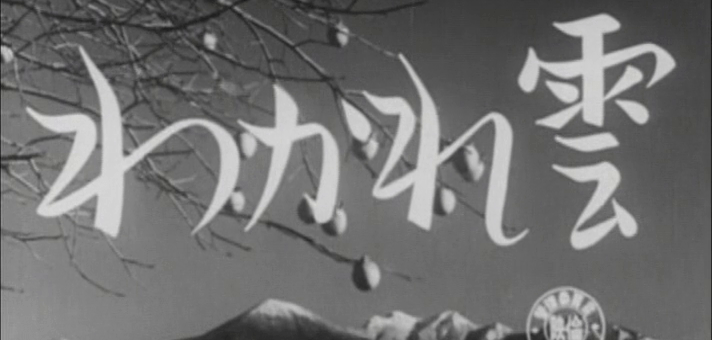
Dispersed Clouds (わかれ雲, Heinosuke Gosho, 1951)

Heinosuke Gosho made his name before the war as a master of “shomingeki” – often humorous but generally naturalistic portraits of lower middle class life. Becoming synonymous with a Chekhovian mix of laughter and tears later dubbed “Goshoism”, he continued into the post-war era as one of its most prominent humanists, less directly sentimental than Kinoshita but with no less faith in human goodness. Always ahead of the curve, he was among the first Japanese directors to break with the studio system, setting up his own production company (along with director Shiro Toyoda, cameraman Mitsuo Miura, and writers Jun Takami, Junji Kinoshita, and Sumie Tanaka), Studio Eight, after becoming embroiled in the industrial disputes which engulfed Toho in the late ‘40s. Gosho’s participation was apparently more out of a sense of loyalty to his mistreated colleagues than it was political conviction, but in any case he found himself unable to continue working in a system which prevented him from expressing himself to the fullest of his intentions.

1951’s Dispersed Clouds (わかれ雲, Wakaregumo) was the first film released by Studio Eight, distributed by Shin Toho (the “new Toho” set-up by those same colleagues Gosho had supported in the ‘40s). In a sense it addresses similar themes to other post-war films making use of the familiar “cloud” metaphor, but these clouds are dispersing in more positive directions in that they are wilfully floating away from the traumatic past towards a brighter, more compassionate future, as perhaps was Gosho as he embarked on a new phase of his career.

The heroine, Masako (Keiko Sawamura), is a woman caught between old worlds and new. Very much of the post-war era, she is a university student who intends to work after graduation and values her independence but nevertheless is also looking back towards a childhood she feels she was denied, gradually coming to understand that it was she who denied herself in her resentful mistreatment of her young step-mother in mourning of the birthmother she lost at only six years old. The cloud from which she originally disperses is a group of five fellow students with whom she has gone on a walking holiday exploring rural Japan – an increasingly common pastime in the post-war era but one perhaps still a little unusual for five young women travelling alone. Accompanying her friend into a local photography shop in search of an extra roll of film for her camera, Masako receives the unwanted attentions of the storeowner and makes a speedy escape only to fall ill outside the station and cause the gang to miss their train. Irritated, Masako tells the others to go on without her while she stays in a nearby inn convalescing from what is apparently light pneumonia but also, it has to be admitted, an intense bad mood. 

Masako’s friends are keen to help her, but also exasperated. “You never accept the kindness of others” they lament to her passive aggressive desire not to bother them on their trip, while later plotting how best they can help her seeing as she wouldn’t accept their money if they tried to give to her so she’ll be able to pay for the doctor after they’ve left. They never really consider waiting for Masako to recover, resolving to continue on with their holiday, but do check in on her from time to time from the road with the offer to join them later seemingly open. Meanwhile, they’re all swooning over the improbably handsome country doctor, Minami (Yoichi Numata), who swoops in to treat Masako with a no-nonsense yet caring bedside manner.

Only six years older than Masako, Minami is a certain young man who has found his forward path in life. He has his own small practice which is woefully ill-equipped to cater for the entire town (he can’t admit Masako because he is already overflowing with patients sleeping on the floor), but dreams of building another clinic in an even smaller village further up the mountain where they don’t even have electricity. Despite her friends’ giggling, Masako is in too much of a mood to notice Minami much from her sick bed but later takes a liking to him though mostly in flight when her hated step-mother Tamae (Taeko Fukuda) finally arrives to take her back to Tokyo.

While at the inn, Masako bonds with the kindly maid, Osen (Hiroko Kawasaki), who brought her to there in the first place after noticing her in distress at the station. The innkeeper, who has a flighty modern daughter of her own, is not best pleased that Osen has brought sickness into the house and even less so that it’s a young woman whom she is not convinced is the right kind of clientele (her attitude changes when Tamae arrives laden with expensive gifts). Osen, who lost a husband in the war and daughter in infancy, takes to the young woman with maternal warmth – something which Masako has been seeking ever since losing her birth mother. A woman without a child and a child without a mother easily slip into a familial relationship, but rather than jealous Osen is only sad when she sees how much Tamae is trying and failing in the same role while Masako resolutely rejects her out of nothing more than childish resentment.

Masako, self aware to a point, describes herself as “spoiled, nervous, and selfish” and seems to want to change without knowing how. She tells Minami that she dislikes people in general because they’re all liars and can’t be trusted. Nevertheless, she finds herself hanging around Minami’s clinic in order to avoid Tamae and half convinces herself she is in love with him. An ill-advised five mile hike to the next village to find the earnest young doctor provokes an awkward encounter between the two in which it becomes perfectly obvious that Minami is devoted to his practice, sees Masako only as a patient, and is not really interested in her newfound desire to pursue a deeper union. He tells her, politely, that she is too much trouble and would only be an inconvenience. He doubts that she, a middle-class woman from Tokyo, will be able to adjust to the privations of life in the mountains and is perhaps unconvinced that she has acquired the sufficient maturity to try after just one night of having fun “helping people”.

Masako is not wounded by his words but is enlightened by them on discovering that Minami has lost people too – his brother and friends in the war, but where her childhood loss has made her self-involved and resentful, his grief has made him generous and openhearted. Minami has dedicated himself to the wellbeing of all mankind, which might or might not mean that he has little time for deeper individualised connections, but in any case though she doesn’t realise it herself what Masako is seeking isn’t Minami or a romance but a path back into the world as someone less closed off and unforgiving. Thanks to Osen’s warmth and Minami’s generosity she is able to escape her sense of self-imposed inertia and let her mother go.

Because of this she gives to Osen the precious silver spoon she had treasured as a keepsake from her mother, remarking that she doesn’t need it anymore, while Osen then gives her the rather ironic gift of a spoon case she’d knitted as a present. Though the ending is positive with Masako preparing to leave the transitory space of the mountain town to return to Tokyo “healed”, it is also filled with a quiet anxiety for the older Osen who has, in a sense, been bereaved twice in losing another daughter and being left all alone, knowing that Minami will soon be off to his own bright future. Osen made her new start some time ago after reaching the forward-thinking conclusion that she wasn’t happy with the idea that women must have soft hands. She declares herself happy in a calm sort of way, but is also filled with regrets from the past in having chosen to marry the man chosen for her over the one she loved and finding only unhappiness. Her counselling of Masako not to make the same mistake is perhaps one of the things that sends her, mistakenly, off towards Minami, but unlike the younger woman Osen seems primed to remain in the liminal space of the mountain town unable to leave the past behind in order to move forward in a more positive direction. 

“This world is not so easy” Masako is repeatedly told, but in true Gosho style, it needn’t be so hard if only you learn to live generously with a forgiving heart. The rather mercenary relationship between the innkeeper and her flighty but shrewd daughter is directly contrasted with the innocent yet melancholy one between Osen and Masako, but perhaps neither is really more positive than the other only different. In any case, Osen and Masako, like any parent and child, must eventually part. Masako boards the train into the future smiling brightly, a cloud dispersing from the whole, unburdened by the traumatic past and floating defiantly forward on a path of her own choosing resolved to live for others rather than fixating on her personal pain.


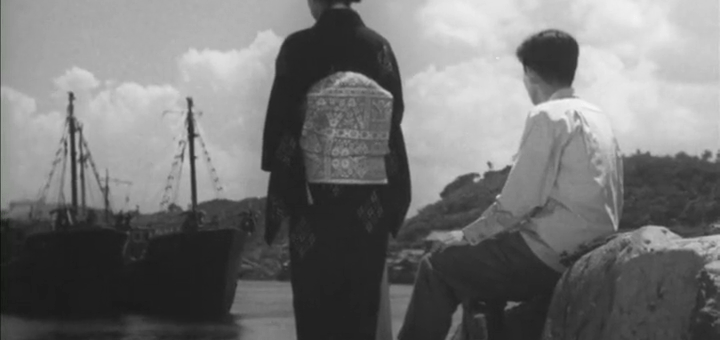
Fireworks Over the Sea (海の花火, Keisuke Kinoshita, 1951)

In the films of Keisuke Kinoshita, it can (generally) be assumed that the good will triumph, that those who remain true to themselves and refuse to give in to cynicism and selfishness will eventually be rewarded. This is more or less true of the convoluted Fireworks Over the Sea (海の花火, Umi no Hanabi) which takes a once successful family who have made an ill-advised entry into the fishing industry and puts them through the post-war ringer with everything from duplicitous business associates and overbearing relatives to difficult romances and unwanted arranged marriages to contend with.

The action begins in 1949 in the small harbour town of Yobuko in Southern Japan. Tarobei (Chishu Ryu) and his brother Aikawa (Takeshi Sakamoto) run a small fishing concern with two boats under the aegis of the local fishing association. The business is in big trouble and they’re convinced the captain of one of the boats has been secretly stealing part of the catch and selling it on the black market. Attempts to confront him have stalled and the brothers are at a loss, unsure how to proceed given that it will be difficult to find another captain at short notice even if they are already getting serious heat from their investors and the association.

Luckily things begin to look up when a familiar face from the past arrives in the form of Shogo (Takashi Miki) – a soldier who was briefly stationed in the town at the very end of the war during which time he fell in love with Tarobei’s eldest daughter, Mie (Michiyo Kogure). Shogo has a friend who would be perfect for taking over the boat and everything seems to be going well but the Kamiyas just can’t seem to catch a break and their attempt to construct a different economic future for themselves in the post-war world seems doomed to failure.

The Kamiyas are indeed somewhat persecuted. They have lost out precisely because of their essential goodness in which they prefer to conduct business honestly and fairly rather than give in to the selfish ways of the new society. Thus they vacillate over how to deal with the treacherous captain who has already figured out that he holds all the cards and can most likely walk all over them. They encounter the same level of oppressive intimidation when they eventually decide to fight unfair treatment from the association all the way to Tokyo only to be left sitting on a bench outside the clerk’s office for three whole days at the end of which Tarobei is taken seriously ill.

However, unlike Kinoshita’s usual heroes, Tarobei’s faith begins to waver. He is told he can get a loan from another family on the condition that their son marry his youngest daughter Miwa (Yoko Katsuragi). To begin with he laughs it off but as the situation declines he finds himself tempted even if he hates himself for the thought. He never wanted to be one of those fathers who treats his daughters like capital, but here he is. Both Miwa, who has fallen in love with the younger brother of the new captain, and her sister are in a sense at the mercy of their families, torn between personal desire familial duty. Mie, having discovered that her husband died in the war, is still trapped in post-war confusion and unsure if she returns Shogo’s feelings but in any case is afraid to pursue them when she knows the depths of despair her father finds himself in because of their precarious economic situation. Shogo is keen to help, but he is also fighting a war on two fronts seeing as his extremely strange (and somewhat overfamiliar) sister-in-law (Isuzu Yamada) is desperate to marry him off to her niece (Keiko Tsushima) in order to keep him around but also palm off her mother-in-law.

Meanwhile, a lonely geisha (Toshiko Kobayashi) who has fallen into the clutches of the corrupt captain is determined to find out what happened to someone she used to know who might be connected to Shogo and the Kamiyas and falling in desperate unrequited love with replacement captain Yabuki (Rentaro Mikuni) who is inconveniently in love with Mie. Kinoshita apparently cut production on Fireworks short in order to jet off to France which might be why his characteristically large number of interconnected subplots never coalesce. Running the gamut from melancholy existential drama to rowdy fights on boats and shootouts in the street, Kinoshita knows how to mix things up but leaves his final messages unclear as the Kamiyas willingly wave their traumatic pasts out to sea with a few extra passengers in tow still looking for new directions.


Titles and opening (no subtitles)

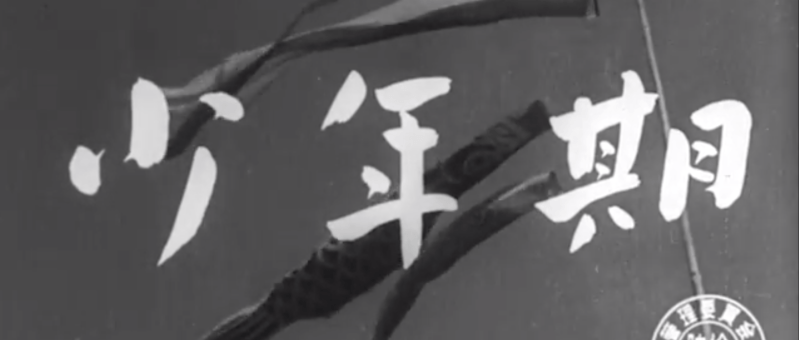
Boyhood (少年期, Keisuke Kinoshita, 1951)

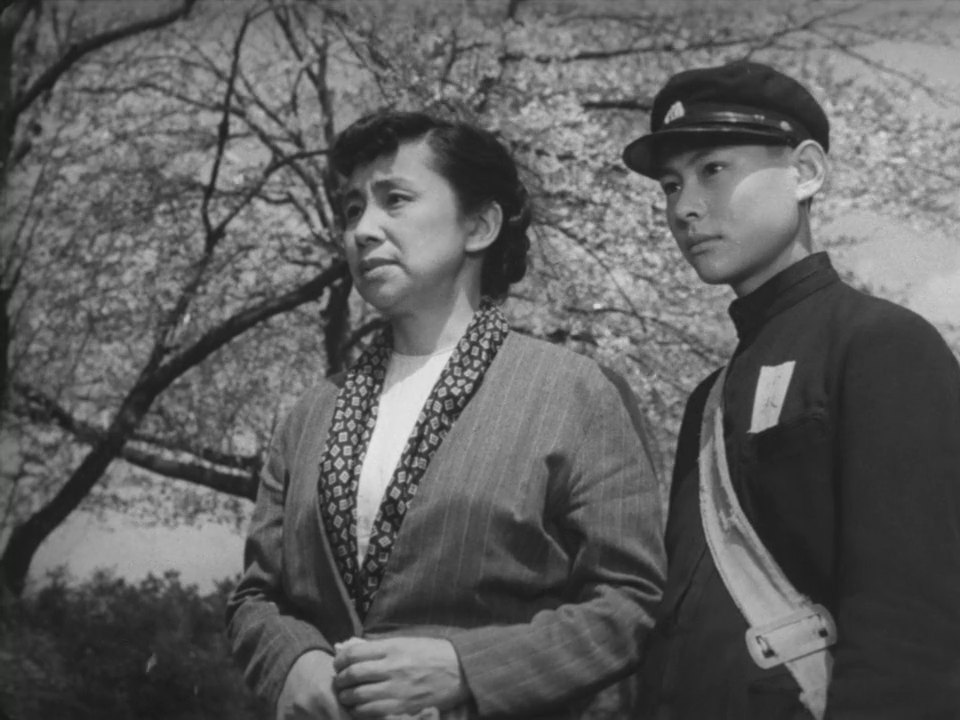
Boyhood (Kinoshita) screencapIt’s easy to look back in judgement with the benefit of hindsight, but much less so to see clearly in the moment. Keisuke Kinoshita’s Boyhood (少年期, Shonenki), arriving just six years after the events that it depicts, is a painful if sympathetic look at the conflicts of the age seen through the eyes of a conflicted adolescent as he struggles to understand his place in a world which is becoming ever colder.

In the spring of 1944, 16-year-old Ichiro (Akira Ishihama) and his mother (Akiko Tamura) investigate the possibilities of retreat, back to the country and away from the increasingly fraught and dangerous city. Their first prospect which offered the comfort of family nevertheless proves too inconvenient and so Ichiro’s mother decides perhaps Suwa, a rural area not quite so out of the way, might be better even if it would mean starting all over again with no friends or family to offer support. Ichiro, however, doesn’t want to leave at all. He is afraid of being thought a coward and doesn’t see why he should have to leave his school and classmates behind just because there’s a war on. If he had his druthers, he’d be a pilot dropping bombs, not a resentful schoolboy torn between his feelings for his family and the increasingly austere demands of militarism.

Ichiro may be 16, and if it were not for his poor health perhaps he might already have been drafted, but he seems younger and is trapped in the difficult gulf between boy and man which makes him petulant and occasionally unreasonable. His father (Chishu Ryu), a professor of English literature, is a well known social liberal which is a problem that eventually makes it impossible for the family to stay on in the city. They decide to sell the house and move to Suwa, allowing Ichiro to stay behind alone as a lodger for the family of greengrocers who are the new occupants, but despite his insistence on his independence Ichiro is not yet ready for self sufficiency and misses his family, especially his mother, dearly, while he also experiences harsh treatment from the military instructors at school thanks to his general lack of soldiering aptitude.

Like his nation, Ichiro is lost in a fog of confusion – torn between the prevailing ideology of the age and that of his gentle hearted father. His problem is that as he is still “a child” and the conditions in which they find themselves make openness difficult, nobody is willing to talk to him seriously about the issues at hand – his father perhaps less out of fear or reticence than because he is acutely aware that his son must come to his own conclusions even if those conclusions prove contrary to his own. Thus, much to Ichiro’s consternation, he refuses to allow him to enrol at a military academy but does not explicitly state why, leaving him with only the vague idea that his father is “anti-war” and therefore a social pariah in a nation where everyone is expected to do their duty.

Ichiro begins to resent his father for the family’s plight, certain that he is the reason they were forced out of their home and also the ongoing cause of his mother’s suffering as she finds herself becoming the family breadwinner as an unlikely milk lady – a job she was only able to get thanks to the friendship of a gregarious neighbour, herself a fellow evacuee in a similar position. Far from the community spirit such situations are said to engender, Ichiro and his family find themselves perpetually excluded, viewed with suspicion as “outsiders” and at the bottom of the pile when it comes to the distribution of resources. “Extra” people get only the extra after the real villagers have had their fill. Meanwhile, Ichiro is bullied by the full on fascists at school, one of whom is the son of a local military commander and has fallen completely under the militarist spell.

Everyone is always telling Ichiro that he will come to understand when he is older. Being young, he resents this intensely but eventually comes to see that they were right, some things can only be understood with the weight of experience. With the war’s end and the eventual defeat of militarism, the fog begins to lift, allowing him to see that the prevailing ideology is not always the correct one and that there’s something to be said for quiet resistance and sticking steadfastly to one’s principles even if it would be much easier to go along with the majority. His father, however, reminds him that those who chose to do just that can hardly be blamed and will likely suffer in whatever is to come. They will need the all love and compassion in the world in order to find a new, less destructive path than the one they had been obliged to walk through a time of fear and madness. Using imperialistic song and propaganda to ironic, somewhat chilling effect Kinoshita presents a characteristically empathetic portrait of a “difficult age” in the life of a young man and his country who each find themselves emerging from chaos and confusion into something completely unknown and perhaps frightening but open and filled with possibility.


Title sequence and opening (no subtitles)