Murder on the Last Train (終電車の死美人, Tsuneo Kobayashi, 1955)

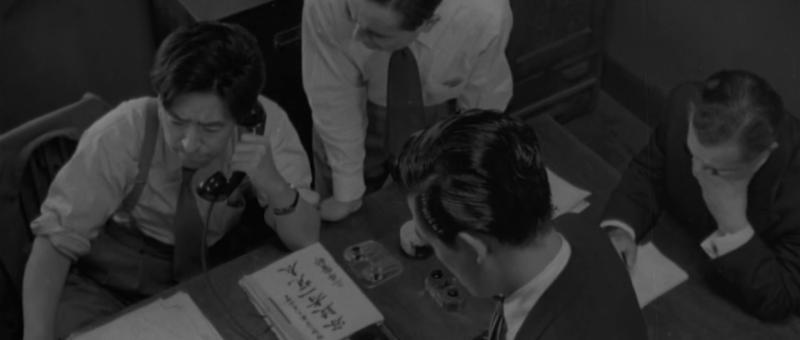
Rather than the hard-boiled tale the title may suggest, Murder on the Last Train (終電車の死美人, Shudensha no Shi Bijin) seems to be one of a number of films made in the early post-war era designed to improve the reputation of the police force. Just as in Bullet Hole Underground, we’re shown several scenes showcasing police technology and depicting detectives as men of science rather than an authoritarian force extracting confessions and pressuring suspects. The film went on to inspire a long-running series of police procedurals, and is shot in the style of a documentary lending an air of realism to its tale of murder, desperation, and spiralling debt.

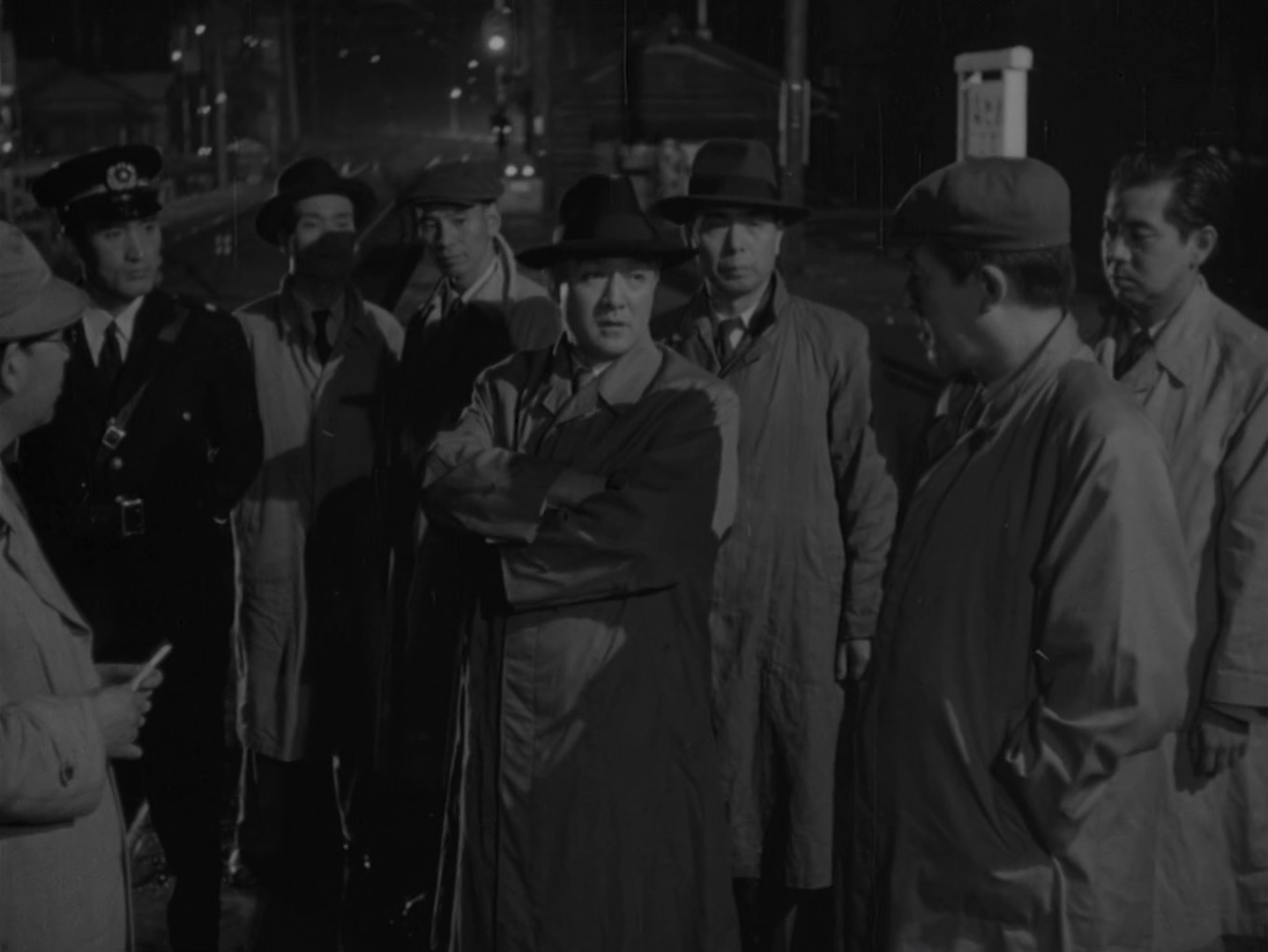
Yet all the police know in the beginning is that a young woman has been found dead on the last train out of the city at its final stop of Mitaka. Times being what they are, they don’t even know who she is, and have only slim leads to go on such as the possible sighting of a middle-aged man running away across the tracks, though it was dark and raining so no one can be quite sure. Nevertheless, we quickly see the law enforcement machine spring into action. The call centre is alerted and arranges for detectives from the top murder squad to attend the scene. The narrator tells us that they are ready to respond at any time of day or night, and that, like a pack of wolves after their prey, they will not rest until they’ve apprehended the guilty party. The way this and the closing statement are phrased makes it sound a little like the squad is sort of eager for a murder to occur to have something to do, which probably isn’t the intention but does make them seem a little blood thirsty. Especially as one of the policemen we’re introduced to is said to care about nothing other than murder. 

Nevertheless, the narrator introduces us to all of the squad members who each have their quirks from the henpecked husband to the former monk. There’s a running gag that they can’t get anything done at their office because of constant noise outside from advertisements, festivals, and children singing. Despite all of their technological advances, all they can really do to begin with is wander round Mitaka with photos of the victim along with one of a man found inside a locket she was carrying, asking local people if they know them. They can only assume the woman must have lived in Mitaka because she was presumably killed between the previous stop and the train’s final destination, but there are other reasons she may not have alighted earlier. 

The trail eventually leads them to a land broker, Hayakawa (Eijiro Tono), who has a solid alibi but is acting in an incredibly suspicious way. He also turns out to be in mountains of debt, and may have been acting recklessly trying to right himself financially, while a young man he’s acquainted with, Saburo, may have equally been hooked on the idea of living the high life on stolen money. Another man has been embezzling from his company with no real explanation given as to why save possibly trying to get himself into a financial position appropriate for marriage. The implication that this economy is still a crime factory filled with desperate people who do anything they can either to escape their straitened circumstances or protect what they have.

That might be one reason the police, who all seem very nice and, in general, treat suspects and witnesses kindly and with respect, are keen to get away from the idea the murder may have been a random crime perpetrated by someone trying to ease their frustration or strike back against society. People can feel reassured that this young woman’s death can be explained because it means they are in less danger from a threatening world. The policemen are also there to provide that reassurance, suggesting that any crime that occurs will be swept away neatly, without really dwelling on the other implications of a super-powered police force. The narrator explains that most crimes are committed simply, and for simple reasons, which is comforting, in a way, but also not. In any case, the central message is that modern law enforcement is scientific and compassionate, and the police force a well-oiled machine designed to protect all citizens from the threat of crime wherever and whenever it may arise.
Sisters (姉妹, Miyoji Ieki, 1955)

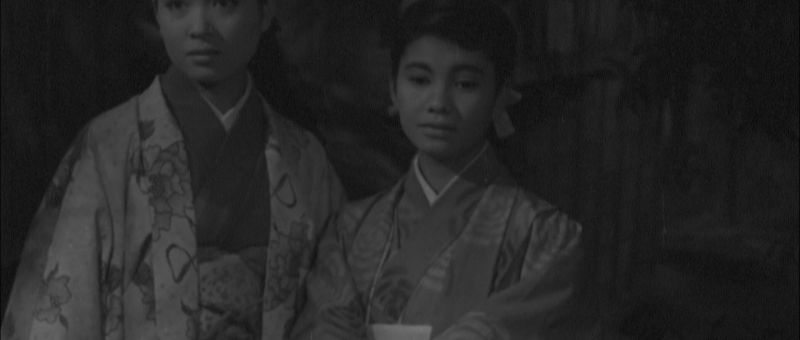
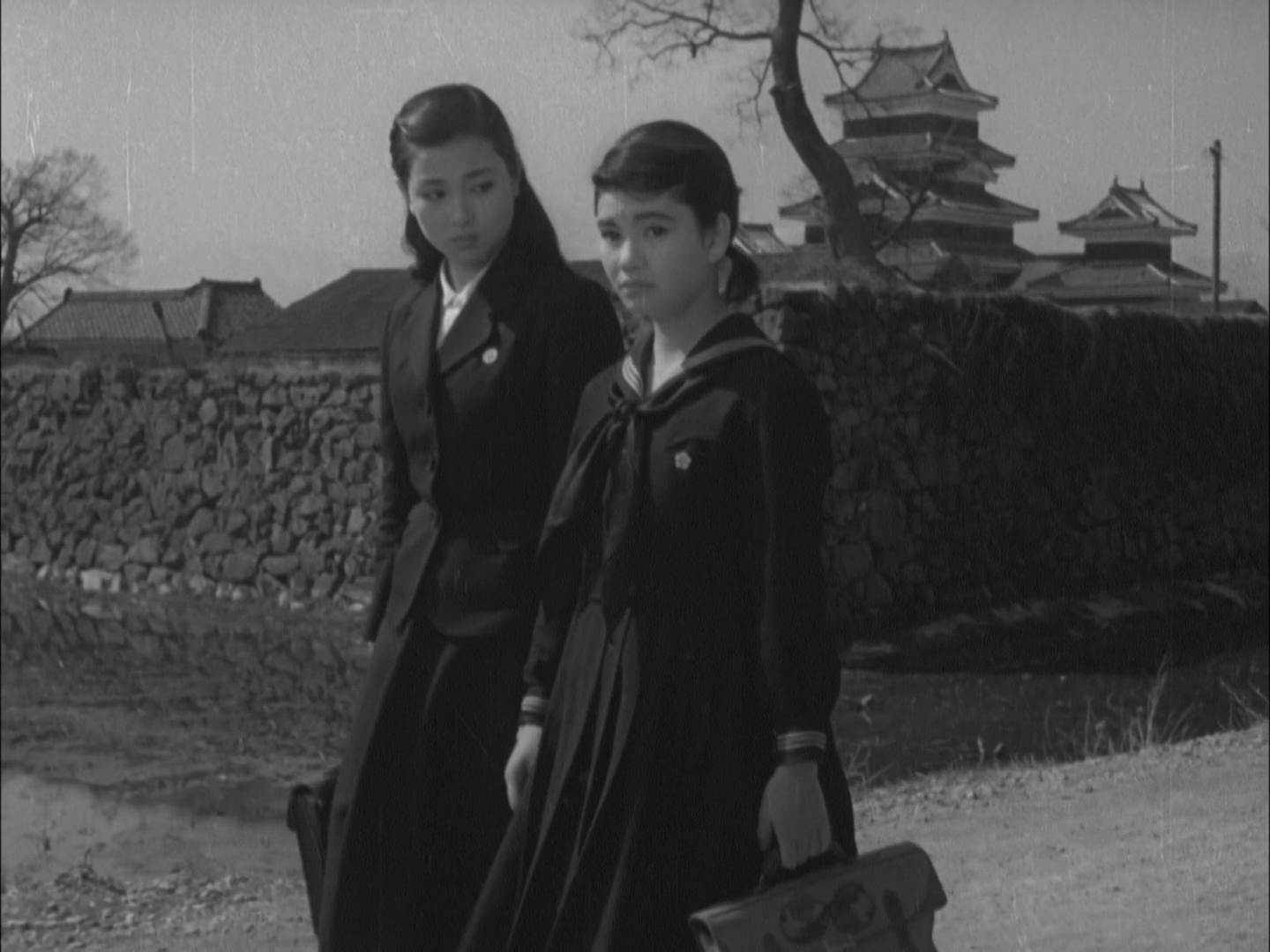
Two sisters find their paths diverging amid the changing society of post-war Japan in Miyoji Ieki’s adaptation of the autobiographical novel by Fumi Kuroyanagi, Sisters (姉妹, Kyodai). Updated to the present day and co-scripted by Kaneto Shindo, the film paints the sisters as representing a generational divide with the older, much more conservative of the girls is drawn to a traditional lifestyle while equally corrupted by the city in her conversion to Christianity, while the younger is a truth-telling free spirit deciding that she doesn’t want that kind of life and will find a husband for herself if indeed she ever decides to marry.

The Kondo family is evidently quite progressive in that they are not wealthy but have chosen to send both of their older daughters to study at middle and high school in the town where they lodge with their mother’s sister (Yuko Mochizuki). They also have three younger brothers who have stayed with their parents in the village, while their father (Akitake Kono) works at a hydroelectric dam. The fact that he works at a power plant aligns him with the post-war recovery which is largely built on the back of these new engineering endeavours, but there is little discussion of the ways in which they’ve changed and disrupted rural life. 

As New Year approaches, everyone is looking forward to them meeting their end of the year challenge so they’ll get a 1000 yen bonus only for a sudden outage to occur on the deadline day. The older sister, Keiko (Hitomi Nozoe), becomes fond of a worker named Oka (Taketoshi Naito) who is part of the labour movement and often sings Russian songs but is an economic migrant from another town living frugally while sending most of his pay back to his mother and siblings. He is already supporting a family, and therefore has no prospect of marriage for the foreseeable future. Even if he and Keiko have taken a liking to each other, they each accept the practical reality and agree that it is better that Keiko accept an arranged match her parents have set up for her with a young man who works in a bank. The groom’s occupation echoes the increasing urbanisation of the nation, as the parents clearly believe the marriage will buy Keiko a much more comfortable life in a higher social class even if Keiko seems to want to stay in the village.

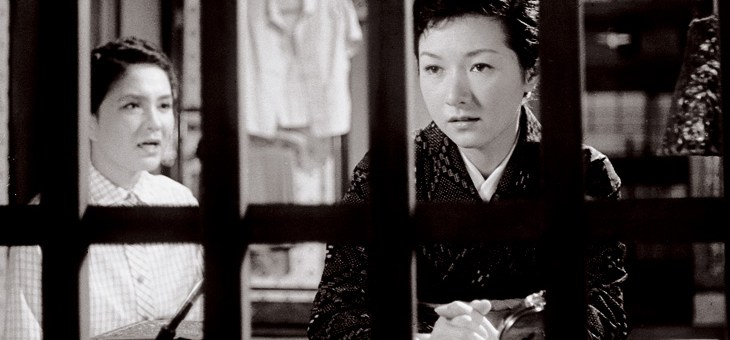
While they lived in the town, Keiko converted to Christianity out of loneliness because she could talk to God any time she wanted. Toshiko (Hitomi Nakahara), the younger sister, points out it might have been a better idea to make friends who were a bit more local, but despite appearances Keiko seems better suited to a more old-fashioned way of life. Christianity reinforces her conservatism in that she hopes to always be pure and correct and takes against those she does not think to be. On their visit home, the girls witness a young woman they know be beaten by her husband who is much older than her. Keiko takes against the woman and rudely leaves her home. Later the woman is beaten again because her husband discovers a young man in their home. No additional explanations are sought, the woman is assumed to have been involved with another man more her own age, but surprisingly some of the villagers speak in her defence telling her husband he’s being unreasonable and raising the double standard that men do this sort of thing all the time. The woman tells Keiko to be careful whom she chooses for a husband. She came to this village never having met the man she would marry, and now she’s stuck here with a child. Her only ray of light is that she will raise her son to be a better man than his father. 

Keiko’s future happiness depends entirely on the nature of a man she doesn’t know. In the town, the girls had been somewhat disillusioned when their long-absent uncle Ginzaburo (Jun Tatara) returns home from working away and they catch him drunk in the street cavorting with geisha. This is really a double betrayal, not only stepping out their aunt, but selfishly spending what little money they have on trivial pleasures for himself. But like an inverted picture of village life, their aunt seems not to mind and accept it as just something men do. The same uncle is also picked up for illegal gambling, which is more of problem in a practical sense aside from additional evidence of this moral failings. 

All of these experiences have certainly soured Toshiko’s view of marriage, and most particularly of arranged ones which are something that belongs to the older Japan that Keiko still inhabits. A worker at the plant asks Keiko if she’ll be going to university, but she replies that girls in her family don’t and that she’d rather be married. Toshiko, meanwhile, on witnessing the suffering of those around her and most particularly the poor decides she’d rather be a doctor or politician to try and change society. She supports the strikers at the plant who are protesting against job cuts, but also says they should have resisted more when the protests fail as if they were somehow at fault in their lack of commitment. Her father’s reaction to failing to stop the lay-offs is to stop Toshiko going on her school trip because the other workers’ children can’t even go to school now their fathers have been let go, which doesn’t really make sense and is not really fair, though he is also worried about his job amid this very changeable society. 

For Toshiko’s part, she remains staunchly of the village but is ironically more suited to life in the town, which is to say the future. People are always telling her that she speaks her mind too often and that people in the town aren’t as forgiving as those in the village, but she continues to speak as she finds and indifferent to censure. Keiko criticises her for behaving like a boy, wearing rustic work clothes and chopping wood while they’re home for New Year and not helping out with the domestic work like cooking and cleaning which she thinks of as a daughter’s duty. Toshiko develops a friendship with a wealthy girl from school who apparently likes her more than a friend and asks her to be her first kiss, lending a queer-coded dimension to Toshiko’s rejection of traditional gender roles and desire for a more independent life in the town. 

She recognises both that greater class disparities exist in the urban environment than they did in the village, but also feels sorry for her friend who shares the same name but is trapped by her privilege. When Toshiko visits their home, it’s clear the girl’s mother looks down on her because she’s not of their social class, while Toshiko’s friend has an older sister and younger brother with apparent disabilities that the family keeps hidden away in shame. Meanwhile, the sisters become aquatinted with an elderly couple who are both disabled themselves while their daughter is ill with TB. Without thinking, Toshiko uses a slur word to describe a disabled person when talking about her friend’s family without thinking about the fact that the father is also blind. They don’t mind at all, but if even Toshiko is thoughtless enough to use a word like that it only reinforces the prejudice of the world around her.

The implication is that if the old couple lived in the village, there would be people around to help them, but in the town everyone is anonymous and indifferent. The state should be filling in for the community, but it isn’t and there’s no one to help the vulnerable in the increasingly capitalistic post-war society. The irony is that Uncle Ginzaburo says everything was better in the war and that Japan can’t survive without conflict, while the fact the economy is improving in the mid-1950s is entirely due to the stimulus of the Korean War. Even so, Toshiko remains generous of spirit. She doesn’t agree with her sister’s decision and is worried for her, but also agrees that they can only be true to themselves and follow their own paths. This is what Keiko has chosen, no matter how it might turn out, while Toshiko has rejected it, insisting she’ll find her own husband if she wants one and vowing to be useful and fight injustice in the wider world whatever form that may take. She wishes her sister good luck as she watches her disappear over the horizon, and sets off on her own path into a future that’s equally of her own choosing.


The Wolves (狼, Kaneto Shindo, 1955)

Post-war desperation drives a collection of otherwise honest men and women towards a criminal act that for all its politeness they are ill-equipped to live with in Kaneto Shindo’s biting social drama The Wolves (狼, Okami). “Wolves” is what the criminals are branded, but the title hints more at the wolfish society which threatens to swallow them whole. After all, it’s eat or be eaten in this dog eat dog world, at least according to a cynical insurance salesman hellbent on exploiting those without means. 

Each of the five “criminals” is an employee at Toyo Insurance where they’re immediately pitted against each other, reminded that in order to qualify for a full-time position they need to meet their quotas for six months. The orientation meeting is cultilke in its intensity, the boss insisting that only in insurance can you become a self-made man while recounting his own epiphany as to the worthiness of his profession. They are told that the only two things they need are “faith and honesty”, and then “faith and pursuasion”, while encouraged to think of their work as an act of “worship”, “for the salvation of everyone”. 

Yet they’re also told to exploit their friends and family by pressuring them into taking out life insurance policies in order to help them meet their quotas. As one man points out, friends and relatives of the poor are likely to be poor themselves, but these are exactly the kind of people they’re expected to target. They’re told there’s no point going after the weathly because they’re already insured, but there’s something doubly insidious in trying to coax desperate people who can’t quite afford to feed themselves into paying out money they don’t have on the promise of protecting their families from ruin. One man even asks if the policy covers suicide and is told it does if you pay in for a year, sighing that he doesn’t want to wait that long.

“Suicide or robbery, choose one,” one of the salespeople reflects after failing to make their quota once again. They each have reasons to be desperate, all of them already excluded from the mainstream society and uncertain how they will find work if the job falls through. Akiko (Nobuko Otowa) is a war widow with a young son who is being bullied at school because of his cleft palate for which he needs an expensive operation. She’s already tried working as a bar hostess but is quiet by nature and found little success with it. Fujibayashi (Sanae Takasugi) is widowed too with two children and five months behind rent for a dingy flat in a bomb damaged slum where the landlord is about to turn off her electric. Harajima (Jun Hamamura) used to work in a bank but was fired for joining a union and is trapped in a toxic marriage to woman looking for material comfort he can’t offer. Mikawa (Taiji Tonoyama) too is resented by his wife, a former dancer, having lost his factory job to a workplace injury while the ageing Yoshikawa (Ichiro Sugai) was once a famous screenwriter but as he explains people in the film industry turn cold when you’re not hot stuff any more. 

Their unlikely descent into crime has its own kind of inevitability in the crushing impossibility of their lives. They may rationalise that what they’re doing is no different from the insurance company that exploits the vulnerable for its own gain, thinking that if they can just get a little ahead they’d be alright while feeling as if robbery and suicide are the only choices left to them and at the end of the day they want to survive. Perhaps you could call them “wolves” for that, but they’re the kind of wolves that give the guards from the cash van they robbed their train fare home after bowing profusely in apology. The real wolves are those like Toyo who think nothing of devouring the weakness of others, promising the poor the future they can’t afford while draining what little they have left out of them. As the film opens, Akiko looks down at a bug writhing in the dirt attacked by ants from all sides and perhaps recognises herself in that image as the sun beats down oppressively on both of them. Breaking into expressionistic storms and unsubtly driving past a US airbase to make clear the source of the decline, Shindo paints a bleak picture of the post-war world as a land of venal wolves which makes criminals of us all. 


The Beauty and the Dragon (美女と怪龍, Kozaburo Yoshimura, 1955)

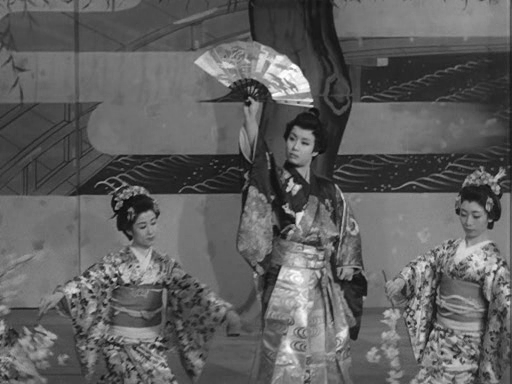
A clever princess takes advantage of a courtly crisis to save the kingdom and arrange her own marriage in Kozaburo Yoshimura’s adaptation of the well-known kabuki play Narukami, The Beauty and the Dragon (美女と怪龍, Kabuki Juhachiban: Narukami – Bijo to Kairyu), produced in celebration of the 25th anniversary of the Zenshinza kabuki troupe and starring many of its actors. Scripted by Kaneto Shindo, the film mines a deep seam of irony in the classic tale while allowing its heroine to take centre stage outwitting most of the feckless men from the palace with some clever manoeuvring and utilising the key asset of her femininity.

In a meta touch, Yoshimura opens in a kabuki hall where young lord Toyohide (Chiyonosuke Azuma) is called to perform a dance for the regent, Mototsune, only the show is soon interrupted by a procession of peasants who’ve come to protest the ongoing drought. The earth is cracked and the rivers run dry, but still they are told that they will be informed about the outcome of their petition at a later date. The peasants clearly believe that the emperor really is a god and expect him to fix this problem as soon as possible but in private Motosune is irritated if perhaps accurate in stating that the weather is not their responsibility and they can’t seriously be expected to deal with it. Annoyed by the noise of the protests around the palace, he orders that the peasants be sent away though his courtiers are more sympathetic and know that the peasants simply have no one else to turn to for help. If something isn’t done they will have no choice but to escalate their rebellion.

But as it turns out, the problem actually is their responsibility and is rooted in the misogynicistc patriarchy of the feudal world along with a dose of courtly intrigue. When shinto priest Narukami (Chojuro Kawarasaki) was consulted about the birth of a royal child and prophesied that it would be female, he was hired to alter its destiny and miraculously changed its sex to male through the power of prayer. In return, he was promised that a shrine would be built for him but now it’s 30 years later and he’s sick of waiting. Accordingly, he’s taken the Dragon God who brings the rains hostage and refuses to release him so the rain can return until he gets what he was promised. 

It seems that Mototsune has a very bad habit of promising people whatever their heart desires but conveniently forgetting about it once the job is done. This time though the problem is that disgraced prince Hayakumo (Kunitaro Kawarazaki) stopped the building of the shrine in fear of offending a rival temple, Ezian, which contains a large number of very intimidating bandit monks. Hayakumo is intent on using the courtly chaos to improve his own position, hoping that other lords will fall from favour leaving a space for him to fill. He’s also been obsessively courting princess Taema (Nobuko Otowa) who refuses him because he’s so obviously oily, and in any case she’s in love with Toyohide but can’t marry him seeing as he is already betrothed to another woman whom he does not care for. In a bizarre twist of fate, a scholar insists that the only way to break Narukami’s magic is by learning to read a scroll that once belonged to Taema’s grandfather so they charge her with deciphering it offering to give her whatever her heart desires if she ends the drought which is of course Toyohide’s hand in marriage. 

The ironic thing is that Taema doesn’t for a second believe that reading the scroll will make any difference to anything and quite clearly thinks the scholar they brought in who said it would is a charlatan who actively looks down on her. Yet she, like everyone else, does in fact believe that the cause of the drought is the Dragon God’s imprisonment and Narukami’s dark magic. Advised by her trusty maid, she learns to see opportunity in what could otherwise be a dangerous situation and ably out manoeuvres the foolish men at the court. She wields her femininity, the reason they discount her, as a weapon against the repressed masculinity of Narukami who is said to have been a monk since childhood and has never touched a woman. 

After getting her maid to do a sexy dance for his underlings so that they get drunk and pass out, she then sells Narukami a tragic love story pretending that she simply wants to wash some clothes that belonged to her late husband. Essentially she seduces him, but also targets his weakness in his repressed desires as a monk causing him to transgress his vows and in effect break his own magic by destroying his powers. On seeing her bared ankles he faints, and then ends up telling her how to break the curse after becoming drunk and randomly assuming they are now married. 

As she’d somewhat dangerously told Toyohide, the real problem is that the Regent is weak. Indifferent to the fates of his people and in any case an ineffective leader, he invites intrigue in the court. Yet court itself is weak precisely because it is rooted in patriarchy and defined by male weakness. Even Taema’s beloved Toyohide is preening and jealous, suddenly irritated to discover that Hayakumo had been courting her while later suspicious that she will be alone with Narukami. He was also denied romantic freedom in an inability to escape the marriage arranged for him by his father at three and reliant on Taema finding a way for them subvert the feudal order and be together. The play in fact ends with the rage of a scorned man as the aptly named Narukami is transformed into the god of thunder and vows vengeance against the woman who humiliated him. 

Taema, by contrast, is able to seize control ridding herself of Hayakumo while securing her marriage to a man she choses (the betrothed bride is herself similarly freed and appears not to mind the dissolution of her engagement having had no particular feelings for Toyohide, a man she barely knew) in addition to saving the kingdom along with the lives of peasants by unleashing the Dragon God. Having begun in the theatre, Yoshimura soon moves out to the court and then the country but eventually cycles back for the climactic dance of anger with which the film closes as if echoing a howl of pain from the wounded feudal era circumvented, if not ended, by a clever woman leveraging her only sources of power in a world defined by corrupted male authority. 


Twilight Saloon (たそがれ酒場, Tomu Uchida, 1955)

A generational divide echoes around a beer hall filled with a defeated sense of bonhomie until finally finding a point of rest in Tomu Uchida’s elliptical single set drama, Twilight Saloon (たそがれ酒場, Tasogare Sakaba). The melancholy title captures the feeling of finality which seems to overhang the bar but equally the shift that is taking place as the old must decide whether they will allow the young to be free or forever trap them with the legacy of their own mistakes. 

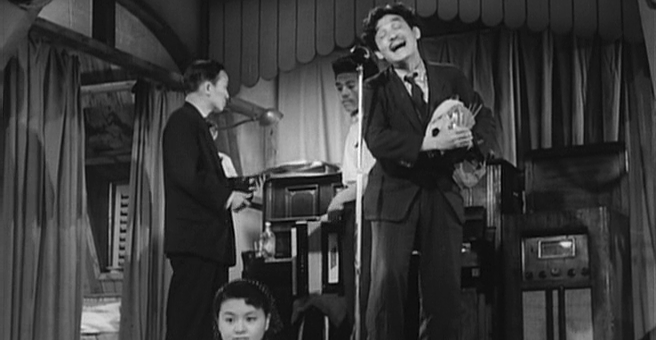
The tensions are obvious as a once feared military colonel nicknamed “Demon” Onitsuka (Eijiro Tono) strides into the bar cutting a slim, anxious figure evidently a shadow of his former self. Puffing out his chest, he lives on memories of past glory claiming that though he may now be a lowly estate agent, he will rise again should the occasion call and will never lose his soldier’s spirit. Kibe (Daisuke Kato), a regular at the bar, is excited to run into him, his former commanding officer, and evidently still holds Onitsuka in some esteem but the pair of them seem ridiculous, even a little pitiable, as relics of the wartime generation unable to move into the post-war era. Onitsuka has a minor apoplexy when the table of students across from them begin singing a communist song explaining it as evidence of the absence of morality in the contemporary society. Somewhat embarrassingly, he and Kibe begin singing along to what they thought was a classic military ballad sung by someone outside only to abruptly realise that it is the communists once again. Strapped for cash, Onitsuka makes an abrupt exit leaving a confused Kibe to chase after him yelling “put it on my tab.” 

“Put it on my tab” might as well be the life philosophy of regular patron Umeda (Isamu Kosugi) who unlike Onitsuka and Kibe is wracked with guilt over his wartime experiences and has dedicated the remainder of his life to making amends by paying it forward. Once a famous painter, he feels he sullied his art by wilfully depicting warfare in a manner that sought to glorify it and may have led others astray ultimately costing them their lives. Umeda feels he no longer has a right to practice his art and has made a sacrifice of it in atonement, his earnestness leant a poignant quality by the fact that he is played by Isamu Kosugi who had himself starred in a propaganda film co-produced by Nazi Germany. 

Yet he’s far from the only one who’s abandoned or compromised his art because of what he sees as a moral failing. All knowing, Umeda recounts the history of accompanist Eto (Hiroshi Ono) who he claims once lives under a different name and returned from abroad to found a revolutionary opera company only to be betrayed by his protégé who left to set up his own revolutionary company taking Eto’s wife with him. Eto later stabbed her in jealously and like Umeda has lived the rest of his life in quiet contemplation slumming it in this backstreet bar while training up a new protégé, Kenichi (Takuya Miyahara), said to be the son of a former bandmate. Eto is a vision of defeat, Umeda remarking that his time has most likely come, walking around in a Russian tunic unable to let go of the past. Emi (Keiko Tsushima) is much the same. Once a promising ballet dancer she feels she’s lost the right to dance after becoming a stripper apparently because of a bad man who later breaks into the bar and slashes her arm with a knife echoing Eto’s dark crime of passion. 

This might in part be why she is so keen to ensure that Eto will not prevent Ken from taking advantage of a valuable opportunity because of his own jealousy and resentment. The offer comes from Nakaoji, the leader of a national opera group and the man who once betrayed Eto though as the snippy “intellectuals” at another table point out he may once have been a “revolutionary” but is now an old man and has in effect become the establishment. The dilemma brings things full circle, the generational divide which once existed between master and pupil has now been eclipsed by a turn of the wheel. Eto cannot help but recognise Nakaoji, the cause of all his suffering, but Nakaoji does not acknowledge him and after all he has another name. 

Umeda pleads with him to allow Kenichi to go, not to ruin his life in the same way his was ruined by holding on to his pettiness and resentment as the man who took all from him returns to take his surrogate son too. His call is to those of his generation who bear the responsibility for wartime folly that they should accept that the world now belongs to the young and it is their duty to nurture them while setting them free to pursue their own destiny. The young customers in the bar are universally cheerful, still drunk on the exuberance of youth while those a little older are mostly defeated and melancholy, meditating on their own failed revolutions unable to move forward or let go of the past. 

Yet the youngsters who work there aren’t quite so happy, barmaid Yuki (Hitomi Nozoe) caught between the posturing of current and former gangster boyfriends while simultaneously discovering that her mother has been taken ill. She lost her father in the war and her home to the bombing and claims she has nothing other than the love of Masumi (Ken Utsui), a young tough who wants her to abandon her mother and schoolgirl sister to go with him to Osaka. Umeda adds 3000 yen to his tab, Yuki’s monthly salary, when the manager vacillates over granting her request for an advance to pay for her mother’s medical care seeing as they no longer even have rice at home. Later he runs into an old journalist friend who simply gives him the same amount of money from his wallet as if it were mere pocket change. The fact that Yuki doesn’t go with Masumi is not because she is afraid to or constrained by the burden of her family but an active choice to embrace her responsibility to others over her personal desire much as Umeda has already been doing. 

This maybe a twilight place, peopled by the hopeless and downtrodden, but there’s life here in all of its confusing randomness. A young man at one point runs in and jumps over the balcony to the stairs eventually chased by an older one, an incident otherwise unexplained just like the minor argument between a woman clutching a cat and the man who may be a patron of sorts who also brush through the bar. Uchida gives the snobbish left-wing intellectuals quite a kicking in their pithy discussions about existentialism and mocking of the students for trying to actually do something rather than just talk about it even if it’s singing in the street. Shot as if the action were unfolding in real time, the camera floats around the saloon as if it were itself a ghost lighting on the small moments of action that contribute to the incongruously warm atmosphere before ending up more or less where it started with a man singing on stage to an empty room. Even so, it does it with equal measures of hope and melancholy as age quite literally retreats and surrenders the space those who may still fill it.


Original trailer (no subtitles)

The Green Music Box (緑はるかに, Umetsugu Inoue, 1955)

An incredibly surreal musical kids adventure, The Green Music Box (緑はるかに, Midori Haruka ni) saw the film debut of future Nikkatsu star Ruriko Asaoka who in fact took her stage name from the character she plays in the movie. She was born in Manchuria in 1940 as Nobuko Asai (she retains the first character of her surname but the second “oka” or “hill” is also inspired by the “faraway” in the Japanese title). Her father was a political secretary but the family was extremely poor and her entry into the film world came about through an open audition for the role of Ruriko in the film adaptation of a serialised novel for children by Makoto Hojo which would be produced by Takiko Mizunoe and directed by Umetsugu Inoue. Junichi Nakahara who handled the costume design for the film personally picked Asaoka out from the 3000 applicants reportedly saying “this is the girl” after seeing her in makeup. 

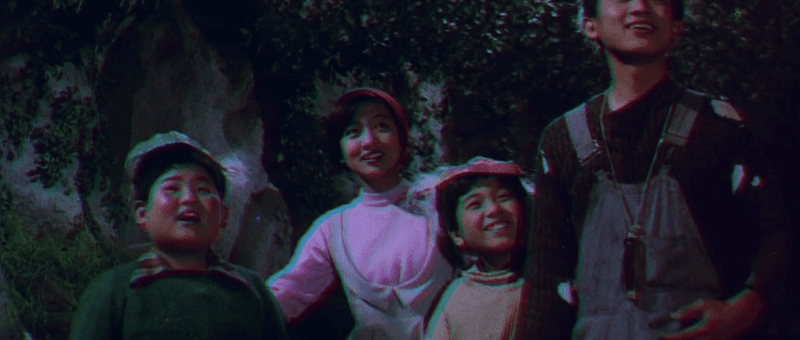
A classic children’s adventure movie, the film nevertheless has a strong theme of loneliness and displacement as each of the young protagonists either has no parents or has in some way been separated from them. Ruriko’s father is a scientist who left for a research project in Hokkaido a year previously and has since stopped responding to her letters. Missing him, Ruriko uses a green music box he had given her as a present as a means of floating off into a surreal dream world on the moon filled with children dressed as bunny rabbits who sing and dance with her. Later she teams up with a trio of orphans who have left their orphanage in search of adventure as well as another girl a little younger than herself, Mami (Noriko Watanabe), who has run away from the countryside to look for her mother in Tokyo. At the film’s conclusion all the children have happy family homes, Mami now living with her mother and the three boys adopted by Ruriko’s family meaning that she’s no longer lonely with her brothers now beside her as they all take a trip to the moon and a nation ruled by love, justice, and peace. 

Before all that, however, Ruriko and her mother are kidnapped by a spy, Tazawa (Kenjiro Uemura), claiming to be a colleague of her father’s. Explaining that Professor Kimura (Minoru Takada) has been taken ill, he bundles the pair into a car but takes them to a secret lab in the middle of nowhere where Kimura is being held and attempts to use them to blackmail him into giving up the scientific research he burned on learning that Tazawa belonged to a foreign power explaining that his creation could greatly benefit the world if used peacefully but cause great destruction if not. He manages to sneak the key to his research into Ruriko’s music box and tells her to escape with it though at the film’s conclusion he’ll decide to burn it anyway resolving that it’s too dangerous were it to end up in the wrong hands. 

Such dark events are not exactly unusual in children’s films, though the level of violence is surprising. Ruriko’s mother is taken off and hanged by her wrists while the foreign spies whip her. Though much of it occurs off screen, the whip cracks and screams are audible to Ruriko and her father while we also see her spin and twist, writhing in agony before falling silent perhaps having died as Ruriko comes to infer from the eerie quiet. Later, during the chaos at a circus which is also a front for international espionage a large goon slams the head of one of the children, Fatty (Hideaki Ishii), repeatedly into a table though he appears relatively unhurt and soon fights back cartoonishly by hitting him on the head with an iron bar. 

It’s not really clear why the spies operate out of a weird circus which is also seemingly guilty of copyright infringement given the various Disney-inspired papier-mâché masks lying around, but it is strangely scary for something meant to entertain small children including a surreal performance by Frankie Sakai in a brief cameo as a clown beckoning the kids towards the circus tent. The film was also Nikkatsu’s first colour movie using the short-lived Konicolor method and has a slightly sickly, washed out effect that lends an additional layer of discomfort to the brightly decorated circus environment. In any case, Ruriko and her friends are eventually able to triumph, regaining the music box and even convincing the police that the circus guys really are foreign spies even if it’s partly down to the otherwise unexplained reappearance of her parents who are in fact alive and well. In some ways melancholy, appealing to a sense of loneliness in post-war children who either may have become orphaned or are otherwise separated from their parents, the film ends on a more hopeful note in championing the sense of family that emerges between the children themselves through generational solidarity in offering a happy ending that might seem overly optimistic but nevertheless returns the kids to the kingdom of the Moon Queen and a happy world of love, justice, and peace. 


I Live in Fear (生きものの記録, Akira Kurosawa, 1955)

Which of us is “crazy”, the man who lives in fear or the rest of us who live in its denial? By 1955, a decade had passed since the bombs fell on Hiroshima and Nagasaki, but even if the world seemed “peaceful” it was only superficial. The Korean War had “ended” in an uneasy truce only two years earlier and the world was already mired in a cold war which daily threatened to turn hot with both sides in possession of a nuclear deterrent. Akira Kurosawa’s I Live in Fear (生きものの記録, Ikimono no Kiroku) asks us if we can really say a man is “insane” if his life is ruled by a rational anxiety and if it is our refusal to accept the threat he sees which eventually drives him out of his mind. 

Our guide is gentle dentist Harada (Takashi Shimura) who has a sideline as a mediator at the family court. The case he has been called in on one particular afternoon is that of the Nakajima family which is attempting to have the ageing patriarch, Kiichi (a near unrecognisable Toshiro Mifune), declared legally incompetent on account of his increasing paranoia about nuclear attack and latent radioactivity. A wealthy self-made man and foundry owner, Kiichi has frittered away vast sums on harebrained schemes to keep himself and his family safe but after a plan to build a bunker in a remote area had to be abandoned, he’s set his heart on moving everyone to Brazil where he believes they will be safer. 

The problem is partly one of changing times as Kiichi, “despotic and selfish” as his son describes him, attempts to railroad his family into a safety they do not want or need. His two legitimate sons now operate the foundry and their lives are dependent on it, which is not to say that they are dependent on Kiichi, but if he goes through with selling the the foundry to finance his new life it will leave them all high and dry. It would be, to a certain way of thinking, the ultimate paternal betrayal but in Kiichi’s mind all he’s trying to do is “save” his family from an invisible threat. 

That family, meanwhile, is one he’s already undermined through patriarchal selfishness in fathering a series of illegitimate children he is also supporting financially but has never legally acknowledged. The parents of the illegitimate kids are worried that if the family succeeds in having Kiichi declared legally incompetent, his wife will get her hands on the purse strings and they’ll be left out in the cold. Kiichi, meanwhile, has an old-fashioned view of filial relations and never considers that the other kids might not want to come with him either even if it’s unexpectedly nice of him to include them, or that inviting your two mistresses to live in the same house as your legal wife might be awkward for all concerned. 

On the face of it, the case is open and shut. If a man causes his family to suffer through frittering money away on drink or pachinko, they would approve the motion to give another family member legal control over his finances. So why is it taking them so long to decide if Kiichi is a liability to his family or not? The problem is, his fear is entirely rational. It’s only its extent which is the problem. It’s perfectly understandable to be afraid of the ebola virus or brain-eating amoeba, but we can’t afford to spend every minute of every day consumed by fear and so they retreat into the background anxiety of our lives while we try to go on living. Yet, could it be that Kiichi has it right and we’re merely living in denial, sleepwalking into a preventable disaster while he alone has a plan for survival? 

“No place is safe” Kiichi’s son-in-law exasperatedly explains to him after he has taken drastic and somewhat ironic action, a kind of scorched earth policy designed to force his sons to follow him into a new world of safety. Pushed over the edge, Kiichi gets a rude awakening, realising that it was perhaps selfish of him only to think of salvation for his immediate family when his actions will essentially throw his workforce under the bus. Belatedly, he promises to find a way to take them to Brazil too, never realising that people have their own lives that aren’t so easily uprooted. He thinks Brazil is safer because the currents of the world seem to blow ill winds over Japan, but there are already more than enough nuclear bombs lying in warehouses to destroy the planet several times over. 

In any case, Kiichi has already destroyed his family through his various transgressions. They don’t want to go in part because they don’t particularly like him, are sick of his gruff authoritarianism, and resent his tendency to make unilateral decisions on their behalf. Strapped for cash he tries asking the illegitimate kids to return some of the money he gave them, but they too are insecure in their positions and cannot trust that they will continue to be provided for if Kiichi is deposed. Meanwhile, when Kiichi falls ill the legitimate children are only too quick to start discussing the inheritance in the absence of a will. Perhaps Kiichi isn’t much more to them than a walking wallet, all of which lends a rather poignant quality to his continual attempts to protect his family from the nuclear apocalypse in fulfilment of his fatherly duty even as he wagers their economic security to do so. 

If Kiichi is a Cassandra prophesying the end of the world, we won’t be here to be sorry we didn’t listen, but Harada and other more rational minds are shaken by the intensity of his vision. They cannot say that he is “mad” even if his anxiety has consumed his life, but nor can they allow him free rein to pursue his plans because they do not concern only himself but greatly affect the lives of others. They are forced to wonder if it isn’t we who are “insane”, quietly living our lives while all these preventable threats hover in the background, ignored. Kiichi’s mistake was perhaps that he wanted only to be “safe” in an unsafe world, not to cure it of its dangers. Few us are actively trying to eliminate ebola or brain-eating amoebas, just as few actively opposed an increasingly nuclear society, powerless as we are and were in the face of a greater threat. Perhaps Kiichi was the sanest one of all, retreating into a world of madness and infinite safety in a delusional bubble of survival in an otherwise crazy world.


I Live in Fear screens at the BFI Southbank, London on 6th & 13th February 2023 as part of the Kurosawa season.

The Swordsman and the Actress (大江戸千両囃子, Yasushi Sasaki, 1955)

Working mainly with Toei, singer Hibari Misora was able to carve out for herself a distinctive career as a tentpole movie star in the early post-war period. In contrast to other female stars of the day, Misora’s leading women are generally feisty and rebellious standing up against injustice in period films and contemporary dramas alike while she also made a point of subverting societal gender norms often crossdressing or playing with gender ambiguity. 1955’s The Swordsman and the Actress (大江戸千両囃子, Oedo Senryo Bayashi) meanwhile sees her taking a backseat to the main action but sowing the seeds for her later career as she stops a cruel samurai plot in its tracks and even gets to participate in the final showdown. 

The drama starts when young actress Koharu (Hibari Misora) misplaces her fan and is lent one by another performer which attracts the attention of bad samurai Shuzen Ogaki (Kyu Sazanaka) who recognises it as having once belonged to the Shogun. As it turns out, Koharu’s friend Hanji (Rentaro Kita) was gifted the fan by a childhood friend, a noble woman, Okyo (Keiko Yashioji), for whom he may have had feelings which would could never be returned seeing as he was the son of a maid. Having seen him in a play but feeling it would be inappropriate to meet, Okyo sent the fan in fondness but had not realised it to be valuable and is now in a difficult position as the Shogun will soon be visiting and if he does not see the fan will be offended. Shuzen wants the fan for himself to embarrass Okyo and her husband and advance his own position. Just as Okyo dispatches trusted retainer Gennojo (Chiyonosuke Azuma) to ask Hanji to return the fan, Shuzen sends in his goons killing Hanji but only after he manages to substitute a fake fan for the real one. 

What follows is a complicated game of find the lady as the fake fan and the real are swapped between Gennojo and Shuzen often via a pair of pickpockets, Oryu (Ayuko Saijo) and sidekick, who alternately help and hinder largely because Oryu develops a crush on the extremely disinterested Gennojo. As usual, Koharu is on the side of right trying to fulfil Hanji’s dying wish by returning the fan to Okyo before the Shogun’s New Year visit but is also on a side quest of her own in looking for her long lost sister. It would be tempting in a sense to view the fan as cursed as it indeed provokes nothing but trouble, not only getting Hanji killed and endangering the lives of Okyo and her son, but also provoking discord wherever it’s mentioned sending a pair of married shopkeepers into a blazing row when they realise their young son may have walked off with the priceless object (and later sold it so his mum can buy sake). 

In the quest for the fan, Koharu takes a backseat while Gennojo does most of the leg work played as he is by jidaigeki star Chiyonosuke Azuma with whom Misora would frequently co-star. Though there are hints of a romance it is not the main thrust of the drama considering Misora’s relative youth, though she does get to wistfully sing the title song several times over. Meanwhile the pair are finally joined by a late in the game appearance from veteran Ryutaro Otomo as a typically raucous ronin, Jubei, who steals the screen to such an extent it almost seems as if the film is part of a series revolving around his character who turns out to be another victim of Shuzen’s plot having been exiled from his clan supposedly for having turned down the advances of his now mistress Oren. “I, Fujisaki Jubei, may be unemployed but mine is still the sword of righteousness and it doesn’t like evil doers!” he snarls apparently quite fed up with samurai corruption. 

Sasaki certainly has a lot of fun with his fan swapping shenanigans, even going slightly experimental in an excuse to give Chiyonosuke Azuma a fan dance while throwing in additional comic relief from the bumbling pickpockets and some strangely comic death scenes but does not disappoint as the major heroes and villains reunite in the final showdown taking place as it does on stage and allowing Koharu’s troupe mistress to show off her sword skills while Oryu redeems herself and the evil samurai plot is finally defeated by the forces of righteousness. An anarchic affair, Swordsman and the Actress never takes itself too seriously but nevertheless sows the seeds for many of Misora’s subsequent adventures as she sets the world to rights again with the aid of her two complementary samurai sidekicks. 


Musical clip (no subtitles)

The Tattered Wings (遠い雲, Keisuke Kinoshita, 1955)

“Why can’t a woman have the freedom to pursue her own happiness?” wails an extremely conflicted woman in Keisuke Kinoshita’s The Tattered Wings (遠い雲, Tooi Kumo), though it appears she may have completely misinterpreted the desires of the woman she is speaking to. By 1955, provincial Japan had perhaps returned to a kind of peaceful normality but times were changing here too, just in ways that seem slightly unexpected. In this case, the problem is not curtain twitching grannies keen to enforce the social order, but a pair of young punks hoping to stir up trouble through malicious gossip for motives which are entirely unclear save resentment and desire to rebel against their own lack of prospects in an otherwise rigid society. 

All the trouble starts when brooding intellectual Keizo (Takahiro Tamura) returns from Tokyo for a 10 day visit with his family before taking up a job transfer to Hokkaido after which he claims he will not be able to see them for several years. Before he left, Keizo had been sweet on Fuyuko (Hideko Takamine), but she eventually consented to an arranged marriage to support her parents’ failing business and is now a widow with a small daughter. Though the marriage was abusive, since her husband’s death Fuyuko has been happy in her married home, spending time with her husband’s sensitive younger brother Shunsuke (Keiji Sada) and there is some talk that they may later marry. 

Though this kind of quasi-incestuous union of a widow and her brother-in-law may have fuelled countless other melodramas, it is not the problem here so much as its potential solution. After running into him by chance at her husband’s grave, a strange place to reencounter an old lover, Fuyuko is seen in several places around the town walking and talking with Keizo. There is nothing more to their relationship than that, a man and a woman talking at a respectful distance in public, but the young toughs at the station who always carried a torch for the beautiful Fuyuko decide to start a nasty rumour that there is something improper going on. 

In real terms, of course, there isn’t, but there is a kind of silent pull between Keizo and the lonely Fuyuko that is much more difficult and ambiguous than one might expect it to be. Keizo clearly wants to pick up where they left off, but is intense and awkward, motivated to urgency by the briefness of his stay. He forgets that he’s been gone a long time and Fuyuko is no longer the carefree 19-year-old she was when he left, but the mother of a young girl who claims that she has long since lost the ability to dream. Brutalised by her abusive husband, she is unwilling to stake her hopes on new romance and is wary of becoming a middle-aged woman chasing a return to the past in embracing an idealised first love in flight from its complicated reality. She accuses Keizo of trying to project his own dream of the past onto her, wanting to return to the possibilities of his youth rather than really in love with a woman he now barely knows. 

Meanwhile, Fuyuko is pulled in two directions by her respective families. Her older sister is embittered, resentful of their mother who refused her permission to marry a man she loved because he wasn’t wealthy and they wanted a son to marry in, while her younger sister has herself long carried a torch for Keizo and is acting more out of jealousy than genuine concern. Faced with crisis, the families of both Fuyuko and Keizo affirm that they don’t care what anyone might say about it so long as their children are happy, but the problem is that Fuyuko no longer knows what she wants. Keizo accuses her of tearing off her wings rather than using them to fly, but perhaps what she wanted all along wasn’t an excuse to leave but one to stay. Maybe what she wants isn’t actually what everyone expects it to be, and the permission she’s trying to give herself is the right to be comfortable with a slow and steady kind of love at the side of a patient and compassionate sort of man who’d be content to let her choose and know he’d been her choice. Fuyuko’s wings may be tattered, but she is in a sense pursuing her own happiness in choosing the present over an unrealistic dream of adolescent romance.


Opening and titles (no subtitles)

She Was Like a Wild Chrysanthemum (野菊の如き君なりき, Keisuke Kinoshita, 1955)

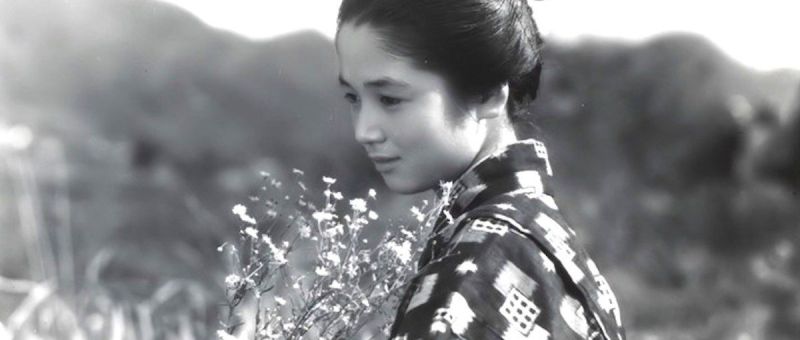
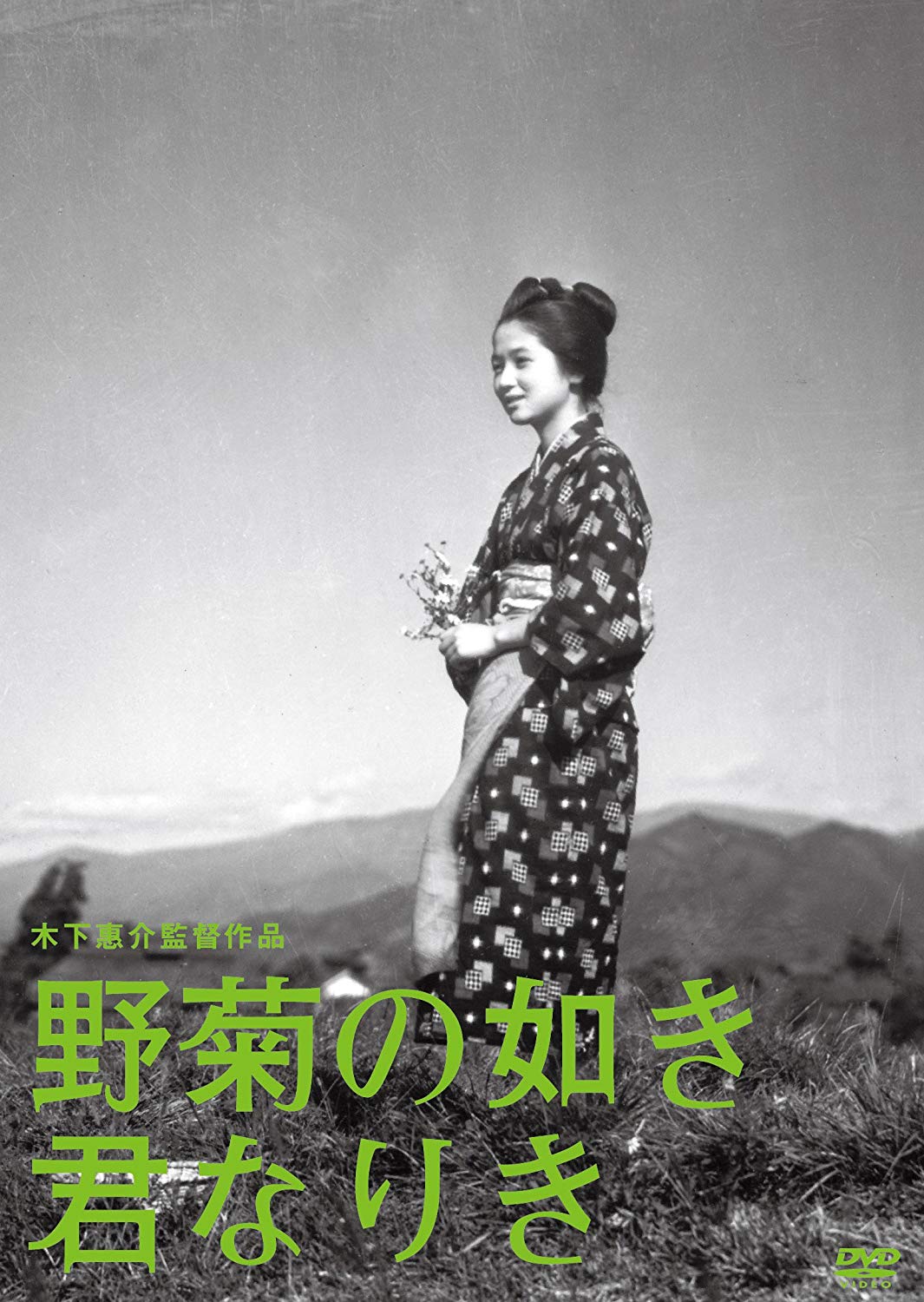
She was like a wild chrysanthemum dvdForemost among the post-war humanists, Keisuke Kinoshita had a somewhat complex relationship with the past, by turns decrying the restrictions of latent feudalism and pining for the lost innocence of an idyllic pastoral Japan untouched by mid-century trauma. She Was Like a Wild Chrysanthemum (野菊の如き君なりき, Nogiku no Gotoki Kimi Nariki) manages to do both at once, lamenting the passing of time and a clear division between then and now while railing against the unfairness of the society which keeps young lovers apart in insisting that broken hearts are merely something that must be endured.

In the contemporary era, 73-year-old Masao (Chishu Ryu) is taking a boat back to his hometown though he no longer has any family there, his brother’s adopted son having inherited the family estate but seemingly rejected it. The local kids treat his abandoned family home as a haunted house. He tells us that he’s going back the way he came, it may be old fashioned to travel by river like this but there was no train back in his day. Masao feels his age. His grandson has just entered college and his mind is no longer what it was. He finds himself lost in sentimental memories, which is what has brought him back here, to the place which stole from him the only thing he ever loved.

Flashing back almost 60 years to the late Meiji-era when Masao (Shinji Tanaka) was but a boy of 15 preparing to leave home to study at high school, the older Masao recalls the happiest time of his life, now ensconced in a nostalgic cameo frame, when he lived with his sickly mother (Haruko Sugimura) and 17-year-old cousin Tamiko (Noriko Arita) with whom he had quietly fallen in love. Though it is not exactly unusual for cousins to marry, especially among the gentry, the closeness of the two youngsters has begun to cause gossip in the village especially as they are no longer children if not quite grown up. Still stuck somewhere between awkward adolescent attachment and the dawning realisation of a greater love, Masao and Tamiko resent the attempts made to keep them apart, but are largely powerless to resist the world in which they live.

That would be, in a largely feudal context, that Tamiko is more or less a “poor relation”, somewhere between servant and beloved daughter, not quite a member of the family, but resented by the maids. As such, she is no match for Masao who will be expected to marry someone of his mother’s choosing. The issue is not so much that the pair are cousins, or the slight squeamishness that they have been raised more or less as siblings, but an anxiety that something dreadful may be about to befall them which should be stopped before it becomes an unsolvable problem.

Masao’s mother tells Tamiko that women must learn “housework” like cleaning and dressmaking which might be a thinly veiled way to excuse the fact that she is using her as an unpaid maid, but it does at least remind us that she must marry someone, someday. At 17, Tamiko is at the age where her marriage becomes a matter for consideration, whereas at 15 Masao will leave home to pursue his education. They know their time together is limited, but still they dare to hope, the proximity of an ending giving them the courage to give tentative voice to their feelings.

Meanwhile, the danger they face is entirely homegrown and as much political and avaricious as it is conservative. The problem is that Masao’s older brother and his wife have no children. The sister-in-law intensely resents Tamiko’s presence, fearing she will somehow end up marrying Masao and getting her hands on the estate. To prevent that happening, she flags up the villagers’ gossip with Masao’s mother, who had been content to let them be because they were “only children” but is beginning to be swayed by the possibility of scandal or social censure. She decides to send Masao away to school ahead of schedule, hoping the whole thing will blow over, but Tamiko is so distraught that the sister-in-law eventually has her sent back to her parents where she receives an offer of marriage from the son of a wealthy family.

Too heartbroken to do much else, Tamiko spends most of her time in bed and flatly rejects the idea of marriage while the rest of her family desperately try to persuade her. Even Masao’s mother who professes to love her as a daughter tells her in no uncertain terms that she could never consent to her marrying her son. Only Tamiko’s melancholy grandmother who regards her own marriage to a man she truly loved as the thing which has given her life meaning, stops for pause, not objecting to the proposal but disappointed with her children’s insensitivity and aware of the dangers in the sacrifice Tamiko would be making if she agreed to marry more or less against her will.

The cruelty of the times is brought home by two near identical sequences, one a funeral procession in bright sunlight and the other a solemn moonlight wedding. The youngsters pledge themselves to each other, but are torn apart by forces beyond their control. In this, Kinoshita perhaps presages a greater tragedy still to come at the hands of implacable authoritarianism, suggesting that this rigid adherence to tradition at the expense of human feeling leads only to an eternal heartbreak and chaos born of resentment. If the relatives had simply let them be, let nature take its course and love find its way, then all of this sadness and regret could have been avoided. Masao apparently lived an ordinary life, suffered in the war, but married and had children, all while living with unutterable regret. His love has lasted 60 years, along with the memory of innocent wild flowers and the tranquility of his rural childhood in a Japan now long gone, inhabited solely by the ghosts of memory. “Only crickets sing by her grave”.


Original trailer (no subtitles)