

Love and Resistance go to war in Tony Au’s noirish romance, Au Revoir, Mon Amour (何日君再來, AKA Till We Meet Again). The evocative title sets the scene for a tale of love betrayed by changing times, but ultimately asks if love is a question of priorities and if you have the right to put your romantic destiny on hold to serve a greater good, even if that greater good is a shared ideal. Predictably, the answer may be no, because in the world of the movies at least love is an absolutist choice and you won’t be forgiven for resisting it.
One fateful evening in the Shanghai of 1941, Resistance operative Sum (Tony Leung Ka-Fai) is an accidental witness to the murder of “notorious Japanese monks” which he later learns may have been set up by the Japanese authorities themselves. Chasing the perpetrator, Shirakawa (Jun Kunimura), through a series of back allies where he slices and dices his now redundant Chinese mercenaries, Sum is brought to a smoky nightclub where the singer, Mui-Yi (Anita Mui Yim-Fong), is none other than his one true love whom he met thanks to the Resistance movement some years earlier but was forced to leave behind with only a heartfelt letter explaining that he would return when the battle was done. Returning the favour Sum had done her in saving her life when she was about to be hit by a car, Mui-Yi tosses him a gun that allows him to defend himself against a crazed Shirakawa and thereafter shelters him in an abandoned garage until he is well enough to return to his mission.
Heartbroken and embittered, Mui-Yi is still lowkey anti-Japanese and seemingly unafraid of telling the local goons where to get off despite her father’s attempts at collaboration. Her aunt Jing (Carrie Ng Ka-Lai), however, finds herself succumbing to the dubious charms of violent and thuggish turncoat Tit Chak-Man (Norman Chu Siu-Keung) who is working with the Japanese apparently because he thinks China is weak and unsophisticated. Tit Chak-Man thinks nothing of blowing up little children and blackmailing suspects which is how he begins to manipulate Mui-Yi after seizing her father’s bar and having him put in prison on a trumped up charge. Meanwhile, she flip flops in her relationship with Sum, at once resenting him for his tendency to disappear and then longing for his return, while he berates her in a mistaken assumption that she has decided to collaborate but promises that he will be hers and hers alone once the war is over.
Unlike many similarly themed movies from both the Mainland and Hong Kong, the big bad is not the Japanese themselves but the Chinese who betrayed their country and sided with the enemy. Somewhat two dimensional, Tit Chak-Man is a thuggish brute who is prepared to do anything and everything to stamp out the Resistance but is at once humanised by his intense romance with Jing which continues even after she attempts to assassinate him and eventually proves his weakness when he refuses to abandon her to escape from a baying mob. Though Shirakawa is indeed crazed and bloodthirsty, we’re shown his opposite in the gentle, sensitive Noguchi (Hidekazu Akai) who has also fallen in deep and selfless love with Mui-Yi and is willing to facilitate her romance with Sum while doing everything he can to keep her safe.
Years later, Sum irritably points out that Noguchi had a choice in serving his country and was therefore free to choose love instead which seems extremely disingenuous seeing as he was most likely (in some way) a conscript too but was in his own way resisting in order to serve the best interests of his country. Sum chose China over Mui-Yi. It’s unreasonable to expect someone to wait in line until you’ve finished being a revolutionary hero and have the proper time to devote to love, no one likes being second choice even if you’re right behind “freedom” when it comes to priorities. To save his love, Sum sent it into the arms of the enemy but failed to realise that she might also find a home there or at least a sense of relief in no longer needing to wait for someone who might never return. Can there be love in time of war? Yes, but love like revolution is a choice and it won’t wait for you forever, if you betray it you may not be forgiven.
Fortune Star trailer (no subtitles)
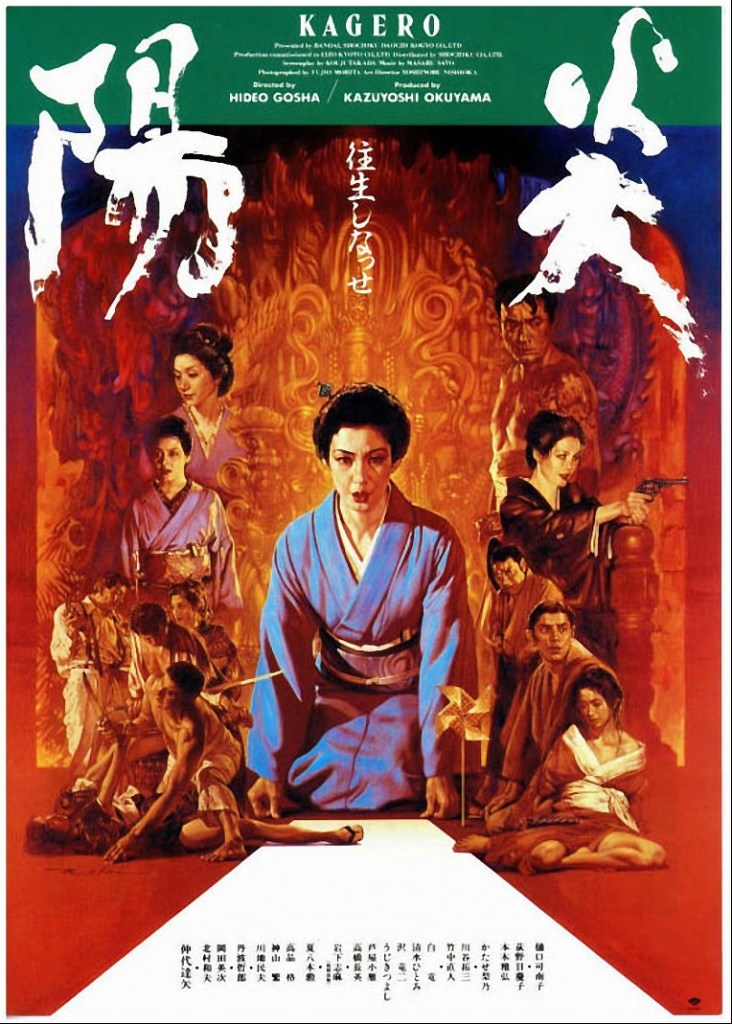 Hideo Gosha had something of a turbulent career, beginning with a series of films about male chivalry and the way that men work out all their personal issues through violence, but owing to the changing nature of cinematic tastes, he found himself at a loose end towards the end of the ‘70s. Things picked up for him in the ‘80s but the altered times brought with them a slightly different approach as Gosha’s films took on an increasingly female focus in which he reflected on how the themes he explored so fully with his male characters might also affect women. In part prompted by his divorce which apparently gave him the view that women were just as capable of deviousness as men are, and by a renewed relationship with his daughter, Gosha overcame the problem of his chanbara stars ageing beyond his demands of them by allowing his actresses to lead.
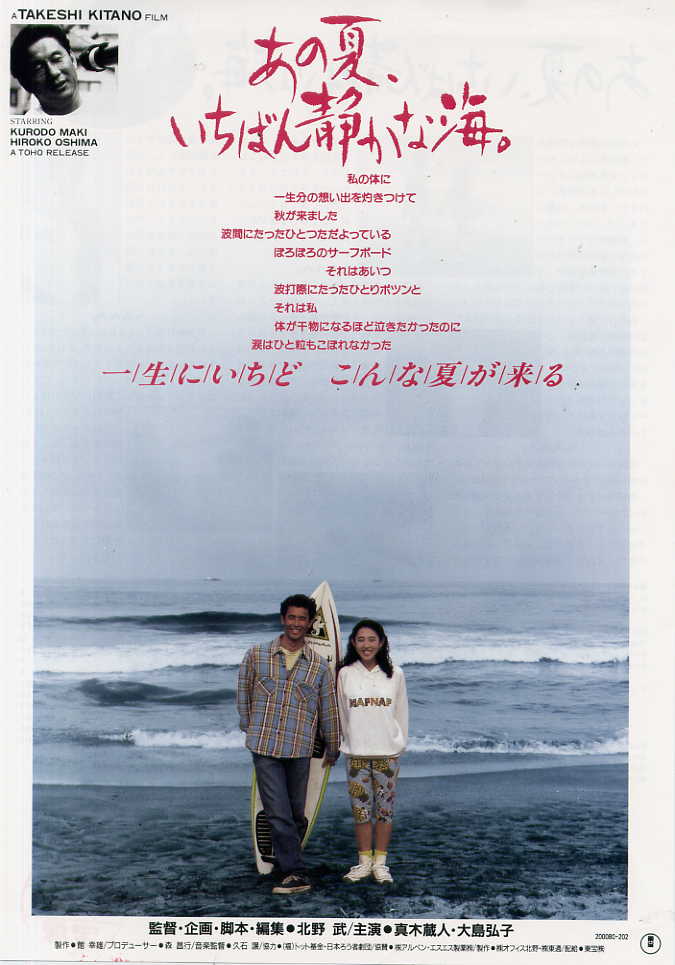 Review of Takeshi Kitano’s A Scene at the Sea – first published by
 As you might be able to tell from its title, Gentle 12 (12人の優しい日本人, Juninin no Yasashii Nihonjin) is a loose Japanese parody of the stage play 12 Angry Men notably filmed by Sidney Lumet back in 1957. The Japanese title literally translates as “12 Kindly Japanese Guys” and the film takes the same premise of twelve jurors debating the verdict in a murder case which was previously thought fairly straightforward. This time our jury is a little more balanced as it’s not just guys in the room and even the men are of a more diverse background.

