
How do you make a sequel to a film which ended with the apocalypse? Takashi Miike is no stranger to strange logic, but he gets around this obvious problem by neatly sidestepping it. Dead or Alive 2: Birds (DEAD OR ALIVE 2 逃亡者, Dead or Alive 2: Tobosha) is, in many ways, entirely unconnected with its predecessor, sharing only its title and lead actors yet there’s something in its sensibility which ties it in very strongly with the overarching universe of the trilogy. If Dead or Alive was the story of humanity gradually eroded by internecine vendetta, Dead or Alive 2 is one of humanity restored through a return to childhood innocence though its prognosis for its pair of altruistic hitmen is just as bleak as it was for the policeman who’d crossed the line and the petty Triad who came to meet him.
Signalling the continuous notions of unreality, we’re introduced to this strange world by a magician (Shinya Tsukamoto) who uses packets of cigarettes to explain the true purpose of a hit ordered on a local gangster which just happens to be not so different from the plot of the first film. Because the gangster world has its own kind of proportional representation, neither the yakuza nor the Triads can rule the roost alone – they need to enter a “coalition” with a smaller outfit no doubt desperate to carve out a little more power for themselves. The free agents, however, have decided on a way to even the power share – hire a hitman to knock off a high ranking Chinese gangster and engineer a turf war in which a proportion of either side will die, leaving the third gang a much more credible player.
Mizuki (Sho Aikawa), bleach blond and fond of Hawaiian shirts, is an odd choice for a secret mission but his sniper rifle is rendered redundant when a man in a dark suit does the job for him – loudly and publicly. So much the better, thinks Mizuki, but the memory of the strangely familiar figure haunts him. Finding himself needing to get out of town, Mizuki has a sudden urge to go home where he encounters the suited man again and confirms that he is indeed who he thinks he is – childhood friend, Shuichi (Riki Takeuchi).
Revisiting an old theme, Mizuki and Shuichi are orphans but rather than being taken directly into the yakuza world they each spent a part of their childhood in a village orphanage on an idyllic island. Miike frequently cuts back between the violent, nihilistic lives of the grown men and the innocent boyhood of long hot summers spent at the beach. The island almost represents childhood in its perpetual safety, bathed in a warm and golden light at once unchanging and eternal. Reconnecting with fellow orphan Kohei (Kenichi Endo) who has married another childhood friend, Chi (Noriko Aota), the three men regress to their pre-adolescent states playing on the climbing bars and kicking a football around just like old times.
Returning to this more innocent age, Mizuki hatches on an ingenious idea – reclaim their dark trade by knocking off those the world would be better off without and use their ill gotten gains to buy vaccines for the impoverished children of the world. In their innocent naivety, neither Mizuki nor Shuichi has considered the effect of their decision on local gangland politics (not to mention Big Pharma) and their desire to kill two “birds” with one stone will ultimately boomerang right back at them.
Innocence is the film’s biggest casualty as Miike juxtaposes a children’s play in which Mizuki and Shuichi have ended up playing a prominent role, with violent rape and murder going on in the city. Whether suggesting that the posturing of a gang war is another kind of playacting, though one with far more destructive consequences, or merely contrasting the island’s pure hearted fantasy with the cold, hard, gangland reality, Miike indulges in a nostalgic longing for the simplicity of childhood with its straightforward goodness filled with friendship and brotherhood rather than the constant betrayals and changing alliances of the criminal fraternity.
The question “Where are you going?” appears several times throughout the film and perhaps occurred to Mizuki and Shuichi at several points during their journeys from abandoned children to outcast men. Neither had much choice in their eventual destination and if they asked themselves that same question the answer was probably that they did not know or chose not to think about it. All of these hopes and ruined dreams linger somewhere around the island’s shore. Kohei is about to become a father but the birth of a child now takes on a melancholy air, the shadow of despair already hanging over him. There is no way out, no path back to a time before the compromises of adulthood but for two angelic hitmen, the road ends with meeting themselves again and, in a sense, regaining lost innocence in shedding their city-based skins.
Out now in the UK from Arrow Video!
Original trailer (English subtitles)
 Toshiaki Toyoda made an auteurst name for himself at the tail end of the ‘90s with a series of artfully composed youth dramas centring on male alienation and cultural displacement. Attempting to move beyond the world of adolescent rage by embracing Japan’s most representative genre, the family drama, in the literary adaptation
  Following the surreal horror film
  In the closing voice over of Banmei Takahashi’s Rain of Light (光の雨, Hikari no Ame), the elderly narrator thanks us, the younger generation, for listening to this long, sad story. The death of the leftist movement in Japan has never been a subject far from Japanese screens whether from contemporary laments for a perceived failure as the still young protestors swapped revolution for the rat race or a more recent and rigorous desire to examine why it all ended in such a dark place. Rain of Light is an attempt to look at the Asama-Sanso Incident through the eyes of the youth of today and by implication ask a few hard questions about the nature of revolution and social change and if either of those two things have any place in the Japan these young people now live in. Takahashi reframes the tale as docudrama in which his young actors and actresses, along with their increasingly conflicted director, attempt to solve these problems through recreation and role play, bridging the gap between the generations with a warning from those who dreamed of a better world that was never to be.
 Koji Wakamtasu had a long and somewhat strange career, untimely ended by his death in a road traffic accident at the age of 76 with projects still in the pipeline destined never to be finished. 2008’s United Red Army (実録・連合赤軍 あさま山荘への道程, Jitsuroku Rengosekigun Asama-Sanso e no Michi) was far from his final film either in conception or actuality, but it does serve as a fitting epitaph for his oeuvre in its unflinching determination to tell the sad story of Japan’s leftist protest movement. Having been a member of the movement himself (though the extent to which he participated directly is unclear), Wakamatsu was perfectly placed to offer a subjective view of the scene, why and how it developed as it did and took the route it went on to take. This is not a story of revolution frustrated by the inevitability of defeat, there is no romance here – only the tragedy of young lives cut short by a war every bit as pointless as the one which they claimed to be in protest of. Young men and women who only wanted to create a better, fairer world found themselves indoctrinated into a fundamentalist political cult, misused by power hungry ideologues whose sole aims amounted to a war on their own souls, and finally martyred in an ongoing campaign of senseless death and violence.
 There are two kinds of people in the world, those who swing and those who…don’t – a metaphor which works just as well for baseball and, by implication, facing life’s challenges as it does for music. Shinobu Yaguchi returns after 2001’s
  Japan has really taken the underdog triumphs genre of sports comedy to its heart but there can be few better examples than Shinobu Yaguchi’s 2001 teenage boys x synchronised swimming drama Waterboys (ウォーターボーイズ). Where the conventional sports movie may rely on the idea of individual triumph(s), Waterboys, like many similarly themed Japanese movies, has group unity at its core as our group of disparate and previously downtrodden high school boys must find their common rhythm in order to truly be themselves. Setting high school antics to one side and attempting to subvert the normal formula as much as possible, Yaguchi presents a celebration of acceptance and assimilation as difference is never elided but allowed to add to a growing harmony as the boys discover all new sides of themselves in their quest for water borne success.
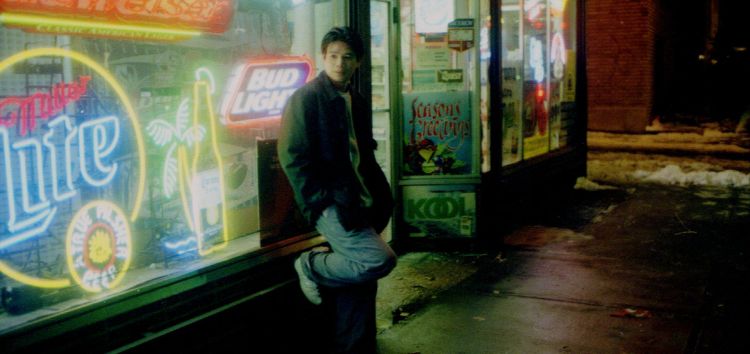 Lav Diaz’s auteurist break through, Batang West Side is among his more accessible efforts despite its daunting (if “concise” by later standards) five hour running time. Ostensibly moving away from the director’s beloved Philippines, this noir inflected tale apes a police procedural as New Jersey based Filipino cop Mijares (Joel Torre) investigates the murder of a young countryman but is forced to face his own darkness in the process. Diaspora, homeland and nationhood fight it out among those who’ve sought brighter futures overseas but for this collection of young Filipinos abroad all they’ve found is more of home, pursued by ghosts which can never be outrun. These young people muse on ways to save the Philippines even as they’ve seemingly abandoned it but for the central pair of lost souls at its centre, a young one and an old one, abandonment is the wound which can never be healed.
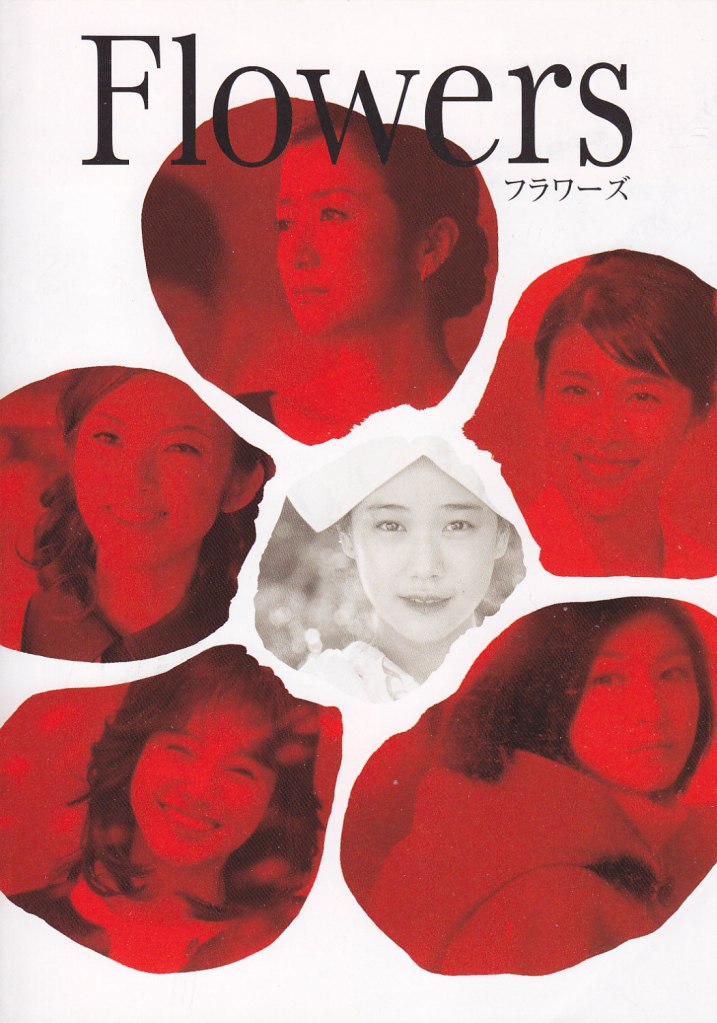 The rate of social change in the second half of the twentieth century was extreme throughout much of the world, but given that Japan had only emerged from centuries of isolation a hundred years before it’s almost as if they were riding their own bullet train into the future. Norihiro Koizumi’s Flowers (フラワーズ) attempts to chart these momentous times through examining the lives of three generations of women, from 1936 to 2009, or through Showa to Heisei, as the choices and responsibilities open to each of them grow and change with new freedoms offered in the post-war world. Or, at least, up to a point.
 Windows on Worlds