Hong Kong: City on Fire (不作浮塵, Choi Ka-yan & Lee Hiu-ling, 2022)

“Each day is more absurd and darker than the last” a former protestor reflects, deciding to move his family abroad resolving that the only way to protect his children is to ensure they do not grow up in Hong Kong. The latest in a series of documentaries focusing on the 2019 protest movement against the Extradition Law Amendment Bill, Choi Ka-yan and Lee Hiu-ling’s Hong Kong: City on Fire (不作浮塵) is among the most visceral with a potent sense of what it was like to be a young person on the ground, but is also among the least hopeful with the majority of its protagonists deciding that their only future lies in exile. 

First protagonist Yan is a law student at Chinese University who is left wondering if her studies are still relevant in the wake of the National Security Law. Rather than participating directly, she helps arrange legal representation for protestors who have been arrested by the police. AJ, meanwhile, is a young man who finds his relationship with girlfriend Jennie strained by his commitment to the protests, while the mysterious Shin Long is a frontliner who finds himself conflicted in his responsibilities while his wife is pregnant with their second child. 

Each of them seems to feel that time is running out and these are the last days of the battle for democracy in Hong Kong. The film opens with stock footage from the Handover with Chris Patten declaring that it is time for the Hong Kong people to run Hong Kong but of course that wasn’t really the case and the One Country Two Systems philosophy has been steadily eroded to the point of oblivion long before its 2047 expiry date. While some students feel it is a privilege that they have been able to voice their opinions at all let alone protest given that the same situation could not occur on the Mainland others are becoming frustrated not least because of the increasingly oppressive behaviour of the local police force. 

In one particularly impassioned moment, students at the Chinese University confront their principal begging him to issue a statement denouncing police violence but he remains impassive refusing to acknowledge any such brutality has taken place. Several students break down in tears while one young woman recounts her sexual assault at the hands of the police. Intense footage from the middle of the protests captures policemen kneeling atop students while middle-aged and older men and women step in to challenge them, asking what these young people have done so wrong as warrant this kind of treatment. AJ talks of the “solidarity of the streets”, older people in so-called “parent cars” offering free rides to protestors while others offer meals or make simple shows of support. Shin Long, however, offers darker counter of “street justice” in which the crowd turns on a young women they believe was photographing protestors demanding she hand over her phone and delete any photos fearing she will otherwise be sending them to the police. 

As the protests intensify, so does a feeling of paranoia as students are rounded up from their homes and threatened by the police. AJ is arrested and bailed but told that he’ll be sent to prison if caught at another protest, further straining his relationship with Jennie who already feels neglected by the amount of time he spends on the protest rather than with her. Like Shin Long, he feels guilty that he’s leaving a gap in the line and others may end up getting hurt because he isn’t there to protect them. But then as Shin Long points out, every time he manages to escape it’s because someone else was caught, slowing the police down and allowing him to get away. He might not always be so lucky and with a wife and soon to be two children he feels that he is being irresponsible in putting himself at so much risk. 

With the passing of the Security Law, enacted so quickly its contents were kept secret until after it was voted through, all hope is drained from each of the protagonists. AJ learns he will be going to prison for a year for having done nothing more than stand in the street and chant slogans, while Shin Long also receives a lengthy sentence resolving to raise his children abroad on his release. Jennie to decides to emigrate, leaving a dejected AJ behind alone with only painful memories and little hope for the future. A raw document of the protest movement live from the ground, City on Fire has only sympathy for its wounded protagonists but equally perhaps for a disappearing Hong Kong that in the end could not be protected. 


Hong Kong: City on Fire is in UK cinemas on 22nd November.

Trailer (English subtitles)

Executioners (現代豪俠傳, Johnnie To & Tony Ching Siu-Tung, 1993)

At the end of The Heroic Trio, the shadowy rise of authoritarianism seemed to have been beaten back. The three superwomen at the film’s centre had discovered joy and liberation in female solidarity and were committed to fighting injustice in a flawed but improving world. If Heroic Trio had been a defiant reaction to Handover anxiety, then sequel Executioners (現代豪俠傳) is its flip side shifting from the retro 40s Hong Kong as Gotham aesthetic to a post-apocalyptic nightmare world where nuclear disaster has normalised corporate fascist rule. 

As Ching (Michelle Yeoh) explains in her opening voiceover, a nuclear attack has ruined the city contaminating its water and leaving ordinary citizens dependent on the Clear Water Corporation for safe drinking supplies and basic sanitation. The trio have been scattered, pushed back into the roles from which they escaped at the first film’s conclusion save perhaps for Ching who continues to serve a duplicitous authority but does so with clearer eyes and a humanitarian spirit driving a medicine truck to ensure those in need have access to healthcare. Chat (Maggie Cheung Man-Yuk) meanwhile has reverted to her cynical bandit lifestyle, hijacking water trucks mostly for her own gain but also ensuring the water gets to the needy. Tung (Anita Mui Yim-Fong) has abandoned her Wonder Woman persona on the insistence of her husband who is now a high ranking policeman with the military authority devoting herself to the role of the traditional housewife and mother to her daughter Cindy. 

Though the women seem to have maintained their bond, Ching and Chat turning up for a Christmas celebration with Cindy, the political realities soon disrupt their friendship as they find themselves at odds with each other given their shifting allegiances. As in the first film, Chat has continued to accept work from dubious authority in the form of the Colonel including tracking down a man who embarrassed the police by firing a gun at a rally for a cult-like protest leader, Chung Hon (Takeshi Kaneshiro), only the gunman later turns out to be a patsy and Chat has unwittingly helped them bump off the voice of the people as an overture for a military coup. Ching is secretly working for responsible government trying to safeguard the President to prevent his assassination by the Colonel, but obviously cannot say very much about her mission arousing Tung’s suspicions that she may have been part of a plot to have her husband killed. 

In any case, the true villain turns out to be a kind of Wonder Woman mirror image in that the mysterious Mr. Kim (Anthony Wong Chau-Sang), CEO of Clear Water Corporation, is a man who wears a mask to hide his scarred face and dresses like an 18th century aristocrat as if engaged in some kind of Man in the Iron Mask cosplay. Kim and the Colonel have been collaborating to engineer a military coup by deliberately restricting water supplies. The oblivious Chung Hon had unwittingly been Kim’s stooge, stoking up public resentment about the water situation to give the government an excuse for a crackdown and the Colonel to move. Chat’s path to redemption amounts to vindicating the faint hope that the water contamination was a hoax, which she eventually does by taking Cindy with her to smash the corporate dam and return the water to its rightful flow and the people of the city. But like the Evil Master, Kim does not die so easily turning up for a surprisingly hands on fight squaring off against the barely unified trio who are only just beginning to repair their friendships on coming to a fuller understanding of the reality of their circumstances. 

They are all in a sense liberated, though less joyfully than in the first film and largely through violent loss. The good guys don’t always win and a fair few die while all the women can do is keep moving, fighting off one threat after another with few guarantees of success and not even each other to rely on. Where the first film had embraced a hopeful sense of comic camp, Executioners skews towards the nihilistic in its dystopian world of corporate overreach and increasing militarism in which the trio no longer trust each other and are each re-imprisoned inside their original cages from patriarchal social norms to capitalistic inhumanity and questionable loyalties with the only hopeful resolution resting on “the sincerity of our friendship” in a world which may be healing but is far from happy. 


Executioners screened as part of this year’s San Diego Asian Film Festival.

The Heroic Trio (東方三俠, Johnnie To, 1993)

Female solidarity becomes an unexpected weapon against stealthy authoritarian take over in Johnnie To’s gloriously camp superhero action fest, The Heroic Trio (東方三俠). Uniting three of the top stars of the age in Anita Mui, Maggie Cheung, and Michelle Yeoh the film flirts with Handover anxiety in the “Evil Religion” that threatens to steal the children of Hong Kong, but eventually locates the source of salvation in the heroine’s shared humanity brokered by a tripartite solidarity of justice and equality that defies both the patriarchal world around them and the cruel authoritarianism in which they have been raised. 

In an almost biblical allegory, large numbers of male infants have been going missing over the last 18 months and the police are, predictably, mystified relying on the reappearance of the mysterious superhero Wonder Woman to solve the mystery herself. Truth be told, top Inspector Lau (Damian Lau Chung-Yan) hasn’t yet realised that Wonder Woman is his own wife, Tung (Anita Mui Yim-Fong), so perhaps his investigative skills aren’t all that despite the dynamism of the opening scenes which see him demonstrate his masculinity by leaping out of a window stop a thief from driving off in his classic car which is parked outside a creepy mansion in the middle of nowhere. Nothing really gets done until the chief of police gets a note that his own infant son is next on the list, though he briefly considers simply swapping his kid for another couple’s child while hiring “Thief Catcher” Chat (Maggie Cheung Man-Yuk) to get him back when he’s kidnapped by an “Invisible Woman”, Ching (Michelle Yeoh), whom Tung manages to wound while saving the decoy baby. 

As it turns out, Ching has been taking the babies on behalf of “Evil Master” (Yen Shi-Kwan) who lives in an underground lair in the sewers and is the head of a mysterious cult hellbent on finding a new king for China. There may be a degree of Handover anxiety in Evil Master’s mission, seeking to possess and control Hong Kong by brainwashing its children eventually possessing Ching by removing her bodily autonomy while her sisters must quite literally free her from his icy grasp. Each of the kidnapped boys is said to have a divine destiny, though Evil Master doesn’t know which one is the new king and has a habit of simply killing the ones who disappoint him while the others are raised as mindless automatons consuming those like them and destined to become thoughtless killing machines like the bloodthirsty Kau (Anthony Wong Chau-Sang). 

Chat, who was raised as one of Evil Master’s minions but managed to escape thanks to the largess of Ching and his since become an ultra-capitalist bounty hunter if one less cynical than she originally seems, thinks it’s better to simply end the cannibal kids’ misery before they end up like Kau while Tung prioritises saving the infants so they can be returned to their parents before being subject to one of Evil Master’s weird rituals. Ching, meanwhile, is only participating in Evil Master’s plan to protect the man she loves, a mad scientist slowly succumbing to poisoning caused by his invention in true genre fashion. It is then in a sense love that causes Ching to reject her programming, but it’s the solidarity of Tung and Chat, along with a desire for vengeance, that finally gives her the courage to rebel. 

In a brief flashback, Tung had failed to save Ching during a tough training session with their mentor who had cruelly told her that she’d have to fight for justice alone while Ching, cast out, sought support by turning to the dark side. The scene repeats itself twice in the film’s closing scenes in which Tung is this time able to save Ching but only because of the support from their friend and equal Chat making up the third point of the triangle and anchoring them both firmly to ensure they will not fall. “Life is meaningful if you can face yourself” Tung tells Ching, shedding her mask having presumably dealt with her own dark past and pulling her sister up with her as an equal leaving the past behind to fight for a future of justice and freedom. 

To and action director Ching Siu-tung recast Hong Kong as Gotham with a production design quite clearly inspired by Western comic books in which the three heroines end by getting fancy capes that flicker in the wind. Chat, a motorcycle-riding delinquent force of nature, even at one point launches herself into battle on an oil drum propelled by dynamite which she later uses to take out the cannibal kids not to mention Evil Master himself. But it turns out the spectre of creepy, ritualistic authoritarianism doesn’t die so easily, Evil Master’s charred skeleton gets back up for one last hurrah until his brain finally explodes when confronted by Ching’s rejection having returned to the fold and now ready to sacrifice herself for a freer future for all. Essentially a comic book wuxia, To’s ironic action drama allows its heroic trio to find salvation in female solidarity anchoring each other in a world beset by fear and villainy.


The Heroic Trio screened as part of this year’s San Diego Asian Film Festival.

Septet: The Story of Hong Kong (七人樂隊, Sammo Hung, Ann Hui, Patrick Tam, Yuen Wo Ping, Johnnie To, the late Ringo Lam, Tsui Hark, 2022)

Seven of Hong Kong’s most prominent directors come together for a collection of personal tales of Hong Kong past and present in the seven-part anthology film, Septet: The Story of Hong Kong (七人樂隊). Produced by Johnnie To’s Milky Way, the film was first announced several years ago and originally titled Eight & a Half though director John Woo sadly had to leave the project due to his wife’s ill health which explains why there is no short set in the 1970s.

Each of the segments reflects the director’s personal nostalgia for a particular moment in time and there is certainly a divide between the 1950s and 60s sequences directed by Sammo Hung and Ann Hui respectively and those of the 80s and 90s which are imbued with a sense of Handover anxiety along with the closing meditation on the various ways the city has or has not changed. In any case, Sammo Hung’s opener Exercise is a slice of personal nostalgia which looks back to the heyday of Hong Kong kung fu as the young Sammo learns to buckle down and train with discipline under the guidance of his authoritarian teacher played by his own son, Timmy Hung. Similarly education-themed, Hui’s Headmaster echoes the documentary aesthetic seen in the later stages of Our Time Will Come in her naturalistic capture of a primary school reunion taking place in 2001 before flashing back to the early ‘60s as the headmaster and the children reminisce about a kind and idealistic young teacher who sadly passed away at 39 from a longterm illness exacerbated by misapplied traditional medicine. Essentially a tale of old-fashioned reserve in the unrealised desires of the headmaster and the teacher who elected not to marry because of her illness in the knowledge she would die young, Hui’s gentle melodrama harks back to a subtler age. 

Patrick Tam’s 80s segment, Tender is the Night, perhaps does the opposite in its incredibly theatrical tale of love thwarted by political realities as a lovelorn middle-aged man looks back on the failure of his first, and last, love for the teenage girlfriend who like so many of that time emigrated with her parents to escape Handover anxiety. Rich in period detail and imbued with the overwhelming quality of adolescent emotion, Tam’s maximalist romance is a tale of love in the age of excess but also of middle-aged nostalgia and personal myth making which nevertheless positions the looming Handover as a point of youthful transition. 

The 1997 sequence itself, Homecoming directed by Yuen Wo-ping, is in someways subversive in again presenting a young woman who firmly believes her future lies abroad rather than in post-Handover Hong Kong and placing her at playful odds with her traditionalist grandfather, a former martial arts champion who spends his days watching old Wong Fei-Hung movies. The eventual resolution that the girl, who insists on going by her Western name Samantha, returns to Hong Kong a few years later to care for the grandfather who has aged quite rapidly undercuts the sense of anxiety, yet there is something in the cultural and generational conflict that exists between them eased by mutual exchange as she teaches him basic English and he teaches her kungfu that hints less that the traditional is better than the modern than that there’s room for both hamburgers and rice rolls. 

Moving into the 2000s, Johnnie To’s Bonanza then takes aim at the increasingly consumerist mindset of the contemporary society in picking up a theme from Life Without Principle as three young Hong Konger’s become obsessed with getting rich quick through financial investment beginning with the dot-com bubble and shifting into property profiteering during the SARS epidemic. The trio fail every time before hitting the jackpot with some shares they bought by mistake during the 2008 financial crisis suggesting that it all just luck after all. One of the guys comically switches business opportunities in line with each of the crises/opportunities, firstly getting into mobile phones, then peddling healthcare products, and finally investing in self-storage in an echo of his society’s scrappy entrepreneurial spirit. 

The final film from Ringo Lam who completed his segment Astray shortly before passing away 2018 continues the theme in meditating on the modern city as its hero is literally killed by a sense of cultural dislocation after getting lost in a very changed Hong Kong having emigrated to the UK and returned with his family for a New Year holiday. While ironically remembering his own father complaining that times had changed, he finds himself bewildered by the absence of familiar landmarks and adrift in his home city. He dreams another life for himself in the countryside in which his son decides to emigrate to America while his wife would prefer he find a job in Hong Kong but his final message to him that it’s not difficult to live happily perhaps frees him of the sense of nostalgia which has led to his father’s death.

The best and final episode, however, Tsui Hark’s Conversation is set at no particular time and my in fact take place in the future as a mental patient, who might actually be a doctor pretending to be a mental patient, suddenly gives his name as Ann Hui followed by Maggie Cheung and a string of Hong Kong directors from Ringo Lan to Jonnie To and John Woo and challenges the doctor, who might be a mental patient, as he struggles to keep up with him. Tsui and Hui make reflective cameo’s at the segment’s conclusion perhaps hinting that this has been a deep conversation with the history not only of Hong Kong but its cinema through the eyes of those who helped to make it what it is.


Septet: The Story of Hong Kong screens in Chicago on Nov.6 as part of the 15th season of Asian Pop-Up Cinema.

Original trailer (English subtitles)

Pretty Heart (心裏美, Terry Ng Ka-wai, 2022)

An idealistic teacher finds herself questioning her views on education while confronting her traumatic past in Terry Ng Ka-wai’s gentle drama, Pretty Heart (心裏美). Partly a contemplation of the nature of education, the film has some serious questions to ask about the contemporary school system and in its inbuilt inequalities along with the complicated relationships between parents and children while ultimately opting for a kind of balance in which there is room for many kinds of learning. 

For Chloe (Jennifer Yu Heung Ying) education shouldn’t just be about passing tests but learning about how to live life, gaining the ability to think critically and enriching one’s existence. But at her school, which is funded by both public and private means, she’s regarded as something of a troublemaker by Mrs. Tsang, the wealthy head of the board who seems to have the headmaster well under her thumb. Mrs. Tsang is so hands on because her son Chi Kit is a pupil though a somewhat indifferent one sure that his money and connections will engineer his success. A small fight breaks out when a young girl, Shu Ting, who comes from an impoverished single parent family, tries to hand out tickets for video lectures by top cram school teacher K.K. Ho with Chi Kit insisting that only the elite who have the means to pay deserve a place in the room. 

The incident at once lays bare the fallacy that education is a levelling force enabling social mobility under in meritocracy when kids like Chi Kit will always be able to game the system in ways that those like Shu Ting cannot even if, as Mr. Ho tells another pupil, at the end of the day it’s the effort you put in that counts. What annoys Chloe about the elite cram school with its good-looking teachers and flashy showmanship is its devaluing of education in giving kids tips on how pass exams while telling them that they can safely ignore half of the syllabus to focus on the bits that are most likely appear to on the test paper without actually needing to understand much of what they’re memorising. Defending himself, Ho eventually argues that he merely provides a complementary service intended to run in concert with the kind of education Chole offers which is less geared towards test scores than comprehensive learning. 

Yet he also takes Chloe to task for her lack of connection with the kids and image of herself as a teacher pointing out that she has never really bothered to learn much about their lives outside of the classroom. Much of her animosity towards the cram school stems from the fact is it is run by her estranged father whom she assumes to be cynical and unfeeling yet has generated a fatherly relationship with Shu Ting and is doing his best to support her while she contends with difficult family circumstances trying to balance her need to support herself and her mother financially with her education. 

Witnessing Ho’s innate kindness to those around him forces Chloe to rethink her preconceptions while accepting that her reserve has sometimes interfered with her intentions as an educator. Re-encountering her father also causes her to revisit longstanding childhood trauma which may in part have been born of a childish misunderstanding she may be better placed to process as an adult woman. As her father says, the most important thing to learn may be the art of forgiveness and it seems that she has been poisoning herself with hate and resentment as manifested in her literal heart problems. 

The conclusion that the film comes to is that it’s not all so black and white and perhaps the good comes with the bad. Having begun to deal with her emotional trauma, Chloe seems to have become a better and more engaging teacher committed to helping her students in all aspects of her lives. It may not solve the problems of social inequality in the school system or fix the commodification of education symbolised in the existence of the cram school but does at least seem to generate a shift in the general environment which sees even a relieved Mrs Tsang step back from her elitism. Admittedly a little contrived in its melodramatic narrative, the film nevertheless has its heart in the right place as the melancholy heroine learns a few lessons of her own in dealing with the traumatic past.


Pretty Heart screens in Chicago on Nov.6 as part of the 15th season of Asian Pop-Up Cinema where actress Jennifer Yu Heung Ying will be in attendance to collect her Bright Star Award.

Original trailer (English subtitles)

Deliverance (源生罪, Kelvin Shum, 2022)

A young woman haunted by the buried memories of repressed trauma discovers that sometimes it really is better not to know but also comes to a new appreciation of familial love in Kelvin Shum’s visually striking psychological chiller, Deliverance (源生罪). Meaning something more like original sin the Chinese title hints at the reconsideration of the traditional family which lies under the central mystery and prompts the heroine, long separated from her siblings, to question the nature of her familial bonds and whether she can really say that those closest to her have her best interests at heart. 

After living abroad for 15 years, Nicole (Summer Chan) has married and returned home to Hong Kong with her husband but is haunted by a shadowy figure that reminds her of her childhood trauma in being unable to remember anything about the night her mother passed away after a long illness. Back in a familiar environment and reconnecting with her siblings, old memories begin to surface particularly after a few sessions with her famous hypnotist brother, Joseph (Simon Yam). Gradually she begins to suspect that her mother may not have died of her illness as she was led to believe but may have been murdered and possibly by a member of her immediate family which was then under intense pressure from loansharks due to debts run up by her absent father who ran away and abandoned the family to their fate. 

The theme of abandonment continues to resonate, Nicole insecure in her familial relationships as her brothers sent her abroad to study shortly after their mother’s death. She can’t escape the idea that they are keeping something from her, and is quite literally haunted by her inability to remember what happened on the night her mother died. But as Joseph had said during one of his lectures, memory is a treacherous thing and if you don’t remember something perhaps that’s because it’s better not to. Then again as her brother Will adds, it’s impossible to escape your past and someday you will be expected to answer for it whether you remember it or not. 

Nicole’s insistence on knowing the truth may partly be motivated by the fact that she is shortly to become a mother herself, though Joseph tries to convince her that her eerie visions and increasing paranoia are side effects of her pregnancy. Trust is the foundation of relationships, and Nicole is beginning to feel as if she can’t trust anyone anymore, but nor can she trust her memories many of which are influenced by her brother’s hypnotism. Working as a doctor she is touched by the relationship between an elderly couple who remain devoted to each other as the husband (Kenneth Tsang) contends with terminal cancer, but is also struck by the discord between their children who argue loudly in the corridor about the responsibilities of care and the financial burden of their father’s medical treatment. 

The understanding she begins to come to is that all of these reactions can in fact come from a place of love even if it doesn’t really seem like it on the surface. Whatever happened to her mother it may be no different, and if her family are indeed keeping something from her it may be out of a desire to protect her from the truth however misguided a desire that may be. As Joseph had said in his speech, emotions can take lives but they can also save them, though it appears the pain of not knowing is eating away at Nicole’s soul and only the truth can set her free. Mr Lam, the terminal cancer patient, cheerfully explains that all of life is a journey towards death but only to emphasise that it’s how you use the time that’s important so obsessing over the past might not serve you so well in the end. In any case, the journey into her own psyche may be uncomfortable and reveal truths that are painful but allows Nicole to begin overcoming her trauma while repairing her existing familial bonds before beginning new ones. Shot with noirish visual flair featuring high contrast colour and a dreamlike eeriness in Nicole’s ever present haunting, Shum’s psychological mystery suggests orphaned files must be brought back into the fold and that there can be no healing without truth but also that the expression of love can take many forms not all of which are easily understood. 


Deliverance had its World Premiere as part of the 15th season of Asian Pop-Up Cinema.

Trailer (dialogue free)

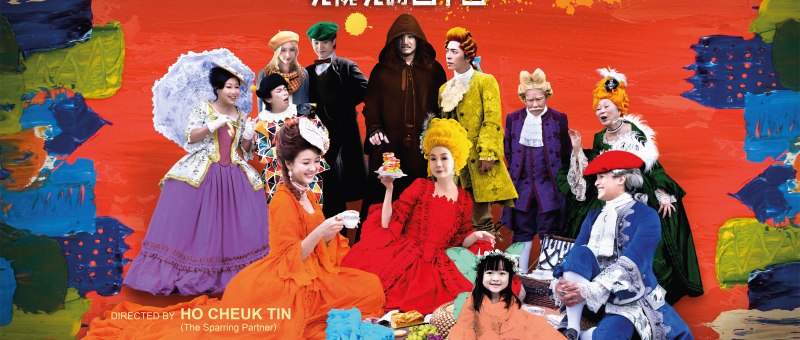
The Sparring Partner (正義迴廊, Ho Cheuk-tin, 2022)

Loosely based on a real life case in which a man murdered his parents then reported them missing and even went to the media for help looking for them, Ho Cheuk-tin’s The Sparring Partner (正義迴廊) distances itself from the sensationalism of the crime to ask a series of questions about human nature and the operation of the criminal justice system. The first of those questions is obviously why, but not just why did he murder the people who raised him but why did he go to the media and why did he eventually decide to confess. 

One reason Henry (Yeung Wai-lun) gives for killing his parents is that his upbringing was abusive, a fact later confirmed by his sympathetic cousin herself a devout Christian. It seems fairly clear that Henry has an inferiority complex for which he blames his mother and father, resentful that they made him play piano and wouldn’t let him play basketball to which he attributes the small stature that led to merciless bullying in school and fractured masculinity in adulthood. Ho often places the camera slightly behind Henry’s shoulder, emphasising his smallness and neatly reflecting the way in which he literally feels as if everyone is looking down on him. He has so far had a life full of failure, studying abroad but failing to make the grade and resentful towards his more successful older brother Ho Jin to whom his parents force him to sign over his share of a flat they bought as an investment after Henry’s gambling debts and inability to find a job left him unable to pay the mortgage. Losing a flat in Hong Kong is worse than losing a life Henry’s lawyer points out at trial, attempting to justify the resentment that led to Henry’s decision to not only murder but brutally dismember his parents. 

Another question mark, however, hangs over Henry’s accomplice and why exactly he chose to take him down with him. Angus (Mak Pui-tung), a man he met at a job interview, seems to have learning difficulties and may not quite understand what is going on. His sister describes him as naive and explains that he has a tendency to make friends with those who only hope to exploit him and may have been manipulated by Henry in fear for the safety of himself and his family or else simply not to lose the friendship. The extent of his involvement with the crimes remains unclear, Henry claiming that he was present and participated in the killing of his mother, while Angus insists that he only took part in the disposal of the bodies. Perhaps uncomfortably the film asks how much we can really trust Angus, suggesting that he may simply be manipulating the sympathy of others and is not really quite as naive as he makes out. 

In any case, his treatment at the hands of the police is as unjust as it comes, intimidated into offering a confession simply to make the interrogation stop so that he sleep and get something to eat. In court the truth hardly matters, a trial is about constructing a credible narrative. The lawyers for joint defendants Angus and Henry attempt to undercut each other, Henry’s arguing he is not responsible on the grounds of mental illness while implicating Angus as the instigator, and Angus’ intent on emphasising his disability suggesting was merely manipulated by Henry. The jurors in the jury room struggle to make sense of the case but also of their own role, tasked not with assessing guilt or innocence but the strength of the argument based on the evidence they’ve been given only for some of them to base their convictions on gut instinct anyway. 

They are perhaps aware that Henry is a master manipulator, he lied to his own brother and fooled all of Hong Kong with his video appealing for support before dramatically confessing online. He has obvious delusions of grandeur and idolises Hitler, claiming that had he been born at the right time he could have done what Hitler did. Ho often dramatises his moments of introspection as fantasy in which Henry poses as Hitler and speaks German to those around him before snapping back to reality and finding him experiencing a moment of clarity that makes him step back. Yet there are moments of heartbreaking authenticity in the “friendship” between the two men such as in their meeting at the job interview as they bond in a shared sense of rejection, the subtext of their crimes inviting the reading that they are intended as acts of vengeance against the society into which neither of them was able integrate. 

In the closing scenes, a policeman remembers evidence left behind during the initial sweep of the crime scene by his incompetent boss and returns to Angus’ apartment to find a migrant family living there who tell him they know there was a murder but they don’t care about things like that and are just grateful to have a home. Henry too continues his dark jokes about permanently devaluing his family’s apartments, but seems genuinely distressed on realising that his brother really may abandon him for his total lack of remorse while Angus finds himself exploited by the tabloid press only too eager for all the gory details. Ho’s closing images which find Angus enveloped in the webs of the spiders which plague his dreams perhaps hints at his place in a complex network of forces which contribute to his exclusion from prejudice towards the disabled to fatphobia along with the manipulation of men like Henry who promise friendship but only take advantage of his inability to resist. Then again, the fact of the matter is that you’ll never really know the truth, whether Henry did it all for the attention and ended up alone anyway or if it really was Angus who planned everything and fooled all of Hong Kong, like the jury all you can do is weigh up the evidence and draw your own conclusions.  


The Sparring Partner screened as part of this year’s London East Asia Film Festival and will open in UK cinemas on Nov. 18 courtesy of CineAsia.

The Narrow Road (窄路微塵, Lam Sum, 2022)

An earnest middle-aged man and a cynical young woman become unlikely friends in pandemic-era Hong Kong in Lam Sum’s melancholy drama, The Narrow Road (窄路微塵). The narrow road is indeed the line they have to walk as they find their already precarious lives straitened by the increasing pressures of life under corona with few possibilities open to them other than to trust in each other and discover unexpected solidarity in their contradictory approaches to life. 

As a customer later suggests, some might say the pandemic is good for those like Chak (Louis Cheung) who runs a one man cleaning business, turning up after hours to disinfect cafes and offices which are still technically open but forced to close early because of the current restrictions. But as we can see Chak is exhausted and his faithful van which has the logo of his company proudly emblazoned on the side is on its last legs. He lives a simple life with his elderly mother who suffers with arthritis but is afraid of the expense of going to the doctor and seems to find joy only in the vague hope of getting lucky on the horses or else the lottery. 

A good-hearted man, Chak’s philosophy is life in that if you work hard and do everything properly then you’ll be alright. Hoping to take advantage of an increase in trade he takes on a young single mother, Candy (Angela Yuen), as an assistant but her outlook is the polar opposite of his as he discovers on spotting her pilfering ice cream bars from a convenience store after the clerk told her the discount had expired because she arrived a new moments after midnight. Cynical because of her experiences, Candy doesn’t see why she or her daughter should go without just because they don’t have money when some have so much they’d hardly notice a little missing, nor does she see the problem with cutting corners when it’s not like anyone notices anyway but Chak points out he’d know and wouldn’t like to feel as if he’d cheated someone or broken his word. 

But then desperate times sometimes call for desperate measures. Chak’s cleaning business is as reliant on a circulating economy as any other as he discovers when the disinfectants he needs for his work are on backorder from a supplier because of pandemic-related delays. When the pair are dispatched to clean up after a lonely death, it plunges Candy into a moment of existential crisis if the result of life is ending up as a stain on someone’s floor to be washed away by a stranger who is themselves faceless and invisible, merely “a cleaner”. As the pair work at night when no one else is around, it’s as if these properties are cleaned by magic, sparkling and new the next day, when the reality is that their work is more important than ever in ensuring public safety not to mention allowing other people to continue operating their businesses confident that they’re doing everything they can to protect their customers.  

In a poignant moment, Candy looks out at the beautiful view from a child’s bedroom in a wealthy family’s apartment and reflects that her living space does not even have a window. Her small daughter Chu eventually draws a picture of one they stick on the wall behind makeshift curtains making do with only the illusion of the light and air they have so far been denied because of their poverty. The world around them seems to be shrinking with businesses across the city closing their doors for good while those with the means to do so are choosing to go abroad for obvious political reasons hoping to start again somewhere else. Chak can only do his best to ride the waves and when even that isn’t possible to keep looking forward even if it means settling for what the moment allows while trying not to let it make him cynical or resentful. The world’s messed up but you don’t have to be, he tries to tell Candy, reminding her that children are sponges and that the lessons she’s teaching her daughter might not serve her well in adulthood. “You’ll hate me when you’re grown up” Candy concedes on doing another midnight flight to another “temporary” situation albeit one which does at least come with a window.

Still as Chak says, they might be smaller than dust but if God doesn’t see them it doesn’t matter as long as they see each other echoing the film’s central message of togetherness and solidarity not just amid the difficult background of the pandemic but as a philosophy for life. Lam’s unshowy yet poetic and beautifully lensed photography captures the sense of shrinking isolation in the early days of COVID-19 while subtly contrasting the fortunes of those like Chak and Candy living in tiny airless spaces who are forced to risk their lives with those who their labour protects. “Are poor people sentenced to death?” Candy asks and forces a concession that perhaps they are by the vagaries of an unfeeling, increasingly capitalistic society. 


The Narrow Road screens in Chicago on Oct. 29 as part of the 15th season of Asian Pop-Up Cinema.

Original trailer (English subtitles)

Dr. Lamb (羔羊醫生, Danny Lee Sau-Yin & Billy Tang Hin-Shing, 1992) [Fantasia 2022]

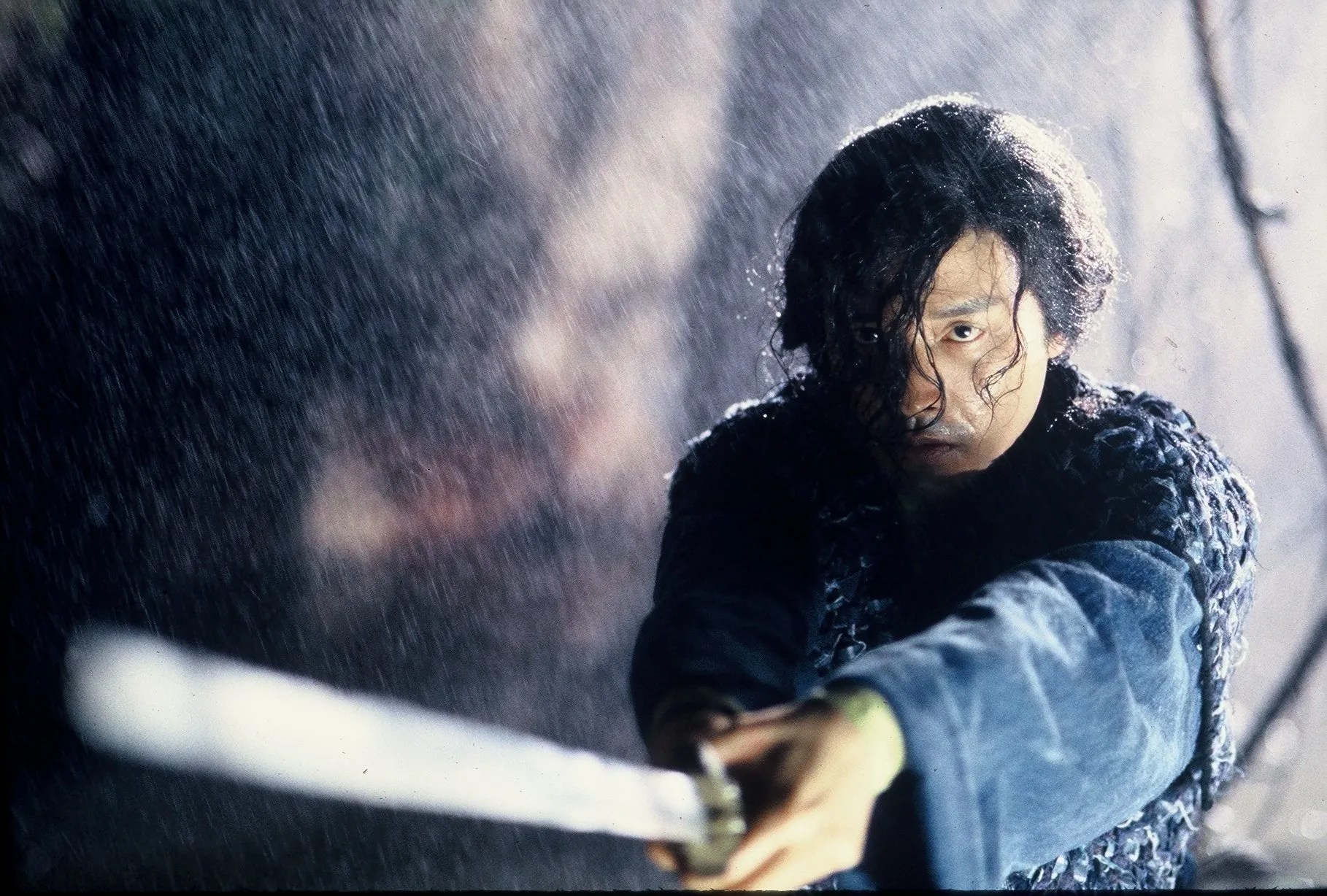
“Every good man should get revenge” the young protagonist of Danny Lee Sau-Yin and Billy Tang Hin-Shing’s depraved Cat III shocker Dr. Lamb (羔羊醫生) is told though as will become apparent, he is not a good man and if his heinous crimes are born of vengeance the target may remain indistinct. Long available only in a censored version which perhaps helped to create its gruesome reputation, the film like others in the early ‘90s Cat III boom is based on a real life case, that of taxi driver Lam Kor-wan who murdered four female passengers before being caught by police when an assistant at a photo shop alerted them to the disturbing quality of the negatives he had brought in to be developed. 

As such, the film is not a procedural. It begins with the arrest of a man here called Lin Gwao-yu (Simon Yam Tat-Wah) who claims the negatives are not his and that he brought them in on behalf of a friend named Chang (which is also coincidentally the name of the half-brother he continues to resent). On investigating the flat where he lives with his father, half-siblings, and niece, the police realise that Gwao-yu is in indeed a serial killer and the rest of the film is divided into a series of flashbacks as they try to convince him to confess and reveal how and why he committed these crimes the last of which he actually videoed himself doing. 

Nevertheless, the police themselves are depicted not quite as bumbling but certainly not much better than the criminals they prosecute in their own lust for violence, savagely beating Gwao-yu who refuses to speak in order to force him to confess. Fat Bing (Kent Cheng Jak-Si) is portrayed as a particularly bad example, encouraging the other cops to play cards rather than focus on their stakeout of the photo shop almost allowing Gwao-yu to escape and then titillated by the more normal pinups and glamour shots pinned to Gwao-yu’s wardrobe as well as some of the less normal ones before realising that the women in them are dead. There is some original controversy over whether they should be investigating at all given that taking weird pictures of nude women is not in itself illegal while the misogynistic attitudes of the police are carried over onto one of their own officers who is forced to play the part of the victim during a re-enactment and is later struck by a stray body part as a result of Fat Bing’s crime scene incompetence. One of the murders even takes place directly outside a police box where the victim had tried to ask for help but got no reply.

Pressed for a reason for his crimes Gwao-yu offers only that all but the last of his victims were bad women who deserved die, each in a repeated motif fatalistically colliding with his cab and crawling inside having had too much to drink. Flashbacks to his childhood place the blame on his wicked step-mother’s rejection along with that of his siblings while his father alone defends him if somewhat indifferently, describing him as merely “curious” on catching Gwao-yu voyeuristically spying on he and his wife having sex and disowning him only on discovering that he has also been abusing his niece who is strangely the only member of the family who seems to be fond of him. Yet it’s also this problematically incestuous living environment that has facilitated his crimes. Gwao-yu takes the bodies home to play with and dismember having the house to himself during the day because he works nights while continuing to share a pair of bunk beds with the brother he hates at the age of 28 either unwilling or unable to get a place of his own on a taxi driver’s earnings. Aside from his brother noticing a strange smell, the family who all think him weird anyway apparently remain oblivious to Gwao-yu’s crimes despite the jars containing body parts he keeps in a locked cupboard along with disturbing photographs of his dark deeds. Nevertheless it’s their police-sanctioned beating of him which eventually provokes his confessions. 

Set off by rainy nights, Gwao-yu twitches, gurns, and howls like a dog leering at his victims like a predatory wolf. In the police interrogation scenes he continues with his strange, dancelike movements as if in a trance reliving his crimes. The truth is that the police had not really investigated the disappearances of the women he killed, had no clue a serial killer was operating, and would not have caught Gwao-yu if it were not for his own lack of interest in not being caught in taking the photos to be developed publicly despite claiming to have the ability to have simply developed them himself while videoing his brutal treatment of one victim’s body and his disturbing “wedding night” with another. A final scene of Inspector Lee visiting Gwao-yu in prison visually references Clarice’s first visit to Dr. Lecter in Silence of the Lambs which might go someway to explaining the title which is otherwise perhaps ironic in Gwao-yu’s ritualistic use of a scalpel and specimen jars. In any case for all its lurid, disturbing content the film has a strange beauty in its atmospheric capture of a neon-lit Hong Kong stalked as it is by an almost palpable evil. 


Dr. Lamb screened as part of this year’s Fantasia International Film Festival and is available on blu-ray in the US courtesy of Unearthed Films.

Original trailer (no subtitles)

Mama’s Affair (阿媽有咗第二個, Kearen Pang, 2022)

A middle-aged woman finds her desire to take back her life after the failure of her marriage frustrated by her teenage son’s resentment and the lingering patriarchal social codes of the contemporary society in Kearen Pang’s familial dramedy Mama’s Affair (阿媽有咗第二個). The “affair” of the title is an ironic take on her new maternal relationship with a young man she takes under her wing framing it as in a way cheating on her son which is clearly the way he feels about it, while it’s clear that some still view her desire to find fulfilment outside of her role as a wife and mother as a betrayal of her family. 

Before her son was born, Mei-fung (Teresa Mo Shun-kwan) was a top talent manager at a record label but gave up her job at her husband’s insistence after suffering a miscarriage. With her son, Jonathan (Jer Lau of boyband Mirror), about to graduate high school and hoping to get into Cambridge University, she decides to re-enter the world of work but soon discovers that those she once helped in their careers are not necessarily keen to repay the favour. An old associate more or less laughs her out of the room suggesting she’s simply too old for the music business and recommends she join another old friend at his music company which turns out to be a school for small children. She takes the job anyway and quickly bonds with the two younger employees who introduce her to Fang Ching (Keung To of boyband Mirror), a young man with a prodigious talent for song and dance that has Mei-fung thinking of getting back into the management game.  

Though Jonathan had mostly reacted with indifference to his mother’s decision to return to work, claiming that he’d long wanted more independence anyway, he can’t seem to let go of a sense of resentment towards Ching which is compounded by his confusion surrounding the status of his parents’ marriage which it seems had long gone cold. His father Yan has moved out and though Jonathan doesn’t know it is having a baby with an old friend of his mother’s all of which informs his feelings of displacement as if he’s been pushed out of the family circle fearing that Mei-fung has gone out and got herself a new son who admittedly seems to appreciate her more. Displaced from his own family by tragic circumstances, Ching does indeed value the small things Jonathan has begin to resent in teenage angst yet is also unexpectedly sensitive and mindful of the ways in which his relationship with Mei-fung and presence in the household may be affecting Jonathan who is still struggling to come to terms with his parents’ decision to end their marriage without even really telling him. 

In an another ironic note it’s Mei-fung’s maternity which is positioned as her key strength as a manager, quietly lending support and encouragement that allows Ching to reach his full potential. On Ching’s arrival to the studio a mother had come in to the school with her young son who was bawling his eyes out because he wanted to join a dance class but the mother wouldn’t let him because she said he was too fat and would only embarrass himself only to be proved wrong when Ching invites him to try out on the dance floor demonstrating both the damage that can be done by a judgmental parent and the positive influence of an actively supportive environment. While Mei-fung keeps telling Jonathan he needs to learn to look after himself, she patiently nurtures Ching and eventually encourages to him sort out his complicated feelings towards his family while helping him achieve his dreams as an artist. 

In some ways, Mei-fung never really transcends the role of mother or escapes the tendency to define her role in relation to the two boys while somewhat resentful of all she was forced to give up because of the patriarchal, authoritarian mindset of the husband who later left her for a younger woman. Jonathan and Ching eventually sort things out through a good old fashioned fist fight generating a kind of brotherhood that leaves each of them equally displaced but also finding firmer footing more secure in their roles and relationships. “No one can handle everything alone” Ching wisely advises, as each of the trio develops a kind of independence founded on mutual solidarity, Mei-fung reclaiming her right to an individual life while giving each of the boys the courage to go off and pursue their destinies through the superpower of maternal love. 


Mama’s Affair is in UK cinemas from 19th August courtesy of CineAsia.

UK trailer (English subtitles)