The Snowball on a Sunny Day (金多寶, Philip Yung Chi-Kwong, 2026)

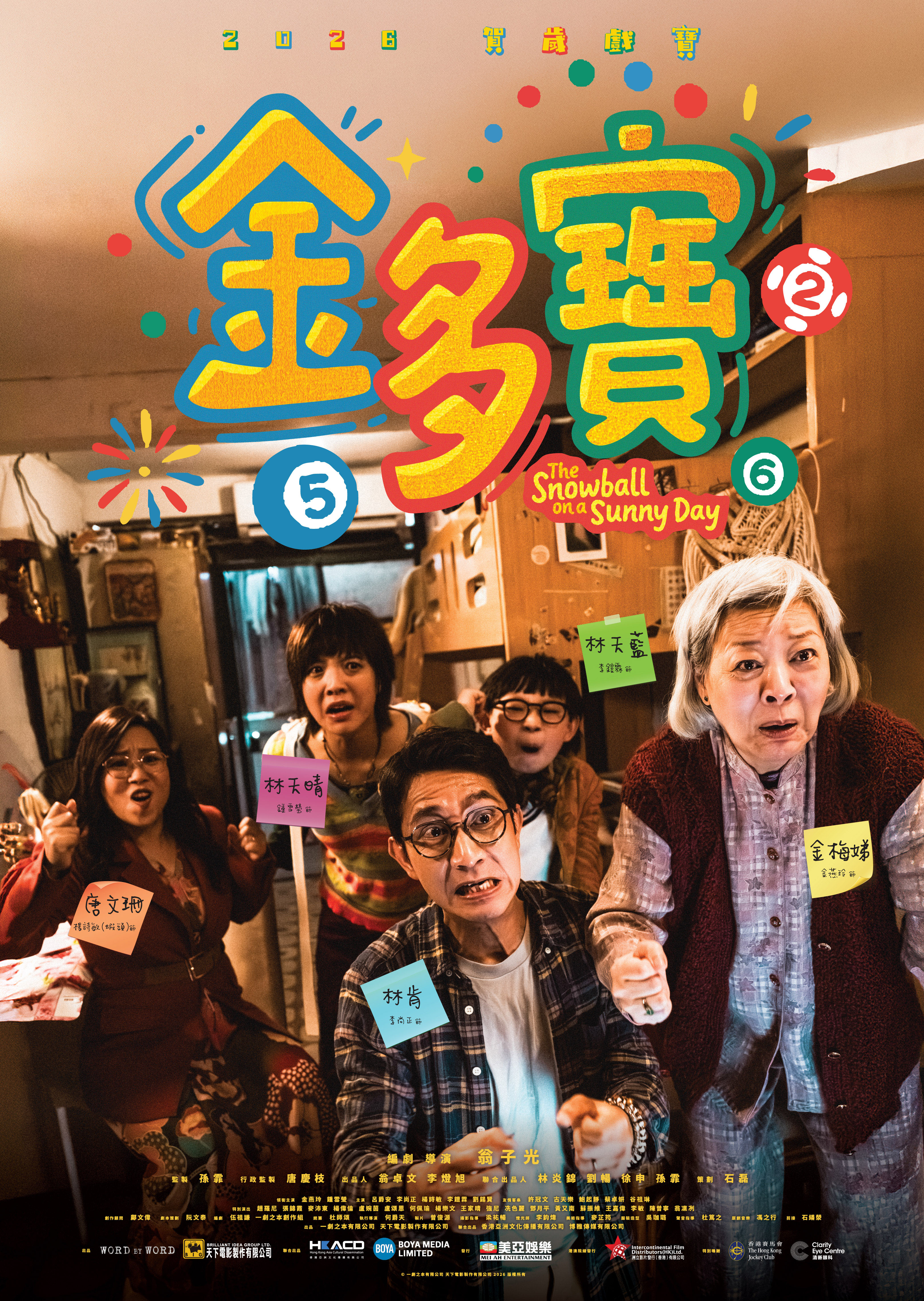
Philip Yung isn’t the first person you think of when it comes to Lunar New Year Comedies. His previous films have largely been hard-hitting crime dramas such as Port of Call and Papa. The Snowball on a Sunny Day (金多寶) is then a world away with its largely warmhearted story of an ordinary family pulled apart by the demands of modern living but brought back together through subterfuge when it becomes necessary to keep up the pretence that they’ve won the lottery.

As one of their neighbours says, every family needs its little white lies every now and then. Widowed grandmother Mui (Elaine Jin) has been playing the same lottery numbers for 30 years. Buying the ticket has become the responsibility of granddaughter Sunnie (Chung Suet Ying), but she is currently living a frantic life as a script supervisor/runner on film sets. Her plan to use her father’s Jockey Club account to buy one online is frustrated when he reveals he’s cancelled it after a run of bad luck at the tracks, meaning she’ll have to go to the shop in person. When she gets there, the security guard turns out to be someone she had an altercation with on a shoot, so they won’t let her in. A relative, Great Uncle Wah, says he’ll buy a ticket for her, but is escorted out by loan sharks before he can do so.

Inevitably, Mui’s numbers come up and Sunnie doesn’t have the heart to tell her that she never bought the ticket, so she embarks on an elaborate ruse to pretend they’re all millionaires by “borrowing” an expensive villa where her friend Jay (Edan Lui ) is currently “housesitting” for a film producer who’s apparently disappeared following rumours of some kind of financial impropriety. In some ways, Mui’s desire for a house where the whole family could live together is reflective of the current realities of the Hong Kong housing market. Even with a lottery win, the villa wouldn’t really be within their reach, which is why they have to make up excuses to convince her mother Charlotte (Harriet Yeung), an estate agent, that there are reasons it’s so “reasonably priced” that aren’t necessarily dealbreakers for the family such as being a stigmatised property where a violent death took place. 

Meanwhile, this tranquil, spacious environment and relief from financial pressures provide a place in which Sunnie’s parents, who are currently separated but keeping the breakdown of their marriage secret from Mui, a chance to work out their differences. Her father Ken (Jiro Lee) is a washed up former idol star who evidently didn’t make any financial plans for his or his family’s future and now makes a living as a taxi driver who refuses to move with the times by following GPS or working via apps. Sunnie, meanwhile, was sent to live with Mui so that her mother Charlotte could devote her attention to her younger brother Harry (Marek Li Hoi-Lam) who is neurodivergent and has health issues. 

While some tension exists between Mui, Sunnie, and Charlotte, Sunnie is reaching the age at which she begins to realise the sacrifices that were made on her behalf and is mindful of repaying them. Her career as a filmmaker is, however, off to a slow start with her life mostly spent at the beck and call of autocratic directors, managing extras and on occasion having to step in herself such as playing the part of a ghost when an actor doesn’t show up and wearing the costume that Mui has hand stitched for the production, presumably without any pay. There are various meta comments about the declining state of the Hong Kong film industry coupled with a sense of nostalgia for an earlier time when her grandfather hand painted posters and marquees for the latest releases after he and Mui migrated from Indonesia. 

Mui’s life on the public housing estate similarly evokes a sense of warmth in a community that’s otherwise disappearing. Aside from the jobsworth of an estate manager to goes around telling people off for drying their washing outside or breaking some sort of other rule, Mui is well liked by her neighbours and only wants to move to have more space so the family could all live together. Through all the zany, farcical action as they try to keep up the act for Mui, from whom you can’t can’t really hide anything, the family begins to repair itself in true New Year comedy style while apparently making friends with some of their other “enemies” such as an extra/ice cream van diver and a Liverpool fan with whom Manchester United devotee Ken has some kind of vendetta. Despite the silliness, the film has a degree of genuine poignancy in its closing moments as various truths are revealed and the family is forced to remember what it is that’s really most important. 


The Snowball on a Sunny Day screened as part of Hong Kong Film Fest UK

Trailer (Traditional Chinese / English subtitles)
In Between Loves (求愛夜驚魂, Allan Fung Yi-Ching, 1989)

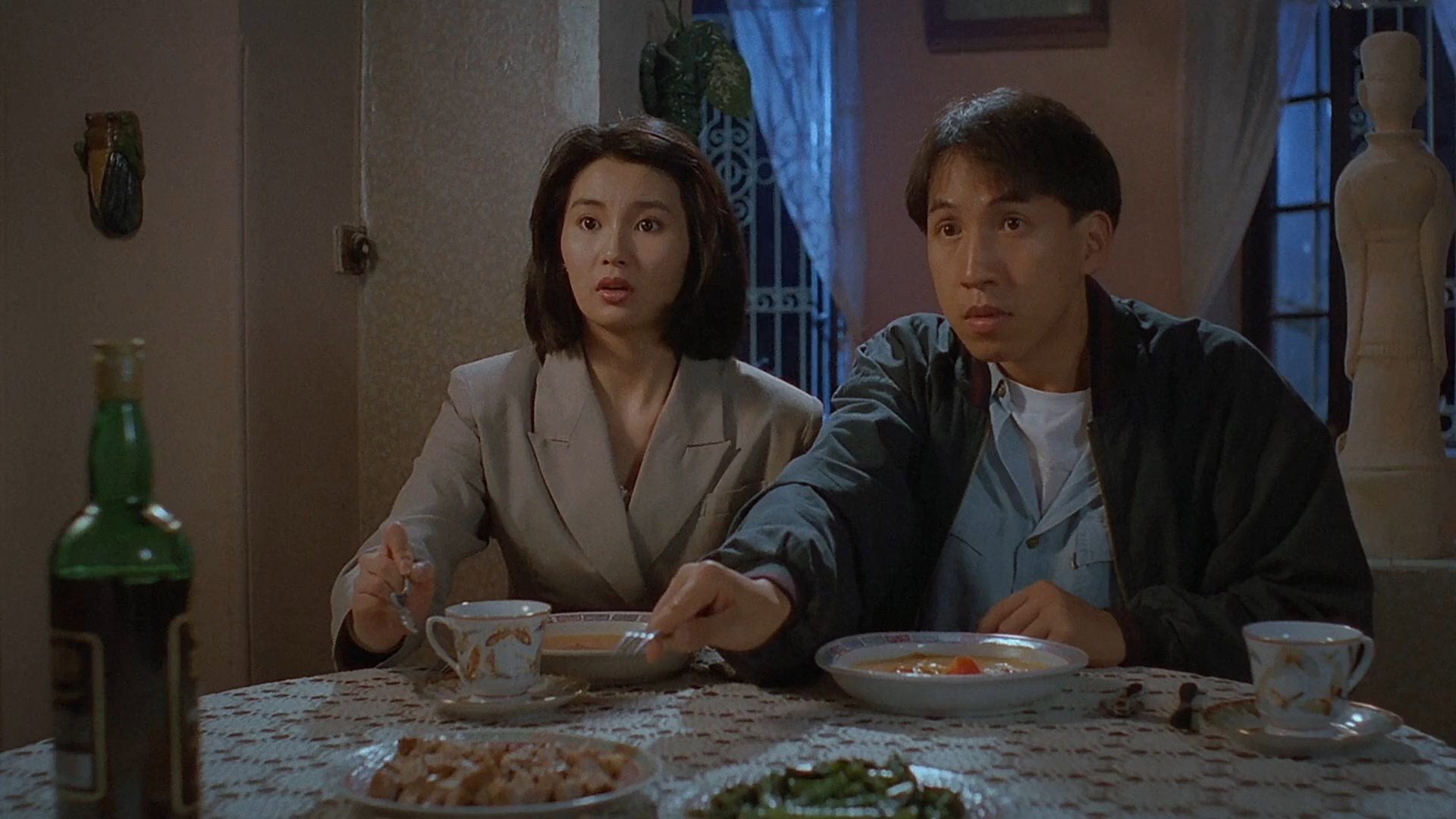
Zany rom-com meets serial killer thriller in Allan Fung Yi-Ching’s decidedly odd horror comedy, In Between Loves (求愛夜驚魂). Though the title may hint at romantic melodrama, the film is filled with unexpectedly edgy humour and references to the real life “Jars Killer” case that also inspired the film Dr. Lamb in which a taxi driver murdered several of his female passengers and kept their body parts in Tupperware boxes at his home where he lived with his apparently oblivious family members.

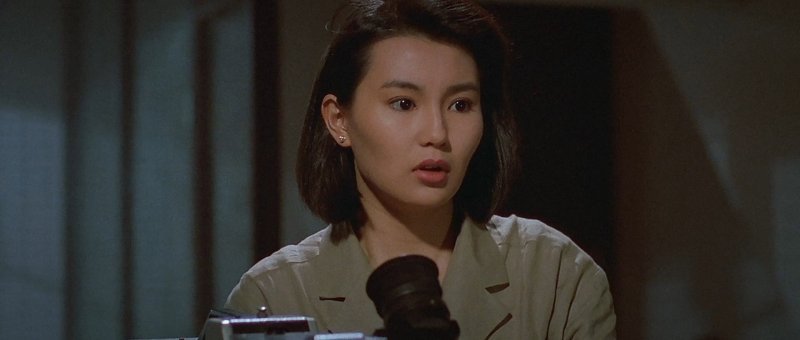
Lung (Alfred Cheung Kin-Ting) is the head of a small band of late night taxi drivers who entertain each other with various party tricks over the radio, Lung’s being the ability to tell Christmas cracker-style jokes. They seem to have a long-standing vendetta against another gang of taxi drivers who challenge them to drinking contests and other tests of strength. Lung, meanwhile, has a fixation with beautiful TV reporter Jenny (Maggie Cheung Man-yuk) who once said something nice to him getting out of his cab, and makes a point of watching the news whenever she’s on. His taxi driver friends mostly seem to support his crush and are keen to help him in his romantic quest which is why they all agree to pass on tips about newsworthy goings on that Lung can send to Jenny in the hope of making himself useful to her.

Jenny, meanwhile, is sort of grateful for the tips because she feels undervalued at the station where she works. She clearly wants to be a crusading reporter exposing things like political corruption and injustice, but as her boss tells her, the people of Hong Kong prefer soap operas to news and in any case, they don’t have the budget for serious investigative reporting. There is a mild criticism here of the mass media landscape which is increasingly compromised by its commercial concerns in world in which the line between factual reporting and entertainment is beginning to blur. The press are desperate for salacious content to keep viewers hooked, feeding on human misery and almost willing it into being.

Thus it’s not a stretch when it first appears that Lung has gone off the deep end after being insulted by Jenny’s terrible elitist boyfriend John (Lawrence Ng Kai-Wah) and actually become a serial killer just so that Jenny can have something exciting to report on followed by a scoop on his confession. It turns out that Lung is not the real killer and only wanted to give Jenny a real confession wrapped up in a false one, but this still bears out the depths of his problematic, one-sided romantic obsession with a public figure. In some ways, Lung is presented as an underdog whose pure-hearted love just hasn’t been properly noticed, yet. He picks up another man with flowers for Jenny who is more obviously deranged, but is irritated rather than noticing that he is really no different. He is also irritated to see John pick Jenny up, but, at the same time, perhaps thinks it’s fair enough if she has a boyfriend already.

The problem is that John might actually be the worst person in a film about a cannibalistic serial killer without needing to actually kill anyone. He is possessive of Jenny and has an unpleasant, elitist world view in which he is violent towards Lung and point-blank tells him that a lowly taxi driver who didn’t even finish high school has no business dating an educated, upper-middle-class woman like Jenny. Though this originally presented as an unpleasant point of view and a symbol of the kind of classist oppression faced by men like Lung, the film eventually embraces it with Lung coming to the conclusion that John is right, he’s not good enough for Jenny and ought to date someone from his own social class such as fellow taxi driver Ti (Sandra Ng Kwan-yue). As such, it adopts a rather conservative attitude that supports class divisions and negates the idea of social mobility in insisting that love across the class divide not only will not work but is in some way improper.

Lung may realise both that his infatuation is not “love” but “worship” and that his behaviour has been dangerously obsessive bordering on madness, but this is not the reason that he finally decides to give Jenny up so much as a sense of inferiority in returning to his own working-class world. Meanwhile, the film treats Ti as something of a joke, firstly mocking her for being a tomboyish woman in a man’s occupation, then half-hinting that she maybe transgender. Despite its offbeat humour, the film goes to a fairly grisly place in its final stretches, transitioning into slasher territory as Lung and Jenny are stalked by the real killer upset by Lung’s attempts to claim responsibility for their crimes. Order may have been restored, but this Hong Kong remains a fairly bleak place overshadowed by violence and anxiety in which romantic fantasy may be the only means of escape.


Trailer (no subtitles)