
Industrial Spy (産業スパイ, Eiichi Kudo, 1968)

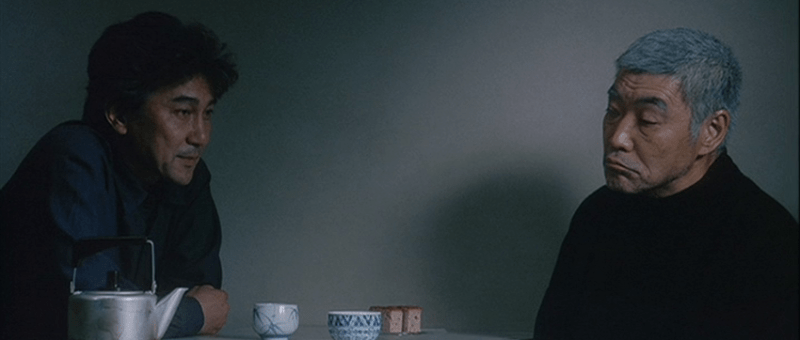
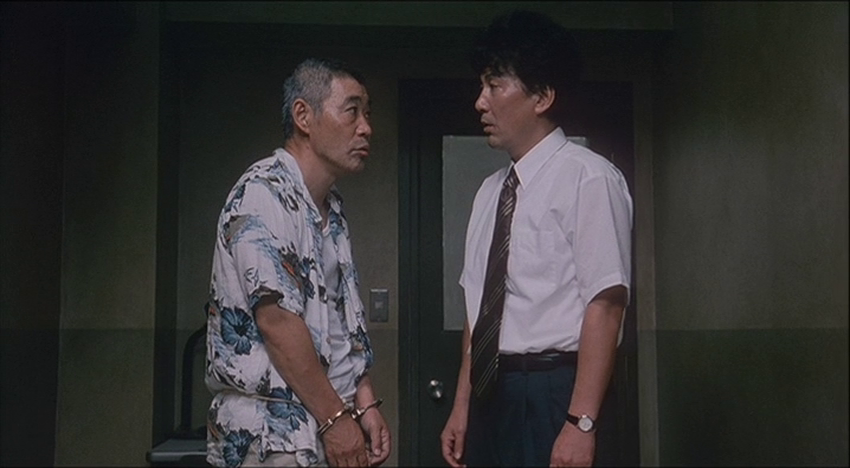
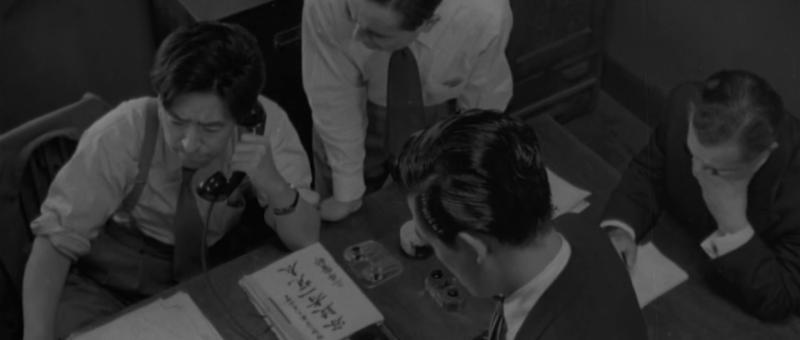
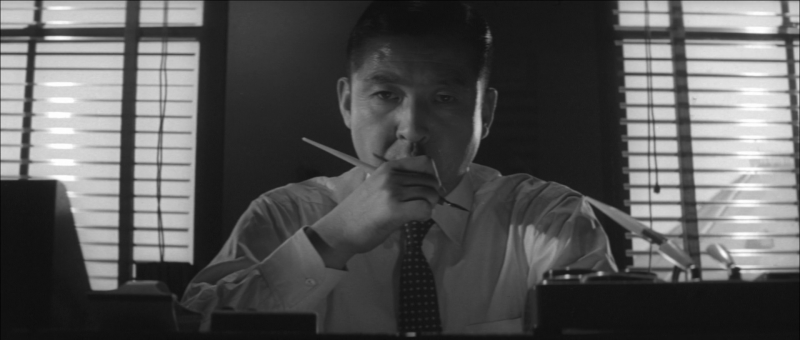
Cynical corporate spies find themselves in a battle of wits when one attempts to use the other in a psychedelic effort from Eiichi Kudo, Industrial Spy (産業スパイ, Sangyo Spy). A deliberate attempt to hop on to an ongoing trend sparked Bond mania and the success of Daiei’s “Black” series, along with the novels of Toshiyuki Kajiyama which inspired them, the film was intended as the first in a franchise vehicle for Tatsuo Umemiya whose Youth of the Night series had run out of steam. 

As such, he stars as a jaded young man working as a corporate spy stealing trade secrets on behalf of rival companies. He does not infiltrate them by gaining employment, but makes use of connections, seducing women in administrative positions, and setting honey traps for blackmailing executives sometimes even using his own girlfriend Masami (Reiko Oshida). His main justification is consumerist desire. He tells Masami that if they want nice things they have to take them. They weren’t born with a silver spoon in their mouths, so they can’t afford to act refined and expect what they want to come to them. They have to do whatever it takes or resign themselves to a life of poverty. Masami, however, is beginning to tire of this arrangement and is hurt, more than anything else, when she realises that Kogure has only bought her a new handbag, necklace, clothes and shoes to head off his guilt because he’s about to ask her to sleep with the director of a project to create an experimental engine as part of a job he’s been manipulated into by Sawada (Fumio Watanabe), the head investigator of Nisshin Industries. 

Rather childishly, Sawada convinces him to take the job basically by implying it’s too difficult for him. “There are secrets you just can’t steal,” he sighs, knowing that it’s like catnip to a man like Kogure who can’t resist a challenge even if he’s paying him less than a third of what he asked for. But Kogure has badly underestimated Sawada. When Kogure returns for his payment, he realises that Sawada sold the trade secrets back to the same company he stole them from to curry favour in the hope of worming his way in so he could take it over.  

Both men are in differing ways unsatisfied with their circumstances. Kogure resents his poverty and wants to be allowed into the increasingly consumerist society of Japan’s high prosperity era, but at the same time he isn’t especially greedy. Sawada tells him he’s doing this because money alone is no longer enough for a man to live a full life in the modern era, he must obtain a powerful position too. All Kogure wants is to sleep with the woman he loves, eat good food, and have a good time. Which is to say he only wants to be comfortable rather than wealthy but feels that that life is unattainable to him outside of his current underhanded occupation. Poignantly, after asking Masami to sleep with his mark to obtain information, he realises that he actually does love her and resolves to marry her after the job is done. But for her this was the final straw and she only did as he asked so she’d hate him enough to leave. 

Nevertheless, on learning he was tricked by Sawada, Kogure vows revenge by deliberately messing up Sawada’s plans to win a bid for a dam project on behalf of Nisshin by setting up a rival candidate and getting hold of their offer so they can make a better one. Only, Sawada always seems to be one step ahead and is even more ruthless than he is. While Kogure mourns Masami and is full of regret, pondering how he might win her back while his more straight-laced corporate lackey friend decides it’s time to shoot his shot, Sawada breaks up with his actual girlfriend to foil Kogure’s plan to photograph them together and blackmail him after he’s cynically married the disabled granddaughter of the Chuo Electric CEO who is mediating the dam bid. The older Mr Matsui (Takashi Shimura) is not completely blind to Sawada’s schemes, but blames himself for his granddaughter’s injury and believes it will be difficult for her to marry, so he’s willing to compromise himself corporately if only Sawada will ensure his granddaughter’s happiness.

Of course, that’s not really very high on Sawada’s list and only ever a means to an end. In this, he’s slightly different from Kogure who is equally heartless in some ways, humiliating a young woman who took an interest in him because she was of no use and he thought her cheap and vulgar, but clearly still has some vestige of human emotion even while realising he should probably let his friend chase Masami if he really loves her because she’s better off with him and his steady if dull corporate existence. In the end, though, neither man gets what he really wants and both ultimately lose out on both the money and the prize with Kogure vowing revenge against new enemies by whom he feels, a little unfairly, betrayed. Nevertheless, by ending with some monochrome stock footage of workers at the station, Anpo protestors being beaten by the police, and shots of US jet fighters, Kudo implies Kogure’s actions are a kind of rebellion against capitalism itself and the contemporary state of Japanese society even as he too becomes just another face in the crowd, an anonymous cog in this great shuffling machine.


Heat Wave Island (かげろう, Kaneto Shindo, 1969)

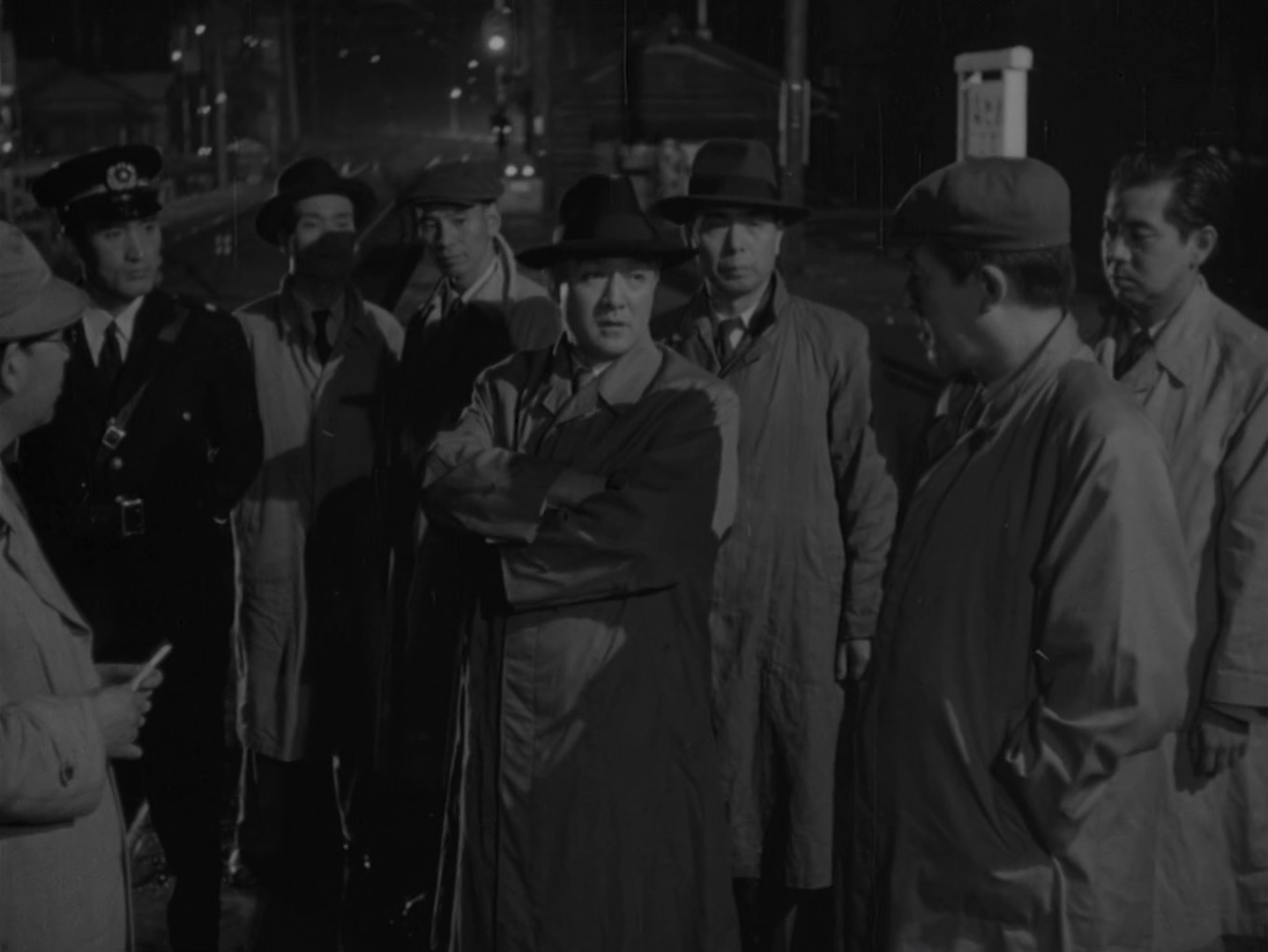
The death of a bar owner in Onomichi sparks a complex investigation into the condition of the islands surrounding the Seto Inland Sea in Kaneto Shindo’s darkly ironic crime drama, Heatwave Island (かげろう, Kagero). Produced by Kindai Eiga Kyokai, the independent production company founded by Shindo, Kozaburo Yoshimura, and the ubiquitous Taiji Tonoyama, the central thesis is that industrialisation has poisoned the waters surrounding the Japanese heartland, but also that the collection of weird islands had their share of darkness to begin with.

Indeed, having solved the crime, unusually chipper detective Oishi (Rokko Toura) states that it was the island that killed her. “Your traditions turned an island woman’s life to ruin,” he tells the very compromised village chief (Taiji Tonoyama) who refused to let a woman leave the island to seek medical treatment for her baby because of a taboo about setting sail on the night of a shipwreck. That’s not so much a supernatural fear or practical concern as much as a pact between islanders who have been killing shipwreck survivors and looting their boats. Nevertheless, the woman is eventually forced off the island when the men who killed her husband begin fighting over her body. The village chief tells her she has to go to preserve the “unity” of the island while her child, who survived but with brain damage, will be cared for by the other islanders.

Yet all the woman wants is to return to the island to live with her child after gaining the money to build a big house where everyone can see it. Some justification is given for the island’s cruelty in that it has essentially been starved out by post-war industrialisation. The fishing industry is dying, and the island terrain is only suited for growing wheat and potatoes, making farming unviable as a commercial enterprise. A man from another island says that as the salt fields were closed down factories arose in their place and leaked pollution into the surrounding seas, killing off all the fish. He is now bedridden due to industrial illness having worked on Poison Gas Island during the war. His wife now works in one of the “enemy” factories. “That’s how we survive,” he laments of the faustian pact between rural communities and large corporations. 

In any case, most of the young people have been forced into the cities in one way or another where they often lack the skills to find well-paying work and end up in crime and the nightlife industry. The late bar owner, Otoyo (Nobuko Otowa), was herself once from an island village, as was her bar girl Michiko (Toyama Masako). Both of them are dreaming of better lives while filled with a sense of futility. A young man who gave up on fishing to work in factories is injured in a workplace incident and is prevented from leaving hospital until he can pay his extortionate medical bills which the company evidently isn’t going to cover.

The irony is that Oishi is from a farming background too. Rich kids don’t become detectives, Otoyo points out. A poor man’s son commits a crime, and a poor man’s son will catch him, she adds signalling the ways in which the poor work against each other rather than their common enemies such as the exploitative corporations which have ruined the beautiful natural scenery of Japan’s islands along with their traditional communities. Then again, Oishi is a slightly compromised figure in other ways too. He probably shouldn’t be investigating this case given that he used to drink in Otoyo’s bar and seems to have a crush on her, which interferes with his ability to accept some of the less pleasant things they begin to find out about her past. He also has more than a fatherly interest in young Michiko and is unwilling to accept she could be involved with the crime having taken out a sizeable advance on her salary to care for her father who is also bedridden following a stroke.

The implication is that these murders are more like earthquakes, an inevitable result of friction between people caused by conflicting societal forces. Oishi concludes his investigation, but it only seems to result in a further fracture that severs the connection between the islands and the mainland, leaving another woman in a state of limbo waiting for someone who may or may not return. The convoluted, island-hopping mystery taking place under the blazing sun of a sticky summer has its degrees of absurdity, from the weirdness of these retreating cultures to the poignant presence of the dog, who alone seemed to want justice for Otoyo, who, whatever her other faults may have been, was always kind to him when others often weren’t.


Faceless (正体, Michihito Fujii, 2024)

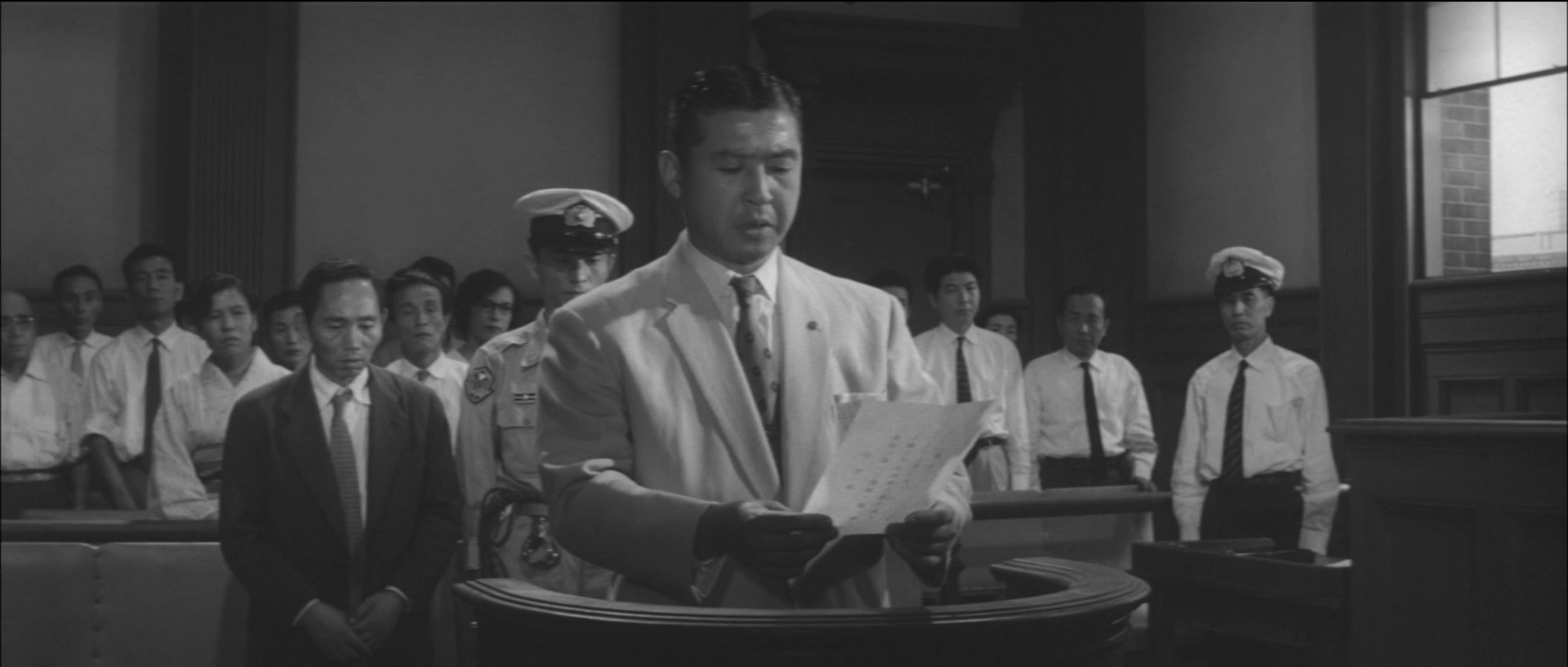
The Japanese title of Michihito Fujii’s crime thriller Faceless (正体, Shotai), “true identity”, might suggest that there is a mystery surrounding the hero, that he is deliberately misrepresenting himself so that it is difficult to know who he “really” is. But in reality the opposite is true. His cover identities are only ever superficial and, in essence, he is always his true self which is one reason he encounters so many supportive people during his flight from the law in an attempt to clear his name after being convicted of a crime he didn’t commit.

Inspired by Tamehito Somei’s novel, the film is another in a long line critical of the authoritarian Japanese justice system which has a 99% conviction rate. Though its defenders may say that the lack of acquittals proves that cases are only brought to trial when the police are absolutely sure, that isn’t quite the case and the judicial system is often over-reliant on confessions which may be given under extreme duress and are therefore unreliable. Sayaka (Riho Yoshioka), a reporter who becomes determined to prove Keiichi’s innocence, has her own negative experience with the justice system when her father, ironically a lawyer, is falsely convicted of groping a schoolgirl on a train. As her father points out, when so many people are hounding you he can understand why some give in and just say they did it to make it all stop. 

The police officer, Matanuki (Takayuki Yamada), also appears conflicted from the beginning and requests a full investigation of the crime but his superior tells him to just pin it on Keiichi (Ryusei Yokohama). The law is about to change so that 18-year-olds will be tried as adults, so he thinks it would set an example for other young people that they can’t take advantage of their adolescence to commit crimes assuming they won’t be prosecuted fully or that their records will be wiped when they come of age. There had been a minor moral panic at one time about children actively exploiting this legal loophole, though Matanuki’s boss’ dismissive attitude hints at his conservative perspective and authoritarian viewpoint. When Keiichi’s case begins to receive public interest, he tells Matanuki that the conviction must stand and that the “truth is unimportant in this case” because admitting they made a mistake would be disadvantageous for the police force’s reputation. Despite himself, however, Matanuki continues to follow his boss’ orders and pursue Keiichi even if he stops short of following them fully by refraining from firing at him when he tries to get away. 

Asked by Matanuki why he tried to escape from death row, Keiichi tells Matanuki that he wanted to believe the world was good and that if he stood up for what was right people would listen. It’s a trite sentiment that’s undermined by the central flaw of the narrative which is that Keiichi is an ideal wrong man. That he prospers simply being “nice” seems like a kind of cosmic judgement that insists, despite all the bad things that have happened to Keiichi, the universe rewards people who are “good” which is both a moral judgement and highly unrealistic. Like Fujii’s Day and Night, the film hints at the prejudice directed at men like Keiichi who have no blood family and were raised in care while also pointing the finger at similar systemic injustices such as exploitation of labourers denied proper compensation for workplace injuries by thuggish bosses who intimidate them out of pressing for their rights under existing labour law.

As such the film posits solidarity as the best weapon against an oppressive system as the various people who’ve witnessed Keith’s “true self” and been helped by him come to his aid in return. What turns his fortunes is a critical mass of ordinary people standing up and saying that this isn’t fair, giving Matanuki the confidence to defy his boss by going rogue and admitting their mistake publicly at a press conference thereby returning the case to the people and preventing the authorities from covering it up. That justice is eventually served sort of reinforces the idea that this is a good world after all because it’s filled with basically good people who believe in truth and fairness even if the people that govern them don’t, which, though it might be a superficially happy ending for all, is rather optimistic and otherwise ignores that not everybody is so lucky and nothing has fundamentally changed within the justice system to prevent things like this happening again.


Trailer (no subtitles)

Delicate Skillful Fingers (白い指の戯れ, Toru Murakawa, 1972)

Toru Murakawa is most closely associated with his long and fruitful partnership with Yusaku Matsuda which came to define a certain kind of 1970s cinema, but he began his career at Nikkatsu in 1959 in the sales department before resigning and rejoining a year later as an aspiring director. At Nikkatsu he worked with established directors such as Toshio Masuda and Ko Nakahira, as well as with external directors such as Shiro Moritani before making his directorial debut in Nikkatsu Roman Porno, a line of soft core pornography the studio launched amid the collapse of the studio system, with Delicate Skillful Fingers (白い指の戯れ, Shiroi Yubi no Tawamure), in 1972.

Murakawa would actually leave the studio in the same year having completed two more Roman Porno films, returning to his hometown of Yamagata where he had married into the family of well-known metalwork artist Kenten Takahashi both training with him and helping his older brother Chiaki Murakawa set up the Yamagata Symphony Orchestra. In any case, his temporary withdrawal from the film industry had nothing to with a lack of success in his debut feature. Delicate Skillful Fingers was a critical hit and the first of Nikkatsu’s Roman Porno line to feature in Kinema Junpo’s prestigious Best Ten. It was also the debut film for lead actress Hiroko Isayama and, perhaps not entirely coincidentally, the first time the studio put the male star front and centre in their branding campaign. 

Co-scripted by another top Roman Porno name Tatsumi Kumashiro, the film follows the innocent and naive Yuki (Hiroko Isayama), who is so sensitive that the sight of a wrecked car makes her cry in sympathy, as she falls deeper into the world of petty street crime after being chatted up in a cafe by a goofy guy who just happens to have a problem with kleptomania. At least according to his sometime girlfriend Shoko, Jiro (Hajime Tanimoto) came from a wealthy family and attended a fee-paying school, seemingly stealing for the thrill of it rather than financial need. It has to be said that Yuki is rather ditsy, bamboozled into buying food to cook Jiro dinner while entering into a strange dialogue with a robot offering greetings in Chinese as to whether she should give him her virginity which she eventually does, perhaps recklessly, though it ends up not going particularly well, with Jiro having to explain that “the ceremony is now ended” without it seems much fanfare. In any case when he’s picked up by the police and put away for three years because he already had a record, Yuki has to quite her factory job because of persistent police harassment and bizarrely ends up living with Shoko who has predatory lesbian designs on her Yuki responds to but with a degree of internalised shame. 

Shoko’s desire for other women is in someways depicted as an expression of corruption caused by her pickpocket lifestyle as she implies sometime later in suggesting that Yuki will “come to like it” linking the idea of lesbian sex and the act of pickpocketing as implied by “delicate skilful fingers” of the film’s title. Yuki’s bodily submission but mental resistance is intended to suggest her lingering innocence, yet to submit herself to the hedonistic amorality of the pickpocket lifestyle. Rejecting Shoko, she later becomes sexually involved with Jiro’s former cellmate Taku (Ichiro Araki) who is responsible for teaching her how to pickpocket. Taku is otherwise seemingly less interested in sex, but allows Yuki to take the lead while he remains somewhat passive, lying still and still and chewing gum, always with his sunshades remaining firmly on. He even at one point passes her off to an associate in the middle of making love to her, Yuki first resisting on realising what’s going on but eventually giving in to it though clearly not willingly. 

The contrast between the two men, Jiro and Taku, is stark with Jiro clearly asking for consent at each step and waiting for Yuki to confirm it even if in the end he fails to perform whereas Taku seems to be merely using sex which doesn’t interest him to earn her trust and convince her to help him out in his various criminal operations. Yuki is seduced into a world of crime, but remains romantically naive, foolishly sacrificing herself for Taku and insisting she alone was responsible when cornered by the police while he simply walks away and then jokes with a policeman that he’ll look after her when she’s out. Even so, her loyalty to Taku, in contrast with Shoko’s continuing cynicism, proves that she is not fully corrupted by the pickpocket life, even if she foolishly damns herself by needlessly protecting him at the cost of her own future and wellbeing. On the other hand, to so is entirely her own choice just as it was her own choice to sleep with Jiro in the full embrace of her agency. Murakawa’s Nikkatsu debut is a gritty, grimy urban tale of amoral post-war youth but, even in its tragic conclusion, signals the hero’s spineless indifference and hands victory to the heroine who remains uncorrupted but only to her eternal cost. 


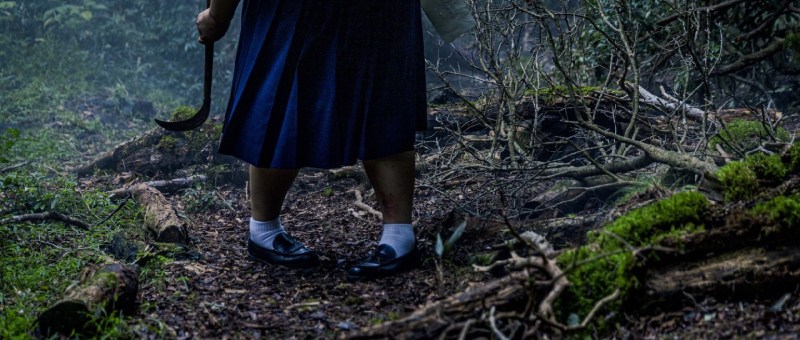
Don’t Look Up (女優霊, Hideo Nakata, 1996)

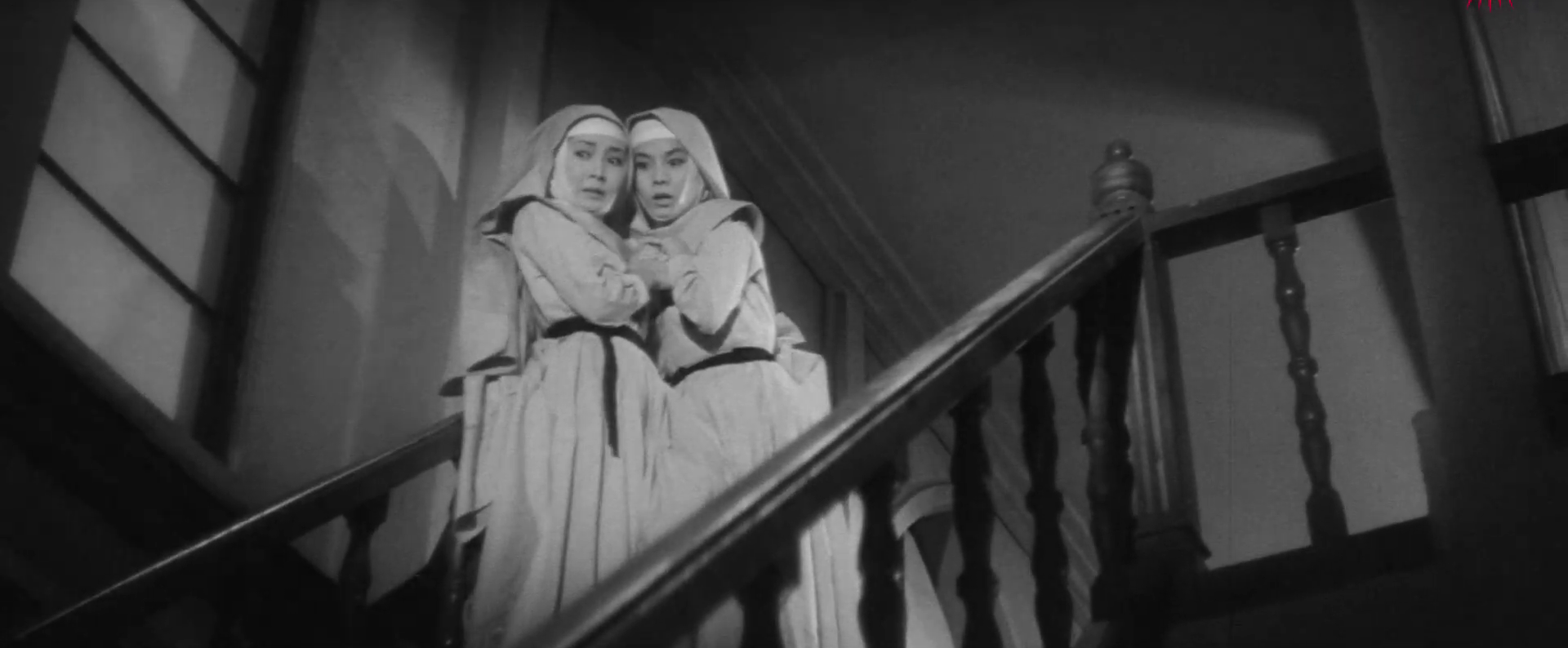
“Have you ever seen an old movie and not been able to get it out of your head?” For those of us who grew up in the pre-internet age, daytime television was a treasure trove of classic cinema where unexpected discoveries were made. Maybe you only caught a few minutes of a film whose title you never knew, but the images are burned into your brain like nothing before or since. It’s tempting, then, to wonder if it isn’t Muroi (Yurei Yanagi), the nascent director, who’s projecting the darkest corners of his mind onto this haunted celluloid, though as it turns out this film was never actually aired.

If Muroi saw the haunted film as a child, it was because the ghost within it chose to broadcast herself by hijacking the airwaves. As his friend points out, however, perhaps he just saw a newspaper report about an actress dying in an on-set fall and saw it in his mind, creating a movie of his own or perhaps a waking nightmare that continues to plague him into adulthood. In any case, the film he’s trying to make is a wartime melodrama rather than a ghost story, but it’s one that’s clearly built around dark secrets and hidden desires. Hitomi (Yasuyo Shirashima) reveals that her character killed her mother in the film to take her place and later kills a deserting soldier with whom she’s been in some kind of relationship that the younger sister threatens to reveal in fear that should the villagers find out they’ve been hindering the war effort by hiding a man who’s shirked his duty to the nation they’ll be ostracised and people will stop sharing their food with them.

But Hitomi has real-world issues too. There’s something going on with her overbearing manager who seemingly didn’t want her to do this film which is why she’s not on set with her. When she eventually turns up, she seems to have some psychic powers. After handing Hitomi an amulet, she runs from the studio screaming. Hitomi agrees there’s something eerie about this place. As the projectionist remarks, this studio is 50 years old, built during the post-war relaunch of the cinema industry. Many things have happened here. But Nikkatsu is now a ghost itself and these disused production facilities are a haunted spaced. The floorboards creak and the rigging may give way any moment, bringing down with it the dream of cinema.

That’s one reason Muroi is advised not to look up and break this sense of allusion, along with recalling the more recent tragedy of an actress’ accidental fall. As much as Hitomi and Saori (Kei Ishibashi) begin to overlap with the image of the ghostly actress, it’s Muroi who is eventually swallowed by his dream of cinema in his determination to climb the stairs and find out what horrors are lurking in the attic before being dragged away to some other world. Nevertheless, this is a film that could only be made with celluloid. Nakata slips back and fore between the film that we’re watching and the cursed negative with its ghost images from previous exposure. This is evidently a low-budget production too, made using end cuts from other reels. As someone points out, this unused footage would usually be thrown out but has somehow mysteriously ended up infecting their film and releasing its ghosts. The projectionist burns it, describing the film as “evil” and suggesting that it’s better to let sleeping dogs lie.

But Muroi seems unable to let it go, chasing his childhood nightmare in trying to explain the mystery behind the footage. Hitomi describes herself as being haunted by a role long after the film as ended. It’s the same when someone dies, she says. They hang on for a while. The actor too remarks that he feels like the camera hates him, as if he were feeling the ghost’s wrath directly but otherwise unable to see her. Yet we have this sense of history repeating and a curse that’s sure to recur while this film too will remain unfinished and linger in the realm of the unrealised. Nakata too only undertook this film after losing his job to Nikkatsu’s collapse and trying to finance a documentary about Joseph Losey as if captivated by his own dream of the cinematic past and the haunting images of a bygone world.


Both You and I (俺もお前も, Mikio Naruse, 1946)

Two dippy salarymen finally rise up against a feudalistic corporate culture in a rare comedy from Mikio Naruse, Both You and I (俺もお前も, Ore mo Omae mo). Essentially a vehicle for real life manzai double act Entatsu Yokoyama and Achako Hanabishi, it’s also an Occupation-era social message movie intended to discourage workers from extending too much deference to their employers, though its positioning of the left-wing student movement as the future countering the militarist past is perhaps surprisingly radical.

In other ways, however, it harks back to the salaryman movies of the 1930s such as Naruse’s own Flunky, Work Hard and Ozu’s I was Born, But… in which the male office worker has been essentially emasculated and forced to debase himself in order to please his boss. As the film opens, Ooki (Achako Hanabishi) and Aono (Entatsu Yokoyama) are guests at their boss’ dinner party at a geisha house where they’ve been ironically invited as entertainment. The pair of them take the place of the geisha doing a silly dance to entertain the boss who quips that they’re cheap considering how much it would cost to hire a pair of comedians. It’s worth saying that Ooki and Aono are not particularly doing this in a calculated way but actively appreciate being appreciated by the boss and see it as their duty to keep him happy. At times, others suggest that it’s their attempt to ingratiate themselves with him, though they seem quite surprised by the suggestion in part because they still believe in an old-fashioned idea of the employer-employee relationship in which the company is supposed to look after them, so they assume they’ll make career progress naturally by being affable team players and aren’t really worried about losing their jobs despite all this talk of restructuring.

Their boss, however, thinks the pair of them are idiots and takes advantage of their loyalty towards him by getting them to dig his garden and complete other inappropriate personal tasks. He gives them a pair of tickets for an onsen resort as a kind of reward, but once they get there, they realise he’s done it to get them to bring back his “luggage” which is actually black-market supplies for his daughter’s birthday party. The boss’ superiority over them is signalled by his large Western-style house, while Ooki and Aono both live in humbler, traditionally Japanese homes. Aono is a widower with four children though he can’t remember how old they are the oldest two daughters are of marriageable age. The boss even requests the eldest, Hatsuko’s presence at the party, but it quickly transpires that he wasn’t inviting her but asking her to do unpaid serving work signalling the class disparity between the middle-ranking salarymen and the boss.

But it’s at the party that things start to change as Hatsuko talks her father out of doing another silly dance as part of the entertainment, in part because of her embarrassment but mostly because her sister Yasuko’s (Itoko Kono) boyfriend is a guest and she’s worried it’ll put him off marrying her. This angers the boss, who insultingly suggests that Aono and Ooki aren’t even fully human and only become a whole person when together so one alone is as useless as an orphaned sandal. Meanwhile, Ooki’s son, whom he’s very proud to say is in university, is rehearsing a communist play that’s about a strike at factory. Ooki doesn’t really understand it, but is worried about the neighbours overhearing and the police getting involved. He still has a pre-war mindset and hasn’t realised that things like freedom of expression now exist. His son tells him that it’s only right to speak up. If you can’t say anything because you’re afraid of getting fired, then you’ll just end up getting exploited. But Ooki and his wife insist they feel too indebted to the boss to be able to talk about him like that. He thinks his son will change his mind when he enters the world of work. Sadao replies that he understands why his father had to do it, but insists that the world is unjust and has been created by the capitalists for their own benefit.

Pushed too far, Ooki and Aono do eventually decide to confront the boss even if they immediately back track when he arrives at the office by hanging up his hat and dusting his desk. They accuse him of being a wartime profiteer who caroused with militarists and made his money by exploiting their labour while he now abuses the black market. They find themselves supported by the other workers from the other side of the door as they insist they’ll fight the restructuring along with the boss’ underhanded plan to sell the company to a rival. They’ve discovered workers’ solidarity and resolved not to be complicit any more with a feudalistic working culture, though it’s unclear if anything will really come of it. They are nevertheless free from their lives of constant debasement and have reasserted their individual identities while otherwise being an unbreakable pair.


Kazuo Umezu’s Horror Theater: Present (楳図かずお恐怖劇場 プレゼント, Yudai Yamaguchi, 2005)

Generally speaking, Santa is quite a benevolent figure. Even the children who are naughty usually just get left out or else awarded a single piece of coal or some other worthy yet dull gift that lets them know how badly they’ve behaved. Not so in the world of Kazuo Umezu, however. You don’t want to get on the wrong side of this Santa, though in other ways it’s less “Santa” that is haunting these youngsters than the disappointed spectres of the children they once were.

As a small child, Yuko (Seiko Iwaido) had a funny dream, though her parents reassured her that Santa would come to save her. However, if she did anything wrong, he’d come after her too. Years later, when Yuko is a student, she writes a Christmas card to a boy she likes and goes to spend the night at a hotel with her friends. But the hotel looks weirdly like her doll’s house from when she was little, and other things from her childhood bedroom seem to turn up here and there. In case that wasn’t weird enough, the reception desk is manned by a creepy Santa, while the atmosphere inside couldn’t really be called “jolly” so much as mildly depressing.

Meanwhile, it almost seems as if Yuko is being bullied by her female friends and has been set up in some way as a figure of fun, though it turns out that Ryosuke (Takamasa Suga) seems to like her too. Only, that’s largely because she seems “pure” in comparison to her friends, which is a bit of a red flag. In any case, though this is a slasher film, it doesn’t really seem to be the case that Yuko is a “bad” girl for getting it on with Ryosuke but for some other transgression. As one of the kids says, they’re all apparently guilty of “desecrating” Christmas, which is what has annoyed Santa to the extent that he’s decided to take back all the gifts he previously gave them. What he actually takes, however, is most of their limbs and internal organs which he feeds to his reindeer.

How they “desecrated” this non-religious event isn’t really clear, but on the other hand it’s true that they don’t make much of an attempt to save each other apart from Ryosuke who is protective of Yuko suggesting that he did actually have feelings for her and wasn’t just looking for a bit of festive nookie. Yuko, by contrast, is revealed to be not quite all she seems and there are other reasons someone, like Santa, might judge her to have been “bad” not least in her rather callous disregard for her parents who were looking forward to seeing her over Christmas. The contrast with her younger self couldn’t be starker, while in her dream, the young Yuko believes herself to have beaten “the evil one” by pulling out her rotten brain which is either a fantastically grim paradox and metaphor about the various ways we disappoint our younger selves, or a kind of course correction in which the young Yuko “became Santa” and removed all the “rotten” parts of her future self’s mind so she won’t end up turning out like that.

The fact that everyone sees a different version of Santa also lends weight to the idea that they’re coming out of their own psyches and Santa is really a manifestation of their own fears and anxieties, though Yuko’s is a fairly conventional take based on what her mother told her Santa looked like. Her mother also attributes young Yuko’s rather gory dream to watching too many splatter films and reflects that perhaps she shouldn’t be letting her do that. “Who on earth would make such films?” she ironically asks in a meta moment while Yuko cheerfully plays “hide and seek” with her new stuffed toys of Santa and Rudolph smiling sweetly while her mother adds that she’s sure Yuko will grow up to be as gentle a woman as she is a child. Meatball Machine director Yudai Yamaguchi, however, indulges in some surreal Christmas gore as Santa goes on his killing spree utilising festive items to hack off the kids’ limbs before stuffing them in his sack and retreating to his decidedly unjolly grotto with his psychotic reindeer. The Christmas spirit is it seems alive and well.


Wedding Day (嫁ぐ日まで, Yasujiro Shimazu, 1940)

There are two weddings that occur during Yasujiro Shimazu’s Wedding Day (嫁ぐ日まで, Totsugu Hi Made), though we only really see one of them. The earlier part of the film seems to be leading up to the arrival of the widowed father’s second wife as the two daughters find themselves torn in their attachment to their late mother, but as we later discover, this first marriage is only intended to facilitate the second in “freeing” 20-year-old Yoshiko (Setsuko Hara) so that she too may marry.

Then again, perhaps “freeing” is the wrong word, seeing as Yoshiko is given very little choice in anything at all. It’s clear in the opening scenes that Yoshiko has taken over as the lady of the house, looking after the domestic space and raising her younger sister Asako (Yoko Yaguchi) who is still in school. But her mother’s absence is still keenly felt in Yoshiko’s quickening steps to return home after shopping. She’s left the front porch unlocked in anticipation of Asako’s arrival home from school and is anxious that she’ll be put out if she can’t get into the main house, though they could obviously have just given her a key. True to form, Asako has arrived early and come out looking for Yoshiko rather than having to sit and wait. The implication is that there is a domestic need that’s not being met because the house is understaffed and Yoshiko is taking on too much.

This is doubtless why the father, Mr Ubukata (Ko Mihashi), is being pressured into an arranged second marriage, though he doesn’t really seem all that keen and both he and the go-betweens are clear that it’s going to be a “marriage of convenience”. Tsuneko (Sadako Sawamura), a school teacher, seems to be a woman who’s resisted getting married so far and has aged out of the arranged marriage market, which is why she’s only being considered as a second wife to a widower with children. Nevertheless, she’s being taken on mostly to shoulder the domestic burden so that Yoshiko would be free to get married without worrying about leaving her father and sister alone with no one to look after them.

In fact, all of Yoshiko’s actions are dictated by filial piety and duty to the family, which is presumably how the film gets around an increasing desire for more patriotic content in the early 1940s. Asako’s attachment to her late mother is positioned as a barrier to the functioning of this system of social organisation in which feeling is almost secondary. Even if Mr Ubukata insists that it’s important not to forget human feelings and affection while being honest that he wants a wife to do his domestic chores, the point is that the nation is a collection of familial units led by a patriarchal figure to which all must be obedient. Once Yoshiko gets married, she writes to Asako and tells her that she should be nice to their step-mother because she’ll be the one looking after their father in the end once Asako too has married and that’s what will make their father happiest.

As such, Yoshiko’s own wedding arrives almost without warning. She does not marry the young man who’s been interested in her for the entirety of the film, but someone her father chooses, evidently a diplomat, with the help of the same go-betweens who can be seen in the back of the wedding car. The film, in part, seems to be a promotional tool for the song Totsugu Hi Made by Hideko Hirai which plays in a record towards the end where Asako has taken refuge after being scolded by her father by refusing to let go of her late mother’s memory. The lyrics express the mixed feelings of a bride who is giving all her girlish things to a younger sister as she transitions from daughter wife and is breaking from her original family in order to create a new one. Though the film views this as the proper order of things, it is sympathetic to Asako who is being left behind having lost first her mother and then her sister who had become a kind of mother to her.

Everyone has their role to play, and Asako’s is still that of a child as symbolised by her long pigtails. For her part, Tsuneko also does her best to fit into the household and is considerate of both daughters whom she treats kindly and with great sensitivity. Though Yoshiko and Mr Ubukata are keen to erase the memory of the late mother from the house in deference to Tsuneko, when she discovers the photograph Asako had misplaced she gives it back to her and tells her to hang on to it. She also does some of the less pleasant domestic tasks such as scrubbing the floors even if Mr Ubukata tells her to have one of the girls do it instead. But she’s also a part of this system and is fulfilling her role by doing her best to facilitate Yoshiko’s marriage. As she says, a bride should have delicate fingers. A mother, by contrast, those roughed by long years of loving domestic service. 

Without her presence, Yoshiko was in danger of ageing before her time. We can see subtle references to the straitened economic circumstances of the wartime era in the talk of the rising costs of vegetables, their late mother’s lessons in thriftiness, and perhaps how the family’s own circumstances have changed as their aunt enquires about their lack of a maid with Yoshiko avowing that they don’t really need one because she can manage on her own. A radio broadcast airs a recruitment ad for welders offering good salaries, hinting perhaps that more hands are needed for the war effort. But in other ways, life continues. Asako’s friends talk about seeing the 1938 French film Prison Without Bars which perhaps reflects Asako’s rebelliousness or the constraining nature of her of her home and life under entrenched patriarchy. Then again, the film very clearly thinks that’s as it should be in encouraging young women to believe that their duty lies in marriage and in obeying husbands and fathers with barely a recognition of their own hopes or desires.


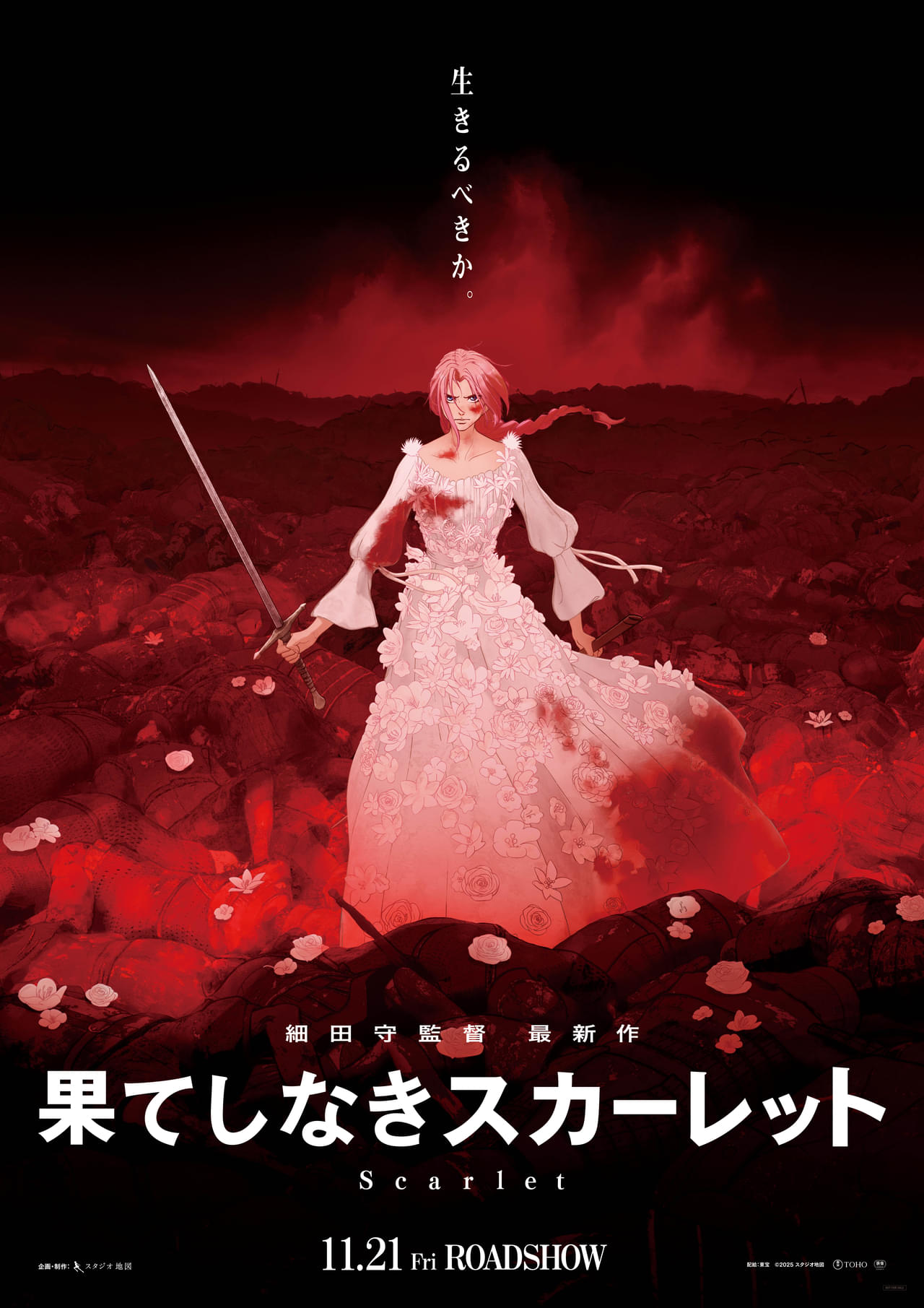
Blazing Fists (BLUE FIGHT 蒼き若者たちのブレイキングダウン, Takashi Miike, 2025)

Ryoma (Kaname Yoshizawa) and Ikuto (Danhi Kinoshita) are boys without brakes trying to get some kind of a handle on lives on that are racing away from them. Caught between compromised father figures, an oppressive social structure, and the overriding despair of a life without prospects, they feel themselves to be beaten down and defeated. But then Ikuto isn’t the sort of guy to be cowed by authority and is willing to speak truth to power even if it might not be advantageous for him to do so.

Indeed, Ikuto becomes a kind of saviour as a figure of idealised masculinity that embodies the paternal presence the other boys are lacking for one reason or another. Ryoma’s father isn’t really mentioned, though he appears to have a strained relationship with his mother’s boyfriend and freely admits that until he met Ikuto in juvenile detention he was floundering. Picked up for a series of petty crimes, he blames another boy, Kosuke, for his predicament having been forced to steal to pay an exorbitant sum to bullies he was unable to defend himself from. Ironically enough, Ikuto has actually been framed and for a crime that Ryoma himself committed and perhaps it’s their sense of defiance against injustice that allows him to stand strong in the face of a corrupt authority represented by the prison guard Hakamada (Wataru Ichinose). 

Though the warden at Ryoma’s admission had told him that he should think of his time there not as a punishment but an opportunity while the reformatory was a space of rehabilitation, but Hakamada openly tells the boys that they are inherently bad and their lives will amount to nothing. In the prison yard, they tend to the pigs which is what Hakamada deems them to be. He abuses his authority because he is weak and cannot bear it that Ikuto might be right when he says that the reason he’s working here as a guard is because he too has failed at life. When Hakamada tries to take revenge by jeopardising Ikuto’s parole, it’s his mother, Haruka, who stands up to him by wielding her old righteousness to insist that he too abide by the rules he is supposed to represent thereby presenting another more positive vision of resistance that goes beyond the purely physical and allows a petite middle-aged woman to challenge a physically opposing man in a position of authority.

Part of the reason that Hakamada had said that Ikuto was doomed was because his father was prison and Ikuto too had rejected him for that reason. He resented his father because of the way the stigma of crime was visited on him, that he became an undesirable child tainted by his father’s transgression. At this time, he presumably had a solid faith in the justice system and believed his father to be guilty but given his own experience of false imprisonment has now come round to the idea that his father could be telling the truth and is innocent after all. Their struggles become directly linked when Ikuto is scheduled to square off against the prosecutor’s son, but in a more spiritual sense they are both battling against an oppressive society.

This Ikuto slowly comes to see on realising that he and primary antagonist Jun are basically the same as Jun is also battling the spectre of his father, a yakuza. Rejected by those around him because of the stigma of being a yakuza’s son, Jun (whose name means “pure”), has turned inward in bitterness and become a violent thug attempting to order his life through physical dominance. Accepting that he too was careering towards a cliff edge, Ikuto reflects that Jun is still hanging on if barely by the skin of his teeth which is to say he can wants to be saved in the way that Ikuto has been. But it wasn’t the reform system or the prison guards that helped him see a way forward but an inspirational lecture from real life MMA star Mikuru Asakura on whose life the film is loosely based. Asakura tells the boys that they have a right to dream and that their goals are achievable if only they can put their minds to them. That they hear this from a big brother figure rather than an older man in a paternal position makes it clear that these boy must save themselves through mutual solidarity in place of the positive paternal presence that is missing in most of their lives.

The film is filled with figures of those who have turned their lives around from Asakura himself to the former yakuza who runs the dry bar where the kids hang out. The coach at their gym also provides a supportive presence that makes the ring a safe place. But the ring is of course life and the point is to keep fighting. Winning and losing aren’t important, all that matters is getting back up when someone knocks you down and staying in the fight. The young men are not adversaries but comrades supporting each other as they battle a world with few rewards and endless temptations. In Ikuto, Ryoma finds the strength to stop blaming others for his failures while trusting more in himself and learning to value this new community that he’s discovering. Harking back to the Crows Zero series and a wider tradition of high school delinquent movies, Takashi Miike makes a series of loving jabs at the genre but at the same time transforms it into something a little less angsty as these blazing fists are turned not on each other but against the world that refuses to give these young men a chance as they band together to demand the right to their dreams.


Trailer (English subtitles)
Hong Kong Paradise (香港パラダイス, Shusuke Kaneko, 1990)

A tour guide on her maiden voyage finds herself swept into intrigue in Shusuke Kaneko’s madcap caper, Hong Kong Paradise (香港パラダイス). Effectively a Japanese take on mo lei tau nonsense comedy, it’s also a commentary on Japan at the tail end of the Bubble era as the heroine dreams of an exciting world of travel only to find herself shepherding a collection of mostly elderly retirees whose most pressing concern is finding the duty free shop.

Mamiko (Yuki Saito) wanted to go Paris, but according to her boss she’s not really the type, so he’s sending her to Hong Kong instead. Everyone keeps remarking on the fact that she looks just like a fugitive princess, Yoko Kitashirakawa, who eloped with the man she loved to escape from an arranged marriage with a member of the imperial family. Mamiko has also, apparently, recently broken up with a boyfriend which might explain her desire for travel, as the film flirts with the idea she might really be Yoko enjoying a kind of Roman Holiday and not wanting to return to her constrained life as an aristocrat. But on the plane over, she ends up running into Ando (Tsuyoshi Ihara), a man who’s on the run after committing a heist in which he stole a pair of golden chess pieces as part of an insurance scam.

The golden king and the queen who end up getting separated are a representation of frustrated romance as various parties try to get them back together for different reasons. Mamiko evidently took a liking to Ando, but sadly he is soon killed, leaving her to be rescued by Oishi (Kaoru Kobayashi), a man of dubious motivations. Having lost her memory after being press-ganged into being the subject at a hypnotism show, Mamiko must once and for all re-establish her identity by finding her way through the conspiracy while slowly falling for Oishi despite his irritating qualities. In order to find the treasure, Oishi lies to her, telling Mamiko that she’s Yoko while she’s also chased by a man claiming to be a police officer and Hong’s goons who are convinced that she knows where the chess pieces are.

For the criminals, and perhaps for us too, the missing king and queen are a kind of MacGuffin, but they link back to another tragic love story. Believing that Mamiko is Yoko, Mrs Yang (Keiko Awaji) sympathises with her predicament acknowledging that love across the class divide is never easy. The love of her life was an English prince called Charles, incongruously played by an American in the opening and closing voice over, whom she met thanks to her father’s work as a diplomat. Times being what they were (and perhaps are), she knew they could never marry. Oishi tries to trick Mamiko by playing on her sympathy, claiming that the chess pieces were a gift for Mrs Yang from the man she loved in an effort to get Mamiko to help him find them without realising that he has actually stumbled on the truth.

Hong Kong then becomes a place of romance not unlike the Paris of Mamiko’s imagination in being the paradise of a tragic love story even if in reality the chess pieces were “stolen” as part of an insurance fraud scam which is about as unromantic as it’s possible to get. Nevertheless, princess Yoko apparently got a happy ending, marrying an ordinary person even if there are many people who think she’s crazy for turning down the opportunity to become a member of the imperial household. Mamiko’s occupation as tour guide, or tour conductor as she keeps reminding the participants, is largely unromantic too, mostly consisting of shuttling disinterested guests from one tourist spot to another which is to say it’s not so much broadening her horizons as narrowing them.

But in any case through her zany adventure she does perhaps get to experience the romance of life in being pulled into unlikely intrigue and fighting to reunite the separated king and queen on a symbolic and spiritual level beyond the simply physical. “It doesn’t matter who I am,” she eventually reflects on embracing her liberated anonymity and enjoying the thrill of the chase, while paradoxically rediscovering her identity in the process. Critics at the time objected to the nonsensical plot and frequent tonal shifts, but they are, of course, a key element of mo lei tau and what gives the film its zany, madcap charm as the heroine careers from one ridiculous situation to another all while falling in love.