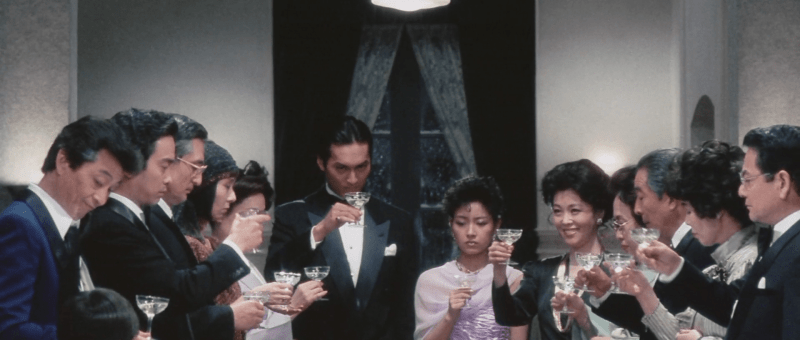
Kiba: The Fangs of Fiction (騙し絵の牙, Daihachi Yoshida, 2020)

“Landscapes don’t stay the same” laments a young woman in Daihachi Yoshida’s slick corporate drama, Kiba: The Fangs of Fiction (騙し絵の牙, Damashie No Kiba), though the more things change the more they stay the same and the push and pull of traditionalists and modernisers seems set to be an unending battle. If someone were brave enough to think of it, there may be a third way, but one thing is clear – it’s adapt or die for the printed word and the real war is over who makes it onto the page and how they do it. 

When the CEO of a major family-owned publishing house dies of a heart attack while walking his dog, it throws the entire industry into disarray and even makes it onto the national news where pundits discuss who might be most likely to succeed while pointing out that publishing is already in crisis seeing as most novels are serialised in literary journals and magazine readership is on its way out. Earnest editor Megumi (Mayu Matsuoka) is forever told that old and new is a false dichotomy and in some ways it may be, but century-old literary journal Kunpu Review is quite clearly mired in a traditionalist past woefully out of touch with contemporary society. 

This Megumi learns to her cost when pulled straight from the CEO’s funeral to a 40th anniversary event marking the debut of their best-selling author Daisaku Nikaido (Jun Kunimura). Encouraged by rival editor Hayami (Yo Oizumi), she gives her honest opinion on Nikaido’s work pulling him up on the latent sexism in his novels by suggesting his sexual politics are at best old-fashioned. This is of course a huge faux pas and a moment of minor embarrassment for all concerned, though it will also become a repeated motif Megumi again trying to bring up a younger author on his subpar portrayal of women but finding her concerns falling on deaf ears. 

Part of the problem is that authors, and particularly well-established ones, rarely undergo a rigorous editing process such as they might outside of Japan. Kunpu is so desperate to keep Nikaido on side that they treat him as a mini god, wasting vast amounts of their budget expensing him for “research” holidays and a healthy interest in fine wines. They simply wouldn’t have the courage to tell him that his drafts are improvable or that elements of his writing may cause offence. 

Hayami, the tricky editor of rival culture mag Trinity, is by contrast deliberately looking for the modern but in other ways is not so different from Kunpu. Poaching an up and coming author Megumi had pitched but was rejected, Hayami embarks on an elaborate PR campaign casting the young and handsome Yajiro (Hio Miyazawa) as a literary idol star. But Yajiro seems to be uncomfortable with the attention, unprepared to deal with demands of being a prominent writer and resenting Hayami’s attempts to manipulate his image by forcing him into photoshoots dressed in outfits he would never wear. Hayami also engineers a publicity stunt implying Yajiro is in a relationship with his other protege, a young model and unexpected firearms enthusiast (Elaiza Ikeda) who is later arrested after shooting a stalker with a homemade pistol. 

What happens to Saki Jojima is either an unintended consequence or direct result of Hayami’s inability to fully control the situation, but it also creates both crisis and opportunity for Trininty when Hayami breaks protocol and decides to run Saki’s issue rather than pulling it entirely with an apology as is usual in Japan when a celebrity is the subject of scandal. This places him in direct opposition to the traditionalist Kunpu, horrified and insistent that his decision stains the integrity of the publishing house. Like Hayami, however, new CEO Tomatsu (Koichi Sato) is determined to do things differently and prepared to take a gamble, secretly working on his own plan to streamline the business and build their own production/distribution facility in Yokohama. 

Everyone is so absorbed in their own plotting that they fail to notice others plotting around them. Megumi, meanwhile, is preoccupied with the survival of her father’s old-fashioned book shop which itself badly needs another literary hit because half the customers are kids who come in to browse the manga and then download the good ones when they get home. One young woman looking for a particular novel even explains that she only wants to read it because there’s no movie or drama adaptation. With all this finagling, it’s easy to think everyone’s forgotten about the books while Megumi desperately tries to get someone to let her do some actual editing because they’re all too busy mollycoddling their authors. Nevertheless there’s more to the Kunpu vs Trinity battle than it first seems as they vie for the future of Japan’s publishing industry little suspecting that there may be another contender with a less acrimonious solution. “If something could be updated it should be” Megumi insists, a sentiment which apparently goes both for dinosaur writers unwilling to reckon with their latent misogyny and the book business itself. 

Once again adapting a literary source, Yoshida’s gentle farce quietly builds the tension with courtly intrigue as the wider society remains rapt over the succession crisis at a publishing firm while its ambitious courtiers plot amongst themselves in order to steal the throne. Casting Yo Oizumi in the role he apparently inspired in the book is another masterstroke of meta commentary as his thrill-seeking manipulator plays the long game but even if the prognosis for Japan’s publishing industry may be bleak there is unexpected glee to be had in the eventual triumph of a righteous underdog over a thoroughbred plotter. 


Kiba: The Fangs of Fiction screens on Aug. 26 and 28 as part of this year’s Japan Cuts.

Original trailer (English subtitles)

The Pass: Last Days of the Samurai (峠 最後のサムライ, Takashi Koizumi, 2021)

“Even with 100 plans and 100 ideas, we cannot defeat the march of progress” a progressive samurai admits, well aware that he’s witnessing the end of his era while knowing that the “thrilling future” that lies ahead will have no place for him. Adapted from the novel by Ryotaro Shiba, The Pass: Last Days of the Samurai (峠 最後のサムライ, Toge: Saigo no Samurai) is inspired by the life of Kawai Tsugunosuke, known as the “Last Samurai” for his steadfast embodiment of the samurai ideal during the chaos of the Bakumatsu and subsequent Boshin War

As the opening voiceover from Tsugunosuke’s wife Osuga (Takako Matsu) explains, the Tokugawa Shogunate had ruled Japan for close to 300 years after bringing the warring states era to an end following the Battle of Sekigahara, placing the nation into a period of enforced isolation which by the 1850s was beginning to crack while resentment towards the Tokugawa continued to grow over their handling of access to foreign trade. In 1867, Tokugawa Yoshinobu (Masahiro Higashide) effectively relinquished his monopoly on power and restored ultimate authority to the emperor (the “Meiji Restoration”). Yet if he hoped his decision would both restore peace and allow the Tokugawa to maintain political influence he was quite mistaken. In the immediate wake of this political earthquake the nation became polarised between those in favour of imperial rule and those who remained loyal to the Shogunate. 

The chief retainer in Nagaoka, Tsugunosuke (Koji Yakusho) finds himself in an impossible position caught between the forces of East and West and essentially unable to pick a side because of the demands of samurai loyalty. Fearing another war would prove disastrous, he chooses neutrality certain that the present conflict cannot be resolved militarily and requires a political solution. To this effect he attempts to petition a delegation from the Western, pro-emperor, pro-modernisation army but his pleas fall on deaf ears and lead only to a rebuke that he is a coward and a traitor. Like any good leader, however, Tsugunosuke has also been preparing for the worst, buying a gatling gun from foreign dealers in order to boost his meagre man power eventually realising they have no other option than to go war 

The irony is that Tsugunosuke tacitly supports imperial rule but cannot say so because his clan is closely affiliated with the Tokugawa. He is well aware that his era has come to a close and that he will not live to see the new Japan, knowing that he is man of the old world and cannot progress into the classless society he is certain is coming. For all that he seems to be excited by the promises of revolution, encouraging the son of a friend to take advantage of the freedoms of a new era while dreaming of foreign travel and advocating for “liberty and rights” along with universal education in the hope of building of a better society. 

Yet for himself he cannot let go of samurai ideals, knowing he must fight a pointless war in which he does not believe because honour dictates it. “If it shows future generations what we samurai truly stood for then this battle will have been worthwhile” he tells a friend, fearful of a future dominated by the clans of Satsuma and Choshu. “Your samurai spirit will encourage countless others” another retainer tells him, “you are our ideal”, touched by his stoicism and grace even in defeat as he takes sole responsibility for the failure of their military campaign caused in part by the betrayal of a defecting ally. “This warriors’ way shall die with me” he cheerfully tells a servant, advising him to become a merchant and travel abroad to seize the “thrilling future” which lies ahead of him. 

A martyr to his age, Tsugunosuke is the last of the samurai stoically defending a lofty ideal in an acknowledgement that he does not belong in the new society and must sacrifice himself in order to bring it about. An homage to classic samurai cinema from former Akira Kurosawa AD Takashi Koizumi, who even throws in the odd screen wipe, featuring cameos from golden age stars Tatsuya Nakadai and Kyoko Kagawa, The Pass is about the passage from one era to the next taking as its hero a closet revolutionary and walking embodiment of the idealised samurai who chooses unity and shared vision over conflict in the creation of a better world he does not intend to live to see.


The Pass: Last Days of the Samurai screens on Aug. 21 and Sept. 1 as part of this year’s Japan Cuts.

Original trailer (English subtitles)
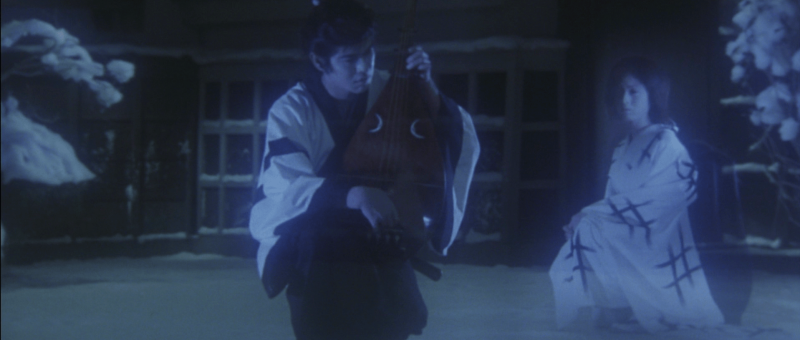
Remain In Twilight (くれなずめ, Daigo Matsui, 2021) [Fantasia 2021]

“So what? We just live on.” remarks a bereaved young man learning to let go of his grief in Daigo Matsui’s melancholy ensemble drama Remain in Twilight (くれなずめ, Kurenazume). Matsui sets the scene at a wedding which is also in some ways a funeral during which the ghost at the feast will eventually be laid to rest but his study in loss is also a reflection of its eternal arrest as a group of high school friends learn to accept a sense of absence where their friend used to stand while processing the various ways their lives have and will continue to diverge where as his obviously will not. 

As the film opens a group of six men is surveying a wedding hall where they intend to recreate a dance they first performed at a high school culture festival. The wedding co-ordinator comes out to confirm that everything is in order and seating has been arranged for the five of them only to be reminded that actually they are six. Factory worker Nej (Rikki Metsugi) wants to hang out longer, but most of the other guys have other commitments from work to family but at a rambunctious karaoke session the next day during which they regress to their high school selves it becomes clear that one of their number, Yoshio (Ryo Narita), passed away five years previously but is quite literally there in spirit. 

In addition to Yoshio’s absence, it’s clear that the group has become distant since their high school days the wedding reunion highlighting the class differences between them with some going on to regular salaryman jobs, others working in fringe theatre, and Nej at the factory the uniform of which he is ubiquitously wearing at every occasion other than the wedding during which the guys’ black suits are identical to those they wore for the funeral save the substitution of a jauntier bow tie. The previously nicknamed “Sauce” is now Mr. Sogawa (Kenta Hamano) and a married father of one. They aren’t 17 anymore. 

Nevertheless, the guys can’t let go of the memory of Yoshio who remains among them as if he were still alive. Triggered by a seemingly trivial act such as eating a biscuit or hearing a particular turn of phrase each of the men is called back into the past towards a private memory of Yoshio some directly related to the performance at the cultural festival which seems to have marked their lives and others from later. They collectively meditate on the last time they saw each other, reliving the event, trying to prevent Yoshio from leaving but of course failing. Actor Akashi (Ryuya Wakaba) regrets not picking up his phone, little knowing it would be the last time he would see his friend because you can’t get away from the fact every time might be the last you just can’t know. 

“You’re only dead when it’s convenient” Yoshio’s high school crush Mikie (Atsuko Maeda) barks, seemingly unperturbed to see him in the flesh but also angry and resentful asking him to finally cancel his social media accounts so she won’t keep getting birthday reminders or see something about him popup on her feed, remember, and be sad. But softening she shows him a picture of her daughter, signalling that she’s moved on while he obviously cannot though he wishes her only happiness glad perhaps to have shared something he lacked the courage to confess while alive. 

So corporeal does Yoshio seem to be that he even receives a goodie bag from the wedding, again signalling his absence as the guys find themselves literally carrying extra baggage which they eventually decide to try burying leading to a rather surreal incident which confronts them directly with Yoshio’s liminal status and survival in their hearts. Travelling to the other side they begin to learn to let him go, poignantly once again considering calling a taxi though this time for five. Adapting stage play, Matsui’s sweeping handheld camera shifts effortlessly from one time period to another and finally into another realm with a giddy ethereality as the men, now approaching middle-age, meditate on the sense of loss in grieving teenage friendship along with its unlived future. It’s less the ghost than those who are left behind who must finally learn to “move on”, rewriting the past as they see fit in order to walk into a freer future. 


Remain In Twilight streams in Canada until Aug. 25 as part of this year’s Fantasia International Film Festival.

International trailer (English subtitles)

Tokyo Revengers (東京リベンジャーズ, Tsutomu Hanabusa, 2021) [Fantasia 2021]

“You don’t deserve to change my life” the hero of Tsutomu Hanabusa’s adaptation of Ken Wakui’s manga Tokyo Revengers (東京リベンジャーズ) eventually affirms in finally facing his fears while trying to change destiny not least his own. In contrast to its original meaning in English, the wasei eigo “Revenge” usually means not payback but “rematch” or at least a second chance to prove oneself or make up for a past mistake. Through his time travel shenanigans, this is perhaps what young Takemichi (Takumi Kitamura) is attempting to do in revisiting the events which he feels ruined his life and left him a useless coward too cowed to offer much resistance to his continual degradation. 

Now 27, Takemichi lives in a rundown, untidy apartment and works part-time in a bookstore where his boss inappropriately mocks for him for still being a virgin, the kind of guy who peaked in high school and can’t move on from adolescent bravado. He might have a point in a sense in that Takemichi is indeed arrested but hearing on the news one day that his first love Hinata (Mio Imada) has been killed in a car accident supposedly caused by the Tokyo Manji gang alongside her brother Naoto (Yosuke Sugino), he finds himself thinking back to his school days. It’s at this point that someone shoves him off a train platform and, facing certain death, he suddenly finds himself in the body of his 17-year-old, bleach blond delinquent self. Takemichi assumes it’s a near death flashback, but later wakes up back in the present and realises that his actions in the past have consequences in the future. 

Quite clearly taking its cues from classic high school delinquent manga in which moody high school boys vie for the top spot through relentless violence, Tokyo Revengers nevertheless undercuts the genre’s macho posturing in firstly having Takemichi broken by his first defeat and then allowing him to reclaim his space as a hero through his determination to care for and protect others even if his final victory is in facing the man he held responsible for shattering his sense of self. Sent back into the past to prevent the Tokyo Manji Gang from ever forming, Takemichi refuses the obvious early solution but remains conflicted in realising that at its inception “Toman” saw itself as a compassionate force for good, a far cry from the nihilistic violence it now brings to the city. Rather than more violence, he finds a solution in its reverse, safeguarding relationships and preventing heartbreak in order to ensure no one else’s soul is corrupted by grief or loneliness. 

Takemichi feels himself powerless but is valued by his friends for his determination to protect others no matter the cost to himself, as he unwittingly proves through his time travel adventures attempting to save himself as much as Hinata by restoring his sense of self apparently shattered by his subjugation at the hands of a rival gang back back in high school. At 27 he’s a meek and broken man, forever apologising for his existence and living an unfulfilling life always running away from challenge or difficulty. Given an improbable second chance, he begins to find the courage to do it all differently with the benefit of hindsight and the stability of age, finally facing his teenage trauma as a fully adult man.  

Like any good delinquent movie, Hanabusa makes space for more than a few mass brawls along with intensely personal one-on-one battles drawing a direct line between high school violence and street war thuggery. “Thugs aren’t cool anymore” Toman leader Mikey (Ryo Yoshizawa) had explained, his compassionate second in command Kenchin (Yuki Yamada) reminding him to “have a heart” in keeping gang violence within the confines of their society and refraining from injuring innocent people. Toman aren’t yakuza, but they are perhaps the inheritors of jingi, or at least would be if left untouched by trauma and betrayal. In beating his own trauma, Takemichi undoes his destiny saving his friends and himself by learning to embrace his inner strength and refusing to back down in the face of intimidation. Part high school delinquent manga, part time travel adventure, Hanabusa’s sci-fi-inflected drama swaps macho posturing for a more contemplative take on the weight of past mistakes while giving its hero a second chance to be the kind of man he always thought himself to be.


Tokyo Revengers screened as part of this year’s Fantasia International Film Festival.

Original trailer (English subtitles)
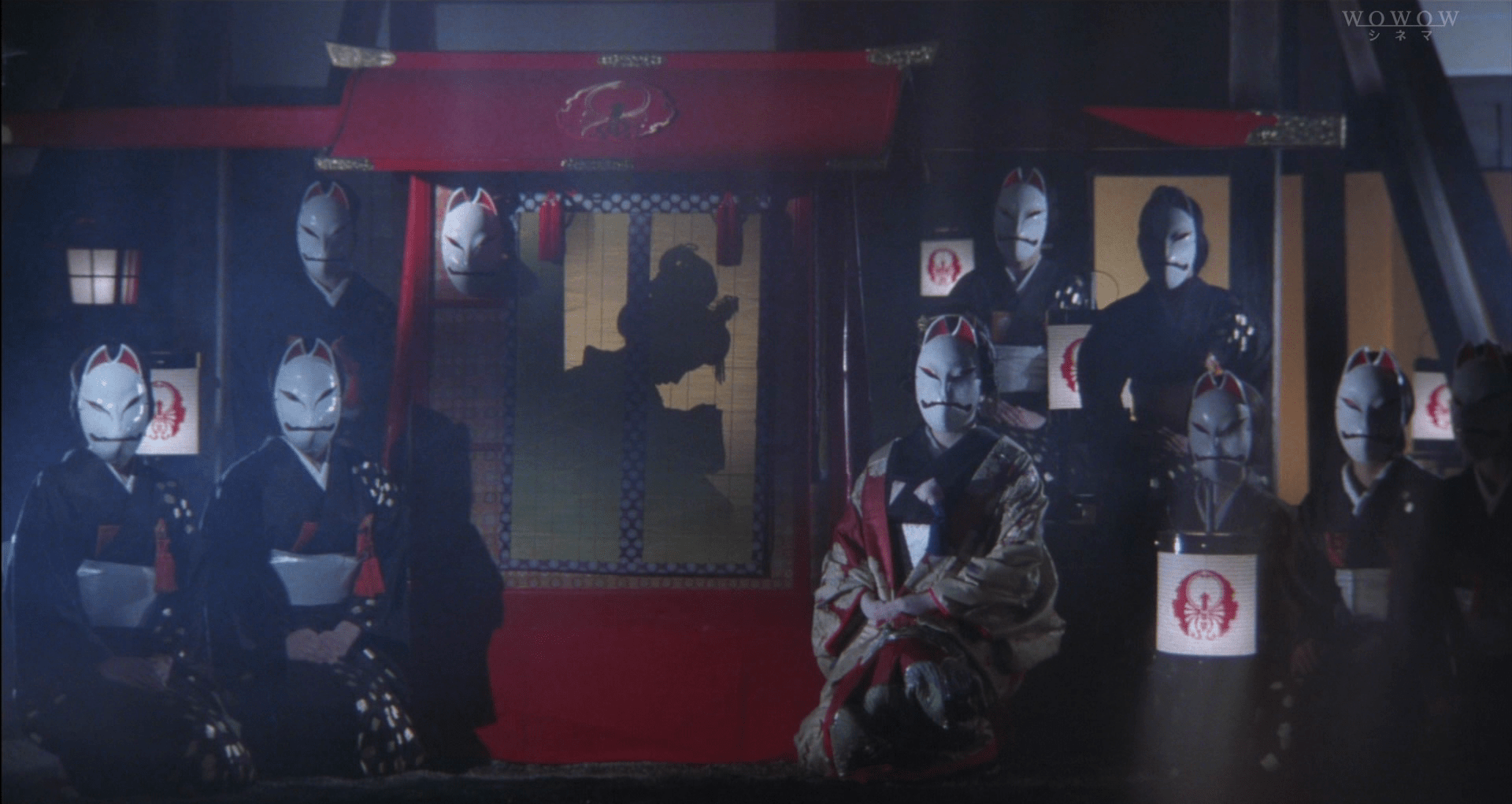
The 12 Day Tale of the Monster that Died in 8 (8日で死んだ怪獣の12日の物語, Shunji Iwai, 2020) [Fantasia 2021]

“We, all of us, can be heroes! Let’s support each other to beat this monster.” the hero of Shunji Iwai’s pandemic dramedy, The 12 Day Tale of the Monster that Died in 8 (8日で死んだ怪獣の12日の物語, Yoka de Shinda Kaiju no Juninichi no Monogatari) affirms. Inspired by Shinji Higuchi’s Kaiju Defeat Covid project and originally streamed as a web series, Iwai’s surreal screen drama is replete with the atmosphere of the pandemic’s early days, a mix of boredom and intense anxiety coupled with a determination to protect and support each other through this difficult time. Yet it’s also a tale of uncanny irony taking place in world in which Ultraseven is a documentary while the Earth has apparently been subject to waves of monster aggression, alien visitors, and even apparently an epidemic of ghosts. 

All of this the hero, Takumi Sato (Takumi Saitoh playing a version of himself) finds out from director Shinji Higuchi after contacting him on Zoom for advice about how to raise the “Capsule Kaiju” he bought on the internet in order to do something to help battle corona virus. Sato’s single “egg” soon becomes three, later back down to one again causing him to worry if the other two managed to escape or perhaps were eaten by the sole remaining monster. In any case, while they are three he names each of them after various Covid-fighting drugs and is informed by Higuchi that they currently resemble three kaiju from classic tokusatsu series Ultraseven. 

Nevertheless, Takumi is continually confused and disappointed by the slow progress of his project, confessing to one of his friends online that they were rated only one star on the store he bought them from but he’s sure that’s just because they’re a new product. His friend Non, (also playing a version of herself), meanwhile, has invested in an alien though the alien is, conveniently enough, entirely invisible and inaudible via camera. Non’s alien seems to be making much better progress to the extent that it eventually becomes disillusioned with selfish, apathetic human society and decides to return to outer space. Challenged, Takumi has to admit he hasn’t really done anything to make the world a better place except for raising his capsule kaiju and even that hasn’t gone particularly well. 

Then again, perhaps just getting through is enough to be going along with in the middle of a global pandemic. Takumi’s friend So (So Takei) is separated from his family in Bangkok and is struggling to find work as a chef while all the restaurants are closed only to later confess that he actually has a second family he, understandably, had not mentioned before in Japan that he also needs to support financially. Even so, Takumi is bemused watching the YouTube channel of a young woman (Moeka Hoshi) who broadcasts from her bathtub dressed in a nightgown and has managed to raise a recognisably dragon-like kaiju while his keep shapeshifting without progressing into a final form. He starts to worry, what if his kaiju are actually evil and intend to destroy the world rather than save it? The fact that it eventually takes on the form of a giant coronavirus might suggest he has a point, but kaiju work in mysterious ways and perhaps they are trying to help in their own small ways even if it might not seem like it in the beginning. 

In many ways that might be the primary lesson of the pandemic, everyone is doing their best even if they’re only doing something small like staying at home and wearing their mask. Shot entirely in black and white and mostly as direct to camera YouTube-style monologues or split-screen Zoom calls complete with occasional lag and echoing, Iwai adds in eerie pillow shots from a camera positioned high above the streets of a strangely quiet but not entirely empty Tokyo along with fragmentary dance sequences of young women dressed in black with CGI kaiju heads. A whimsical slice of pandemic life, 12 Day Tale ends as it began, with Takumi once again reminding us that we are all heroes and should support each other to beat the “virus monster” but adds a much needed note of hope as he assures his audience that the the day we beat the virus will certainly come, “let’s do our best together”. 


The 12 Day Tale of the Monster that Died in 8 streams in Canada until Aug. 25 as part of this year’s Fantasia International Film Festival.

Original trailer (English subtitles)

A Balance (由宇子の天秤, Yujiro Harumoto, 2020)

“What’s moral isn’t always what’s best” according to the morally compromised heroine at the centre of Yujiro Harumoto’s A Balance (由宇子の天秤, Yuko no Tenbin). To Yuko (Kumi Takiuchi), a balance is what a documentarian should strike, not taking one side or another but shining a light on hidden truths. The irony is that in seeking to expose one truth she accidentally stumbles on another uncomfortably close to home and although her job is to highlight injustice finds herself making the decision to do the opposite concluding that in this case, and perhaps many others, keeping quiet may actually be what’s best for victims, victimisers, and everyone in-between. 

As the film opens, Yuko is shooting a potentially manipulative interview with the grieving father of a young woman, Hiromi, who took her own life after becoming the subject of scandal and rumour when it was revealed she may have been involved in an inappropriate “relationship” with a teacher. The teacher, Mr. Yano, eventually took his own life too leaving behind him a note proclaiming his innocence and explaining that death is the manner he has chosen for his resistance. Yuko is sympathetic to Mr. Hasebe (Yuya Matsuura), but also perhaps verging on the unethical in the depth of the questions she asks him of his daughter’s death. Soon enough a conflict emerges between the nature of the documentary Yuko would like to make which is more contemplative than polemical, and the “routine piece on bullying” the TV studio think they’ve commissioned. Consequently, we see the suits redacting problematic lines in Yuko’s scripts in editorial meetings, misrepresenting Mr. Hasebe’s words in removing his criticism of mass media which he blames for hounding Mr. Yano to his death and thereby depriving him of answers. 

Yuko remains determined to provide “a balance” in interviewing Yano’s surviving family members including his mother Toshiko (Mitsuko Oka) and sister Shiho (Misa Wada), but discovers them tyrannised by the treatment they’ve received at the hands of the media and a vindictive society. Toshiko near collapses towards the end of the interview when asked if there was anything the family could have done to prevent this tragedy happening, inviting Yuko to visit her at home whereupon she discovers her living in near total darkness, afraid to go out lest she be recognised and explaining that she has few possessions in case she has to move again in a hurry because someone has exposed her address online. This little old lady is living in terror because of something her son was accused of which later caused him to take his own life and even that did not end the torment for his family. 

Meanwhile, in an ironic touch, Yuko discovers that a young woman, Mei (Yumi Kawai), attending the cram school owned by her father where she also teaches part-time has become pregnant and claims her father, Mr. Kinoshita (Ken Mitsuishi), is responsible having accepted sex in lieu of her overdue fees. Yuko does not want to disbelieve her and confronts her father, holding up her iPhone as a record, who admits that what Mei has said is true. Yuko tells herself she’s doing what’s best for Mei, bonding with her as two women who lost their mothers young (as did Hiromi), understanding that she may not want to go to the authorities because of the lingering stigma of being involved such a scandal. But she also can’t deny that her actions are self-interested in that she doesn’t want her doc pulled or her career messed up by her father’s transgression, something which gets harder to ignore when she discovers Mei’s pregnancy may be high risk and requires immediate medical treatment from a proper hospital to ensure her safety. 

The lines become ever more blurred, Yuko developing a quasi-maternal relationship with the motherless Mei which is in its way perfectly genuine even as she pays their overdue gas bill and worries about her potentially abusive father (Masahiro Umeda), but is nevertheless coloured by her desire both to cover up this harmful secret and to atone for her father’s wrongdoing. For his part, Mr. Kinoshita wants to confess but as Yuko points out he’d be doing it to unburden himself which in effect would merely shift the burden onto others including Mei but also Yuko herself, her documentary team, the other students at the cram school, and in effect everyone else they’ve ever known. 

Yet can Yuko be an effective arbiter of the truth especially when, as it turns out, neither she nor anyone else is being entirely honest? Her job is to present information in such a way that conclusions can be drawn, but she is herself making decisions in selecting the information she presents and the manner in which she presents it. She may resent the interference of the studio, but in reality they aren’t doing anything she hasn’t already done even if they are acting less out of a sense of integrity than commercial concern. “Whatever we put together is the truth” as her exasperated producer (Yota Kawase) finally insists. It’s in this same conflict that she begins to lose her sense of balance, trying to help those victimised by an unforgiving society while attempting to protect herself from unwelcome consequences of social scandal aided and abetted by the industry in which she herself works. “Ask them who is the real victimiser” Toshiko asks of Yuko taking aim at the mass media who have shamed her into a life of total darkness, but all Yuko can in the end do is turn her camera back on herself in contemplation of her shattered integrity.  


A Balance screens Aug. 12 as part of this year’s New York Asian Film Festival.

Original trailer (English subtitles)
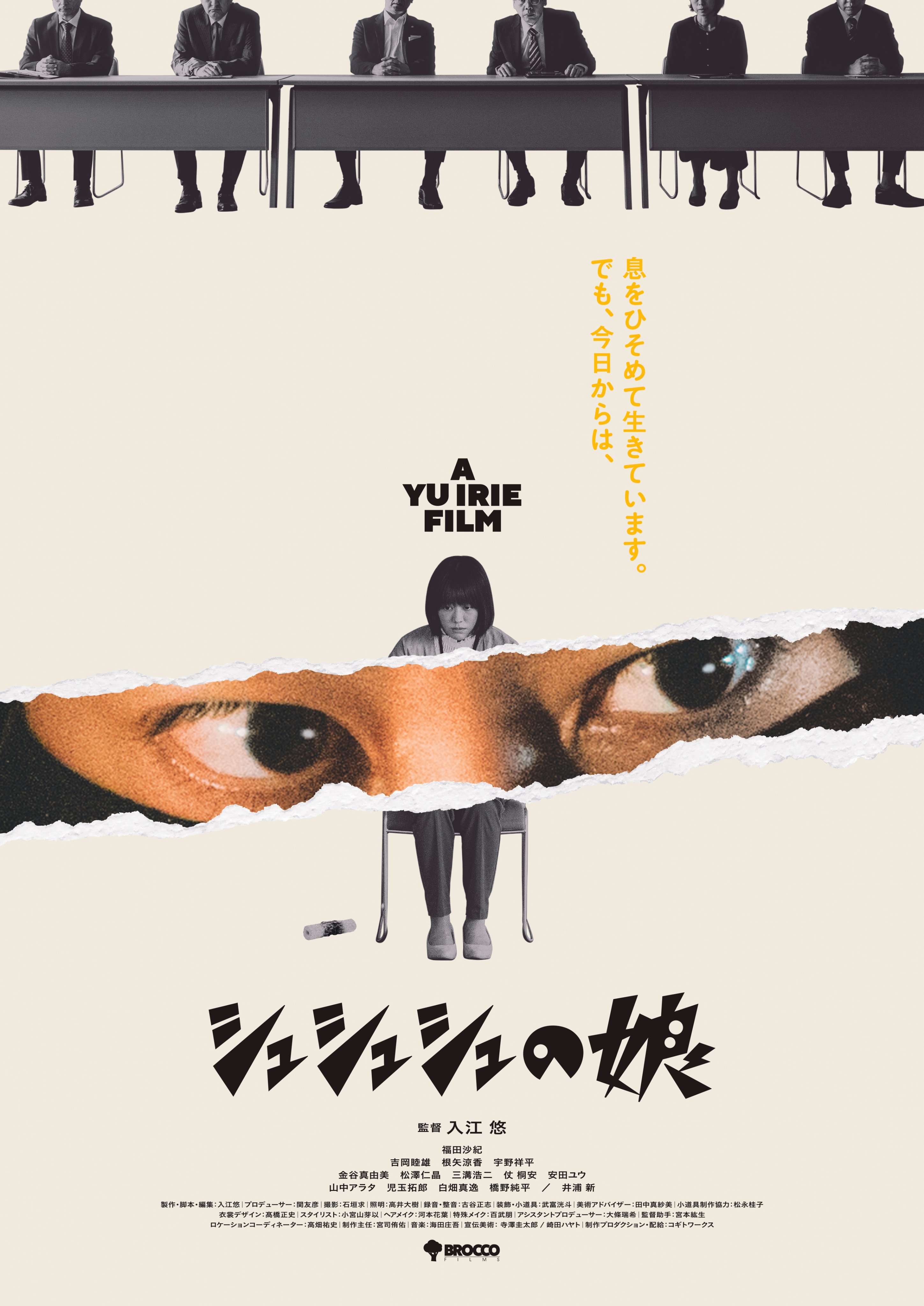
Satoshi Kon: The Illusionist (Satoshi Kon, l’illusionniste, Pascal-Alex Vincent, 2021) [Fantasia 2021]

“A genius but a nasty guy” is the way a former collaborator describes the late director Satoshi Kon, a sentiment echoed by others who’d worked alongside him though many also describe him as gentle if reserved remarking on his seeming impenetrability. Pascal-Alex Vincent’s documentary Satoshi Kon: The illusionist (Satoshi Kon, l’illusionniste) is less interested in illuminating the man than briefly sketching an overview of his career yet nevertheless seems to content to present him as an enigmatic figure filled with contradictions which his work, in some way, was intended to resolve. 

Skipping over Kon’s early life and beginnings as a manga artist, Vincent begins with Perfect Blue before proceeding through each of his features chronologically finishing with the incomplete Dreaming Machine. In essence a talking heads doc, he interviews a series of well-known figures in the anime world such as fellow directors Mamoru Oshii, Mamoru Hosoda, and Jin-Roh’s Hiroyuki Okiura, as well as those who had worked with Kon directly, the international filmmakers who’d found inspiration in his work such as Darren Aronofsky, Jeremy Clapin, Marc Caro, and Rodney Rothman, and experts in anime and manga history. 

In a sense, Vincent is less interested in Kon as a man than in the lasting impact of his oeuvre, which does in a sense lend an uncomfortable imbalance in implying Kon’s work is of greater importance because of the influence it went on to have on Western, particularly Hollywood, cinema. Kon’s impact on contemporary anime for example is not addressed in any real depth save for implying that it gave the art form permission to deal with more mature concepts and ideas which in itself implies that it up to that point had not done so. 

Yet even if Kon is described as “prickly”, an intense perfectionist unable to tolerate failure or resistance, he is also regarded as another kind of innovator in his determination to change the notoriously difficult, often exploitative working culture of the contemporary anime industry. Despite facing financial hardship, he ensured his crew members and animators were paid fairly while also determined to support the next generation of anime creatives. His goodbye letter published the day after he passed away similarly expresses concern for his animators now left adrift with Dreaming Machine destined to remain incomplete. A former colleague remembers Kon as a patient mentor and teacher, gaining a new appreciation for him when she dared to challenge some of the attitudes she found unpalatable in his work including his depiction of women only for Kon to reveal that the women in his films are often reflections of himself. Thus Mima’s torment is an expression of his own in dealing with the fractious politics of the anime and manga industry. 

According to others, the desire to address these issues was born of that to resolve the things he did not understand, Kon again describing the heroine of Millennium Actress’ quest to retrieve a lost key as like that of a director pursuing the idealised vision in his mind, finally arriving at the conclusion that what he loved was the chase itself. His work was frequently concerned with the interplay between dream and reality, yet his vision could sometimes be at odds with others’ describing Paprika as his “Sailor Moon” movie intended as a piece of commercial cinema about a dream hopping “magical girl”. Despite his perfectionism, his universe was anything but black and white, a space which held no place for those who embody evil and sought only to understand. According to an archive interview, Dreaming Machine would have marked a break with his persistent themes, aimed at children as well as adults though apparently also dealing with some darker ideas as mankind’s children attempt to survive their orphanhood. It’s this sense of contradiction which gives Kon’s work its power, at once a man who “radiated gentleness” but was unafraid to speak his mind, bluntly berating a colleague for not pulling his weight but hurt and confused when the colleague declined the opportunity to continue working together because of his intense management style. “He had two sides to him. He could be a nasty guy. A really nasty guy, OK? But I loved him” according to Madhouse’s Masao Maruyama, “He’ll always be in our hearts” a contradiction to the last.


Satoshi Kon: The Illusionist streams in Canada until Aug. 25 as part of this year’s Fantasia International Film Festival.

Original trailer (English subtitles)

Georama Boy, Panorama Girl (ジオラマボーイ・パノラマガール, Natsuki Seta, 2020) [Fantasia 2021]

“As long as you have a girl you can cope with anything. Who cares what’s happening in the world?” the lovestruck hero of Natsuki Seta’s Georama Boy, Panorama Girl (ジオラマボーイ・パノラマガール) blusters floating around on a cloud of adolescent intensity. “Man, you’re crazy” his more mature workmate replies with unconcealed exasperation. Adapted from a manga by Kyoko Okazaki, Seta’s post-modern drama like her previous film Parks recalls the lighthearted teen movies of the Bubble era even as it gleefully subverts rom-com norms as the mismatched youngsters repeatedly glide past each other experiencing parallel though connected episodes of romantic disillusionment in a rapidly deconstructing city. 

The heroine, Haruko Shibuya (Anna Yamada), is a dreamy, romantic sort of girl who’s read too many shojo manga and wishes the summer could go on indefinitely because she wants “to dream longer”. Kenichi Kanagawa (Jin Suzuki), by contrast, is a slightly nerdy young man who upends expectation by suddenly standing up mid-class after being forced to take a test on the first day back after the summer holidays to announce he’s quitting school because he’s realised it’s just not necessary for him. As if trying to get his mid-life crisis over as early as possible, Kenichi picks up a skateboard and starts hanging round in Shibuya unsuccessfully trying to pick up girls until he catches the attention of a free spirited older woman, Mayumi (Misato Morita), only to be unceremoniously beaten up by her maybe boyfriend after being spotted together in a cafe. Bloodied, bruised, and collapsed in the street is how he eventually meets Haruko who stops to see he’s OK and then randomly gifts him her combini purchases, keeping hold of his school ID card which is how she figures out who he is. 

Being a teenage girl, Haruko, like her friends Kaede (Erika Takizawa) and Maru (Kogarashi Wakasugi), longs to fall in love and thinks meeting Kenichi is her romantic destiny even over investing in its potency in believing their love is probably necessary in order to save the Earth from calamity like the star-crossed lovers from a shojo manga. As their names suggest, Haruko is the city centre whereas Kenichi is the provincial suburbs, but they spend their time dancing around each other living out parallel love stories as Kenichi continues to obsess over Mayumi whose free-spirited frankness is tinged with sadness while her toying with a lovestruck teen has an almost self-destructive quality. Each of them experience a moment of romantic disillusionment realising that their adolescent visions of pure love are essentially unrealistic and that chance meetings are sometimes just that intended to go no further because life thinks nothing of the rules of narrative causality. 

The failure of Haruko’s romantic dreams prompts her into a further moment of introspection as she continues to wonder if everything around her is merely an illusion. Meanwhile, the TV news is a catalogue of contemporary anxieties from an early report on a young woman who took her own life rather than return to school because of rampant bullying not to mention exam stress, to a protest over nuclear weapons and conscription, and even one about a potential response to meteors and aliens. The Tokyo the teens inhabit is one of constant uncertainty, a city half-built and in a state of limbo remaking itself for the upcoming Olympics (which ironically we now know will only half arrive). Yet as Kenichi had suggested, the teens barely notice what’s going on in the world around them so caught up are they in their adolescent dramas finding themselves less star-crossed than at cross purposes in their mutual romantic dilemmas. 

Just like the teen movies of old, Seta draws inspiration from the French New Wave as the youngsters frequently monologue across each other sometimes in sync and others not their dialogue in a sense pretentious but also filled with the naive intensity of youth as they each attempt to navigate their way towards a more mature adulthood. With a charmingly timeless retro quality, Georama Boy, Panorama Girl embraces the absurdity of teenage love but finally opens the door to something more “real” brokered in a way by twin heartbreak followed by a mutual resetting as the pair walk out into a new dawn now more ready to meet whatever it has waiting for them. 


Georama Boy, Panorama Girl streams in Canada until Aug. 25 as part of this year’s Fantasia International Film Festival.

International trailer (English subtitles)

Sexual Drive (性的衝動, Kota Yoshida, 2021) [Fantasia 2021]

A weird chestnut-bearing spirit of sexual awakening visits three troubled couples in Kota Yoshida’s odyssey of food-themed eroticism, Sexual Drive (性的衝動, Seitekishodo). As the title perhaps implies, Yoshida’s loose thesis seems to be that each of the spouses he counsels is living a dull and unfulfilling life because they’re repressing their authentic selves either unrecognising or rejecting the true nature of their sexual desires. Yet who or what is Kurita (Tateto Serizawa) and what is he really up to? Aside from all that, is he even “real”?

When we first meet Kurita, he’s bearing a box of Chinese chestnuts (“chestnut” being the first character of his name but also a slang term for clitoris) and walking with a pronounced limp. This lends credence to his story of having suffered a stroke three years previously though as we will later discover the cause is likely very different if at least suggesting a healthy corporality. The visit is all the more unusual as it seems he doesn’t know the man he’s come to see, Enatsu (Ryo Ikeda). Just as we’re wondering if this is some kind of hookup while his wife (Manami Hashimoto) works an extra shift at the hospital, we realise that the reverse may be true as Kurita claims to have been having a three-year affair with Enatsu’s spouse having fixated on her after she fitted a catheter for him following an operation. This is a discussion between men, but Kurita soon becomes excitable making lewd gestures with a mostly empty natto carton apparently likening its distinctive taste and odour to the nether regions of Enatsu’s wife. Goading him that their marriage has been sexless for the last five years, what Kurita seems to do is ironically restore Enatsu’s sexual potency through his vicarious enjoyment of his wife’s taste for this famously love it or hate dish of fermented soy beans. 

Kurita’s second victim, meanwhile, has apparently committed the crime of making inauthentic mapo tofu, its heat turned down to suit the Japanese palate. This time Kurita claims to have been an elementary school classmate of the nervous Akane (Honami Sato) who has frequent panic attacks and has finally got up the courage to go for her first solo drive. He insists that Akane is a sadist who brokered his own masochistic awakening through her merciless bullying and that the reason she’s so on edge is because she’s living a neutered life with only inauthentic mapo tofu when she should really be making her own loaded with enough spice to burn the roof of her husband’s mouth clean off. 

His third case, however, sees him steal a device from Snake of June in communicating with an adulterous husband, Ikeyama (Shogen), claiming that he’s kidnapped his mistress, Momoka (Rina Takeda), and will soon expose his extra-marital affair if he refuses to follow the instructions he gives him. These are mostly surprisingly wholesome and a little bit sad as what Kurita is hoping to teach Ikeyama is what a cad he’s being and how his insensitive treatment of Momoka must make her feel. Accordingly, he sends him to a greasy ramen bar mostly frequented by middle-aged men where talking is very much not allowed in order for him to consume a satisfyingly fatty dish the transgressive energy of which both inflamed Momoka’s desire and forced her into a contemplation of her role as the mistress of a married man. Ikeyama’s awakening is less to sex than to love in being forced to accept Momoka’s personhood in empathising with the loneliness his indifference causes her to feel. 

Yet, if it weren’t for the chestnuts, we might wonder if Kurita were real or merely a manifestation of each of his victims’ subconscious fears and desires. Even as it stands, we can’t be sure that anything he says is actually true, nor do we know what motive he has for guiding these frustrated souls towards their sexual release like some strange sex fairy sent from on high. Nevertheless, in satisfying appetites of all kinds he paints the fulfilment of authentic sexuality as a basic human need even as food becomes a kind of displacement activity standing in for the satisfaction of human desire. Strangely absurd in Kurita’s rather creepy demeanour coupled with his victims’ crumbling wholesomeness, Sexual Drive even if ironically presents a refreshingly positive message of embracing kink while remaining mindful of its effects on others. 


Sexual Drive streams in Canada Aug. 5 – 25 as part of this year’s Fantasia International Film Festival.

Original trailer (English subtitles)

Equinox Flower (彼岸花, Yasujiro Ozu, 1958)

Japanese golden age cinema is famed for its centring of female stories, but while it’s true that many of Yasujiro Ozu’s family dramas revolve around a young woman’s feelings towards marriage, the perspective is often surprisingly male. Equinox Flower (彼岸花, Higanbana), his first film in colour, marks something of a change in direction in its spirited defence of the young, but at heart is still a story as much about impending old age, the responsibilities of fatherhood, and changing times as it is about contemporary family dynamics or female agency. 

The father in question, Hirayama (Shin Saburi), is a high ranking executive with two daughters. The older, Setsuko (Ineko Arima), is working at another company, and the younger, Hisako (Miyuki Kuwano), is still in school. Marriage is on his mind because he’s just attended the wedding of an old school friend’s daughter at which he gave a speech, with his wife Kiyoko (Kinuyo Tanaka) sitting awkwardly next to him, describing the arranged marriage he had with her as “pragmatic, routine” while he envies the young couple’s “fortunate opportunity” to indulge in romance. He and Kiyoko idly discuss the idea of Setsuko’s marriage, it seems as if there is a promising match on the horizon, with Hirayama conflicted while Kiyoko is very much in favour of doing things the traditional way. She’s already mentioned it to her daughter, but all she does is smile demurely which seems to provoke different interpretations from each of the parents. 

While thinking about all of that, Hirayama receives a visit from an old friend who was a notable absence at the wedding asking him to check up on his daughter Fumiko (Yoshiko Kuga) who ran away from home two months ago to live with a musician after he tried to veto her intention to marry without consulting him. Hirayama is sympathetic, perhaps thinking his friend has acted foolishly and pushed his daughter away. After visiting the bar where she works, he comes to the conclusion that as long as she’s happy with her choice then everyone else should be too. That all goes out the window, however, when a young man, Taniguchi (Keiji Sada), visits him unexpectedly at work and asks for permission to marry Setsuko. Hirayama quite rudely asks him to leave and then irritatedly talks the matter over with Setsuko before petulantly refusing his consent, not because he objects to Taniguchi, but because he is hurt on emotional level that she hadn’t talked to him about this first (not least so that they stop worrying about arranging a marriage) while resentful that she’s gone behind his back and undercut his patriarchal authority. 

In addition to the changing nature of family dynamics, Hirayama is perhaps conscious of his advancing age, feeling himself increasingly obsolescent and therefore additionally wounded by this assault on his authority as a father. The generation gap, however, is all too present. Both Setsuko and Fumiko feel as if they simply cannot talk to their parents because they wouldn’t listen and will never understand. Yukiko (Fujiko Yamamoto), the daughter of another friend, feels something similar in her exasperation with her well-meaning single mother who keeps hatching plans to set her up with various men she isn’t interested in. Intellectually, Hirayama sides with the young, envying them their freedoms and advising Yukiko firstly not to marry at all, and then encouraging her desire to resist arranged marriages despite trying to foist them on his own daughters. 

Even Kiyoko eventually describes her husband’s continuing petulance as “inconsistent”. It seems obvious that Kiyoko is siding with her daughter, immediately taking a liking to Taniguchi who politely brought her home after she stormed out following an argument with her father, but she continues to behave as a “good wife” should, politely minding her husband while gently hoping that he will eventually come round. Only once pushed does she try to explain to him, again politely, that he’s being selfish and unreasonable, but he continues on in resentment while causing his daughter emotional pain simply for trying to find her own happiness rather letting him decide for her. Kiyoko is afraid that if it carries on like this, then Setsuko will, like Fumiko, eventually leave and they’ll lose her completely, something which Hirayama either hasn’t fully considered or is actively encouraging through his petulance. 

In the end the conclusion he comes to is that the parents will eventually have to give way or risk losing their children entirely. He tells both Fumiko and Yukiko that all parents want is for their children to be happy and so nothing else matters, but struggles to put his advice into practice when it comes to his own daughter. Like pretty much everyone in an Ozu film, Hirayama is a good, kind person, even if one struggling against himself as he contemplates a loss of authority, a change in standing, and the difficulty of dealing with complex emotions as a man in a patriarchal society. Predictably, it’s women who essentially bully him into making better decisions, Yukiko “interfering” in the nicest of ways, while his wife makes it clear that though she thinks he’s wrong she will continue to stand by him if only in the hope he will eventually see the light. “Life is absurd, we’re not all perfect” he admits, only later realising how his stubborn foolishness may have caused unnecessary suffering to those he loves the most.


Currently streaming in the UK via BFI Player as part of Japan 2020. Also available to stream in the US via Criterion Channel.

Original trailer (no subtitles)