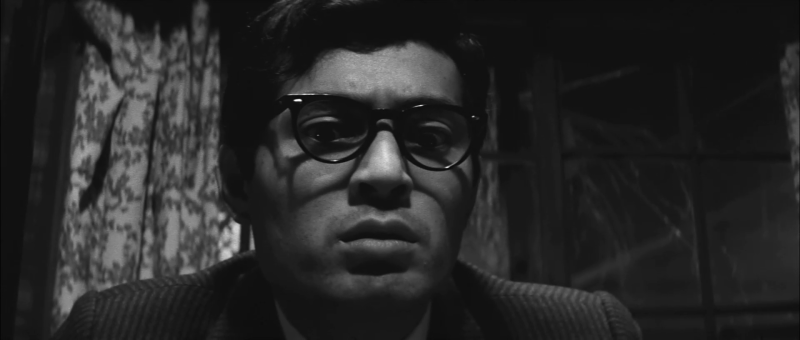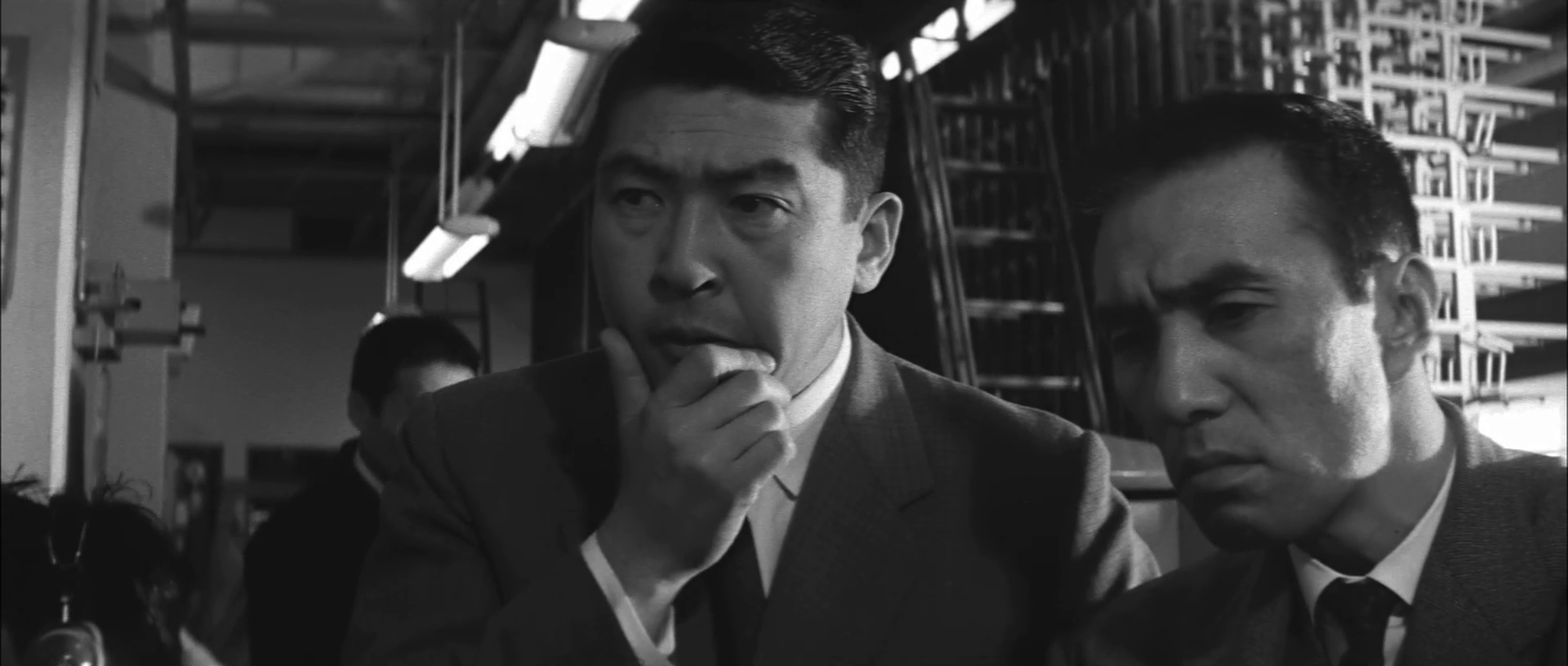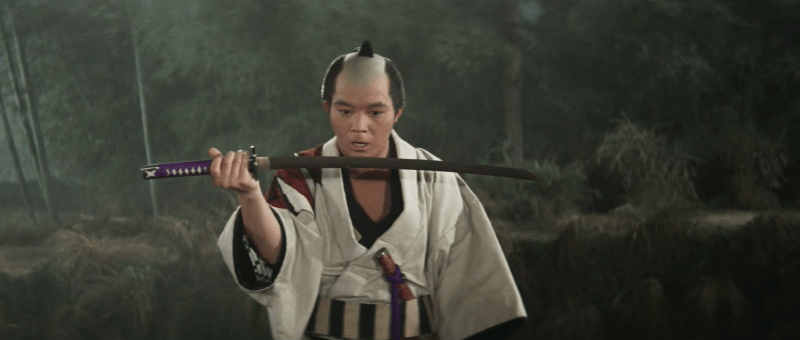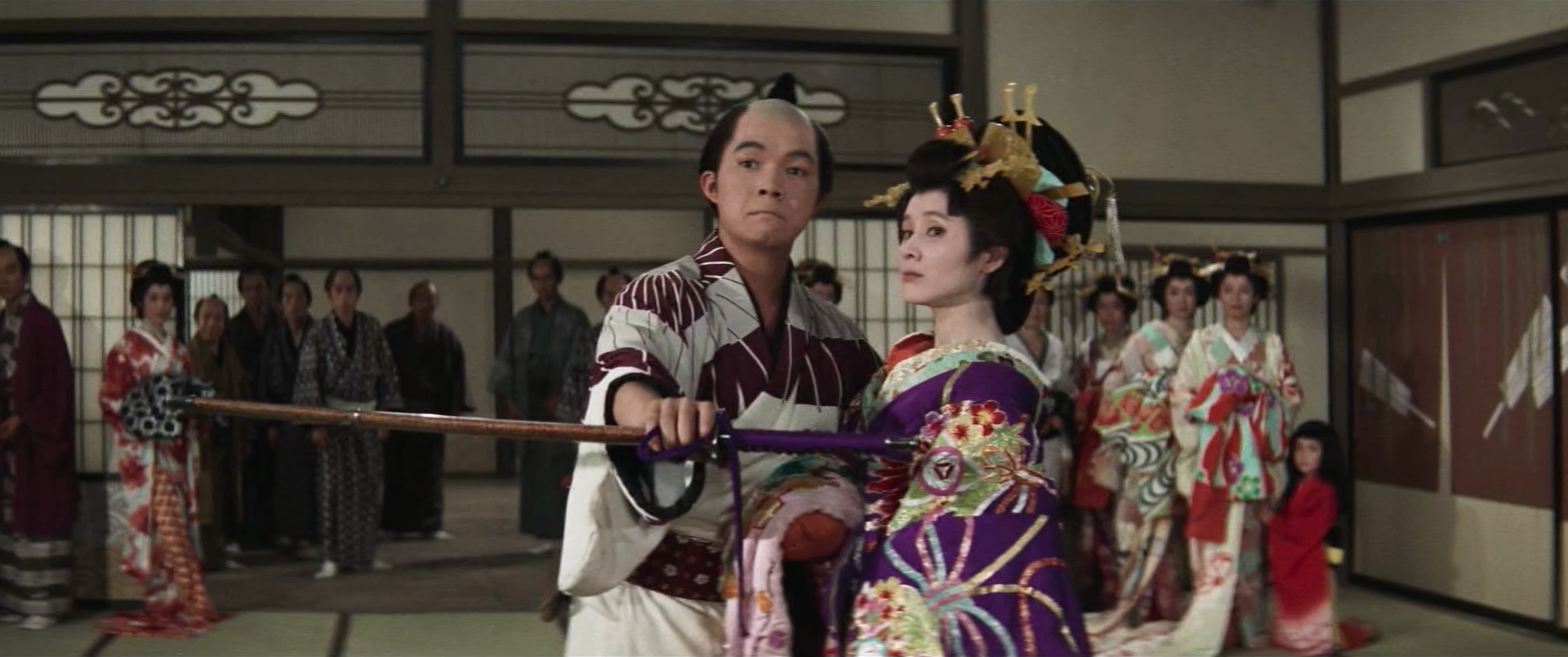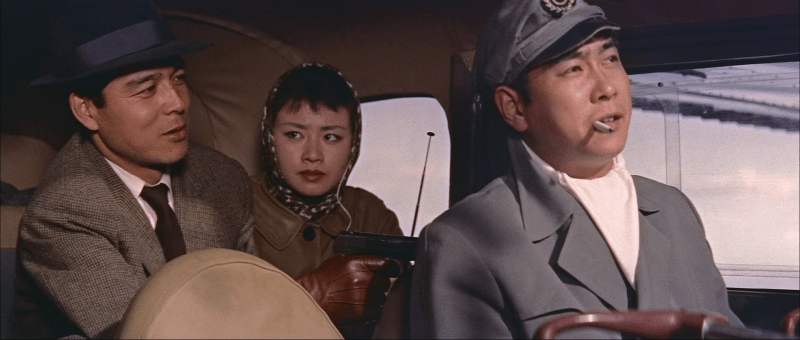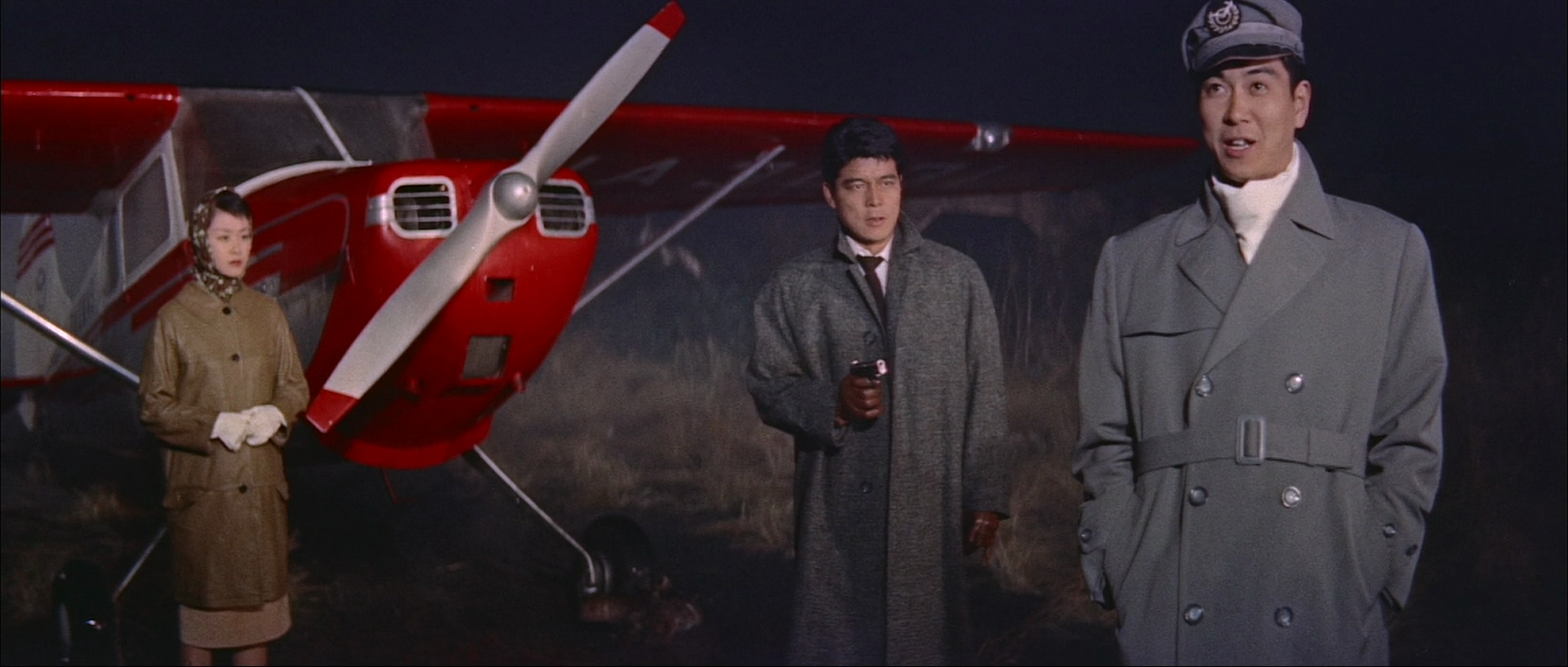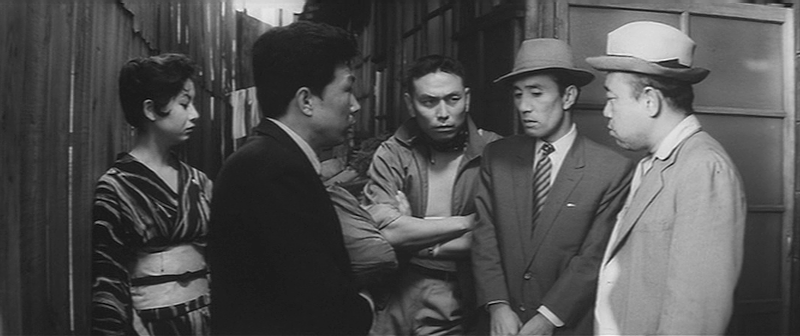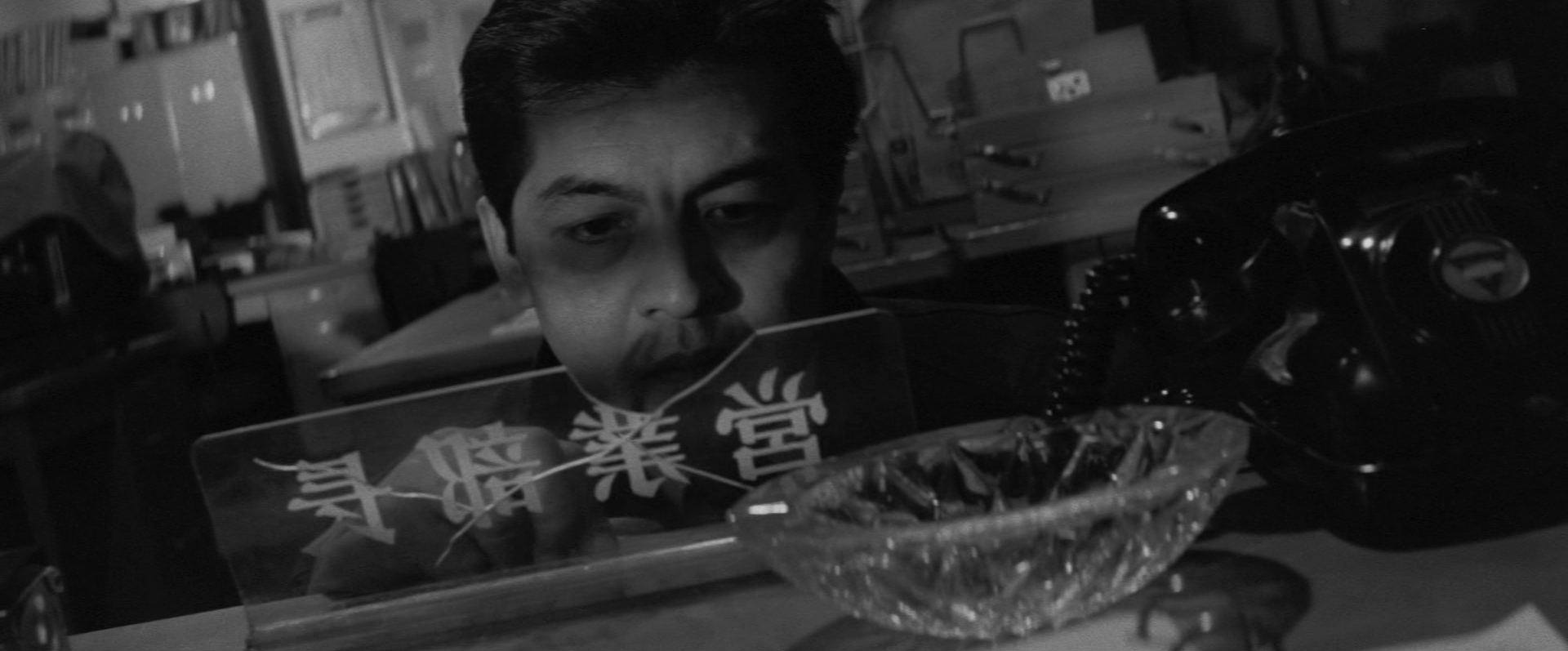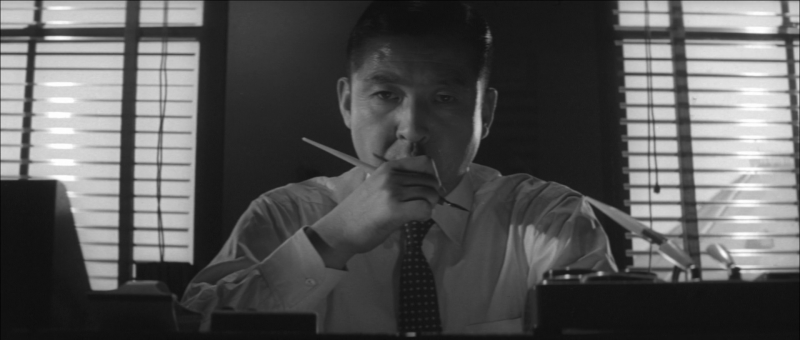
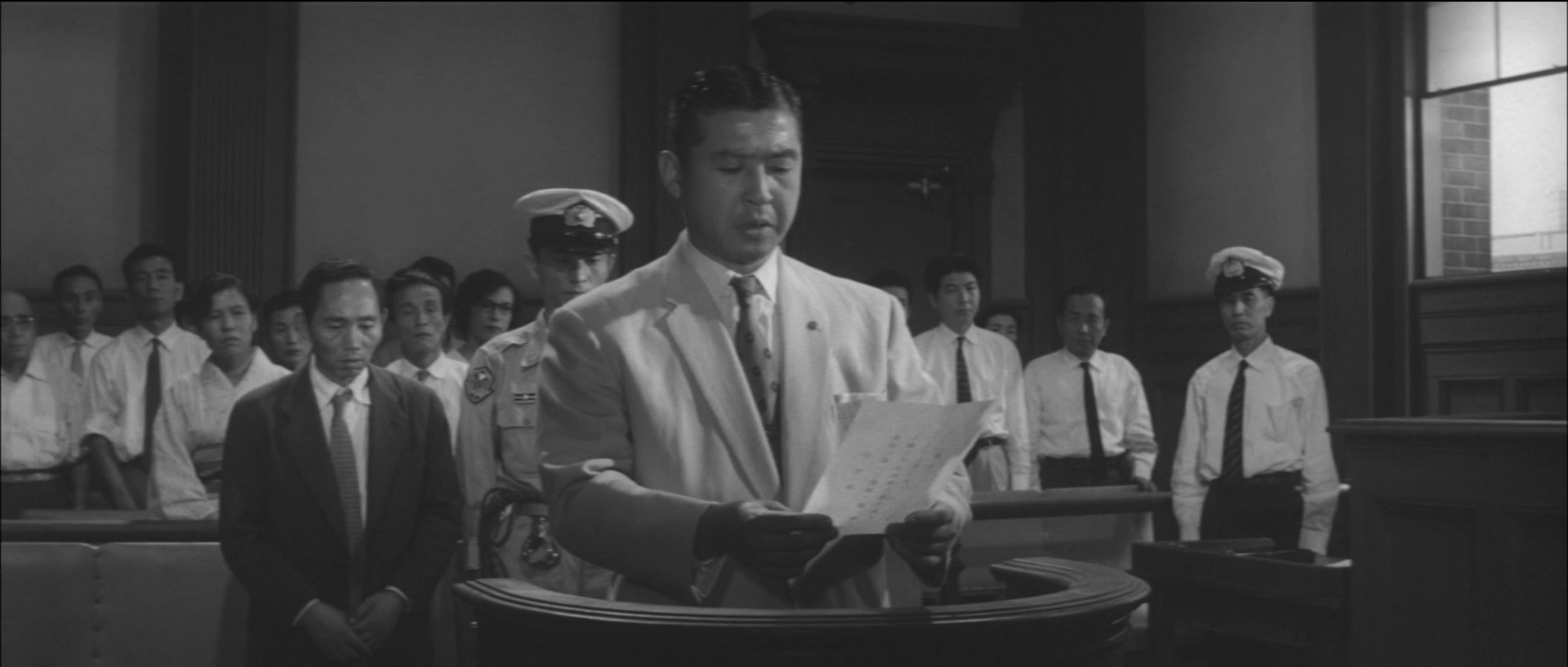
Classmates (あゝ同期の桜, Sadao Nakajima, 1967)

There had been films that dealt with the war before, but it was really with the generational shift that occurred among filmmakers in the mid-1960s that there was a greater willingness to reckon with the wartime past. Sadao Nakajima’s Classmates (あゝ同期の桜, Aa Doki no Sakura) was the first in a planned trilogy of war films at Toei, which was in other ways a studio that often leaned towards the right with its steady output of yakuza films, and most likely for that reason struggled to gain approval from studio heads. Taking its name from the military academy song, the film was inspired by a collection of essays put together from the letters and diaries kamikaze pilots had left behind. Nakajima had seen some of the letters sent back by the brother of a school friend, and reading them again on publication was determined to turn them into the film.

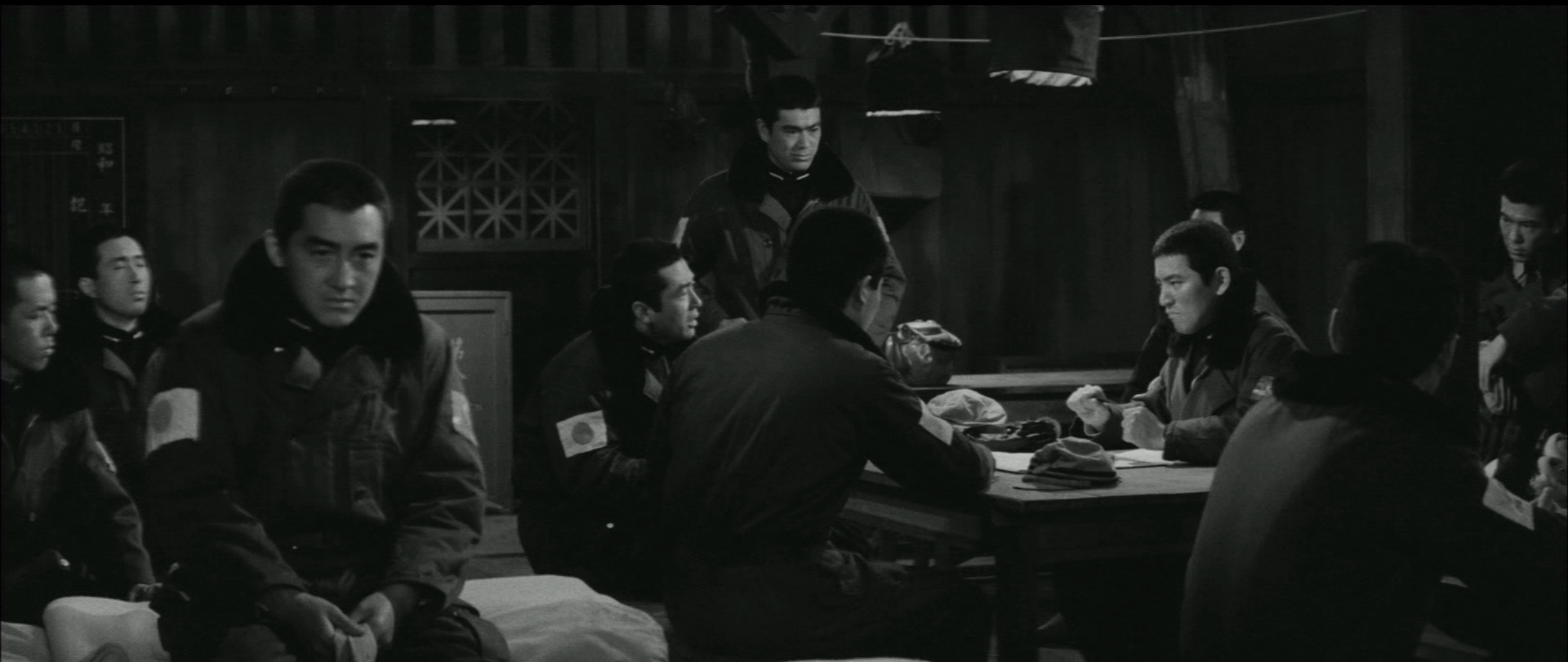
Nevertheless, only 25 years on from the end of the war it remained a sensitive topic. The film follows the men of the 14th class of reserve students who had previously had their draft notices deferred until they finished university but were now called up early because the war was going so badly. The majority of these men were allocated to kamikaze units and subsequently died in suicide attacks on US warships, though they received little in the way of training and mostly failed to hit their targets due to having limited fight experience. 

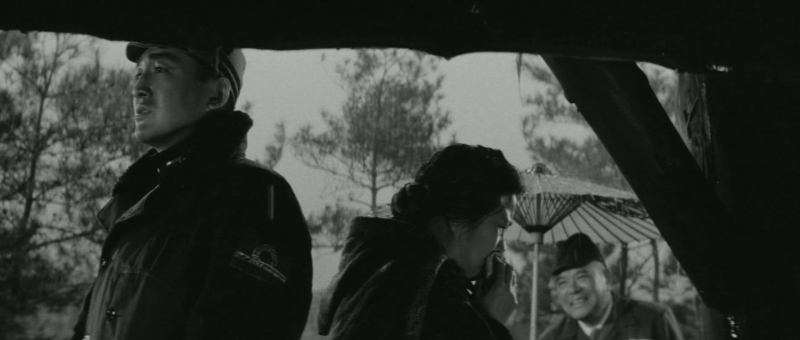
What might seem most surprising is that several of the men voice their opposition to the war along with the realisation that Japan is going to lose. Early on in training, one man deserts but the others are reminded that to do so amounts to treason and once caught, deserters will be executed by firing squad. This turns out not quite to be the case. Shiratori (Hiroki Matsukata), the resigned hero, encounters Taki (Mitsuki Kanemitsu) in Okinawa. where he’s working as ground staff. He’s insensible and appears to have lost his mind. The man working with him suggests that he was tortured so badly that it’s left him in a vacant state, though he’s still deployed for mindless tasks because they just don’t have the manpower.

Part of the reason for that is that they keep ordering people to die in a validation of the death cult that is militarism. On their arrival, the instructor tells the men he will have them all die, because dying for the emperor is their duty and destiny. The top brass insist this is the only way to win the war even though it’s counterproductive in that they’re running out of aircraft and skilled pilots even if one officer callously remarks that they have an endless supply of bodies. There’s also no real reason to send the planes up with two pilots as opposed to one, but they leave fully manned. The suicide missions are supposedly “voluntary”, but the men can’t really refuse due to a combination of peer pressure and military order.

When one pilot, Nanjo (Isao Natsuyagi), returns to base having been unable to reach his target, he’s immediately set upon by the others as a coward and a traitor. They accuse him of being afraid to die, leaving him feeling ashamed and frustrated by a sense of injustice while admitting that he didn’t want to die like a dog. He knows that he would not be able to go on living afterwards if he simply didn’t go through with it because the stigma of being a coward who let other men die so he could live would always be upon him. Eventually, he becomes so determined to prove himself that he insists on getting right back in his plane once it’s repaired and then blows himself up on the runway to prove a point.

Nanjo’s case is all the more poignant because he was a new father whose son was born after he was called up. He appears to have married quickly against his parents’ wishes and is now anxious that his family won’t accept his wife and child who will be left alone when he dies. His wife (Yoshiko Sakuma) desperately tries to see him to show him the baby, but manages only a few seconds before he’s forced to return to the barracks. Given a little more time, she brings a wedding dress for the impromptu ceremony they presumably skipped before, but ends up tearing it and giving Nanjo a strip as a kind of good-luck charm though like everything else it’s a gesture filled with futility.

It’s this sense of futility and resignation that seems to overtake Shiratori who knows he cannot escape his fate. To desert to is be killed anyway or to experience a spiritual death like Taki. He had introduced a friend, Hanzawa (Shinichi Chiba), to his sister and the two had become close, but he is forced to abruptly break up with her because he knows it’s unfair to string her along when he’s been sentenced to death. Reiko (Sumiko Fuji) will lose her brother and her boyfriend on the same day. Hanzawa and the other men visit a brothel on the night before their mission where they are treated as “gods”, though he sees only irony in the situation in which they are more like human sacrifices offered in prayer for an impossible victory. Their deaths will have no real meaning and are really only intended to instil fear in the enemy and weaken their morale rather than cause actual material damage to their fighting capability. Making use of stock footage, Nakajima freeze frames a plane in flight and points out at that point the men inside were still alive before cutting to a title card confirming the war ended just four months later. The title card at the beginning dedicated the film to the souls of those who died in the Pacific War, though it’s perhaps as quietly angry as it was permitted to be in 1967 in the senseless sacrifice of these men’s lives who were shamed, tricked, or forced at gunpoint into their cockpits and told they were disposable while those who stayed on the ground cheered and whooped at the grim spectacle of death.


Crimson Wings (紅の翼, Ko Nakahira, 1958)

A heroic pilot on a mission to get life-saving medicine to a small boy on a remote island unexpectedly finds himself frustrated by a wanted man in Ko Nakahira’s aviation thriller, Crimson Wings (紅の翼, Kurenai no Tsubasa). This is of course a time in which air travel was still something new and exciting, but not only that, it also offered immense improvements to those living far flung areas making travel to the mainland far easier and much less time-consuming. 

Time is, however, of the essence as a little boy on Hachijojima has contracted tetanus and the only stocks of the antidote on the island are out of date. If they can’t get replacements in the next few hours, it will be too late. Hachijojima is a fairly remote island in the Philippine sea that was used as a base for suicide submarine missions during the war but was developed as a tourist destination in the years afterwards in which it was dubbed “The Hawaii of Japan”. It didn’t quite take off until the 1960s tourism boom, but this is perhaps the reason why there’s an air shuttle service to Tokyo three times a week that is described by the stewardess as their most popular route. It might also explain why part of her job is acting as a tour guide, pointing out important Tokyo landmarks passengers can see from their windows as they come in to land. In any case, it’s the most obvious way to get the serum to the island seeing as there’s a charter flight set to leave in a couple of hours’ time.

But that same day across town, a CEO, Iwami (Toru Abe), is assassinated by a yakuza hitman named Itagaki (Hideaki Nitani). Predictably, he’s the one who’s charted the flight as a speedy getaway and he’s not all that keen on hanging around waiting for the delivery of the tetanus serum. One of the pilots describes Iwami as “take over king” and the “richest tycoon in post-war Japan”, which is to say they don’t have tremendous sympathy for him as someone who’s almost certainly made his money through nefarious means. Itagaki even remarks that he was “one of us,” the only difference between them being that where yakuza use guns he used money though his killing him was a matter of purely business. He didn’t ask or care why Iwami had to die, but obviously thought he was fair game anyway. 

You can tell that Itagaki is not the sympathetic kind of gangster right away when he mows down a little girl while fleeing the scene, her little yellow balloon sadly flying off into the distance. His indifference to the girl’s death is ironic considering the rest of the film revolves around the struggle to save the life of a little boy, directly contrasting his callousness with the righteousness of the pilot, Ishida (Yujiro Ishihara), who is prepared to risk his own life to deliver the serum. Ishida hadn’t previously volunteered for the job because he was supposed to be going on a Christmas Eve date with stewardess Keiko (Shinako Mine), only she tells him she has to cancel because her father is on a surprise trip to town. Unbeknownst to him, however, she’s actually blown him off to go to a Christmas market with another man. In any case, with nothing else to do he accepted the job even though it involves going in a Cessna because of a malfunction on their regular plane that will take too long to repair. 

Aside from having to take Itagaki, who is pretending to be on an emergency trip to visit his mother’s grave, Ishida is also accompanied by pushy journalist Yumie (Sanae Nakahara) who was sent to the airport to interview Keiko as part of a series about “working girls” that she doesn’t seem particularly enthused by. In fact, she’s actually quite rude, elaborating that she’s already interviewed a TV producer and a continuity girl describing them all including stewardess as “glamour jobs” that don’t require very much in the way of brains as journalism obviously does. That might in a way reflect her own resentment in that it’s obvious she feels the paper’s not giving her a fair shake because she’s a woman which might be why she jumps so hard on the tetanus story sensing the potential for a heartwarming human interest article. She does however seem to genuinely care about the little boy on Hachijojima. Not only does she immediately arrange for a large amount of the serum to be delivered by police escort but insists on going to the island herself and after figuring out Itagaki is the fugitive thanks to her transistor radio sticks to the main mission rather than switching to the one about the CEO murder. 

Ishida meanwhile remains a cool-headed wisecracker brazening it out against Itagaki in the knowledge that he can’t actually kill him because he doesn’t know how to fly a plane so all his threats are meaningless. There’s also a rather awkward subplot about Ishida’s brother being a kamikaze pilot during in the war which is intended to further bear out Ishida’s righteousness while his sister (Izumi Ashikawa) also makes a long speech about how he said if he had to he’d like to die like him and is the sort of person who can’t stand by and watch someone suffer. A lengthy sequence switches between various branches of the Japanese government and self-defence forces, as well as the US military, who all swap messages between themsleves and immediately scramble to find this one Cessna when it inevitably gets into trouble and drops off radar. The message seems to be that the system works and the authorities are ready to handle events such as this. Using some impressive aeroplane footage along with a series of split screens and a memorable opening POV shot to disguise the assassin’s identity, Nakahira gives the otherwise lighthearted thriller a little more weight while still allowing its wholesome goodness to shrine through as a collection of determined people come together to save a little boy they don’t even know who lives on a remote island where the children work in soil-pits to make extra money which might as well be a million miles away from the modern capital with greedy fat cat CEO’s and nihilistic yakuza.


Trailer (no subtitles)

Wolves of the Night (夜の狼, Yoichi Ushihara, 1958)

A cold-hearted yakuza starts to get second thoughts when confronted with the misery his actions create in Yoichi Ushihara’s slice of Nikkatsu Noir, Wolves of the Night (夜の狼, Yoru no Okami). Though the hero is ostensibly Tsukida (Ryoji Hayama), the conflicted gangster unable to reconcile himself with the fact that he has fallen in love with a women he himself destroyed, it’s equally about the women who get caught in the crossfire of a burgeoning gang war and are each victims of male greed and indifference.

In any case, gang boss Tachibana (Somesho Matsumoto) brings a lot of this on himself. The secondary narrative revolves around a woman, Takako (Mari Shiraki), who borrowed money from the Manji gang to build her bar, but now that it’s complete Tachibana swindles her by calling in the debt and foreclosing on the property, passing ownership to Tsukida with instructions to kick Takako out. She, however, doesn’t take well to this and is resentful of Tachibana for screwing her over so she vows revenge. Her original attempt to get it by seducing Tsukida doesn’t work out, so she recruits a yakuza from a rival gang to extort them claiming that they have mole and he’ll only reveal their identity when they hand over the cash. This plan has some pretty tragic consequences and not least for Tachibana himself, but none of this would have happened if he hadn’t behaved so badly in cheating Takako out of the bar she worked so hard to build. He’d also told Tsukida that the bar owner was a beauty and it was understandable if wanted to try seducing her. 

But by this point Tsukida has developed a fondness for Katsumi (Izumi Ashikawa), a young woman he first meets when she’s caught by some of his guys offering herself for sex work in their territory. The other ladies describe Katsumi as “odd” and “an outsider”. It’s clear from her behaviour and the way she’s dressed, not to mention a lack of awareness of the rules of the gang, that she’s never done this before and is terrified. Tsukida calls his men off and tells her to go home, but later realises that it’s his own fault she was put in this situation because he was responsible for collecting the debt her parents owed to Tachibana taken out because her father is bedridden. Tsukida seems shaken by the old lady’s intense resentment, but still takes their money if attempting to convince Tachibana not to pursue them any further because they have nothing left to give, correctly assuming that Katsumi resorted to sex work to get the money. 

It maybe the sense of guilt that proved the last straw as the old couple then take their own lives but rather than freeing her lead Katsumi on a lonely path of self-destruction driven only by her hated for Tachibana and Tsukida. The fact that she later becomes ill further emphasises her positioning as a symbol of a despoiled nation poisoned by the ruthless inhumanity of the post-war society, along with literal a embodiment of Tsukida’s guilty conscience. Tsukida rejects Takako as a person more like himself, an example of corrupted femininity using her body to manipulate men in a world in which a woman has little other power, and instead is drawn to Katsumi who was once innocent, demure, and cheerful but who he himself has destroyed through his own greed and heartlessness.

Spending some time in hospital following a failed suicide attempt seems to heal her in body body and soul, though the total about face in Katsumi’s feelings for Tsukida seems somewhat bewildering even if he did visit her every day and presumably win her over despite her resentment towards him for contributing to her parents’ deaths. Nevertheless, it’s his feelings for Katsumi that see Tsukida longing to quit the yakuza and retreat to the country to live a small, honest life with her free of the city’s corruption. But as so often in the movies, it’s not that simple and this time it’s a tragic consequence born of male failure and insecurity that eventually costs him his shot at a normal life even as his frenemy, a local policeman he often sees in the same bar and gives him unsolicited advice about how he should quit the yakuza, remains surprisingly supportive suggesting that his redemption may merely be on hold rather than cancelled. In any case, though shooting almost entirely on stage sets, Ushihara makes good use of stock footage of contemporary Ginza as a place of bright lights and equally dark shadows where gangsters lurk on every corner and mercy is in desperately short supply.

Endless Desire (果しなき欲望, Shohei Imamura, 1958)

In the noir films of the immediate post-war era, the protagonists are often haunted by an inescapable past that prevents them from moving on into the new democratic Japan. But in Shohei Imamura’s Endless Desire (果しなき欲望, Hateshinaki Yokubo) the situation is ironically reversed as a group of former soldiers who on the surface of things at least seem to have made moderately successful lives for themselves reunite to dig up buried treasure from the dying days of the war greedy for a little more glamour than the world has seen fit to show them.

Their venal amorality is directly contrasted with the bumbling earnestness of Satoru (Hiroyuki Nagato), a young man who fears his childhood sweetheart, butcher’s daughter Ryuko (Sanae Nakahara), is going to marry another man because he is unemployed and cannot find a job in the still difficult if steadily improving post-war economy. As such, he’s incredibly excited by the opportunity to get into the real estate business, wandering around town dressed in a suit and carrying a briefcase to scout properties or otherwise doing odd jobs for the gang, which is a shame because unbeknownst to him the business is a sham set up as a front by the crooks who’ve rented a vacant shop from Satoru’s land shark dad so they can tunnel their way to the treasure which they think is buried under Ryuko’s butcher’s shop. 

The changing nature of the times is rammed home by the fact that the shopping district, which stands atop the site of the former military hospital where the gang buried a barrel full of stolen morphine at the end of the war ten years previously, is itself about to be torn down. Effectively a post-war shantytown, the area is now ripe for redevelopment with the economy beginning to bounce back thanks to the stimulus of the Korea War. The post-war era is not quite “over”, but it’s definitely on its way out which makes the gang’s determination to recover the stolen morphine all the more ironic especially as the market for hard drugs may not be as a lucrative as it once was not to mention to the logistical difficulties of turning it into cash. 

Nevertheless, the desire for it immediately sets the gang against each other. The problem is that the lieutenant, Hashimoto, who set the whole thing up has apparently died and extra person has turned up to claim some of the loot despite the gang members having been told there should only be three of them. They were not particularly close in the war and cannot exactly remember each other while Hashimoto had them all work separately without knowing who else was on board so they don’t even know which one of them is the potentially uninvited guest. Meanwhile, the presence of a woman, Shima (Misako Watanabe), who claims to be Hashimoto’s sister sets them all on edge with masculine jealously as she sometimes gleefully plays the femme fatale later even trying to seduce the innocent Satoru, convincing him she’s a victim of domestic violence in need of rescue in an attempt to quiet his concerns over what might be going on at the shop. 

The fact is that none of the gang members can really claim to be desperate, all are simply greedy and selfish silently plotting to keep all the money for themselves rather than share it. One of them is eventually crushed under the barrel, an embodiment of their insatiable desire, but with their dying breath insists it’s theirs and no one else can have any. As old man later says, this kind of greed only leads to a bad end unlike the greed he’s patiently practiced over decades which seems to be taking a little here and there where you find it such as asking Shima for some extra money for “helping” her before asking the police about a reward and turning her in anyway.

Even Satoru’s dad is “greedy”, renting the crooks a shop he new would soon be knocked down and then complaining when his tenants try to take the tatami mats and shoji doors they’d paid for themselves out of his property. Greed maybe the way of the world, at least for those who unlike the diffident Satoru do not lack for self-confidence, but endless desire has only one reward. Darkly comic and often deeply ironic, Imamura plays with a noirish sense of fatalistic retribution but finally returns to a sense of childish innocence in the bumbling courtship of Satoru and Ryuko who may be her own kind of femme fatale playing two suitors against each other while refusing to be dominated by any man but nevertheless riding off into the sunset on her bicycle with a diffident Satoru chasing along behind her.


The Eagle and the Hawk (鷲と鷹, Umetsugu Inoue, 1957)

Strapping sailors meditate on revenge and forgiveness while trapped aboard a moribund cargo ship in Umetsugu Inoue’s otherwise charming musical youth drama, The Eagle and the Hawk (鷲と鷹, Washi to Taka). One of several films Inoue released starring muse of the moment Ishihara, the film uses the boat as a kind of metaphor for a reluctance to deal with the unfinished past as several of its crew members are actively engaged in a self-imposed limbo wilfully remaining in a transient space floating between two harbours with no plans to disembark. 

This is most obviously true for the zombified Ken (Kinshiro Matsumoto) who wanders around the boat in a depressive daze unable to get over a girlfriend who left him for another man though as it turns out the bosun too is hiding out at sea waiting for the statue of limitations to run out on the murder of his lover 30 years previously. When two new recruits show up from the sailors union despite only one having been requested, many are under the assumption that they too are running from something on land though the boat itself is a confined environment from which there is no real escape so it’s also an ideal space for confrontation. 

The thing they may be running from is the murder of the boat’s chief engineer in the film’s noirish opening sequence in which a middle-aged man in a sailor’s cap is stalked by a youngster in jeans before being knifed with a ceremonial dagger. If they were running from that particular crime, it might be ironic that they chose this particular boat but then as the murdered man’s son, First Mate Goro (Hiroyuki Nagato), discovers the dagger was part of a set and the other one’s owned by the captain who seems very alarmed by the whole affair. Meanwhile, the captain’s daughter, Akiko (Ruriko Asaoka), has secretly stowed away along with Akemi (Yumeji Tsukioka), the heartbroken former girlfriend of one of the two new guys, Senkichi (Yujiro Ishihara). 

Women are regarded as unlucky on board, and it’s not difficult to guess why with Goro offering strict instructions to the new guys not to try anything with Akiko while one of the other sailors later attempts to rape Akemi with a palpable desperation existing within the crew. There is also a degree of homoerotic tension between the two new guys, the other being Sasaki (Rentaro Mikuni) who typically walks around shirtless in a pair of tight jeans and works hard to give the impression of having a mysterious past all of which leads Senkichi to suspect he’s an undercover cop possibly there after him or one of the other crew members though unbeknownst to (almost) everyone there is another crime in motion on board. 

As usual, it’s the past that’s come calling with Senkichi on the boat ironically running towards rather than away from a confrontation while others desperately try to cover up their crimes or deflect their responsibility for the dodgy dealings of their youth. Both Senkichi and Sasaki immediately remark that the boat’s a “junker” as soon as they get on board, implying that it too is on its way out, its disrepair a sign of its captain’s lack of respect and care for ship and crew alike. Then again, it seems the crew were intent on drinking half the cargo, most of them clearly happy in their work and enjoying a pleasant sense of camaraderie even on this crummy ship and its presumably not quite above board trip to Hong Kong which might hint at why Akemi shows up in cheongsam though for stowaways both women seem to have brought extensive wardrobes which in all honesty are not particularly well suited to life at sea. 

In any case, the boat becomes an unexpected place of healing and forgiveness largely brokered by manly magnanimity as Goro, on learning the truth behind his father’s murder, accepts that the killer’s motivations are “understandable” even while cautioning them against the fallacy of revenge which he insists will only create more hate and violence. He’s also fairly okay with Senkichi romancing his girl, Akiko, who sadly tells him she sees him more like a brother and isn’t interested in marrying him even if that’s what her father also expects neatly reflecting the dynamic which arises between Akemi and the lovelorn Ken who begins to cheer up and consider leaving the boat to open a transistor radio shop only for Akemi to describe him as a little brother while continuing to chase Senkichi despite his interest in Akiko. An expressionistic storm scene provides some divine justice, but also provokes a bittersweet romantic resolution which suggests it’s time to get off the boat and the face the past but with a kind of cheerfulness for the future otherwise at odds with the rage and violence of the original crime. Of course, this being a vehicle for Yujiro Ishihara, Inoue works in a few romantic scenes with his ukulele and a mournful song about the moon and ocean but finally sends him back to dry land a little more “grounded” for having found his sea legs.


The Threat (脅迫, Kinji Fukasaku, 1966)

An ambitious executive is confronted with the emasculating nature of the salaryman dream when escaped convicts invade his home in an early thriller from Kinji Fukasaku, The Threat (脅迫, Odoshi). The threat in this case is to his family and implicitly his manhood in his ability or otherwise to protect them while accepting that his aspirational life has come at the expense of his integrity and left him, ironically, hostage to the whims of his superiors.

This much is obvious from the opening sequence which takes place at a wedding where Misawa (Rentaro Mikuni) is giving a speech congratulating two employees on their marriage. Misawa’s speech is long and boring, as such speeches tend to be, and according to some of the other guests disingenuous in giving glowing reports of two ordinary office workers while skirting around the elephant in the room which is that Misawa has played matchmaker to convince an ambitious junior to marry his boss’ mistress for appearance’s sake. As Misawa himself has done, the employee has sacrificed a vision of masculinity for professional gain in accepting that his wife’s body will “belong” to another man and it is the boss who will continue sleeping with her. 

The only person not aware what’s going on is Misawa’s naive wife, Hiroko (Masumi Harukawa), who enjoyed the wedding and remarked that the couple seemed very well suited giving rise to an ironic laugh from Misawa who of course knows that not to be the case. They return by car to a nice-looking home but one that stands alone at the end of a street preceded by a series of vacant lots presumably available to other similarly aspirant salarymen yet to make a purchase. Shortly after they arrive, two men force their way in and insist on staying explaining that they are the pair of escaped death row convicts that have been in the papers and are in fact in the middle of a kidnapping having taken the grandson of a prominent doctor with the intention of using the ransom money to illicitly board a ship and leave the country. 

Naked and covered in soap suds having been caught in the bath, Misawa is fairly powerless to resist and can only hope to appease the men hoping they will leave when their business is done. His acquiescence lowers his estimation in the eyes of his young son, Masao (Pepe Hozumi), who later calls him a coward and is forever doing things to annoy the kidnappers such as attempting to raise the alarm with visitors by smashing a glass or speaking out against them while Misawa vacillates between going along with the kidnapper’s demands or defying them to contact the police. After failing to retrieve the money when ordered to act as the bag man, Misawa stays out trying to find another way to get the cash and Masao wonders if he’ll come back or will in fact abandon them and seek safety on his own. Misawa really is tempted, darting onto a train out of the city his eyes flitting between the sorry scene of a small boy with a tearstained face tugging the sleeves of his father who seems to have fallen down drunk on the station steps, and a woman across from him breastfeeding an infant. He gets off the train only at the last minute as it begins to leave the station as if suddenly remembering his role as a father and a husband and deciding to make a stand to reclaim his patriarchal masculinity. 

The brainier of the kidnappers, Kawanishi (Ko Nishimura), had described Misawa as a like robot, idly playing with Masao’s scalextrics insisting that he could only follow the path they were laying down for him much as he’d already been railroaded by the salaryman dream. During a car ride Kawanishi had asked Misawa what he’d done in the war. Misawa replied that he was in the army, but had not killed anyone. Kawanishi jokes that he’d probably never raped a woman either, but to that Misawa gives no answer. Realising that the other kidnapper, Sabu (Hideo Murota), had tried to rape Hiroko he turns his anger towards her rather than the kidnappers striking her across the face and later raping her himself avenging his wounded masculinity on the body his of wife while unable to stand up to either of the other men. 

Kawanishi giggles and describes him as exactly the kind of man he assumed him to be but he’s both wrong and right. Misawa had been spineless, insecure in the masculinity he largely defined through corporate success though as Kawanishi points out most of what’s in the house is likely being paid for in instalments meaning that technically none of it’s actually his. He defined his position as a father as that of a provider, ensuring a comfortable life his wife and son rather than placing importance on his ability to protect them physically from the more rarefied threats of the contemporary society such as crime and violence. On leaving the train, another symbol of the path laid down for him both by the salaryman existence and by Kawanishi, he is able to reclaim a more primal side of his manhood in formulating a plan of resistance to lure the kidnappers away from his wife and son. 

But then in another sense, it’s Hiroko who is the most defiant often telling the kidnappers exactly what she thinks of them while taking care of the kidnapped baby and doing what she can to mitigate this awful and impossible situation in light of her husband’s ineffectuality and possible disregard. She is the one who finally tells Kawanishi that she no longer cares if he kills her but she refuses bow to his authority and he no longer has any control over her. Even so, the film’s conclusion is founded on Misawa’s reacceptance of his paternity in a literal embrace of his son, redefining his vision of masculinity as seen through the prism of that he wishes to convey to Masao as an image of proper manhood. Fukasaku sets Misawa adrift in a confusing city lit by corporatising neon in which the spectre of the Mitsubishi building seems to haunt him amid the urgent montage and tilting angles of the director’s signature style still in the process of refinement as Misawa contemplates how to negotiate the return of his own kidnapped family from the clutches of a consumerist society. 


The Desperate (どろ犬, Takaharu Saeki, 1964)

A bruiser cop railing against the system is pulled towards the dark side in Takaharu Saeki’s icy noir, The Desperate (どろ犬, Doro Inu). Adapted from a novel by Shoji Yuki, the film is one of only two Saeki directed in an otherwise lengthy career mainly spent in television and captures an eerie sense of existential dread as its detective hero sinks to even greater depths in a quest for self preservation while kicking back against the hypocrisies of the post-war society. 

As one officer puts it, Sugai (Minoru Oki) is one of many veteran officers who can’t adjust to new codes of justice in the democratic era. In the film’s opening sequence, he’s pulled aside and warned about using excessive force on a suspect only to counter that he knows the guy’s guilty so he doesn’t see what the problem is. Sugai had been particularly motivated about this case as the victim was an 18-year-old girl raped after accepting a lift from a stranger. She was so traumatised that she could hardly speak but did remember the registration plate of the car. She’d only been working because her father lost his factory job though he appears to have begun drinking and is abusive towards his daughter for her silence, later coming to the station to drop the charges after being paid off by the suspect’s lawyer. The legal definition of rape in this era is founded not on an idea of consent but whether violence was involved and the victim can be proved to have resisted physically. The guilty party, Tomita (Hideo Murota) claims that nothing illegal transpired in his car and then walks away with a smirk when his lawyer gets him off the hook. It’s all too much for Sugai to bear, resentful that the rich and powerful are now effectively above the law thanks to legislation he feels ties his hands as a police officer. 

It’s at this point he runs into petty yakuza Yamaguchi (Ko Nishimura) whom he’s been trying to turn as an informant, unwisely mouthing off about his dissatisfaction with contemporary law enforcement only for Yamaguchi to turn the tables and effectively blackmail him having discovered that Sugai has begun a relationship with the estranged wife of an imprisoned gangster. In an act of petty revenge and desperation, Sugai leaks info on “guilty” suspects who weren’t charged to Yamaguchi who exacts financial justice by extorting them for money while threatening to expose their immorality. 

Disappointed in him, the gangster’s wife, Chiyo (Chisako Hara), exclaims that Sugai’s no different from her husband and in truth he isn’t. Part of Sugai’s resentment lies in the fact his wife left him for another man while he was on a stakeout, frightened by his violence and insisting that she hated detectives. His old-fashioned police tactics include taking suspects to the dojo where beats the living daylights out of them. Later he tells another, more earnest officer, he reminds him of himself when he was younger implying that he has become corrupted by the times and the impossibility of justice, particularly for young women whom he feels an urge to protect, in a world ruled by money and status. He may feel some pangs of guilt for a rookie who is unfairly fingered as the mole on the grounds that he and Yamaguchi were originally from the same area and had a past acquaintance, but in the end is happy enough to scapegoat him for his wrongdoing while he continues trying to dig himself out a hole but falling still further into the abyss. 

Sugai is merely trying to save his own skin, but those around him are desperate too. His opposite number, Toku (Hisashi Igawa) is desperate to clear his name, while Chiyo is desperate for what she describes as a proper marriage to a proper man while seemingly kept captive in the apartment Sugai rents for her on his meagre police salary but does not live in himself. She wants to work and has an innocent desire to buy him some better shoes that he otherwise resents in its implied challenge to his masculinity that he evidently cannot afford all this additional expense coupled with the strain of keeping his problematic relationship with a gangster’s wife secret from his employers. In the end he claims that the problem was he couldn’t escape from being a detective, pushed into desperate acts of destruction as a man now exiled from his times unable to move on from post-war chaos into a newly democratic, consumerist Japan. Saeki ends his fatalistic vision with an image of a train reeling backwards, echoing the degree to which Sugai has lost control of his life and himself no longer a detective but only a man without a moral compass whose path can only lead in one direction. 


Yojimbo (用心棒, Akira Kurosawa, 1961)

“You’re not a bad guy after all” a previously hostile inn owner later concedes, finally seeing the method in the madness of a cynical wanderer who appears to take no side but his own but may in his own way be quietly fighting for justice in a lawless place. A samurai western set in an eerie ghost town beset by feuding gangsters whose presence has destroyed the local economy and lives of the frightened townspeople, Yojimbo (用心棒) subversively suggests that the world’s absurdity is best met with nihilistic amusement and healthy dose of irony. 

When the confused hero who later gives his name as Sanjuro (Toshiro Mifune) wanders into town, he is surprised to see a stray dog running past him with a human hand in its mouth. This is indeed a dog-eat-dog society in which a petty dispute between gang members has forced the townspeople to hide behind closed doors. The streets are empty and silent until the town’s only policeman darts out and requests a “commission” for recommending Sanjuro offer his services as a bodyguard to either of the two factions suggesting that brothel owner Seibei (Seizaburo Kawazu) is on the way out and upstart Ushitora (Kyu Sazanka) is the best bet. But Sanjuro does not particularly like the look of Ushitora’s gang which as is later revealed is largely staffed by desperate disreputables, convicts, and murderers. 

Sanjuro’s response is to laugh. He makes his money by killing and there are lots of people in this town the world would be better off without. He plays each side off against the other, knowing that they each need a man of his skill to break the stalemate but is rightfully mistrustful of both. First approaching Seibei, he overhears his cynical wife Orin (Isuzu Yamada) suggesting that they agree to his high fee but kill him afterwards so his services will effectively be free. Sanjuro’s plan is to antagonise both sides so they wipe each other out, freeing the town of their destructive influence. With violence so present on the streets, the townspeople are afraid to leave their homes and the only guy making any money is the undertaker. 

The trouble also means they can’t host the local silk fair which usually stimulates the town’s economy demonstrating the counter-productivity of the gangsters’ dispute in that no silk fair means no delegates and empty gambling rooms meaning the gangsters aren’t making any money either. Yet it’s also clear that it’s gambling that has corrupted the town and is disrupting the social order. A symptom of an economical shift, gambling offers a new path to social mobility amid the fiercely hierarchal feudal society in which the possibility of distinguishing oneself in warfare has also disappeared. Thus the young man Sanjuro encounters on the way into town argues with his father, rejecting the “long life of eating gruel” of a peasant farmer claiming he wants nice clothes and good food and has chosen to burn out brightly. Kohei (Yoshio Tsuchiya), a young father has also succumbed to the false hope offered by the gambling halls and lost everything, including his wife, to a greedy sake brewer turned silk merchant and local mayor thanks to his enthusiastic backing of Ushitora. 

“I hate guys like that” Sanjuro snarls, but it seems he also hates petty gangsters and everything they represent. “This town will be quiet now” he remarks before leaving, as if stating that his work here is done and the real purpose of it was clearing out the source of the corruption rather than taking advantage of the town’s plight for his own material gain. Yojimbo quite literally means bodyguard and is the service Sanjuro offers to each side interchangeably, but Sanjuro isn’t above betraying his clients or playing one off against the other. His final foe, Ushitora’s brooding brother Unosuke (Tatsuya Nakadai), wanders around with a pistol in his kimono as if to say the age of wandering swordsmen has come to an end but in the end is exposed as complacent in his superior technology, easily neutered by Sanjuro who even gives the gun back to him as if no longer caring whether he lives or dies merely amused to find out the answer much as he had been standing on a bell tower watching the factions pointlessly tussling below. Masaru Sato’s surprisingly cheerful score seems to echo his state of mind, seeing only humour in the absurdities of the feudal order and the futility of violence while Kurosawa’s camera roves around this windswept wasteland as Sajuro kicks the gates of hell shut and prepares to move on to the next crisis in a seemingly lawless society.


Yojimbo screens at the BFI Southbank, London on 18th & 23rd February 2023 as part of the Kurosawa season.

Original trailer (English subtitles)

High and Low (天国と地獄, Akira Kurosawa, 1963)

A self-made man is landed with an unthinkable dilemma when his chauffeur’s son is kidnapped in place of his own just at the moment he’s staked his entire fortune on a manoeuvre to outsmart cynical executives set on taking over his company in Kurosawa’s post-war crime film, High and Low (天国と地獄, Tengoku to Jigoku). The movie’s Japanese title, Heaven and Hell, might hint more strongly at the growing economic disparities in the era of the economic miracle but also at the dualities embodied in the hero’s choices. “Success isn’t worth losing your humanity” his wife tells him, but he still struggles with the validity of choosing his heart over his head knowing that to pay anyway even though it’s another man’s son means financial ruin, the final question being if he is really prepared to allow a child to die simply to maintain his own wealth and status. 

The problem is that Gondo (Toshiro Mifune) has attempted to mount a rebellion against the evils of consumerism, incurring the ire of the cynical executives who attempt to get him on their side in their attempt to oust the boss whose outdated ideas are running the business into the ground. Though Gondo appears sympathetic, hinting that he might be interested if there’s a good enough promotion in it, he later tells them where to go on seeing that their business plan is to start producing poor quality disposable footwear. Gondo started on the factory floor and he doesn’t want to put the company’s name on such shoddy produce nor does he think that their admittedly fair point that if the shoes are well made and last a long time no one will need to buy any is a good way to do business. He doesn’t think the boss is right either and wants to make shoes his own way which is why he’s remortgaged the sizeable mansion he owns on top of a hill overlooking the city and has pretty much run through his wife’s dowry to buy a majority stake in the company.

On top of a hill is a good place to live if you want a good vantage point to oversee the land below, but while you’re looking down others look up and not all of them kindly. Gondo is as he says a self-made man, but also out of touch with contemporary society and not so far from an ambitious courtier always after a little more. He says it isn’t about getting the top job but getting shoes made right, but it seems he too had been bitten by the consumerist bug and is otherwise unable to affirm his status without material proof. When he thinks it’s his own son that’s been kidnapped, he’d have given it all away but when it’s the driver’s boy it’s a different question. Shinichi (Masahiko Shimazu) isn’t his responsibility and as he points out there are plenty of other wealthy men, why is he the only one to pay? While his wife (Kyoko Kagawa) tearfully urges him to do the right thing, his assistant (Tatsuya Mihashi) tries stop him, insisting he should take the sizeable cheque they’ve had drawn up to Osaka and the stakeholder he’s buying the shares from. 

While he vacillates, the driver, Aoki (Yutaka Sada), is humiliated and forced into servitude. Gondo seems to have the old-fashioned idea that the kidnappers would simply let Shinichi go on realising they’ve got the wrong boy and his father can’t pay, but Aoki knows there’s nothing he can do to save his son but throw himself on Gondo’s mercy. He falls to the ground and prostrates himself, but later retracts all telling Gondo it doesn’t matter, that he hadn’t realised what he was asking of him, and insisting that Shinichi is a bright boy who will look for a chance to escape on his own. Once the boy is returned he treats him harshly, interrogating him about anything he might have forgotten and later driving him around looking for the hideout where he was kept in an attempt to do something and repay the debt he now feels he owes to Gondo by helping the police retrieve the money Gondo eventually agreed to pay for him. 

In agreeing to give up the money, Gondo is in a sense unburdened knowing he has made the right choice and realising that he would never live a comfortable life in that house if cost a child’s life to keep it. Part of his rationale for not wanting to pay had been that though he had been poor before and might be again, his wife had not been and does not truly understand what it is to live in poverty much as she says her life of luxury means nothing to her. She has never wanted for anything, after all. As for the kidnapper, Ginjiro (Tsutomu Yamazaki), we know little of his motives save for his intense resentment living quite literally in the shadow of Gondo’s mansion and feeling as if it were mocking him. Then again, though his life is hard Ginjiro already had a path to success in that he would soon have completed his medical studies implying at least that he or someone else was able to cover his tuition and costs of living, that he was able to continue in education, and really had no need to take such drastic action in rebellion against the antagonistic capitalism of the post-war society. “Do you think we have to hate each other?” Gondo asks him, but Ginjiro has no answer only his intense resentment for everything he represents.

The “hell” that Gondo inhabits is a backstreet wasteland peopled by the hopeless. Tokura (Tatsuya Nakadai), the earnest policeman, follows him through thronging clubs and on into “dope alley” where Ginjiro picked up his accomplices so desperate to escape their suffering that they’d agree to help him kidnap a child. Though it costs him his job, Gondo decision to do the right thing makes him a national hero, the working class millionaire who mows his own lawn and can still knock up a pair of shoes should the occasion call while women across the country decide to boycott the company in protest at his treatment. Ginjiro can only howl like a caged animal while facing a death sentence for the coldblooded murder of his accomplices. The light bouncing off his mirrored sunshades gives him an eerie supernatural quality, a demon arising from depths of hell to wreak havoc in heaven but finding only infinite tragedy in the contradictions of the consumerist post-war society.


High and Low screens at the BFI Southbank, London on 19th January 2023 as part of the Kurosawa season.

Original trailer (English subtitles)

Samurai Wolf 2: Hell Cut (牙狼之介 地獄斬り, Hideo Gosha, 1967)

“We ronin must live without mercy” insists a fugitive on a quest for vengeance and riches only to meet his match in the justice-loving wanderer Kiba (Isao Natsuyagi) making his return for Samurai Wolf II: Hell Cut (牙狼之介 地獄斬り, Kiba Okaminosuke: Jigoku Giri). Like the second instalment in many series, Gosha’s avant-garde chambara largely follows the same formula picking up several familiar elements from the first film if giving them a new spin as Kiba once again finds himself caught up in intrigue provoked by the amoral venality of late Meiji society. 

In this case, he makes a rod for his own back by humiliating some swordsmen after catching them harassing a young woman, mocking them when they try to claim that their treatment of her is part of their “training”. Kiba saves the girl, Oteru (Rumiko Fuji), who has some kind of etherial quality and doesn’t quite seem to know what’s going on immediately throwing herself at Kiba who turns her down in gentlemanly fashion. Sometime later, he runs into a convoy of officials transporting criminals to the nearest judicial centre and stops to give the prisoners some of his own water explaining that that from the stream is polluted thanks to leaks from a nearby goldmine. In any case, Kiba is struck by the appearance of one of the men, Magobei (Ko Nishimura), who reminds him of the father who was killed by swordsmen he’d humiliated with his skill. 

Magobei is in chains for murdering the manager of the mine which previously belonged to the shogun but has now been shut down, its seam apparently exhausted. But like the toxins that poured into the river, the mine is a poison to society and in more ways than one. Magobei tells Kiba that he’s been set up. He was hired to kill the manager by a duplicitous gang leader named Jinroku (Bin Amatsu) who has found a new seam and has been operating the mine illegally taking all the gold for himself so obviously Magobei wants revenge. After seeing off an ambush, Kiba agrees to act as a bodyguard delivering both Magobei and the other prisoner, Kihachi (Out Yokoyama) who claims to be a big time bandit in trouble for robbing a samurai family, to the nearest city but secretly seems to sympathise with the injustice dealt to Magobei and the female prisoner who later joins them, Oren the Thistle (Yuko Kusunoki), who murdered a judge who killed her lover. 

Yet Kiba’s memories of his father cloud his judgment about Magobei who is definitely not a man worthy of his faith in him. “What good would pity do?’ Magobei asks, certain that compassion is a weakness and that if he were to give in to human feeling he would immediately be betrayed. The men misunderstand each other, assuming they are alike when in reality they are opposites. Kiba bets on Magobei’s humanity and loses, while Magobei assumes that Kiba will easily be won over by the riches to be found in the goldmine and help to wipe out Jinroku’s gang which is also a family of which Oteru is a member. “Life’s tough that’s how it is” he justifies, but Kiba cannot forgive him not least for his callous murder of a man who was only a frightened braggart and could not have harmed him and a woman who was otherwise blameless. Just as Sanai had in the first film, Magobei tells him that “one day you will be like me” a future that Kiba once again violently rejects. 

But then again he can never escape the world where goldmines pollute the rivers and money can buy anything, even the hearts of men. Just like his father, he’s pursued by the swordsmen he’s unwittingly insulted while discovering his desire to serve justice backfiring, eventually robbing him of the only thing he actually wanted just as it had at the end of the previous film. Even so, Kiba retains his sense of humanity and unlike so many jidaigeki (anti-)heroes refuses to give in to nihilism or despair. A little less avantgarde than the previous instalment, Gosha nevertheless conjures a world of dazzling violence in freeze-frame and silence while once again leaving Kiba the furious wolf to wander, a lonely figure in an unforgiving landscape.


Samurai Wolf 2: Hell Cut opens at New York’s Metrograph on Dec. 26 as part of Hideo Gosha x 3

Original trailer (English subtitles)