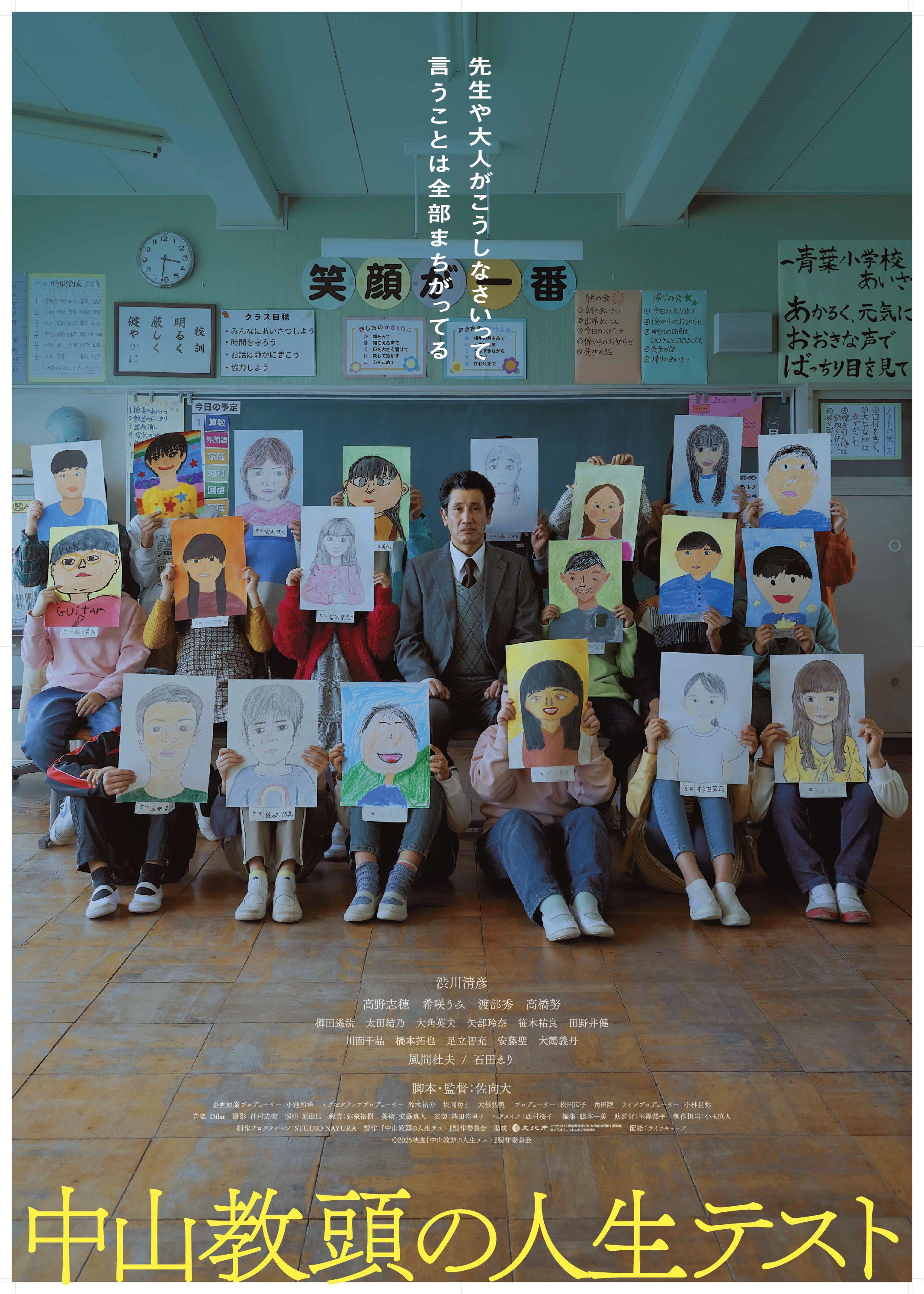
PRINCIPAL EXAMINATION (中山教頭の人生テスト, Dai Sako, 2025)

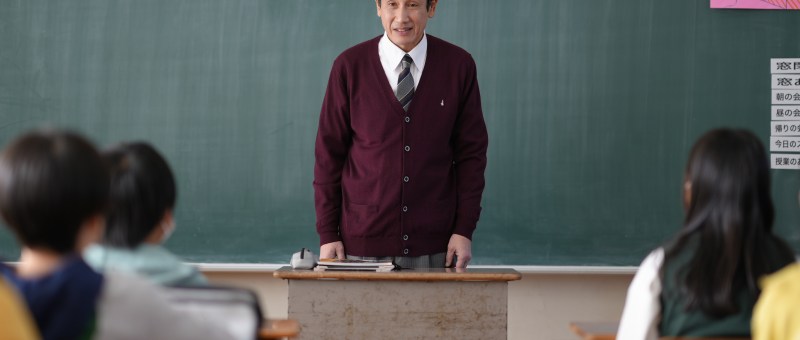
What is the place of the teacher in the contemporary society? Are they extensions of authority whose only role is to insist on order and produce children who will be obedient and know how to follow rules, or is it to educate and care for them so they can become the best versions of themselves free from the pressures of a conformist society? After taking some time away from active teaching, an absent-minded deputy headmaster finds himself confronted by just these contradictions as he’s suddenly tasked with taking over a class of primary school children while studying for the exams to qualify as a head teacher.

A mild-mannered man, it’s clear that Nakayama (Kiyohiko Shibukawa) is already overloaded and that the headmistress, Ms. Takamori (Eri Ishida), delegates most of her work to him. Though he was a frontline teacher for most of his career, he took an admin job after his wife’s death and seemingly lost his enthusiasm for the profession but quickly finds himself in the middle of a wider dispute about the scope of a teacher’s responsibilities to their students. He’s asked to take over after the current teacher, Kurokawa (Shu Watanabe), takes a leave of absence having come in for criticism from the children and their parents over his overly harsh teaching style. We see him force the children to repeat their morning greeting several times because they were not “in unison,” while he otherwise singles children out in front of the class for various rule infractions or poor performance. He appears to be more or less bullying some of the students, including Reona (Michiru Kushida), who comes from a single-parent family and is not able to get her mother to check her homework over for her because she just doesn’t have time.

There is a degree of push and pull between the teachers and parents over the shared responsibility for educating the child with some feeling that asking parents to do this kind of task is unreasonable while also reinforcing traditional gender roles in expecting there to be someone at home who is always available and dedicated only to raising children. This mistaken assumption disadvantages children like Reona while also stigmatising her in front of the rest of the class. Meanwhile, teachers are overly cautious of upsetting parents if they tell a child off in school. One irate father makes a point of coming in to see them when his son was merely questioned about something that happened after class and appears to be something of a bully himself. His son was one of the boys who criticised Kurokawa, and seems to have a lot of pent-up anger that could become a problem in the future but there isn’t much they can do about it at school. 

Kurokawa had only been appointed because Ms. Takamori insisted on temporarily suspending the original teacher, Ms. Shiina (Shiho Takano), because of complaints about something that happened outside of school. She had accepted an invitation to a barbecue with the children’s families where a child fell over and was injured. Ms. Shiina was then criticised for not properly supervising the children though she had only been at the barbecue as a guest and wasn’t responsible for watching them. Nevertheless, she was criticised because her role as a teacher leads people to think that she should be somehow responsible for any children present even when attending in a personal capacity as a private citizen, further emphasising a blurring of the lines when assessing the boundaries around the roles of teacher and parent. 

Ms. Shiina, who also appears to be queer coded, is presented as a more progressive teacher who doesn’t care about playing the game but only about the children’s welfare and wants them to grow up to be morally responsible people who can think for themselves. The irony is that Ms. Takamori may have been similar, later saying that Ms. Shiina reminded her of herself when she was younger, but because of the discrimination and prejudice she faced as a woman she decided her life would be best served by following all the rules so no one could complain. A former champion weightlifter, she had been criticised for a lack of femininity all her life and is also subject to the sexist and misogynistic judgements of the former headmaster, Kishimoto, who has made Nakayama his prodigy, but only if he plays the game which means becoming the kind of teacher who puts appearances first and enforces discipline rather than attempting to find out what’s going on in the children’s lives or fully understand the realities of class dynamics.

Indeed, it turns out to be the kids who are following the rules who are the worst and actively encouraging the semblance of order maintained through hierarchical bullying. Nakayama tries to investigate, but only arrives at half the truth and is torn between his desire to become a head teacher, which means submitting himself to the rigidity of the school system, and the idealism he once had for teaching. He finds himself effectively bullied, pressured into going along with things he doesn’t think are right which is the opposite of what he wanted for the children. As he eventually tells one of them, everything the teachers say is wrong, and what they really wanted to do was right, which is as close to admitting the irony of his position as it’s possible to get. 

The film’s English title has its ironies too as this is also an examination of Nakayama’s principles and how far he’s willing to compromise on them to be validated by the system in becoming a headmaster. He betrays his principles when he takes the test, but gets away with it and is in fact uncomfortably praised for his hardline stance after lying to protect Ms. Takamori by saying it was his decision to suspend a pupil who was caught shoplifting and drinking though some criticise it for its unfairness on the child. After all, suspending them will just result in them having nothing to do and getting into more trouble. But on the other hand, some parents now see this child as problematic and don’t want them back at the school where they worry they may prove disruptive to their own children’s education and development. 

The film offers no solutions though lands on the side of the children rather than the authority, sympathising with Ms. Shiina and encouraging Nakayama to regain his former idealism rather than become just another tool of an already oppressive social system. The fact that Nakayama loses his notebook implies a disregard for the kind of rules that are written in the headmaster’s manual and a return to his own judgement while leaving his final decision ambiguous as to which side of the line he will finally be on or whether he can really change this system from within. Though pretty bleak about the education system and its implications for the wider society, there is still a note of optimism in those like Ms. Shiina who don’t care about the rules so much as the children’s wellbeing that there is still a place for a more idealised form of teaching even within a fairly oppressive society.


PRINCIPAL EXAMINATION screens 31st May as part of this year’s Nippon Connection.

Trailer (no subtitles)
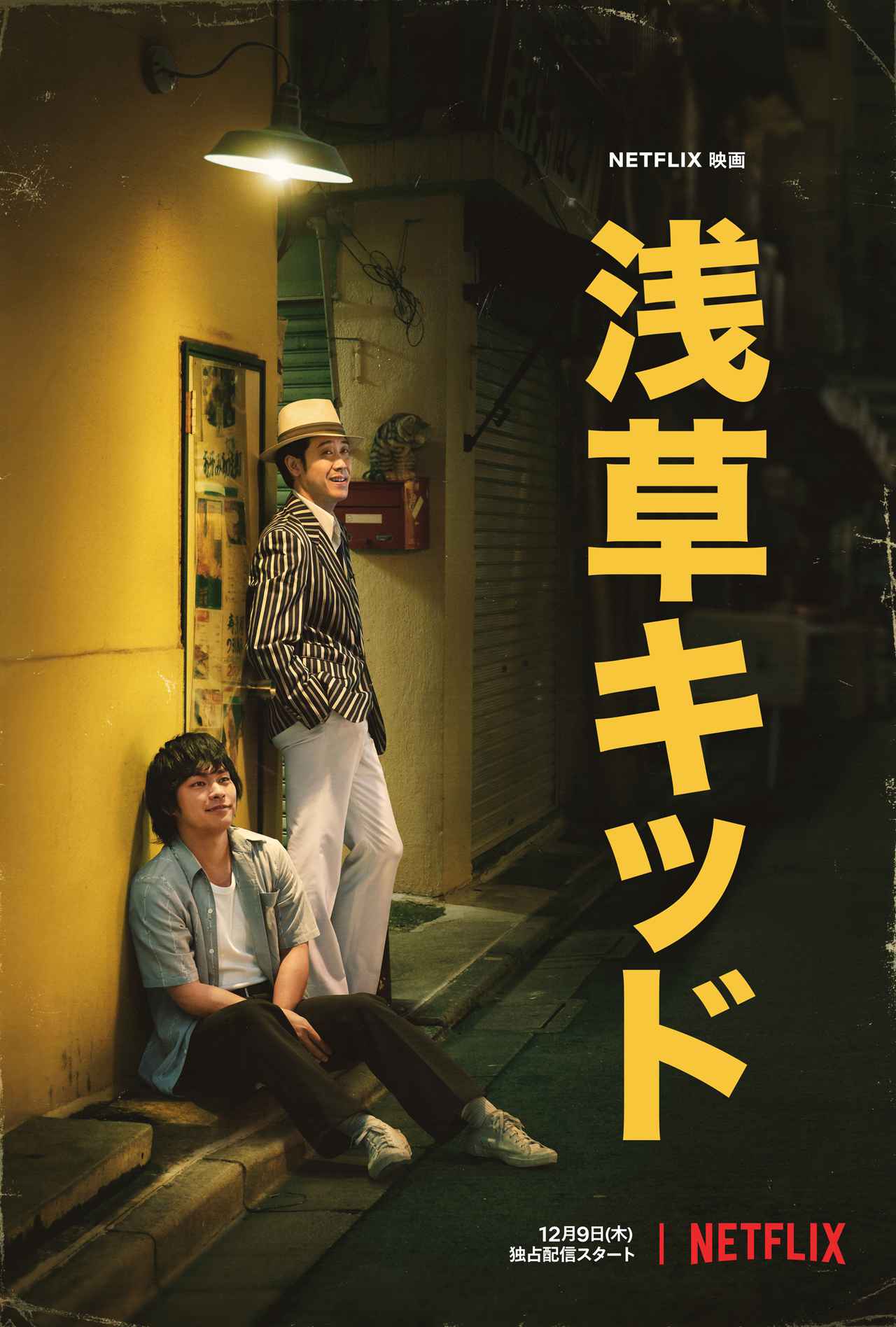
Asakusa Kid (浅草キッド, Gekidan Hitori, 2021)

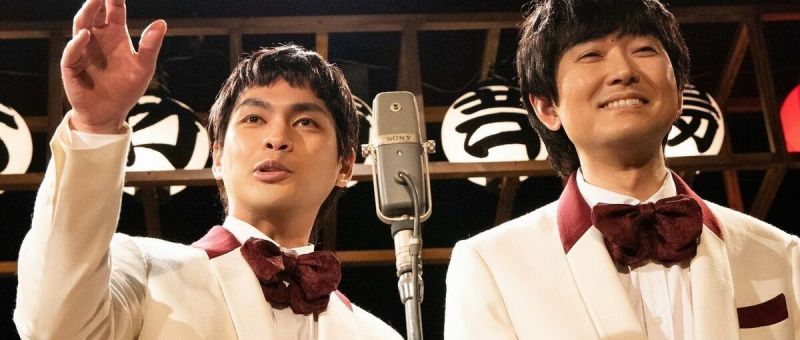
To international audiences, Takeshi Kitano has a very specific profile associated most closely with arthouse drama and violent gangster movies yet in Japan he’s best known as a comedian and TV personality. Inspired by Kitano’s memoir, Asakusa Kid (浅草キッド) charts his earliest days from entertainment district elevator boy to manzai star while lionising his earnest mentor Sozaburo Fukami (Yo Oizumi). Yet it’s also a nostalgic look back to a late Showa pre-bubble Japan as Kitano’s idol finds himself falling foul of a changing entertainment industry. 

As the film opens in 1974, “Take” (Yuya Yagira) is one half of a struggling manzai comedy double act touring the country in various variety and cabaret establishments fearing his career may die out on the road before beginning to edge towards success and a high profile TV gig. Two years earlier, however, he’s an awkward college dropout working as an elevator boy at France-za comedy bar burlesque theatre. A local boy, Take has chosen France-za because of his admiration for “Fukami of Asakusa”, longing to make his way into the entertainment world while captivated by Fukami’s cool style, even copying his trademark tap dancing. Fukami soon sees talent in Take and tries to nurture it, but as the pair of them are repeatedly reminded, this kind of comedy is already old-fashioned. Audience numbers at France-za continue to decline while as one of the other girls later reminds him the men who come to these shows are there to see women take their clothes off, not random skits or singing. 

This is brought home to Take when he tries to encourage one of the strippers, Chiharu (Mugi Kadowaki ), to chase her dreams of becoming a singer by convincing Fukami to allow her to fill a 15-minute spot. As Fukami had attempted to warn him, the men appear to enjoy her song and offer rapturous applause but think it’s part of her act and soon resort to catcalls expecting her to take her clothes off. Take’s well-meaning gesture backfires, convincing Chiharu her dreams of singing are over, while Take is also poked into action by the other stripper’s retort that the comedy is only really “filler” between the burlesque acts which is what the customers have come to see. 

Even so, there’s less drama than one might expect in Take’s eventual decision to betray his mentor by choosing manzai and its opportunities for TV success over his by then old-fashioned sketch comedy. The father/son relationship somewhat falls by the wayside as even as a triumphant Take later returns “home” to present Fukami with the prize money for a TV award like a child with a report card full of As, while he gracefully accepts it but is privately filled both with a sense of pride and personal disappointment in being forced to accept that the heyday of Asakusa is over and there is no future in his vaudeville-style comedy acts. Nevertheless, Take appears to attribute much of his success to things he learnt from Fukami from his tap-dancing to his uncompromising attitude. “Don’t be laughed at, make them laugh,” he recalls Fukami telling him, “don’t suck up to the audience, tell them what’s funny,” later refusing to soften his inappropriate jokes about ugly girls and suicide for a more conservative TV audience and finding his edgy comedy an irreverent hit. 

Then again, not everyone is able to achieve their dreams from Fukami who lost the fingers on one hand in the war and finds himself forced off the stage, to Chiharu apparently a regular housewife with showbiz regrets, and Fukami’s wife Mari (Honami Suzuki) exhausting herself trying to help him save his dream of Asakusa. As much as Take might have admired Fukami, others too describing him as a father of contemporary entertainment, he can’t get away from the fact the press is only interested in his funeral if Take attends it. Filled with the nostalgia, the ethereal one shot closing sequence in which the older Take returns to Asakusa and to the past surrounded by the friends of his youth is genuinely poignant in the sudden juxtaposition of a lost world with the contemporary present but perhaps elegises nothing so much as nostalgia in its lament for late Showa breeziness. 


Original trailer (English subtitles)

The Geisha (陽暉楼, Hideo Gosha, 1983)

The coming of the railroad spells doom for one of the most prestigious geisha houses in Japan in Hideo Gosha’s adaptation of the Tomiko Miyao novel, The Geisha (陽暉楼, Yokiro). Miyao’s novels had often provided the inspiration for Gosha’s films and she had herself been the daughter of a “flesh broker” in pre-war Kochi though later escaping to another town to be a substitute teacher. Though the English title may focus more on plight of the the individual geisha at its centre, the Japanese hints more at the destructive cycle of the Yokiro itself in the persistent legacy of exploitation.

Then again as he later points out, if you’re looking for a villain in this story then the responsibility lies largely with Daikatsu (Ken Ogata) himself. In a prologue set in 1913, Daikatsu has eloped with geisha Otsuru but the pair are discovered by gangsters sent after them by the Yokiro. Daikatsu kills all of their assailants and assures Otsuru that they are finally “free” but it appears to be too late. Holding their baby daughter in one arm, Otsuru collapses into his other and presumably dies either then or shortly after while Daikatsu is later sent to prison for 10 years. 20 years later in 1933, the daughter, Fusako (Kimiko Ikegami), has become the number one geisha at the Yokiro under the name Momowaka though her career flounders because she is regarded as too emotionally distant to keep a patron. 

Daikatsu is also himself in Kochi at this point and working as a procurer brokering the sale of young women to the Yokiro and other geisha houses and brothels. When a school teacher comes to him to sell his wife, he taps her teeth to check for malnutrition much as one would examine a horse before running a hand underneath her kimono to check everything is at is should be before offering a valuation. Her husband only looks at him anxiously enquiring if a body such as hers which has as he later reveals born three children will fetch a good price. Daikatsu lets them go so the woman, Masae, can spend a final night with her family explaining that he cannot force someone to work if they do not want to do so and is well aware they will likely take his money and never be seen again which is what almost what happens. As it turns out the husband is killed in a fight and the woman ends up becoming a geisha anyway, only in the pay of prominent Osaka yakuza led by Inaso. 

Inaso (Mikio Narita) and buddies want in on the construction of the railroad that will shortly be coming to Kochi, but need to take over the town first which means getting around the mistress of the Yokiro, Osode (Mitsuko Baisho), who is apparently running every game town. The entire local economy is underpinned by female exploitation and facilitated by a woman, a former geisha, seizing the only power that is available to her. Isano later uses Masae as a kind of spy, getting her to initiate a relationship with Osode’s weak willed husband in an attempt to humiliate her which largely backfires as Osode boldly reclaims her man through a violent brawl in a hot spring though it does not appear that she is especially fond of him so much as he serves a particular purpose.

The brawl emphases the way in which women are pitted against each other by the nature of a patriarchal society along with the ways in which they are forced to mediate their power through men. Fusako also gets into an intense physical fight with Tamako (Atsuko Asano), a surrogate daughter of Daikatsu’s and emblem of a coming modernity, who insists on becoming a sex worker at the area’s most prominent brothel. In a strange moment of confrontation, both the geishas of the Yokiro dressed in their traditional regalia, and the sex workers of Tamamizu, arrive at a modern club where the heir to a banking empire courted by the Yokiro, Saganoi, dances the Charleston he learned while studying abroad in America. The geisha who dances with him struggles to pick up the moves, Saganoi lamenting that the dance is just not suited to a woman wearing a heavy kimono, elaborate wig, and clumsy geta. Tamako immediately gets up from her table and kicks off her shoes, gathering the hem of her own kimono to free her legs for the high level kicks of the modern dance. 

Fusako reclaims her authority by interrupting the dance immediately before its conclusion and insisting on retrieving their guest. Tamako appears to resent Fusako, perhaps frustrated in her relationship with Daisuke who does not appear to have had much contact with the daughter he sold at 12 years old. They too end up in an elaborate brawl in which Tamako rips off Fusako’s wig and splits her lip, symbolically freeing her to transcend the constraints of her “geisha” persona. Meeting Saganoi at Western-style bar, she boldly dances on the counter and sleeps with him of her own volition. But in doing so she conceives a child and leaves herself in a difficult position. She has betrayed her patron, and though she could simply have kept the fact from him and allowed him to think the baby was his, Fusako does not want to bring her child up in lies while simultaneously hanging on to a naive dream that Saganoi will one day return to her despite being made aware he has left for Europe. 

“All men are enemies of women,” she writhes in childbirth while swearing that no one will take her child from her, but she is still an indentured woman and her daughter is by rights the property of Osode. Her illness, presumably consumption, began long before her pregnancy and seems to an echo of the suffering she has been forced to endure as a geisha. As her health weakens, so the Yokiro declines. First it is ravaged by a literal storm, but also under threat from the Osaka gangsters desperate to take over Kochi to gain access to the lucrative construction contracts extending in its direction. Even so, as Daikatsu admits much of the fault lies with him. He chose to elope with Otsuru and was unable to protect either her or their daughter whom he allowed meet the same fate by entering the geisha world. He continued to earn his money by selling women into what is essentially slavery, and cannot escape his part in their continued exploitation while his entanglement with gangsters later disrupts the more settled life Tamako has begun to build for herself. 

“Wait all you want, the train’s not coming,” Tamako is later told, as if signalling that there really is no way out of this destructive and disappointing existence. Truly epic in scope, Gosha’s pre-war drama draws together patriarchal exploitation and societal corruption to critique a burgeoning modernity, but ends exactly as it started among the vibrant cherry blossoms only this time undercutting the melancholy of the oft repeated song with a more cheerful scene hinting at least symbolically at a long-awaited reunion. 


Original trailer (English subtitles)

Village of Eight Gravestones (八つ墓村, Yoshitaro Nomura, 1977)

Can a curse end up being “real” just because people believe in it? Unlike many of his other crime films which were adapted from the novels of Seicho Matsumoto, Yoshitaro Nomura’s The Village of the Eight Gravestones (八つ墓村, Yatsuhaka-mura) edges towards the idea that the curse at its centre is real in a more literal sense with grimly grinning samurai standing on their hilltop and rejoicing in the fulfilment of the 400-year campaign of vengeance, but also hints at a toxic legacy of enmity and warfare along with a karmic sensibility found in many of Seishi Yokomizo’s other mysteries in which a noble family must account for the way it gained its riches. 

In this case, the Tajimi family which now owns most of the village became prosperous after betraying a band of eight displaced samurai during the Sengoku era. Fleeing the battlefield in defeat, the samurai had originally frightened the villagers when they came down off the mountain but were in actuality non-threatening, simply settling down to a life of farming and peaceful co-existence. But some members of the community became greedy and accepted the promises of riches from a rival clan for the service of eliminating the eight samurai. Cruelly inviting them to the local festival in what seemed like a moment of acceptance as members of the village, they betrayed them killing some by poison and others by the sword. 

Now, hundreds of years later, the Tajimi family is on the verge of extinction with the eldest daughter unable to bear children and the oldest son bedridden and soon to die which explains why they’re keen to track down long lost grandson Tatsuya Terada (Kenichi Hagiwara) who was presumably adopted by his stepfather and bears his name after his now deceased mother Teruko left the family to escape her abusive relationship with half-mad husband Yozo (Tsutomu Yamazaki). Surprisingly, it’s his maternal grandfather Ushimatsu Igawa (Yoshi Kato), who comes looking for him only to drop dead as soon as they meet of apparently strychnine poisoning in the first of several murders that all echo the ancestral curse placed upon the Tajimi family by samurai leader Yoshitaka Amako (Isao Natsuyagi) as he died. 

Like many of Nomura’s films this too features a journey only this one is in a sense into the past as Tatsuya ventures to the rural heart of Japan hoping to see his mother’s birthplace and satiate his curiosity about his birth father. What he discovers there is obviously a lot of what seems like unfounded local superstition along with a degree of unpleasant stigmatisation as he’s immediately accosted by a shamaness who calls him a murderer to his face for his connections with the Tajimis to whom he feels himself a stranger, and then is later blamed for all the weird goings on which only began after he arrived. The film uproots itself from the original 1948 setting to the present day which perhaps lessens the impact of its central theme about the legacy of violence and betrayal that is stoked by war and enmity along with the destructive capacity of human greed that encourages some to betray others for their own advancement only to discover that success founded on human sacrifice will never get you very far. 

Ironically in a more real world sense, it turns out to be greed that motivates these present crimes with the villain hoping to usurp the Tajimi family fortune and utilising the curse as a means to do so. Much of the action takes place in a network of underground caves filled with glowing green lakes where the villain eventually takes on demonic proportions, face ghostly white with yellowish eyes and a crazed expression that echoes those of the samurai as they died. Nomura hints at the sense of ancient dread in this very old place while also surprisingly bloody in his flashbacks which feature scenes of shocking violence including severed heads one of which seems to lick its lips and stare intently even while on display. This being a Kindaichi (Kiyoshi Atsumi) mystery, the famous detective does indeed appear though remains a background presence quietly solving the crime behind the scenes while Tatsuya searches for the key to his own history and an escape from this legacy of violence and destruction in reclaiming his own identity.


Original trailer (no subtitles)

A Chaos of Flowers (華の乱, Kinji Fukasaku, 1988)

Kinji Fukasaku is best remembered for his work in the yakuza genre and most particularly the Battles Without Honour cycles which chronicled the darkness beneath Japan’s progress towards the economic miracle of the post-war era. He was, however, much more varied in output than it might at first seem. Set before the war, A Chaos of Flowers (華の乱, Hana no Ran) positions the great Kanto Earthquake of 1923 as the day innocence died, Taisho-era liberalism crushed in a fundamental collapse of the old world which led only to the intensification of militaristic ideology and the subsequent corruption of Japanese imperialism. 

Our guide is legendary poet Akiko Yosano (Sayuri Yoshinaga) who tells the story of pre-war 20th century Japan by recounting her own which begins in 1901 when she fell in love with fellow poet and later husband, Tekkan (Hiroshi) Yosano (Ken Ogata). The situation is complicated firstly because Hiroshi is already married with an infant daughter, and secondly because Akiko’s friend Tomiko (Yoshiko Nakada), another poet who had worked with her on a feminist journal, was also in love with Hiroshi and perhaps her rival. Akiko tricks Hiroshi into seeing him alone on the pretext that Tomiko is coming too, confessing her feelings and discovering that he plans to divorce his wife because she is unsupportive of his work. Full in the knowledge that he is choosing poetry over his daughter, Hiroshi decides to enter a relationship with Akiko because she, as a fellow poet, is more appreciative though it proves harder than expected to separate from his first wife. In any case, Akiko is left with a sense of guilt which continues throughout her married life that she cheated Tomiko to claim Hiroshi. 

During this time, Akiko Yosano becomes one of the most celebrated yet controversial young poets in Japan well known for her explicit, erotic love poetry much of which was inspired by her husband. She has eclipsed him as an artist and is supporting the family while he has fallen into a deep depression. A mother of 13 children, Akiko has begun to feel lonely in her marriage and wonders if someone who has only known one man has the authority to continue writing tracts about love and sex. Meanwhile, thanks to the admiration her poetry has received among the young radicals, she has become an accidental figurehead for the Taisho radicals and finds herself swept up by the movement through her associations with such avant-garde figures as Sakae Osugi (Morio Kazama) and his wife Noe Ito (Eri Ishida), the actress Sumako Matsui (Keiko Matsuzaka) held responsible for a revolution in Japanese theatre, and finally tragic author Takeo Arishima (Yusaku Matsuda) who was also the father of golden age actor Masayuki Mori. 

Arishima is first struck by Akiko when knocks her out of a rickshaw during an anarchist publicity stunt driving a motorcycle and sidecar around outside the theatre where Sumako Matsui is performing one of her most famous roles in a play inspired by Tolstoy’s Resurrection. It turns out that Akiko bears a striking resemblance to his late wife, which is one reason he sends her an extravagant gift of a beautiful Western-style outfit which she first tries to return partly because she only wears kimono and partly because it’s an inappropriately expensive gesture. Arishima is from a wealthy, landed family and like many of his generation uncomfortable with his privilege but struggling to convince himself to abandon it. Drawn to him in the same way she was drawn to Hiroshi, Akiko accepts the dress and later wears it on a picnic she organises where her children and Arisihma’s two sons can play together. The Western clothing becomes a kind of signifier of Akiko’s drive towards the future and away from her husband as she too despite her feminist perspective struggles to free herself of the image of the good wife while inwardly burning with a desire for love and passion which her husband can no longer satisfy. 

That same dilemma is one which plagues her rival, journalist Akiko Hatano (Kimiko Ikegami) who is already involved with Arishima but married to a patriarchal man who sees her as nothing more than a “doll”, something which is supposed to look pretty and live in its box until he chooses to take it out. Akiko Hatano warns Akiko Yosano that Arishima is a man drawn to death and is merely looking for someone to die with in a lovers’ suicide, something of a fad at the time. In meeting Akiko Yosano, however, his desire for life seems to have been reinvigorated. He makes peace with himself by dissolving his estate in Hokkaido and surrendering control of it to a peasants’ committee, but is thrown again into suicidal despair when the secret police turn up to harass the peasants for undermining the social order. 

As Akiko Hatano puts it, Arishima is a man vacillating between life and death, claiming to be in love with Akiko Yosano soon after meeting her and actively rejecting Akiko Hatano as symbolic of his newfound desire to live. Arishima committed a love suicide with Akiko Hatano on 9th June, 1923 which is only a few months before the Great Kanto Earthquake which devastated the city of Tokyo and enabled a roundup of subversive forces such as socialists and anarchists along with Koreans many of whom were massacred by state sanctioned forces after a false rumour circulated that they had been poisoning the wells and preparing an insurrection for Korean independence (Sakae Osugi and Noe Ito along with their 6-year-old nephew were also victims of this pogrom). 

In her voice over, Akiko describes the earthquake as the death of Taisho which in real terms lasted a few more years until 1926, but was perhaps over as far as its liberalising ideals are concerned, the crisis giving the militarists further excuses to increase their powers. Yet like Arishima the Taisho intellectuals had also been obsessed with death and futility of which the love suicides were a part. Arishima, shortly before witnessing Sumako’s very public breakdown over the death of her lover Hogetsu Shimamura (Keizo Kanie) from Spanish Flu, describes her nothing more than a ham actress but also believes that the theatrical revolution of the Taisho era would not have been possible without her. Sumako also committed suicide for love a few months after Hogetsu’s death, unable to go on without him. Tomiko, Akiko’s old friend, contracted TB and painfully faded away with Hiroshi unexpectedly by her side. Catching sight of a couple of Osugi’s comrades being dragged away after the earthquake Akiko chases after them with rice balls, telling them they must survive. She’s watched many of her friends and the finest minds of her generation die, mostly through choice, and is making an active choice to live. 

In essence this choice may not be as positive as it first sounds. One of Japan’s first avowed pacifists, Akiko Yosano turned increasingly towards the right in the years following the earthquake, eventually becoming an enthusiastic supporter of the war in China and actively subverting the words of her previous poems in insisting it was glorious to die for the emperor after all. Her friends died out of a sense of futility, that the social changes they envisaged were not possible or that they were unable to continue living with themselves in such a society. Society changed, and Akiko changed with it, such was the path she found to continue living. Nevertheless, something did die with the earthquake and it was perhaps those youthful dreams of overwhelming romance crushed like Akiko’s hat in the rubble of a world which was already collapsing. 


Original trailer (no subtitles)

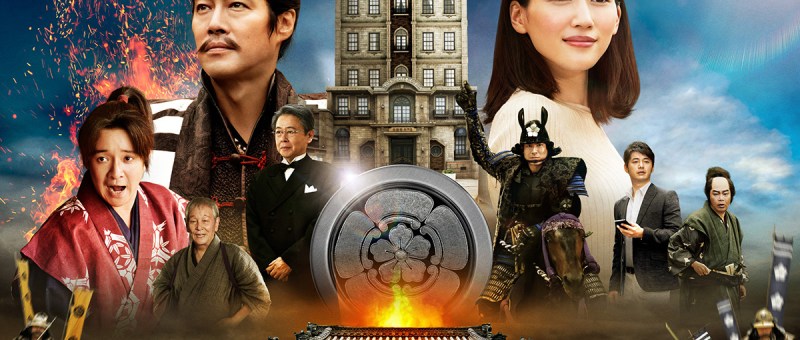
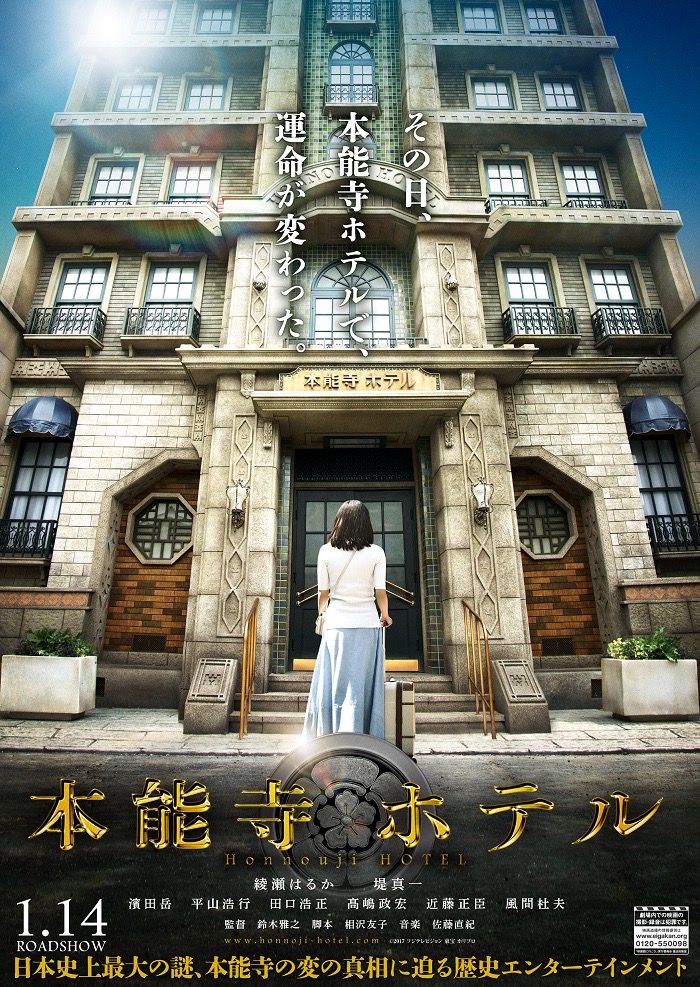
Honnouji Hotel (本能寺ホテル, Masayuki Suzuki, 2017)

According to the opening quote from Otto von Bismark, fools learn from experience and the wise man from history, but in truth you’ll need a little of the former to correctly interpret the latter. The heroine of Honnoji Hotel (本能寺ホテル) is not exactly lacking in life experience, but hers has been of the passive variety. She’s blithely gone along with the path her society laid out for her, but now she’s hit an unexpected bump in the road it’s prompted her into a reconsideration of where it was she was going. Most people wouldn’t meet such a crisis by asking “what would Nobunaga do?”, but that’s where our heroine finds herself after accidentally exiting a hotel lift right into the middle of the Sengoku era. 

20-something Mayuko (Haruka Ayase) is in Kyoto for a short holiday and to meet up with her fiancé to be formally introduced to his family. The problem begins when it transpires that owing to an administrative error, her hotel reservation has been made for the following month and everything is currently fully booked seeing as the city is such a tourist hotspot. After wandering around a while, she stumbles across a dated, slightly musty establishment named the “Honnouji Hotel” which, she realises even given her shaky grasp of history, is a fairly inauspicious name. Everyone knows that 16th century general and noted tyrant Oda Nobunaga committed seppuku at the Honno temple after he was betrayed by one of his retainers who rose against him. Nobunaga had been primed to bring peace to Japan after more than a century of destructive warfare, paving the way for unification under the Tokugawa Shogunate, but is a somewhat ambiguous figure known for his extreme volatility and tendency towards cruel authoritarianism. 

That vision of Nobunaga is indeed the one Mayuko first encounters when she finds herself accidentally thrown back into the Sengoku era after exiting the lift in her hotel. The first person that she meets turns out to be Mori Ranmaru (Gaku Hamada) with whom she bonds over a shared sense of anxiety, she over meeting her boyfriend’s family, and he over an important tea ceremony with life or death consequences. She gives him some modern-day stomach medicine while he warns her that his lord is “cruel and demonic”. Still not quite grasping that things work differently (to a point at least) in the feudal world, she advises him to quit rather than allow himself to be exploited to the point that it’s ruining his health but he exasperatedly reminds her that you can’t simply drop out of samurai society. Mayuko gets another cruel awakening when observing the tea ceremony and witnessing a man, whom she later realises to be Nobunaga (Shinichi Tsutsumi), extorting a tea caddy from a distressed master who tries to protest that he’d only been informed that the caddy would be displayed and is unwilling to give it away. Nobunaga reminds him that the nation will soon be unified under his banner, at which point he will be in control of business affairs, threatening him with economic consequences backed up with the possibility of immediate violence. 

Despite her essential passivity, Mayuko cannot bear injustice and immediately springs into action, handing the caddy back to its original owner and instructing him that he shouldn’t allow himself to be intimidated into giving up his prized possessions. In her own life, however, she’s nowhere near as certain. We find out that she’s only known her fiancé for six months, and is still ambivalent about the idea of marriage. When the company she’d been working for suddenly went bust, she found herself at a loss, told that the teacher’s certificate she’d taken as a backup is largely useless because even teaching is oversaturated in today’s difficult job market. Now, it’s not feudal times anymore, but many people in Japan still expect a woman to give up her career to get married, which is what most of her friends advise her to do especially seeing as she had no particular ambitions or goals in life. Kyoichi’s (Hiroyuki Hirayama) proposal comes at an opportune moment, but she finds herself asking opportune for whom and if this is really what she wants or if she’s just allowing herself to be railroaded into conventional “success” without really thinking it through. 

It might be going too far to read too much in to a similarity between Nobunaga’s dictatorial dynamism and Kyoichi’s domineering manliness, but that’s largely where Mayuko seems to be. Beginning to realise his mistakes, Kyoichi confesses that he cynically took advantage of the situation to manipulate Mayuko into marrying him, believing that she was “insecure and unreliable”, “unable to do anything alone” and in need of his protection. Talking with Kyoichi’s father and beginning to assert herself in opposition to Nobunaga’s injustices, she begins to realise that she can take charge of her own destiny and has a duty to find what it is she wants to do, and do that as best she can.

The lesson is, however, somewhat problematically learned in her realisation both that she can’t change “history” and that she can because history is a consequence of our collective choices. This Nobunaga, apparently wanted a peaceful society for all, one in which class divisions had been eradicated and equality ruled. He sees our world and deems it good enough to sacrifice his life for, but Mayuko by turns becomes enamoured of the past, finding her vocation as a teacher of history in a move which is both progressive in seeing her reject a marriage of “convenience” to strike out under her own steam, but also backward looking in its reevaluation of Nobunaga and his unfinished revolution as if there is no real need for change “now”. Granted, Honnouji Hotel is partly concerned with selling the charms of Kyoto as an unchanging historical centre, but it’s difficult to escape the slightly sour note of conservatism as Mayuko finds her forward path only by embracing the samurai past. 


Original trailer (no subtitles)

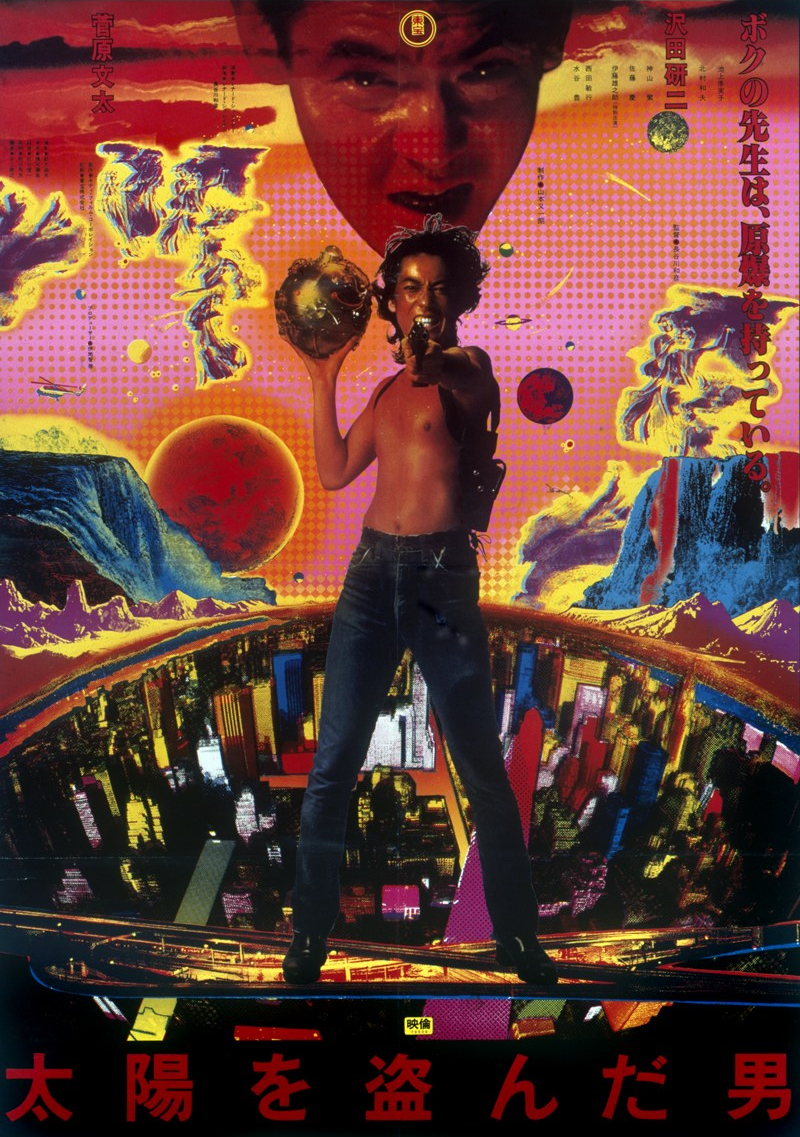
The Man Who Stole the Sun (太陽を盗んだ男, Kazuhiko Hasegawa, 1979)

(C) Toho 1979

man who stole the sun posterIn the post-Asama-Sanso world, Japanese society had shifted into period of intense calm in which improving economic prosperity was in the process of delivering comfort rather than the creeping acquisitive anxiousness that began to overshadow the bubble era. Nevertheless, in cinematic terms at least anxiety was everywhere and not least among the young who, swept along by this irresistible economic current, were quietly doubtful about their place in a changing society. Co-scripted by an American screenwriter, Leonard Schrader (brother of Taxi Driver’s Paul), The Man Who Stole the Sun (太陽を盗んだ男, Taiyo wo Nusunda Otoko) provides a satirical snapshot of this confusing moment as an oppressed, belittled high school science teacher builds an atomic bomb in his apartment just to show he can but then realises he has absolutely no idea what to do with it.

Technically speaking, the science teacher’s name is Makoto Kido (Kenji Sawada) but no one really calls him that. The kids at school refer to him as “Bubble-gum” because he always seems to be chewing on the rather childish confectionary. Not the most conscientious of teachers, he tailors the curriculum to his own interests, teaching the kids all about atomic energy and the bomb, but the kids aren’t interested. They only want to know what’s going to be on the test. To them Kido’s information is irrelevant and so they ignore him, talking amongst themselves while he carries on, preaching to a seemingly empty room.

Meanwhile, Kido is building the bomb at home, for real. As he tells the kids, anyone can build an atomic bomb – you only need the plutonium which is, admittedly, tightly controlled for just this reason. He acquires his through a daring heist on a nuclear plant. Kido never elaborates on what prompted him to begin his bizarre masterplan, but there is certainly a degree of pent up rage inside him born of resentment with his reduced circumstances. “Just” a high school science teacher, who would really think he’d have the capability to build an atomic bomb, alone, using only household equipment (plus the plutonium and a custom furnace purchased after nearly exploding his oven)?

Kido’s problems are the same as many middle-aged men in ‘70s Japan in that he feels intensely oppressed from above and below. What he’s trying to tell the kids is that they have access to this power already – anyone can build a bomb, if you bother to learn how. The only thing that’s being kept from him is the plutonium (and for good reason), which he manages to acquire anyway. A chance encounter with the madness of the age seems to kickstart his plan into gear when he meets his opposing number in police inspector Yamashita (Bunta Sugawara).

Kido, having halfheartedly escorted a group of students on a school trip, finds himself rendered powerless once again when the bus is hijacked by a distressed older gentleman (Yunosuke Ito) armed with a rifle and grenade and wearing a World War II soldier’s uniform. He demands to be driven to see the emperor from whom he intends to demand the return of his son, presumably killed in the war 30 years earlier. Yamashita, clean cut and authoritative, is the gung-ho cop who masterfully brings the hostage crisis to a close by lying to the man that the emperor has consented to see him. During the evacuation the old man is killed by police snipers (despite Yamashita’s too late cries of “don’t shoot” after having dispatched the grenade and disarmed the suspect).

Like Kido, the old man likely didn’t really know what he intended to do, only that he was lonely and desperate. The emperor couldn’t give him back his son (whose uniform he seems to be wearing) and his gesture is one of futile defiance coupled with a suicide bid that has no real goal save making an elaborate protest against the world in which he lives. Kido makes the bomb, lets the authorities know he has it, but then realises he has no demands. He asks them to fix something minor that annoys him, to stop the TV networks pulling the plug on late running baseball games to make way for the news, and finds himself rewarded. He has taken back the power, they believe he has the bomb and they fear him, but he has no further goals or notion of how his society should change. There is no idealised future he is fighting for, all there is is futility and indifference.

Meanwhile, ironically enough, Kido’s desperation provokes a mini revolution in others. A talkshow radio host (Kimiko Ikegami) named “Zero” (in contrast to Kido’s adoption of the codename “No. 9” as the 9th owner of a nuclear device and the only individual), broadcasts his on-air request for ideas, believing it to be a kind of thought experiment. The ideas she gets from the public are of the usual kind – lonely men who want to bathe with naked women, nationalists who want to start a war with America, dreamers who think it might be better not to want anything and just embrace the dream, while she muses that she wants the Rolling Stones concert that was cancelled a few years ago after a band member’s narcotics conviction to be reinstated. That being as good as anything is what Kido goes for in an overture that passes as an odd kind of romance and a suitably ironic kick back against strait-laced authority.

Kido’s war is, in a sense, a war with the fathers of the world as symbolised by men like Yamashita with their suits and neatly trimmed haircuts. Their button-down existence has never offered anything to men like Kido who feel trapped and angry within it. Yet Yamashita is also reacting against his own generation of fathers as symbolised by the old man on the bus, the last remnant of wartime resistance offering a defeated cry against a world which got away from them. Yamashita let the old man die when he prioritised his own sense of heroism, and that annoyed Kido. He can’t help sympathising with his plight which is in a way also his own in being relentlessly silenced and ignored by austere authority figures.

Turning down Yamashita’s clumsy attempt at a pickup, Zero affirms that Kido has given her a dream, which no small thing and she feels bound to him because of it. It’s an ironic statement because Kido has no dreams and not only that, he has no future either – he is slowly dying of radiation poisoning despite his precautions during the building of the bomb. In their final confrontation, Yamashita, adopting a paternal authority, neatly summarises Kido’s dilemma. The only life he has the right to take is his own, and his own death is the only thing he really wants, but he’s embarked on this elaborate plan to make his presence felt all the while aware that he will remain totally anonymous. No one will ever see him. He will die, like thousands of others, faceless. A lowly high school science teacher, no terrorist mastermind or bomb building genius. His revenge is as absurd as it is futile. Male inferiority complexes threaten to drown us all in a sea of violent resentment, and as the Earth dies screaming all we will have to reflect on is that we ourselves brought this world into being through our own incurable apathy.


Original trailer (no subtitles)

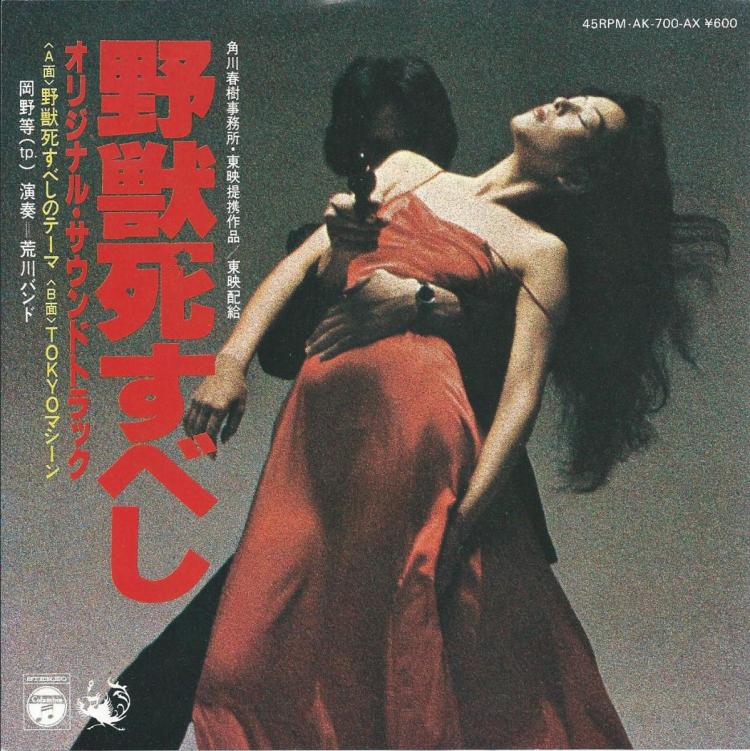
The Beast Must Die (野獣死すべし, Toru Murakawa, 1980)

LP Soundrack record cover

Yusaku Matsuda was the action icon of the ‘70s, well known for his counter cultural, rebellious performances as maverick detectives or unlucky criminals. By the early 1980s he was ready to shed his action star image for more challenging character roles as his performances for Yoshimitsu Morita in The Family Game and Sorekara or in Seijun Suzuki’s Kagero-za demonstrate. The Beast Must Die (野獣死すべし, Yaju Shisubeshi, AKA Beast to Die) is among his earliest attempts to break out of the action movie cage and reunites him with director Toru Murakawa with whom he’d previously worked on Resurrection of the Golden Wolf also adapted from a novel by the author of The Beast Must Die, Haruhiko Oyabu. A strange and surreal experience which owes a large amount to the  “New Hollywood” movement of the previous decade, The Beast Must Die also represents a possible new direction for its all powerful producer, Haruki Kadokawa, in making space for smaller, art house inspired mainstream films.

Shedding 25 pounds and having four of his molars removed to play the role, Matsuda inhabits the figure of former war zone photo journalist Kazuhiro Date whose experiences have reduced him to state of living death. After getting into a fight with a policeman he seems to know, Date kills him, steals his gun, and heads to a local casino where he goes on a shooting rampage and takes off with the takings. Date, now working as a translator, does not seem to need or even want the money though if he had a particular grudge against the casino or the men who gather there the reasons are far from clear.

Remaining inscrutable, Date spends much of his time alone at home listening to classical music. Attending a concert, he runs into a woman he used to know who seems to have fond feelings for him, but Date is being pulled in another direction as his experiences in war zones have left him with a need for release through physical violence. Eventually meeting up with a similarly disaffected young man, Date plans an odd kind of revenge in robbing a local bank for, again, unclear motives, finally executing the last parts of himself clinging onto the world of order and humanity once and for all.

Throughout the film Date recites a kind of poem, almost a him to his demon of violence in which he speaks of loneliness and of a faith only in his own rage. Later, in one of his increasingly crazed speeches to his only disciple, Date recounts the first time he killed a man – no longer a mere observer in someone else’s war, now a transgressor himself taking a life to save his own. The violence begins to excite him, he claims to have “surpassed god” in his bloodlust, entering an ecstatic state which places him above mere mortals. A bullet, he says, stops time in that it alters a course of events which was fated to continue. A life ends, and with it all of that time which should have elapsed is dissolved in the ultimate act of theft and destruction. His acts of violence are “beautiful demonic moments” available only to those who have rejected the world of law.

Murakawa allows Matsuda to carry the film with a characteristically intense, near silent performance of a man driven mad by continued exposure to human cruelty. Hiding out in Date’s elegant apartment, Matsuda moves oddly, beast-like, his baseness contrasting perfectly with the classical music which momentarily calms his world. Mixing in stock footage of contemporary war zones, Murakawa makes plain the effect of this ongoing violence on Date’s psyche as the sound of helicopters and gunfire resounds within his own head. The imagery becomes increasingly surreal culminating in the moment of consecration for Date’s pupil in which he finally murders his girlfriend while she furiously performs flamenco during an dramatic thunderstorm. Date is, to borrow a phrase, no longer human, any last remnants of human feeling are extinguished in his decision to kill the only possibility of salvation during the bank robbery.

Anchored by Matsuda’s powerful presence, The Beast Must Die is a fascinating, if often incomprehensible, experience filled with surreal imagery and an ever present sense of dread. Its world is one of neo noir, the darkness and modern jazz score adding to a sense of alienation which contrasts with the brightness and elegance of the classical music world. At the end of his transformation, there is only one destination left to Date though his path there is a strange one. Fittingly enough for a tale which began with with darkness we exit through blinding white light.


There’s also another adaptation of this novel from 1959 starring Tatsuya Nakadai which I’d love to see but doesn’t seem to be available on DVD even without subtitles. This film has a selection of English language titles but I’ve used The Beast Must Die as this is the one which appears on Kadokawa’s 4K restoration blu-ray release (sadly Japanese subtitles ony).

Original trailer (no subtitles)

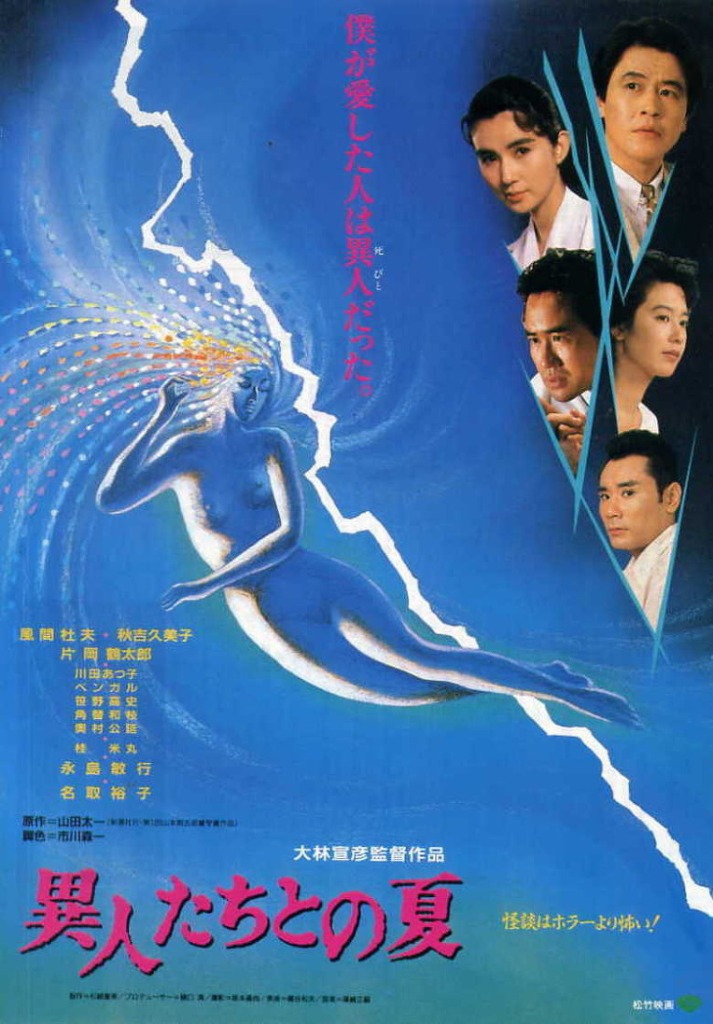
The Discarnates (異人たちとの夏, Nobuhiko Obayashi, 1988)

discarnatesNobuhiko Obayashi is no stranger to a ghost story whether literal or figural but never has his pre-occupation with being pre-occupied about the past been more delicately expressed than in his 1988 horror-tinged supernatural adventure, The Discarnates (異人たちとの夏, Ijintachi to no Natsu). Nostalgia is a central pillar of Obayashi’s world, as drenched in melancholy as it often is, but it can also be pernicious – an anchor which pins a person in a certain spot and forever impedes their progress.
Hidemi Harada (Morio Kazama) is a successful TV scriptwriter whose career is on the slide. He’s just gotten a divorce and seems to be conflicted about the nature of his new found bachelordom. As if he didn’t have enough despair in his life, the closest thing he has to a friend – his boss at the TV station, tells him he thinks it’s better if they end their professional relationship because he plans to start dating Harada’s ex-wife and it would all get very awkward.

Feeling unloved, Harada takes a trip to his hometown on a location scout for another project and takes in a few familiar sights along the way. It’s here that he runs into a youngish man who looks just like Harada’s father did when he was a boy. Not only that, accompanying his new found friend home, the man’s wife looks just like his mother, but Harada’s parents died when he was just twelve years old. The mysterious couple are glad to have him in their house and treat him with the warmth and kindness that seemed to have been missing in his life, leaving him the happiest and most cheerful he’s been in years.

Now in a much better mood, Harada feels guilty about rudely dismissing the woman from upstairs who’d come to visit him the day before. Apologising, Harada strikes up a friendship and then a romance with the equally damaged Kei (Yuko Natori) but even if his mental health is improving, his physical strength begins to deteriorate. Looking pale and old, Harada’s teeth rot and fall out while his hair loses its color. Even so, Harada cannot bear to pull himself away from the warmth and security that was so cruelly taken away from him when he was just a child.

Harada doesn’t start off believing that the mysterious couple really are his late parents, but if even if they weren’t these two people who are actually younger than him take him in as a son, feeding and entertaining him. When Harada returns a little while later confused by what exactly has happened, his mother immediately treats him as a mother would – physically taking off his polo shirt and urging him to remove his trousers lest they get wrinkled from sitting on the floor. Having lost his parents at such a young age, Harada has been a adrift all his life, unable to form true, lasting emotional bonds with other people. Lamenting his failure as a husband and a father, this very ordinary kindness provides the kind of warmth that he’s been craving.

However, there is always a price to be paid. Harada’s visits become increasing tiring, taking a physical toll on his ageing body. Each hour spent in the past is an hour lost to the dead. His parents are both dead and alive, existing in a strange, golden hued bubble filled with the comforting innocence of childhood free from the concerns of the adult world. Yet each time Harada succumbs to his weakness and goes to visit them, he is doing so as a way of avoiding all of his real world problems. According to one of Harada’s scripts, the past becomes a part of you and is never lost, but memory can be an overly seductive drug and an overdose can prove fatal.

Contrasted with the warm glow of the post-war world of Harada’s childhood home, his life in bubble era Tokyo is one filled with blues and a constant sense of the sinister. Harada believes himself to mostly be alone in the apartment block save for a mysterious third floor light that hints at another resident who also favours late nights over early mornings. The light turns out to belong to a lonely middle-aged woman, Kei, who is also a fan of Harada’s work. Kei has her own set of problems including a wound on her chest that she is too ashamed to let anyone see. Ultimately, Harada’s self-centred inability to lay the past to rest and fully take other people’s feelings into account will deal Kei a cruel blow.

Harada sees everything with a writer’s eye. His childhood world is a dream, but his life is a film noir filled with shadows and misery. His environments appear too perfectly composed, like a TV stage set and, as if to underline the fact, at the end of each “scene” the colour drains from the screen to leave a blue tinted black and white image shrinking into a rectangle and disappearing like the dot going out in the days when television really did close down overnight. Whether any of this happened outside of Harada’s mind or reflects a constructed reality he wrote for himself in the midst of a mental breakdown, his dilemma is an existential one – return to childhood and the side of his parents by accepting the death of his present self, or say goodbye to remnants of the abandoned child inside him and start living an adult, fully “fleshed” life by killing off this unattainable dream of a long forgotten past which never took place.

Filled with melancholy, longing and regret, The Discarnates is the story of a hollow man made whole by coming to terms with his traumatic past and all of the ways it’s influenced the way in which he’s lived his life. Harada’s parents treat him as their twelve year old son, barely acknowledging that he’s a middle aged man with a teenage son of his own. They feel regret for all of the thousand things they were never able to teach him though they are unable to see the full depths of his inability to escape his interior bubble for the wider world. Unsettling, though not as obviously surreal as some of Obayashi’s other efforts, The Discarnates is one of his most melancholic works speaking of the danger of nostalgia and all of its false promises whilst also acknowledging its seductive appeal.


Original trailer (no subtitles)

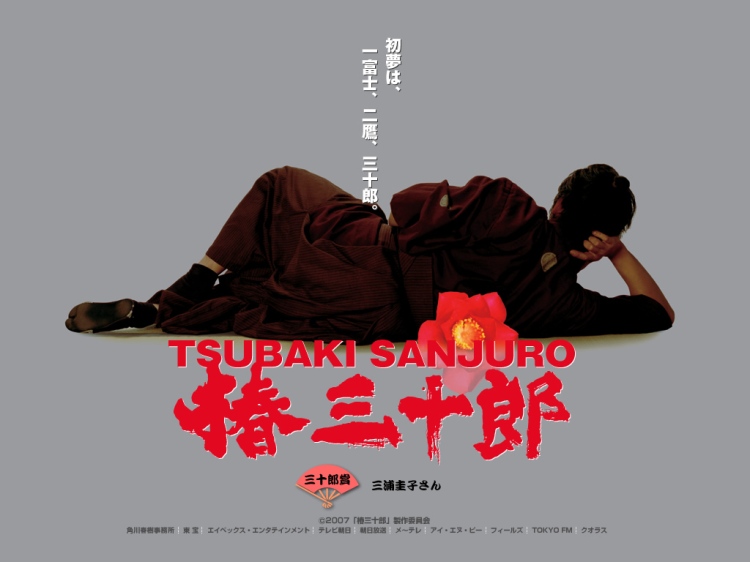
Tsubaki Sanjuro (椿三十郎, Yoshimitsu Morita, 2007)

Tsubaki Sanjiro horizontalGenerally speaking, where a film has been inspired by already existing source material, it’s unfair to refer to it as a “remake” even if there has been an iconic previous adaptation. That said, in the case of Tsubaki Sanjuro (椿三十郎), “remake” is very much at the heart of the idea as the film uses the exact same script as the massively influential 1962 version directed by Akira Kurosawa which also starred his muse Toshiro Mifune. Director Yoshimitsu Morita is less interested in returning to the story’s novelistic roots than he is in engaging with Kurosawa’s cinematic legacy.

Sanjuro is a more populist offering from Kurosawa in any case and adheres to a fairly simple plot which picks up with the hero of the previous year’s Yojimbo, still a wandering ronin living on his wits and his sword. In actuality the script was altered a little to connect the two films even though the original novel has nothing to do with Yojimbo. Anyway, the story is set in a small town in which the hotheaded young men have got a bee in their bonnets about corruption at the higher levels and have taken it upon themselves to do something about it. Unfortunately they have no idea what they’re getting themselves into and are about to make things even worse. Sanjuro duly arrives, overhears their idiocy and gives them some advice before heroically saving all their lives through cleverness. Later, when one of the young men’s relatives is kidnapped, Sanjuro decides to stay and help them sort this giant mess out before they do themselves a mischief.

Obviously, Morita uses the same script so Tsubaki Sanjuro has exactly the same plot as the 1962 film. This does lend it a slightly uncanny quality as its use of language and the structure of the script itself are much more of their own time – a fact brought out by the very theatrical performances of the only two female faces in the film who speak in very pointed and deliberate manners. That said, what Morita attempts to do is bring out even more of the ironic, dark comedy that underpins Kurosawa’s film but is very much played as background. Morita isn’t playing it as farce or as parody, but brings the same wry, almost mocking eye to the proceedings as he brings to to his contemporary satirical comedies.

Bayside Shakedown star Yuji Oda is cast in the role of Sanjuro but really of course he’s expected to play Mifune. He doesn’t have Mifune’s sheer presence and force of personality – who does? but he does a good job of adopting his wiseguy, casual grifter with a sentimental heart persona. We don’t know who Sanjuro is – he gives what is fairly obvious to be a fake name and seems to be a masterless swordsman content to travel in rags and live on the “kindess” of strangers, but you get the feeling he’s already got it all figured out and always knows the best way to handle any situation no matter how desperate it might seem.

If what Morita is trying to do is make a modern Kurosawa movie, he somewhat succeeds. Though he throws in the odd homage to the Kurosawa corpus, mostly he opts for a contemporary approach though one with an old fashioned kind of stateliness – no handheld camera here, wide and tracking shots rule the day. The score too remains in the classical jidaigeki realm with obvious call outs to Sanjuro’s own western leaning themes.

Morita himself can be something of a chameleon in the director’s chair, his style isn’t so personally defined but tailored to the project itself which can make him seem a little dull where he isn’t trying to add a layer of experimentation which is the thing which really interests him. Tsubaki Sanjuro’s experimentation is closer to mirroring – he’s not doing a Gus Van Sant Psycho style experiment, but he’s refracting Kurosawa for a modern audience raised on TV drama and idol stars. It works, to be sure, but perhaps it worked better for Kurosawa (unfair as that is to say).

Ultimately, Tsubaki Sanjuro is something of a curate’s egg. As it is intended to, the film has its generic sides in its fairly ordinary modern samurai movie aesthetic, though it never overplays these and cleverly adds in a more modern approach with a perfectly matched subtlety. Its cast of young men skew younger than in the original film making their naivety even more believable and lending weight to Oda’s performance which captures both his character’s gruff aloofness and his instant born leader abilities. Enjoyable enough in its own right, Tsubaki Sanjuro can’t reach the heights of the film which inspired it, but then perhaps it is not intended to, but simply to entertain with a familiar tale retold as broad comedy rather than mild satire.


Available with English subtitles on region free DVD in the US from Bonzai Media Corp. RSP

Unsubtitled trailer: