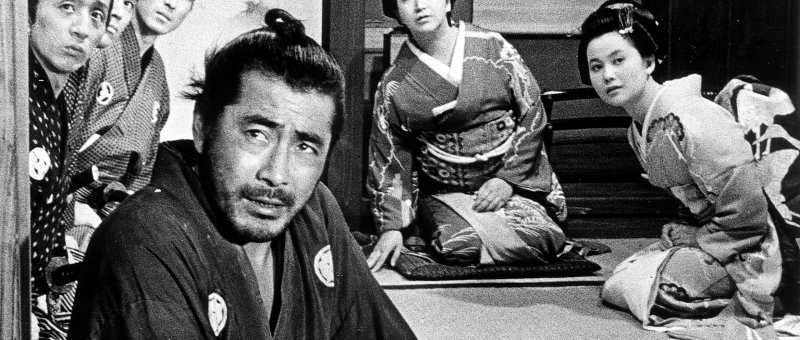
The Angry Street (怒りの街, Mikio Naruse, 1950)

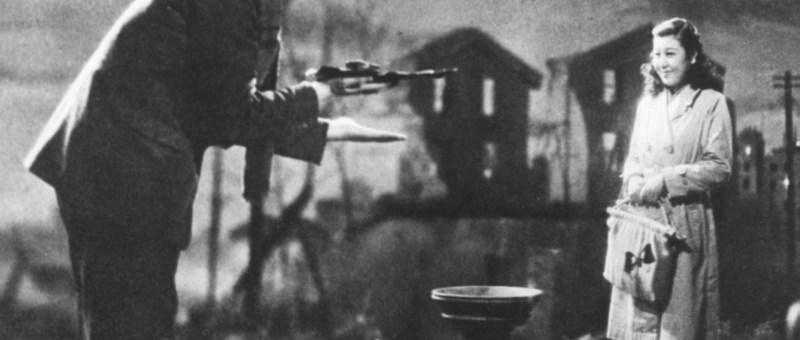
As its opening text explains, Mikio Naruse’s The Angry Street (怒りの街, Ikari no Machi) takes place in a world in which a love of justice and faith in others has been crushed under foot. That might equally apply to any other of Naruse’s films and well enough reflects his generalised philosophy that the world in which we live betrays us, but in this case it’s more than usually true as he adopts the trappings of film noir to consider the series of reversals that have taken place amid post-war chaos chief among them class and gender. 

Sociopathic student Shigetaka’s (Yasumi Hara) primary motivation is to earn money for his family, once upper middle-class but now fallen on hard times, but he’s also engaged in an act of class warfare taking revenge on the “nouveau riche” who he feels have usurped his class privilege. His chief weapon is his good looks along with his seductive charm which he puts to full use on the dance floor flirting with naive young women to whom he sells sob stories of his poverty to extort money out of them. He and his friend Mori (Jukichi Uno) have an “agreement” that what they’re doing’s alright as long as they only take advantage of the women financially rather than sexually though at this point Shigetaka seems to have little interest in that anyway insisting that women are just business to him so he little cares for their feelings. 

Their sense of class resentment is rammed home by their mocking of their classmates who have to do “humiliating” jobs to support themselves such as selling lottery tickets in the streets. Trying to get them to attend a meeting about student employment, their classmates describe them as “privileged” suggesting they may feel it’s not their problem because they don’t need to work little knowing that each of them is impoverished and dependent on exploiting women for their income.

There is however also a gender reversal in play as Shigetaka misogynistically takes on a feminised role, playing the gold digger in attempting to manipulate women, who are now in a position of power, into supporting him financially. He even tells some of them that he’s being forced into a financial marriage by his “old-fashioned” family, playing the damsel in distress and hoping that his target will swoop in to rescue him. When one of the women writes to his home after he abandons her, his grandmother is scandalised by the idea that he might have formed an attachment to a woman to whom he had not been formally introduced but equally that he might have been frequenting “effeminate” places such as dance halls. Unmanliness is something he’s accused of several times but also the tool which he uses to seduce women who are taken in by his feminine features and graceful dancing. Closely echoing Alfred Hitchcock’s Rope, it’s near impossible not to read both Shigetaka and Mori as queer coded and the relationship between them filled with homoerotic tension as Mori looks on in jealously while Shigetaka goes about his business seducing naive young women they’ll swindle together. 

A point of crisis arrives when the pair bite off more than they can chew in getting involved with a woman who is slightly older and sophisticated in her dealings with men. An independent woman, Tagami (Yuriko Hamada) claims to be a dentist but actually makes her money through smuggling and the black market if drawing her line at drugs. Shigetaka thinks he’s using her, but Mori warns him she’s really the one in charge and playing him at his own game planning to drop him once she’s got what she wanted which in this case is his youthful flesh (realistically the only thing he could possibly offer her). Tagami draws him into a wider and more dangerous world of crime than he’s equipped to deal with just as Mori receives twin blows that break the spell and encourage him to want out of Shigetaka’s schemes firstly in discovering that one of their targets, Kimiko (Mayuri Mokusho), is the sweetheart of an old war buddy, and then into running into Shigetaka’s earnest sister Masako (Setsuko Wakayama) who is the film’s de facto moral authority pulling him away from Shigetaka’s dark machinations back towards a more conventional morality. 

In a series of flashbacks, he remembers more innocent times before the war when he too sold tickets on the street and worked in a shop washing windows while going on innocent dates with Masako. The implication is that it’s his wartime service along with the world he came back to that have filled him with nihilistic cynicism while he later says that he indulges in Shigetaka’s schemes as a means of staying close to him and earning his favour. But Shigetaka is already far too corrupt, filled with class resentment over his lost privilege along with a deep-seated misogyny as a reflection of his sense of emasculation in this new world in which young women wield significant economic power. Kimiko in particular is brash and insensitive even aside from her naivety remarking on the piles of money that turn up at her home every day before virtually throwing cash at Shigetaka with seemingly no thought as to how that might make him feel even if he weren’t conning her in offending his pride and masculinity. 

Mori wonders how he can save himself if Shigetaka remains so irredeemable and is instructed by Masako that they must work together and live honestly though even she hangs on to her ideas of social class scandalised by the revelation that her mother too has begun selling things in the street, in her case knitted socks which is a fairly labour intensive activity for an incredibly small profit margin. Echoing film noir, Naruse opens and closes with scenes of the present day city teeming with life yet in a way that seems more ominous than exuberant even in the myriad dance halls where youngsters come to look for love but soon find themselves lost amid the contradictions and confusions of a rapidly changing city.


Throne of Blood (蜘蛛巣城, Akira Kurosawa, 1957)

In many ways, the underlying theme in Akira Kurosawa’s films of the 1950s is that we are incapable of knowing ourselves and are, as a forest spirit remarks in Throne of Blood (蜘蛛巣城, Kumonosu-jo), afraid to look into our own hearts and admit our darkest desires. In adapting Shakespeare’s Macbeth, Kurosawa is less interested in the pull of ambition than the insecurity that drives it along with the inability to transcend himself that precipitates the hero’s decline. 

Indeed, after Washizu (Toshiro Mifune) and his best friend Miki (Minoru Chiaki) ride into the misty forest domain of the witch-like seer who ominously turns her spinning while offering a moral lesson that neither of them heed, they sit on the ground and laugh about what they’ve heard. Yet as Washizu partly admits the old woman revealed something of himself to him in that she echoed a dream of which he was unwilling to speak. Miki asks what warrior would not want to be placed in charge of a castle, but for Washizu it’s almost a primal need to prove himself in surpassing other men. Miki, by contrast, is not so nakedly ambitious but he doesn’t really need to be because he has a son. Washizu has no heir, his line will end with him and so he has only this life to make something of his name. 

Having no heir also undermines his sense of masculinity, just as it undermines the femininity of his wife, Lady Asaji (Isuzu Yamada), who as a woman now likely too old to bear a child may fear for her position. Kurosawa styles Yamada’s face as a perfect noh mask while she delivers her lines with the intonation of noh theatre all of which lends her a fairly eerie presence which only deepens as she descends into the darkness and back out again hovering like a ghost. She is in a sense perhaps already dead if not otherwise possessed by some malignant spirit as she urges her husband on in their dark deeds like a demon on his shoulder even going so far as to present him with the spear he will use to murder his lord, the ultimate act of samurai transgression. 

Yet as Lady Asaji points out, the present lord killed the lord before him for the right to sit on the dais. When the lord comes to stay with them on a pretext of hunting while preparing to launch an attack on a potential rival, the couple are moved into a room previously inhabited by a retainer who’d tried to mount a rebellion but was defeated. He took his own life and the room is still stained with his blood which covers both walls and floor. Washizu ought to realise that this is his fate too, but deep down he wants the prophecy to be true, which it is if more in the letter than the spirit. Would he have done it if he had not met the forest spirit, or would he only idly have thought of it but never followed through? It’s not something that can be known, but his eventual failure is born more of his inability to accept this side of himself than it is the price of ambition in itself. “If you’re going to choose ambition choose it honestly with cruelty” the forest spirit later advises, and Washizu might have been more successful if had he done so earlier. 

Then again, the world he lives in is as Lady Asaji describes it a wicked one in which betrayal is an all but inevitable certainty. Washizu insists that Miki is his friend, and that making Miki’s son his heir satisfies the prophecy while binding him to him so that he cannot rebel even if he were minded to. But Lady Asaji assumes that Miki is ambitious too, suggesting that he may strike first or report his treachery in the hope of personal advancement. For the prophecy to come true, someone has to betray the lord though it need not have been either of them but there can be no trust or friendship in this world of fierce hierarchy and internecine violence. 

Both men should perhaps have realised that when they were trapped riding around the eerie lair of the forest spirit with its mists and cobwebs not to mention heaps of piled skeletons still in their armour all victims of ambition and the spirit’s false promises if also echoing the legacy of wartime folly. “Look upon the ruins of the castle of delusion” the noh chant that opens and closes the film intones, warning of illusionary riches and the price of deluding oneself along with the destruction wrought by those unable to break free of the spider’s web of human desire. 


Throne of Blood screens at the BFI Southbank, London on 21st February 2023 as part of the Kurosawa season.

Original trailer (no subtitles)

Rhapsody in August (八月の狂詩曲, Akira Kurosawa, 1991)

“People do forget everything, and quickly too” a teenage girl laments preparing to meet her half-American uncle and feeling a little awkward having been admonished by her parents for inadvertently confronting him with the realities of the wartime past. The middle generation in Kurosawa’s tri-generational tale of the legacy of warfare Rhapsody in August (八月の狂詩曲, Hachigatsu no Rhapsody) have it seems an ambivalent attitude they’re in the process of imparting to their children that views talk of the atomic bomb as almost taboo, tiptoeing around it with their newfound American relatives lest they offend them but mostly out of a desire for economic gain that reflects an early post-war mentality almost entirely alien to their Bubble-era teenage kids.

It’s the children who are keenest to learn about their past, staying with their elderly and seemingly frail grandmother Kane (Sachiko Murase) over the summer while their parents have travelled to Hawaii to investigate after receiving a letter from Kane’s long lost younger brother Suzujiro who emigrated in the 1920s and has since become a wealthy man running a pineapple plantation. The problem is that Kane had a large number of siblings, at least 11, and honestly doesn’t remember one called Suzujiro who did after all leave the country 60 years previously and was never seen again. The children, Tadao (Hisashi Igawa) and Yoshie (Toshie Negishi), think her refusal to visit him in Hawaii is partly down to a lingering resentment for the dropping of the atomic bomb which killed her husband, but as she later tells the grandchildren that was 45 years ago and she no longer has any strong feelings either way about the Americans adding only that it was all the fault of the war.

Nevertheless, it’s clear that Kane lives with a sense of loss and the continuing trauma of witnessing the flash that is expressed by the bald spot on the back of her head. As the grandchildren ask her questions she begins to reflect more on the past, remembering a younger brother, Suzukichi, who witnessed the flash with her and later had some kind of breakdown locking himself away endlessly drawing pictures of eyes that she later explains mimicked that of the flash itself. Kurosawa depicts this memory with surrealist imagery, a red sky splitting open just as Kane described exposing an eye which seemed to stare down at them. Youngest grandson Shinjiro (Mitsunori Isaki) draws such an eye on the blackboard in the study room in his grandmother’s house, an eye which continues to observe the children as they contemplate the recent past as well as an older Japan exemplified by their grandmother’s tales of the water imp living in a nearby pool who might once have saved Suzukichi’s life. 

In some ways, it’s almost as if the middle generation has been passed over. The grandchildren are very close to their grandmother and resentful of their parents, irritated by their constant references to their American relatives’ wealth with Shinjiro directly asking them why they haven’t asked how Kane has been or bothered to say hello to her before showing off photos of the Hawaiin mansion owned by Suzujiro. Kane also sets them right after deciding she’d like to visit after all, explaining that she couldn’t care less or if he’s rich or not she’d just like to see her brother. Her refusal to accept him was perhaps an expression of her own inability to make peace with the past, having literally forgotten only latterly coming to believe that Suzujiro really is her brother and wanting to reintegrate him into her life as an expression of peace between nations. 

Kane had said that Tadao’s conviction that they should avoid mentioning the bomb was illogical and ridiculous, an attitude later borne out by the unexpected arrival of Suzujiro’s half-American son Clark (Richard Gere) who speaks pigeon Japanese and is somewhat mortified by his own ignorance not having realised that his uncle must have died in the atomic bombing of Nagasaki until inadvertently tipped off by eldest grandson Tateo’s (Hidetaka Yoshioka) telegram. Clark bonds with Kane and sadly reflects on his own lack of knowledge after visiting the school where his uncle died and seeing scores of contemporary children flood into the playground where the twisted metal of a melted climbing frame serves as a memorial for the young lives that were lost. The intention is not however to provoke an apology or apportion blame only to mourn the folly of war while trying to put the past aside to ensure it never happens again.

The kids wear jeans and T-shirts with the logos of American universities on, but are determined to fix the out of tune harmonium in their grandmother’s parlour as if literarily setting the past to rights. The song they play sings of a red rose in a field, a rose that Shinjiro later sees near the shrine during the memorial service for the bombing that comes to resemble Kane in the closing frames as she charges through the rain with her blown umbrella while her children and grandchildren chase after her as the ants had trailed the rose. “People will do anything just to win a war,” Kane admonishes her son, “sooner or later it will be the ruin of us all” reminding him that dropping the bomb didn’t stop people killing each other, even 45 years later war continues to ruin people’s lives. Like the rose “blossoming in innocence” she stands for peace and mutual compassion amid an expressionist storm of fear and resentment.


Rhapsody in August screens at the BFI Southbank, London on 19th & 25th February 2023 as part of the Kurosawa season.

Original trailer (no subtitles)

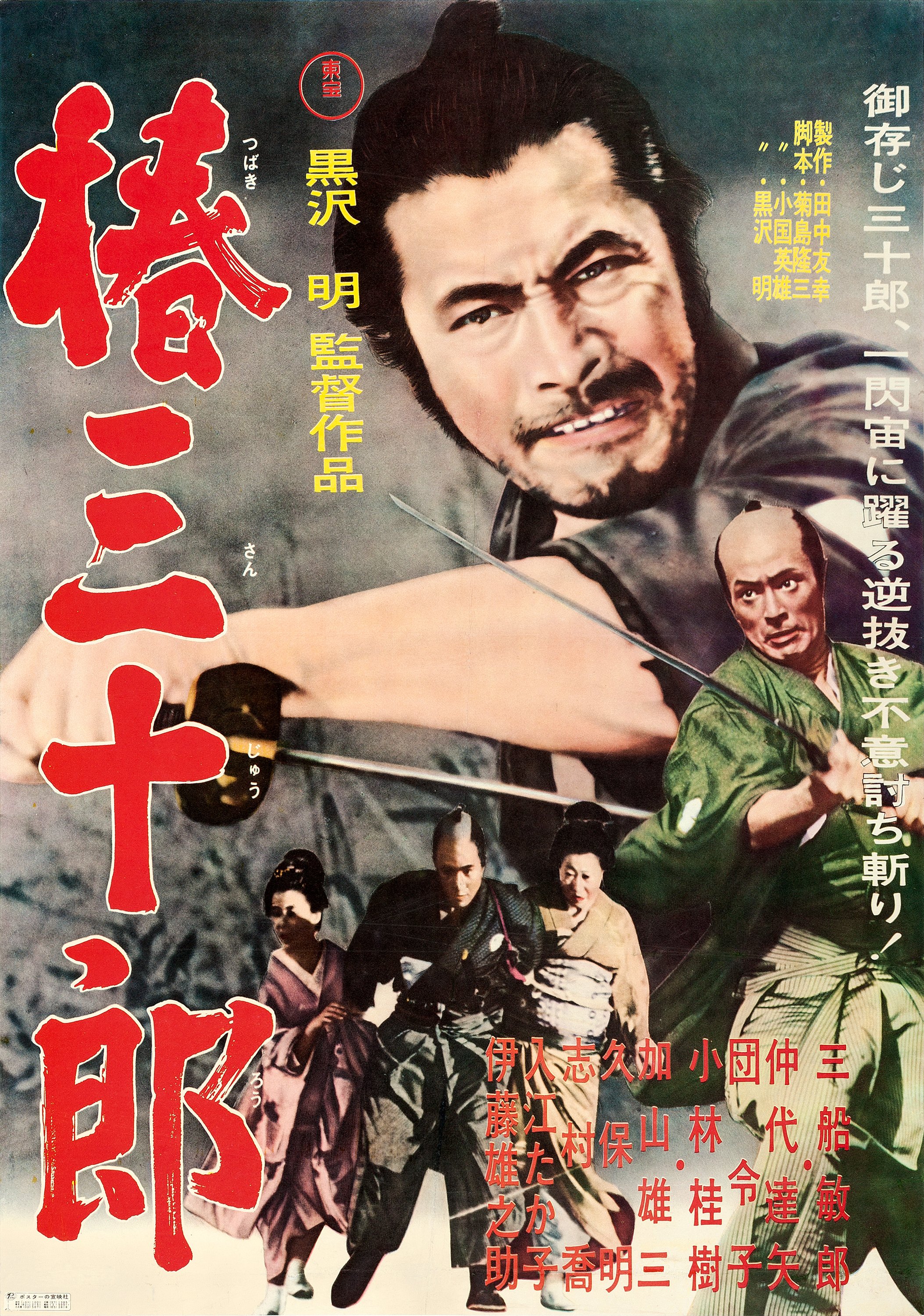
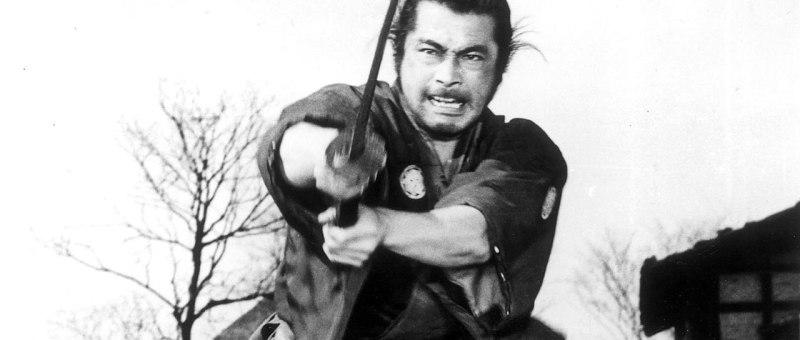
Sanjuro (椿三十郎, Akira Kurosawa, 1962)

Adapted from a novel by Shugoro Yamamoto, Akira Kurosawa’s Yojimbo had taken place in a world of collapse in which the foundations of the feudal order had begun to crack while the disruptive allure of hard currency had left ordinary people at the mercy of gang intimidation in place of exploitative lords. A quasi-sequel or perhaps more accurately termed a companion piece, Sanjuro (椿三十郎, Tsubaki Sanjuro) by contrast, takes place in a world that should be peaceful and orderly but suggests that the corruption was there all along and tolerated to the extent of being coded into the system. 

The accused man, Mutsuta (Yunosuke Ito), says as much at the film’s conclusion explaining that he meant to deal with the matter “more discreetly” after amassing incontrovertible evidence he could he could offer to his superiors in the capital if only his hot-headed nephew and the idealistic young samurai with him hadn’t jumped the gun by naively thinking they could expose conspiracy by force of will. This time around, the wandering ronin who gives his name as Sanjuro (Toshiro Mifune) finds himself adopting a fatherly position trying to convince the youngsters to think before they act. Overhearing their conversation, he explains to them that they have mostly likely been misled, Mutsuta is innocent and his attempt to warn them off well-meaning while the superintendent Kikui (Masao Shimizu) is the real villain and almost certainly intends to have the lot of them bumped off before they figure out what’s really going on. 

Unlike Yojimbo, Sanjuro takes place entirely within samurai society which ought to be an orderly place where everyone follows the same code and does their best to act honourably. This sense of stability is reflected in Kurosawa’s composition which leans closer to the classicism of the historical drama than the windswept vistas of the lonely ghost town in Yojimbo, and by the contrast so often drawn between the wandering ronin and the young samurai who are shocked by his rough way of speaking and wilful rejection of the politeness with which they have been raised. As a captured prisoner points out, Sanjuro has a sarcastic manner and a tendency to insult where he means to praise which further fuels the doubt some have in him, unsure whether they can really trust this “outspoken and eccentric” drifter fearing he will simply sell himself to the highest bidder and betray them. Mutsuta sympathises with this to some degree, forgiving the boys for having thought him a villain but lamenting that his long face has often got him into trouble. They thought he was the bad guy because he looked like one and trusted Kikui because he looked honest, laying bare the childish superficiality soon corrected by the well honed instincts of the veteran Sanjuro. 

It’s this superficiality that also leads them to dismiss the advice of Lady Mutsuta (Takako Irie) as “hopelessly naive” while only Sanjuro can see that she has a full grasp of the situation at hand and accepts her admonishment that he has the “bad habit” of killing too easily when another solution may be available. When the boys catch one of Kikui’s henchmen they suggest killing him because he’s seen their faces, but Lady Mutsuta decides to invite him into their home, assuring him he won’t be harmed and even giving him one of their fancy kimonos to wear. The man seems to have been won over by their hospitality, sometimes emerging from the cupboard where he is (voluntarily) imprisoned to offer a word of advice along with a defence of Sanjuro having observed him and figured out that he is a good man with an admittedly gruff manner that makes him a bad fit for conventional samurai society. “He would find it too confining here,” Mutsuta agrees, “he wouldn’t wear these fine garments or be a docile servant of the clan.”

In any case, the film doesn’t particularly reject samurai society only suggest that if you’re going to live within it you should follow the rules and if you can’t you should follow your own path as Sanjuro has been doing in a sense “freed” by his ronin status serving no master but himself. Lady Mutsuta had a point when she said that he glistened like a drawn sword, something he too concedes after facing off against his final foe, Heibei (Tatsuya Nakadai), whom he describes as much like himself another drawn sword in a society in which direct violence is inappropriate as the explosive spray of blood on Heibei’s all too matter of fact defeat makes plain. “The sword is best kept in its sheath” she reminds him, she and her husband both suggesting that this world is ruled by intrigue which is why Mutsuta hoped to handle the corruption “discreetly” though he won’t condemn the young men for their desire to enforce the rules of their society and stand up against corruption and injustice. Their rebellion has accidentally led to unnecessary deaths because of their youthful hot-headedness and tendency towards the simplistic solution of violence, but all things considered it has worked out well enough for all concerned. And so, his work done, Sanjuro is left to wander telling the boys not to follow him because he too is a disruptive and dangerous a presence in this codified world of peace and order in which a sword loses its value the moment it is drawn.


Sanjuro screened at the BFI Southbank, London as part of the Kurosawa season.

Original trailer (English subtitles)

Yojimbo (用心棒, Akira Kurosawa, 1961)

“You’re not a bad guy after all” a previously hostile inn owner later concedes, finally seeing the method in the madness of a cynical wanderer who appears to take no side but his own but may in his own way be quietly fighting for justice in a lawless place. A samurai western set in an eerie ghost town beset by feuding gangsters whose presence has destroyed the local economy and lives of the frightened townspeople, Yojimbo (用心棒) subversively suggests that the world’s absurdity is best met with nihilistic amusement and healthy dose of irony. 

When the confused hero who later gives his name as Sanjuro (Toshiro Mifune) wanders into town, he is surprised to see a stray dog running past him with a human hand in its mouth. This is indeed a dog-eat-dog society in which a petty dispute between gang members has forced the townspeople to hide behind closed doors. The streets are empty and silent until the town’s only policeman darts out and requests a “commission” for recommending Sanjuro offer his services as a bodyguard to either of the two factions suggesting that brothel owner Seibei (Seizaburo Kawazu) is on the way out and upstart Ushitora (Kyu Sazanka) is the best bet. But Sanjuro does not particularly like the look of Ushitora’s gang which as is later revealed is largely staffed by desperate disreputables, convicts, and murderers. 

Sanjuro’s response is to laugh. He makes his money by killing and there are lots of people in this town the world would be better off without. He plays each side off against the other, knowing that they each need a man of his skill to break the stalemate but is rightfully mistrustful of both. First approaching Seibei, he overhears his cynical wife Orin (Isuzu Yamada) suggesting that they agree to his high fee but kill him afterwards so his services will effectively be free. Sanjuro’s plan is to antagonise both sides so they wipe each other out, freeing the town of their destructive influence. With violence so present on the streets, the townspeople are afraid to leave their homes and the only guy making any money is the undertaker. 

The trouble also means they can’t host the local silk fair which usually stimulates the town’s economy demonstrating the counter-productivity of the gangsters’ dispute in that no silk fair means no delegates and empty gambling rooms meaning the gangsters aren’t making any money either. Yet it’s also clear that it’s gambling that has corrupted the town and is disrupting the social order. A symptom of an economical shift, gambling offers a new path to social mobility amid the fiercely hierarchal feudal society in which the possibility of distinguishing oneself in warfare has also disappeared. Thus the young man Sanjuro encounters on the way into town argues with his father, rejecting the “long life of eating gruel” of a peasant farmer claiming he wants nice clothes and good food and has chosen to burn out brightly. Kohei (Yoshio Tsuchiya), a young father has also succumbed to the false hope offered by the gambling halls and lost everything, including his wife, to a greedy sake brewer turned silk merchant and local mayor thanks to his enthusiastic backing of Ushitora. 

“I hate guys like that” Sanjuro snarls, but it seems he also hates petty gangsters and everything they represent. “This town will be quiet now” he remarks before leaving, as if stating that his work here is done and the real purpose of it was clearing out the source of the corruption rather than taking advantage of the town’s plight for his own material gain. Yojimbo quite literally means bodyguard and is the service Sanjuro offers to each side interchangeably, but Sanjuro isn’t above betraying his clients or playing one off against the other. His final foe, Ushitora’s brooding brother Unosuke (Tatsuya Nakadai), wanders around with a pistol in his kimono as if to say the age of wandering swordsmen has come to an end but in the end is exposed as complacent in his superior technology, easily neutered by Sanjuro who even gives the gun back to him as if no longer caring whether he lives or dies merely amused to find out the answer much as he had been standing on a bell tower watching the factions pointlessly tussling below. Masaru Sato’s surprisingly cheerful score seems to echo his state of mind, seeing only humour in the absurdities of the feudal order and the futility of violence while Kurosawa’s camera roves around this windswept wasteland as Sajuro kicks the gates of hell shut and prepares to move on to the next crisis in a seemingly lawless society.


Yojimbo screens at the BFI Southbank, London on 18th & 23rd February 2023 as part of the Kurosawa season.

Original trailer (English subtitles)

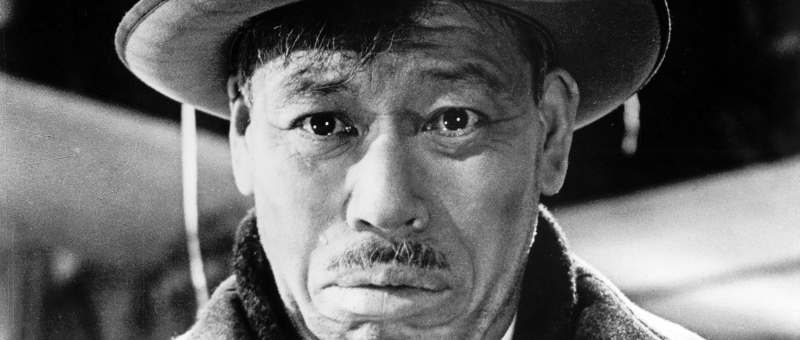
Ikiru (生きる, Akira Kurosawa, 1952)

The Japanese economy may have embarked on a path towards recovery thanks to the stimulus of the Korean War, but in the early 1950s many might have thought it too soon to ask if survival in itself was enough yet this is exactly what disillusioned civil servant Kenji Watanabe finds himself asking after receiving the devastating news that he has advanced stomach cancer and year at most to live. “To live” is apt translation of Akira Kurosawa’s intensely moving existential melodrama, Ikiru (生きる), which tackles the compromises of the salaryman dream head on along with those of the contradictions of the sometimes dehumanising post-war society. 

As the opening voice over reveals to to us, Watanabe (Takashi Shimura) is man who died long ago or perhaps has never truly been alive. In some senses, he is nothing more than an embodiment of the seal he uses to stamp documents day in day out, a mere piston in an ever turning machine of relentless bureaucracy. A young woman, Miss Odagiri (Miki Odagiri), working in the Public Affairs department loudly reads out a joke someone has written about their boss, Watanabe, who has taken not a single day’s holiday in 30 years suggesting that it’s less that he fears city hall will grind to a halt without him than they’ll suddenly figure out city hall has no need of him at all. The irony is city hall does indeed grind to a halt in Watanabe’s absence as he, unthinkably, fails to turn up for work for days on end as the papers pile ever higher on his desk. “Nothing moves here without his seal” one of the workers admits, bewildered by this sudden break with protocol while salivating over its implications in the possibility that Watanabe’s chair may soon be empty. 

Yet Watanabe’s crisis is that he’s realised he’s wasted his life on a pointless bureaucratic career that’s done little more than keep a roof over his head. Even the roof is a fairly modest one and it’s clear that his grown up son Mitsuo (Nobuo Kaneko) considers him to be a stingy old miser, unable to understand why he’s never spent so much as a penny on himself and lives in a kind of self-imposed austerity. Perhaps to Watanabe this is what constitutes properness. He’s done everything he was supposed to do, got a steady job at city hall and eventually became the head of department, but now he feels foolish and lonely. Mitsuo and his wife seem to resent him and talk openly about their plans to use their inheritance, along with Watanabe’s retirement bonus, for a downpayment on a “modern” home the polar opposite of the pre-war townhouse where the family continue to live. 

Mitsuo and Kazue (Kyoko Seki) are perhaps emblems of the increasingly empty consumerism of the post-war era, emotionally disconnected from Watanabe and seeking only the flashy and new. Miss Odagiri, the young woman from work, immediately says that she’d love to live in a home like Watanabe’s rather than the crowded multiple occupancy flat she currently inhabits with her family. Cheerful and outgoing, Odagiri is on the other hand a symbol of a new generation that wants something more out of life than simple material comfort and might even be willing to trade it for a small amount of happiness. Having worked at city hall for all of 18 months, she decides that she just can’t take it anymore and is quitting to get a job in a factory making toy rabbits that she says allow her to feel as if she’s making friends with all the babies in Japan. 

To that extent, Watanabe is himself also a baby craving Odagiri’s company admitting that he envies her youth and vitality in realising he squandered his own and will never get it back. How uncomfortable it must be for her, their final meeting in a restaurant sandwiched between a loving couple and teenage girl’s birthday party as Watanabe, gaunt and shrunken, claws at the air and begs her to help him live. Yet even within the grotesquery the tone is ironic, the strains of “Happy Birthday” accompanying Watanabe down the stairs as a the high school climbs up to meet her friends signalling his (re)birth as a man with purpose and determination. Just as Odagiri had found meaning in the rabbit, Watanabe finds it deciding to get a playground built over a post-war swamp in the slums filled with raw sewage and mosquitos that left the local children ill. 

Yet children’s parks aren’t particularly profitable which is presumably why the petition to build one had been kicked all round city hall in the infernal wheel of bureaucracy in which Watanabe too is trapped. “You call this democracy?” one of the women bringing the petition asks, taking the clerk to task complaining that all they do is fob them off insisting it’s someone else’s responsibility to help while determined only to guard their own turf. “You’re not supposed to do anything at city hall” someone ironically adds, “the best way to protect your place in this world is to do nothing at all”. Watanabe did nothing at all for 30 years and it got him nowhere, his dedication to his job disrupting his relationship with his son though Watanabe is ironically one of the most emotional men and engaged fathers seen on screen in the post-war era. 

After his death, in the park he helped build for which the deputy mayor has taken credit, his colleagues put him on trial at the wake trying to work out why he did it and whether or not he even knew he was dying seeing as he told no one close him not even the son whom he felt he could no longer trust. They deny his role while both praising and condemning his passion as somehow improper, disrupting the dispassionate rhythms of the bureaucratic machine with human emotion. It was only coincidence, they say. The deputy mayor wanted an election and the yakuza wanted to turn the swamp into a red light district. “Did he think he could just build a park?” someone adds, bemused by his effrontery as a man from Public Affairs straying into the Parks Department’s territory. You have to protect your turf after all. Finally moved by Watanabe’s last ditch bid to make his life mean something, to feel alive and know he has lived, the the drunken salarymen, all but one who retreats to look at Watanabe’s photo above the altar, swear to follow his example. 

But of course the bureaucratic wheel keeps turning, another dangerous sewage problem diverted to another department continuing the literal pollution of the capitalistic post-war society. A kind of ghost story, Kurosawa lights Shimura from below, shadows cast across his gaunt face even by his “rakish” new hat while his huge eyes have a somehow haunted, grotesque quality filled with hungry desperation. Yet it’s to childhood that Watanabe eventually returns, “perfectly happy” sitting on a swing singing a song from his youth about the price age while surrounded by snow and at last painfully, absurdly alive. 


Ikiru screens at the BFI Southbank, London on 4th & 15th February 2023 as part of the Kurosawa season.

Original trailer (English subtitles)

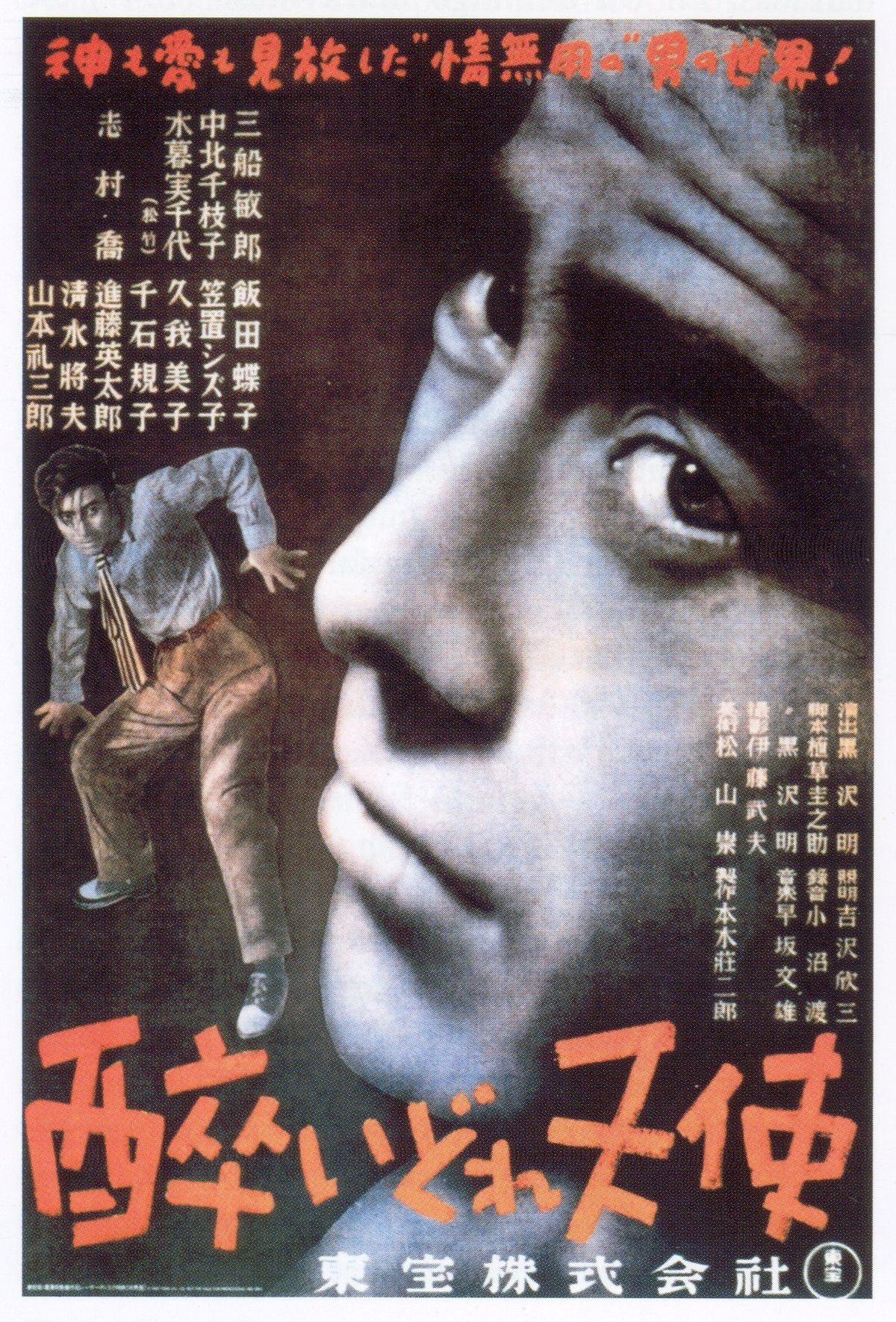
Drunken Angel (酔いどれ天使, Akira Kurosawa, 1948)

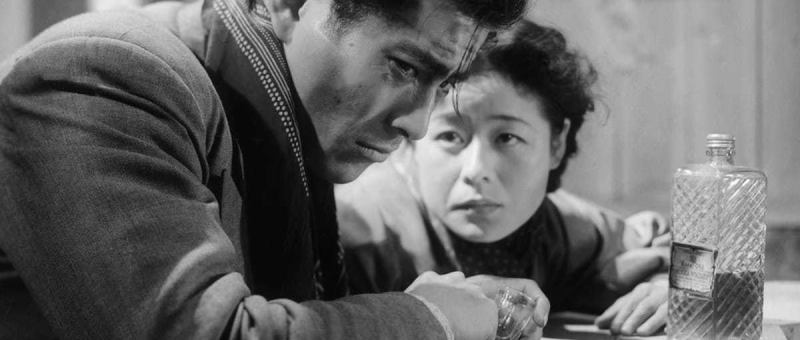
A gruff yet well intentioned doctor does his best to cure the ills of post-war Japan in a rundown slum on the edge of a fetid swamp in Akira Kurosawa’s noir tragedy, Drunken Angel (酔いどれ天使, Yoidore Tenshi). The doctor is most obviously the drunken angel of the title though it could equally apply to the unhappy yakuza he tries so hard to redeem whom most agree is not suited to that kind of life and trapped by the feudalistic thinking of the pre-war past.

Matsunaga (Toshiro Mifune) is the big man around town, but jaded physician Sanada (Takashi Shimura) sees straight through him. “He acts tough and swaggers around but I know in his heart he’s incredibly lonely,” Sanada tells his assistant, Miyo (Chieko Nakakita), a young woman he took in to help her escape the clutches of the violent yakuza ex who left her with syphilis. Miyo bemoans Sanada’s terrible bedside manner and tendency to bully his patients but praises his dedication and remarks that few doctors go as far for those under their care as he does especially ones like these who don’t often have the money to pay. This is a little ironic given Matsunaga’s original objection that he doesn’t trust doctors because it’s not in their best interests to cure you, something which Sanada jokingly acknowledges while expressing the futility he feels in the face of the mass sickness that confronts him. 

When Matsunaga first comes into his office, Sanada remarks that’s its not just his lungs that are sick, he’s sick to the core. But still he seems to think that Matsunaga can be saved, not just physically but spiritually redeemed if only he can coax him away from the yakuza underworld. Matsunaga is suffering from tuberculosis, a common disease of the post-war era and closely linked to the squalid conditions in which he lives which are themselves symbolised by the swamp in the centre of town onto which Sanada’s clinic backs. Sanada tries to warn the local children not to play in it because of the risk of typhus not to mention the mosquitos it attracts but the kids don’t really listen to him and shout back that he’s “just a drunk”. Yet the swamp represents a world upside-down, the neon sign for the No. 1 cabaret bar constantly reflected in its bubbling waters while as the film opens we see a trio of sex workers preparing to head into the red light district and a pair of petty thugs fighting while a young man plays Spanish guitar on the ruins of a bomb damaged building. 

It’s as if it were this world that is slowly consuming Matsunaga, an old-school yakuza who insists “we still believe in things like honour and loyalty” certain that the big boss will side with him against the returned upstart Okada (Reizaburo Yamamoto), Miyo’s yakuza ex, even as Sanada tells him it’s money that matters and Matsunaga no longer makes any. Everyone tells him that he already looks like a ghost, his appearance increasingly gaunt in his parallel decline as the illness takes hold and he begins to lose his status to Okada only to overhear his boss call him an “amateur” that he was only keeping around as a potential sacrifice. In the end, Matsunaga is too good for this world. Naively believing in things like honour and loyalty which no longer mean anything in the dog-eat-dog post-war society he is left with nothing other than a nihilistic bid for vengeance and a desire to repay Sanada’s faith in him if only in the most ironic of ways. 

Like Matsunaga, Sanada sometimes says the opposite of what he means claiming that he doesn’t care what happens to Matsunaga but is determined to wipe out the TB inside him to stop it spreading it to others. He’s on a mission to “sterilise this contaminated town” by eradicating the twin threats of disease and the yakuza, calling Matsunaga a coward for failing to face his fear and loneliness succumbing to the quick fixes of his hedonistic yakuza lifestyle. He’s not perfect either, a doctor who drinks his medical ethanol supplies and berates his patients when he them catches out them out drinking when he told them not to, but is also very at home with who he is and doing his best with it. His disappointment in Matsunaga is mainly in his swagger, the false bravado that masks his human frailty and unwillingness to face his fear of death which manifests itself in a hauntingly expressionistic dream sequence. Using silent cinema composition and canted angles Kurosawa conjures a world of constant uncertainty amid the vagaries of the post-war society in which the only sign of salvation is a drunken doctor and his “rational approach” to the sickness of the age.


Drunken Angel screens at the BFI Southbank, London on 2nd & 10th February 2023 as part of the Kurosawa season.

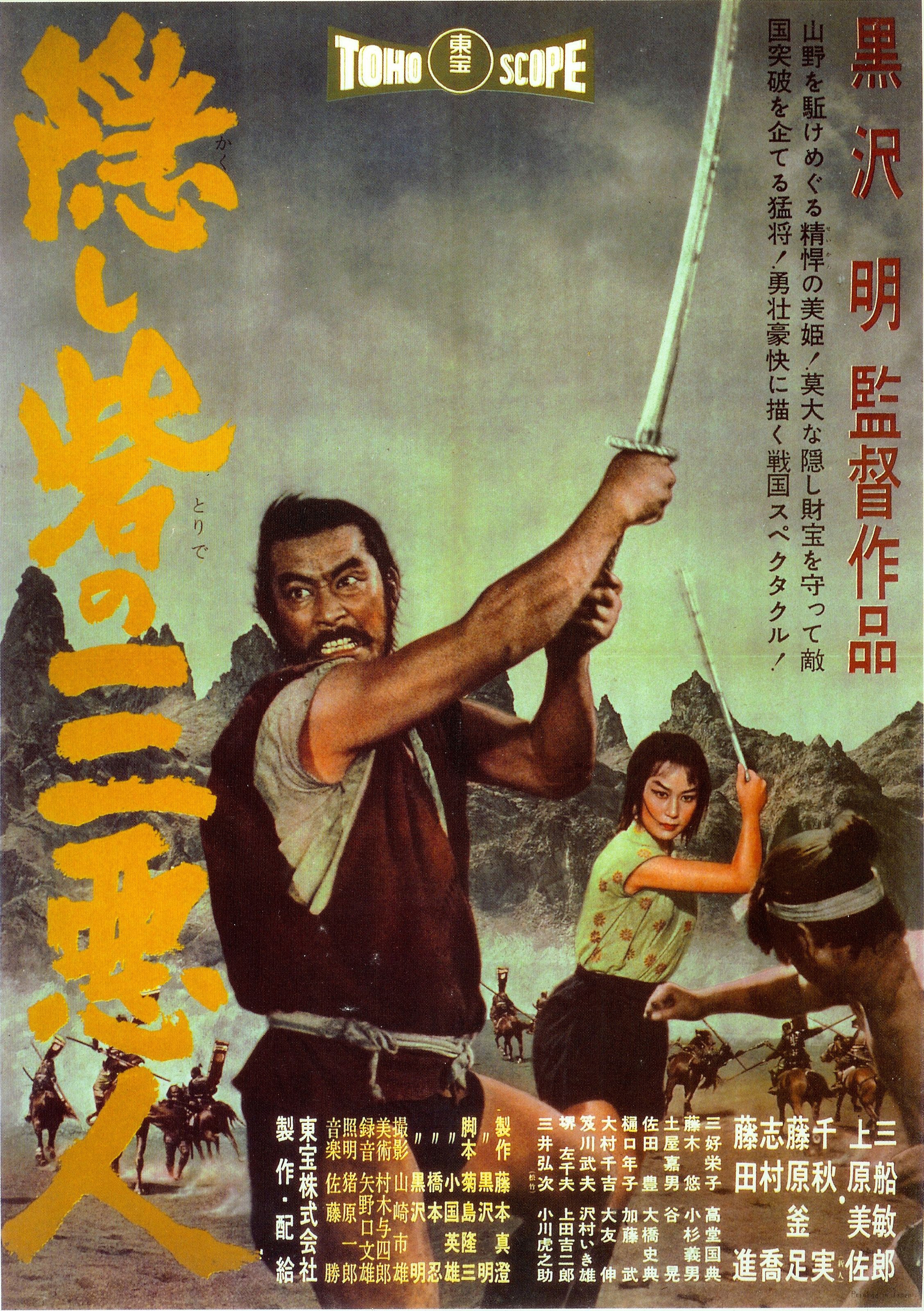
The Hidden Fortress (隠し砦の三悪人, Akira Kurosawa, 1958)

“Your kindness will harm you” a well-meaning retainer advises his charge, but in the end it is her kindness which saves her along with numerous others in Akira Kurosawa’s Sengoku-era epic, The Hidden Fortress (隠し砦の三悪人, Kakushi Toride no San Akunin). Largely told from the point of view of two bumbling peasants trying to get rich quick by exploiting the hierarchal fluidity of a time of war, the film nevertheless cuts against the grain of the democratic era in advocating not so much the destruction of the class-bound feudal order as benevolent authority. 

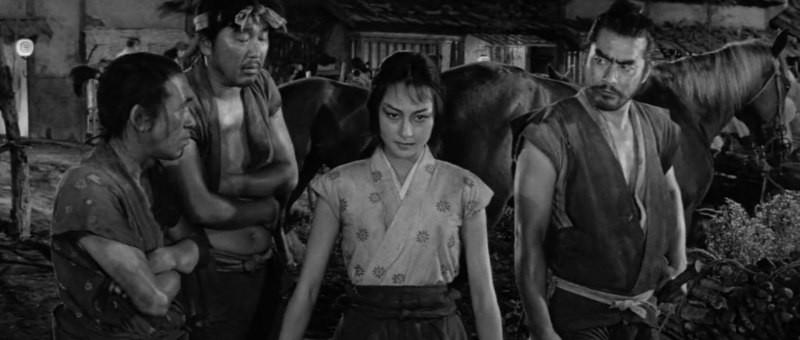
This can quite clearly be seen in the dynamic figure of displaced princess Yuki (Misa Uehara), the successor of her routed clan protected by a hidden fortress in the mountains which she must eventually leave. Her female servant laments that her father raised her as a boy which has given her a haughty and dominant manner at odds with the polite submissiveness usually expected of upperclass women. While often exerting her authority, she is otherwise uncomfortable with the uncritical servitude of her retainers, chief among them the talented general Makabe (Toshiro Mifune) who sacrificed the life of his own sister, allowing her to be executed in Yuki’s place buying them some time. “Kofuyu was 16. I am 16. What difference is there in our souls?” she asks, yet even if she believes their souls are equal she is not quite so egalitarian as to forget her position or the power and privilege that comes with it. 

Nevertheless, hers is an authority that is tempered by compassion and in the end chosen. Her salvation comes in speaking her mind to an enemy retainer, Tadokoro (Susumu Fujita), who has been savagely beaten by his own lord for losing a duel with Makabe who, to the mind of some, humiliated him with kindness in refusing to take his life leaving him to live in defeat. Yuki says she doesn’t know who is stupider, Tadokoro or his lord, for never would she punish a man in such a way simply for losing to an enemy. She tells him that there is another way, and that he need not serve a lord who does not serve him leading Tadokoro to defect and choose to follow her instead. 

She also inspires confidence in a young woman she insists on redeeming after discovering that she is a former member of the Akizuka clan sold into sexual slavery after being taken prisoner by the Yamane. Kurosawa presents the girl with a dilemma on realising that the mysterious woman who saved her is the fugitive princess, knowing that she could betray her and pocket the gold, but finds her resolving to serve Yuki all the more. In a moment of irony, we learn that the girl was bought for five silver coins, the same amount of money a wealthy traveller offers for Makabe’s horse, but displeases her master in refusing to speak or serve customers. For Yuki he offers gold, though withdraws on being told that she is mute. Knowing that she would be unable to disguise her speech or accent which would instantly give her away as a haughty princess, Makabe convinces her to stay silent though as she tells him he cannot make her heart mute too. 

Even the peasants, oblivious to her true identity, view Yuki as part of the spoils insisting that they should be entitled to a third of her too and at one point preparing to rape her only to be fought off by the rescued girl. “We can rely on their greed” Makabe had said, knowing that their material desires make them easy to manipulate and that their loyalties are otherwise fickle. Matashichi (Kamatari Fujiwara) and his friend Tahei (Minoru Chiaki) sold their houses in their village to buy armour in the hope of achieving social mobility through distinguishing themselves in war, but have largely been humiliated, robbed of their armour, mistaken for captured members of the enemy, and forced to dig the graves of others. They pledge eternal friendship but their bond is continually disrupted by the promise of monetary gain. They fall out over a moral quandary, one willing to plunder the body of a fallen soldier and the other not, while even on reuniting squabbling about how to divide the money first deciding it should be equal and immediately disagreeing as soon as they get their hands on it. At the film’s conclusion it rests on Yuki to play mother, telling them that they must be good and share the boon she’s given them equally without complaint each then too only quick to be generous insisting that the other can keep it. 

The implication is still, however, that Matashichi and Tahei should return to their village to live as peasants while Yuki assumes her place in a castle no longer hidden as its ruler. Order has returned and the old system remains in place, all that changes is that this is now a compassionate autocracy ruled by a benevolent lord who views her subjects lives as equal to her own yet not perhaps their status. Where it might prompt Tadokoro to conclude that he need serve no lord at all for there should be no leaders only equals, the film concludes that a leader should be just and if they are not they should not be followed. Then again, the disagreement between firm friends Matashichi and Tahei is ended when they each have enough and no longer find themselves fighting for a bigger slice of the pie content in the validation of their equality. As Makabe puts it, heavy is the head that wears the crown. Yuki’s suffering is in the responsibility of rebuilding her clan though she does so with compassion and empathy ruling with respect rather than fear or austerity. Kurosawa utilises the novel scope format to hint at the wide open vistas that extend ahead of the peasants as they make their way towards the castle in search of gold only to leave with something that while more valuable may also shine so brightly as to blind them to the inherent inequalities of the feudal order. 


The Hidden Fortress screens at the BFI Southbank, London on 20th & 27th January 2023 as part of the Kurosawa season.

One Wonderful Sunday (素晴らしき日曜日, Akira Kurosawa, 1947)

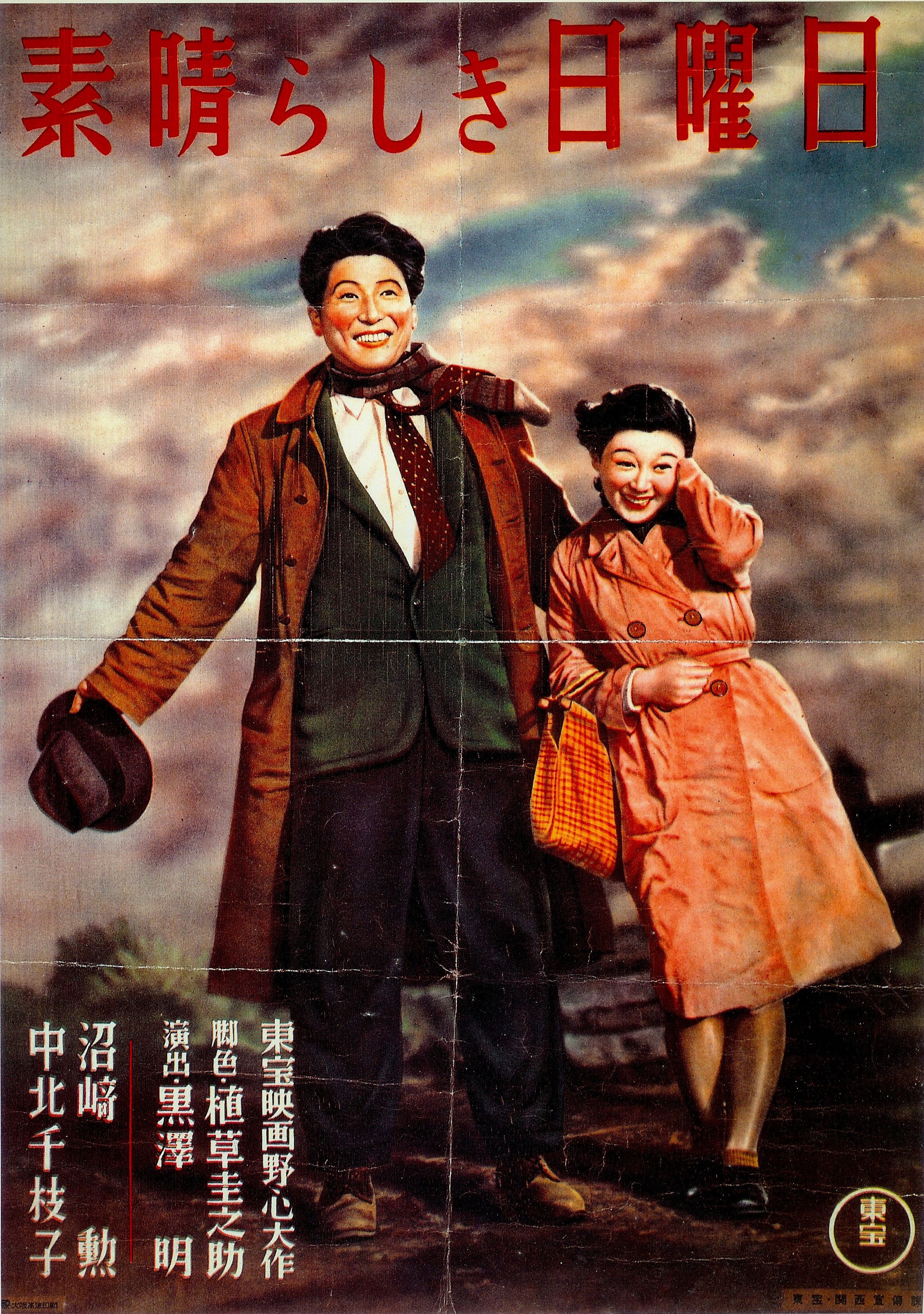
A young couple attempt to have a nice day out in Tokyo for only 35 yen but eventually discover something much more valuable in Akira Kurosawa’s surprisingly upbeat voyage through the backstreets of the post-war city, One Wonderful Sunday (素晴らしき日曜日, Subarashiki Nichiyobi). Though it may begin with frustration and progress to abject despair, the film allows its dejected heroes to find renewed hope for the future in the ashes of their defeat if only through the power of make-believe. 

Yuzo (Isao Numasaki) and Masako (Chieko Nakakita) are a young(ish) couple who’ve been together since before the war but are unable to marry because their precarious financial situation prevents them from finding a home in which they can live together. Though they are each in full employment, Masako currently lives with her sister and Yuzo with a friend. They can only spend Sundays together, but this particular Sunday Yuzo is fulled with frustration and resentment. He has only 15 yen, not much of a date as he tells Masako with irritation explaining that she’s had a wasted journey. She reveals that she has 20, but Yuzo has his male pride and is reluctant to take “a woman’s money” while internally humiliated not to be able to take her out on the town. Just before she had arrived, Yuzo had stared at an abandoned cigarette butt on the pavement. His desire soon overcame his shame. He picked it up and smoked it, only for Masako to bat it out of his hand as if insisting that he’s better than that. 

For her part, Masako is defiantly upbeat. Perhaps she’s putting on a brave face for Yuzo, but does her best to buoy his spirits so they can have a nice day together. It may be her only nice day all week. While she looks forward, he cannot move beyond the dissatisfying present. Masako begins by suggesting they check out a show home advertised on a billboard as a new kind of residence which is cheaper to build and available for only 100,000 yen for the first 100 buyers. She imagines how their life might be together in this space, while Yuzo merely sulks in the corner and points out the shoddiness of the build amid declining modern standards. It’s advertised as affordable, but they can’t afford it. Meanwhile, another man wanders in with a woman who is clearly his mistress. She exclaims that the place is a dump, “I hate matchbox houses”, while he agrees that it’s cheap for a reason and you get what you pay for. Presumably he already owns a home where his wife and family live and is about to drop a small fortune on a discreet love nest while his mistress, not unreasonably, attempts to haggle her way up to something a bit more fancy. Yuzo knows he won’t ever be able to afford even this “inexpensive” home that a wealthy man disdains as not worthy of his bit on the side. They’ve just come from seeing a crummy flat a few streets away which Masako asks directions to only to be put off by the doorman who warns them that the flat isn’t even really habitable and the landlord is heartless but they couldn’t afford that either even on the assumption they would both keep working (which depending on Masako’s job might not possible once she marries).

The landscape around them is in ruins. Yuzo and Masako wander through a bombed out city not yet ready for reconstruction looking for somewhere to stay out of the cold without eating into their 35 yen. He wants to give up and go home, but she convinces him to attend a concert of the music they heard on their first date before the war only when they get there all the cheaper tickets have been bought up by touts who sell them on at 50% markup. Beaten up for challenging the touts’ uncompromising cynicism, Yuzo hits rock bottom returning to his flat in a rundown tenement where a woman mopping the corridor gives Masako serious side eye. Frustrated, he tries to pressure her into premarital sex, her rock bottom coming a few minutes later when she firstly leaves in outrage and then returns as if admitting that their situation will never improve. 

“The war destroyed that dream” Yuzo had said of Masako’s attempt to rekindle his hopes for the future in the plan they made to open a cafe together after they married, but the reality of their mutual defeat finally seems to inspire defiance in the face of the world’s hostility. On their journey through the city, they’d encountered a ragged street kid who thought them fools after they refused his offer of ten yen for one of their rice balls and simply gave it to him out of human kindness. Yuzo felt himself a fool after trying to visit an old friend who’s done well for himself with a swanky cabaret bar only to be rebuffed and see his own image reflected in a mirror with his threadbare overcoat and battered hat juxtaposed with the image of a fine young couple eyeing him with disdain and suspicion. In the end Masako can only appeal to us, breaking the fourth wall in a moment reminiscent of Peter Pan asking us to clap if we believe in fairies as she tries to revive Yuzo’s sense of naive possibility to conduct an unfinished symphony of their imagined life together in a happier future of post-war Japan. Refusing to give in to their baser instincts, to become cynical and selfish or else simply to give up, this wonderful Sunday does seem to have given them a childish sense of hope that better days are on their way and until then there’s always next week. 


One Wonderful Sunday screens at the BFI Southbank, London on 3rd & 15th January 2023 as part of the Kurosawa season.

The Big Boss (暗黒街の顔役, Kihachi Okamoto, 1959)

By 1959, Japan was well on the way towards economic recovery but this transitionary period brought with it its own dilemmas and particularly for those whose main line of business had in a sense depended on instability and desperation. The first of Kihachi Okamoto’s early crime capers, The Big Boss (暗黒街の顔役, Ankokugai no kaoyaku) finds the yakuza at just this moment of crisis, prescient in a sense in perhaps prematurely implying that post-war gangsterdom was already on its way out. 

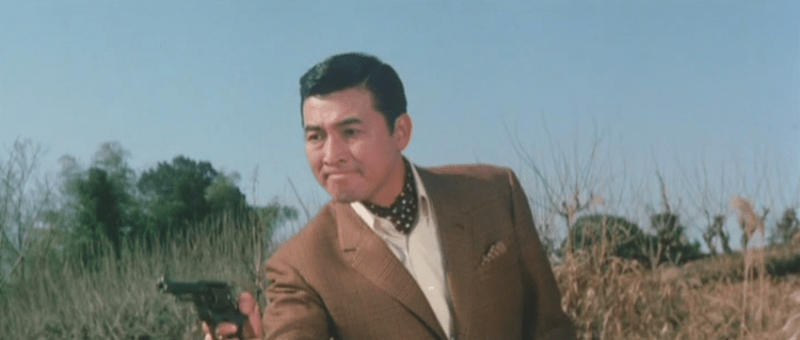
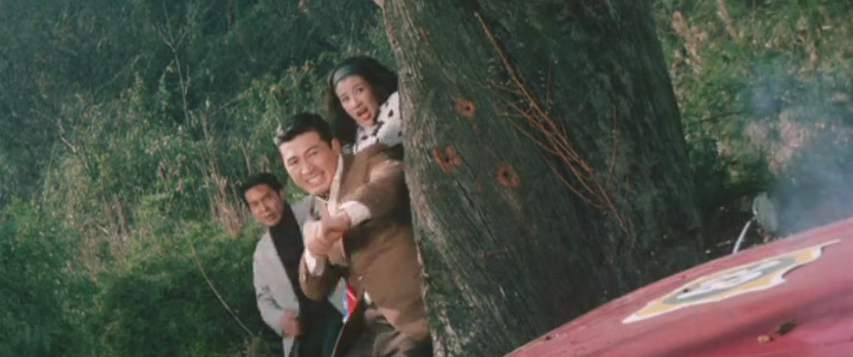
The film opens, however, with a piece of yakuza thuggery as a mysterious man guns down an industrialist before barreling down the stairs and into a waiting car occupied by getaway driver Mineo (Akira Takarada) who is inconveniently spotted by a passerby, 16-year-old ramen restaurant waitress Kana (Rumiko Sasa). As we discover, Mineo is the younger brother of veteran gangster Ryuta (Koji Tsuruta), a middle-ranking member of the newly rebranded, rapidly corporatising yakuza outfit Yokomitsu Trading who seem to specialise in legal debt collection and running the entertainment district. Torn between their desire for a degree of legitimacy and their thuggish instincts, Yokomitsu have evidently knocked off a rival using an external hitman but now have a problem on their hands especially as Mineo has apparently embarked on a career as a singer in a teen jazz bar located in the same area as Kana’s restaurant which is at the very least unwise. 

Mineo is in many ways the “innocent” seen in many other similarly themed yakuza dramas, still too young to have been corrupted by the underworld and only an accomplice in the crime for which he is being asked to pay. He wants to get out of the yakuza life and sees singing as his escape route, adopting the persona of “Eddie Mineo” and styling himself as a teen idol in the vein of the rock ’n roll American pop culture which seems to be dominiating the late ‘50s youth scene. Yet Okamoto is also clearly evoking the world of Hollywood crime cinema, the environment open and dusty while everyone seems to drive massive Cadillacs and his gangsters behave much more like those in American movies than traditional yakuza even as the traditional yakuza is also changing. 

“I can’t stand it anymore” Ryuta finally exclaims, “There’s neither righteousness nor rules among mobsters”, tipped over the edge by the gang’s plan to kill the teenage witness. He wants out too, but considers himself already too far gone while pulled in two directions in his desire to save both his brother and his young son who has a lame leg and is being cared for in a hospital. Ryuta wears his wedding ring throughout though there’s no mention of what happened to his wife, while he’s also pulled between two potential love interests in the sympathetic doctor who cares for his son, Sumiko (Yumi Shirakawa), and the brassy cabaret girl, Rie (Mitsuko Kusabue), who does her best to save him, but in the end is never very much interested in either of them. He’s constantly haunted by his crimes, knowing what happens to yakuza who fall from grace in his murder of a man who limped and walked with a crutch just like his son. 

The clan are also planning to off a former foot soldier, Ishiyama, who in fact commits suicide immediately after his release from prison realising the futility of his position. Ishiyama’s suicide note directly references that of notorious post-war gangster Rikio Ishikawa whose life inspired Kinji Fukasaku’s Graveyard of Honor 15 years later “I took too big a gamble. lt’s a big laugh. It’s been a thirty year long spree.“ Ryuta realises there’s no way out of his life of crime, but finds himself conflicted even in his desire to ensure his brother and son remain free of it. His sense of futility is however wider, witnessing the death and decline of the traditional yakuza in itself the film climaxing in a moment of yakuza apocalypse as those apparently sick and tired of violence and intimidation finally fight back making it clear that organised crime is no longer welcome in the increasingly prosperous society. 

Skewing darker in tone than Okamoto’s subsequent entries into the “ankokugai” or “underworld” series, The Big Boss is lighter on his characteristically absurdist sense of humour but does feature a little of the exaggerated, cartoonish violence otherwise his hallmark while adding a note of irony as in his use of a sign outlining the numbers for police and ambulance or the sight of a bunch of children playing with guns while a hitman has a go on the swings. There is perhaps a sense of resistance to the conventionality of the material or that his relative inexperience, this being only his third film (the first two both romantic comedy vehicles for Izumi Yukimura) prevented him from fully embracing his anarchic spirit but The Big Boss nevertheless sows the seeds of his later career in its insistence on the absurdity of violence. 


Original trailer (English subtitles)