Odd Obsession (鍵, Kon Ichikawa, 1959)

odd-obsessionJunichiro Tanizaki is widely regarded as one of the major Japanese literary figures of the twentieth century with his work frequently adapted for the cinema screen. Those most familiar with Kon Ichikawa’s art house leaning pictures such as war films The Burmese Harp or Fires on the Plain might find it quite an odd proposition but in many ways, there could be no finer match for Tanizaki’s subversive, darkly comic critiques of the baser elements of human nature than the otherwise wry director. Odd Obsession (鍵, Kagi) may be a strange title for this adaptation of Tanizaki’s well known later work The Key, but then again “odd obsessions” is good way of describing the majority of Tanizaki’s career. A tale of destructive sexuality, the odd obsession here is not so much pleasure or even dominance but a misplaced hope of sexuality as salvation, that the sheer force of stimulation arising from desire can in some way be harnessed to stave off the inevitable even if it entails a kind of personal abstinence.
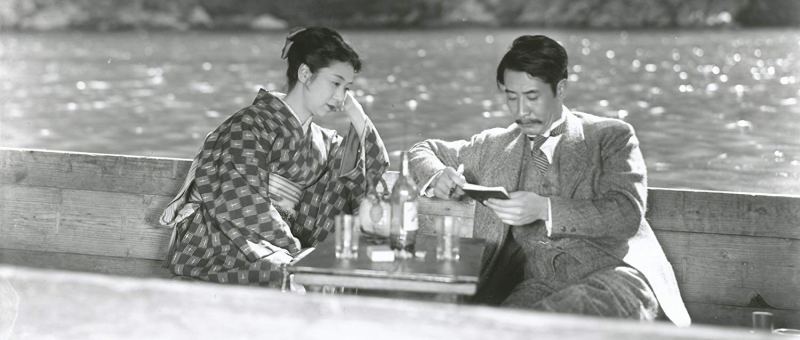
Our narrator for this sardonic tale is an ambitious young doctor, Kimura (Tatsuya Nakadai), who opens the film in an unusually meta fashion with a direct to camera address taking the form of a brief lecture on the decline of the human body (which begins at age ten and then gets progressively worse). Kimura reminds us that we too will grow old, but his warning is intended less to engender sympathy for the elderly patriarch who will become our secondary protagonist than it is to raise a grim spectre of the inescapability of death.

The story Kimura wants to tell us of a man who fought against senility centres on antiques expert and respected cultural critic Kenmochi (Ganjiro Nakamura). Advanced in years, Kenmochi is beginning to feel the darkness encroaching along with the desire to resist it through restored virility. For this reason, he’s been making regular appointments at Kimura’s clinic which he keeps secret from his wife who would be unhappy to know he’s been getting mysterious injections to help with his sex drive but which also come with a number of side effects including dangerously raising his blood pressure.

Eventually Ikuko (Machiko Kyo), Kenmochi’s slightly younger wife and mother of his grown up daughter Toshiko (Junko Kano), does indeed find out though what she does not appear to know is that Kenmochi has also been drugging her so that he can take photos of her naked body and enjoy his rights as her husband without her needing to be 100% present at the time. Kenmochi’s plan is to lure Kimura into having an affair with his wife so that the resultant jealousy will stimulate his system, staving off senility and other unwelcome effects of ageing. This would be strange enough on its own were it not that Kenmochi has also been trying to set up a marriage between Toshiko and Kimura who are already engaged in a discreet affair.

In contrast with the source material which takes the form of a number of diary entries providing differing perspectives on events, the film takes the point of view of the cynical and morally bankrupt doctor Kimura who feels himself above this “pathetic” old man with his sexual preoccupations and diminished prospects. As the narrator, Kimura evidently believes himself in control but Ichikawa is keen to play with our sense of the rules of storytelling to show him just how wrong he could be. Intrigue is everywhere. Kenmochi may think he’s using all around him in a clever game to prolong his own life but he’s entirely blind to a series of counter games which may be taking place behind his back.

Sex is quite literally a weapon – aimed at the heart of death. Kimura recounts a dream he sometimes has in which he is shot through the heart in an arid desert, only for this same scene to invade the mind of a paralysed Kenmochi on gazing at the naked body of his wife. The marriage of Kenmochi and Ikuko has apparently been a cold (and perhaps unhappy) one with Kenmochi berating his wife for remaining “priest’s daughter” all these years later, prudish and conventional. Nevertheless, Ikuko – the kimonoed figure of the traditional Japanese wife, subservient yet mysterious and melancholy, becomes the central pivot around which all the men turn, eclipsing her own daughter – a Westernised, sexually liberated young woman rendered undesirable in her very availability. Kimura is not quite the destructive interloper of Pasolini’s Theorem so much as he is a “key” used by Kenmochi to “unlock” a hidden capacity within himself but one which, as it turns out, opens many doors not all of them leading to intended, or expected, destinations.

Ichikawa continues with a more experimental approach than was his norm following the bold opening scene in which Kimura directly addresses the audience with a straight to camera monologue. A pointed symbolic sequence of a train coupling, freeze frames, dissolves and montages add to his alienated perspective as he adopts Kimura’s arch commentary on the ongoing disaster which is the extremely dysfunctional Kenmochi family home. Middle class and well to do, the Kenmochis’ lives are nevertheless empty – the house is mortgaged and the beautiful statues which taunt Kenmochi with their physical perfection have all already been sold though Kenmochi refuses to let the buyer take them home. Old age should burn and rave at close of day, but as the beautifully ironic ending makes plain it will be of little use, death is in the house wearing an all too familiar face which you will always fail to recognise.


Screened as part of the Japan Foundation Touring Film Programme 2017.

Opening scene (no subtitles)

Warning from Space (宇宙人東京に現わる, Koji Shima, 1956)

Warning_from_Space_1956
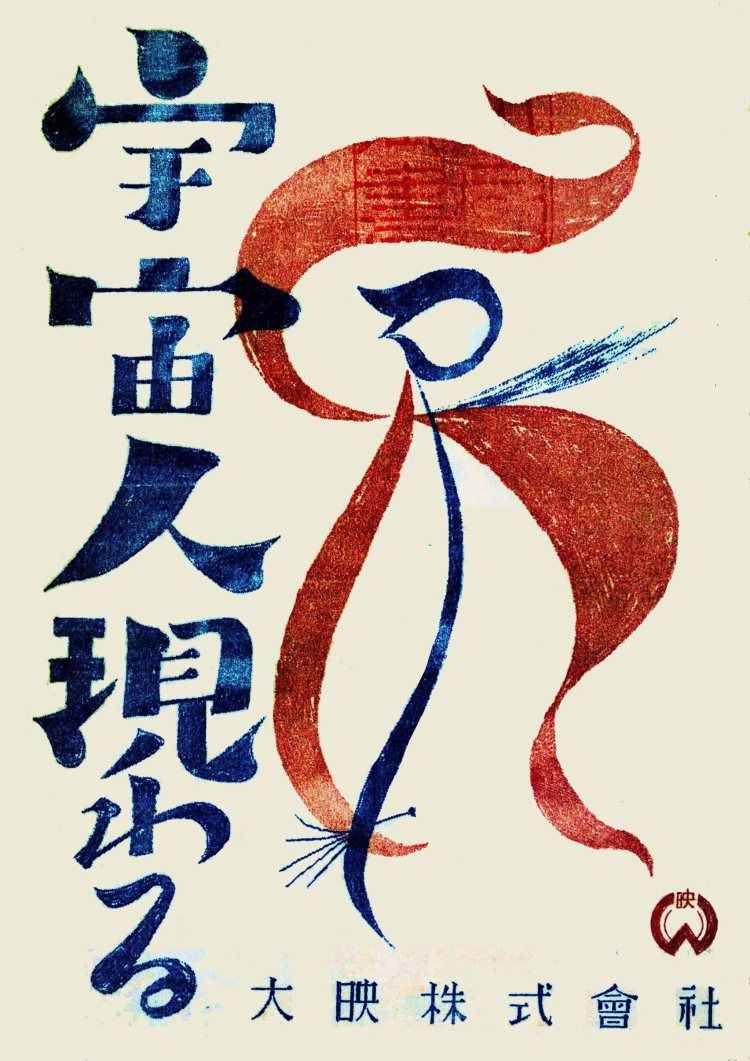
Taro Okamoto illustration from Japanese DVD liner notes

Apparently the citizens of Japan are a little more cautious than some of their contemporaries when it comes to extraterrestrial contact. After all, the kindly aliens who visit with helpful advice in The Day the Earth Stood Still end up leaving in a huff because humanity is just not ready to accept their offers of interplanetary research and is constantly trying eliminate the alien “threat”. Hence, though the people of Japan recoil in horror from the Pairans in their scary starman shape, they start paying attention when they come in the form of a pretty showgirl. Somethings never change, eh?

Mysterious flying objects have been spotted above the skies of Tokyo. Nobody knows what they are with some leaning towards aliens and others becoming paranoid that Japan is under attack from another nation who are positioning spy satellites above its capital city. There have also been sightings of mysterious creatures near sources of water, usually accompanied by blue flickering lights.

These strange creatures turn out to be a scientific delegation from the planet Paira (inconveniently located directly opposite Earth but behind the sun which is why it’s never been discovered). They are a race of star shaped bipedal creatures with a single eye in the middle of their chests. Actually, they are quite cute and completely non-threatening in appearance and seem quite hurt that the Earthlings think they are ugly and are too frightened to talk to them. Consequently, they send their best scientist through a special process to change his appearance to one humans find more appealing which just happens to involve copying that of a local superstar showgirl.

The Pairans have come in peace! With their advanced technology they can see a rogue planet is about to crash into Earth and destroy it forever. This is bad news for everyone so they’ve come to warn humanity and try to help, if only they could get someone to listen to them. They also know that Doctor Matsuda has been developing a nuclear weapon which is far more powerful than the atomic bomb. The Pairans think this is a very bad idea and he should stop, but only after they’ve used it to destroy the rogue planet before it’s too late.

Warning from Space (宇宙人東京に現わる, Uchujin Tokyo ni Arawaru) is Daiei’s first colour sci-fi film though it’s actually not all that colourful aside from that weird blue light. In contrast to many other films from the era and even those previously made by Daiei, Warning From Space seems to have an oddly ambivalent view on weapons of mass destruction. The Pairans have chosen Japan because they think the Japanese are the best placed to appreciate the destructive power of an atomic bomb and will therefore share their stance on the necessity of abandonment. Yet, they also know Dr. Matsuda has been working on an even more destructive weapon – the Pairans also discovered this power at some point in their history but abandoned it over fears of its power being misused. They supposedly developed a much safer way to harness nuclear energy but now need Matsuda’s research to destroy the rogue planet. Like much of the Pairan’s behaviour, this doesn’t make complete sense (at least, to those of us used to Earth logic).

The Pairans are very friendly, but a bit shy. Their idea of “making contact” seems to be running away when the humans spot them and start screaming. Seeing something so unusual is probably quite traumatising, but the Pairans are so cute with their starfish outfits and comical waddle that it’s strange to think anyone could find them threatening. The Pairans are even a little upset that Earthlings find them “ugly”. They think the best thing to do is appear in a more pleasing form so they freak everyone out by visiting a popular musical show and stealing a picture of the star to clone. Because every scientist on Earth is going to want to listen to the advice of a cabaret showgirl, right? That’s always how it happens. She doesn’t even care very much about maintaining her disguise and keeps doing alien stuff like jumping really high in the air or dematerialising in one place and rematerialising somewhere else, but then no one seems to find this that weird anyway.

Basically, the Pairans have come to tell the Earthlings not to go ahead with their weapons research because they don’t know what they’re getting into. However, they also need to use this research to destroy the rogue planet which is a bit contradictory. The Pairans are apparently too shy to actually talk to the UN and think the other nations are kind of mean anyway so Japan will have to sort this out on their own while the Pairans nod appreciatively in the background (other than when they randomly disappear for a whole month until coming back to sort everything out because humans are rubbish). Of course, evil corporations are also after Matsuda’s super weapon but he’s a proper scientist and doesn’t want to sell, so they kidnap him and tie him to a chair out of spite while the world simultaneously floods and burns thanks to the rogue planet’s effect on the atmosphere.

Finally, science saves the day in a quiet and methodical way! All the creatures of the Earth emerge from underground. The birds are singing, turtles are swimming, racoons are doing racoon stuff again all while the sun is shining brightly and children are singing, so it’s definitely all going to be OK and Earth has probably made a whole new set of star shaped friends! All in all it was probably worth near destruction. Warning from Space is the kind of science fiction film which is always 100% serious, with the consequence that it’s not serious at all. Not as much fun as some of other B-movies of the era it nevertheless adds its own charms particularly in the form of the completely batty Pairans and their cute star shaped suits but fails to offer anything memorable beyond them.


Original trailer (poor quality, no subtitles)

The adorable starfish-like Pairans were designed by iconic Japanese artist Taro Okamoto who is probably best known for the Tower of the Sun constructed for Expo ’70.

The Haunted Castle (秘録怪猫伝, Tokuzo Tanaka, 1969)

haunted castle 1969These days, cats may have almost become a cute character cliche in Japanese pop culture, but back in the olden days they weren’t always so well regarded. An often overlooked subset of the classic Japanese horror movie is the ghost cat film in which a demonic, shapeshifting cat spirit takes a beautiful female form to wreak havoc on the weak and venal human race. The most well known example is Kaneto Shindo’s Kuroneko though the genre runs through everything from ridiculous schlock to high grade art film.
Daiei’s 1969 genre effort The Haunted Castle (秘録怪猫伝, Hiroku Kaibyoden) sits towards the high art end but remains firmly within the realm of entertainment. Displaying the high production values the studio was known for, the film paints its 18th century tale with a plush opulence and makes fantastic use of the nighttime gloom to evoke a gothic, supernatural atmosphere which is at least extremely unsettling even if it stops short of actual terror.

As for the story, it’s another take on the classic Japanese supernatural tale The Vampire Cat of Nabeshima. Events are set in motion when blind monk Mataichirou and his sister Sayo run into their lord whilst out walking one day. Lord Tangonokami Nabeshima takes a liking to Sayo and wants to add her to his collection of concubines. He despatches an underling to ask Mataichirou about it, but Mataichirou understandably refuses, offering the excuse that Sayo is “too awkward” and the the lord wouldn’t find her very good company anyway. Nabeshima is angry at this affront to his authority and summons Mataichirou for their regular round of Go where Mataichirou once more resolutely refuses to surrender his sister. When Mataichirou realises Nabeshima and his aid are cheating, the pair argue and Nabeshima loses his temper and kills him.

This is a big problem for several reasons so they pretend not to know anything about it and dump the body in a well. Fearing discovery, they also banish the sister, Sayo, but she opts to commit harakiri and begs the weird cat that had been attached to her brother to drink her blood and become a demon to enact their revenge! Soon enough, two maids are dead in the Nabeshima household and the lord’s favourite mistress is refusing to take baths and has developed a liking for fish which she previously could not stand….

Ghost cats mostly come at night (mostly) so the majority of the film takes place in the intense darkness of the pre-electric world. The cat begins to stalk its prey quietly with only the tinkling of its ghostly bell and then tiny, bloody paw prints left as evidence of a supernatural killing. Tanaka opts for a floating, dreamlike shooting style weaving a degree of hypnotic confusion into the proceedings which also manage to keep up a high level of tension as the demonic cat spirit goes about its bloody business.

Of course, the moral of the tale is to live your life in a more altruistic manner – stop trying to take things which aren’t yours, respect the views of others, and don’t lose your temper and rashly kill people for no reason at all. All good advice there. The “hero” of the story is the more sympathetic vassal, Komori, who is trying to broker a satisfactory outcome of this complex situation right from the start, but finds himself frustrated as the servant of an unreasonable lord whose will cannot be restrained. Komori can’t avoid the supernatural retribution but manages to ride the waves well enough to ensure a morally satisfying ending where corruption is exposed and the land returned to its rightful owners rather than remaining in the hands of a lascivious usurper. It’s an old story, but a good one, and is presented with such a degree of sophistication to make The Haunted Castle one of the better horror offerings of the late ‘60s.


The Invisible Man vs The Human Fly (透明人間と蝿男, Mitsuo Murayama, 1957)

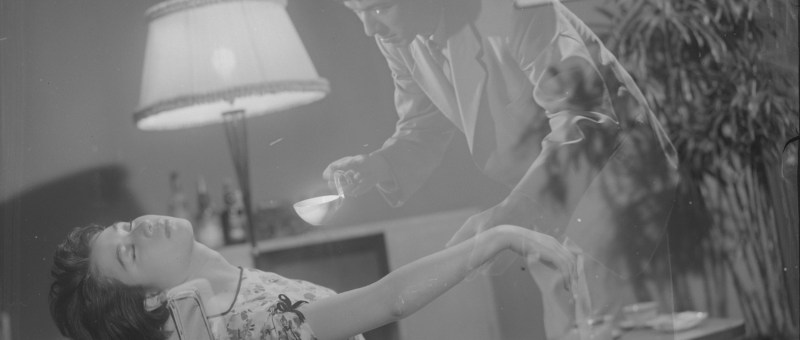
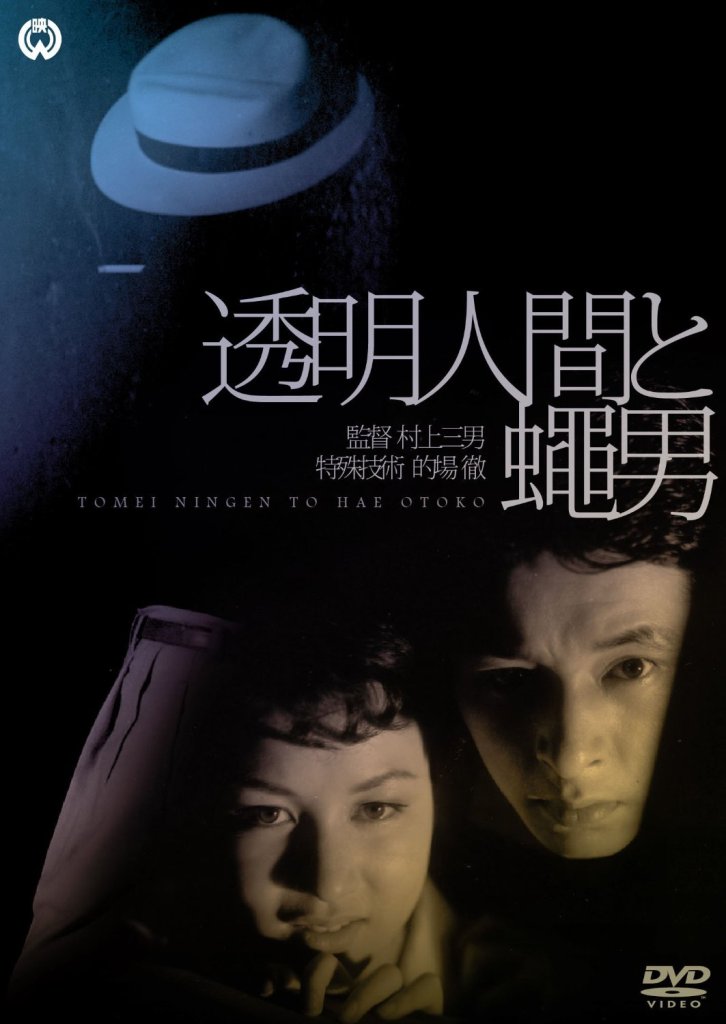
The Invisible Man Vs the Human FlyWho would win in a fight between The Invisible Man and The Human Fly? Well, when you think about it, the answer’s sort of obvious and how funny it would be to watch probably depends on your ability to detect the facial expressions of The Human Fly, but nevertheless Daiei managed to make an entire film out of this concept which is a sort of late follow-up to their original take on Invisible Man Appears from 1949. Like that film, The Invisible Man vs The Human Fly (透明人間と蝿男, Tomei Ningen to Hae Otoko) also adopts a deadpan, straightforward tone despite its rather ridiculous premise.

Tokyo is being plagued by a series of mysterious murders occurring in broad daylight in which the victim is stabbed through the back piercing the heart yet witnesses report seeing no suspicious activity near the crime scene. Perhaps The Invisible Man did it, hahaha….However, when the man sitting next to the professor in charge of researching the “imperceptibility device” is murdered in an aircraft toilet, the police get wise to a possibly surreal explanation for these bizarre crimes. The only other evidence they have is a connection between a sleazy nightclub owner, a friend of his and one of the murdered men who briefly served together during the war, the fact that one of the victims pointed at the sky before dying, and reports of a strange buzzing sound….

Interestingly, the major viewpoint here is from the policemen investigating the case and their attempts to get their heads around this extremely unusual series of events. As often happens with revisiting a form of technology which has been used for ill in the previous picture, here the “imperceptibility device” becomes a force for good as it might be able to help the powers at be stamp out The Human Fly. This time there’s not so much of the accompanying madness which is caused by going invisible but there’s still a heavy price to be paid as no one’s figured out a way of turning back which doesn’t involve rapid death from cancer immediately afterwards.

By contrast, The Human Fly is born of a man made serum developed by Japanese mad scientists during World War II and brought back by a man who was abandoned on an island by his comrades and subsequently left to take the wrap at a war crimes tribunal. He wants to use the technology to further his own success yet has a minion carrying out most of the dirty work. The Human Fly serum does, apparently, carry a number of psychological side effects including violent impulses, paranoia and addiction.

The special effects are not quite as good as in Invisible Man Appears though the invisible antics are not the focus of the film anyway. Bizarrely, The Human Fly is just a shrunken man who is somehow able to zip about like a regular fly even though he’s still dressed in his normal business suit and keeps his arms rigidly to his sides like some kind of human torpedo. Apparently, the buzzing sound is made because of his being very small (so says science) which gets around the inconvenient truth of him not having any wings or other fly-like characteristics other than the ability of flight.

It’s all very silly, though not quite silly enough in places. For the most part, the film plays out like a regular police procedural with slight noir undertones despite the obvious strangeness of the mysteries at hand. Though there’s obviously something to be made about the origin of the Human Fly serum and the anger of the “war criminal” who feels himself betrayed by his country, it’s a fairly subtle comment on post-war resentment. However, attitudes to the practice of scientific research do seem to have shifted with the researchers investigating the imperceptibility device cast as the good guys (though no particular reason for their work is ever offered) who can be relied upon to help catch the “bad guys” who are making use of “bad technology” to do “bad things”.

A fairly solid B-movie though one which is perhaps a little too po-faced for its genretastic title, The Invisible Man vs The Human Fly is an interesting mix of noir crime thriller with a little science fiction and even a few horror trappings thrown in. Thanks to its straightforward approach it may prove a little dull for genre enthusiasts but does offer its own kind of surreal iconography and it’s difficult to forget the sight of a tiny, angry looking besuited man flying around and committing random crimes while an invisible opponent stalks him from the shadows.


Invisible Man Appears (透明人間現る, Nobuo Adachi, 1949)

Invisible man appearsReleased in 1949, The Invisible Man Appears (透明人間現る, Toumei Ningen Arawaru) is the oldest extant Japanese science fiction film. Loosely based on the classic HG Wells story The Invisible Man but taking its cues from the various Hollywood adaptations most prominently the Claude Rains version from 1933, The Invisible Man Appears also adds a hearty dose of moral guidance when it comes to scientific research.
Once again the action centres around an esteemed chemist, Professor Nakazato, who has been working on a serum to render living things invisible. So far he has a sample which works on animals but is reluctant to move on to human testing as A) he hasn’t found a way to reverse the procedure, and B) there are some unpleasant side effects in which the subject becomes increasingly violent and irrational. The professor currently has two top students who are helping him towards his goal and, inconveniently, both have taken a shine to his daughter, Machiko. Half joking, the professor remarks that whoever can solve the problem first will win his daughter’s hand.

A business associate of the professor, Kawabe, is also interested in Machiko and also in the rights to the professor’s important new discovery. The professor, however, is a responsible man and refuses to sell it in case it falls into the wrong hands. Shortly after the professor is kidnapped by a gang of armed thugs who plan to use the serum to steal a set of diamonds known as The Tears of Amour.

There’s plenty of intrigue with various twists and turns to the original story which keep the viewer on their toes as they try to figure out who exactly is the invisible man and what he’s really after. Actually, the solution is sort of obvious and heavily signposted but that doesn’t make it any less fun. Kawabe is a moustache twirling villain from the get go and it’s obvious he has various things going on in the background but there’s more to the story than a greedy business man trying to manipulate everyone around him for his own gains. There’s also an interesting subplot in which the younger sister of one of the scientists is a top actress at the Takarazuka Review and turns out to have a connection to the Tears of Amour.

All of the classic B-movie hallmarks are here from the slightly ridiculous sci-fi jargon to the classic women in peril shenanigans as the serum starts to take hold and the Invisible Man becomes increasingly paranoid. There’s nothing good or bad but thinking makes it so – so it would be for science as far as the film is concerned. According to the message at the film’s beginning and end, there is no scientific discovery which is innately “evil” but each is apt to be misused. It’s not difficult to see why this would be a popular, even essential, message in the Japan of 1949 and indeed it recurs in many films of this type including, of course, the original Godzilla. The professor takes responsibility for having invented something which, although not created with evil intent, has wrought such destruction on society but finds himself with nothing left to do other than apologise.

Director Nobuo Adachi uses a lot of classic silent cinema techniques such as dissolves and montages with a fair amount of handheld camera and some location shooting (though the majority of the film is studio bound). The special effects were supervised by Eiji Tsuburaya who would later become the founding father of tokusatsu and co-creator of the Godzilla franchise and are top notch for the time period. An enjoyably silly B-movie, The Invisible Man appears is a well crafted addition to the Invisible Man corpus and a fantastic example of Daiei’s post-war genre output.


Original trailer (English subtitles) – I wish all trailers were this much fun!

Irezumi (刺青, Yasuzo Masumura, 1966)

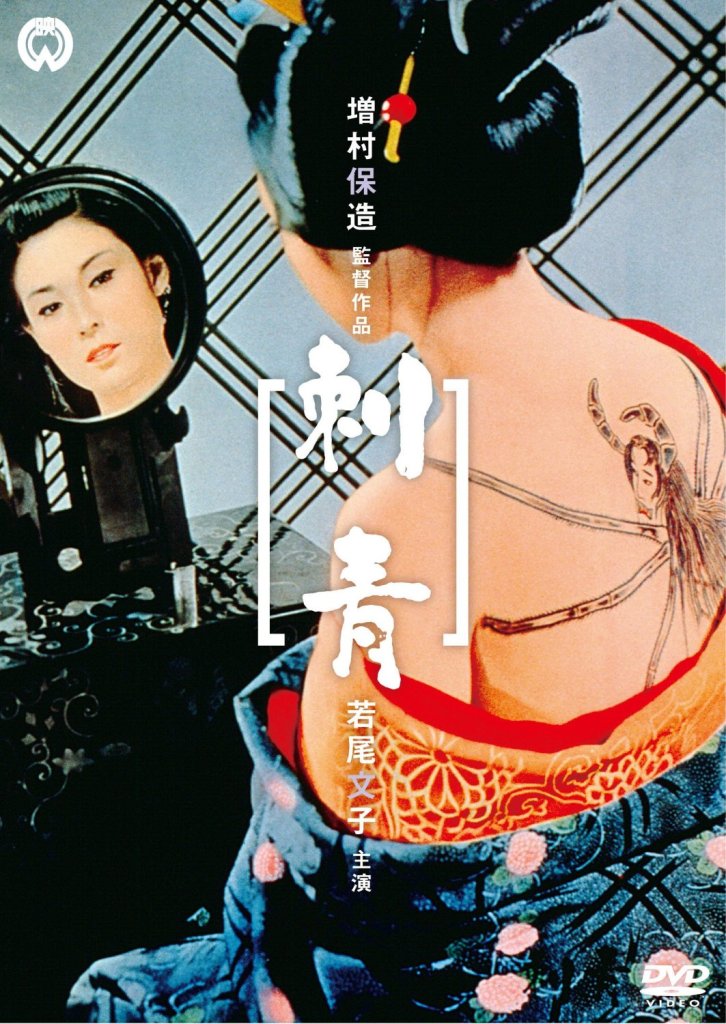
91HAEic7eNL._SL1500_Irezumi (刺青) is one of three films completed by the always prolific Yasuzo Masumura in 1966 alone and, though it stars frequent collaborator Ayako Wakao, couldn’t be more different than the actresses’ other performance for the director that year, the wartime drama Red Angel. Based on a novel by Tanizaki and scripted by Kaneto Shindo (Onibaba, Kuroneko), Irezumi is a supernaturally tinged tale of vengeance and betrayal.

The film begins in the middle as Otsuya, having been abducted and sold to a geisha house, is tied, bound and chloroformed so that a tattooist can mark her skin with the eery portrait of a spider with a human face. Skipping back awhile, it seems this came about as a consequence of Otsuya convincing the mild mannered assistant of her father, Shinsuke, to run away with her. The pair take refuge at the home of a family friend, Gonji, but after his advances towards Otsuya are rebuffed he arranges to have Shinsuke killed and Otsuya sold as a geisha. Shinsuke manages to get away after a bloody fight but he’s a gentle man and the violence of the encounter marks him. Otsuya, by contrast, finds she quite enjoys her new life and gets along OK with her pimp, Tokubei, who urges her to “feed on men”. Otsuya’s lusts become ever more violent with the spectre of the tattoo artist hovering in the background. Is the tattoo itself enacting these scenes of terrifying vitality or merely an excuse for releasing Otsuya’s true nature?

Shot in vibrant colour in contrast to Red Angel and many of Masumura’s other efforts from around the same time, Irezumi makes fantastic use of its lurid atmosphere. Sex and death and violence – hardly unusual themes for Japanese cinema though Irezumi feels like an early precursor to the exploitative pinky violence cycle of the following decade. In keeping with those films, Otsuya is another conflicted avenger, wreaking havoc on venial men who think they can buy and sell a woman’s soul as well as her body. As the violence mounts, Otsuya falls into a kind of mania and at one point exclaims that this isn’t really her at all, it’s all the fault of the spider on her back – trapping men in its silky web only to suck them dry and throw away the husk.

Whether Otsuya is herself an avenging warrior for the female sex or merely a demonic vision of the ultimate male fear is somewhat up for debate. Her transgressions are intentionally destabilising – she breaks with convention by “betraying” her father when she runs of with Shinsuke and not only that, she does so at her own insistence. Shinsuke himself is far too meek and mild mannered to have ever done such a thing entirely of his own will and is largely swept along by Otsuya for the entire course of the film. Only when he fears she may betray him does he decide to take action. Otsuya’s sexuality in itself is also transgressive, actively pursuing Shinsuke before a formal marriage and then even expressing her enjoyment of her new life in the pleasure quarters – neither attitude is one that is expected of the demure daughter of a noble house. Is she an emancipated woman, or fallen one? The film offers no clear judgement here but presents her both in terms of vengeful heroine and of terrifying villainess.

Along with its rather complicated structure beginning in a media res opening followed by a lengthy flashback sequence, Irezumi is never quite as successful as Masumura’s other mid ‘60s offerings. Though boasting a script by maestro Kaneto Shindo, a noted director in his own right and frequent visitor to the realms of horror, something about Irezumi fails to coalesce. That said, it does offer a visually arresting, generally interesting supernaturally tinged tale and yet another fantastic performance from its talented leading lady.


Irezumi is available with English subtitles on UK R2 DVD from Yume Pictures

Tattoo sequence from the film:

http://www.youtube.com/watch?v=pIlat5gmTAY