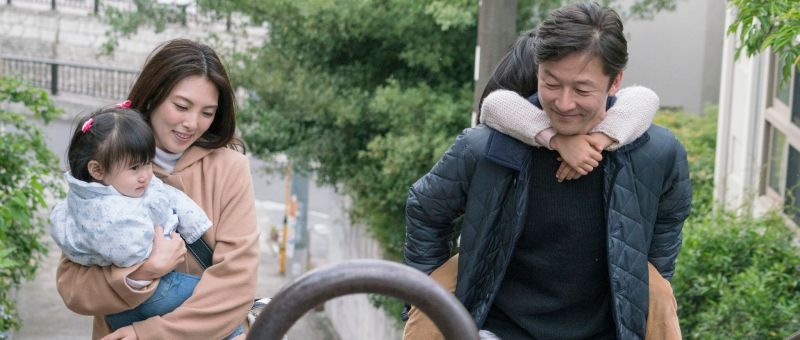
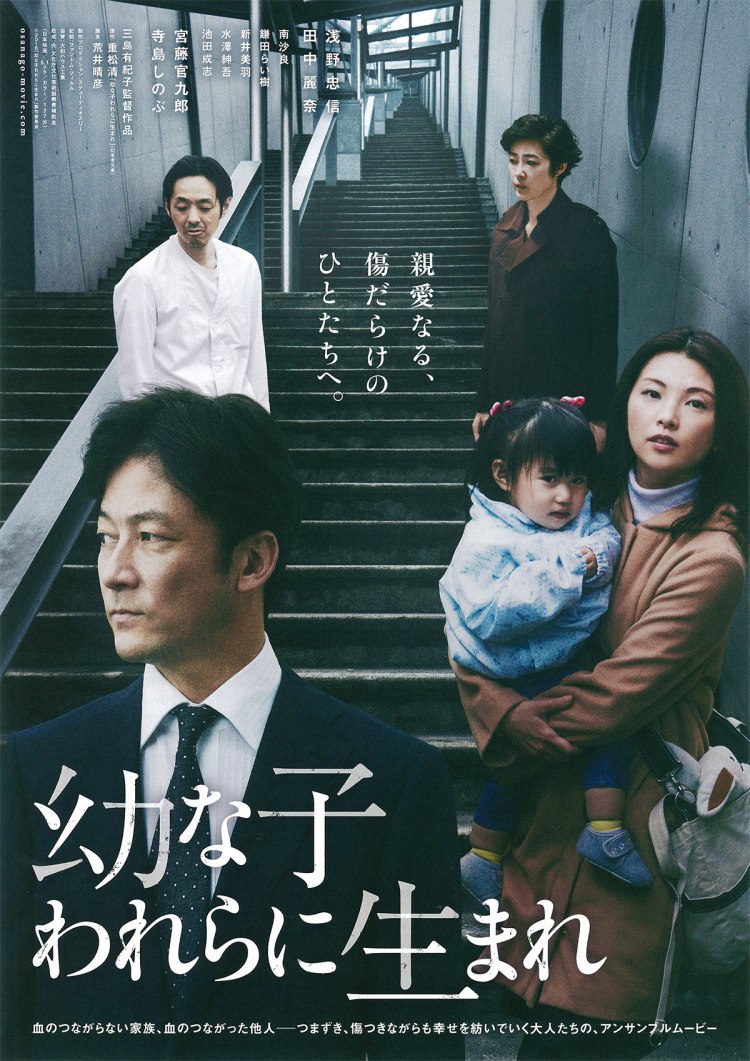
 The family drama has long been considered the representative genre of Japanese cinema, but with the days of Ozu long gone the family itself has become a subject for reappraisal. Yukiko Mishima’s Dear Etranger (幼な子われらに生まれ, Osanago Warera ni Umare) is the latest to take a scalpel to the nation’s basic social unit and ask what the word “family” means in an ever changing social landscape. In an Ozu picture, one family must be broken for another to be formed – this is the way of things and in the end must be accepted if with sadness, but does it really need to be this way or is there room for more as connections become less easy to define?
Makoto Tanaka (Tadanobu Asano) separated from his first wife some time ago and still spends time with his daughter, Saori (Raiju Kamata), though only a few times a year. Four years ago he married another woman, Nanae (Rena Tanaka), who had also been married before and has two children – Kaoru (Sara Minami) and Eri (Miu Arai). Nanae has recently discovered she is pregnant and is thrilled to bits to add to their family, but Makoto is conflicted. He liked the family as it was and worries that the new baby will place a wedge between himself and his step-daughters, that they may suddenly feel themselves pushed out and not really part of the new family that is being forged by a child who has a blood relation to both their parents rather than just one.
In truth, family dynamics aren’t all Makoto currently has to worry about. A 40-year-old man, he’s also hitting the scrap heap at work – rather than laying people off, they’re transferring them to unpleasant jobs in the hope they’ll resign. A lifelong salaryman, Makoto has been sent to the packing warehouse where his every move is logged on computer and he’s rated for speed. This is partly his own “fault”. Rather than play the salaryman game, Makoto wanted to be a family man. He doesn’t work weekends or overtime, he takes public holidays off, and never stays out late drinking with colleagues – all things which mark your card as an antisocial shirker in workaholic Japan.
Makoto’s superior, warning him about the imminent transfers, criticises his attitude. He tells him that he doesn’t think spending time with his children is his “job” as a father. He sees his responsibility as one of providing a role model and he thinks the best way to do that is to be seen working hard as a “respectable” member of society. Makoto couldn’t disagree more. He works to rule, but wants to be the sort of father that’s there for his kids, not just an authoritarian figure who comes home late smelling of booze and throws his weight around. He knows that as the children grow up they’ll grow away from him and won’t want to hang out with dad anymore, so he wants to spend time with them now while he still can.
Makoto’s intense desire to be a family man is perhaps unusual in Japan where men channel their ambition into work and women are (still) expected to channel theirs into the home. It is therefore doubly painful for Makoto when his elder step-daughter, Kaoru, heading into a difficult age, suddenly rejects him on hearing about the new baby. Despite the fact that Kaoru’s biological father (Kankuro Kudo) was violent towards both her and her mother, Kaoru begins to insist on seeing him, complaining that it’s unfair to be forced to live with “a stranger”. On one level, Kaoru is at the age at which most young women begin to find their father annoying and embarrassing, but her resentment is also informed by a fear of abandonment and cultural doubt about her place in a still atypical family, unconvinced that it’s possible for a man to become a father to a child that’s not his own by blood.
Blood ties still seem to trump all in most people’s minds, but bureaucracy plays its part too. Makoto still insists on making time to see Saori – something which is sadly unusual in Japan where divorce usually results not only in the children losing contact with the absent parent but also the entirety of an extended family. Kaoru doesn’t quite like it that Makoto does this, she feels almost betrayed as if he’s choosing his biological child over her and that continuing to associate with Saori means he hasn’t fully committed to her family. There seems to be an idea that the family unit is a distinct bubble and one can’t be inside more than one at a time, just as one can’t be listed on more than one “family register”. When an emergency occurs and Saori needs to get a lift from Nanae who has Eri in the back of the car, she isn’t sure if it’s OK for her to get in even with her father with her. She suddenly feels awkward, as if her presence in his car with his new family is inappropriate. None of these people know each other – the existence of a parallel family is so embarrassing as to be “unseen”, buried like a scandalous secret and kept entirely separate to avoid any cross-contamination. When Eri asks who Saori is, awkward silence prevails until she is forced to introduce herself as a “friend” of her father’s – something he doesn’t bother to correct until the drive home when another encounter has pushed him into reconsidering what it means to be a “father”.
Makoto’s strong desire for acceptance and for forging a “family” that is “his” may perhaps seem selfish and possessive, yet he also tries to react with patience and empathy towards others in his position. He tries to be patient with Kaoru, advising her that he doesn’t think meeting her “real” dad is a good idea but if it’s what she wants he’ll try to make it happen. Likewise, he is grateful to Saori’s stepfather for raising his daughter when he wasn’t able to. Finally the walls begin to dissolve and it stops being about who belongs on which bit of paper and starts being about connections forged through love and understanding. The new baby, rather than forcing everyone apart, begins to bring them together, each joined by a feeling of joy and responsibility towards the new life to which they are all connected.
Screened at Nippon Connection 2018.
Original trailer (no subtitles)
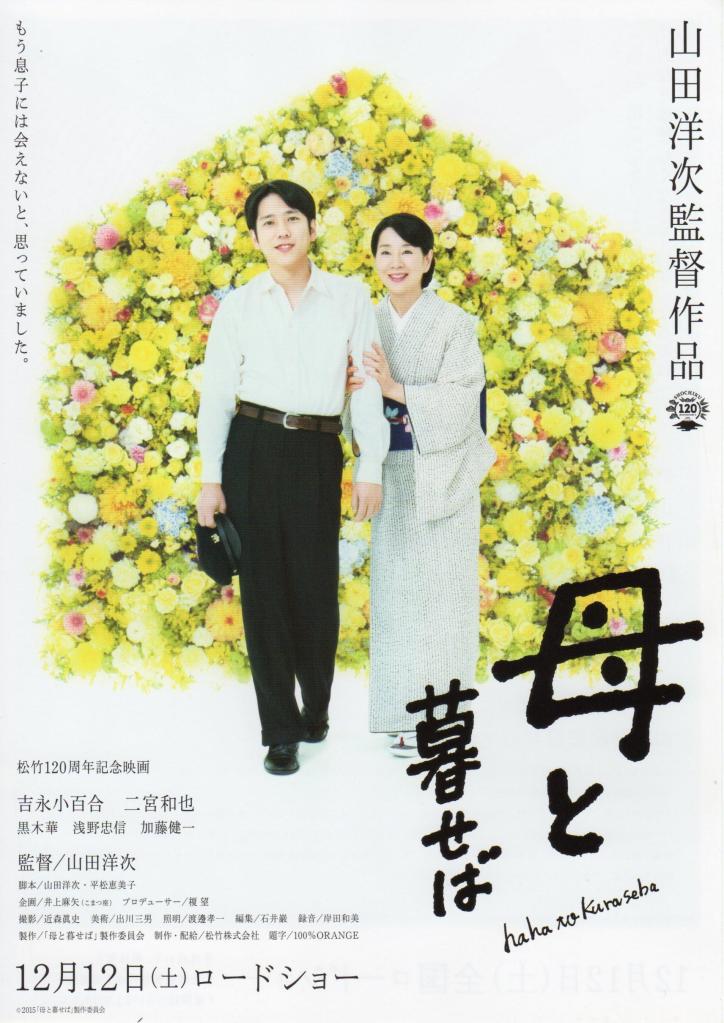 After such a long and successful career, Yoji Yamada has perhaps earned the right to a little retrospection. Offering a smattering of cinematic throwbacks in homages to both Yasujiro Ozu and Kon Ichikawa, Yamada then turned his attention to the years of militarism and warfare in the tales of a struggling mother,
 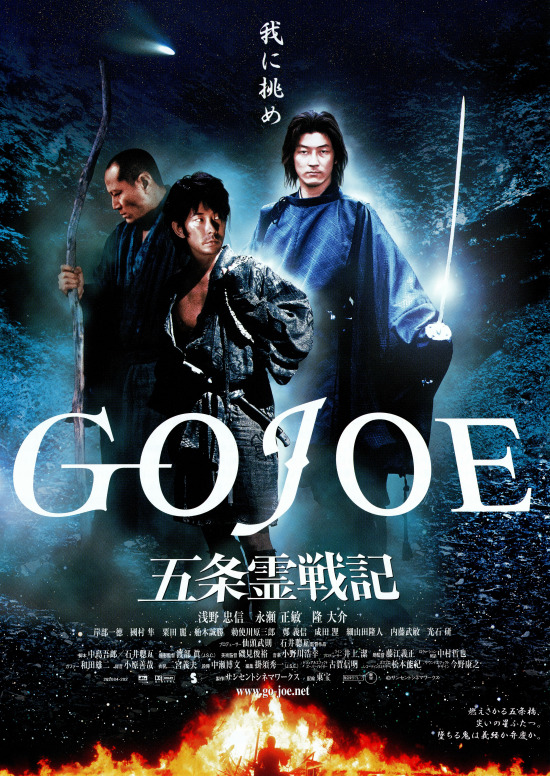 Not your mama’s jidaigeki – the punk messiah who brought us such landmarks of energetic, surreal filmmaking as Crazy Family and Burst City casts himself back to the Middle Ages for an experimental take on the samurai genre. In Gojoe (五条霊戦記, Gojo reisenki), Sogo Ishii remains a radical even within this often most conservative of genres through reinterpreting one of the best loved Japanese historical legends – the battle at Kyoto’s Gojoe Bridge . Far from the firm friends of the legends, this Benkei and this Shanao (Yoshitsune in waiting) are mortal enemies, bound to each other by cosmic fate but locked in combat.
 Koji Fukada first ventured into the family drama arena with the darkly comic satire
 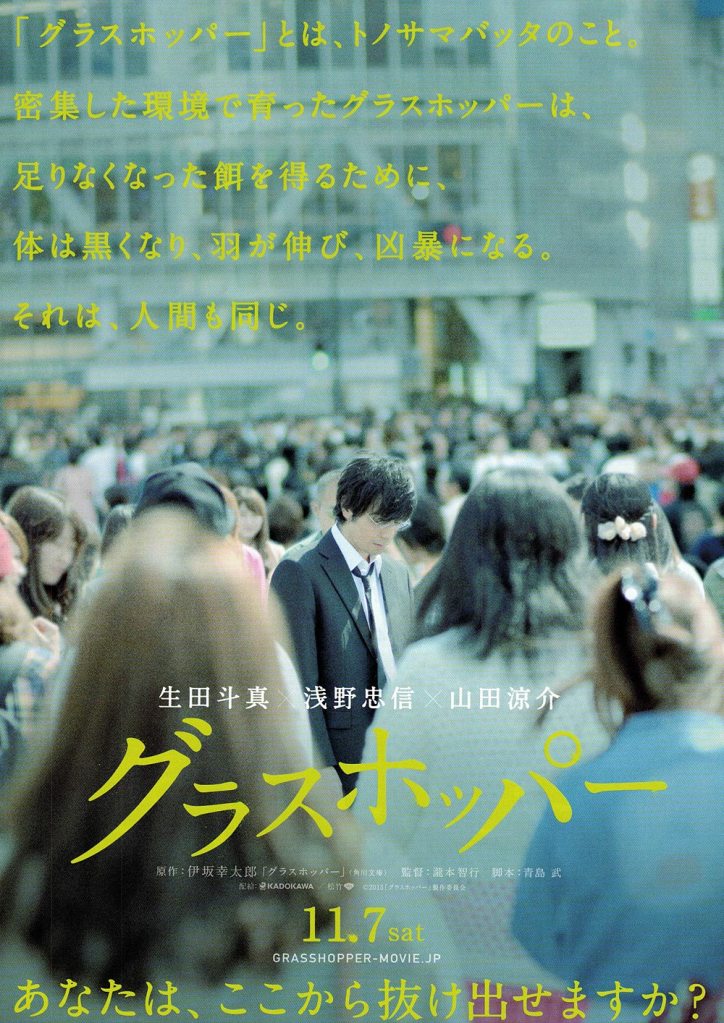 The best revenge is living well, but the three damaged individuals at the centre of Tomoyuki Takimoto’s Grasshopper (グラスホッパー) might need some space before they can figure that out. Reuniting with
  Sometimes love makes you do crazy things. Some people find themselves accomplishing previously unattainable feats powered only by the sheer force of romance. Unfortunately for the hero of Swimming Upstream (バタアシ金魚, Bataashi Kingyo), Joji’s Matsuoka’s adaptation of Minetaro Mochizuki’s manga, the task he sets for himself is a very lofty one indeed and may actually require him to abandon his love to complete it. Then again, the object of his affections shows little signs of reciprocation in any case.
 If you’re going on the run you might as well do it in style. Wait, that’s terrible advice isn’t it? Perhaps there’s something to be said for planning a cunning double bluff by becoming so flamboyant that everyone starts ignoring you out of a mild sense of embarrassment but that’s quite a risk for someone whose original gamble has so obviously gone massively wrong. An adaptation of a manga, Katsuhito Ishii’s debut feature Sharkskin Man and Peach Hip Girl (鮫肌男と桃尻女, Samehada Otoko to Momojiri Onna) follows a mysterious criminal trying to head off the gang he just stole a bunch of money from whilst also accompanying a strange young girl, also on the run but from her perverted, hotel owning “uncle” who has also sent an equally eccentric hitman after the absconding pair with instructions to bring her back.
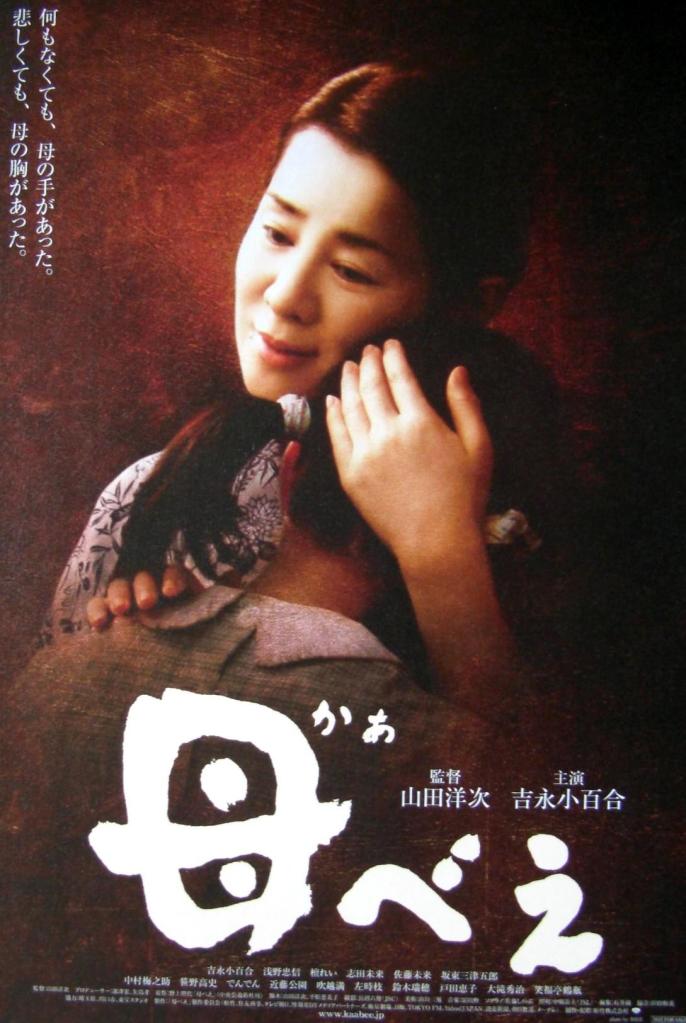 Yoji Yamada’s films have an almost Pavlovian effect in that they send even the most hard hearted of viewers out for tissues even before the title screen has landed. Kabei (母べえ), based on the real life memoirs of script supervisor and frequent Kurosawa collaborator Teruyo Nogami, is a scathing indictment of war, militarism and the madness of nationalist fervour masquerading as a “hahamono”. As such it is engineered to break the hearts of the world, both in its tale of a self sacrificing mother slowly losing everything through no fault of her own but still doing her best for her daughters, and in the crushing inevitably of its ever increasing tragedy.
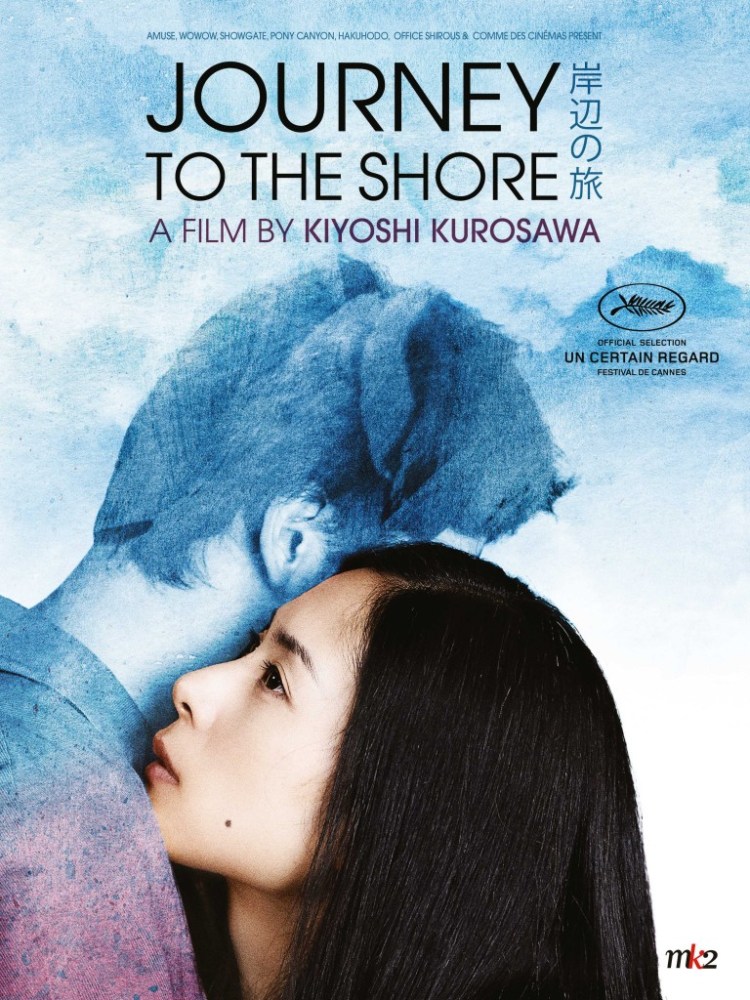 Time is an ocean, but it ends at the shore. Kiyoshi Kurosawa neatly reverses Dylan’s poetic phrasing as his shoreline is less a place of endings but of beginnings or at least a representation of the idea that every beginning is born from the death of that which preceded it. Adapted from a novel by Kazumi Yumoto, Journey to the Shore (岸辺の旅, Kishibe no Tabi) takes its grief stricken, walking dead heroine on a long journey of the soul until she can finally put to rest a series of wandering ghosts and begin to live once again, albeit at her own tempo.
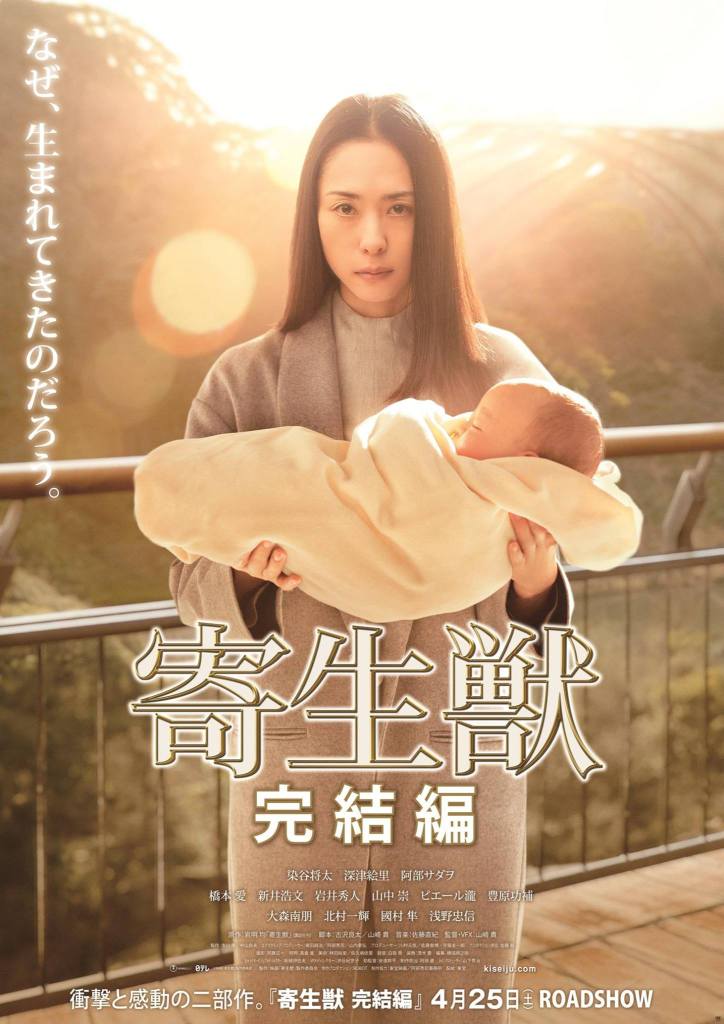 Review the concluding chapter of Takashi Yamazaki’s Parasyte live action movie (寄生獣 完結編, Kiseiju Kanketsu Hen) first published by
