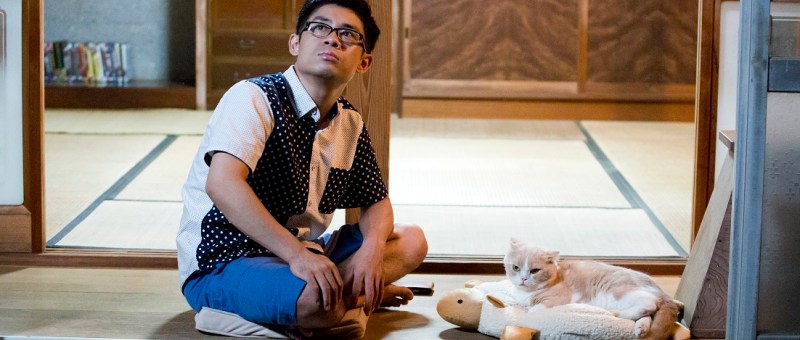
 It’s important to note that cats are living beings and not playthings for humans though they do seem know just what it takes to manipulate our affections. Neko Atsume started life as a popular smartphone game in which the aim is to “seduce” various types of cats to come into your garden so you can catalogue them. The game is just about collecting things and otherwise has no real narrative so it’s not the first one you’d think of for a movie adaptation, but then it does have the all powerful allure of cats being cats.
The movie revolves around blocked writer Masaru (Atsushi Ito) who scored a big hit with his debut work but is floundering in the high pressure world of serialised novels and has already skipped the last two editions. His editors are getting antsy – the truth is the series is boring, a simple college love story the like of which has been seen a million times before. What the suits think is…Masaru should turn his protagonist into a zombie! Understandably, he is not very keen on the idea, and neither is his junior editor Michiru (Shioli Kutsuna), but they need ideas and they need them fast. Unfortunately, Masaru doesn’t have any and so, after a strange meeting with a “fortune teller”, he decides to move to the country to get away from it all. The only problem is, his new home seems to be full of stray cats…
Neko Atsume House (ねこあつめの家, Neko Atsume no Ie) isn’t particularly trying to do very much beyond its rather restrictive title, though it does its best to set up Masaru’s internal dilemmas before he finds himself becoming a crazy cat man out in the middle of nowhere. Like many a youngster he’s been beaten down by early success and the subsequent pressure to repeat it. Where he’s going round in circles with a cliched story of young love, his contemporary who put out a less successful debut at the same time as Masaru’s, has gone on to score billboard worthy hits and become a rising star of the literary scene. At a particularly low point, Masaru even tries to add a few positive comments underneath his own work in the hope of digging up fans but only kicks the hornets nest of abuse as the mean spirited readers seem to know right away the only person who would say anything nice about his work is Masaru himself.
In touch of the meta, it’s Masaru who is the zombie, chowing down on the remains of his artistic integrity in order to save some semblance of a career. Of course, it doesn’t work. Unable to get any real writing done, Masaru becomes increasingly obsessed with the stray cats outside, eventually building them an entire mini paradise so they’ll come and keep him company while he’s busy not writing. In true fatalistic fashion, it turns out that Masaru has loved cats all along. He just forgot about it, and that’s one of the reasons he can’t write. Then again, perhaps it was just as Michiru, who never lost her faith in him, had said – he had to learn to be free like the cats in the garden in order to get his creative juices flowing again. At any rate, an up close observation of the lazy lives of pampered kitties begins to bring him closer to the human world, especially when he ends up working for the crazy (in a nice way) lady (Tae Kimura) who runs the local feline grooming centre and has to up his people skills as well as his cat man ones.
The latest in a long line of low budget dramas in which a conflicted creative exiles themselves from “real” life to get their mojo back, Neko Atsume House is at least the nicest in which Masaru’s petulance only really stretches to one unkind conversation with Michiru before he begins figuring out how to fix his many and various personal problems. Otherwise, the draw is the cats who are generally content to let it all hang out. Superficial, if charming, Neko Atsume House knows its target audience and proves a delectable enough treat to attract its very own cohort of cat collectors ready for cataloguing.
Original trailer (no subtitles)

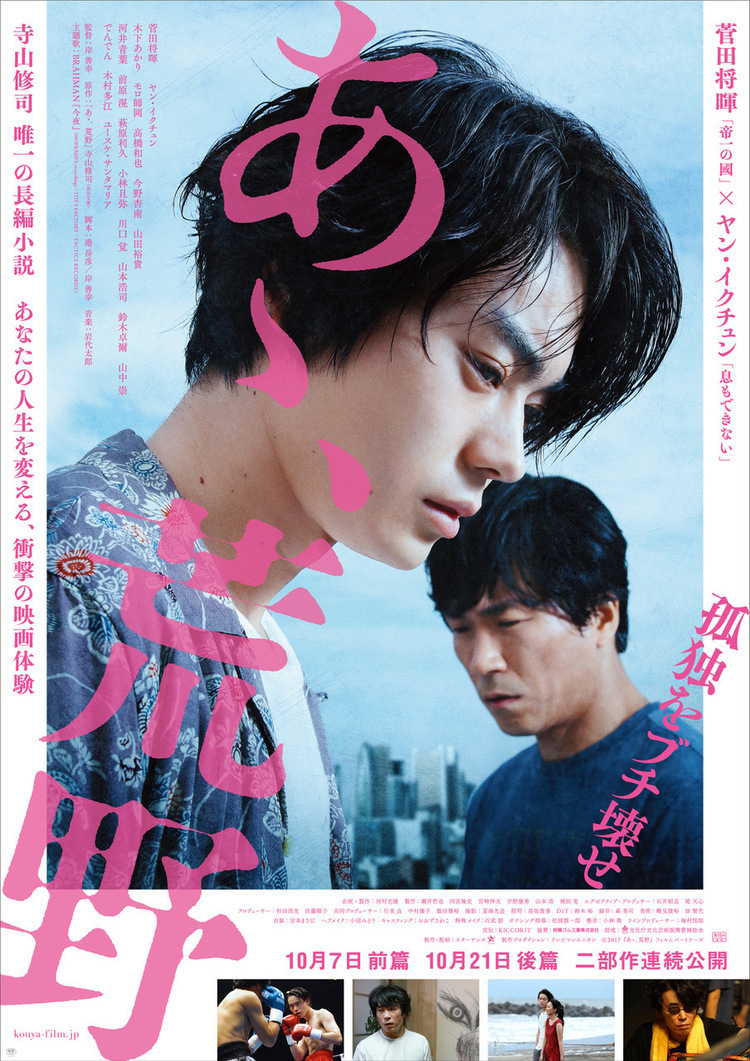
 Yukihiko Tsutsumi has made some of the most popular films at the Japanese box office yet his name might not be one that’s instantly familiar to filmgoers. Tsutsumi has become a top level creator of mainstream blockbusters, often inspired by established franchises such as TV drama or manga. Skilled in many genres from the epic sci-fi of Twentieth Century Boys to the mysterious comedy of Trick and the action of SPEC, Tsutsumi’s consumate abilities have taken on an anonymous quality as the franchise takes centre stage which makes this indie leaning black and white exploration of the lives of a group of homeless people in Nagoya all the more surprising.
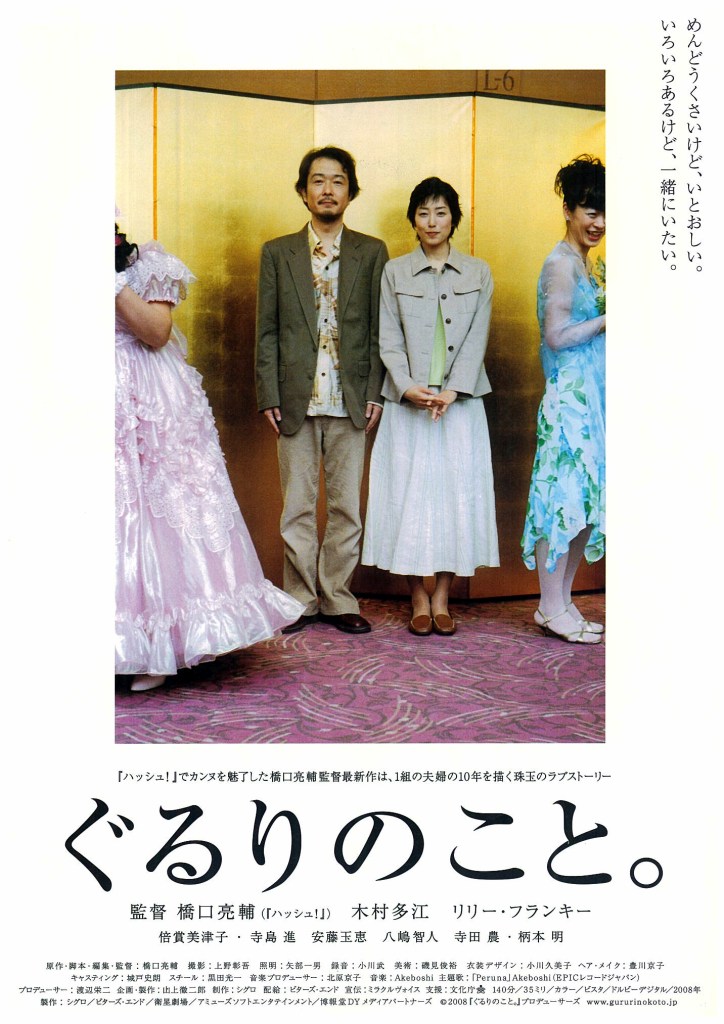 Ryosuke Hashiguchi returns after an eight year absence with All Around Us (ぐるりのこと。Gururi no Koto) and eschews most of his pressing themes up this by point by opting to depict a few “scenes from a marriage” in post-bubble era Japan. Set against the backdrop of an extremely turbulent decade which was plagued by natural disasters, terrorism, and shocking criminal activity Hashiguchi shows us the enduring love of one ordinary couple who, finding themselves pulled apart by tragedy, gradually grow closer through their shared grief and disappointment.
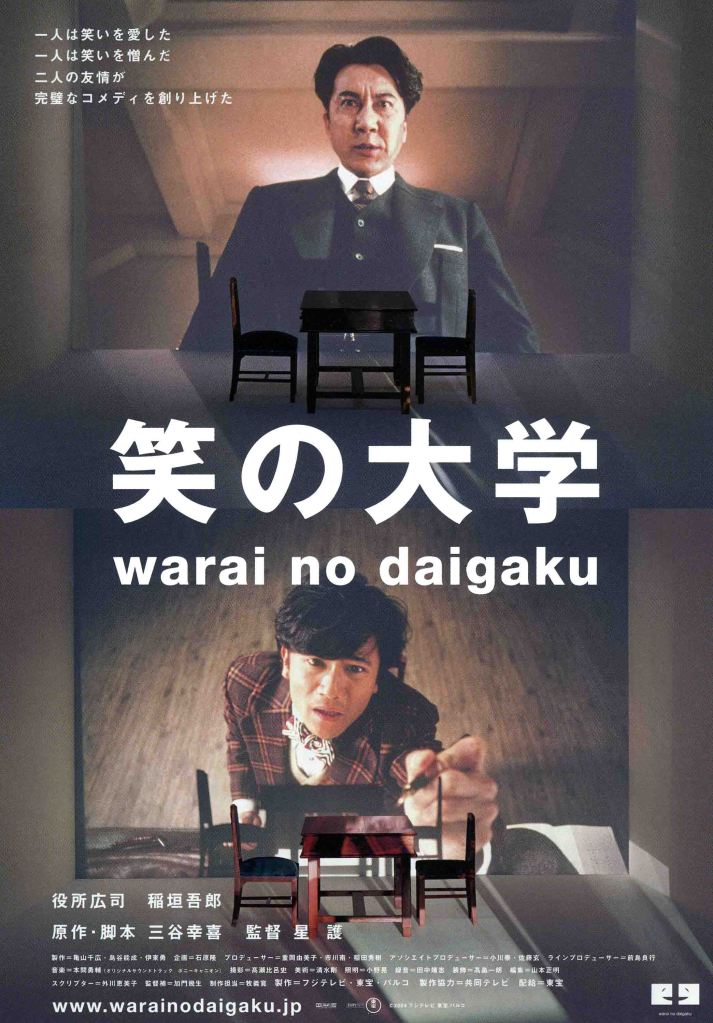 University of Laughs (笑の大学, Warai no Daigaku) is certainly an apt name for a film which aims to teach the universal power of comedy. Based on a 1997 stage play by Japanese comedy master Koki Mitani and directed by Mamoru Hoshi, the film is set in 1940 at the height of Japan’s militaristic fervour. With the annexation of Manchuria only three years previously and the war in full swing, there is no room for such petty bourgeois pleasures as slapstick comedy shows. The censor’s stamp rules all and if the piece doesn’t exult the glorious nature of the empire, then what good is it?

