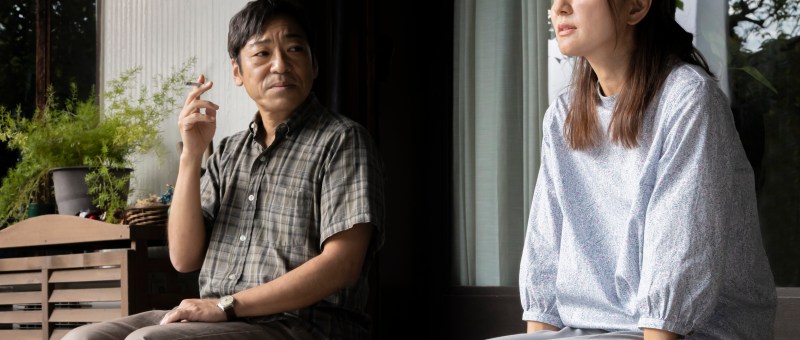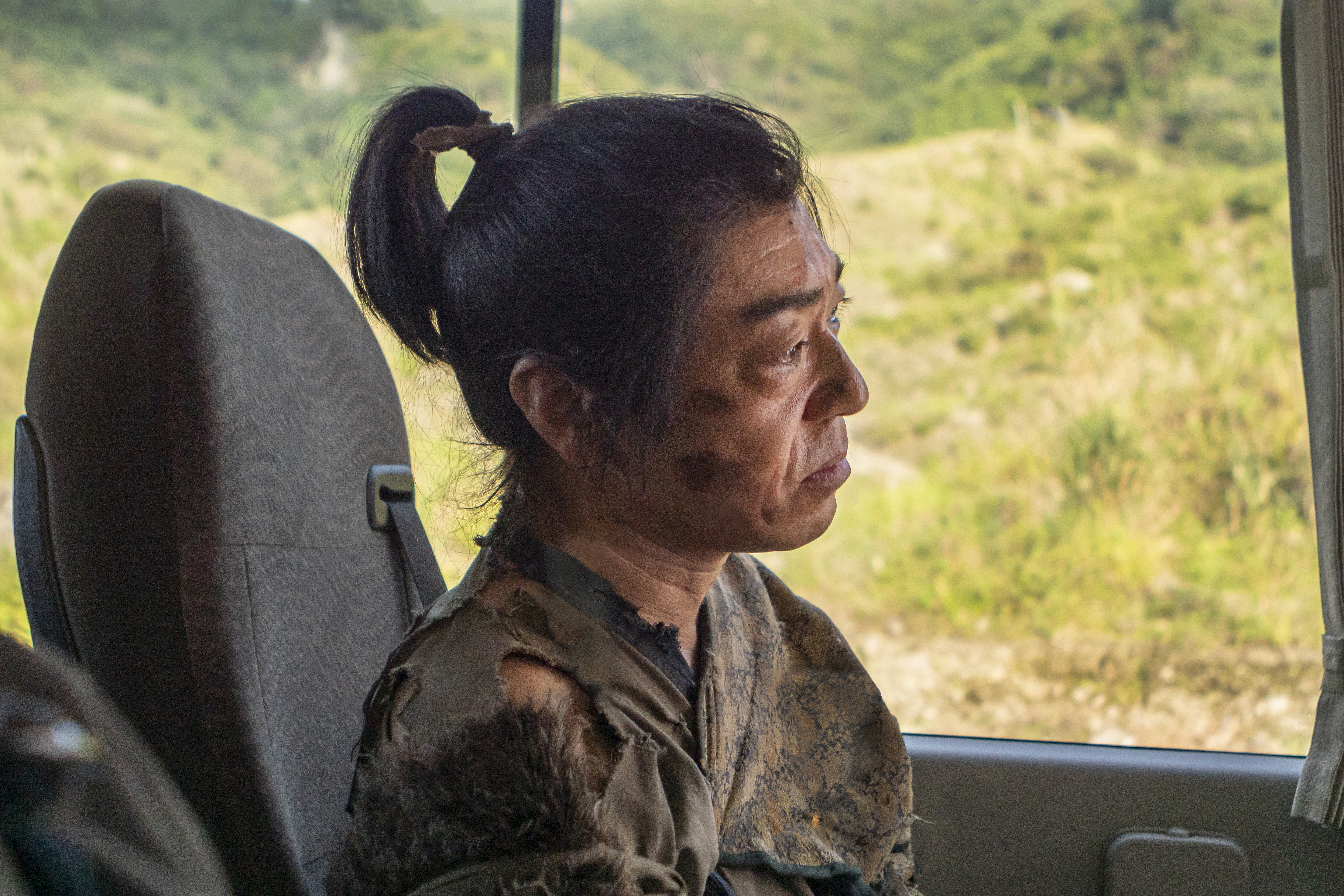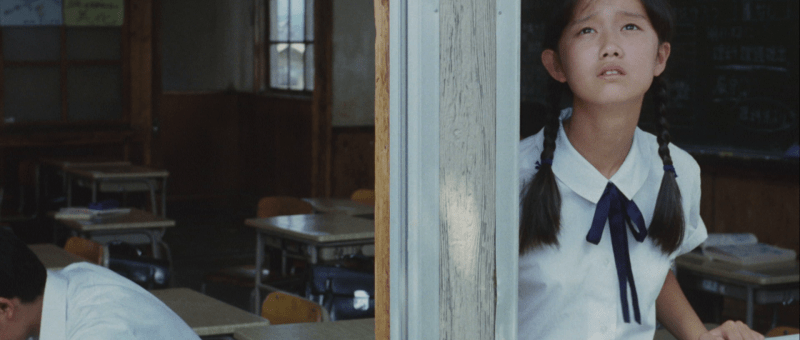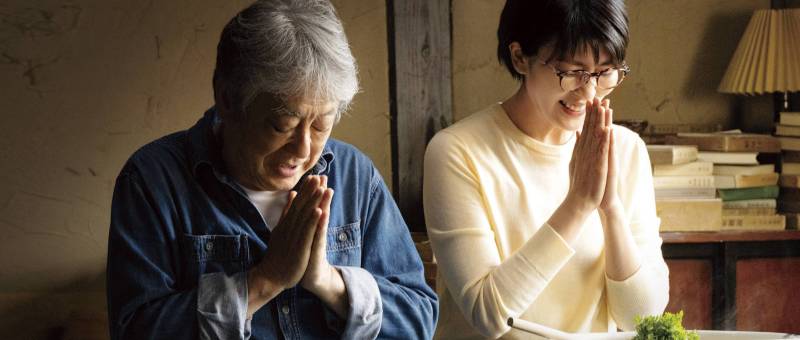
Rewrite (リライト, Daigo Matsui, 2025) [Fantasia 2025]

A mysterious transfer student arrives from the future. You have 20 wonderful days with him, but then he must return to his own time. He tells you that he came back to meet you and experience your time because of a book you will write, and your future self also shows you the book, tells you you did indeed write it, and that everything’s going to be okay. But in 10 years’ time, when you’re your “future self”, you from the past does not show up to get any of this information. Did something go wrong? Is the timeline crumbling? Or did you just imagine all this as a manifestation of “youth”?

When this happened to her, Miyuki (Elaiza Ikeda) believed that she was “the heroine of that summer,” but the truth is of course that she was always the heroine of her own life and had the right and power to make her own choices. Adapted from the novel by Haruka Honjo, Daigo Matsui’s Rewrite (リライト) is, like Obayashi’s The Little Girl Who Conquered Time, about the dangers of nostalgia and the over romanticisation of youth. What Miyuki gradually comes to realise is that one of the formative experiences of her teenage years may not have been unique or special but happened to literally everyone and changed them too in ways that were not always good. Because she met Yasuhiko (Kei Adachi) from 300 years in the future, she became a writer. But it remains true that her first few books weren’t about him at all. She always had the talent and the inclination. The impetus of destiny was only what gave her the confidence to pursue it. She knew she could, because she already had.

Yet, she’s in her hometown to close a loop on this unresolved romance of her youth despite having built a good life for herself as a successful author with a nice husband she met during the course of her work who is caring and supportive of her career. At the high school reunion she’s cajoled into going to, her former classmates sing the song they were practising for choir, “Cherry” by Spitz, which is also about “rediscovering each other, some day, same place,” echoing Yasuhiko’s cryptic claim that they’d meet again “in the future” (whose he doesn’t say) hinting at the way these feelings have been left hanging with only a yearning for the past and a painful nostalgia in their place. What Miyuki really has to ask herself is if she’s the person she wants to be in the present and is who she is because of the choices she made independently rather than solely because she was trying to fulfil the destiny given to her Yasuhiko.

To do so, she must face the fallacy of the “chosen one” mentality. The film rams this home in the parallel story of one of Miyuki’s classmates who tells her that she wasn’t chosen but actively chose to accept a kind of destiny rather than simply going along with it and that Miyuki too could “rewrite” the past if she wanted. In effect, this is what she’s already done as her husband implies when he repeatedly asks her if the book is “fiction”. Of course, it is, though she believed it not to be because it’s rooted in nostalgia and the personal myth making of the idealised romance of her youth. Matsui too plays with this sense of nostalgia in moving the setting of the story to Onomichi to mimic that of Obayashi’s The Little Girl Who Conquered Time and making frequent visual references to the 1983 film along with casting Toshinori Omi, the original boy who leapt through time, as the class teacher at the 10 years later reunion.

But the truth remains that Miyuki must learn to let go of the past, or else take mastery over it by rewriting her own story to accept that, as her husband says, the past and present are all hers. She can write anything and can finally leave her own time loop by writing her way out of youthful nostalgia and accepting something more like an objective reality along with the life she has now which appears to be happy and successful. Scripted by Makoto Ueda who has a long history of time-travel themed movies from Summer Time Machine Blues to River, Matsui’s poignant drama is shot through with irony and in constant dialogue with pop culture touchstones from the Obayashi film to Shunji Iwai’s Love Letter, while at the same time insisting that while you are the main character in your own life, you’re not the only one and a hundred stories are going on at the same time as yours. What really matters is not hanging on to the memories of an idealised past, but to live the life you want in the present for as long as this particular loop lasts.


Rewrite screened as part of this year’s Fantasia International Film Festival.

Original trailer (English subtitles)

Secret: A Hidden Score (言えない秘密, Hayato Kawai, 2024)

The shojo manga vibes are so strong with Hayato Kawai’s Secret: A Hidden Score (言えない秘密, Ienai Himitsu) that it’s difficult to believe it’s actually a remake of a Taiwanese film from 2007. Anyone remotely familiar with the genre will have figured the mystery fairly early on though Kawai does his best to build on the gothic overtones in what is actually a story about the hero’s recovery of his love for music having had it beaten out of him while studying abroad in the UK. 

To that extent, Minato’s (Taiga Kyomoto) disillusionment with the piano is akin to a loss of the self. He’s come back from London earlier than expected and is quickly humiliated during his friends’ hazing ritual of making him participate in a piano duel with another student which he gives up on half way through. Having experienced a truly terrible teacher who shouted and bullied him into feeling as if he should give up on music if not life Minato is left listless and lonely with no sense of direction.

This might be why he’s drawn to Yukino (Kotone Furukawa), a mysterious presence he first encounters after being struck by the sound of her playing piano in an abandoned music room soon to be torn down. He asks her what the name of the song is, but she only tells him that it’s a secret like many other things about her. Minato is fascinated but also resentful, captivated by the mystery that surrounds Yukino while frustrated by the playful distance she keeps from him. In many ways she represents life, not only romantic love but restoring his love of music and a sense of confidence in it born of his rediscovery of the simple joy of playing as symbolised by the toy piano which his father (Toshinori Omi) is also trying to repair for him.

Yet it’s also clear something’s not quite right. Yukino’s clothes are slightly old-fashioned and she doesn’t own any kind of mobile phone. No one else on campus seems to know her and she often disappears without warning only to reappear just as unexpectedly. A minor love triangle develops between Minato, Yukino, and his childhood friend Hikari (Mayu Yokota) which later provokes a secondary emotional crisis though it’s clear this slippery duet that Minato is playing gradually allows him to open himself back up emotionally so that he can re-embrace his love of music and once again play the piano which is all he’d lived for until the cruel worlds of sadistic teacher caused him to want to give up on life.

Kawai certainly ups the romance with the gothic aesthetics of the disused music room along with the drafty corridors leading to it, though when the secret is eventually revealed it’s something of an anti-climax given its obviousness and the lack of effect it has on Minato who seems to be left with another unfinished symphony of longing and loneliness destined to echo through his music for years to come. There is however a poignancy in Yukino’s declaration that she just wanted to be an ordinary girl and in the shattering of her romantic illusions when she sees that Hikaru is in love with Minato and subject to none of the barriers that cause her to think her romance has no longterm possibilities. 

More than the Taiwanese original, the film leans into the tropes of shojo manga along with the junai classics of the early 2000s in its supernaturally-tinged tale of tragic romance and impossible love. As such, the film has a nostalgic quality though its retro touchstones seem somewhat out of sync in its polaroid cameras and ‘50s-themed disco even if that itself may equally be a kind of reference to Back to the Future, though more than anything else it’s a tale of a miracle created by music bringing two lonely souls together. It may seem as if Minato is drawn towards death or something dark, but is in reality chasing himself and the melody of a life that’s lost to him, perhaps finally catching it and learning to play again only to find that the dance ends much too soon leaving only the barest echo of itself behind.


Secret: A Hidden Score screened as part of this year’s Nippon Connection

Original trailer (English subtitles)

The Phoenix (火の鳥, Kon Ichikawa, 1978)

The people of early Japan contemplate different visions of immortality in Kon Ichikawa’s sprawling adaptation of the first chapter in Osamu Tezuka’s manga series, The Phoenix (火の鳥, Hi no Tori). Featuring a mix of animation and live action, the film takes place in an ancient, pre-modern Japan in which just about everyone chases the mysterious fire bird in belief that drinking its blood will confer eternal life. They each want it for different reasons, some more to stop someone else getting it than for themselves but all discover that there are other ways of living on than the strictly literal. 

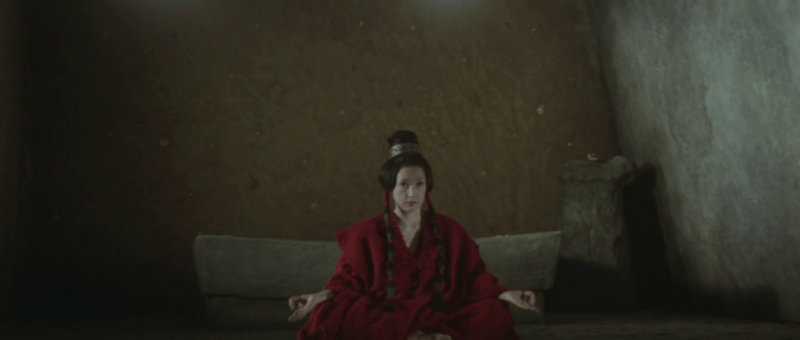
Broadly speaking the film takes place during the era of possibly mythical sorceress queen Himiko (Mieko Takamine) who rules over the nation known as Yamatai which is the name given to a kingdom in Japan in ancient Chinese sources. Himiko wants the phoenix because she fears that her power is founded on a youth and beauty which has begun to fade while the people are beginning to lose faith in her magic, not least because her rule is oppressive and authoritarian. She also fears that should the Chinese emperor drink the phoenix blood first, they will forever be under his yoke yet the seal that confers her rule was in fact given by him so perhaps they are already. Her brother, Susano (Toru Emori) whom she also fears may usurp her, enlists famed hunter Yumihiko (Masao Kusakari) from the state of Matsuro to help them capture the phoenix seeing as the two nations have some kind of treaty. Yumihiko says he doesn’t really care about that, but ends up helping anyway.

In any case, Matsuro is soon overrun in a surprise attack by warlord Jingi (Tatsuya Nakadai) from Takamagahara who is set on colonisation, which is in its way another bid for “immortality” if culturally rather than literally. After all, he claims “I will implant our civilisation in these lands” before explaining that “not even the greatest kings live forever” but history will. Meanwhile, Yamatai doctor Guzuri (Ryuzo Hayashi) is washed up on the shores of remote kingdom Kumaso where Uraji (Masaya Oki) is hunting the phoenix in the hope of saving his seriously ill wife Hinaku (Reiko Ohara). Uraji is soon burnt to a crisp by the Phoenix’s light, but Guzuri is able to save Hinaku using “modern” medicine, that is by applying “blue mould” which as the onscreen text explains contains penicillin. Perhaps feeding someone mould doesn’t sound much more scientific than the bizarre folk medicine proposed by the witchdoctor which involves rubbing the severed heads of cats and ravens together and putting fish bones on the patient’s head while burning their buttocks, but it works which is not exactly a means of “immortality” but does promise the ability of temporarily overcoming death without the Pheonix’s help. 

But medicine can’t help you with an invasion, and when the Yamatai suddenly turn up and raze the village to get better access to the phoenix after realising it lives in a nearby volcano only Hinaku and her brother Nagi (Toshinori Omi) survive. Hinaku reluctantly remains with Guzuri and vows to rebuild her kingdom through childbirth vowing that she will enable the survival of Kumaso by passing her culture on through successive generations. Uzume (Kaoru Yumi), a dancer from Matsuro, later says something similar to Jingi in reminding him that “women have their own weapons” and he will “never be able to destroy life” as an abstract concept. There might be something a little uncomfortable in the implication that the phoenix is an allegory for childbirth in suggesting that one body is born in the ashes of another, but it is in the end the continuity of a lifecycle which wins out as the natural order of things. In the film’s concluding moments, the son of Hinaku and Guzuri in a sense experiences a kind of rebirth as, guided by the phoenix, he climbs out of the cave in which he has lived all his life and gazes at the vast expanses of a new world all around him. 

Ichikawa originally trained as an animator and includes several animated sequences throughout the film from cartoonish special effects when an elderly courtier bangs his head to a trio of foxes dancing to pink lady. His visual design is also heavily influenced by Tezuka’s manga with the young boy Nagi in particular striking Tezuka-esque poses and otherwise resembling Astroboy who does in fact make a surprise appearance in a brief animated sequence in which Nagi is kicked by a horse. Similarly, the conflicted general Saruta (Tomisaburo Wakayama) later gains a ridiculous Tezuka-style nose after being locked in a room filled with wasps, and Ichikawa’s vistas sometime echo the centrefold of a manga with the heroes reduced to tiny figures dwarfed by the majesty of the landscape. Even so, a rain-soaked battle pays ironic homage to Seven Samurai, while Ichikawa otherwise keeps violence to a minimum. The heads are chopped off horses and fall like cushions, entirely bloodlessly, but there is also a scene of implied attempted rape which may be out of keeping with the otherwise family-friendly approach. Despite the sense of defeat which may colour some of the closing scenes, the film ends on a note of optimistic wonder in a new journey for humanity emerging from scenes of desolation towards a bright new world. 


The Legend & Butterfly (レジェンド&バタフライ, Keishi Otomo, 2023)

“What was everything for?” an ageing Nobunaga (Takuya Kimura) asks his attendant Ranmaru (Somegoro Ichikawa) towards the conclusion of Keishi Otomo’s historical epic, The Legend & Butterfly (レジェンド&バタフライ, Legend & Butterfly) produced in celebration of Toei’s 70th anniversary. Oda Nobunaga is such a prominent historical figure that his story has been told countless times to the extent that his legend eclipses the reality, but rarely has been he depicted so sympathetically as in Otomo’s history retold as romantic melodrama in which he and his wife, Lady No (Haruka Ayase), are mere puppets of the times in which they live dreaming only of a place beyond the waves where they might be free of name or family. 

Tellingly, Otomo opens in the spring of 1549 in which the dynastic marriage was arranged to broker peace between unstable neighbouring nations Owari and Mino. Nobunaga’s father’s health is failing and he fears in the chaos of his death Mino may attack, while No’s father fears that her brother will soon revolt against him plunging the fiefdom into disarray and therefore vulnerable to an attack by Owari. At this point, Nobunaga is known as “the biggest idiot in Owari,” a foppish dandy who cares only about appearances. As he prepares to meet No, his courtiers apply his makeup and do his hair while dressing him in a rather outlandish outfit No immediately insults as “foolish”. He treats her with chauvinistic disdain, barely speaking save to order her to pour the drinks and give him a massage only for her to point out that she’s been travelling all day and a “thoughtful” considerate husband would be giving her a massage instead. “I detest women who do not know their place,” he snaps. “I detest men who are ignorant,” she counters. The wedding night ends in humiliating failure as No demonstrates her martial arts skills and Nobunaga is forced to call his guards to rescue him. 

Little is known of Lady No in historical record, but here she is bold and defiant, as her father had said too free with her opinions for a woman of the feudal era. She claims to have been married twice before and assassinated both husbands on her father’s orders, implying that she is essentially sleeper agent more than hostage and will kill Nobunaga without a moment’s thought as soon as the word is given. Yet she also begins to guide her husband towards his destiny, mocking him as a fool but giving him useful strategic advice that wins him glory on the battlefield along with the political advancement that led him to become the first great unifier of Japan. For all that they “hate” each other, they are well matched and have a similar sensibility that allows them first to become allies and then friends before frustrated lovers.

But their love is enabled only when they escape the feudal world, shaking off their retainers to go on a “normal” date in Kyoto where they dance to Western musicians and taste foreign candy only to end up accidentally massacring some peasants when No’s martial arts training kicks in trying to stop a man beating his son. Even so, they are forever linked by their time in Kyoto in the romantic talisman’s of a carved wooden frog and a European lute even if the blood-spattered jizo and buddhist statue watching their eventual connection imply there will be a reckoning for all the blood that is spent. Jumping on a few years, the film does not elaborate on what caused Nobunaga to become a man without a heart and lose the love of his most trusted ally but positions his transformation into the “Demon King” as the kernel of his undoing just as his dream of unifying Japan and bringing about an age of peace (if one ruled by fear) is about to become a reality. 

In any case, the one thing that everybody knows about Nobunaga is how he died though then again his remains were never recovered giving rise to a happier ending in which he and Lady No were finally able to escape the feudal world to chase a freer future beyond the sea which is perhaps what they do in the film’s poetic final sequence in which they might in a sense share a dream connected by frog and lute. It might not be very historically accurate, but that is perhaps the point in hinting at the lives they might have led if the world had been different. Otomo films with a painterly eye that lends an air of poignant gravitas to a tale of romantic tragedy in which love is both salvation and destruction amid the flames of a collapsing temple. 


The Legend & Butterfly screened as part of this year’s JAPAN CUTS.

Original trailer (English subtitles)

Roleless (宮松と山下, Masahiko Sato, Yutaro Seki, Kentaro Hirase, 2022)

Ever felt like a bit player in your own life? For the hero of Masahiko Sato, Yutaro Seki and Kentaro Hirose’s Roleless (宮松と山下, Miyamatsu to Yamashita), it’s more like he lives ten thousand lives if only for an instant in his life as an extra and may have, in a way, cultivated an image of himself as a blank canvas who no longer exists in an absolute form. In a way you could call it multiverse living, but when confronted with a possible point of origin, a lost selfhood he may have forgotten or wilfully rejected, it presents him with an existential question not so much of who he wants to be but if he wants to be at all. 

We first encounter him as an unlucky retainer in a jidaigeki who is quickly cut down only to rise again and run around the back to give his name as “Miyamatsu, a samurai” to the prop girl who gives him a different hat so can he go back out there and die a second time. Miyamatsu has an air of perpetual blankness in his often vacant expression as if he were both there and not. The film often wrong foots us and we can never be sure what is “real” and what part of a movie, except that it all obviously part of the movie we ourselves are watching. We see what we think are moments from Miyamatsu’s private life only to realise that the camera was rolling all along when someone shouts “Cut!” and it becomes apparent that Miyamatsu was not its main focus. 

Along the way he gives hints of his loss of selfhood, earnestly replying that he doesn’t know when a fellow extra quizzes him on the watch he’s wearing and how he got it but his discomfort could stem from several places and it’s never quite clear how much of an interior life Miyamatsu creates for his various roles, whether he really does just see them as performers of an action, is playing “himself” as he peers over a police cordon at a crime scene, or is a fully fledged person with an individual history. Later he tells a colleague who admires the way he fills in forms at his part time job working at a cable car that he’s always enjoyed the process of filling in a predetermined frame but also that he likes the floating sensation the cable cars give him. 

All of which might explain why he’s so destabilised when a man (Toshinori Omi) approaches him claiming that they worked together as taxi drivers more than a decade earlier and that his name is Yamashita. He apparently “disappeared” after sustaining a head injury and has been “missing” ever since. The man takes him back to the home of his much younger sister, Ai (Noriko Nakagoshi), who has since married and appears to be incredibly relived to see him even if it seems she might also be hiding something. He wonders if it’s suspicious that there are no photos of him in their family home, but is reminded that with the age difference he hadn’t lived there while she was a child and only came back after their parents died to take care of her because she was still in high school. Her husband, Kenichiro (Kanji Tsuda), seems to be constantly needling him though again, it isn’t always clear whether he actually wants him to remember or suspects that he already does and is choosing to pretend not to. 

Even so, Miyamatsu slides into the life of Yoji Yamashita as easily as any other role finding his way back into the character with unexpected moments of connection such as the muscle memory that grants him a perfect baseball swing, or the strangely familiar taste of cigarettes to a non-smoker. Then again, there’s obviously something sinister going on, a darkness underlying his “personal” history that might have made him want to absent himself from himself or else an oppressive sense of bullying that is reflected in Ai’s hesitant answer when Yamashita remarks on what a good husband Kenichiro seems to be. Miyamatsu claims that he’s ever only played one “real” role, and in a way this is it as he begins to claim something like a backstory even if it’s one he may not ultimately want that nevertheless renders him a little less vacant. Mysterious and unsettling, the film asks some probing questions about the nature of identity, whether it is self-defined or gifted, but also discovers a kind of serenity in Miyamatsu’s free floating life of transient realities.


Roleless screened as part of this year’s Nippon Connection

Clip (no subtitles)

Typhoon Club (台風クラブ, Shinji Somai, 1985)

A collection of frustrated teens find themselves trapped within a literal storm of adolescence in Shinji Somai’s seminal youth drama Typhoon Club (台風クラブ, Taifu Club). “You’ve been acting weird lately” one character says to another, but he’s been “acting weird” too and so has everyone else as they attempt to reconcile themselves with an oncoming world of phoney adulthood, impending mortality, and the advent of desires they either are unable or afraid to understand, or perhaps understand all too well but worry they will not be understood. 

Most of the teens seem to look to the pensive Mikami (Yuichi Mikami) as a mentor figure. It’s Mikami they call when some of the girls end up half drowning male classmate Akira (Toshiyuki Matsunaga) after some “fun” in the pool gets out of hand. Luckily, Akira is not too badly affected either physically or emotionally, but presents something of a mirror to Mikami’s introspection. Slightly dim and etherial, he entertains his friends by seeing how many pencils he can stick up his nose at the same time, but he’s also as he later says the first to see the rain once it eventually arrives. Notably he leaves before it traps several of the others inside the school without adult supervision and otherwise misses out on the climactic events inside. Even so, Rie (Yuki Kudo), who also misses out by virtue of randomly stealing off to Tokyo for the day, later remarks that he too seems like he’s grown though her words may also be a kind of self projection. 

Mikami’s kind of girlfriend, perpetual spoon-bender Rie, finds herself at a literal crossroads after waking up late because her mother evidently did not return home the night before. Eventually she sets off for class running all the way, but then reaches a fork in the road and changes her mind heading to Tokyo instead. Mikami has been accepted into a prestigious high school there, and perhaps a part of her wanted to go too or at least to get closer to him through familiarity with an unfamiliar environment. Unfortunately she soon encounters a firearms enthusiast (Toshinori Omi) who buys her new clothes and takes her back to his flat which she thankfully manages to escape even if she’s stuck in the city because of a landslide caused by the typhoon.  

Mikami, however, continues to worry about her unable to understand why he’s the only one seemingly bothered about her whereabouts believing she’s “gone crazy”. Trapped in the school, the kids try to ring their teacher Umemiya (Tomokazu Miura) for help but he’s already drunk and can’t really be bothered. In any case he has problems of his own in that his girlfriend’s mother suddenly turned up during class to berate him for stringing her daughter along and also having borrowed a large amount of money which obviously ought to have some strings attached, only as it turns out Junko leant the money to another guy she was seeing though it’s not exactly clear whether she and Umemiya actually broke up or not. “In 15 years you’ll be exactly like me” Umemiya bitterly intones into the phone when Mikami directly states that he no longer respects him deepening Mikami’s adolescent sense of nihilistic despair. 

Of all the teens, he does seem to be the most preoccupied with death. “As long as she’s an egg, the hen can’t fly” he and his brother reflect on discussing if it’s possible for an individual to transcend its species and if it’s possible to transcend it though death all of which lends his eventual decision a note of poignant irony even if its absurd grimness seems to be a strange homage to The Inugami Family. As he points out to his somewhat disturbed friend Ken (Shigeru Benibayashi), “I am not like you” and indeed Ken isn’t quite like the other teens. Obsessed with fellow student Michiko (Yuka Ohnishi) but unable to articulate his feelings, Ken pours acid down her back and watches her squirm as it eats into her flesh. Repeating pleasantries to himself as a mantra, he later attempts to rape her after violently kicking in the dividing walls of the school only to be stopped in his tracks on noticing the scar again and being reminded that he is hurting her. 

The storm seems to provoke a kind of madness, the teens embracing an elusive freedom entirely at odds with the rigid educational environment. The other three girls trapped in the school are a lesbian couple who’d been hiding out in the drama department and their third wheel friend who might otherwise have been keen to hide their relationship from prying eyes having previously been caught out by a bemused and seemingly all seeing Akira. But in this temporary space of constraint and liberation, the teens are each free for a moment at least to be who they are with even Ken and Michiko seemingly setting aside what had just happened between them. They co-opt the stage for a dance party and then take it outside, throwing off their clothes to dance (almost) naked in the rain while a fully clothed Rie does something similar on the streets of the capital. In some ways, in that moment at least they begin to transcend themselves crossing a line into adulthood in a symbolic rebirth. In any case, Somai’s characteristically long takes add to the etherial atmosphere as do his occasional forays into the strange such as Rie’s encounter with a pair of ocarina-playing performance artists in an empty arcade. “We want to go home, but we can’t move” Mikami says looking for guidance his teacher is unwilling to give him neatly underlining the adolescent condition as the teens begin realise they’ll have to find their own way out of this particular storm. 


Typhoon Club screens at Japan Society New York on April 28 as part of Rites of Passage: The Films of Shinji Somai

The Zen Diary (土を喰らう十二ヵ月, Yuji Nakae, 2022)

A romanticised idea of returning to the land has become a frequent motif in recent independent Japanese cinema as disillusioned youngsters crave freedom in simplicity but there’s no use denying the life of a mountain ascetic is not for everyone. Based on a 1978 essay by Tsutomu Mizukami, The Zen Diary (土を喰らう十二ヵ月, Tsuchi wo Kurau Junigatsu) is part foodie feature comfort film in the vein of The Little Forest and part melancholy contemplation on the cycle of life along with its inevitable end. 

Ageing widower Tsutomu (Kenji Sawada) lives in a cabin in the mountains with his beloved dog and is mostly self-sufficient, growing his fruit and vegetables for the largely vegetarian temple food he learned to cook as a novice monk. His peaceful days are sometimes interrupted by the arrival of his editor, Machiko (Takako Matsu ), in search of his latest manuscript but otherwise intent on staying for meal made with the freshest produce lovingly prepared by Tsutomu. It’s clear that their relationship is no longer strictly professional, if otherwise ill-defined, but equally that Tsutomu’s mountain life could itself be seen as a kind of limbo in his inability to move on from the death of his wife 13 years previously. Her ashes still sit in a box on his altar long after most would have them interred much to his elderly mother-in-law Chie’s (Tomoko Naraoka) consternation. 

Chie is also a mountain ascetic living in a cabin not far from Tsutomu’s where she apparently supplies half the local area with home made miso paste. This life is hard enough for Tsutomu, but must be verging on the impossible for a woman of Chie’s age. Nevertheless, she perseveres while apparently estranged from her surviving son (Toshinori Omi) with whose wife she did not apparently get along. Because of this apparent disconnect, Tsutomu is for some reason held responsible for her existence despite not being a blood relative, while her son is confused by her lifestyle and more or less refuses to have anything to do with her. 

Still, like Tsutomu she had perhaps also come to understand that life is movement and the simple routine of tending crops and preparing sustenance is the engine that drives existence. Divided into a series of vignettes following the traditional divisions of the year, the film lingers on seasonal details as Tsutomu painstakingly washes and prepares his homegrown veg and pickles to prepare for the upcoming season. A series of brushes with death, however, throw him into a contemplative mood realising that his ascetic lifestyle is also a flight from the inevitable and a refusal to face his fear of mortality. “Who in this world lives for eternity?” a folk song asks, while Tsutomu meditates on the zen teachings of his Buddhist upbringing and his life as a novice monk raised in a temple from the age of nine until he ran away at 13.

His reflections are perhaps more in keeping with the 1978 of the original essay than they are the contemporary setting of the film but also hint at the absurdity of class inequality. The crematorium has two doors, only one of them ornate, yet everyone leaves the same way and we are all equal in the end. He was sent to the temple because his family were too poor to feed him, though his temple life stood him in good stead for self-sufficiency and gave him the capacity for solitude. Though his family had lived on the edges of a graveyard, his father made coffins for a living, and temple life is necessarily bound up with death, Tsutomu had lived in its shadow never making his peace with mortality. Yet the seasons will also progress towards winter, and Tsutomu with them as his life draws towards its inevitable conclusion.

In any case, the film’s final words are those of thankfulness for all that life has to offer as represented in the fruits of the earth, gratefully received by an enlightened Tsutomu. In keeping with its subject matter, the unfussy yet often picturesque photography brings out the pleasures of a life of simplicity and the human warmth often to be found within it while also reflecting the intense melancholy of Tsutomu’s contemplative solitude as he meditates not only on mortality but what it is to live in sync with the rhythms of the natural world.


The Zen Diary screens at New York’s IFC Center on Feb. 12 & 16 as part of ACA Cinema Project’s New Films From Japan.

International trailer (English subtitles)

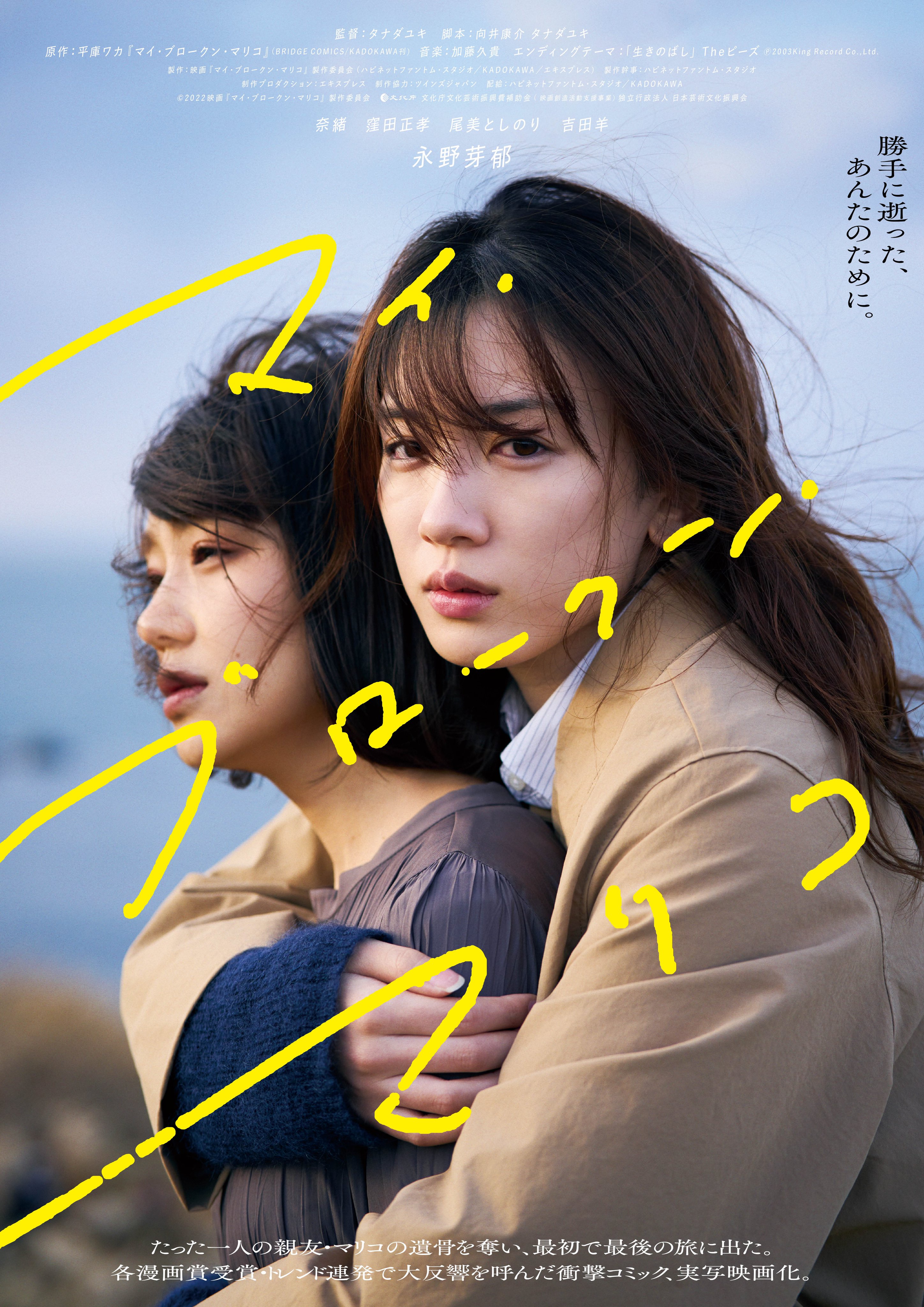
My Broken Mariko (マイ・ブロークン・マリコ, Yuki Tanada, 2022) [Fantasia 2022]

“The only thing you can do for a person who’s gone, is to live” according to a kindly soul at a train station attempting to comfort the heroine of Yuki Tanada’s adaptation of the manga by Hiroko Waka, My Broken Mariko (マイ・ブロークン・マリコ). It is in many ways, however, Shiino (Mei Nagano) who is trying to put herself back together after earth-shattering loss, attempting to reclaim her friend’s memory while struggling to reorient her life in the wake of her absence. Yet what she comes to realise is that all she can do for Mariko (Nao) now is to try to live.

At a cafe one ordinary day, Shiino hears the news announce the death of a woman presumed to have taken her own life who has the same name as her childhood friend. Overcome with anxiety, she tries to call Mariko on the phone but gets no answer nor reply to her messages. Dropping by her apartment, she realises the worst is true. Mariko is gone and she didn’t even say goodbye. Her apartment has already been cleared and her parents apparently opted for a “direct” cremation not even bothering to hold a funeral. It’s almost as if Mariko never existed at all. 

Consumed by grief and guilt that she didn’t see her friend’s death coming or in some way failed to save her, Shiino makes up her mind to rescue her unable to bear it that the father who beat and abused her all her life is allowed to keep her in death. After making a dramatic raid on their apartment, she kidnaps Mariko’s funerary urn and hits the road searching for new directions while on one last road trip looking for a safe place to let her friend rest. 

This was certainly an intense friendship or on Shiino’s side at least something more, she is clearly coded as queer in her masculine speech and attire, yet Mariko seems to have looked to her as a sisterly or maternal figure at one point exclaiming that she would have liked it if Shiino had given birth to her. As high school girls they’d idly looked at flats for rent, vowing to stay together until they were old and most importantly with a pet cat but even though Mariko had threatened suicide if Shiino were to get a boyfriend she eventually drifted away into a series of abusive relationships for which she continued to blame herself. Shiino can’t forgive herself that as much as she tried to show her she cared, she was never able to reach her or to restore Mariko’s sense of self worth. Now that she’s gone she finds herself still searching for her, struggling to remember not only the bad things or the good things but everything she was.

Through her random road trip, Shiino is forced to let Mariko go little by little firstly with the loss of her childhood letters to the unlikely appearance of a bag snatching biker in small-town rural Japan and secondly in ironically using the funerary urn to save another woman from abuse. The ghost of Mariko seems to hover around her, a street lamp flickering in comfort as she breaks down in tears in the street reading a letter in which the young Mariko told her she was no longer afraid to walk in the dark after hearing that Shiino used to go walking at night and she might bump into her at any time, while she is at one point almost possessed by her spirit when reclaiming her memory from the abusive father Shiino blames for causing her death in slow motion. In setting Mariko free she liberates herself not least from her all consuming friendship in which she admits that she had nothing and nobody else. 

“So this is how we get back to our ordinary lives” she reflects, lamenting that to the rest of the world Mariko’s death is an irrelevance and her absence barely felt, a realisation that can’t help but leave her feeling small and insignificant as do the offhand remarks from Mariko’s landlord that it’s a good thing she didn’t die in the apartment and her exploitative boss’ insistence that the death of a close friend isn’t a good enough excuse to take time off work. Replete with a quirky sense of humour despite the deep melancholy of Shiino’s overwhelming grief, Tanada’s empathetic drama finally allows its heroine to put herself back together again living quite literally in memory of her friend. 


My Broken Mariko screened as part of this year’s Fantasia International Film Festival.

Original trailer (English subtitles)

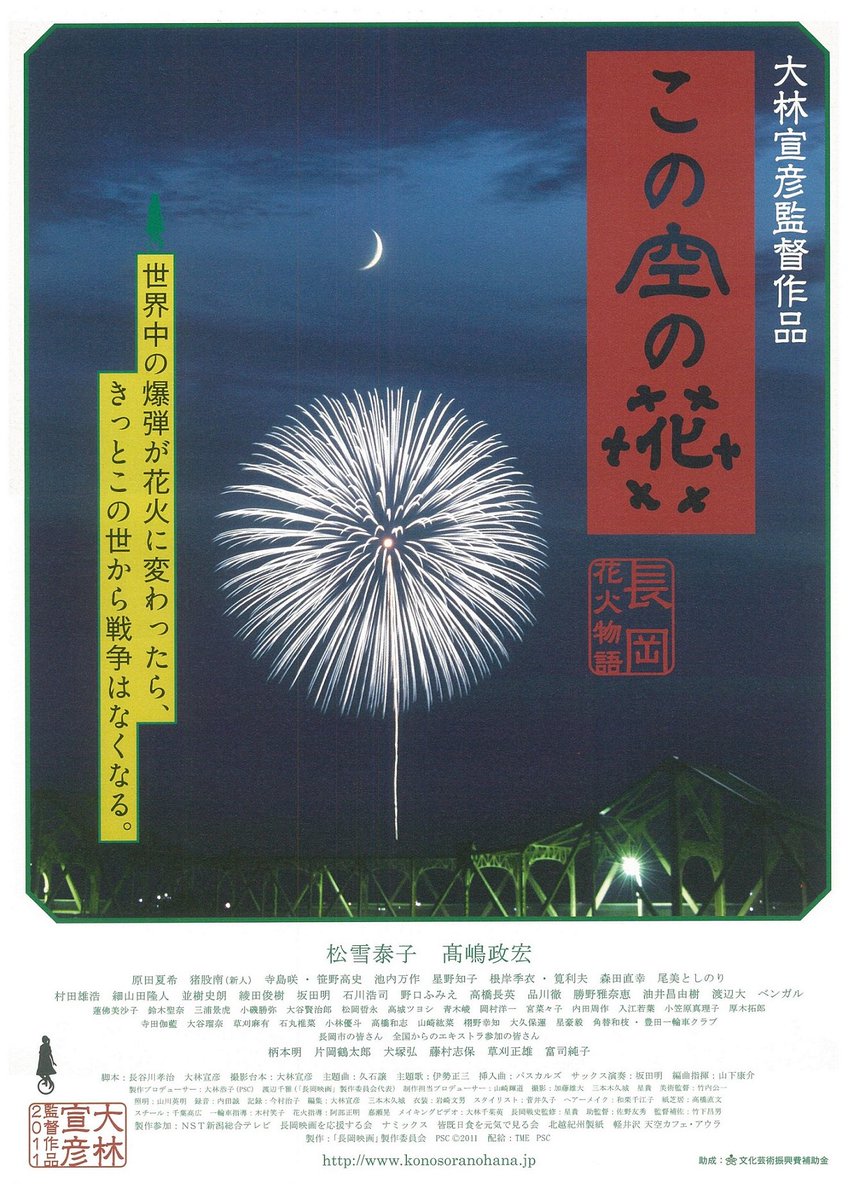
Casting Blossoms to the Sky (この空の花 長岡花火物語, Nobuhiko Obayashi, 2012)

“There’s still time until a war” runs the title of a play for voices at the centre of Nobuhiko Obayashi’s oscillating docudrama, Casting Blossoms to the Sky (この空の花 長岡花火物語, Kono Sora no Hana: Nagaoka Hanabi Monogatari). Asking why when presented with the opportunity to create something beautiful that gives joy and hope to all who witness it mankind chooses death and destruction, Obayashi considers responses to disasters manmade and natural and finds largely kindness and resilience among those determined to avoid the mistakes of the past while building a better tomorrow. 

Set in the immediate wake of the 2011 earthquake and tsunami and inspired by verbatim interviews with local people, Obayashi’s elliptical drama sends an emotionally arrested newspaper reporter to Nagoka having received a letter from an old lover that calls her back into the past. Reiko (Yasuko Matsuyuki) broke up with Katayama (Masahiro Takashima) 18 years previously uttering only the cryptic phrase “we have nothing to do with war”, but travelling through her “wonderland” begins to realise that she and everyone else is in that sense wrong. No one is really entirely unconnected or untouched by the destructive effects of conflict and pretending that it’s nothing to do with you will not in the end protect against it. 

“To the children of the future, from the adults who lived the past” runs the opening title card, making plain a fervent hope to connect the often unknowing younger generations who assume war is nothing to do with them with the traumatic past through the voices of those who directly experienced it. The play to which Reiko is invited is in itself a play for voices, an avant-garde theatre piece inspired by the verbatim speeches of residents of Nagaoka recounting their often harrowing experiences of the war apparently penned by a strange high school girl (Minami Inomata) who rides everywhere on a unicycle. The performance is set to take place in conjunction with the local summer festivals which include a series of fireworks displays commemorating lives lost in the bombing raids and symbolising a spirit of recovery following a destructive local earthquake some years earlier. 

Obayashi draws direct comparison between the natural disasters of earthquake and tsunami, and the manmade disaster of war but discovers that ordinary people often react to them in the same way with a furusato spirit of mutual solidarity and kindness. One of Katayama’s students is a displaced young man from Fukushima who remarks on the kindness he experienced having been taken in by the town of Nagaoka, a kindness he hopes to repay someday when he is finally allowed to return to his own hometown just as the people of Nagaoka have done following kindness shown to them after the earthquake. The discrimination he faces as someone from a town affected by radiation calls back to that experienced by Reiko’s parents who were survivors of the atomic bomb that fell on Nagasaki, a location chosen by pure chance on a whim when poor weather made the primary target unavailable. Among all the horror of the wartime stories Reiko uncovers, there is also selfless heroism such as that of the young man bravely throwing water over those trapped in a burning air raid shelter. 

“If only people made pretty fireworks instead of bombs, there wouldn’t have been any wars” a poet laments drawing a direct line between these two very different uses of the same material, a connection further rammed home by twin visits to a fireworks factory and atomic bomb museum. The “phoenix fireworks” become a fervent prayer, blossoms cast to the sky, in hope of a better, kinder future without the folly of war. “There are adults who think war is necessary” Katayama explains, “but not the children, of course. That’s why it’s up to the children to make peace”. Some may complain that in the rapid economic development of the post-war society something has been lost, but in times of need people are still there for each other forging the furusato spirit in contemporary Japan. Opening with a series of silent-style title cards, Obayashi’s overtly theatrical aesthetics may be comparatively retrained even while incorporating frequent use of animation and surrealist backdrops, but lend an ever poignant quality to this humanist plea for a more compassionate world in which the only explosions in the sky are made of flowers and hope not hate or destruction. 


Casting Blossoms to the Sky streams in the US July 9 – Aug. 6 as part of Japan Society New York’s Tragedies of Youth: Nobuhiko Obayashi’s War Trilogy season in collaboration with KimStim.

Original trailer (English subtitles)
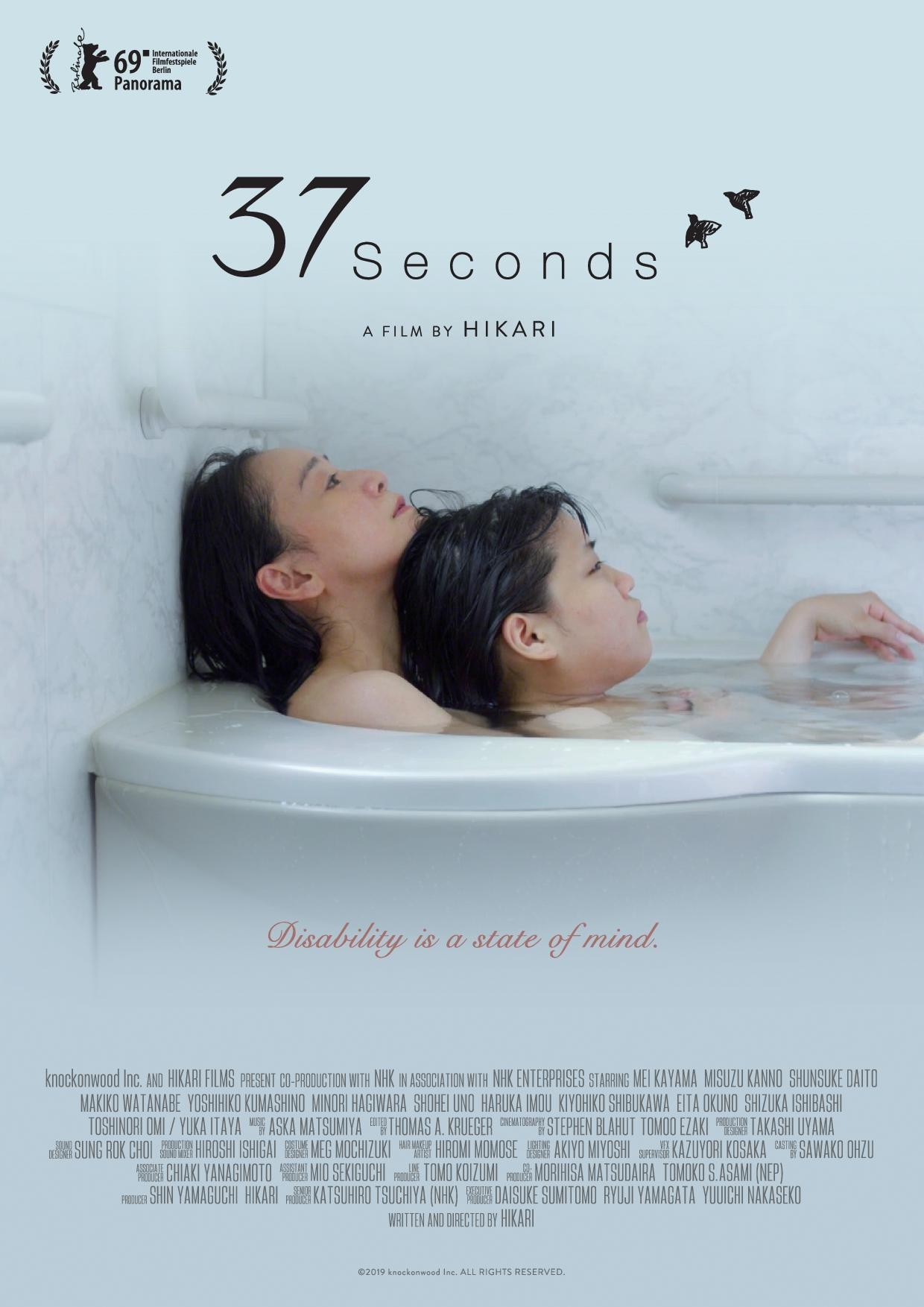
37 Seconds (Hikari, 2019)

37 Seconds poster“We’re just like everybody else” the heroine of Hikari’s debut feature 37 Seconds replies in bemusement when a prospective date confesses he never thought he’d feel comfortable with “someone like” her. Quietly meditating on societal prejudice against disability, 37 Seconds takes its heroine on a journey of self discovery as a series of disappointments pushes her towards embracing a new side of herself as an individual in defiance of those who might feel they know what is best, or perhaps just most “appropriate”, for “someone like” her without bothering to consider how she might feel.

Softly spoken, 23-year-old Yuma (Mei Kayama) has cerebral palsy and uses a motorised wheelchair to get around. Although she has a degree of independence with a job as an assistant to a manga artist, her friend Sayaka now a giant YouTube star, to which she travels alone by train, Yuma otherwise has little life outside the home she shares with her increasingly overprotective mother Kyoko (Misuzu Kanno). Yuma’s dreams of becoming a manga artist in her own right are dealt a blow when she’s told that her style is too close to Sayaka’s, only Sayaka’s style is Yuma’s because Yuma is doing all the work while her friend steals the credit and gleefully gives interviews claiming she is 100% indie and has no assistants. Beginning to realise she’s being exploited, Yuma gets an idea when she spots some erotic manga abandoned in the park and starts ringing up magazines for work. One bites and likes her stuff but worries that her sex scenes lack authenticity because of her lack of experience. 

Though previously unbothered, Yuma decides to embrace her sexuality in the name of art but finds a series of obstacles in her way, not least among them her mother who continues to infantilise her claiming that she is too vulnerable to be allowed out alone because there are too many strange people in the world. Kyoko won’t let Yuma wear pretty dresses, or makeup, or go out in the same way other girls her age might, refusing to accept that her little girl has grown up and has the same desires as any other young woman including that to be independent. Unable to escape her mother’s control, Yuma begins lying to her to meet prospective dates but finds them all unsuitable until finally trying to hire a sex worker only for that to go horribly wrong too. It does however introduce her to the people who will change her life – empathetic sex worker Mai (Makiko Watanabe), and her assistant Toshiya (Shunsuke Daito), whom she meets in a love hotel corridor while waiting for a broken lift.

When Yuma first meets Mai, she’s in the company of another man with cerebral palsy using a wheelchair, Kuma – played by Yoshihiko Kumashiro, a real life activist raising awareness about sexuality in the disabled community whose life inspired Junpei Matsumoto’s 2017 feature Perfect Revolution. Seeing the warm and genuine relationship between Mai and Kuma gives Yuma a new hope that a different kind of life is possible, especially as Mai offers to take her under her wing. Having an older woman to confide in about things she could never discuss with her mother allows Yuma to explore her newfound desires with confidence knowing that there are people looking out for her and always ready to offer advice.

Not everyone, however, is quite so enlightened and Yuma’s problems are largely to do with the persistent social stigma she faces from the world around her as well as a resultant sense of internalised inferiority. Sayaka, her “friend”, views her as a kind of cash cow, taking advantage of her skills but denying her existence while Sayaka’s agent swings in the other direction by telling her she should go public because she’d get a lot of press once people know she employs a disabled woman as an assistant. The first place Yuma gets any kind of respect is the office of the erotic manga magazine where the boss treats her like any other prospective hire and offers her constructive advice. From the awful dates and bad faith friends to her mother’s well-meaning yet problematic attempts to trap her in childhood, Yuma struggles to find a sense of self-worth when everyone is telling her that her life is limited and she must conform to their stereotypical ideas of how “someone like” her should live.

Thanks to Mai and Toshiya, Yuma eventually gains the confidence to assert herself, but also the ability to accept that her mother’s actions, however misguided, came from a place of love tempered by regret and sadness she was unable to understand without engaging with her mother’s history. A beautifully empathetic exploration of a young woman’s gradual blossoming under the light of genuine connection, 37 Seconds is a unsubtle rebuke of a fiercely conformist society unwilling to accommodate difference but also a quiet hymn to defiance as its heroine learns to shake off the labels placed on her and claim her independence no matter what anyone else might have to say about it.


37 Seconds was screened as part of the 2019 BFI London Film Festival.

Festival trailer (English subtitles)