Scent of a Spell (魔性の香り, Toshiharu Ikeda, 1985)

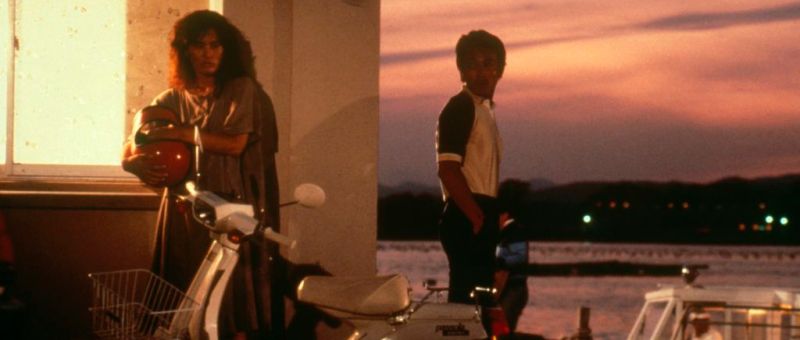
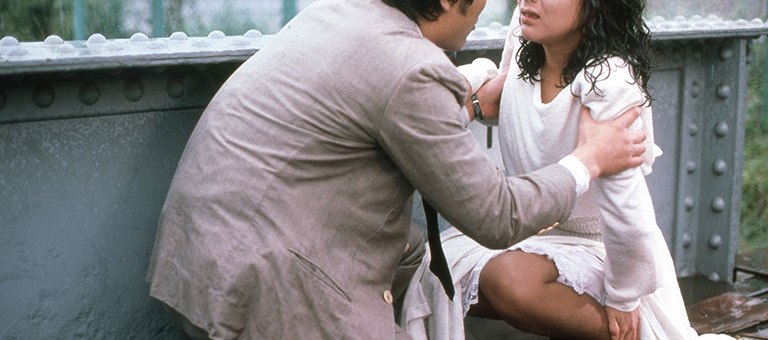
Esaka (Johnny Okura) feels like someone’s watching him. He has this sense of being observed by some otherworldly force along with a generalised feeling of uneasiness. But his paranoia seems to melt away after rescuing a young woman, Akiko (Mari Amachi), whose attempted suicide he witnesses during a rainstorm on his way home. He takes her in and one thing leads to another. For a time, they’re blissfully happy but then something starts to nag at him. Is Akiko really who she claims to be, or a demonic force of monstrous femininity?

It’s this malevolent quality to which the title of Toshiharu Ikeda’s noirish romance Scent of a Spell (魔性の香り, Masho no Kaori) alludes. Esaka is captivated by a hint of mystery and his own white knight syndrome, bewitched by Akiko but also perhaps growing tired of her and fearful of romantic commitment. He has after all been married before and his friend’s comments seems to suggest the cause of marital breakdown may either have been his womanising or his wife’s baseless jealousy. Akiko tells him that she’s on the run from an abusive husband prone to jealous rages and that though she has escaped from Osaka to Tokyo he always manages to track her down. Her sense of being pursued and Esaka’s of being watched seem to perfectly align while he seems to appreciate the fact that she needs him and he is quite literally sheltering her from danger.

Nevertheless, there are cracks in Akiko’s story beginning with the fact the bridge she threw herself off wasn’t the kind to pose a serious risk to life. The drop is only a few feet and though she resolutely refuses to be taken to a hospital because her husband might find her, she may be exaggerating the extent of her injuries. Meanwhile, she seems to have something of a jealous streak becoming irritated when Esaka talks to the proprietress of a local bar, thereafter apparently submitting herself to the attentions of his over-friendly colleague. Perhaps she had a reason to be annoyed given that she didn’t previously know any of these people and he inadvertently excluded her from the conversation, but it’s difficult for Esaka to know if she’s actually being unreasonable or he’s overreacting to a threat to his male pride and autonomy.

It’s this threat to his freedom that’s inflamed when he overhears another man talking to the lady behind the counter at a cafe he regularly goes to about his own girlfriend who is also named “Akiko” written with the character for “autumn”. Though there must be dozens of women with this not all that uncommon name combination in the city, it plants the seed of doubt in him that perhaps his Akiko and the other are the same and she’s two-timing him with this other guy while he’s at work. It also adds to his feeling that she has some kind of malevolent supernatural quality as if she were deliberately targeting lonely men for nefarious reasons. When the man from the cafe is found dead at home having been bludgeoned to death, he can’t help but feel that Akiko must have been involved and possibly intends to harm him too.

Of course, this may just be his fear that she will hurt him emotionally and his growing paranoia is a defence mechanism designed to protect himself against her abandonment or an infringement on his freedom. Or, alternatively, Akiko really is a dangerously crazed and jealous woman and letting her into his life will mean not a moment’s peace until it’s over. Even so, the pair of them discover intimacy in connection in their raw, desperate love making. Every time Esaka’s doubts rise to the surface, Akiko seduces him or he her and he momentarily forgets. In this, the film may have a latent misogyny as a final twist suggests that in the end all women are prone to fits of jealous rage not to mention cunning and trickery directed against each other as much as men who are also, to be fair, faithless liars and cheats. Akiko’s tragic backstory suggests something similar, that she is the inheritor of a legacy of compromised maternity and paternal betrayal. In any case, Esaka is not quite the hero he imagined himself to be either and in the end cannot save Akiko who may also in a way be choosing to sacrifice herself for love of him. Echoing the ending of In a Lonely Place, Ikeda casts their romance as fatalistic tragedy and bathes the noirish closing scenes in a heavenly golden light that suggests true love ends only in futility.


Scent of a Spell is released in the UK on blu-ray 17th February courtesy of Third Window Films.

Eleven Samurai (十一人の侍, Eiichi Kudo, 1967)

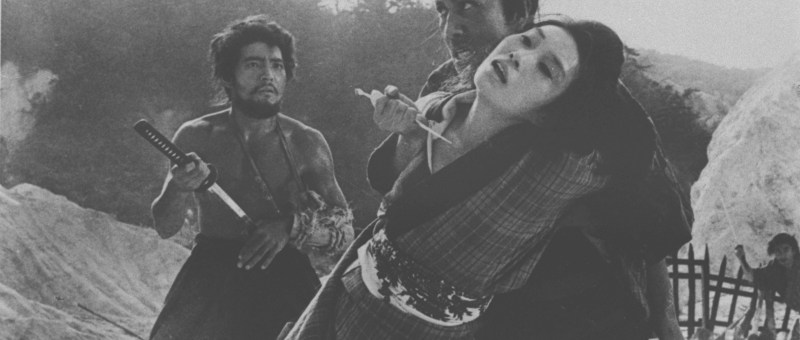
“If no one denounces the absurdity of this world, then our descendants will keep suffering,” a soon-to-be ronin insists in Eiichi Kudo’s revengers tragedy, Eleven Samurai (十一人の侍, Juichinin no Samurai). It seems clear from the outset that their actions will have little effect no matter whether they succeed or fail because the enemy is feudalism which may be approaching the end of its life but is definitely not dead yet. They can at least attempt to avenge their clan even if they can’t save it while refusing to let an entitled, selfish lord get away doing whatever he likes just because he happens to be the son of the former shogun and brother of the current one.

The opening scenes see Nariatsu (Kantaro Suga) chasing a deer having declared himself a “real hunter”. He ignores the cries of his men to watch where he’s going and sails over the border into the territory of Oshi which amounts to an invasion seeing as he is armed and has no permission to be there. The deer gets away, but Nariatsu shoots an old woodcutter whom he felt to be in his way with his bow and arrow. The Lord of the Abe clan that rules Oshi immediately takes him to task and tells Noriatsu that his behaviour is unbecoming for the son of the former shogun. He’s committed a murder in their territory, but they’re prepared to let it go as long as he leaves as soon as possible. But Nariatsu doesn’t like being told what to do and simply shoots the lord in the eye, potentially sparking a diplomatic incident. 

The Abe clan try to lodge a complaint in Edo, but are shut down by courtier Mizuno (Kei Sato) who fears that to acknowledge an event such as this would damage the moral authority of the Tokugawa regime. He decides to cover the whole thing up by claiming it was the Abe clan who insulted Noriatsu. The Abe clan will then be dissolved, and Oshi essentially gets nationalised. All of which suits Nariatsu just fine because he wants to take control of Oshi and expand his territory anyway. Part of his petulance seems to stem from the fact that he feels hard done by with such a small inheritance when his brother became the Shogun and received multiple fiefdoms. The previous Shogun, Tokugawa Ieyoshi, had produced an unusual number of children which became quite a problem in that he had to find lands for them all and eventually hastened the demise of the shogunate because of the additional strain. 

But Nariatsu is also an overgrown child who has no idea how to do anything for himself and no concern for the feelings or fortunes of others. When instructed to do something he doesn’t want to, Nariatsu petulantly stamps his feet and complains, and when his actions are challenged he simply replies that he’ll be telling his father. In fact, he is so infuriating that it’s likely most of his men secretly want him dead too, including his chief adviser Gyobu (Ryutaro Otomo) who was once the General Inspector but is now expected to babysit this absolute buffoon. Even though Nariatsu knows the Abe clan will be trying to kill him, he still sneaks out to the red light district and gets blind drunk with geisha which in itself is conduct unbecoming for a high ranking samurai such as himself. 

As such, he represents almost everything that’s wrong with the feudal order while Mizuno represents the rest. It’s Mizuno that secretly plots against the plotters, manipulating them into giving up their assassination mission by claiming to have switched sides only to backtrack and reveal he’s actually still working for Nariatsu fearing a reputational loss for the Tokugawa. Chief revenger Hayato (Isao Natsuyagi) is also banking on this fear of reputational damage, certain that the Shogunate won’t be able to bear the humiliation of Nariastsu being killed by a ronin so will instead claim that he died from an illness. Vowing to avenge the clan, Hayato righteously gives up his position to become one so that the Abes won’t be linked to the crime and is joined by 10 more similarly annoyed samurai. Six of them are already “dead” having been asked to commit seppuku for recklessly attacking Nariatsu on their own and blowing the whole operation. 

Hayato at least believes this to be a suicide mission. He leaves his loving wife and home and allows people to think he’s run off with Nui (Eiko Okawa), the younger sister of one of their number who died before he could join them. They do this because they think it must be done, and also because if no one stands up to samurai oppression it will never end. Wandering peasant Daijuro (Ko Nishimura) agrees with them. He wants revenge on the samurai for raping his sister after which his father and brother took their own lives. Nariatsu is as good as anyone else and he does very much need to die. 

But despite Daijuro’s homemade cannons, nothing quite goes to plan. Kudo sets his final battle in an atmospheric, misty valley that is an obvious stand in for the underworld. Hayato may succeed in killing Nariatsu but it’s a pyrrhic victory. Though he vowed “to put an end to this ridiculous world,” a samurai cannot really win this battle. It’s Daijuro who eventually walks off with Nariatsu’s head, symbolically decapitating the shogunate which the closing titles confirm was mortally wounded by this incident. With his striking black and white cinematography, Kudo does indeed paint this samurai world as a hellish place ruled over by an infinitely corrupt and self-interested authority. The nihilistic futility of it all is emphasised by the figure of a grown man sitting like a small child and splashing his sword in a puddle while surrounded by dead bodies. There might be a way out of this, but not for the samurai, only for those who will come after and perhaps finally be free of this world’s absurdity.


Mermaid Legend (人魚伝説, Toshiharu Ikeda, 1984)

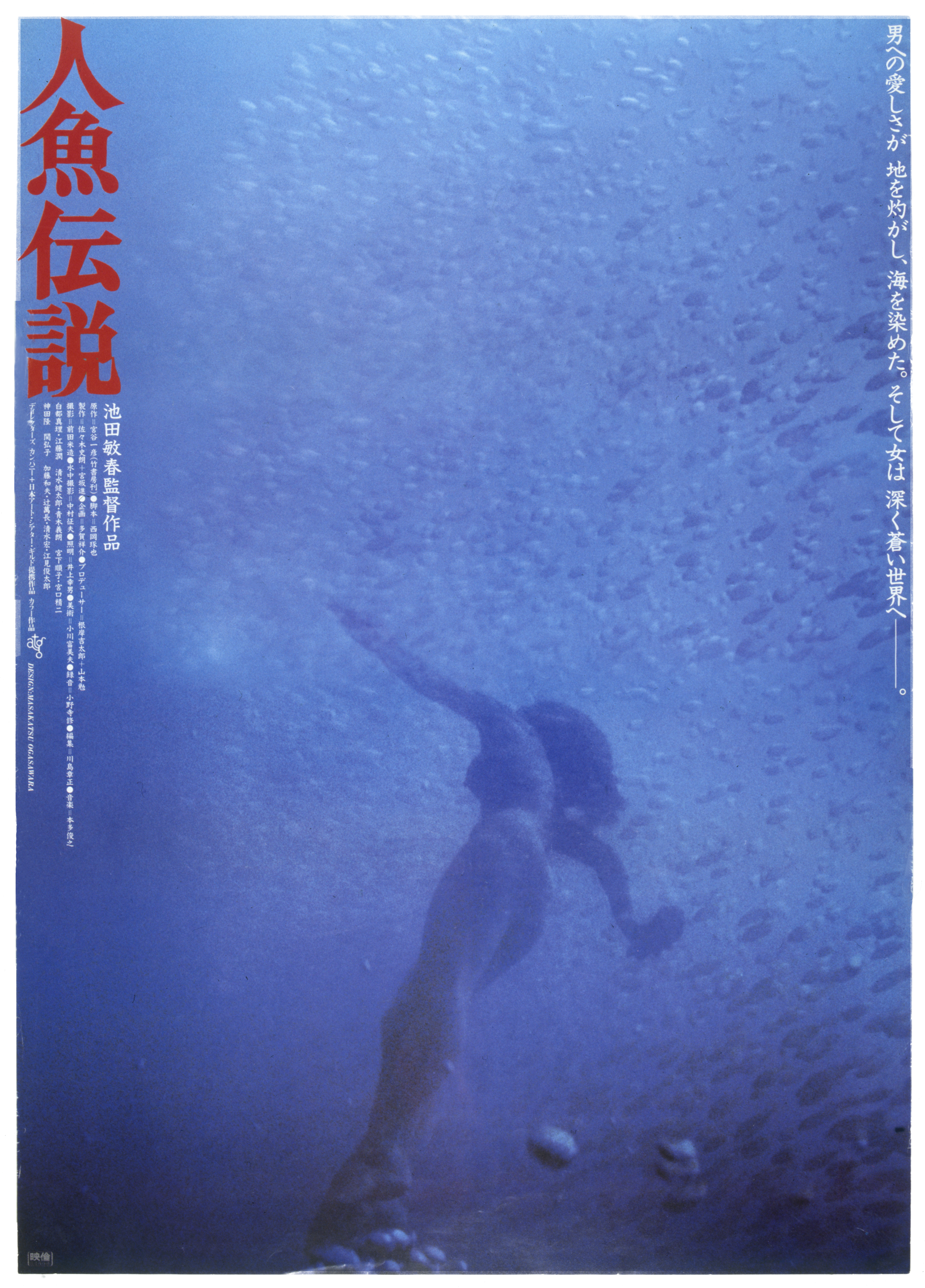
“Even if someone kills you, you wouldn’t die,” a drunken husband somewhat sarcastically replies having pledged to come back and haunt his wife if he died and she married a man who didn’t drink. His words take on a prophetic quality given that the heroine of Toshiharu Ikeda’s Mermaid Legend (人魚伝説, Ningyo Densetsu) takes on a quasi-supernatural quality as an embodiment of nature’s revenge after someone tries, and fails, to kill her having already killed her husband for witnessing their murder of another man who’d tried to resist their plans of buying up half the town to build a nuclear plant. 

By the mid-1980s, Japan’s economy had fully recovered from post-war privation and was heading into an era of unprecedented prosperity which is to say that the coming of a power plant was not welcomed with the same degree of hope and excitement as it may have been in the 1950s when it was sold not only as a new source of employment for moribund small towns but an engine that would fuel the new post-war society. Several industrial scandals such as the Minamata disease had indeed left those in rural areas fearful of the consequences of entering a faustian pact with big business, which is one reason why the guys from Kinki Electric Power sell it as an amusement park project though even this has the locals wary not just of the disruption it will bring to their lives and potential ruin of their livelihoods which are dependent on the protection of the natural environment but that what is promised simply won’t be delivered. Fisherman Keisuke (Jun Eto) says as much when lamenting a previous aquaculture programme which didn’t pan out and caused lasting damage to marine life. 

In any case, as others say there’s no money in going out to sea anymore and its clear that the old-fashioned, traditional way of life practiced by Keisuke and his newlywed wife Migiwa (Mari Shirato) is no longer sustainable. Migiwa is an abalone diver working without modern equipment but using heavy weights to dive deep enough to reach the shells. As such she’s dependent on her husband to pull her back up to the boat when she tugs the rope. She must put her life entirely in his hands though in truth, he does not seem to take his responsibility all that seriously. The couple bicker relentlessly and not even she really believes him when he says he witnessed a murder which might be understandable given the extent of his drinking. All of which is further evidence against her when she manages to escape from the assassination plot and runs straight to the nearest policeman who thanks her for turning herself in implying he believes she is responsible for Keisuke’s death. 

The possible collusion of the policeman hints as a further sense of distrust in authority which has become far too close to corporate interests. Shady industrialist Miyamoto (Yoshiro Aoki) ropes in both the mayor and the head of the fishing association in his talks with Kinki Electric Power along with Shimogawa from the local tourist board who evidently opposes the plans as he is the man Keisuke witnesses being murdered. As Miyamoto says “sometimes your hands get a little dirty” though he never “directly” involves himself matters such as these. The situation is complicated by an unresolved love triangle between Miyamoto’s spineless son Shohei (Kentaro Shimizu), a sometime photographer, who is resentful of Keisuke and in love with Migiwa complaining that Keisuke always outdrinks him and gets the girl too hinting at his sense of wounded masculinity. Isolated by his class difference, he appears not to approve of his father’s actions but later does little to stop them and eventually sides with corporate interest over his feelings for Migiwa who in any case seems to have become more attached to Keisuke following his death which she vows to avenge. 

There is there is something quite strange in the prophetical quality of Keisuke’s words also predicting the “black sweat” of the Jizo on the beach and the mystical storm which does eventually sweep everything clean destroying the signs for the new nuclear power plant already installed on the beach. In this way, Migiwa becomes a vengeful force of nature taking up arms against those who wilfully ravage and pollute the natural environment while damaging the lives of those who lived on its shores such as herself and Keisuke. She takes revenge not only for the murder of her husband by corrupt capitalists but against that corruption itself even as she laments that “no matter how many I kill, they just keep coming.” “Don’t worry, maybe all this was just a dream,” Keisuke once again prophetically intones though it’s difficult to know if it’s defeating the capitalist order that is a fantasy or the maintenance of the idealised rural life to which Migiwa seemingly finds her way back swimming into an unpolluted sea surrounded by the floating barrels of ama divers and clear blue skies, a creature of nature once again.


Mermaid Legend screened as part of this year’s JAPAN CUTS.

Zero (零戦燃ゆ, Toshio Masuda, 1984)

The Zero Fighter has taken on a kind of mythic existence in a romanticised vision of warfare, yet as Toshio Masuda’s Zero (零戦燃ゆ零戦燃ゆ, Zerosen moyu) implies its time in the spotlight was in fact comparatively short. Soon eclipsed by sleeker planes flown by foreign pilots, the Zero’s glory faded until these once unbeatable fighters were relegated to suicide missions. On one level, the film uses the Zero as a metaphor for national hubris, a plane that ironically flew too close to the sun, but on another can never overcome the simple fact that this marvel of engineering was also a tool of war and destruction. 

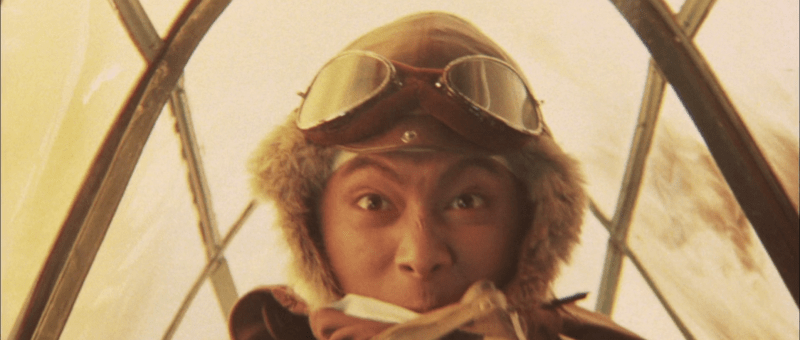
The film is loosely framed around two members of Japan’s Imperial Navy, Hamada (Daijiro Tsutsumi) and Mizushima (Kunio Mizushima), who as cadets consider deserting to escape the brutality of Navy discipline. Having left the base they’re accosted by an inspirational captain who talks them out of leaving by showing them a prototype model of the Zero and convincing them they only need to stick it out for a few more years in order to get the opportunity to fly one. Mizushima, the film’s narrator, doesn’t qualify as a pilot and is related to the ground crew while Hamada does indeed get to pilot a Zero fighter and becomes one of the top pilots in the service. 

The viewpoint is is then split between the view from the ground and that from the clouds. Mizushima makes occasionally surprising statements such as candidly telling love interest Shizuko (Yû Hayami) that they are unlikely to win the war, while becoming ever more concerned for Hamada at one point telling him there’s a problem with his plane in the hope that he won’t take off that day. Hamada meanwhile is completely taken over by the spirit of the Zero and even when given a chance to escape the war after being badly injured, chooses to return because he does not know what else to do. When he visits home after leaving hospital, no one is there. His mother eventually arrives and explains that the family has become scattered with his siblings seconded to the war effort in various places throughout the country. 

Hamada’s dedication and personal sacrifice are in some senses held up as the embodiment of the Zero. The reason for its success is revealed to lie in the decision to remove the armouring for the cockpit leaving the pilot’s life unprotected, something which the American engineers describe as unthinkable. In an early meeting, a superior officer complains that they’re losing too many pilots and need to reinstall some of the armouring, but finds little support. Not only this is a cold and inhuman decision, but it’s poor economic sense given that skilled pilots are incredibly valuable and in short supply. After all, you can’t just make more. If you start from scratch you’ll need to wait 20 years and then teach them fly, but it’s a lesson the Navy never learns that is only exacerbated with the expansion of the kamikaze squads which squander both men and pilots for comparatively little gain. 

These “philosophical differences” are embodied in the nature of the Zero which is configured to be nimble and outmanoeuvre the enemy but is quickly eclipsed not least when foreign powers figure out the way to beat it lies in numbers in which they have the advantage. There is something of a post-Meiji spirit in the feeling that Japan is lagging behind Western powers and desperately needs to develop its own military tech in order to defend itself. On hearing rumours of the Zero fighter, MacArthur scoffs and says that Japan can’t even build cars so he doesn’t believe they could design a plane that could fly such large distances while others suggest that they will still need the element of surprise if they ever go to war with America because its technology is still superior. 

Walking a fine line, the film tries to avoid glorifying “war”, but it cannot always help indulging in nationalist fantasy such as in its statement that thanks to the Zero “the Japanese flag covered a vast area of the Pacific” in the wake of Pearl Harbour. These may be fantastically well designed machines that were incredibly good at what they were created to do, only what they were created to do was kill and destroy. The plane’s fortunes and Japan’s are intrinsically linked, the sense of superiority in the air lasts only a short time before Western technological advances over take it and the war continues to go badly. The film dramatises the tragedy of war through the friendship between the two men which eventually causes Mizushima to sacrifice his love for Shizuko by convincing her marry Hamada hoping that his priorities would change and he’d decide to take a position as an instructor rather than heading back to the front. 

For her part, it seems that Shizuko was also in love with Mizushima, but also caught in a moment of confusion between love and patriotism that encourages her to think she should do as Mizushima says and embrace this man who has dedicated his life to his country. In the end, it buys them each loss and misery, but also a moment of transcendent hope even if it was based on a falsehood in the pleasant memory that Mizushima gives Hamada of the life he is giving up by rejecting it to return to the front. For Mizushima, Hamada and the Zero may become one and the same. At the end of the war he can’t bear to see the remaining Zero’s sold for scrap and asked to be “gifted” one as the Captain who’d first shown one to him said he would be, so that he can give it a proper a “funeral”, or perhaps send it to Hamada in the afterlife after he is killed mere days before the surrender. Masuda cannot help romanticising the wartime conflict with his dashing pilots and their thrilling dogfights, often depicting it more as a kind of game than an ugly struggle of death and destruction, but does lend a note of poignancy to his tale of lives thwarted by the folly of war.


Trailer (no subtitles)

Samurai Wolf 2: Hell Cut (牙狼之介 地獄斬り, Hideo Gosha, 1967)

“We ronin must live without mercy” insists a fugitive on a quest for vengeance and riches only to meet his match in the justice-loving wanderer Kiba (Isao Natsuyagi) making his return for Samurai Wolf II: Hell Cut (牙狼之介 地獄斬り, Kiba Okaminosuke: Jigoku Giri). Like the second instalment in many series, Gosha’s avant-garde chambara largely follows the same formula picking up several familiar elements from the first film if giving them a new spin as Kiba once again finds himself caught up in intrigue provoked by the amoral venality of late Meiji society. 

In this case, he makes a rod for his own back by humiliating some swordsmen after catching them harassing a young woman, mocking them when they try to claim that their treatment of her is part of their “training”. Kiba saves the girl, Oteru (Rumiko Fuji), who has some kind of etherial quality and doesn’t quite seem to know what’s going on immediately throwing herself at Kiba who turns her down in gentlemanly fashion. Sometime later, he runs into a convoy of officials transporting criminals to the nearest judicial centre and stops to give the prisoners some of his own water explaining that that from the stream is polluted thanks to leaks from a nearby goldmine. In any case, Kiba is struck by the appearance of one of the men, Magobei (Ko Nishimura), who reminds him of the father who was killed by swordsmen he’d humiliated with his skill. 

Magobei is in chains for murdering the manager of the mine which previously belonged to the shogun but has now been shut down, its seam apparently exhausted. But like the toxins that poured into the river, the mine is a poison to society and in more ways than one. Magobei tells Kiba that he’s been set up. He was hired to kill the manager by a duplicitous gang leader named Jinroku (Bin Amatsu) who has found a new seam and has been operating the mine illegally taking all the gold for himself so obviously Magobei wants revenge. After seeing off an ambush, Kiba agrees to act as a bodyguard delivering both Magobei and the other prisoner, Kihachi (Out Yokoyama) who claims to be a big time bandit in trouble for robbing a samurai family, to the nearest city but secretly seems to sympathise with the injustice dealt to Magobei and the female prisoner who later joins them, Oren the Thistle (Yuko Kusunoki), who murdered a judge who killed her lover. 

Yet Kiba’s memories of his father cloud his judgment about Magobei who is definitely not a man worthy of his faith in him. “What good would pity do?’ Magobei asks, certain that compassion is a weakness and that if he were to give in to human feeling he would immediately be betrayed. The men misunderstand each other, assuming they are alike when in reality they are opposites. Kiba bets on Magobei’s humanity and loses, while Magobei assumes that Kiba will easily be won over by the riches to be found in the goldmine and help to wipe out Jinroku’s gang which is also a family of which Oteru is a member. “Life’s tough that’s how it is” he justifies, but Kiba cannot forgive him not least for his callous murder of a man who was only a frightened braggart and could not have harmed him and a woman who was otherwise blameless. Just as Sanai had in the first film, Magobei tells him that “one day you will be like me” a future that Kiba once again violently rejects. 

But then again he can never escape the world where goldmines pollute the rivers and money can buy anything, even the hearts of men. Just like his father, he’s pursued by the swordsmen he’s unwittingly insulted while discovering his desire to serve justice backfiring, eventually robbing him of the only thing he actually wanted just as it had at the end of the previous film. Even so, Kiba retains his sense of humanity and unlike so many jidaigeki (anti-)heroes refuses to give in to nihilism or despair. A little less avantgarde than the previous instalment, Gosha nevertheless conjures a world of dazzling violence in freeze-frame and silence while once again leaving Kiba the furious wolf to wander, a lonely figure in an unforgiving landscape.


Samurai Wolf 2: Hell Cut opens at New York’s Metrograph on Dec. 26 as part of Hideo Gosha x 3

Original trailer (English subtitles)

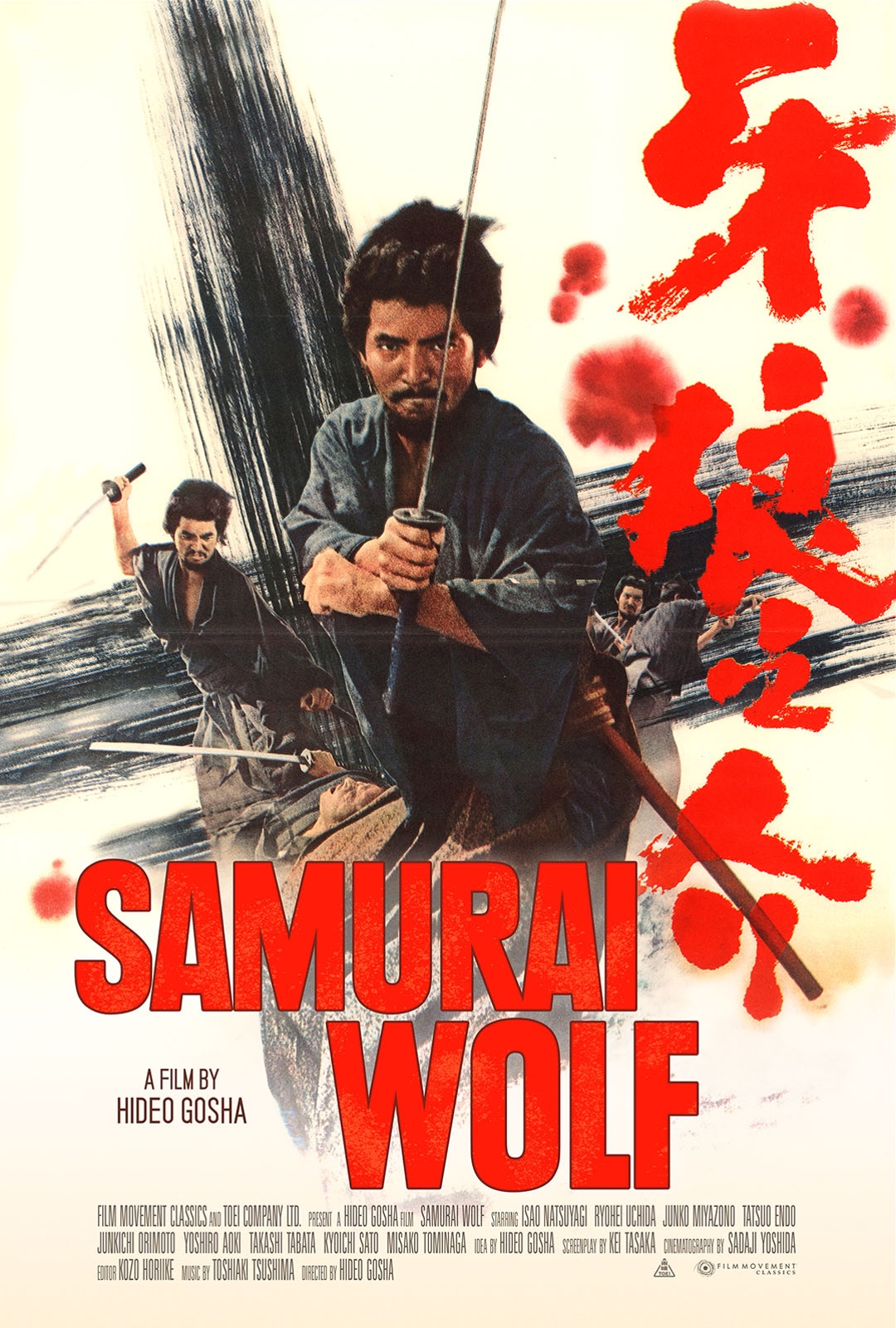
Samurai Wolf (牙狼之介, Hideo Gosha, 1966)

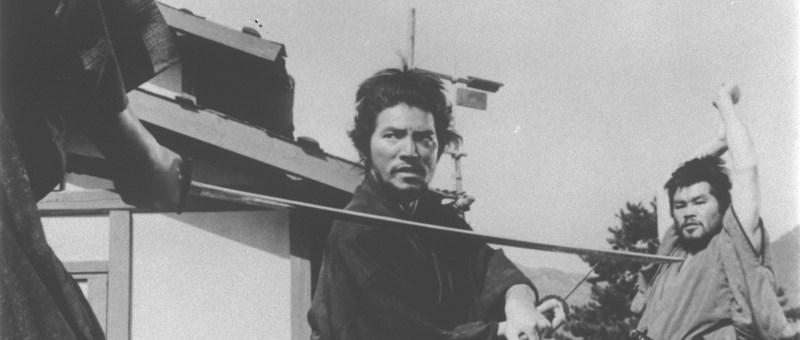
A cheerful ronin with strong moral fibre finds himself squaring off against a nihilistic assassin and a corrupt retainer/postmaster in Hideo Gosha’s new wave chambara Samurai Wolf (牙狼之介, Kiba Okaminosuke). Where many jidaigeki of the age would follow the antagonist Sanai (Ryohei Uchida), Gosha’s focusses on the figure of a man with wolfish appetites who is otherwise unaffected by the infinite corruption of the world around him and in that at least unwilling to submit himself to the dog-eat-dog mentality of late Edo-era society. 

Wandering samurai Kiba Okaminosuke (Isao Natsuyagi) explains that he got his name because often he bares his fangs and is known as the Furious Wolf, yet as much as the ferocity of the opening titles might bear that image out he is not cruel or avaricious but measured and honest. After wolfing down an exorbitant amount of food prepared by an old woman at a way station, he announces that he can’t pay. The old woman panics and we wonder if he might become violent or even kill her, but Kiba simply offers to pay in kind fixing the old lady’s leaky roof and chopping a supply of wood much to her surprise and gratitude. It seems, the wolf always pays his way. While there, he witnesses a trio of bandits attack a postal cart and kill the men who were pulling it. He retrieves the bodies along with a runaway horse and takes them back to the outpost they came from but the guard there is disinterested claiming that, as they died on the road and not in the town, it’s not his business. As Kiba soon discovers, the guard is in league with a corrupt lord, Nizaemon (Tatsuo Endo), who is an official messenger for the shogun but wants to take over the public postal service which is why he’s terrorising the postmistress, Chise (Hiroko Sakuramachi), with the intention of getting his hands on the relay outpost. 

There is something a little ironic in the fact that Ochise is blind while Nizaemon’s chief assassin is deaf and mute, both of them excluded from mainstream society and looking for support but finding it in opposing directions. Formerly a samurai woman, Ochise wants to hang on to the outpost because it has become her place to belong while resenting the incursion by corrupt lord Nizaemon who only wants it for the potential to control the cargo route along with raising the rates to use it to exorbitant heights. Shortly after Kiba tries to take out the assassins, a bunch of government inspectors turn up to complain about the missing merchandise while backing Chise into a corner by forcing her to accept the liability for transporting a large sum of gold coins. Kiba originally says he won’t help because he doesn’t want to risk his life for people he doesn’t even know, but of course later agrees in part on the promise of a significant return but also because he likes Chise and resents the kind of corruption men like Nizaemon represent.

On the other hand, his humanity is mirrored in his antagonist, hired gun Sanai who fetches up to help Nizaemon stop Kiba and take over the outpost. Sanai cynically tells him, that in five years’ time Kiba will be no better than he is, if he doesn’t kill him first. Kiba rejects the claim but it’s easy enough to see how someone could be corrupted by the realities of Edo-era society. Sanai later reveals that he fell in love with a samurai woman and eloped with her, a fierce taboo given the class difference between them, and later fell into his present state of nihilistic despair when she was taken from him quite literally betrayed by the social order. But Kiba seems different. He is not naive and has no expectations of human goodness yet remains cheerful and in his own way honest. When a young woman comes to him with her life savings and tells him that Sanai is the man whom she’s been waiting for to gain her revenge, he tells her to keep her money because he’s going to end up fighting him anyway. Likewise, when he realises someone he trusted has betrayed him, he tells them that he understands why they did it and bears them no ill will it’s simply the way things are only he suspects they will regret that others have died because of it. Even in his final confrontation with Sanai, he notices that his opponent is injured and ties one of his own hands to his belt to ensure it will be a fair fight. 

In any case, it seems that Sanai’s morally compromised existence is about to catch up to him with several other players intent on taking his life aside from the sex worker who longed to avenge the deaths of her family murdered during a massacre of peasants killed for standing up to a cruel landowner. A female gang leader also wants revenge for the death for her boss, while the cynical madam at the local brothel offers to team up with him to steal the gold from under Nizaemon’s nose. It seems that Sanai is a man already dead, having long abandoned the lovelorn boy he was for the nihilistic existence of a wandering assassin only to be confronted with the ghosts of the unattainable past. This world is indeed rotten, but Kiba has somehow managed to rise above it embracing his wolfish appetites in more positive ways while opposing injustice wherever he finds it. Much more avant-garde than much of his later work would be, Gosha makes great use of slow motion and silence broken only by the reverberating sound of clashing swords and hints at the meaninglessness of a life of violence in an agonisingly haunting death scene in which a bloodstained man turns and falls as if the air were suddenly leaving his body. In the end all Kiba can do is turn and walk away, on to the next crisis on the highways of a lawless society.


Samurai Wolf opens at New York’s Metrograph on Dec. 26 as part of Hideo Gosha x 3

Original trailer (English subtitles)

Samurai Rebellion (上意討ち 拝領妻始末, Masaki Kobayashi, 1967)

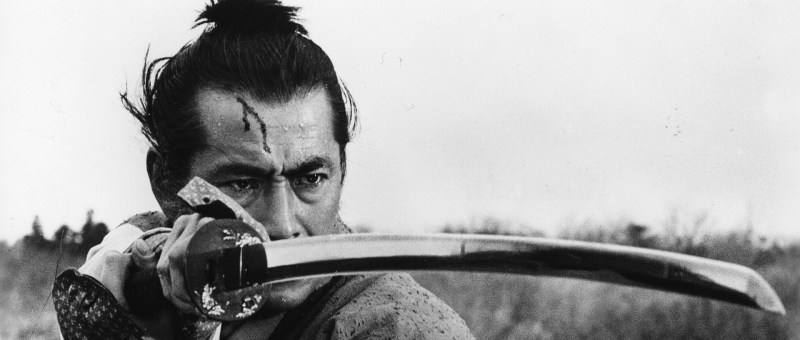
samurai rebellion posterIf Masaki Kobayashi had one overriding concern throughout his relatively short career, it was the place of the individual with an oppressive society. Samurai Rebellion (上意討ち 拝領妻始末, Joi-uchi: Hairyo Tsuma Shimatsu), not quite the crashing chanbara action the title promises, returns to many of the same themes presented in Kobayashi’s earlier Harakiri in its tale of corrupt lords and a vassal who can no longer submit himself to their hypocritical demands. On the film’s original release, distributor Toho added a subtitle to the otherwise stark “Rebellion”, “Hairyo Tsuma Shimatsu”, which means something like “sad story of a bestowed wife” and was intended to help boost attendance among female filmgoers who might be put off by the overly male samurai overtones. The central conflict is that of the ageing samurai Isaburo (Toshiro Mifune), but Kobayashi saves his sympathy for a powerless woman, twice betrayed, and given no means by which to defend herself in a world which values female life cheaply and a woman’s feelings not at all.

Having the misfortune to live in a time of peace, expert swordsman Isaburo has only the one duty of testing out the lord’s new sword (which he will never draw) on a straw dummy. He and his friend Tatewaki (Tatsuya Nakadai) are of a piece – two men whose skills are wasted daily and who find themselves at odds with the often cruel and arbitrary samurai world, refusing to fight each other because the outcome would only cause pain to one or both of their families. Isaburo has two grownup sons and dreams of becoming a grandpa but needs to find a wife for his eldest, Yogoro (Go Kato). He wants to find a woman who is loyal, loving, and kind. As a young man Isaburo was “forced” into marriage and adopted into his wife’s family but has been miserable ever since as his wife, Suga (Michiko Otsuka), is a sharp tongued, unpleasant woman whose only redeeming features are her stoicism and dedication to propriety.

It is then not particularly good news when the local steward turns up one day and informs Isaburo that the lord is getting rid of his mistress and has decided to marry her off to Yogoro. News travels fast and though others may appear jealous of such an “honour”, Isaburo is quietly angry – not only is he being expected to take on “damaged goods” in a woman who’s already born a son to another man, but they won’t even tell him why she’s being sent away, and the one thing he wanted for his son was not to end up in the same miserable position as he did. Nevertheless when Isaburo repeatedly tries to decline the “kind offer”, he is prevented. A suggestion quickly becomes an order, and Yogoro consents to prevent further conflict.

Against the odds, Ichi (Yoko Tsukasa) is everything Isaburo had wanted in a daughter-in-law and even puts up with Suga’s constant unkindness with patience and humility. Eventually she and Yogoro fall deeply in love and have a baby daughter, Tomi, but when the lord’s oldest heir dies and Ichi’s son becomes the next in line, it’s thought inappropriate for her to remain the wife of a mere vassal. Summoned to the castle, Ichi is once again robbed of her child but also of her happiness.

Ichi’s tale truly is a sad one and emblematic of the fates and positions of upperclass women in the feudal world. Having had the misfortune to catch the lord’s eye, Ichi tries to decline when the steward shows up to take her to the castle, reminding him that she is already betrothed. Sure that her fiancé will protect her, Ichi says she’ll go if he agrees never thinking that he would. Betrayed in love, Ichi is sold to the castle to be raped by the elderly Daimyo who views her as little more than a baby making machine and faceless body to do with as he wishes. When she returns from a post-natal trip to the spa and discovers the lord has already taken a new mistress, her anger is not born of jealously but resentment and disgust. This other woman is proud of her “position” at the lord’s side when she should be raging as Ichi is now, at her powerlessness, at the male society which reduces her to an object traded between men, and at the rapacious assault upon her body by a man older than her father.

Isaburo is also raging, but at the cruel and heartless obsession with order and protocol which has defined his short, unhappy life. Having been a model vassal, Isaburo has lived a life hemmed in by these rules but can bear them no longer in their disregard for human feeling or simple integrity. Isaburo says no, and then refuses to budge. Having retired and surrendered control of the household to Yogoro, Isaburo leaves the decision to his son who refuses to surrender his wife and swears to protect her from being subjected to the same cruel treatment as before. The samurai order is not set up for hearing the word “no”, and the actions of Isaburo, Yogoro, and Ichi threaten to bring the entire system crashing down. Love is the dangerous, destabilising, manifestation of personal desire which the system is in place to crush.

Isaburo’s rebellion, as he later says, is not for himself, or for his son and daughter-in-law whose deep love for each other has reawakened the young man in him, but for all whose personal freedom has been constrained by those who misuse their power to foster fear and oppression. Having picked up his sword, Isaburo will not stand down until his voice is heard, fairly, under these same rules that the authority is so keen on enforcing. He does not want revenge, or even to destroy the system, he just wants it to respect him and his right to refuse requests he feels are unjust or improper. Like many of Kobayashi’s heroes, Isaburo’s fate will be an unhappy one but even so he is alive again at last as the fire of rebellion rekindles his youthful heart. Those caught within the system from the venal stewards and greedy vassals to the selfish lords suddenly terrified the Shogun will discover their mass misconduct are dead men walking, sublimating their better natures in favour of creating the facade of obedience and conformity whilst manipulating those same rules for their own ends, yet the central trio, meeting their ends with defiance, are finally free.


Available with English subtitles on R1 DVD from Criterion Collection.

Original trailer (English subtitles – poor quality)

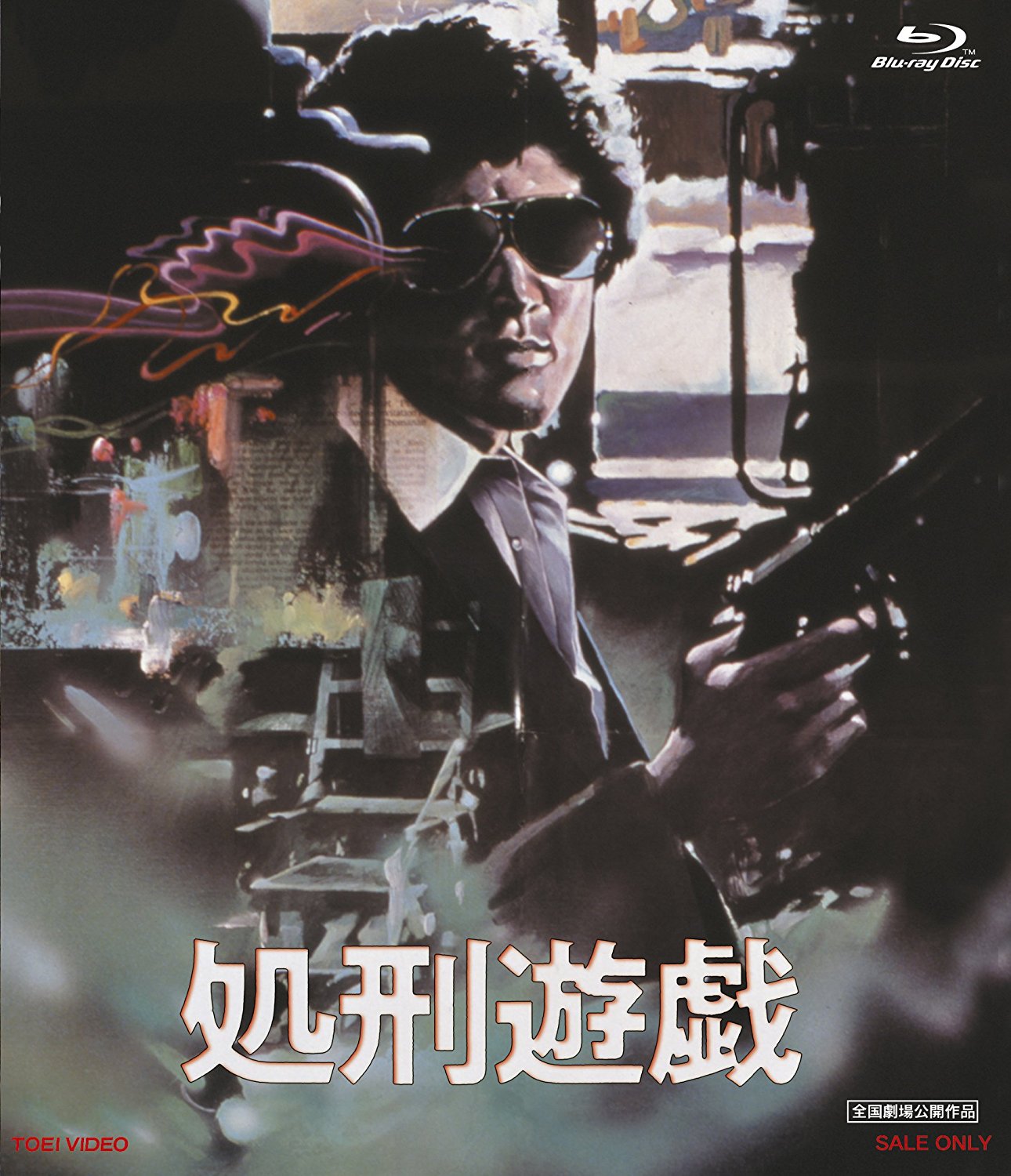
The Execution Game (処刑遊戯, Toru Murakawa, 1979)

Execution Game BDA year on from The Killing Game, Narumi (Yusaku Matsuda) has returned to his old profession, now branded The Execution Game (処刑遊戯, Shokei yugi). Like Killing, Execution is a variation on the themes of The Most Dangerous Game – conspiracy, betrayal, double cross, and corruption, but all in all Narumi’s world hasn’t changed very much even as he seems to become ever more dead to himself as he walks the dark city streets, trench coat, sunshades, and cigarettes blocking out its remaining light and warmth.

Unlike Dangerous or Killing, Execution opens indoors as Narumi lies half awake in an empty, dark and dirty room. Coming to, he remembers a girl and a car followed by a bump on the head but not much else. His attempt to escape lands him suspended from the ceiling in another room that’s shifted from green to red, but as he will shortly find out this is all part of a weird job interview. The shady guys who kidnapped him simply wanted to test his skills and, finding them adequate, now intend to force him to take their assignment to knock off their old hitman because he’s become too “weird” and they don’t need him around anymore. Narumi’s not too happy about any of this but then he does quite like getting paid. As usual, his first job leads to a second which has some wider implications involving international espionage.

Following his previous experiences, Narumi’s personal life seems to be less of a disaster but then that might be precisely because he has no personal life. In contrast to his increasingly detached persona, Execution marks the first time in the series in which he appears to enter into an entirely consensual relationship with a woman whom he genuinely seems to care about. Unfortunately she is not all she seems and, in a sense, betrays him. Nevertheless, even if the relationship is “fake” or at least part of an ongoing operation to trap Narumi into working for people he might otherwise avoid, it does provoke a kind of opening up as far as Narumi’s past is concerned. His seaside boyhood (perhaps why he chose the riverside town for his “retirement” in Killing) and longing for the ocean provide a clue to his restless heart as the sound of waves becomes a repeated cue signalling Narumi’s hidden emotional ebb and flow.

Yet externally he’s even more silent and closed off than before. Narumi’s hitman credentials have never been stronger and he pulls of his hits with steely precision. He is fearless in the face of danger, wading into the bloody finale with barely repressed fury, making sure none of these mass manipulators will survive their attempt to turn him into a disposable tool to be destroyed after use. Once again his second job provides him with a motive to get back in shape, making space for yet another training montage, but this time the mirrors are about more than vanity. Narumi’s world has always been dark, born of night and chaos, yet he remains the only point of order despite the illicit, dangerous, and immoral nature of his occupation. 

Narumi’s interaction with the young woman who runs the watch repair shop where he tries to get his pocket watched fixed is perhaps the best indicator of his progress over the series. The girl is first very taken with his watch which is rare and expensive, but is also later captivated by his cool exterior. She flirts with him, subtly, but Narumi deflects it. His demeanour towards her becomes paternal, finally he warns her against chasing every shady guy she meets – she doesn’t see the danger. This Narumi, in contrast to his rather pathetic existence in the first two films, is of the world but not in it. He sees himself as occupying a very different space than this young girl, and is resigned to walking a lonely road. The Execution Game is an apt way to describe his life story, yet even as something of him dies something else rises in his self imposed exile and desire for both self preservation and old fashioned nobility even within the bounds of his world weary cynicism.


Original trailer (no subtitles)

https://www.youtube.com/watch?v=aaFmxOdV34I

The Bullet Train (新幹線大爆破, Junya Sato, 1975)

bullet train posterFor one reason or another, the 1970s gave rise to a wave of disaster movies as Earthquakes devastated cities, high rise buildings caught fire, and ocean liners capsized. Japan wanted in on the action and so set about constructing its own culturally specific crisis movie. The central idea behind The Bullet Train (新幹線大爆破, Shinkansen Daibakuha) may well sound familiar as it was reappropriated for the 1994 smash hit and ongoing pop culture phenomenon Speed, but even if de Bont’s finely tuned rollercoaster was not exactly devoid of subversive political commentary The Bullet Train takes things one step further.
A bomb threat has been issued for bullet train Hikari 109. This is not a unique occurrence – it happens often enough for there to be a procedure to be followed, but this time is different. So that the authorities don’t simply stop the train to find the device as normal, it’s been attached to a speedometer which will trigger the bomb if the train slows below 80mph. A second bomb has been placed on a freight train to encourage the authorities to believe the bullet train device is real and when it does indeed go off, no one quite knows what to do.

The immediate response to this kind of crisis is placation – the train company does not have the money to pay a ransom, but assures the bomber that they will try and get the money from the government. Somewhat unusually, the bomber is played by the film’s biggest star, Ken Takakura, and is a broadly sympathetic figure despite the heinous crime which he is in the middle of perpetrating.

The bullet train is not just a super fast method of mass transportation but a concise symbol of post-war Japan’s path to economic prosperity. fetching up in the 1960s as the nation began to cast off the lingering traces of its wartime defeat and return to the world stage as the host of the 1964 olympics, the bullet train network allowed Japan to ride its own rails into the future. All of this economic prosperity, however, was not evenly distributed. Where large corporations expanded, the small businessman was squeezed, manufacturing suffered, and the little guy felt himself left out of the paradise promised by a seeming economic miracle.

Thus our three bombers are all members of this disenfranchised class, disillusioned with a cruel society and taking aim squarely at the symbol of their oppression. Takakura’s Okita is not so much a mad bomber as a man pushed past breaking point by repeated betrayals as his factory went under leading him to drink and thereby to the breakdown of his marriage. He recruits two helpers – a young boy who came to the city from the countryside as one of the many young men promised good employment building the modern Tokyo but found only lies and exploitation, and the other an embittered former student protestor, angry and disillusioned with his fellow revolutionaries and the eventual subversion of their failed revolution.

Their aim is not to destroy the bullet train for any political reason, but force the government to compensate them for failing to redistribute the economic boon to all areas of society. Okita seems to have little regard for the train’s passengers, perhaps considering them merely collateral damage or willing accomplices in his oppression. Figuring out that something is wrong with the train due to its slower speed and failure to stop at the first station the passengers become restless giving rise to hilarious scenes of salarymen panicking about missed meetings and offering vast bribes to try and push their way to the front of the onboard phone queue, but when a heavily pregnant woman becomes distressed the consequences are far more severe.

Left alone to manage the situation by himself, the put upon controller does his best to keep everyone calm but becomes increasingly frustrated by the inhumane actions of the authorities from his bosses at the train company to the police and government. Always with one eye on the media, the train company is more preoccupied with being seen to have passenger safety at heart rather than actually safeguarding it. The irony is that the automatic breaking system poses a serious threat now that speed is of the essence but when the decision is made to simply ignore a second bomb threat it’s easy to see where the priorities lie for those at the top of the corporate ladder.

Okita and his gang are underdog everymen striking back against increasing economic inequality but given that their plan endangers the lives of 1500 people, casting them as heroes is extremely uncomfortable. Sato keeps the tension high despite switching between the three different plot strands as Okita plots his next move while the train company and police plot theirs even if he can’t sustain the mammoth 2.5hr running time. A strange mix of genres from the original disaster movie to broad satire and angry revolt against corrupt authority, The Bullet Train is an oddly rich experience even if it never quite reaches its final destination.


Original trailer (no subtitles)

The Beast Must Die (野獣死すべし, Toru Murakawa, 1980)

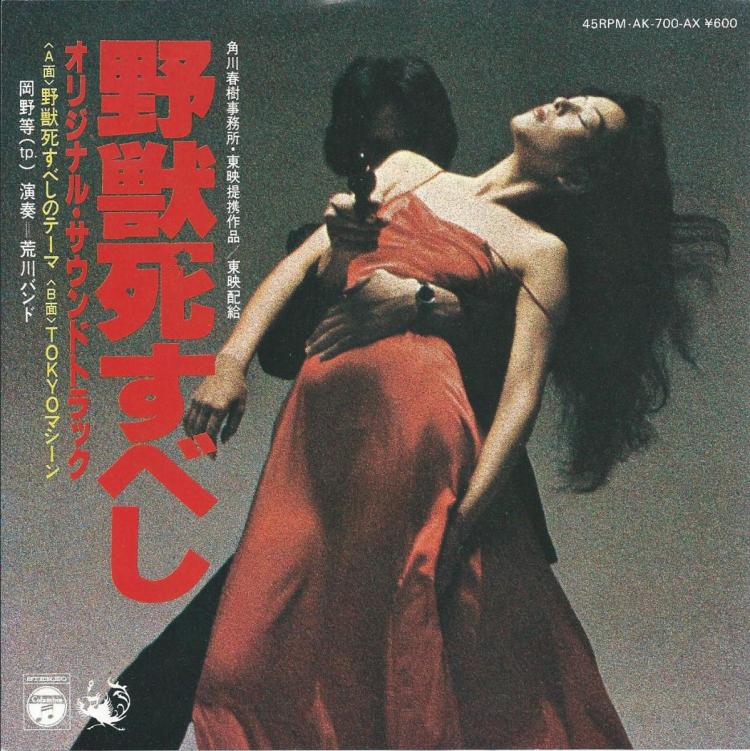
LP Soundrack record cover

Yusaku Matsuda was the action icon of the ‘70s, well known for his counter cultural, rebellious performances as maverick detectives or unlucky criminals. By the early 1980s he was ready to shed his action star image for more challenging character roles as his performances for Yoshimitsu Morita in The Family Game and Sorekara or in Seijun Suzuki’s Kagero-za demonstrate. The Beast Must Die (野獣死すべし, Yaju Shisubeshi, AKA Beast to Die) is among his earliest attempts to break out of the action movie cage and reunites him with director Toru Murakawa with whom he’d previously worked on Resurrection of the Golden Wolf also adapted from a novel by the author of The Beast Must Die, Haruhiko Oyabu. A strange and surreal experience which owes a large amount to the  “New Hollywood” movement of the previous decade, The Beast Must Die also represents a possible new direction for its all powerful producer, Haruki Kadokawa, in making space for smaller, art house inspired mainstream films.

Shedding 25 pounds and having four of his molars removed to play the role, Matsuda inhabits the figure of former war zone photo journalist Kazuhiro Date whose experiences have reduced him to state of living death. After getting into a fight with a policeman he seems to know, Date kills him, steals his gun, and heads to a local casino where he goes on a shooting rampage and takes off with the takings. Date, now working as a translator, does not seem to need or even want the money though if he had a particular grudge against the casino or the men who gather there the reasons are far from clear.

Remaining inscrutable, Date spends much of his time alone at home listening to classical music. Attending a concert, he runs into a woman he used to know who seems to have fond feelings for him, but Date is being pulled in another direction as his experiences in war zones have left him with a need for release through physical violence. Eventually meeting up with a similarly disaffected young man, Date plans an odd kind of revenge in robbing a local bank for, again, unclear motives, finally executing the last parts of himself clinging onto the world of order and humanity once and for all.

Throughout the film Date recites a kind of poem, almost a him to his demon of violence in which he speaks of loneliness and of a faith only in his own rage. Later, in one of his increasingly crazed speeches to his only disciple, Date recounts the first time he killed a man – no longer a mere observer in someone else’s war, now a transgressor himself taking a life to save his own. The violence begins to excite him, he claims to have “surpassed god” in his bloodlust, entering an ecstatic state which places him above mere mortals. A bullet, he says, stops time in that it alters a course of events which was fated to continue. A life ends, and with it all of that time which should have elapsed is dissolved in the ultimate act of theft and destruction. His acts of violence are “beautiful demonic moments” available only to those who have rejected the world of law.

Murakawa allows Matsuda to carry the film with a characteristically intense, near silent performance of a man driven mad by continued exposure to human cruelty. Hiding out in Date’s elegant apartment, Matsuda moves oddly, beast-like, his baseness contrasting perfectly with the classical music which momentarily calms his world. Mixing in stock footage of contemporary war zones, Murakawa makes plain the effect of this ongoing violence on Date’s psyche as the sound of helicopters and gunfire resounds within his own head. The imagery becomes increasingly surreal culminating in the moment of consecration for Date’s pupil in which he finally murders his girlfriend while she furiously performs flamenco during an dramatic thunderstorm. Date is, to borrow a phrase, no longer human, any last remnants of human feeling are extinguished in his decision to kill the only possibility of salvation during the bank robbery.

Anchored by Matsuda’s powerful presence, The Beast Must Die is a fascinating, if often incomprehensible, experience filled with surreal imagery and an ever present sense of dread. Its world is one of neo noir, the darkness and modern jazz score adding to a sense of alienation which contrasts with the brightness and elegance of the classical music world. At the end of his transformation, there is only one destination left to Date though his path there is a strange one. Fittingly enough for a tale which began with with darkness we exit through blinding white light.


There’s also another adaptation of this novel from 1959 starring Tatsuya Nakadai which I’d love to see but doesn’t seem to be available on DVD even without subtitles. This film has a selection of English language titles but I’ve used The Beast Must Die as this is the one which appears on Kadokawa’s 4K restoration blu-ray release (sadly Japanese subtitles ony).

Original trailer (no subtitles)