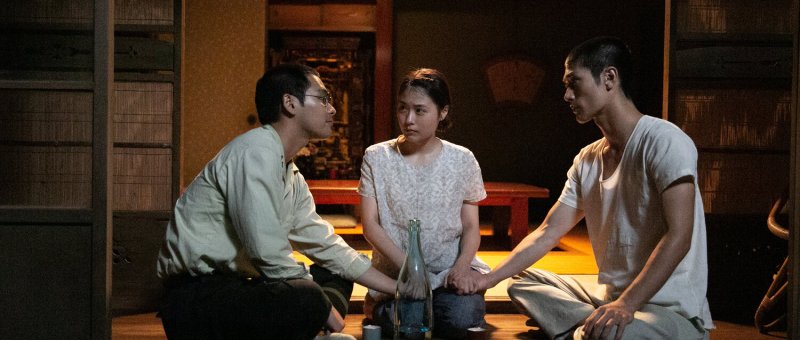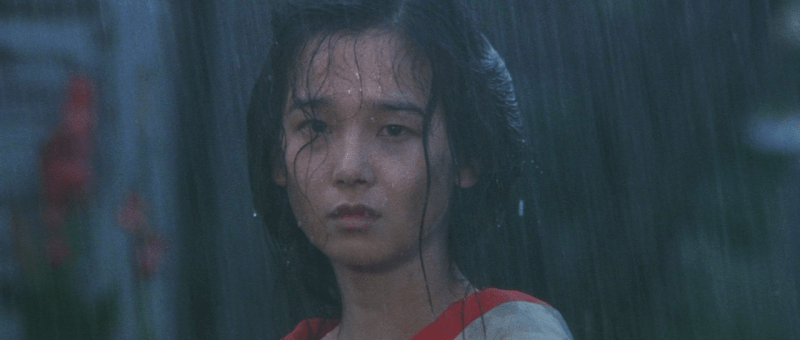
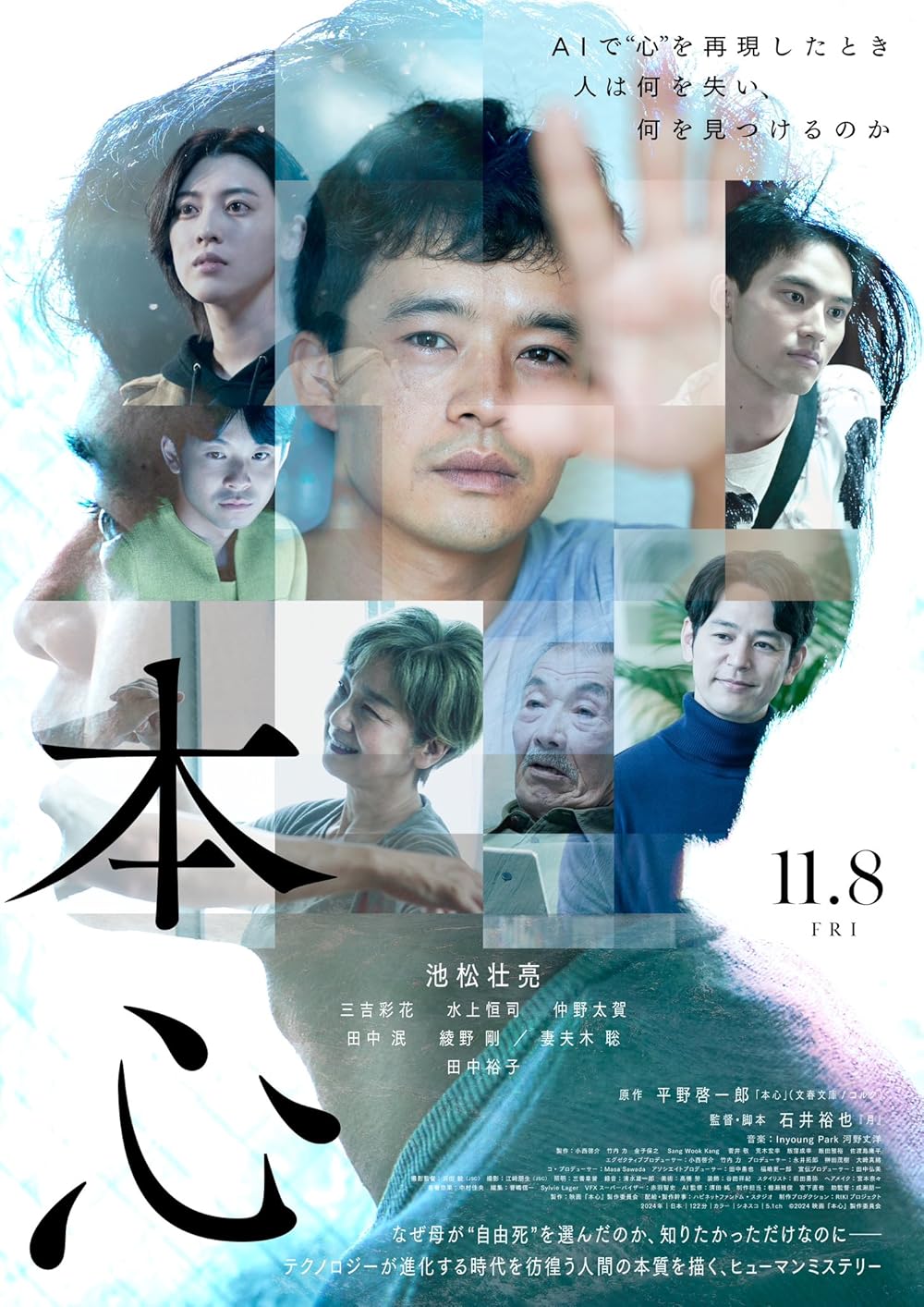
The Real You (本心, Yuya Ishii, 2024)

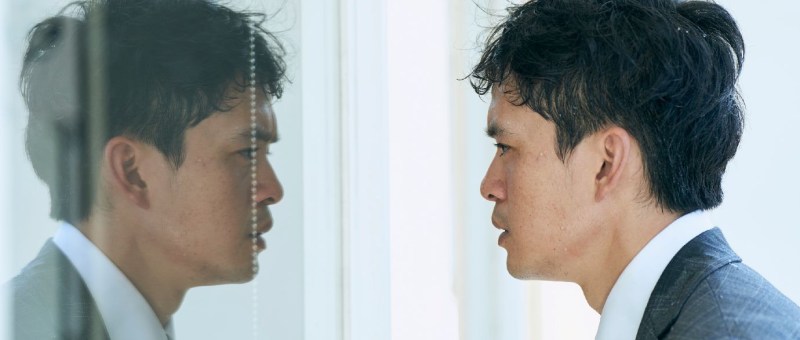
“Putting it into words makes it sound like a lie,” according to a young woman struggling to “be real” and express a truth without any of the awkwardness that interferes with emotional intimacy, but there are ways in which lies can be true and truth can be lies. Based on a novel by Keiichiro Hirano, author of A Man which also deals with similar themes, Yuya Ishii’s The Real You (本心, Honshin) probes at the nature of the human soul and asks if there really is such a thing as the “real” you or if authenticity is really possible in human interaction. 

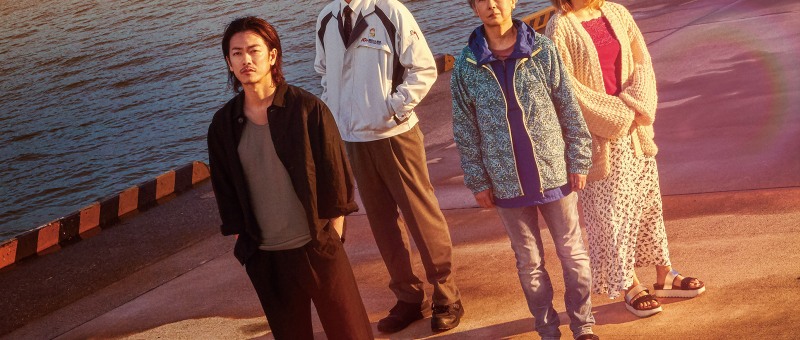
Both Ayaka (Ayaka Miyoshi) and the avatar of his mother Akiko (Yuko Tanaka) describe Sakuya (Sosuke Ikematsu) as being too pure for this world and to an extent they’re right even if many of his present problems are directly linked to having committed a “crime” in his youth. As the film opens in the summer of 2025, Sakuya is a factory worker watching helplessly as robots take over his work. After all, they don’t care about the heat, or being able to breathe under a heavy welding mask, nor do they get tired and they can get this job done much faster than he can. In any case, he ignores an ominous phone call from his mother, who appears to be showing signs of dementia, despite her telling him that she has something thing important to say and stays out with a friend after work only to spot her by the river in a storm on his way home. When she abruptly disappears, he assumes she entered the water and jumps in to save her but is injured himself and wakes up in hospital about a year later.

Of course, we don’t really know that he wakes up at all and it’s possible that all of this is really just a dream or an attempt to make contact with his authentic self through his relationships with two women, his mother and a young woman who also disappeared abruptly back in high school. Even though it’s only been a year, the AI revolution has marched on a pace and the entire world is now run by robots and avatars. Sakuya’s factory is no more, and the only job he can get is that of “Real Avatar” in which he rents out his physical body on behalf of clients who for whatever reason are unable to complete an action in person. Many of his early customers are elderly people who have opted for “elective death” and are trying to relive a precious memory vicariously through the VR headset before they go.

“Elective death” is one of the things that most bothers Sakuya in that he’s told it’s what his mother had chosen and that he’s getting a tax break and sizeable condolence payment so he can continue living in the family home. This eerie proposition that elderly people are being encouraged to decide that “this is enough” frightens Sakuya and hints at the eugenicist aims of an AI society in which those who are judged to be “weak” or cannot “contribute” in the way expected of them are forced to end their lives as if they didn’t deserve to live. He can’t understand why his mother would have chosen to die, but moreover, why she would have done it without even telling him. He can’t decide if the important thing she wanted to say was just about the elective death or if there was some greater truth he’ll now never know because he ignored her when she tried to tell him.

That’s one reason that he decides to use all his savings plus the condolence money to have an AI Avatar of his mother made in hope discovering what she wanted to say. Later he says that he wanted to know “Akiko Ishikawa,” rather just his mother, but is put off at first when confronted by the gap between the image of the mother he remembered and the objective reality. The creator, Nozaki, suggests incorporating memories from a young woman who was apparently his mother’s only real friend to get a fuller picture, but Sakuya resists insisting that he and his mother had no secrets from each other so she had no “hidden side”. Nozaki (Satoshi Tsumabuki) merely smirks and tells him that everyone has different sides to themselves that they don’t share with others, which Sakuya ought to know because there are things he’s not exactly hiding but doesn’t really want to talk about either.

His friend, Kishitani (Koshi Mizukami), wonders if there isn’t something a little incestuous about Sakuya’s desire to build a VF of his mother rather than his first love as he’d assumed he would, and he might be right in a way. Ayaka Miyoshi, played by the actress of the same name, shares a striking resemblance with the high school girl who exited the young Sakuya’s life, Yuki, and has a similar life story, though it’s not clear if they are actually the same person or not even if the AI version of his mother tells Sakuya that they are. Yet Ayaka is his only way of verifying that what the VF Akiko says is actually “true’ rather than some random hallucination cooked up by the machine based on the incomplete information it’s been fed. Through the VF he finds out things about his mother’s past that shock him, not that he necessarily disapproves, just that they conflict so strongly with the image of his mother he’d always had. Additionally, there’s a degree of hurt that though he believed he and his mother shared everything, she kept this actually quite significant part of herself secret from him in much the same way he admits he didn’t tell Ayaka about his “crime” because he feared she might pull away from him if she did.

Ayaka also avoids talking about her past as a sex worker which has left her with PTSD and fear of being touched for much the same reason even if she suspects that Sakuya already knows and that his mother may have told him before she died. There’s an obvious parallel being drawn between them when Ayako insists that she made a clear choice to do sex work out of economic necessity and refuses to apologise for it, while Sakuya has also been selling his body as a Real Avatar. While some of his clients merely need help accomplishing things physically, others hire him for amusement. They send him on pointless errands running all over the city and then give him a bad review for smelling of sweat, or deliberately make him do degrading tasks. They also ask for things that are clearly illegal, such as another RA’s client requesting to see a man die. But Sakuya continues to wilfully degrade himself carrying out each of the tasks faithfully despite the pitying looks of those around him. When he’s unexpectedly employed by a wealthy avatar designer (Taiga Nakano) who uses a wheelchair, Sakuya again sheds his own identity and finds himself playing reverse Cyrano forced to make Ifi’s declaration of love on his behalf only to the consternation of Ayaka who isn’t sure who it’s coming from and is disappointed in both men for the obvious cruelty of the situation.

Thus this new technology becomes just another means of class-based oppression in which the wealthy use their riches to abuse those without economic means who have no choice but to submit themselves or rebel through criminality while the rich look on with amusement. Sakuya says he isn’t in love with Ayaka, but it’s unclear if he says it because he thinks she’s better off living in material comfort with Ifi, if he really means it, or he’s realised that he was more in love with the image of the girl who disappeared and the missing side of his mother than he really was with her. It seems that Sakuya is really looking for the hidden half of himself through refracted images of the way others see him, while essentially engaging in an internalised dialogue with his own thoughts and memories. He can’t really be sure of the truth behind anything the VF says, a fact brought home by the implication that the great truth he was seeking is a banal platitude and what he undoubtedly wanted to hear yet knew all along. Nevertheless, it’s not until hearing it that he can regain his real self, let go of the past, and be in a position to connect with Ayaka which is also a kind of waking up. Disquieting in its implications for a new AI-based society in which the line between the real and virtual has all but disappeared, there is nevertheless something quite poignant in Sakuya’s gradual path towards saying goodbye but also hello to a new life of greater self-awareness and independence.


The Real You screens in New York July 11 as part of this year’s Japan Cuts.

International trailer (English subtitles)

Monster (怪物, Hirokazu Koreeda, 2023)

Part-way through Hirokazu Koreeda’s probing drama Monster (怪物, Kaibutsu), a distant headmistress tells one of her teachers that “What actually happened doesn’t matter.” As in The Third Murder, the truth, so far as it can be said to exist at all, is an irrelevance. We need narrative to serve a purpose. Confronted by a worried mother, a teacher accused of using violence against a student claims there’s been a “misunderstanding,” but in many ways there has. We’re so often prevented from speaking our truth by the social conventions that govern us, because of shame, or fear, or simply because when all is said and done is it often easier not to speak.

In may ways this is the internal battle Minato (Soya Kurokawa) finds himself fighting. He sees another boy being bullied, mostly just for being different, and he wants to do something about it but he’s different too and so he’s afraid. He befriends the boy, Yori (Hinata Hiiragi), but also tells him to not speak to him in front of their classmates because he doesn’t want to end up being a target. In the midst of futility all he can do is flail randomly, trashing the schoolroom not to mention his bedroom at home solely because he is unable to voice himself clearly or communicate in any other way.

Because of these lapses in communication, a series of misunderstandings arise. The language we use is often thoughtless and arbitrary. Well-meaning words can still wound. Minato’s mother, Saori (Sakura Ando), tells him that she promised his late father she’d take care of him until he had a wife and family of his own but perhaps that not something Minato will want. Similarly their teacher, Hori (Eita Nagayama), described by one of his colleagues as “shifty-eyed and creepy”, makes a series of throwaway remarks that the boys should act let men, filling their heads with an idea of toxic masculinity echoed in Saori’s insistence that girls prefer boys who don’t know the names of flowers. 

Minato is reminded that the bottom layer of the pyramid holds everything else in place, but it’s a responsibility he doesn’t think he can bear. He knows he can’t be the kind of man his father apparently was, a rugby player who may have been with another woman when he died, and feels an acute sense if failure and inferiority in being unable to live up to the expectations of others. He later tells the headmistress (Yuko Tanaka) who is carrying a burden of her own that he knows he can never be happy and believes himself unworthy of it only to find an unexpected source strength in her advocation that happiness is something anyone can have, otherwise it wouldn’t be happiness at all.

Yet for all that Yori seems to be happy, or at least to affect cheerfulness in all things despite his dismal circumstances living with a troubled father who drinks and refers to him as monstrous and diseased. One of the teachers also brands the parents of his pupils as monsters feeling they unjustly “torture” them while shifting the blame for their own bad parenting. Minato too feels himself to be a monster because he senses that he’s different from those around him and is afraid of them and of himself. Throw away remarks hint at buried prejudice, such as in Hori’s dig at single mothers stating that his own mother was one and exposing a degree of insecurity masked by an outward conservatism.

We judge him for this remark, but it’s also true he’s merely parroting something that was said to him. We can never know all of the truth, and Hori suffers in part because of his “shifty-eyed and creepy” appearance that contributes to our conviction the accusations against him are likely to be true in the same way he misunderstands Minato because of his confusing behaviour and inability to communicate. Gossip weaves itself into a kind of folk truth that becomes difficult to unravel no matter the degree of veracity within it, while we discover we can never know the whole of something only the facets of it that are presented to us and might well result in “misunderstandings.”

Koreeda shifts our perspective and exposes the flaws in our assumptions, illuminating with empathy a sense of a more objective truth that was hidden from us but equally the various reasons we cannot always be truthful even with ourselves nor can we see what others see of us. Obsessed with the idea of rebirth, the boys discover their own kind of paradise in private world in the midst of nature free of social conventions or expectation and free to be exactly as they are. The ambiguity of the ending may subtly undercut its seeming utopianism but nevertheless suggests that the only objective truth may be that happiness is something anyone can have if only they can free themselves from the prejudices and petty social conventions which govern our world.


MONSTER is out in UK and Irish cinemas on March 15th. For more information, go to https://monsteruk.film/ 

Uk trailer (English subtitles)

Thousand and One Nights (千夜、一夜, Nao Kubota, 2022)

“I can reach the mainland by rowing boat, but why won’t my feelings reach you?” a plaintive song asks in Nao Kubota’s melancholy tale of perpetual longing and continual loss, Thousand and One Nights (千夜、一夜, Senya, Ichiya). A lingering ghost story, Kubota’s contemplative mood piece sees two women, one old and one young, take different paths in the wake of their abandonment but perhaps finding themselves no less unhappy when left with the unanswered questions of a sudden absence. 

On the island of Sado, fishwife Tomiko (Yuko Tanaka) has been waiting for her fisherman husband Satoshi to return home ever since he said he was “just going out for a bit” thirty years previously. Many in the community view her with a mixture of pity of revulsion, seeing her as close to madness in her refusal to accept that her husband will never come back to her. Meanwhile, the former mayor Taisuke now retired to take care of his bedridden wife, puts another young woman, Nami (Machiko Ono), whose husband Yoji (Masanobu Ando) similarly just went out for a bit two years ago and never came back, in touch with Tomiko hoping she can help her investigate what might have happened and if Yoji may be among the small number of presumed abductees taken from the island by the North Koreans. 

Sado does seem to have a large numbers of “missing” people, which in itself is not such an unusual phenomenon given how easy it can be in Japan to simply “evaporate” and start again somewhere else. The island was also the site of a handful of confirmed abductions by North Korea in the late 1970s, dangling another unanswered question in front of the women wondering if their husbands might have been spirited away and prevented from contacting them no matter how much they may have wanted to. Nami is herself third generation Zainichi Korean and wonders if that might have had something to do with Yoji’s disappearance, though in contrast to Tomiko her goal is less reunion than a simple desire to know why. She wants to give herself permission to move on, having drifted into a relationship with a besotted colleague (Takashi Yamanaka) she may not actually quite love but offers her a quiet and conventional life of security she’ll never now know with Yoji. 

Nami does, however, feel a degree of shame in her desire to put the past behind her as if she were betraying a romantic ideal in being unable or unwilling to give up her life in waiting as Tomiko has done. She fears Tomiko may resent her, but she doesn’t, not really only acknowledging that she’s made a different choice. Like Tomiko, Nami is left with unanswerable questions, wondering if Yoji simply walked out on her because he grew tired of the inevitability of their life together, if he was bored, or lonely or depressed. Perhaps he met someone else, had an accident and lost his memory, fell off a cliff or was killed in some other way and someone covered it up. Perhaps he’s dead, perhaps he’s in North Korea. Perhaps it’s all the same. 

While the community pities Tomiko in her martyrdom, they attempt to pressure her to move on by agreeing to marry local fisherman Haruo (Dankan) who has long carried a torch for her even since they were children. Yet in the irrationality of romantic longing, Haruo cannot understand why Tomiko will not give up on Satoshi even as he is unable to give up on her despite her frequent and unambiguous rejections of his overtures. There is a particularly unpleasant quality to his obsessive ardour as his mother (Kayoko Shiraishi) comes round to plead with Tomiko to marry her son and his work colleagues organise a kind of intervention asking her to give in because he’s going out of his mind. He runs her down, says she’s “withering away” and only he can save her while worryingly possessive and controlling even threatening suicide and later going missing at sea just to make her feel guilty and worry about him. 

Even Tomiko’s mother is suffering the pain of lost love, hugging her late husband’s prosthetic leg as she sleeps while excusing the drunken violence that Tomiko says left her with a lasting fear of men by explaining that the war changed him. Tomiko complains that no one ever tells her anything important and that they always leave, but equally refuses to reveal very much important to anyone else keeping her feelings largely to herself remaining something of an enigma, uncertain if her constant waiting is more habit than devotion. In all these tales of frustrated longing from Taisuke and his ailing wife to Satoshi’s parents who rarely talked of their son only for the father to tell the mother on her deathbed that he was still out playing, there is an inescapable loneliness in the essential inability of conveying one’s true feelings that leads some to simply make their exit without saying a word. 


Thousand and One Nights screens at New York’s IFC Center on Feb. 12 & 15 as part of ACA Cinema Project’s New Films From Japan.

Original trailer (no subtitles)

Princess Mononoke (もののけ姫, Hayao Miyazaki, 1997)

“So you say you’re under a curse? So what? So’s the whole damn world.” The world is indeed cursed in Hayao Miyazaki’s landmark 1997 animation Princess Mononoke (もののけ姫, Mononoke-hime). As the greedy monk insists, “there are angry ghosts all around us. Dead from wars, sickness, starvation. And no one cares”. Yet as an impassioned parable as it is about the destructive forces of industrialisation, Miyazaki’s mystical drama is really about balance and duality along with the necessity of harmony and co-existence with nature red in tooth and claw. 

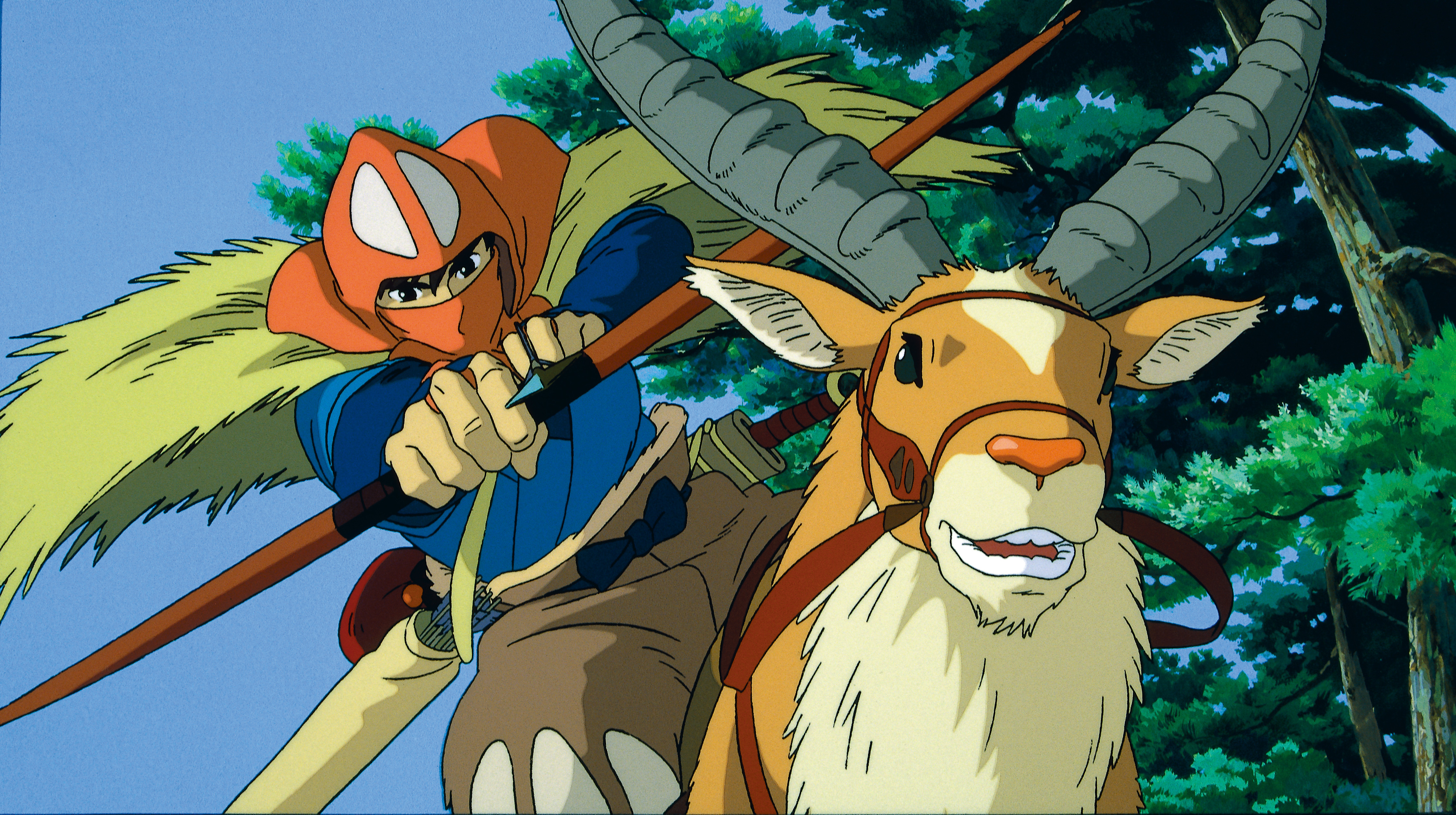
Young prince Ashitaka (Yoji Matsuda) already lives in what seems to be perfect harmony with the natural world, but his idyllic existence in an ancient clan long exiled by the emperor is disturbed one day by a marauding giant boar chased out of the forest having been turned into a demon consumed with hate and resentment. Ashitaka first tries reasoning with the beast, but is finally forced to put it out of its misery to protect the village and is infected himself in the process. Now unable to stay lest he endanger his community, Ashitaka ventures West in search of the corruption which sent the boar hurtling towards his home. 

What he eventually comes to is an industrial settlement, Irontown, ruled by Lady Eboshi (Yuko Tanaka) who ought by all rights to be a villain in her casual disregard of or active hostility towards unruly nature which her industrialisation pollutes. But then as we can see Lady Eboshi is a good and compassionate leader who has erected a community of the marginalised buying out the contracts of indentured sex workers and freeing them to labour in her ironworks while taking in lepers to manufacture her futuristic firearms. Uncharitably, one could also say that she’s chosen these people because they have little power and will be more likely to put up with hardship and exploitation without complaint because it’s better than the lives they lived before, but it does it does seem that she has her heart in the right place as far as her people are concerned determined to build a community of mutual solidarity between workers. 

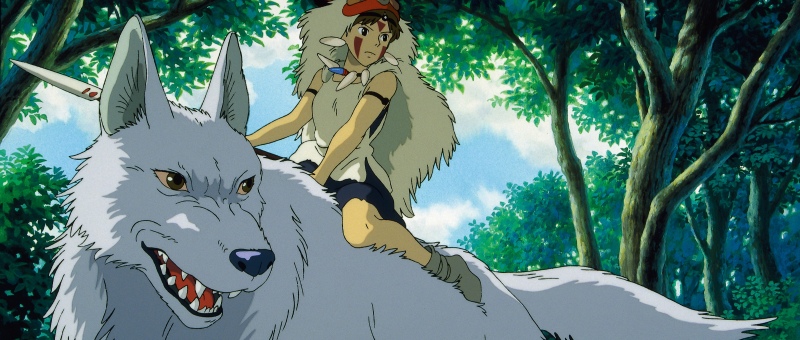
Conversely, the titular Princess Mononoke, San (Yuriko Ishida), ought by rights to be the heroine but she and the wolf deities she lives with are also violent and unforgiving in their hatred of humans as determined to wipe out the threat presented by Lady Eboshi as she is them. Ashitaka was dispatched to be a peacemaker, to see with eyes unclouded by hate, in an attempt to find common ground and a way that the forest and humanity can live together because in reality one cannot survive without the other. He is by turns disappointed with each of them but holds compassion for both while a tertiary political threat lingers on the horizon in the machinations of shady priest Jigo (Kaoru Kobayashi) and the emperor who wants the head the of the Forest Spirit because he believes it will confer immortality. Lady Eboshi, who otherwise appears to reject the feudal order, intends to give the emperor the head in order to gain protection from overreaching lord Asano who hopes to capture the capitalistic potential of Irontown for himself. 

Jigo is an embodiment of humanity’s greed and its destructive potential, not caring that severing the Forest Spirit’s head will cause untold destruction in which any financial gain he might make would be all but irrelevant. His role is even more ironic given that he is a priest who has supposedly rejected material desire describing himself as a monk just trying to get by while seemingly willing to manipulate and betray almost anyone in his quest for gold. Lady Eboshi wants to improve conditions for her community while San essentially wants the same but Jigo just wants to improve things for Jigo and no one else. 

What Ashitaka wants is to cure his curse by restoring the balance between the human world and the natural in the creation of a society in which neither need be a threat to the other. Thus he pledges to help rebuild Irontown along less destructive lines while entrusting the forest to San to protect though she finds herself unable to forgive humanity for the destruction it has already wrought and may do again. Even so, as Ashitaka says, “it’s time for us both to live” hinting at a kind of rebirth and a new beginning free from the old authority be it the Forest Spirit or the emperor and the feudal order in a new world of freedom and equality. 


Princess Mononoke screens on 35mm at Japan Society New York on July 22.

Trailer (english subtitles)

Ora, Ora Be Goin’ Alone (おらおらでひとりいぐも, Shuichi Okita, 2020)

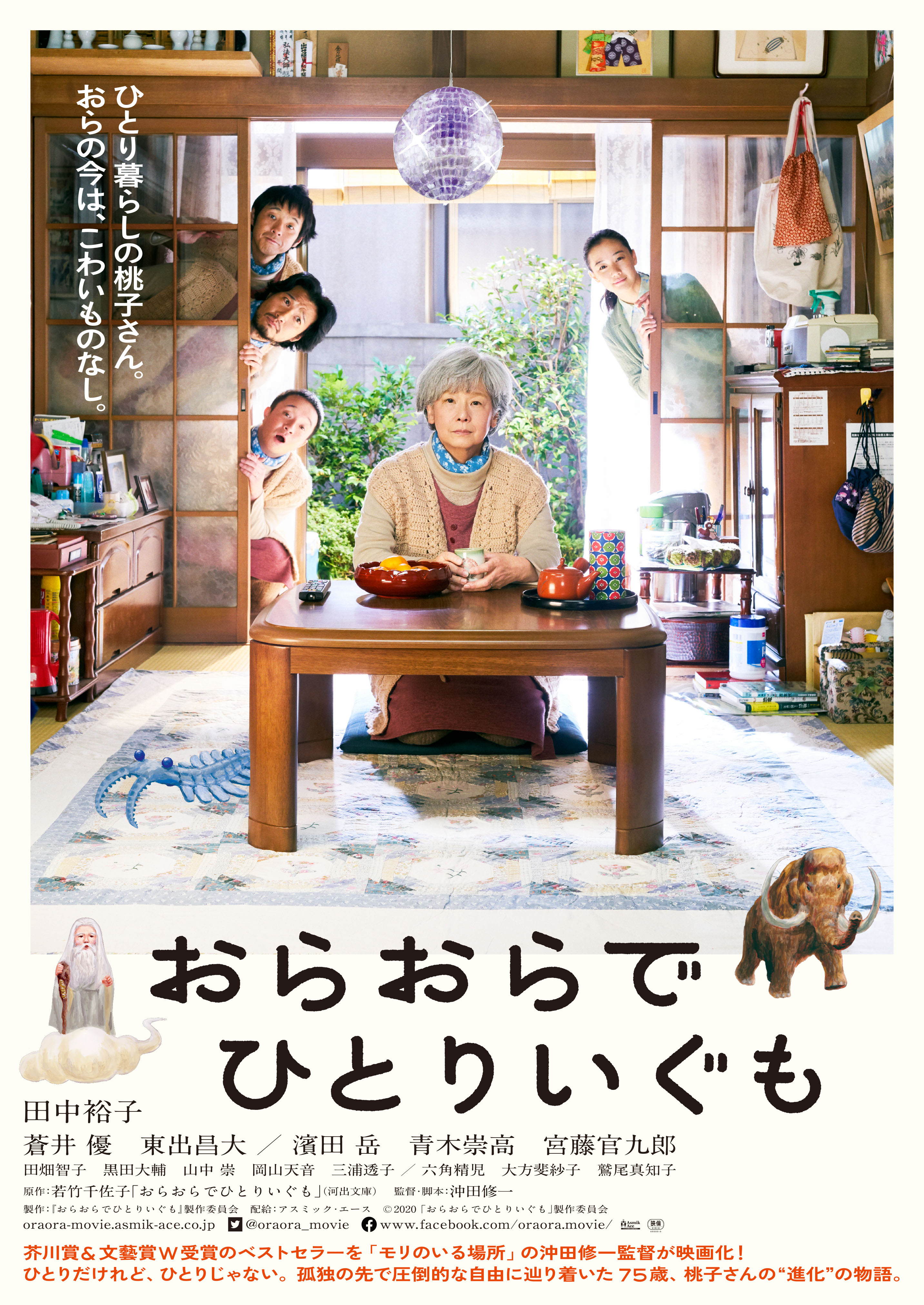
“I never thought my life would come to such a lonely autumn” an old woman laments in Shuichi Okita’s touching adaptation of the novel by Chisako Wakatake Ora, Ora, Be Goin’ Alone (おらおらでひとりいぐも, Ora Ora de Hitori Igumo), her husband now gone, a son so estranged he may as well be too, and a daughter (Tomoko Tabata) who only stops by to ask for money. What’s it all for? In an increasingly ageing Japan, later life loneliness has become a pressing issue, but for Momoko (at 75: Yuko Tanaka, at 20 – 34: Yu Aoi) the problem may be that she’s beginning to find her own company oppressive mainly because she’s become plagued by a trio of mental sprites dressed in regular old lady clothes who speak to her in her native Tohoko dialect and force her to think about the realities of her life. 

And then there’s the other guy who looks really like the guy she was briefly engaged to before running out on an arranged marriage only dressed in her pyjamas and telling her there’s no point getting out of bed because every day is the same and she doesn’t have anything to do anyway. Meanwhile, she finds herself pulled back towards memories of happier times when her children were small. All of this has Momoko wondering if she’s sliding into dementia, or if perhaps she’s merely beginning to go out of her mind with grief, loneliness, and existential futility. 

It’s also clear that like everyone else her age despite having led a happy life, Momoko has doubts and regrets. When she ran out on her arranged marriage inspired by the Olympic buzz of Tokyo in 1964, she thought she was striking out for freedom and independence, that she was a “new woman” of the post-war era and she was going to live her own life the way she wanted it. Yet in Tokyo the first friend she makes is someone from the same area who’s managed to completely shed their regional accent, and then she met a man who refused to lose his (Masahiro Higashide) and fell in love with him. She doesn’t regret her life, but feels in a sense disappointed that she ended up falling into the same patriarchal patterns she tried so hard to escape as a conventional housewife and mother dedicating herself to supporting the man she loved. Her friend, Toko (Toko Miura), points out that she always hesitates when she refers to herself as “watashi” rather than the familiar “ora” in the Tohoku dialect as if shamed by the inauthenticity and resentful that her accent, her essential identity, is something she has to lose in order to blend in to Tokyo society. 

Heartbreakingly, we witness her bamboozled into leasing a new car, a symbol of freedom and independence, from a young man who seems nice but is obviously intent on leveraging her loneliness, addressing her as “mother” (not an unusual way to refer to the woman of a house but definitely a deliberate avoidance of “granny”) and encouraging her to think of him as a son. Ironically, while he’s there the phone rings but it’s an “ore ore” scam claiming that her son’s in trouble and needs money. She laughs it off and tells the salesman she’s not silly enough to fall for something like that just as she signs on the dotted line, but later we discover that she did indeed fall prey to it sometime earlier in desperation for the son who, as she had, left home young and never looked back. Her daughter meanwhile, stops by after hearing about the car but mostly so she can ask for money to pay for art lessons for her son. 

Thinking back on their days as a family, Momoko can’t reconcile herself to this sense of parental rejection but meditates on her relationship with her own grandmother realising she too must have been desperately lonely but she was “young and stupid” and didn’t understand. Her interior monologue with her trio of sprites is recited entirely in the voice of her younger self, and at one point she even tries throwing beans at them like demons during Setsubun, but eventually accepts them enough to talk out loud which is either a sign that she’s really losing it or a kind of liberation. “How will I carry on by myself?” she asks, meditating on this new kind of “independence” which might itself soon be taken from her whether she wants it or not. Nevertheless, what she discovers is that she might not be as alone as she thought she was and more has been passed on than she assumed but if you have to go alone then that’s alright too.


Ora, Ora Be Goin’ Alone streams in the US Dec. 3 to 23 series alongside Shuichi Okita’s debut Chef of South Polar as part of Japan Society New York’s Flash Forward series.

Original trailer (no subtitles)

Gift of Fire (太陽の子, Hiroshi Kurosaki, 2020)

“What can we do? It’s for the victory of our country” one woman stoically laments as her family home is demolished in an attempt to mitigate the damage from potential aerial bombing in Hiroshi Kurosaki’s wartime drama, Gift of Fire (太陽の子, Taiyo no Ko). A co-production between Japanese broadcaster NHK and American distributor Eleven Arts, Kurosaki’s ambivalent interrogation of the price of progress asks some difficult questions about scientific ethics while simultaneously suggesting we may have been stoking a fire we cannot fully control in a bid for a technological evolution which has become unavoidably politicised. 

The hero, Shu (Yuya Yagira), is an idealistic young man who excels at running experiments. He has been spared the draft because his work has been deemed essential for the war effort as he is part of the research team at Kyoto University working on the development of an atomic bomb. A theoretical thinker, Shu has not fully considered the implications of the project and largely views it as a problem they are trying to solve in the name of science rather than a concerted attempt to create a super weapon with the potential to bring death and destruction to the entire world. 

Others meanwhile are beginning to question the ethical dimensions of their work. The team is equipped with a shortwave radio receiving the American broadcasts and is fully aware that Japan is losing the war. There are frequent power outages which interfere with their research, while food shortages are also becoming a problem. The potter Shu has been visiting in order to acquire Uranium usually used for a yellow glaze tells him that he rarely needs to use colour anymore because the vast majority of his output is plain white funerary urns for boys who come back as bones. Some of the scientists feel guilty that they are living in relative safety while other young men their age are fighting and dying on the front line, while others wonder if working on the bomb, which will almost certainly not be finished in time, is the best way to help them. They also wonder if scientists should be involved in the creation of weapons at all, but their mentor Arakatsu (Jun Kunimura) justifies the project under the rationale that they aren’t just trying to make a bomb but to unlock the power of the atom and harness its intrinsic energy to take humanity into a brave new world. 

As it turns out, Arakatsu may not have expected the project to succeed but was in a sense using it in order to protect his students by ensuring they would be exempt from the draft. Another senior researcher meanwhile points out the Americans are also working on a bomb, and if they don’t finish it first the Russians will. Arakatsu claims this war, like most, is about energy but nuclear energy may be infinite and therefore its discovery has the potential to end human conflict forevermore. Still, it’s difficult for Shu reconcile himself to the reality of what he was working on seeing the devastation inflicted on Hiroshima. The scientists are plunged into a deep sense of guilt and despair that they failed to prevent this tragedy, but also perhaps relief in knowing they were not responsible for inflicting it on the city of San Francisco as had been the plan. 

Arakatsu claims he wants to change the world through science, a sense of purpose that appeals to Shu even while he remains firmly in the present moment. His childhood friend, Setsu (Kasumi Arimura), however is looking far ahead already thinking about what to do when the war is over. Seeing through the wartime propaganda disturbed by the answers the high school girls co-opted to fill-in at her factory give when asked about their dreams that all they want is to marry as soon as possible and raise children to serve the nation, she aims to educate. Shu’s brother Hiroyuki (Haruma Miura), meanwhile, is a conflicted soldier filled with guilt for having survived so long crying out that he can’t be the only one not to die. The theory that nothing is ever created or destroyed becomes an odd kind of justification, yet Shu is also forced to admit that destruction can be “beautiful” while claiming that scientific progress is a body already in motion which cannot be stopped. “The nature of science transcends humanity” Shu is told by an accented voice speaking in English, insisting that the bomb is merely another stop on the inevitable march of progress in the great chain reaction of history. Kurosaki’s melancholy drama preserves both the beauty and wonder of scientific discovery as well as its terrible ferocity but offers few answers as to the extent of its responsibilities. 


Gift of Fire screens in Chicago on Sept. 16 as part of the 13th season of Asian Pop-Up Cinema before opening at cinemas across the US on Nov. 12 courtesy of Eleven Arts.

US trailer (English subtitles)
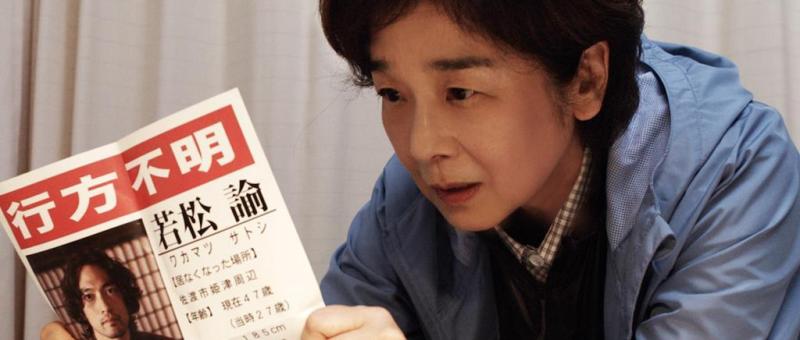
Amagi Pass (天城越え, Haruhiko Mimura, 1983)

There’s no statute of limitations on guilt an ageing policeman laments in Haruhiko Mimura’s adaptation of the Seicho Matsumoto mystery, Amagi Pass (天城越え, Amagi-Goe). Co-produced by Yoshitaro Nomura and co-scripted by Tai Kato, Amagi Pass arrives at the tail end of the box office dominance of the prestige whodunnit and like many of its kind hinges on events which took place during the war though in this case the effects are more psychological than literal, hinging on the implications of an age of violence and hyper masculinity coupled with sexual repression and a conservative culture. 

In a voiceover which doesn’t quite open the film, the hero, Kenzo (Mikijiro Hira / Yoichi Ito), as we will later realise him to be, likens himself to that of Kawabata’s Izu Dancer though as he explains he was not a student but the 14-year-old son of a blacksmith with worn out zori on his feet as he attempted to run away from home in the summer of 1940 only to turn back half-way through. In the present day, meanwhile, an elderly detective, Tajima (Tsunehiko Watase), now with a prominent limp, slowly makes his way through the modern world towards a print shop where he orders 300 copies of the case report on the murder of an itinerant labourer in Amagi Pass in June, 1940. A wandering geisha was later charged with the crime but as Tajima explains he does not believe that she was guilty and harbours regrets over his original investigation recognising his own inexperience in overseeing his first big case. 

As so often, the detective’s arrival is a call from the past, forcing Kenzo, now a middle-aged man, to reckon with the traumatic events of his youth. Earlier we had seen him in a doctor’s office where it is implied that something is poisoning him and needs to come out, his illness just as much of a reflection of his trauma as the policeman’s limp. Flashing back to 1940 we find him a young man confused, fatherless but perhaps looking for fatherly guidance from older men such as a strange pedlar he meets on the road who cheekily shows him illustrated pornography, or the wise uncle who eventually tricks him into buying dinner and then leaves. His problems are perhaps confounded by the fact that he lives in an age of hyper masculinity, the zenith of militarism in which other young men are feted with parades as they prepare to fight and die for their country in faraway lands. Yet Kenzo is only 14 in 1940 which means he will most likely be spared but also in a sense emasculated as a lonely boy remaining behind at home. 

He tells the wise man who later tricks him that he’s run away to find his brother who owns a print shop in the city because he hates his provincial life as a blacksmith, but later we realise that the cause is more his difficult relationship with his widowed mother (Kazuko Yoshiyuki) whom, he has recently discovered, is carrying on an affair with his uncle (Ichiro Ogura). Returning home after his roadside betrayal he watches them together from behind a screen, a scene echoed in his voyeuristic observation of the geisha, Hana (Yuko Tanaka), with the labourer plying her trade in order to survive. Described as odd and seemingly mute, the labourer is a figure of conflicted masculinity resented by the other men on the road but also now a symbolic father and object of sexual jealously for the increasingly Oedipal Kenzo whose youthful attraction to the beautiful geisha continues to mirror his complicated relationship with his mother as she tenderly tears up her headscarf to bandage his foot, sore from his ill-fitting zori, while alternately flirting with him. 

Yet his guilt towards her isn’t only in his attraction but in its role in what happened to her next even as she, we can see, protects him, their final parting glance a mix of frustrated maternity and longing that has apparently informed the rest of Kenzo’s life in ways we can never quite grasp. Amagi Pass for him is a barrier between youth and age, one which he has long since crossed while also in a sense forever trapped in the tunnel looking back over his shoulder towards Hana and the labourer now on another side of an unbreachable divide. The policeman comes like messenger from another time, incongruously wandering through a very different Japan just as the bikers in the film’s post-credit sequence speed through the pass, looking to provide closure and perhaps a healing while assuaging his own guilt but finding only accommodation with rather than a cure for the traumatic past. 


Original trailer (no subtitles)

Neither Seicho Matsumoto’s original novel or the film adaptation are directly related to the well-known Sayuri Ishikawa song of the same name released three years later though the lyrics are strangely apt.

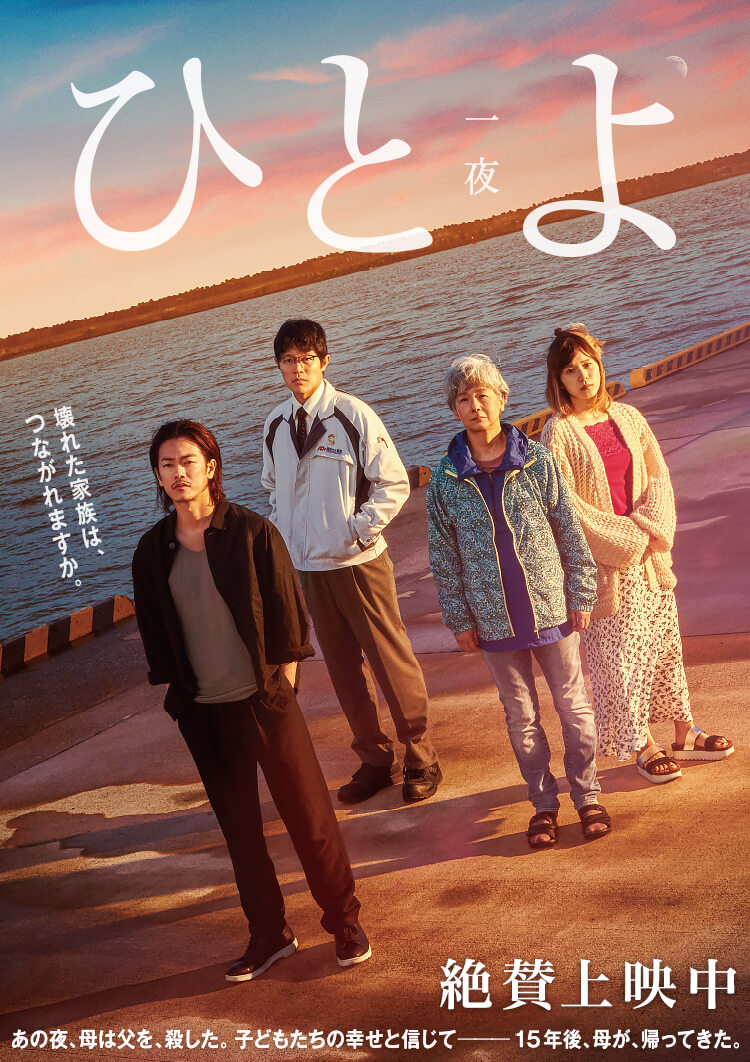
One Night (ひとよ, Kazuya Shiraishi, 2019)

“You can live however you want, you’re totally free. You can be anything” a woman tells her children, believing she is freeing them from a cycle of violence and oppression but unwittingly consigning them to another kind of cage in Kazuya Shiraishi’s raw family drama One Night (ひとよ, Hitoyo). Adapting the stage play by Yuko Kuwabara, Shiraishi is the latest in a long line of directors asking questions about the true nature of family, taking the hahamono or “mother movie” in a new direction but ultimately finding faith at least in the concept as the family unit finally begins to repair itself in a spirit of reconciliation and forgiveness. 

The “one night” of the title is that of 23rd May, 2004 on which wife and mother Koharu (Yuko Tanaka) backs over her relentlessly abusive husband in one of the taxis operated by their company. At some point, even if only perhaps in those few moments sitting at the steering wheel, Koharu appears to have given this a great deal of thought. Calmly walking back into her familial home where her three children are each sporting prominent facial wounds from a recent beating, she hands each of them a handmade onigiri and explains that she has just killed their father. Planning to hand herself in she reassures them that an uncle will look after them and the company so they’ve no need to worry. She has no idea how long she’ll be in prison for, but cautions that she may not return for 15 years hoping that by then the stigma will have passed. On her way out, she pauses to tell them that she is proud of what she’s done, saving them from their father’s authoritarian abuse and urging them to be free to live their lives in whichever way they choose. 

15 years later, however, the children find themselves burdened by her words. Yuji (Takeru Satoh) who dreamed of being a novelist has become a cynical journalist working for a pornographic magazine. Daiki (Ryohei Suzuki) who has a stammer and wanted to be a mechanic has never been able to hold down a steady job and is on the brink of divorce after showing signs of becoming abusive himself, while Sonoko (Mayu Matsuoka) who wanted to be a hairdresser is now working as a bar hostess drinking herself into oblivion. Living with the legacy of that one night, none of them has been able to live freely or to achieve their dreams but has remained arrested in some way waiting for Koharu’s return. 

While in her mind she freed them, the children find themselves dealing with the secondary sense of abandonment in her decision to exile herself from their lives, essentially leaving them to deal with the fallout of her “crime” all alone. Not only are they now orphaned, they also have to live with the stigma of being related to a notorious murderess with all of the peculiar burdens that entails in Japanese society from harassment and bullying to reduced employment opportunities and an internalised shame. Meanwhile, their mother’s words ring in their ears, urging them to be free, to be who they wanted to be and achieve their dreams, but they find themselves paralysed by the pressure to live up to the sacrifice Koharu has made on their behalf. While Sonoko is the most sympathetic, the boys are consumed by resentment. Koharu sees her 15 years of wandering as an exile undertaken as a kind of atonement and intended to keep the children safe from further social stigma, but her sons feel only the abandonment. 

Still, “mom’s still mom. It’s we who’ve got to change” Daiki tries to convince his brother, “we’re not kids anymore” he later adds as they recreate a thwarted teenage attempt to save their mother but in a very real sense they are. The problem in Daiki’s marriage turns out be rooted in insecurity, a failure of intimacy that saw him reluctant to let his wife and daughter into his traumatic past which finally expressed itself in violence. Meanwhile another driver at the taxi firm finds himself in a parallel struggle as he processes his own troubled relationship with an estranged teenage son and comes to realise his sins are indeed being visited on him despite his best efforts to prevent it. He sympathises with Koharu against the “ungrateful” children who, like the those of the classic hahamono, fail to understand the quality of their parent’s love as expressed in the sacrifices they have made on their behalf. Yet it’s Yuji who had branded his family a mere simulacrum who eventually fights hardest to save it, paving the way for a reconciliation as they finally bring closure to the events of 15 years previously and begin to move on with the rest of their lives. A raw and painful examination of familial trauma, Shiraishi’s bruising drama eventually allows the family to reclaim the night, repairing their fracturing bonds in sharing their emotional burdens freed at last from the oppressive legacies of abuse and resentment.


One Night streams in the US via the Smart Cinema app on Sept. 6 & 11 as part of this year’s New York Asian Film Festival.

Original trailer (no subtitles)

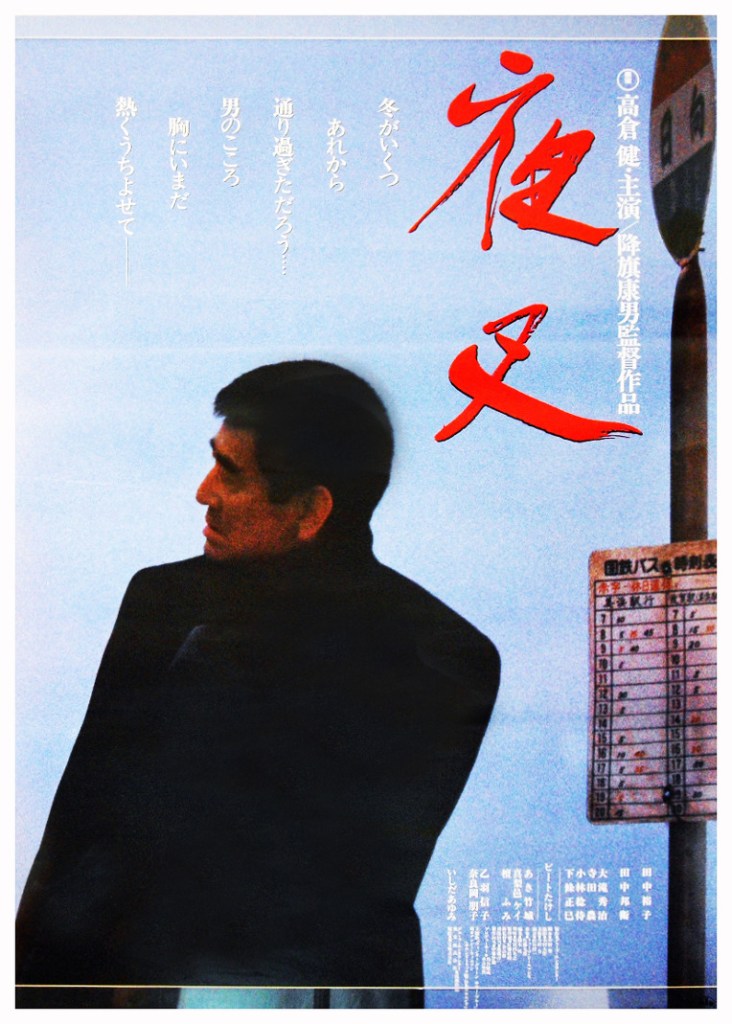
Yasha (夜叉, Yasuo Furuhata, 1985)

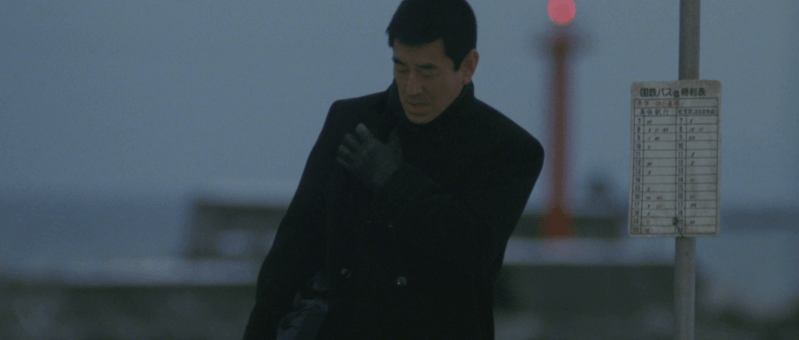
In melancholy gangster movies, the hero often dreams of leaving the city for an idealised rural paradise to start again as a righteous man redeeming himself through hard work with a good woman by his side. Usually, they don’t make it, their goodness is nothing but a weakness in the harsh post-war environment, but even if they did could they really lay their violent souls to rest and live as the rest of us do? Once again played by a manfully stoic Ken Takakura, the hero of Yasuo Furuhata’s Yasha (夜叉, AKA Demon) tries to find out, but discovers that sooner or later the past will always catch up with you. 

15 years ago, fisherman Shuji (Ken Takakura) was the notorious Osaka yakuza known as “Yasha”. A war orphan given refuge by a gangster brotherhood, two things happened to change his way of life, the first being innocent country girl Fuyuko (Ayumi Ishida) whom he met by chance and rescued on the dangerous streets of the city. The second is the death of his younger sister who had become addicted to heroin. Fiercely resistant to the traffic of drugs, Shuji quit the clan, married Fuyuko, and retreated to her fishing village home to take over her late father’s fishing business. Well respected in the community as a steady hand, he now has three children and a settled happy life though one tinged with anxiety in the need to keep his back covered lest anyone find out about his violent past. 

The violent past is brought home to him when a young woman, Keiko (Yuko Tanaka), arrives in kimono with her young son in tow to take over the local bar. Keiko is a bar hostess from Osaka hoping to make a new start far away from the city, not so much for herself it seems as her no-good boyfriend Yajima (Takeshi Kitano) who is a drug-addled thug and openly hostile to her little boy. It’s Yajima who threatens to disrupt the gentle rhythms of the town, firstly getting the fishermen hooked on all night games of mahjong which damage their daytime productivity, and then selling them heroin to keep them propped up. Unused to such urban vices as hard drugs and serious gambling, the fishermen are lambs to the slaughter, handing over their hard earned savings to the thuggish Yajima to keep their heads above the water. 

Shuji wants to keep the town clean, but he can’t exactly admit just how familiar he is with things like drink and drugs which are, as his friend Keita (Kunie Tanaka) points out, not things “normal” people should know about. After realising an old friend is the middle-man, Shuji has a quiet word with Yajima as one thug to another but it only makes the situation worse. He tries talking to Keiko instead, but her decision to get rid of the drugs has disastrous consequences for all when Yajima goes on a crazed, knife-wielding rampage through the town which only Shuji can end. During the fight Yajima slashes Shuji’s fisherman’s jumper right through to the expose the demon beneath, leaving his colourful tattoos on show for all to see. 

You’d think that Yajima’s rampage would have taught the town a lesson, shown them that they were in over their heads and Yajima was not the sort of person it was good to be associated with, but their animosity overwhelmingly turns to the demon Shuji whom they unfairly begin to blame for their many misfortunes. The fishwives begin to avoid Fuyuko, telling their kids not to hang out with her kids and suggesting that it must have been Shuji who got the guys playing mahjong. Shuji meanwhile doubts himself, drawn to Keiko as to Osaka and the sleeping demon within. Yasha reawakens and he wonders if he has the right to live here after all. 

Fuyuko’s mother tells her that it’s a good wife’s job to quell the demon, but she struggles to maintain hold on Shuji while Yasha is pulled towards the city. He makes a manly choice, attempting to redeem Yajima in redeeming himself by returning to his point of origin. The widow of his old boss warns him off, reminds him that he’s a fisherman now, and that should he move against her she will have to act in accordance with the rules of the underworld, but privately mutters to herself that he hasn’t changed at all, “stupid man”. In the end, Yasha’s manly gesture ends in futility. He cannot escape himself but neither can he solve his problems through violence as he might have before, not least because the code is no longer secure motivating those he thought he could trust towards betrayal. He still has a choice, leave with Keiko to be Yasha once again accepting the futilities of a violent life (and its inevitable end), or stay to be a peaceful fisherman with the “good wife” Fuyuko. One man cannot possess two souls, but the given the chance the demon can be subdued if there is the will to subdue it and the belief that the man himself is good enough for the world in which he wants to live.


Original trailer (no subtitles)

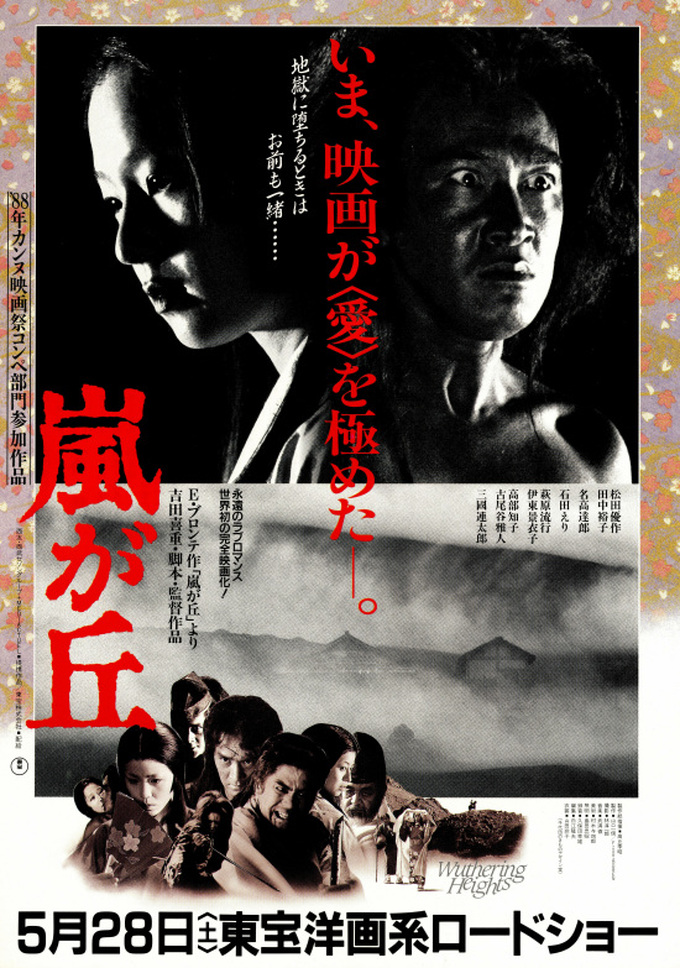
Wuthering Heights (嵐が丘, Kiju Yoshida, 1988)

Wuthering Heights poster“In this decadent age, who believes in the gods’ anger?” asks a cynical priest, willingly inviting evil into his home in the hope of brokering a change in his constraining circumstances. A key figure of the avant garde, Kiju (Yoshishige) Yoshida, like many of his contemporaries, struggled in the heavily commercialised cinema industry of the 1970s and beyond, finding the international arena more receptive to his arthouse concerns. 1988’s Wuthering Heights (嵐が丘, Arashi ga Oka), a distinctly Japanese take on Emily Brontë’s classic novel, found funding in France where it perhaps neatly sits alongside superficially similar efforts from his similarly constrained contemporaries, but as always Yoshida’s vision is darker, more disturbing than that of the big budget epics which aimed to recapture golden age glories.

Yoshida swaps the desolate Yorkshire moors for a smokey hellscape settled in ash on the side of an unpredictable volcano. The Yamabes are a priestly family in charge of conducting various rituals to keep the serpent god happy, preventing an eruption and ensuring good rains. The house is spilt in two with a feud underway between the East mansion and the West. The East mansion is where we lay our scene as old Yamabe returns from an extended sojourn in the city, bringing back with him a feral child he found starving under a bridge and later names “Onimaru” (Yûsaku Matsuda) in honour of his “demonic” appearance.

“Demonic” maybe an unkind word to use about any child and primed to become a self-fulling prophecy, but as someone later puts it Onimaru “does not belong to this world”. He is “an evil man” whose “cruelty knows no limits”, yet two women are drawn into his orbit and find themselves unable to break free of his passionate intensity. His step-sister, Kinu (Yuko Tanaka), our Cathy stand-in, bonds with him in childhood feeling a kind of elemental connection perhaps forbidden to her as a woman of feudal Japan subject to the whims of male society. Yet she alone sees through him to humanity buried below, “your curse is the proof you will never stop loving me” she offers darkly while seducing him the night before her marriage to another man (Tatsuo Nadaka). Later that man’s sister (Eri Ishida), positioning herself as potential bride, cites the fact that he is “consumed by jealousy” as further proof that he is more man than demon, but Onimaru himself seems uncertain so deep is he in rage and resentment.

That resentment is perhaps as much about class as about anything else. A feral child, living like an animal on the streets of an unforgiving city, he’s an ill fit for the rarefied mansion of a local lord with a spiritual mission, albeit one which imprisons him in his home and forbids him from associating with the world below. Yamabe took him in for his “boldness”, actively seeking his demonic dynamism while his own son, Hidemaru (Nagare Hagiwara), remains disappointingly conservative and wedded to his old-fashioned elite entitlement. Hidemaru’s resentment of Onimaru is not so much born of parental rejection in his father’s abrupt decision to go out and find a more satisfactory son than the one dutifully waiting at home, but irritation in Onimaru’s irregular status. He resents that a mere “peasant”, a man who should be among the servants, is permitted to share his space, and it seems, has usurped his position in his father’s eyes to be groomed as an heir to the illustrious Yamabe name.

Hidemaru eventually leaves in disgust, setting off to make a conventionally successful life for himself in the city, latterly returning with a wife and son to claim his birthright only after his father’s death. Yet Hidemaru suffers too. His wife is raped and murdered by bandits, agents of chaos and yet a product of the system he was so keen to uphold, leaving him a drunken, dissolute figure unable to fulfil his obligations to the god of fire while Onimaru prospers in a violent world and is eventually gifted that which he most wanted – stewardship of the Yamabe clan.

Even so, he cannot fully possess Kinu who remains lost to him, ruined by her own internal conflict between individualism and obedience. After coming of age, her father tells her women of the Yamabe clan must leave the mountain to serve as priestesses in the shrine, but Kinu wants to “live as a true woman”. She cannot have Onimaru, but does not want to leave him so she engineers a marriage with the rival West mansion and the kindly Mitsuhiko who brands his house as one of light as opposed to the gloomy shadows of the East. Kinu has attempted to seize her own future, at least in part, but finds herself conflicted, torn between her affection for Mitsuhiko who is gentleness personified and her need for Onimaru’s brooding intensity.

Yet Yoshida’s Wuthering Heights is less a story of forbidden, transgressive loves than it is of elemental destruction, the anger of the gods manifested as imploded repression and its fiery aftermath. Yamabe, the father figure, brings “evil” into his home, infecting it with dark desire and deep resentments seemingly in the knowledge it will burn it to the ground. The third generation, orphaned and finally independent, are left to make what restitution they can and so the tale begins to reset and repeat with cousins, Hidemaru’s grown and now subjugated son Yoshimaru (Masato Furuoya), and Kinu’s fiesty daughter (Tomoko Takabe), returning their ire to the force of their oppression – Onimaru, still fearsome and implacable though ageing and maddened by his unanswerable love for a dead woman whose corpse he has begun to covet.

Kinu, on her deathbed, promised to drag Onimaru to hell (assuming they weren’t already there) if only to protect her new family and finally does just that as he finds himself expelled by the next generation, dragging a coffin off into the fiery distance. “In every way, our world is accursed” insists an exasperated retainer. Everything here is corrupt, rotten, suppurating under the weight of oppressive traditions which restrict freedom and insist on order at the price of humanity. Yoshida’s noh-inspired aesthetics add to the atmosphere of fable as his embattled protagonists attempt to reconcile their natures with their civility but find there is no answer for repressed desire other than destruction and eventual rebirth.