Kung Fu Killer (一個人的武林, AKA Kung Fu Jungle, Teddy Chan, 2014)

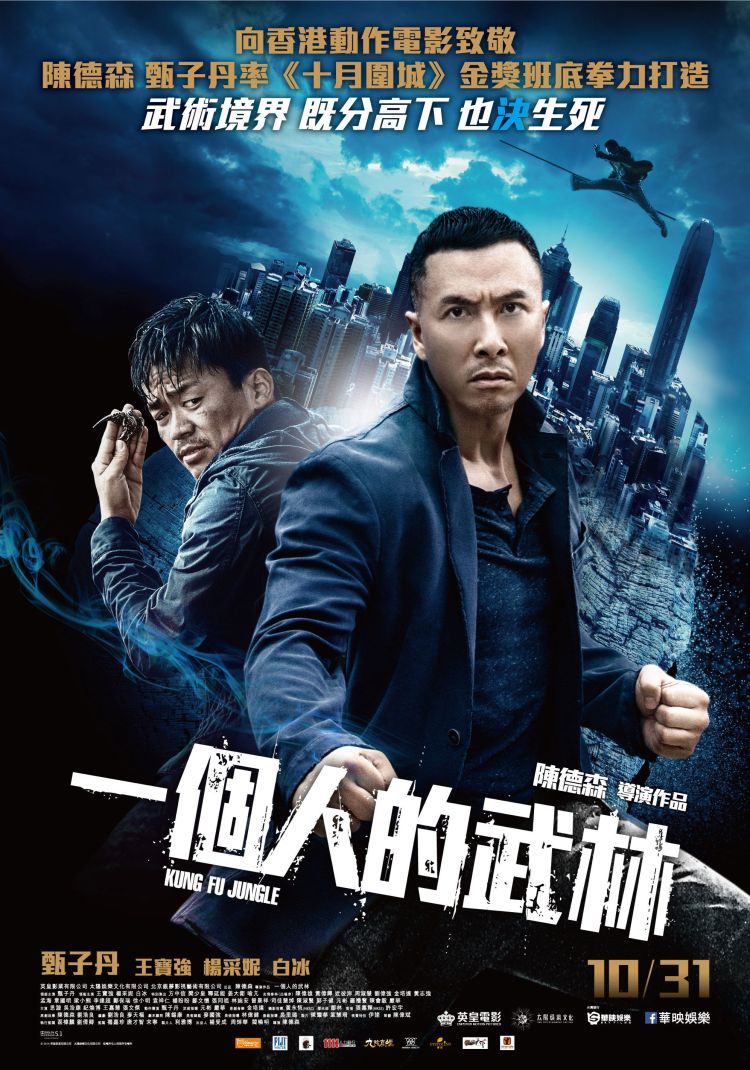
kung fu killerKung fu movies –  they don’t make ‘em like they used to, except when they do. Kung Fu Killer (一個人的武林, AKA Kung Fu Jungle) is equal parts homage and farewell as its ageing star, Donnie Yen, prepares to graduate to the role of master rather than rebellious pupil. What it also is, is a battle for the soul of kung fu. Just how “martial” should a martial art be? Is it, as our antagonist tells us, worthless with no death involved or will our hero prove the spiritual and mental benefits which come with its rigorous training and inner centring transcend its original purpose? Of course most of this is just posturing in the background of a lovingly old fashioned fight fest complete with a non-sensical plot structure motivated by increasingly elaborate set pieces.

Yen plays Hahou Mo, a martial arts master and instructor to the HK police who hands himself in one day covered in blood and confesses to having killed someone. Three years later Hahou is a man of peace, paying for the accidental death of an opponent by patiently waiting out his prison time. However, when he sees a news report about a serial killer with martial arts ability targeting fellow martial artists he goes on a violent rampage trying to get the attention of the police. If they’re going to solve this crime, they’re going to need someone who knows the martial arts world intimately and Hahou spies an opportunity to earn his freedom through helping someone not so unlike himself realise the error of their ways.

In keeping with the genre, its not so much of a whodunnit as a whydunnit and so the crazed murderer is unmasked fairly quickly. Fung Yusau (Wang Baoqiang) is determined to be number one in each and every discipline, taking on the accepted masters and besting them every time, even going to far as to leave a sarcastic trophy on every body. Hahou once shared his ambition, his reckless need to prove his skill is the reason his life has gone the way it has after all, but the two men share fundamentally different beliefs about the nature of their art. Fung Yusau believes martial arts exist for the reason of killing people – fights in which both challengers live are, to him, pointless and incomplete.

Even if Hahou once harboured the same desire to prove his skills superior to all others, his was a more internal quest. For him, at least now, kung fu is a sacred art of self improvement which can be used for self defence but is essentially about learning to live a harmonious life. Having learned from his own misfortune, he knows the folly of being no. 1 – in that it’s an essentially lonely and insecure place to be. Martial arts should be used to kick down walls and build bridges, his desire is to move forward in togetherness teaching people how to be happy rather than working against each other in an unnecessary and artificial kind of competition.

The police need Hahou’s help because the martial arts world is so essentially alien to them. Despite a shared culture, this insular universe is something which they know nothing about and is so dependent on interpersonal knowledge that no degree of wikipediaing is likely to help them understand it. Only by learning from those with direct knowledge and able to guide them through the particular thought processes of the killer will they stand any chance of being able to catch him. However, the strangely alternative nature of the martial arts universe also makes trusting Hahou and the veracity of his information a big ask for hardheaded cops.

Yen wisely cedes most of the action to Wang Baoqiang other than in the early prison riot sequence and final showdown. The fight scenes are innovatively choreographed and always exciting, except perhaps for going overboard with CGI especially during the motorway set finale during which the additional speeding cars become an unwelcome reminder of just how much less is at stake than during the heady Hong Kong heyday of death defying stunts. Still, the relative quality of the action goes a long way to covering for the otherwise under developed story elements.

A nice fusion of the classic and the modern, Kung Fu Killer wears its love on its sleeve with a final credits sequence celebrating the various Hong Kong greats who’ve all contributed to the film in some way even if in more of a spiritual capacity. Necessarily an exercise in genre, Kung Fu Killer makes no claims to breaking new ground or doing anything particularly interesting, but does provide ample scope for a celebration of Hong Kong action cinema as well as the handing of the baton from Yen to Wang as each showcases their respective martial arts prowess.


Original trailer (English Subtitles)
Crows Explode (クローズ EXPLODE, Toshiaki Toyoda, 2014)

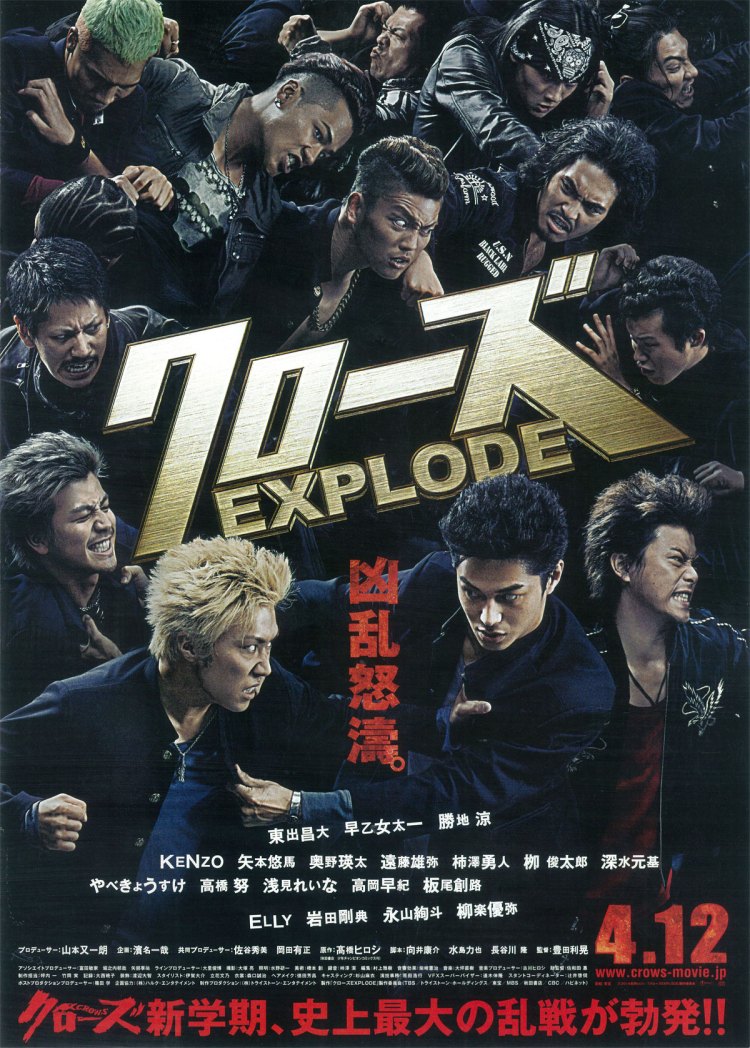
crows explodeToshiaki Toyoda made an auteurst name for himself at the tail end of the ‘90s with a series of artfully composed youth dramas centring on male alienation and cultural displacement. Attempting to move beyond the world of adolescent rage by embracing Japan’s most representative genre, the family drama, in the literary adaptation Hanging Garden, Toyoda’s career hit a snag. Despite the film’s favourable reception with critics, a public drugs scandal cost Toyoda his career in Japan’s extremely strict entertainment industry. Since his return to filmmaking in 2009 Toyoda has continued to branch out but 2014’s Crows Explode (クローズ EXPLODE) throws him back into that early world of repressed male energy as internalised rage and frustration produce externalised violence. Picking up the Crows franchise where Takashi Miike left off, Toyoda brings his unique visual sensiblilty to the material, swapping Miike’s irony for something with more grit but losing the deadpan depth of its adolescent posturing in the process.

The old gods have fallen and new ones must rise. Tough guys graduate, but the battlefields of Suzuran High endure eternally. Suzuran is the ultimate in delinquent schools. None of the boys here are under any misapprehension that the adult world holds any promise for them. Many will drop out without completing high school, condemning themselves to a precarious life of continually uncertain, low paid employment, but even those who do manage to leave with a certificate will be heading into another competition to find a steady job in economically straightened times.

That is, those of them who don’t end up in a gang. The thing at Suzuran is that your fate is determined by your fists. Boys roam the halls looking for a fight, each vowing to become the top dog and de facto leader by proving themselves the best and the strongest of the strapping young men all vying for the title. A new challenger arrives in the form of transfer student, Kaburagi (Masahiro Higashide), whose intense energy upsets the dynamic between presumed number one Goura (Yuya Yagira) and his challenger Takagi (Kenzo) but Kagami (Taichi Saotome), the loner son of a fallen yakuza, seems further set to pose a threat in this knife edge environment.

Toyoda has some interesting points to make about the legacy of violence and the importance of father son relationships as each of these young men is reacting in some sense against a father or just his father’s world. Kaburagi, the film’s protagonist, is nursing a deep wound of double abandonment after witnessing his father’s death and then being deposited in a foster home by his sorrowful mother who promises to return for him soon but makes do with occasional visits and monetary gifts. Kaburagi is an angry young man and like many angry young men, he is eager not to become his father – a situation complicated by the fact that his father was a prize fighter who died in the ring.

His “mirror” Kagami, has a similar problem only his father died in a yakuza turf war. A surrogate presents himself in the form of former Suzuran scrapper “Jarhead Ken” (Kyosuke Yabe), now an ex-yakuza helping out at a friend’s second hand car dealership but unable to escape gangland troubles when it emerges Kagami’s clan are intent on acquiring it in order to turn the place into some kind of “entertainment complex”. Ken, a tough guy but soft hearted, has a talent for paternalism which he turns on the fatherless little boy of the car dealership’s owner to whom he teaches the importance of a hefty punch but also of friendship and loyalty.

Miike’s world was a surreal one, inflected with a wry middle aged eye which sees all of this teenage rambunctiousness for the ridiculous posturing it really is. Toyoda’s attempts to be more in the moment, experiencing the adolescent angst with all of its immediate force but unlike his early protagonists the boys of Suzuran are forced to “explode” rendering that central tenet of repressed anger redundant. Externalising the internal war somehow makes it much less interesting as boys trade blows, mindlessly trying to work out a mental struggle which their ill drawn backgrounds will not support.

The environment which the boys inhabit is a grey and hopeless one. Toyoda paints it with his characteristic visual flair, returning to his trademark sequences of slow motion coupled with indie music, but his energy is very different from Miike’s and its more contemplative rhythm never quite gels with the pugilistic fury of the source material even as it gives way to his more expressionistic imagery. The franchise is feeling a little punch drunk by this point, and Toyoda finds it in a particular puddle of teenage malaise. Still, the fists fly and the boys of Suzuran rise and fall as always providing enough self consciously cool action to sustain interest despite the otherwise insubstantial quality.


International trailer (English subtitles)

Akitsu Springs (秋津温泉, Kiju Yoshida, 1962)

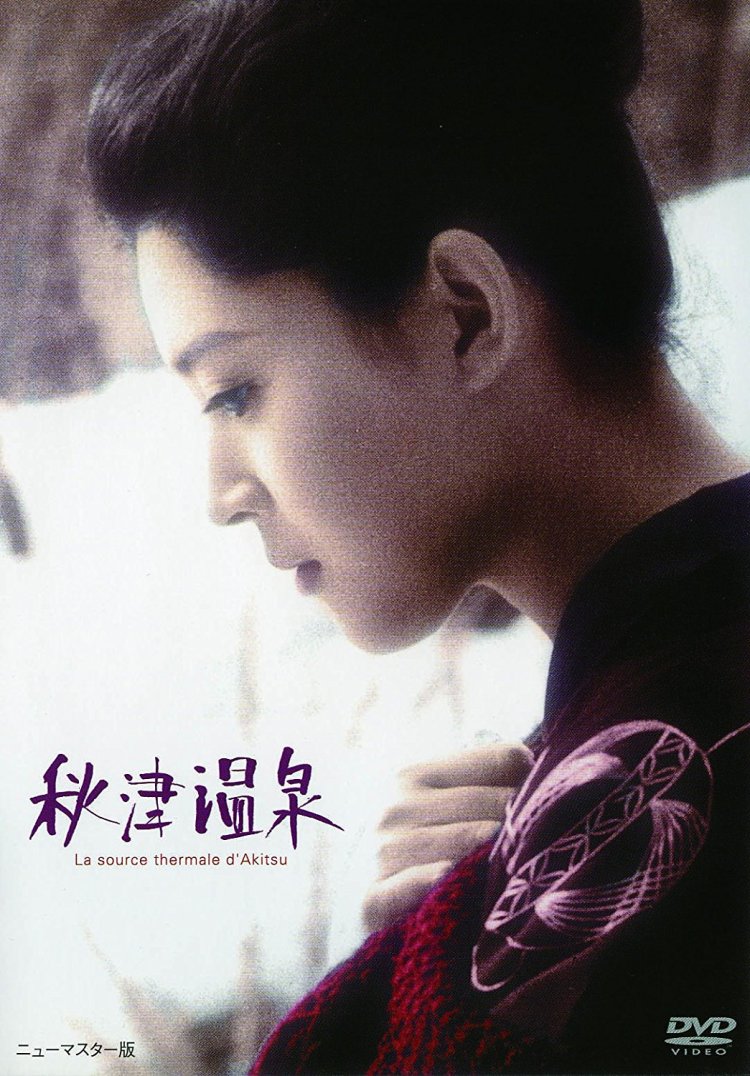
akitsu springsKiju (Yoshishige) Yoshida is best remembered for his extraordinary run of avant-garde masterpieces in the late 1960s and early 1970s, but even he had to cut his teeth on Shochiku’s speciality genre – the romantic melodrama. Adapted from a best selling novel, Akitsu Springs (秋津温泉, Akitsu Onsen) is hardly an original tale in its doom laden reflection of the hopelessness and inertia of the post-war world as depicted in the frustrated love story of a self sacrificing woman and self destructive man, but Yoshida elevates the material through his characteristically beautiful compositions and full use of the particularly lush colour palate.
At the very end of the war, consumptive student Shusaku (Hiroyuki Nagato) finds his aunt’s house destroyed by aerial bombing. Attempting to find her but proving too ill to go on, Shusaku is taken to a nearby inn by a good samaritan where he first encounters the innkeeper’s daughter, Shinko (Mariko Okada). Despite her mother’s protestations, Shinko takes a shine to Shusaku and is determined to nurse him back to health. Shusaku, however, is a gloomy sort of boy and, ironically, longs only for death. Though the pair fall in love their youthful romance is forever tinged with darkness as Shusaku declares his love not with a ring but with a rope – he asks Shinko for that most classically theatrical of unions in proposing a double suicide.

Shinko agrees, but is not quite ready to die. In another dose of irony, Shinko’s tears of fear and despair on hearing the Emperor’s final wartime broadcast confirming his surrender inspire Shusaku to want to live but the pair are eventually separated. Reuniting and parting over and over again, their complicated love story repeats itself over a period of seventeen years but the painful spectre of the past refuses to allow either of them the freedom to move beyond Akitsu Springs.

Mariko Okada was only 29 in 1962, but she’d already worked with some of the best directors of the age including Ozu whose An Autumn Afternoon was released the same year, and Naruse in Floating Clouds which has something of a narrative similarity to Akitsu Springs. This prestige picture was her 100th screen appearance for which she also took a producer credit. Despite the obvious importance attached to both of these elements, the studio took a chance on a rookie director with only three films under his belt. Two years later Okada would become Yoshida’s wife and go on to star in some of his most important pictures including Eros + Massacre and Heroic Purgatory. At first glance her role here is a conventional one – a love lorn, melancholy woman unable to let the ghost of a failed romance die, but Okada’s work is extraordinary as Shinko travels from flighty teen to rueful middle aged woman, hollowed out and robbed of any sense of hope.

At Akitsu Springs time passes and it doesn’t all at once. Yoshida refuses to give us concrete demarcations, preferring to simply show a child being born and growing older or someone remarking on having been away. The inn becomes a kind of bubble with Shinko trapped inside, but Shusaku comes to regard the place as a temporary haven rather than a permanent home or place to make a life. For her everything real is at the spring, but for him everything at the spring is unreal – an unattainable paradise. She cannot leave, he cannot stay. Only for short periods are they able to indulge their romance, but the time always comes at which they must part again often swearing it will be for the last time, never knowing if it will.

Yoshida neatly bookends the relationship with announcements over loudspeakers as Shinko originally fails to understand the Emperor’s speech in which he remarks on enduring the unendurable, only to be prompted into later action by the banal drone of a train station tannoy. It’s almost as if their lives are being entirely dictated by outside forces, powerless drifters in the post-war world, condemned to a perpetual waiting sustained only by hopelessness.

Shinko may have convinced Shusaku to live but his growing successes only seem to deplete her. Wasting away at an inn she always claimed to hate, Shinko grows old while Shusaku grows bitter yet successful in the city. They move past and through each other, unable to connect or disconnect, yearning for the completion of something which consistently eludes them. Yoshida films the standard melodrama with appropriate theatricality but also with his beautifully composed framing as the lovers are divided by screen doors or captured in mirrors. Okada glows in the light of falling cherry blossoms, acknowledging the tragic and transitory character of love, but her final action is one which echoes the beginning of her suffering and finally declares an ending to an unendurable romance.


Original trailer (no subtitles)

Topless (トップレス, Eiji Uchida, 2008)

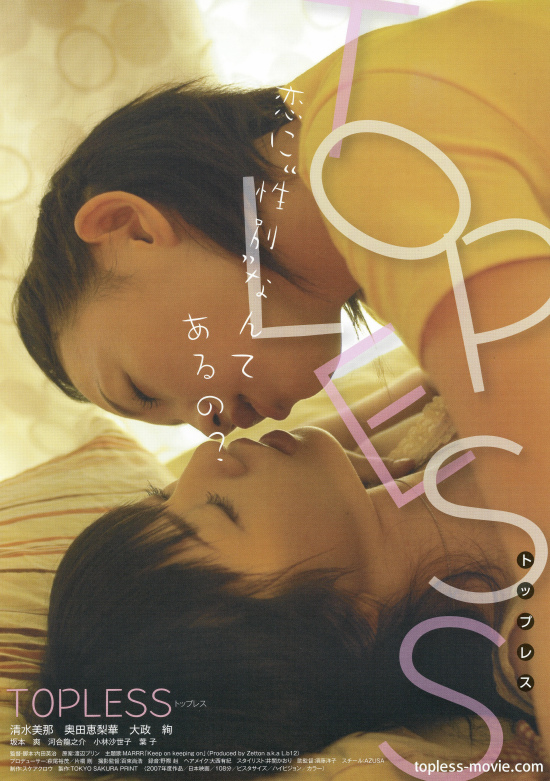
toplessFollowing the surreal horror film The Greatful Dead and cynical industry exposé Lowlife Love, Eiji Uchida is not generally known for straightforward naturalism but his 2008 movie Topless (トップレス) maybe among the most refreshingly straightforward, naturalistic depictions of lesbian life in modern Japan. Inspired by the writings of Pudding Watanabe, Topless, despite the title and suggestive poster, immediately jettisons preconceptions and sets about exploring the lives of young men and women in the city, just trying to make it in an often hostile society.

Forthright Natsuko (Mina Shimizu) splits up with her high school sweetheart Tomomi (Erika Okuda) but continues to pine after her even once Tomomi reveals that she’s got herself a boyfriend and plans to try the conventional life for a while. This heavy emotional blow provokes a kind of crisis in the otherwise certain Natsuko who finds herself musing on the fate on older lesbians and expressing sympathy for those who decide it’s just easier to enter a marriage of convenience than try to live alone. For the moment, Natusko lives with her understanding flatmate, Koji (So Sakamoto), who’s been nursing a long time crush on her even if he knows she’s gay and it’s impossible. A chance meeting with a high school girl, Kana (Aya Omasa), who’s come to Tokyo to find the mother who abandoned her to run off with a lesbian lover ten years ago only deepens Natsuko’s contemplative mood as she starts to wonder about where her life will take her if she chooses not to follow the accepted path.

Topless is less about romance than it is about acceptance and identity. Natsuko maybe a member of her university’s lesbian society but she’s about as far from a flag waver as it’s possible to be and just wants to live her life without thinking too much about the big stuff. Bar one woman (a new addition and not a student) the other girls are also just hanging round to have fun, aren’t particularly interested in activism and don’t feel themselves to be part of a movement defined by their sexuality. Natsuko certainly refuses to be defined by hers though her recent falling out with Tomomi has shaken her to the core and forced her into a consideration of her own hopes and desires for the future.

Tomomi claims to still love Natsuko but also that it “can’t be helped” because they’re both women and it’s just not possible. Natsuko tries to come to terms with her friend’s decision whilst nursing a broken heart but struggles to overcome her feelings of jealously towards Tomomi’s new boyfriend. Koji, Natsuko’s roommate, can’t understand why a lesbian would marry a man but being a man himself he can’t appreciate the societal necessities which make trying to live a life outside the mainstream particularly hard for women. As Natsuko points out, women earn less and living is expensive, it’s difficult to live out and proud in a hostile society, and then there’s the fear of growing old without children or an extended family network to fallback on. Though she sympathises with all of these factors on an intellectual level and then eventually even contemplates trying out life with a man herself,  it’s not something Natsuko could ever do and a part of her can never forgive Tomomi for doing it even if she does understand why someone might.

Kana’s quest for her long lost mother gets lost between the meatier subplots but proves enlightening in the unexpected bond between the troubled schoolgirl and the shaken if confident Natsuko. Still nursing deep scars from her abandonment, Kana claims to hate lesbians but grows to like Natsuko, the only person willing to help her track down her mother in a totally unfamiliar world. Despite Koji’s protestations that Natsuko will be angry if she hears any of Kana’s anti-gay sentiments, she listens patiently to Kana’s complaints stopping only to tell her she understands why she feels that way but that she also thinks she’s wrong. Trying to help Kana understand why her mother made the decisions that she did and see that there’s nothing wrong with two women loving each other, Natsuko changes hearts and minds just by being patient and kind.

In the conventional sense Topless offers no happy endings but it does advocate first and foremost for a kind of self acceptance and finally allowing old wounds to scar over, closed but not forgotten. Normalising lesbian life with ease, Uchida proceeds with a straightforward approach which sidesteps the obvious in order to provide a more nuanced portrait of life and love among the young people of Tokyo each trying to navigate the difficult process of learning to live as an independent person constrained by social conventions. Admittedly low budget but tastefully done and anchored by a standout performance from Mina Shimizu, Topless is a refreshingly down to earth look at gay life in the big city which refuses to give in preconceptions and expectations.


Short clip from the film (English subtitles)

Burden of Life (人生のお荷物, Heinosuke Gosho, 1935)

Despite being at the forefront of early Japanese cinema, directing Japan’s very first talkie, Heinosuke Gosho remains largely unknown overseas. Like many films of the era, much of Gosho’s silent work is lost but the director was among the pioneers of the “shomin-geki” genre which dealt with ordinary, lower middle class society in contemporary Japan. Burden of Life (人生のお荷物, Jinsei no Onimotsu) is another in the long line of girls getting married movies, but Gosho allows his particular brand of irrevent, ironic humour to colour the scene as an ageing patriarch muses on retiring from the fathering business before resentfully remembering his only son, born to him when he was already 50 years old.

Rather than focussing on the main narrative right away, Gosho gives us a crash course in marital relations as we meet middle sister, Itsuko (Kinuyo Tanaka), who is currently posing for a raunchy portrait her starving artist husband is painting. Itsuko dresses in Western style, smokes openly and often, and her home is a bohemian one of the kind you’d imagine a (well to do) artist from the ‘30s would live in. The couple are interrupted by their brother-in-law who has come in search of his wife, Takako (Yoshiko Tsubouchi), with whom he’s had yet another argument causing her to storm off somewhere or other in a huff.

Takako has indeed stormed off, but has gone to her mother’s where her younger sister, Machiko (Mitsuyo Mizushima) is preparing for her own wedding and now feeling quite nervous hoping that it won’t be as tempestuous as Takako’s. The three sisters also have a little brother, Kanichi, who is doted on by the women of the family but has a strained relationship with his father, Shozo (Tatsuo Saito). The main conflict occurs once Shozo has successfully married off Machiko and begins happily contemplating a burden free life only to remember that little Kanichi is only eight and so there are twelve more years of fatherhood ahead of him and he’ll be 70 before he gets any peace. In order to speed up the process, he tells his wife Tamako (Mitsuko Yoshikawa) that maybe Kanichi doesn’t need to go school and should go out and get a job instead. Tamako, rightly outraged at her husband’s persistent coldness towards their son brings things to a head by leaving the family home.

The themes are common ones as a family faces the successful marriage of its youngest daughter but the pattern is complicated by the loose end that is Kanichi. Much younger than his sisters, it’s easy to believe Shozo’s assertions that his arrival was somewhat unexpected but far from a joyous surprise Shozo still seems to regard him with a degree of mild horror. Fearing becoming an elderly father Shozo’s concerns are fair given the additional burdens placed on him in having to find good husbands for three women and then pay for their weddings and dowries never mind a college education for a son he never wanted. Kanichi seems to be aware on some level of the way his father feels about him as a poignant scene implies when he begs some of the other neighbourhood children to keep playing with him even though it’s past tea time because he doesn’t want to go home if his dad is there.

Shozo fails to reform his opinion even after his wife leaves him. Almost delighting in a late life slice of batchelorhood, Shozo heads into the bar district for a night out where he ends up drinking with some younger guys, surrounded by students singing the Keio University song. His attention is momentarily taken by a small boy of around Kanichi’s age who is selling flowers to amorous patrons but it’s only once a hostess calls him “papa” that he seems to feel aged fatherhood reassert itself. Enquiring about her age he discovers she is only 19 – much younger than any of his daughters, and consequently Shozo begins to feel more like a ridiculous old man than a young buck on the prowl.

Gosho draws a number of contrasts within his “ordinary” family from the three sisters who seem to represent the changing times in their differing attitudes to the husband and wife and the division of their home. Itsuko, Westernised and brassy, is living well beyond her means and touching her parents for money in order to do it. Talking things over with the kimono’d Takako who offers to recommend a traditional hairstylist for Machiko’s wedding, Itsuko has some advice for dealing with men which she calls “reverse psychology”. Takako and her husband may not have children and fight all the time, but she is in other ways a model wife even if she thinks married life ought to be simpler than it is. Machiko is caught on the brink, though we never see her husband, wondering what her own married life will entail. Her father, Shozo, lamenting on his responsibilities remarks that women are like products for sale, requiring investments which will eventually pay off in terms of successful marriages but any investment in a son is, in a sense, a waste. Family, for him, is less a social unit and more a mini business enterprise from which he was looking forward to retiring.

In the end of course he changes his mind though more out of loneliness or a sense of mortality than any less selfish emotion. Slight at 66 minutes, Gosho packs in as much detail as possible whilst maintaining a broadly comic, almost screwball tone filled with selfish husbands and calculating wives all making the most of the relatively stable times. Life has many burdens but sometimes it’s better to rebrand those burdens joys and make the most of them before someone else decides to carry them for you and all you’re left with is an empty sort of lightness. You’re only old once, after all.