Napping Princess (ひるね姫 ~知らないワタシの物語, Kenji Kamiyama, 2017)

napping princess posterKenji Kamiyama has long been feted as one of Japan’s most promising animation directors, largely for his work with Production I.G. including the Ghost in the Shell TV anime spin-off, Stand Alone Complex, and conspiracy thriller Eden of the East. Aside from the elegantly shaded quality of his animation, Kamiyama’s work has generally been marked by thoughtful social and political commentary mixed with well executed action scenes and science fiction themes. Napping Princess (ひるね姫 〜知らないワタシの物語〜, Hirune Hime: Shiranai Watashi no Monogatari, also known by the slightly more intriguing title Ancien and the Magic Tablet) swaps science fiction for steampunk fantasy and, in a career first, is aimed at younger children and family audiences.

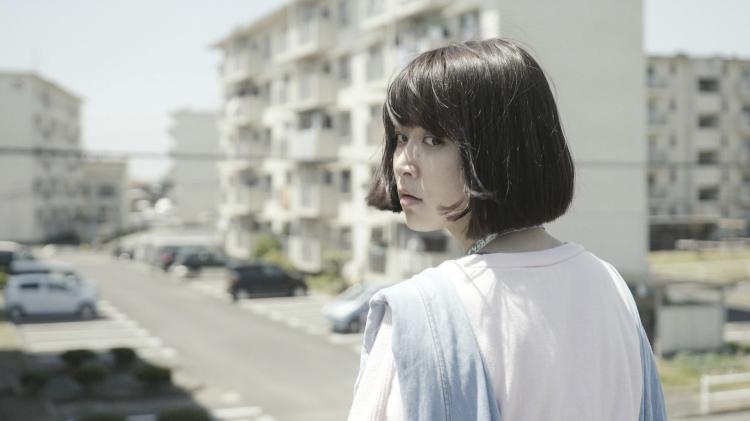
With the 2020 Tokyo Olympics fast approaching, Kokone (Mitsuki Takahata) is a regular high school girl about to enjoy her very last summer holiday before graduation. With no clear ideas of what it is she wants to do with her life, Kokone idly whiles away her time looking after her monosyllabic single dad, Momotaro (Yosuke Eguchi), who only seems to be able to communicate with her via text. Momotaro is a mechanic with a difference – he knows how to retrofit cars with a hi-tech, experimental self driving software that’s a real boon to the ageing population in the tiny rural town where the pair live.

A dreamy sort of girl, Kokone is always tired and frequently drifts off into a fantasy land where the car industry is all important and all are at the mercy of an iron fisted king whose sorceress daughter continues to cause problems for the population at large thanks to her strange powers. Whilst in her dream world, Kokone (or Ancien as she is known in “Heartland”) is accompanied by a her stuffed toy come to life and interacts with slightly younger versions of the people from her town including a dashingly heroic incarnation of her father as a young man.

The main action kicks off when Momotaro is arrested by an evil looking guy who wants a mysterious tablet he says Momotaro has stolen from their company. The fairytale inspired dreamworld might indicate a different kind of tablet, but this really is just a regular iPad with some information on it that certain people would very much like to get their hands on and other people would very much prefer that they didn’t. The tablet itself is a kind of macguffin which allows Kokone to process some long held questions about her past and that of her late mother who passed away when she was just an infant.

Kokone’s frequent flights of fancy start to merge with the real world, firstly when she shares a lucid dream with companion Morio (Shinnosuke Mitsushima) who helps her on her quest, and then later when magic seems to come to the pair’s aid through the tablet (though this turns out to have a more prosaic explanation). At 17 or so, you’d think perhaps Kokone is a little old for these kinds of fantasies, or at least for carting around a stuffed toy which is in remarkably good nick for something which apparently belonged to her mother when she was a child. Nevertheless, her dreamland is a long buried message which helps her piece together her mother’s story and how it might relate to her own all while she’s busy saving the Opening Ceremony of the 2020 Olympics from becoming a possibly lethal international embarrassment which would destroy the Japanese car industry for evermore.

Despite his prowess with harder science fiction subjects, Kamiyama can’t quite corral all of this into a coherent whole. Valiantly trying to merge the twin stories of Kokone’s coming of age and the problems of the Japanese auto industry which is good at hardware but struggles with soft, Napping Princess narrowly misses its target neither quite charming enough in its fantasy universe or moving enough in the “real” one. This may perhaps rest on a single line intended to be a small revelation which melts the icy CEO’s heart but essentially comes down to the use of a kanji in a name being different from one on a sign, losing much of its impact in translation as it accidentally explains the whole of Kokone’s existence in one easy beat which easily missed. Failing to marry its two universes into one perfect whole, Napping Princess is a pleasant enough though perhaps inconsequential coming of age story in which a young girl discovers her own hidden powers whilst unlocking the secrets of her past.


Currently on limited UK release from Anime Limited.

Trailer featuring a (very nice) Japanese cover of Daydream Believer


North Sea Dragon (北海の暴れ竜, Kinji Fukasaku, 1966)

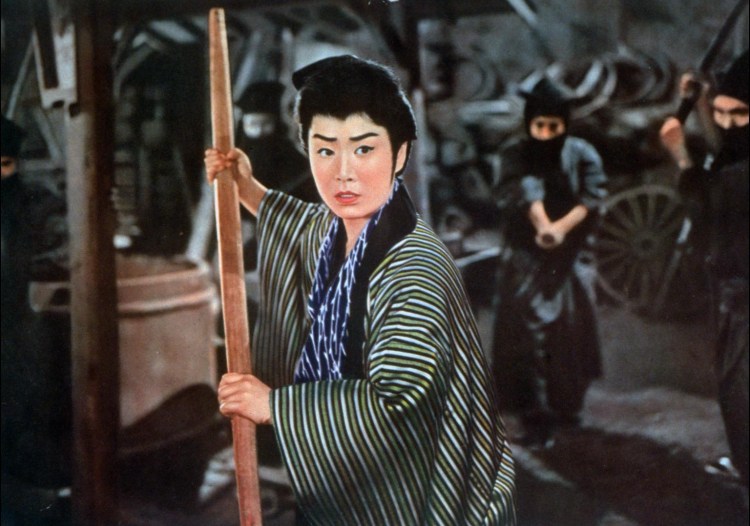
north sea dragon dvd cover.jpgAt the beginning of the 1970s, Kinji Fukasaku’s Battles Without Honour and Humanity would put the ninkyo eiga firmly to bed, but in the mid-1960s, they were still his bread and butter. Fukasaku’s earlier career at Toei leant towards the studio’s preference for youthful rebellion but with a stronger trend towards standardised gangster tropes than the countercultural thrills to be found in similar offerings from Nikkatsu. For Fukasaku the rebellion is less cool affectation than it is a necessary revolt against increasing post-war inequality and a constraining society though, as the heroes of If You Were Young, Rage or Blackmail is My Life find out, escape can rarely be found by illicit means. Jiro, the prodigal son of North Sea Dragon (北海の暴れ竜, Hokkai no Abare-Ryu), finds something similar even whilst conforming almost entirely to Toei’s standard “young upstart saves the village” narrative.

Jiro (Tatsuo Umemiya), dressed in white with jet black sunshades, nonchalantly walks into his childhood fishing village filled with a sense of nostalgia and the expectation of a warm welcome. The village, however, is much changed. There are fewer boats around now, and the fishermen are all ashore. Arriving at his family home he discovers they now live in the boat shed and his mother doesn’t even want to let him in. Jiro, as his outfit implies, has spent his time away as a yakuza, and his family want little to do with him, especially as his father has been murdered by the soulless gangsters who are currently strangling the local fishing industry.

The local fishermen are all proudly tattooed but they aren’t yakuza, unlike the tyrannical son of the local boss, Gen Ashida (Hideo Murota), who carries around a double barrelled shotgun and fearsome sense of authority. The Ashidas have placed a stranglehold around the local harbour, dictating who may fish when and extracting a good deal of the profits. An attempt to bypass them does not go well for Jiro’s mother who is the only one brave enough to speak out against their cruel treatment even if it does her no good.

When Jiro arrives home for unexplained reasons he does so happily, fully expecting to be reunited with his estranged family. Not knowing that his father had died during his absence, Jiro also carries the guilt of never having had the opportunity to explain himself and apologise for the argument that led to him running away. An early, hot headed attempt to take his complaint directly to the Ashidas ends in disaster when he is defeated, bound, and whipped with thick fisherman’s rope but it does perhaps teach him a lesson.

The other boys from the village – Jiro’s younger brother Shinkichi (Hayato Tani) and the brother of his childhood friend Reiko (Eiko Azusa), Toshi (Jiro Okazaki), are just as eager as he is both to avenge the death of Jiro’s father and rid the village of the evil Ashida tyranny. Jiro tries to put them off by the means of a good old fashioned fist fight which shows them how ill equipped they are in comparison with the older, stronger, and more experienced Jiro but their youth makes them bold and impatient. The plot of Toshi and Shinkichi will have disastrous consequences, but also acts as a galvanising force convincing the villagers that the Ashidas have to go.

Jiro takes his natural place as the hero of a Toei gangster film by formulating a plan to undermine the Ashidas’ authority. His major strategic decision is to bide his time but he also disrupts the local economy by attempting to evade the Ashida net through sending the fisherman to other local ports and undercutting the Ashida profit margin. As predicted the Ashidas don’t like it, but cost themselves a crucial ally by ignoring the intense bond between their best fighter and his adorable pet dog. Things do not quite go to plan but just as it looks as if Jiro is about to seal his victory, he stays his sword. The Ashidas’ power is broken and they have lost enough already.

Fukasaku’s approach tallies with the classic narrative as the oppressive forces are ousted by a patient people pushed too far finally deciding to fight back and doing so with strategic intelligence. It is, in one sense, a happy ending but not one without costs as Jiro looks at the restored village with the colourful flags of fishing boats enlivening the harbour and everyone going busily about their work. He knows a sacrifice must be made to solidify his mini revolution and he knows who must make it. Like many a Toei hero before him, he prepares to walk away, no longer welcome in the world his violence has saved but can no longer support.


Original trailer (no subtitles)

Oh Lucy! To Open Raindance 2017

Oh Lucy still oneLondon’s Raindance International Film Festival returns from 20th September to 1st October 2017 with the best of recent independent cinema from across the world. East Asian titles have been thin on the ground for the past few years, but this time around Japan in particular is back with a vengeance.

oh lucy still 3The festival will open with Atsuko Hirayanagi’s Cannes sleeper hit Oh Lucy! which stars Shinobu Terajima as a 55 year old woman trapped in a boring office job who discovers a whole new side to herself after being given a blonde wig and the alternate identity of Lucy by an unorthodox English teacher (played by Josh Hartnett) whom she later becomes obsessed with.


boys for saleThe only feature documentary on the list, Boys for Sale takes a look at the young men who have sex with men for money in Tokyo’s red light district. Produced by frequent Raindance guest Ian Thomas Ash (A2-B-C, -1278), this innovative documentary mixes animation and straight to camera interviews to explore the various reasons why these young men have made a decision to work as “boys” and the nature of their lives in this hidden part of Tokyo nightlife.


ghost roads poster.jpgA haunted guitar amp promises a struggling musician everything he’s ever dreamed of in Ghostroads: A Japanese Rock ‘n’ Roll Ghost Story!


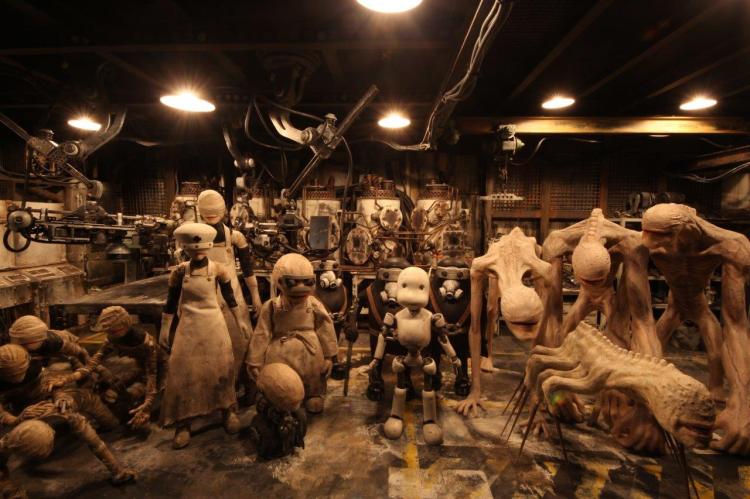
junkhead still 1It has been centuries since humanity’s clones rebelled and went to live underground. Now an intrepid band of humans must venture into their world to investigate the the fate of the self exiled creatures in Takahide Hori’s impressive stop motion animation, Junk Head.


love and other cultsEiji Uchida’s Love and Other Cults receives its UK premiere at Raindance. The story of a young girl’s journey through cult devotee to mixed up kid and a life in the adult entertainment industry, Love and Other Cults is the latest Uchida/Third Window Films production. Review.


mukoku horizontal.jpgKazuyoshi Kumakiri (My Man, Sketches of Kaitan City, Antenna) returns with a tale of familial love and kendo in Mukoku as Go Ayano puts down his sword following a traumatic incident and proceeds to waste his life drinking and working as a security guard until a chance meeting with a talented high schooler shakes him out of his malaise.


noise posterYusaku Matsumoto’s Noise takes place eight years after a killing spree as three residents of Akihabara including the daughter of a murdered woman, an underground idol, and a delivery driver attempt to find meaning in their lives.


Perfect Revolution still one.jpgIn Junpei Matsumoto’s Perfect Revolution, Lily Franky plays a man with cerebral palsy who is an activist for the sexual rights of disabled people and falls in love with a sex worker who suffers from a personality disorder.


swaying mariko still 1Ordinary housewife Mariko is married to a younger man with whom she has a son, but Tomoharu is often away from home and she is beginning to believe he is having an affair. Meanwhile, her manager harasses her at work and the customers are constantly rude. Under such strains, Mariko’s perception of reality starts to disintegrate in Koji Segawa’s indie drama Swaying Mariko.


The foolish bird still 1.jpgThe only non-Japanese East Asian film on offer is Huang Ji & Ryuji Otsuka’s The Foolish Bird – a story of a “left behind child” forced to bring herself up in an unforgiving Chinese village.


The Raindance International Film Festival takes place at Vue West End from 20th September to 1st October and tickets are already on sale via the official website.

A Taxi Driver (택시 운전사, Jang Hoon, 2017)

A Taxi Driver PosterIn these (generally) well connected days of mass communication when every major event is live broadcast to the world at large, it’s difficult to remember a time when dreadful things might be happening the next town over yet no one knows (or perhaps dares to ask). Until 1979, Korea had been under the control of an oppressive dictatorship which was brought to a sudden and bloody end by the murder of the president, Park Chung-hee, at the hands of one of his aides. Though the democracy movement had been growing, hopes of installing a modern governmental system were dashed with the accession of the de facto president, General Chun Doo-hwan, who reinstated martial law, placing troops on the streets on the pretext of a possible North Korean invasion. In an event known as the Gwanjgu Uprising, a long term peaceful protest led by the area’s large student population was brutally suppressed with large numbers dead or wounded by government soldiers.

Meanwhile, in Seoul, regular Joe taxi driver Kim Man-seob (Song Kang-ho) is trying to go about his everyday business and is finding all of this protesting very irritating, especially when he is forced to swerve to avoid a young man running from riot police and breaks the wing mirror on his otherwise pristine vehicle. Man-seob thinks these kids don’t know they’re born, if they’d spent time abroad like he did in Saudi Arabia, they’d know that few places are quite as nice as Korea. A single father raising his young daughter alone, Man-seob’s major worry is money. He’s four months behind on his rent and his daughter keeps getting into fights with the landlord’s son. Actually, the rent might not be such a pressing problem seeing as Man-seob’s landlord is a close friend and colleague – close enough for him to cheekily ask to borrow the money to “pay” him so his friend’s wife will stop being so mean. When he overhears another driver boasting that he’s picked up an improbably large fare that’s exactly the same amount as the money Man-seob owes, Man-seob bluffs his way into stealing it out from under him. Man-seob, however, has not stopped to consider why a foreigner wants to pay him an insane amount of money to drive from Seoul to provincial Gwangju.

Like many in the Korea of 1980, Man-seob is a man just trying to get by. He has his private sorrows, but largely avoids thinking about the big picture. To him, the Seoul protest movement has become such a normal inconvenience that he keeps cream in his car to help cope with the smell of the smoke bombs. He thinks all of this rancour is just kids out of control and will eventually blow over when order is restored.

Others feel differently. A BBC journalist relocated from Korea to Tokyo describes the situation as “tense” and avows that this time something may be about to break. Tokyo in 1980 is a nice place to live, but extremely boring if you’re an international journalist and so German reporter Peter (Thomas Kretschmann) catches the next flight out with the intention of investigating the rumours of state sponsored violence coming out Gwangju.

Though Man-seob’s original motivation is the money, the events he witnesses in Gwangju have a profound effect on the way he sees his country. Bypassing roadblocks and sneaking into a city under lockdown, Man-seob and Peter witness acts of extreme violence as the army deploys smoke grenades, beatings, and bullets on a peaceful assembly of ordinary people. Prior to the military’s intervention, the atmosphere is joyful and welcoming. The people of Gwangju dance and sing, share meals with each other, and all are excited about the idea of real social change. This juxtaposition of joy and kindness with such brutal and uncompromising cruelty eventually awakens Man-seob’s wider consciousness, forcing him to rethink some early advice he gave to his daughter concerning her difficult relationship with the little boy next-door to the effect that non-reaction is often the best reaction.

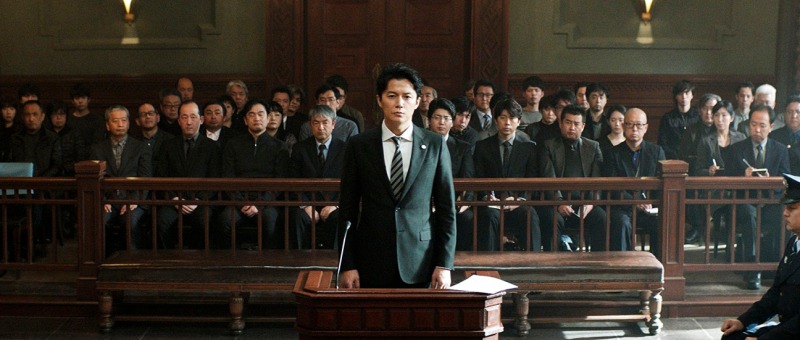
Rather than focus on the Uprising itself, Jang presents it at ground level through the eyes of the previously blind Man-seob and the jaded Peter. Inspired by real events though heavily fictionalised (despite a search which continued until his death, Peter was never able to discover the true identity of the taxi driver who had helped him), A Taxi Driver (택시 운전사, Taxi Woonjunsa) is a testament to the everyman’s historical importance which, even if occasionally contrived, speaks with a quiet power in the gradual reawakening of a self-centred man’s sense of honour and personal responsibility.


A Taxi Driver was screened as the sixth teaser for the upcoming London Korean Film Festival 2017. Tickets for the next and final film, The Villainess which screens along with the official programme launch at Regent Street Cinema on 11th September, are on sale now.

Original trailer (English subtitles)

Savage Wolf Pack (野獣を消せ, Yasuharu Hasebe, 1969)

savage wolf pack posterYasuharu Hasebe was a key player in Nikkatsu’s pre-Roman porno stab at groovy youth gone wild responsible as he was for 3/5ths of the Stray Cat Rock series. Yet even before launching the seminal cycle, he was busy sowing the seeds of Pinky Violence in Nikkatsu’s regular action output. Savage Wolf Pack (野獣を消せ, Yaju wo Kese), released in 1969, features many of the same motifs as his later work in its beatniky setting, mildly anti-American sentiment, and general counter cultural milieu along with a propensity for shockingly nasty sex and violence. Hasebe manages to include all of this within the confines of a Nikkatsu Action movie which would normally hold back from such extreme fare, painting a nightmarish vision of lawless youth and out of control cruelty.

A vicious biker gang chases a young girl down into an abandoned field where the lackeys gang rape her while the chieftain (Tatsuya Fuji) and his lady (Mieko Tsudoi) look on from their custom jeep with a strange bat symbol attached to the front. Once they’ve finished what they came for the gang simply leaves and the young woman, battered, bruised and broken picks up a discarded Coke bottle and smashes it to slash her wrists.

Meanwhile, big game hunter Tetsuya (Tetsuya Watari) has returned from Alaska to find his hometown much changed. The violated woman, Satoko (Mari Yoshioka), is Tetsuya’s younger sister though the identity of her attackers is not yet known. Ironically enough, Tetsuya himself encounters the gang by chance while they’re in the business of running another girl, Kyoko (Meiko Fujimoto), off the road. He turns back, confronts them, and rescues the woman but continues to encounter the gang until Kyoko is eventually captured, as is he when his valiant rescue attempt fails.

The gang at the centre of Savage Wolf Pack is genuinely nasty. There’s nothing noble or aspirational in their drop out, delinquent lifestyle. They make their living by fencing stolen booze to a local nightclub and threatening violence to anyone who gets in their way. The entire town is frightened of them, even the old man who owns the garage where Tetsuya lives urges him not to get mixed up in their business as they have the surrounding area under complete control.

As later becomes apparent the gang’s casual attack on Satoko is not an isolated incident, but a symptom of their way of life. Just as Tetsuya hunts down big game in the frozen expanses of Alaska, the gang stalk, chase, run down and devour their prey for nothing more than the thrill of subjugating another human being. The attack is as brutal as it is mundane, once done it hardly matters to them.

Tetsuya starts out as the unshakeable hunter, a solitary figure unwilling to get involved with a local girl who might take him away from the beautiful simplicity of his life as sniper in the shadows. Kyoko apparently falls for him straightaway thanks to his knight in shining armour act though ironically enough it’s she who’s been struggling to assert her own independence after running away from her wealthy politician father’s home in protest at an arranged marriage. Tetsuya proves a poor protector, allowing her to be captured through his own indifference and then failing to save her from the gang’s bestial appetite for cruelty. Though Hasebe hangs back from excessive depictions of sexual violence and its fetishisation as seen in other films of the era, Kyoko’s sudden desire to give herself to Tetsuya mere hours after being kidnapped, humiliated, and gang raped seems unlikely and an odd resolution to their already bizarre romance.

What starts out not so far from Gangster V.I.P eventually runs into horror territory as Tetsuya takes his all-powerful gun to the beatnik drop out biker gang preying on all the women in his life. The final battle is bloody and visceral in the extreme as bits of brain stain the walls and intestines tumble from open stomachs. Tetsuya hunts the gang with bear traps and picks them off from afar with his sniper rifle, reducing them to the rampant beasts they really are.

Yet the world itself is a dark one. One theory behind Satoko’s death is that she was perhaps attacked by GIs from the nearby base and it’s no coincidence that she slashes her wrists with a broken Coke bottle or that a Coca Cola billboard is later used for target practice. Another of the gang’s would be victims is the wife of a high-ranking GI who is not currently around leaving her to enjoy the company of various men while he is away – something the biker gang choose to exploit. The biker gang is, perhaps, a symptom of the ongoing corruption of traditional culture by imported Western values as they indulge their delinquent, drug fuelled, individualist lifestyle to its horrifying, destructive limit.

Tetsuya is later forced to surrender to the Americans and presumably submit himself to whatever punishment is appropriate for clearing up town. Kyoko seems to have rediscovered an ability of self-assertion as she vows to stand up to the father she’s repeatedly blamed for her current situation rather than running away, inspired by Tetsuya’s heroic defiance against the offensive hubris of the biker gang. Unlike the majority of Nikkatsu Action movies, Tetsuya does not emerge as a hero but merely as a survivor, caged and robbed of his own autonomy even if ultimately victorious in ridding his nostalgic childhood home of corrosive, drug addled crazed youth.


Sweating the Small Stuff (枝葉のこと, Ryutaro Ninomiya, 2017)

Sweating the Small StuffAs portraits of stagnation go, Japanese indie is no stranger though few have found a protagonist as passive as the hero of Ryutaro Ninomiya’s Sweating the Small Stuff (枝葉のこと, Edaha no Koto). Played by the director himself and sharing his name, Ryutaro is a man who barely speaks and has long since given up the illusion that anything that might be said could be of real consequence. Like most of the men in his run down town he has no dreams or ambitions, barely tolerates those who might regard him as a friend, and finds his only refuge in the pages of a book. A chance phone call produces a brief change in his routine but perhaps not enough to shake him from his committed course of listlessness.

At 27, Ryutaro lives alone in a modest, messy apartment filled with empty beer cans, cigarette butts, and piles of books. He has a dead end job at a moribund garage and spends his breaks avoiding his co-workers whom he seems to find annoying. Receiving a phone call from a childhood friend, Ryutaro informs his drunken boss that he needs to leave early before going home to eat noodles, read, and wait to be picked up. His friend, Yusuke, takes him to see his mother, Ryuko, who has been ill with hepatitis C for some years during which time Ryutaro has avoided seeing her despite having been close to her following the death of his own mother when he was just a child.

Ryutaro is a sullen sort of man, almost vibrating with an internalised rage which is only calmed at home with his books. Conversations with his friend Yusuke and later with Ryuko reveal that Ryutaro once had literary aspirations himself, even placing well in competitions, but has more or less given up writing. Yusuke also wanted to be an artist but has abandoned his dreams for a regular salaryman life, as has Yusuke’s brother Satoshi who used to bleach his hair and play in a band. Ryutaro’s boss seems to be among the few who has yet to definitively give up, planning to leave the garage to take over an interiors company owned by a friend of his mother’s who has no heirs to inherit it. Ryutaro’s boss has mentioned similar schemes before and they’ve always fallen through, but he thinks this time will be different. Ryutaro, in contrast, seems to have abandoned any idea of forward motion, refusing to pursue his literary goals, a more stable career, or relationships with friends and lovers in favour of whiling the time away inconsequentially.

Having lost his mother at a young age and then watched his step-mother battle a serious illness which she seems to have recovered from, Ryutaro perhaps has reasons to be wary of forming deep attachments. Only once does his stony facade crack, during a private conversation with Ryuko in which he tells her that sometimes he cheers himself up by remembering that there must be people in a much worse place than he is. Yet Ryutaro is not an unkind man, much of the little he does say is offered quietly in kindness such as his defence of Ryuko’s sometimes absent minded husband, but what he can’t stand is babble and insincerity. Pushed into an unwanted, vacuous conversation with a potential girlfriend he quips that he likes his cheap hairdressers because they get it done without talking before becoming overwhelmed and cruelly laying into the chatty woman with a lengthy rant about the utter pointlessness of her one-sided loquacity. Failing to realise the depth to which he’s hurt her, Ryutaro goes back to the bar where she works to try and see her again only to be rebuffed.

A similar event occurs in another bar when his boss makes a joke about his seeming blankness. Twice Ryutaro gets himself into fights and twice he refuses to defend himself, remaining passive as blows rain down on him. Trying to shut everything out, Ryutaro drinks heavily, declines invitations, and stays at home alone but Ryuko’s illness has forced him to re-emerge, to a degree at least, into the world. Caught in a state of permanent anxiety, Ryutaro finds himself paying repeated visits to Ryuko before finally attempting to talk with his equally detached father who appears to suffer from many of the same problems as Ryutaro himself.

Inspired by true events, Sweating the Small Stuff is both a picture and mild rebuke of aimless youth and of a generation which has collectively decided that everything is meaningless and devoid of purpose. In an odd way, Ryutaro, in his inertia, may be the last man standing, still resentfully clinging on to an idea of real meaning which is defined by its own absence. Ryutaro’s tragedy is that he wants more out of life than there perhaps is to be found and remains frustrated among all those content to waste their time in idle pursuits or surrender themselves to a life of respectable drudgery and ordinary happiness but there are perhaps brief flickers of connection to found even within his ever more disconnected world.


Currently available to stream via Festival Scope as part of their Locarno Film Festival selection.

Original trailer (dialogue free, no subtitles for captions)

The Battleship Island (군함도, Ryoo Seung-Wan, 2017)

battleship island posterKorean cinema has been in a reflective mood of late. The ongoing series of colonial era dramas have sometimes leaned towards uncomfortable and uncompromising nationalism but among the more recent, there has also been an attempt to ask more serious questions about collaboration and capitulation of ordinary people living under a brutal and often cruel regime. While Age of Shadows dramatised this particular problem through the conflicted figure of a former resistance fighter turned Japanese military police offer, The Battleship Island (군함도, Goonhamdo) goes further in its depiction of those who dedicated themselves entirely to the Japanese Empire and were willing to oppress their fellow Koreans to do so. That is not to ignore the hellish conditions which define the very idea of Hashima as an off shore labour camp where depravity rules, exploitation is hidden, and the camp commander is free to run his ship however he sees fit.

In early 1945 Korea is still under Japanese colonial rule and ordinary Koreans are liable for conscription into the Imperial Japanese army whether they like it or not. Gang-ok (Hwang Jung-min) and his daughter Sohee (Kim Soo-ahn) are members of a popular jazz band but Gang-ok has a habit of getting himself into trouble and so they are tricked into getting on a boat to Japan hoping for a safer, more lucrative life. Where they end up is Hashima – otherwise known as “Battleship Island”. Gang-ok and Sohee are separated with Gang-ok stripped of his musical instruments and Sohee, who is only a child, carted off with the other women destined for the “comfort station”.

Ryoo wastes little time demonstrating the immense evil buried in places like Hashima. A deep seam coal mine in the middle of the sea, the island is a fortress prison from which escape is impossible. Early on, three small boys decide to flee after their friend is killed in a cave-in only for one to be shot and the other two drowned by the lazy soldiers of a Japanese patrol boat who couldn’t be bothered to fish them out of the water. The miners are beaten, starved, tortured and manipulated into submission knowing that capitulation is their best route to survival. Not only are these men the subjects of forced labour, they are also made liable for the “costs” involved in their own enslavement with the bill for their transportation, food, clothes, and tools deducted from their “wages” which are supposed to be paid into their bank accounts for access on release. Those killed whilst working are supposed to receive compensation for their families but as will later be revealed, systematic corruption means their families may not even know their loved ones are dead let alone that they are being denied the money rightfully owed to them.

Things get even worse for little Sohee who is forced into a kimono and smothered with makeup to “entertain” some of the Japanese officers on the island. She manages to buy herself some time when she realises the Korean record the camp commander puts on to “comfort” the “comfort women” is one she is actually singing on. This new discovery earns her and her father a slightly improved status in the camp though she may not be safe for long. Gang-ok has already reverted to his tried and tested methods for getting out of sticky situations, making himself a kind of camp fixer aided by his ability to speak Japanese.

The Korean prisoners are represented by a former resistance leader, Yoon Hak-chul (Lee Kyoung-young), who offers rousing speeches in public but privately is not quite all he seems. Gang-ok gets himself mixed up in a Resistance operation run by an OSS (Song Joong-ki) plant on site to rescue Yoon who eventually uncovers several inconvenient truths which make his mission something of a non-starter. Yoon’s empty rhetoric and self serving grandeur represent the worst of the spiritual crimes discovered on Hashima but there is equal ire for the turncoat Koreans who act as enforcers for the Japanese, issuing beatings and siding with their oppressors in the desperation to escape their oppression. Tragically believing themselves to have switched sides, the turncoats never realise that the Japanese hold them in even lower regard than those they have betrayed.

It is hard to avoid the obvious nationalistic overtones as the Japanese remain a one dimensional evil, smirking away as they run roughshod over human rights, prepare to barter little girls and send boys into dangerous potholes all in the name of industry. At one point Gang-ok cuts an Imperial Japanese flag in half to make the all important ramp which will help the captive Koreans escape the island before being summarily murdered to destroy evidence of Japanese war crimes which is a neat kind of visual symbolism, but also very on the nose. Once again, the message is that Koreans can do impossible things when they work together, as the impressively staged, horrifically bloody finale demonstrates, but as Ryoo also reminds us there no “heroes”, only ordinary people doing the best they can in trying times. 


Currently on limited UK cinema release!

Original trailer (English subtitles)

Assassin (암살자, Lee Man-hee, 1969)

Lee Man-hee Assassin vertical

Lee Man-hee thought he’d made an “anti-communist” film in 1965, but apparently he was wrong. The Seven Female POWs was severely edited and retitled Returned Female Soldiers when eventually released, meanwhile Lee did some jail time for supposedly breaking the law in his sympathetic depiction of leftist soldiers. In 1969’s Assassin (암살자, Amsalija) he takes no chances. Set directly after the liberation, Assassin makes no attempt to deny that this was a cruel and chaotic time in which loyalties were to be questioned and honour mourned.

The hardline communists have a problem. One of their top generals, Nam (Park Am), is about to defect and ally with the ruling regime. They need to get rid of him in a hurry. Their plan is to hire an assassin and frame “the Right” before Nam can defect. The Assassin (Jang Dong-hui) they call on is the number one pro but some worry he’s too softhearted for what they have planned. Despite his cold hearted profession, the Assassin has been raising the daughter of a man he killed nine years ago as his own and will not take being dragged away from her at short notice kindly,

Though the communist agents turn up somewhat ominously – one hiding out and lending an umbrella to the Assassin’s little girl and the other inviting himself into the house, they do not directly threaten the Assassin or even offer him money when he tries to turn them down. He eventually decides to take the assignment only on hearing the target’s name and realising he would make a perfect addition to his hit list firstly because they have an old score to settle and secondly because the Assassin has long wanted to see the face of a man meeting his death bravely as he pulls the trigger.

Shooting in colour and with a more experimental mindset, Lee’s use of time is strange and bewildering. The entire enterprise takes place over one night yet much of the outdoor scenes are in daylight. He stages two monologues as a conversation by cutting between two different couples on boats – the Assassin recounting his childhood to a communist foot soldier, and Nam having a heart to heart with his lady love. Meanwhile, Lee also cuts back to the Assassin’s home where the innocent little girl is chatting playfully with another of the communist goons who has been sent to keep an eye on (and then perhaps eliminate) her while her father is out on the job.

Lee begins with a voice over stating that the film will expose the truth about communist violence, instantly locating its own political intentions. The communists are a bad bunch who have no honour, no loyalty, no compassion, and no interest in anything other than their own cause. The cause itself is thereby rendered irrelevant through their own hypocrisy. In order to get the job done, the communists have recruited a local boy to drive the boat and carry messages. They’ve promised him a place in a good school in Seoul. Needless to say they will not be honouring that promise. No one can know of this job – it’s supposed to be a rightest plot, and so all loose ends must be eliminated, including those currently members of the communist faction. 

The Assassin does not approve of this. His ideas are old fashioned and he believes in a kind of code even within the darkness of his own profession. The Assassin’s only joy is in his little girl – really the daughter of a man he murdered. This is both proof of his adherence to his code of honour and to his generally compassionate nature. Nam is much the same. He has his code too, though it has recently been ruptured by the intrusion of love. Before, he could have said anything but now he’s found love he’s happy to go and will bear his sentence with dignity. Strangely, neither Nam nor the Assassin pause to consider what will happen to the women in their lives when they are gone, even if it is these women and their relations with them that have humanised their otherwise calculating hearts.

The Assassin’s little girl remains completely unaware of her adopted father’s profession or of the danger posed by a man she doesn’t know sitting at her bedside fondling a gun. Her one request of her father is that he bring her back an apple with the leaves still on it – a symbol of her own innocence and naivety, but the apples he picks for her are later smashed to smithereens under a communist’s boot. The communist gets his own comeuppance (these communists do seem to be quite a dim bunch, gleefully felling their fellow officers yet never guessing they may be next), but Lee’s rather unsubtle message is clear as “the left” stomps all over any and all signs of love, compassion, innocence or beauty.

Unlike Lee’s other films this one ends with a heavy handed voice over but no “The End” – presumably the story of the struggle against communism is not yet finished. The story is an old one, men who live by the sword die by the sword – they know this and accept it almost as a religious rite. Both Nam and the Assassin know their place within this cycle and so they submit to it with bravery and stoicism whereas the strangely manic villain attempts to run from his fate but fails miserably. Lee experiments with time and form, perhaps attempting to move past the obvious propaganda element of the project but never manages to escape it. Still, The Assassin is oddly moving in its final moments even if tinged with cynicism and a sense of the world’s cruelty untempered by Lee’s generally forgiving melancholy.


Assassin is the fourth and final film in The Korean Film Archive’s Lee Man-hee box set which comes with English subtitles on all four films as well as a bilingual booklet. Also available to stream online via the Korean Film Archive’s YouTube Channel.

A Day Off (휴일, Lee Man-hee, 1968)

vlcsnap-2017-08-09-23h50m27s782Prolific as he was, Lee Man-hee had his fair share of troubles with the censors throughout Korea’s turbulent 1960s, most famously with his arrest for breaking anti-communism laws with The Seven Female POWs which was later heavily edited and released as Returned Female Soldiers (perhaps a neat nod back to Lee’s mega hit, The Marines who Never Returned). Before that, however, Lee’s poetic meditation of the difficulties of being young in the increasingly heartless capital, A Day Off (휴일, Hyuil), was banned altogether for painting an all too gloomy picture of modern life and love. Though modern Korean cinema has gained itself a reputation for gloominess, that of the gloomy years was still expected to be, in some way, “inspirational”. Refusing to end on a happier note, Lee shelved the film leaving it unseen until rediscovered for a retrospective in 2005.

The elliptical narrative begins with Huh Wook (Shin Seong-il), trapped by another listless Sunday and remembering a girl he used to spend them with, Ji-youn (Jeon Ji-youn). Huh Wook and Ji-youn can only meet on Sundays. They count down the hours until they can be together again but then when the day closes they almost wish they’d never met at all. Neither of them have any money – Huh Wook can’t even afford a cup of coffee, let alone a wife. The relationship reaches a crisis point when Ji-youn, whose constitution is weak, becomes pregnant.

Huh Wook and Ji-youn’s conversation is raw and painful, filled with half spoken thoughts and an unwillingness to confront the depth of their despair. The couple half discuss their predicament with the assumption that they are talking about a child they cannot afford to have and an abortion they cannot pay for but it turns out the operation that Ji-youn means may be for an unrelated illness. When they finally see a doctor he advises that Ji-youn have an abortion because her health is so poor that she would likely not survive a pregnancy.

This is a city which is rapidly expanding, living conditions and opportunities should be improving but for the left behind like Huh Wook and ji-youn Sunday is all they have to live for, and so they can hardly stand it. Their situation is so hopeless, so filled with despair that there is nothing at all waiting for them but a perpetual cycle of work and release. While Ji-youn is in hospital, Huh Wook wastes time at a bar where he gets chatting to another woman. They talk, they drink, they spend the night together in a derelict building before Huh Wook is woken by church bells and remembers poor Ji-youn lying in hospital, fighting for her life.

Huh Wook is the more romantic but also the least willing to confront the situation. He criticises Ji-youn for her silence but she fires back at him with a description of an idealised life she knows they can’t have – a nice house, flowers in the garden, and yes, children. An ordinary dream but one she knows will never be a reality. Huh Wook leaves her alone to try and borrow money, wasting one of their precious Sundays. His friends have all found different kinds of release – the first is a womaniser but flat refuses Huh Wook money he assumes is for an abortion, the second is a drunk who advises him to have the baby and spend the money on drink, and the third is a wealthy man with a live-in maid. Huh Wook never gets round to asking him for the money but steals it from his jacket while he’s in the bath. 

Completed in 1968, A Day Off has echoes of Antonioni in its beautifully empty cinematography and bleak view of human relationships in an increasingly modern world. Huh Wook and Ji-youn appear to have a deep and genuine connection but their existence is so fraught with financial and social difficulties that the future is always an impossibility and, in a sense, already the past. Huh Wook wanders alone. Beaten up by the friend he stole the money from, he’s tired, bloody, and worn out. Yet all he feels is relief. All his hope is gone and now he’s free of its burden, left with nothing other than the false promise of a new dawn on the unforgiving streets of Seoul.


A Day Off is the third in The Korean Film Archive’s Lee Man-hee box set which comes with English subtitles on all four films as well as a bilingual booklet. Also available to stream online via the Korean Film Archive’s YouTube Channel.

Black Hair (검은 머리, Lee Man-hee, 1964)

Black Hair 1964 posterFilm noir can be the most contradictory of genres. A moralistic world filled with immortality, fatalism mixed with existential angst, and a rage against society which is always tinged with a resignation to living on its margins. Genre in Korean cinema has always been a little more fluid than elsewhere and Lee Man-hee’s seminal crime thriller Black Hair (검은 머리, Geomeun Meori) is also a melodrama – the story of a self loathing man committed to his own arbitrary codes, and a woman he expects to pay the price for them.

In a brief prologue that has little to do with the ongoing narrative, ruthless gangster Dong-il (Jang Dong-hui) extorts a corrupt CEO by blackmailing him over some illicit smuggling. Meanwhile, across town, the gangster’s wife, Yeon-sil (Moon Jeong-suk), meets with a man, Man-ho (Chae Rang), in a hotel room. She’s come to pay him off, hoping it will be for the last time but Manh-ho, an opium addict, knows he’s onto an endless cash cow and refuses to put an end to their “arrangement”. Sometime ago, Man-ho raped Yeon-sil and has been blackmailing her for money and sexual favours ever since. Yeon-sil threatens to tell her husband and the police and suffer the consequences, but Man-ho knows she won’t. Dong-il’s gang have a strict rule about adultery and if Yeon-sil trusted him enough to believe he would believe her about the rape, she would have told him already.

Another goon hides behind a screen, snapping photos of Yeon-sil and Man-ho which he later passes on to Dong-il. The boss is shocked and shaken. He knows he has to enforce the rules he himself set down for the gang, but he never expected them to cost him his wife. Eventually Dong-il orders an underling to slash Yeon-sil’s face with a broken bottle, after which she is exiled from the gang. Anyone who tries to repair her scars or help her in any other way will be treated as an enemy.

At this point the narrative splits as Yeon-sil is cast down into a sleazy underworld, living with her blackmailer who pimps her out as a common streetwalker and then steals all her money to spend on drugs and booze. She pines for her husband whom she has been prevented from seeing, longing to at least explain why she did what she did and ensure he knows that her heart has always been with him. Dong-il, by contrast, is going to pieces – his gang no longer respect him, he feels guilty about the way he treated his wife, and he has no idea where to go from here.

Unlike other films of the era or film noir in general, Lee’s world view is non-judgemental in its treatment of the respective paths of Yeon-sil and Dong-il. Yeon-sil is left with no choice than to enter into a life of casual prostitution and the film forgives her for this – the fault is that of Dong-il and Man-ho rather than her own. Having been horribly scarred, she wears her hair longer on one side to hide her disfigurement but is constantly reminded of her emotional damage through its physical manifestation and the reactions it often elicits. Picking up a client in the street, she’s threatened with violence and cruel words for having “deceived” him when he catches sight of her disfigured face. A passing taxi driver witnesses the attack and challenges the man so Yeon-sil can escape. The cabbie then hires her and they spend the night together in a nearby brothel. He surprises Yeon-sil by being entirely unfazed about her facial scarring, offering to help her get it treated if that’s what she wants, and making it clear he would like to spend more time with her off the clock.

Yeon-sil’s life is completely controlled by her triangular relationship to the three men – her unforgiving husband Dong-il, the cruel and venal Man-ho, and the good and decent cab driver. After meeting the cabbie, Yeon-sil tries to see Dong-il again but his boys stop her. They say they’ll take her to see him, but really they’re planning quite another destination. Luckily, in a staggering coincidence, they’re spotted by the taxi driver who once again saves Yeon-sil, taking her home to stay with him and proposing they embark on a more formal relationship.

This is more of a problem than it seems for Dong-il’s guys who now fear their boss will find out they tried to kill his wife in an effort to wake him up from his ongoing existential malaise. The rules of the gang are tough and clear – adultery is not permissible, no woman is allowed to leave, no exceptions are to be made. Dong-il, however, is beginning to rethink the code he himself designed. A conversation with his childhood nanny throws up a number of interesting questions. She blames herself for giving Dong-il “evil” milk which has led to his spiritual corruption, though Dong-il later tells Yeon-sil that he did not choose evil so much evil chose him. He created these “evil” gang rules, but failed to live up to them in continuing to feel attached to Yeon-sil – he feels he must punish himself for the “sin” of being unable to forget her and abide by his own honour system which he now feels to be pointless and arbitrary. Effectively issuing himself a death sentence, Dong-il changes tack confirming that he has, in a sense, chosen evil even if it was a “choice” of refusing to resist the path set down for him. Suddenly realising the emotion he felt for Yeon-sil was love, he is struck by a terrible feeling of loneliness. 

As in much of Lee’s work, Yeon-sil and Dong-il are trapped by their own society and belief systems and finally perhaps by feeling. Yeong-sil is frequently captured behind bars or caught in a window, imprisoned within the frame as she tries to reconcile herself to her precarious position, daring to hope for a new, decent life with the good hearted taxi driver while also mourning her love for Dong-il and living with the humiliation caused to her by Man-ho. Lee’s structure is sometimes unclear as he introduces a fairly pointless subplot about the taxi driver’s modern woman little sister who has moved out to be independent but works in a hostess bar, inhabiting the same sleazy world as Yeon-sil and Dong-il, only more innocently, but never does much with it beyond contrasting the lives of the two women who occupy slightly different generations and have very different options open to them. There’s a fatalism and inevitability in the way Yeong-sil and Dong-il live their lives to which the taxi driver and his sister do not quite subscribe but Lee breaks with the genre’s trademark pessimism to offer the glimmer of a bittersweet ending and the chance of a new beginning for the much abused Yeon-sil now freed of her dark associations.


Black Hair is the second in The Korean Film Archive’s Lee Man-hee box set which comes with English subtitles on all four films as well as a bilingual booklet. (Not currently available to stream online)