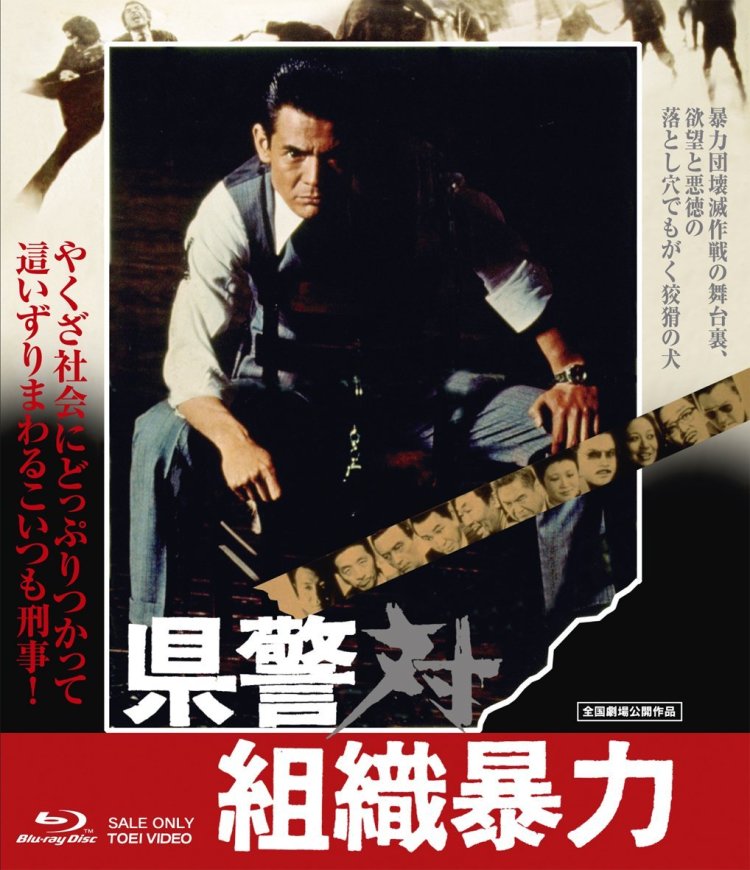
 Cops vs Thugs – a battle fraught with friendly fire. Arising from additional research conducted for the first Battles Without Honour and Humanity series and scripted by the author of the first four films, Kazuo Kasahara, Cops vs Thugs (県警対組織暴力, Kenkei tai Soshiki Boryoku) shifts the action west but otherwise remains firmly within the same universe. This is a world of cops and robbers, but like bored little boys everyone seems to forget which side it was they were on – if they truly were on any other side than their own. There are few winners, and losers hit the ground before feeling the humiliation, but the one thing which is clear is that the thin blue line is so thin as to almost be transparent and if you have to choose your defenders, a thug may do as well as a cop.
A dodgy looking guy in a dirty mac roughs up some equally dodgy looking kids. Given that the shady looking fella is played by Bunta Sugawara you’d peg him for a petty thug, but against the odds Kuno is a cop – just one with a taste for crumpled raincoats. The town he’s policing is one in the midst of ongoing gang strife following a series of breakaways and civil wars throughout the ‘50s. Things are coming to a head as rival bosses of the two breakaway factions, Hirotani (Hiroki Matsukata) and Kawade (Mikio Narita), vie for power while a former yakuza politician, Tomoyasu (Nobuo Kaneko), does his best to stir up trouble between them that Kuno is trying to keep from exploding into all out war.
Cops vs Thugs is as cynical as they come but slightly more sympathetic to its desperate, now middle aged men whose youth was wasted in the post-war wasteland. The central tenet of the film is neatly exposed by a drunken gangster who points out that at heart there’s little difference between a cop and a yakuza aside from their choice of uniform. Policemen, like gangsters, follow a code – the law, carry a gun, are fiercely loyal to their brotherhood, and at the mercy of their superiors. Good jobs were hard to come by in the devastation following the surrender, in fact one of the reasons company uniforms became so popular was that no one had decent clothes to wear and a providing a uniform was a small thing that a company could to do increase someone’s sense of wellbeing, community, and engender the feeling of family within a corporate context. The police uniform, even if it’s reduced to a badge and a gun, does something similar, as do a yakuza’s tattoos. They literally say someone has your back and will come running when you’re in trouble.
These drop outs with nowhere left to turn eventually found themselves one side of a line or on the other – the choice may have been arbitrary. Kuno says he became a cop because he wanted to carry a gun, something he could have done either way but for one reason or another he chose authority over misrule. Cops being friends with yakuza sounds counter intuitive, but many of these men grew up alongside each other, attended the same schools, perhaps even have relatives in common.
Both the police and the yakuza claim to be the defenders of honest, working people but neither of them quite means what they say. Police brutality is rife while yakuza battles reach new levels of violent chaos including, at one point, a beheading in the middle of a sunlit street. Yet the greatest threats to the population at large aren’t coming from such obvious sources, they’re hardwired into the system. Sleazy politico Tomoyasu spends his time in hostess bars and schmoozes with gangsters he uses to do his dirty work while the press look on gleefully at having something to report. Kuno may not be a candidate for police officer of the year, but he tells himself that his policy is one of appeasement, and that working with organised crime is the best way to protect the ordinary citizen. When you’re forced to work within a corrupt system, perhaps there is something to be said for flexibility.
For all of the nihilistic cynicism Fukasaku retains his ironic sense of humour, staging a violent, inefficient, and bloody murder in a tiny room where a sweet song about maternal love in which a woman sings of her hopes for the bright future of her son is playing a healthy volume. Corruption defines this world but more than that it’s the legacy of post-war desperation that says on the one hand that it’s every man for himself, but that it’s also necessary to pick a side. Cops, thugs – the distinction is often unimportant. There is sympathy for these men, and sadness for the world that built them, but there’s anger here too for those who play the system for their own ends and are content to see others pay the price for it.
Available now from Arrow Video!
Original trailer (English subtitles)
Originally published by UK Anime Network.
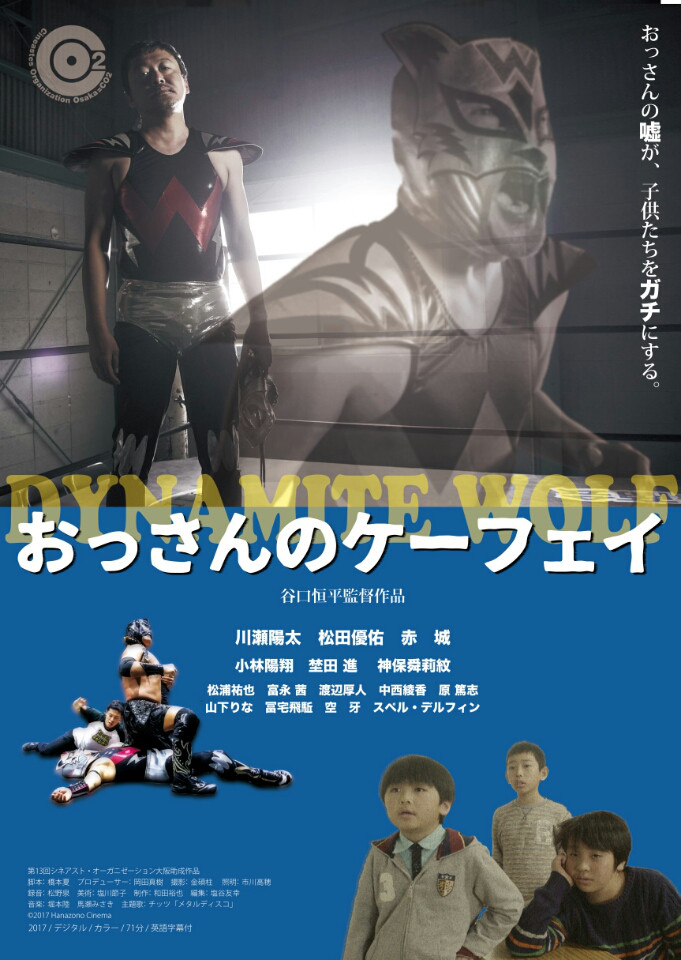 Back in the day, lucha libre-style wrestling was hugely popular in Japan. Tiger Mask, a manga set in the world of Japanese pro-wrestling remains a firm favourite and its eponymous hero has also become a byword for altruistic philanthropy as well-meaning anonymous donors donate expensive gifts such as Japanese school backpacks to orphanages in Tiger Mask’s name. Sadly, pro-wrestling is no longer as high-profile as it once was and has left mainstream television screens far behind even if it still maintains a small but dedicated fanbase. Kohei Taniguchi’s Dynamite Wolf (おっさんのケーフェイ, Ossan no Kefei) is out to change all that by shining a spotlight on this almost forgotten phenomenon of crazy outfits, killer moves, and camp showmanship.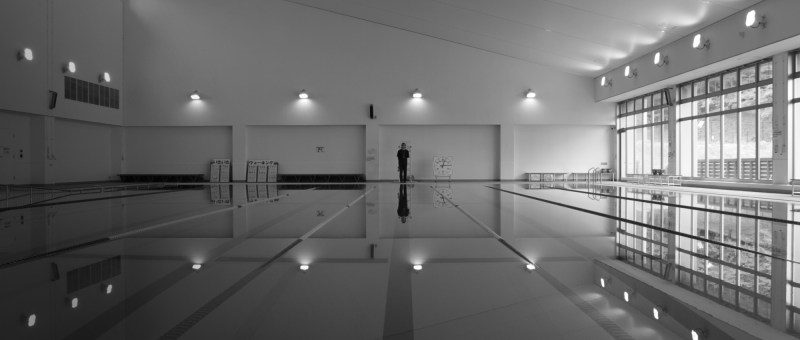
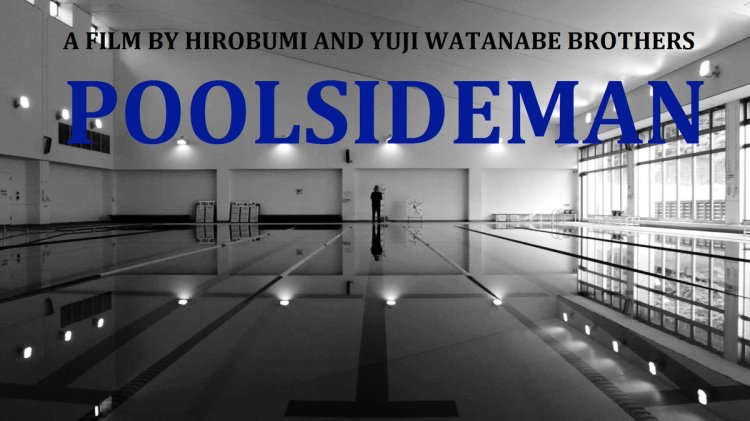 Around halfway through Poolsideman (プールサイドマン), the director himself playing an overly chatty colleague of the film’s protagonist, embarks on a lengthy rant about encroaching middle-age which is instantly relatable to those who find themselves at a similar juncture. He’s sure the world seemed better when he was a child, there wasn’t all of this distress and anxiety – everything just seemed like it would go on forever but time has inexplicably sped up with a series of rapid changes packed into recent years. The life of a poolsideman is improbably intense, or at least it is for Mizuhara (Gaku Imamura) whose days are all the same but filled with tension and the low simmer of something waiting to explode. Loosely inspired by the real life case of a man who left Japan for the Middle East with the idea of joining Isis, Poolsideman wants to explore why such a surreal thing might happen but finds it all too plausible.
 Times change so quickly. The “danchi” was a symbol of post-war aspiration and rising economic prosperity as it sought to give young professionals an affordable yet modern, convenient way of life. The term itself is a little hard to translate though loosely enough just means a housing estate but unlike “The Projects” (団地, Danchi) of the title, these are generally not areas of social housing or lower class neighbourhoods but a kind of vertical village which one should never need to leave (except to go to work) as they also include all the necessary amenities for everyday life from shops and supermarkets to bars and restaurants. Nevertheless, aspirations change across generations and what was once considered a dreamlike promise of futuristic convenience now seems run down and squalid. Cramped apartments with tiny rooms, washing machines on the balconies, no lifts – young people do not see these things as convenient and so the danchi is mostly home to the older generation, downsizers, or the down on their luck.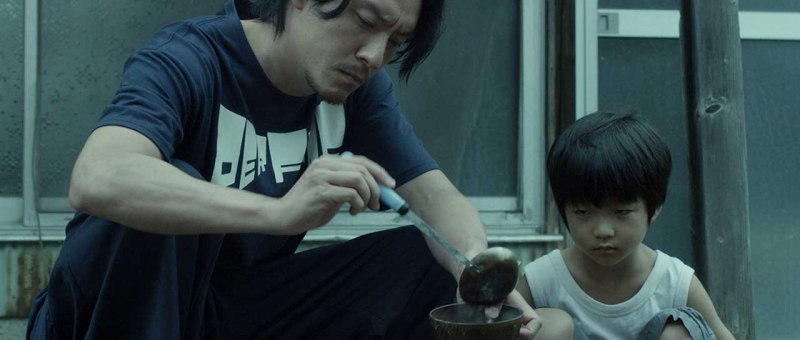
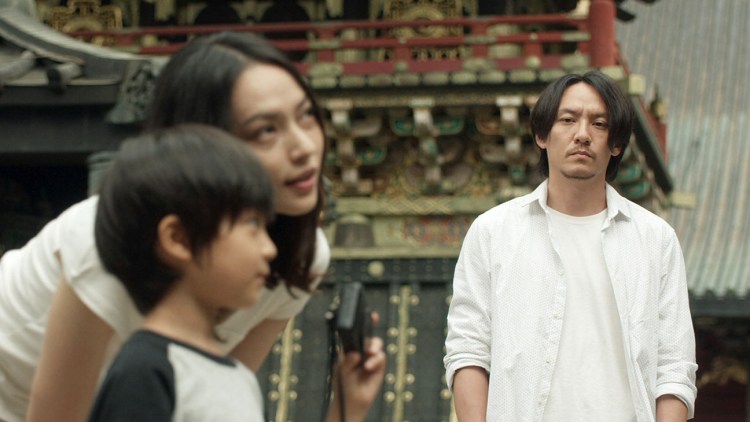 Taiwan and Japan have a complicated history, but in SABU’s latest slice of cross-cultural interplay each place becomes a kind of refuge from the other. Working largely in Mandarin and with Taiwanese star Chang Chen, SABU returns to a familiar story – the lonely hitman tempted by a normal family life filled with peace and simplicity only to have his dreams taken from him by the spectre of his past. Only this time it isn’t just his past but that of others too. Despite the melancholy air, Mr. Long (ミスター・ロン) is a testament to the power of simple human kindness but also a condemnation of underworld cruelty and its vicelike grip on all who enter its grasp.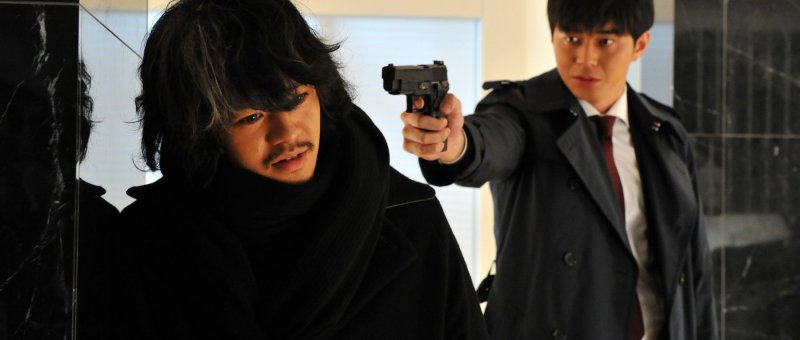
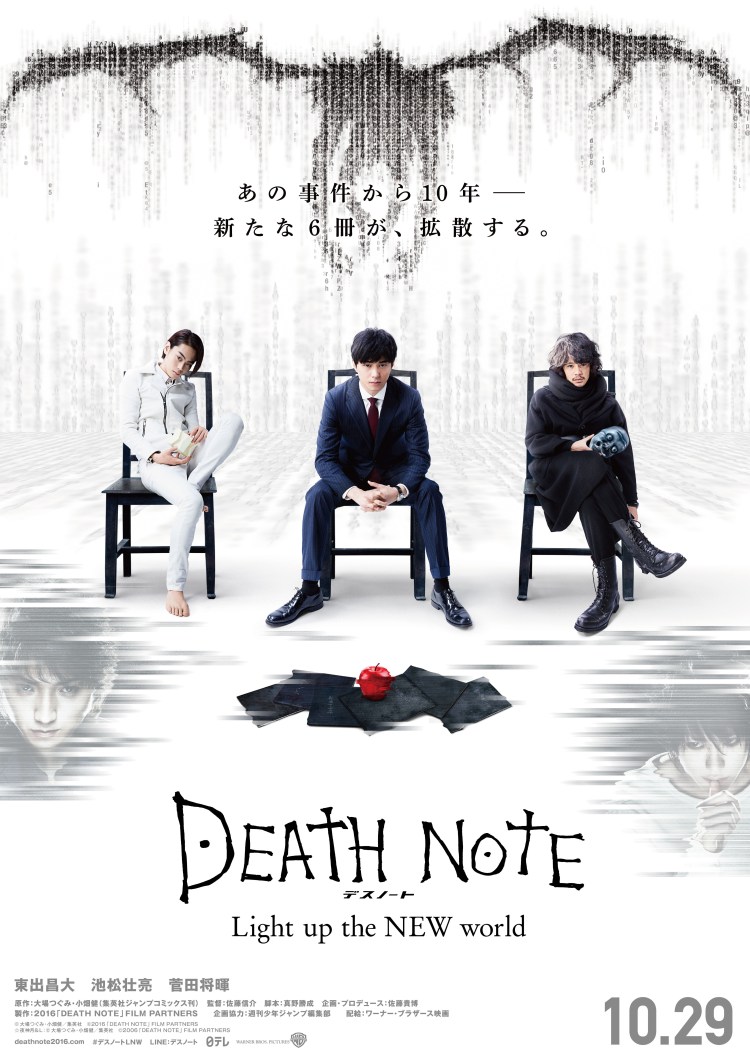 Tsugumi Ohba and Takashi Obata’s Death Note manga has already spawned three live action films, an acclaimed TV anime, live action TV drama, musical, and various other forms of media becoming a worldwide phenomenon in the process. A return to cinema screens was therefore inevitable – Death Note: Light up the NEW World (デスノート Light up the NEW World) positions itself as the first in a possible new strand of the ongoing franchise, casting its net wider to embrace a new, global world. Directed by Shinsuke Sato – one of the foremost blockbuster directors in Japan responsible for Gantz,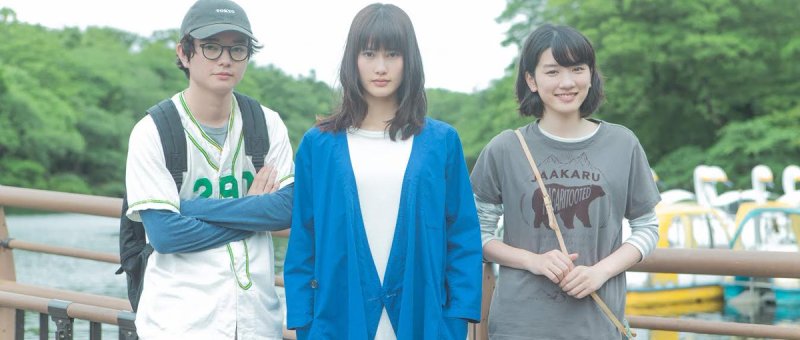
 Parks are a common feature of modern city life – a stretch of green among the grey, but it’s important to remember that there has not always been such beautiful shared space set aside for public use. Natsuki Seta’s light and breezy youth comedy, Parks (PARKS パークス), was commissioned in celebration of the centenary of the Tokyo park where the majority of the action takes place, Inokashira. Mixing early Godardian whimsy with new wave voice over and the kind of innocent adventure not seen since the Kadokawa idol days, Parks is a sometimes melancholy, wistful tribute to a place where chance meetings can define lifetimes as well as to brief yet memorable summers spent with gone but not forgotten friends doing something which seems important but which in retrospect may be trivial.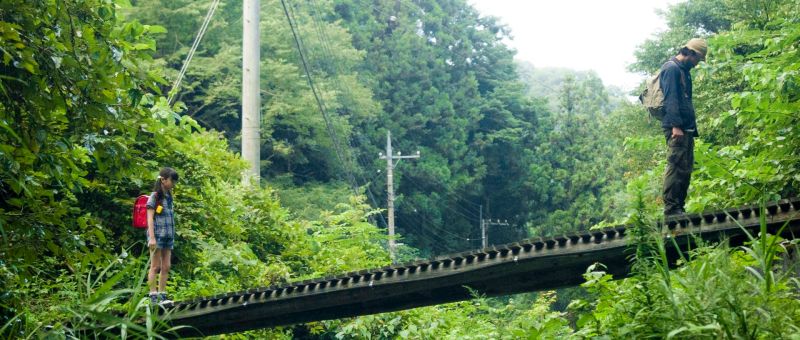
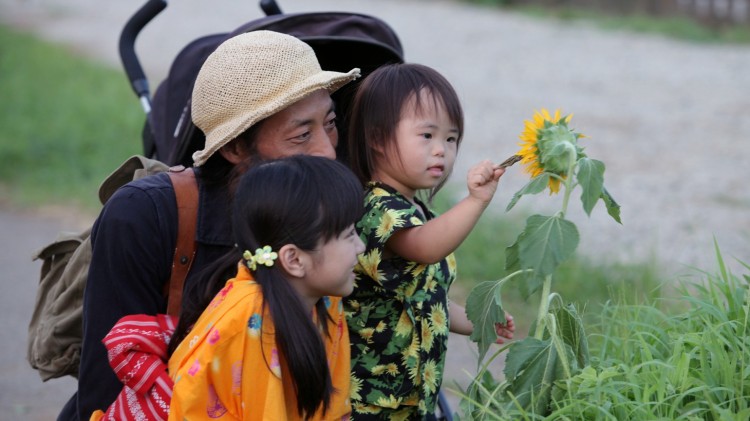 When tragedy strikes the one thing you ought to be able to rely on is your family, but when the tragedy occurs within that sacred space which exits between you what is to be done? Yosuke Takeuchi’s The Sower (種をまく人, Tane wo Maku Hito) attempts to provide an answer whilst putting one very ordinary, loving and forgiving family through a series of tests and tragedies. Lies, regret, and despair conspire to ruin the lives of four once happy people but even in the midst of such a shocking, unexpected event there is still time to turn towards the sun rather than continuing in the darkness.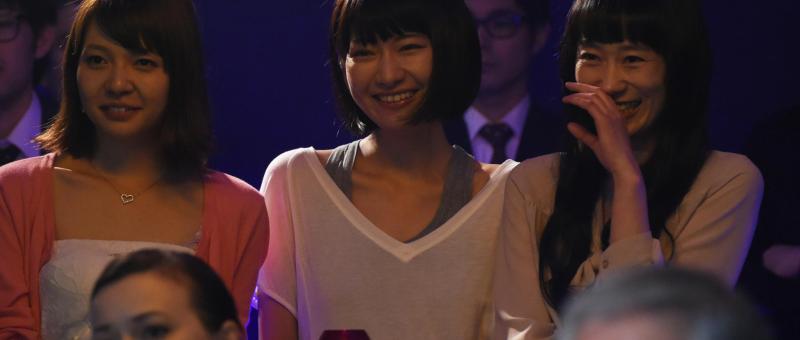
 Towards the end of the 60s and faced with the same problems as any other studio of the day – namely declining receipts as cinema audiences embraced television, Nikkatsu decided to spice up their already racy youth orientated output with a steady stream of sex and violence. The Roman Porno line took a loftier approach to the “pink film” – mainstream softcore pornography played in dedicated cinemas and created to a specific formula, by putting the resources of a bigger studio behind it with greater production values and acting talent. 40 years on Roman Porno is back. Kazuya Shiraishi’s Dawn of the Felines (牝猫たち, Mesunekotachi) takes inspiration from Night of the Felines by the Roman Porno master Noboru Tanaka but where Tanaka’s film is a raucous comedy following the humorous adventures of its three working girl protagonists, Shiraishi’s is a much less joyous affair as he casts his three lonely heroines adrift in Tokyo’s red light district.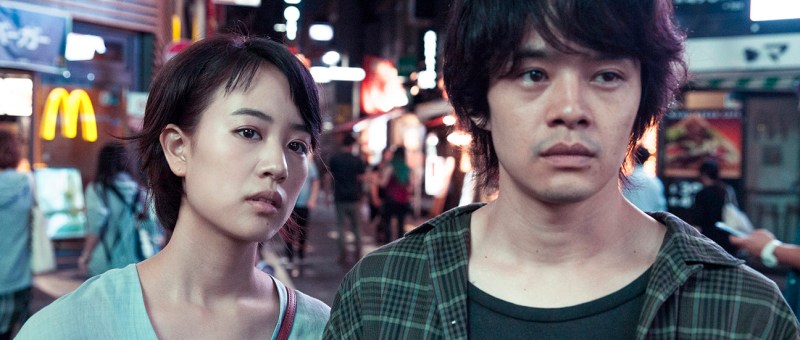
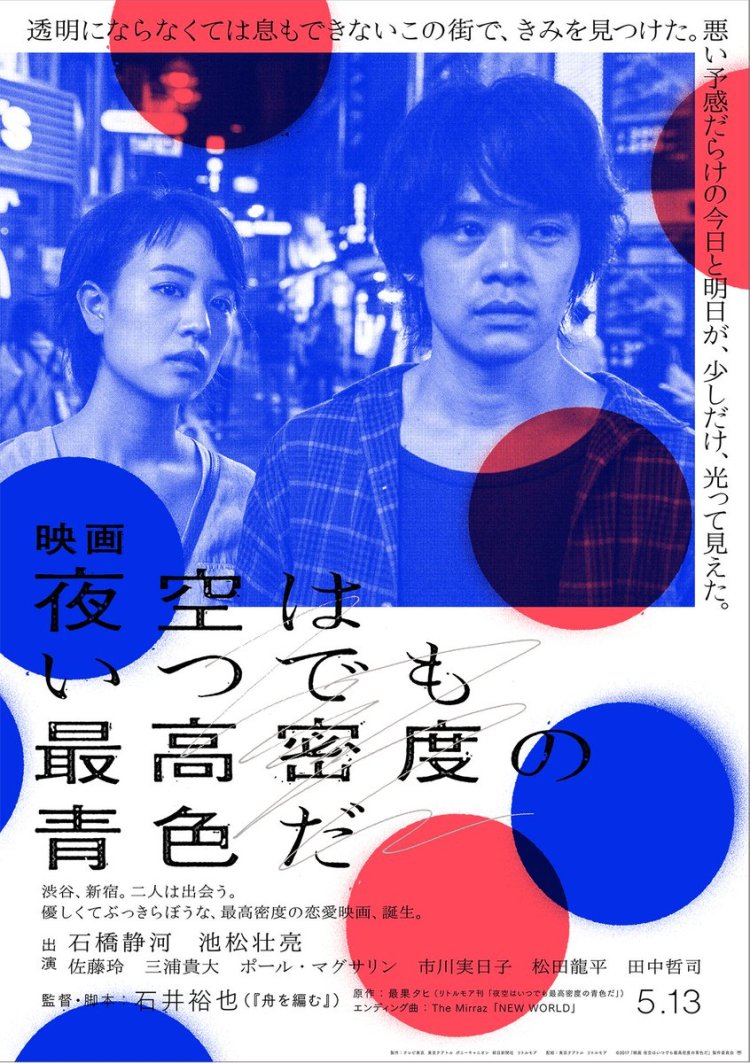 Learning to love Tokyo is a kind of suicide, according to the heroine of Yuya Ishii’s love/hate letter to the Japanese capital, The Tokyo Night Sky is Always the Densest Shade of Blue (夜空はいつでも最高密度の青色だ, Yozora wa Itsudemo Saiko Mitsudo no Aoiro da). This city is a mess of contradictions, a huge sprawling metropolis filled with the anonymous masses and at the same time so tiny you can find yourself running into the same people over and over again. Inspired by the poems of Tahi Saihate, The Tokyo Night Sky is at once a meditative contemplation of city life and an awkward love story between two lost souls who somehow find each other in its crowded backstreets.
