
Promare (プロメア, Hiroyuki Imaishi, 2019)

Promare poster 1It’s one of life’s ironies, sometimes the best way to stop a fire is to scorch the earth. The heroes of Studio Trigger’s first theatrical feature co-produced with XFLAG, Promare (プロメア, Puromea), are embodiments of fire and ice – a “mutant” who can shoot flames from his fingertips, and a fireman with a “burning soul”. Yet what they discover is that there is a peculiar power in their innate contradictions, actively harnessing the energy of their opposition to combat a man who thinks nothing of burning the world to save his own skin.

Our hero, Galo (Kenichi Matsuyama), is a firefighter with the Burning Rescue squad who has a talent for cheesy one liners and an overinflated sense of confidence in his own abilities. 30 years previously, the world was plagued by a series of strange incidents of spontaneous combustion later attributed to the “Burnish” phenomenon in which some members of humanity developed a mutation that allowed them to manipulate fire. The danger eventually died down, but the “Burnish” as they came to be known continued to exist in society as a kind of oppressed underclass, viewed with fear and suspicion and largely unable to live “normal” lives even if they wanted to. On a supposedly “routine” job, Galo unexpectedly encounters the leader of the Mad Burnish “terrorist” organisation and determines to bring him in, eventually awarded a medal for his pains.

As might be assumed, however, all is not as it seems. The Burning Rescue squad work for Galo’s mentor, Kray Foresight (Masato Sakai), now the governor and an enormously wealthy, influential man thanks to his advances in scientific firefighting technology. Kray reveals that the Earth is sitting on a volatile layer of magma somehow connected to the existence of the Burnish which threatens to destroy the planet if it cannot be properly controlled. This is a kind of justification for Kray’s ultra hardline stance against the Burnish who are hunted down and captured by the Freeze Force (see what they did there?) simply for living their lives even if they have committed no crimes.

Despite the nature of their work, the Burning Rescue squad are a more progressive bunch. They don’t approve of the social prejudice against the Burnish many of whom are just minding their own business and pose no threat to anyone, nor do they approve of the role the Freeze Force seems to play in their society. Mostly what they care about is stopping fires and making sure people endangered by them are eventually saved. They know that the Freeze Force’s persecution of the Burnish is at best counterproductive and fuelling the kind of resentment that makes them want to burn things. Wandering into the Mad Burnish hideout, Galo sees a different side to their struggle and learns a few home truths about his own side from the dashing rebel leader Lio Fotia (Taichi Saotome).

Burning Rescue and the Mad Burnish ought to be opposing poles but display a curious symmetry in their fierce loyalty to their own and emphasis on team work. Others, meanwhile, think only of themselves, coming up with nefarious plans to let the planet burn and move to a new intergalactic home with a starter stock of the most “valuable” 10,000 humans while everyone else succumbs to the flames. The Burnish become merely fuel, sacrificed for a “greater good” for a “chosen few”.

Galo and Lio think they’re “chosen ones” too, in a sense, but are flatly told that their role in events is really just fortuitous coincidence. Nevertheless, the fate of the world depends on their ability to bridge their differences, harnessing the unique capabilities of fire meeting ice against the forces of cold self-interest. Sometimes the only way to stop a fire is to let it burn out bright, which is what the guys discover in trying to find a way to quell that troublesome magma. Recreating the anarchic spirit of Kill la Kill, Studio Trigger’s first theatrical feature is a colourful riot of post-modern absurdity, but has its heart firmly in the right place with a strong progressive pro-diversity message in which we save the world only by saving each other.


Original trailer (English subtitles)
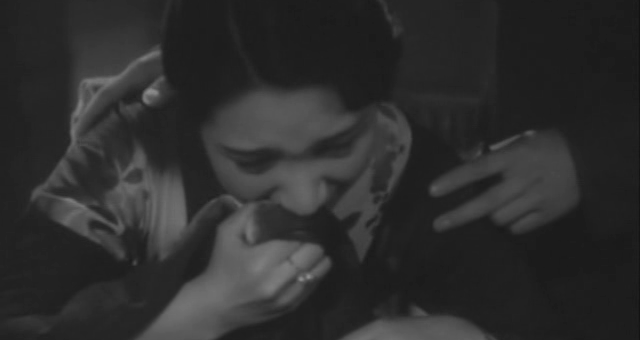
Avalanche (雪崩, Mikio Naruse, 1937)

Naruse Avalanche title cardDespite his broadly progressive outlook, it would perhaps be unfair to describe Mikio Naruse as a political filmmaker. Yet filmmaking in the late 1930s was an inherently political act if only by omission. 1937’s Avalanche (雪崩, Nadare), adapted in collaboration with left-wing intellectual Tomoyoshi Murayama from a serialised novel by the quietly anti-authoritarian Jiro Osaragi, seems to be almost in dialogue with its times as its hyper-individualist “hero” engages in a series of discussions with his humanist father about the new philosophies which for him at least spell the future.

Naruse opens, however, with the heroine – sweet and innocent bride Fukiko (Noboru Kiritachi ), dressed in kimono and sporting a traditional married woman’s haircut as she gazes lovingly on her wedding photo sighing softly that a year has gone by already. Flashing back, we realise that Fukiko eloped with wealthy scion of the Kusaka family, Goro (Hideo Saeki), who apparently forced the disapproving parents to accept the union by persuading Fukiko to accompany him to a hotel in Nagoya from which they were collected by Goro’s kindly father (Yo Shiomi). Though Fukiko remains deeply in love with Goro, it is obvious to everyone else that the marriage is not happy. Having reconnected with childhood sweetheart Yayoi (Ranko Edogawa), Goro wants a divorce, justifying his actions with the rationale that it will be better for Fukiko to end things now rather allow her to suffer years of a loveless marriage that is destined to end in separation.

Goro’s father, a little fed up with his wayward, increasingly psychopathic son, feels differently. He thinks that Goro has made his bed and must now accept his responsibility, committing to caring for Fukiko as a husband should regardless of whether or not he has romantic love for her. Goro, however, insists that this is a matter which only concerns himself and rejects any responsibility towards Fukiko, insisting that would be cowardly and dishonest to go on living with a woman he doesn’t love under the pretence that he does. Exasperatedly pointing out that one lives as a member of a society and cannot always be free to do as one pleases, Goro’s father tries to awaken him to social responsibility by reminding him that he only thinks he has the luxury of choice because he is the heir to the wealthy Kusaka family and would likely feel differently if he were just a regular salaryman. Goro doesn’t quite deny it, but (ironically) also condemns the hypocrisy of social propriety, avowing that he will not live a life of lies like those respectable married couples with lovers on the side.

Goro’s father asks if he’s not being overly literal, seeing as life is rarely as black and white as he’s painting it for the purposes of his argument but Goro counters that his father is “bound by old morality” of which he believes himself to be free. Later, trying to win back the heart of Yayoi, he reveals himself to be a hyper-individualist who believes that the only true path to happiness lies in indifference to the suffering of others. It seems that Goro’s decision to elope with Fukiko was part rebound, his ego bruised by a minor rejection by Yayoi who is also in love with him and had always believed that they would marry only to find herself disillusioned with the institution of marriage. Her sickly brother Keisuke (Akira Ubukata) worries that she turned down Goro because of him, knowing that should he die she would need to find someone to marry into their family and continue its name – something impossible for the oldest son of a noble family like the Kusakas.

That was not, however the reason. Yayoi resents her lack of options, that when a woman’s marriage is arranged people say “it’s settled” as if an unmarried woman is a problem in need of a solution. She resents that she is obliged to entrust her future to a stranger, wondering how it is she is supposed to trust one man for the rest of her life. It is this feeling that created distance between herself and Goro despite her obvious love for him. He accuses her of being “condescending” and hiding her true feelings, blaming her for the predicament they now find themselves in despite the fact that it appears to be entirely his own fault. Yayoi thinks it’s now too late for them, immediately sympathising with Fukiko who has been unfairly dragged into an awkward situation, but Goro scalds her again by insisting that she thinks too much about others when they need to be “strong” and think only of themselves.

Yayoi is half won over by Goro’s frighteningly fascist world view, but finds herself conflicted. She recognises her privilege and originally feels nothing but guilt because of it, that lack of purpose has left her with nothing but emptiness. Goro has her wondering if she’s got things backwards, that she ought to embrace the fact that she is allowed the luxury of life without worry. Putting it to Keisuke he partially agrees, affirming that happiness is only possible when one wilfully ignores the suffering of others. Yet Yayoi is dragged back towards humanism, remembering the “people left behind in the darkness” but fearful that Goro’s philosophy may win her over in the end.

Goro seems to be a perfect encapsulation of the growing evils of the age in his hyper-individualist desire to disregard the thoughts and feelings of others. The opening text, taken from Jiro Osaragi’s novel, paints Goro as the “hero” as it over-explains the film’s title by insisting that the “avalanche” we are talking about is “some sudden unknown force” present in this “precarious world” which can knock even the strong willed off their feet. The “hero” of Naruse’s film, by contrast, is clearly Goro’s kind hearted father who finds an unexpected fan in Fukiko’s dad (Sadao Maruyama) who claims to hate rich people and had no intention of marrying his daughter to one but thinks Goro’s father is one of the good ones and proves that there were some good things in the old feudal system.

Strangely reactionary as it may be, he has a point. Goro’s father is the soul of benevolent paternalism. He worries for his “desperate” son, and laments that the misfortune of the younger generation is “knowing things without understanding them”. He baits Goro, making him a mild ultimatum that if he wants to go on with his “immoral” philosophy then he’ll have to do it on someone else’s dime. Cowardly, Goro relents and chooses his wealth over his freedom but his psychopathy only deepens. To get back at his dad, he decides on a double suicide with Fukiko, before realising that there is no need for him to actually die so long as it looks like he meant to and he makes sure Fukiko goes first. This is the avalanche the film has been building to, but it’s not the one the titles teased in that it drags Goro back from an abyss towards something more human. He gives up on his plan when Fukiko, innocent as she is, is overcome with emotion on realising that she has been “wrong” about his feelings for Yayoi seeing as he has chosen to die with her. Is it love, or perhaps innocence, or just pure communication that is that “sudden unexplained force” which knocks Goro off his feet and drowns him in human feeling?

It’s a strangely “upbeat” ending for a Naruse film considering Avalanche’s overriding darkness, providing an awkward resolution as Yayoi, in an abrupt closing scene, claims something like independence in stating that she intends to remain with her brother rather than waiting for Goro or looking for a marriage. As such it reads as a rebuke of the fascistic ideology which played into, if not quite aligning with, militarist austerity as its various heroes find themselves once more returned to more responsible philosophies and authentic human connections. Cutting against the grain of the times, Avalanche is nevertheless a strange piece which seems entirely at odds with the opening statement, allowing the hero to find salvation rather than destruction in the sudden onrush of emotion.


Nina Wu (灼人秘密, Midi Z, 2019)

Nina Wu poster 1“They’re not just destroying my body but my soul” complains an exploited woman in a film within a film, “I’ll do something you’ll all regret” she adds, only the actress never will. Penned by leading actress Wu Ke-xi, Nina Wu (灼人秘密, Zhuó Rén Mìmì) provides a timely exploration of the gradual erasure of the self the pursuit of a dream can entail in a fiercely patriarchal, intensely conservative culture. Arriving in the wake of the #metoo scandal the film goes in hard for industry exploitation but never tries to pretend that these are issues relating to the film industry alone or deny the various ways it informs and is informed by prevailing social conservatism.

Originally from the country, the titular Nina Wu (Wu Ke-xi) has been in Taipei for eight years trying to make it as an actress but is still awaiting that big break. Aside from some small bit parts and commercial jobs, she supports herself by working in restaurants with a side career as a live-streaming webcam star. Then, just as she’s starting to think it’s too late, a call comes through – she’s in the running for the lead in a high profile period spy thriller. The only snag is that the part requires full frontal nudity and explicit sex scenes.

Nina is understandably conflicted. Aside from the potential discomfort, taking a part in the kind of film this could turn out to be is a huge gamble that could either make or break her career (just look at what happened to Tang Wei after Lust Caution, itself a period thriller about a female assassin who falls for her target). Nina’s unsympathetic agent skirts around the fact this might be her last chance while promising to respect her decision, implying it’s this or nothing. Of course, neither he nor the sleazy director inviting parades of identically dressed hopefuls up to his hotel room where he forces them to engage in dubious acts of degradation for his own enjoyment will admit that the reason they want a “fresh face” isn’t for any artistic motivation but that no well established actress with a proper agent would ever take a role like this (and even if she did, she couldn’t be pushed around in the same way).

Convincing herself to do whatever it takes, Nina takes the part but goes on to suffer at the hands of a controlling and tyrannical director who psychologically tortures and physically abuses her supposedly in order to get the performance he wants rather than the one she chooses to give him. A repeated motif sees hands continually around Nina’s throat as if she were being permanently strangled, unable to speak or express herself, permitted breath only when compliant with the desires of men.

Subsuming herself into the part, Nina avoids having to think about the various ways her offscreen life is also a performance or of her own complicity in the erosion of her emotional authenticity. A visit home reveals a difficult family environment with a father (Cheng Ping-chun) losing out in the precarious modern economy, while she, now the “famous actress”, wonders if she was happier as an am dram bit player staging inspirational plays for children. The secret she seems so desperate to conceal seems to be her same sex love, sacrificed for a career in Taipei and now perhaps unsalvageable. Her lover has moved on, preparing to marry a man and embark on a socially conventional life. If she too has made her peace with sacrificing a part of her true self, she does at least seem superficially “happy” in contrast to Nina’s gradually fracturing psyche.

Meanwhile, Nina becomes paranoid that a mysterious woman is stalking her. Apparently another hopeful also driven mad by the demands of an exploitative industry, the woman is convinced Nina has taken what was rightfully hers and done so by selling her body for career advancement. Yet as time goes on we begin to wonder if the film ever happened at all or is only a part of Nina’s fabricated delusion sparked Marienbad-style by the single traumatic event on which the film ends, filled as it is with a lingering sense of tragic defeat. Nina Wu never takes her longed for revenge, even if she (perhaps) gains it in a kind of success, but silently endures as the misuse of her body begins to destroy her soul and leaves her nothing more than an empty vessel on which the desires of others are projected.


Nina Wu was screened as part of the 2019 London East Asia Film Festival.

Original trailer (English subtitles)

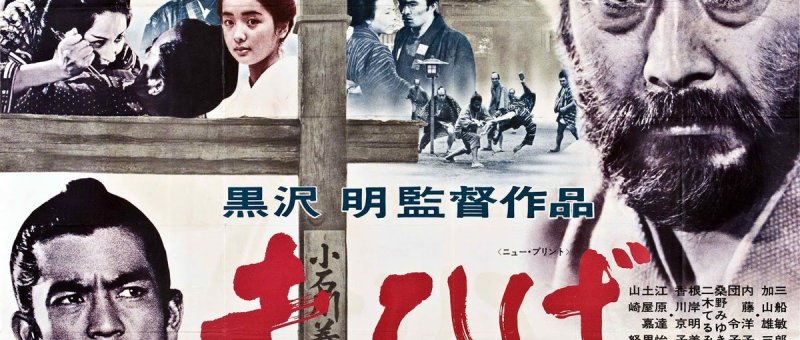
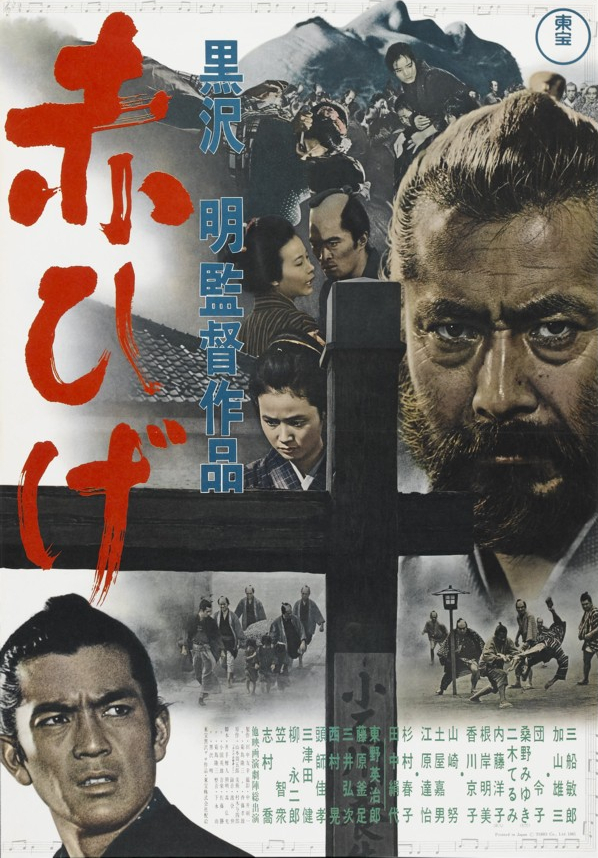
Red Beard (赤ひげ, Akira Kurosawa, 1965)

Red Beard posterAkira Kurosawa may be the most familiar golden age director of Japanese cinema to international audiences, but he was in many senses somewhat atypical. Where many of his contemporaries were eager to tell the stories of women, Kurosawa’s films are resolutely male and where many were keen to find the good among the bad, Kurosawa was often keen on the reverse. Nevertheless, that does not mean that he did not see goodness, merely that it was something which needed to be rooted out and fought for rather than simply permitted to exist. His final collaboration with Toshiro Mifune, Red Beard (赤ひげ, Akahige) finds the director at his most optimistic, fully embracing his natural tendency towards humanism even while making plain that goodness can often be hard to find, especially within yourself, and there may be no real cure for injustice but you have to treat the symptoms anyway.

The tale begins at the close of the Tokugawa era as a young doctor, Yasumoto (Yuzo Kayama), pays a courtesy call to the Koishikawa public clinic presided over by an old friend of his father’s, Doctor Niide (Toshiro Mifune) – otherwise known as “Red Beard”. Yasumoto, having just graduated from studying under the Dutch in Nagasaki, had only intended to make a brief visit on his way home and is therefore shocked to realise that he has been tricked into accepting a position at a hospital for the poor.

Our introduction to the Koishikawa clinic is through the eyes of Yasumoto as he receives a tour from another doctor who loudly remarks that he is glad that Yasumoto has now arrived because that means he can finally be free of this wretched place. Yasumoto’s nose wrinkles on smelling the “rotting fruit” of the poor waiting for afternoon appointments, while one of the patients complains about the “sterility” of the environment and his plain hospital clothes before a genial inpatient, Sahachi (Tsutomu Yamazaki), explains the reasoning behind such austerity and praises the attention to detail of head doctor Red Beard who has thought carefully about the best way to ensure his patients experience the best of care.

Yasumoto is extremely displeased by his predicament. He had believed himself on track to become a royal doctor working for the Emperor and being sent to poor clinic seems like a poor joke. He is indeed extremely full of himself, refusing to surrender his medical notes from Nagasaki as if he had made some great discovery and hoped to profit from it. Hoping Red Beard will fire him, Yasumoto behaves like a petulant child – refusing to wear his uniform, deliberately stepping into areas he knows are out of bounds, refusing to see patients, and just generally being unpleasant to have around. Red Beard is stoic and patient, though it gradually becomes apparent that perhaps Yasumoto has been sent here deliberately for a humbling everyone believes he had coming to him. Asked to perform the most routine of tasks, Yasumoto is forced to realise that the medical knowledge of which he was so proud is mostly book learning. He doesn’t know how to diagnose a living patient, has never been present at an operation, and has never sat with someone while they died knowing there was nothing more he could do for them. Reluctantly, he has to accept that the advice he received from the other doctors on his first day, that there was much to be learned here for those who wanted to learn it, was as true as it could be.

The first half of the film is indeed Yasumoto’s humbling as he begins to come around to the mysterious workings of Red Beard who gradually leads him to understand his first duty as a doctor is help those in need. Then again, Red Beard is an unwilling mentor. He is fully aware of the corruptions of the world in which he lives but has made a decision with which he remains conflicted to bend them to his advantage. Enraged to discover his government funding is being cut, Red Beard deliberately over charges the local lord whom he, amusingly enough, puts on a diet as he snorts like a piggy short of breath thanks to his unhealthy life of luxury. He also blackmails another local lord to save a young mother who turned a knife on an abusive husband, and later uses his medical knowledge to unfair advantage to take out a whole gang of yakuza. Red Beard isn’t sure he’s in a position to become anyone’s role model, but that only seems to make Yasumoto respect him more.

Nevertheless, there is darkness too in Red Beard’s philosophy. The real enemy here and perhaps everywhere is poverty and the selfishness which enables it. Most of the diseases Red Beard treats in his clinic are a direct result of impoverished living, mostly those of malnutrition and overwork as well as the necessity of living in cramped, unsanitary conditions. Yasumoto, a young man of means, has a puffed up sense of self and a natural ambition that tells him he is destined for the court and so he looks down on these unfortunate people as something other, something that does not concern him and is not worthy of his attention. He won’t put on his uniform out of spite, but eventually relents when Sahachi explains to him that the uniform marks him out as member of the clinic meaning that ordinary people who cannot afford to pay a doctor know that he is someone they can ask for help when no one else will help them.

As Red Beard says, there may be no real cures for disease. All they can do is fight poverty and mask their ignorance. Yasumoto learns by experience. He discovers the rampant injustice of his society in the sad stories that he hears. A “mad” woman who became a serial killer after years of childhood abuse, a woman who rejected a good father out of fear and allowed a bad mother to marry her to a bad man who was also her mother’s lover, a little girl adopted by a cruel madam who turned in on herself when she tried to press her into sex work at only 12 years old, a sex worker suffering with syphilis but too valuable to be released and sent home. This world is built is built on female suffering which is not, perhaps, something which Red Beard is in much of a position to treat.

The mad woman tries to hang herself and Red Beard wonders if it would have been kinder let her die, while the mother of a family who decided on group suicide asks him what the point was in saving her. The world is not an easy place to live in, but Red Beard’s prescription is refreshingly simple. One heals oneself by helping others, as he proves to Yasumoto through making him both doctor and patient to a wounded little girl who then passes her new found humanity on to another needy soul eventually reformed by kindness alone. Day by day, Red Beard goes to war against selfishness and indifference, treating the symptoms in order to undermine the disease which has infected his society in the hope that it might eventually decide to cure itself.


Original trailer (No subtitles)

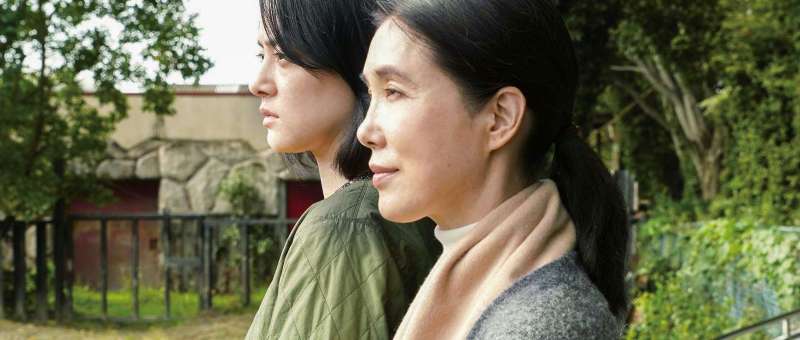
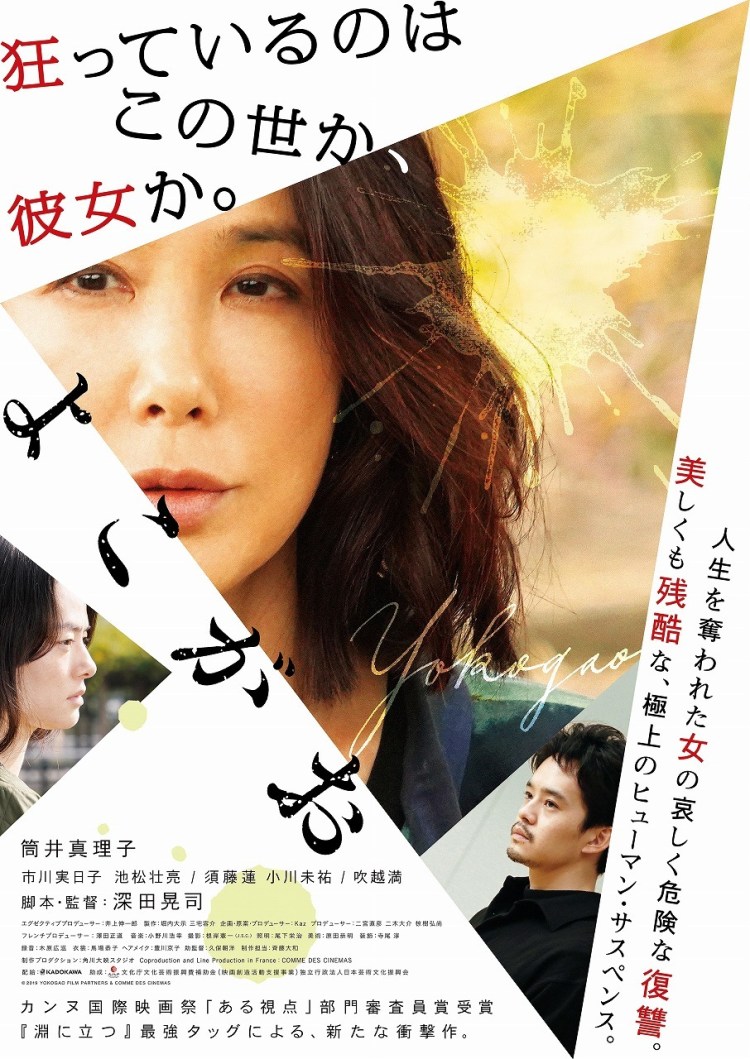
A Girl Missing (よこがお, Koji Fukada, 2019)

A Girl Missing poster 1In Harmonium, Koji Fukada explored the death of the family unit as a harried father found the foundations of his home eroded by a mysterious “stranger” with whom he shared an unspoken connection. A Girl Missing (よこがお Yokogao) pushes a little deeper in demonstrating how profoundly the foundations of a life can be shaken by frustrated connections, misunderstandings, and unspeakable desire. Probing deeper still, it wants to ask us on what foundations we’ve chosen to build our selfhoods, why it is that we don’t know ourselves without those tiny markers that tell us where we stand, and if it is really possible to rediscover a sense of self if we somehow go missing from our own lives.

Beginning in the mysterious second timeline, Fukada opens with the heroine changing her identity through the time-honoured fashion of a haircut. Calling herself Risa, she brushes off the hairdresser’s suggestion that they’ve met before, but she hasn’t chosen this salon because of its reputation or proximity to her home. Flashing back some months, we see the same woman looking a little softer and apparently working as a homecare nurse known as Ichiko (Mariko Tsutsui) to an elderly woman dying of stomach cancer. Ichiko’s colleagues worry that she’s becoming too emotionally involved with the Oishi household, helping the two daughters – uni student Motoko (Mikako Ichikawa) and high schooler Saki (Miyu Ogawa), study in cafes in her off hours, but she enjoys playing mother and does after all like to help. Meanwhile, she’s also happily engaged to a doctor (Mitsuru Fukikoshi) with a young son and looking forward to starting a brand-new family life of her own.

All that is derailed, however, when Saki goes missing in a suspected abduction on her way home from cram school. Thankfully, she’s found alive, unhurt, and apparently relatively well adjusted a few days later and anyone would assume the drama to be over, only it turns out that the suspect is Ichiko’s own nephew whom she briefly introduced to Saki at a cafe on the night in question. Feeling tremendously guilty and confused though she herself had nothing to do with the incident, Ichiko feels she must confess and make a formal apology to the Oishis but Motoko stops her fearing that the family will fire Ichiko and she’ll never see her again. Ichiko decides to trust Motoko and keep quiet, but it will prove to be a bad decision not least because it is in such sharp contrast to her otherwise straightforward and honest character.

The film’s Japanese title, “Yokogao” or “profile” reminds us that it is not possible to see the entirety of any one thing, only a single facet and more often that not the facet that it particularly wants you to see. Ichiko is guileless, innocent, and naive in her innate kindness. She doesn’t see how her relationship with the Oishi girls could eventually become problematic because, as a nurse, she’s used to doing what needs to be done when it needs doing. What we see of her is a woman about to marry “late” by the standards of her society into a readymade family, an intensely maternal figure looking for people who need mothering. Meanwhile, Saki’s disappearance exposes cracks in the Oishi household, Motoko’s grumpy response of “would you rather it was me?’ to her mother’s wails of “why her?” beginning to explain some of her seeming disaffection with her family.

Yet as much as there may be a maternal component in her desperation to keep Ichiko in her life, we can infer from all her plaintive looks that there is another kind of desire in play, one which she seems to regard as unspeakable. Ichiko, oblivious, does not quite realise the depth to which her accidental rejections wound the troubled young woman but equally could not anticipate the casual cruelty of her petty revenge. Upset that Ichiko is not catching her drift, Motoko leaks her connection to the case to the papers, and then tells them a secret shared in confidence to pour salt on the wound. Instantly regretful and caught in the white heat of passion, Motoko fails to realise the extent to which her desire to return the hurt done to her will only wound her more in ensuring Ichiko disappears from her life for good.

Ichiko then does something much the same, reinventing herself as “Risa” she lives in an empty apartment overlooking Motoko’s with the sole aim of taking revenge against the woman who pretended to be her friend and then betrayed her. But Ichiko does not understand why Motoko did what she did, and so her own revenge is also a misplaced act of self harm which causes her to absent herself from herself, assuming another identity better disposed to cruelty but finding it an awkward fit.

Fukada places emotional repression at the heart of all. Ichiko, despite her kindness, keeps others at a distance without entering into true intimacy with anyone, while Motoko apparently struggles to articulate perhaps even to herself the truth of her own feelings, childishly hitting back when slighted and unable to bear the possibility that she is in love with someone who cannot return her feelings. Forever at odds, they see each other only in profile. The desire for revenge destroys them both, but despite the pain and inescapability of regret, they have to find new ways of going on, making little nicks on their identities to help them remember who they really are. A melancholy tale of frustrated desires, A Girl Missing flirts with constructed identities polluted by social toxicity but leaves its heroines on (slightly) firmer ground in having at least taken what control they can over the forces which destabilise them.


A Girl Missing was screened as part of the 2019 London East Asia Film Festival.

Original trailer (no subtitles)

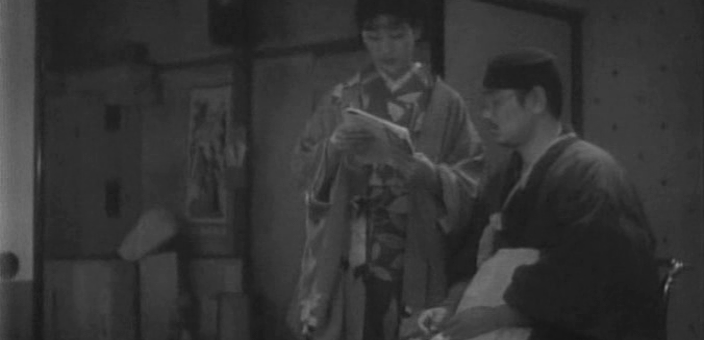
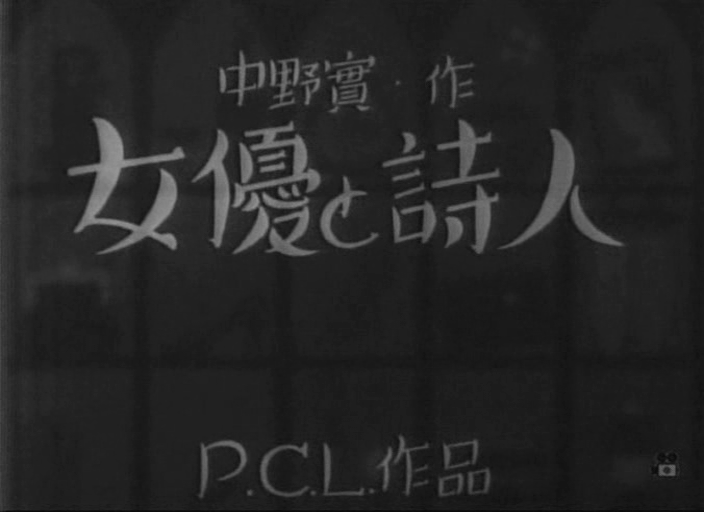
The Actress and the Poet (女優と詩人, Mikio Naruse, 1935)

Actress and the Poet title cardAmong the directors most closely associated with the golden age of Japanese cinema, Mikio Naruse is not usually remembered for his sense of humour but his pre-war work often saw him making uncomfortable forays into the shomin-geki comedy. The Actress and the Poet (女優と詩人, Joyu to shijin), Naruse’s second film after leaving Shochiku for P.C.L, is among the more successful but also tinged with characteristic irony that says this is funny because it’s not funny at all.

The generic shomin-geki setup finds us in a small community of suburban houses where mild-mannered poet Geppu (Hiroshi Uruki) lives with his successful actress wife Chieko (Sachiko Chiba). Amusingly enough, and in a motif which will be repeated, the film opens with an high impact scene of a woman screaming after being threatened with a knife, but thankfully it turns out that Chieko and her friends are simply rehearsing for a play. The actors dispatch Geppu to fetch them some cigarettes, which brings him into contact with his no good “friend” Nose (Kamatari Fujiwara), a struggling writer who is absolutely sure his latest work is going to win a big prize which is why it’s not a big problem that he’s so behind on his rent that he’s been coming and going through the upstairs window so he doesn’t attract the attention of his landlady.

When we first meet Geppu he’s wearing a pinny and cheerfully hanging up the washing. A young man passes by on a bicycle and seems surprised, asking if he himself really did all that laundry to which Geppu somewhat improbably replies that it’s all second nature when you’ve been in the army. Even though this is obviously a very “normal” day for Geppu, the questions keep coming. Ohama (Haruko Toda), the nosy woman from next-door, remarks that everyone in the neighbourhood loves Geppu because he’s just so nice but he’s also become a hot topic with the ladies at the bathhouse because no one’s quite sure what it is he “does”. In the modern parlance, Geppu is a basically househusband who dabbles in “poetry”, or as Ohama later explains “songs for children”.

In this fiercely modern environment, it’s Chieko who wields the financial power while her husband appears not to mind trailing behind. She wears kimono but often with luxurious furs which might lead to us ask why they live in this modest suburban house rather than in the bright lights of the city, but even so the marriage appears to be a happy and progressively equal one. In fact, as we later discover, there’s never been a cross word between Geppu and his wife, which is a problem because Chieko’s latest role involves a marital tiff and she’s struggling to get to grips with it because she doesn’t know what it’s like to fall out with your spouse. To figure it out she gets Geppu to read lines with her in a situation which eventually repeats in their real life when Nose bamboozles Geppu into letting him stay in the upstairs room rent free, leading to an almost identical fight watched calmly by Nose and Ohama who think they’ve got ringside seats to a play they could never afford to see.

Nose’s intervention unbalances the couple’s relationship in that it forces Geppu to reassert his masculinity. “A promise between men is a serious thing”, Geppu affirms “I can’t just go back on it because my wife says no”. Chieko reminds him, however, that this is technically her house – she pays all the bills, while his “writing” career is good only for the odd box of sponge cake. She doesn’t like it, perhaps understandably, that he’s “invited” a ne’er do well to come and live with them without even bothering to talk to her about it. She tries to put her foot down, but Geppu remains as irritatingly passive as ever only slightly putout to have his subjugated status suddenly used against him.

Naruse ends the picture with a comic sequence in which Chieko sees the light. Thanks to her real life argument with her husband, she’s figured out how to perfect her performance but she’s apparently so method that she also begins to embrace her role as a conventional wife off stage too. Rather than Geppu letting her sleep in and cooking the breakfast himself, this time it’s Geppu wrapped up in a futon while Chieko chops veg downstairs. Nevertheless, there is a minor irony in this moment of domestic bliss in that it directly follows the news that the nice young couple who just moved in across the road have committed double suicide because of his embezzlement and subsequent debts. Neatly underlining the consumerist trends of the age, the couple wanted to die in their own home even if it was only “theirs” for a few moments. Meanwhile, Ohama and her insurance salesman husband are busy having a blazing row next-door which just goes to show that old-fashioned marriages aren’t so happy either.

Chieko superficially plays the conventional wife, engaging in a little role-play with her husband while Nose listens on from the stairwell, but theirs remains a very modern marriage in which she is free to fulfil herself outside the home and her husband is seemingly unbothered (to a point at least) by the mild censure of the local ladies who both love him for his niceness and perhaps dislike him for it too. Naruse undercuts the conventionally “happy” ending in which traditional gender roles are restored and the family rebalanced by ending on a note of irony as the home of Ohama, a traditional wife dominating her henpecked husband in a comic yet socially accepted fashion, is thrown into violent discord while all is peaceful in the decidedly modern house of Geppu.


Repossession (Goh Ming-siu & Scott Chong Hillyard, 2019)

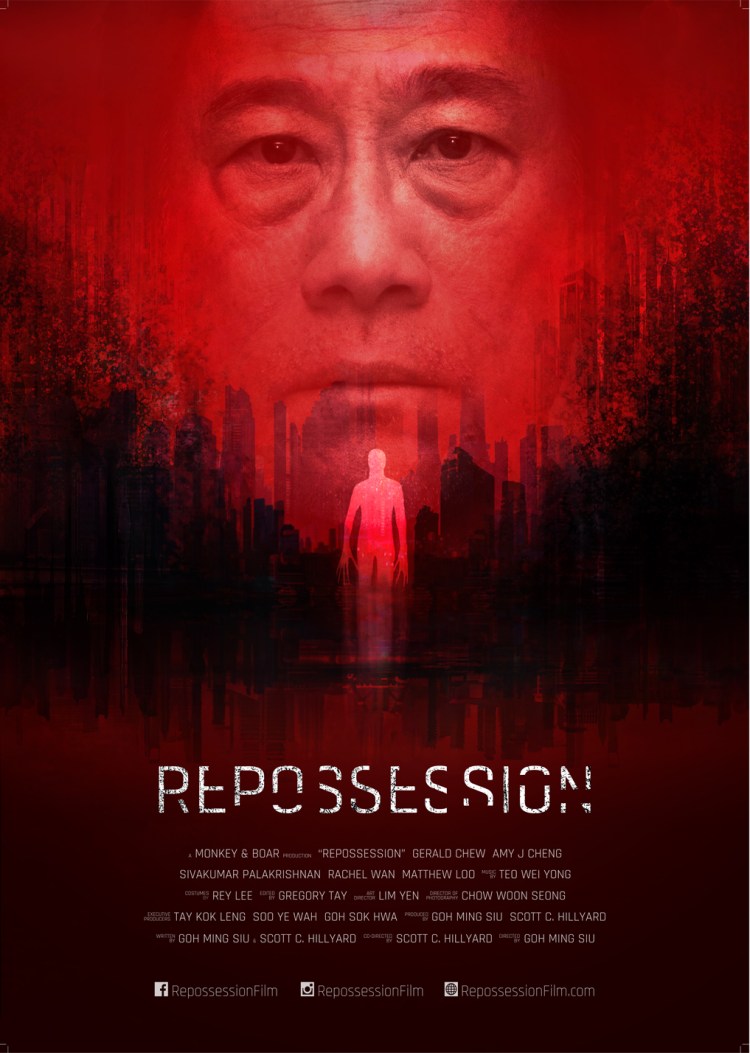
Reposession poster“I bet he doesn’t even know he’s in a cage” the “hero” of Repossession is told on asking his best friend if he thinks a hamster they’re looking at is happy on his little wheel. Like the rest of us, he’s ensnared by a cage called capitalism, but also by series of smaller cages inside it which range from toxic masculinity and persistent social conservatism, to the supernatural and the ghosts of past trauma. The biggest demon of them all, however, is pride, and as is so often the case, it’s those around him who will eventually pay the price.

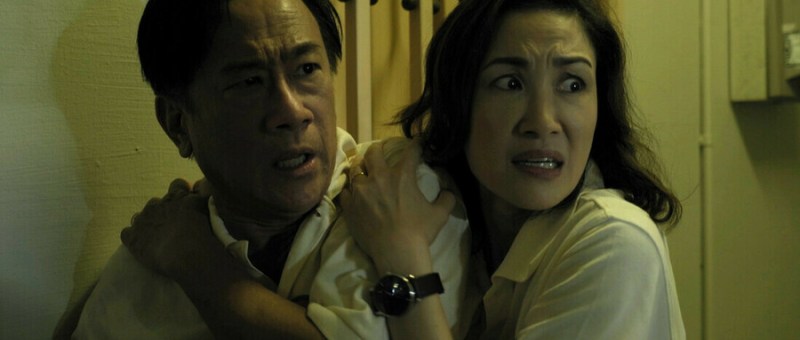
50-something Jim Tan (Gerald Chew) is a success. He’s got a high ranking salaryman job which evidently pays enough for a multi floor apartment with its own private pool in one of Singapore’s most exclusive housing complexes, as well as a six figure luxury car. Given his relative seniority, it therefore seems slightly absurd that he’s pulled aside one day by a younger man from HR who tells him that he’s been identified as one of several employees to have underperformed in the previous year and is being a given a choice – accept a termination or agree to resign. Jim is upset. He insists on seeing someone higher up but all to no avail and is eventually fired after making a scene in an admin assistant’s office.

Jim tries to tell his wife, Linda (Amy Cheng), he’s lost his job, but loses the stomach for it when she starts telling him that their daughter’s (Rachel Wan) uni fees are going up and they’ve been invited to a swanky wedding at which they’ll be expected to contribute a hefty gift. Confident he can get another job despite the fact he’s over 50 and will be applying as someone fired from his last position, Jim becomes one of the many salarymen ghosts haunting the local parks, leaving for work as normal in the morning but with nowhere to go. All around him he starts hearing voices shaming him for being one of those men, a failure, someone who couldn’t provide for his family, a loser without a job too deluded to realise that men over 50 don’t get hired in Singapore’s competitive job market – something rammed home to him when he finds himself sitting on sofas next to fresh-faced graduates interviewing for entry level positions at a fraction of his previous salary.

Jim’s friend tells him that perhaps this is for the best, that perhaps the universe is telling him it’s time to take a break and play some golf. He asks him what the point of all this ceaseless toil really is, to which Jim poignantly answers that he did it for his family but the claim is exposed as somewhat hollow when he starts to hide the unpaid bills right next to his world’s best dad mug. Jim inhabits a conservative world in which men provide and women stay home. It’s important to him that he’s built a comfortable life for his wife and daughter in the status conscious society, but he’s entirely blind that in doing so he’s fenced them inside a cage of their own. Jim’s wife Linda gave up her job and started a charitable organisation, doing good deeds looking after vulnerable people and busying herself with philanthropy. Finally learning about their money troubles, she quite reasonably decides it’s time to get a paying job again but her determination to help save their family only further wounds Jim’s fragile sense of male pride as man who can no longer support his wife and daughter even as he “degrades” himself using his flashy car to pick up fares as an Uber driver.

Jim is a man haunted by a sense of failure stemming back to a traumatic incident in which he failed to protect his younger sister whose ongoing medical bills are another worry on top of his domestic responsibilities. He sees himself, rightly or wrongly, as pursued by a soul sucking monster which is why everyone is always telling him he looks “drained”, neatly explaining his recent spell of bad luck. The real “monster”, however is the one inside – latent male violence born of an inferiority complex and resentment towards a high pressure society in which economic success and social status are the only things that count. Jim struggles to “repossess” himself, while watching his demons try to repossess the people he loves, but never realises quality of the fear that he’s fighting. “What makes you think you’ve hit rock bottom?” a passenger ominously asks him. When you’re sitting this far from the bars you hardly notice the cage at all.


Repossession was screened as part of the 2019 Five Flavours Film Festival.

Original trailer (English, no subtitles)

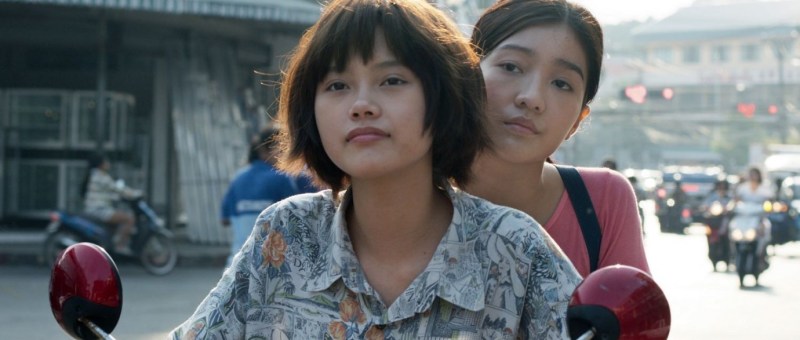
Where We Belong (ที่ตรงนั้น มีฉันหรือเปล่า, Kongdej Jaturanrasmee, 2019)

Where We Belong poster 1“I don’t understand, is life supposed to be this sad?” asks a dejected teen at the centre of Kongdej Jaturanrasmee’s Where We Belong (ที่ตรงนั้น มีฉันหรือเปล่า). Life is indeed sad, and the lesson she’s still too young to learn is that sometimes people don’t come back, things don’t get finished, and you just have to live with all your regrets while trying (but mostly failing) to do better next time. Starring members of Thailand’s BNK48 (the Thai offshoot of Japan’s AKB48 and the recent subject of a documentary by Nawapol Thamrongrattanarit), Where We Belong is part coming-of-age tale and part zeitgeisty take on contemporary Thai youth as it finds itself increasingly disconnected from the social conservatism of its parents’ generation but floundering when asked to find a new direction in which to strike out.

Highschooler Sue (Jennis Oprasert) is a case in point. Unbeknownst to her conservative father (Prawit Boonprakong), she’s applied for a scholarship to study abroad in Finland. Talented in English, she’s not much idea of what she wants to do with her life but knows that she has to get out of her small-town existence and away from the family noodle shop she feels is tying her to a future not of her choosing. Her best friend, Belle (Praewa Suthamphong), meanwhile is resolved to stay at home but doesn’t have much direction either save her attachment to her elderly grandmother (Saheoiyn Aophachat). Belle’s mother left the family a long time ago and lives a vacuous consumerist life in Bangkok, something which Belle is also keen to reject.

Meeting up with a friend at a local internet cafe, Belle is unsurprised to find it so full because nobody wants to go home to their parents right now owing to the intense pressure on them to succeed. That pressure is, however, slightly at odds with their traditional expectations for their children. No one expects much of young girls like Sue and Belle, even if they superficially want them to do well in their exams. Sue’s mother passed away some years ago, and her distant father is dead set against the idea of her travelling abroad, terrified that once she’s seen the world she won’t look back. Everyone expects her to take over the noodle shop, insisting that it’s an important part of the local culture and can’t simply be another sacrifice to progress like so many tiny eateries and family businesses abandoned by youngsters looking for a brighter future somewhere else.

Trying to defend her friend, Belle tells the customers in Sue’s restaurant that they can keep their “stupid heritage” to themselves, even while planning to stay home and be the good daughter. Unfortunately her words backfire, further placing her at odds with the conflicted Sue who is still trying to process the implications of her transnational move. While she remains in a kind of denial, it’s Belle who’s trying to sort everything out for her – returning old comic books to the library, getting their old band back together, and even trying to help her patch things up with a friend she’s fallen out with even though Belle herself is a little jealous of the close relationship they once had. She does these things because, as she hints to their friend at the library, she’s afraid Sue won’t come back and knows on some level that their present relationship, whatever happens after, is going to change even it doesn’t exactly end.

Belle’s grandmother has a strange habit of staring out the window, waiting for a boy who said he’d meet her the next day decades earlier but never came back. Belle doesn’t want to be her flighty mother living a superficial life in the city, but Sue doesn’t want to end up like grandma waiting around for something that’s never going to happen. At her interview, she’s honest in her replies, admitting that she currently has no dream other than getting out of Thailand, but cleverly adding that by going to Finland where they have the world’s best education she hopes to figure out what her life’s dream might be.

What the two girls discover is that life is a series of goodbyes. They’re on different paths, and that’s sad, but it’s just the way things are. Before she goes, Sue tries to put her affairs in order with varying degrees of success – trying to come to terms with her mother’s death, telling a boy she likes about how she really feels (but failing to take things further), and patching up old friendships while also accepting that sometimes they just end with no real resolution only a sense of regret. Eventually they figure out where they belong. Sue leaves, and Belle is alone surrounded by familiar absences, but life goes on, and it’s sad, but that’s how we live.


Where We Belong was screened as part of the 2019 Five Flavours Film Festival.

Original trailer (English subtitles)

The Red Phallus (Tashi Gyeltshen, 2018)

Red Phallus poster“I doubt anyone can get out of this paradise” laments an angry man at the centre of Tashi Gyeltshen’s debut feature The Red Phallus. Far from the happiest kingdom, the Bhutan of the Red Phallus is an oppressive place where misogyny and classism rule. Tyrannised by tradition and a conservative culture, the heroine finds herself trapped in an impossible situation, by turns mocked and humiliated because of her father’s “embarrassing” profession, and left with no-one to turn to when misused by the men all around her.

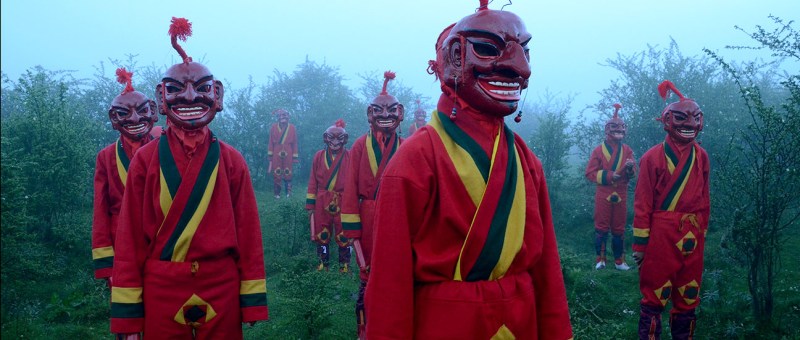
16-year-old Sangay (Tshering Euden) has trouble getting up for school. Unbeknownst to her father (Dorji Gyeltshen), the reason is not so much teenage fatigue and latent rebelliousness, but that the other children are less than kind to her because of his unusual profession – he carves wooden phalluses for a living and puts on a creepy red atsura clown outfit to participate in local festivals. At her age, Sangay should be in year X, but she’s only in year VII because she misses so much school and if she misses much more she’ll be given the rather ironic punishment of suspension. That’s not the only reason she’s in trouble though. The headmaster has also been told she’s been seen going about with Passa (Singye), a married man with two children who’s much older than her, but that’s not the problem. The problem is Passa comes from a family of butchers, which is why it’s so unseemly.

Weirdly, no one seems to be very concerned that a married man of around 30 is hanging round with a 16-year-old girl. When we first meet Passa without knowing his age or background he seems OK, possibly Sangay’s only friend, but he quickly turns nasty when she’s less than keen to take him up on his offer of running away together to the city. She tells him that she’s too young, “just a girl”, and isn’t sure that’s a decision she’s in a position to make. He begins to push her, criticising her for always saying she’s too young or not strong enough. Passa asks her when she’s going to make her own decisions, but Sangay is too clever for him. She’s well aware that by “your own decisions” he only ever means agreeing with him. She’s just made her own decision now when she told him she didn’t want to go, but he doesn’t like it so he tries to browbeat her by undermining her sense of confidence by implying that she’s too stupid to decide for herself while also lacking the courage of her convictions.

Why she’s hanging round with Passa in the first place remains a mystery save a later reference to a traumatic incident he tries to blackmail her with. What’s clear is that she doesn’t see much of a way out for herself through education and has become too afraid or embarrassed to attend school because of her father’s profession. Sangay’s dad is largely a background presence in her life, yelling at her to get out of bed or barking orders from his studio. He doesn’t like it when she takes too long coming home after school, but sends her straight back out again on errands delivering phalluses to customers when he’s too busy to go himself. Sangay is not a fan of the phalluses, and like most of the other children, seems to find them very embarrassing, virtually throwing them at the son of her customer who giggles on seeing her approach with her arms full of oversize wooden fertility ornaments.

Apparently Sangay’s dad is one of the best atsuras in the country, though for reasons perhaps connected to the aforementioned traumatic incident, he’s thinking of retiring. In any case, he’s not much of a protective talisman for his daughter, meekly bowing his head and remaining silent when called in by the headmaster, and later spectacularly failing when he tries to have a word with Passa to explain how deeply inappropriate it is for him to be sniffing round his teenage daughter who is still after all a school girl.

It’s no wonder Passa would like to leave the “paradise” of their small rural community considering he’s the lowest of the low solely because his father was a butcher. Sangay’s headmaster angrily barks at her about a lack of ambition, threatening her that she might end up a butcher’s wife as if that were the worst possible outcome. Even so, Passa – the lowliest of all the men, still thinks he has a natural right to boss and abuse Sangay, emphasising his own masculinity and the lack of it in Sangay’s meek father whose ironic profession it is to carve giant phalluses that are supposed to ward off danger when “phalluses” seem to present nothing but danger and disappointment to young Sangay. When smashing crockery to ease her frustration is no longer enough, Sangay’s rage boils over into something violent and self destructive, her silence giving way to a single scream of infinite impossibility.


The Red Phallus was screened as part of the 2019 Five Flavours Film Festival.

Original trailer (English subtitles)
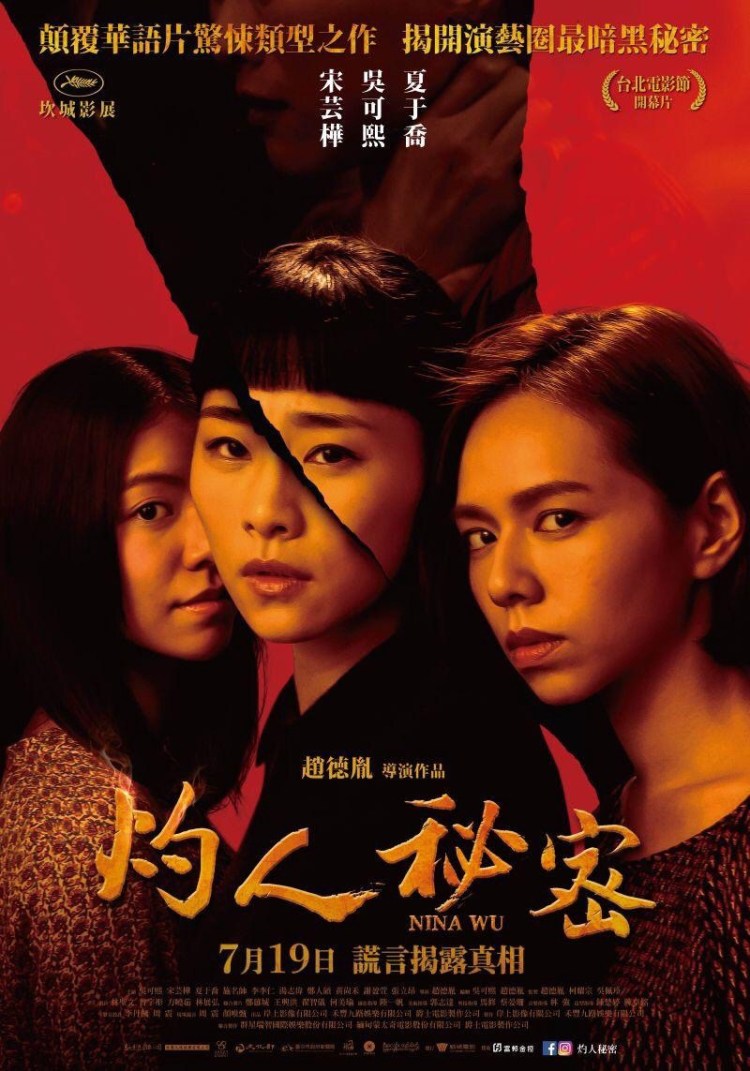
Balloon (气球 / དབུགས་ལྒང་, Pema Tseden, 2019)

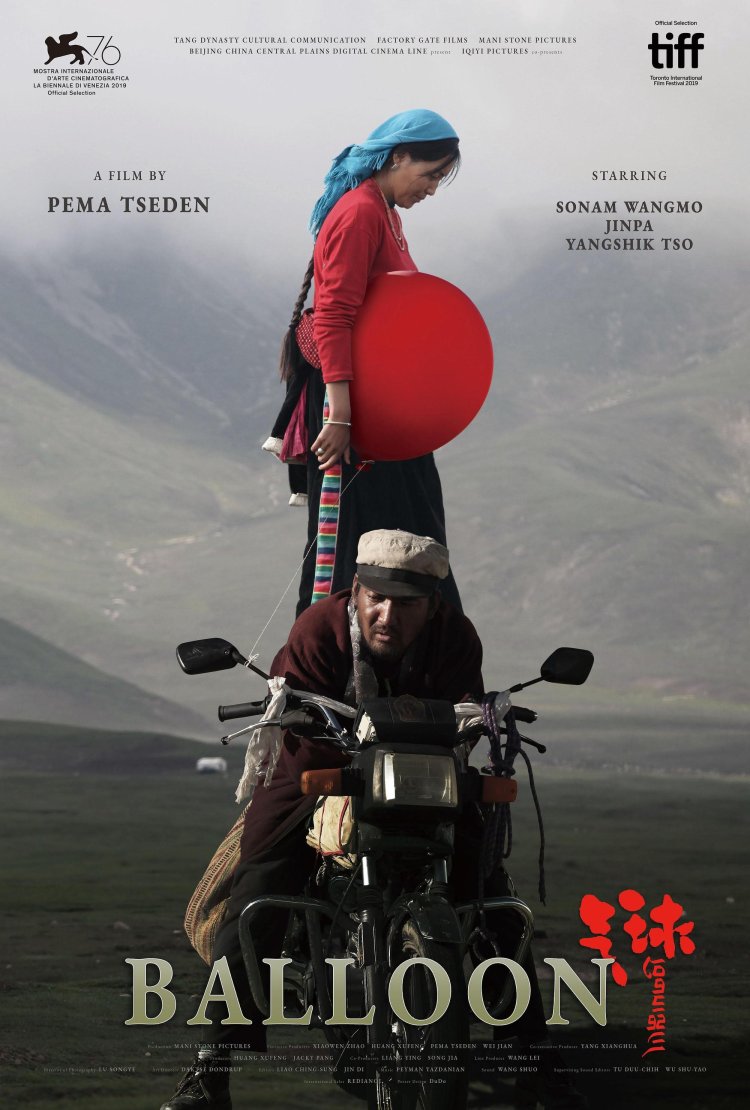
Balloon poster“The world has changed but you’re still so conservative”, a bemused doctor exclaims on learning that a female patient would rather wait around for a woman doctor than disclose a “woman’s problem” to a man. Set in ’80s Tibet, Pema Tseden’s seventh feature, Balloon (气球, Qìqiú / དབུགས་ལྒང་), finds itself at the intersection of multiple worlds and changing times as a small family is quietly torn apart by societal forces beyond its control.

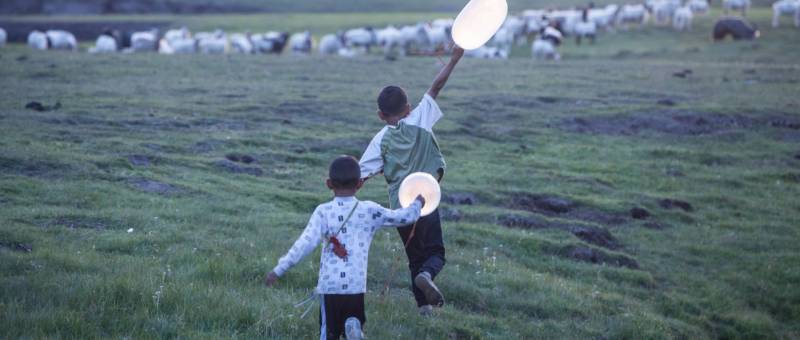
As the film opens, the family’s two youngest sons are busy spying on dad and grandad through the fuzziness of an overinflated balloon. Only, unbeknownst to them, it isn’t a balloon at all but a condom, a slightly embarrassing harbinger of modernity now necessitated by the recently instituted One Child Policy. With the oldest boy away at high school, Dargye (Jinpa) and his wife Drolkar (Sonam Wangmo) have three kids already and paying the fine on a fourth would more or less mean financial ruin. Thankfully, the condoms are free – the only problem being that Drolkar has to go to the clinic in town to ask for them which she finds extremely embarrassing, so much so that she can’t even bear to say the word, almost winking as she whispers “the free things” before quickly stuffing them in her pocket. 

What Drolkar wanted to ask the doctor about, however, was the possibility of sterilisation. With the kids constantly nicking the condoms along with the chance that they aren’t 100% reliable, she is in constant worry of what it might mean for the family if she becomes pregnant with a fourth child, especially, she tells the doctor, because Dargye seems to be in a particularly amorous mood at the moment which increases the chances of something going “wrong”. The female doctor can’t quite understand Drolkar’s prudery, or her slightly “old-fashioned” way of thinking. The doctor, obviously, enjoyed a university education. She has a career of her own and a clearly defined individual life as something other than a wife and mother. She wonders why anyone would want to have so many children in this day and age. Having only one means she can devote all of her resources in one direction, ensuring her child can have a good education and the best start in life, whereas Dargye has just had to sell a cow to pay for his eldest’s school fees while the second two stay home.

For Drolkar, who was perfectly happy with the way things were, the world is still an intensely patriarchal place and even if she wanted to (which she doesn’t, really), it’s probably too late to become anything other than a wife to her husband and mother to her sons. This her sister Ani (Yangshik Tso) learned to her cost. Venturing pick up her nephew Jamyang from school she ends up running into an old flame who apparently ruined her life though some kind of “misunderstanding” which led to her leaving home to become a nun. Now a divorced teacher and apparently rising literary star, he hands her a book inspired by their love affair which he hopes might help to explain whatever it was that happened between them, but Drolkar, still outraged on her sister’s behalf, prevents her from reading it – firstly by throwing it on the fire causing Ani to get her fingers burned (again, but literally) pulling it out, and then by telling Ani’s ex to take the book back and refrain from causing any more trouble dragging up the past.

Yet as much as she’s Dargye’s wife Drolkar tries to assert her authority in other ways aside from taking control of her sister’s romantic future. More practical than her husband, it’s she who is in charge of the condoms, and she who worries about the potential effects of a problematic pregnancy on their family. In a society as patriarchal as this, some might say that such things are in any case a woman’s responsibility, but Drolkar’s belief that bearing a child or not is her own decision eventually places her at odds with her husband who becomes temporarily violent when faced with his impotence, powerless to prevent his wife aborting their baby if that’s what she decides, but also at the mercy of the Chinese state who have arbitrarily decided that something as natural as conceiving a child is now a crime.

For Dargye and his family who live traditional lives far from the urban centres of the modern state, it isn’t only the pain and sadness of being forced to abort their child against their will which burdens them but a spiritual taboo in knowing that the child whose birth they’d be denying may be the reincarnated soul of a much loved relative. Drolkar is forced to choose between her Buddhist beliefs and the demands of Chinese communism, her husband’s wishes and those of the state acting as father. Of course she tries to choose her family, but whichever decision she makes may destroy it either through her husband’s resentment or the costs involved with trying to defy the political reality.

Grandad laments that everyone rides motorbikes these days, you never see horses anymore. Times have indeed changed, but in some ways more than others. While Dargye seems to draw vicarious power from the randy ram he’s borrowed from his friend to stud his sheep, a figure of robust and virile masculinity, he’s effectively neutered by the society in which he lives. Conversely, Drolkar, according to the doctor at least, ought to feel herself liberated but is left with no real choice at all. Only the kids, cheerfully playing with the instruments of their parents’ oppression, have learned to find innocent joy in the midst of such uncertainty while the modern world creeps in all around them.


Balloon was screened as part of the 2019 Five Flavours Film Festival.

Original trailer (English subtitles)