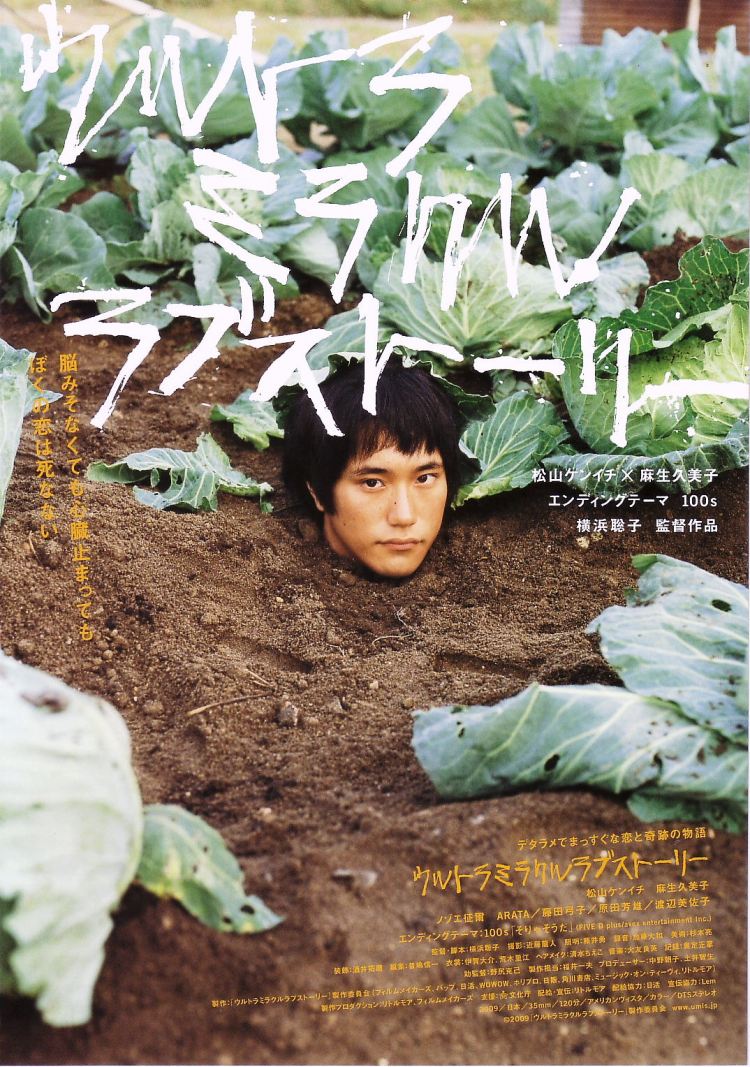
 There might be a pun involved in the title of Bare Essence of Life – another example of a Japanese film with a katakana English title, Ultra Miracle Love Story (ウルトラミラクルラブストーリー), given a completely different English language title for overseas distribution, but that would be telling. Following her feature debut German + Rain, Satoko Yokohama once again tells a tale of small town misfits only this time of an Aomori farm boy whose brain is wired a little differently to everyone else’s – “not broken, just different”. Though everyone in the village knows Yojin (Kenichi Matsuyama) and is familiar with his sometimes unusual behaviour, a young visitor taking a temporary job in a quaint rural backwater may need a little more time to acclimatise.
Yojin is, as he says, a little different from the others. Neatly signalling a problem with executive functioning, he lives his life to the tune of several different alarm clocks with deliberately different sound cues to help him remember what he’s supposed to be doing. Grandma also helps with that too through use of a giant whiteboard which has Yojin’s daily itinerary on it so he can keep track of where he is and record his thoughts about the day. Yojin’s grandfather has passed away but has left him some valuable horticulture tips on a cassette tape which Yojin listens to diligently every day whilst tending to his cabbages, trying to work out a good way of keeping them safe from creepy crawlies seeing as grandma doesn’t really trust him with insecticide (later events will prove this to be wise).
Everything changes when brokenhearted school teacher Machiko (Kumiko Aso) arrives all the way from Tokyo as temporary cover for maternity leave at the local nursery. Oddly, seeing as there are so few young people around, the school seems pretty busy with youngsters but then again perhaps they’ve come from neighbouring villages which would explain why the parents are sometimes so late coming to pick their kids up. In any case, Machiko instantly captures Yojin’s heart and he becomes fixated on the idea of making her his one and only. Machiko, however, is battling her own romantic woes and is originally quite taken aback by Yojin’s odd combination of directness and innocence.
Yojin is, undoubtedly, a lot to take in, but the villagers are all very used to his ways and mostly just shrug his various antics off even when they entail inconveniences like office paperwork suddenly scattered to the wind, or getting pelted with vegetables after taking issue with Yojin’s sales patter. Grandma bears the brunt of his rudeness not to mention self-centred attitude and otherwise difficult behaviour but she also worries how he’s going to look after himself when she’s gone. Hence the vegetable patch – a literal testing ground. Machiko makes Yojin wish he were different, and a half-baked experiment in which he buries himself up to the neck in his cabbage patch (perhaps to better understand cabbages so that he can figure out how to grow them) and a neighbourhood boy sprinkles him with pesticide shows him a way he can make it happen.
So begins Yojin’s long, strange path towards “evolution” as he discovers that exposure to various chemicals helps him slow everything down so he can be a little more like everyone else. Moving into the centre ground makes his presence more palatable to Machiko, giving them time to bond during nighttime walks as Machiko outlines her curious theories on the forward motion of the human race. Machiko wonders if humanity’s need to control the unpredictable, smooth out rough edges and tame nature is limiting its ability to change and grow, yet even as she says so Yojin is attempting to temper his own wildness expressly for Machiko. Nevertheless, getting to know him Machiko comes to the conclusion that maybe what Yojin needs is to become more Yojin, rather than dousing himself in dangerous chemicals which seem to have provoked some kind of strange metamorphosis as yet unknown to medical science.
Chemicals aside, Yojin’s world takes a turn a definite turn for the surreal as he chats with headless ghosts and then temporarily joins the ranks of the undead himself. Yokohama has a point or two to make about the use of pesticides – a neighbourhood woman warns Machiko to head indoors when she first arrives because it’s crop spraying day, but then refuses to buy Yojin’s “organic” vegetables because she’s not convinced anything grown without chemical assistance could really be “safe” or “clean” enough for consumption. This need to control nature may eventually ruin it, and us too – much as Machiko’s hypothesis posited. Maybe Yojin is the most evolved us all, defiantly in touch with his essential nature and, perhaps, finally allowing his soul to find its true home if in the strangest of ways.
Screened as part of Archipelago: Exploring the Landscape of Contemporary Japanese Women Filmmakers.
Original trailer (English subtitles)

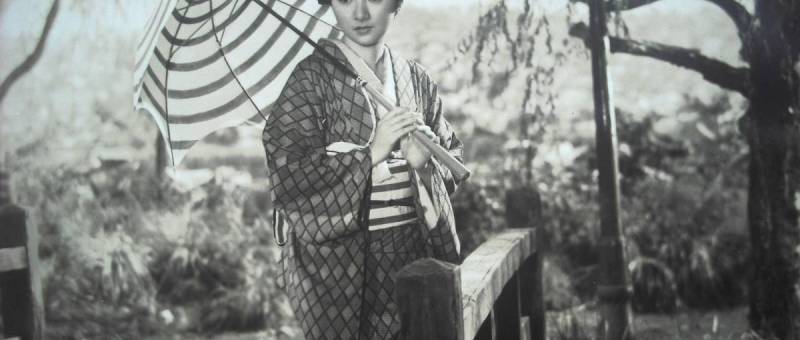
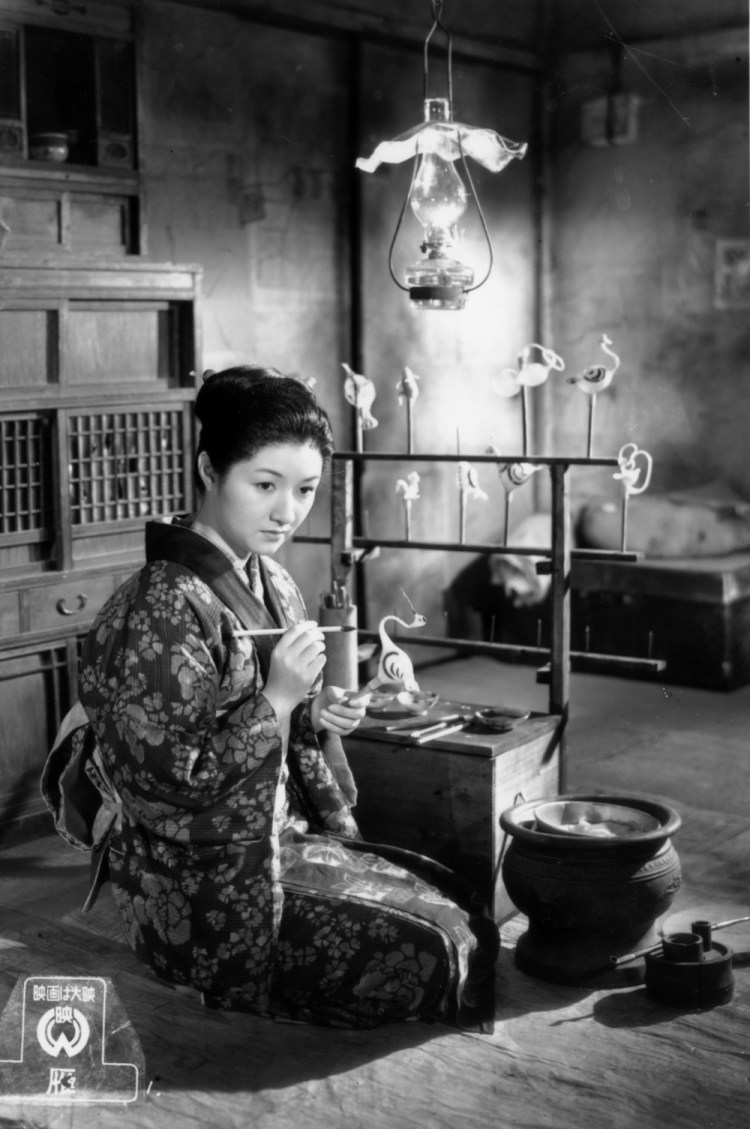 In the extreme turbulence of the immediate post-war period, it’s not surprising that Japan looked back to the last time it was confronted with such confusion and upheaval for clues as to how to move forward from its current state of shocked inertia. The heroine of Shiro Toyoda’s adaptation of the