The complete programme for the Neuchâtel International Fantastic Film Festival 2017 has now been revealed and as reported, the festival will be paying homage to the late director Seijun Suzuki with a retrospective featuring ten of his best loved films.
Detective Bureau 2-3: Go to Hell Bastards is everything its name suggests – crazy, cartoonish fun as a Joe Shishido goes undercover, hangs out in Christmas themed cabaret bars and sings a few songs all the name of justice (and a paycheck). Review.
Youth of the Beast proved a turning point in Suzuki’s career. No longer content to play along with restrictive studio codes, Suzuki embraces his talent for colourful absurdism as Shishido once again finds himself undercover in the yakuza underworld.
Tokyo Drifter found few fans among studio bosses, but takes Suzuki’s psychedelic use of colour to all new highs in the story of a gangster unable to escape from his violent past.
Making another foray into wartime desperation, Suzuki adapts Taijiro Tamura’s Gate of Flesh with Shishido as a washed-up former soldier driving a wedge between a group of fiercely loyal prostitutes. Review.
The one that got him fired from Nikkatsu, Branded to Kill is the absurd story of a steely hitman with an addiction to the smell of cooking rice who finds his life derailed by a beautiful woman and a butterfly. Review.
Zigeunerweisen marks Suzuki’s return to filmmaking after the long series of court battles following his dismissal from Nikkatsu. The first in the Taisho Trilogy, Zigeunerweisen stars Yoshio Harada as one third of an eerily surreal love triangle. Review.
The follow up to Zigeunerweisen, Kagero-za stars Yusaku Matsuda in a ghostly tale of love and writer’s block. Review.
Suzuki takes a wry look at the origins of fascism in Fighting Elegy as the young men of his age engage themselves in “manly” pursuits but are obliged to sublimate their other desires into a lust for violence. Review.
Joe Odagiri and Zhang Ziyi star in the bizarre yet infectious folktale inspired musical, Princess Raccoon.
For his final film, Pistol Opera, Suzuki revisits Branded to Kill but replaces Shishido with a female assassin longing to be number one.
The full programme for the Neuchâtel International Fantastic Film Festival which takes place between 30th June and 8th July, 2017 is now available on the official website. You can also keep up with all the latest news via the festival’s Facebook page, and Twitter account.
When it comes to law enforcement in Korea (at least in the movies), your best bet may actually be other criminals or “concerned citizens” as the police are mostly to be found napping or busy trying to cover up for a previous mistake. The Chaser (추격자, Chugyeogja) continues this grand tradition in taking inspiration from the real life serial murder crime spree of Yoo Young-chul , eventually brought to justice in 2005 after pimps came together and got suspicious enough to make contact with a friendly police officer.
Former cop turned petty pimp Joong-ho (Kim Yun-seok) has a problem. His girls keep skipping out on their debts. Or so he thinks – rousing one of his last remaining “employees”, Mi-jin (Seo Young-hee), from her sickbed (and unbeknownst to him calling her away from her seven year old daughter), Joong-ho finds a phone belonging to a missing girl and realises the last number called is the same as the one he’s about to send Mi-jin off to. Suspicious, Joong-ho rediscovers his detective skills and notices this particular number all over his books. Thinking the john is kidnapping his girls to sell them on, Joong-ho hatches a plan to track Mi-jin and have a word with this bozo but unsurprisingly nothing goes to plan. Mi-jin has fallen into the grip of a vicious serial killer, Young-min (Ha Jung-woo), but may still be alive if only Joong-ho can find her in time.
Joong-ho is not a good guy. Maybe he’s not the worst of his kind but as a former law enforcement official turned unsentimental exploiter of women, Joong-ho is an unlikely saviour. His primary motivation is, unsurprisingly, commercial as the look of concern he gives to one of his ladies encountering a dangerous client betrays, the kind of irritation a taxi driver might display on noticing a large scratch on his expensive car rather than a recognition of the pain and suffering those cuts and bruises bear witness to. He never stops to consider that something untoward has befallen the missing women and is, in one sense, relieved when he thinks they’ve been sold on rather than just skipping out on him. Throughout his quest to find Mi-jin which sees him forming an unexpected paternal bond with her young daughter, Joong-ho begins to rediscover his humanity as he’s forced to confront the similarities between himself and this deranged psycho killer.
Like his real life counterpart, Young-min, is a sexually frustrated misogynist who begins his social revenge through killing off the wealthy before moving on to the less easily missed including local prostitutes which is what ultimately proves his downfall when the various area pimps begin to connect the dots. In actuality it turns out Young-min has previously been questioned in connection with a murder but was released due to lack of evidence. Likewise, this time around the police are not very interested in capturing him and Young-min is once again returned to society due to some political concerns which result in pressure from above. As if having charmed luck with the police weren’t enough, Young-min also exploits the other cornerstone of South Korean society – the church, through which he recruits his victims, subverting their trusting religiosity with his violent perversion.
For a film which largely lives on the chase, winding through the darkened, rain drenched backstreets of downtown Seoul, Na adds in plenty of twists and turns as the case proceeds down one dingy alleyway after another. Joong-ho’s gradual reawakening as a human being rather than cold blooded human trafficker is accompanied by the gradual reveal of his counterpart’s dangerous need for validation through violence but also by the realisation of his total powerlessness in the face of such a nebulous and faceless threat. The police won’t help (perhaps if they’d investigated those parking violations a little more assiduously all of this could have been avoided), the Church is just an ironic distraction, and the politicians are busy squabbling amongst themselves. Joong-ho is an unlikely figure of salvation, but he remains the last best hope for justice so long as he can avoid becoming that which he seeks.
Sion Sono has been especially prolific of late, though much of his recent output has leant towards the populist rather than the art house. Having garnered a reputation for vulgar excess over the last twenty years or so, Sono returns to his Tarkovskian roots with The Whispering Star (ひそひそ星, Hiso Hiso Boshi) – a contemplative exercise in stillness which has more in common with The Room or Keiko Desu Kedo than the ironic outrageousness of Love & Peace. Yet, in an odd way love and peace are what it’s all about as a lonely android delivers long love letters from the distant past to a dying world in which humanity itself will soon be little more than a memory.
Yoko Suzuki (Megumi Kagurazaka), machine no. 772 , is an employee of Space Parcel Services, delivering packages the old-fashioned way from one human to another all across the universe. Following a series of natural disasters and other errors, humanity is no longer the dominant force amid the stars but makes up only 20% of the population. The other 80% belongs to humanity’s children – the androids or other AI based lifeforms who will soon eclipse their forebears given that humans do not generally live for more than 100 years whereas robots are forever “young”.
Yoko’s only companion aboard her homely spaceship is the dashboard computer, 6-7 M.I.M.E. who seems to have gone quite mad with boredom. Eventually Yoko realises that the problem is that M.I.M.E has descended into literal introspection – all its sensors are pointed inside not out and it’s hopelessly distracted by equally literal “bugs” trapped in the ceiling light. Living out her dull days, Yoko records her thoughts on a reel-to-reel tape hoping to entertain the next “Yoko” who rents this ship (or perhaps she is the next Yoko, listening and continuing the project) while travelling between planets delivering one of the remaining 82 parcels on her docket.
More human than human, Yoko is oddly fascinated by her human customers. An accidental anthropophile, Yoko states that she chose this ship because of its “convenient” features which include a kitchen and a host of other home comforts. Only they’re home comforts an android does not need. Dressing in elegant feminine fashions, Yoko’s other main hobby is housework – dusting the control deck, scrubbing the floors, putting up with the leaking tap, and the ship itself is more like a dainty flying cottage than your average utilitarian space vessel with a pretty porch and tiled roof.
Yoko’s “nostalgia” is for a world she never knew and believes she cannot understand. Space exploration has long since ended, and with it, she tells us, went humanity’s centuries old romance with the outer limits. Teleportation has been mainstream technology for quite some time so why do humans spend vast amounts of money on sending parcels to each other which may take years to arrive when they could just press a button for next second delivery? Yoko doesn’t know, she thinks it must be among the things an android cannot understand and that these things themselves must be the very thing which defines her creators.
Stopping off at various planets, Yoko begins to learn more about humans and the world that they destroyed or was destroyed for them. Shooting once again in the wasteland surrounding Fukushima, Sono explores the ruined landscape, eerily timeless with its broken signs and still stocked stores. Using displaced locals as his extras he has Yoko deliver packages to old ladies still manning tobacco stands on silent beaches, elderly store owners, fathers and sons, or even gum chewing little boys armed with real film cameras sitting on disused station platforms to receive something that was probably dispatched before they were even born. Yoko does not begin to look inside the packages for quite some time but observes that they each seem to provoke a profound emotional reaction in the recipients.
From her first encounter with an eccentric man who invites her out for a drink and tries to stop her space ship leaving by spray painting the window, urging her to come back soon because she may have forever but he will soon be gone, Yoko begins to understand the strange transience of human existence. The old man extols the virtues of bicycles and walks with a tin can stuck to the bottom of his shoe because he likes the sound it makes in this maddeningly silent world. Yoko stores her memories in a more absolute way but for humans the objects are the path to the past. The parcels she delivers have weight because the journey was so arduous. Teleportation may be efficient, but something that takes no time has no meaning.
Absurdly, Yoko’s days are divided by title cards bearing the names of the days of the week. Another human affectation or strange hangover from an obsolete world, this decidedly old-fashioned way of dividing time, something now rendered irrelevant to “immortal” machines who (supposedly) feel no boredom or melancholy, is one of many strange anachronisms from the AA batteries which are Yoko’s main source of power to the cheerful dashboard companion shaped liked a classic 1930s wireless and unused manual control wheel which might have been ripped from a small pirate ship. This timeless world is filled with longing for a forgotten, half made-up past inherited from another, unknowable age.
Yet Yoko does begin to learn what it is to be human, even if the knowledge may bring nothing but the additional burden of melancholy. Humanity destroys itself and leaves nothing to its children other than an inescapable sense of loss for a world they never knew. It sounds oddly familiar, like the echoes of an age-old tragedy but there is a kind of hopefulness in Sono’s black and white wasteland for the things which endure even when everything else has been washed away.
Ah, youth. It explains so many things though, sadly, only long after it’s passed. For the young men who had the misfortune to come of age in the 1930s, their glory days are filled with bittersweet memories as their personal development occurred against a backdrop of increasing political division. Seijun Suzuki was not exactly apolitical in his filmmaking despite his reputation for “nonsense”, but in Fighting Elegy (けんかえれじい, Kenka Elegy) he turns a wry eye back to his contemporaries for a rueful exploration of militarism’s appeal to the angry young man. When emotion must be sublimated and desire repressed, all that youthful energy has to go somewhere and so the unresolved tensions of the young men of Japan brought about an unwelcome revolution in a misguided attempt at mastery over the self.
Kiroku (Hideki Takahashi) is an impulsive young man with a magnetic personality who, like many of his age, has found himself at a military training school designed to toughen up the boys of Japan for the glorious services they will later be expected to provide for the emperor. Very much into his training, Kiroku submits himself to the rigid codes of the school which prize virility and encourage competitive brawling between the boys. Despite the strict prohibition on soft stuff like getting it on with girls, Kiroku has developed a heavy crush on the daughter at his Catholic boarding house, Michiko (Junko Asano). Delighting in her piano playing, Kiroku cannot find a permissible way to express his desires and so records them in a very frank diary. Michiko, it seems, may return his feelings but times being what they are cannot say or do anything until he declares them and so things are left to simmer between the two with no useful place to go.
Despite belonging to a military school, Kiroku’s main outlet is in a kind of extracurricular club which is obsessed with being manly but also with rebelliousness and showing how individualist they can be through a series of challenges which often involve flagrantly breaking the rules of the school. Kiroku’s violent escapades eventually get him expelled and sent to a different institution a few towns over which explicitly prizes the “Aizu Spirit”. By now truly invidualist in his isolation, Kiroku is disappointed in the tenets of the “Aizu Spirit”. Calling all of his fellow students “wild monkeys”, Kiroku makes some odd comments on the nature of oppression and dominance by pointing out that the students all willingly submit to the teacher who demonstrates authentic authority, but refuse to respect the ones who simply don’t have it. This is, in a sense, the opposite of the philosophy which Kiroku has come to follow in which pleasure comes from rebelliousness and the natural tendency of the young to resist all forms of constraining power.
However, the most primal constraining force acting on Kiroku is sexual desire as a running joke finds him consistently bothered by unwanted erections which he then has to hide from his comrades to avoid embarrassment. Kiroku is quite passionately obsessed with Michiko to the point that he thinks of little else despite the total prohibition on female contact advanced by his military training. His diaries are full of notes about how he dreams of her delicate hands though he lies about refusing to masturbate in favour of pouring all of his virility into his violent pursuits. The situation is complicated by the presence of Christian religion which places a further taboo on the young people’s desires as they glance guiltily at the crosses on the walls each time impure thoughts arrive. Michiko is not much better off, though her own frustrations result in internalised rather externalised violence which looks set to rob her of her own happiness but lacks the all encompassing destructive element of Kiroku’s unresolved energy.
Suzuki’s message is clear, if somewhat blunt. If only these young men and women had been allowed to work out their frustrations in a more normalised way, the entire folly of warfare and imperialist expansion could have been avoided. The Christian context does add to the levels of guilt and repression, but it is one layer further than the average farm boy from rural Japan who suddenly found himself caught up in the fascist movement would have experienced. Events reach their natural conclusion at the end of the film as Kiroku reads a newspaper report of the declaration of martial law in Tokyo following the February 26th Incident in which a cabal of hotheaded young military officers launched a broadly leftwing yet authoritarian coup designed to delegitimise the government and restore power to the emperor in a return to paternalistic feudalism. His romantic dream shattered, Kiroku recognises a kindred spirit and finds a calling in the call to arms but his vocation is a false one in its negation of everything it is to be alive. The path of militarism leads only to death and destruction in its pointless and nihilistic quest to overcome rather than satisfy ordinary desires and the forces which divide Kiroku and Michiko are those same forces which bring such overriding misery to a society caught in its own difficult adolescence.
Absolute power corrupts absolutely, but such power is often a matter more of faith than actuality. Coming at an interesting point in time, Han Jae-rim’s The King (더 킹) charts twenty years of Korean history, stopping just short of its present in which a president was deposed by peaceful, democratic means following accusations of corruption. The legal system, as depicted in Korean cinema, is rarely fair or just but The King seems to hint at a broader root cause which transcends personal greed or ambition in an essential brotherhood of dishonour between men, bound by shared treacheries but forever divided by looming betrayal.
Tae-soo (Jo In-sung) is the classic poor boy made good. His mother abandoned the family when he was only six because she couldn’t cope with his father’s rampant criminality. Do bad things and you’ll go to hell, she told her son but perhaps Tae-soo already feels himself to be there and so doesn’t worry so much about those “bad things” that are a normal part of his life. The top fighter at his school, Tae-soo finds his calling when he sees his tough as nails father kneeling on the ground, pleading furiously in front of a skinny bespectacled man wearing a fancy suit. The man is a prosecutor and walks with the swagger of someone whose every action is government backed, his authority is absolute.
Tae-soo knuckles down, starts studying and gets into Seoul University. An accidental brush with the pro-democracy protest movement lands him in the army but thanks to lying about his hometown on his registration form he gets an easy posting meaning he has even more time to study for the bar. Everything seems to fall into place – he qualifies, gets his dream job, even marries a beautiful, intelligent, feisty woman who also happens to come from a wealthy elite family. The poor boy from Mokpo has made it, but prosecuting isn’t all he thought it would be. Tae-soo is a civil servant which means, like it does the world over, that he’s overworked and underpaid. When he rubs up against a dodgy case he’s made an offer he can’t refuse – drop it, and get a promotion to the big leagues where celebrity prosecutors enjoy lavish lifestyles filled with parties, drinks, and pretty girls. He knows it’s not right, but this is what he’s always wanted and Tae-soo is soon seduced.
Tae-soo’s seduction causes him a few pangs of conscience, but he was, as he was assumed to be, easy pickings. The case in question is a sickening if ordinary one – a teacher has molested a pupil but as the teacher is the son of an influential man and the single mother of the girl in question has learning difficulties, the case has been made to go away. Tae-soo is outraged, hauls the man back in, re-opens the case and obtains additional evidence and witness testimonies which confirm the girl’s story and will have the teacher sent to jail. His seduction is easy – they simply offer to make him one of them, and Tae-soo agrees, sacrificing not only this little girl but potentially many others for his own greed and satisfaction.
Tae-soo is redeemed, in a sense, thanks to his association with a childhood friend who helps him out by taking care of the teacher through “unofficial” means. Choi Du-il (Ryu Jun-yeol) is Tae-soo’s flip side, another poor boy done good but this time on the other side of the law. An ambitious gangster, Du-il is also loyal, just, and honourable – at least within a gangster code. The “errand boy” for this group of thuggish lawyers who behave like gangsters while the gangsters act like politicians with literal rather than metaphorical attack dogs, Du-il senses he’s walking a dangerous path to nowhere at all and has only his friendship with Tae-soo to believe in.
The genuine bond between the two men is one of the few redeeming features of Tae-soo’s increasingly compromised existence in which he sells his soul for the false approval of the man he regards as a “King” in the figure of all powerful, amoral chief prosecutor Han (Jung Woo-Sung). Tae-soo’s story is a conventional one of a basically good yet weak man struggling with a choice he’s made against his better judgement yet it’s not until it’s cost him everything he holds dear that he starts to reconsider.
Han Jae-rim weaves in archive footage and musical cues to evoke the changing eras which will be more obvious to Korean audiences – a case in point being the dramatic positioning of the suicide of former president Roh Moo-hyun in 2009. Roh had been a progressive president, often unpopular during his time in office thanks to his inability to pass his policies, and was later tarnished with a corruption scandal but found his reputation posthumously reappraised following his death which was seen both as a declaration of innocence and as a symbol of his deep love for his country and its people. Tae-soo’s change of heart seems to accelerate after Roh’s suicide which drew vast crowds of mourning (and knowing smirks from sleazy prosecutors Han and his sidekick Yang) as his own run in with death prompts a re-evaluation of his place in the grand scheme of things.
The King ends on a rather trite message – that every man is his own king and in the end the choices are all yours (though it seems to hope the choices made will be more altruistic than those of Han, Yang, and the earlier Tae-soo). The power wielded by men like Han is fragile – they need lackies, and if they can’t get them the system crumbles, but they’re also hollow, frightened opportunists who are so desperate they’re even bringing in shady seeming shamans to avoid having to make difficult policy decisions. Tae-soo turns their own tricks back on them with masterstrokes of irony, vowing revenge and perhaps getting it, along with self respect and a re-orientated moral compass but then again, power abhors a vacuum.
Screened as part of a season of teaser screenings for the upcoming London Korean Film Festival 2017.
The family drama went through something of a transformation at the beginning of the 1980s. Gone are the picturesque, sometimes melancholy evocations of the transience of family life, these families are fake, dysfunctional, or unreliable even if trying their best. Morita’s The Family Game, released in 1983, kick started this re-examination of the primary social unit through attacking it Teorema-style as the family’s tutor rips through their generic middle-class existence by adopting each of their pre-defined social roles in turn. One year later Sogo Ishii’s The Crazy Family (逆噴射家族, Gyakufunsha Kazoku) turns the director’s punk aesthetic to a similar theme but this time the family destroys itself in its earnestness to live the Japanese dream in the increasing economic possibility of the pre-bubble era. The Kobayashis are the perfect example of the “typical” aspiring family, but what is the “sickness” that the family patriarch is so afraid of, who (or what) is it that is sick, and if it is possible to be “cured” what would such a cure look like?
Mr and Mrs Kobayashi have achieved their dream – getting out of the danchi and into a suburban house that they own (or will own, once the mortgage is paid off) outright. Mr. Kobayashi, Katsukuni (Katsuya Kobayashi), is a typical salaryman while his wife Saeko (Mitsuko Baisho) stays at home to look after their two children – middle schooler Erika (Yuki Kudo) and her older brother Masaki (Yoshiki Arizono), currently a “ronin” studying to retake his university entrance exams determined to get into the prestigious Tokyo University.
Blissfully happy, the family are adapting well enough to their new home but there’s always that lingering feeling of impending doom, as if all this is too good to be true. Sure enough, Masaki’s adoption of a stray dog alerts the family to a more serious problem – termites. Suddenly terrified that something is literally trying to eat his house out from under him, Katsukuni goes on a fumigating rampage but the termites are not the only source of tension. Turning up right on time, grandpa arrives for a visit after falling out with Katsukuni’s older brother with whom he’d been living. The Kobayashis moved so that the kids could finally have their own rooms (and mum and dad some privacy) but grandpa shows no signs of leaving meaning Katsukuni is sharing with his dad and Saeko has been relegated to Erika’s room.
The house is what the family has always dreamed of – owning one’s own home is no mean feat for those raised in the post-war era, but it’s still a small environment for five people even if much nicer than their tiny city flat. More than just a structure it represents everything the ordinary family dreams of – peace, prosperity, harmony and a life lived in tune with the social order. Katsukuni’s fears that a mysterious “sickness” is plaguing his loved ones is a sign of his discomfort with this ordered way of living. Despite their stereotypical qualities, there is something not exactly right about each of his “ordinary” family members – mum stripteases for grandad’s friends, precocious teenage daughter Erika is not sure if she wants to be a pro-wrestler or an idol and spends all of her time “idolising” her favourite stars, and son Masaki has become a proto-hikikomori so obsessed with studying that he’s taken to stabbing himself in the leg every time he starts to nod off so that he can keep hitting the books rather than the hay.
Yet for all that it’s Katsukuni himself who is the most “sick” in his inability to reconcile himself to social conformity. Despite being apparently successful, he has deep seated feelings of inadequacy which convince him that something is going to go wrong with the family he feels a duty to protect. Wanting to be a good husband and father, Katsukuni thinks he has to “cure” his family of their strange behaviours and make them the sort of people who live in nice houses in the suburbs, but only succeeds in driving himself out of his mind.
Grandpa’s antics have the other family members well and truly fed up but Katsukuni feels just as much filial piety as he does responsibility towards his own children and cannot bring himself to tell his father to go and so he hits on an extreme solution – he’s going to dig a basement, by hacking up the living room floor and pushing downwards, towards hell. Surprise, surprise, his dream home is atop a nest of termites, the bugs are literally working their way in but, ironically enough, Katsukuni is the biggest termite of them all as his very own “hill” begins to appear just in front of the sofa while he tries to find a space for the older generation in a modern home.
Grandpa is an unwelcome manifestation of the inescapable past. When everything goes to hell and the house becomes a battlefield, grandpa manages to dig out his wartime uniform complete with a sword and attempts to assume command by dividing the house into sectors before capturing and trussing his own granddaughter whom he then threatens to rape and torture, apparently eager to revisit his Manchurian military service and all of its implied cruelties. When Katsukuni believes that all is lost and his family can’t be saved he opts for the most culturally appropriate solution – group suicide, but his family won’t play along. Paranoid and delusional, they turn on each other, defending themselves with icons of their respective roles, venting their frustrations and long held grudges in one prolonged battle of violent madness.
When the air finally clears there is only one solution – the house has to go. The desire for a “conventional life” or the feeling of not achieving it is, in that sense, “the sickness” which has infected the Kobayashi family. The finale sees them finally living happily once again but literally “outside” of the mainstream, in a totally open world where there is space for everyone – all quirks embraced, all extremes born. Everyone has their place but the family remains whole, freed from the burden of chasing an unrealisable dream.
Now in its 11th year, Japan Cuts returns to Japan Society New York from 13th to 23rd July bringing some of the best in recent Japanese cinema with it as well as a host of special guests and events. The festival will open with Yoshihiro Nakamura’s ninja drama, Mumon: The Land on Stealth on 13th July while award-winning animation In This Corner of the World will close the proceedings on July 23. The full lineup is as follows:
Yoshihiro Nakamura’s ninja epic Mumon: The Land of Stealth finds the secretive warriors uncomfortable with the new order but young mercenary Mumon has his own problems with a new wife who values her material comforts. Director Yoshihiro Nakamura will be present on the opening night to present the film.
Kyoko Miyake’s documentary Tokyo Idolsfollows an aspiring star as she makes her way through one of the most controversial areas of the Japanese entertainment industry.
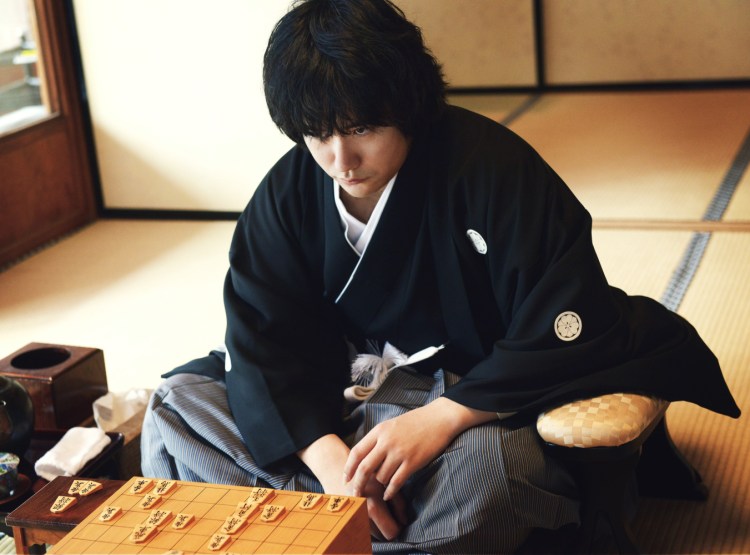
Kenichi Matsuyama stars in a moving biopic of the real life shoji star who gave it all for the game in Satoshi: A Move for Tomorrow. Review.
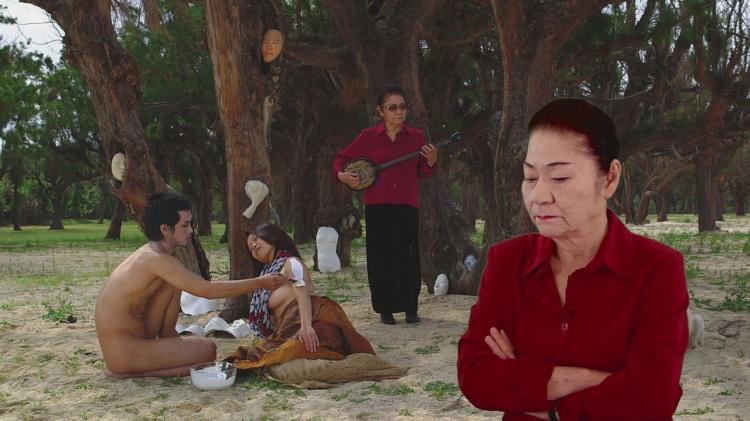
The latest film from Okinawan filmmaker Go Takamine, Hengyoro (Queer Fish Lane) follows two old men living in the village where those who failed to die continue to exist as they set off on a strange journey to escape persecution after being falsely accused of stealing something from a local store.
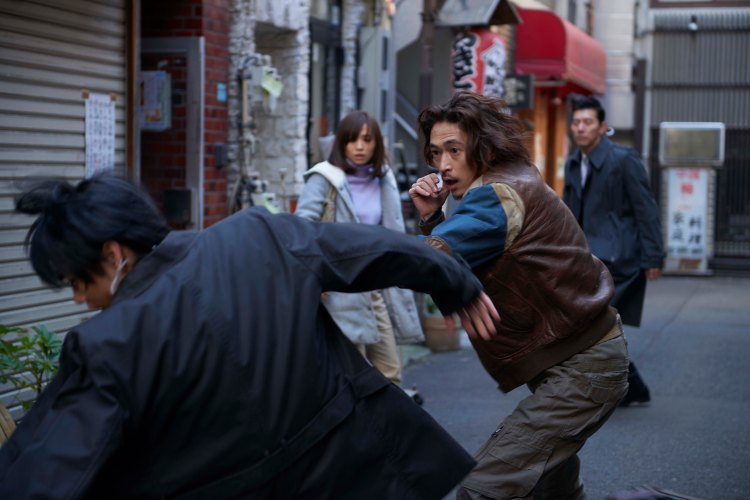
Yosuke Kubozuka plays a depressed boxer who finds friendship in the Alley Cat of the title only to realise he’s being two-timed with a grungy mechanic.
Megumi Sasaki’s documentary A Whale of a Tale takes an in-depth look at the controversial practice of whaling.
Tetsuya Fujiwara and Hideaki Ito star in Memoirs of a Murderer – an adaptation of Jung Byoung-Gil’s Confession of Murder directed by Yu Irie. A mysterious man confesses to a series of unsolved crimes shortly after the statute of limitations passes and becomes a media sensation but the cop who failed to solve the case just can’t let it go.
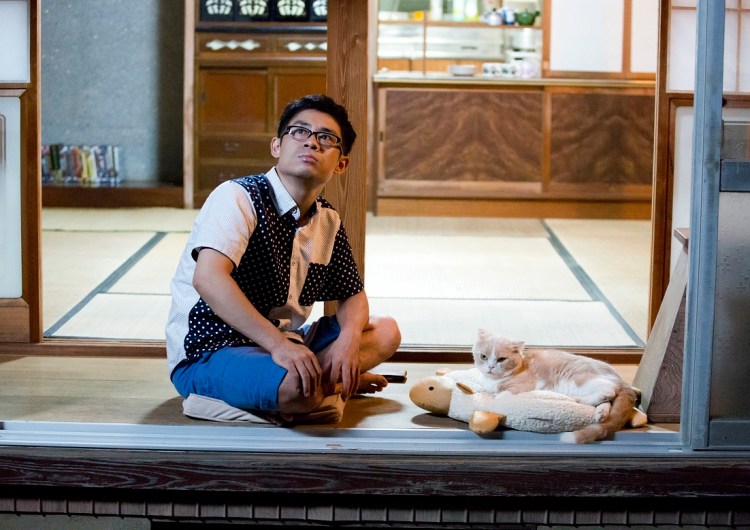
Based on the hit smartphone game Neko Atsume House stars Atsushi Ito as a blocked writer who moves to the country hoping to stimulate himself with a change of scene only to be immediately adopted by a bunch of demanding cats!
Tai Kato’s underseen documentary The Ondekoza plays in the classic strand in its new 4K restoration and centres on the taiko drummers of Sado Island, mixing training footage with their famously intense performances for a feverish visual feast.
Shingo Matsumura’s gentle Love, Goodbye, and Hawaii is the story of a technically broken up couple who still live together and are forced to face their lingering feelings when one of them meets someone else.
Kenji Yamauchi adapts his own stage play skewering the middle classes as a boring dinner party gets progressively out of hand exposing each of their flaws, weaknesses, and well hidden secrets in At the Terrace. Review.
Produced by Shinji Aoyama and Takenori Sento, Sora Hokimoto’s debut feature Haruneko is a tale of life and death told through music and light in a mysterious forest.
Kei Shichiri revisits Before the Day Breaks ten years on and adds all-new sound and imaging. Based on the manga by Naoki Yamamoto, Once Upon a Dream follows a girl who sleeps too much but never feels as if she has slept enough.
The first film made outside of Japan for veteran filmmaker Kiyoshi Kurosawa, Daguerrotype stars Tahar Rahim in a classic European gothic ghost story perfectly melding this classic genre with Kurosawa’s uniquely creepy visuals.
Konrad Aderer’s documentary Resistance at Tulle Lake tells the story of 12000 Japanese Americans labelled “disloyal” and incarcerated at the Tule Lake Segregation Center for refusing to obey the government’s internment order.
Theatre director Junko Emoto makes her film debut with The Extremists’ Opera adapted from her own autobiographical novel centring on an all female performance troupe.
The third in a series of films adapted from the works of Hakodate native novelist Yasushi Sato, Nobuhiro Yamashita’s Over the Fence stars Joe Odagiri as a recently divorced man returning to his home town to start over but failing until he meets eccentric bar girl/zookeeper Satoshi played Yu Aoi. Joe Odagiri is a special guest at this year’s festival and will be attending in person to introduce the film as well as collect this year’s CUT ABOVE award.
Joe Odagiri stars as the artist Léonard Tsuguharu Foujita who became a part of the ’20s Paris art scene before returning to militarist Japan in 1933 and providing artwork for the propaganda movement. Joe Odagiri will also attend in person for an introduction and Q&A.
Elite public school boy Teiichi dreams of becoming Prime Minister in Akira Nagai’s manga adaptation, Teiichi Battle of Supreme High but finds his (lack of) ideology questioned by a well meaning working class transfer student. Review.
An adaptation of Keigo Higashino’s 2013 novel, Shippu Rondo sees Hiroshi Abe play a research scientist hot on the trail of a stolen biological weapon in a slapstick filled comedy thriller.
Birds – Directed by Koji Fukada this 8 minute short features an awkward encounter between a wife, her husband, and his mistress.
We Are Shooting – Raita Minorita’s 26 minute short is a behind the scenes tale of the trials and tribulations of movie making.
White T-shirt and Feeble Things – directed by Yun Su Kim, White T-shirt and Feeble Things is the story of a man who only wears plain white T-shirts but can’t keep any of them clean.
Breathless Lovers – Directed by Shumpei Shimizu Breathless Lovers is the story of 23-year-old Toshiyuki chasing his boyfriend’s ghost across Tokyo.
An Iranian student and depressed bartender face a series of romantic and cross cultural confusions in Takuro Nakamura’s West North West. Actresses Hanae Kan and Sahel Rosa will attend the screening for an introduction and Q&A. Review.
Depressed teenager Sakura (Hanae Kan) has a complicated relationship with Americanisation thanks to growing up near Japan’s biggest mainland American military base but an encounter with the half-American daughter of her mother’s boyfriend prompts a reconsideration of her life goals in Daisuke Miyazaki’s Yamato (California). Review.
Sion Sono’s entry into Nikkatsu’s Roman Porno Reboot Project, Anti-Porno is the story of celebrity novelist Kyoko and her strange relationship with her assistant Noriko.
The latest film from Yuki Tanada, My Dad and Mr. Ito, is a tale of cross-cultural romance as an elderly father moves in with his middle-aged daughter only to find she is already living with a much older man.
Summer Lights marks the Japan debut for French filmmaker Jean-Gabriel Périot.A Japanese filmmaker living in Paris returns to Japan in order to make a documentary about Hiroshima and ends up on a journey with a mysterious woman.
The first in the Taisho Trilogy, Zigeunerweisenis a late career masterpiece from Seijun Suzuki centring on a university professor’s odd relationship with a roguish friend and a mysterious geisha. Review.
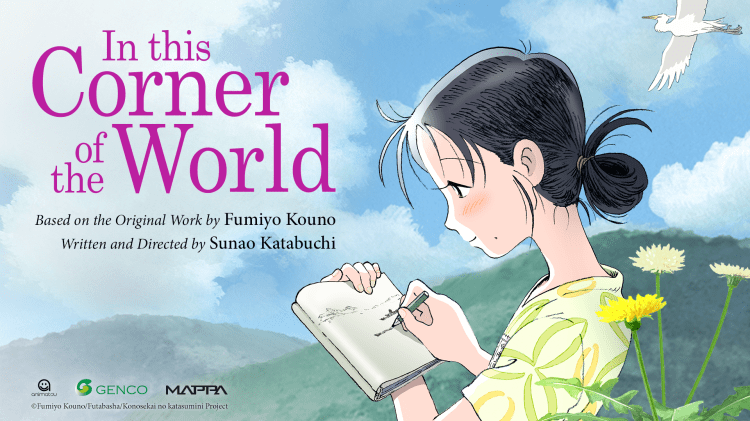
Sunao Katabuchi’s award-winning animation In This Corner of the World is the story of one ordinary woman in World War II Hiroshima. Producer Taro Maki will be present for a Q&A after the film.
Japan Cuts takes place at Japan Society New York, from July 13 – 23, 2017. Ticket links and full details for all the films can be found on the festival’s official website, and you can keep up with all the latest news as well as the year round film programme via the Japan Society Film Facebook page and Twitter account. Tickets are already on sale to members with public sales available 12th June.
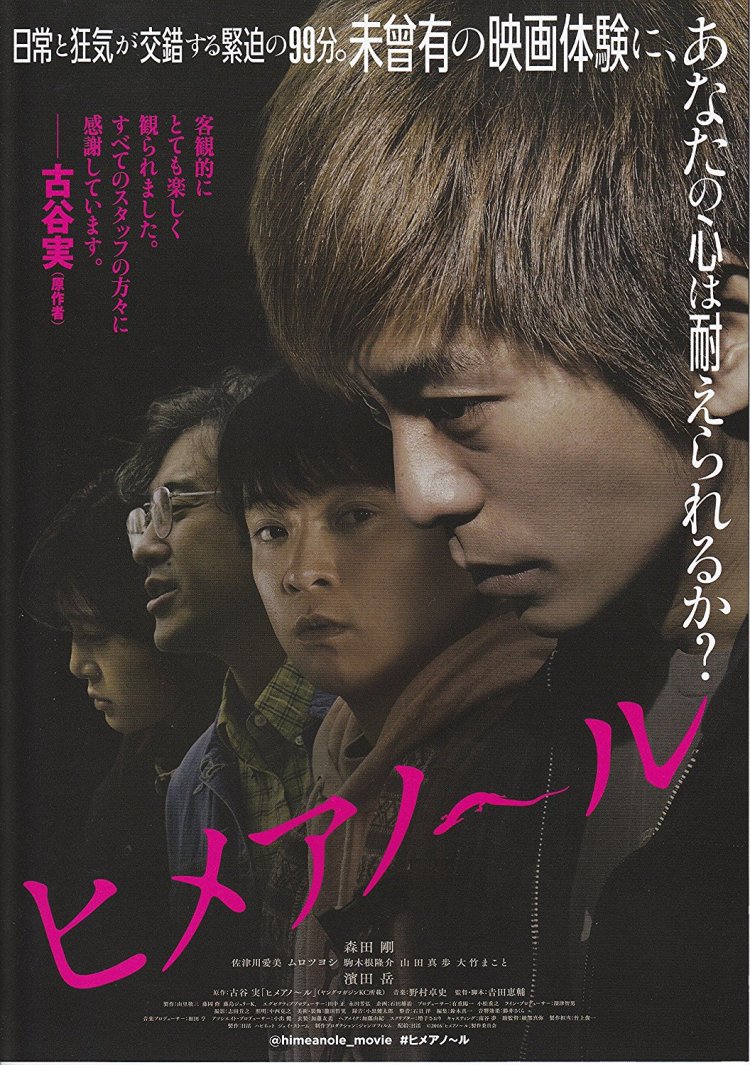
Some people are odd, and that’s OK. Then there are the people who are odd, but definitely not OK. Hime-anole (ヒメアノ~ル) introduces us to both of these kinds of outsiders, attempting to draw a line between the merely awkward and the actively dangerous but ultimately finding that there is no line and perhaps simple acts of kindness offered at the right time could have prevented a mind snapping or a person descending into spiralling homicidal delusion. To go any further is to say too much, but Hime-anole revels in its reversals, switching rapidly between quirky romantic comedy, gritty Japanese indie, and finally grim social horror. Yet it plants its seeds early with two young men struggling to express their true emotions, trapped and lonely, leading unfulfilling lives. Their dissatisfaction is ordinary, but these same repressed emotions taken to an extreme can produce much more harmful results than two guys eating stale donuts everyday just to ask a pretty girl for the bill.
Okada (Gaku Hamada) is a young man lost. He has a dead end construction job he doesn’t like and isn’t particularly good at, but treading cement all over the finished floors at least helps him bond with his mentor, Ando (Tsuyoshi Muro), who seems to view him as a friend even if constantly referring to him as “Okamura”. Okada takes the opportunity to explain his malaise to Ando – that he feels his life slipping away from him in its emptiness, going through the motions with no real hobbies or girlfriend to give his existence meaning. Ando does not really understand this, he says dissatisfaction is natural and the driving force of all life but, on the other hand, he is not particularly dissatisfied because he lives for love!
Ando has a crush on a girl at the local cafe, Yuka (Aimi Satsukawa), who actually hasn’t noticed him because she’s pre-occupied with the blond guy who got there before Ando and sits outside everyday just staring at her. Luckily or unluckily, the guy in question, Morita (Go Morita), is an old high school acquaintance of Okada’s and so Ando asks him to find out what’s going on with this scary looking guy and his angelic lady love.
So far, so Japanese indie rom-com, but when the title card flashes up about a third of the way in, we’re in very different territory. Suddenly the colour drains from the screen and Yoshida changes his aesthetic and shooting style almost entirely. Gone is the comforting, slightly washed out colour scheme and the static, middle-distance camera of the opening. Now we are the voyeur, held helpless behind Yoshida’s erratic shaky cam, hiding behind the bins as Morita goes about his bloody business. Morita’s world is dark yet realistic, he’s shot and positioned with the arch naturalism familiar to the Japanese indie and the violence he inflicts is not movie violence, it is shocking, sickening, and visceral.
Hime-anole does not shy away from the consequences of its actions. This is, in a way, its point. At one time or another everyone concludes the increasingly surreal events they become engulfed in must be all their fault because they all have at some point acted in a way they do not quite approve of. Guilt is another of the emotions that is hard to express, especially when it’s mixed with humiliation or fear, but left unaddressed it is these corrosive agonies which develop into deep psychoses. Morita, a violent sociopath, was once (or so it would seem) an ordinary young boy who liked video games and had few friends. Perhaps if he hadn’t been the victim of humiliating, sadistic treatment, or if someone had found the courage to stand up for him, none of this might be happening.
Then again, the world is a strange place filled with people who have trouble deciding where the lines are when it comes to appropriate behaviour. Poor Yuka seems to have become something of a nutter magnet, stalked by two guys at the same time and chatted up in the street by persistent suitors who only leave her alone when they realise she’s waiting for another man. Okada is the only man who’s treated her like a regular human being for a very long time so it’s no surprise that she begins to prefer him to his awkward friend. Ando is, it has to be said, odd. Convinced Yuka is the one for him yet completely uninterested in her feelings, he vows to persevere. Yet for all his talk of chainsaws, Ando is basically harmless (to others at least) and just another lonely guy who doesn’t know how to express himself in way in which he will be understood. Morita, by contrast, is instantly creepy and has no interest in connection, he only wants to take and possess in a kind of ongoing vengeance for truly horrific events in his childhood following which something inside him became very broken.
That Hime-anole ends with a Brazil-style fantasy only adds to its strangely melancholy air as it insists on sympathy for the devil even whilst showing each of his sadistic crimes for the ugly, bloody messes they really are. Maybe the reason everybody feels they’re to blame is that in some way they are yet everyone has done things they regret or aren’t proud of, wishing they’d done things differently or managed to find the courage to do what they thought was right rather than choosing to protect themselves or keep their head down when they could have saved someone else pain. Betrayals can be small things, but they fester – like those unspoken emotions which were making our guys so unhappy in the first place. There are no innocents in Hime-anole save perhaps for the ones pushed further than they could endure, but there are those finally facing up to their own flaws and attempting to do things differently now they know better. If that’s not progress, what is?
It’s tough when parents don’t approve of their children’s romantic partners, but fortunately most realise there’s nothing they can do about it so the best thing is to feign civility (and avoid saying I told you so when it all goes wrong). Unfortunately the older generation of Kim Jin-young’s Enemies In-Law (위험한 상견례 2, Wiheomhan Sanggyeonrye 2), a kind of follow up to his 2011 effort Meet the In-Laws, are of a very much more hands on mindset. One side is a police family in which literally everyone for generations has worked in law enforcement, and the other is headed by a pair of international artefacts thieves determined to live life on their own terms. You might think this is a situation ripe for comedy, and it is. Only, in a very strange and not altogether successful way.
Park Young-hee (Jin Se-yeon) and her fellow Olympian sister Young-sook (Kim Do-yeon) are on the way back from a fencing competition when their policeman father, Man-choon (Kim Eung-soo), gets into a car chase with the son of the two criminals he’s been trying to catch for years. Chul-soo (Hong Jong-hyun), a high school student with an expensive sports car, comes out on top but displays unexpected heroism when he notices the Park family car is on fire and someone is still trapped inside. Dousing himself with water he valiantly rescues Young-hee just before the car explodes and the pair fall in love at first sight.
Man-choon most definitely does not approve of this union, but Chul-soo vows to leave the criminal world behind and join the police like the rest of the Park family. Seven years later he’s still trying to pass the police exam and in a committed relationship with the now successful policewoman (and former Olympic gold medallist) Young-hee. As it looks like Chul-soo is about to achieve his goal, both the Parks and his parents Dal-sik (Shin Jung-geun) and Gang-ja (Jeon Soo-kyung), become increasingly worried about the marriage of crime and justice. Accordingly they form an unlikely alliance to break the pair up at all costs.
Enemies In-Law has its share of oddness, but remains disappointingly conventional in its comedic approach. The most objectionable aspect manifests itself in a persistent layer of fat jokes, mostly at the expense of Olympian judoist Young-sook whose weight is the constant butt of every joke in which she is derided as unattractive, greedy, lazy, and mannish. Despite the fact that the sisters seemingly each hold high offices in the police force, the overriding tone is a socially conservative one, even shoehorning in a bathing beauty sequence in which policewoman Young-hee is forced to dance lasciviously in a red bikini followed by her sister in a much frumpier one in another predictable and unfunny joke, as part of an odd sequence investigating a “secret” hostess bar. The jokes are at least mitigated by the fact Yuong-sook could not care any less what anyone thinks about her and is fine with both her appearance and anything anyone might have to say about it.
The major crisis point in the relationship comes when Chul-soo becomes fed up with the situation and captures his parents, presenting them to Man-choon tied up like two prize turkeys. This, he hopes, will be enough to get them to give in and accept him as a son-in-law, but he makes a rookie mistake. Young-hee, disappointed in him and getting the impression she’s become the subject of a “trade”, resolutely rejects Chul-soo’s attempt to buy her hand in marriage from her father with a slap to the face and a swift exit. The women have been bypassed as Chul-soo attempts to deal directly with Man-choon and the decision of the two men to view their relations as objects to be exchanged is rightly criticised in its effect of almost ending the entire endeavour and causing a possibly permanent rift with Young-hee.
Things also take a darker turn with the ongoing investigation the sisters are working on which involves a number of rapes and murders of well to do single women. In contrast with Chul-soo’s parents whose criminal enterprise is apparently successful, the police are depicted as blithering idiots who couldn’t catch a chicken in a supermarket. Using such a serious and unpleasant crime spree for comic value seems in poor taste even given the obvious throw away quality of the film, though it does provide the final plot motivation to bring everyone together as the master criminals have to step in to point the police in the right direction, even if Chul-soon’s mother has to pretend to be President Park Geun-hye to do it.
For a film which involves the ability to talk to dogs as a major device, Enemies In-Law never fully embraces its absurdism, leaving it with a curiously uneven tone which might have benefitted from even more silliness. Shifting from romantic comedy to police procedural in an interesting series of straight to camera monologues with re-enactments, Enemies In-Law takes its cues from popular TV dramas and pushes them in a more interesting direction but the jokes are never really big enough to pay off. Amusing enough, at times, but poorly pitched and uneven, Enemies In-Law is not the film it claims to be, but fails to be much of anything else either.
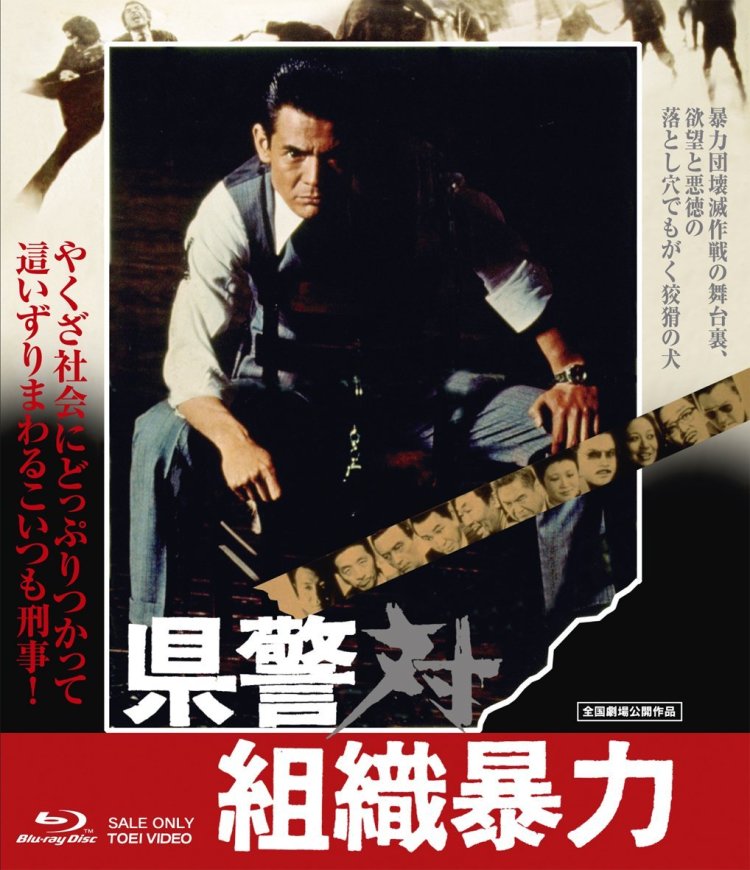
Cops vs Thugs – a battle fraught with friendly fire. Arising from additional research conducted for the first Battles Without Honour and Humanity series and scripted by the author of the first four films, Kazuo Kasahara, Cops vs Thugs (県警対組織暴力, Kenkei tai Soshiki Boryoku) shifts the action west but otherwise remains firmly within the same universe. This is a world of cops and robbers, but like bored little boys everyone seems to forget which side it was they were on – if they truly were on any other side than their own. There are few winners, and losers hit the ground before feeling the humiliation, but the one thing which is clear is that the thin blue line is so thin as to almost be transparent and if you have to choose your defenders, a thug may do as well as a cop.
A dodgy looking guy in a dirty mac roughs up some equally dodgy looking kids. Given that the shady looking fella is played by Bunta Sugawara you’d peg him for a petty thug, but against the odds Kuno is a cop – just one with a taste for crumpled raincoats. The town he’s policing is one in the midst of ongoing gang strife following a series of breakaways and civil wars throughout the ‘50s. Things are coming to a head as rival bosses of the two breakaway factions, Hirotani (Hiroki Matsukata) and Kawade (Mikio Narita), vie for power while a former yakuza politician, Tomoyasu (Nobuo Kaneko), does his best to stir up trouble between them that Kuno is trying to keep from exploding into all out war.
Cops vs Thugs is as cynical as they come but slightly more sympathetic to its desperate, now middle aged men whose youth was wasted in the post-war wasteland. The central tenet of the film is neatly exposed by a drunken gangster who points out that at heart there’s little difference between a cop and a yakuza aside from their choice of uniform. Policemen, like gangsters, follow a code – the law, carry a gun, are fiercely loyal to their brotherhood, and at the mercy of their superiors. Good jobs were hard to come by in the devastation following the surrender, in fact one of the reasons company uniforms became so popular was that no one had decent clothes to wear and a providing a uniform was a small thing that a company could to do increase someone’s sense of wellbeing, community, and engender the feeling of family within a corporate context. The police uniform, even if it’s reduced to a badge and a gun, does something similar, as do a yakuza’s tattoos. They literally say someone has your back and will come running when you’re in trouble.
These drop outs with nowhere left to turn eventually found themselves one side of a line or on the other – the choice may have been arbitrary. Kuno says he became a cop because he wanted to carry a gun, something he could have done either way but for one reason or another he chose authority over misrule. Cops being friends with yakuza sounds counter intuitive, but many of these men grew up alongside each other, attended the same schools, perhaps even have relatives in common.
Both the police and the yakuza claim to be the defenders of honest, working people but neither of them quite means what they say. Police brutality is rife while yakuza battles reach new levels of violent chaos including, at one point, a beheading in the middle of a sunlit street. Yet the greatest threats to the population at large aren’t coming from such obvious sources, they’re hardwired into the system. Sleazy politico Tomoyasu spends his time in hostess bars and schmoozes with gangsters he uses to do his dirty work while the press look on gleefully at having something to report. Kuno may not be a candidate for police officer of the year, but he tells himself that his policy is one of appeasement, and that working with organised crime is the best way to protect the ordinary citizen. When you’re forced to work within a corrupt system, perhaps there is something to be said for flexibility.
For all of the nihilistic cynicism Fukasaku retains his ironic sense of humour, staging a violent, inefficient, and bloody murder in a tiny room where a sweet song about maternal love in which a woman sings of her hopes for the bright future of her son is playing a healthy volume. Corruption defines this world but more than that it’s the legacy of post-war desperation that says on the one hand that it’s every man for himself, but that it’s also necessary to pick a side. Cops, thugs – the distinction is often unimportant. There is sympathy for these men, and sadness for the world that built them, but there’s anger here too for those who play the system for their own ends and are content to see others pay the price for it.
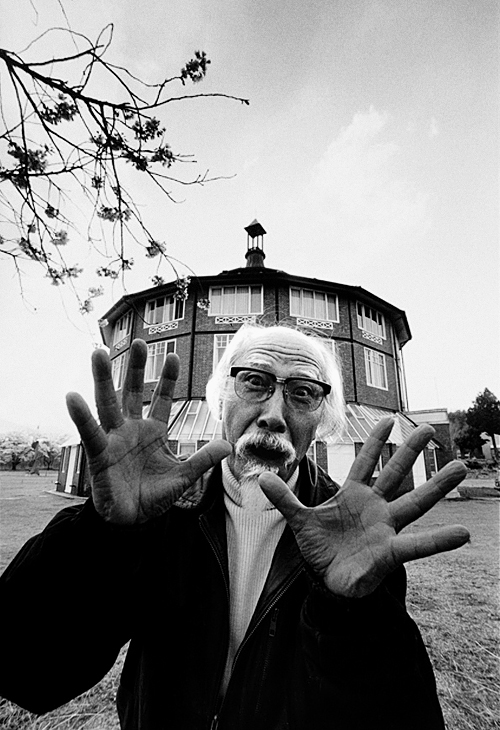 The complete programme for the Neuchâtel International Fantastic Film Festival 2017 has now been revealed and as reported, the festival will be paying homage to the late director Seijun Suzuki with a retrospective featuring ten of his best loved films.
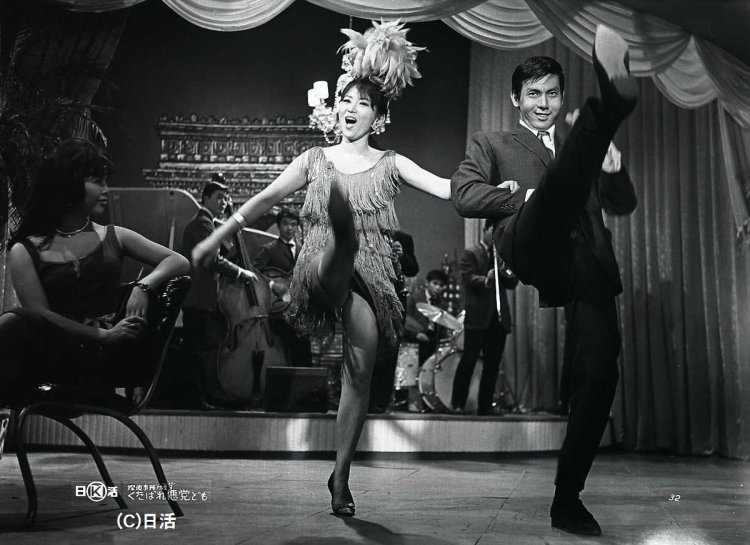 Detective Bureau 2-3: Go to Hell Bastards is everything its name suggests – crazy, cartoonish fun as a Joe Shishido goes undercover, hangs out in Christmas themed cabaret bars and sings a few songs all the name of justice (and a paycheck). Review.
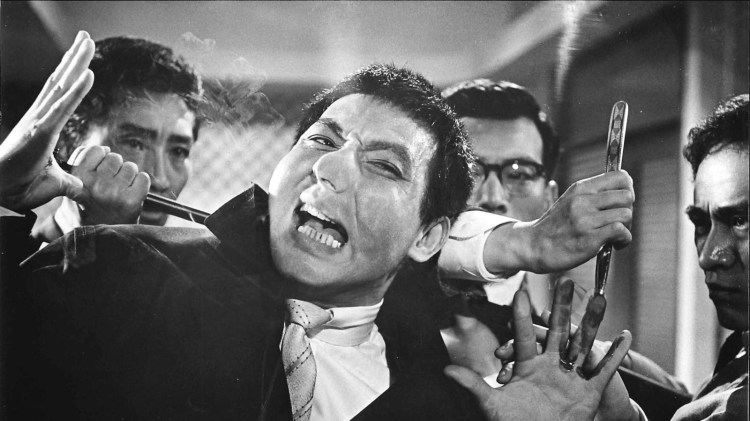 Youth of the Beast proved a turning point in Suzuki’s career. No longer content to play along with restrictive studio codes, Suzuki embraces his talent for colourful absurdism as Shishido once again finds himself undercover in the yakuza underworld.
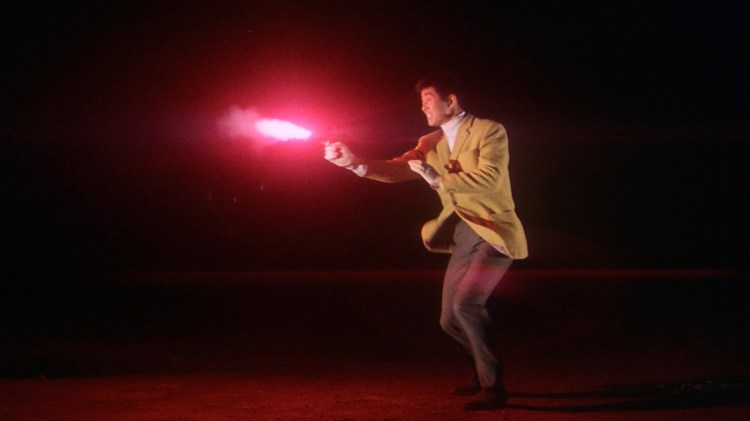 Tokyo Drifter found few fans among studio bosses, but takes Suzuki’s psychedelic use of colour to all new highs in the story of a gangster unable to escape from his violent past.
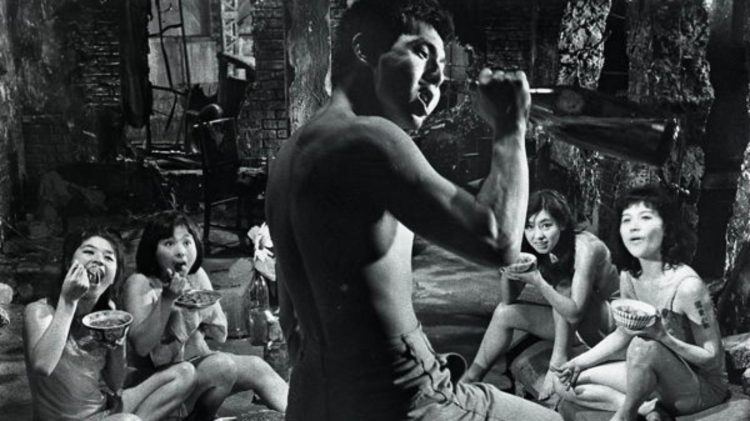 Making another foray into wartime desperation, Suzuki adapts Taijiro Tamura’s Gate of Flesh with Shishido as a washed-up former soldier driving a wedge between a group of fiercely loyal prostitutes. Review.
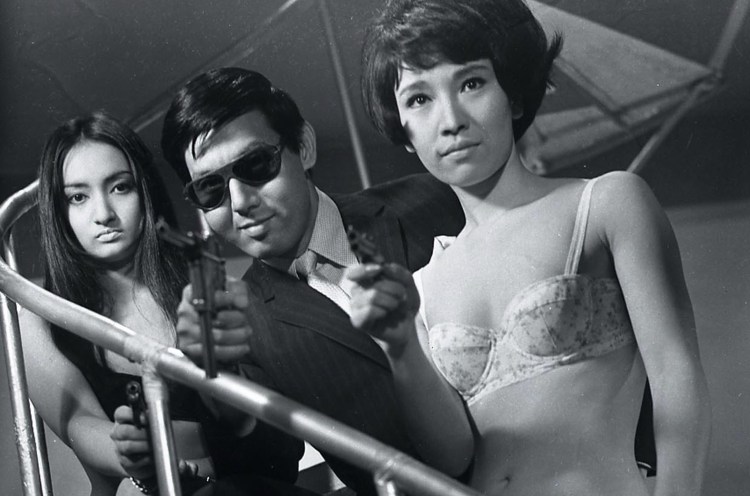 The one that got him fired from Nikkatsu, Branded to Kill is the absurd story of a steely hitman with an addiction to the smell of cooking rice who finds his life derailed by a beautiful woman and a butterfly. Review.
 Zigeunerweisen marks Suzuki’s return to filmmaking after the long series of court battles following his dismissal from Nikkatsu. The first in the Taisho Trilogy, Zigeunerweisen stars Yoshio Harada as one third of an eerily surreal love triangle. Review.
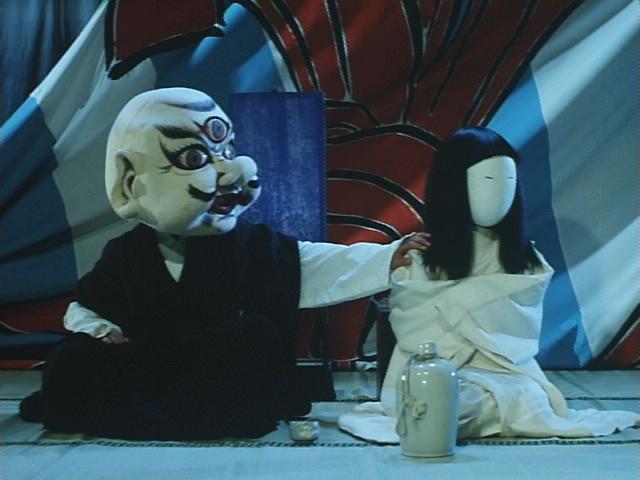 The follow up to Zigeunerweisen, Kagero-za stars Yusaku Matsuda in a ghostly tale of love and writer’s block. Review.
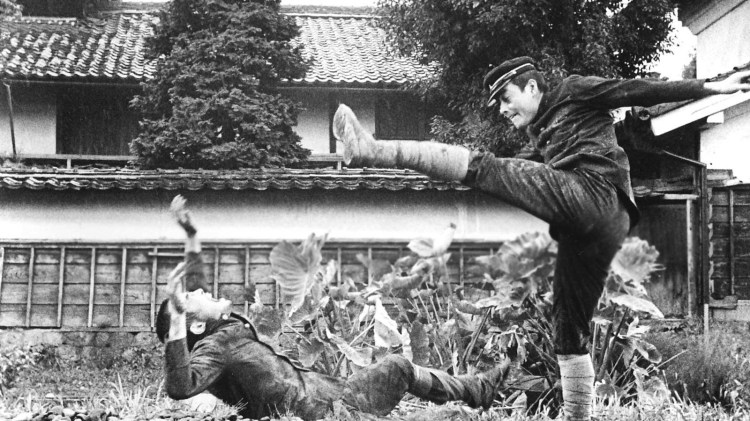 Suzuki takes a wry look at the origins of fascism in Fighting Elegy as the young men of his age engage themselves in “manly” pursuits but are obliged to sublimate their other desires into a lust for violence. Review.
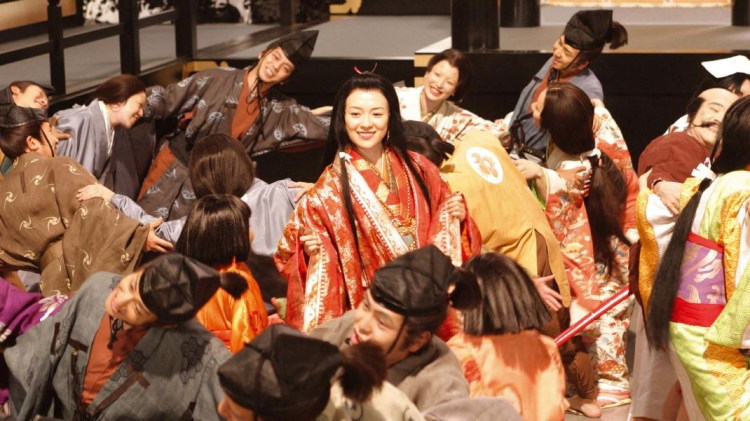 Joe Odagiri and Zhang Ziyi star in the bizarre yet infectious folktale inspired musical, Princess Raccoon.
 For his final film, Pistol Opera, Suzuki revisits Branded to Kill but replaces Shishido with a female assassin longing to be number one.
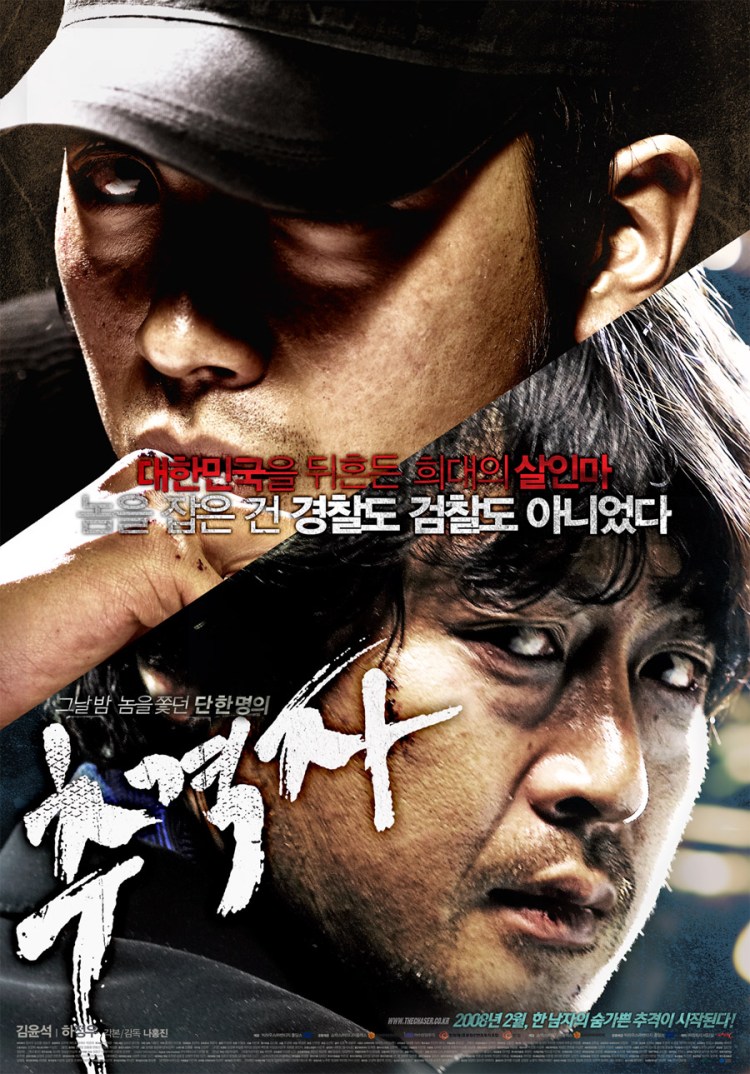 When it comes to law enforcement in Korea (at least in the movies), your best bet may actually be other criminals or “concerned citizens” as the police are mostly to be found napping or busy trying to cover up for a previous mistake. The Chaser (추격자, Chugyeogja) continues this grand tradition in taking inspiration from the real life serial murder crime spree of Yoo Young-chul , eventually brought to justice in 2005 after pimps came together and got suspicious enough to make contact with a friendly police officer.
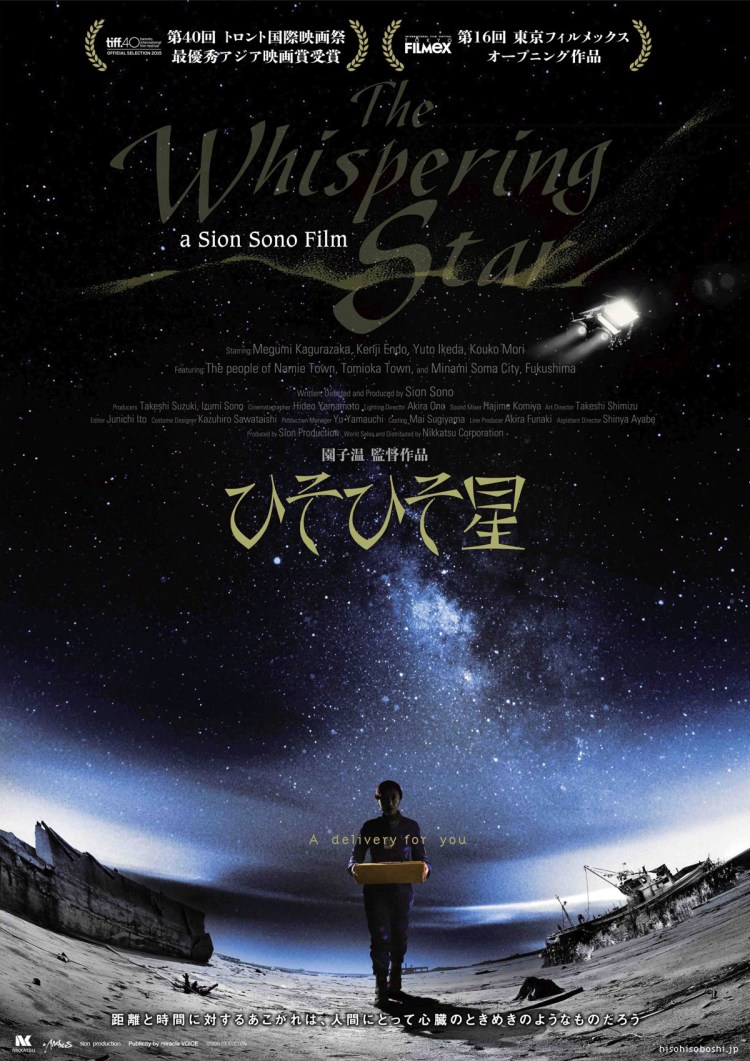 Sion Sono has been especially prolific of late, though much of his recent output has leant towards the populist rather than the art house. Having garnered a reputation for vulgar excess over the last twenty years or so, Sono returns to his Tarkovskian roots with The Whispering Star (ひそひそ星, Hiso Hiso Boshi) – a contemplative exercise in stillness which has more in common with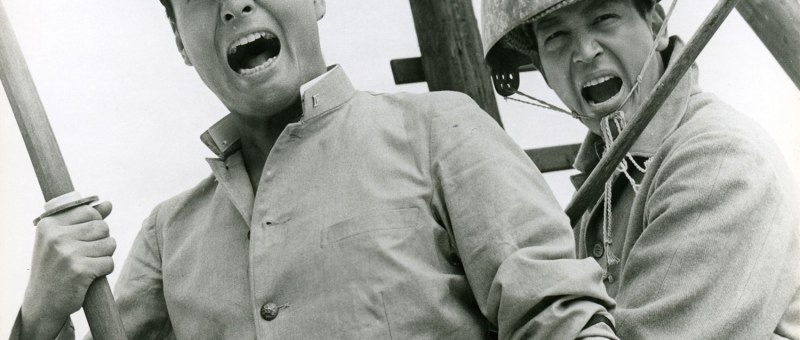
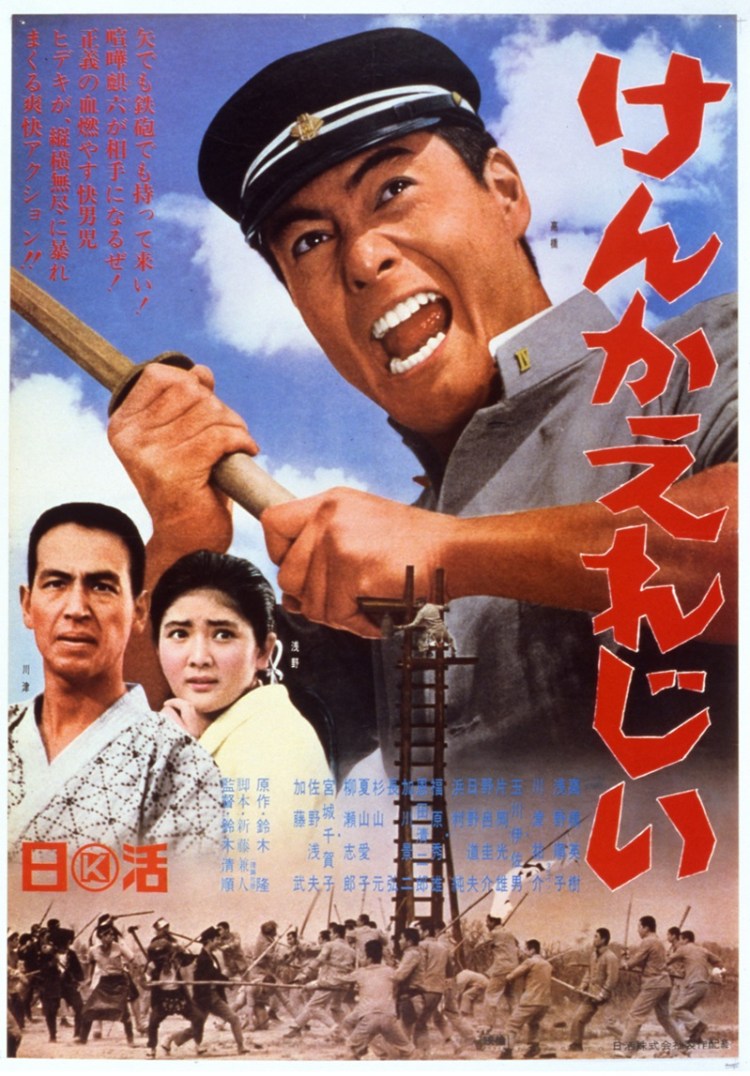 Ah, youth. It explains so many things though, sadly, only long after it’s passed. For the young men who had the misfortune to come of age in the 1930s, their glory days are filled with bittersweet memories as their personal development occurred against a backdrop of increasing political division. Seijun Suzuki was not exactly apolitical in his filmmaking despite his reputation for “nonsense”, but in Fighting Elegy (けんかえれじい, Kenka Elegy) he turns a wry eye back to his contemporaries for a rueful exploration of militarism’s appeal to the angry young man. When emotion must be sublimated and desire repressed, all that youthful energy has to go somewhere and so the unresolved tensions of the young men of Japan brought about an unwelcome revolution in a misguided attempt at mastery over the self.
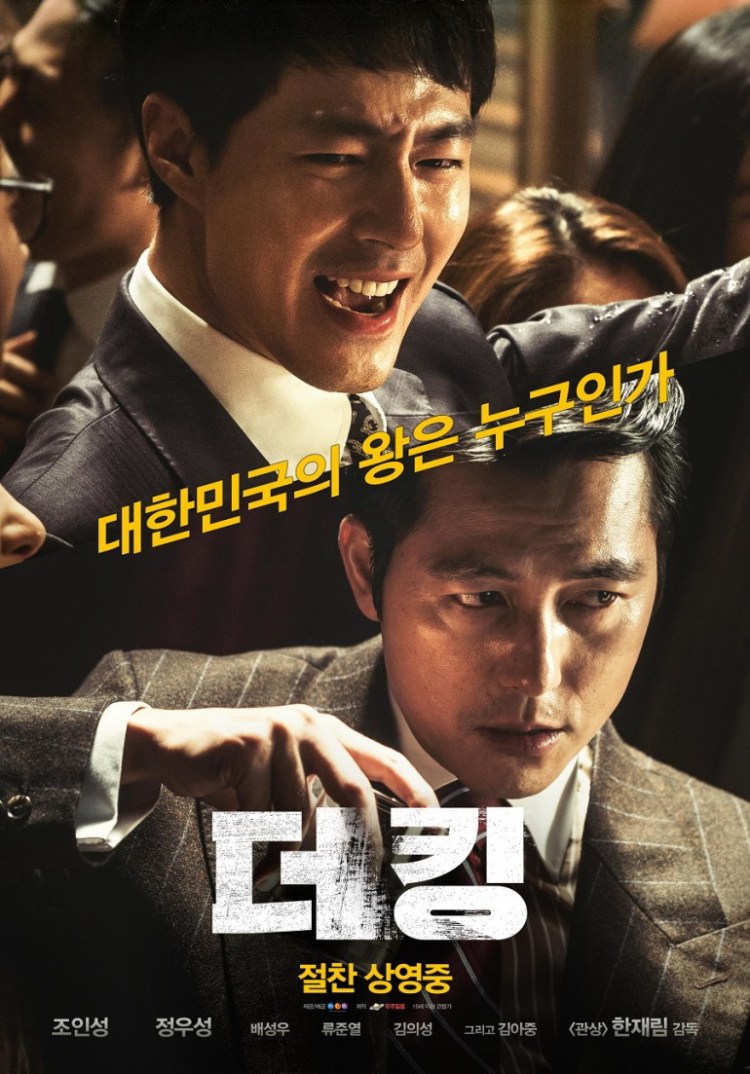 Absolute power corrupts absolutely, but such power is often a matter more of faith than actuality. Coming at an interesting point in time, Han Jae-rim’s The King (더 킹) charts twenty years of Korean history, stopping just short of its present in which a president was deposed by peaceful, democratic means following accusations of corruption. The legal system, as depicted in Korean cinema, is rarely fair or just but The King seems to hint at a broader root cause which transcends personal greed or ambition in an essential brotherhood of dishonour between men, bound by shared treacheries but forever divided by looming betrayal.
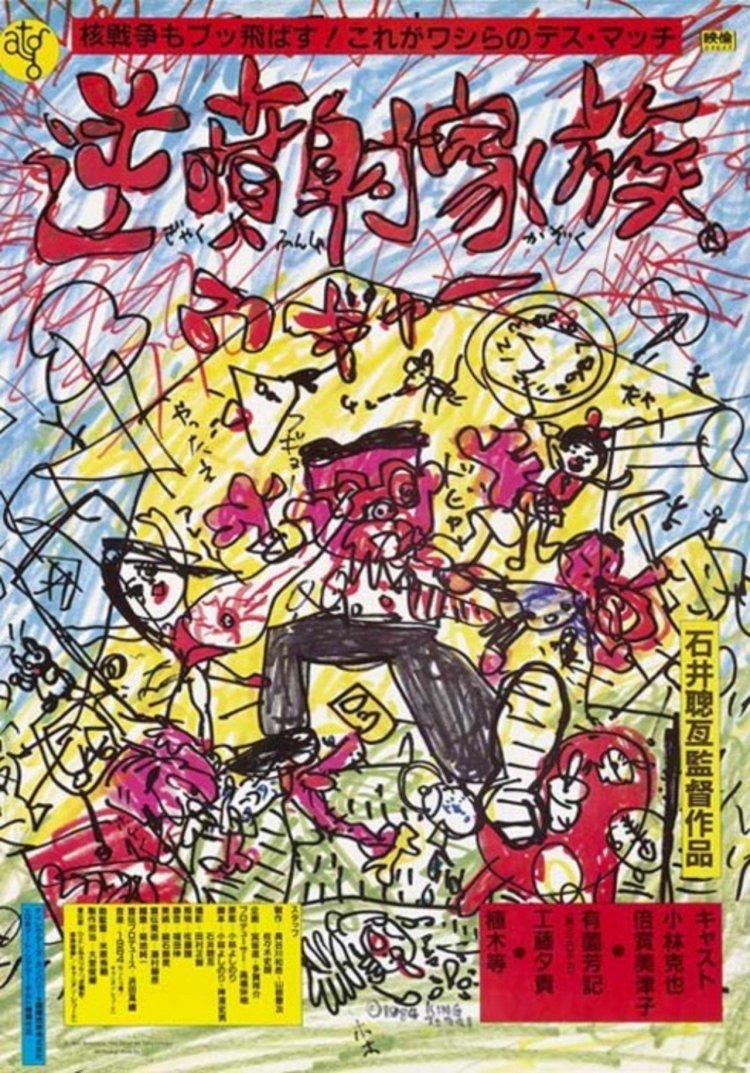 The family drama went through something of a transformation at the beginning of the 1980s. Gone are the picturesque, sometimes melancholy evocations of the transience of family life, these families are fake, dysfunctional, or unreliable even if trying their best. Morita’s
  Now in its 11th year, Japan Cuts returns to Japan Society New York from 13th to 23rd July bringing some of the best in recent Japanese cinema with it as well as a host of special guests and events. The festival will open with Yoshihiro Nakamura’s ninja drama, Mumon: The Land on Stealth on 13th July while award-winning animation In This Corner of the World will close the proceedings on July 23. The full lineup is as follows:
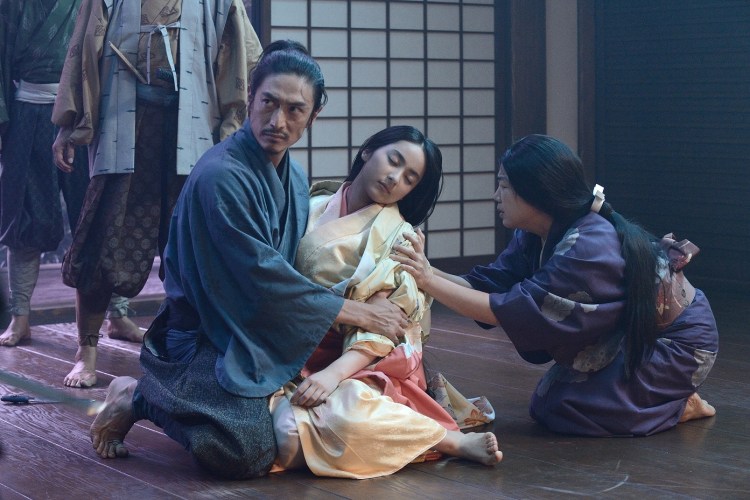 Yoshihiro Nakamura’s ninja epic
  Kyoko Miyake’s documentary
  Taking inspiration from the poetry of Tahi Saihate,
  Kenichi Matsuyama stars in a moving biopic of the real life shoji star who gave it all for the game in
  The latest film from Okinawan filmmaker Go Takamine,
  Yosuke Kubozuka plays a depressed boxer who finds friendship in the
  Megumi Sasaki’s documentary
  Tetsuya Fujiwara and Hideaki Ito star in
  Based on the hit smartphone game
 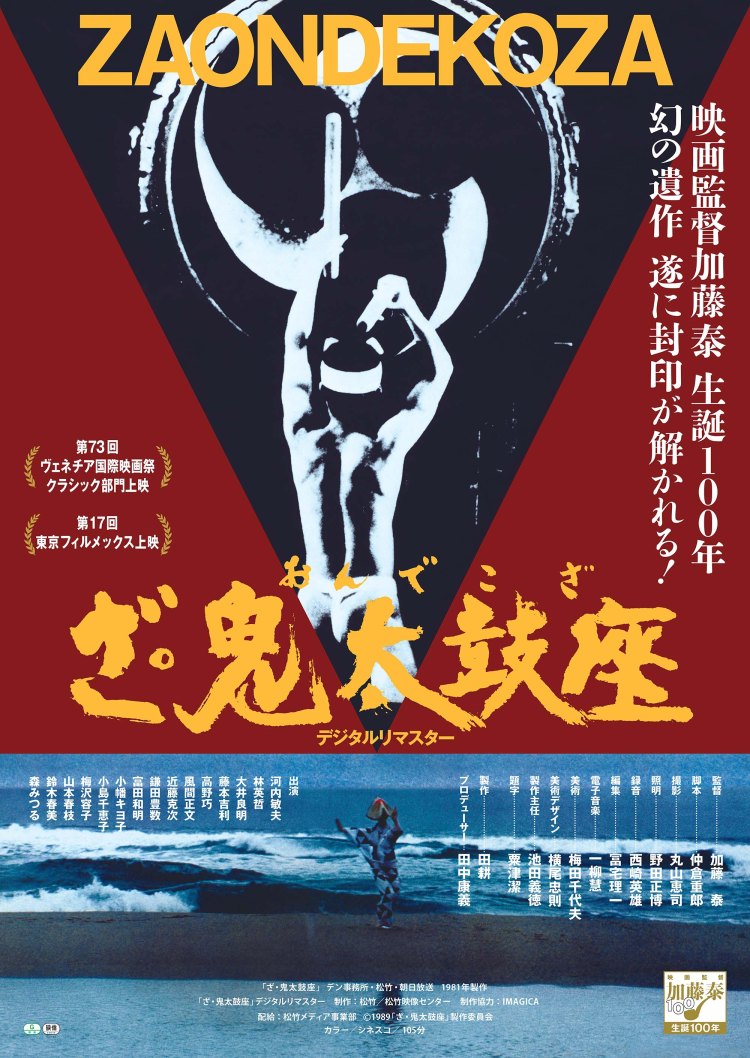 Tai Kato’s underseen documentary
  Shingo Matsumura’s gentle
  Kenji Yamauchi adapts his own stage play skewering the middle classes as a boring dinner party gets progressively out of hand exposing each of their flaws, weaknesses, and well hidden secrets in
  Produced by Shinji Aoyama and Takenori Sento, Sora Hokimoto’s debut feature
  Kei Shichiri revisits Before the Day Breaks ten years on and adds all-new sound and imaging. Based on the manga by Naoki Yamamoto,
 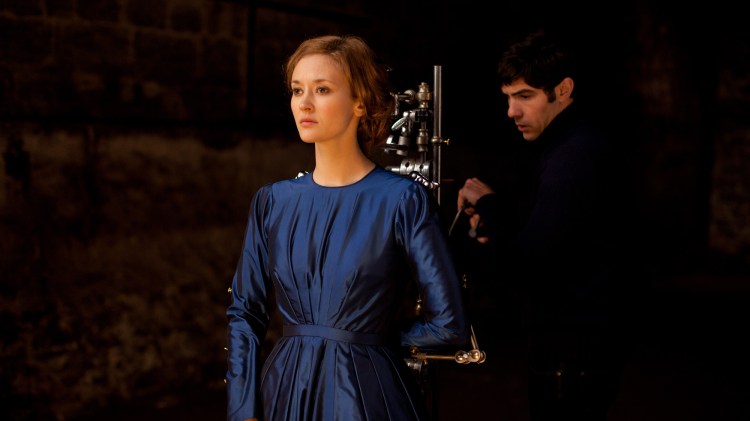 The first film made outside of Japan for veteran filmmaker Kiyoshi Kurosawa,
  Konrad Aderer’s documentary
 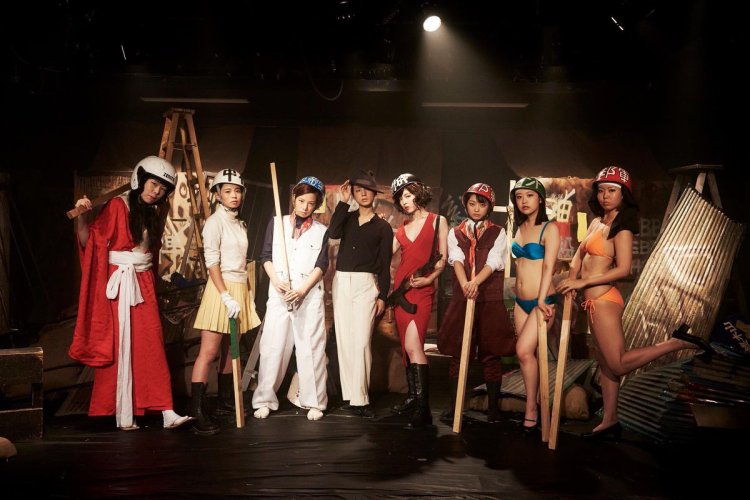 Theatre director Junko Emoto makes her film debut with
 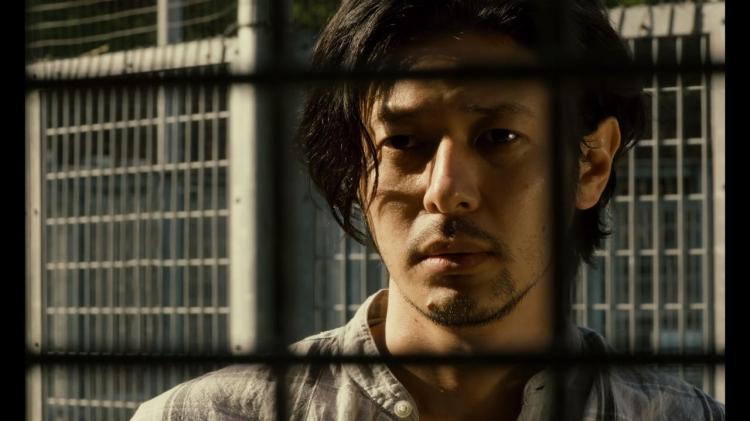 The third in a series of films adapted from the works of Hakodate native novelist Yasushi Sato, Nobuhiro Yamashita’s
 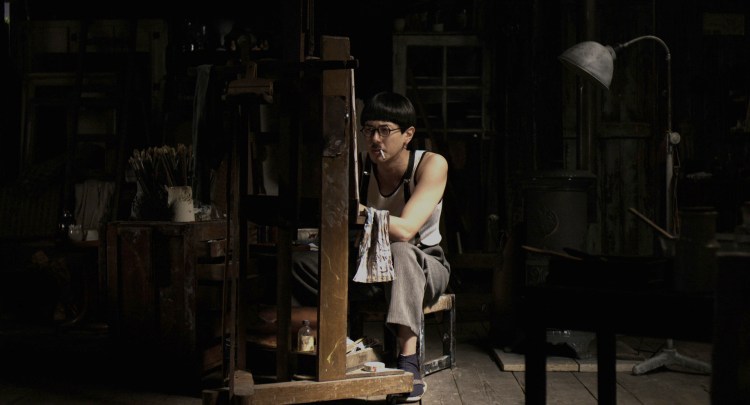 Joe Odagiri stars as the artist Léonard Tsuguharu
  Elite public school boy Teiichi dreams of becoming Prime Minister in Akira Nagai’s manga adaptation,
  An adaptation of Keigo Higashino’s 2013 novel,
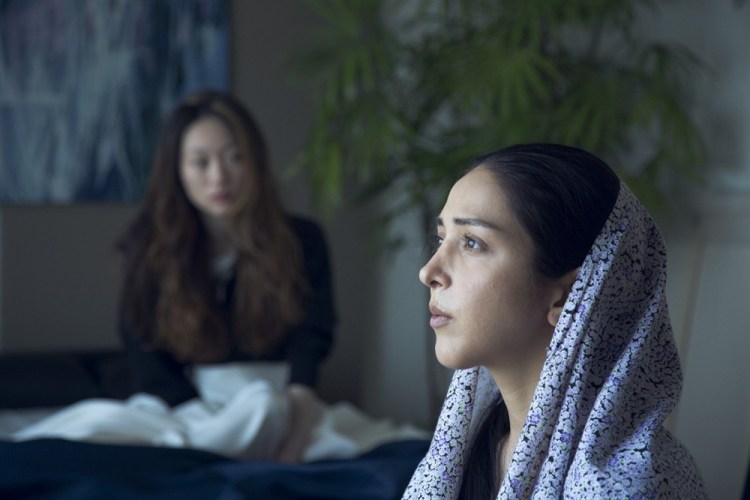 An Iranian student and depressed bartender face a series of romantic and cross cultural confusions in Takuro Nakamura’s
 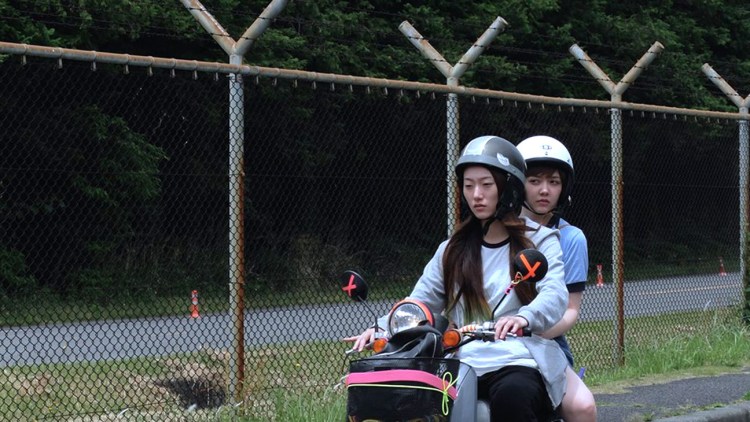 Depressed teenager Sakura (Hanae Kan) has a complicated relationship with Americanisation thanks to growing up near Japan’s biggest mainland American military base but an encounter with the half-American daughter of her mother’s boyfriend prompts a reconsideration of her life goals in Daisuke Miyazaki’s
  Sion Sono’s entry into Nikkatsu’s Roman Porno Reboot Project,
 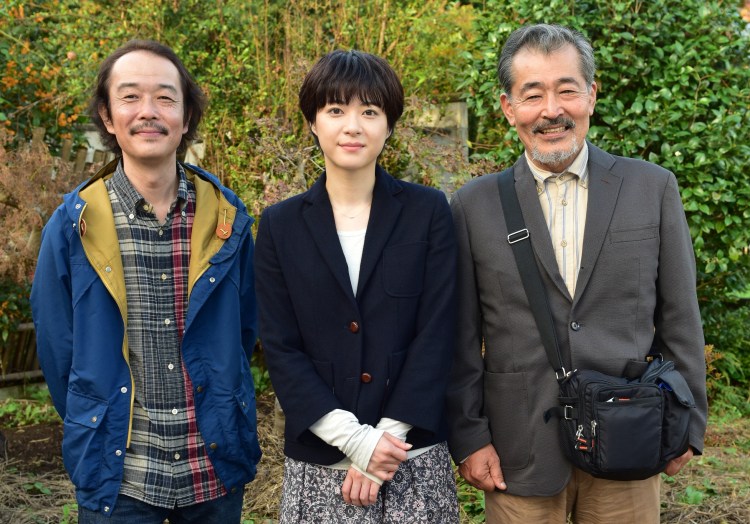 The latest film from Yuki Tanada,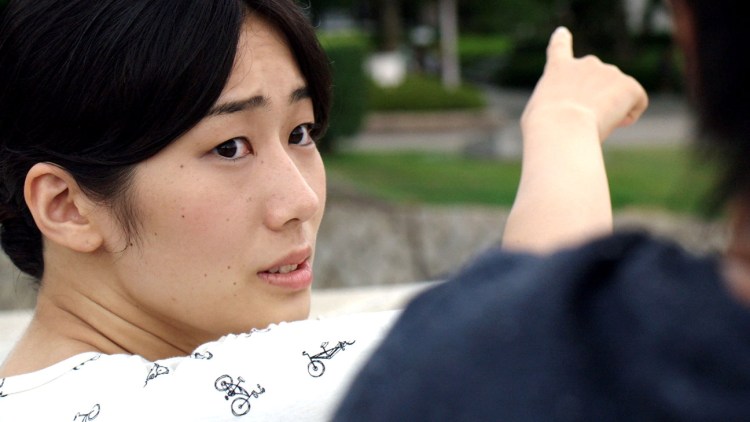
 Sunao Katabuchi’s award-winning animation
  Some people are odd, and that’s OK. Then there are the people who are odd, but definitely not OK. Hime-anole (ヒメアノ~ル) introduces us to both of these kinds of outsiders, attempting to draw a line between the merely awkward and the actively dangerous but ultimately finding that there is no line and perhaps simple acts of kindness offered at the right time could have prevented a mind snapping or a person descending into spiralling homicidal delusion. To go any further is to say too much, but Hime-anole revels in its reversals, switching rapidly between quirky romantic comedy, gritty Japanese indie, and finally grim social horror. Yet it plants its seeds early with two young men struggling to express their true emotions, trapped and lonely, leading unfulfilling lives. Their dissatisfaction is ordinary, but these same repressed emotions taken to an extreme can produce much more harmful results than two guys eating stale donuts everyday just to ask a pretty girl for the bill.
 It’s tough when parents don’t approve of their children’s romantic partners, but fortunately most realise there’s nothing they can do about it so the best thing is to feign civility (and avoid saying I told you so when it all goes wrong). Unfortunately the older generation of Kim Jin-young’s Enemies In-Law (위험한 상견례 2,
  Cops vs Thugs – a battle fraught with friendly fire. Arising from additional research conducted for the first
