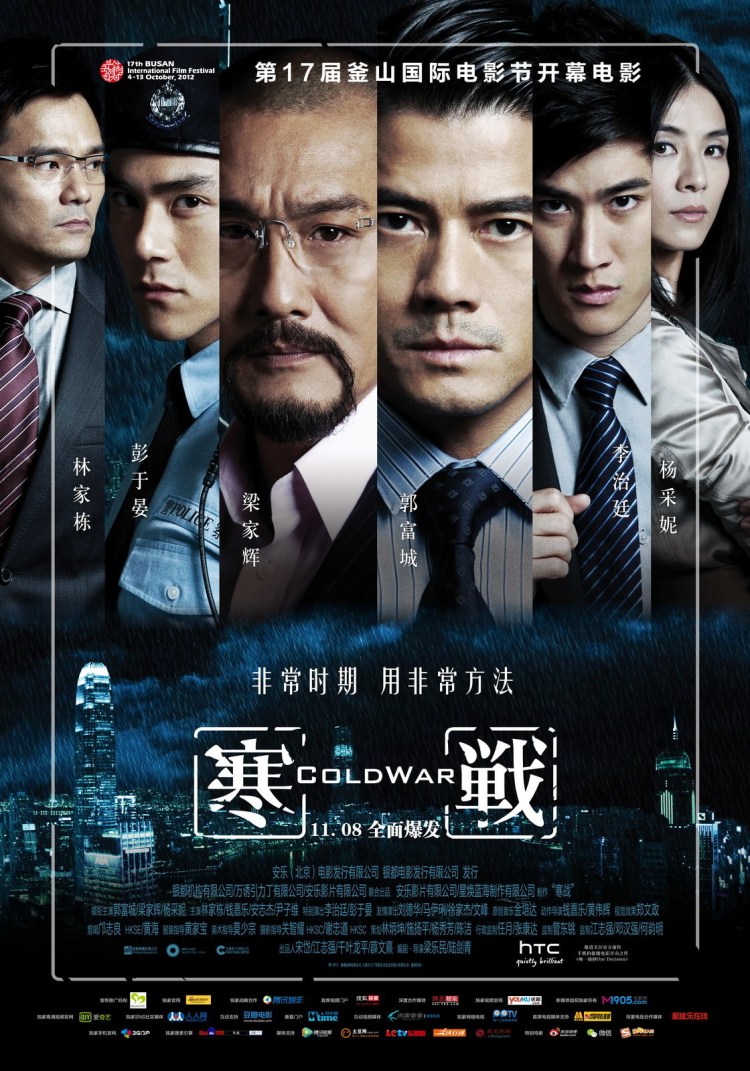
Cold War (寒戰, Longman Leung & Sunny Luk, 2012)

cold war

Reworked from a review first published by UK Anime Network in June 2013.


Listen up!  You’re going to have to pay attention to this review because there’s an awful lot going on this film. If there were a prize for most subplots squeezed into 102 minutes there wouldn’t even be room for any other candidates on the nominations list. If you like your HK action thrillers super complicated (if a little on the ridiculous side) and filled with some truly explosive (!) action sequences Cold War (寒戰) is definitely up your street.

Whilst a major explosion rocks a busy public area in Hong Kong, a crazed drunk hurtles through the streets before crashing his car into the central reservation in a quite spectacular manner. Apparently unharmed, he then rants at the traffic police that his uncle is a judge so they can’t touch him – a quick phone call seems to indicate he might be mistaken in his uncle’s feelings towards him but in any case the situation changes dramatically as the police are suddenly ambushed and kidnapped. The kidnappers then attempt to ransom the officers and equipment to the HK police authorities who are already a source of some press interest regarding possible corruption and general incompetence. It is imperative that they regain their men and capture the culprits as quickly as possible to avoid their reputation being even further damaged.

However, there is also considerable friction between the leading players at HQ and some uncertainty over who is favoured to become the new police chief – the young bureaucrat or the grizzled street veteran. This situation is further complicated by the fact that one of the missing patrolmen is the son of current section chief MB Lee (Tony Leung Ka-Fei). His subordinate, Sean Lau (Aaron Kwok), feels this makes him unsuitable to lead the current investigation and so seeks to have Lee removed from his post and take over the position himself. The pair also attract the attention of an officer at ICAC who’s convinced one or both of them must have more to do with the case than it seems, meaning each is effectively fighting a war on three fronts – firstly trying to rescue the police officers, then unmasking the perpetrators and finding out what they want with the HK Police force, and finally sorting out who’s up for the top job at police HQ whilst also keeping Internal Affairs off their backs.

No matter which way you put it Cold War is still extremely convoluted and fails to make all of its various plot elements hang together in a coherent way. It’s also unfortunate that the culprit is a little predictable (largely thanks to the actor’s mustache twirling performance) but when the final reveal does come it’s baffling in its pettiness, not to mention the total implausibility of such a complicated plan. Perhaps its unfair to criticise a film like this for having a problematic plot structure, perhaps fans of the action genre don’t look for finely crafted plotting as much as they look thrills and technically impressive action sequences – after all, we can’t all be Infernal Affairs.

It has to be said that Cold War does deliver in the action stakes with some extremely high production values which surpass even the heights of previous HK action films. From the opening car crash to the motorway car chase and explosive finale there are several simply jaw dropping moments throughout. When it comes to the big and brassy set pieces, Cold War is pretty much unrivaled but perhaps lacks the personal, intimate touch of other genre favourites. Tonally it walks a fine line between a sort of quirky humour and slightly absurd feeling where you can’t be sure whether you’re actually watching a comedy or not – some viewers may find all this a little too silly but others may revel in its ironic tone.

Cold War is certainly a flawed film, a little ridiculous but nevertheless enjoyable. It seems as if it also wants to make serious points about the justice system, media and police force but ends up pulling all its punches. If you stop to think about any of the plot, it makes very little sense but if you can let that go and just enjoy the superb action sequences and great performances from the leads Cold War is definitely one of the more impressive action thrillers to come out of HK in recent years.


 Original trailer (Cantonese with English subtitles)

League of Gods (3D封神榜, Koan Hui & Vernie Yeung , 2016)

league of godsOften, people will try to convince of the merits of something or other by considerably over compensating for its faults. Therefore when you see a movie marketed as the X-ian version of X, starring just about everyone and with a budget bigger than the GDP of a small nation you should learn to be wary rather than impressed. If you’ve followed this very sage advice, you will fare better than this reviewer and not find yourself parked in front of a cinema screen for two hours of non-sensical European fantasy influenced epic adventure such as is League of Gods (3D封神榜, 3D Fēng Shén Bǎng).
Based on a classic Chinese text – the Ming Dynasty epic Investiture of the Gods by Xu Zhonglin, League of Gods begins with its despotic monarch, King Zhou (Tony Leung Ka-fei) and the story of how it was he came to lose his soul to Black Dragon and fall under spell of the nine-tailed fox, Daji (an underused Fan Bingbing). The couple have kidnapped Wizard Jiang (Jet Li), who may have been the only one with the knowledge to end their demonic rule – if it weren’t for the fact he’s subject to an anti-ageing curse and keeps regressing each time he uses his powers. Nevertheless, a group of warriors from Xiqi attempt to rescue Jiang and a group of orphan children who are also being held prisoner though their partial success leads them to undertake a new mission to find the Sword of Light which may finally help them to cut through the darkness and restore their kingdom to glory.

The primary bearer of this quest is Lei (Jacky Heung) who is second heir to the Wing Kingdom though also an embarrassment to his father because unlike his countrymen, he’s never been able to find his wings and fly like the rest of his brethren. Jiang entrusts him with three bags to help on his journey, one of which contains “magic grass” (ahem!) which is basically a healthier version of Clippy, the second a CGI baby version of once ruthless warrior, Naza, and the third a baby Merman who had his spine removed by Naza to stop him growing up and just wants to go home. Lei runs into automaton spy and tragic love interest Blue Butterfly (Angelababy) who does at least lend a degree of pathos to the proceedings and Louis Koo also turns up riding a giant panther, which is quite a ride, it has to be said.

The biggest problem facing League of Gods is one common to every fantasy film – that is, constructing a fantastical world which is still 100% internally consistent and completely believable throughout. League of Gods throws so much information out so quickly that it’s impossible to keep a handle on everything that’s going on, let alone try to work out how all of these various warring kingdoms fit together. There is a lot of story to go around, and directors Koan Hui and Vernie Yeung have recruited a host of China’s biggest stars to help tell it. This obviously means that some stars are appearing for mere minutes with barely anything to do save show their face, making an already bloated premise overloaded beyond any sustainable level.

Narrative excitement has largely been sidelined in favour of visual flair but League of Gods is constantly let down by poor quality CGI some of which might look more at home in a late ‘90s video game. League of Gods operates as a kind of hybrid movie, mixing heavy CGI animation with live action actors but can’t decide just how po-faced it really wants to be. Lei is accompanied on his quest by a fearsome warrior, Naza, apparently an arrogant and dangerous criminal who has been imprisoned in the body of a toddler. This CGI baby grins, burps, farts, and high kicks his way out of trouble in a decidedly bizarre fashion with his grown up language offered from a cute baby face. Naza is countered by his sometime enemy – an adorable Merman baby who just misses his dad but seems to have no other purpose so it’s a mystery why Jiang gave Lei this particular bag. Magic Grass is obviously an advisory figure, but is an apt way to try and explain what’s going on.

League of Gods moves from set piece to set piece with some muddled character development along the way as Lei finds love and develops his wings but never makes any kind of attempt at unifying its disparate plot strands. Squandering the talents of its extremely high level of A-list stars, League of Gods relies of campy fun to get by but is far too serious to make the most of its over the top potential. Disappointingly, after it’s intense build up League of Gods refuses to stage its finale – ending on a cliff hanger which is heralded by the most ridiculous evil laugh offered by a despot clutching a baby which is actually the regressed form of his rival and a formerly powerful wizard. It sounds good, but it isn’t. Read the small print, sign with caution.


US release trailer (English subtitles)

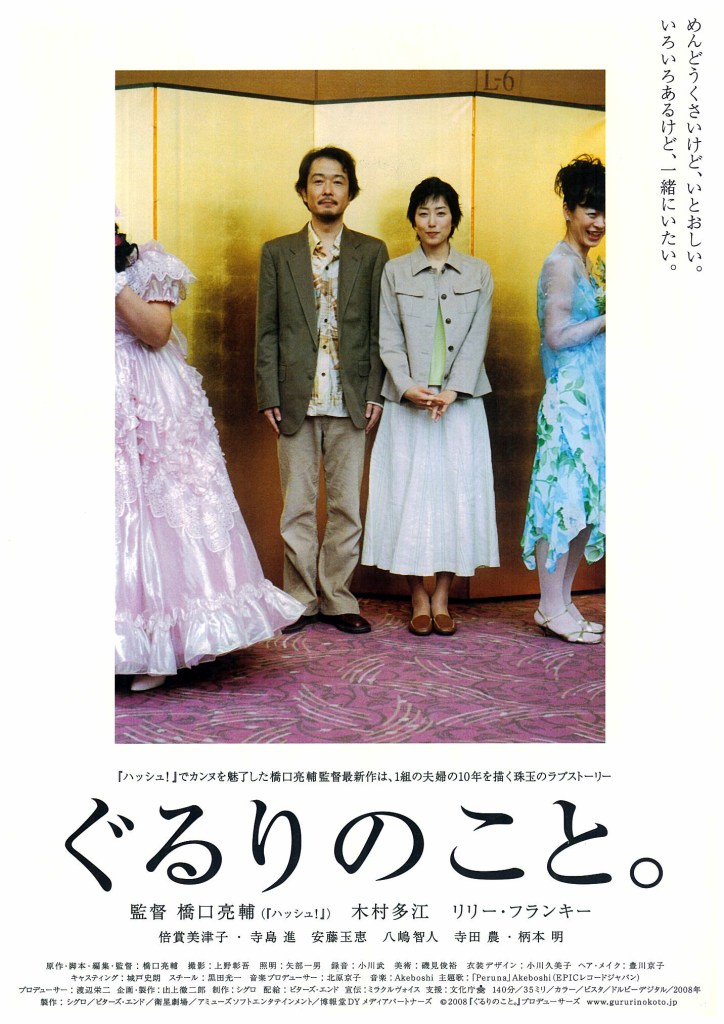
All Around Us (ぐるりのこと。, Ryosuke Hashiguchi, 2008)

all around usRyosuke Hashiguchi returns after an eight year absence with All Around Us (ぐるりのこと。Gururi no Koto) and eschews most of his pressing themes up this by point by opting to depict a few “scenes from a marriage” in post-bubble era Japan. Set against the backdrop of an extremely turbulent decade which was plagued by natural disasters, terrorism, and shocking criminal activity Hashiguchi shows us the enduring love of one ordinary couple who, finding themselves pulled apart by tragedy, gradually grow closer through their shared grief and disappointment.

Tokyo, 1993. Kanao (Lily Franky) and Shoko (Tae Kimura) have had an “on and off” (but seemingly solid) relationship since their art school days. She works at a publishing house and he’s kind of a slacker with a job in a shoe repair booth. Shoko worries that Kanao plays around too much (but actually doesn’t seem that bothered about it) whilst continuing to attempt to micromanage their entire existence with her clearly marked calendar planning out the most intimate of actions. When Shoko discovers she’s expecting a child, the pair decide to finally get married and begin their lives as a family. Kanao also gets an opportunity on the work side when an old college friend helps him get a job as a courtroom artist for a news agency.

However, their joy is short-lived as an abrupt jump forward in time shows us a tiny shrine underneath the calendar (shorn of its red crosses) dedicated to the memory of their infant daughter. Kanao is the keep calm and carry on sort so he just tries to bluster through but Shoko is distraught and slowly descending into a mental breakdown. If that weren’t enough to contend with, Shoko’s estranged father has been tracked down and is apparently very ill dredging up even more pain an uncertainty from the long buried past.

We follow Shoko and Kanao over a period of nine years. As well as the ever present motif of the calendar, we feel the passage of time through Kanao’s work at the court house which sees him become the artistic recorder of some of the most traumatic moments of the age. Having entered into an era of economic turmoil following the end of the bubble economy, the 1990s saw not only the devastating Kobe Earthquake but also the sarin gas attack on the Tokyo underground perpetrated by a dangerous religious cult, members of which wind up in court in front of Kanao, tasked with the thankless task of bearing witness to their testimony.

Kanao evidently decided not to discuss his personal tragedy with his work colleagues or, one would assume, his boss would not have reacted so harshly when he made the reasonable request to turn down the opportunity to sit in on yet another child murder trial – either by accident or design, the trials which present themselves to Kanao (and are all real, sensationalised media events of the time) involve the horrific murders of small children with only one of the defendants voicing any kind of regret or remorse.

Meanwhile, Shoko has been trying to get on with life as best she can but finds herself sinking ever deeper into depression. Her uptight, controlling personality cannot cope with this perceived “failure” on her part or of the destruction of all her plans by a truly unforeseen tragedy. Having had her doubts before regarding Kanao’s commitment to her, she finds his lack of reaction puzzling. Mistaking Kanao’s lack of outward emotion for indifference, Shoko finds it hard to continue believing in their shared destiny and wonders if her husband ever really cared for her at all. Kanao is a laid-back soul, someone who’s learned to become used to disappointment by accepting it quickly and then trying to move on. His more grounded approach might be just the one Shoko needs in order to come to terms with what’s happened – never pushing or complaining Kanao is contented simply by her presence and is prepared to give her the space she needs whilst always being around to offer support.

Hashiguchi relies on visual cues to help navigate the shifting dynamics including the repeated use of the calendar as a symbol of Shoko and Kanao’s marital status, the now unneeded pregnancy books bundled to be thrown out, or rice discarded in the sink as a marker of a house proud woman’s slide into crippling depression. Small moments make all the difference from a mother’s bandaged wrists and a cutback to the only person who’s noticed them, to the repeated joke of all the veteran journalists suddenly falling over themselves in an attempt to escape the courtroom and be the first to file their copy. A necessarily sad story, but an oddly warm one as two people worried they may be mismatched grow into each other in the face of their shared tragedy. Anchored by the strong performances of its two leads (particularly Tae Kimura who manages some convincing on screen crying in a difficult role) All Around Us is another beautifully pitched human drama from Hashiguchi who proves himself an adept chronicler of the human condition even whilst stepping away from his trademark themes.


Original trailer (English subtitles)

Hush! (ハッシュ!, Ryosuke Hashiguchi, 2001)

hushThe family drama is a mainstay of Japanese cinema, true, but, it’s a far wider genre than might be assumed. The rays fracture out from Ozu through to The Family Game and Crazy Family which sought to ask a few questions about where the idea of “family” was headed in a society of rapidly increasing materialism. Ryosuke Hashiguchi comes at the idea from a different angle in 2001’s Hush! (ハッシュ!) as he once again takes the perspective of the gay community and asks if the “traditional family” is about to change – what could, or should, survive if the old, rigid ideas can be remade into something lasting created out of love and acceptance rather than obligation?
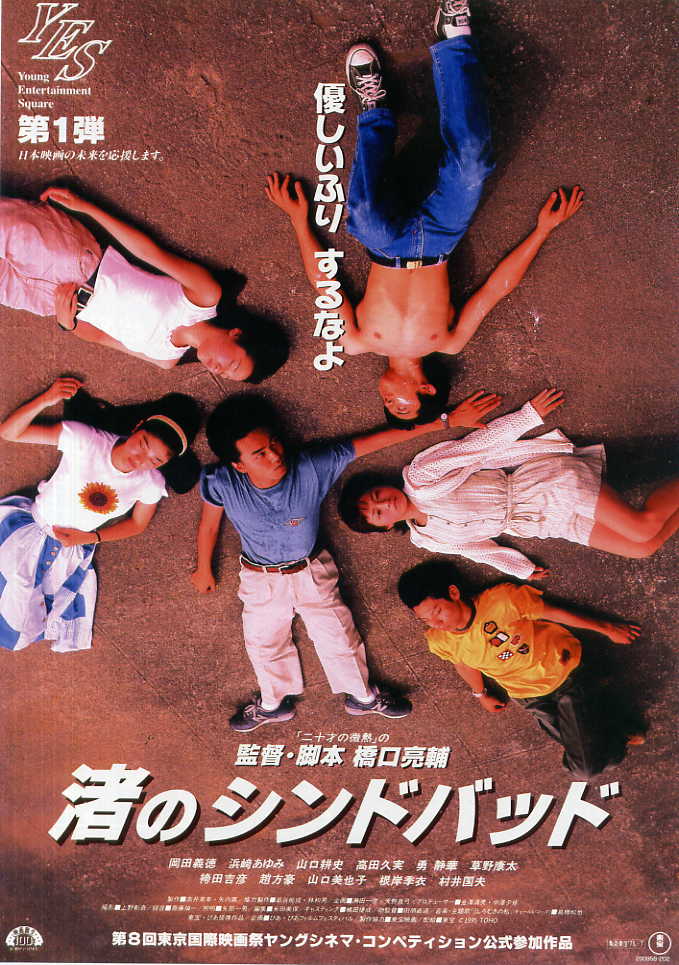
As the film begins, Naoya (Kazuya Takahashi) wakes up to find his one night stand already fully dressed and heading out the door, awkwardly, without even stopping to say goodbye. Eventually he hooks up with the kindly Katsuhiro (Seiichi Tanabe) and the two quickly become fairly serious but then a damaged woman, Asako (Reiko Kataoka), enters their lives hoping to use Katsuhiro as a sperm donor, forcing the men to reassess a number of important desires and beliefs, putting strain on their still fledgling relationship. If that weren’t enough drama, a girl at Katsuhiro’s place of work has also developed a crush on him and is prepared to take her unreturned love to some extremely dark places.

The first level of mini stresses Naoya and Katsuhiro have to contend with is their conflicting (if complementary) personalities and attitudes to their sexuality. Naoya is an easy going type with a job at a pet grooming salon. He’s a fully out gay man and a frequenter of city’s gay scene. Katsuhiro, by contrast, is much more mild mannered and innately kind. He works at a scientific research station and is more or less closeted – that is, he doesn’t particularly go out of his way to hide his sexuality from his work mates and family but he doesn’t volunteer the information either. This attitude seems to bother Naoya at various points but being the easy going type he’s apt to let it go most of the time.

However, when Katsuhiro reveals Asako’s offer, Naoya is actively against it. His idea of gay life suggests that relationships are generally short, he prefers the relative freedom of his life as an essentially “single” man rather a husband shackled to a family. Katsuhiro on the other hand perhaps would have liked children, or to be a father figure to someone else’s. Though Naoya has previously expressed boredom and disillusionment with his life spent in clubs and gay bars, he’s still resistant to the idea of settling down, or at least to the belief that a single relationship really can stay the course.

All three of the central characters have, in a sense, been let down by the “traditional” family. Naoya’s father left when he was small, leaving him with a single mother which is something that wasn’t so common when he was a child resulting in a fair amount of social stigma from other people in the community. These days his brassy mother knows about his sexuality and seems OK with it (aside from getting the random idea that Naoya will be wanting a pair of breasts at some point). Katsuhiro’s father was an alcoholic who died when he was just a small boy, his relationship with his brother and his family seems good but he’s afraid to reveal his sexuality to them for fear of disapproval. His brother had an arranged marriage, which doesn’t seem to have worked out so well at least from the sister-in-law’s perspective. Asako has also had a troubled life looking for affection in all the wrong places, feeling that if she had not been neglected as a child perhaps she’d have been a steadier adult. Naoya was running away from the idea of family ties, but Katsuhiro and Asako are actively seeking to repair the ones which never grew into the kind of roots one needs to anchor onself in a society entirely built around familial bonds.

After receiving some surprising medical news, Asako perversely decides that her own salvation lies in becoming a mother. She’s had enough of casual relationships and decided to go a different route so when she spots the kind look Katshiro gives a small child at a restaurant, she decides he must be the one to father her baby. Asako knew that Naoya and Katsuhiro were a couple, but that works out pretty well for her plan so she approaches him and makes her left field offer right off the bat. It will take some figuring out but this literal third way is a neat solution to a series of problems and, being completely new, is safe from the pettiness and misery often found within the traditional family unit. Contrasted with the bitterness displayed by Katsuhiro’s sister-in-law, the unusual arrangement of these three would be parents and their unborn child(ren) is one filled with love, forgiveness and mutual support rather than cold obligation or a simple fulfilment of societal expectations.

Once again Hashiguchi proves himself adept at creating a series of complex, flawed human beings who are nevertheless relatable and often endearing. Hashiguchi’s films tend to run long but he also ensures that even his supporting characters are well enough drawn to maintain interest in the many subplots from Naoya’s abrasive gay bar buddy to Katsuhiro’s unhinged stalker. An interesting sideways look at the state of the modern family, Hush! seems to advocate that just shutting up and going with the flow is not the answer but there are quieter solutions to be found if everyone is willing to listen to the silence.


Original trailer (no subtitles)

Like Grains of Sand (渚のシンドバッド, Ryosuke Hashiguchi, 1995)

Like grains of sand posterAdolescent romance is complicated enough at the best of times but the barriers are ever higher if you happen to be gay in a less than tolerant society. Ryosuke Hashiguchi’s second feature Like Grains of Sand (渚のシンドバッド, Nagisa no Sinbad) takes a slight step back in time from A Touch of Fever but retains its very ordinary world as a collection of boys and girls embark on a process of self discovery whilst also locked into the unbreakable straightjacket of the high school world.
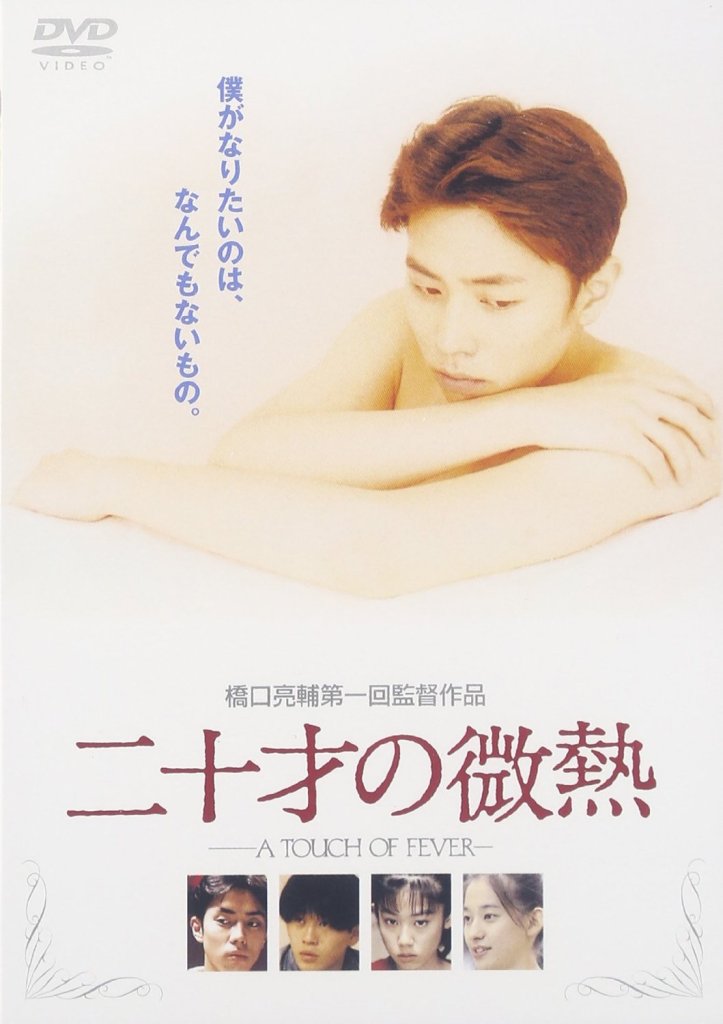
Ito (Yoshinori Okada) is an ordinary high school boy with a crush on his oblivious best friend, Yoshida (Kouta Kusano). Though Yoshida defends him from the homophobic bullies in his class, he seems confused about his true feelings, at once stating that what he feels for Ito is more that friendship but also unwilling to address what that “more” may mean. After Ito’s father intercepts a reply to a personal ad he placed hoping to meet older men, Ito ends up at a psychiatrist’s office where his father hopes he might be “cured” though the doctor is quick to point out that they no longer view homosexuality as a medical matter.

Whilst at the clinic, Ito strikes a up a friendship with another girl from his class, Aihara (Ayumi Hamasaki) – a recent transfer student, who, we learn, has experienced a traumatic event which is also the reason she had to leave her previous place of education. Aihara is the only person with whom Ito can discuss his sexuality honestly though he’s also sure to “protect” Yoshida by claiming he rejected his advances outright rather than explaining the confusing series of events as they actually occurred. When Aihara and Ito accidentally end up on an awkward double date with Yoshida and his girlfriend Shimizu (Kumi Takada), Yoshida also begins to develop an (unreturned) attraction to Aihara which only further complicates the delicate nature of the growing emotional ties among this small group of young people.

A real step up from the promising yet flawed A Touch of Fever, Like Grains of Sand proves Hashiguchi’s skill in building an extremely natural environment filled with believable well rounded characters. The high school world is a cruel one populated by unsteady teenagers, each by times rebellious and insecure. Aihara, as a recent transfer student, is already an outsider but finds herself excluded even further thanks to her direct and aloof character. Early on in the film two of the other girls, evidently the popular set, begin running a bizarre extortion scam in which they claim a friend of theirs has fallen pregnant and needs to get an abortion right away so they’re collecting money to help her. Shimizu doesn’t seem to buy their explanation but is bamboozled into paying up to not cause offence. Aihara, however, brands the pair “sympathy fascists” and abruptly walks away.

Ito is also an outsider, though partially a self-exile, longing yet fearful. At the beginning of the film he’s overwhelmed watching the unexpectedly sensual action of Yoshida pouring a bag of sand into a container destined for the sports field. After they’ve finished, Ito faints right in front of his fellow schoolmates, though at least the convenient hot weather might prove his ally. When the other boys draw a lewd drawing on the blackboard and start teasing Ito, Yoshida comes to his rescue even though he knows that’s likely to cause trouble for himself. Reassuring his friend that it would be OK even if it was true, Yoshida continues to act in a non committal manner. Ito confesses, Yoshida accepts the confession but at the same time is uncertain permitting both a kiss and an embrace before pushing his friend away and leaving as if nothing out of the ordinary had happened.

After an impromptu hug on a rooftop, Shimizu makes attempt to ask Aihara is she’s gay with no particular judgement attached except a slight reticence in terms of language. Aihara seems slightly confused, replying only that Shimizu is preoccupied with the wrong questions. Later, Ito ends up escorting the smitten Yoshida to Aihara’s childhood home where things come to a climax during an intense finale on a secluded beach. Night is falling and Ito has put on Aihara’s white dress and hat while she goes for a swim just as Yoshida returns for a second stab at confessions. Hiding behind a rock while Yoshida thinks Ito is her, Aihara continues to conduct a philosophically based dissection of Yoshida’s approach to sexuality. She asks him, would you still love me if I were a man, and if not, is it more that what you want is a woman and not really “me” at all, along with other questions designed to prompt a response as to the importance of gender when it comes to love. That all this happens as a kind of Cyrano de Bergerac-like three way sequence with Ito dressed as Aihara, and Yoshida talking to Aihara through someone else only lends to the surreal, increasingly symbolic atmosphere.

Gentle and softly nuanced, Like Grains of Sand is a delicate exploration of ordinary young people caught in a confusing storm of emotions as they each address their burgeoning sexuality. Rich with complexity yet also effortlessly straightforward, Hashiguchi has created a beautifully naturalistic portrait of adolescence in flux which is filled with empathy and acceptance for each of its angst ridden teens and even for their less forgiving friends and relatives. A noticeable progression from Touch of Fever, Like Grains of Sand further proves Hashiguchi’s skill for character drama and marks him as one of the most incisive writer/directors working today.


Original trailer (no subtitles)

The Japanese title of the film, Nagisa no Sinbad, is also the title of a hit single by 1970s super duo Pink Lady! (Beware – extremely catchy)

A Touch of Fever (二十才の微熱, Ryosuke Hashiguchi, 1993)

Touch of FeverRyosuke Hashiguchi’s debut feature A Touch of Fever (二十才の微熱, Hatachi no Binetsu) proved a surprise box office hit in Japan and is also credited for helping to bring male homosexuality into the mainstream. A no-budget movie shot on 16mm, A Touch of Fever is the story of two ordinary boys each going about their everyday lives whilst also beginning to understand themselves in terms of their sexualities, mirroring each other perfectly in their inner confusion.
Tatsuru is a college student by day, but he spends his nights working at Pinocchio’s where he entertains male customers looking for some no strings action with a disinterested young man. Among the other youngish guys working at the club is Shin who is actually still in high school. Shin is out to his parents, but they haven’t taken it well so he’s couch surfing, leading to him to ask Tatsuru if he could temporarily move in with him. Along with all of the practical problems this may raise, Shin has something of a crush on his older colleague, but Tatsuru is filled with doubts about many things and his apartment is in no way big enough to contain this particular elephant in the room.

Tatsuru is about as detached as they come. He claims that he can separate love and sex and that for him his work is just a mechanical action that he happens to be pretty good at. The first client we see him with interrogates him about his non-compensatory love life, assuming that he must have a girlfriend. Tatsuru gives a non-committal answer about whether he also sleeps with women which offers the first indication of his slight resistance to the idea of being gay even if he has no problem earning a living through sleeping with men. Throughout the film he also conducts a parallel (platonic, if fliratious) relationship with an older female student, though when he decides to try and take things further she more or less shuts him down explaining that she’s confused about her feelings for him – she wants him in her life, but probably not in a romantic way. As if to underline the point, an attendant begins to spray cleaning fluid over the passenger side window of the car Tatsuru is sitting in, effectively painting him out of the picture.

Shin, on the other hand, is very clear about his sexuality but less so about the idea of selling it for money. Uncomfortable with the atmosphere at the club, Shin has decided he only wants to do it with people he likes, as impractical as that may turn out to be. What Shin wants is romance, but that’s exactly what Tatsuru is currently unable to acknowledge. When taken to task by one of Shin’s female friends, Tatsuru offers a series of justifications about different kinds of love but remains rational and closed down. At the moment it appears something may happen between the pair, it’s Shin who ultimately can’t follow through. Whether due to “chickening out” as his friend accuses, a lack of belief in his object of affection, or simple vulnerability, Shin is not quite ready to acknowledge his true feelings either.

Both boys have also become estranged from their families and particularly with their fathers. Tatsuru’s father leaves gruff answerphone messages and then when he finally gets through, suggests that his son is a drain on his resources that he could well do without. Having left Tatsuru’s mother for another woman, dad is now cash strapped – so much so that his new partner has had to have an abortion because of all the loans he’s taken out for Tatsuru’s fees. The final parting blow is to say that (contrary to the suggestion of a complete divorce between father and son) Tatsuru is now the sole heir of the Shinomori name which is yet another burden for guy who may be gay and therefore may not necessarily be looking to pass that name on. Shin’s father had something of an apoplexy when he found out his son was gay and threatened to have him sent away to the self defence force for some “toughening” up, going so far to trample all over Shin’s dreams of becoming a fashion designer and leading him to leave home at such a young age.

Hashiguchi’s first feature is his most melancholy but also oddly innocent. A theme which recurs throughout his career – that love is sad and ultimately impossible, rears its head during the film’s final scene in which Hashiguchi himself plays a sinister customer. This uncomfortably long sequence which breaks with the formalist camera movements of the the earlier part in favour of destabilising, unbroken handheld, acts as the climax of the film as the pair are once again symmetrically opposed. Tatsuru likes things impersonal but this guy wants to talk, whereas Shin craves connection but finds the customer unpleasant in his wheedling, direct and almost forceful approach. “You wouldn’t know the pain of being unable to speak out about how you really feel”, says the customer, oblivious to the obvious subtext. This long, strange, and uncomfortable encounter does at least lead both boys into the centre ground, making each clearer both about themselves independently and about whatever it is that exists between them.

Contrary to the customer’s assertion about the impossibility of true connection, the film ends on a note of hope as the boys walk home together with a little more lightness in their steps. When Shin enquires how much Tatsuru was paid for something that he previously disapproved of but seems to have got over now, he tells him he’s underselling himself and ought to value himself more. Tatsuru says he’ll bear that in mind – that has, after all, been the problem all along. In one sense, the “fever” has broken – a weight has been lifted, leaving both boys freer to go about their lives with more clarity and less angst. Perhaps it isn’t all so sad and impossible after all.


Original trailer (no subtitles)

The Bow (활, Kim Ki-duk, 2005)

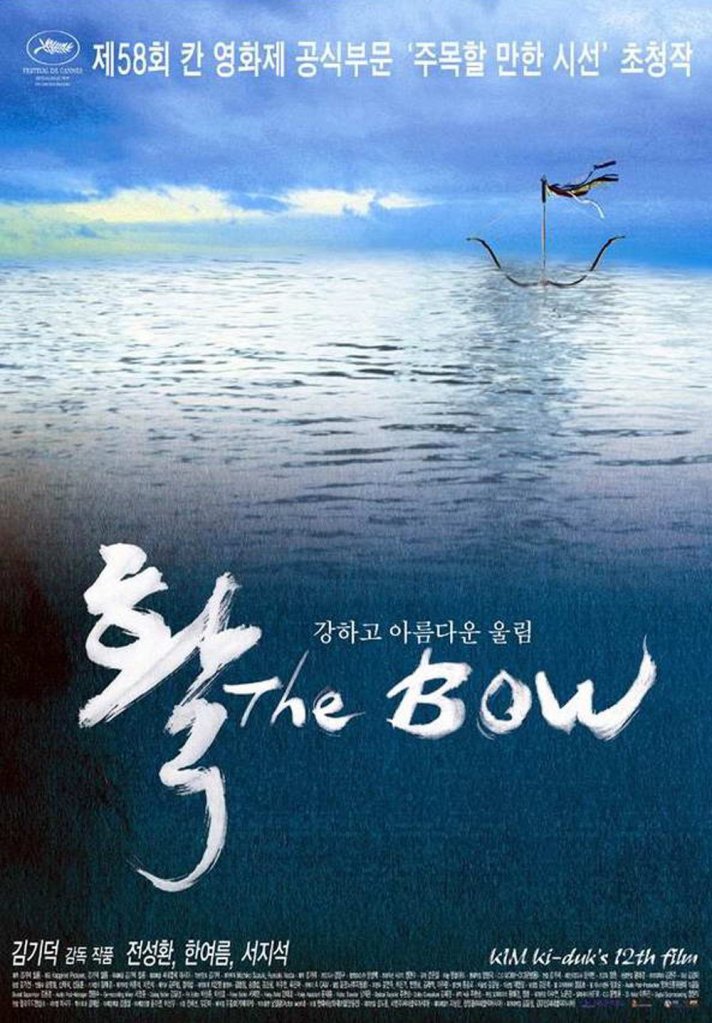
The bowKim Ki-duk is not known for his conventional approach to morality but even so his 12th feature, The Bow (활, Hwal), takes things to a whole new level of uncomfortable complexity. While nowhere near as extreme as some of Kim’s other work, The Bow takes the form of a fable as an old man and a young girl remain locked inside a mutually dependent relationship which, one way to another, is about to change forever.
The old man owns a fishing boat on which he lives with a young girl most assume to be his granddaughter. This theory is quickly disproved by the old man’s obsession with his wall calendar on which he excitedly crosses of the dates, making a note of how many there are left until the circled day on which is marked the word “wedding”. Whose wedding, one is apt to ask but the obvious answer is the correct one. The old man plans to marry the young girl on her 17th birthday. Having “found” her ten years ago, he’s been patiently raising her and now awaits his reward. It’s not clear if he has actually asked the girl, who seems to look to him as a paternal rather than romantic figure, but at any rate the relationship between them seems fairly solid at this point.

That is until one fateful day a young and handsome student boards the boat and immediately captures the girl’s attention. Having been cooped up here for ten a whole years seeing no one other than the old man and the guys who come to fish, the girl is instantly smitten – just like Miranda laying eyes on Ferdinand for the very first time. The old man is worried – is he about to lose his prize bride to a young buck? With the fateful day approaching, the girl becomes increasingly cold and rebellious towards her father/husband-to-be, though which direction she will eventually choose is anyone’s guess.

The old man is very protective of his charge, taking out his bow and arrow when the other guys on the boat try it on (and some take the chase to quite unpleasant places) but perhaps that’s more about defending his property from spoilage than it is about saving a defenceless girl from a traumatic situation. Neither the girl nor the old man speak very much, occasionally one whispers to the other who then passes the message on via another whisper to whomever it was intended for. Perhaps they genuinely have no need for talking but at any rate the girl never voices any objections to her life on the boat and the only signs of rejection given are a sullen look, rebellious courting of the customers and finally a good old fashioned slap to the face.

The bow of the title is both a weapon and a musical instrument when the string is tightened over a drum rather than across an arrow. The artist and the warrior are truly two sides of the same coin, swapping drums for arrows as the occasion calls. The old man, who is more or less cast as the protagonist of the tale meeting a final swan song, has all these qualities. A rough sea hand, he lives a life of isolation alone with the girl on a boat in the middle of the sea, the music their only form of entertainment. As well as the fishing business, the man also tells the fortunes of his customers by firing arrows at a picture of a Buddhist deity while the girl rides a swing in front. The boat itself is a world entire, with its own rules and rituals – all things are contained inside of it, violence mixed with beauty and love mixed with fear.

It’s ironic in one sense that the girl’s would be rescuer is another man with less prurient designs, but still designs all the same, on her as a woman. That she’s apparently lived on this boat for ten years with people coming and going all the time and with no great attempts to maintain a convenient excuse is shocking in itself. Whether the relationship between the old man is entirely genuine or born of a kind of Stockholm syndrome is a matter for debate, but Kim opts not to fully explore the uncomfortable elements of this unusual situation in favour of casting the old man as a kind of love fool.

Though actually featuring much more dialogue than the average Kim film, The Bow is at heart a symbolic exercise which becomes a complex and extended Buddhist metaphor. Playing out like a boat bound The Tempest, the old man becomes Prospero with a bow rather than a staff and as a prophet rather than a magician. The student, like Ferdinand, shatters their peace by bringing the outside world into their idyll with all of its pleasures and complications. The old man faces a choice, burn his books and abandon his kingdom or keep his daughter/wife-to-be fearful enough to stay with him rather than the young man who offers her, literally, the world, which she has never known. Kim descends into a surrealist frenzy as the finale approaches, culminating either in a beyond the grave consummation of true love or a spiritual rape, depending on your point of view. Whichever you choose, The Bow is both a complex and poetic exploration of human relationships but one that proves unpalatable and, ultimately, hollow.


Original English language trailer (dialogue free, English text)

Peony Lantern (牡丹燈籠, Satsuo Yamamoto, 1968)

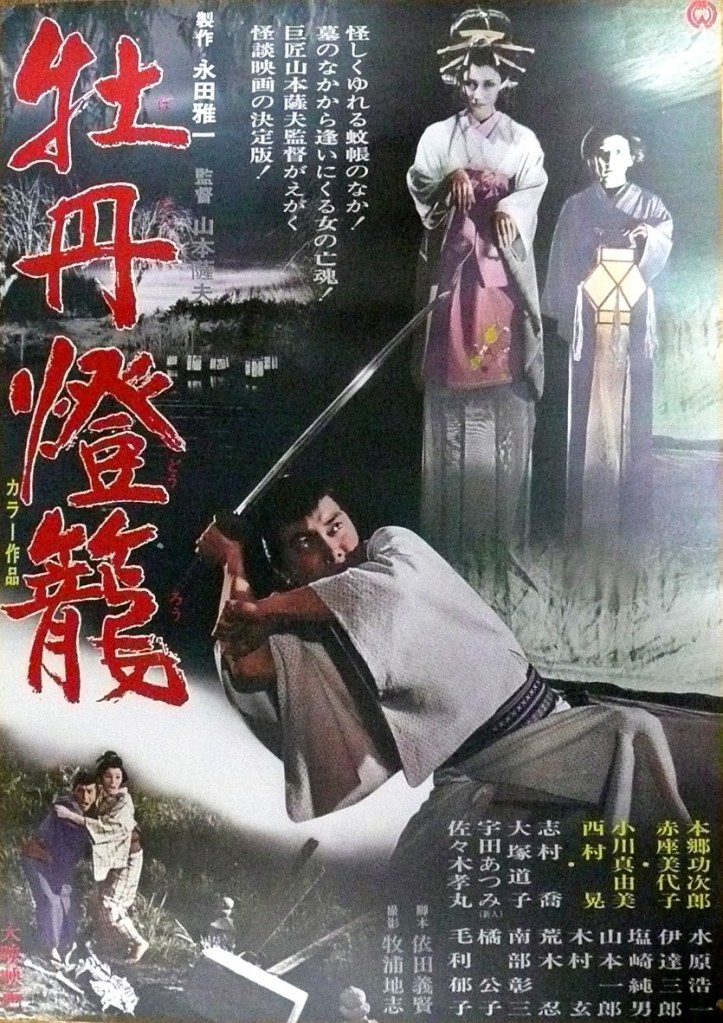
peony lanternThe Peony Lantern (牡丹燈籠, Kaidan Botan Doro) has gone by many different names in its English version – The Bride from Hades, The Haunted Lantern, Ghost Beauty, and My Bride is a Ghost among various others, but whatever the title of the tale it remains one of the best known ghost stories of Japan. Originally inspired by a Chinese legend, the story was adapted and included in a popular Edo era collection of supernatural tales, Otogi Boko (Hand Puppets), removing much of the original Buddhist morality tale in the process. In the late 19th century, the Peony Lantern also became one of the earliest standard rakugo texts and was then collected and translated by Lafcadio Hearn though he drew his inspiration from a popular kabuki version. As is often the case, it is Hearn’s version which has become the most common.
The central figure in Satsuo Yamamoto’s 1968 prestige picture for Daiei is the third son of a samurai household, Shinzaburo (Kojiro Hongo). This is the first Obon festival since his older brother died leaving a young widow behind him. Kiku, his sister-in-law, is becoming a problem for the clan as her birth family have not called her back and it’s embarrassing for them to have an unattached woman of age wasting away at home. Accordingly, they think the best option is for Shinzaburo to marry his brother’s wife. Shinzaburo is having none of it. A progressive kind of samurai, he spends his time teaching poor children to read and even dreams of opening a school one day but his family most definitely do not approve and see this marriage as an opportunity to put an end to his improper ideas about social justice.

Heading back to the village under a cloud, Shinzaburo helps one of the children push two of the lanterns which had got stuck by the shore out onto the lake. Suddenly two lantern carrying women appear from nowhere and thank him. Later, the same two women arrive at Shinzaburo’s home to thank him again and relate a sad tale – the older woman, Oyone (Michiko Otsuka), is a servant of the younger one, Otsuyu (Miyoko Akaza), and they’ve come from the red light district. Otsuyu apparently hailed from a samurai background but was tricked and forced into the yoshiwara after her father was abandoned by his clan and subsequently fell ill. She is still a virgin but has attracted the attentions of an older wealthy client and is expected to acquiesce to his desires after the Bon festival is over. Shinzaburo seems like such a nice guy that she’d much prefer to stay with him, at least until Bon is over. There is one quite important detail which Oyone and Otsuyu have omitted from their history.

Despite it being Bon – the Japanese summer festival in which the dead return to the land of the living, Shinzaburo never stops to think about where these two women might have come from. Truth be told, he’s in something of a dark place what with the current familial discord which might see him either exiled from his clan (which would entail the loss of his living as well as his status), or an arranged marriage to a woman he doesn’t love who also was previously married to his brother. The villagers are very fond of Shinzaburo and grateful for his efforts with the children. Should they lose him, they would never find a replacement and the children would remain uneducated.

Despite having contributed to the war effort by making a series of propaganda films, director Satsuo Yamamoto was an openly committed communist and though Peony Lantern is in no way overtly political or at least not in the same sense as some of his other work, it nevertheless manages to work in the cruelty and indifference of feudal elites towards the ordinary people below them. This is a theme which is common in kaidan/horror films from this era and particularly from Daiei, but Shinzaburo is something of an exception to the rule as he stems from the samurai order himself. His family find his commitment to educating the peasantry at best eccentric and at worst embarrassing though Shinzaburo is determined to live in a more altruistic way than his rigid, tradition bound relatives.

This does leave him feeling slightly adrift as he’s at odds with both the samurai class of his birth but also with the villagers who see him as a teacher and someone to look up to, but definitely not as one of them. When the pretty Otsuyu and her maid arrive with a tragic story also involving the harshness of the samurai class, it’s primed to catch Shinzaburo’s attention and lonely as he is perhaps he doesn’t quite stop to ask questions when offered the opportunity to play kindly saviour to a sad young woman about to be robbed of her right to choose her own destiny (much as he will be, only worse). His relations with Otsuyu leave him feeling progressively weaker but still he can’t seem to bring himself to the decision to send her away entirely.

Perhaps it’s death Shinzaburo craved all along, an end to his tormented existence and the loneliness that comes of being caught between two social strata in a strictly controlled class hierarchy. The two ghosts are not malicious, they’ve come craving love and kind words from an honest man and hit the jackpot with the softhearted Shinzaburo. Tragic as it all is, perhaps everyone ultimately got what they wanted – an end to the eternal loneliness of having been cast out from one world and unable to fully embrace another.

Despite the emphasis on the indifference of the samurai class, the poor aren’t all saints either as seen in the feckless servant character, Banzo (Ko Nishimura), who begins as comic relief but ends up very much not. He is the first to witness the ghostly nature of the two visitors and to try and save Shinzaburo from their clutches, but when his wife comes home for her Obon holiday everything changes. Banzo’s wife orders him to blackmail the ghosts for money which they eventually get by digging up a neighbouring grave. Little to they know that it’s not supernatural forces which they will need to be worrying about in the future and they will pay a heavy price for their greed.

Yamamoto captures the eeriness of his undead visitors perfectly as they float and glide across the screen. The first scene in which Banzo peeks in on them with Shinzaburo and sees them as they really are is truly shocking as is the raw power with which Oyone later confronts him. Switching effortlessly between nervous, melancholy women seemingly caught in a more Earthly kind of purgatory, and etherial escapees from the underworld, Otsuyu and Oyone continually carry a kind of death-tinged strangeness around with them. A beautifully filmed, supremely creepy adaptation of the classic story, Yamamoto’s Peony Lantern is a suitably macabre, gothic affair which is entirley unafraid to explore the essential darkness of the tale at hand.


Lost Paradise (失楽園, Yoshimitsu Morita, 1997)

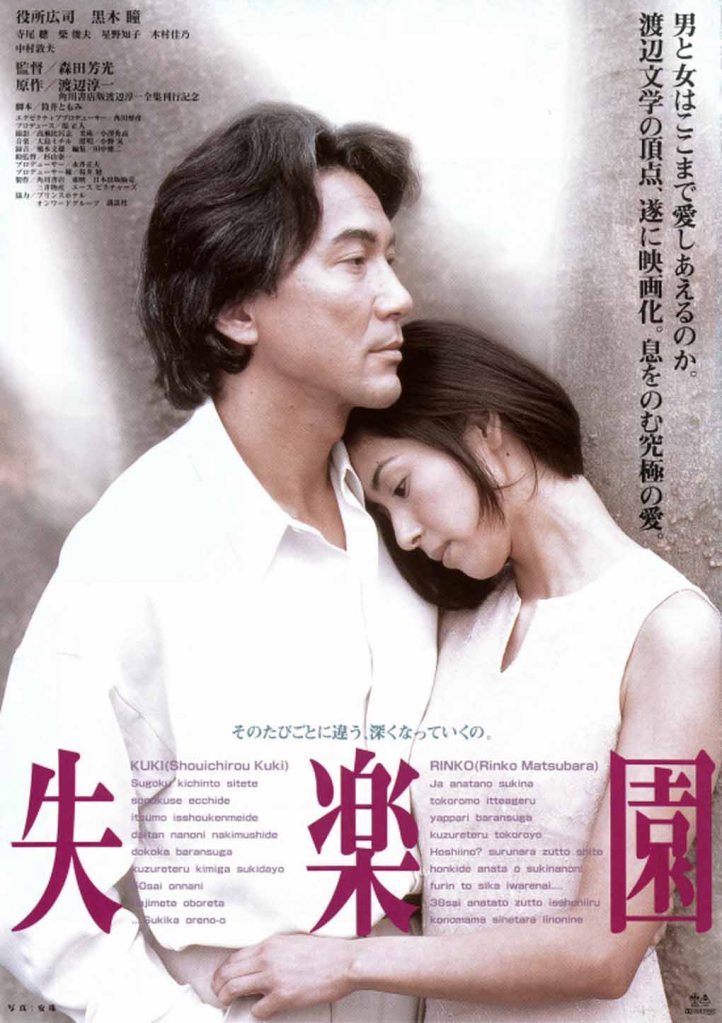
lost paradiseYoshitmitsu Morita tackled many different genres during his extremely varied career taking in everything from absurd social satire to teen idol vehicles and high art films. 1997’s Lost Paradise (失楽園, Shitsurakuen) again finds him in the art house realm as he prepares a tastefully erotic exploration of middle aged amour fou. Based on the bestselling novel by Junichi Watanabe, Lost Paradise also became a breakout box office hit as audiences were drawn by the tragic tale of doomed late love frustrated by societal expectations.
We meet Kuki (Koji Yakusho) and Rinko (Hitomi Kuroki) about to bid each other goodbye for the day, playfully in love though perhaps self conscious. It’s not until later that we realise they are both already married – just not to each other. Kuki, 50 years old, has reached an impasse in his life. Effectively demoted and sidelined at work, his homelife is not exactly unhappy but has long since lost his interest. His daughter is grown up and married herself, his wife has a career of her own, his mortgage is already paid off. There is really nothing left for him to do. That is until he meets calligraphy teacher Rinko and falls passionately in love for the first time in his life.

Rinko, 38, entered into an arranged marriage at 25 though the kindest way of describing it would be “unfulfilling”. Haruhiko (Toshio Shiba), her husband, is a doctor by profession and cuts a cold and distant figure. Prone to violent outbursts and pettiness, he treats Rinko more as a house keeper than a wife ordering her to buy his favourite kind of cheese (even urging her to travel to a different shop if the first one doesn’t have it) but then not even looking up when she brings it into his study for him. Lasciviously poking a spoon into the soupy mess, he pauses only briefly after savouring his first taste to give Rinko her next set of orders with no word of thanks or even acknowledgement of her success in obtaining this oddly specific cheese related request.

Finally in each other Rinko and Kuki find completeness long after they’d stopped seeking it. Rinko is unhappy in an arranged marriage which offers scant comfort, though Kuki’s problems are more akin to a mid life crisis as he finds himself an unnecessary presence at home whilst also realising that he’s already passed the high point of his career. Though there are no real barriers to Rinko and Kuki simply leaving their spouses and starting again together, it’s never quite that simple as the social stigma of an extra-marital affair continues to undermine their new found romance.

As in many of Morita’s films, the overall tone is one of pessimism as Rinko and Kuki face opposition from all sides whilst falling ever deeper into a whirlwind of self destructive passion. Rinko confides in a recently divorced friend who has guessed her secret and urges her to try and be happy, but Kuki keeps matters to himself whilst listening to the romantic problems of his workmates many of whom state that they too would like to fall madly in love, just once. When one of Kuki’s most valued colleagues falls ill, he laments having lived his life in the straightforward way expected by society. He’s done everything right – spent all his time working hard, built a career which was about to go south anyway. If all that happens is that you get old and die what was it all for – perhaps you’re better off just doing as you please, social expectations be damned.

Eventually the pair get an apartment and indulge in some part-time domesticity though an ill thought out blackmail plot soon changes things for both of them. Haruhiko refuses to divorce Rinko but Kuki’s wife is more sympathetic and open to the idea of sorting things out as quickly as possible. Though he suffers in other ways, Kuki finds it easier to accept the idea of moving on than Rinko who also faces opposition from her own mother who brands her as immoral and someone to be pitied for having given in to weakness and allowed her baser instincts to take over. Soon the couple find themselves thinking about a way to be together for eternity even if it lies in another world than this one.

Likened to the famous case of Sada Abe (also the inspiration for Oshima’s In the Realm of the Senses), Rinko and Kuki are consumed by their own passion and ultimately unable to continue living outside it. Morita opts for an artful aesthetic and keeps his eroticism on the classy side rather than descending into exploitation or salaciousness. Making use of frequent handheld camera and odd angles to bring out the giddy, unbalanced mindset of the central couple Morita also experiments with colour often cutting to black and white or sepia mid-scene. The tragedy of this love story is that it occurs at a societally inconvenient time – there is nothing wrong in Rinko and Kuki’s romance save that it started after they were already married to other people. This may not seem such a great problem but in a society which demands conformity and adherence to its rules, those who break them must be prepared to pay a heavy price. Perhaps the last words ought to belong to Kuki’s poetic friend who points out that life if short and rarely rewards those who play by the rules, it may be better to burn out brightly rather than flicker away for an eternity.


Original trailer (no subs)

Ten Dark Women (黒い十人の女, Kon Ichikawa, 1961)

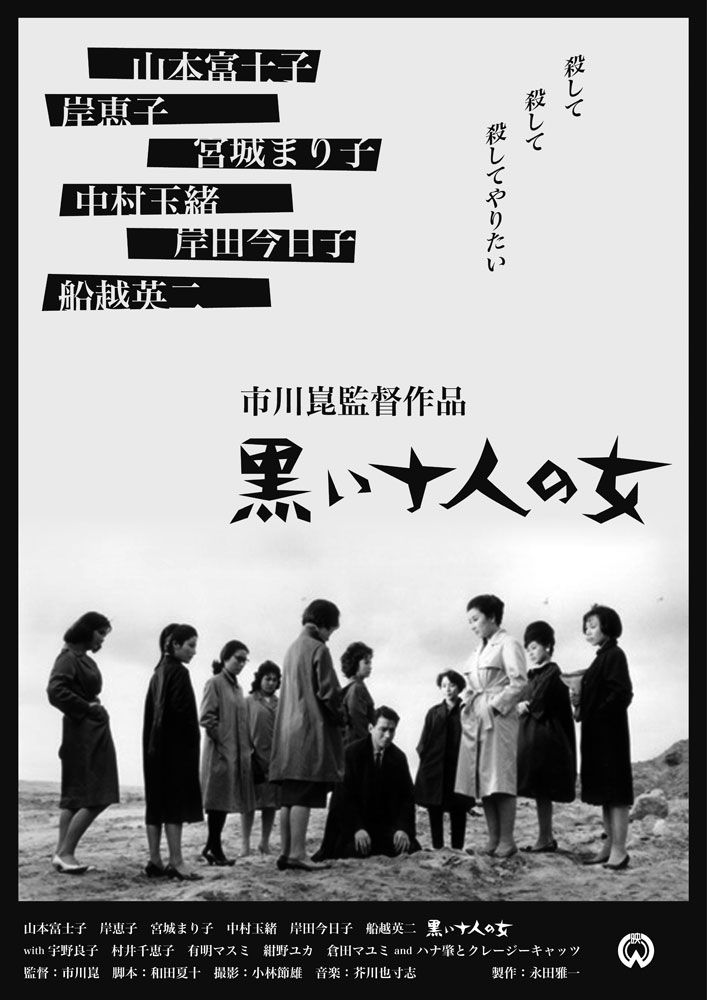
Ten Women in BlackKon Ichikawa, wry commenter of his times, turns his ironic eyes to the inherent sexism of the 1960s with a farcical tale of a philandering husband suddenly confronted with the betrayed disappointment of his many mistresses who’ve come together with one aim in mind – his death! Scripted by Natto Wada (Ichikawa’s wife and frequent screenwriter until her retirement in 1965), Ten Dark Women (黒い十人の女, Kuroi Junin no Onna) is an absurd noir-tinged comedy about 10 women who love one man so much that they all want him dead, or at any rate just not alive with one of the others.

Kaze (Eiji Funakoshi) is a TV producer by profession, though it might be better to think of him as a professional ladies’ man. He’s married to a woman who owns a bar, but is also carrying on affairs with nine (!) other women plus occasional one night stands with 30-50 others he meets through his work. His wife knows about his affairs and, while not happy about it, is putting up with things like decent wives are supposed to do. However, many of Kaze’s “mistresses” have inconveniently discovered each other’s existences and bonded in their mutual frustration with him. Strangely they all think he’s a great guy and remain very much in love with him but the situation being what it is the entirety of the betrayed wife and mistress support club eventually comes to the same conclusion – Kaze must die!

However, the women are all so devoted to Kaze, they don’t quite want him to disappear so much as for him to pick them and only them to live with happily ever after. One of the women foolishly warns Kaze about their plot as leverage for her marriage proposal but unfortunately for her he still turns her down and returns home to ask his wife what’s going on. She doesn’t deny her murderous intentions and in fact tells him in great detail how they intend to do him in. Kaze, to his credit, says he doesn’t mind very much and only worries about his wife’s future life as a murderess. Together they hatch a plan to fool the other women involving a pistol loaded with blanks and a tomato but nothing quite goes to plan.

An absurdist satire about the intense vanity of the womanising male, Ten Dark Women looks forward to Fellini’s similarly themed 8 1/2 or City of Women though here the idiotic husband at the centre becomes both prey and foil for the group of plotting women seeking revenge against his disloyal ways. Kaze, as he himself admits, is not particularly appealing to women though his position at the TV studio undoubtedly proves useful to some of them. He’s a curiously passive presence, not so much seeking out female company as acquiescing to it. It’s not quite clear if his concern for his wife should she decide to kill him is genuine or a means of manipulative self preservation but at any rate he takes the threat to his life extremely calmly.

Each of the women has their own claims on Kaze but the other thing they all have in common is being the prisoner of an extremely sexist society. Some of the women are with Kaze for careerist reasons, but it’s clear that there is a definite limit placed on a woman’s potential both inside and out of the creative industries. The commercial model makes a play for a more official relationship by bringing up the fact that Kaze’s wife has a job and therefore cannot devote herself entirely to Kaze’s wellbeing as proper wife should (as by implication would she after marrying and retiring from the modelling world). Kaze helped his wife set up her bar which she runs herself though constantly plays hostess to her husband’s industry friends. It appears what Kaze wants is less a devoted wife than an indifferent one who will permit his frequent “indiscretions” whilst also providing him with a conventional “home”.

Another of the women tries to get herself a promotion but her boss, though broadly sympathetic and dangling the idea of a raise, brings up the oft repeated notion that there’s no sense in giving her the job because a woman should leave at some point to marry and have children. When the woman criticises the behaviour of her male colleagues, her boss simply shrugs and admits men in TV aren’t “serious”, yet when she points out that she is serious and works hard she is told that women are better off at home. Women, he says, express themselves through their children whereas men make their mark through a career. The woman says that she believes everyone should try to reach their own potential in whatever way they can but her pleas fall on deaf ears. This notion is repeated later on when the women try to take revenge on Kaze by tricking him into resigning from his job – a man is his work, he claims. A man without a job is nothing at all and a man who is kept by a woman is less than nothing – Kaze is suddenly panicked, losing his occupation and social position is much more frightening to him than losing his life.

The women couldn’t kill the system or the TV, but they could kill Kaze so who can blame them for trying. Another of the women states that the imposed isolation of a man’s working life has cost him the ability to connect with other people on a human level and so his erasure is simply the end of a long process of social death. If some of the women triumph, others retreat as one does in suicide only to return as a ghost longing for the murder plot to succeed so that she and Kaze can be alone together at last. Kaze thinks he’s using each of them, but they have all been using him in one way or another and his only way out lies either in death or becoming a trophy for the most needy of his paramours.

Cynical in tone, Ten Dark Women is an amusingly absurd look at gender roles in early 1960s Japan as each of our women attempts to usurp male power for their own ends, some with more success than others. Ichikawa employs beautiful noir lighting in his elegantly composed black and white photography which, along with its jazzy score, gives the film a familiar feeling of crime laced modernity. An early instance of the feminist revenge film, Ten Dark Women is very much a comedy which avoids making its group of frustrated, resentful women mistreated by a buffoon of a TV exec the butt of its own joke, neatly highlighting the precarious nature of their existence which obliges them to rely on so hollow a support.


Original trailer (no subtitles)