 Because it’s there. As good a reason as any for doing anything but these were the only three words of explanation offered by George Mallory in answer to the question “Why climb Everest?”. In Powell & Pressburger’s The Red Shoes, the heroine reacts in a similarly philosophical fashion when asked “Why do you want to dance?” replying with the question “Why do you want to live?”. What makes some people prepared to dance until their feet bleed and their toes break, and sends others to the peaks of snowcapped mountains staring death in the face as they go, is something which cannot be fully explained in words but cannot be denied by those who hear its calling.
Korea’s most well known mountain climber, Um Hong-gil (Hwang Jung-min), was undoubtedly one who heard the call and The Himalayas (히말라야) is his story (more or less). Based on his real life exploits, the film charts his continuing successes as an international climber until a foot injury forces him to remain on a more usual altitude, but the real heart of the story is in his growing relationship with rookie Moo-taek (Jung Woo) who’s every bit as fearless as he is. Together the pair scale the peaks of the world’s highest mountain ranges until it’s finally time for Hong-gil to hang up his pick and keep his feet on the ground for good.
However, tragedy strikes as one of Hong-gil’s closest friends is suddenly killed after getting caught in an unexpected storm. The mountain ranges of the world are littered with the corpses of unfortunate climbers who got into difficulty and couldn’t be rescued. The bodies remain where they fell, becoming one with mountain itself in a lonely climbers graveyard, frozen and perfect for eternity. Risking your own life to retrieve the lifeless body of a friend may seem like a perverse, irrational thing to do, yet understandable. Wracked with guilt and grief, Hong-gil assembles a team and embarks on a sentimental journey to bring his friend home, and, ironically, learn to let him go.
What starts off as a sports movie with its training sequences and tough coach inspires maverick rookie routine branches off into the classic expeditionary adventure format before falling into its unexpected home genre – the melodrama. Though in one sense a kind of biopic, the realm aim is to get those tears rolling as these brave men and women risk all for glory and comradeship in pushing the limits of the human condition far past their breaking points.
Hong-gil himself is, despite his gruff exterior, a dreamer and idealist in love with the soulful purity of the mountains. His is a journey of self discovery as he tells us that there is no pretence when it comes to mountain climbing. When you’re up there alone, just you and the vast snow covered emptiness, all of your masks and defences fall away. Hong-gil climbs the mountain to explore landscape of his own mind. He also objects to the often uttered phrase “conquer” a mountain as he believes the mountain gives you permission to ascend making this way of thinking disrespectful and even likens the mountain itself to woman when bemoaning Moo-taek’s pointlessly noble romantic gesture by stating that you don’t conquer the “mountain” you console it.
For all that, the real world is ever present as we see in one particularly awkward marketing pitch in which Hong-gil is trotted out as a model to have the prospective sponsor’s logo plastered all over him in the hopes that they will fund an expedition. When someone raises the very sensible point that this could look very bad for them should one of the climbers die with their logo on their chest, the marketing guys slowly start peeling them all off – velcro solves everything, it seems.
The team also becomes a marketing tool for their nation, carrying the Korean flag around with them for any photo opportunities which might present themselves. When tragedy strikes and the remainder of the Korean expeditionary group refuse to go after their fallen friend (the right and practical decision given the weather conditions and the low probability of success), base camp puts out a message over the radio in English pleading for help. The British contingent continue with their crosswords and cups of tea, steadfastly ignoring the emotional mayday call. The Chinese at least begin reassuring each other that it’s far too dangerous to contemplate.
The Himalayas begins as a comedy but the laughs fall away once the tears start rolling. Though it may affect a poetic tone the philosophical meandering is generally at the service of the melodrama which is very much underpinned by male bonding, pride, honour, debt and responsibility. Hong-gil’s “Human Expedition” is one of grief stricken madness but a perfectly understandable one in which he both needs to atone for “abandoning” his mountaineering brother and come to terms with the fact that the death zone has claimed another sacrifice. Often impressively filmed, The Himalayas suffers from its extremely melodramatic, sentimental tone which is only exacerbated by the intrusion of its loud and syrupy score. Anchored by strong performances from its leading players including Hwang Jung-min as the tough yet sensitive Hong-gil and Jung Woo as the young firebrand Moo-taek, The Himalayas spends too long at the destination rather than on the journey and ultimately fails to make either its character drama or expeditionary environment sufficiently engaging.
Seen as part of a teaser programme for the upcoming London Korean Film Festival 2016.
US release trailer:
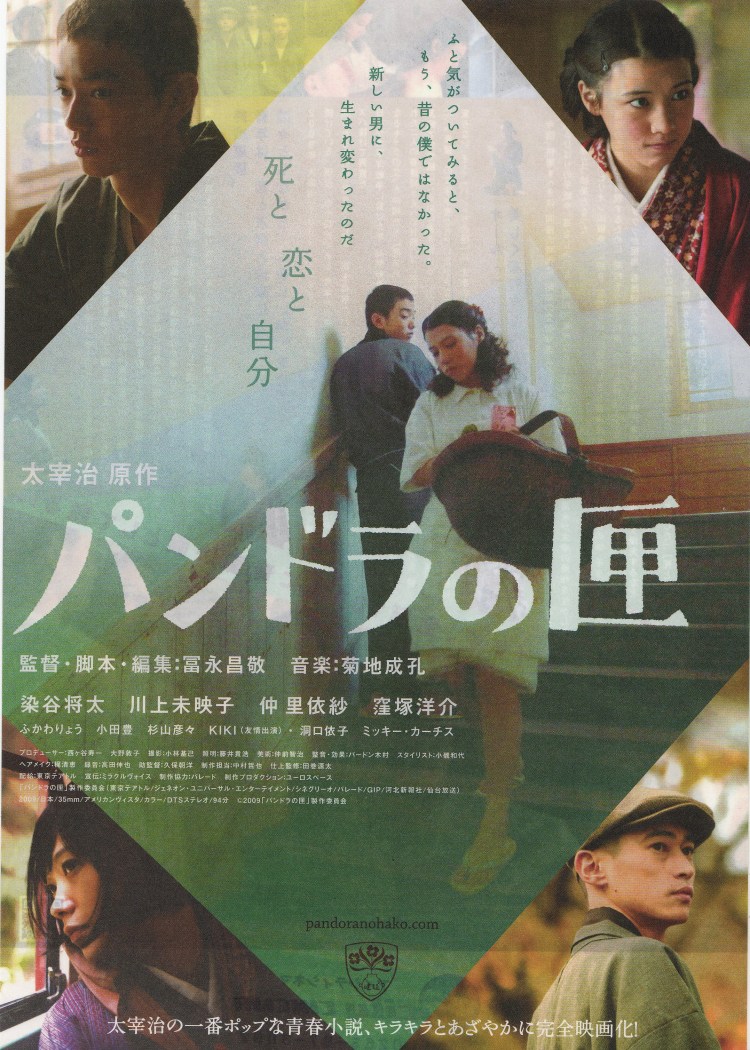 Osamu Dazai is one of the twentieth century’s literary giants. Beginning his career as a student before the war, Dazai found himself at a loss after the suicide of his idol Ryunosuke Akutagawa and descended into a spiral of hedonistic depression that was to mark the rest of his life culminating in his eventual drowning alongside his mistress Tomie in a shallow river in 1948. 2009 marked the centenary of his birth and so there were the usual tributes including a series of films inspired by his works. In this respect, Pandora’s Box (パンドラの匣, Pandora no Hako) is a slightly odd choice as it ranks among his minor, lesser known pieces but it is certainly much more upbeat than the nihilistic Fallen Angel or the fatalistic
 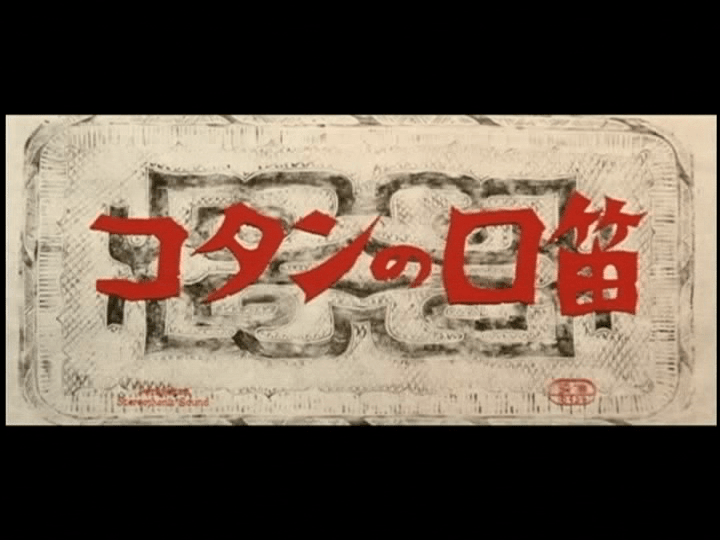 The Ainu have not been a frequent feature of Japanese filmmaking though they have made sporadic appearances. Adapted from a novel by Nobuo Ishimori, Whistling in Kotan (コタンの口笛, Kotan no Kuchibue, AKA Whistle in My Heart) provides ample material for the generally bleak Naruse who manages to mine its melodramatic set up for all of its heartrending tragedy. Rather than his usual female focus, Naruse tells the story of two resilient Ainu siblings facing not only social discrimination and mistreatment but also a series of personal misfortunes.
 Akio Jissoji has one of the most diverse filmographies of any director to date. In a career that also encompasses the landmark tokusatsu franchise Ultraman and a large selection of children’s TV, Jissoji made his mark as an avant-garde director through his three Buddhist themed art films for ATG. Summer of Ubume (姑獲鳥の夏, Ubume no Natsu) is a relatively late effort and finds Jissoji adapting a supernatural mystery novel penned by Natsuhiko Kyogoku neatly marrying most of his central concerns into one complex detective story.
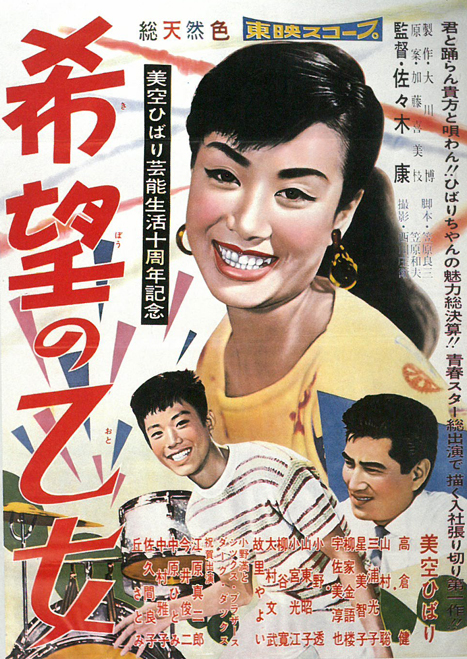 Another vehicle for post-war singing star Hibari Misora, With a Song in her Heart (希望の乙女, Kibo no Otome) was created in celebration of the tenth anniversary of her showbiz debut. As such, it has a much higher song to drama ratio than some of her other efforts and mixes fantasy production numbers with band scenes as Hibari takes centre stage playing a young woman from the country who comes to the city in the hopes of becoming a singing star.
 If you’re going on the run you might as well do it in style. Wait, that’s terrible advice isn’t it? Perhaps there’s something to be said for planning a cunning double bluff by becoming so flamboyant that everyone starts ignoring you out of a mild sense of embarrassment but that’s quite a risk for someone whose original gamble has so obviously gone massively wrong. An adaptation of a manga, Katsuhito Ishii’s debut feature Sharkskin Man and Peach Hip Girl (鮫肌男と桃尻女, Samehada Otoko to Momojiri Onna) follows a mysterious criminal trying to head off the gang he just stole a bunch of money from whilst also accompanying a strange young girl, also on the run but from her perverted, hotel owning “uncle” who has also sent an equally eccentric hitman after the absconding pair with instructions to bring her back.
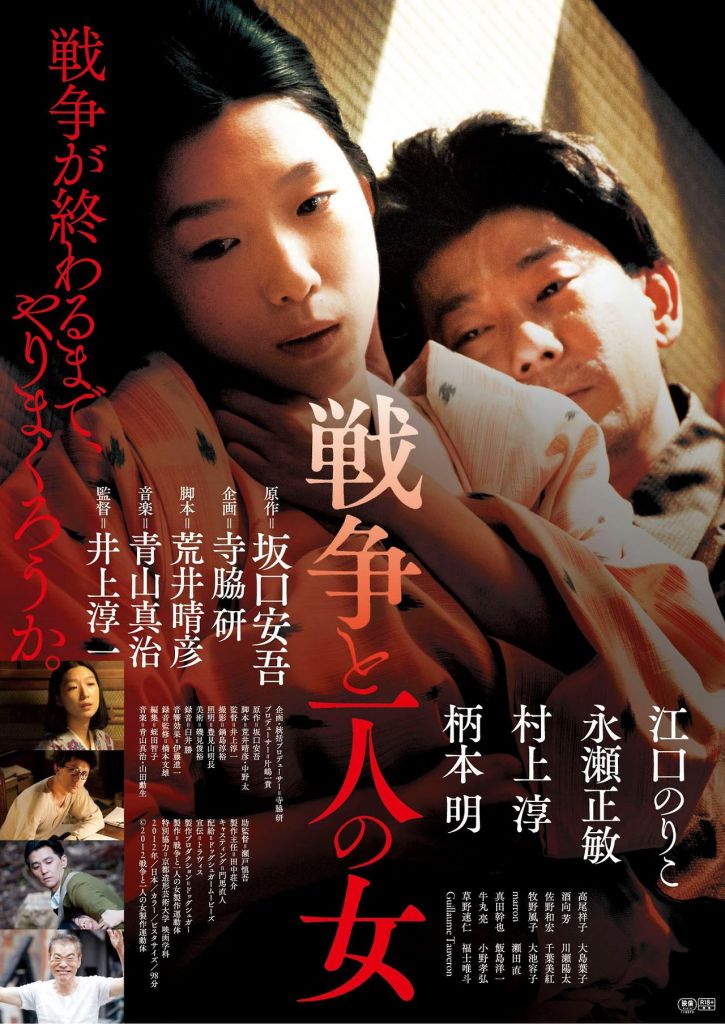 Junichi Inoue is better known as a screenwriter and frequent collaborator of avant-garde/pink film provocateur Koji Wakamatsu. A Woman and a War (戦争と一人の女, Senso to Hitori no Onna) marks his first time in the director’s chair and finds him working with someone else’s script but staying firmly within the pink genre. Adapted from a contemporary novel by Ango Sakaguchi published in 1946, A Woman and a War is an intense look at domestic female suffering during a time generalised chaos.
 Possibly the most successful of China’s Fifth Generation filmmakers, Zhang Yimou is not particularly known for his sense of humour though Happy Times (幸福时光, Xìngfú Shíguāng) is nothing is not drenched in irony. Less directly aimed at social criticism, Happy Times takes a sideswipe at modern culture with its increasing consumerism, lack of empathy, and relentless progress yet it also finds good hearted people coming together to help each other through even if they do it in slightly less than ideal ways.
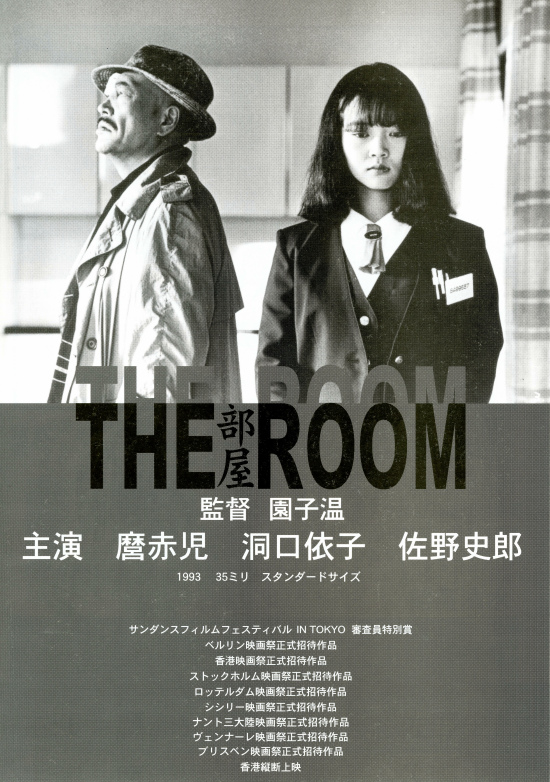 Though the later work of Sion Sono is often noted for its cinematic excess, his earlier career saw him embracing the art of minimalism. The Room (部屋, Heya) finds him in the realms of existentialist noir as a grumpy hitman whiles away his remaining time in the search for the perfect apartment guided only by a detached estate agent.
 Yoji Yamada’s films have an almost Pavlovian effect in that they send even the most hard hearted of viewers out for tissues even before the title screen has landed. Kabei (母べえ), based on the real life memoirs of script supervisor and frequent Kurosawa collaborator Teruyo Nogami, is a scathing indictment of war, militarism and the madness of nationalist fervour masquerading as a “hahamono”. As such it is engineered to break the hearts of the world, both in its tale of a self sacrificing mother slowly losing everything through no fault of her own but still doing her best for her daughters, and in the crushing inevitably of its ever increasing tragedy.
 Windows on Worlds