The Big Heat (城巿特警, Andrew Kam & Johnnie To, 1988)

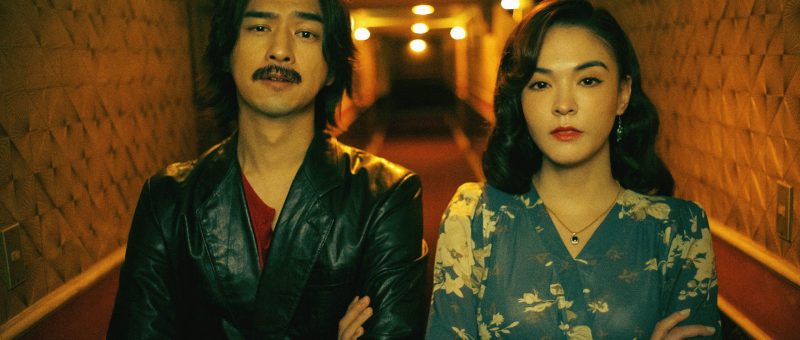
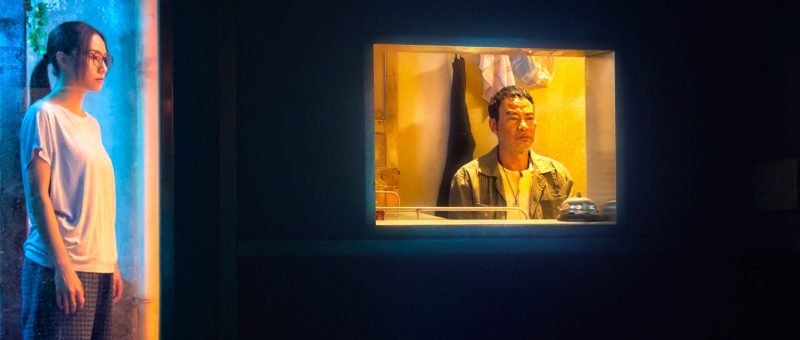
A Hong Kong cop struggles with his sense of responsibility when faced with the fatalistic existential threat of the imminent Handover in Johnnie To’s first foray into the genre with which he would later become most closely associated outside of Hong Kong, the action crime drama. After a handful of Cinema City comedies, To is credited as a co-director along with Andrew Kam Yeung Wah though the production of The Big Heat (城巿特警), loosely inspired by the Fritz Lang film of the same name, was notoriously complicated passing through several hands over its unusually long gestation of almost two years, according to an interview with screenwriter Gordon Chan Kar-Seung, with producer Tsui Hark also heavily involved in the shooting. 

Tsui’s involvement is apparently responsible for the unusual level of explicit violence more usually found in horror exploitation rather than gangster noir, though there is perhaps something in the constant bodily destruction that aligns with the pre-Handover setting in which the “big heat” hanging over the city is an increasing existential panic which has created the maddening environment in which this surreal violence can occur as revealed in the opening dream sequence which features a drill piercing a man’s hand with small pieces of flesh speeding off it. The dream will turn out to be a prophecy foreshadowing the final shootout in which Inspector Wong (Waise Lee Chi-Hung) is shot thought the hand though at this point it signals both a psychological and physical fracturing. Owing to a neurological condition, Wong has lost full control over his right hand which leads him to question his ability to protect his city if he is unable to pull the trigger when needed which might also explain why he is frequently seen practicing his marksmanship at the firing range. 

Because of this anxiety, Wong had planned to resign but changes his mind on learning that his former partner who sustained an injury that Wong felt himself responsible for has been brutally murdered by Hong Kong gangsters in Malaysia after coming across a secret folder “by chance” containing photos used to blackmail a shipping magnate over his his homosexuality and an incriminating invoice. To do the right thing, Wong also temporarily breaks up with his forensic scientist girlfriend Maggie (Betty Mak Chui-Han) whom he was due to marry in a fortnight’s time suggesting that they not see each other until he’s solved his friend’s murder and then presumably plans to retire from law enforcement. 

Essentially, he deprioritises his personal, romantic relationships in favour of the homosocial brotherhood of the police both avenging his friend and dedicating himself to protecting Hong Kong from an oncoming threat represented by gangster Han (Paul Chu Kong) who is later revealed to be in cahoots with Russian mafia who ironically have a large portrait of Lenin on their boat and hammer and sickle flags everywhere while vowing to continue “selling drugs and capitalism” in the seemingly lawless environment of pre-Handover Hong Kong where everyone apparently wants to make enough money to be able to leave if the situation declines, “communist” Russians perhaps standing in for looming Mainland authoritarianism. Han even offers to sell “everything including Hong Kong” passing a list of names of “important people in the government” he apparently has access to in vast network of corruption. “Cheers to 1997” they ironically toast for their burgeoning business opportunity. 

It’s this corruption that is the source of Wong’s anxiety, fearing he doesn’t have the strength to stop it while his compromised hand is a symbol of both fate and an impotence that is later exorcised when he receives the corresponding physical injury yet is saved by a crucifix necklace that previously belonged to his girlfriend while in another instance of foreshadowing the corrupt policeman is eventually taken out by his own malfunctioning gun backfiring just like that which ruined an assailant’s hand in the drug bust in which Wong’s partner was injured. Having regained mastery over his hand, Wong is therefore more assured in his ability to protect Hong Kong from whatever it is that’s coming remaining within the police force while those who pay the heaviest price are an idealistic young rookie unable to adapt to the morally compromised world of pre-Handover Hong Kong, and Wong’s fiancée who becomes a symbol of that which he could not protect having prioritised his role as a police officer. Though somewhat disjointed having passed through so many hands, there are some typically To flourishes in the fluidity of the camerawork in the early stretches along with a gloomy romanticism in the fatalistic noir of the pre-Handover society even as he continues to find his feet as a purveyor of moody policier. 


Trailer (no subtitles)

Baby Assassins: Nice Days (ベイビーわるきゅーれ ナイスデイズ, Yugo Sakamoto, 2024) [Fantasia 2024]

After beginning to conquer the demands of adulthood, Mahiro (Saori Izawa) and Chisato (Akari Takaishi) are taking a well-deserved break, or more like a working holiday to be precise, but soon find themselves with another unexpected mission to clean up a messy situation on behalf of the Guild. Baby Assassins: Nice Days (ベイビーわるきゅーれ ナイスデイズ, Baby Valkyrie​: Nice Days), the third in series of deadpan slacker action movies from Yugo Sakamoto, adjusts the balance of the previous two films shifting more towards action than the girls’ aimless lives while setting them against an opponent who is anything but aimless.

In fact with the girls find their way to the home of Kaede Fuyumura (Sosuke Ikematsu), is plastered in ironic motivational slogans that seem to be a kind of parody of salaryman’s kaizen obsession. Fuyumura likes to rank things and wants to make sure he’s at the top, but also wants out of the game because he’s bored with it and also fed up with difficult clients frustrated when one takes ages to decide whether or not he should kill the target resulting unnecessary stress for them and an unsatisfying kill for Fuyumura. That’s largely why he’s agreed to this one last job of killing 150 people who took part in cancelling a university student online. The problem is that Fuyumura is a freelancer which presents a problem for the Guild which has decided he must die for violating their rules and bringing the profession into disrepute. Thus Mahiro and Chisato find themselves in an awkward position when they turn up to kill their latest target and realise they’ve been double booked to take out Fuyumura ’s kill.

The admin mixup, though it isn’t one really, rams home the series’ persistent absurdity that this weird world of assassins isn’t so different from contemporary corporate culture while the girls are still subject to the same problems as any other 20-something. This time around, we’re introduced to another prominent agency which is run out of a farmer’s agricultural co-op and hides weapons inside boxes of vegetables, while Mahiro and Chisato get a pair of supervisors with the de facto team leader Iruka (Atsuko Maeda) going off on lengthy rants about why it’s impossible to work with Gen Z while the girls struggle with her uptight dismissiveness. Yet even when there’s tension or discord, the fact remains that the Chisato and Mahiro are also part of a team and have a vast network of support to rely on including their cleanup squad while Fuyumura is a lone wolf who’s driven himself half out of his mind with his quest to be the best, a message is brought home to him when he approaches the farmer’s union to ask for “a replacement” after getting one of their guys killed only to be told off and reminded the farmers work as one big family rather than a series of disposable minions. 

There is something a little poignant about Fuyumura’s wondering when his birthday is as if this small forgotten detail represented his missing humanity. The only time he feels like a human being is doing something mundane like cleaning his microwave and brushing his teeth. As she had the brothers in the previous film, Mahiro finds a kind connection with Fuyumura as they each discover a worthy match but knowing only one of them can survive. In an introspective movement, Mahiro asks Chisato if they can still hang out together on the other side if the worst happens, but she shuts the question down perhaps more in an attempt to shift Mahiro’s mindset but also berating herself for forgetting her birthday and making hurried plans to coverup her crime against friendship.

For all the absurdity about hitman union rules and rights of employment in an illegal profession, the films has a genuine affection for the relationship between the two girls as well as that between the wider team who are always around to have their back while they also take care to protect each other. Perhaps having to field a work crisis during their “holiday” is their final test of adulthood, and one they largely pass in enforcing their boundaries and defiantly having a good time anyway even if they did have to cancel their reservation at local barbecue restaurant to stakeout the home of a crazed killer. Once again featuring a series of well choreographed and innovative action sequences, the series’ third instalment seems to come into its own expanding the world of the Baby Assassins but setting them free inside it evidently a lot more at home with the concept of adulting.


Original trailer (no subtitles)

May 18 (화려한 휴가, Kim Ji-hoon, 2007)

Following the assassination of president Park Chung-hee in 1979, many assumed that democracy would return and that the society would be liberated from its authoritarian past. That did not, however, come to pass. While the government floundered, general Chun Doo-hwan launched a coup that led to nothing other than a second military dictatorship. Citizens continued to press for democratisation and the lifting of the martial law that had been declared in the wake of Park’s death. In order to cement his authoritarian rule, Chun embarked on an oppressive crackdown of resistance activity, actually expanding martial law and sending troops to monitor universities where the majority of protests were taking place.  

It’s against this backdrop that Kim Ji-hoon’s May 18 (화려한 휴가, Hwaryeohan hyuga) unfolds, so named for the first day of Gwangju Uprising in which citizens of the small provincial city were subject to beatings, torture, rape and murder at the hands of military forces. He opens however with pleasant scenes of the local countryside as taxi driver Min-woo (Kim Sang-kyung) heads back into the city eventually arriving to pick up his younger brother Jin-woo (Lee Joon-gi) from high school and deliver him to the local church. Min-woo also has a crush on mutual friend and fellow attendee, Shin-ae (Lee Yo-won), who works as a nurse at the local hospital. For some reason even though this is a fairly small place, Min-woo also seems to be unaware that Shin-ae is the daughter of his boss Heung-su (Ahn Sung-ki ), a former army captain now retired and running a taxi firm. 

In an attempt to make the political personal, Kim spends the first hour on Min-woo’s awkward romance which by modern standards is quite problematic in that he basically ends up following Shin-ae around and offering to give her free lifts even though she seems annoyed to see him and isn’t keen on him effectively deciding where she doesn’t and doesn’t go. Meanwhile, as he and his brother are orphaned he’s adopted a paternal role towards Jin-woo who is bright and studying hard with the aim of getting into Seoul University to study law while Min-woo most likely had to give up school to drive the taxi so he could support them both. This is also in its way a little uncomfortable in its emphasis on Jin-woo’s bright future which is about to be destroyed by the uprising as if his life is worth more because of all the ruined potential rather than just because he was an ordinary human betrayed by his government and trapped by hellish atrocity. Even so, it hints at a conflict within Min-woo as he wants to keep his brother safe but also has a natural desire to resist injustice and is moved when Jin-woo explains that one of his best friends has been murdered by state violence. 

Then again, the film’s framing is also in a sense reactionary in Jin-woo’s intense offence against being branded as a “rebel” or a “communist” rather refocusing on the fact the military’s actions are inhuman and the their attempt to slur the local people only a means of justification. As the local priest accurately suggests, the military provokes them in order to have an excuse to crack down with extreme prejudice ensuring that there will be no further resistance to increasing authoritarianism. Some army officers begin to ask questions but are quickly shut down by their overzealous commander who claims the North may be on its way to link up with these “communists” and is quite clearly prepared to wipe out the entire town rather than back down and risk a further escalation of their resistance. 

While the soldiers are faceless and implacable, the townspeople are sometimes depicted as naive bumblers with significant time spent on a “loudmouth” comic relief character who is nevertheless one of the first to pick up a gun and join the town’s civilian army led by Heung-su who like the priest is under no illusions and assumes troops will soon storm the town. The comedic tone and melodramatic undercurrent often undercut Kim’s attempts to depict the horror of the massacre even in the irony of their juxtaposition as bullets suddenly rip into a cheerful crowd which had been laughing and joking only seconds before. The closing scenes in which a man refuses to surrender and is killed are framed as heroic but in the end seem futile, as if he’s thrown his life away for no reason. Even so there is something Shin-ae’s loudspeaker pleas to remember the citizens of Gwangju who stayed strong and resisted to the last rather than consent to their oppression even if she is in a sense condemned to be the storyteller bearing the horror of it all alone along with the loss of her own happy future crushed under the boots of violent authoritarianism.


International trailer (English subtitles)

Round Trip Heart (ロマンス, Yuki Tanada, 2015)

“Somewhere in Japan, there’s someone waiting for me” sing the heroes of Yuki Tanada’s Round Trip Heart (ロマンス, Romance), each a little lost and unwilling to go home looking for something but also afraid to find it. In any case, they can only begin by stepping off the rails and taking a detour through their shared sense of loneliness bonding as they look for new directions and an accommodation with a disappointing reality. 

Ironically enough, Hachiko (Yuko Oshima) is a top operator of the refreshment cart aboard the Romance Car heading from Tokyo to the country by train. Hachiko claims to love trains because of their sense of certainty. After all they travel on rails, have a clear destination, and will definitely return after reaching the end of their journeys. She meanwhile feels a little lost and empty in her life of forced politeness with a feckless boyfriend who asks her for money before she heads off to work. An unexpected letter from her estranged mother, Yoriko (Megumi Nishimuta), and a strange encounter with a weird old man who tries to steal a packet of biscuits however force her change course, getting off the train and heading back into the past. 

Sakuraba (Koji Ookura), the biscuit pilferer, is a 45-year-old failed film producer on the run from the police and myriad loansharks. His sense of loneliness mirrors Hachiko’s own in that he is divorced with a 9-year-old daughter he hasn’t seen in two years and lifetime’s worth of regrets. Hachiko becomes for him a kind of surrogate daughter as he inappropriately reassembles the torn up letter and convinces Hachiko that it implies her mother may attempt to take her own life suggesting that they journey to the place it mentions, Hakone, where the family once spent a pleasant holiday. 

Familial breakdown is reason for their shared sense of displacement yet Hachiko has projected all of her resentment onto her mother who never got over her father’s decision to leave while Sakuraba fears that his daughter has grown to hate him and harbours a secret desire to restore his family but is too consumed with shame to approach them. By going to Hakone in search of her mother, Hachiko begins to reevaluate her childhood memories perhaps understanding a little more of her mother from the perspective of a grown woman rather than that of a small child who had sometimes felt left out by her parents’ closeness while they were together and rejected by her mother’s need for romantic validation once her father had left. In one particular scene we see Yoriko wearing dark glasses with what looks like a bruise over her eye while taking Hachiko to a restaurant where she orders steak only for her daughter presumably because she cannot afford two meals explaining that her boyfriend has broken up with her because of her lingering attachment to Hachiko’s father. 

The memory forces her back into a moment of resentment feeling as if her mother was only ever nice to her when men let her down, poignantly recalling her neediness in lamenting that everyone always leaves her while asking Hachiko to promise she never would. Sakuraba too complains that everybody leaves him though in his case in the wake of his repeated failures as a film producer and subsequent dealing with loansharks and other shady characters. Just as Yoriko had continued to dream of romantic fulfilment, Sakuraba continues to dream of success in film but crucially as a path back towards his family as perhaps finding a man might have been for Yoriko though she was never able to let go of the idealised image of her husband pining for the familial closeness of their Hakone trip. 

Even so the force that governs their lives is fatalistic passivity, Hachiko riding the rails to their certain destinations and back again, while Sakuraba makes every decision by tossing a coin, an action rendered meaningless by his inability to tell heads from tales. Only by rejecting their passivity in getting off the train and giving up the coin tricks can they begin to face themselves, deciding to set out and look for those who may be waiting for them rather than just sitting around waiting for something to happen. Then again perhaps if you sit in the same place long enough, what you’re looking for will eventually find you so long as you’re on the right track. 


Trailer (English subtitles)

Mistress Dispeller (以爱之名, Elizabeth Lo, 2024)

Can a relationship ever recover from infidelity? Elizabeth Lo’s mainly observational documentary follows one of China’s many “mistress dispellers”, which is to say an intermediary who attempts to halt affairs and repair families. While it’s tempting to view their existence as morally censorious, Teacher Wang’s approach at least leans towards empathy and as she says is geared towards encouraging the unfaithful partners to want to return to their spouse of their own volition rather than punishing them for what others may consider immoral behaviour or forcing them to do the “right” thing by staying in a marriage that may not be working.

In fact, she has a lot of empathy for the mistress at one point suggesting that she is most likely the person suffering the most in this situation because she is trapped in an incomplete, unfulfilling relationship which has no real possibility of coming to fruition. The conclusion she comes to about Mr Li’s mistress Feifei is that she is most likely just lonely while she herself later reflects that she gravitates towards relationships with unavailable men because of low self-esteem, feeling as if she does not really deserve a full relationship or all of someone’s love. 

The documentary in part links this sense of inadequacy to China’s contemporary marriage mores in which it is very much a buyer’s market and women are considered to have passed marriageable age in their mid-20s. 30-something Feifei feels she has little chance of striking a striking a connection with an eligible bachelor and is relegated to the realms of mistresses while brief flashes to dating agencies and parks where people place ads for potential matches suggest that divorcees and widowers with children maybe the only realistic options for a woman in her position. A lady answering the phone in a matchmaking agency remarks that she’s glad her client is based in Beijing because she’s simply too tall to find a willing match in the local area.

That aside, it might be difficult to see what Feifei sees in Mr Li, a typical middle-aged gentleman she describes as kind and affable. It doesn’t seem that money is a factor in their relationship, nor is she a kind of status symbol for Li who says that being with her is like being in the sun while it’s clear he’s become bored with the mundanity of domestic life. Though materially comfortable, the long married couple appear to have grown apart despite Mrs Li’s conviction that their relationship had previously been close and harmonious to the extent that they were the envy of their friends.

Of course, from her position there is a sense of humiliation and betrayal along with anxiety surrounding her living circumstances and husband’s future plans. She enlists Wang on her younger brother’s recommendation and submits herself to her process which involves introducing her as a “friend” and engineering a series of scenes which allow Teacher Wang to probe Mr Li to figure out his feelings surrounding his affair. In some ways, the process of the documentary is similar. Lo states that Mr Li and Feifei were brought on board believing they were taking part in a documentary about modern love but repeatedly reconfirmed their consent as the film evolved. 

Feifei herself begins to wonder if something’s afoot, feeling as if Teacher Wang, whom she believes to be Mr Li’s cousin, is somehow guiding them but also grateful that she seems to be helping her. We can sense the potential influence of the documentary in Teacher Wang’s anxiety on bringing the wife and the mistress together, explaining that people don’t generally agree to this and it’s not part of her usual process. Nevertheless, it rejects the potential sensationalism of the situation for a more rational discussion from each of the women’s perspectives bringing a sense of closure to both. This is the only real time we become aware of the film crew behind the camera which otherwise sits statically with incredible access to the discussions between all parties lending their honesty an uncanny quality. Even so, with the situation resolved in the best possible way, it seems that no one is really happy even as the Lis attempt to rebuild their relationship and Feifei attempts to move on. Lo hints at the pressures of the contemporary society from outdated patriarchal social codes, a lack of respect for women in general, lingering legacies of the One Child Policy, and the looming authoritarianism of the state, but finally comes down to three lonely people desperately seeking fulfilment but united only in their aloneness.


Mistress Dispeller had its world premiere at this year’s Venice Film Festival.

Original trailer (English subtitles)
A Long Shot (老枪, Gao Peng, 2023)

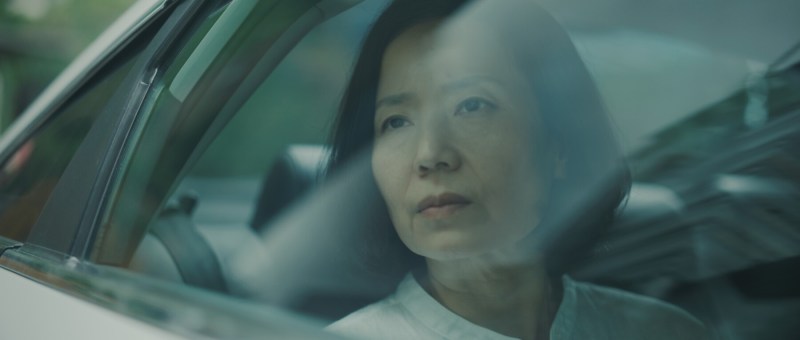
The hero of Gao Peng’s A Long Shot (老枪, lǎo qiāng) is forever reminding himself to “regain your focus”, yet in other ways it’s something that he’s making an active choice not to do and that others wish he wouldn’t. Set amid the chaos of China’s mid-90s economic reforms, the film suggests that Xue Bing has little other option than to tune himself out and avoid being a direct part of the corruption all around him as he has little power to stop it.

In a prologue set five years before the main action, Xue Bing (Zu Feng) had been a sharpshooter on the national team but is told that he has experienced hearing loss which may affect his balance and is subsequently let go. The hearing loss is perhaps symbolic of the fact that Xue Bing does not listen to the lies and double talk around him and maintains an integrity that is nothing but irritating to his morally compromised colleagues. On the other hand, he later tells Xiao Jun (Zhou Zhengjie), a teenage boy to whom he’s become a kind of father figure, that staring at a bull’s eye all your life isn’t good for your eyes hinting at his problematic hyper focus in which he’s just trying to keep his head down and do the best job he can under the circumstances.

But the circumstances are grim for everyone. Now with shaggy hair and a look of disappointment in his eye, Xue Bing works as a security guard at a moribund ferroalloy factory where the workers haven’t been paid in years as the nation goes through a number of complex economic reforms that are changing the face of the nation and giving rise to a new class of wealthy elites who’ve gained their riches through immoral and exploitative means. With people not being paid, thefts are a common occurrence but the security guards have turned to taking bribes, tacitly turning a blind to equipment going missing if the thieves are willing and able to pay a small fee. Xue Bing doesn’t like to go along with this and avoids joining in, but is powerless against the other guards including his boss Chief Tian (Shao Bing). 

The film frames the factory as a microcosm of the wider society which has become a vicious circle of corruption. But on the other hand, the workers guards, and even in the management see themselves as taking what was rightfully theirs but has been unfairly denied them. The workers steal from their employer because their wages weren’t paid, the guards aren’t getting paid either so they extort the workers and rip off the company, while the management know the factory’s effectively bust so they’re asset stripping while they still can. Chief Tian runs into one of the thieves who’s since started a “trading company” having taken some cues from a Russian working at an equally moribund shipyard where he’s no longer monitored by the authorities and has been selling off warships as scrap hinting at the disintegration of post-war communism and the resulting capitalist free for all that followed. 

Xiao Jun, the son of a woman Xue Bing thinks he’s in a relationship with but the reality is somewhat ambiguous, is caught amid this crossfire as a young man coming of age in complicated times. He resents the corruption he sees around him and bonds with Xue Bing thinking he’s a straight shooter only to be disappointed by his defeated complicity which he also sees as a kind of unmanliness. Xiao Jun’s mother, Jin (Qin Hailu), had been trying to run her own business but later gets a job in a nightclub that seems to be sex work adjacent thanks to her relationship with another corrupt businessman, Mr Zhao. She remarks to Xue Bing that there are so many ways to earn a living these days she doesn’t understand why anyone would go back to the factory, laying bare the wholesale change in the society. Xiao Jun has taken up with a gang of seeming delinquents who frequently loot the factory complex, but even they are only taking what they think is theirs as one of the boy’s fathers was killed in a workplace accident and the family was only given a certificate of commendation rather than financial compensation for the father’s lost wages without which they are unable to support themselves. 

The guards have been told they’ll finally get paid after the company’s 40th anniversary celebrations, with corrupt manager Sun telling Tian he’ll need his help to keep the others in line when he presses him and is finally told they’ll only get two months’ worth of the back pay they’re owed. Xue Bing is told Sun was selling off the lathe machines in order to pay the workers, and it seems like he believes them naively falling for their greater good narrative while Xiao Jun seems on a collision with adult hypocrisy refusing to sign a false confession to get the managers off the hook. Gao lends Xue Bing’s world a greying hopelessness in which the only two choices are to close his eyes and ears or go down fighting, closing with a lengthy shootout in which firecrackers mingle with gunshots masking the sound of rebellion from a continually unheard underclass.


 A Long Shot screened as part of this year’s New York Asian Film Festival.

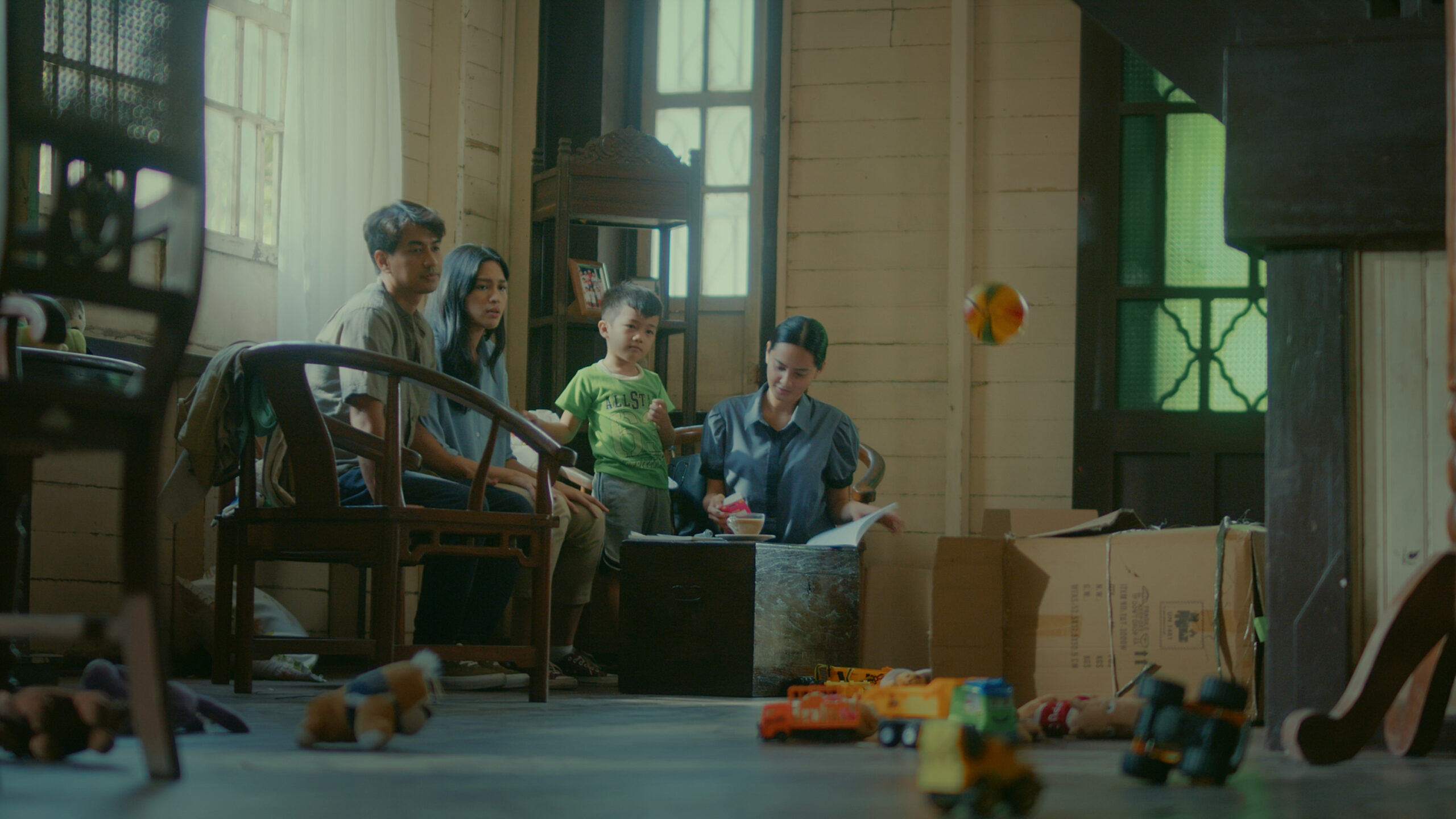
Fish Memories ((真)新的一天, Chen Hung-i, 2023)

The sometime narrator at the heart of Fish Memories ((真)新的一天, (zhēn) Xīn de tiān) says that she wishes her memory were like that of a fish, no longer than seven seconds, and that she were able to be free of her traumatic past by forgetting it. But of course, she is unable to forget and like her boyfriend, Shang, and the middle-aged man with whom the pair eventually form a twisted relationship, a kind of orphan drifting in the wake of parental failure.

Businessman Zi Jie (Frederick Lee) also seems to drifting, seemingly dissatisfied with his financially comfortable but emotionally empty existence. He later says that his own parents only cared about about money and sent him away to Singapore when he was a teenager only for their business to then fail. He feels as if he’s done better than them, at least, but when asked how to avoid loneliness he answers only “earning money, spending money, earning money”. He has a girlfriend of around his own age, but bristles when she expresses a desire for greater intimacy and ends up pushing her away while beginning to bond with Shang (Hank Wang), a teenager he meets in a convenience store while picking up a parcel. He runs into the boy a few more times and ends up developing a friendship with him and also his same age girlfriend Zhen Zhen (Lavinia) who is still in high school and claims to have been sexually assaulted by one of her teachers who’s apparently done the same thing to several other girls with no apparent consequences.

Zi Jie’s relationship with the teens straddles an awkward divide, partly parental and partly friendly. He seems to partially regresses in their company, drinking incredibly expensive wine but also sitting around playing video games and agreeing to childish dares such as the one in which he ends up swapping places with Shang, waking up in his walkup apartment and dressing in his clothes. Shang’s living environment is not ideal, Zi Jie balks at the stairs while the place is cramped and filled with junk and Shang evidently rarely does no laundry but to Zi Jie it represents a kind of freedom. Of course, he can always return to his luxury apartment which still has power even during an outage which is an option not open to Shang who nevertheless seems to increase in confidence while wearing Zi Jie’s fancy tailored suit. Several times he approaches his rundown apartment block and looks to the sky as if echoing his sense of aspiration though that turns out not to be the reason he’s interested in Zi Jie. 

When he first gave him a car ride, Shang blunts told Zi Jie he wouldn’t sleep with him because he liked girls, remarking that Zi Jie looked “a bit gay”, but a sexual relationship does eventually evolve between the trio even as they also form an unconventional family unit. When they sit down to breakfast together with the doors onto the courtyard open and the sun drifting in with idyllic view behind, Zhen Zhen remarks that it’s the kind of moment she’s been waiting for all her life despite the awkwardness of this quasi-incestous and definitely inappropriate relationship given that the teens are underage and Zi Jie is a wealthy middle-aged man keeping them in his apartment.

But it’s perhaps when the streams start to cross that things begin to go wrong, Zi Jie making a huge miscalcutation while in the teens’ world that provokes a tragic event biding each of them together though only in the darkest of ways. The three of them are each in their way trapped in a tank, no more free than the fish they place inside it and in the end able to find freedom, of one kind or another, by remembering and acknowledging the truth. Repressing his sexuality and chasing only empty financial success has evidently left Zi Jie a hollow, broken man seeking to reconnect with his younger self through his relationship with Shang which in its way also prevents him from acknowledging the vast gulf that exists between them in their differing circumstances but also unites them in a shared feeling of irresolvable loneliness and the legacy of parental abandonment in a sometimes indifferent society defined by economic success.


Fish Memories screens 8th September in Melbourne as part of this year’s Taiwan Film Festival in Australia.

Original trailer (Traditional Chinese / English subtitles)

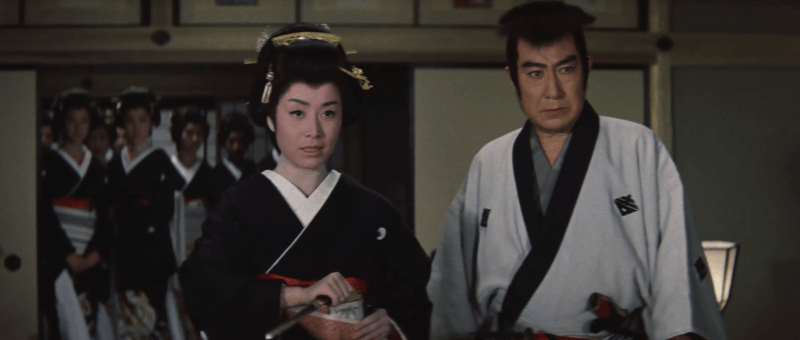
Wolves of the Night (夜の狼, Yoichi Ushihara, 1958)

A cold-hearted yakuza starts to get second thoughts when confronted with the misery his actions create in Yoichi Ushihara’s slice of Nikkatsu Noir, Wolves of the Night (夜の狼, Yoru no Okami). Though the hero is ostensibly Tsukida (Ryoji Hayama), the conflicted gangster unable to reconcile himself with the fact that he has fallen in love with a women he himself destroyed, it’s equally about the women who get caught in the crossfire of a burgeoning gang war and are each victims of male greed and indifference.

In any case, gang boss Tachibana (Somesho Matsumoto) brings a lot of this on himself. The secondary narrative revolves around a woman, Takako (Mari Shiraki), who borrowed money from the Manji gang to build her bar, but now that it’s complete Tachibana swindles her by calling in the debt and foreclosing on the property, passing ownership to Tsukida with instructions to kick Takako out. She, however, doesn’t take well to this and is resentful of Tachibana for screwing her over so she vows revenge. Her original attempt to get it by seducing Tsukida doesn’t work out, so she recruits a yakuza from a rival gang to extort them claiming that they have mole and he’ll only reveal their identity when they hand over the cash. This plan has some pretty tragic consequences and not least for Tachibana himself, but none of this would have happened if he hadn’t behaved so badly in cheating Takako out of the bar she worked so hard to build. He’d also told Tsukida that the bar owner was a beauty and it was understandable if wanted to try seducing her. 

But by this point Tsukida has developed a fondness for Katsumi (Izumi Ashikawa), a young woman he first meets when she’s caught by some of his guys offering herself for sex work in their territory. The other ladies describe Katsumi as “odd” and “an outsider”. It’s clear from her behaviour and the way she’s dressed, not to mention a lack of awareness of the rules of the gang, that she’s never done this before and is terrified. Tsukida calls his men off and tells her to go home, but later realises that it’s his own fault she was put in this situation because he was responsible for collecting the debt her parents owed to Tachibana taken out because her father is bedridden. Tsukida seems shaken by the old lady’s intense resentment, but still takes their money if attempting to convince Tachibana not to pursue them any further because they have nothing left to give, correctly assuming that Katsumi resorted to sex work to get the money. 

It maybe the sense of guilt that proved the last straw as the old couple then take their own lives but rather than freeing her lead Katsumi on a lonely path of self-destruction driven only by her hated for Tachibana and Tsukida. The fact that she later becomes ill further emphasises her positioning as a symbol of a despoiled nation poisoned by the ruthless inhumanity of the post-war society, along with literal a embodiment of Tsukida’s guilty conscience. Tsukida rejects Takako as a person more like himself, an example of corrupted femininity using her body to manipulate men in a world in which a woman has little other power, and instead is drawn to Katsumi who was once innocent, demure, and cheerful but who he himself has destroyed through his own greed and heartlessness.

Spending some time in hospital following a failed suicide attempt seems to heal her in body body and soul, though the total about face in Katsumi’s feelings for Tsukida seems somewhat bewildering even if he did visit her every day and presumably win her over despite her resentment towards him for contributing to her parents’ deaths. Nevertheless, it’s his feelings for Katsumi that see Tsukida longing to quit the yakuza and retreat to the country to live a small, honest life with her free of the city’s corruption. But as so often in the movies, it’s not that simple and this time it’s a tragic consequence born of male failure and insecurity that eventually costs him his shot at a normal life even as his frenemy, a local policeman he often sees in the same bar and gives him unsolicited advice about how he should quit the yakuza, remains surprisingly supportive suggesting that his redemption may merely be on hold rather than cancelled. In any case, though shooting almost entirely on stage sets, Ushihara makes good use of stock footage of contemporary Ginza as a place of bright lights and equally dark shadows where gangsters lurk on every corner and mercy is in desperately short supply.

Mash Ville (매쉬빌, Hwang Wook, 2024) [Fantasia 2024]

The Hwaseong of Mashville (매쉬빌), a far out rural backwater, is a kind frontier town drenched in moonshine and melancholy where the local pastime is loneliness. You can almost see what attracted the murderous cultists at the film’s centre to their strange conviction that a convoluted ritual will save a world that’s fallen into chaos with “pure love”, were it not that one of them also remarks on how foolish he feels remembering himself as man who once believed all were equal before the law. 

The law in these parts is a laughing policeman who doesn’t like it when things happen outside of his jurisdiction, but actually does not very much at all to prosecute the “pseudo-religion” he later tells a colleague he’s been tracking while arriving to clear up their mess. Otherwise, there are two other concurrent crimes that should probably be pressing on his time including the deadly moonshine pedalled by liquor entrepreneur Se-jeong and his two bearded brothers, and the strange case of a young woman charged with acquiring a fake zombie corpse for a movie shoot only to turn up with what she suspects is an actual dead body. A rather strange set of events brings them all into the same orbit while preventing them from leaving Hwaseong where the cultists, who are all male but dress in female hanbok for otherwise unexplained reasons, are still on the prowl looking to complete their zodiac of sacrificial victims. 

Then again, the cultists may be victims too. Their former leader soon turns up in town apparently regretting his life’s work while explaining cryptically that the darkness is in his bag, which turns out to be full of money. We sees the eyes flash of Hyun-man, a local man, when he opens it as if he were corrupted in one instant though this day of being targeted by religious extremists already seems to have taken its toll on him. In the opening sequence, he’d celebrated a kind of birthday with two friends, asking only for a hug but both men refused him. He’s also one of the few villagers that didn’t leave on a trip to the hot springs which lends Hwaseong a lonelier air than it might otherwise have had. 

Even the brothers are longing for someone, yearning for the return of their mother who abandoned them many years ago and if Se-jeong’s dream is to be believed sending them the incredibly inappropriate gift of Wild Turkey whiskey when they were just kids waiting for her to come home. Se-jeong feels he can’t leave Hwaseong because a part of him’s waiting for his mother to come back, but the other half is perhaps just afraid to do so. In any case, a mistake by his strange brothers seems to have turned his whiskey into poison, so his hand’s been forced even if it weren’t for all the other weird goings on.

The irony maybe that pure love really does save the world, Se-jeong reflecting that he might have been in love for the first time in his life while finally gaining the courage to move on from Hwaseong in acceptance of the fact his mother likely won’t be returning anyway. His brothers almost got inducted into the cult, mistaken as fellow priests and strangely captivated by the weird ritual movements the killers perform of over the bodies acknowledging that there is something relaxing in thrusting their hands up into the air while curious enough about the ritual to see it through despite its grimness and moral indefensibility. 

Like the cult’s beliefs, not much makes a lot of sense though Hwang lends his strange small town enough crazy vibes to make it all hang together in a place in which whiskey itself appears to be close to a religion and as much of a salve for the world’s unkindness as anything else. “You need to quit drinking,” one his brothers ironically tells Se-jeong when he tries tell him about his recent emotional experiences though in another way he may actually have been saved by an unexpected miracle provoked by the ritual which didn’t work in the way it was intended but may have banished darkness from Se-jeong’s life at least, freeing him from a life in “mash ville” and the kind of the liquor that causes the dead to rise.


Mash Ville screened as part of this year’s Fantasia International Film Festival.

Trailer (English subtitles)
Pilot (파일럿, Kim Han-gyul, 2024)

“You can’t say things like that anymore,” the men of Pilot (파일럿) are fond of chuckling but still they think them and on a baseline level are unable to understand what’s wrong with what they see as merely offering a compliment. Adapted from the 2012 Swedish film Cockpit, Kim Han-gyul’s non-romcom takes its cues from films like Tootsie and Mrs Doubtfire to explore the inherent sexism and misogyny at the heart of contemporary Korean society if perhaps problematically doing so through the means of a male redemption story.

In any case, Han Jung-woo (Jo Jung-suk) is mindless more than anything else later claiming that sometimes it’s better “to say yes and go with the flow” than risk creating unpleasantness. Seemingly excelling at everything, he graduated top his class at the Korean Air Force Academy and was fought over by several large airlines becoming a minor celebrity and apparent pilot influencer. But behind the scenes, he’s somewhat false and self-involved as evidenced by his attempt to show off a video of himself tearfully paying tribute to his mother for raising him and his sister alone but refusing to answer a telephone call from her at the same time. His celebrity fame comes back to bite him when a video of team dinner in which he rejected his boss’ comment about the new intake of stewardesses not being pretty enough by referring to them as a beautiful bouquet is leaked online. The clip goes viral with his boss getting the brunt of the abuse and while he is not visible many are able to identify him by his voice. The airline soon goes bust and unsurprisingly no one else is willing to hire him. 

The issue is that neither his boss nor Jung-woo understand what was wrong with what they said. They just parrot back that what they said was nice so they can’t see the problem with it but fail to understand that their comments are demeaning because they belittle women’s talents and reduce them to objects for male appreciation. Hyun-seok (Shin Seung-ho), who attended the Air Force Academy with Jung-woo, gets him an interview at his airline but it’s run by a female CEO (Seo Jae-hee) who happens to be the sister of his old boss and is apparently on a mission to make her company more egalitarian by having at least 50% female pilots so she’s only hiring women. Nevertheless, she also asks sexist questions at the interview looking closely at a female candidate’s age and asking her if she is married or in a relationship, whether she intends to have children and when. The female candidate fires back a pre-prepared speech that she’s uninterested in marriage and is not planning to have her eggs frozen or anything like that so she can devote herself fully to the job. 

Hyun-seok expresses sympathy, echoing Jung-woo’s earlier comment that all that matters in flying is skill and people should be hired for their merits not their gender. But it’s impossible not to read into his words that he thinks women are inherently not as capable as men and wouldn’t be getting the job at all if it weren’t for this affirmative action, which is to say it’s all about gender after all and only men are suited to the job. He says as much later on when the plane he’s piloting runs into trouble while he’s unwittingly co-piloted by Jung-woo in his female persona Jung-mi, having posed as a woman in order to pass the interview. “Men should step up during times of emergency, not women,” he screams while losing the plot as the plane plunges and refusing to hand over the controls to his female co-pilot until Jung-woo takes them by force. 

Despite being slightly younger and believing himself to be a modern man, Hyun-seok is still incredibly sexist and openly flirts with Jung-mi to the point of sexual harassment even while she bluntly tells him that she isn’t interested. Jung-woo had been flattered and overjoyed the first time someone called him “miss” on the street and alluded to his unconventional, broad-shouldered beauty but quickly discovers that that gets old and becomes aware of how “annoying” or even scary some men can be in their entitled treatment of women, and by extension the various ways in which his own treatment of women may not have been appropriate. Becoming Jung-mi allows him to become himself, rediscovering his love of flying no longer so hung up on the external validation of internet fame and more interested in and considerate of those around him in the absence of the kind of toxic masculinity that infects men like Hyun-seok.

Though his wife divorces him when he loses his job if more because of his persistent emotional neglect than disappointment or financial worry, he becomes more aware of and sympathetic towards his son who, just as he had says yes and goes with the flow by saying a toy aeroplane was fine despite having been engrossed in the Barbie aisle seconds before but presumably afraid of disappointing his father if he told him he’d rather have a doll instead. Nevertheless, the film strangely refuses to engage with ideas of gender and sexuality and becoming Jung-mi does not really unlock Jung-woo’s femininity even if it evidently makes him a better and more considerate person, while his sometime love interest Seul-gi (Lee Ju-myoung) is more or less queer coded and her attempts to stand up for herself as a woman and an equal are not always well respected by the film. Even so the betrayal of CEO Noh who is revealed to be a ruthless businesswomen perfectly willing to exploit other women and throw them under the bus if necessary highlights the ways in which entrenched patriarchy pits women against each other. 

Thus the underlying misogyny of the present society is fully exposed, if ironically by a man experiencing what it is really like to live as a woman which is to be ignored and disrespected, judged by appealingness to men and obedient temperament while skills go undervalued or worse are viewed as a threat to often fragile masculinity. Though the film largely avoids making Jung-woo’s cross-dressing a joke in itself, it does find humour in the absurdity of the demands of performative femininity in a rigid and conformist society in which a woman is rarely permitted to sit in the cockpit of her own life.


International trailer (Simplified Chinese & English subtitles)