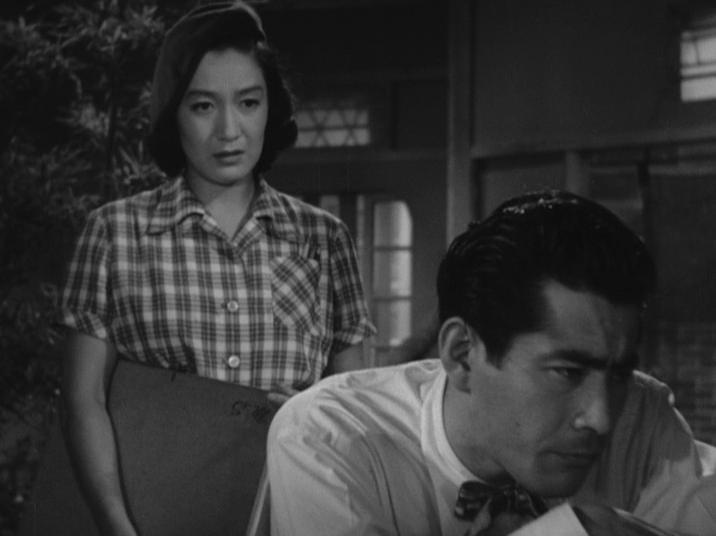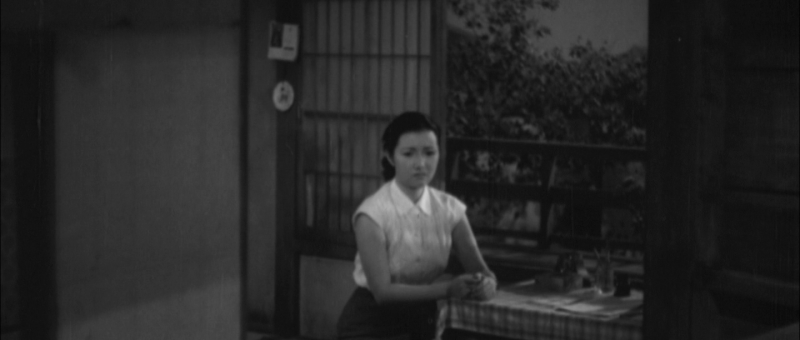
Hiroshima (ひろしま, Hideo Sekigawa, 1953)

During the post-war occupation of Japan which lasted until 1952, the censorship regulations which replaced those of the militarist era perhaps ironically made it more or less impossible to criticise the US presence or depict the extent of wartime devastation lest it raise hostility towards American forces or reinforce a feeling of victimisation. For this reason, images of the atomic bombings were tightly controlled and the events rarely referenced in mainstream media, Hiroshi Shimizu’s Children of the Beehive being a notable if brief exception. Once the occupation was over, however, many assumed it would become easier to broach such taboo subjects. 

Hiroshima native Kaneto Shindo’s comparatively better known Children of Hiroshima, inspired by the book Children of the A Bomb: Testament of the Boys and Girls of Hiroshima, was released in 1952 shortly after the censorship regulations were lifted and stars his later wife Nobuko Otowa as a teacher who returns to Hiroshima to visit the graves of her parents killed in the atomic bombing and thereafter several of the children from a nursery school she once taught at who have survived but continue to suffer in various ways due to their experiences. Despite Shindo’s well known leftist credentials, many including the Japan Teachers’ Union who apparently owned the rights to the book though there is some dispute as to their involvement in the production, were disappointed with the film which they felt to be an overly sentimental studio melodrama that was ultimately unhelpful in supporting the anti-war political movement or accurately representing the hibakusha community. 

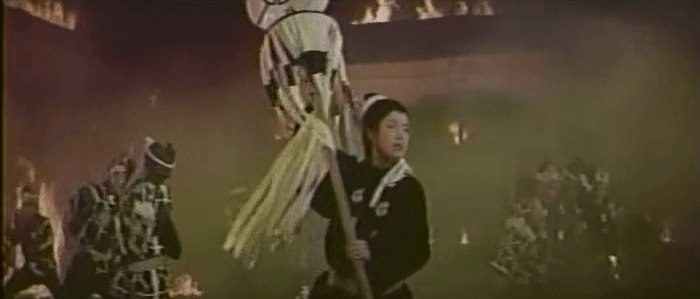
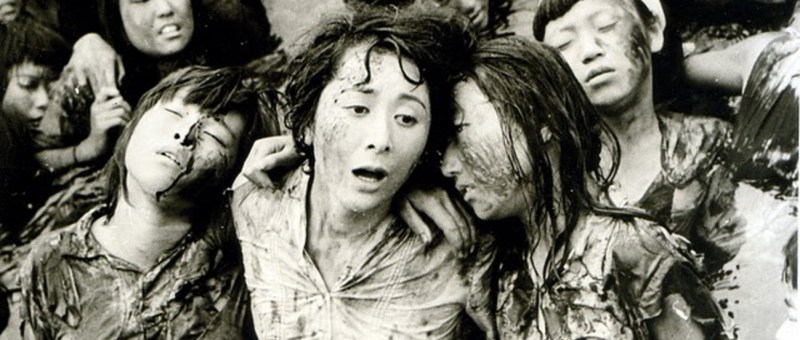
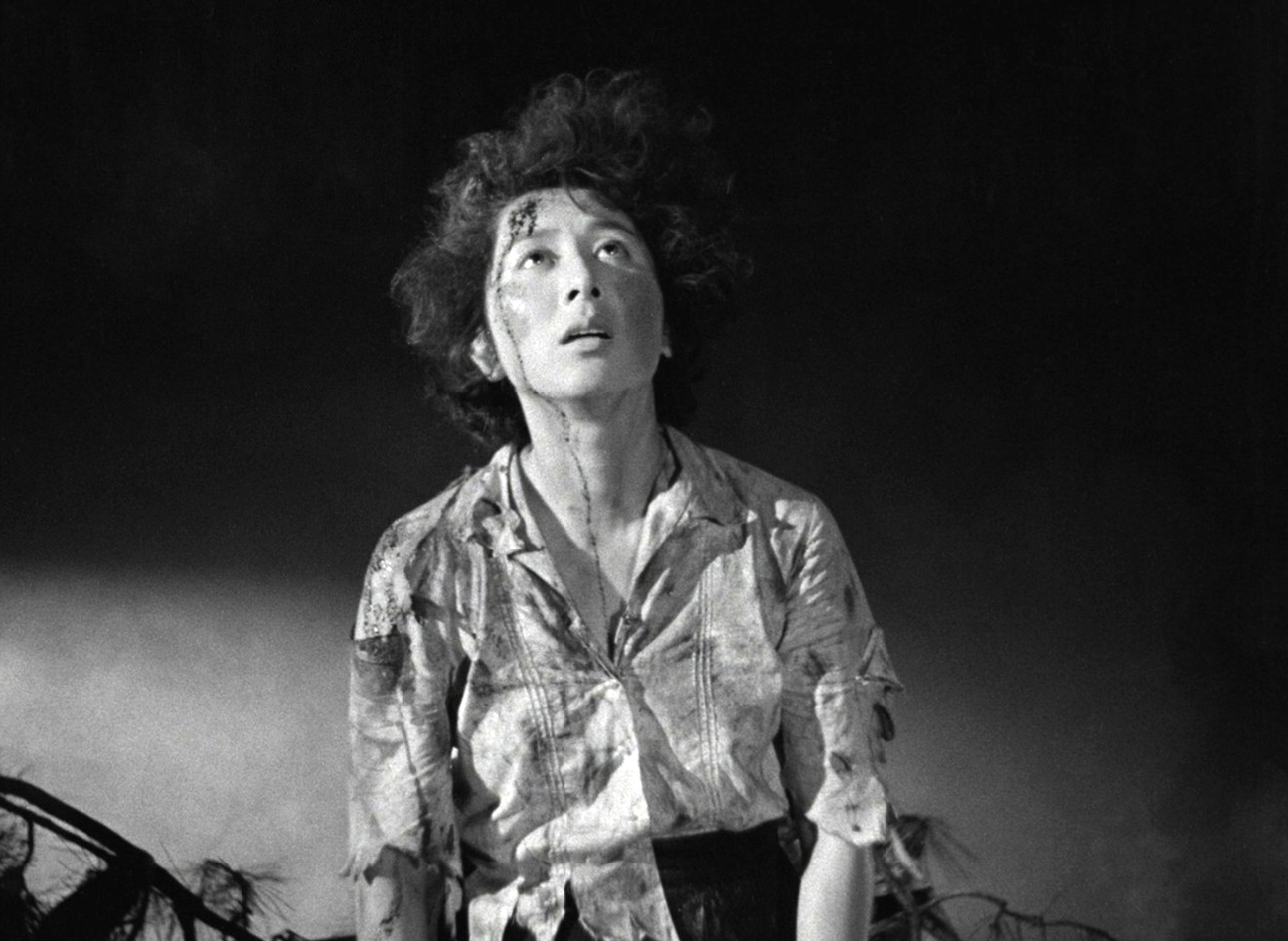
In response, the JTU commissioned a second version in order to better reflect their aims and ideals. Long unseen in either Japan or internationally prior to its recent restoration, Hideo Sekigawa’s Hiroshima (ひろしま) adopts a much more strident docudrama approach while, like Children of Hiroshima, maintaining a focus on the plight of children during the bombing and beyond though it seems somehow unlikely that teachers and parents would be wholeheartedly enthusiastic about showing such a deliberately harrowing piece to a sensitive younger audience. One criticism of Shindo’s film had been that he’d dodged dealing with the bombing itself by concerning himself only with the present-day aftermath. Sekigawa meanwhile focuses directly on the traumatic instant of the attack, utilising expressionistic techniques to recreate the living hell to which the city was reduced literally in flash. 

It’s clear however that the normal of that day was already far from normal. Rather than go about their studies, school children are working hard for the war effort helping to clear extensive bomb damage. A teacher and a class of school girls salvaging roof tiles from a ruined building pause to look at the sky. They can hear bombers but no sirens and it’s in that moment of stillness that everything changes. The world as it was implodes and is left in total collapse. Survivors search desperately for loved ones while stumbling through an unfamiliar landscape filled with crying children, charred bodies, rubble and fire. “This is hell” an injured man groans after managing to make his way to the field hospital, “hell”. 

Sekigawa bookends his tale with a contemporary framing sequence in which an idealistic teacher tries to instil compassionate values in his students some of whom are survivors of the bomb and still living with its effects including one suffering with radiation-related leukaemia who becomes very upset on listening to a radio lesson recounting the morning of the bombing from the point of view of the pilot flying the plane. Another of the students later comes to her defence, taking some of the others to task and lamenting that the suffering of those affected by the A Bomb is not taken seriously while victims still undergo a degree of social stigma even if they have no visible wounds. He is also very worried about his friend, Endo (Yoshi Kato), who later appears in the flashback to the aftermath of the bombing and has apparently gone off the rails, working in a cabaret bar and addicted to pachinko after losing his entire family. 

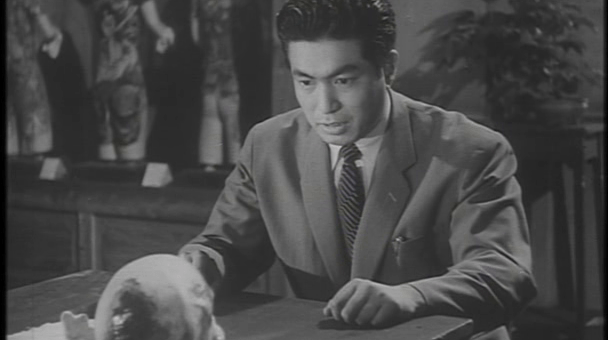
It’s through Endo that Sekigawa dramatises many of the secondary effects of the bombing in that he was not physically injured but is consumed by a sense of hopeless anxiety, intensely concerned about the prospect of another war and unable to envisage a successful future for himself in a world in which such horror can occur seemingly at random. It’s he who first introduces us to the parasitical disaster tourism that generates a grim trade in A-Bomb “souvenirs” as he passes a stall selling fake skulls as a child and then later attempts to sell actual human remains with inspirational stickers plastered on the top. The “better” future they have imagined for him is however in itself problematic, harking back to the traditional post-war solution of a factory job which directs aligns him with the nation’s push towards a capitalistic society, but is then undercut when he quits not because he is bored or lazy but because he discovered the factory was being used to produce artillery shells and he felt he could have nothing to do with it. 

Endo is also among a group of post-war street kids who learn to say the word “hungry” without knowing what it means to get bread and chocolate from passing Americans. A later more direct speech has them make a formal accusation that the Americans are responsible for the deaths of their parents and therefore bear a responsibility towards them which they should immediately repay with food. Some, including Shochiku who were originally set to distribute but later declined, described the film as overly anti-American, but Hiroshima largely refrains from mentioning the Americans other than a suggestion that the dropping of the bomb was itself a racist act in which they used the Japanese people as guinea pigs to test their new weapon, and focuses on the failure of the militarist authorities to respond in an appropriate fashion. We see a soldier read out a proclamation telling a ragged queue of survivors queuing up for food that the situation is “not unusual” in time of war and they should all return to their jobs despite the fact that there are no longer any buildings in which to work. Meanwhile, militarists talk of using the disaster to foment the war effort by marshalling hate and resentment towards the enemy while commanders refuse to take scientific advice that tells them Hiroshima may be uninhabitable for the next 70 years, obsessed only with continuing the war at all costs ironically insisting that their “fervent will” which “burns as brightly as a million stars” will bring them an assured victory.  

In the face of a second bombing, however, they are forced to accept that the war cannot continue, many of the victims left perplexed and defeated that despite their suffering the government has unconditionally surrendered and seemingly abandoned them. An abnegation of responsibility is also suggested by the presence of the street kids abandoned by their society and left to fend for themselves though Endo is eventually taken into a progressive care home from which he and other boys make numerous attempts to escape, in his case in the hope that he can find the sister from whom he became separated. Sekigawa does not make suggestions for the future, merely depict the difficult post-war reality while arguing for greater compassion in the contemporary era, one bomb survivor describing her despair in the knowledge that her disability is a barrier to marriage while finding work that can be done with her physical limitations is also difficult as is accessing government support. Sekigawa too may give in to a particular kind of sentimentality in the closing moments but it is indeed undoubtedly effective as a reminder of the human cost of war and our collective responsibility to ensure that it never happens again.


The Woman in the Rumour (噂の女, Kenji Mizoguchi, 1954)

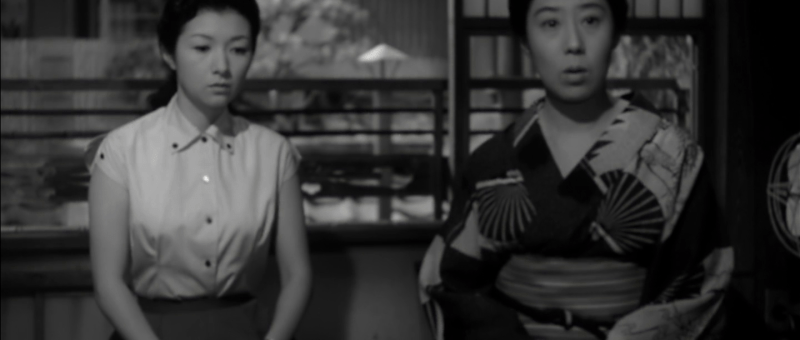
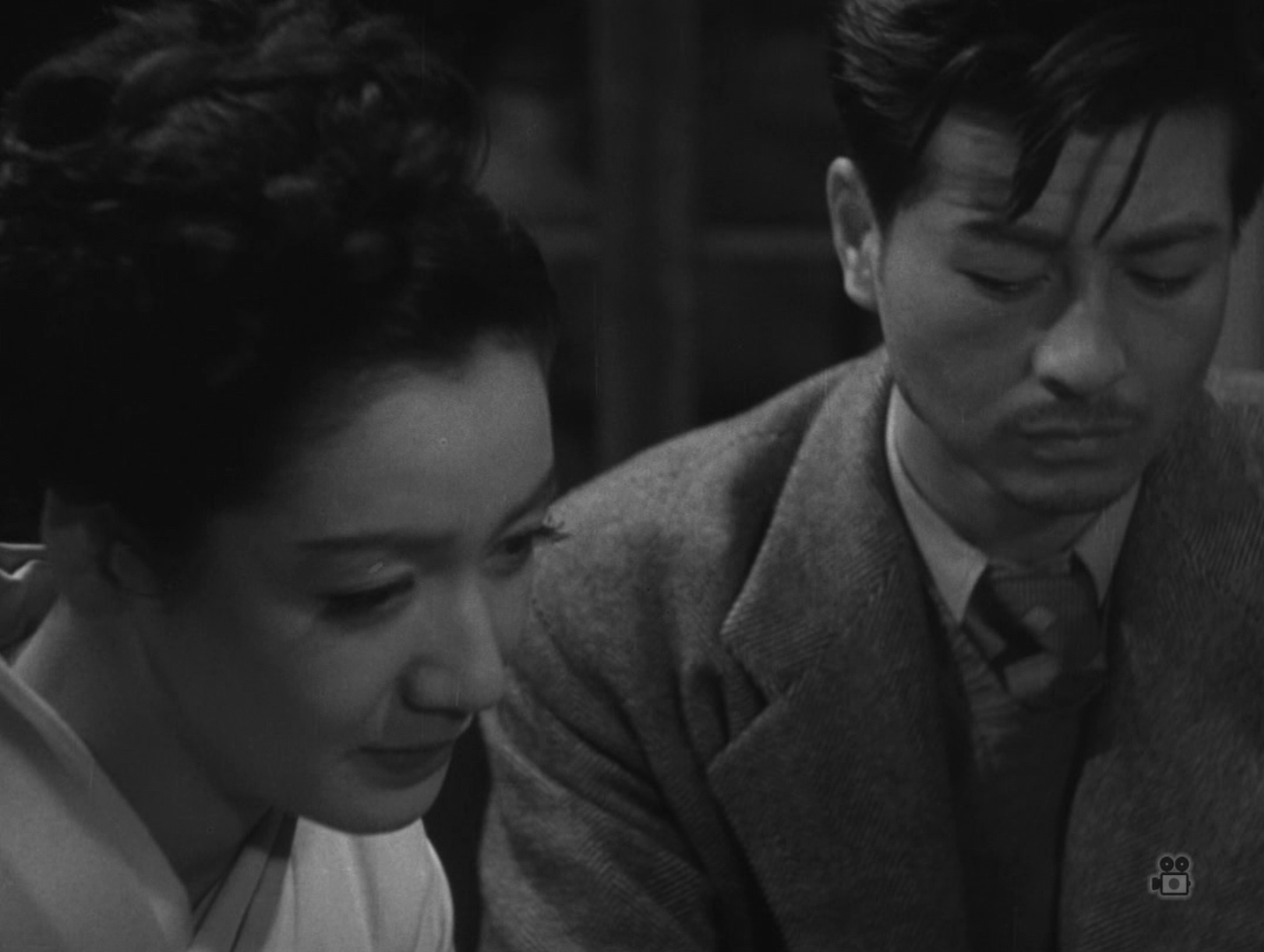
A mother and daughter find themselves deceived by the same man, each hemmed in by realities which cannot be altered but eventually coming to a place of mutual understanding that allows them to restore their relationship not only as parent and child but as women in Kenji Mizoguchi’s 1954 melodrama, The Woman in the Rumour (噂の女, Uwasa no Onna). The first question we might ask ourselves is to which of the women the title refers, or indeed to which rumour, though in a sense rumours matter little for either of them when the problem is the constraints which each of them feel as women in the contemporary society. 

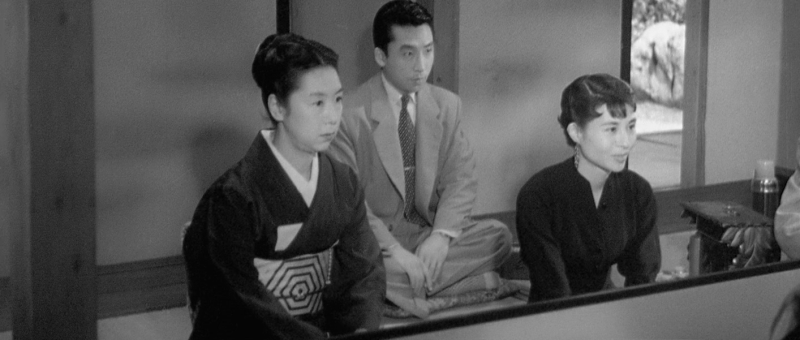
Even so, the sense of shame is evident when Yukiko (Yoshiko Kuga) is brought back to the geisha house run by her mother Hatsuko (Kinuyo Tanaka) after having attempted to take her own life in Tokyo. As we learn, the reason for her despair is in part heartbreak. She had been engaged but her fiancé’s family convinced him to end their relationship when they discovered that her mother ran a geisha house. Thus the suicide attempt is also a reflection of her sense of futility. She will always be the daughter of a woman who earned her living in the sex trade. This is a fact that cannot be changed and may lead her to think that her situation is hopeless because the same thing is likely to happen again leaving her unable to marry in a society in which there are few options for a single woman to make a life for herself not to mention the loneliness of living without romantic love. 

Hatsuko, meanwhile, is uncertain how seriously she should take the situation in part believing that it’s a product of youthful naivety in her daughter’s first romantic heartbreak. When a young doctor with whom she is close, Matoba (Tomoemon Otani), explains to her that Yukiko is depressed because she feels deep shame, self-loathing, and hopelessness due to her mother’s occupation, Hatsuko struggles to understand it and does not fully believe him. Nevertheless, she took care to bring her daughter up largely outside of the geisha world, sending Yukiko to Tokyo to study music implying that she herself to some degree sees her work as improper. The other girls view Yukiko with a degree of disdain, realising that her refinement was bought with their exploitation and noticing her animosity towards them. 

Hatsuko is mother both to Yukiko and the young women under her care who are always quick to point out that this is one of the better geisha houses because they are well looked after. When one of the women, Usugumo (Kimiko Tachibana), is taken ill, Hatusko calls in the doctor and allows her time off to rest which likely would not be granted at another house. She is reluctant to send her to hospital, but would if the situation called for it. In a sense it’s this solicitation that eventually allows Yukiko to find accommodation with her mother’s profession as she grows closer to the other women while nursing Usugumo herself and comes to understand their particular circumstances that have left them no choice but to live as geisha. Usugumo is reluctant to go to hospital because she is worried about the money she’d usually send to her sister Chiyoko (Sachiko Mine) who works the family farm and cares for their sickly father, but when she dies Chiyoko herself is left with little option other than to petition the geisha house to take her sister’s place. 

On seeing Chiyoko sitting on the step and pleading to be taken on, another of the women laments as she’s leaving that she wonders when there will be no more need for women like them. The geisha world is perhaps an unchangeable reality, just like Yukiko’s birth and her mother’s age. The rumours that surround Hatsuko are to do with her closeness with Matoba with whom she has clearly been in an intimate relationship, dreaming of becoming his wife and even considering selling the geisha house to buy a large property where they could live together as a couple while he runs a private clinic. Matoba predictably decides he prefers the younger Yukiko, Hatsuko increasingly desperate after overhearing their conversation about leaving her behind to move to Tokyo together where Matoba ponders finishing his education. The play they’ve gone to see almost feels like a personal attack as an actor intones that feelings of love at 20 are fine but at 60 it’s merely shameful. “Even carp know better than to fall in love at this age”, he adds, the old woman a figure of ridicule in her romantic delusion leaving Hatsuko feeling both humiliated and resentful.

When Hatsuko finally confronts Matoba, she does it as a scorned woman rather than as a mother, while Yukiko in turn first turns on her rather than Matoba even as she begins to realise the reality of the situation that the man who seduced her had been using her mother for his own gain in total disregard of her feelings. In short, even if Hatsuko were not her mother which certainly makes this a very complicated situation, he is not the sort of man she’d want to make a life with. Acutely aware of her own experiences of heartbreak, she fears for her mother’s wellbeing and comes to an understanding of her as a woman while accepting that “men are all alike” and in that at least perhaps her mother’s profession is the most honest of all. Mutually betrayed, mother and daughter are able to repair their familial bonds while Yukiko finds herself taking refuge in the geisha house as a space of female solidarity and bulwark against a cruel and patriarchal society. 


The Military Policeman and the Dismembered Beauty (憲兵とバラバラ死美人, Kyotaro Namiki, 1957)

The Military Policeman and the Dismembered Beauty (憲兵とバラバラ死美人, Kenpei to Barabara Shibijin) was apparently a substantial hit on its release, though to modern eyes at least it doesn’t quite live up to the salaciousness of its title. In fact, it seems a little more interested in reassessing the militarist past while attempting to rehabilitate an authoritarian power and reframing it as good and compassionate unlike the corrupted killer who is selfish and ambitious to the extent that he’s literally poisoning the militarist wells. 

What we’re first introduced to, however, is a rather familiar tale of a soldier who’s gotten a girl pregnant but now won’t marry her mainly because he’s onto a good thing with a pretty girl from a prominent family so his girlfriend’s in the way. Though we see a prelude to the murder, we don’t get good a look at the soldier’s face (though we do hear his voice) which on one level hints at the generalised violent threat of the militarist machine but is also a neat plot device that allows us to into the crime but still maintains the mystery. When we do see the actual killing, it’s surprisingly frank for the time period and disturbing in its sexual charge though there is no gore involved save a grisly discovery in yet another well. 

The killing occurred shortly before the regiment left for Manchuria, which seems to be one way the killer sought to move on and leave his crime behind. The first hint of the corruption is discovered by a gang of new recruits as yet unused to the militarist machine. They notice that the water in the well in the barracks is bad, but are at first bullied and insulted by another soldier who’s been there longer and gives them a rather priggish speech about the sanctity of the regimental water. What they discover is that the water tastes bad because there’s a dismembered torso in there and has been for the last six months. One has to wonder why the culprit would think this a good place to hide a body given the risk of discovery and increasing suspicion but as it turns out no one is all that interested. The Military Police aren’t that keen on investigating themselves, and then we get the familiar conflict between the local cops and the specialists as a top investigator, Kosaka (Shoji Nakayama), is assigned to investigate the crime and insists on doing so thoroughly rather than just beating their favourite subject into a false confession. 

Kosaka is then posited as a nice Military Policeman, an emissary of legitimate authority rather than bumbling provincials who are ridiculous and self-serving not to mention incompetent and resentful. We’re told repeatedly that Kosaka is prepared to work with the civilian police unlike the other military policemen who insist on militarist primacy and refuse to allow the detectives onto the base to investigate. He’s a representative of a less authoritarian age that looks forward to the democratic future, but he is also a part of that organisation himself no matter how different he may seem to be and cannot escape the overarching structures of militarism. Nevertheless, his edges are further softened by a nascent romance with the middle-aged innkeeper at his lodging house while his assistant is after her sister, a childhood friend who can’t stop calling him by his old nickname. 

The two of them investigate scientifically, making frequent trips to the pathologist to discuss theories and evidence though Kosaka is eventually guided towards the solution after seeing the young woman’s ghost. The local military police meanwhile fixate on another soldier who has a reputation for using sex workers, one of whom has recently disappeared, though Kosaka thinks the man is a just a crook with what modern viewers make think of as a sex addition that sees him steal supplies from the kitchen to sell in order to finance his visits to the red light district. The military police whip him in an oddly sexually charged manner to try to get him to confess, but he maintains his innocence. One of the motives for the murder was seemingly that the victim planned to expose the affair, taking her concerns to the killer’s superior officer in an effort to force him to marry her which would have ruined his career prospects in what is supposed to be an organisation of honourable men. Unlike Kosaka who shares his name with the writer of the novel the film is based on which may have been inspired by true events, the other military police are largely like the killer, arrogant, selfish and unfeeling though all Kosaka himself represents is a supposedly more benevolent authority that for his niceness may not actually be all that much nicer.


Vendetta of a Samurai (荒木又右衛門 決闘鍵屋の辻, Kazuo Mori, 1952)

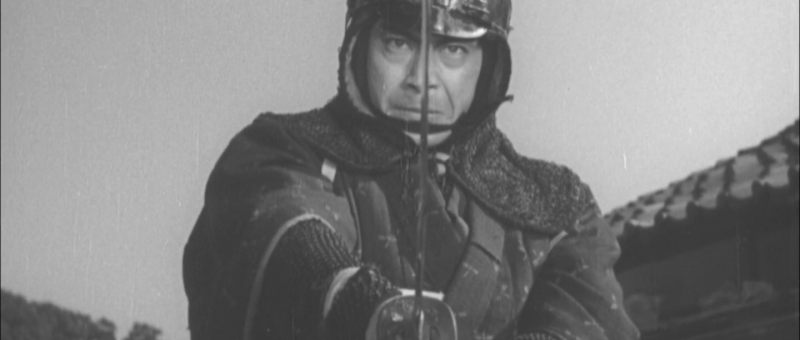
During the American Occupation, period dramas were frowned upon, the occupation forces apparently fearing that they might encourage the latent feudalism in Japanese society. Released immediately before the Occupation’s end, Kazuo Mori’s Vendetta of a Samurai (荒木又右衛門 決闘鍵屋の辻, Araki Mataemon: Ketto Kagiya no Tsuji), not to be confused with the director’s similarly titled Samurai Vendetta from a few years later, is a suitably revisionist piece interrogating the legacy not only of the samurai but the samurai movie in demonstrating, quite poignantly for the contemporary audience, that the rigid and austere codes of a warrior class did nothing but create sadness which forced good men to sacrifice true friendship in service not even of an ideal but simply an agreement. 

To signal his intent, Mori opens with a bombastic sequence shot in the fashion of pre-war jidaigeki, all booming speeches and clashing swords before a voiceover cuts in to tell us everything we know of the events in play is wrong. The legends surrounding the battle at Kagiya Corner tell us that Jinza (Takashi Shimura) was a bad man, and that Mataemon (Toshiro Mifune) killed 36 that day, but in reality Jinza was kind and noble and in fact the two men were good friends while Mataemon in reality struck down only two enemies which is in any case much more plausible if perhaps less exciting. As the classic chanbara scene fades, we return to the modern city of Ueno in Iga which in some respects remains unchanged further emphasising the “reality” of the brief 17th century conflict. As we learn, a man called Matagoro (Minoru Chiaki) has poked a hole through the samurai order in killing the brother of a young man called Kazuma (Akihiko Katayama), and so a lot of people have to die to eradicate the corruption of his transgression.

Boasting a script by Akira Kurosawa, the action flips between Mataemon, brother-in-law of Kazuma, and his men waiting for the arrival of Jinza and Matagoro inside a small inn, and the circumstances which brought them to this point. Mataemon is duty bound to support Kazuma who is really just a boy forced to seek revenge because they are family though there does not seem to be much heat in his desire for justice against Matagoro. Jinza, by contrast, is positioned on the opposite side solely because he is affiliated with a high ranking Hatamoto who is protecting Matagoro. Yet the two men are good friends each resigned to their fates and in full knowledge of how the samurai world works. The have no quarrel with each other, but are forced into mortal combat because of a complex network of loyalties and obligations that can only be satisfied with blood. 

“What is the meaning of this violence?” an imperious official asks, receiving no answer only a mild plea for a little more time. “Being a samurai, what a funny thing,” Mataemon laments to himself reflecting on the fact he must now kill or be killed by his friend for no real reason but simply because things are the way they are. Jinza meanwhile agrees, “Being warriors, what a misfortune,” as the pair calmly discuss the inherent hypocrisies which define their lives wherein all that really matters is one’s proximity to the shogun. That’s one reason the nervous Mago (Daisuke Kato) has joined the mission for revenge, his loyalist father a former tutor to the lord and keen to show their fealty but also hoping to advance their fortunes through a successful vendetta. 

Mago isn’t the only one who’s scared. The inn keeper is visibly shaking. He didn’t really want to be ground zero for a samurai duel today and is presumably worried not just for his safety but for the repercussions of offending his guests and damage to his property. A crowd gathering around the fighting, which includes the wealthy merchant brother-in-law of Matagoro who declared himself unafraid of a few rural bumpkin samurai, remarks on the smell of blood in the air seemingly both horrified and excited by the spectacle though even that is thin on the ground. No grand duel, Mataemon merely strikes his friend down before the battle begins, thereafter coaching the young Kazuma to overcome his fear and claim his revenge despite the bloody ugliness of the task. Yet in the end all there is is fear and futility, along with still more duty and the promise of more blood to come.  


The Wind Blows Twice (風ふたゝび, Shiro Toyoda, 1952)

Struggling with the end of her marriage, a young woman finds herself listless yet considering new possibilities in Shiro Toyoda’s The Wind Blows Twice (風ふたゝび, Kaze Futatabi). Adapted from a serialised novel by Tatsuo Nagai, the title is echoed in a remark from one of two potential suitors that youth is something that can come two or even three times so as long as you remain young at heart. They are each, however, each currently frozen and unable to move forward in the wake of their personal traumas. 

Kanae (Setsuko Hara), it seems, married for love but her husband has apparently been arrested for some kind of corruption. She has severed all ties with him and returned to the house of the uncle and aunt who raised her after her mother’s death where she helps out in their shop. Meanwhile, she learns that her semi-estranged father Seijiro (Ken Mitsuda), a university professor who lives in Sendai and hasn’t been in contact despite his daughter’s difficult circumstances, collapsed on the steps of the local station and is being cared for by a former student, Miyashita (Ryo Ikebe). She travels to look after him and becomes closer to Miyashita, who currently works as an auctioneer and has dreams of becoming a greengrocer, but is perturbed to learn that her father is a suspect in the theft of 10,000 yen from the wallet of a wealthy man, Michihara (So Yamamura), who carelessly left in the toilet and discovered the money missing when he went back to pick it up. Worried that the rumour may damage her father’s career, Kanae goes to apologise and find out what’s going on but Michihara tells her not to worry and it was his own fault anyway but his sudden magnanimity seems suspicious. In any case, Kanae later tells her friend Yoko that Michihara frightened her, also remarking to Miyashita that she felt as if she managed to slip away from him as she made her escape.

Though he later turns out to be sympathetic, Michihara appears as the villain of the piece. He thinks Kanae reminds him of his late wife and intends to ask her to marry him one the seventh anniversary memorial service is concluded. He starts using his wealth and power to gently interfere in her life, setting up a job for her on hearing that she’d been looking for employment and later approaching her father with the idea of investing in his research into the use of fluorides in the production of resin. Despite her initial dislike of him, Kanae goes along with everything and is soon sucked into Michihara’s world while otherwise wilfully oblivious of his feelings for her (which she does not share) and hoping he’ll help her convince Miyashita that he ought to return to science and help her father with his research which would obviously pave the way for them be together romantically.

The problem is that like Kanae Miyashita has become frozen inside, scarred by his wartime experiences and soured on science. Yet just as staying with him restores Kanae’s spirit and encourages her to want to look for work and find purpose in her life, her influence on him reawakens his passion for scientific research only he is less happy about it than she was. The interest that’s sparked in him ironically lies in the frozen north, travelling to Hokkaido to see an old friend and researching how to prevent potatoes from freezing in order to improve people’s quality of life. In essence it seems as if the futures they may want are too different. Now much more cheerful and energetic, Kanae genuinely enjoys her work in broadcasting and is less than keen to give it up and move to rural Hokkaido to help Miyashita study potatoes while secretly hoping she can convince him, with Michihara’s help, to become a respectable academic like her father and live a nice middle class life researching things that are more useful to industry and big business than to regular people.

Miyashita is disinclined to do so. He bounds straight off a train to see her with three day stubble from the journey, only to be disappointed witnessing in her in an elaborate kimono with her hair constrained in traditional style while Michihara is there waiting to see him to discuss a job offer from Seijiro. It’s at this point that he seems to decide his romantic desire for Kanae is most likely futile and she has chosen the rarified world of Michihara rather a rustic and homely life with a man like himself. Of course, this makes it sound as if Kanae doesn’t have much choice at all herself and to an extent she doesn’t or at least she feels backed into a corner while her aunt pressures her to remarry, unbothered to which man but excited about the proposal from Michihara because it means she will enjoy a life of uninterrupted financial comfort.

Having chosen her own suitor and seen things go drastically wrong also increases her aunt’s conviction that she shouldn’t make the same mistake again while she too is perhaps wary of remarrying. In any case. Kanae seems to want work and enjoys her job in broadcasting as much as she’s naturally drawn to Miyashita who brings out in her a greater desire to live while Michihara only seems to want her to be a shadow of his late wife suggesting that to marry a man like that may itself be a kind of death sentence. To that extent, the choice Kanae makes involves a predicable sacrifice, but still in any case it is a choice that she makes for herself to strike out for happiness and fulfilment of her own choosing rather than allow herself to be railroaded by conventionality unable to express her own desires.


Tokyo Sweetheart (東京の恋人, Yasuki Chiba, 1952)

It appears that even as early as 1952, some people were doing “very well, thank you” despite the suffering going on all around them. Then again, the heroes of Yasuki Chiba’s charming ensemble rom-com Tokyo Sweetheart (東京の恋人, Tokyo no Koibito) are relentlessly cheerful and likely wouldn’t use the word “suffering” to describe themselves, preferring instead to laugh at the foolishness of wealthy men and their petty squabbles while continuing to value what is honest and genuine above greed and insincerity.

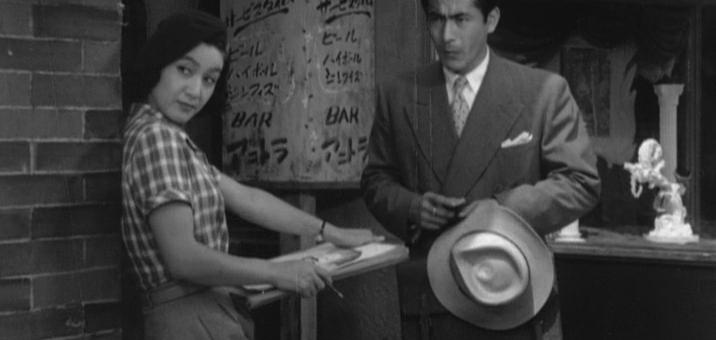
At least, there’s a minor irony in the fact that Akazawa (Hisaya Morishige) makes his living selling pachinko balls, a a source of elusive hope that’s brought ruin to millions. His mistress, Konatsu (Murasaki Fujima), exclaims that when you’re doing well a ring or two is nothing, trying to manipulate Akazawa into buying a 500,000 yen diamond from the jewellers’ downstairs. Akazawa can afford to buy it, but he doesn’t really want to because he’s cheap and greedy. Later we’re introduced to a friend of portrait artist Yuki (Setsuko Hara) who does caricatures on the street corner below the office and hangs out with the three shoeshine boys opposite. Harumi (Yoko Sugi), a sex worker, has fallen ill presumably from tuberculosis. They only need 500 yen daily for her living expenses and medicine, but the only way they can hope to come up with it is by getting a large amount of people to part with a small amount of money which they are all willing to do as an act of solidarity. 

In rather farcical turn of events, the jeweller’s has commissioned a fake ring to display in the window for security purposes while they keep the real one in the safe. Konatsu suggests a complex plan to the jewellers of getting Akazawa to buy the diamond but giving him the fake which she will then return and pocket difference. Only Akazawa has the same idea, or rather he only wants to buy the fake one because Konatsu won’t know the difference and he doesn’t think she’s worth the expense of the real one. When he ends up with both rings, Akazawa’s wife, Tsuruko (Nijiko Kiyokawa), makes him give the fake one, which is actually real, to the tea girl, Tama, who wants to sell it, even if it is fake, to help Harumi not only with her illness but to escape sex work. The boys tell her she’s being selfish and naive. If Harumi had any way of escaping sex work she would have done so years ago, there’s no real hope for her now. “A shoe can be repaired,” one of the boys sighs, “but I’m not so sure about her.”

In some ways, it seems as if the genuineness of the ring is unimportant. The two are often mistaken for each other and few can tell the difference. After all, if you like it, what does its supposed authenticity matter and what does that really mean anyway? It does, however, seem to matter to Yuki who later says that she thought the film’s most genuine person, Kurokawa (Toshiro Mifune), was “gaudy and slick” when they first met because he was wearing a tacky tie pin and ring which stand out a mile to her as “fake”. Kurokawa in fact makes the replica jewellery displayed in front windows and dresses in that way as a kind lived brand though he does not necessarily approve of his own occupation. He exceeds expectations when he tracks the gang down in order to pay back some money Yuki had lent him when the conductor couldn’t give him change for his bus fare, as well as treating the shoeshine kids to ice creams and warning off the creepy yakuza type who keeps trying to bother Yuki for dates.

But the contradictions are brought to the fore when Harumi’s health declines and Yuki decides she ought to call the estranged mother to whom Harumi had written a comforting letter stating that she’d married and was living happily in Tokyo, enclosing a photo of herself and Kurokawa one of the shoeshine boys had taken on his toy camera. Yuki wants Kurokawa to pose as the husband so the mother won’t be so upset, only for him to point out that she now asks him adopt a fake persona after taking him to task for confusing people with his “fakes”. Again, this false comfort does seem to bring genuine relief to the mother even if as Kurokawa suspects she’s seen right through their ruse suggesting that authenticity of feeling is the only kind that matters.

Akazawa and his wife, meanwhile, bankrupt themselves trawling the river looking for the lost “genuine” ring sinking to all new depths of absurdity as even Tsuruko dons a diving suit and goes in to look herself. Unfortunately, all they find is a single pachinko ball. There is something quite abrupt about the sudden tonal shift from Harumi’s death bed to the gang laughing away at the foolishness of Akazawa and his wife, the boys convinced that Yuki and Kurokawa are now a couple though they never really enjoy much of a romantic resolution. Kurokawa lives a long way out of town and his home is surrounded by rubble and empty lots, signs of post-war devastation still not fully cleared away though Yuki and the boys, presumably war orphans, remain endlessly cheerful even as the extreme irony of Kurokawa’s rendition of Moon Over Ruined Castle washes over them. They do at least have each other and the strength of their community, living honest and genuine lives every day in contrast to men like Akazawa chasing pointless yet shiny trinkets and falling straight down the plughole themselves.


Wolves of the Night (夜の狼, Yoichi Ushihara, 1958)

A cold-hearted yakuza starts to get second thoughts when confronted with the misery his actions create in Yoichi Ushihara’s slice of Nikkatsu Noir, Wolves of the Night (夜の狼, Yoru no Okami). Though the hero is ostensibly Tsukida (Ryoji Hayama), the conflicted gangster unable to reconcile himself with the fact that he has fallen in love with a women he himself destroyed, it’s equally about the women who get caught in the crossfire of a burgeoning gang war and are each victims of male greed and indifference.

In any case, gang boss Tachibana (Somesho Matsumoto) brings a lot of this on himself. The secondary narrative revolves around a woman, Takako (Mari Shiraki), who borrowed money from the Manji gang to build her bar, but now that it’s complete Tachibana swindles her by calling in the debt and foreclosing on the property, passing ownership to Tsukida with instructions to kick Takako out. She, however, doesn’t take well to this and is resentful of Tachibana for screwing her over so she vows revenge. Her original attempt to get it by seducing Tsukida doesn’t work out, so she recruits a yakuza from a rival gang to extort them claiming that they have mole and he’ll only reveal their identity when they hand over the cash. This plan has some pretty tragic consequences and not least for Tachibana himself, but none of this would have happened if he hadn’t behaved so badly in cheating Takako out of the bar she worked so hard to build. He’d also told Tsukida that the bar owner was a beauty and it was understandable if wanted to try seducing her. 

But by this point Tsukida has developed a fondness for Katsumi (Izumi Ashikawa), a young woman he first meets when she’s caught by some of his guys offering herself for sex work in their territory. The other ladies describe Katsumi as “odd” and “an outsider”. It’s clear from her behaviour and the way she’s dressed, not to mention a lack of awareness of the rules of the gang, that she’s never done this before and is terrified. Tsukida calls his men off and tells her to go home, but later realises that it’s his own fault she was put in this situation because he was responsible for collecting the debt her parents owed to Tachibana taken out because her father is bedridden. Tsukida seems shaken by the old lady’s intense resentment, but still takes their money if attempting to convince Tachibana not to pursue them any further because they have nothing left to give, correctly assuming that Katsumi resorted to sex work to get the money. 

It maybe the sense of guilt that proved the last straw as the old couple then take their own lives but rather than freeing her lead Katsumi on a lonely path of self-destruction driven only by her hated for Tachibana and Tsukida. The fact that she later becomes ill further emphasises her positioning as a symbol of a despoiled nation poisoned by the ruthless inhumanity of the post-war society, along with literal a embodiment of Tsukida’s guilty conscience. Tsukida rejects Takako as a person more like himself, an example of corrupted femininity using her body to manipulate men in a world in which a woman has little other power, and instead is drawn to Katsumi who was once innocent, demure, and cheerful but who he himself has destroyed through his own greed and heartlessness.

Spending some time in hospital following a failed suicide attempt seems to heal her in body body and soul, though the total about face in Katsumi’s feelings for Tsukida seems somewhat bewildering even if he did visit her every day and presumably win her over despite her resentment towards him for contributing to her parents’ deaths. Nevertheless, it’s his feelings for Katsumi that see Tsukida longing to quit the yakuza and retreat to the country to live a small, honest life with her free of the city’s corruption. But as so often in the movies, it’s not that simple and this time it’s a tragic consequence born of male failure and insecurity that eventually costs him his shot at a normal life even as his frenemy, a local policeman he often sees in the same bar and gives him unsolicited advice about how he should quit the yakuza, remains surprisingly supportive suggesting that his redemption may merely be on hold rather than cancelled. In any case, though shooting almost entirely on stage sets, Ushihara makes good use of stock footage of contemporary Ginza as a place of bright lights and equally dark shadows where gangsters lurk on every corner and mercy is in desperately short supply.

Good Morning (お早よう, Yasujiro Ozu, 1959)

Even the most casual viewer of Japanese cinema will be aware that something as simple as “lovely weather today” can mean quite a lot more than it at first seems. Small talk isn’t really so small after all and without it, as one quite perceptive yet perennially tongue-tied translator points out midway through Yasujiro Ozu’s charming late career comedy Good Morning (お早よう, Ohayo), our lives would be quite boring. Boring it is not, however, when two young boys decide to rebel against the pointless politeness of the adult world by taking a vow of silence after being told off for going on in their constant tantrums over the unfairness of being denied a TV set. 

As he often did, Ozu repurposes the plot of an earlier film, in this case I Was Born But… and subverts it. The two boys at the centre of the 1932 silent film ended up going on a hunger strike out of humiliation and despair on realising that their dad, who they’d idolised, was also a soulless corporate lackey forced to debase himself in deference to his boss. The father is ashamed, he doesn’t want his boys to end up living a meaningless worker drone existence, but the boys’ decision not to eat also carries much more weight considering they are in living in a time of economic depression during which many do not have the luxury of choice. 

The Hayashi boys, Minoru (Koji Shitara) and Isamu (Masahiko Shimazu), by contrast are also rebelling against the meaningless adult world but for the opposite reasons. They don’t seem to have a lot of respect for their father and probably don’t really care if he humiliates himself on a daily basis so long as they can watch sumo on TV without needing to go next door. These are consumerist kids, they want what they want and they want it now. Minoru is really too old for screaming tantrums, but still rolls around on the floor kicking his legs in frustration because it’s all just so unfair that mum and dad won’t get him a TV even though it’s not a matter of money. The parents, for their part, are trying their best to resist the onset of consumerism. Mr Hayashi (Chishu Ryu) is against the TV because he fears the boys will stop studying and hours of vacant staring will ruin their young minds. He might have a point, but you can’t hold back the tides forever. 

It’s his scolding of the boys which eventually leads to all the subsequent problems as his insistence that they are being far too noisy and talk much more than children have a right to leads them to declare an ironic vow of silence in protest against the “meaningless” chatter of adults filled with random pleasantries such as “good morning”, “where are you off to today?”, “what lovely weather we’re having!”, etc. Their decision, however, comes at a bad moment. There has recently been some unpleasantness over misplaced money for a local community group and gossip about Mrs Haraguchi’s (Haruko Sugimura) new washing machine. The other housewives on the block also seem to be resistant to consumerist desires and do not approve of the purchase, channeling their resentment into assuming that Mrs Haraguchi may have embezzled the money. Grown up chatter isn’t always meaningless and the frivolous local gossip has a profound bearing on the social politics of the block. So when the boys don’t reply to Mrs Haraguchi’s good morning, she assumes they are deliberately snubbing her on their mother’s instruction because of a petty grudge over harsh words exchanged on account of the misunderstanding surrounding the missing club dues.

Meanwhile, we can see the shadows of a lingering economic instability. These are all modest homes where families make an effort to appear frugal, hence the outrage over the washing machine, but the family friend who teaches the boys English and has a crush on their aunt, Heiichiro (Keiji Sada), has been laid off after his company went bust. He’s supported by his older sister who remains unmarried and works at a car dealership (more consumerism) while doing translation on the side for extra money. The neighbour across the way is technically “retired” but looking for work partly because his pension’s not enough to live on and partly because what’s a man supposed to do all day in a society which expects everyone to be productive? The new neighbours next-door to the Hayashis who’ve caused all this trouble because of their TV set are viewed as scandalous because they live in their pyjamas and she used to be a cabaret bar girl. The middle-aged gossips don’t think they’re respectable while she eventually decides to move because the neighbours are too “annoying”. 

Ironically enough, it’s sumo the boys most want to watch, about as traditionally Japanese a pastime as is possible even as they yearn for colourful consumerist modernity. They communicate by refusing to communicate. As Heiichiro points out, small talk is a social lubricant but meaningless things are easy to say while important things are not. Which is not to say you can’t communicate something important by saying something seemingly as meaningless as “that cloud has an interesting shape”, but that you won’t get anywhere unless you listen to what people are actually saying even when they’re saying nothing at all. They boys can’t win against the inherent meaninglessness of adult life with its superficial conformities, petty resentments, and wilful misunderstandings but perhaps we can all learn something from their straightforward earnestness in their refusal to submit themselves to empty pleasantries. 


A Wife’s Heart (妻の心, Mikio Naruse, 1956)

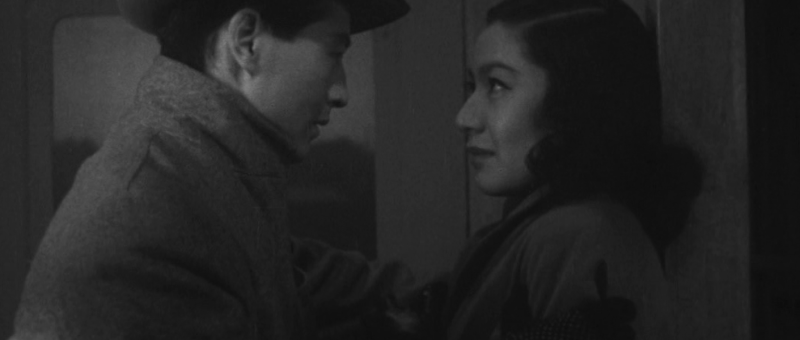
“We’re too late for everything these days,” mutters an overly cheerful geisha whose behaviour is becoming ever more erratic. A sense of fatalism, that everything has already been decided and there is no real escape from the misery of life, hangs over much of Naruse’s filmmaking even if his heroines often do their best to rail against it and on occasion succeed. Kiyoko (Hideko Takamine), the heroine of A Wife’s Heart (妻の心, Tsuma no Kokoro), finds herself faced with just this dilemma while considering which side of a generational divide she might be on and whether she has the power to escape from her disappointing life to chase emotional fulfilment. 

We can see the literal distance between herself and her husband Shinji (Keiju Kobayashi) in the opening sequence as he stands in a vacant lot at the back of their property and she firmly within the domestic space hanging washing. Yet for all that she seems excited, perhaps even a little giddy as they plot their escape together through planning to turn that vacant space into a cafe in an attempt to fend off the economic changes ravaging their town and wider society of Japan in the mid-1950s. Out and about on his bike, Shinji looks anxiously at the construction of a new pharmacy much larger than his own and with flashy modern signage. Their business is failing and they don’t know how to save it so the cafe is their way out and also a break with the depressing past represented by Shinji’s grumpy mother, Ko (Eiko Miyoshi), who is predictably dead against the cafe idea. 

The new business, in its way, is also a stand-in for the child they don’t have and a means for Kiyoko to find domestic fulfilment in a society ruled by motherhood. This one reason that the sudden arrival of her sister-in-law Kaoru (Chieko Nakakita) with her small daughter Rumiko causes so much disruption. Kaoru has fulfilled the social obligations which Kiyoko has not and quickly insinuates herself within the house, taking over the domestic space as symbolised by her otherwise trivial action of putting back a pair of nail clippers in the place she sees fit rather than their usual home. Yet she does this in part because her husband, Zenichi (Minoru Chiaki) who left the family to become a salaryman in Tokyo, is so obviously unreliable and appears to have not for the first time lost his job while employed at a company possibly involved in something untoward. On getting wind of Shinji’s plans to open a cafe, Zenichi announces he’s thinking of opening one himself and gets his mother to put pressure on the couple to give him the money they borrowed for their dream project.

It’s the loan that in part allowed Kiyoko to consider life beyond her marriage in reuniting with the still unmarried brother of her best friend Yumiko (Yoko Sugi). Kenkichi (Toshiro Mifune) is everything Shinji is not, handsome, well dressed, and with a good, middle-class job working at a bank. On a visit to her relatives, Kiyoko’s aunt remarks that everyone wanted to marry her provoking a slight twinge of pain in Kiyoko’s face. Mother-in-law Ko arranges marriages and it’s likely she arranged the one between Kiyoko and her son and that Kiyoko likely agreed out to of social obligation under the rationale that Shinji was a good catch as the proprietor of a successful business. The implication is that if, like Yumiko, she had held out a little longer she probably would have fallen in love and married Kenkichi. As the atmosphere in the family home grows ever more toxic, she grows closer to him yet at least in part as a symbol of the path not taken, what her life may have been like if only she had resisted and claimed a little more freedom for herself. 

Ko has also arranged a marriage for youngest daughter Sumiko (Akemi Negishi) who asks her if all of her matches were happy. An indignant Ko replies that only one or two have split up, but as Sumiko points out just because a couple stays together does not mean they are happy. “Women don’t have the courage, they just give up,” she remarks implying that she, as a representative of the younger generation, might be less minded to simply accept a disappointing situation in the same way as someone of Kiyoko’s age may feel she had to. For these reasons Kiyoko is torn. Yumiko remarks that she and Shinji didn’t even particularly like each other when they married and perhaps remain indifferent to each other now. The cafe may have brought them closer as a couple, but now it’s causing a rift in the wider family while also offering Kiyoko the faintest glimmer of an escape route. When she returns to the cafe where she was learning the ropes as a part-time employee, much to Ko’s chagrin at losing a domestic helper, it’s clear that she’s doing so in part to have a means of supporting herself as she leans closer to the idea of leaving Shinji. 

But for all that it seems unlikely that she has the courage, as Sumiko put it, to break with the traditional social codes of feminity by leaving a husband who was not really bad but that she did not love and made her unhappy. In rebellion, Shinji has an indiscretion with a local geisha who goes missing on the way home from a hot springs and is later found dead having taken her own life because she was trapped in a bad relationship with her husband. The implication is that this is the only way many women find to escape from their dismal circumstances and may soon present itself to Kiyoko if she cannot find a way to reconcile herself to her life with Shinji or find the confidence to leave it. The enemy is the increasingly outdated institution of arranged marriages as advocated by the austere Ko who refuses to hire maids while believing herself entitled to the free labour of her daughters-in-law, and the patriarchal social codes of a modernising nation in which Shinji can have his dalliance with a geisha and his wife is expected to put up with it, but merely being seen walking with a man not one’s husband provokes gossip and jealousy. 

When Shinji implies he suspects her of having an affair with Kenkichi, he tells her that she’s free to follow her heart and he understands if she chooses to leave him but of course by telling her this he seals her fate by making it almost impossible for her to do so. The couple repairs itself, but the resolution is far from comfortable as it becomes clear that each is essentially resigning themselves to misery because of social convention vowing that they’ll build their cafe in the next season though it seems like a dream destined to go unfulfilled while the institution of Rumiko left behind in the family superficially fills the void it was designed to fill. The fades to black between scenes seem to echo an exhalation of bleakness as the interrupted thought of Kenkichi’s dangerous “Kiyoko…” as an admission that the prospect of escape is only ever a torturous fantasy and a heart is something that must be sacrificed in the name of conventional success. 


Children of the Great Buddha (大仏さまと子供たち, Hiroshi Shimizu, 1952)

Following Children of the Beehive, and Children of the Beehive What Happened Next, Hiroshi Shimizu completes the trilogy with Children of the Great Buddha (大仏さまと子供たち, Daibutsu-sama to Kodomotachi) this time taking place n Nara and focussing on war orphans who remained alone but are trying to make new lives for themselves as tour guides around the temples of the ancient capital. The existence of tour guides in itself implies a change in circumstances in a resurgent tourist industry while it’s also true that Nara is one of the few cities to have escaped the war largely unscathed and free from the destruction seen in industrial centres such as Tokyo or Osaka or that seen in Hiroshima or Nagasaki. 

There is indeed a particular contrast between the ragged children and the guests they escort who appear generally well dressed and seem to have employed them partly out of a sense of pity. The oldest of the boys, Ko, is later gifted some better clothing but doesn’t wear it explaining that he couldn’t get customers dressed like that so he’s put the nice clothes away in a box. The film never really makes it clear where the boys sleep though they can assumed be homeless or otherwise that the temples themselves are their home. Ko has been able to save up some vouchers and sent away for a pair of binoculars putting the Nio guardian statues down as the addressee. He takes his job very seriously and is slightly put out when he discovers part of his patter is inaccurate, made up by his mentor, Ichuin, who has since been adopted by a temple as a novice monk, to better entertain the customers. 

Ichiuin tells a sculptor the boys collectively refer to as “Mr Failure” that his superiors at the temple are quite upset about this new trend in tourism, that they fear people only come to admire the statues as pieces of art rather than to worship Buddha. The fact that people now have money and time for travel signals that the age of post-war privation is coming to an end though those who arrive from outside Nara also talk of destruction and a sense of displacement. A demobbed soldier remarks that it’s only in Nara that he feels he’s come “home” hinting at a concept of Japaneseness that’s survived in the ancient capital but not elsewhere. Meanwhile, Ko is charged with escorting a Japanese-American woman travelling alone in a rented car having returned to visit her grandparents’ graves. The woman, who the boys refer to as “Miss Second Generation,” treats them warmly and includes them in her picnic which itself is quite elaborate and made with rare and expensive foodstuffs. Later her purse goes “missing,” leading Ko to assume some of the other boys have taken it. He’s right, they have. But they were too frightened to spend any of the money because there was such a lot of it expressing this new idea of America as a land of plenty in contrast to Japan at the end of the Occupation.

When Ko takes the money back to her she buys him new clothes, leading the other boys to incorrectly assume she’s going to adopt him and he’ll be leaving for a better life in America. Despite the sense of solidarity that’s arisen between the orphans, they continue to long for more conventional families or at least to be adopted as Ichiuin has been by the temple. Genji, Ko’s friend, has longing for a small statue of Buddha from a local shop only to end up heartbroken on learning it’s been sold. But the woman who buys it unexpectedly offers to adopt him, aligning Genji himself with the statue and explaining that she had a son his age but he died. Genji originally seems reluctant, saying he will stay with Ko perhaps partly out of guilt but is later persuaded though Ko declares that he will always be at the temple. Caught in a kind of limbo, he religiously listens to the missing person programmes for news of his father whose whereabouts, like many even so many years after the war, are still unknown. 

This may be one reason behind the hope that the orphans of Japan could sleep in the lap of Buddha if in a more literal sense, that they maybe embraced by a more spiritual entity in a society that otherwise appears indifferent to their fate. In any case, Shimizu spends a lot of time with the statues capturing them in a documentary style as if we ourselves were receiving this tour and becoming acquainted with the picturesque environment of the ancient capital somehow free from the corruptions of the war itself or the post-war era and in its own way accepting of these orphaned children to whom it offers a home in Buddha’s palm if not quite so literally.


Children of the Great Buddha screens at Japan Society New York on 1st June as part of Hiroshi Shimizu Part 2: The Postwar and Independent Years.