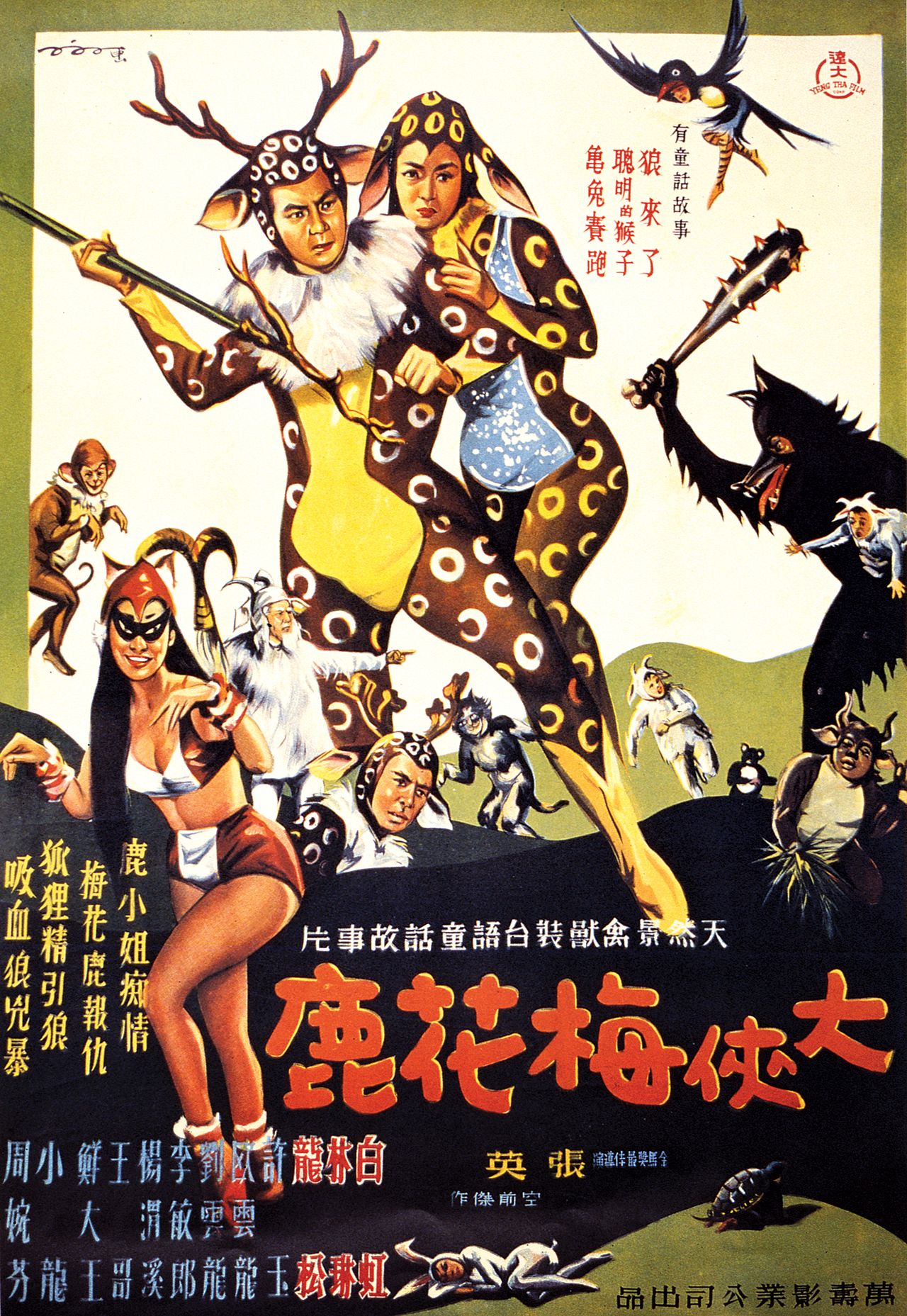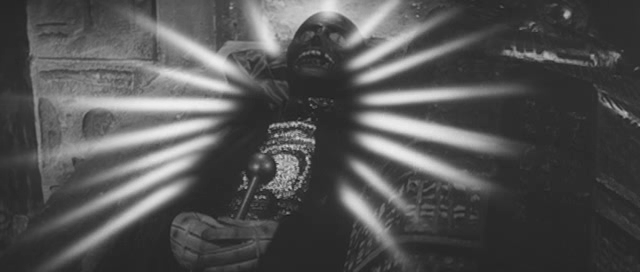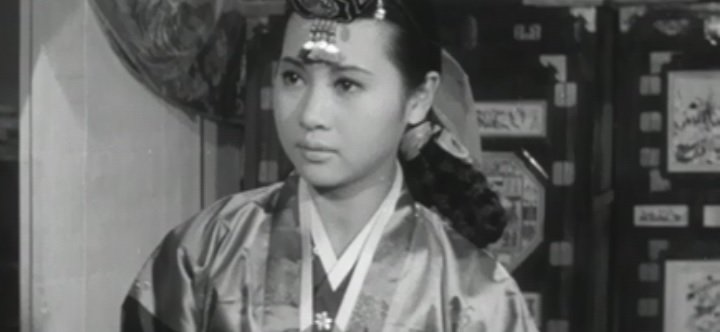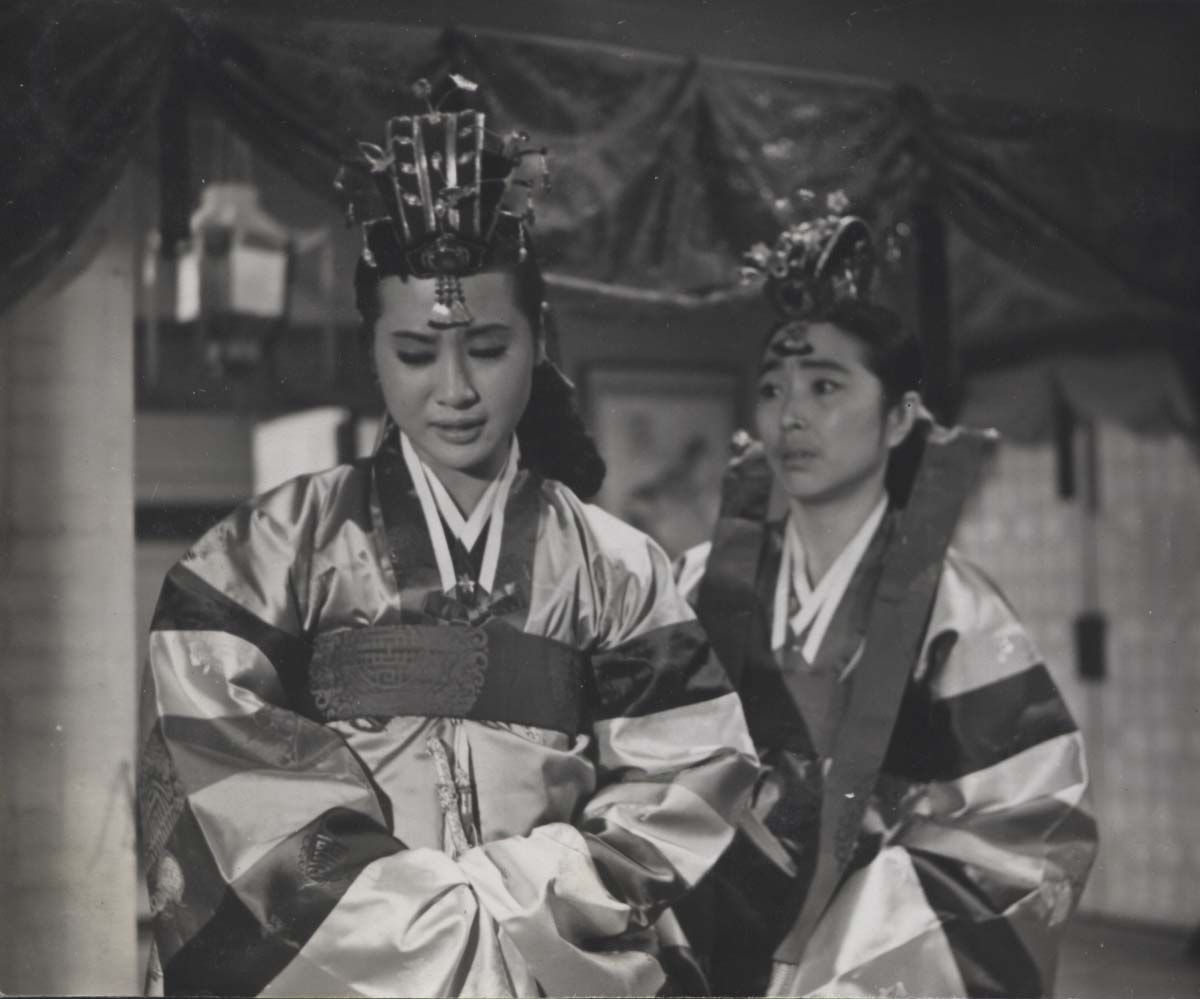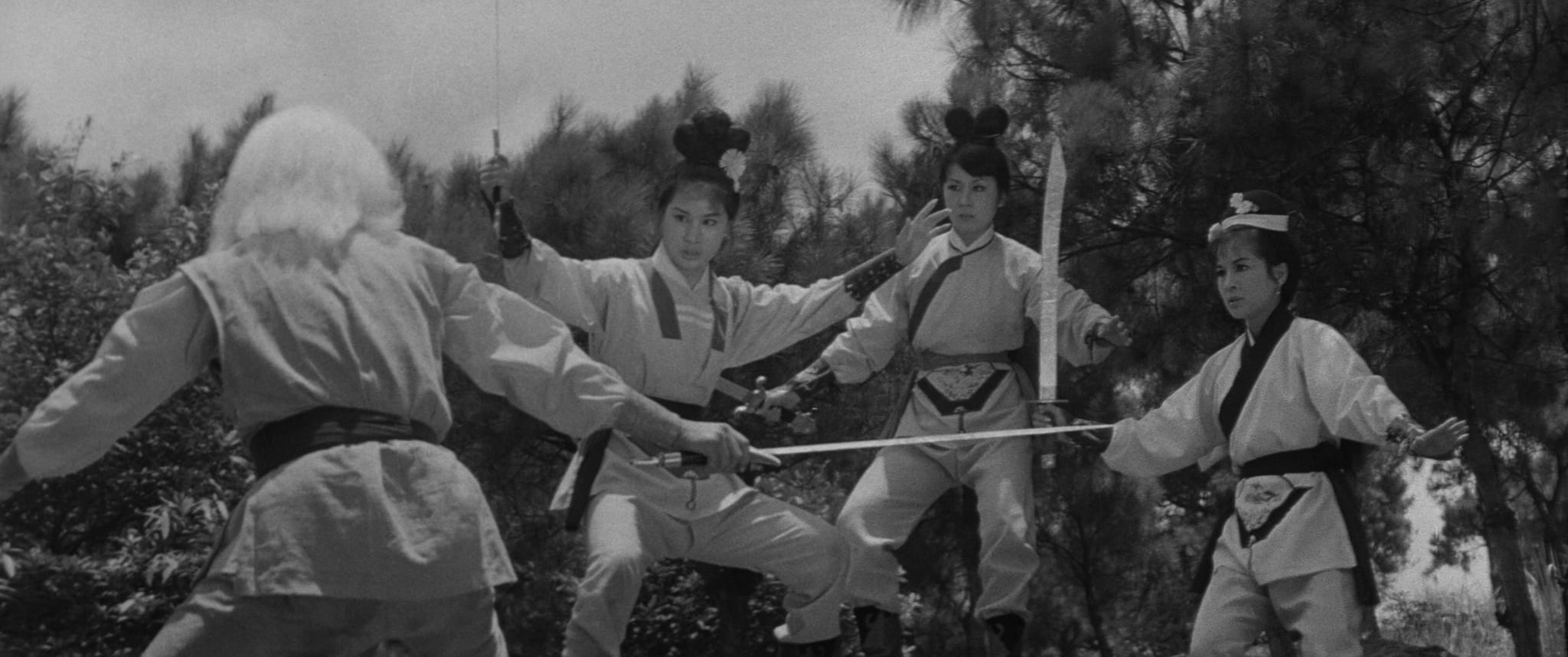
Vengeance of the Phoenix Sisters (三鳳震武林, Chen Hung-Min, 1968)

“We’re big, strong men. Why should we worry about three little girls?” a trio of bandits reflects on having allowed the children of their enemy to escape their massacre thereby leaving themselves open to future reprisals. As the title of Chen Hung-Min ’s Taiwanese-language wuxia Vengeance of the Phoenix Sisters (三鳳震武林) implies, however, they are quite wrong to be so dismissive of “three little girls” who will later grow up to fulfil their filial duty by avenging the deaths of their parents even though they are daughters rather than sons. 

During the exciting nighttime prologue, three bandits attack the house of Yang formerly a sheriff. The three men are taking “revenge” for his attempt to arrest them 15 years previously which they seemingly managed to evade and have been on the run ever since. Taken by surprise, Yang sends his three daughters away to safety with his servants, but is ultimately unable to do more than hold the bandits off before both he and his wife are killed. In the final moments before dying however, he is able to impart a few last words to second daughter Xiufeng instructing her to avenge their deaths while advising the nanny to take her to one of his sworn brothers way up in the mountains. 

This is where we meet Xiufeng (Yang Li-Hua) again 15 years later now dressing as a man and having apparently spent the remainder of her childhood perfecting her martial arts but now determined to set out alone to pursue vengeance as is her filial duty. The sisters have become scattered with the youngest, Zhifeng (Chin Mei), apparently unaware of her parentage having been brought up by the servant who helped her escape in a nearby town which is itself a victim of warlord Cao one of the bandits who killed her father who has now it seems become wealthy and powerful on the back of his life of crime. Cao is in fact so wealthy and powerful that he’s been exacting his droit du seigneur over the local population, Xiufeng rescuing a young woman in the middle of being carted off by Cao’s goons seconds after arriving in town only for Cao to ironically settle on Zhifeng as his next target despite being warned that she’s reputed to be highly skilled in martial arts. 

The the fact that each of the three bandits has become successful in the intervening 15 years is another wrong that sisters must right in their quest not only for vengeance but for justice and as the bandits seemingly have no children or family members the cycle of revenge will end only with them. Their actions will restore a kind of order not only in drawing a line under the deaths of their parents so that they can move on, but removing the bandits’ corruption so that the local population is no longer forced to live in fear of their cruel tyranny. This sense of anxious devastation is rammed home as, in a scene inspired either by contemporary samurai dramas or the western, Xiufeng slowly makes her way towards a low set camera to enter the town while in the foreground a lone figure collects debris from the otherwise empty streets. 

Xiufeng is, in genre tradition, dressing as man in order to pursue her revenge going under the name Lin Keding and exerting absolute authority unafraid of anything or anyone. Chen had worked as an editor on King Hu’s Dragon Inn and in true wuxia fashion includes a classic fight in a teahouse that also finds Xiufeng following her adoptive father’s advice to use her wits to win as she quickly realises that Lord Cao has set her up in revenge for robbing him of the girl by getting the innkeeper to poison her dinner. Meanwhile, in a repeated motif, the innkeeper’s wife keeps flirting with her adding to gender ambiguity. Older sister Qingfeng (Liu Ching) meanwhile whose protector apparently fell off a cliff and died some time ago sees no need for a similar pretence though she and Zhifeng later almost have a falling out after being distracted from their mission on encountering the “handsome hero” Lin Keding which is about as awkward a situation as one could imagine until they figure out that they’re after the same guy and Xiufeng’s true identity is confirmed simply by letting down her hair. 

In any case, the Pheonix Sisters are perhaps unusual even within the context of contemporary wuxia in that they pursue their revenge entirely independently with no male assistance or romantic involvement save the awkward flirtatious banter between the other two sisters prior to realising that Lin Keding is really Xiufeng. Nevertheless, on having completed their quest they throw away their swords, implying at least that they now intend to return to a more conventional femininity remaining strictly within the confines of patriarchal filiality rather than choosing to free themselves from it. Even so, the treatment they receive is perhaps harsher than that a male avenger may have faced, Cao sneering that he loves tough women who can fight while the other two bandits Ke and Lu eventually decide to burn Qingfeng and Zhifeng alive only for Xiufeng to arrive and dramatically save them just in the nick of time. 

Chen’s take on wuxia is indeed surprisingly violent, the cruelty in the bandits’ swords fully evidenced as they cut down not only Yang the former sheriff but his wife too. Meanwhile he makes good use of thematic symmetries typical of the genre, the trio of amoral bandits opposed by the trio of chivalrous sisters, pursuing them for a crime they committed 15 years previously to take revenge for a slight 15 years before that while the sense of circularity is further emphasised through repeated imagery in Chen’s elegantly framed widescreen composition. Despite the comparatively low budget typical of Taiwanese-language cinema which apparently saw Chen having to resort to car headlights in order to light the film during night shoots, he manages to craft fantastically entertaining period adventure filled with well choreographed action sequences and a playful sense of unease as the sisters strive to reunite their family through their quest for justice and vengeance. 


Encounter at the Station (難忘的車站, Hsin Chi, 1965)

Destructive and outdated conservative patriarchal social codes drive a young man to madness, cause a young woman to lose her sight, and push another towards nervous breakdown in Hsin Chi’s subversive Taiwanese-language romantic melodrama Encounter at the Station (難忘的車站) which rather than reinforcing the status quo eventually argues that it’s time to leave the old ways behind. Adapting the popular novel Cold and Warm World/Human Fickleness by Chin Hsing-chih, Hsin swaps the wartime setting for a purely contemporary tale in which the major victim of a patriarchal society turns out to be a rich boy in love with a poor girl while the arch villain is in fact his status-obsessed mother.

As the title perhaps implies, Tshui-Giok (Chin Mei) and Kok-Liong (Shih Chun) share a brief encounter at a train station when she drops her ID on the way to school and he picks up and returns it to her. For each of them it is love at first sight, student Kok-Liong idly dreaming of Tshui-Giok at home envisioning her in differing settings and eventually wearing a wedding dress. They continue to meet “accidentally” at the station and develop an innocent romance but while Tshui-Giok has problems at home, her adoptive mother suffering a serious illness while her step father has a serious gambling problem, Kok-Liong is attempting to put off an arranged marriage set up by his mother to a girl of a similar background, Hun-Kiau (Ho Yu-Hua). 

To begin with, the barriers between them would seem to be those of money and class though it is a sense of shame leading to minor deception which finally keeps them apart. After her mother dies, Tshui-Giok’s step father indentures her to a hostess bar after which she stops going to the station and meeting Kok-Liong. When he runs into by her accident, she tells him that she’s dropped out to look after her sickly father and is taking night classes but continues to go on innocent dates with him on her days off. When he discovers the truth, Kok-Liong borrows money from his father to buy her contract at the bar and proposes marriage again lying to his mother that Tshui-Giok is the orphaned daughter of his former teacher. Interestingly enough, it is Kok-Liong’s father who fully sympathises with his son and convinces his wife to allow him to exercise his romantic freedom, his mother reluctantly agreeing that the pair can marry when Kok-Liong returns from studying abroad in America secretly hoping he’ll go off the idea while he’s away. 

Despite her conservatism, Kok-Liong’s mother does not lack compassion, in fact Tshui-Giok later describes her as “kind” while trying to reason with her once her past as a bargirl is discovered. Nevertheless, she cannot let go of her old-fashioned ideas of properness, persuading Tshui-Giok that her love for Kok-Liong is toxic. She agrees that Tshui-Giok is a good woman who has performed the role of the perfect daughter-in-law while living in the house waiting for Kok-Liong’s return and seems at least partly conflicted but insists that Tshui-Giok’s background disqualifies her as a suitable wife for the son of a prominent family. Again she forces her to lie, leaving a goodbye note stating that she’s tired of waiting and has chosen to marry a wealthy man she met by chance. Her exit paves the way for Hun-Kiau’s return, Kok-Liong agreeing to a rebound marriage believing his mother’s claims that Tshui-Giok ran off with another man while his father cautions his wife with irritation that all of this is likely to blow up in her face.

Unlike his wife, Kok-Liong’s father continues to sympathise with the young couple indifferent to Tshui-Giok’s past while worried that his wife’s decision to throw her out (taken in his absence) may leave her with no choice but to become a bargirl again. This is in fact what ends up happening, a minor comment on the economic situation revealing that Tshui-Giok cannot support herself with a job in a factory because the pay is so low and the hours are irregular. She finds herself ironically having to return to the fringes of the sex trade in order to earn back the money Kok-Liong used to free her from it. Kok-Liong’s mother may be keen to maintain the little power she has in a patriarchal social system in enforcing her choice for her son’s bride, but her obsession with reputation and social standing eventually ruins all three lives. The marriage between Hun-Kiau and Kok-Liong is understandably unhappy leaving Kok-Liong a resentful drunk which is how he ends up re-encountering Tshui-Gok in a Taichung bar at first angrily berating her, becoming violent and threatening rape until realising she is still wearing the necklace he gave her as a symbol of their love. 

In some ways, Kok-Liong is just as much of a prisoner of this system as either of the women manipulated into an arranged marriage by his overbearing mother. Having become economically prosperous, he now has the resources to support two households setting up a home with Tshui-Gok in Taichung while keeping his marriage a secret from her leading her to believe they are simply waiting for his parents to come around. The effects of this patriarchal mindset are further felt in the fact that Hun-Kiau’s baby is female, hinting at the wrongness of their union, while Tshui-Gok’s is male. A doting father to his son, Kok-Liong all but ignores his daughter and rarely returns to his “family” home in Fengyuan forcing Hun-Kiau’s hand as she, like his mother, forces the good and proper Tshui-Giok to accept that her existence is ruinous to Kok-Liong’s future. Hun-Kiau unfairly accuses her of “stealing” Kok-Liong’s affections, making her own daughter tearfully demand that Tshui-Giok return her husband to her. 

Whatever she thought she could accomplish with this gambit, it’s unlikely that it would spontaneously reignite Kok-Liong’s buried love for her but she could hardly have expected that it would finally push him into mental breakdown unable to accept the total lack of power he has in his family life while manipulated firstly by his mother and then by his wife. Caught in an impossible situation, the young women are unable to hate each other caring most for their children rather than tussling over a man but each in their own way constrained, Hun-Kiau guilty of the same mindset as her mother-in-law if to a lesser extent while Tshui-Giok, shamed by her past and conscious of the class difference, is also wedded to outdated ideals which force her to believe that she is not good enough and only ruins Kok-Liong’s life. Fearing her son will be disadvantaged by his illegitimacy, she entrusts him to Hun-Kiau and goes to look for her birth relatives while returning to seamstressing and general emotional strain eventually lead to her losing her sight. 

Yet where traditional melodramas often reinforce the current social order, Encounter at the Station eventually allows the two lovers to reunite insisting that the mother-in-law is in the wrong, the old ideas belong to an old society and should be abandoned to facilitate a greater happiness the couple eventually leaving the family home for new one of their own. The ending is however a little too happy given the solemnity of the previous scenes. Hun-Kiau becomes the greatest casualty having allied herself to the mother-in-law’s philosophy which cannot progress into the modern society, succumbing to a mental breakdown before finally giving her blessing to Tshui-Giok. The patriarchal society disables them all, the men weak and shallow while the women are resilient but equally unable to pursue their desires finally only able either to protect their children or unethically misuse the little power they have over them. Familial bonds are eroded by notions of social propriety that force everybody to lie, or at least to conceal the truth, in order to present the facade of respectability. Featuring a number of musical sequences recounting the lovers’ sorry tale of romantic woe, Hsin hints at tragedy but eventually offers them a happier future if only in actively stepping away from the constraints of the past. 


Trailer (English subtitles)

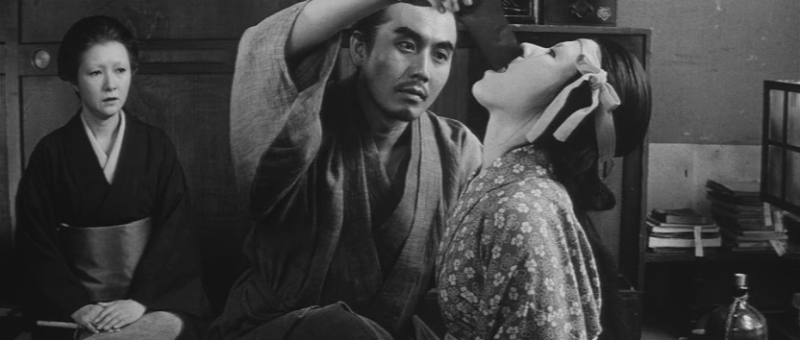
The Wife of Seishu Hanaoka (華岡青洲の妻, Yasuzo Masumura, 1967)

The close relationship between two women is disrupted by the reintroduction of a man in Yasuzo Masumura’s fictionalised account of the rivalry between the wife and mother of pioneering Japanese doctor Seishu Hanaoka. Scripted by Kaneto Shindo and adapted from the novel by Sawako Ariyoshi, the refocusing of the narrative is apparent in its title, not the life of but The Wife of Seishu Hanaoka (華岡青洲の妻, Hanaoka Seishu no Tsuma) less a tale of scientific endeavour than of domestic rivalry born of the inherently patriarchal social codes of the feudal society which cannot but help pit one woman against another while forcing each of them to play a role they may not wish to fulfil in order to secure their status and therefore their survival. 

Samurai’s daughter Kae (Ayako Wakao) first catches sight of the beautiful Otsugi (Hideko Takamine) at only eight years old and is instantly captivated by her, a fascination which persists well into adulthood when she is approached to marry into the Hanaoka household as wife to oldest son Seishu (Raizo Ichikawa) away studying to become a doctor like his father. Kae’s father originally objects to the match because of the class difference between the two families, Seishu’s father Naomichi (Yunosuke Ito) being only a humble country doctor of peasant stock whereas they had envisaged a grander station for their only daughter. Yet Kae is already old not to be married and continues to decline prospective suitors and so her mother and nanny (Chieko Naniwa) are minded to put it directly to her discovering that she is in fact more than willing to become a Hanaoka though mostly it seems in order to get close to Otsugi whom she has continued to idolise. 

The strange thing is that the wedding is conducted in Seishu’s absence, a medical text standing in for him while Kae in effect marries her mother-in-law Otsugi. These early days are spent in blissful tranquility as Kae does her best to be the ideal daughter-in-law, Otsugi even remarking that she’s come to love her more than a daughter. The two women share a room, Kae often staring longingly at the back of Otsugi’s head, their relationship one of mutual respect and affection that allows them to forget their respective stations but when three years later Seishu finally returns, it forces them apart in reverting to the roles of wife and mother their statuses conferred only by proximity to a man. 

Pregnant with her first child and about to become a mother herself, Kae’s resentment towards Otsugi begins to boil over. In an ironic premonition of the way the relationship between Masumura and his muse would eventually break down, she claims to have seen through Otsugi’s beauty and concluded that she is cold and calculating believing that she only brought her into the household as an unpaid servant forcing her to work a loom to raise money for Seishu’s medical training. Alternately jealous and condescending, Otsugi’s resentment is mediated through attempts to undermine her daughter-in-law’s authority finally leading to an ironic and absurdist battle between the two as they attempt to outdo each other volunteering to become test subjects for Seishu’s ongoing experiments to discover a safe anaesthetic in order save patients who require surgery but cannot endure the trauma. 

The marriage itself perhaps represents a moment of change in the feudal society, it becoming clear that the samurai are on their way down while skill and knowledge will define success in this new age of enlightenment. While Seishu works on his anaesthetic, the superstitious local community begins to view the Hanaokas with suspicion, believing that the misfortune that befalls them is the result of a curse owing to the large number of cats and dogs which have become casualties of Seishu’s failed experiments while a pedlar brings news of a mysterious disease attributed to the rain which is in fact due to mass malnutrition following a famine caused by the bad weather. When news of Seishu’s prowess as a doctor spreads they are soon overwhelmed with patients, many of whom cannot pay but are seemingly treated anyway. 

Seishu’s eventual victory is one of science over superstition, but it also requires faith which is the battleground contested between wife and mother. Having found a successful solution in cats, Seishu needs human test subjects with both instantly volunteering only to become locked into an absurd, internecine contest to prove who is the most self-sacrificing. The competition goes so far that it effectively becomes a game of dare with each determined to be the one to die for Seishu’s discovery but later realising that the stakes are even higher than first assumed because the winner will be dead but the loser saddled with guilt and possible ostracisation as someone who allowed their mother/daughter-in-law to die to in their place. 

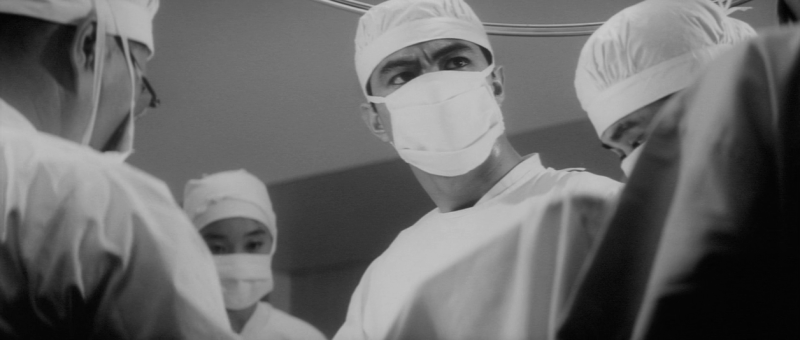
Even so, the pair of them are described as “wonderful examples of womanhood” in their willingness to risk their lives for their “master’s success”. Kae is reminded that a woman’s job is to give birth to a healthy baby, later weaponising her ability to do so as currency in realising that Otsugi has all the control but the one thing she can’t do is bear Seishu’s child. Ironically enough, the cases Seishu is trying to treat are of aggressive breast cancer, the oft repeated maxim being that a woman’s breasts are her life and to remove them is as good as killing her contributing to the sense that maternity is the only thing that gives a woman’s life meaning. It’s not without irony that the first successful surgery under anaesthesia directly juxtaposes a massive tumour removed from a woman’s breast with a baby being removed from a pregnant Kae who, at this point having lost her sight as a consequence of Seishu’s experiments, must bear the pain with no relief. 

Brought together by tragedy, Kae comes to a better understanding of her relationship with her mother-in-law only after she dies learning to see her once again as the kind and beautiful woman she met at eight years old while her unmarried sister-in-law having witnessed their painful war of attrition prays that she won’t be reborn as a woman glad that she was never forced to become a bride nor a mother-in-law. “The struggles of the women in this house were in the end just to bring up one man” she laments, suggesting that Seishu most likely noticed the conflict between the two and used it to his advantage in getting them to participate in his experiments as they desperately tried to prove themselves the better through dying for his love. 

Going one step further, it seems that being a woman is an exercise in futility the only source of success lying paradoxically in birth or death alone, the natural affection between Otsugi and Kae neutered by the presence of Seishu who inserts himself as the pole around which they must dance for their survival. Kae becomes a local legend, a woman who sacrificed her sight in service of her husband but now rejects this mischaracterisation of her life along with the implication that it’s somehow a wife’s duty to deplete herself for her husband’s gain retreating entirely from the society of others while Seishu’s practice continues to prosper. Even so Masumura ends on a note of irony in the literal transformation of Kae into the figure of Otsugi recreating the opening scene as she walks among the bright flowers she can no longer see.


Original trailer (no subtitles)
Sun Above, Death Below (狙撃, Hiromichi Horikawa, 1968)

“Fighting is the only way I have to live my life” according to a hitman battling existential ennui in Hiromichi Horikawa’s Toho action B-movie, Sun Above, Death Below (狙撃, Sogeki). A starrier affair than the studio’s other forays into moody crime, Horikawa’s psychedelic exploration of a killer drawn to death nevertheless situates itself very much in the world of 1968 in which the hero’s attempt to escape his sense of emptiness through killing is directly linked to an increasing economic prosperity and its concurrent costs in the nation’s current geopolitical positioning. 

As if to signal this sense of societal anxiety, the first target Matsushita (Yuzo Kayama) knocks off is sitting in the back row of the last carriage on the Shinkansen out of Tokyo. His next job, however, will apparently be more complicated. A criminal gang want him to take out “five or six” targets at a specific location in order to intercept a fortune in gold smuggled by, as later becomes clear, an international Chinese gangster, though the men at the waterside greet each other in Arabic. The hit does not go entirely to plan but Matsushita is later able to bring the situation under control allowing the gang to get their hands on the gold. The smugglers, meanwhile, are obviously unhappy with this turn of events and send in their best hitman (Masayuki Mori), who permanently travels with a blonde companion, to take back what’s theirs. 

Matsushita is a killer for hire so he doesn’t really care very much about the gold and is even annoyed when the gang try to pay him with it, correctly surmising they didn’t really expect him to succeed so haven’t bothered bringing any cash. As he explains to love interest Shoko (Ruriko Asaoka), he doesn’t really care about anything. He simply shoots at the best target, man, with his favourite gun. He kills to feel alive, explaining that the intense concentration in which he becomes one with the gun as if it were an extension of his own body allows him to overcome his sense of existential dread which is why he’s so ice cool all the time. 

A fashion model obsessed with rare butterflies and the paradise to be found New Guinea Shoko dreams of a time in which they can become one under the sun, envisioning a future in which Matsushita has become friends with all the creatures of the forest. Yet as Matsushita tells an old friend, Fukazawa (Shin Kishida), running a secondhand gun shop near a US army base as a front for his revolutionary activities, he has no dream or ideal and knows nothing other than killing. Whereas as his friend is apparently working for some kind of never quite explained but seemingly left-wing/anarchist cause, Matsushita simply lives out his days of emptiness on some level knowing he’ll probably never make it to Shoko’s New Guinean utopia. 

Fukazawa nevertheless hints at the political instability all around them, firstly agreeing to pawn a gun for a pair of Americans after beer money, and then by handing Matsushita an AK47 apparently smuggled back from Vietnam via the American base. Matsushita’s sense of ennui is born of this growing unease with empty capitalistic consumerism and a concurrent sense of powerless in Japan’s ongoing complicity with American foreign policy in Asia. Displaying a sense of Sinophobia familiar from many similar films of this era, the big boss turns out to be Chinese while many that surround him are also from outside of Japan even if Matsushita’s rival is just a slightly older, crueller version of himself. 

One of Toho’s more serious crime dramas, Horikawa often veers into experimental territory with his psychedelic butterfly imagery Matsushita apparently having some kind of vision while experiencing carnal ecstasy that equates climax with literal gunshot, while his usage of stock footage featuring the New Guinean indigenous community along with an out of place blackface tribal dance performed in a hotel room clearly display some outdated attitudes otherwise unacceptable and potentially offensive in the present day. Nevertheless, Sun Above, Death Below largely lives up to its hardboiled title, the Japanese “Sniping” perhaps also hinting at the various ways Matsushita eventually strays into the crosshairs of his own inevitable destiny. 


Original trailer (no subtitles)

Dangerous Youth (危險的青春, Hsin Chi, 1969)

Increasing consumerism has begun to corrupt the minds of the young in Hsin Chi’s ultra contemporary Taiwanese-language drama Dangerous Youth (危險的青春). Unlike similarly themed youth movies from elsewhere such as Kim Ki-duk’s Barefooted Youth (1964, inspired by Ko Nakahira’s Doro Darake no Junjo) or Nagisa Oshima’s Cruel Story of Youth (1960), Hsin’s film is nowhere near as nihilistic as its title might suggest nor are its heroes as delinquent merely morally compromised as they attempt to navigate the changing society around them while feeling as if the things they want have been deliberately placed out of reach. 

As the film opens, Khue-guan (Shih Ying) is cheerfully riding on his motorcycle with his current girlfriend on the back behind him, only the trip comes to an abrupt halt when the bike, a symbol of his freedom and independence, gets a flat tire. The pair pull over to a roadside garage to get it fixed and wait in a nearby cafe where they’re served by waitress Tsing-bi (Cheng Hsiao-Fen) who happens to be the owner’s daughter. While they’re waiting, Khue-guan’s girlfriend contemptuously dumps him, complaining that his bike is always breaking down and she’s decided to marry a financially secure engineer while attempting to palm Khue-guan off on Tsing-bi who ironically has a haircut quite like hers and is dressed almost identically. Khue-guan tries to change her mind, but she reminds him that marriage is “a woman’s meal ticket” so why would she or anyone else for that matter marry a poor delivery boy if a better offer came along? 

Khue-guan innocently insists that if they stay together and work hard they’ll be rich someday too, but his girlfriend has no desire to wait and no inclination to strive. It’s this ideology of working class aspiration that if you just buckle down and play by the rules you can one day have a comfortable life that is at the centre of the film’s ideological conflict, Khue-guan himself later hearing the same words from Tsing-bi when she refuses to become the mistress of the wealthy widower Mr. Tshi (Chen Tsai-Hsing) but having become so jaded that he no longer believes them only to be apparently converted when a work colleague gives him the same advice that he should give up on the boss’ sexually liberated daughter and find someone who loves him with whom he can work together to build a happy family home. 

The happy family home, a conventional middle-class success story, was Khue-guan’s small dream at the beginning of the film before his girlfriend’s slight caused him to lose his way. His crisis is also one of threatened masculinity, feeling himself inferior by virtue of a poverty he does not know how to escape lamenting to an old friend that only college men like him can find good jobs in the changing, increasingly white collar society. In a minor role reversal, it’s clear that women have gained increasing freedom and agency and in fact here hold the power as reflected in the masculinised figure of boss’ daughter Giok-Sian (Kao Hsing-Chih) who runs a hostess bar and refuses to get married instead living a sexually liberated life without romantic attachment. Part of Tsing-bi’s resentment towards her mother (Su Chu) stems from her sexually active love life in which it seems she too has the upper hand. In a repeated motif, we see Tsing-bi’s mother hand money to her lover so he can take time off work, something Tsing-bi later does to Khue-guan who without quite thinking about it has begun to live through her exploitation only objecting when offered money by Giok-Sian who rejects his romantic overtures interested only in bodily satisfaction. 

This gender imbalance is later “corrected” towards patriarchal norms as Giok-Sion is finally forced to accept that she is in love with Khue-guan just at the moment he receives his epiphany that the way he’s been living is wrong, love is more important than money, and he needs to get back on the straight and narrow to earn success by working hard rather than exploiting others. Nevertheless, there is plenty of toxic masculinity in the air, the friends of the ageing Mr. Tshi apparently mocking him for his literal impotence, his masculinity questioned in the absence of a female sexual partner. Though as we discover Mr. Tshi is simply lonely having lost his wife and seemingly having no children, asking Tsing-bi only for cuddles and companionship. There is something distinctly uncomfortable in the way that Tsing-bi is thrown at Mr. Tshi like a like live chicken into a pit of crocodiles by Giok-Sian, her father, and his friends each of whom are trying to curry favour for business advantage by exploiting her. With her short hair and tendency to wear pinafore dresses, not to mention often carrying around teddy bears and oversize dolls, the 20-year-old and extremely naive Tsing-bi seems even younger than she is, an innocent little girl misused by an increasingly corrupt society. 

Even so Tsing-bi remains the least corrupted of the youngsters, clinging to her love for Khue-guen never realising he too is just using her for easy money even as she ironically throws his own words back at him in suggesting they marry, work hard, and raise a happy family together. Though it was her consumerist desires that originally set her against her mother in her yearning for current fashions and sophisticated city life, she never really wanted the money only Khue-guan while ironically mimicking her mother’s behaviour in accidentally making him a kept man. The reset which occurs at the film’s conclusion at once restores traditional gender roles but also perhaps shifts them in stressing the need of the couple to work “together” even if that sentiment might imply a greater equality than is in reality in play. Nevertheless, perhaps for reasons of censorship (which might also explain why despite the film’s obvious Taiwan setting frequent references are made to Hong Kong landmarks) the conclusion is not as bleak as one might assume from the rather nihilistic, moral panic implications of the title as the young couple are finally placed back onto the “correct” path of honest hard work which is also in its own way a capitulation to their own exploitation at the centre of an expanding, increasingly capitalistic society. 


Dangerous Youth streams in the UK until 31st October as part of this year’s Taiwan Film Festival Edinburgh.

Trailer (Traditional Chinese / English subtitles)

The Best Secret Agent (天字第一號, Chang Ying, 1964)

“The Japanese have destroyed our family. You must avenge me” a dying father instructs his daughter, his words somewhat ironically echoing the ideology of the ruling regime in hinting at the national trauma of exile and separation. Arriving in the wake of Bond mania, Chang Ying’s The Best Secret Agent (天字第一號) is, incongruously enough, a Taiwanese-language remake of an earlier film from 1945 set in Shanghai amid the Anti-Japanese Resistance movement, but at heart is less a tale of espionage and intrigue than a romantic melodrama in which a capable woman sacrifices romantic love for the patriotic and filial while perhaps subversively finding true freedom and independence. 

As Tsui-ying’s (Pai Hung) father (Ko Yu-Min) later explains, not wishing to be enslaved they fled from the Japanese but are forced to degrade themselves with public performances in the market square, the old man stooping to beating his daughter when the show fails to please the audience. A kindhearted man from the crowd, Ling-yun (Ko Chun-Hsiung), comes to her defence but Tsui-ying forgives her father blaming the Japanese for the misfortune which has befallen them. Soon after, Tsui-ying’s father is killed during an airstrike using his dying breath to ask for vengeance. After becoming a nightclub singer in Shanghai, Tsui-ying ends up running into Ling-yun again and the pair fall in love but she is also working as a spy and is ordered to break up with him in order to capitalise on the attraction a prominent collaborator, Chao-chun (Tien Ching), feels for her. Reluctantly she obeys, Ling-yun going abroad to study while she eventually becomes Chao-chun’s wife only to discover some years later that Chao-chun is actually Ling-yun’s uncle. 

The central melodrama revolves around the impossible love of Tsui-ying for Ling-yun, a love that she must willingly sacrifice in order to fulfil her role as a daughter both to her literal father and to her country. There is also however a degree of awkward comedy in Ling-yun’s continual discomfort that he must now refer to Tsui-ying as his aunt, their love now a further taboo in taking on a quasi-incestuous quality. Continually pained, she must keep her cover identity intact unable to explain to Ling-yun why she left him, encouraging him to think of her as a cold and heartless woman while watching him romancing his cousin, Ai-li (Liu Ching), whom she has come to genuinely care for as a maternal figure despite there being very little difference between them in age. 

What she apparently doesn’t know despite being a cunning mastermind is that almost everyone in her house is also a spy. As the famed Heaven No. 1, Tsui-Ying plays the cooly elegant wife of a diplomat cosying up to the Japanese but her activities perhaps owe more to the Basil Rathbone Sherlock Holmes movies than they do to the ever popular Bond, a late montage sequence showing her in a series of disguises from a wise old man to anonymous soldier and cheerful shoeshine boy while an early slapstick set piece sees the Resistance hide a pistol inside a roast duck in order to assassinate the Japanese advisor at dinner, the plan almost foiled by Chao-chun’s fiddling with the lazy Suzan. 

Everything is indeed the fault of the Japanese, but it’s Chao-chun, the collaborator who is the true villain even in his bumbling cluelessness, a quality also reflected in his idiot police chief Captain Wan who consistently fails to capture any Resistance members despite Chao-chun repeatedly ordering him to. In another bumbling piece of verbal humour, Captain Wan (Hu Tou) simply repeats the speech he’s just had criticising him for incompetence verbatim to his own subordinates while not doing much of anything himself. They are both, fairly obviously, outclassed by Tsui-ying playing the part of the clueless society bride lounging around in her furs and mediating in-house disputes while simultaneously plotting to bring them both down once they’ve outlived their usefulness. Though she is forced to give up what is most important to her, her love for Ling-yun, what she discovers is perhaps a transgressive sense of freedom and independence in her life as a master spy not otherwise available to an ordinary woman as she pursues her revenge for the death of her father.

Nevertheless, she is also orphaned both literally and metaphorically forced into a life of wandering. The separation of the lovers, blamed on the Japanese, is symbolic of that between the two Chinas as echoed in Tsui-ying’s melancholy love song and no doubt appealing to the prevailing ideology of the ruling regime save for the implication of fatalism as Tsui-ying and Ling-yun pursue exile in opposing directions. Even so with its fantastically compelling heroine, ironic humour, and atmosphere of intrigue tempered with melancholy romance, The Best Secret Agent more than lives up to its name as the master spy effortlessly completes her primary mission even if sacrificing her heart in the process. 


The Best Secret Agent streams in the UK 25th to 31st October as part of this year’s Taiwan Film Festival Edinburgh.

Trailer (Traditional Chinese subtitles only)

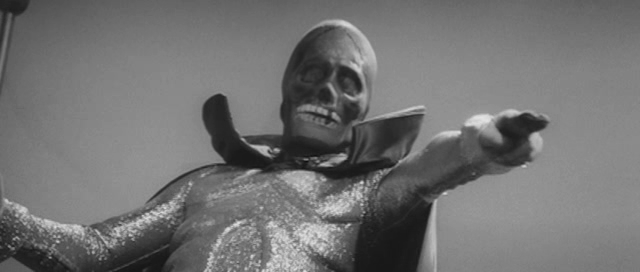
The Phantom Goblin (まぼろし天狗, Nobuo Nakagawa, 1962)

“Everything is money these days” as a pirate king cheerfully proclaims in Nobuo Nakagawa’s tale of Edo-era corruption, Phantom Goblin (まぼろし天狗, Maboroshi Tengu). Perhaps named to capitalise on Nakagawa’s reputation for spookiness, Phantom Goblin features no real ghosts and only metaphorical goblins in the bright red tengu masks sported by the hero’s mysterious clan while otherwise conforming to the Toei programmer house style and starring jidaigeki superstar Hashizo Okawa in a double role as brothers separated at birth and reunited by their resistance towards the inherently corrupt authority of Edo society. 

Drawing parallels with the present day, the film opens at a bawdy banquet at which corrupt councillor Tanuma (Isao Yamagata) is being entertained by a pair of local social climbers with a floor show of dancing girls. Shortly after the performance begins, however, one of the women collapses writhing in agony and loudly crying out for drugs. Embarrassed, the lords would rather this not get out deciding to finish the woman off and dump her body in a nearby well. Unfortunately for them, the plan is interrupted by local policeman Shuma Moriya (Hashizo Okawa) who arrives in time to hear the woman exclaim the words “drugs” and “mastermind” before she passes away. Determined to figure out the truth, Moriya heads to the not so secret hideout of a local gang but is shot in the arm and has to take refuge in an inn where he encounters a man who looks just like himself, Kyonosuke Asakawa (also Hashizo Okawa) of the Goblin clan, who eventually sends him to his estate to recover and assumes his position as policeman in order to root out the truth. 

A former hatamoto who apparently resigned his position after finding himself unable to support corrupt lords, Kyonosuke declares himself “frustrated with how things are run”, realising that the system is rotten beyond repair on hearing that Moriya has been fired by a corrupt magistrate apparently in league with the conspirators. While comparatively rare in Edo-era dramas, drugs are a controversial subject in any age but in keeping with the sensibilities of the early ‘60s Phantom Goblin eventually slips into the Sinophobia then rampant in contemporary crime dramas as it becomes clear the drugs trade in the feudal economy is being driven by Chinese pirates trafficking it in from overseas while weak willed lords enable their rise to power. 

There is however a touch of conservatism in Kyonosuke’s desire to see justice served in that he fears a world in which “if you can buy power and position with money, then one day we will have a chief counsellor who is a pirate”. While he’s undoubtedly got a point, it’s also true that he is in a sense protecting his own privilege conveyed by birth rather than worth in addition to rejecting the influence of the “foreign” as he raises his sword against a Chinese pirate in order to target the corrupt lords who’ve been collaborating with him in order to bolster their own power and position. Kyonosuke wanted to “clean out evil in Edo”, but eventually succeeds rather ironically in simply becoming a part of the system himself after having supposedly cleaned it out by getting rid of the “obviously” corrupt elites. 

Recovering from his shoulder injury and flirting with the adopted sister of Kyonosuke, Moriya is largely relegated to a secondary role though the secret brotherhood of the two never develops into much of a plot point even as they bond as men too honest for the world in which they live. Nor do the respective romantic dilemmas ever materialise even as the conflicted figure of a female bandit in love with the noble policeman is forced to pay for her crimes with her life, unable to progress into the purified world the brothers are about to create. Working in the Toei house style, Nakagawa abandons his taste for the strange or otherworldly contenting himself only with a few ironic tengu masks and the literal shadows surrounding the shady mastermind while indulging in genre staples such as the comic relief provided by Kyonosuke’s bumbling retainers and the double casting of Hashizo Okawa as two brothers alike in both appearance and sensibility who find themselves unable to accept the increasing corruption of their society and determine to oppose it. 


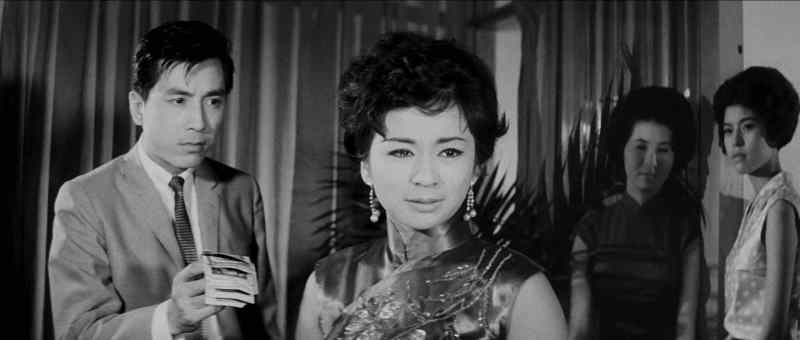
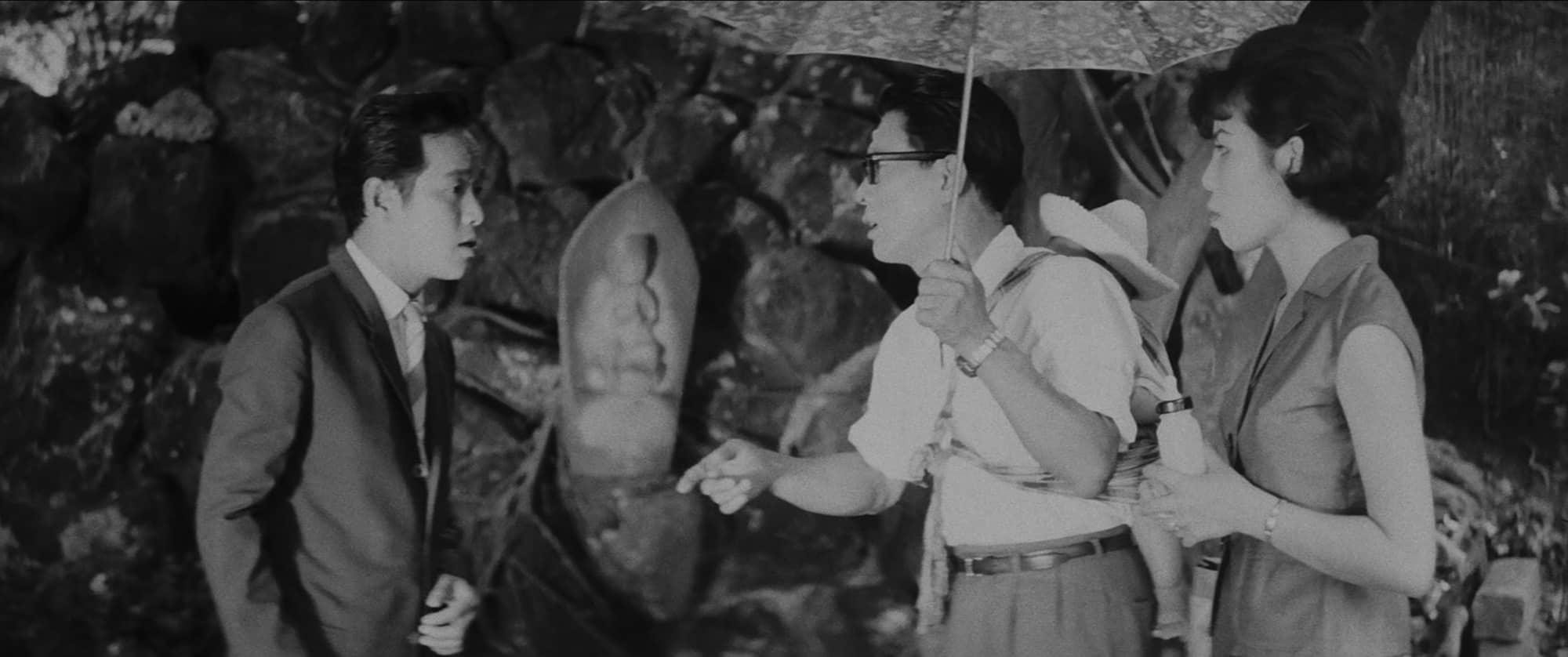
Foolish Bride, Naive Bridegroom (三八新娘憨子婿, Hsin Chi, 1967)

Even in the Taiwan of 1967 things were changing but not perhaps as quickly as elsewhere. Hsin Chi’s delightful “taiyupian” Taiwanese-language screwball rom-com Foolish Bride, Naive Bridegroom (三八新娘憨子婿) is a fairly late take on the arranged marriage vs love match debate which, perhaps surprisingly given the increasing conservatism of the era, comes down firmly on the side of the youngsters’ right to choose even while subtly poking fun at them for being naive and irresponsible, unable to forge independent lives for themselves and expecting the older generation to fix their mistakes while the parents eventually soften and in a sense free themselves from the oppressive values which defined their youths. 

As the film opens, grumpy father A-Kau (Chin Tu) is complaining that his pot is already boiling but his son Bun-ti (Shih Chun) has not yet returned with the rice he sent him out to get. That’s because Bun-ti has taken the opportunity of the errand to meet up with his girlfriend, Kui-ki (Chin Mei), who is also out on an errand having been sent grocery shopping by her mother (Yang Yue-fan). The pair can only meet on occasions such as these because their overly possessive parents refuse to let them leave the house without good reason and firmly disapprove of romantic relationships. 

In an amusing reversal of accepted gender norms, it’s A-Kau who plays the wounded widower, afraid that some young woman is coming to steal away his son and then there’ll be no one to look after him. Nevertheless, he’s simultaneously proud of his son’s popularity with the opposite sex despite describing him as having a “ladies curse” which he attributes to a constant need for female affection caused by the early death of his mother when he was only a few months old. In a running gag, the house is frequently beset by the young women of the neighbourhood pushing notes through the window and demanding to see the handsome young man. A-kau’s solution is to literally shut his son away by having the windows boarded over despite the carpenter’s cautioning that most people are looking for more ventilation, not less. 

Kui-ki’s mother, by contrast, is a much feistier figure directly telling her daughter that she’s no wish to meet her boyfriend because marriage is a matter for the parents. A-Kau later says something similar, concerned that “love heats up fast but often cools”, believing perhaps that an arranged marriage can provide greater longterm stability and is no more likely to fail than a love match. As we later discover, however, the parents’ animosity is rooted in youthful tragedy. In a staggering coincidence, it turns out that they were once young lovers like Bun-ti and Kui-ki who wanted to marry but fell foul of parental disapproval. Each accuses the other “abandonment”, but the cause is found to lie with A-Kau who, like Bun-ti, failed to be “resolute in love”, refusing to fight for Kui-ki’s mother and simply backing off when her father told him he wasn’t good enough. His own father then apparently forced him into the arranged marriage which produced Bun-ti while Kui-ki’s mother held out for a few years and was then forced into an arranged marriage herself. The pair of them fail to see the parallels with their children’s romance and have over invested in the idea of properness in traditional values in an attempt to ease the pain and disappointment of being denied the right to marry the person they loved. 

On recognising A-Kau, Kui-ki’s mother chases him out of the house with a broom and vetos the marriage, causing the young couple to elope to Taipei in an attempt to escape their parents’ authority. Each of them is sorry, but still wedded to their position as parental authorities, too proud to cede ground and simply give their blessing to the union to get their kids to come home. In an echo of an earlier scene in which he went on the prowl looking for Bun-ti, A-Kau roams the local park and spots young couples everywhere some of them engaging in public displays of affection which one might have assumed would have annoyed the censors. He’s approached first by a disabled beggar who explains that he, like Bun-ti, did not listen to his parents and eloped to Taipei with a woman they wouldn’t let him marry. But he couldn’t find work, went broke, and became ill. Finally she left him, and he’s too ashamed of his filial failure to go home which is why he’s begging in this park. A-Kau seems to find vindication rather than a warning in the story, glad to hear the young man admit that his parents were right rather than fearful that the same will happen to Bun-ti if he does not eventually accept his decision to marry. Later, a young couple approach him looking distressed, offering to sell the woman’s coat for money to elope. Feeling sorry A-kau gives them twice as much as they asked for and drops the coat behind him as he leaves, but then gives a long and painful lecture reflecting on his plight and encouraging the young couple to go home, “your filial duty is to avoid worrying your parents” he goes on. The young couple eventually make a sneaky escape while he’s turned around mid-monologue, rejecting his melancholy defence of feudal patriarchy. 

Meanwhile, in the city, Bun-ti and Kui-ki have got what looks to be a rather nice apartment together and are living it large but we later discover that they’re months behind on their rent (not to mention the rice bill) and the reality of their situation is beginning to place a strain on their relationship. He accuses of her of being a spendthrift, wanting to go out for dinner and a movie on a Sunday when they owe so much money already, while she blames him for failing to provide. In a strange and uncomfortable defence of domestic violence, Bunt-ti and Kui-ki chance on an apparently happily married couple making a spectacle of themselves during their weekly bout of fighting after which they both emerge bloody and bruised but seemingly cheerful after having worked out all their frustrations. Bun-ti and Kui-ki decide to try it for themselves and find that it works, later getting into a blazing row caused by Bun-ti’s staying out late drinking without phoning home. 

This last argument which signals the failure of their attempt to live as independent adults in the modern city leads to an intervention from the district chief/landlord and rice merchant, each of them instructing the creditors to call their parents to settle the debts. Ah-kau and Kui-ki’s mother dutifully arrive, launching a mini trial to discover who’s at fault including a full reconstruction of the events of the previous night which results in another violent fight after which the couple threaten to break up and marry other people only to reconcile while A-Kau and Kui-ki’s mother are then forced to deal with their “grudge” and end up getting engaged.

“Parents don’t understand the way young people do things” Kui-ki had explained, but they are eventually compelled to shift ground as they take back what was taken from them in finally being allowed to marry. Hsin doesn’t let anyone off the hook, neither the naive and feckless lovers nor their embittered parents whose hurt eventually turns into an unexpected opera duet as they rehash the failure of their youthful romance. He does however leave room for an unambiguously happy ending in which, ironically, the traditional family is repaired but only in its subversion as the young lovers are validated in their desire for love and freedom while A-Kau abandons the patriarchal order by assuming the role of the bride, carried in a palanquin to Kui-ki’s mother’s house wearing a veil, as he removes himself from his son’s family and surrenders his authority to his new wife in affirmation of a new social order struggling to be born in the increasingly repressive martial law era. 


Remaster trailer (English/Traditional Chinese subtitles)

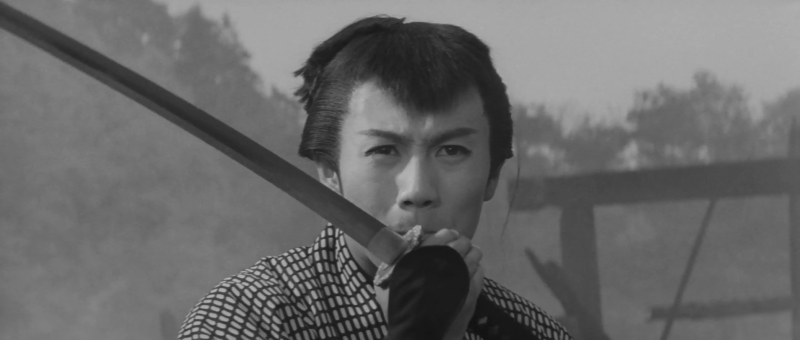
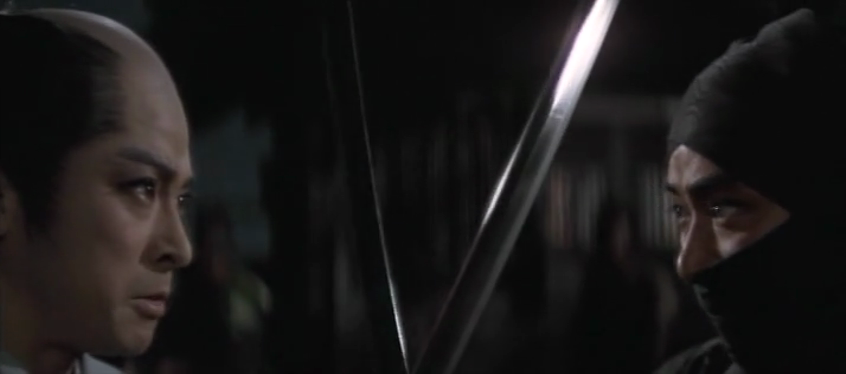
Sword Devil (剣鬼, Kenji Misumi, 1965)

An orphaned son’s attempts to overcome his cursed destiny are poisoned by the duplicities of the samurai society in third part of Kenji Misumi’s loose “Sword Trilogy”, Sword Devil (剣鬼, Kenki). Perhaps unfairly dismissed by some as a mere genre craftsmen, Misumi was also an intense visual stylist, a quality very much on show in this vibrant drama which pits the beauty of the natural world against the samurai order but eventually finds its hero succumbing to cruelties of his age unable to outrun himself or his destiny. 

In the prologue which opens the film, shot in an arty theatrical style, a young peasant woman formerly a maid to the late Lady Makino gives birth to a “stranger’s” child after having been promoted and given a place in the women’s quarters as a reward for her loyalty in continuing to serve her mistress in the depths of her “madness”. Lady Makino claims that Kin’s kindness brought her back to reality and is keen to ensure she continues to be taken care of after her death, but also asks her to take charge of her precious pooch hoping that she will treat it “as herself”. This is perhaps why it is rumoured that the child, given the name “Hanpei” which ironically is in part inspired by the dog-like “Spot” coupled with a suffix which implies a lowly rank, is in fact the product of a taboo union between the maid and the dog (rather than admit he is almost certainly the illegitimate son of Lord Masanobu). For some reason this bizarre rumour persists throughout the boy’s life, cast out as he is from the palace and raised in an ordinary village as the son of a low-ranking samurai who appears to be kind and loving, worried enough about Hanpei’s (Raizo Ichikawa) future to advise him to find a special skill that will allow him to support himself and perhaps overcome some of the persistent prejudice against him after the old man’s death. 

The skill he perfects, however, continues to set him apart from his fellow men in that he chooses the cultivation of flowers. A particularly snotty neighbour describes Hanpei’s art as “annoying”, though others are impressed enough by his skill to marvel that they have such a man in their clan while also pointing out that in these times of peace becoming a samurai florist might be much more useful than perfecting the art of the sword. Ironically, however, it drags him back towards the court and intrigue when he’s invited to craft a flower garden to cheer up the present young lord who seems to be succumbing to the same “madness” as his mother. The trouble starts when the garden is completed to the lord’s satisfaction but marred by the sudden and apparently unexpected arrival of a bumblebee which damages the lord’s tranquility and provokes a violent outburst in which he begins to hack at the flowers hoping to punish the one which “rudely” invited the bee to the garden. Hiding behind a tree, Hanpei perfectly aims a rock at the lord’s head to prevent him destroying his precious work and is spotted by his chief retainer, Kanbei (Kei Sato), who earmarks him for future use in his nascent conspiracy. 

Hanpei finds himself at the centre of intrigue, increasingly seduced by promises of advancement that he might be “titleless” no more and perhaps in fact escape his lowly position as the son of a dog. He ingratiates himself by, like his mother, being one of the few servants willing to bear the lord’s violent rages in volunteering to accompany his horse even though he has none of his own and has to run along behind thereby demonstrating his slightly supernatural athletic ability that gives further credence to his canine origins. In similar fashion he learns by observation, captivated rather than appalled on witnessing an old ronin practicing his sword technique by cutting in half a butterfly in the forest. Preoccupied by his lowly status and consequent lack of sword skills, Hanpei is reassured by the man’s explanation that there’s nothing more to it than draw, strike, and sheath but takes yet another step towards the samurai dark side in accepting the gift of a sword. Later he breaks it, meaning to break with the cruel path on which fate has set him, only to pick up another, supposedly cursed sword to which he was attracted because of its “evil spirit”.

Osaki (Michiko Sugata), a kind and innocent woman seemingly attracted to Hanpei because of his difference in his gentle sensitivity in contrast to the rough men around her, refuses to believe the rumours he has become an assassin working for Kanbei because no one who loves flowers like he does could be a coldblooded killer. This is in fact what he has become, sent, like a dog, after Kanbei’s enemies killing without even knowing who it is who must die only to be remorseful on discovering he has killed someone known to him. There is division and sedition within the court caused by the lord’s madness, Kanbei and his associates keen to rule in his stead while keeping his mania secret from the shogun while others, a small group of lower samurai rebels, prefer to depose him in favour of his adopted heir. Hanpei is once again a pawn, taking no side in this debate but unthinkingly doing Kanbei’s dirty work in the service of his sword. He hopes that by taking the “evil” instrument in his hands he might double his bad luck to overcome his unhappy destiny, gazing at his distorted face in its reflection, but discovers himself merely outcast once again as the villagers begin to realise he is an obstacle to their rebellion and responsible for the assassinations of their loved ones. 

The ironic conclusion finds the hero’s planned flower garden, a shared endeavour with love interest Osaki, rendered a bloody graveyard, men cut down like weeds as Hanpei’s quick draw philosophy makes a mockery of their fancy samurai fencing. The poisonous samurai legacy, infected with madnesses literal and figural, destroys everything, all beauty and grace falling under Hanpei’s “evil” sword as he finds himself, quite literally, chased out of town like a stray dog condemned to wander exiled from human society. 


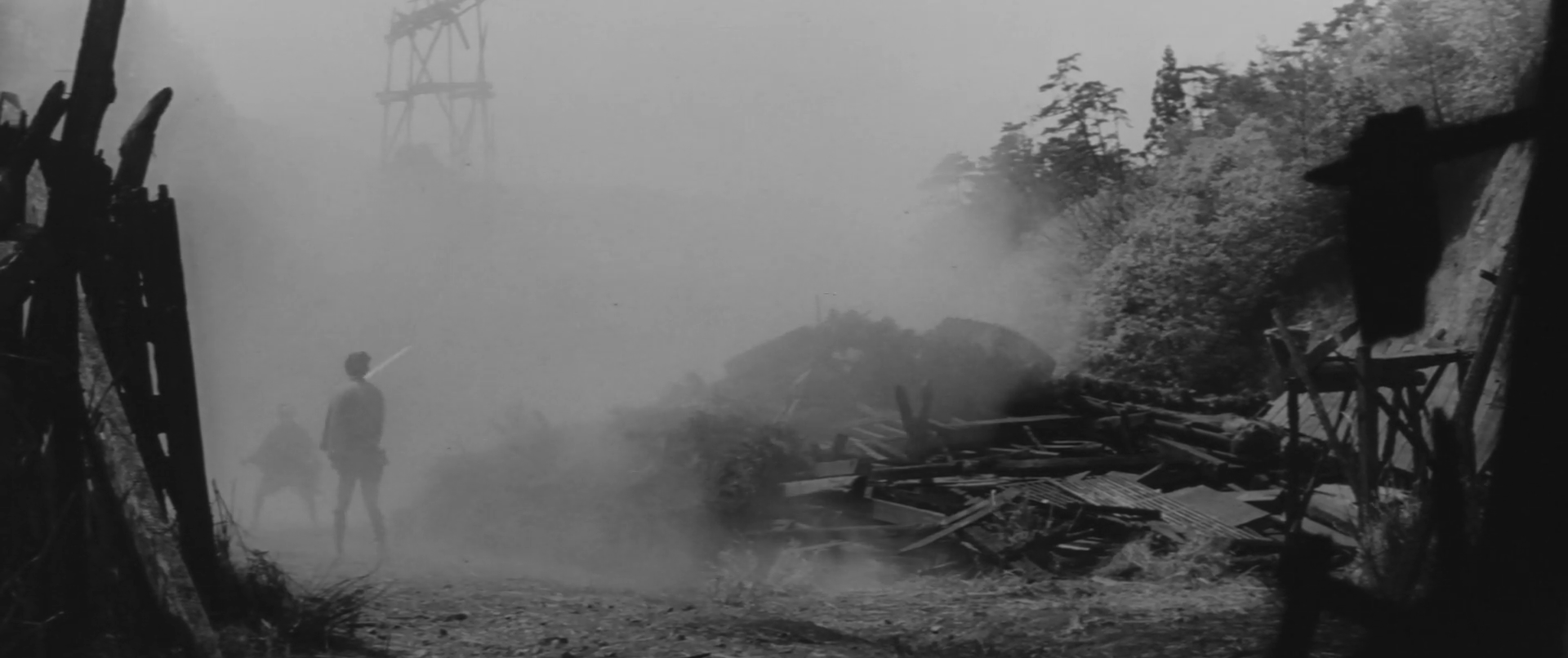
Ken (剣, Kenji Misumi, 1964)

Most closely associated with jidaigeki, Kenji Misumi’s only film to be set in the contemporary era, Ken (剣), shifts his persistent concerns into the modern day in the clash of the warrior ideal and the emotional costs of living, but also takes a sideways look at conflicted post-war masculinity as two young men vicariously lock horns in a quest for mastery over their desires. Adapting a short story by Yukio Mishima, Misumi dials back on the tragic romance of militarism painting the hero’s ultimate acceptance of nihilistic futility less as a noble sacrifice than a humanist failure of the society that failed to save him from his absolutist fallacy. 

Obsessed with strength and honour, Kokubun (Raizo Ichikawa) has convinced himself that he can capture “this spark of pure life” he saw in the sun through perfecting the art of kendo. An aloof and austere figure, he has foregone all else and dedicated himself to his skill alone. For this reason he is appointed captain of his university kendo club over his jealous rival, Kagawa (Yusuke Kawazu), who loses out because his sword is “sentimental” and there is a concern that he draws his power from “arrogance”. There is indeed something in that, and it’s Kagawa’s sense of male pride that partly sets him on a quest for vengeance and vindication in a obsessive desire to dominate Kokubun but there’s also an unspoken attraction as he later admits to a female acquaintance in remarking that he finds Kokubun’s way of life “infuriating” but despite himself also “refreshing”. 

Literal sword play, Kagawa’s obsession with Kokubun results in a vicarious seduction in which he attempts to corrupt him by enlisting the help of a female student to expose him as a fraud by rupturing his asceticism and thereby destroying his source of strength if not his sense of self. The quasi-sadomasochistic relationship between the two men is further borne out by the implication that Kokubun is in fact finding his sexual release in the intense act of repression, satisfying himself through physical exhaustion in the company of other men, Misumi’s roving camera fully capturing the homoeroticism of this intensely homosocial society. Humiliated by Kokubun who forces him into a public act of contrition through physical endurance after disappointing the club by breaking the rules smoking on the job at their part-time gig at a supermarket, Kagawa goes to the chairman to complain that Kokubun’s leadership style is far too intense, “feudalistic” as another member puts it shortly before quitting, claiming that all he wants is for his rival to wake up from his militarist dream and live in the real world though his final act of mutiny will engender consequences unforeseen in his conviction that Kokubun’s ideology is largely performative self-delusion. 

The team manager perhaps thinks something similar, reminding Kagawa that he is merely “more grown up” as if Kokubun is in a sense maintaining his childlike innocence in refusing to enter an adult world he regards as “ugly” and “corrupt”. His ideal is simplicity and he finds it in the primacy of the sword. There is in this something of an uncomfortable militarist throwback that finds a disciple in the ever loyal Mibu (Akio Hasegawa) who dutifully parrots back the quasi-facist philosophy to his quietly horrified mother and sisters who probably don’t help the situation by mocking his lack of masculinity in his inability to grow a proper beard while insisting on shaving every day anyway. Attracted by Kokubun’s dynamism and energy, he longs for strength through self denial. “We must move away from those empty desires” Kokubun instructs him while discussing the suicide of a young man who was discovered next to a selection of half eaten fruit. Rather than sympathy the man is largely mocked by his male peers, Kokubun dismissing him as “weak in mind and body” for having taken his own life apparently in fear of failure, but also stressing that suicide is a choice taken by the very strong as well as the very weak. 

In this brief exchange he opens the door to a notion of nobility in the choice to take one’s own life which leads straight back into the death cult of militarism, perhaps something that only Mibu as a fellow devotee is able to see. Yet Misumi perhaps undercuts this sense of nobility with a return to collective shame, eulogising Kokubun’s determination to preserve his “uprightness and strength” as Kagawa admits defeat in the face of Kokubun’s unbreakable purity, while placing the burden of failed responsibility on the kendo troupe not for their inability to live up to his ideal but for their lack of understanding in failing to free him of his moral absolutism. The way of the sword once again leads only to death and while there may be an uncomfortable beauty in such moral purity, in the end all there is is futility. 


Original trailer (no subtitles)