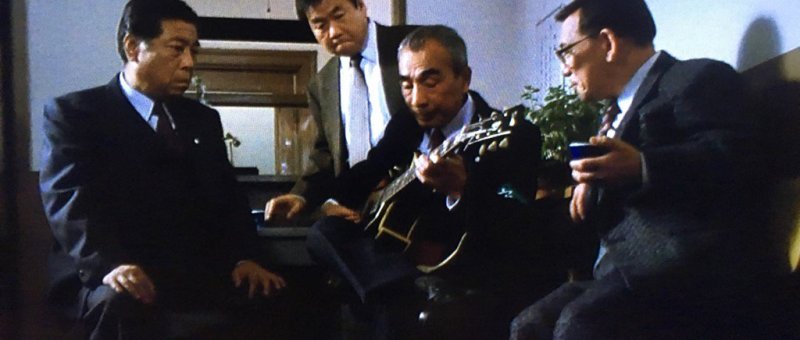
 Japanese corporate life is a strange thing – sometimes more cult than job, the company demands absolute dedication from its devotees though it promises them little more than a guaranteed life of toil. Being cast out from one’s company is akin to being robbed of one’s identity. Retirement is therefore not quite so much of a reward as an excommunication – especially to those who have given so much of themselves to an employer that they don’t quite know who they are when the suit comes off. This is especially true of the hero of Jun Ichikawa’s 1988 existential drama, Kaisha Monogatari: Memories of You (会社物語 MEMORIES OF YOU). The title is deceptively romantic – in fact there was an identically titled idol starring melodrama released the same year, but it is in a way a love story of an old man who finally gets a chance to reunite with the dreams he abandoned in youth while coming to terms with his old age and the various ways the world has moved past him.
Very early one morning, veteran salary man Hanaoka (Hajime Hana) stares into the empty screen of his television set from the comfort of his kotatsu, examining his own tearful face before his wife gets up to prepare breakfast. Hanaoka is set to retire soon, after 34 years of corporate life. His career has been unremarkable and he has few friends at the office – he feels he most likely will not be missed when he goes. Home life is not too successful either. Hanaoka’s grown-up daughter has come home with a daughter of her own after a divorce, and Hanaoka’s son is currently a NEET would-be-student supposedly studying to retake entrance exams though his mother is convinced he’s just messing around and avoiding getting a job.
Though Hanaoka is a section head, it’s clear he’s not rated by his colleagues who gossip about him behind his back while his mild and timid nature sees him sitting quietly forgotten in the back of meetings. He does however have admirers including one of the older ladies in the admin staff who has always been comforted by Hanaoka’s gleeful laughter, suddenly feeling the world expand as she watched him beavering away earnestly. Despite this, nobody is very excited about his leaving party. Discussing things among themselves, the office ladies lament that planning farewell parties is either too depressing to just too much hassle, while gossiping guys in the men’s room complain that Hanaoka was never very good at his job anyway and his leaving do will be a “pitiful” affair. All of this proves too much for the kind hearted, shy, Hanaoka who eventually decides to have a goodbye note distributed around the office in which he tells everyone that there’s no need to bother with yet another office party in the overly festive December to the relief (and consternation) of all.
Hanaoka does, however, have to write his official goodbye for the company newsletter (1000 characters due by Dec. 15). Struggling to find the words, he writes a first draft in which he declares the deep sorrow he feels on having to leave his corporate family behind – after all these are people he’s dined and gone drinking with for 34 years, through good times and bad, company picnics, and away days. He’s spent longer with the office ladies than his wife, had more conversations with his subordinates than with his son. The company has been his life, and leaving it is a kind of death. Embarrassed he screws up the draft and throws it away, only to encounter another salaryman returning late (and more than a little the worse for wear) who lets him have a go on the very high tech laser guns he’s just won at bingo.
Yet Hanaoka does manage to find a solution in reconnecting with his younger self and makes a few new friends in the process. In his youth, Hanaoka was a jazz drummer – sophisticated as it is, jazz was the music of his glory days and so he finds many of the other men in his position share his love of music and were also forced to abandon their musical dreams for corporate careers. Now freed of the burdens of the salaryman, they decide to form a band of their own and even to give a special concert in place of Hanaoka’s leaving do.
Meanwhile, Yumi (Yumi Nishiyama), the office lady who reminds Hanaoka of his younger self, is undergoing something of a crisis when she realises that her boyfriend is not as serious about the relationship as she is and has been seeing someone else behind her back – the CEO’s daughter whom he intends to marry to further his career. Kaisha Monogatari is, in many ways, the passing of a baton from the post-war generation to the bubble era though getting ahead through advantageous arranged marriage is apparently still a viable option. Those of Hanaoka’s age had to work hard, rebuilding the nation after crushing wartime defeat from bombed out ruins to the economic miracle of the East. Their children, by contrast had things easy – they hardly have to worry at all. Hanaoka’s son, apparently a delinquent lost and confused by the comparative freedom of economic stability, has no need to submit himself to the insane demands of life as a company man but millions like him will, because that’s just what you do.
Hanaoka finds a way to break out of the corporate straightjacket through re-embracing his love of jazz, proving there is something left inside him when you strip the company man away but there is nevertheless something sad in having wasted so much time slaving away for a organisation that is ultimately so ungrateful for the sacrifice. A gloomy picture of bubble era Japan in which families are fragmenting, young men choose career over love, and old men are made to feel worthless once their economic function is spent, Kaisha Monogatari: Memories of You does offer the faintest glimmer of hope in the goodness of men like Hanaoka, no matter how they may have failed those around them, whose lives may be brighter when finally allowed to be themselves again.

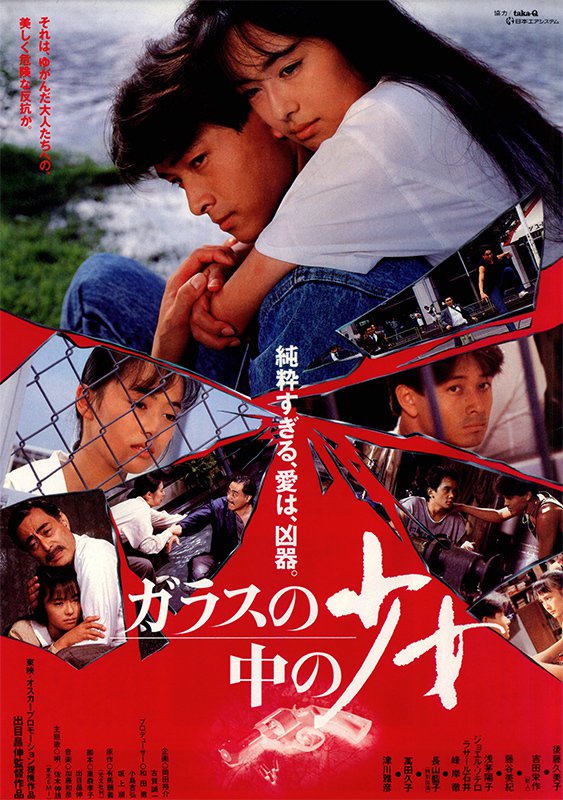 The popularity of idol movies had started to wane by the late ‘80s and if this 1988 effort from Masanobu Deme is anything to go by, some of their youthful innocence had also started to depart. Starring Kumiko Goto, only 14 at the time, The Girl in the Glass (ガラスの中の少女, Glass no Naka no Shojo) is an adaptation of a novel by Yorichika Arima which had previously been filmed all the way back in
  Nobuhiko Obayashi is no stranger to a ghost story whether literal or figural but never has his pre-occupation with being pre-occupied about the past been more delicately expressed than in his 1988 horror-tinged supernatural adventure, The Discarnates (異人たちとの夏, Ijintachi to no Natsu). Nostalgia is a central pillar of Obayashi’s world, as drenched in melancholy as it often is, but it can also be pernicious – an anchor which pins a person in a certain spot and forever impedes their progress.
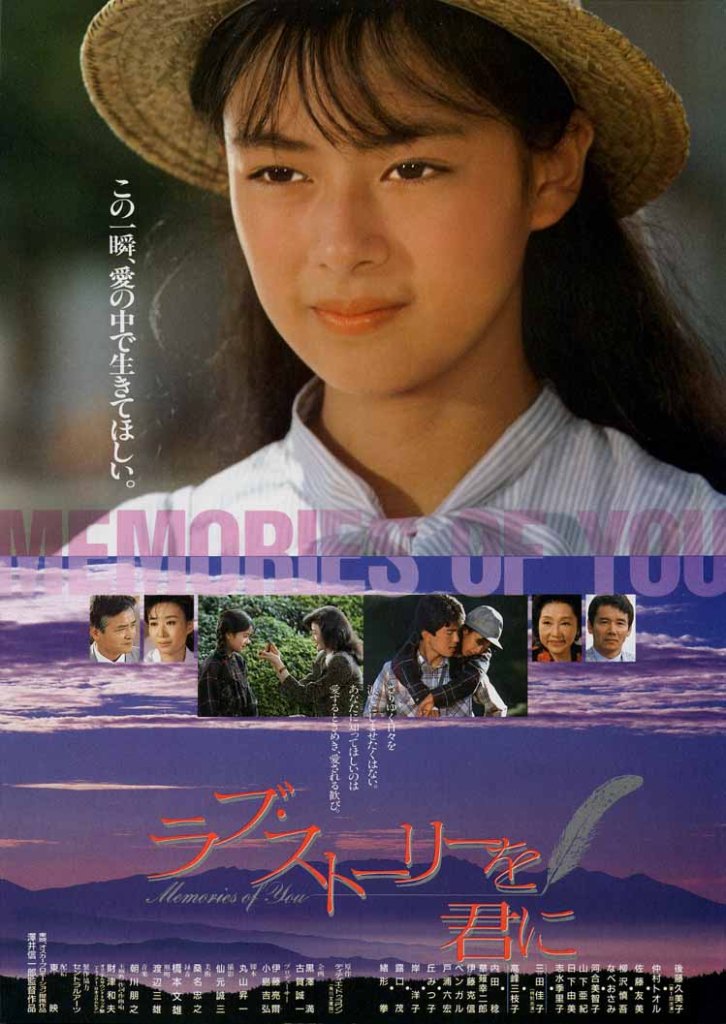 If you thought idol movies were all cute and quirky stories of eccentric high school girls with pretty, poppy voices then think again because Memories of You is coming for you and your faith in idols to make everything better. Directed by
  These days, Wong Kar-wai is an international auteur famous for his stories of lovelorn heroes trapped inside their memories, endlessly yearning in vain for the unattainable. In many ways his debut feature, As Tears Go By (旺角卡門, Mongkok Carmen) is little different save that it owes more to its vague heroic bloodshed, gangster inspiration and is less about memory than inevitability and a man abandoning his dreams of a better life with a woman he loves out of mistaken loyalty to his loose cannon friend.
