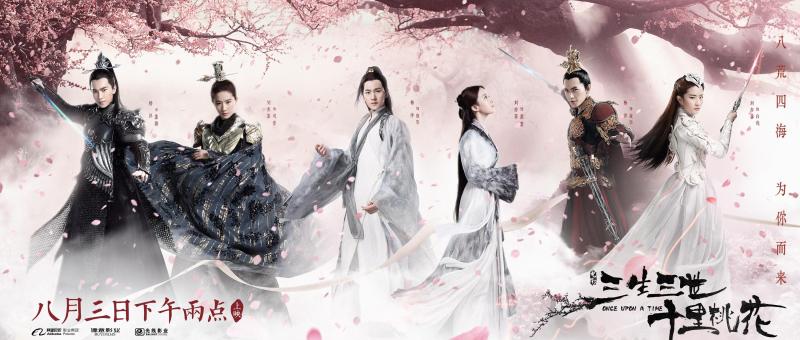
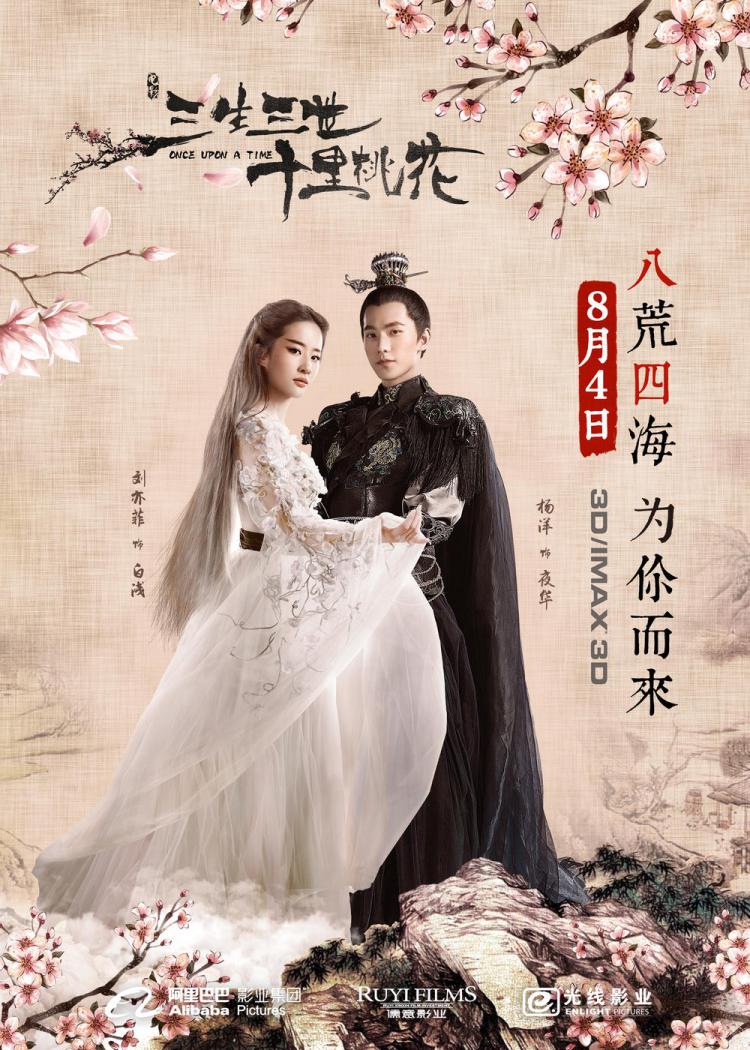
 Tang Qi’s popular online novel Three Lives Three Worlds, Ten Miles Peach Blossoms (三生三世十里桃花, Sān Shēng Sānshì Shílǐ Táohuā) has already been adapted into a phenomenally popular TV drama spanning 58 episodes but the big budget, blockbuster adaptation by Zhang Yimou’s regular cinematographer Zhao Xiaoding making his directorial debut in a co-production with Anthony LaMolinara, thinks it can make do with just 110 minutes. Retitled Once Upon a Time in an obvious nod to the film’s attempt to blend classic Western fairytales by way of Disney with traditional Chinese mythology, Zhao’s approach is a (mostly) family friendly one complete with superfluous CGI characters and a kind of essential innocence in its emotional landscape. Yet it also falls into the traps of many a Chinese fantasy blockbuster in its convoluted, confusing narrative, over reliance on CGI visuals, and host of pretty but bland leading players.
A blindfolded woman bids her lover goodbye as she falls through a storm before landing softly in a beautiful orchard covered in peach blossom to be woken by a friend who tells her she had just been asleep. The woman says she remembers nothing but feels as if she’s been inside a dream. He tells her to let it go, in her dream world she lived a very sad life and it’s better not to remember.
As it turns out the woman is the queen of this realm, Bai Qian (Liu Yifei). She spends her days alternating between frolicking with mystical forest creatures like your average Disney princess (only with less singing) and drinking so heavily she passes out. In fact, drinking is pretty much her only hobby and her general demeanour is moodiness born of being sad over something she does not remember. Technically speaking, she’s been engaged to a mysterious prince from an undersea kingdom for quite sometime but has no desire to marry, firstly out of the aforementioned sadness, but also out of a preference for independence, and the fact that the prince is apparently 70,000 years younger than she is and she thinks it’s inappropriate. Nevertheless, she goes (blindfolded due to a problem with her oversensitive eyes) and meets Ye Hua (Yang Yang) and his son Ah Li (Peng Zisu) who immediately recognise her as “Su Su” – the boy’s mother who died 300 years ago.
Though Once Upon a Time is based on a fairly recent novel and draws much of its inspiration from Western fairytales, some familiarity with Chinese mythology will undoubtedly help. Bai Qian is apt to suddenly morph into a white nine tailed fox while her friend Zhe Yan (Luo Jin) is a glowing, fiery phoenix of the battlefield and though the gods possess a number of surprising powers from the ability to spontaneously generate fire or chop vegetables in mid-air, they fight the way any mortal would only with much more destructive effects.
At heart, apt phrase as that is, Once Upon a Time is an epic love story in which two souls wait and search for each other through eons, pushing and probing for recognition all while failing to grasp that which seems to exist between them. The title of the novel is almost a spoiler in itself as it details the passage through three worlds and three lives which has brought Bai Qian and Ye Hua to this particular impasse of awkward, screwball romance. A repeated phrase between the lovers, the Ten Miles of Peach Blossom is a byword for excess – what is the point of ten miles of peach blossoms, when a single petal is enough? Ye Hua affirms he’s found his petal already, though she refuses to come down from her tree. Bai Qian is the obstinate one, pining for a lost love and, perhaps, one she doesn’t remember but there are things Ye Hua has hidden from himself too.
As much about identities in flux eventually settling in love, Once Upon a Time also has its standard fairytale tropes from the “ugly” sisters at the beginning to the wicked step-mother stand in Su Jin (Li Chun) and her machinations to get rid of Su Su/Bai Qian by means of her wicked white tiger. Bai Qian and Ye Hua must come to know all of themselves before recognising their opposing number, seeing straight through the fog of love to its shining core. Despite the depth of its ideas, Once Upon a Time fails to move beyond its fairytale setting, caught between the bright and colorful world of a peach blossom orchard filled with adorable woodland creatures, and the darkness of the woman who lives inside it, slowly killing herself with drink to blot out the inability to remember long buried pain. Intermittently charming, Once Upon a Time is among the better fantasy films emerging from mainland China in recent times but unlike its forgetful lovers never quite manages to recover its heart.
Currently on limited release in UK cinemas.
Original trailer (English subtitles)
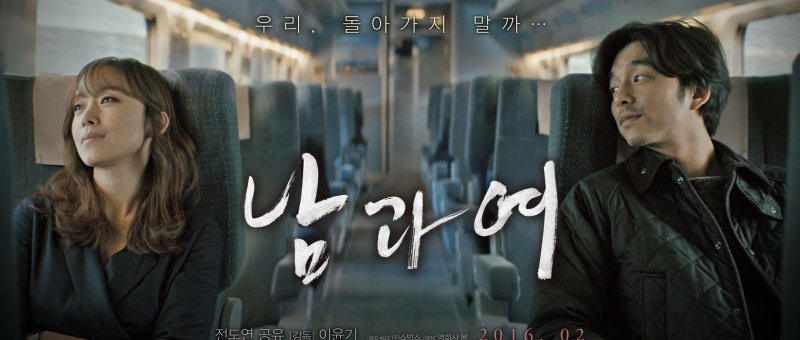



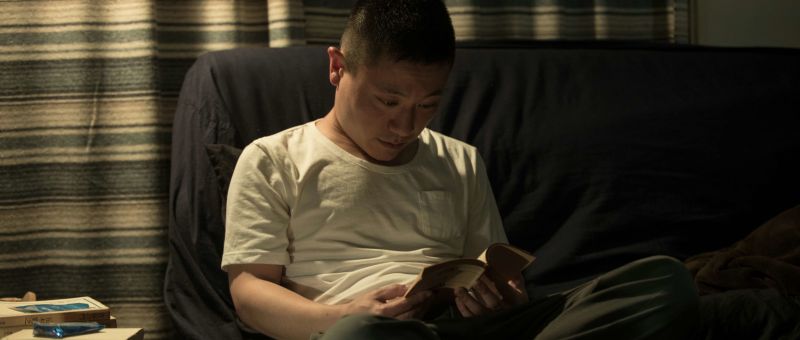


 “More specific, less poetic” the distressed author hero of Lee Myung-se’s M (엠) repeatedly types after a difficult conversation with his editor. Almost a meta comment on Lee’s process, it’s just as well that it’s advice he didn’t take – M is a noir poem, a metaphor for an artist’s torture, and a living ghost story in which a man shifts between worlds of memory, haunted and hunted by unidentifiable pain. Reality, dream, and madness mingle and merge as a single kernel of confusion causes widespread panic in a desperate writer’s already strained mind.
 Hiroya Oku’s long running manga series Gantz has already been adapted as a TV anime as well as two very successful live action films from Shinsuke Sato. Gantz:O (ガンツ:オー) is the first feature length animated treatment of the series and makes use of 3D CGI and motion capture for a hyperrealistic approach to alien killing action. “O” for Osaka rather than “0” for zero, the movie is inspired by the spin-off Osaka arc of the manga shifting the action south from the regular setting of central Tokyo.
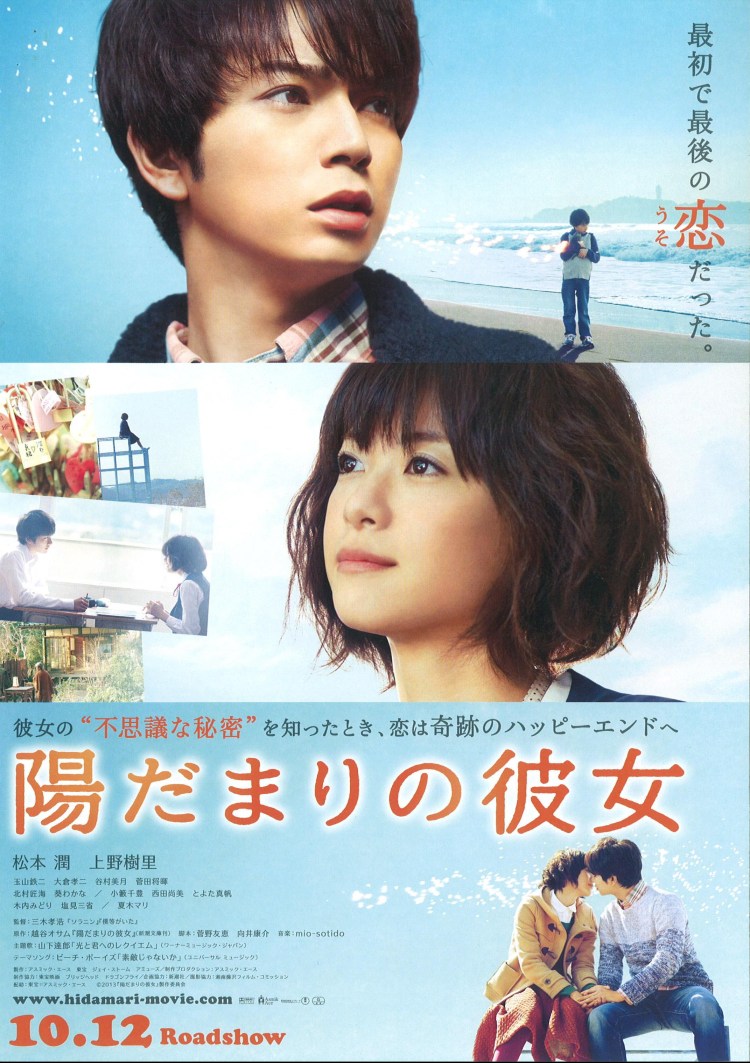 The “jun-ai” boom might have been well and truly over by the time Takahiro Miki’s Girl in the Sunny Place (陽だまりの彼女, Hidamari no Kanojo) hit the screen, but tales of true love doomed are unlikely to go out of fashion any time soon. Based on a novel by Osamu Koshigaya, Girl in the Sunny Place is another genial romance in which teenage friends are separated, find each other again, become happy and then have that happiness threatened, but it’s also one that hinges on a strange magical realism born of the affinity between humans and cats.
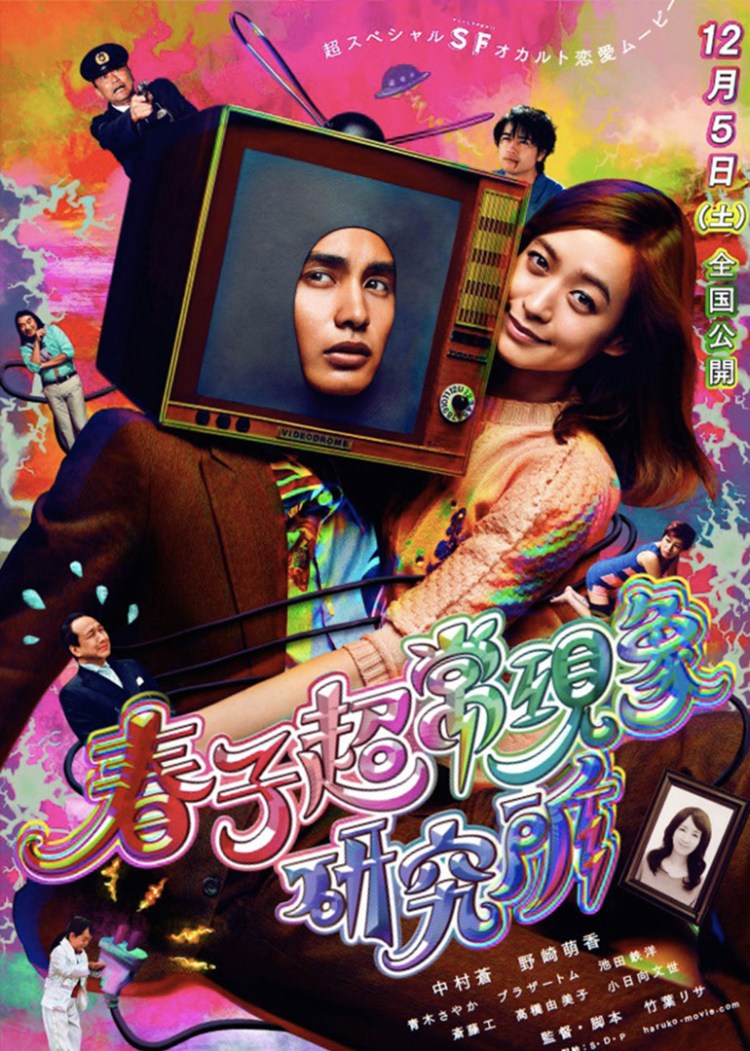 In the brave new Netflix era, perhaps it’s not unusual to hear someone exclaim that their most significant relationship is with their television, but most people do not mean it as literally as Haruko, the heroine of the self titled Haruko’s Paranormal Laboratory (春子超常現象研究所, Haruko Chojogensho Kenkyujo). Lisa Takeba returns with her second film which proves to be just as strange and quirky as the first and all the better for it. Haruko’s world is a surreal one in which a TV coming to life is perfectly natural, as is the widespread plague of “artistic” behaviour which involves robbing the local 100 yen store for loose change and randomly setting fire to things. Yet Haruko’s problems are the normal ones at heart – namely, loneliness and disconnection. Takeba’s setting may be a strange fever dream filled with fiendishly clever, zany humour but the fear and anxiety are all too real.
 Windows on Worlds