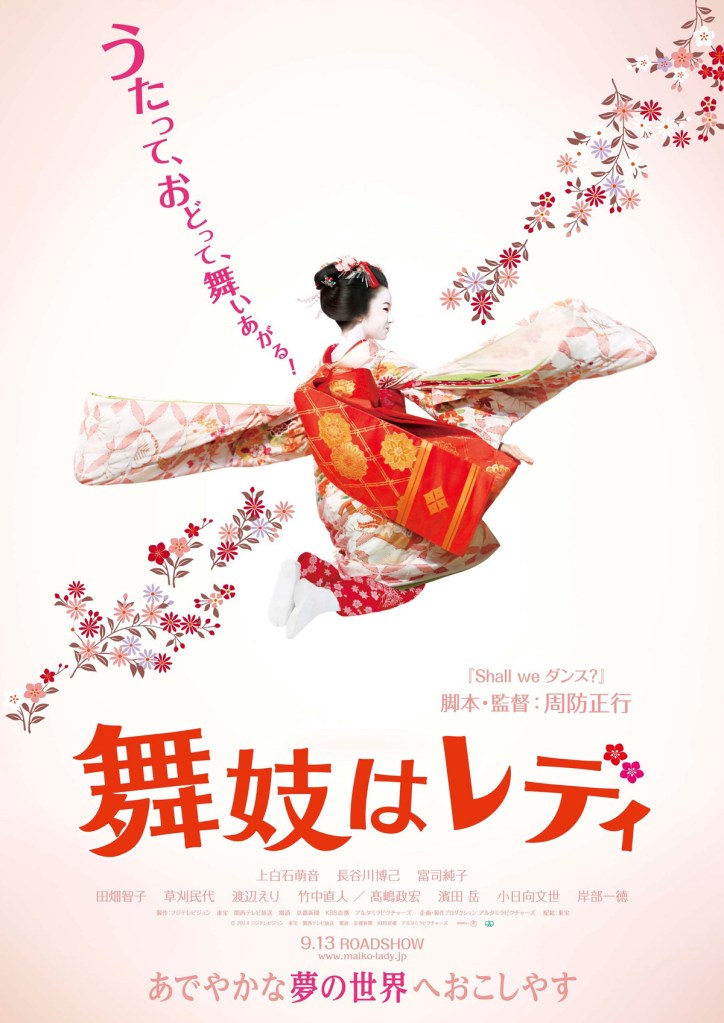
 When Japan does musicals, even Hollywood style musicals, it tends to go for the backstage variety or a kind of hybrid form in which the idol/singing star protagonist gets a few snazzy numbers which somehow blur into the real world. Masayuki Suo’s previous big hit, Shall We Dance, took its title from the classic Rodgers and Hammerstein song featured in the King and I but it’s Lerner and Loewe he turns to for an American style song and dance fiesta relocating My Fair Lady to the world of Kyoto geisha, Lady Maiko (舞妓はレディ, Maiko wa Lady) . My Fair Lady was itself inspired by Shaw’s Pygmalion though replaces much of its class conscious, feminist questioning with genial romance. Suo’s take leans the same way but suffers somewhat in the inefficacy of its half hearted love story seeing as its heroine is only 15 years old.
Country bumpkin Haruko (Mone Kamishiraishi) arrives in the elegant Kyoto geisha quarters with only one hope – to become a maiko! However, despite the scarcity of young girls wanting to train, Haruko’s hopes are dashed by the head geisha who finds it impossible to understand anything she’s saying thanks to her extraordinarily rare accent which is an odd mix of north and south country dialects. Luckily for her, a linguistics professor who has an unhealthy obsession with rare dialectical forms overhears her speech patterns and is instantly fascinated. Striking up a bet with another tea house patron, Kyono (Hiroki Hasegawa) takes on the challenge of training Haruko to master the elegant Kyoto geisha accent in just six months.
The teahouses and the culture which goes with them are a part of the old world just barely hanging on in the bright new modern era. Haruko first became infatuated with all things maiko thanks to an online blog kept by the teahouse’s only current star, Momoko (Tomoko Tabata) – the daughter of the proprietor still only a maiko at age thirty precisely because of the lack of candidates to succeed her. Despite this intrusion of the modern, the way of the geisha remains essentially the same as it has for centuries with all of the unfairness and exploitation it entails. Hence, most of the women working in the teahouses are part-timers brought in for big events with only rudimentary training and even those who have spent a significant amount of time learning their craft lament that they don’t get paid a real salary and even their kimono and accessories technically belong to the teahouse.
Despite being on the fringes of the sex trade, as the professor’s assistant takes care to warn Haruko, there’s still something glamorous about the the arcane teahouse world bound up in ancient traditions and complicated rituals of elegance. Haruko faces a steep learning curve as a clumsy country girl who doesn’t even know how to sit “seiza” without her legs going numb. Learning to speak like a Kyoto native may be the least of her worries seeing as she has to learn how to dress in kimono, play a taiko drum and shamisen, and perform the traditional dances to perfection.
This is a musical after all and so the maiko dance routines eventually give way to more conventional choreography and large scale broadway numbers. The title song is particularly catchy and resurfaces at several points though the score as a whole is cheerful and inventive, incorporating a classic broadway sound with modern twist fused with the traditional music of the teahouse. Naoto Takenaka makes a typically creepy appearance displaying a fine voice for a comic number dedicated to the art of being a male maid to a geisha house but the big set piece is reserved for a comic take on the “Rain in Spain” in which the linguistics professor oddly wonders where all the water goes when it’s “pissing it down in Kyoto”. Unfortunately much of this revolves around linguistic jokes which are impossible to translate though the scene as a whole does its job well enough in introducing us to Haruko’s travails in the world of elocution. Other routines featuring the backstories of some of the minor characters also have a pleasantly retro quality inspired by period cinema complete with painted backdrops and old fashioned studio bound cinematography.
Though charming enough, Haruko’s progress is perhaps too conventional to move Lady Maiko far beyond the realms of cheerful fluff. Though Suo wisely keeps the romance to a minimum, Haruko’s growing feelings for the professor as well as a possible connection with his assistant are a little uncomfortable given her youth and the age differences involved even if the professor remains completely unaware. Unlike the source material Haruko’s passage is otherwise presented without complication (save for brief forays into the darkside of the geisha trade) as the country girl makes good, achieving her goals through hard work, perseverance, and the support of the community. In the end it’s all just far too nice, but then that’s not such a bad problem to have and there are enough pretty dance routines and warmhearted comedy to charm even the most jaded of viewers.
Screened as part of the Japan Foundation Touring Film Programme 2017.
Original trailer (no subtitles)
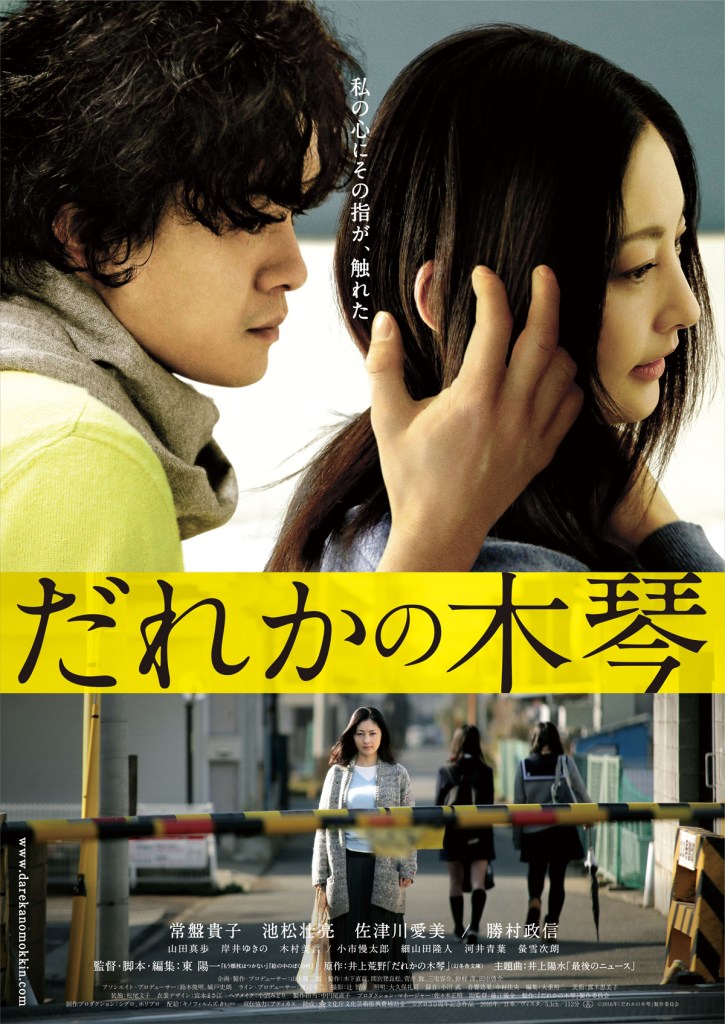 Yoichi Higashi has had a long and varied career, deliberately rejecting a particular style or home genre which is one reason he’s never become quite as well known internationally as some of his contemporaries. This slightly anonymous quality serves the veteran director well in his adaptation of Arane Inoue’s novel which takes a long hard look at those living lives of quiet desperation in modern Japan. Though sometimes filled with a strange sense of dread, the world of Someone’s Xylophone (だれかの木琴, Dareka no Mokkin) is a gentle and forgiving one in which people are basically good though driven to the brink by loneliness and disconnection.
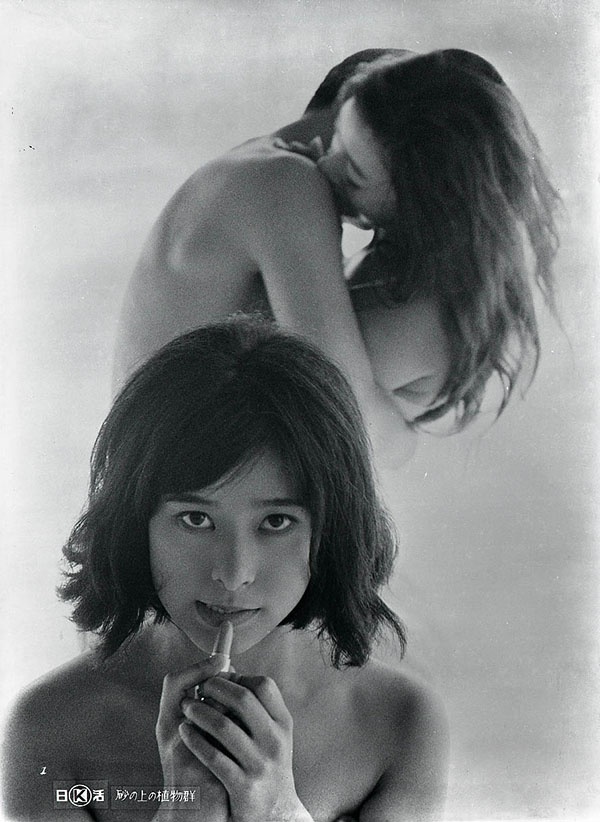 Despite being among the directors who helped to usher in what would later be called the Japanese New Wave, Ko Nakahira remains in relative obscurity with only his landmark movie of the Sun Tribe era, Crazed Fruit, widely seen abroad. Like the other directors of his generation Nakahira served his time in the studio system working on impersonal commercial projects but by 1964 which saw the release of another of his most well regarded films Only on Mondays, Nakahira had begun to give free reign to experimentation much to the studio boss’ chagrin. Flora on the Sand (砂の上の植物群, Suna no Ue no Shokubutsu-gun), adapted from the novel by Junnosuke Yoshiyuki, puts an absurd, surreal twist on the oft revisited salaryman midlife crisis as its conflicted hero muses on the legacy of his womanising father while indulging in a strange ménage à trois with two sisters, one of whom to he comes to believe he may also be related to.
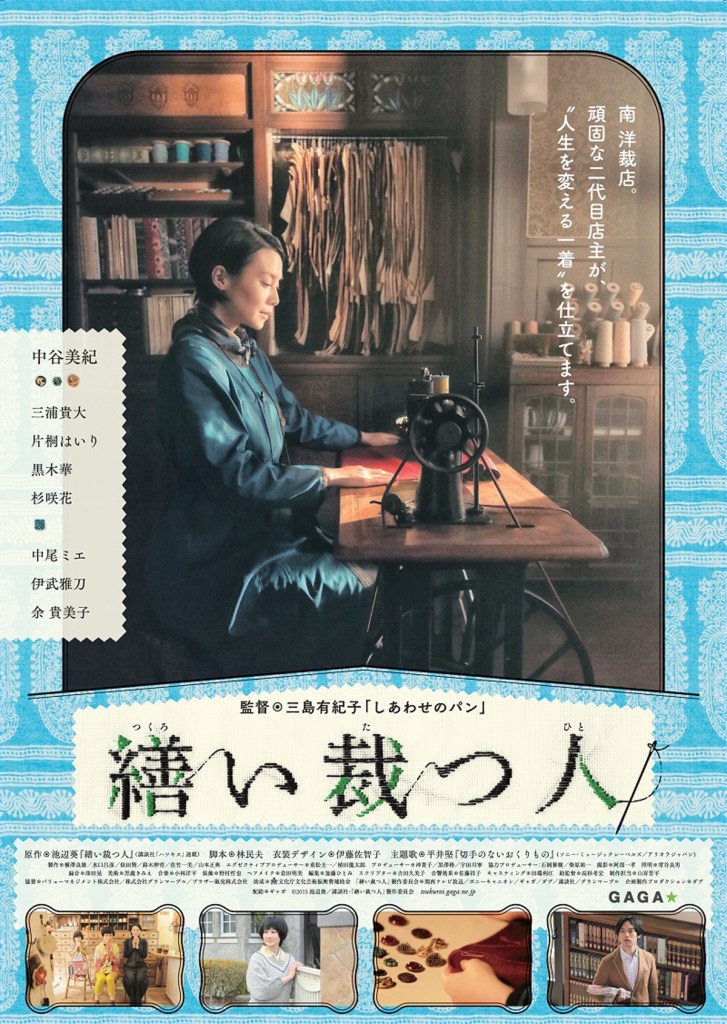 Tradition vs modernity is not so much of theme in Japanese cinema as an ever present trope. The characters at the centre of Yukiko Mishima’s adaptation of Aoi Ikebe’s manga, A Stitch of Life (繕い裁つ人, Tsukuroi Tatsu Hito), might as well be frozen in amber, so determined are they to continuing living in the same old way despite whatever personal need for change they may be feeling. The arrival of an unexpected visitor from what might as well be the future begins to loosen some of the perfectly executed stitches which have kept the heroine’s heart constrained all this time but this is less a romance than a gentle blossoming as love of craftsmanship comes to the fore and an artist begins to realise that moving forward does not necessarily entail a betrayal of the past.
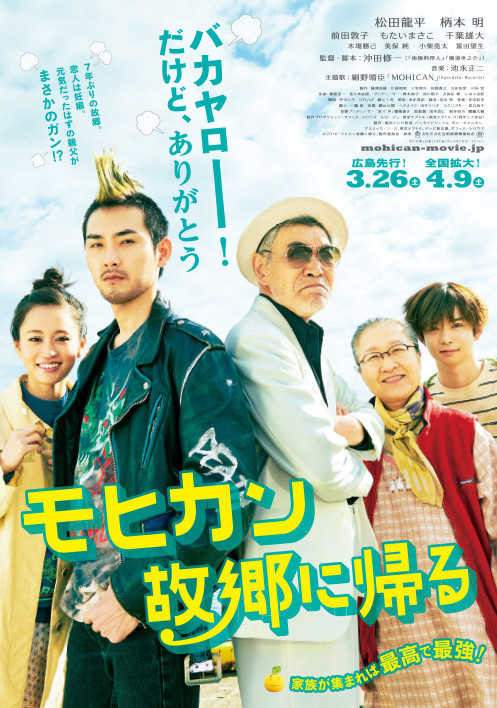 Japan may be famous for its family dramas, but there is a significant substrain of these warm and gentle comedies which sees a prodigal child return to their childhood home either to rediscover some lost aspect of themselves or realise that they no longer belong in the place which raised them. Shuichi Okita’s The Mohican Comes Home (モヒカン故郷に帰る, Mohican Kokyo ni Kaeru) includes an obvious reference in its title to Keisuke Kinoshita’s colourful 1954 escapade
 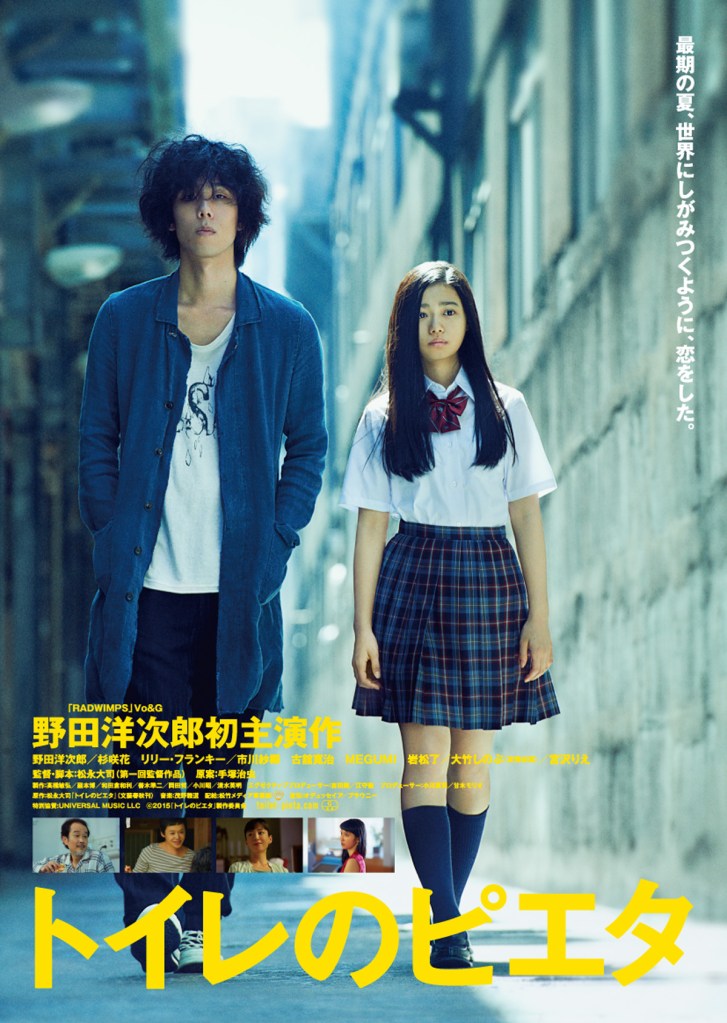 Somewhere near the beginning of Daishi Matsunaga’s debut feature, Pieta in the Toilet (トイレのピエタ, Toire no Pieta), the high rise window washing hero is attempting to school a nervous newbie by “reassuring” him that the worst thing that could happen up here is that you could die. This early attempt at black humour signals Hiroshi’s already aloof and standoffish nature but his fateful remark comes back to haunt him after he is diagnosed with an aggressive and debilitating condition of his own. Noticeably restrained in contrast with the often melodramatic approach of similarly themed mainstream pictures, Pieta in the Toilet is less a contemplation of death than of life, its purpose and its possibilities.
 Junichiro Tanizaki is widely regarded as one of the major Japanese literary figures of the twentieth century with his work frequently adapted for the cinema screen. Those most familiar with Kon Ichikawa’s art house leaning pictures such as war films The Burmese Harp or Fires on the Plain might find it quite an odd proposition but in many ways, there could be no finer match for Tanizaki’s subversive, darkly comic critiques of the baser elements of human nature than the otherwise wry director. Odd Obsession (鍵, Kagi) may be a strange title for this adaptation of Tanizaki’s well known later work The Key, but then again “odd obsessions” is good way of describing the majority of Tanizaki’s career. A tale of destructive sexuality, the odd obsession here is not so much pleasure or even dominance but a misplaced hope of sexuality as salvation, that the sheer force of stimulation arising from desire can in some way be harnessed to stave off the inevitable even if it entails a kind of personal abstinence.
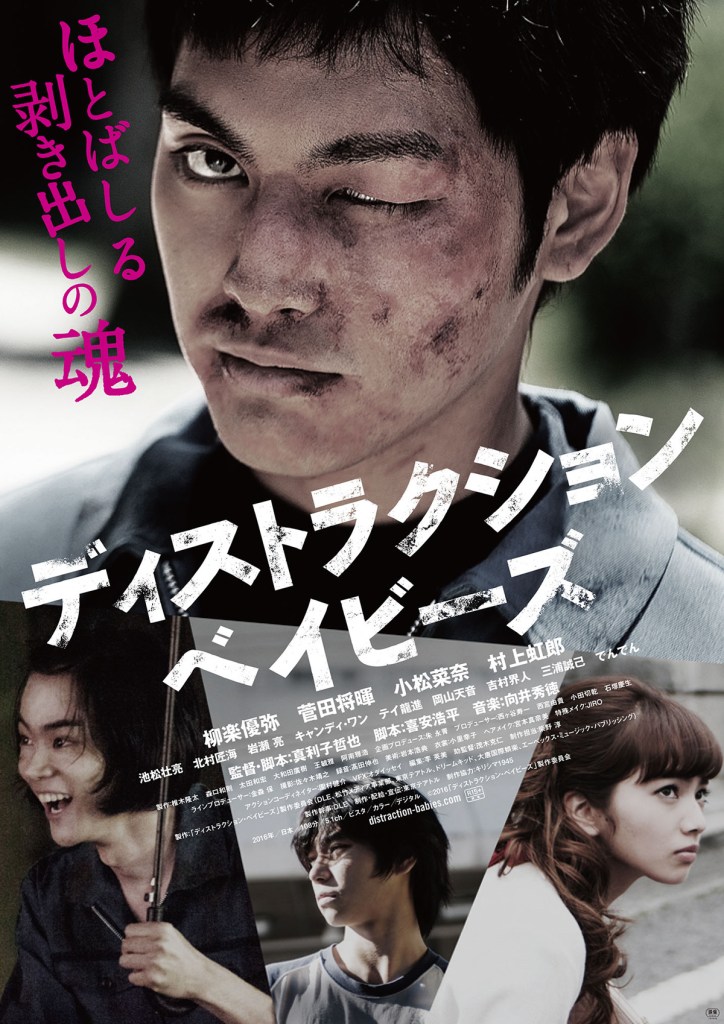 Post-golden age, Japanese cinema has arguably had a preoccupation with the angry young man. From the ever present tension of the seishun eiga to the frustrations of ‘70s art films and the punk nihilism of the 1980s which only seemed to deepen after the bubble burst, the young men of Japanese cinema have most often gone to war with themselves in violent intensity, prepared to burn the world which they feel holds no place for them. Tetsuya Mariko’s Destruction Babies (ディストラクション・ベイビーズ) is a fine addition to this tradition but also an urgent one. Stepping somehow beyond nihilism, Mariko’s vision of his country’s future is a bleak one in which young, fatherless men inherit the traditions of their ancestors all the while desperately trying to destroy them. Devoid of hope, of purpose, and of human connection the youth of the day get their kicks vicariously, so busy sharing their experiences online that reality has become an obsolete concept and the physical sensation of violence the only remaining truth.
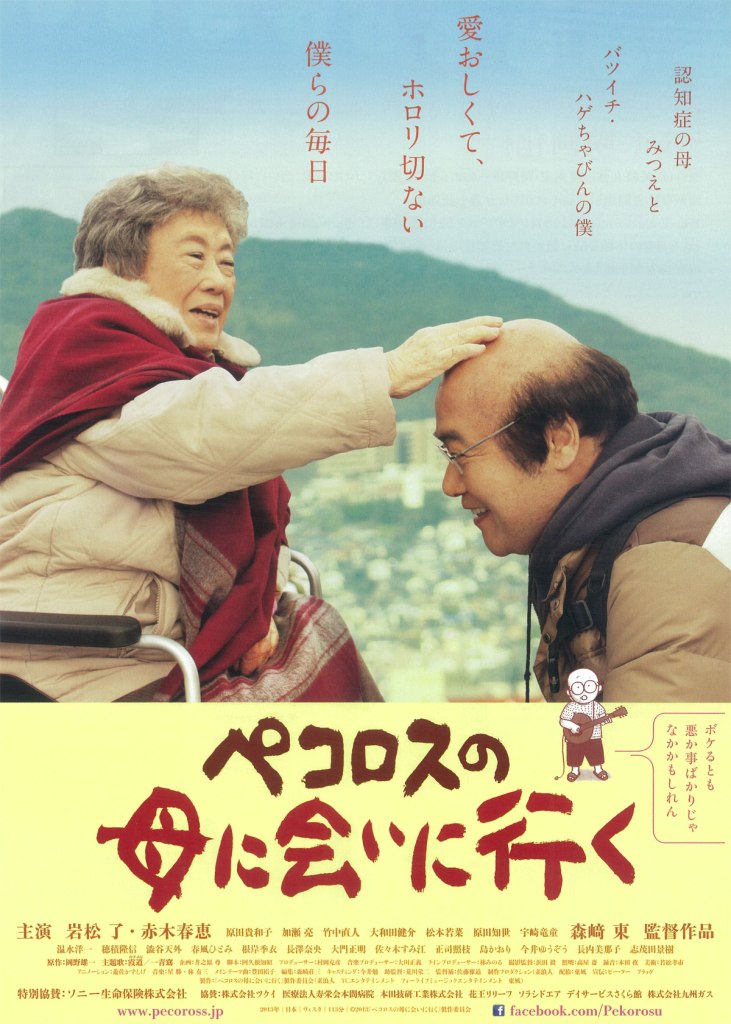 Topping the “best of 2013” lists in both Kinema Junpo and Eiga Geijitsu (something of a feat in itself), Pecoross’ Mother and Her Days (ペコロスの母に会いに行く, Pecoross no Haha ni Ai ni Iku) is a much more populist offering than might be supposed but nevertheless effectively pulls at the heartstrings. Addressing the themes of elder care and senile dementia in Japan’s rapidly ageing society, the film is both a tribute to a son’s love for his mother and to the personal suffering that coloured the majority of the mid-twentieth century in Japan.
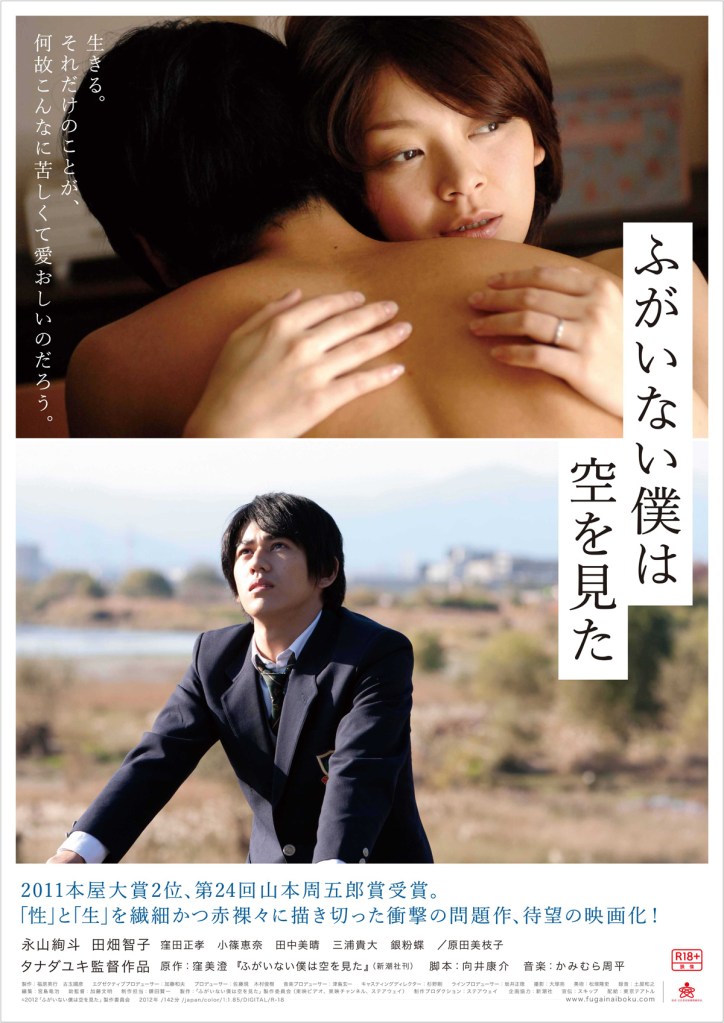 The work of director Yuki Tanada has had a predominant focus on the stories of independent young women but The Cowards Who Looked to the Sky sees her shift focus slightly as the troubled relationship between a middle aged housewife who escapes her humdrum life through cosplay and an ordinary high school boy takes centre stage. Based on the novel of the same name by Misumi Kubo, The Cowards Who Looked to the Sky (ふがいない僕は空を見た, Fugainai Boku wa Sora wo Mita) also tackles the difficult themes of social stigma, the power of rumour, teenage poverty, elder care, childbirth and even pedophilia which is, to be frank, a little too much to be going on with.
 Windows on Worlds