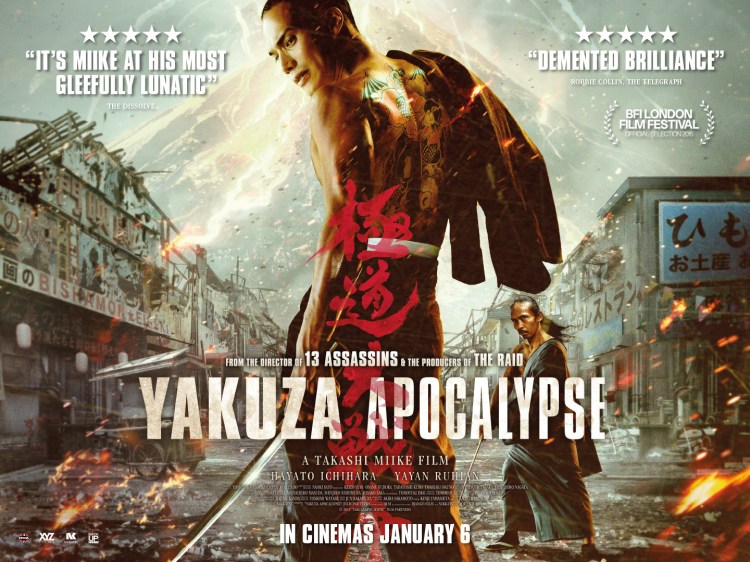
 Belated review from the 2015 London Film Festival – Yakuza Apocalypse is released in UK cinemas for one day only on 6th January 2016 courtesy of Manga who will also be releasing on home video at a later date.
Takashi Miike shuffles back towards the yakuza plains in the western inspired horror comedy Yakuza Apocalypse (極道大戦争, Gokudo Daisenso) trailing ever more zany humour behind him. Yakuza gungslingers, bloodsucking, high school girls running away from things and, finally, a guy with a magic belly button wearing a frog suit who just happens to be “The World’s Toughest Terrorist”.
We open in media res as vampire yakuza boss Kamiura (Lily Franky) cuts up a storm in settling some local disputes. There’s a handy voice over from our soon to be protagonist, Kageyama (Hayato Ichihara), lamenting the old yakuza world of tough guys and honour codes but things don’t really take off until a very geeky looking guy and a Van Helsing type in 17th century attire suddenly turn up hoping to re-recruit the boss to “The Syndicate”. When he refuses, they fight and the geek twists Kamiura’s head right off. Using his last ounce of strength and in a touch right out of Hausu, Kamiura clamps onto Kageyama’s neck turning him into a vampire. However, in his just turned state, the honourable Kageyama turns a few more vampires of his own – and not only vampires, the bite also transmits yakuzaism too. This increase in bloodsucking gangsters is a bit of a problem for the regular guys as it does mean their pool of victims is being steadily depleted…
Not making much sense is not generally much of a problem in a Miike film. In fact, it’s a pretty much a given at this stage of the prolific director’s career. However, in the case of Yakuza Apocalypse it’s even more pointless than usual to pay any attention at all to any kind of narrative. Looking over Kageyama’s shoulder, we move from set to piece to set piece as, first of all, the non-vampire yakuza guys struggle for power between themselves and then with the vampire variety before the giant frog turns up to ruin everything.
There are some rules, Miike takes a while explaining to us how this yakuza business works with Kamiura as the “good” kind of yakuza committed to protecting his townspeople above all else – essentially, he’s the sherriff around these parts. He’s a vampire, yes, but he only feeds on yakuza who he’s “reforming” by means of an underground knitting circle held prisoner in his basement. Apparently yakuza blood tastes bad and isn’t very good for you but eating civilians is dishonourable and anyway, limited in supply, because when you turn someone they also become a foul mouthed yakuza fighting machine.
The world building is shaky at best, none of this really hangs together making for a fairly disappointing series of one note jokes. There is an attempt at a bit of more sophisticated satire with the regular gangsters suddenly lamenting that there will be no one left for them to prey on if everyone turns yakuza vampire but otherwise it’s crazy piled on crazy. Not a bad thing in itself but somewhat lacking in substance.
Despite that, the film offers some quality performances notably from its lead, Kageyama, played by Hayato Ichihara, as the yakuza who’s so sensitive his delicate skin won’t allow him to get a proper yakuza tattoo. That is, until he becomes a brooding, conflicted vampire mourning the loss of his boss and of those long held tough guy ideals. Lily Franky also offers a high impact though short lived appearance as the honourable vampire boss with a hinted at backstory, though the much publicised cameo of The Raid’s Yayan Ruhian feels a little wasted as he’s just generally hanging around for a handful of fight scenes. That said, the action scenes themselves are extremely impressive, both exciting and often funny too.
Yakuza Apocalypse is not one of Miike’s most well thought out efforts. Its collection of crazy ideas feels thrown together and there’s disappointingly little depth to its world building. Even its media res conclusion looks more like running out of ideas than a deliberate decision. However, that’s not to say it isn’t heaps of fun, which it often is. A crazy frog riding a bicycle who somehow wakes up the giant king of the crazy frog people after some kind of emergency plaster is ripped off his belly button – really, what could be more fun than that? That really is all there is though and those who prefer their absurdist action thrills with a little more substance had best look elsewhere.
Yakuza Apocalypse is in released in UK cinemas for one night only on 6th January 2016. Luckily the film is playing across the UK even if it’s only the one night and you can see if it’s on anywhere near you by checking out this handy link! If it’s not, don’t despair! It’ll also be available in all the normal ways from Manga later in the year.
Reviewed at the 2015 BFI London Film Festival.
 Never one to be accused of clarity, Seijun Suzuki’s Capone Cries a Lot (カポネおおいになく, Capone Ooni Naku) is one of his most cheerfully bizarre movies coming fairly late in his career yet and neatly slotting itself in right after Suzuki’s first two Taisho era movies,
 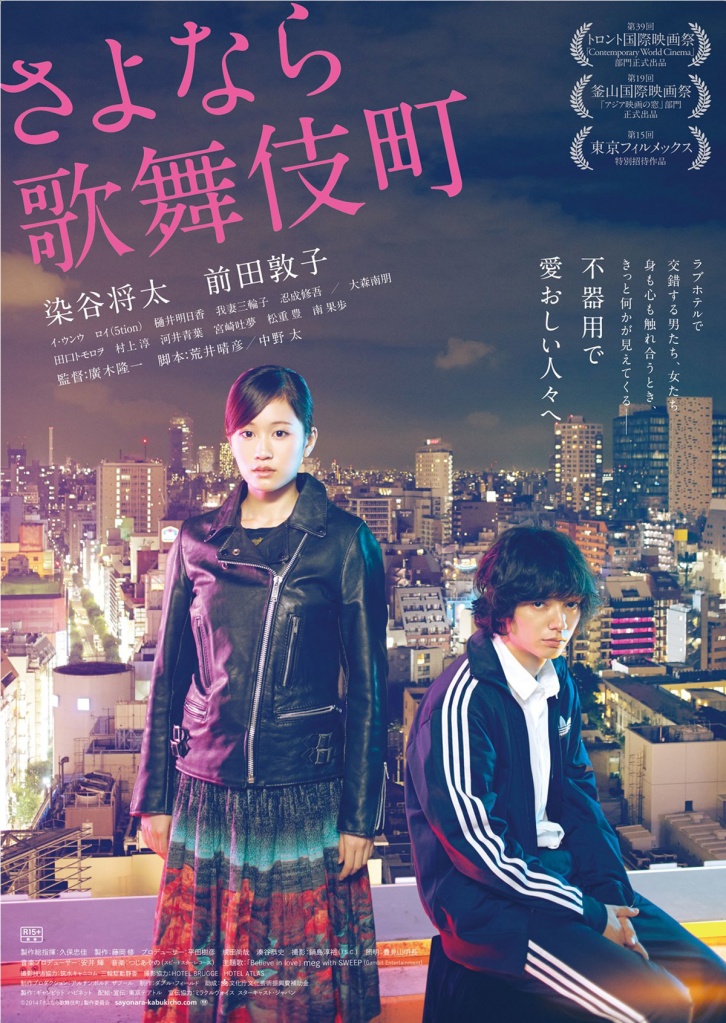 Kabukicho Love Hotel (さよなら歌舞伎町, Sayonara Kabukicho), to go by its more prosaic English title, is a Runyonesque portrait of Tokyo’s red light district centered around the comings and goings of the Hotel Atlas – an establishment which rents by the hour and takes care not to ask too many questions of its clientele. The real aim of the collection of intersecting stories is more easily seen in the original Japanese title, Sayonara Kabukicho, as the vast majority of our protagonists decide to use today’s chaotic events to finally get out of this dead end town once and for all.
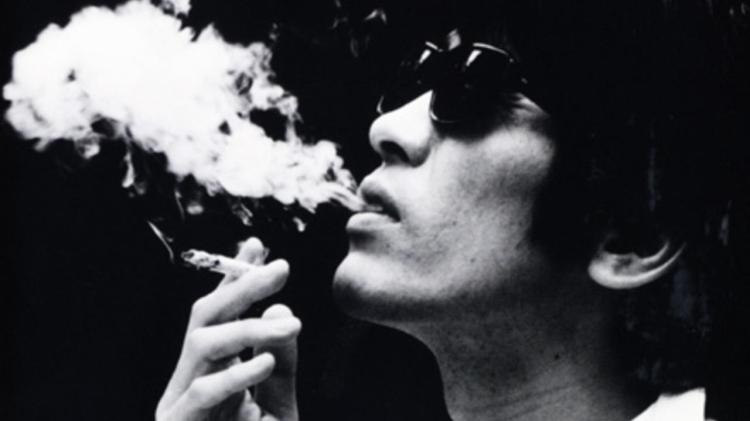 When you learn someone has died, suddenly everything they have ever done becomes tragic. No matter how old they were, this fact remains. Ryuji is a film which is always going to be overshadowed by the fact that its leading actor and screenwriter sadly passed away at the extremely young age of 33 from a terminal illness only days after the film’s release. Well, in actuality, the film was only “released” in a very limited sense, perhaps no one really had the heart to go on with it. However, it left its mark on all who saw it and eventually became a cult hit and influential classic on VHS. On paper, its tale is conventional – an existential yakuza drama about a man torn between conflicting desires and his own nature but on film, it’s something else.
 Nobuhiro Yamashita has made something of a career out of championing the underdog and La La La at Rock Bottom (味園ユニバース, Misono Universe) provides yet another foray into the lives of the disposed and degraded. With a lighter touch than some of his previous work, the once again musically inflected film is another testament to the power of redemption and that you can still turn your life around if you only have the courage to take the chance.
 Actress of the moment Sakura Ando steps into the ring, literally, for this tale of plucky underdog beating the odds in unexpected ways. It would be wrong to call 100 Yen Love (百円の恋, Hyaku Yen no Koi) a “boxing movie”, it’s more than half way through the film before the protagonist decides to embark on the surprising career herself and though there are the training sequences and match based set pieces they aren’t the focus of the film. Rather, the plucky underdog comes to the fore as we watch the virtual hikkikomori slacker Ichiko eventually become a force to be reckoned with both in the ring and out.
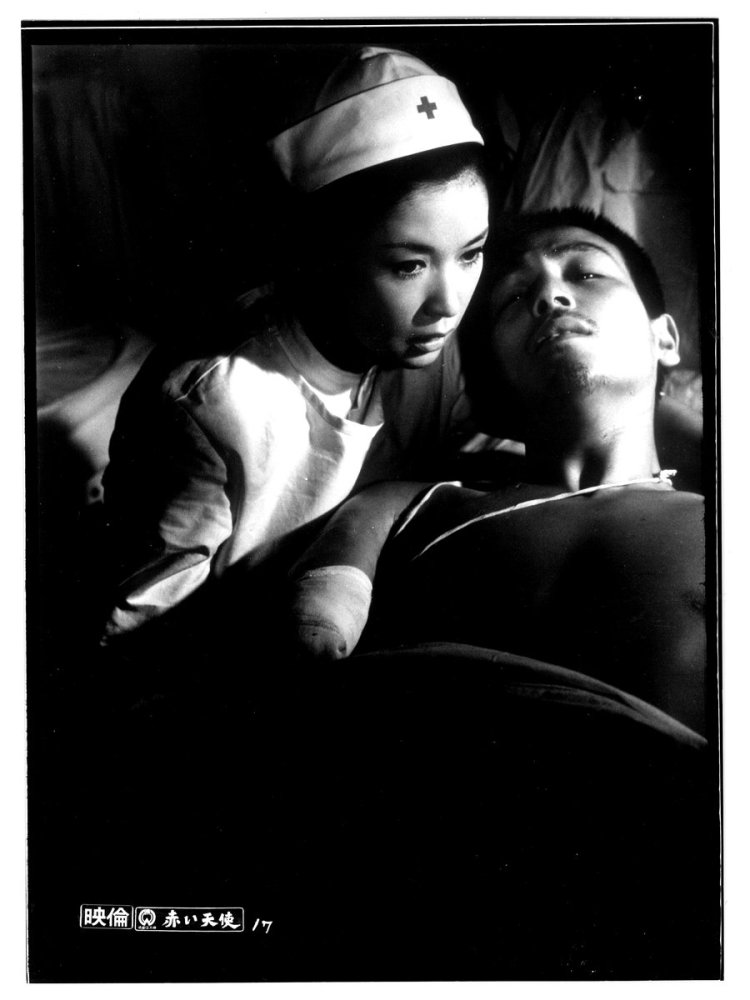 Red Angel (赤い天使, Akai Tenshi) sees Masumura returning directly to the theme of the war, and particularly to the early days of the Manchurian campaign. Himself a war veteran (though of a slightly later period), Masumura knew first hand the sheer horror of warfare and with this particular film wanted to convey not just the mangled bodies, blood and destruction that warfare brings about but the secondary effects it has on the psyche of all those connected with it.
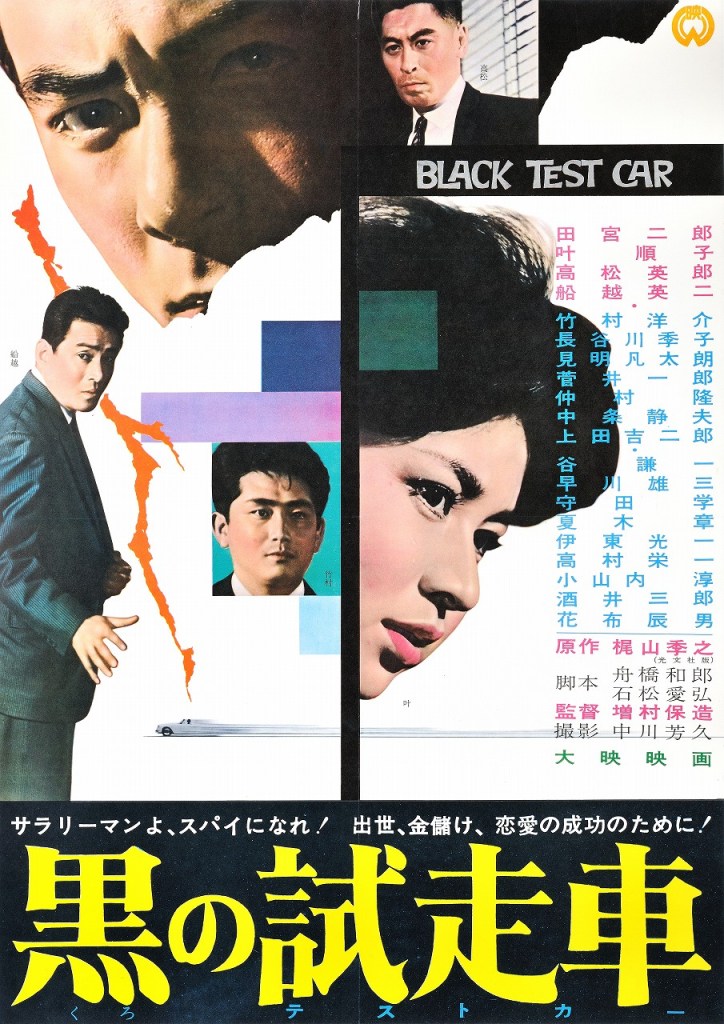 The automobile business is a high stakes game. Do you want to play faster, shinier and sleeker, or safer, family friendly and reliable? Family cars are the best sellers – everyone one wants something that’s reliable for getting to work every morning, getting the grocery shopping done and that you won’t worry about taking your kids to the park in. However, it’s the 1960s and lifestyles are shifting, men (in particular) are marrying later and they want to have fun before they do – hence having quite a lot of disposable income they can blow on a flashy two-seater sports car with no wife to complain about it. Tiger have just finished a new prototype called the Pioneer they plan to launch as a revolution in commercial sports cars which is super speedy but with the convenience of an everyday sedan. However, the Yamato company are also set to launch a new car and it keeps looking suspiciously like the Pioneer – does Tiger have a mole?
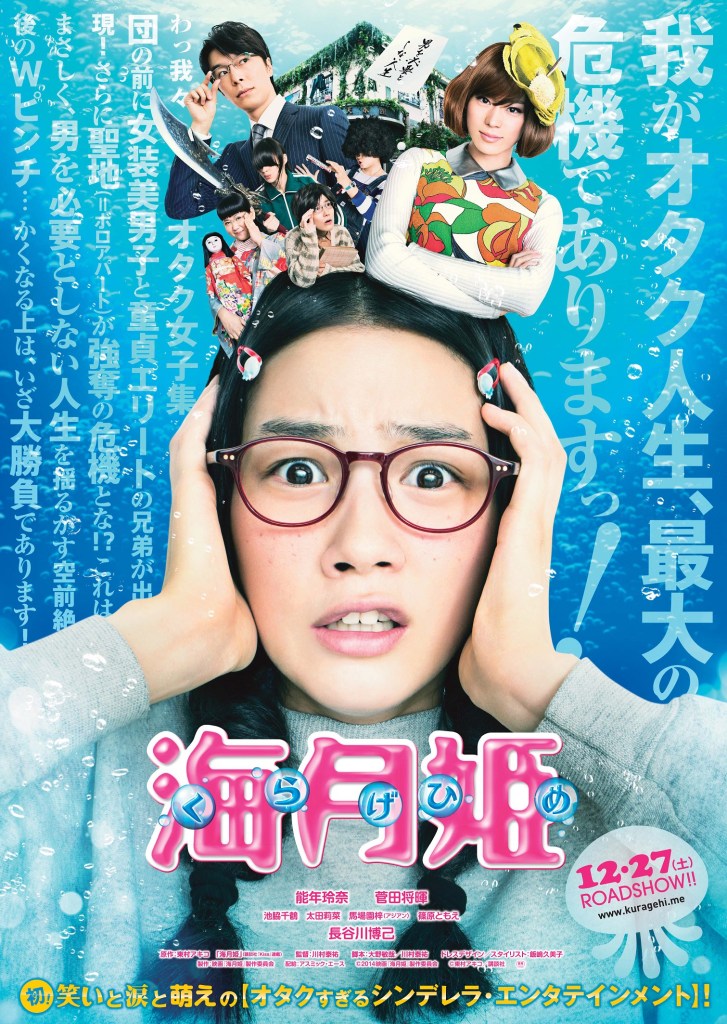 Originating as an ongoing manga series by Akiko Higashimura which was also later adapted into a popular TV anime, Princess Jellyfish adopts a slightly unusual focus as it homes in on the sometimes underrepresented female otaku.
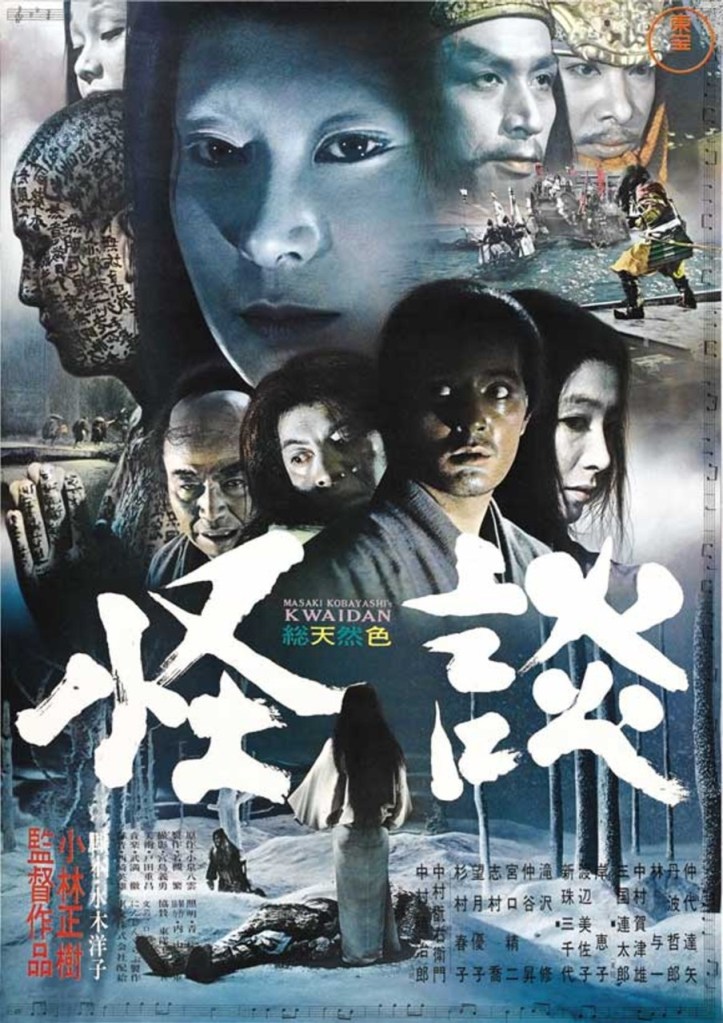 Kwaidan (怪談) is something of an anomaly in the career of the humanist director Masaki Kobayashi, best known for his wartime trilogy The Human Condition. Moving away from the naturalistic concerns that had formed the basis of his earlier career, Kwaidan takes a series of ghost stories collected by the foreigner Lafcadio Hearn and gives them a surreal, painterly approach that’s somewhere between theatre and folktale.
