Detective Hibari 3: Hidden Coin (ひばり捕物帖 ふり袖小判, Kokichi Uchide, 1959)

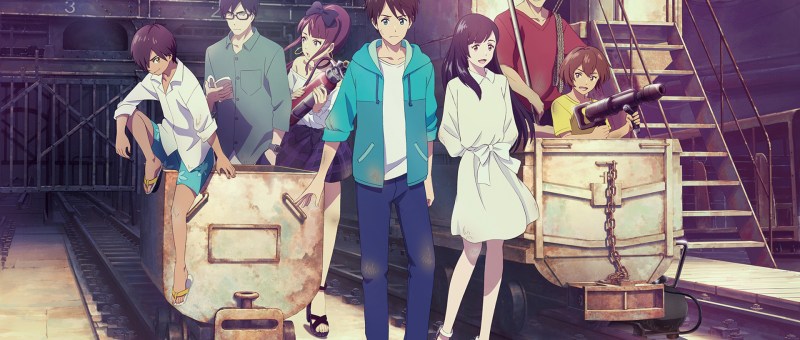
Hibari Misora returns as Oshichi in another adventure for the Edo detective, this time becoming embroiled in a conspiracy against the Shogunate which she continues to serve. By this third instalment in the Detective Hibari series, Hidden Coin (ひばり捕物帖 ふり袖小判, Hibari Torimonocho: Furisode Koban), Oshichi is no longer hiding her noble birth as an esteemed princess, but is living as a singer/law enforcement officer under her “common” name, and upholding the interests of “common” people suffering under “corrupt” samurai oppression but, paradoxically, very much upholding the system which enables it.

The conspiracy in which Oshichi becomes involved this time around is concerned with the plot to overthrow the Shogunate. Rebel forces manage to ambush a convoy carrying tax money to the government, hoping to use the money to buy guns from the Dutch to aid their revolution. As only one of the retainers survives, he will be held responsible for the loss of the money and almost certainly asked to commit ritual suicide, but the Ota clan and most particularly retainer Kennoshin (Kotaro Satomi), are worried about the man’s daughter, Misuzu (Atsuko Nakazato), to whom he was very close. Oshichi becomes involved when she hears of an entire household being murdered and their funds stolen, while a lone pickpocket is found dead with a precious gold coin lying nearby. 

Before discovering the crime, Oshichi and her trusty sidekick Gorohachi (Takehiko Kayama) are talking to a kabuki actor who is about to undergo a succession ceremony which will cost a significant amount of money – 1000 Ryo. Gorohachi is mystified, wondering how many years he’d have to work in order to find that kind of money, while the two pickpockets outside wonder something much the same. The older of the two, Oshima (Keiko Yukishiro), wants to make sure the actor gets his money and has been desperately trying to get in touch with him but he is too snooty to see her. Oshichi starts connecting the dots between the pickpockets and the conspiracy to find a vital clue, but once again is keen to stress that “the law can be merciful too” as she both ensures that Oshima faces justice and allows her to find emotional fulfilment in revealing her true identity and finally seeing the show. 

Meanwhile, despite outwardly dressing in manly, action friendly outfits, this Oshichi is one more romantically inclined, fretting over the fate of her brother’s retainer Hyoma (Chiyonosuke Azuma) who, she thinks, has left his employ and become a drunkard. The drunken downward spiral of his life turns out to be a kind of undercover assignment, but provokes a little jealousy in Oshichi as she sees him “protecting” other women at a nearby restaurant, one of whom turns out to be Misuzu who holds a few more pieces of the puzzle. Vowing to save Misuzu and stop the conspiracy, Oshichi adopts a male persona complete with top knotted wig and takes on an entire boatload of sailors who stupidly tell her that they’re shipping out that very night. 

Oshichi rescues Misuzu and gets the money back, saving her father and “restoring” the status quo, but it’s difficult to see which side she should be on in this fight. As Gorohachi perhaps implies, it’s not exactly fair or responsible for the samurai class to be hoarding all these vast amounts of money, or for it to be necessary to spend the annual salaries of several ordinary people on an extravagant celebration for an actor’s promotion. We’re told that the rebels are “evil” and villainous, and they do indeed seem to be cruel and self-interested, willing to sacrifice anyone and everyone to achieve their goal, but it’s difficult to argue with the desire to stand up to this inherently oppressive system in which samurai corruption is the expected norm. 

Insisting that “the law can be merciful”, Oshichi serves a kind of moral justice, rescuing the innocent Misuzu and saving her wrongfully abused father while unmasking samurai corruption, but she remains a loyal servant of the Shogunate and a part of the system into which she was born. Oshichi has been permitted escape from her own oppression thanks to her “compassionate” brother who has allowed her to live freely in the city rather than pressuring her to marry and conform to the feminine norm, but living outside it herself seemingly has no sympathy for those who wish to reform the system and seeks only to preserve it. Having successfully solved the mystery, she reassumes her femininity and retreats into the cheerful festival atmosphere arm in arm with a clean shaven Hyoma finally embracing her romantic dream in an Edo freed from immediate strife. 


Short clip (no subtitles)

Detective Hibari 2: Secret of the Golden Coin (ひばり捕物帖 自雷也小判, Kinnosuke Fukada, 1958)

Oshichi returns! Two years after her first adventure, the princess in hiding has moved on, still living in the city hiding from the burdens of privilege but fiercely opposing injustice wherever she finds it as a detective in her own right. Unlike Mysteries of Edo and in keeping with Case of the Golden Hairpins, this Oshichi undergoes much less of a softening, remaining largely disinterested in the idea of romance, and cooly rebellious in her refusal to be cowed while strangely OK with Shogunate oppression as a quasi-agent of the state. 

As the film opens, a young woman impersonates Oshichi in order to gain entrance to a prison where her boyfriend is in jail for rebelling against the Shogunate. Meanwhile, Oshichi (Hibari Misora) is teaching a singing class as a favour to her boss who had to go out on an errand, after which she discovers that Hyoma (Chiyonosuke Azuma), currently a retainer of her brother’s, has been sent to bring her home. Once again she refuses because she likes her “ordinary” life. Shortly thereafter, a fire breaks out in the prison and the rebels escape. Oshichi becomes a prime suspect in the jailbreak, not only because the accomplice borrowed her name but because it’s advantageous to the plotters to blame her because they can use her guilt to tarnish her brother’s reputation and get him fired, usurping his position in the process. 

Oshichi, now working as a detective, is technically an agent of the Shogunate against which the rebels are rebelling for reasons which aren’t stated here but are probably easy to guess. They are, in many ways, the same sorts of reasons that Oshichi chose to become a detective, even if she’s coming at them from the other side. She doesn’t like bullies, or corruption, injustice or unfairness. Oshichi won’t stand for unkindness either, which is perhaps why she aligns so strongly behind the woman who blackened her name by impersonating her, knowing that she did it all for love and a little bit for justice, while also forgiving the rebel Seinosuke (Kotaro Satomi) who was preparing to kill the woman he loved because the corrupt samurai had kidnapped his dad and threatened to kill him if he didn’t. 

Despite all that however, Oshichi still insists that “the Shogunate can be compassionate too”, encouraging Seinosuke and his girlfriend Namiji (Hiromi Hanazono) to tell all so she can help them safe in the knowledge that they will be forgiven. It’s a slightly strange position for to her take, essentially authoritarian but arguing for a benevolent paternalism that is just and fair and kind, insisting that the corrupt samurai are bad apples which must be expelled rather than a product of an inherently oppressive social system as they are generally depicted in post-war jidaigeki. 

This insistence on the “compassion” of the Shogunate is perhaps the concession to Oshichi’s femininity which she has otherwise rejected in rejecting her life as a cosseted princess. As Kawashima had in Mysteries of Edo, Oshichi’s “protector” Hyoma asks her how she can take on all those men before challenging her to a contest of masculinity as mediated through a drinking competition which she does not exactly “win” but makes a minor victory all the same. Rather than rely on her brother or Hyoma, Oshichi vows to clear her name herself and starts investigating on her own dressing as a man and fighting bad guys while insisting on her independence. 

Nevertheless, she is but a pawn in a game of courtly intrigue, manipulated as a means of getting to her brother. The corrupt samurai think nothing of killing anyone who gets in their way, be they princesses or peasants, even going far as to mount an attack on the stage of a theatre mid-performance in front of a room full of spectators, many of whom join Oshichi by throwing projectiles as she tries to fend them off. Once again, she isn’t quite permitted to save herself but is “rescued” by the patriarchal forces representing the greater Shogunate including her protector Hyoma, and her brother, the embodiment of state authority. She is, however, the primary motivator in unmasking the corruption as she both clears her own name, and creates a better future for Namiji in which she can be with the man she loves, reminding her to always remember the compassion the Shogunate has shown her (in case she was minded to mount any more rebellions). As for herself, she manages to slip the loop once again, running off into the wild to claim her independence rather than be forced back into the golden cage of her princesshood while the loyal Hyoma contents himself with following her lead. 


Short clip (no subtitles)

Detective Hibari 1: Case of the Golden Hairpins (ひばり捕物帖 かんざし小判, Tadashi Sawashima, 1958)

Two years after Mysteries of Edo and a year after its sequel, Hibari Misora returns as Oshichi in a new series of films, still living undercover in Edo solving crimes and living her best life as a singer and performer. Like Mysteries, Detective Hibari 1: Case of the Golden Hairpins (ひばり捕物帖 かんざし小判, Hibari Torimonocho: Kanzashi Koban, AKA Edo Girl Detective / Here Comes the Girl Detective) sees Oshichi investigating murders of women, though this time the crime is far less involved and much more typical of Toei’s period films in its venal samurai and their insatiable appetites for wealth and status. Oshichi is, essentially, an agent of the state but a much less ambiguous one than she’d become in the following pictures, fighting bravely against corruption and standing proudly for justice in the face of implacable samurai arrogance. 

Having escaped the cage of her noble birth, Princess Tae/Oshichi (Hibari Misora) is still living as an “ordinary” woman in Edo and has just won a singing competition to be named as Queen Beauty. The competition is marred however when one of the other contestants is offed on the way home. Still working with her trusty sidekick Gorohachi (Shunji Sakai), Oshichi quickly realises the woman seems to have been murdered with an ornate hairpin and starts an investigation.

What she discovers is that an unscrupulous gang of samurai is attempting to recover a set of three hairpins which were stolen in a robbery some years previously. The lord claims he’s doing it to satisfy his clan’s honour, but more likely has a less honorable goal in in mind. To put the plan in action, he’s mobilised his conflicted daughter, Sumie (Eiko Maruyama), who thinks this is all a bit much for set of shiny hair ornaments, and her boyfriend Tamiya (Kotaro Satomi) whose family originally owned the jewels which is why he sees it as his duty to get them back, even if that means murdering innocent women and sending the entire city into a panic in the process. Of course, Oshichi agrees with Sumie, and as usual immediately sympathises with her romantic dilemma which earns her a few sarcastic comments from sometime love interest Hyoma (Chiyonosuke Azuma) who will recur throughout the rest of the series.

Hyoma, posing as a drunken ronin but in reality shadowing Oshichi as a protector, like Kawashima in Mysteries, expresses consternation with Oshichi’s atypical feminity, echoing Kawashima’s words that “a woman should be feminine” while claiming not to find Oshichi’s manly fortitude very effective. Kawashima’s words may have wounded her, but Hyoma’s only irritate. She fires back that as a talented samurai he’s wasting his potential drowning himself in drink and he should “stop fighting and do something for society”. Meanwhile, she doubles down – dressing as a man and even joining a kendo dojo to spy on the corrupt lords, scrapping with the best of them and holding her own in a fight. 

Swinging the other way, another of her investigative tactics sees her posing as a geisha and then later as a noble lady, even getting dressed up in her formal princess clothes to beg a favour from her extremely understanding brother. Sympathy for Sumie and a few romantic songs may be the sole concessions to conventional femininity, but Oshichi remains proudly defiant and intent on maintaining her freedoms. It may be true that the unusual degree of freedom she has is permitted her because of her progressively minded brother who ignores “advice” from an elderly servant to exercise more control because he can see being of use to society makes his sister happy and that she’ll probably come home when she wants to, but it’s also freedom that she has actively chosen for herself and chooses to maintain. 

Oshichi gets drunk with Hyoma (apparently for the first time), fights bad guys, and gives orders that stop seasoned samurai in their tracks but not so much for herself as to help those like Sumie who have become victims of corrupt samurai ethics. She does this, however, as someone who largely believes in the righteousness of the system, that the Shogunate is kind and forgiving while local lords may be avaricious or cruel. When her brother arrives to save the day, he announces that the hairpins will be sent to the Shogun who will return them to the people, sharing the treasure with everyone rather than keeping it for himself. Oshichi, meanwhile has found something greater – a worthy sparring partner in the dashingly romantic Hyoma, and the confirmation of herself not as Tae the caged princess but Oshichi who owns the very ground she walks upon and allows no other to tell her where she may be permitted to go. 


Original trailer (no subtitles)

The Song of the Cart (荷車の歌, Satsuo Yamamoto, 1959)

“When all human beings acknowledge each other as human let the precious joy that results be universal. When this joy lives forever in the hearts of women and is handed down to daughters who become mothers then tomorrow will not just repeat today but be a new beginning” reads the opening title card/mission statement of Satsuo Yamamoto’s chronicle of early 20th century Japan. Told though the eyes of one very good woman wrestling against her baser instincts, Song of the Cart (荷車の歌, Niguruma no Uta) is a gentle plea for a little more empathy and understanding in which the heroine suffers greatly but is finally rewarded in managing to keep the darkness at bay. 

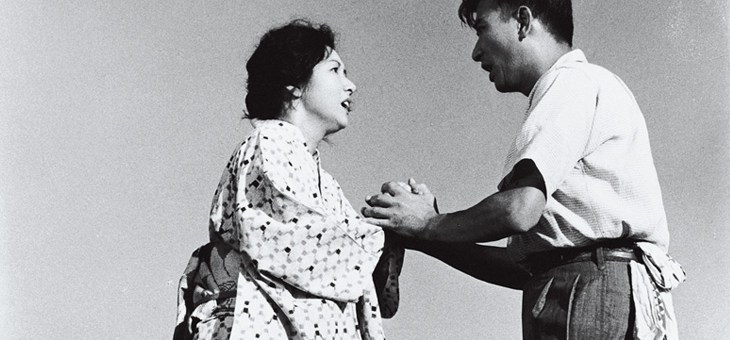
In late Meiji, Seki (Yuko Mochizuki) develops a fondness for the most eligible young man in town – the postman, Moichi (Rentaro Mikuni), who can read and write and isn’t bad looking either. To her surprise, Moichi admires her too and eventually proposes marriage, intending to give up his job as a postman which doesn’t pay as much as it used to now costs are rising because of the recently concluded Sino-Japanese war to buy a handcart with the longterm goal of building a small handcart empire with a warehouse of his own that will allow him to build a fancy house to live in. Seki hesitates, she’s an illiterate maid perhaps she isn’t good enough for the great Moichi but he replies that he couldn’t care less about that and only wants to know if she wants him. She does, but has to check with her parents first. They object to the marriage on the grounds that Moichi is penniless and disown her when she tells them she’s marrying him anyway. Disowned by her parents, she also loses her job as a maid and is forced to head to Moichi’s ahead of schedule where his extremely cold mother (Teruko Kishi) makes no secret of her resentment of her new daughter-in-law but is eventually forced to relent. 

Unlike Moichi and his mother, the other residents of the village and particularly its women are bright and cheerful despite the harshness of their lives. Swept off her feet by Moichi’s seeming sophistication, Seki is in for a rude awakening in realising that his work ethic is extreme and in many ways he’s just as cruel as his heartless mother. On her arrival, Seki’s mother-in-law complains that she brings “only a small bundle” while simultaneously suggesting that she somehow looks down on them because they are only poor people, insisting that she work alongside Moichi pulling carts to make their dreams of riches come true. Seki jumps at the chance to prove her love, but finds her mother-in-law unchanged. 

Pulling the cart through the village, Moichi and Seki pass another woman who seems put out by Seki’s presence, complaining that Moichi never bothered to reply to her own proposal. Moichi dismisses her complaints, avowing that he didn’t marry her because she wasn’t a worker, implying that he was only interested in someone who would work alongside him in pursuit of his goal of becoming a homeowner. Seki is indeed a worker, and a strong woman who bears her hardships with grace, but finds it increasingly difficult to put up with her mother-in-law’s heartlessness and adherence to old-fashioned feudal customs by which she claims her authority over the household while Moichi, as the dutiful son, always defers to his mother. When the first child arrives, Moichi declares that a daughter brings him no joy, while the mother-in-law who is supposed to be watching her, just lets her cry all day long and doesn’t even change her nappies. Out on the road, Seki comes across another couple in a similar situation who’ve brought their little one with them, riding in a bucket on the back of the cart. Seki wonders why they can’t do the same, then she’d at least know her daughter was alright and not crying her heart out in a dirty nappy, but Moichi won’t hear of it lest his mother be offended that Seki is suggesting she’s not looking after her granddaughter properly. 

Moichi works every hour god sends, but not so much to provide for his family as to improve his own status in the hope of owning a sizeable home, perhaps to “regain” the kind of position his mother thinks is theirs as descendents of the Heike. He exists on a kind of political fault line in his rigid austerity, believing that you really can make it just by working hard while also becoming the de facto spokesman for the other cartmen because he is the only one able to read and write. Yet faced with constant and obvious oppression of the eerily feudal kind in persistent rice profiteering he does nothing much to resist it and gives only grudging approval to his son’s intention of forming a train driver’s union. 

While Moichi has pinned all his hopes on handcarts, the future is fast approaching. A funeral procession of cartmen is greeted by the horse-drawn variety coming the other way as if to signal their imminent obsolescence. But the horsemen aren’t much better off. If Moichi couldn’t afford a horse, he’ll never afford a motor car and the mechanised age is on the horizon. The only work he manages to find ironically involves transporting lumber for the new railway line, but it’s a gamble that pays off and makes Moichi a wealthy man once again. 

Material comforts aren’t everything, however, and Seki struggles to reconcile herself to life with her increasing cruel mother-in-law and emotionally distant husband. She worries that she’s becoming what she hates, finding it difficult to find sympathy for Moichi’s mother now she’s ill in feeling that perhaps she’s getting what she deserves. Her friend advises her that that’s just “bugs” eating away at her heart and what she really needs to do is fly in the opposite direction, finally make a friend of her mother-in-law in trying to understand her. She has, after all, had a very hard life, starved of affection all these years as a young widow raising a son alone on little more than charcoal money. 

Seki meanwhile suffers numerous humiliations and heartbreaks, notably Moichi’s extremely unreasonable decision to bring his 50-year-old sex worker mistress to live with them in their home, but does her best to be generous and forgiving. As she points out, this house is half hers, she built it alongside Moichi and she won’t just vacate it so Moichi can do what he always does which is as he pleases (once his mother’s not around to tell him not to). Moichi perhaps pays for his feudalist follies and selfish authoritarianism in a fairly direct way which aligns him with his chastened nation waking up to the emotional costs of his mistakes, while Seki is finally rewarded. Unlike her mother-in-law she becomes a beloved neighbourhood granny giving rides to all the local kids while pulling her cart onwards towards the future like a reverse Mother Courage embracing her long absent son finally returned to her in recognition of her goodness. 


A Wicked Woman (毒婦高橋お伝, Nobuo Nakagawa, 1958)

The term “dokufu” or “poisonous woman” dates back to the Edo era, but rose to prominence once again in the turbulent society of late Meiji in which such women became fodder for the growing penny dreadful industry. Unlike the later “bad girl” or contemporary examples of “bad women” from elsewhere, the problem with “poisonous women” is that they pollute society as a whole, corrupting those around them through their unbridled transgressions. These notions are of course as much about contemporary notions of femininity and a desire to preserve the social order at all costs as they are about conventional morality and the rule of law, but there are reasons that tales of such independent women incited such a frenzy among both men and women who found themselves floundering in a confusing and rapidly changing society.

Nobuo Nakagawa’s A Wicked Woman (毒婦高橋お伝, Dokufu Takahashi Oden) is inspired by the real life tale one particular “dokufu”, Oden Takahashi, who was in fact the last woman to be beheaded in Japan after being convicted of murdering her lover while suspected of poisoning her husband. Nakagawa does not particularly pay attention to the “real” details of her life but to her pulp persona, somewhat reclaiming her image as an ultra cool revenger who refused to be bound by the restrictive mores of her times or suffer at the hands of the feckless men she nevertheless falls victim to. 

When we first meet Oden (Katsuko Wakasugi), she is being pursued by a large number of policemen whom she manages to outrun, eventually tricking them and escaping by getting a lift from a passing rickshaw driver. The ride is tense, and we worry that Oden will encounter an accident that will bring her to the attention of the police, but the crisis is something quite different. In a staggering coincidence, the rickshaw driver is none other than Oden’s estranged first husband, Jinjuro (Akira Nakamura), once a samurai but now reduced to pulling a cab after ruining himself through drink and debauchery (apparently why Oden eventually left him). Though it’s not exactly a happy reunion, the pair part on good terms while he laments that their small daughter Omitsu still misses her mother, managing to extract a few notes from Oden supposedly for her upkeep.  

Oden meanwhile goes home to husband no. 2, Ryosuke (Asao Matsumoto), who is bedridden with TB and increasingly paranoid about what Oden does outside the house to keep them fed. Operating out of a remote cottage, she puts on a ridiculously elaborate Western outfit and heads to a jewellers where she pretends to look at precious stones for a ring, dropping one on the floor while the salesman’s back is turned and spiking it with the point of her parasol knowing that no-one is going to think of looking there. The assistants aren’t stupid, they know a stone is missing and Oden must have pocketed it but all they can do is search her person, calling in the local bobby, Kazuma. (Juzaburo Akechi), who thinks they may be going too far in forcing this upperclass lady to strip off to prove she’s not a thief. The owner of the store, Osawa (Tetsuro Tanba), looks on knowingly but is intrigued more than anything else, eventually content to let Oden go despite knowing she has the jewel concealed somewhere about her person. 

Disaster strikes, however, when Oden runs into Kazuma in the street and he spots her parasol sparkling. He tries to arrest her, but she pleads with him to let her change out of her extremely silly outfit first, playing the poor widow card and eventually seducing the naive policeman. What Oden didn’t quite bank on was actually falling for him for real, drawn in a sense to order and goodness, longing to be caught and restored to the rightful condition of womanliness but fearing she has lost all right to conventional happiness. 

Oden’s relationship with Kazuma is an example of the effects of her “poison” on society at large. Kazuma as we first meet him is earnest and good, a naive young rookie with a strong sense of justice who leaps to defend Oden thinking she is a maligned noble woman unfairly accused of thievery. His superior Kakunosuke (Gen Funabashi), has set him up with his innocent little sister Kozue (Minako Yamada) and it seems the pair will soon marry, but Kazuma is apparently not so much interested in sweetness as he is in Oden’s complicated darkness. He falls obsessively in love with her, perhaps partly out of a desire to save her from her criminal life by bringing her to justice, but also in attraction to all of her transgressive qualities which contradict everything he stands for. 

Nakagawa reframes Oden’s poisonousness as a consequence of her frustrated maternity and a continual failure of masculinity. After re-encountering Jinjuro, Oden finds it increasingly difficult to justify the act of abandoning her child and leaving her with a man she knew to be a violent and feckless drunk. Though Jinjuro appears to have reformed himself through the time-honoured devices of humbleness and hard work, we later find him extorting money from Oden to pay for Omitsu’s medical care only to drink it all himself. Oden tries to visit her daughter, but is after all a stranger in her life. Her attempt to reclaim her maternity, escape the trap of criminality and leave the city with her little girl is the primary motivator for all of her subsequent actions which culminate in an intense desire for revenge against Jinjuro, the architect of all her misfortune. 

All of Oden’s earlier crimes were in some way permissible, taking from those who could afford to lose and doing it with a degree of style. The botched job at the jewellers, however, sees her fall into the hands of Osawa, who turns out to be a violent and sadistic gang boss. Osawa keeps women captive in his basement and whips them for his own enjoyment, forcing Oden to become a procurer tricking vulnerable women into becoming sex slaves. Oden thinks nothing of this, smirking that there must be good money in selling women, willingly complicit in the oppression of those just like her. To free herself from Osawa, she uses Jinjuro, attempting to kill two birds with one stone and finding partial success only for the plan to fall apart when confronted by the face of order in the reappearance of a ruined Kazuma. 

Oden ends her journey in Yokohama, a bustling international port, where she’s the tattooed madame of the Osawa’s Chinese bar and a familiar face at the gaming tables. The suggestion is that this corruption is foreign in origin, Osawa’s top hat and smart suit not to mention plush Western-style bed, suggesting that his savagery is a facet of his seduction by Chinese hedonism and Western individualism. Individualism is again painted as Oden’s sin when she leaves the women locked in a jail cell to escape a fire while cradling her ill-gotten gains, only to tell Kazuma to man up and that money is what she truly loves. But Oden is also victim of her times, betrayed by a failure of masculinity in a patriarchal system. Jinjuro the drunken samurai, Ryonosuke the impotent consumptive, and Kazuma the conflicted young man. The last of these she refuses to “ruin”, setting him free because she truly loves him and does not want to see him dragged into her life of crime, intent on reclaiming her goodness by reassuming the role of a conventional mother living an honest life with her daughter somewhere far away. Her “wickedness” is only really her desire to survive but an independent woman, good or bad, is always a threat to the social order and so she must be stopped lest her inconvenient desire to live a life free of male control become a “poisonous” example to those around her. 


A Long Goodbye (長いお別れ, Ryota Nakano, 2019)

Contemporary Japanese cinema has gone lukewarm on the idea of family, presenting it more often as a toxic rather than supporting presence. Among the few remaining positive voices, Ryota Nakano’s previous films Capturing Dad and Her Love Boils Bathwater never made any attempt to pretend that families are always perfect or that the family as a concept is one which must always be defended, but ultimately found warmth and solace in the mutual act of pulling together as the sometimes wounded protagonists found strength rather than suffocation in unconditional love. 

A Long Goodbye (長いお別れ, Nagai Owakare) finds something much the same as three women are forced to deal in different ways with their relationships with austere father Shohei (Tsutomu Yamazaki), once an authoritarian head master but now suffering from dementia and rapidly losing the ability to read. The first signs of decline are felt in 2007, prompting mum Yoko (Chieko Matsubara) to ring both of her increasingly distant, almost middle-aged daughters, and invite them to their father’s 70th birthday party, 

33-year-old Fumi (Yu Aoi) is in the middle of breaking up with a boyfriend who’s giving up on his dreams of being a novelist to take over the family potato farm. Fumi’s dream is owning her own restaurant, but somehow it seems a long way off. Older sister Mari (Yuko Takeuchi), meanwhile, is a housewife and mother living with her fish scientist husband Shin (Yukiya Kitamura) and son Takashi (Yuito Kamata) in California. Lonely in her marriage, Mari struggles with her English and finds it difficult to make friends with her husband’s colleagues who openly criticise her language skills from across the room while Shin makes no attempt to defend her. 

Meanwhile, Yoko carries the heaviest burden alone in trying to manage her husband’s decline even as he begins to wander off, forever asking to go “home” even when he is already there. The concept of “home” however may be difficult to define in a rapidly changing society. All the way across the sea, Mari frets about her parents and feels guilty that, as the older sister, she should be doing more and has unfairly left everything to Fumi just because she happens to be in closer proximity. She is then slightly perturbed to realise that Fumi hasn’t seen their parents since the previous New Year and is equally shocked at the noticeable change in her father who goes off on random tangents and suddenly loses his temper over trivial things. 

Mari flies back to Japan when crises occur but her husband is not as understanding as one might expect. His research concerns fish which adapt to their environment and it’s clear he’s begun to follow their example, falling wholesale for Western individualism. He criticises Mari’s anxiety for her parents’ health by reminding her that her “family” is her husband and son, bearing no responsibility for additional relatives. Shin now believes strongly in individual responsibility, that Shohei and Yoko need to look after themselves. As such he takes little interest in his family leaving all the childcare duties to Mari in somehow believing that children raise themselves. When the teenage Takashi (Rairu Sugita) goes off the rails and starts skipping school, Mari turns to the time old philosophy that he needs a good talking to from his father, but all Shin can come up with is that his son’s his own man and he’s sure he has his reasons. 

The young Takashi is acclimatising too, getting himself a red-haired Californian girlfriend who’s obsessed with J-pop and kanji, but later replaces him with another Asian guy when he goes back to Japan to spend time with Shohei while he’s still somewhat present. Meanwhile, Fumi works hard to realise her dream but encounters a series of disappointments both romantic and professional as she too reconsiders the idea of family and whether it’s truly possible to slide into one that has already fractured. Becoming responsible for her parents’ care shifts her into a maternal role she might not have expected, maturing in a slightly different direction while Mari remains trapped and lonely, neglected by her newly individualist husband who only cares about his research and shut out by her understandably angsty teenage son. 

Crises are, however, good for bringing people back together. Shohei it seems was a typical father of his times, distant and authoritarian, perhaps not always easy to be around. Fumi worries that she disappointed him, not becoming a teacher as he’d hoped while also failing to achieve her dreams of becoming a restaurateur, while Mari just wants what her parents had in a loving and supportive marriage surrounded by the warmth of  family. Shohei might not always have shown it, but there’s a lot unsaid in his constant desire to go “home” back to the time his kids were small. Home is where the heart is after all, even if you don’t quite remember the way. 


Original trailer (No subtitles)

Black Lizard (黒蜥蝪, Kinji Fukasaku, 1968)

“Are you a critic?” asks the proprietress of of a lively night club, “Why?” replies a lonely man sitting at the bar, “Beauty fails to intoxicate you” she explains before wandering off to find a prettier prize. Nevertheless, a connection has been forged as two masters of the craft confront their opposing number. Black Lizard (黒蜥蝪, Kurotokage), based on the 1934 story by Edogawa Rampo, had been brought to the screen by Umetsugu Inoue in 1962 in a version which flirted with transgression but was frothy and fun, adding a touch of overwrought melodrama and gothic theatricality to Inoue’s well honed musical style.

Inoue’s version had been co-scripted by Kaneto Shindo and Yukio Mishima who had also written the stage version. Once again crediting Mishima’s stage adaptation, Fukasaku’s 1968 take on the story is, as might be expected, far less interested in class connotations than it is in notions of love, beauty, and aestheticism. Consequently, we open in a much harsher world, dropped straight into Black Lizard’s edgy nightclub which Akechi (Isao Kimura), Edogawa Rampo’s famous detective, has visited on a friend’s recommendation. He is shocked to read in the paper the next day that a young man he saw in the club has apparently committed suicide, while another article also mentions the shocking disappearance of a corpse from the local morgue. 

Meanwhile, Akechi is brought in on a retainer to protect the daughter of a wealthy jeweller who has been receiving threatening letters informing him of a plot to kidnap her. Unlike Inoue’s version, Iwase (Jun Usami) is a sympathetic father, not particularly demonised for his wealth. Rather than drinking too much, he simply takes his sleeping pills and gets into bed without realising that his daughter is already missing. As transgressive as ever, however, Black Lizard (Akihiro Miwa) wastes no time sizing up Sanae (Kikko Matsuoka), running her eyes over the “splendid curve” of her breasts and lamenting that beautiful people make her sad because they’ll soon grow old. She’d like to preserve that beauty forever, convinced that people age because of “anxieties and spiritual weakness”. The reason she loves jewels is that they have no soul and are entirely transparent, their youth is eternal. Now Black Lizard has her eyes on the most beautiful jewel of all, the Egyptian Star, currently in the possession of Iwase which is why she’s planning to kidnap Sanae and ask for it as a ransom. 

Though the Black Lizard of Inoue’s adaptation had been equally as obsessed with youth and beauty, she was a much less threatening presence, never actually harming anyone in the course of her crime only later revealing her grotesque hobby of creating gruesome tableaux of eternal beauty from human taxidermy. This Black Lizard is doing something similar with her “dolls”, but she’s also cruel and sadistic, not particularly caring if people die in the course of her grand plan even running a sword firstly through a body she believes to be Akechi’s, and then through a minion completely by accident. She picks up Amamiya (Yusuke Kawazu) in the bar because of his deathlike aura, his hopelessness made him handsome, but once he fell in deep love with his “saviour” she no longer found him beautiful enough to kill. 

Akechi, meanwhile, is captivated by her in the same way Holmes is captivated by Irene Adler. He admires her romanticism, and recognises her as someone who thinks that crime should come dressed in a beautiful ball gown. She, by turns is drawn to him but perhaps as to death, each of them wondering who is the pursuer and who the pursued but determined to be victorious. Casting Akihiro Miwa in the female role of Black Lizard adds an extra layer of poignancy to her eternal loneliness and intense fear of opening her heart, finally undone not by the failure of her crimes but by a sense of embarrassment that Akechi may have heard her true feelings that leaves her unable to go on living. 

Meanwhile, Amamiya attempts to rescue Sanae not because he has fallen in love with her, but because he too is drawn towards death. Showing the pair her monstrous gallery of taxidermy figures of beautiful humans, she pauses to kiss one on the lips (played by Yukio Mishima himself no less), leaving Amamiya with feelings of intense jealousy and a longing to be a cold and inanimate shell only to be touched by her. “Sanae”, meanwhile, who turns out to be a perfect mirror in having being picked up at rock bottom by Akechi for use in his plan, guides him back towards life. They did not love each other, yet their “fake” love was set to be immortalised forever as one of Black Lizard’s grim exhibitions. She wonders if the fake can in a sense be the real, that they may free themselves from their respective cages through love in accepting a romantic destiny. For Black Lizard, however, that seems to be impossible. Akechi has “stolen” her heart, but she cannot take hold of his, holding him to be a cold and austere man who has “trampled on the heart of a woman”. “Your heart was a genuine diamond” Akechi adds, lamenting that the true jewel is no more. Black Lizard meets her destiny in a kind of defeat, too afraid of love and the changes it may bring to survive it, but paradoxically grateful that her love is alive while taking her leave as a romanticist in love with the beauty of sadness. 


Opening and titles (English subtitles)

Black Lizard (黒蜥蝪, Umetsugu Inoue, 1962)

“I want to live in a world where things kiss spontaneously, money divides society like it does you and me” says the Black Lizard (黒蜥蝪, Kurotokage) to her mark, affecting the role of an elegant older woman but failing to conceal herself within the disguise. Though the later 1968 version by Kinji Fukasaku may be better known, Umetsugu Inoue’s adaptation of Edogawa Rampo’s 1934 short story, filtered through Yukio Mishima’s stage play and scripted by Kaneto Shindo, is a camp classic in its own right. Making full use of Inoue’s talent for musicals and the dance background of marquee star Machiko Kyo, Black Lizard is a full hearted crime melodrama in which the villain’s defeat is a perverse tragedy leaving the truly treacherous to ponder what it is they may have destroyed. 

Another outing for Edogawa Rampo’s master detective Akechi (Minoru Oki), the picture opens with “Japan’s best detective” offering a monologue to camera in which he explains that the world is a brutal place but crime too can be an art, it is after all a man-made creation. If only we had more artful crimes, he claims, the world might be a better place. That is perhaps why he seems to have fallen for the crafty Black Lizard, his Irene Adler talented at elaborate heists involving disguise and subterfuge. 

His present case, however, finds him on a retainer to boorish jewellery merchant Iwase (Masao Mishima) who has been receiving threatening letters claiming that someone “very evil” is planning to kidnap his 19-year-old daughter Sanae (Junko Kano) whom he is currently trying to marry off. The reason they’ve made this trip to Osaka (without her mother) is so that Sanae can meet another prospective husband. She doesn’t seem very happy about the idea, but is going along with it and it seems Iwase doesn’t intend to pressure her into a marriage she doesn’t want. In any case, she’s something of a sheltered young woman which might be why she doesn’t suspect anything of the over friendly Mrs. Midorikawa other than she seems to have designs on her father. Knowing that no young girl relishes the prospect of arranged marriage, “Mrs. Midorikawa” makes a point of introducing her to a “friend” of hers, Amamiya (Hiroshi Kawaguchi), whom she thinks might be more to her liking. Of course, Midorikawa is really Black Lizard and Amamiya is her henchman. They’ve come to kidnap Sanae in the hope of ransoming her for the precious jewel “Egyptian Star” that Iwase can’t stop boasting about. 

The thing about Black Lizard is that she’s not driven by monetary gain but by a lust for beauty. She loves everything that sparkles, but more than that the aesthetic pleasure of the human form. Black Lizard tells Sanae that she dreams of a world with no borders, in which people are free into wander into the homes of others, and the subway hangers will be made of diamonds and platinum – literally a sparkling world of peace and freedom where everything is beautiful and nothing hurts. In a slightly transgressive moment, she casts her eyes over Sanae’s youthful body, admiring her “perfectly shaped breasts” before turning melancholy in admitting that she feels sad whenever she sees someone beautiful in knowing they will soon grow old. Later, we realise we should have taken her at her word, her objection to transience apparently having turned murderous. 

Even so, Sanae in rejecting the idea of arranged marraige, foolishly admits she’d rather be stolen than bought. In her eyes, a desire to be swept off her feet by a romantic hero saving her from a bourgeois existence, but she is indeed about to be “stolen” if only to be redeemed when her father agrees to give up the Egyptian Star to save her. Iwase, however, like the Black Lizard herself, was seduced by the allure of precious jewels after striking it lucky as a working class young man labouring in a quarry. He loves his daughter, but cannot bring himself to surrender this the most precious of all his jewels even to save her life. Akechi assures him that he has a plan which will save both Sanae and the diamond, but is left with only contempt for the way that Iwase has been corrupted not quite by greed but by a kind of misdirected lust for illusionary lustre. 

Black Lizard, for her part, is smitten by Akechi’s acumen, taken both by his handsome form and by his ability to challenge her. They chase each other while wondering who it is that is really being pursued and what they intend to do if ever they manage to catch their quarry, but vowing to emerge victorious all the same. Black Lizard guards her heart jealously, like the most precious jewel of all, while Akechi is continually captivated by the perfection of her criminal escapades. “What I hate most in this world is fakes” Black Lizard exclaims, confronted by Akechi’s complicated doubles game where no one is quite whom they first seemed to be, but it’s her own authenticity which eventually blinds her in realising she might have made a damning confession to the man who has “stolen” her heart. Grotesque as it eventually is, and it ends in a bizarre museum of human taxidermy crafted into “beautiful” tableaux, Akechi cannot help but admire the “beauty” in Black Lizard’s artistry, lamenting the loss of something precious while those like Iwase will continue to sell their glittering emptiness to an increasingly “brutal” world. 


Black Lizard dancing away from the scene of the crime (no subtitles)

The Master Spearman (酒と女と槍, Tomu Uchida, 1960)

After the war during the American occupation, the samurai film encountered a de facto ban with the authorities worried that historical epics may encourage outdated fuedal and fascistic ideology. The period films of the post-war era, however, are often fiercely critical of the samurai order even as it stands in for the hypocrisies of the contemporary society. Two years before Masaki Kobayashi launched a similar assault on the notion of samurai honour in Harakiri, Tomu Uchida’s The Master Spearman (酒と女と槍, Sake to Onna to Yari) finds a loyal retainer similarly troubled when he is ordered to die only to be ordered not to and then finally told that yes he must commit suicide to serve a kind of honour in which he no longer believes. 

Takasada (Ryutaro Otomo) is a battlefield veteran with the Tomita clan much revered for his skill with the spear. As a retainer to the current regent, Hidetsugu (Yataro Kurokawa), he finds himself in trouble when the ageing Hideyoshi (Eijiro Tono) stages a coup to solidify his power, accusing his nephew of treason on abruptly “discovering” a stash of illegally obtained rifles. Takasada is outraged not to have been ordered to die with his master, but later resents being “strongly encouraged” to do so by his brother, the head of their clan. Storming out, he temporarily retreats into a drunken haze during which he convinces his favourite actress, Umeme (Hiromi Hanazono), to stay with him (just serving drinks, no funny business), before committing himself to public seppuku on a date of his own choosing. When the day arrives, Takasada is greeted by parades of “well wishers” keen to congratulate him for being such a fine samurai. Encouraging those in line to step out of it and stand horizontally without account of rank or status, he agrees to drink with them all, with the consequence that he becomes extremely drunk and passes out. 

Just as he’s about to cut his belly, a messenger arrives from Hideyoshi himself ruling Takasada’s suicide illegal. He if goes ahead and does it anyway, his clan will be disgraced. Takasada’s brother changes his tune and begs him not to proceed for the sake of the Tomita honour. Thoroughly fed up, Takasada has a sudden epiphany about the hypocrisies of the samurai code and decides to renounce his status, dropping out of court life to live simply in the country where he is eventually joined by Umeme who has fallen in love with him. 

Meanwhile, court intrigue intensifies. These are the quiet years leading up to the decisive battle of Sekigahara which in itself decided the course of Japanese history. While the elderly Hideyoshi attempts to hold on to power by ruling as a regent on behalf of his sickly son Hideyori, Tokugawa Ieyasu (Eitaro Ozawa) plots on the sidelines. Hideyoshi is advised by his steward Mitsunari (Isao Yamagata) to take a hard line with treachery, executing all 36 “spies” planted in his household by Ieyasu, including a number of women and children. Mitsunari is himself working with the other side, and the executions are nothing short of a PR disaster for Hideyoshi, provoking fear and resentment in the general populace who can’t accept the inherent cruelty of putting women and children to the sword. Sakon (Chikage Awashima), a kabuki actress and fiercely protective friend of Umeme, comes to a similar conclusion to Takasada, hating the samurai order for its merciless savagery. 

That’s perhaps why she’s originally wary of Takasada’s interest in Umeme, uncertain he will keep his promise to keep his hands off her and so staying over one night herself to make sure Umeme is safe. Umeme, meanwhile, may not have wanted him to be quite so honourable, leaving in the morning visibly irritated and exclaiming that Takasada is drunk on himself and understands nothing of women. That may be quite true, but it’s his sense of honour which eventually tells him that he must reject the samurai ideal. First they tell him honour dictates he must die, then that he must not, then when Hideyoshi dies and the prohibition is lifted, that he must die after all because his entire clan is embarrassed by his continuing existence. By this point, Takasada has decided to accept his “cowardice”. Sickened by the spectacle of his ritual suicide and the humiliation of its cancelation, he came to the conclusion that “loyalty and honour for world fame, glorious exploits etc” is all a big joke. He loves food, and wine, and his wife, and if that means others call him coward so be it because he’s finally happy and perhaps free. 

His spear, however still hangs over his hearth. He hasn’t truly let go of it or of the code with which he was raised. Sakon, perhaps on one level jealous and guarding her own feelings as she accepts that Umeme has chosen to leave the stage to retreat into an individual world with Takasada, warns her that her happiness will end if Takasada is convinced to accept a commission from the Tokugawa. He surprises her by once again renouncing his status as a samurai, choosing to stay a “coward” living a simple life of love and happiness. But as soon as he puts his hand on the spear intending to break it for good something in him is reawakened. He can’t do it. He finds himself at Sekigahara, confronted not only by samurai hypocrisy but by his own as Sakon does what he could not do to show him what he has betrayed. His rage explodes and he raises his spear once again but not for the Tokugawa, against the samurai order itself piercing the very banners which define it in an ironic assault on an empty ideology.  


Station (駅, Yasuo Furuhata, 1981)

The thing about trains is, you can get off and wander round for a bit, but sooner or later you’ll have to go where the rails take you. You never have as much control as you think you have. The hero of Yasuo Furuhata’s Station (駅, Eki) is beginning to come to that conclusion himself, addressing the various stations of his life, the choices he made and didn’t make that have led him into a dejected middle-age, defeated, and finding finally that any illusion he may have entertained of living differently will not come to pass. 

In 1968, police detective Eiji Mikami (Ken Takakura) sends his wife (Ayumi Ishida) and son away for reasons which aren’t entirely clear. At this point in his life, he’s an aspiring marksman on Japan’s shooting team intensively training for the Mexico Olympics, which is perhaps why he felt he could no longer be a husband and a father, or at least not while also being a policeman. All that changes, however, when his friend and mentor is gunned down during a routine job, shot in the chest at point blank range by a man in a white Corolla while operating a check point to catch a killer on the run. In 1976, he goes to see his sister (Yuko Kotegawa) marry a man she might not love to escape a violent boyfriend and investigates a serial killer of women who rapes and murders girls in red skirts. In 1979, he’s haunted by the serial killing case coupled with his cool execution of hostage takers during a siege. Holing up in a small fishing village waiting for a boat home for New Year, he strikes up a relationship with a barmaid who is just as sad, lonely, and defeated as he is. 

When Mikami’s friend is shot, his wife tells the reporters that she thinks shooting at targets, which her husband had been training others to do, is a different thing than shooting at living beings. “One shouldn’t shoot at people” she tearfully insists, accidentally forcing Mikami into a double dilemma, knowing that his marksmanship skills were on one level useless in that they couldn’t save his friend while paradoxically told that they shouldn’t be used for that purpose anyway. But what really is the point in shooting holes in paper targets just to test your skill? Wandering into the hostage situation while posing as a ramen deliveryman, he cooly shoots the two bad guys without even really thinking about it, as if they were nothing more than paper. 

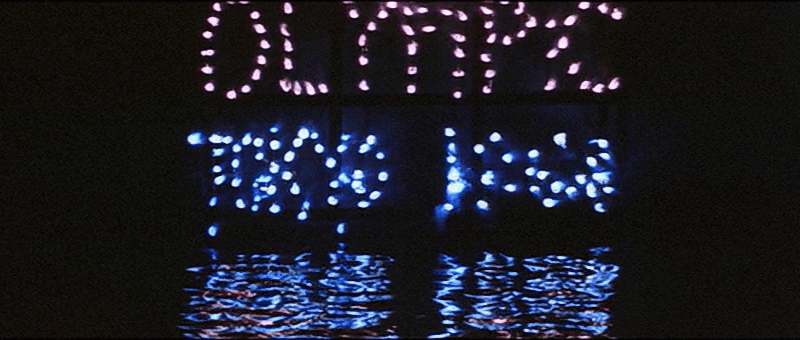
The Olympics overshadow his life. He gave up his wife and son for them, but no matter how hard you train, the Olympics eventually pass. Mikami is told he’s supposed to bring honour to Japan, representing not only the nation but the police force. He’s not allowed to investigate his friend’s death because they want him to concentrate on his shooting, but he is and was a policeman who wants to serve justice. While he’s waiting for the funeral, he sees a report on the news about a former Olympic marathon runner who’s taken his own life because he got injured and fell into a depression feeling as if he’d let down an entire nation. Mikami perhaps feels something the same, drained by responsibility, by the feeling of inadequacy, and by the potential for disappointment. After the Olympics he feels deflated and useless, wondering what the point of police work is while quietly rueful in suspecting the committee is about to replace him on the team after all. 

When he wanders into the only bar open on a snowy December evening, that is perhaps why he bonds so immediately with its melancholy proprietress, Kiriko (Chieko Baisho). The conversation turns dark. Kiriko tells him that a friend of hers who worked in a bar in the red light district killed herself last New Year, that it’s the most dangerous time for those who do this sort of work, not for any poetical reason but simply because it’s when their men come home. She tells him that she’s a lone woman, no virginal spinster but weighed down by the failure of old love. Swept up in the New Year spirit, Mikami starts to fall for her, but is also called back to the past by an old colleague who passes him his wife’s phone number and tells him she’s now a bar hostess in Ikebukuro. He starts to think about leaving the police and getting a local job, but fate will not allow it. Kiriko too sees her dream of love destroyed precisely by her desire to escape the pull of toxic romance. Back in 1976, Mikami had been party to a similar dilemma as the sister of his suspect kept her brother’s secret but secretly longed to escape its burden. Suzuko (Setsuko Karasuma) too lost love in trying to claim it and now works as a waitress in a small cafe in this tiny town, only latterly making an impulsive decision to try to leave and make a new future somewhere else. 

Mikami tears up the letter of resignation that declared him too tired of life to be a good policeman, once again boarding a train back to his rightful destination, knowing that a policeman’s what he is and will always be. He watched his wife wave goodbye from a station platform, saw a man betrayed on the tracks, and finally boarded the train himself, letting go of any idea he might have had about going somewhere else. Stations are after all transitory places, you can’t stay there forever. 


Original trailers (no subtitles)

Aki Yashiro’s Funauta which plays frequently throughout the film