Intimidation (ある脅迫, Koreyoshi Kurahara, 1960)

Intimidation still 1Social class as a means of social control is rarely dealt with overtly in Japanese cinema, but it’s been there all along from the feudal concerns of the jidaigeki to the inherent unfairness of the post-war world which made so many false promises to ambitious young go-getters, misselling dreams of social mobility in a newly meritocratic society. Koreyoshi Kurahara’s Intimidation (ある脅迫, Aru Kyohaku) is a noirish tale of blackmail and inexorable fall, but the title refers not just to the act literal act but to the oppression of a society in which the unscrupulous prosper and friendship, even love, is willingly sacrificed for the superficial comforts of wealth and status.

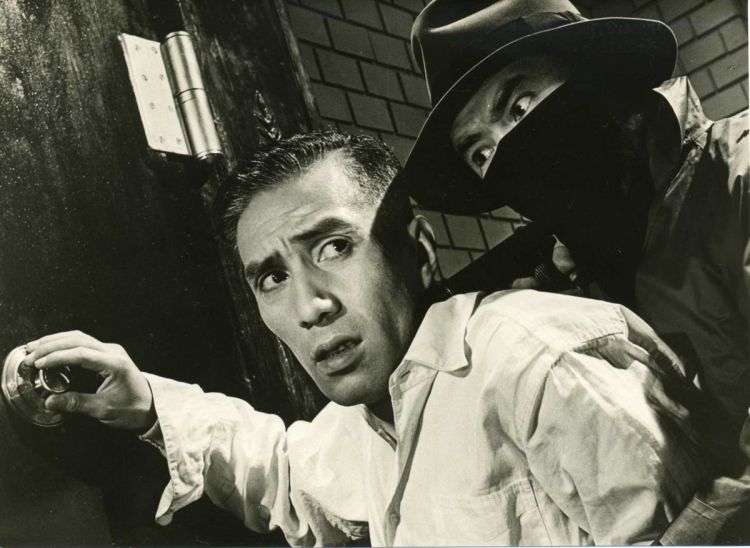
Bank manager Takita (Nobuo Kaneko) is riding high. He’s just been awarded an important new promotion but his success is less down to his innate talents, than to the fact he’s married the chairman’s daughter, Kumiko (Yoko Kosono). While Takita went to university and catapulted himself into the upper middle-classes, his childhood friend Nakaike (Ko Nishimura) only graduated middle school and has been working hard as a clerk in the same bank ever since. To make matters worse, Kumiko was once Nakaike’s sweetheart and Takita the lover of Nakaike’s sister, Yukie (Mari Shiraki). Where Nakaike is meek and earnest, Takita has abused every privilege he’s been given – illegal loans, backhanders, dodgy business deals and even an affair or two have left him wide open to blackmail. Takita’s party is about to end – Kumaki (Kojiro Kusanagi), a Tokyo hood, has proof of Takita’s improprieties and he threatens to expose all if he doesn’t get a sizeable amount of cash. It’s money that Takita doesn’t have, but Kumaki has a plan – Takita needs to rob his own bank. After all, who would expect the bank manager to raid his own vault?

Takita’s rise is as much down to societal corruption as it is his own lack of moral integrity. He’s got on by the traditionally “corrupt” ways that society condones – i.e. a dynastic marriage. He may have worked hard to get into university and get a good job that would enable him to be the kind of match a middle-class father would seek to arrange for his daughter, but everything after that is as straightforward and inevitable as a pair of train tracks. Takita has made it – his father-in-law will take care of everything else, all he has to do is sit back and avoid making any catastrophic mistakes. Perhaps because of the oppressive simplicity of his life, Takita has a lot going on the side – the “playing with fire” that he jokes about in his affairs and illicit backdoor deals are perhaps his ways of bucking the system, laughing at if not quite biting the hand that feeds. 

Meanwhile, mild-mannered Nakaike has been patiently muddling through waiting for a break that society just does not want to give him. Leaving school early (for circumstances which are never revealed but probably easy to guess) has defined his life prospects. Takita went to university, married Nakaike’s teenage sweetheart, and then became his boss – it isn’t fair, but it’s how things work. Not content with swiping Nakaike’s prospects, Takita continues to lord it over him, pretending to be “friends” like old times but belittling Nakaike behind his back and even continuing to carry on with his sister Yukie who has never given up on the childhood sweetheart who threw her over for career opportunity. Nakaike is bound by the superficial rules of society and men like Takita laugh at him for it, they think he’s a fool who doesn’t understand how the system works and only exists as a mechanism for them to exploit.

When Takita gets Nakaike roaring drunk as a part of his nefarious plan, Nakaike admits that he always found Kumiko intimidating – he has a natural deference to and mild fear of her upper-class elegance. Takita has no such qualms – he wants into that club, and he doesn’t care what he has to do or who he has to step on to get there. Yukie blames her brother for their present situation. She thinks his meekness makes him an obvious doormat, that if he had any kind of spine he wouldn’t have let Takita walk all over him and marry Kumiko which would mean she wouldn’t be trapped in the never-ending torment that is being Takita’s mistress rather than his wife. Playing lady Macbeth she needles and provokes her brother, though even if he should snap there’s not a lot that he could do.

Kurahara begins with the passage of a train and later ends on the same image. Our two protagonists are each railroaded towards their fates even if they think they can make a break for pursuing their own destinies. They both think they’ve won, got ahead of the other and the various things which chased them, beaten the intimidation of the society in which they live which attempts to “railroad” them onto a set of pre-ordained courses, but all each of them do is lose. The train rolls silently onward, there is no point of disembarkation save that which it allows, and its conductors are everywhere.


Robbery scene (dialogue free)
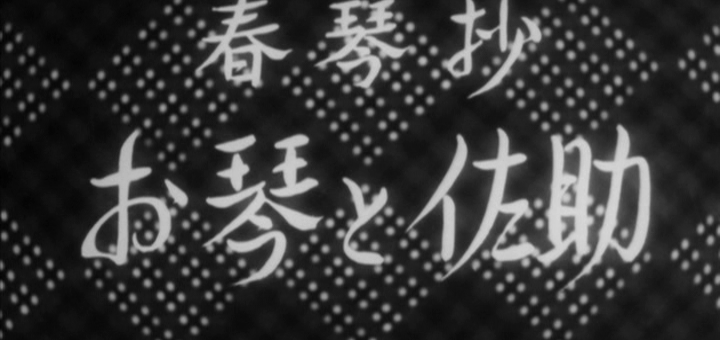
Okoto and Sasuke (春琴抄 お琴と佐助, Yasujiro Shimazu, 1935)

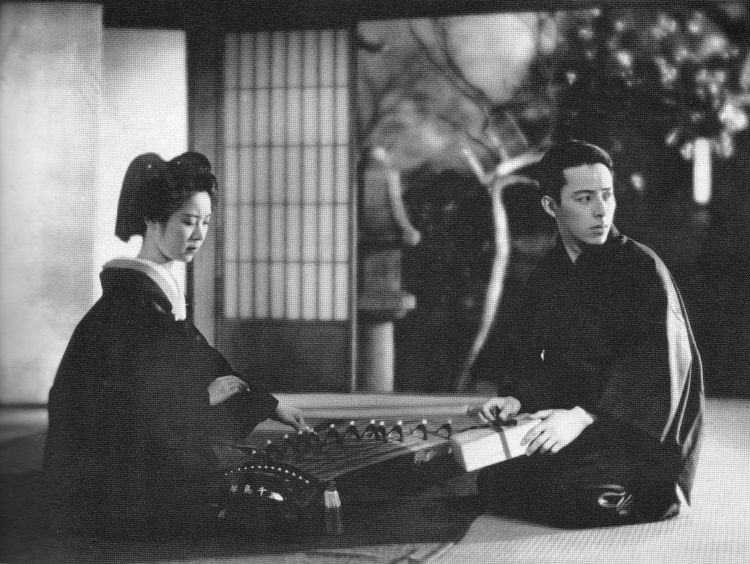
Okoto to SasukeYasujiro Shimazu had been a pioneer of the “shomin-geki” – naturalistic tales of ordinary working people in the contemporary era, but 1935’s Okoto and Sasuke (春琴抄 お琴と佐助, Shunkinsho: Okoto to Sasuke) sees him step back from the modern world in adapting a soon to be classic novella by contemporary novelist Junichiro Tanizaki. Published in 1933 under the title Shunkinsho and set in late Meiji, Okoto and Sasuke is another in the author’s long series of dark erotic dramas which aim to explore the baser elements of the human heart while engaging in a kind of cultural soul searching. The first of many adaptations, Shimazu’s scales back on Tanizaki’s taste for the perverse as well as his wry sense of humour, spinning a tender tale of love which finally finds its home only in the shared darkness of two becoming one in self imposed exile from the visible world.

Okoto (Kinuyo Tanaka) has been blind since she was nine and, though her parents appear to dote on her, has a proud and imperious manner which sees her mistreat those who only seek her friendship. Fearing that, due to her disability, Okoto will never find a suitable husband, the family have decided to let her study the koto and shamisen (traditionally strong areas for the blind) so that she might be able to support herself and have some degree of accomplishment. Sasuke (Kokichi Takada), a young servant at the pharmacy run by Okoto’s father, began escorting Okoto to her classes for no especial reason but as he is one of the few who can cope with Okoto’s moods, and is one of the few Okoto seems to tolerate, he quickly became her personal companion.

Sasuke remains completely devoted to Okoto even when she treats him cruelly. So many areas of their relationship are an inversion of the customs of the time – Okoto is the mistress, while Sasuke is the servant, she is strong while he is weak, she is cruel and he is kind. She has all the power, and he has none but seems to revel in his degradation, obeying each and every one of Okoto’s commands and rarely minding even when she strikes him. Nevertheless, despite her outward contempt for him Okoto is also dependent of Sasuke – not only for the assistance he provides, but for the gentle touch of his hands and his willingness to place himself entirely under her authority in worshipful devotion.

The relationship between the pair is one of (seemingly) chaste sadomasochism in which both reject the “normal” romantic affectations of their time. Despite the obvious class difference, Okoto’s family are secretly hoping Okoto and Sasuke will someday marry – an idea floated with intense seriousness when it is discovered that Okoto has become pregnant though she refuses to name the father of the child, denying that her lover is Sasuke and vowing that she would find it “humiliating” to be married to a mere servant.

There is something, as uncomfortable as it is, which presents Okoto’s pride as a kind of rebellion born of her blindness, a rejection of the world which has rejected her as “imperfect” and which she literally cannot see. Despite her family’s reservations Okoto does acquire a suitor, but he is only interested in her precisely because of her blindness. A playboy, Ritaro has fetishised Okoto’s “difference” and sees her almost as a trophy, captivated by her intense beauty and only spurred on by her haughtiness. A friend of Sasuke’s, by contrast, hearing the rumour of Okoto’s pregnancy, expresses horror at the idea of a “disabled” woman with a child, avowing that society would never stand for such a thing, rejecting and salivating over the salacious rumour at the same time. Okoto will pay a heavy price for her violent rejection of Ritaro’s attempt to reduce her to a mere conquest, ironically allowing him to rob her of something, but eventually leading her towards the destiny which will bind her forever to her devoted servant, Sasuke.

Okoto, having suffered facial disfigurement, comes to realise the true nature of her feelings for Sasuke but cannot bear for him to see her ruined face, and he, dutifully, resolves to keep his eyes closed as if blind. Ultimately Sasuke opts for the traditionally female act of sacrifice in deciding to shift from his own world into that of Okoto. Together they cut themselves off from the outside world, electing to live in a world made for two alone in which none else may enter. Their act is one of intense individualism taken as a pair who have become one in their mutual devotion, rejoicing in a love born of darkness. Shimazu undercuts Tanizaki’s need for discomfort to present the final union of Okoto and Sasuke as the uncomplicated realisation of a love deep and true – concluding with an intertitle rather than succumb to the inherently melodramatic resolution of Tanizaki’s eroguro love story. Nevertheless through the powerful performance of Kinuyo Tanaka as the increasingly conflicted Okoto, Shimazu manages to capture something of the “pure” love of equals who find their place in a changing world only by removing themselves from it.


The Neighbor’s Wife and Mine (マダムと女房, Heinosuke Gosho, 1931)

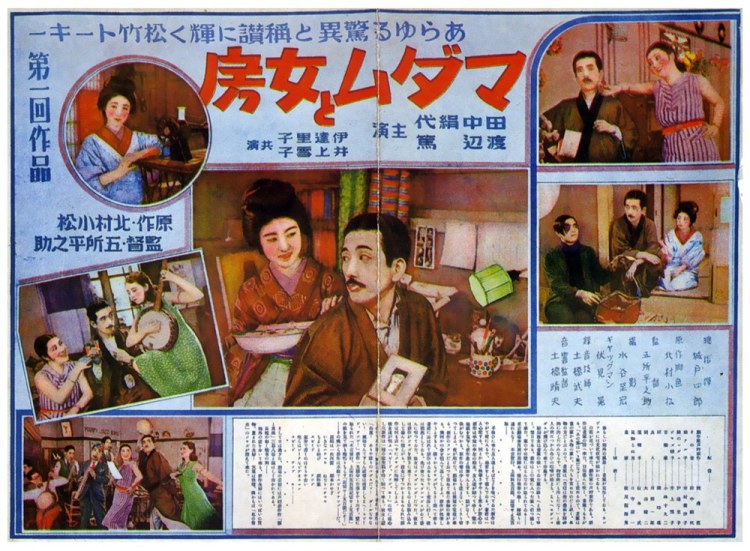
Neighbor's wife and mine flyerThere’s an especial irony in the fact that Japan’s first talkie is essentially all about how annoying sound can be. Directed by Heinosuke Gosho, pioneer of the shomingeki and a longstanding devotee of melancholy comedy, The Neighbor’s Wife and Mine (マダムと女房, Madame to Nyobo) is another in a long line of contemporary farces set in an idealised middle-class world but as much as Gosho goes out of his way to include as much soundplay as humanly possible he never lets the gimmick get the better of him.

Gosho opens with a brief prologue sequence otherwise detached from the main narrative in which down on his luck playwright Shibano (Atsushi Watanabe) gets into an argument with a precious artist busily painting a canvas of the house opposite him and gleefully admiring his own work. The painter likes this spot because of its silent serenity – an atmosphere quickly broken when Shibano struts up, whistling loudly, humming, making conversation. Unfortunately Shibano doesn’t rate the painter’s work and is also non-plussed that he doesn’t know who Shibano, apparently a “famous” playwright, is and doesn’t seem to respect writers as fellow artists anyway. A fight breaks out and all because of some unwanted noise pollution. Eventually the two men end up friends again after bonding in their mutual appreciation of the charms of “madame” (Satoko Date) the woman who lives in the house next to the one Shibano has just decided to rent on a whim with the intention of getting some “peace and quiet” in the countryside to finish his overdue manuscript.

The country is, as it turns out, not as quiet as you’d think. No sooner has Shibano moved in than he’s assailed by noise – mostly from within his own household as he’s a father of two, a little girl of perhaps four or five, and a bawling infant son. He doesn’t help matters by winding up his exhausted wife Kinuyo (Kinuyo Tanaka) by loudly impersonating a distressed cat during the middle of the night but a bigger problem is about to present itself in the form of the Mammy Jazz Band who, led by the woman Shibano was so smitten with after bumping into her during his altercation with the painter, use the house next-door as their rehearsal studio.

The house of Shibano is, apparently, a fairly happy one though long suffering wife and mother Kinuyo has reason enough for exasperation as her husband wastes his time drinking and playing mahjong while the deadline for the manuscript he’s supposed to be writing draws ever closer. In charge of the household finances, Kinuyo is keenly aware the family are low on funds – something presumably not helped by Shibano’s impulsive decision to rent a cottage in the country. He’s left himself a dozen inspirational notes reminding himself that manuscripts don’t write themselves, but still Shibano can’t buckle down. Having come to the country to escape the noise of city life, he finds himself assaulted by a silence differential in dealing first with his noisy children and responsibilities as a father, and then the constant intrusion of unexpected sounds which, in the city, might hardly be noticed against the constant background hum.

Trying everything from plugging his ears to tying a scarf around his head and finally jumping inside a cardboard box, Shibano decides to enlist Kinuyo to tell next-door to keep it down but she, an elegant Japanese wife, would hardly dare to disturb the “peace”. She tells her lazy husband to sort it out himself only to regret her decision when she spots him laughing away with the sophisticated modern woman next-door, drinking in the party atmosphere of her Bohemian home and enjoying a private concert as the “noisy” jazz band rehearse their latest numbers.

Despite his occupation which might imply a little Bohemianism in itself, Shibano is a traditionally minded sort. He may have turned up in swanky hat and pinstripe suit carrying a cane, but in his new home he dresses exclusively in kimono, as does his dutiful wife, who can only trail behind her husband in exasperation offering the occasional barbed comment as her only form of mild resistance. His household demands quietude, but cannot attain it. He is, therefore, naturally led away to the woman next door like a time traveller suddenly given a glimpse of the new and exciting future. The musical repertoire of the Mammy Jazz Band is all about “speed”, they move fast and with no thought to the disturbance they trail through the air around them. They are going somewhere, in contrast to Shibano who has been in a state of inertia for quite sometime.

It is, however, a little sad that it’s “madame” that finally speeds on Shibano rather than his wife and children even if there is nothing improper in their relationship – Madame is not particularly interested in Shibano in anything other than a neighbourly fashion, her people pleasing friendliness and genuine kindness perhaps running in contrast to the conventional depiction of a “modern” woman as Kinuyo later points out in jealousy when she remarks that women like that are all “100% sex delinquents”.

The film’s Japanese title is certainly drawing a contrast between the modern “madame” and the traditionally minded “nyobo” though it comes down on neither side, allowing room for both sorts of women in this rapidly changing society. Shibano maybe a lazy, easily distracted sort of man but he’s knows what’s good for him and when all’s said and done his relationship with his wife is as solid as they come despite their frequent financial woes, childcare spats, and momentary pangs of jealousy or anguish. The family, repaired and in motion once again, finally get their day in the sun enjoying a rare moment of blissful happiness as they break into a chorus of “My Blue Heaven”, positively rupturing the silence with their own joyful voices as they join the “noisy” cavalcade heading towards the exciting “speed era” waiting for them in the future.


Distant Thunder (遠雷, Kichitaro Negishi, 1981)

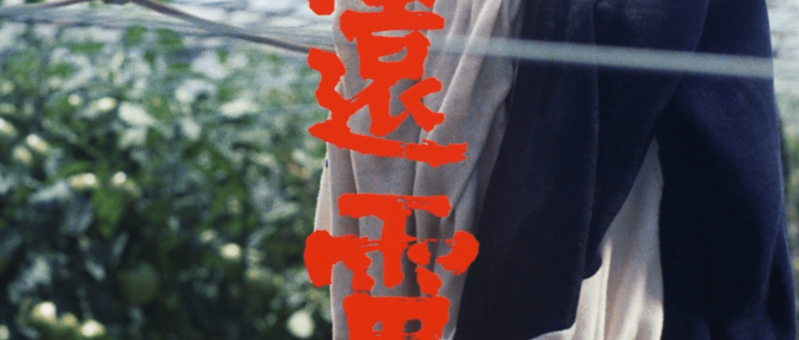
distant thunder dvd coverBy 1981 Japan’s economic recovery was more or less complete and the consumerist future had all but arrived. Based on the novel by Wahei Tatematsu, Distant Thunder (遠雷, Enrai) is the story of impending doom staved off by those clinging fast to the their ancestral traditions even whilst the modern world threatens to engulf them. Kichitaro Negishi already had a long career directing Nikkatsu’s Roman Porno, but made his mainstream debut with this quietly affecting social drama for Art Theatre Guild which relies on the strong performances of its cast to convey the subtitles of youth caught between past and future.

In the contemporary world of 1981, 23-year-old Mitsuo (Toshiyuki Nagashima) is a tomato farmer stubbornly hanging on to his family’s ancestral land which happens to be inconveniently placed in the middle of a modern housing complex. Women from the estate sometimes pop round to ogle Mitsuo under the pretext of buying super fresh tomatoes. Mitsuo is happy for them to enjoy the fruits of his labour, but refuses to accept them as “neighbours” lamenting the death of the village in which he grew up.

It transpires that Mitsuo’s father (Casey Takamine) sold off most of the farmland without consulting the rest of the family and used the proceeds to open a bar with the hostess he ran off with. Mitsuo hasn’t forgiven him for this and continues to work the tomatoes alone while his older brother is married and living a modern salaryman life in the city. At 23 it’s high time Mituso got himself a wife, but a flirtation with a barmaid, Kaede (Rie Yokoyama), who claims to be a divorced single parent proves diverting enough for the time being. Mitsuo knows being a farmer’s wife is no prize, so when his mother comes up with a possible match Mitsuo thinks it’s worth a try even if she’s probably none too pretty.

An old soul in many ways, Mitsuo wants to hang on to his family’s farm despite the constant offers he gets from salesmen at the door who want him to sell. Where once there was a village, now there are high rise apartment blocks. Mitsuo misses the world he grew up in where farmers helped each other out in difficult times and wandered in and out of each other’s houses like one big happy family. Not content with ruining his own, it’s also this wider concept of community as family that Mitsuo’s father has ruined for him in rejecting his traditional responsibilities for the irresponsible pleasures of taking up with a fancy woman and starting again as a bar owner.

Sadly, the bar hostess really does seem to love Mitsuo’s feckless father, perhaps seeing him as her last chance for happiness. Kaede, by contrast, is looking for something far less permanent. She claims to be divorced but is married to a mild-mannered man (Keizo Kanie) with a tattoo poking out of his collar who accepts her need for new conquests but would rather they not become regular arrangements. Kaede whips up more potential destruction when she comes between Mitsuo and his childhood best friend, Koji (Johnny Okura), who also likes her and has been led to believe Kaede’s relationship with Mitsuo was not altogether consensual. Meanwhile, Mitsuo’s blind date went far better than expected and it looks like he’s on course to find a wife in petrol station assistant Ayako (Eri Ishida).

Ayako, like Mitsuo, is a more old fashioned sort though she’s no prude and is of an earthier yet somehow “purer” nature than the comparatively urban Kaede. Mitsuo finds himself pulled in different directions – Ayako and the tomato farm, or the freely given pleasures of Kaede who threatens to burn everything to the ground with her mysterious, self destructive lifestyle. Mitsuo doesn’t want to be like his dad – a philanderer who runs out on his responsibilities and makes a fool of himself in the process, cosying up to local politicians and playing fast and loose with the law, but he’s late to see the danger a woman like Kaede might cause him. His friend, Koji, is not quite so perceptive and naively falls for her charms. Mitsuo knows deep down that his friend has in a sense saved him from making a ruinous life decision and helped him rediscover the happiness of his traditional, simple way of life.

Filming in 4:3, Negishi’s camera is soft and unobtrusive yet pointed, capturing the minor details of the everyday with a poetic beauty. Filled with realistic detail and anchored by strong performances, Distant Thunder is both a picture of innocents battling the inevitable death of their way of life with determination and purity, and a document of changing times in which the confusions of the modern world threaten to destroy those who cannot reconcile themselves to their fated paths.


Short clip from the ending (English subtitles)

Fullmetal Alchemist (鋼の錬金術師, Fumihiko Sori, 2017)

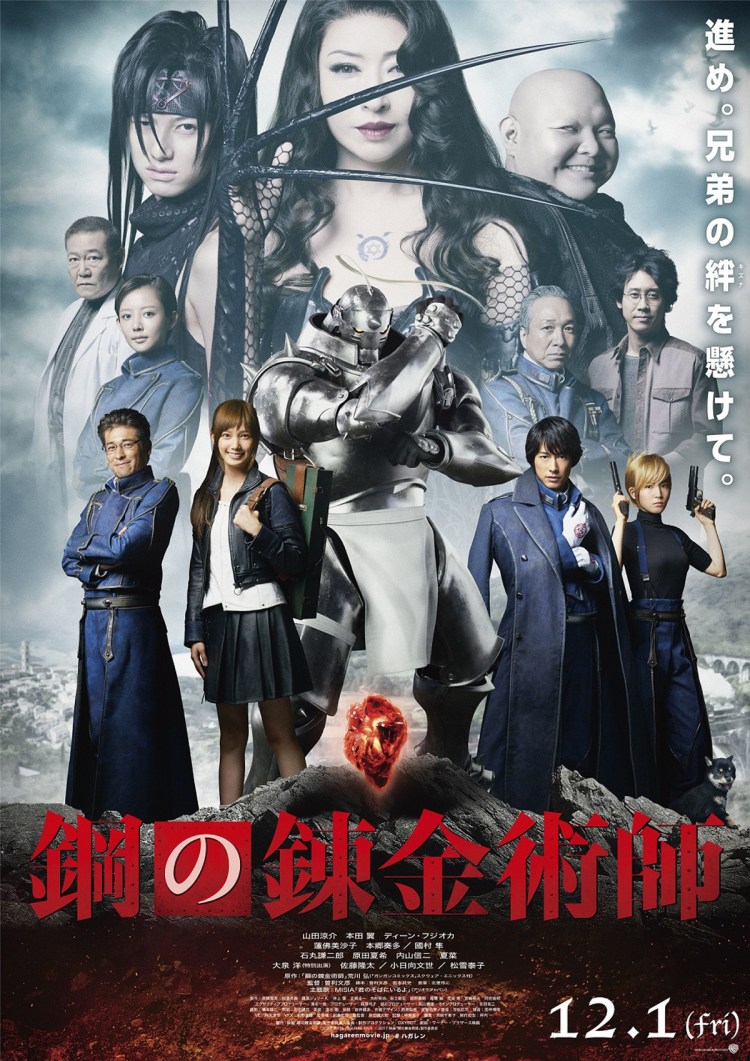
Fullmetal Alchemist posterEvery so often a film comes along which makes you question everything you thought you knew. Fullmetal Alchemist (鋼の錬金術師, Hagane no Renkinjutsushi) is just such as film but less for the philosophical questions fans of the source manga may have been expecting, than for the frankly incomprehensible fact that it exists at all. Produced not by a major studio but by Square Enix – best known as a video game studio but also the publisher of manga magazine Monthly Shonen Gangan in which the series was originally serialised, and effects studio Oxybot Inc., Fullmetal Alchemist is not the big budget extravaganza a franchise of this size might be expected to generate but a cut price blockbuster attempting to pack a much loved, long running saga into just over two hours.

For the uninitiated, the movie begins with the little Elric Brothers – Ed and Al, who live in the countryside with their doting mother while their father is away. When their mother is struck down by a sudden illness and dies, the boys raid their dad’s Alchemy library for clues as to how to bring her back. There is, however, a taboo surrounding human transmutation and when the brothers cast their spell they pay a heavy price – Al loses his entire body though Ed manages to save his soul and bind it to a suit of armour by sacrificing his own right arm.

Many years later, Ed (Ryosuke Yamada) and Al (Atomu Mizuishi) are still looking for the mythical “Philosopher’s Stone” which they believe will allow them to cast another spell and get their fleshy bodies fully restored. This takes them to a small town where they encounter a dodgy priest and their old commander, Captain Roy Mustang (Dean Fujioka), who wants to bring them back into the State Alchemist fold. The priest’s stone turns out to be a fake though his connections to the film’s shady antagonists are all too real, and the brothers are soon faced with another dilemma in their quest to restore all they’ve lost.

Sori shifts away from the frozen Northern European atmosphere of the manga for something sunnier and less austere, shooting in Italy’s Volterra with its narrow medieval streets and iconic Tuscan red roofs. He is, however, working on a budget and it shows as his cast are costumed at cosplay level with awkward blond wigs attempting to recreate the manga’s European aesthetics. Al, rendered entirely (and expensively) in CGI, is deliberately kept off screen while the quality of the effects often leaves much to be desired.

Al’s frequent absence is a major problem seeing as the series’ major theme is brotherhood and Ed’s tremendous sense of guilt over his brother’s condition coupled with his recklessness in his need to put things right is only explained in a piece of bald exposition following a fight between the pair after Al’s mind has been corrupted by a mad scientist who implied that he may not really be “real” after all. While Al’s false memory paranoia may be among the more interesting issues the film attempts to raise, it’s quickly pushed into the background, eclipsed by the ongoing conspiracy narrative which places the Elric Brothers in a difficult position regarding their need to get their body parts back. 

A symptom of the attempt to condense such a much loved and well known manga into a two hour movie, there is rather a lot of plot going on and numerous side characters on hand to enact it. Though fans of the original manga may be pleased to see their favourite characters have made it into the movie, they maybe less pleased about how one note they often are or the various ways their personalities have needed to shift in order to fit into the new narrative arcs the film employs. Aside from the young and pretty cast, Fullmetal Alchemist also finds room for a host of veteran talent from the ubiquitous Jun Kunimura in a small role to Yo Oizumi turning villainous and Fumiyo Kohinata at his most Machiavellian.

Extremely silly, poorly put together and burdened with some very unfortunate wigs, the Fullmetal Alchemist live action adaptation is as much of a misfire as it’s possible to be but viewers hoping for a continuation to the tale would do well to stay tuned for a post-credits sting strongly hinting at a part two.


Streaming worldwide on Netflix.

Original trailer (English subtitles)

Ambiguous Places (うろんなところ, Akira Ikeda, 2017)

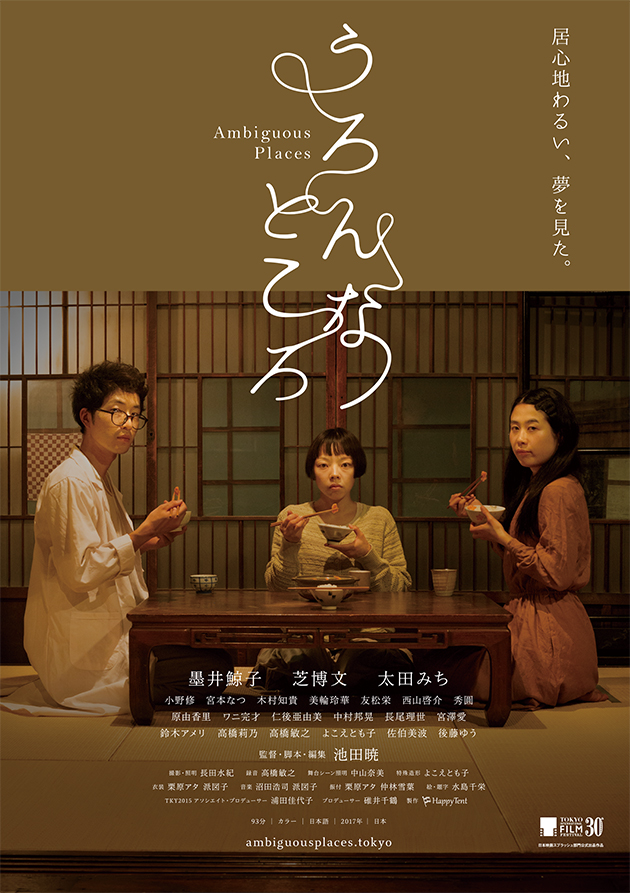
Ambiguous places poster

The world is quite a strange place at the best of times, but for a small collection of people living in between some Ambiguous Places (うろんなところ, Uronna Tokoro) everything seems pretty much normal. Akira Ikeda whose Anatomy of a Paperclip won a Tiger Award at International Film Festival Rotterdam, returns with another surreal tale inspired by the land of dreams. 

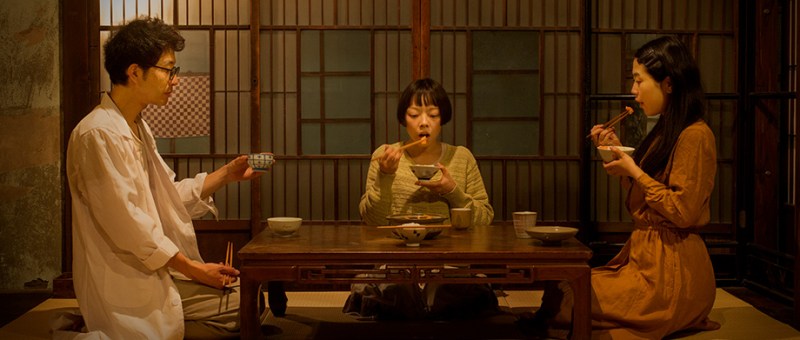
Konoko (lit. “this girl”) washes up on a beach trapped in a net and tries to sing but the other people on the beach tell her to stop, because she’s rubbish. Konoko’s other problem is that she’s got a bug stuck in her hair and will need to find a barber to take it out. Travelling with a man whom a strange lady looking for “nuts” on a beach assures her is her dad, Konoko wanders off to look for a hairdresser only to sell her “dad” to a couple of near silent dango makers and then discover that the only barber’s in town is actually a soba shop (which serves udon) and she needs to go the pharmacy only the pharmacist is out at the moment because he had to get some gloves made in celebration of his wife’s pregnancy…

Ambiguous Places is actually a cyclical collection of three stories running more or less concurrently in which the same collection of strange people reappear in different stages of their own adventures. Konoko’s “Meeting Nyoraga” segues into the pharmacist’s odyssey of glove making and forced marriage “Celebrate with Gloves”, and that in turn leads into “Get My Hair Washed” which pops out of the pharmacist’s dream about a girl with foamy hair and features a quest to rid one’s home of scary blue ghosts only to end with everyone sitting down and having dinner together instead.

To begin with everything seems very strange but like the best of dreams it eventually starts to make sense and though there is more than a little violence and hostility, broadly everyone seems to accept things just the way they are. Still, from our point of view this is all terribly surreal. At one point the pharmacist, who has just spent ages having gloves knitted around his hands in a bizarre ritual encounters the man who will later own the dango shop just as he’s carting his wife around covered by a sheet and sitting in a wheel barrow filled with vegetables. The man explains that this is his people’s way of celebrating. The pharmacist looks him dead in the eye and remarks “strange custom”. Well, quite. Mozart’s The Magic Flute also plays a large role in the proceedings in somewhat mangled German with bits of Japanese creeping in until a young lady is forced to have a go after criticising Konoko’s singing and finds she is able to sing the Queen of the Night aria complete with coloratura almost faultlessly.

The atmosphere is indeed dreamlike as the various tales weave in and out of each other with a kind of surreal logic that has its own internal consistency even if it’s quite hard to pin down. Absurd in the extreme, Ikeda opts for deadpan delivery that adds to the bizarre humour and ethereal quality of the strange “ambiguous places” which seem to exist in this odd little seaside town. Yet also like dreams the deeper meaning (if there is any) is hard to discern. Nevertheless, even if it is all random and essentially meaningless, Ambiguous Places is unexpectedly warm and filled with enough zany humour to keep things ticking along even when wondering if one needs to be afraid of the postman or if Nyoraga is really as dangerous as they say…


Streamed via Festival Scope as part of their International Film Festival Rotterdam tie-up.

Original trailer (English subtitles)

Born Under Crossed Stars (悪太郎伝 悪い星の下でも, Seijun Suzuki, 1965)

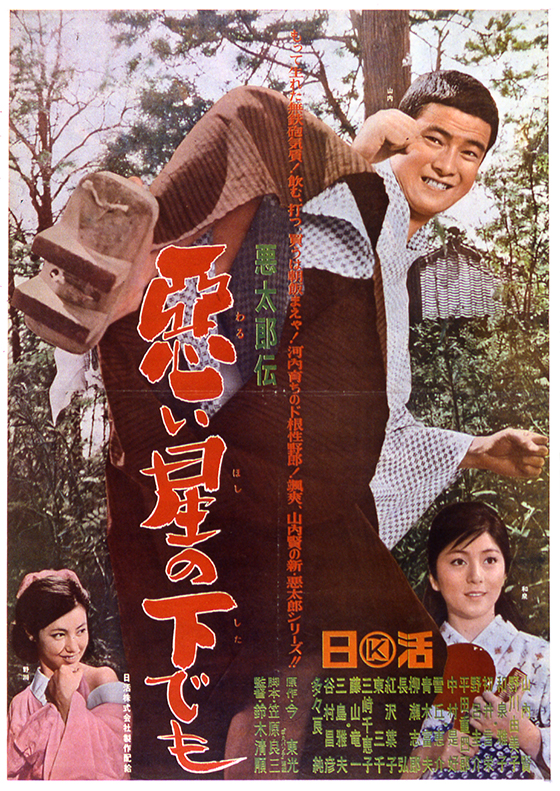
Born Under Crossed Stars posterFollowing his 1963 breakthrough, The Incorrigible, Seijun Suzuki returns to the work of Toko Kon for another tale of rural adolescent confusion in Born Under Crossed Stars (悪太郎伝 悪い星の下でも, Akutaro-den: Warui Hoshi no Shita demo). The Japanese title ties the film more closely to the earlier Kon adaptation by adding the preface “Stories of Bastards”, and once again stars Ken Yamauchi and Masako Izumi in leading roles though this time the setting is early Showa, swapping the promise and openness of Taisho for the rapidly closing doors of militarism. Much more obviously comedic than The Incorrigible, Born Under Crossed Stars is another anarchic coming of age tale in which an “incorrigible” youngster learns to find himself but is neatly undercut by the times in which he lives, his final triumph both a victory and a symbol of incoming tragedy.

Farmboy Jukichi (Ken Yamauchi) dreams of a way out of his lowly Osakan roots by getting into a prestigious local school, though his drunken father hardly sees the point of education and would prefer his son go out and earn some money. Jukichi is earning quite a bit working as a milkman for a local “cowboy” dairy farmer who’s recently returned from America but his sights are firmly set on university and a move into the city. Meanwhile, he experiences some personal turbulence thanks to his old friend, Yoshio (Jushiro Hirata). Yoshio gets himself into trouble with the Public Morals committee at school when he’s spotted out with a young lady – something which is against school regulations, but that’s not why he was stopped. Another boy, Oka (Keisuke Noro), wrote a letter to the girl Yoshio was with (who happens to be his cousin) but was rejected. Oka is abusing his position for personal point scoring. Jukichi can’t let it go and takes Oka to task, but his actions have serious repercussions when the humiliated Oka suddenly quits the school altogether.

Jukichi thinks Oka’s actions are very “manly”. Manliness is certainly something important to the boys at the school which has a noticeably militarist song along with various rituals involving fire and taiko drums, not to mention the shiny cap badges and weapons drills they seem to perform. As in Fighting Elegy released the following year, “manliness” precludes fraternising with women – sex has been placed off limits as the ultimate frivolity and a kind of theft of the zest of life which should be going towards more “productive” causes. Jukichi however, like The Incorrigible’s Konno has a taste for the ladies even if he reacts somewhat harshly to discovering Yoshio in flagrante with a girl in a park which turns out to be some kind of mass makeout spot behind a shrine. Uncovering the hypocrisy in his friend sets the two at odds and eventually turns them into enemies with disastrous consequences.     

Jukichi finds himself caught between two lovers – the elegant, shy sister of Yoshio, Suzuko (Masako Izumi), and the liberated, provocative Taneko (Yumiko Nogawa). Though resistant, Jukichi eventually succumbs to seduction and forever ruins his dreams in the process. Overcome with youthful frustrations, he channels his need for justice in a dangerous and destructive direction when he decides to start something with a bunch of local gangsters in a misguided attempt to avenge a wrong done to the father that has never supported him. Later seeing off an attack from the gangsters (tipped off by a remorseful Yoshio) Jukichi seals his fate, gives up on the “decent” life promised by a place at the prestigious middle school and commits himself to wandering, taking to the sea as one of many young men raised on nationalist myths finding their place in the military.

Another programme picture, Born Under Crossed Stars provides ample opportunity for Suzuki to embrace his taste for the strange – notably in his milk patter opening with its literal baby monkey, but also finding room for beetles on strings, “poisoned” manju buns, and illusionary visions. Sticking mainly to static camera, Suzuki nevertheless showcases his taste for unusual composition and editing, making use of rapid focus pulls, side wipes and dissolves to convey the passage of time. He closes with a voice over mimicking the one at the end of The Incorrigible only this time with a much more defiant (but in hindsight only tragic) declaration that Jukichi will continue living under his self made philosophy, vowing to do what ever it takes to survive and scale any wall which places itself in his path towards the achievement of his freedom.


Born Under Crossed Stars is the fifth of five films included in Arrow’s Seijun Suzuki: The Early Years. Vol. 1 Seijun Rising: The Youth Movies box set.

Original trailer (English Subtitles)

The Incorrigible (悪太郎, AKA The Bastard, Seijun Suzuki, 1963)

(C) Nikkatsu 1963

(C) Nikkatsu 1963

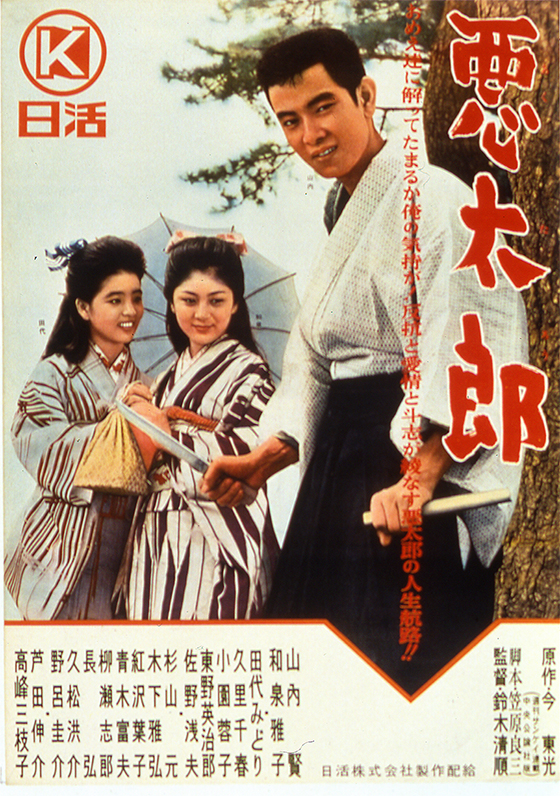
Seijun Suzuki often credits 1963’s Youth of the Beast as the real turning point in his directorial career, believing that it marked the first time he was ever really able to indulge his taste for the surreal to the extent that he truly wanted. The Incorrigible (悪太郎, Akutato, AKA Bastard), completed directly after Youth of the Beast, is another turning point of a kind in that it marks Suzuki’s first collaboration with set designer Takeo Kimura who would accompany him through his ‘60s masterpieces contributing to the uniquely theatrical aesthetic which came to be the director’s trademark.

Inspired by an autobiographical novel by Toko Kon, The Incorrigible of the title, Togo Konno (Ken Yamauchi), is a young man coming of age in the early Taisho era. He’s of noble birth and enjoys both wealth and privilege – something of which he is well aware, but is also of a rebellious, individualist character believing himself above the normal rules of civil society. Expelled from his posh Kyoto school after getting into a dalliance with a teacher’s daughter (she’s been sent off to a convent), Konno is then abruptly abandoned by his mother who has tricked him into travelling to a remote rural town where a friend of a family friend has promised to reform him at his military middle school. Konno thinks he’s too clever for this, he makes a point of deliberately failing his entrance exam in the mistaken belief that failing to get in would make him free to travel to Tokyo and start life on his own. He’s wrong, and failure to pass the exam would only entail being held back a year. Konno capitulates and agrees to start his new life as one among many in a backward little village in Southern Japan.

Though set in the Taisho era, Konno’s youth seems to suffer from the same problems that would plague the young men of 30 years later. His school is proto-militarist and hot on discipline. The boys are trained to be strong rather than smart and have inherited all the petty prejudices of their parents which they hone to the point of weaponry. The “Public Morals” department operates almost like a mini military police for students – making routine inspections of students’ home lives and keeping an eye out for “illicit” activities round and about town. Konno sees himself as grown man with a rebellious heart – he smokes openly, keeps a picture of the girl who got him into this mess in his room, and tells bawdy, probably made up stories about how he lost his virginity to a geisha (for free). He will not bow to the morality police, or any authority but his own.

Authority is something Konno seems to be good at. Picked on for his continuing preference for Japanese dress, Konno neatly deflects the attentions of the Public Morals division and comes out on top. When they raid his room and complain about his novel reading habit, he shouts them all down and gets them to sit on the floor while he “educates” them about foreign literature. Militarism has not yet arrived, but anti-intellectualism is already on the up and up. Konno’s love of literature is one of his many “deficient” qualities as teachers and students alike bemoan his “frivolous” hobbies, seeing his sensitivity and disregard for the commonly accepted ideals as signs of his unwelcome “unmanliness”.

Konno’s other big problem is, as might be expected, girls. Having been in town only moments Konno takes a fancy to doctor’s daughter Emiko (Masako Izumi) – his desire is only further inflamed after catching sight of her in the book shop and realising she too has bought a copy of Strindberg’s Red Room. She doesn’t care for Strindberg’s misanthropy, but a bond is quickly forged between the two sensitive souls trapped in this “traditional” small town where feelings are forbidden and youth constrained by social stricture.

It is, however, a love doomed to fail. The majority of Suzuki’s early work for Nikkatsu had been contemporary youth dramas, yet the artfully composed black and white photography of the Taisho setting is a melancholic affair which rejects both the rage of the modern action dramas and Suzuki’s trademark detached irony. Using frequent dissolves, The Incorrigible conjures a strong air of nostalgia and regret, a sad love story without end. Yet at its conclusion it makes sure to inject a note of uplifting inspiration as our hero wanders off into a fog of confusion, filled with a passion for pursuing truth and vowing to live without losing hope.


The Incorrigible is the fourth of five films included in Arrow’s Seijun Suzuki: The Early Years. Vol. 1 Seijun Rising: The Youth Movies box set.

Original trailer (English subtitles)

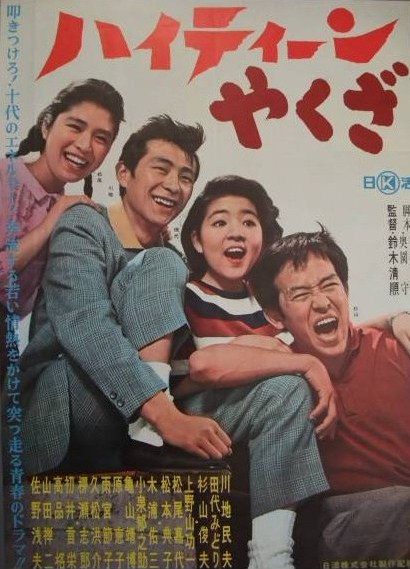
Teenage Yakuza (ハイティーンやくざ, Seijun Suzuki, 1962)

teen age yakuza poster jpgNikkatsu’s stock in youthful angst could have a nasty edge, even in their early days, but even so the Japanese teen movie is often a charming affair in which plucky youngsters defy the perils of their time from a position of relative safety. Rebellious punks die in Nikkatsu Action, but in the poppier coming of age world, innocence wins out as the angry young man finds a way to repurpose his rage for the good of society. Though Seijun Suzuki is generally associated with his “incomprehensible” work for the studio which eventually fired him in 1968, his trademark sense of absurd irony is a perfect fit for the essentially innocent world of the small town teen in ‘60s Japan.

High schooler Jiro (Tamio Kawaji) lives in a fatherless family with a grown-up older sister (Noriko Matsumoto) thinking about marriage and a mother (Kotoe Hatsui) about to open a trendy coffee shop/jazz parlour. He’s best friends with Yoshio (Hajime Sugiyama) – son of the carpenter working on the cafe, and is a typical scatterbrained teenage boy who enjoys fighting and has a “part-time job” taking illicit bets at the bicycle races. His problems start when he wins big on a bet but is hassled by a couple of punks dressed up like cowboys who deprive him of his winnings. Getting revenge, Jiro and Yoshio end up in a fight with the local gangsters in which Yoshio is stabbed in the leg and crippled for life and to make matters worse, his dad is killed in a traffic accident rushing to the scene of the crime. Filled with remorse, Yoshio turns to the dark side and falls out with Jiro while the petty punks start upping the ante and terrorising the town. The daughter of a local restaurant owner, Kazuko (Midori Tashiro), pulls Jiro in to frighten the punks off and convinces her dad to pay him for his time. Soon enough the other store owners are doing the same and Jiro is earning a pretty penny but what he thinks of as public service the store owners are beginning to think of as extortion – Jiro has become the yakuza he feared.

Like many a Nikkatsu hero, Jiro is a good kid misunderstood. He thought he was the lone voice standing up to the yakuza, the only sheriff in town and a shining beacon of justice. He didn’t see danger in taking the money because he genuinely thought it was a gift given freely out of gratitude, and perhaps to begin with it was. Danger rears its head when his sister’s fiancé suggests that Jiro’s illicit bodyguard business might cause problems for him at work and thereby endanger their marriage. When his mum talks sense into him, Jiro decides to try stopping the payments but it’s already too late. Thinking Jiro is after more money the store owners are scared, assuming Jiro will either remove his protection or turn on them as the yakuza they now believe him to be.

This sudden reversal of his self perception deeply wounds Jiro. He believed he was acting in the best interests of everyone and now has to accept he was corrupted by greed and status. He was acting like a yakuza, if accidentally, and has to accept his complicity in his present predicament. Rather than lashing out in rage and becoming the thing he’s been branded, Jiro (eventually) swings the opposite way, commits to ridding the town of yakuza but accepts that delinquency is not his best weapon.

Teenage Yakuza (ハイティーンやくざ, High Teen Yakuza) is no lone wolf story – lone wolves die at the end of Nikkatsu pictures, but Jiro and his ilk need to live to restore the peacefully innocent atmosphere that was broken by the random cowboys at the beginning. Jiro realises that saving the town is not his responsibility – at least not his alone, and he cannot do it all by himself. If the town is to be saved, it has to be because everyone chose to save it – Jiro’s job is not to fight the “yakuza”, but to make everyone else understand that the “yakuza”’s power is illusionary. Leading by example, he gradually wins them over (even the petty delinquents his original exploits helped to corrupt), ousting the growing influence of the shady gangsters through simple resistance.

A shorter, more disposable effort, Teenage Yakuza perhaps allows Suzuki wider scope for experimentation or at least allows him to express his trademark irony in a more direct way than your average programmer would. Filled with the youthful energy of the frequently echoed pop song, the twisters in the jazz bars, and the soba noodle delinquent with her cheerful ukulele, this is less youth on fire than youth breezing through. Teenage Yakuza neatly subverts the ideology of Nikkatsu’s action line, refusing the bad end for the angry lone wolf and gleefully restoring order with a hippyish plea for the solidarity of goodness. 


Teenage Yakuza is the third of five films included in Arrow’s Seijun Suzuki: The Early Years. Vol. 1 Seijun Rising: The Youth Movies box set.

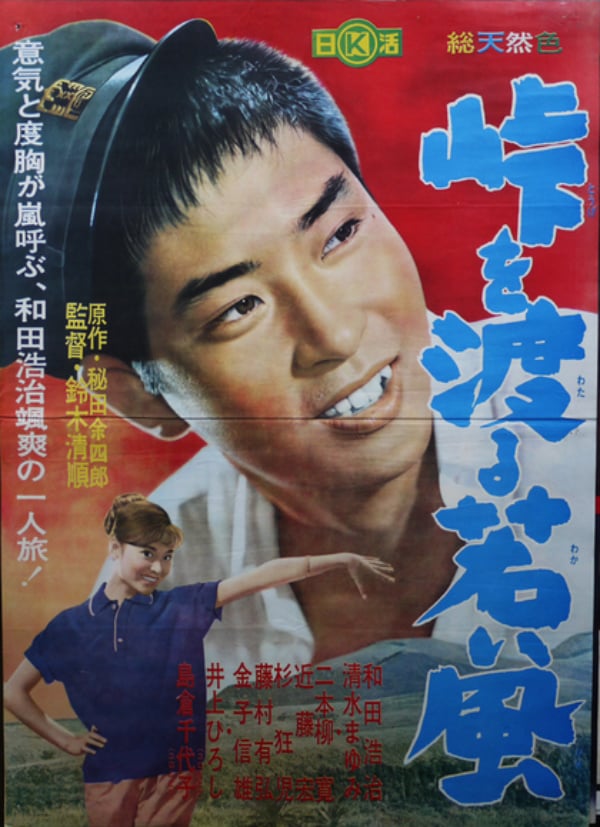
The Wind-of-Youth Group Crosses the Mountain Pass (峠を渡る若い風, Seijun Suzuki, 1961)

The Wind-of-Youth Group Crosses the Mountain Pass posterSeijun Suzuki made his first colour film in 1960 – Fighting Delinquents starred young matinee idol Koji Wada as a noble hearted construction worker with a temper who suddenly learns that he is the heir to an aristocratic fortune. Suzuki would make another two youth dramas starring Wada before getting to 1961’s The Wind-of-Youth Group Crosses the Mountain Pass (峠を渡る若い風, Toge wo Wataru Wakai Kaze, AKA Breeze on the Ridge) – this slice of colourful anarchy is a world away from Nikkatsu’s usual action fare though it does make space for the odd pop song or two.

Naive and cheerful university student Shintaro (Koji Wada) loves to travel and has taken off to wander around alone during the summer break. Getting thrown off a regular city bus for not having the cash for a ticket (his request to defer payment is not looked on kindly), Shintaro catches a lift with a group of travelling performers heading into the summer festival in the next town. Once there Shintaro showcases his lack of forethought once again when he happily sets down to start selling some of the “merchandise” he was given as a salary when the last place he worked at went bust. Not having realised that one generally needs a permit to sell goods in a market, Shintaro gets into an argument about the evils of monopolies and freedom verses regulation with the guy on the next stand all of which brings him to the attention of the yakuza. Luckily for Shintaro, he’s run into the nice kind of yakuza who just think he’s funny and invite him to travel on with them for a bit. Being so essentially good hearted and innocent, Shintaro agrees without thinking about all the reasons travelling around with a bunch of shady yakuza might not be a good idea.

Connecting with both the yakuza and the travelling players, Shintaro becomes involved in a number of interconnected crises – the biggest being the fate of the performers when a local gangster type swipes their headline act. The head of the troupe, Kinyo Imai (Shin Morikawa), is a traditional magician who performs in exaggerated Chinese dress complete with Fu Manchu moustache, but it doesn’t really matter how good he is, the rural audience is only here for the strip show. No stripper means no bookings which Kinyo knew already but it’s still a huge blow to his self esteem to realise that his magic doesn’t do the business anymore, especially as he’d always been conflicted about the strippers anyway.

Shintaro is one of Nikkatsu’s wandering heroes but unlike most he’s a cheerful soul who wanders out of a sense of curiosity and adventure rather than a need to escape something or someone at home. He likes meeting new people, even if the relationships are transitory and necessarily shallow, and treats everyone he meets with kindness and an open mind. In return he meets only kind and open people – even the yakuza are a generally decent sort who treat him like a new friend and can be relied upon to come to his aid if called. The only note of sourness arrives in the form of shady gangster Akita (Hiroshi Kondo) who pinches the troupe’s stripper, and their sometime patron who makes an indecent proposal to Kinyo as a kind of bet to decide whether he continues to fund their moribund performing career.

This being a regular program picture there’s not a lot of scope for experimentation but as it’s also a slightly odd entry to the Nikkatsu catalogue Suzuki does have the freedom to spice things up in his own particular way. Making the best use of colour film, Suzuki has a ball capturing Japan’s unique summer festival culture with its giant floats and cheerful market atmosphere. Wandering around the festival in a lengthy POV shot manages to exoticise something which would be quite ordinary to many viewers (at least those not born in large cities) but Suzuki’s other innovations are mostly relegated to one extremely interesting sequence in which Shintaro has a paint fight with yakuza he’s fallen out with (don’t worry, they both end up laughing like school boys). Every time Shintaro gets hit with paint, the entire screen tints to match neatly intensifying the effect and marking an early example of Suzuki’s love of colour play. Warm and goodnatured, The Wind-of-Youth Group Crosses the Mountain Pass is a gentle tale of youth finding its path but also one in which Suzuki takes advantage of the travelling motif to break from the regular programming and present an anarchic carnivale of music and song.


The Wind-of-Youth Group Crosses the Mountain Pass is the second of five films included in Arrow’s Seijun Suzuki: The Early Years. Vol. 1 Seijun Rising: The Youth Movies box set.

Original trailer (English subtitles)