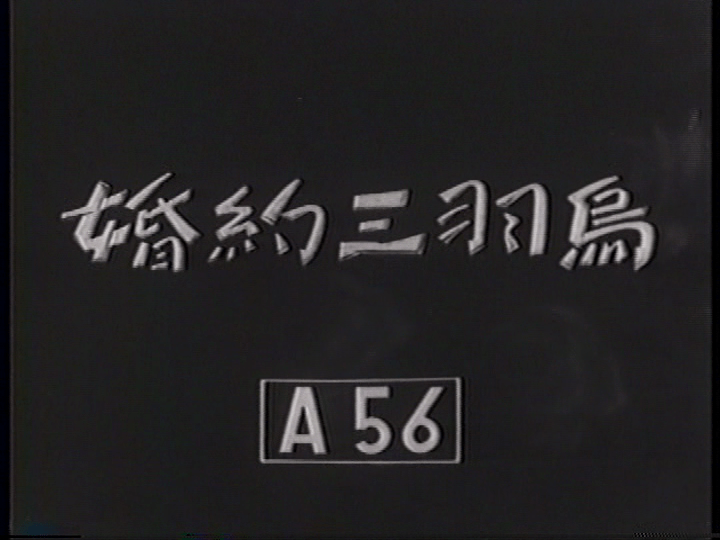
The Trio’s Engagements (婚約三羽烏, Yasujiro Shimazu, 1937)

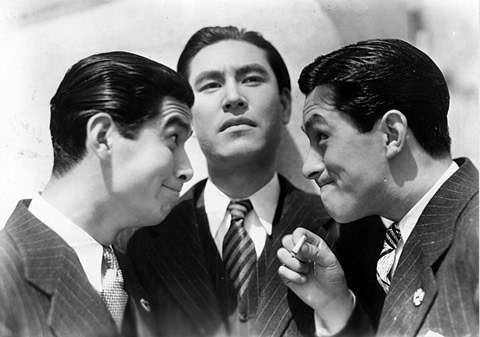
vlcsnap-2017-09-08-02h54m10s546Yasujiro Shimazu may not be as well known as some of his contemporaries such as the similarly named Yasujiro Ozu and Hiroshi Shimizu, but during in his brief yet prolific career which was cut short by his early death just before the end of the war, Shimazu became the father of one of the most prominent genres in Japanese cinema –  the “shomingeki”, which focussed on the lives ordinary lower middle-class people. Shimazu’s early films were noted for their unusual naturalism but 1937’s The Trio’s Engagements (婚約三羽烏, Konyaku Sanbagarasu) is pure Hollywood in its screwball tale of three silly young men and their respective romantic difficulties which are sorted out with the amusing kind of neatness you can only find in a 1930s cinematic farce.

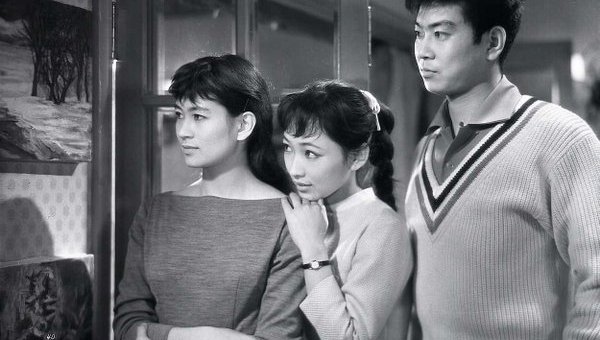
Shuji Kamura (Shuji Sano) has been looking for a job in Japan’s depression hit Tokyo for some time and his long suffering girlfriend, Junko (Kuniko Miyake), has finally gotten fed up with his listlessness and decided it might be better if she left him on his own for a while to sort himself out. Slightly panicked, Shuji heads off to see about a job at a department store specialising in rayon fabrics. Undergoing a rather odd interview, he meets two other men in the same position – well to do Ken Taniyama (Ken Uehara), and down on his luck chancer Shin Miki (Shin Saburi). Luckily all three are employed that day and start working in the store but trouble brews when they each fall for the charms of the boss’ daughter, Reiko (Mieko Takamine).

Despite the contemporary setting and the difficulty of finding work for even educated young men providing a starting point for the drama, Shimazu creates a truly “modern” world full of neon lights and Westernised fashions. The trio work in a department store which sells rayon – a cheap substitute for silk being sold as the latest sophisticated import from overseas, and the store itself is designed in a modernist, art deco style which wouldn’t look out of place in any Hollywood film of the same period. Likewise, though the store is largely staffed by men catering to a largely female clientele, it maintains a sophisticated atmosphere with staff members expected to provide solicitous care and attention to each and every customer.

The guys do this with varying degrees of commitment as Shin and Ken pull faces at each other across the floor and Shuji wastes time on the roof. Shimazu packs in as many quick fire gags as possible beginning the the bizarre job interviews in which Shuji ends up doing some very in-depth role play while Shin expounds on the virtues of rayon as if he were some kind of fabrics genius. Shin Miki is your typical chancer, turning up to his job interview with a thick beard which he later shaves making him all but unrecognisable, and even cheating Ken out of a few coins he’s been using to show off his magic tricks before bamboozling his way into Shuji’s flat.

The central, slapstick conceit is that each of the guys is about to jettison their previous partners for a false infatuation with the beautiful Reiko. Shuji is mostly on the rebound from Junko who may or may not come back to see if he’s sorted himself out, while Ken is uncertain about an arranged marriage, and Shin has a secret country bumpkin girlfriend he doesn’t want anyone to know about. Their respective crushes nearly spell the end for their friendship but then Reiko has her own ideas about marriage which don’t involve shop boys or a future in the rayon business. Eventually the guys realise they’ve all been a little silly and run back into the arms of the women they almost threw over, finding happiness at last in their otherwise ordinary choices.

Shimazu makes brief use of location shoots as Shin and Reiko walk along the harbour but mostly sticks to stage sets including the noticeably fake cityscape backdrop on the shop’s roof. The major draw is the “trio” at the centre which includes some of Shochiku’s most promising young leading men who would all go on to become huge stars including 30s matinee idol Ken Uehara, Shuji Sano, and Shin Saburi. Light and filled with silly, studenty humour The Trio’s Engagements is a deliberately fluffy piece designed to blow the blues away in increasingly difficult times, but even if somewhat lacking in substance it does provide a window onto an idealised 1930s world of Westernised flappers, cheap synthetic products, and frivolous romance.

Lost Chapter of Snow: Passion (雪の断章 情熱, Shinji Somai, 1985)

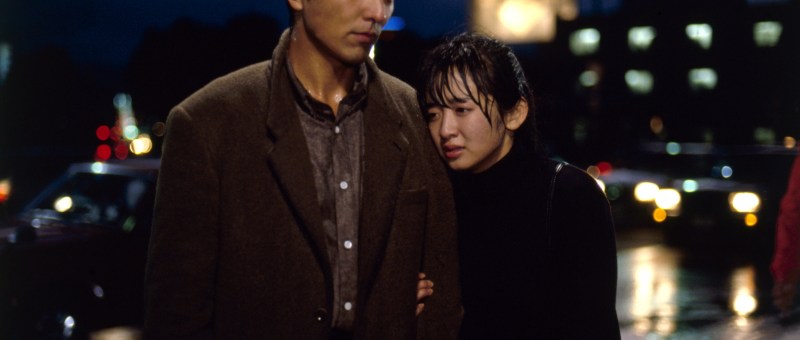
Lost-Chapter-of-Snow-Passion dvd coverShinji Somai’s work is most closely identified with depictions of contemporary young people who meet their approaching adulthood with an almost nostalgic melancholy but in Lost Chapter of Snow: Passion (雪の断章 情熱, Yuki no Dansho: Jonetsu), he takes things one step further as his orphaned heroine moves through dependence to independence and finally assumes her own identity. Based on a novel by Marumi Sasaki, Lost Chapter also fits neatly into the idol movie subgenre, starring the then popular singer and actress Yuki Saito who sings frequently throughout the film and provides the end titles theme Jonetsu (Passion).

As the film opens, seven year old orphan Iori (Mami Nakazato) has been adopted by the wealthy but cruel Naba family who regard her as a slave, to be beaten, humiliated and pressed into service. One day, an employee of Naba’s, Yuichi (Takaaki Enoki), visits and witnesses Iori’s cruel treatment at the hands of oldest sister Sachiko (Kyoko Fujimoto), immediately taking her home to live with him. The situation is difficult, especially as Iori’s past has led her to be wary of new connections, and her sudden arrival has also placed a strain on Yuichi’s engagement to a girl still living in Tokyo far away from snowy Sapporo. Ten years pass and Iori (Yuki Saito) has become a happy, healthy high school girl but the resurfacing of the Naba sisters in her life is to have profound consequences when one of them is murdered and Iori finds herself regarded as a prime suspect.

Embracing its almost Dickensian roots, Lost Chapter’s most obvious theme is the place, or displacement, of the orphaned within Japanese society which places the family above all else. Iori’s origins are never mentioned beyond her early life in an orphanage, but even when Yuichi brings her home the first words the housekeeper offers are that a discarded child like Iori maybe trouble, assuming that she is the result of a “loose woman’s” weakness and irresponsibility. The Nabas, who are a thoroughly unpleasant bunch ruled over by older sister Sachiko, have adopted her despite being an already large family but raising a lonely child in love was not their aim so much as getting a kitchen maid they wouldn’t have to pay. Iori is sent out on pointless errands through the snow and freezing air only to fear she will be beaten for having drunk the juice she was sent to buy on Sachiko’s behalf. This fate is not unique to Iori as she discovers when Daisuke (Kiminori Sera), a friend of Yuichi’s who has become like a second father to her, reveals his orphan past as a poor relation sheltered by family members but not quite embraced by them.

Iori’s poor treatment at the Naba’s is offered as a possible motive for the murder of Hiroko (Mai Okamoto) – younger sister to Sachiko and a student in the same class as Iori. Hiroko is fairly depressed and a flighty girl, still cruel and eager to show off in front of her former step-sister with a lengthy dance sequence offered in front of the hottest boys at school. When she dies suddenly, all evidence points to a cup of coffee Iori tried to take her in kindness but even if it wasn’t Iori who plotted to kill her, Hiroko’s death is still firmly linked to her family’s cruel superiority.

The strain of the investigation plays on Iori’s mind, forcing her into a deeper consideration of her place within Yuichi’s household especially as she’ll soon be approaching the crossroads of adulthood and will need to decide whether to go on to university or leave Yuichi’s house to be independent. In the housekeeper’s mind, staying at “home” is not an option once she could, theoretically, support herself but Yuichi and Daisuke may feel quite differently about this damaged little girl they once took in and are still in the process to turning into a fine young woman. Yuichi’s housekeeper has a choice metaphor regarding Yuichi’s intentions in rescuing Iori – pointing to a withered flower, she suggests that Iori was a thirsty seed that Yuichi has been patiently watering in order to see the flowers bloom, but this way of viewing the situation places a further wedge between Iori and Yuichi who is still seeing his fiancée in Tokyo while Iori’s feelings about the father figure who raised her but is also still a handsome, kind, and youngish man have begun to become confused.

Falling into shojo romance territory, Lost Chapter does indeed become a slightly uncomfortable romantic tale in which a young woman falls in love with her “father” and he with her though, as they aren’t blood related, it can still be depicted as sweet and innocent rather than a tale of long term grooming and inappropriate power structures. Yuichi, though obviously a kind and socially minded young man, is nevertheless as “irresponsible” as he’s branded in his neglect of his longterm fiancée (who later makes an embarrassing first visit in nine years to Yuichi’s home to ask Iori to back off and finally declare herself grown up so she and Yuichi can marry), and later positing of Iori as some kind of pet project in his determination to have her graduate university – a feather in his cap rather than a stepping stone to a middle-class life for his precious daughter.

Known for his long, roaming, handheld takes Somai opens with a 14 minute seemingly unbroken, dreamlike sequence recounting Iori’s life with the Nabas and her eventual rescue. Somai’s camera pans around a series of snow trenches, placing a phone call from Tokyo right inside the icy space alongside a hidden violin player scoring the action. Shot with the random, etherial quality of memory mixed with dream, this first sequence gives way to a more conventional main body even if Somai maintains his preference for long takes filled with surprising pans and unexpected entrances into the frame. There are great moments of tenderness and warmth in Iori’s story, brought to life by Somai’s noticeably expressionist techniques, but there’s pain and darkness too as death and suicide lurk in the background, ready to strike at any moment. A beautifully surreal, theatrical exploration of a standard coming of age tale Lost Chapter is both shojo romance at its most controversial and a fine showcase for a popular idol shining in a leading role.


Originally released as a double header with Nobuhiko Obayashi’s Four Sisters.

14 minute long take intro (no subtitles)

Yuki Saito singing Jonetsu on a Japanese TV show presumably around the time of the film’s release.

Samurai Rebellion (上意討ち 拝領妻始末, Masaki Kobayashi, 1967)

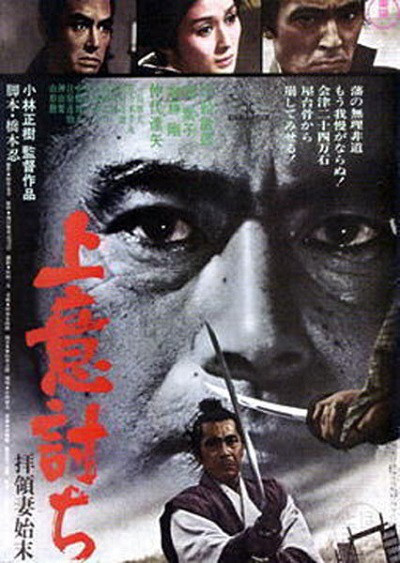
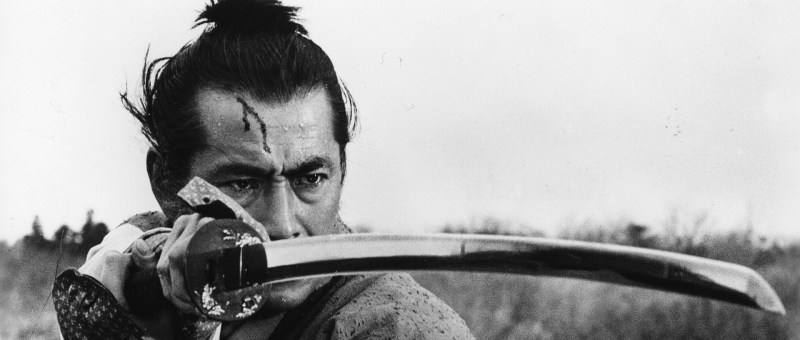
samurai rebellion posterIf Masaki Kobayashi had one overriding concern throughout his relatively short career, it was the place of the individual with an oppressive society. Samurai Rebellion (上意討ち 拝領妻始末, Joi-uchi: Hairyo Tsuma Shimatsu), not quite the crashing chanbara action the title promises, returns to many of the same themes presented in Kobayashi’s earlier Harakiri in its tale of corrupt lords and a vassal who can no longer submit himself to their hypocritical demands. On the film’s original release, distributor Toho added a subtitle to the otherwise stark “Rebellion”, “Hairyo Tsuma Shimatsu”, which means something like “sad story of a bestowed wife” and was intended to help boost attendance among female filmgoers who might be put off by the overly male samurai overtones. The central conflict is that of the ageing samurai Isaburo (Toshiro Mifune), but Kobayashi saves his sympathy for a powerless woman, twice betrayed, and given no means by which to defend herself in a world which values female life cheaply and a woman’s feelings not at all.

Having the misfortune to live in a time of peace, expert swordsman Isaburo has only the one duty of testing out the lord’s new sword (which he will never draw) on a straw dummy. He and his friend Tatewaki (Tatsuya Nakadai) are of a piece – two men whose skills are wasted daily and who find themselves at odds with the often cruel and arbitrary samurai world, refusing to fight each other because the outcome would only cause pain to one or both of their families. Isaburo has two grownup sons and dreams of becoming a grandpa but needs to find a wife for his eldest, Yogoro (Go Kato). He wants to find a woman who is loyal, loving, and kind. As a young man Isaburo was “forced” into marriage and adopted into his wife’s family but has been miserable ever since as his wife, Suga (Michiko Otsuka), is a sharp tongued, unpleasant woman whose only redeeming features are her stoicism and dedication to propriety.

It is then not particularly good news when the local steward turns up one day and informs Isaburo that the lord is getting rid of his mistress and has decided to marry her off to Yogoro. News travels fast and though others may appear jealous of such an “honour”, Isaburo is quietly angry – not only is he being expected to take on “damaged goods” in a woman who’s already born a son to another man, but they won’t even tell him why she’s being sent away, and the one thing he wanted for his son was not to end up in the same miserable position as he did. Nevertheless when Isaburo repeatedly tries to decline the “kind offer”, he is prevented. A suggestion quickly becomes an order, and Yogoro consents to prevent further conflict.

Against the odds, Ichi (Yoko Tsukasa) is everything Isaburo had wanted in a daughter-in-law and even puts up with Suga’s constant unkindness with patience and humility. Eventually she and Yogoro fall deeply in love and have a baby daughter, Tomi, but when the lord’s oldest heir dies and Ichi’s son becomes the next in line, it’s thought inappropriate for her to remain the wife of a mere vassal. Summoned to the castle, Ichi is once again robbed of her child but also of her happiness.

Ichi’s tale truly is a sad one and emblematic of the fates and positions of upperclass women in the feudal world. Having had the misfortune to catch the lord’s eye, Ichi tries to decline when the steward shows up to take her to the castle, reminding him that she is already betrothed. Sure that her fiancé will protect her, Ichi says she’ll go if he agrees never thinking that he would. Betrayed in love, Ichi is sold to the castle to be raped by the elderly Daimyo who views her as little more than a baby making machine and faceless body to do with as he wishes. When she returns from a post-natal trip to the spa and discovers the lord has already taken a new mistress, her anger is not born of jealously but resentment and disgust. This other woman is proud of her “position” at the lord’s side when she should be raging as Ichi is now, at her powerlessness, at the male society which reduces her to an object traded between men, and at the rapacious assault upon her body by a man older than her father.

Isaburo is also raging, but at the cruel and heartless obsession with order and protocol which has defined his short, unhappy life. Having been a model vassal, Isaburo has lived a life hemmed in by these rules but can bear them no longer in their disregard for human feeling or simple integrity. Isaburo says no, and then refuses to budge. Having retired and surrendered control of the household to Yogoro, Isaburo leaves the decision to his son who refuses to surrender his wife and swears to protect her from being subjected to the same cruel treatment as before. The samurai order is not set up for hearing the word “no”, and the actions of Isaburo, Yogoro, and Ichi threaten to bring the entire system crashing down. Love is the dangerous, destabilising, manifestation of personal desire which the system is in place to crush.

Isaburo’s rebellion, as he later says, is not for himself, or for his son and daughter-in-law whose deep love for each other has reawakened the young man in him, but for all whose personal freedom has been constrained by those who misuse their power to foster fear and oppression. Having picked up his sword, Isaburo will not stand down until his voice is heard, fairly, under these same rules that the authority is so keen on enforcing. He does not want revenge, or even to destroy the system, he just wants it to respect him and his right to refuse requests he feels are unjust or improper. Like many of Kobayashi’s heroes, Isaburo’s fate will be an unhappy one but even so he is alive again at last as the fire of rebellion rekindles his youthful heart. Those caught within the system from the venal stewards and greedy vassals to the selfish lords suddenly terrified the Shogun will discover their mass misconduct are dead men walking, sublimating their better natures in favour of creating the facade of obedience and conformity whilst manipulating those same rules for their own ends, yet the central trio, meeting their ends with defiance, are finally free.


Available with English subtitles on R1 DVD from Criterion Collection.

Original trailer (English subtitles – poor quality)

Alone Across the Pacific (太平洋ひとりぼっち, Kon Ichikawa, 1963)

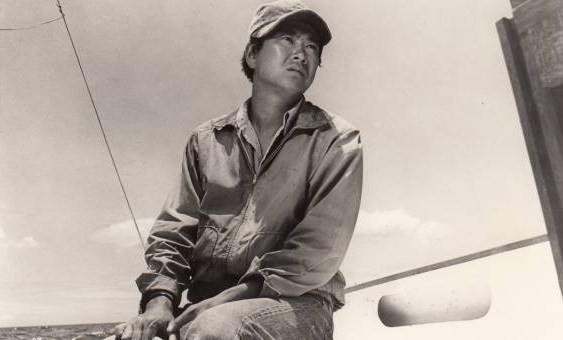
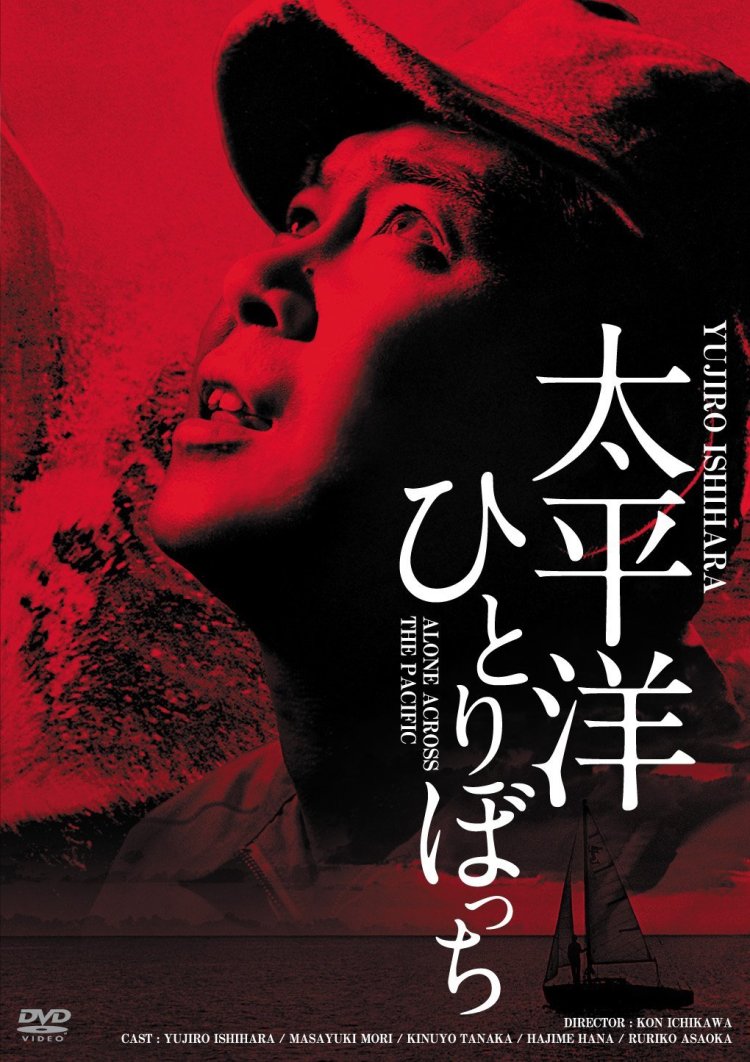
Alone Across the PacficKon Ichikawa made two sorts of movies – the funny ones and the not so funny ones. Despite the seriousness of the title, Alone Across the Pacific (太平洋ひとりぼっち, Taiheiyo hitori-botchi) is one of the funny ones. Like many of Ichikawa’s heroes, Horie is a man who defies convention and longs for escape from the constraining forces of his society yet is unable to fully detach himself from its cultural norms. Based on the real life travelogue of solo sailor Kenichi Horie, Alone Across the Pacific is less the story of a man battling the elements, than a cheerful tale of a man battling himself in a floating isolation tank bound for the “land of the free”.

Kenichi (Yujiro Ishihara) is a strange man. He has few friends (aside from the family dog, Pearl) and is obsessed with the idea of running away to sea. Inspired by the tales of other intrepid sailors, his dream is to sail all alone across the Pacific Ocean from Osaka to San Fransisco. Despite the fact that it is illegal for small boats to leave Japanese waters (and that he is too impatient to wait for his passport to come through), Kenichi has custom made his own yacht, one without an engine, and has set off on his longed for voyage under the cover of darkness.

Rather than filming Kenichi’s journey naturalistically, Ichikawa opts for an adventurer’s tale as Kenichi provides an ironic voice over detailing some of his naive failings as a rookie sailor undertaking such a daunting mission. Each of Kenichi’s crises links back to a memory from his shore life, reminding us why he’s on this journey in the first place. Kenichi’s struggles are the same as many a young man in post-war Japan and, in fact, many of those previously played by the poster boy for youthful rebellion, Yujiro Ishihara.  Unwilling to live a life hemmed in by the predetermined path of a job for life, wife, children and total social conformity, Kenichi longs to be free of his cultural baggage by abandoning his civility during a long process of isolation therapy free of overbearing fathers, fretting mothers, indifferent sisters and a generally noisy world.

Kenichi’s father (Masayuki Mori) is the very personification of authority, berating his son for his fecklessness and pointless obsession with sailing – a sport a working class boy like Kenichi can barely afford. Kenichi’s determination to achieve his goal sees him leave school early, take a job in his father’s workshop only to quit suddenly for a more lucrative one delivering luggage for a travel agents, and quitting that too to work full time on his boat. While his father huffs and puffs his mother (Kinuyo Tanaka) worries, hoping her mad son won’t really go through with it but knowing that he will.

When Kenichi finally reaches San Fransisco, he’s assaulted by congratulatory voices from all directions. Towed into harbour by a motor boat, Kenichi first has to deal with mundane problems like the customs patrol wanting to know if he’s got any fruit left on the boat before a crowd gathers to shake his hand asking where he’s come from and why, what he wants to do now, and praising him for his daring feat of solo sailing glory. In Japan however, things are different. Dragged out for an interview by the press, Kenichi’s worried mother avows that she’s just happy to know her son is safe while his father bows deeply and reassures everyone that he will absolutely put a stop to any such random acts of individualism his wayward son may attempt in the future. 

Kenichi evades the twin pulls of his mother’s apron strings and his father’s handcuffs by taking off alone but even at sea he’s never free of his cultural programming, checking the wide empty ocean before removing his clothes and then stepping back down into the cabin to finish the job. Kenichi’s failure to acquire a passport is an ironic one seeing as part of what he’s running from is being Japanese but even as his quest is one for self determination it is also intensely selfish and self involved. In this Kenichi commits the ultimate act of individualism, caring nothing for the thoughts and feelings of others in the all encompassing need to achieve his goal. Kenichi may have found a home at sea, but on land he’s caged once again, a prisoner both of social conformity and his own need to defy it.


Available on R2 DVD from Eureka Masters of Cinema.

Original trailer (no subtitles)

Kokoro (こころ, Kon Ichikawa, 1955)

kokoro coverAmong the most well-regarded of his works, Natsume Soseki’s Kokoro (こころ) is a deeply felt mediation on guilt, repression, atonement, and despair as well as an examination of life on a temporal threshold. Kon Ichikawa’s long career would be marked by literary adaptations both of classics and genre fiction but even among these Kokoro is something of an exception, marshalling all of his skills bar his trademark irony in a melancholy tale of loneliness, self loathing, and the destructive effects self-destruction on those caught in the cross fire.

Ichikawa opens in media res as Nobuchi (Masayuki Mori) and his wife, Shizu (Michiyo Aratama), appear to have had an argument. She darns angrily while he paces and eventually seems to relent on his decision not to let her accompany him to the grave of a mutual friend, Kaji (Tatsuya Mihashi), who died when Nobuchi was still a student. Eventually Nobuchi goes alone but is disturbed in the graveyard by the approach of an enthusiastic young university student, Hioki (Shoji Yasui), who has been redirected by Shizu after turning up to ask to borrow some books. Nobuchi is not really in the mood to talk but the two men chat, eventually sharing a drink together in the local bar before Nobuchi abruptly returns home, pausing only to invite Hioki to visit another time for the books he wanted to borrow.

Though the marriage of Nobuchi and Shizu may seem to be a model one, their lives together are mostly performance. Nobuchi is a melancholy, gloomy man who does not work and lives the life of a scholar, living off family money. The household is not wealthy but they are able to afford one maid and live in reasonable comfort. They have no children and, it seems, the marriage may be one of companionship rather than passion.

On their first meeting Nobuchi refuses to tell Hioki the reason why he is the way he is, but decides he must explain and that Hioki is the only person he can unburden himself to. Badly let down by those who should have had his best interests at heart at a young age, Nobuchi has learned not to trust, believes that love is a “sin”, and that he is unworthy of any kind of personal happiness or fulfilment. As a young man, Nobuchi did something completely unforgivable for the most selfish (and fiendishly complicated) of reasons and his best friend, Kaji, later died as a direct result.

Where Nobuchi is cynical, Kaji is ascetic and closed off but sincere in his Buddhist practice. Nobuchi’s actions are not only hurtful in their deliberate betrayal, but amount to a slow implosion of Kaji’s entire spiritual universe. Having been tempted away from his religious beliefs by irrepressible desire, Kaji’s path to spiritual fulfilment has been severed and his path to other kinds of happiness blocked by Nobuchi’s own panicked act of personal betrayal. Unable to reconcile his cowardly, cruel actions which have, in a sense, broken Kaji’s “heart”, Nobuchi resolves to deny himself the life he stole from his friend, committing himself to a living death defined by the absence of physical love, desire, or success.

Hioki first meets Nobuchi when he sees him attempt to walk into the sea and saves him from drowning. Immediately drawn to him, Hioki believes he and the man he calls “sensei” share the same kind of existential loneliness. His eagerness to forge a friendship with the older, aloof scholar may seem strange but Ichikawa is keen to build on a much disputed subtext of the original novel in Nobuchi’s possible repressed homosexuality. Hioki steps into the space vacated by Kaji which has been empty the last 15 years as the sort of man who might understand Nobuchi’s “heart”.

Shizu attempts to ask the question directly, both about Nobuchi’s relationship with Kaji whose name she is forbidden to mention and to new friend Hioki whom she fears maybe taking Kaji’s place in her husband’s affections. Pleading that she just wants to understand his “heart”, Shizu tries to get some clarification on the empty hell that is her married life, but Nobuchi’s heart is firmly closed to her and she’s shut out once again.

On hearing of the death of the Emperor Meiji, Nobuchi’s gloom descends still further as he feels himself to be a man who’s outlived his age. At one point, long before, he pushes Kaji on his spiritual weaknesses prompting him to admit he doesn’t know whether to go forward or back. Nobuchi, cynical and perceptive, points out that there likely is no back even if you wanted to go there. Taking the teacher/student relationship to its natural conclusion, Nobuchi’s final testament in which he confesses the circumstances which have led to his spiritual death is intended only for Hioki in the hope that the younger man can learn from his mistakes and prepare himself to step forward into the bright new age where Nobuchi fears to tread. Once again his actions are selfish in the extreme, but there is something universally understood in Nobuchi’s particular pain and the steps he takes to ease it.


Previously available on DVD from Eureka, now sadly OOP.

Scene from midway through the film

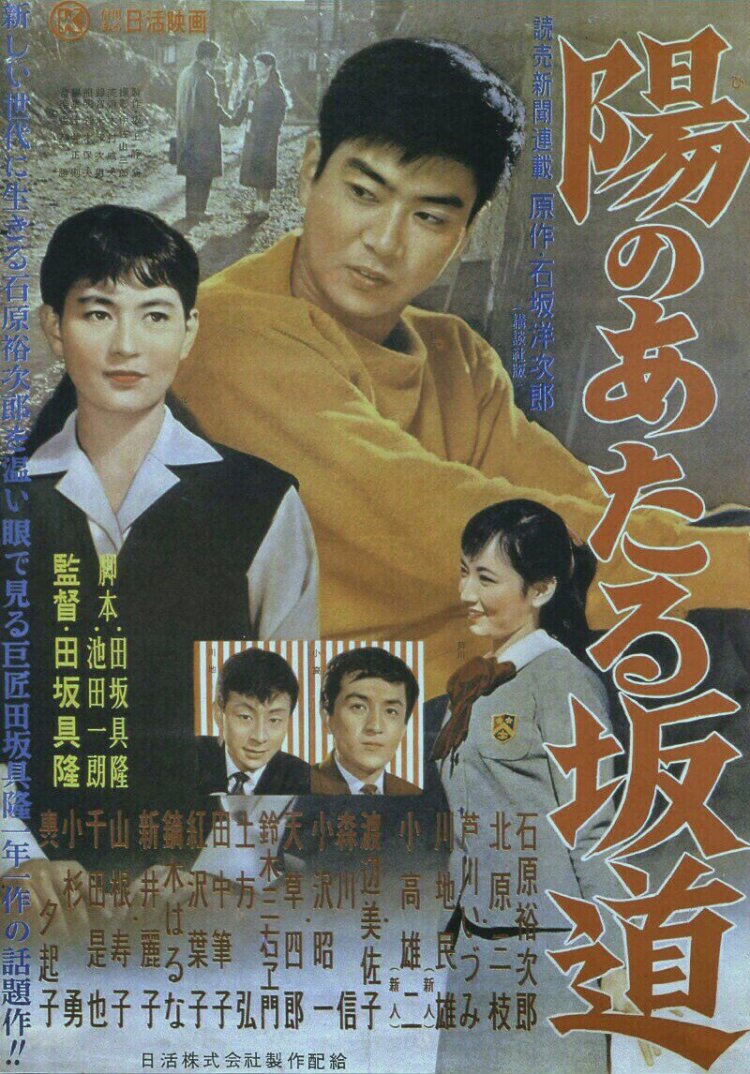
A Slope in the Sun (陽のあたる坂道, Tomotaka Tasaka, 1958)

Slope in the sun posterYujiro Ishihara had become the face of the “Sun Tribe” movement thanks to roles inspired by his brother Shintaro’s novels including the seminal Crazed Fruit in which he starred opposite his later wife, Mie Kitahara. Tomotaka Tasaka’s A Slope in the Sun (陽のあたる坂道, Hi no Ataru Sakamichi), adapted from the novel by Yojiro Ishizaka, is a much less frenetic affair than Nakahira’s famously intense youth drama, but retains the Sun Tribe’s world of purposeless youth whose inherited wealth has driven them to a life of listless ennui. Like Crazed Fruit, Slope in the Sun is the story of two brothers chasing the same girl, only this time one looks bad and is really good, while the other looks good but is really no good at all.

Beginning on the titular sun beaten slope, the film opens with a young woman, Takako (Mie Kitahara), entering the frame as she searches for an address on a piece of paper she is carrying. She finds the house – a large Western-style mansion, but is prevented from entering by a young man who mistakes her for a saleswoman and instructs her to use the tradesman’s entrance. The young man, Shinji (Yujiro Ishihara), continues to taunt her with lewd language before poking at her breast. Takako tries to leave but is persuaded to come inside to meet the lady of the house and the young woman, Kumiko (Izumi Ashikawa), whom she has come to tutor.

The Tashiro household is a strange one. There are three almost grown up children – oldest brother Yukichi (Yuji Odaka) who is a medical student, middle brother Shinji who is a painter, and the youngest daughter Kumiko who is approaching the end of high school and is a little over sensitive about a mild limp which is the consequence of a childhood accident. Takako nearly turns the job down when she realises that the family want less a teacher to help with Kumiko’s studies, than a kind of big sister to help her navigate her way into the adult world, but eventually warms to the Tashiros and decides to give it a go. A college student in need of money, Takako is currently living in a boarding house where she is friends with the older lady next door, Tomiko Takagi (Hisako Yamane), and her 18 year old musician son Tamio (Tamio Kawachi).

In contrast to the earlier Sun Tribe films, A Slope in the Sun is much more subdued though it does maintain an upperclass atmosphere filled with bored young people who struggle to find purpose in their lives through having no particular economic or social worries thanks to the protective cushioning of their wealth. The central issue is a common one to the familial melodrama – middle child Shinji has always felt disconnected from his family and has discovered that the woman who raised him is not his birth mother. He wants to know the truth of his family history but is also a kinder soul than his outward behaviour may suggest and does not want to hurt anyone or risk destroying the otherwise pleasant enough family life he enjoys as a Tashiro.

As expected coincidences abound though the truth is obvious seconds after Takako tells someone the name of her new employer causing them to gasp and draw pale with shock. It seems that everyone in the family already knew that Shinji is only a half brother except Shinji himself – their overcompensation in treating him kindly was the initial tipoff for his suspicions, but this question of blood relation turns out to have a surprising dimension. Oldest brother Yukichi is, outwardly, the model son – handsome, clever, gentlemanly, but on closer inspection his veneer of respectability turns out to be just that. The boys’ mother, Midori (Yukiko Todoroki), knows this well and partly blames herself for allowing Shinji to take the blame for a childhood accident rather than forcing her own son to confess. For all his seeming goodness, Yukichi is an amoral coward, womaniser, and habitual liar whereas there’s a kind of honesty in Shinji’s lewd speech and even in his own lies which he indulges partly out of a sense of smug superiority, as Midori puts it, but also because of the inferiority complex which has marred his life as he feels himself somehow lesser than either of his siblings.

Takako vacillates between the two brothers, taken in by the manipulative Yukichi but strangely drawn to the provocative Shinji. Unlike Nikkatsu’s other youth films, Slope in the Sun ends on a note of happy resolution rather than nihilistic suffering as each member of the family is encouraged to embrace their true natures, putting secrets to one side, and becoming closer in the process. Tanaka’s approach is a more classical one than Nikkatu’s usual fare, making use of silent cinema-style closeups and dissolves but veers towards the avant-garde in a brief flashback sequence offered in dreamlike widescreen. Despite the jazz clubs and subplots about misused geishas, this is a more innocent world than the post-war melodrama would usually allow, finding space for happiness and forgiveness in each of the conflicted protagonists once they each agree to submit themselves to the truth and meet the world with openness and positivity.


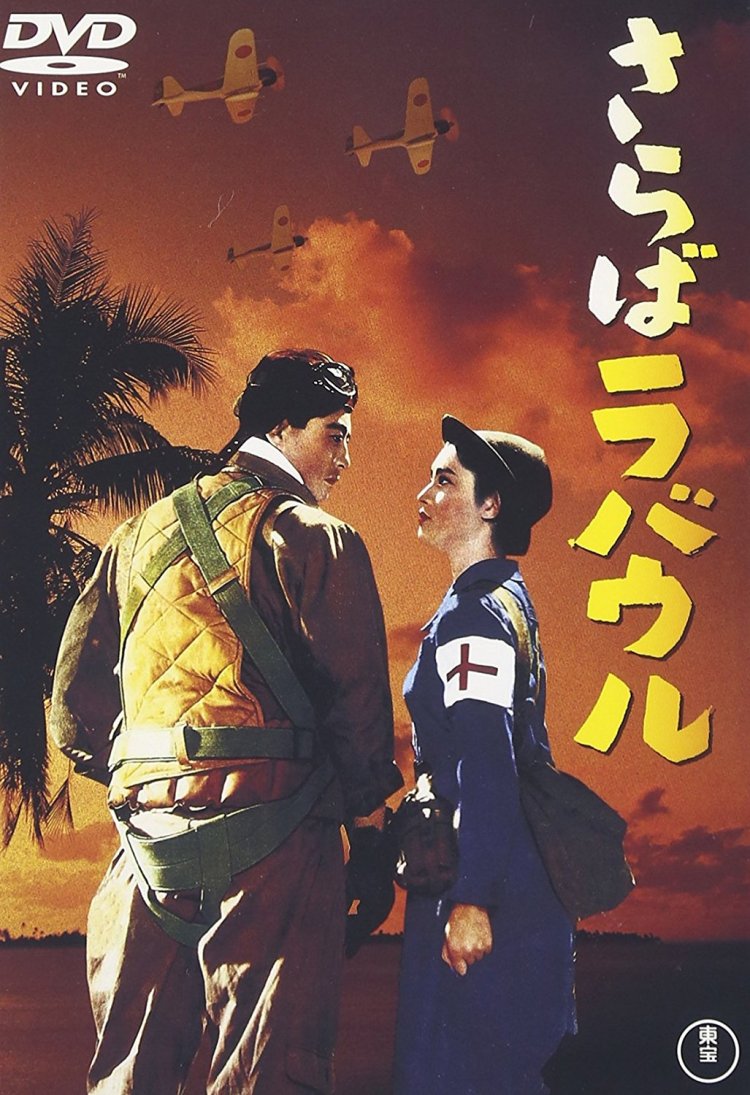
Farewell Rabaul (さらばラバウル, Ishiro Honda, 1954)

Farewell Rabaul dvd coverReleased in 1954, Farewell Rabaul (さらばラバウル, Saraba Rabaul) was the last in a string of war films directed by Ishiro Honda for Toho immediately before the mega hit Godzilla redefined his career and turned him into a director of science fiction and special effects movies. Like the later tokusatsu classics, Honda worked alongside Eiji Tsuburaya to craft the film’s effects which are largely used to recreate the epic dogfights taking place over the island as the airmen and ground crew come to terms with the imminent arrival of American forces. Though he takes care to show the bravery and determination of the Japanese pilots, Honda’s attitudes to the war and the government who waged it are not so kind.

Late into the conflict, at an outpost in the Papa New Guinean city of Rabaul, ace pilot Captain Wakabayashi (Ryo Ikebe) leads a rapidly depleting squad of airmen trying to defend Japanese forces from American air attacks. Known as “Devil” Wakabayashi, he rules with an iron fist – taking issue with men who spend their time in local bars and pointedly refusing to send rescue craft for crashed pilots. Ruthless and cold as he seems, the war is starting to get to Wakabayashi and his resolve crumbles when faced with a gracious American POW and the attentions of a kindly nurse, Komatsu (Mariko Okada).

Honda keeps the action to a minimum, preferring to focus on the life within the military base. Though the effects on the local population are not much addressed, the opening scenes take place in a bar in which Papa New Guinean women dance to tribal drums while Japanese military personnel drink and watch. The waitresses are largely Japanese women dressed in kimono, though it seems the exoticism of local girl Kim (Akemi Negishi), dancing barefoot with flowers in her hair, is the main draw. Eventually Kim falls in love with a Japanese soldier and the two plan to flee but fate always gets in the way.

Wakabayashi, rechristened the “Devil” by Kim – a nickname which seems to stick, objects to his men blowing off steam in the bar for purely practical reasons – he needs them at top form for an upcoming mission and a hungover pilot could be a risk to the entire squad. Walking around looking sullen and refusing to explain himself, it’s no wonder Wakabayashi is unpopular with some of the men even if his skills are widely recognised. Asked to send a rescue squad for a lost pilot, Wakabayashi’s reply is a flat no with no further details offered. Only when a junior officer interjects during a briefing does he offer his reasoning – the crash site is in enemy territory and it’s too risky to send more men in to fetch one pilot who is probably already dead. His reasoning is sound and probably the correct command decision but the cutting coldness with which he delivers his judgement does little to assuage his reputation as a heartless misanthrope.

This is, however, not quite the case. When an extremely young member of his squad is shot down Wakabayashi shouts out to him, trying to advise the rookie on ways to control the aircraft but all to no avail. The pilot cannot bail out as Japanese pilots, particularly those flying the featherweight 0 fighters, are not equipped with parachutes. This is brought up again when a downed American pilot is brought in as a POW. The journalist attached to the unit is able to speak fluent English and interprets for Wakabayashi and the others as the American gives them an improbably frank analysis of Japanese airborne warfare. He tells them that the Americans were once afraid of the 0s and their high speed manoeuvring but have figured out their weaknesses. In the hands of a skilled pilot, the 0 is a powerful weapon but in unskilled hands it’s a liability – its lightweight form makes it easy pickings when the pilot does not know how to fly defensively. If it weren’t for this fighter they call “Devil” they’d be picking them off with ease. The lack of parachutes came as a surprise to the Americans. The 0s need to be as light as possible, but no one could believe that the Japanese government valued life so cheaply that they’d send a man up there with no way down. That’s why, the American says, they will win – no government so unwilling to look after its own could ever expect to.

The senselessness of it all eventually gets to Wakabayshi, even leading him to reverse his original stance and proceed into enemy territory to rescue a fallen comrade himself. He is, however, wounded, his plane damaged, and his friend doesn’t make it. Rabaul falls, and its hero falls with it in a turn which is both melancholy and defiant. Honda refuses to glorify the destruction but ends on a note of sadness, reprising the titular song sung by the women aboard a boat they hope will take them home but that, like everything else, remains so hopelessly uncertain.


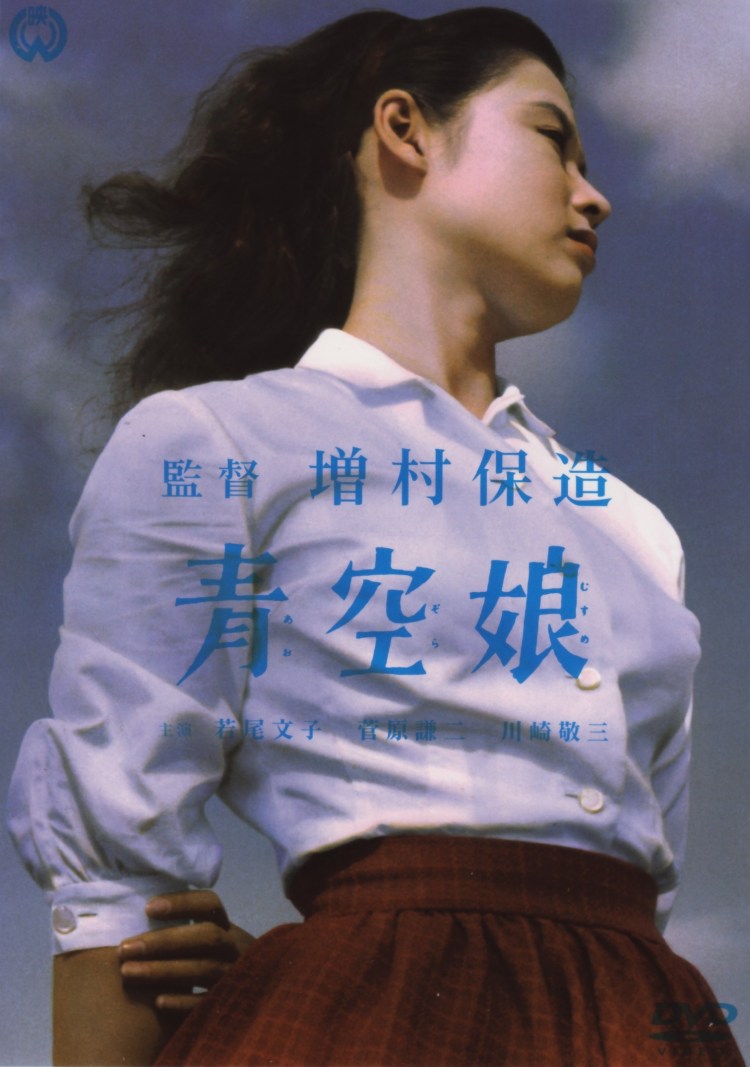
The Blue Sky Maiden (青空娘, Yasuzo Masumura, 1957)

blue sky maiden dvd coverYasuzo Masumura is generally remembered for dark, erotic and disturbing explorations of human behaviour but the early part of his career was marked by a more hopeful innocence and a less cynical yet still cutting humour. His debut, Kisses, was very much in the mould of the youth movie of the day but its themes were both more innocent and more controversial as a boy and girl bond after running into each other at the prison where both of their parents are serving time. Marked by darkness as it is, the worldview of Kisses is much kinder than Masumura would later allow as the pair of lovers seem to shake off their respective concerns to embrace the youthful joy and boundless freedom young love can offer.

The Blue Sky Maiden (青空娘, Aozora Musume), Masumura’s second film, does something similar but with added bite. Working for the first time with actress Ayako Wakao who would later become something of a muse, Masumura takes a typical melodrama storyline – the returned illegitimate child treated as a poor relation by her own “family”, and turns it into a genial comedy in which Wakao’s charming heroine shines brightly despite the often cruel and heartless treatment she receives. As far as the family drama goes, the genre was still in its heyday and the family unit itself fairly unquestioned yet as Masumura shows times were changing and perhaps the family is not the bedrock it initially seems to be.

18 year old Yuko (Ayako Wakao) stands at the gates of adulthood. Taking a last photo in school uniform with her high school friends as they prepare for graduation, Yuko expresses her nervousness about being sent to Tokyo to live with the family of a father she barely knows while her friends worry about getting married or getting stuck in their tiny village all alone respectively. Tragedy strikes when the girls’ teacher arrives on a bicycle and informs them that Yuko’s grandmother has been taken ill. On her death bed, the grandmother reveals the reason Yuko is the only one of her father’s four children to be raised in the country is not a concern for her health, but that she is illegitimate. Yuko’s father, unhappy in his marriage, fell in love with his secretary (Kuniko Miyake) who later gave birth to Yuko, but he was already married with two children and so Yuko’s mother went to Manchuria leaving her to be raised in secret in the country.

Having nowhere else to go, Yuko arrives at her father’s large Western style house to be greeted coldly by her half-siblings, and treated as a maid by her still angry step-mother while her father (Kinzo Shin) is away on business. It has to be said that this model middle class family are an extremely unpleasant bunch. Step-mother Tatsuko (Sadako Sawamura) is shrewish and embittered while oldest daughter Teruko (Noriko Hodaka) spends all her time chasing wealthy boyfriends (but failing to win them because she’s just as mean as her mother). The oldest brother (Yuji Shinagawa) idles away in a hipster jazz band while the youngest boy, Hiroshi (Yukihiko Iwatare), is rude and boisterous but later bonds with his new big sister when she is the only one to really bother interacting with him.

The Ono household has always been an unhappy one. Yuko’s father married his wife after being bamboozled into it by an overbearing boss trying to offload his difficult daughter. Feeling trapped and avoiding going home he fell in love with a kind woman at work, had an affair, and wanted to marry her but wasn’t strong enough to break off not only from his unwanted family but also from his career in pursuing personal happiness. By Masumura’s logic, it’s this failure to follow one’s heart which has poisoned the Ono family ruining not only the lives of Tatsuko and the children who have no respect for their father or capacity for real human feeling (as Yuko later tells them), but also that of Yuko’s poor mother  whose life has been one of constant suffering after being unfairly jettisoned by a man who was bold enough to have an affair, but not to defy social conventions and leave an unhappy home.

Yuko herself, however, refuses to allow her life to be ruined by the failings of others. Looking up at the bright blue sky with her teacher (Kenji Sugawara), she learns to create her own stretch of heaven if only in her own mind. Though others might have fought and complained at being forced into the role of maid in what is her own family home, Yuko bears her new circumstances with stoicism and good humour. Thanks to her kindness and enthusiasm, the family maid, Yae (Chocho Miyako), is quickly on her side and if Teruko’s latest target, Hirooka (Keizo Kawasaki) starts to prefer the “new servant girl” his defection is completely understandable. Unlike later Masumura heroines, Yuko’s “revenge” is total yet constructive. She refuses to be cowed by unkindness, remains pure hearted in the face of cruelty, and resolves to find her own happiness and encourage others to do the same. With a few cutting words offered kindly, Yuko gets to the heart of the Onos, essentially reminding her father that all of this unhappiness is his own fault – he made his bed 20 years ago, now he needs to lie it and be a full-time husband and father to the family of lonely misfits he created in the absence of love.

Light and bright and colourful, The Blue Sky Maiden is among Masumura’s more cheerful films, not least because it does seem to believe that true happiness is possible. Yuko does not so much defy social convention as ignore it. She lives openly and without rancour or regret. She takes things as she finds them and people (aside from the Onos) are good to her because she is good to them. Though Masumura’s later work would become increasingly dark and melancholy, Yuko bears out many of his most central themes in her steadfast claim to her own individuality and equally steadfast commitment to enabling the happiness of others in defiance of prevailing social codes.


BLAME! (ブラム!, Hiroyuki Seshita, 2017)

blame posterCities. The pinnacle of human achievement and an almost living monument to civilisation. Does the same principle of human collective settlement also relate to the digital realm or will increasing interconnectedness eventually destroy everything we’ve built? Following their landmark CGI adaptation of Tsutomu Nihei’s Knights of Sidonia, Polygon Pictures return to source by adapting the author’s debut work BLAME! into a feature length animated movie. Like Sidonia, BLAME! (ブラム!) takes place many years after a climactic event has led to the fall of human civilisation – an event so long in the past as to have become mere myth to the small number of humans still clinging on to life in a now inhospitable terrain, but BLAME!’s dystopia is very much one created by man, losing control of its technology in its ever advancing hubris.

As the young girl who offers the opening monologue tells us, no one knows how all of this happened. Once, a long time ago, humans lived in a city but a virus came and they lost the ability to communicate with the environment in which they lived. The city began to grow, and the “Safeguard” system decided that humans were “illegal immigrants” in their own land. The exterminators swooped in to wipe them out but a small band of humans has managed to survive a few hundred years in a kind of safe zone protected by a perimeter wall the city’s systems are prevented from monitoring.

The rapid expansion of the city has also meant a reduction in vegetation and the surviving humans are running low on food. An intrepid team of children ventures out into the wasteland in search of sustenance, but they’re spotted and targeted for elimination. A mysterious figure appears on the horizon and saves them. The man calls himself a “human” and is disappointed to realise none of the children are carriers of the “Net Terminal Gene” which he is seeking. Killy (Takahiro Sakurai) claims that the Net Terminal Gene will enable the humans to take back control of the city’s systems, halt the excessive building program and call off the Safeguard attack dogs.

Killy’s appearance brings new hope to the villagers, trapped within their perimeter stronghold but facing the prospect of staying and starving or taking their chances with Safeguard. Concentrating on action rather than philosophising little time is given over to considering how humanity lives though it’s certainly puzzling that there is so little reaction when the band of children returns home much depleted in numbers. Indeed, aside from Pops (Kazuhiro Yamaji), the de facto leader of the community, no other “adults” appear.

Using Killy as a kind of deflective shield, the gang press on until they find an abandoned robot, Cibo (Kana Hanazawa), who tells them about an “Automated Factory” in which she can generate both an abundant food source and a synthetic tablet which will allow them to get back into the city’s systems. What ensues is a deadly firefight as the system fights back. Cibo pleads with The Authority in the digital realm while Killy and the villagers hold back the forces of order with firepower from the outside.

Killy remains a man of few words, his language dulled through inactivity and his expression inscrutable, but the villagers, perhaps lulled into a false sense of security thanks to long years of isolation, never question his motives or reliability. Likewise, Cibo clearly knows more than she lets on but offers the only lead so far on a way back to a less precarious way of life. Killy’s sudden appearance becomes a mythic event, a point of transition in the history of the post-apocalyptic world, but also seems to be without resolution as the closing coda implies.

Like Sidonia, the animation quality is at times variable but often excels in its highly detailed backgrounds, allowing production design to smooth over any narrative gaps. What BLAME! lacks in terms of plot and character complexity it makes up for in world building though it is difficult to ignore the feeling of the loss born of condensing something far larger into an easily digestible whole. Nevertheless, BLAME! does what it sets out to do with quiet brilliance in detailing what might be the first of many adventures of the wanderer known as Killy as he explores a world ruined beyond repair looking for the key to unlock a brighter future.


Netflix trailer (Japanese with English subtitles/captions)

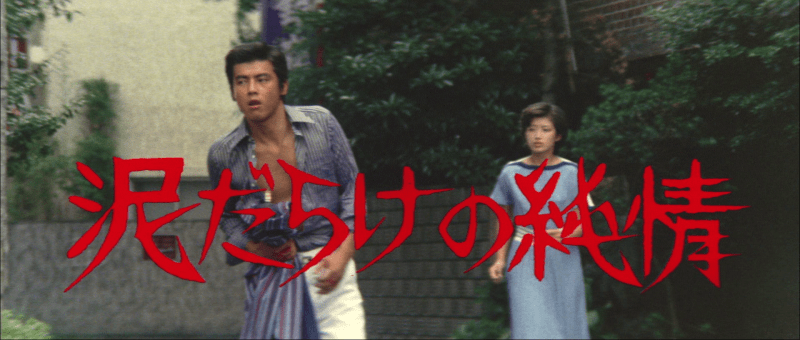
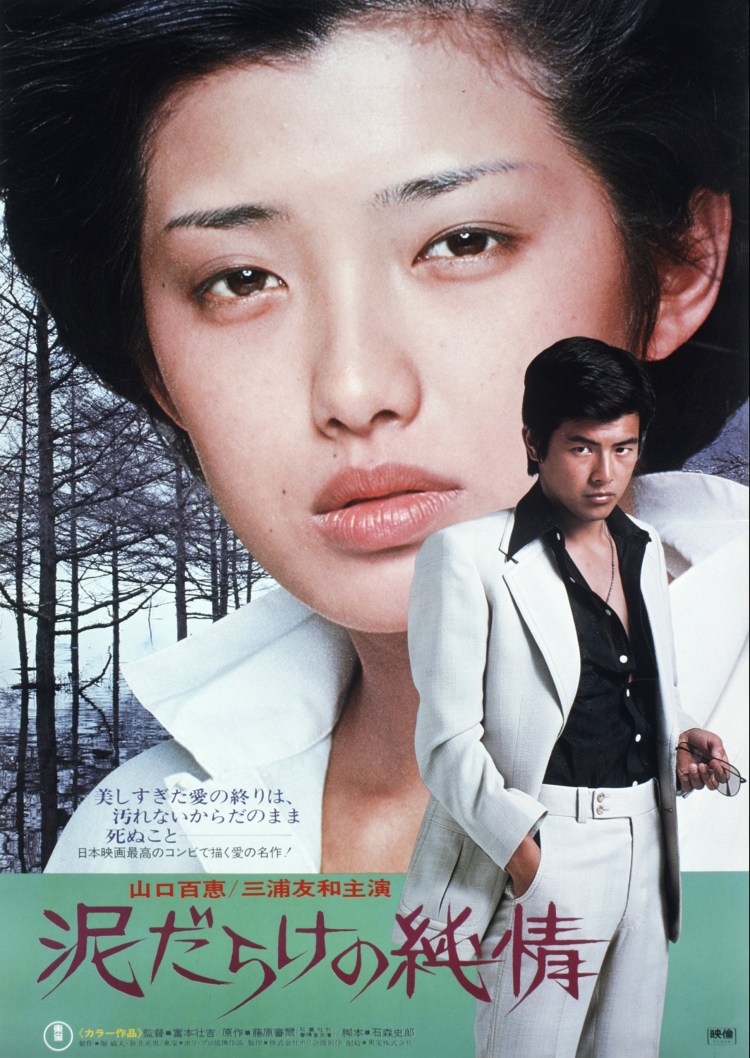
Love in the Mud (泥だらけの純情, Sokichi Tomimoto, 1977)

Love in the Mud posterJapanese youth cinema was in a strange place by the late 1970s. Angsty seishun eiga had gone out with Nikkatsu’s move into Roman Porno and the artier, angry youth films coming out through ATG were probably not much for a teen audience. The Kadokawa idol movie was only a few years away but until then, films like Love in the Mud (泥だらけの純情, Dorodarake no Junjo) arrived to plug the gap. Based on a novella by Shinji Fujiwara which had been previously adapted by Ko Nakahira in 1963 in a version starring Sayuri Yoshinaga and Mitsuo Hamada, Love in the Mud is a classic tale of poor boy meets rich girl and ends in a predictably hopeless way but in deep contrast to the prevailing culture of the time, the film takes the “junjo” or “purity” in its title literally in its innocent chasteness.

As the camera pans over a rapidly developing city, it settles on a bright red, flashy sports car being driven by Mami (Momoe Yamaguchi), the daughter of the Japanese Ambassador to Spain, with her friend sitting cheerfully in the passenger seat. Disaster strikes when the pair are run off the road by a biker gang who taunt them from outside the car, threatening rape and robbery. Luckily for them another gangster turns up, beats up the bad guys and saves the girls but alarm bells should have been ringing when he asks Mami to step out of the car and “thank him properly”. Mami, stupidly, does what she’s told and the girls are hijacked by gangsters round two. When they reach the shady place the gangsters are planning to have their wicked way with them, a third wave of gangster appears, disapproves of the goon’s intentions and heroically fights them off. However, the girls’ saviour is stabbed in the stomach and then later stabs and kills the leader of the aggressors.

The noble gangster, Jiro (Tomokazu Miura), tells the girls to run – which they do, but somehow Mami can’t quite bring herself leave him. A thoroughly middle-class girl, Mami is at university studying English literature but her dream is to open a hat shop in Paris and she spends most of her spare time working with a hat designer. In the absence of her father, Mami’s uncle (Ko Nishimura) has been looking after her but is the classic upperclass male who thinks the hat stuff is just a hobby and what Mami needs is a good husband as soon as possible. Accordingly he’s set her up with a pleasant enough business contact he hopes will both support Mami in the manner to which she’s been accustomed and his business dealings too.

Your average teenage girl might not be in such an extreme situation as young Mami, but most can certainly sympathise with her lack of agency. The life her uncle has planned for her is not what she wants but more than that, she’s acutely aware of being denied a choice in her future. She may be rich, but she’s never been free. Jiro, by contrast, grew up poor in tragic family circumstances and enjoys his own kind of freedom even if he feels himself constrained by his social class and lack of opportunities following a life in care with no real education. Not actually a yakuza but a gambler and petty punk living on the fringes of the underworld, Jiro has been content to live a meaningless life of empty gains but as his rescuing of Mami and her friend shows, he has a kind heart which extends to delivering presents to the daughter of a melancholy bar hostess currently living in an orphanage.

Jiro’s nobility is of a true and pure kind. After Mami comes forward to testify in Jiro’s defence, she tries to strike up a friendship but Jiro rebuffs her. He’s too smart not to know posh girl and poor boy never ends well, but then they do have a real connection which proves hard to kill. Their social differences are made apparent when Mami makes the naive decision to invite Jiro to a party at her fancy mansion. He buys a nice suit and an expensive necklace as a present, but Mami’s nanny doesn’t want to let him in and when Mami introduces Jiro to her uncle he whips out a checkbook causing Jiro to leave enraged. Nevertheless Mami chases Jiro through the shadier parts of Shinjuku, taking her first taste of gyoza, frequenting underground nightclubs and mahjong parlours, and swapping her elegant outfits for the casual jeans and T-shirts of Jiro’s world.

While all of this is going on, Jiro is also embroiled in the gang trouble which started with the stabbing in the beginning. A “friend”, almost, of the local policeman, it’s not surprising suspicion falls on Jiro and he faces a bleak future if he chooses to remain in Shinjuku. The courtship of the pair is a stuttering, nervous affair in which the emboldened Mami chases Jiro whose sense of honour teaches him to try and avoid her all the while he too is smitten. This is, however, a chaste and innocent love. Jiro and Mami spend a night together gazing at the moon but all they do is talk and the climax of the romance is met firstly with an innocent hug, and then a troubling slap from Jiro which is designed to show the depth his love in his desire to push Mami away, rather than anything more explicit.

A tragic tale of love across the class divide, Love in the Mud indulges the worst aspects of its genre in the fetishisation of doomed romance and extreme dedication the idea of “pure” emotion. The force that keeps Jiro and Mami apart, rather than entrenched social mores and differing forms of oppression is a kind of fatalistic pessimism which says the only true love is death. Perhaps too innocent and too chaste, Love in the Mud never earns its melodramatic ending but does what it needs to in appealing to its teenage target audience, neatly anticipating the genial edginess of the idol movie but failing to move much beyond capturing its moment as a snapshot of late ’70s youth culture.


Original trailer (no subtitles)