
What Happened to Our Nest Egg!? (老後の資金がありません!, Tetsu Maeda, 2021)

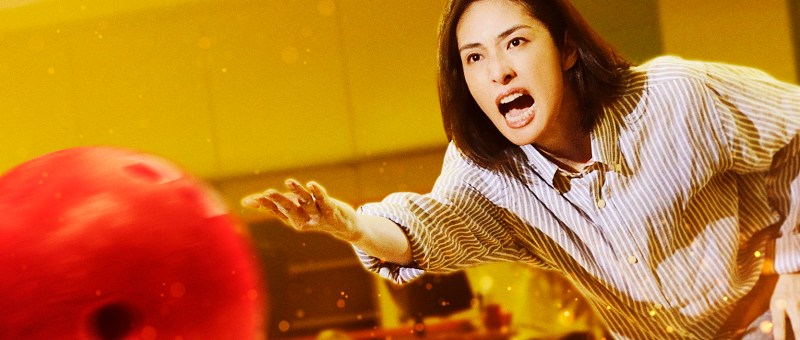
A minor controversy erupted in Japan in 2019 when then finance minister Taso Aso issued a statement recommending that couples should have 20 million yen (£104,620 total at the time of writing) saved for their retirement on top of the state pension in order to live a comfortable life in old age. All things considered, 20 million yen actually sounds like quite a low sum for two people who might live another 30 years post-employment. Nevertheless, Atsuko (Yuki Amami) and her husband Akira (Yutaka Matsushige) are now in their mid-50s and don’t have anywhere near that amount in savings. They’re still paying off their mortgage and though their children are grown-up, neither of them seem to be completely independent financially and both still live at home. 

Tetsu Maeda’s familial comedy What Happened to Our Nest Egg!? (老後の資金がありません!, Rogo no shikin ga arimasen!) explores the plight of the sandwich generation which finds itself having to support elderly relatives while themselves approaching retirement and still needing to support their children who otherwise can’t move forward with their lives. Seeing an accusatory ad which seems to remind her personally that even 20 million yen isn’t really enough when you take into consideration the potential costs of medical treatment or a place in a retirement home, Atsuko has a sudden moment of panic over their precarious financial situation. The apparently sudden death of Akira’s 90-year-old father acts as a sharp wake up call especially as Akira’s apparently very wealthy but also selfish and materialistic sister Shizuko (Mayumi Wakamura) bamboozles him into paying for the entirety of the funeral while pointing out that they’ve been footing most of the bill for the parents’ upkeep over the last few years.

There was probably a better time to discuss the financial arrangements than with their father on his deathbed in the next room, but in any case Shizuko doesn’t pay attention to Atsuko’s attempt to point out they’ve been chipping in too. Akira’s mother Yoshino (Mitsuko Kusabue) also reminds them that their family was once of some standing and a lot of people will be attending the funeral so they need to make sure everything is done properly. The funeral arranger is very good at her job and quickly guilts Atsuko into spending large sums of money on pointless funeral pomp to avoid causing offence only to go to waste when hardly anyone comes because, as she later realises, all of the couple’s friends have already passed away, are bedridden, or too ill to travel. 

Yoshino is however in good health. When Shizuko suddenly demands even more money for her upkeep, Atsuko suggests Yoshino come live with them but it appears that she has very expensive tastes that don’t quite gel with their ordinary, lower-middle class lifestyle. Having lived a fairly privileged life and never needing to manage her finances, Yoshino has no idea of the relative value of money and is given to pointless extravagance that threatens to reduce Atsuko’s dwindling savings even more while in a moment of cosmic irony both she and Akira are let go from their jobs. Now they’re in middle age, finding new ones is almost impossible while their daughter suddenly drops the bombshell that she’s pregnant and is marrying her incredibly polite punk rocker boyfriend whose parents run a successful potsticker restaurant and are set on an elaborate wedding.

The film seems to suggest that Atsuko and Akira can’t really win. They aren’t extravagant people and it just wasn’t possible for them to have saved more than they did nor is it possible for them to save more in the future. Instead it seems to imply that what they should do is change their focus and the image they had of themselves in their old age. One of the new colleagues that Akira meets in a construction job has moved into a commune that’s part of the radical new housing solution invented by his old friend Tenma (Sho Aiwaka). Rather than building up a savings pot, the couple decide to reduce their expenses by moving into a share house and living as part of a community in which people can support each other by providing child care and growing their own veg. Yoshino too comes to an appreciation of the value of community and the new exciting life that she’s experienced since moving in with Atsuko. It may all seem a little too utopian, but there is something refreshing in the suggestion that what’s needed isn’t more money but simply a greater willingness to share, not only one’s physical resources but the emotional ones too in a society in which everyone is ready to help each other rather than competing to fill their own pots as quickly as possible. 


What Happened to Our Nest Egg!? screens as part of this year’s Japan Foundation Touring Film Programme.

Trailer (English subtitles)
SAKURA (朽ちないサクラ, Hiroto Hara, 2024)

Sakura, or cherry blossoms, are often seen as emblematic of “Japan”. A potent poetic symbol, they blossom only for a short time and then slowly fade away. In the case of Hiroto Hara’s conspiracy drama SAKURA (朽ちないサクラ, Kuchinai Sakura), however, the title refers to a nickname for the security services. In fact, the title could be read either as the “sakura never decays,” or perhaps “will never be tarnished”, “will never die,” echoing the frequent messages that you can never really escape your past for like sakura it will always blossom again while the security services themselves will never fall.

In this case, the event that reverberates is a nerve gas attack on a station that is clearly an allegory for that conducted by Aum Shinrikyo in 1995. Like Aum which is now known as Aleph, the cult in the movie simply changed its name and carried on. Now the head of the police PR department for which the heroine works, former security agent Togashi (Ken Yasuda), is haunted by a mistake he made as a rookie cop and blames himself for not being able to stop the disaster. As fate would have it, the case they’re currently investigating ties back to the cult suggesting a much wider conspiracy in play than the simple intention to cover up a murder.

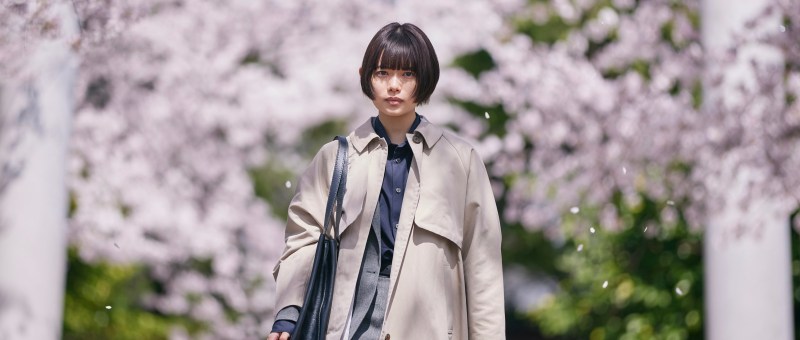
But there are also two killings here that are likely connected, the first being that of a woman whose allegation of stalking was ignored by the police who, rather than investigate, went off to enjoy themselves on some kind of outing The press is having a field day with the implication the police are both lacking in compassion and negligent in their work. Predictably, the PR division’s main intention is to uncover the source of the leak with Togashi seemingly already suspecting a woman in his department, Izumi (Hana Sugisaki), whose boyfriend, Isokawa (Riku Hagiwara), was himself on that outing. Izumi had accidentally let slip about the police’s activities to her best friend Chika (Kokoro Morita), a reporter who works at the local paper that broke the story. Chika insisted it wasn’t her who wrote the article, but Izumi didn’t believe her. Chika is then found dead after vowing to investigate more fully and prove Izumi wrong with an original hypothesis that she took her own life in guilt over betraying her friend.

Obviously, there’s more to it than that and it soon becomes clear she was murdered probably because she got too close to the truth. Izumi isn’t a detective, but finds herself trying to investigate out of a sense that she contributed to Chika’s death by not believing her when she said she never broke the promise she made not to tell anyone else about the police outing. One might legitimately ask why she is allowed to do this, and the lead detective is not originally happy about it, but as they’re grateful for the leads she turns up, Izumi effectively gets a sort of promotion to investigator. Later events might lead us to wonder if she isn’t being manipulated as part of a wider conspiracy, but then the central intention remains unclear as does the reason the shady forces in play would allow her to investigate Chika’s death knowing the possibility that she may stumble on the “real” truth in the process.

It could be that they simply don’t need to stop her because they know there’s nothing she can do. She has no evidence for her final conclusions and no one would believe her if she spoke out, but it seems odd that conspiracists who’ve already bumped off several other people would allow her to simply walk away knowing what she knows if there were not some grander plan in motion. The question is, is it justified to cause the deaths of a small number of people in order to save the lives of hundreds more who might otherwise die if the cult carries out another terrorist attack before they can be stopped? Sakura apparently have spies and informants everywhere and will do everything they can to protect them in order to facilitate their goal of protecting the nation. Thus the famed cherry blossoms now become another symbol of constant threat and oppression in the spectre of the security services who watch and oversee everything but remain in the shadows themselves. Hara homes in on this sense of paranoia and injustice but in the end cannot resist indulging Izumi’s plucky rookie investigator spirit. Her final decision may not make an awful lot of sense while essentially pitting one authority figure against another. Nevertheless, the tension remains high as Izumi presses forward towards the truth no matter what the danger while like her policeman boyfriend determined to pursue justice wherever it may lie.


SAKURA screens as part of this year’s Japan Foundation Touring Film Programme.

Trailer (English subtitles)
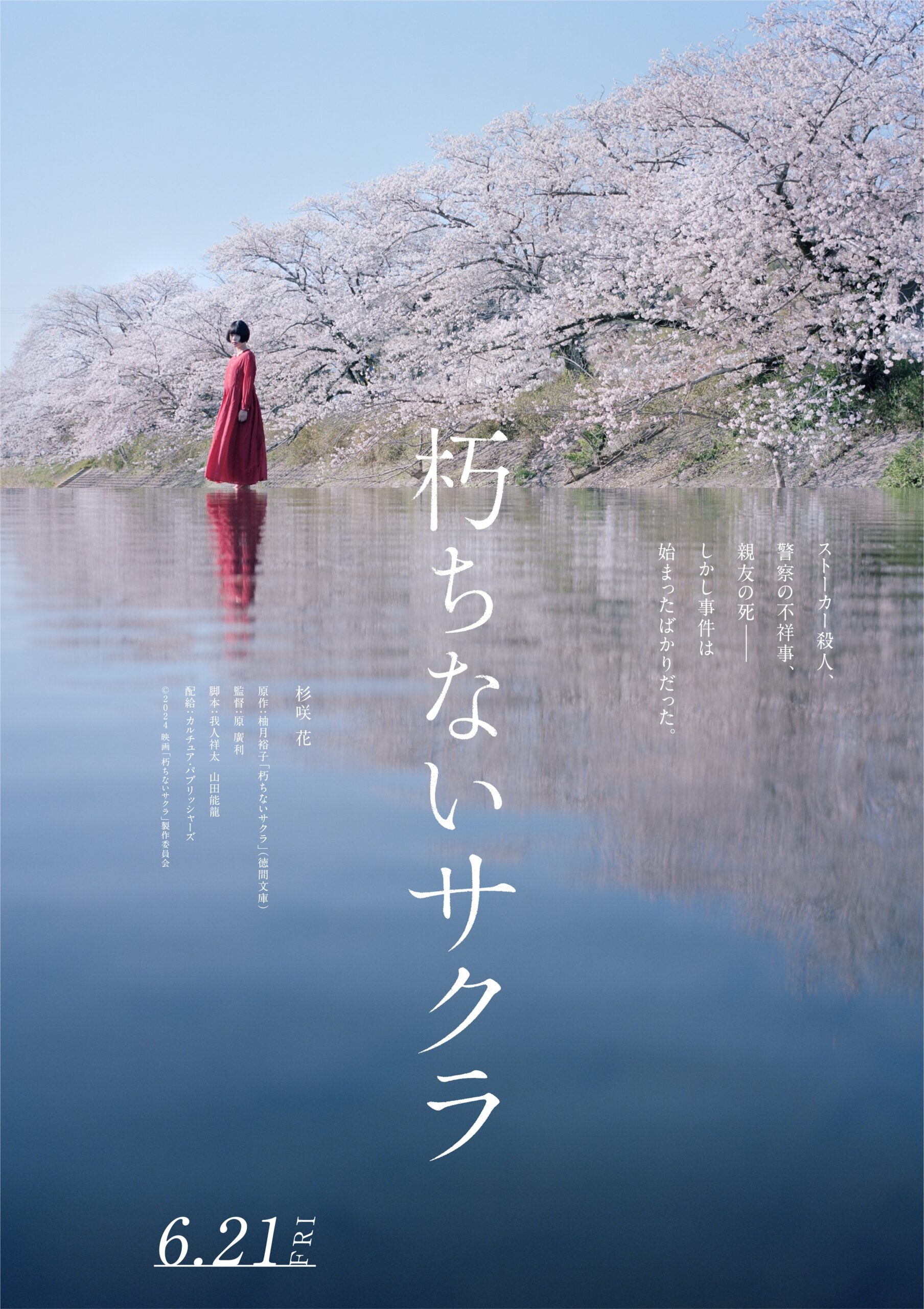
Images: ©2024 SAKURA Film Partners

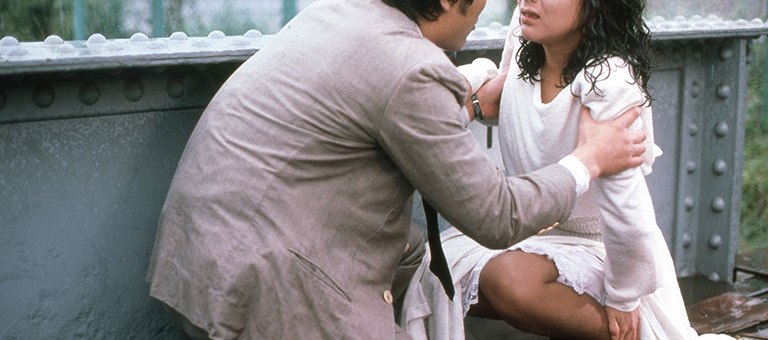
Scent of a Spell (魔性の香り, Toshiharu Ikeda, 1985)

Esaka (Johnny Okura) feels like someone’s watching him. He has this sense of being observed by some otherworldly force along with a generalised feeling of uneasiness. But his paranoia seems to melt away after rescuing a young woman, Akiko (Mari Amachi), whose attempted suicide he witnesses during a rainstorm on his way home. He takes her in and one thing leads to another. For a time, they’re blissfully happy but then something starts to nag at him. Is Akiko really who she claims to be, or a demonic force of monstrous femininity?

It’s this malevolent quality to which the title of Toshiharu Ikeda’s noirish romance Scent of a Spell (魔性の香り, Masho no Kaori) alludes. Esaka is captivated by a hint of mystery and his own white knight syndrome, bewitched by Akiko but also perhaps growing tired of her and fearful of romantic commitment. He has after all been married before and his friend’s comments seems to suggest the cause of marital breakdown may either have been his womanising or his wife’s baseless jealousy. Akiko tells him that she’s on the run from an abusive husband prone to jealous rages and that though she has escaped from Osaka to Tokyo he always manages to track her down. Her sense of being pursued and Esaka’s of being watched seem to perfectly align while he seems to appreciate the fact that she needs him and he is quite literally sheltering her from danger.

Nevertheless, there are cracks in Akiko’s story beginning with the fact the bridge she threw herself off wasn’t the kind to pose a serious risk to life. The drop is only a few feet and though she resolutely refuses to be taken to a hospital because her husband might find her, she may be exaggerating the extent of her injuries. Meanwhile, she seems to have something of a jealous streak becoming irritated when Esaka talks to the proprietress of a local bar, thereafter apparently submitting herself to the attentions of his over-friendly colleague. Perhaps she had a reason to be annoyed given that she didn’t previously know any of these people and he inadvertently excluded her from the conversation, but it’s difficult for Esaka to know if she’s actually being unreasonable or he’s overreacting to a threat to his male pride and autonomy.

It’s this threat to his freedom that’s inflamed when he overhears another man talking to the lady behind the counter at a cafe he regularly goes to about his own girlfriend who is also named “Akiko” written with the character for “autumn”. Though there must be dozens of women with this not all that uncommon name combination in the city, it plants the seed of doubt in him that perhaps his Akiko and the other are the same and she’s two-timing him with this other guy while he’s at work. It also adds to his feeling that she has some kind of malevolent supernatural quality as if she were deliberately targeting lonely men for nefarious reasons. When the man from the cafe is found dead at home having been bludgeoned to death, he can’t help but feel that Akiko must have been involved and possibly intends to harm him too.

Of course, this may just be his fear that she will hurt him emotionally and his growing paranoia is a defence mechanism designed to protect himself against her abandonment or an infringement on his freedom. Or, alternatively, Akiko really is a dangerously crazed and jealous woman and letting her into his life will mean not a moment’s peace until it’s over. Even so, the pair of them discover intimacy in connection in their raw, desperate love making. Every time Esaka’s doubts rise to the surface, Akiko seduces him or he her and he momentarily forgets. In this, the film may have a latent misogyny as a final twist suggests that in the end all women are prone to fits of jealous rage not to mention cunning and trickery directed against each other as much as men who are also, to be fair, faithless liars and cheats. Akiko’s tragic backstory suggests something similar, that she is the inheritor of a legacy of compromised maternity and paternal betrayal. In any case, Esaka is not quite the hero he imagined himself to be either and in the end cannot save Akiko who may also in a way be choosing to sacrifice herself for love of him. Echoing the ending of In a Lonely Place, Ikeda casts their romance as fatalistic tragedy and bathes the noirish closing scenes in a heavenly golden light that suggests true love ends only in futility.


Scent of a Spell is released in the UK on blu-ray 17th February courtesy of Third Window Films.

Cottontail (コットンテール, Patrick Dickinson, 2023)

A recently bereaved widower travelling to Lake Windermere to scatter his wife’s ashes begins to reclaim an image of family in Patrick Dickinson’s melancholy character study, Cottontail (コットンテール). Having travelled to the Lake District in her childhood to visit her father who was working in the UK at the time, Akiko (Tae Kimura) recalled fondly a sense of familial connection symbolised by a photo she believes to have been taken on the lake’s shores and continued to wear a Peter Rabbit necklace right to her dying day.

In a poignant note to her husband Kenzaburo Lily Franky) written before her dementia worsened and left with a Buddhist priest until the time of her death, Akiko expresses regret that they were never able to go there again as a family while she was alive but would like him to scatter her ashes on Lake Windermere in the company of their Son, Toshi (Ryo Nishikido), who now has a wife and daughter of his own.

As we can see from the opening scenes, Kenzaburo is a man living at odds with the world around him. Emotionally distant, he finds it difficult to relate to his son and often quite literally shuts him out leaving Toshi hurt and resentful. To begin with, Kenzaburo insists he will go to Lake Windermere on his own and only later agrees to allow Toshi and his family to accompany him, making all the travel arrangements. Once there, however, he becomes impatient and after a minor argument over the itinerary takes off alone only to get on the wrong train and end up on the opposite side of the country as he’s kindly informed by a raucous hen party on their way to York. Forced to rely on the kindness of strangers, he’s taken in by a farmer (Ciarán Hinds) and his daughter (Aoife Hinds) who have suffered a bereavement themselves and attempt to help him process his loss while encouraging him to reconcile with his son. Presenting a kind of mirror he may bounce off while mediating these complex emotions in a second language allows Kenzaburo the opportunity to confront himself and his grief along with his feelings of inadequacy as a husband and father.

We can sense his own regret in a flashback to a meeting in a cafe shortly after Akiko was diagnosed with dementia in which she looks to Kenzaburo for reassurance but he remains in denial. She tells him that she’s afraid and can’t bear the idea of losing her family or becoming a burden to them but he simply tells her that it won’t come to that as if he were closing himself off to the reality but also from her in leaving Akiko alone to deal with her fear and loneliness in refusal to confront anything that is emotionally difficult or unpleasant. Yet Kenzaburo refuses to relinquish her memory, stubbornly carrying her ashes in a tea tin and at times holding it up as if he were showing her around and attempting to share this trip with her in a more literal way.

What threatens to devolve into a more conventional road trip drama in which Kenzaburo is helped on his way by a series of improbably kind and sagacious strangers develops into something deeper as he trudges his way through the English countryside which as it turns out is not all that aesthetically different from that of Japan and largely free of the often claustrophobic hedgerows that literally separate us from the surrounding scenery. The landscape further recalls scenes from Kenzaburo’s life as he begins to reflect on his time with Akiko and confront the reality of her loss along with his new life without her.

In effect, he’s journeying towards a recreation of Akiko’s photograph and its capture of a brief moment of familial unity in a gradual process of reconciling with Toshi and his own position as a father. Quiet and unassuming, Dickinson’s film is less a slow voyage through grief and learning to let go as it is one of gaining courage to open a door that had long been closed, Kenzaburo no longer the melancholy octopus hiding deep in the ocean but a bobbing rabbit eager to experience more of the world around him before it’s too late.


Cottontail opens in UK cinemas 14th February courtesy of Day for Night.

UK trailer (English subtitles)

In the Wake (護られなかった者たちへ, Takahisa Zeze, 2021)

According to a young woman at the centre of Takahisa Zeze’s In the Wake (護られなかった者たちへ, Mamorarenakatta Monotachi he), natural disasters are monsters that devour humans with no rhyme or reason, but people close to her have died by human hands while left at the mercy of a hypocritical social welfare system. Though the social workers insist that benefits are something everyone is entitled to when they need support, others go to great lengths to stop anyone getting them. “That’s the country we live in,” one explains with a tone that implies he thinks this is exactly as it should be.

That social worker is the second to be found dead in suspicious circumstances nine years after the devastating 2011 earthquake and tsunami. The police obviously suspect a grudge, that someone who was turned down for benefits got fed up and killed him in revenge. But as assistant Mikiko (Kaya Kiyohara) says, it’s unlikely to be any of them because they are all “too busy trying to survive,” so they don’t have time to waste on things like vengeance. Zeze then switches to the welfare office where a social worker is trying to explain to an elderly applicant all of the different forms and documentation he’ll need to prepare for his claim. These people already have to jump through hoops to prove their “neediness,” while most of them feel defeated and humiliated in even having to ask and would prefer not to have to depend on the government. 

But a lot of Mikiko’s work involves challenging those suspected of committing benefits fraud. The first of two people she talks to is a single mother with mental health issues (Chika Uchida) who’s had to start working full-time and consequently gone over her allowance meaning her benefits should stop and she should pay back what was “wrongfully” claimed. The woman insists she needs the extra money because her daughter was being bullied for being on benefits so she wants to send her to cram school and be able to buy educational supplies, but Mikiko remains unsympathetic. The second is a man who it’s admittedly harder to sympathise with as he appears to have bought quite a fancy car which again takes him over the limit as a car is classed as a luxury item rather than a necessity. Mikiko doesn’t think they should pay out when he could easily sell the car. Of course, it’s not that simple. The man may need the car in order to work and without it would have no choice but to rely on benefits to a greater extent. In any case, he gets on Mikiko’s nerves because to her it’s people like him that prevent them helping more “genuinely” needy cases. 

But on the other hand, when they could and should have helped they refused and effectively blackmailed an old lady into revoking her application even though she had only 6000 yen (£30) left in the bank and was on the brink of starvation with no one else to turn to. Another of the social workers insists that good neighbours are the most effective way of tackling poverty which is equal parts unreasonable and unrealistic. Then again, there was a kind of solidarity that arose in the wake of the earthquake in which an old woman’s kindness saved a young man and little girl from being dragged away by the weight of their despair, giving them a new home and surrogate family along with proof of the fact that there is always someone there to help and that kind of compassion can be a kind of salvation. 

Even so, Mikiko’s insistence that you have to ask to receive, along with the welfare officer’s almost vampiric obsession with getting the applicant themselves to clearly state they need help, seems contrary to her philosophy in which it should just be provided with no questions asked. They know how difficult asking for help can be and deliberately leverage the social stigma of being on benefits to discourage people from applying for them. Citing increased demand and government cut backs in the wake of the earthquake, the social worker confusingly suggests that by declining more cases they can help more people in the long run which doesn’t make a tremendous amount of sense while his eerie grinning hints that he has begun to enjoying sadistically humiliating these vulnerable people who’ve been brave enough to come forward and ask for that to which they are otherwise entitled. 

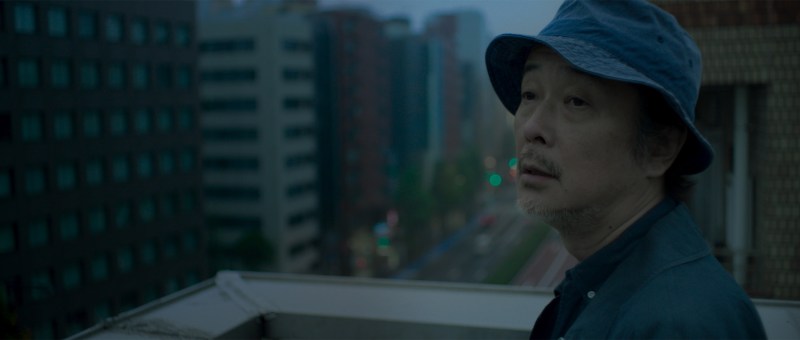
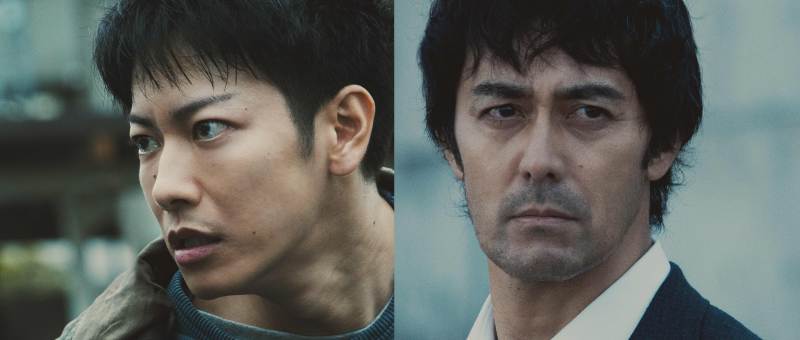
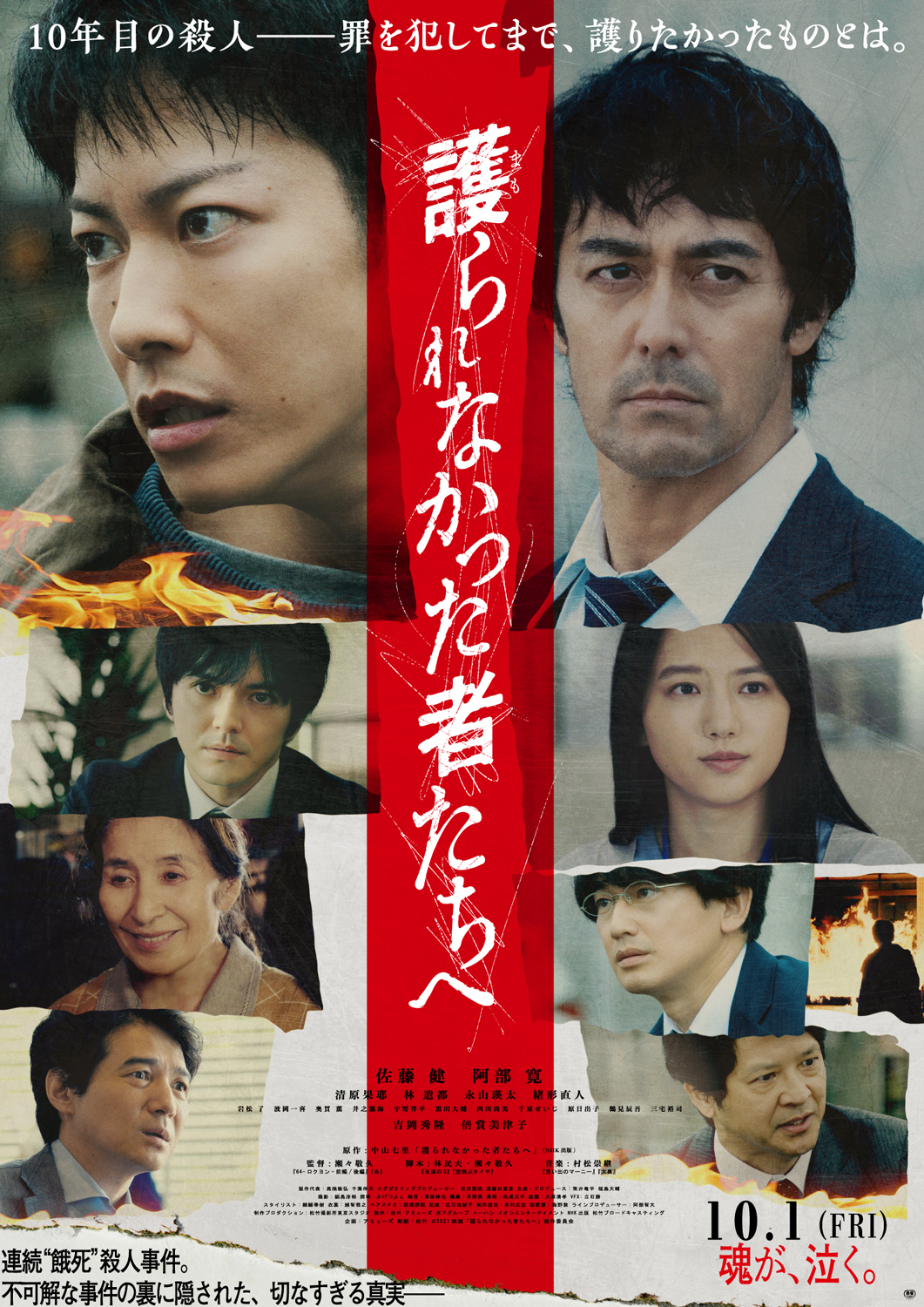
They are all living in the wake of this disaster, something of which aloof yet empathetic detective Tomashino (Hiroshi Abe) is all too aware having lost his wife and son in the disaster. As his son’s body was never found, he too lives in a state of limbo but through investigating the killings begins to find a kind of closure along with an unexpected sense of understanding with a gloomy young man, Yasuhisa (Takeru Satoh), himself a suspect and struggling to make sense of the past, his survival, and the ongoing injustice of the world around him. The film takes its Japanese title, “those who were not protected”, from a note Mikiko writes about the importance of empathy in social work encouraging her colleagues to rebel even if their bosses tell them not to, but also hints at the grief and guilt felt by those left behind that in the end there were those they were not able to save but they can perhaps make their peace with that by continuing to help those around them even if their society largely refuses to do so.


In the Wake screens as part of this year’s Japan Foundation Touring Film Programme.

Trailer (English subtitles)
To Mom, With Love (お母さんが一緒, Ryosuke Hashiguchi, 2024)

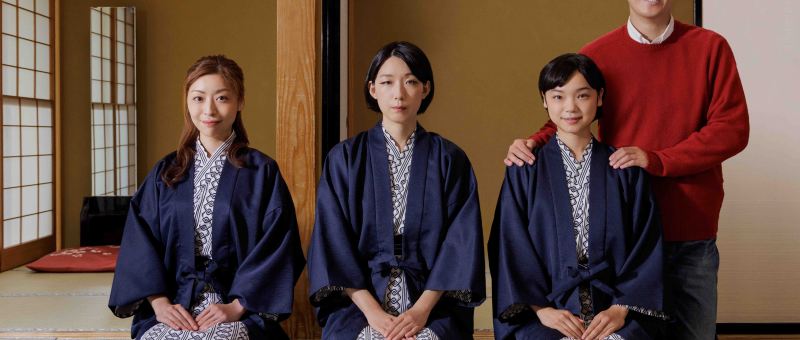
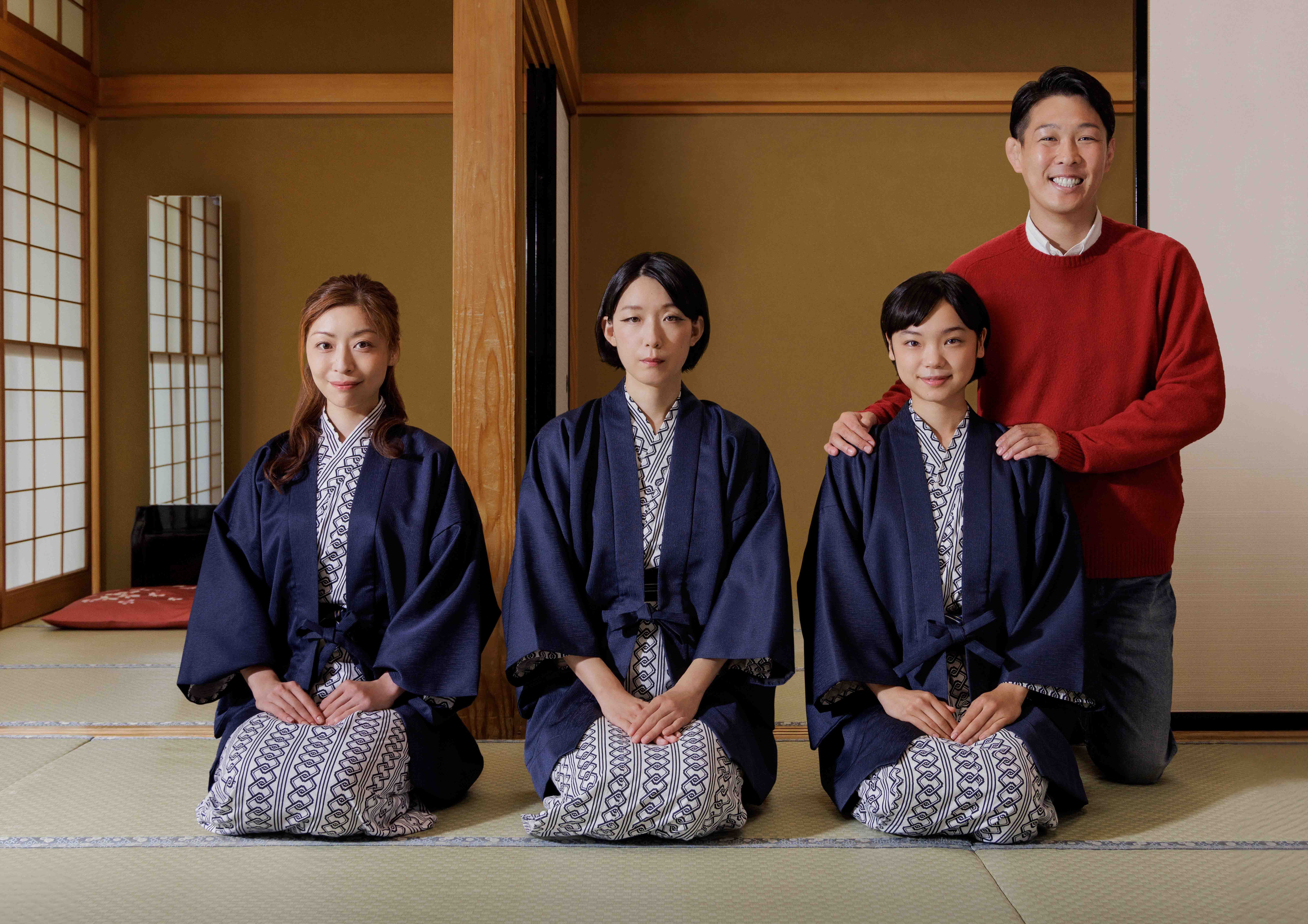
Three sisters embark on an ill-advised family trip to a rundown onsen to celebrate their difficult to please mother’s birthday but eventually discover a kind of serenity in their sisterhood in Ryosuke Hashiguchi’s To Mom, with Love (お母さんが一緒, Okasan ga Issho). Best known for his queer-themed films, this is Hashiguchi’s first feature in a decade and was made to celebrate the 25th anniversary of Shochiku’s family drama channel. As such it explores the perspectives of each of the sisters along with contemplating that of their unseen mother as they each find themselves trapped within oppressively patriarchal social structures.

Which is to say, the main problem is marriage. All the mother wants for her birthday is a grandchild but none of the sisters is married and the older two are ageing out of the prospect of motherhood. 40-ish Yayoi (Noriko Eguchi) has like her mother become somewhat embittered, constantly carping on about the facilities at the old-fashioned inn which she says smells of mould rather than the refreshing scent of tatami mats. She snipes at her sister Manami (Chika Udisa), 35, who has had a string of unsuccessful relationships including one with a married man, while the youngest sister, Kiyomi (Kotone Furukawa), 29, is about to spring the surprise that she is engaged to the son of their local liquor store, Takahiro (Fallgachi Aoyama), as a sort of birthday present for her nagging mother.

This pressure to marry and have children is overwhelming and largely stemming from the mother herself, but it’s clear that she suffered in life because of an arranged marriage to the sisters’ father which was ultimately unhappy. Manami recalls a rare family holiday in which her parents argued in a restaurant and her father violently threw his fork to the floor. He wasn’t an easy person either, but the mother still wants nothing more than to inflict this same misery on her daughters as means of declaring her own life successful. Manami may have a point when she says that they shouldn’t have come on this trip given that it doesn’t seem like something their mother would enjoy and in fact like Yayoi what she apparently enjoys most is complaining about it before going to bed early and ruining everyone’s plans for the evening. 

While all this is going on, Kiyomi has Takehiro hiding out in their room waiting for the signal to join them and doing so patiently without complaint. Though he seems fairly clueless, in contrast to the sisters he’s a calm, easy-going presence and eager to keep the peace. He might be a bit of a flirt, not exactly objecting to Manami’s inappropriately flirty behaviour and hanging out with two other women in the inn’s lounge while Kiyomi bickers with her sisters, but otherwise seems like he just might be nice. An only child, he might secretly be a little jealous of Kiyomi for having siblings to bicker with, though that’s something that Kiyomi is too insensitive to notice at least right away. In any case, his family life seems to have been much warmer and down to earth than that of the sisters who though they berate each other for blaming their problems on others struggle to let go of their familial traumas.

In part, that’s why Takahiro’s arrival sparks such a crisis for it means that Kiyomi will be moving on to the conventionally domestic future which has eluded Yayoi and Manami though they each appear to have desired it. Kiyomi says she was left with no choice but to spring this surprise because her mother wouldn’t listen to her otherwise, but it perhaps also hints at her self-doubt that she will really be able to fulfil these roles as wife and mother or that her own marriage will be any happier than her parents’. Tempers rise and grievances are aired, but in the end you can only really have these incredibly raw arguments with family because they’re the only ones who’ll forgive you once the storm has cleared. Though it may have been a bad idea to come on this trip, there is something in the healing powers of the waters or “power spots” at the local shrine which even seems to cause their constantly “negative” mother to say something nice even as the sisters realise that in the end they only have each other but perhaps need little else.


To Mom, With Love screens as part of this year’s Japan Foundation Touring Film Programme.

Trailer (Japanese subtitles)

Images: ©2024 SHOCHIKU BROADCASTING Co., Ltd.

A Girl Named Ann (あんのこと, Yu Irie, 2024)

In the wake of tragedy, it’s easy to think that if only you had made a different choice then everything would be alright, but in reality it’s never as easy as that and blaming oneself is merely an act of vanity. There’s a peculiar kind of tradeoff that occurs to journalist Kirino (Goro Inagaki), that if he hadn’t written an article exposing a policeman who founded a support group for former drug users trying to integrate into mainstream society as a sex pest, then he might have gone on to help more people. Of course, he would have gone on abusing some of them too and his behaviour would probably have escalated into something much worse. The journalist begins to ask himself if it’s worth it for the net good, without necessarily examining the ramifications of the policeman’s actions.

Yu Irie’s bleak social drama A Girl Named Ann (あんのこと, An no Koto) draws inspiration from a real life case in which a young woman began to turn her life around only to reach a crisis point during the pandemic. The film’s title almost makes an everywoman of its heroine who is resolutely failed by the society in which she lives and in the end discovers only a sense of futility in realising that she will never fully be able to escape the clutches of her abusive mother (Aoba Kawai) who forced her into sex work at age 12. Ann never even finished primary school even though middle school is compulsory and is functionally illiterate. Her reading level is that of a small child which of course makes it near impossible for her to be employed in any kind of salaried job while when she does secure employment her mother steals all her money. 

Being arrested by Tatara (Jiro Sato), a policeman who at first seems well-meaning even if positing “yoga” as a means of turning Ann’s life around, finally gives Ann the encouragement to come off drugs and try to integrate into mainstream society. To his credit, Tatara does everything he can for her from providing a paternal presence to finally helping her escape her mother by getting her a place in an apartment complex set up for women who are being stalked or have experienced domestic violence. Living alone gives Ann a sense of confidence and positivity that allows her to imagine a better future for herself while confronting her past. But on the other hand, it remains true that Tatara may have been better to help her move to another city where her mother would be less likely to find her and derail her life at every conceivable opportunity rather than keeping her close at his own support group which is perhaps an act of vanity if not something worse. No one helps for free and Ann encounters only differing kinds of exploitation from the employers who take her on at poverty wages because they know how desperate she is and don’t think she deserves any better, to the conflicted journalist Kirino who is only really invested in his investigation of Tatara. Ann seems to resent him for exposing Tatara and taking him away from her, but neither of the men make much of an attempt to continue supporting her once the story breaks. 

Ann’s plight exposes how the weakest in society were disproportionately affected by the coronavirus pandemic. The care home she was working at, poignantly because she wanted to learn how to take care of her grandmother (Yuriko Hirooka) who had shielded her from her mother’s abuse, is forced to restrict the number of employees on site meaning Ann is let go while the classes she’d been taking to improve her literacy are also cancelled. Though the apartment requires no rent, she no longer has a means of feeding herself not to mention being stuck inside all the time with nothing to do but study, and not even that when all her pens run out of ink. People are often judgemental and there is no further social support available to her. Even Tatara had been overly fixated on her drug use and while it’s true that she would otherwise be unable to rejoin society without recovering, he otherwise fails to consider other factors such as Ann’s toxic home life or trauma from the long years of abuse she suffered that all contribute to the problems she is facing. 

Even so, unlike her mother Ann is a warm and caring person who is well liked at the care home and clearly has a lot of love to give but the universe won’t seem to give her a break. Perhaps it would be easiest to simply blame her mother, but something must have made her like that too and there’s no one there for her either. She sometimes calls Ann “Mama”, as if the roles were reversed and she were the child being parented by Ann rather than the other way round. In any case, she comes to embody the selfishness of an indifferent society which could have saved a girl like Ann if really wanted to but in the end did not.


A Girl Named Ann screens as part of this year’s Japan Foundation Touring Film Programme.

Trailer (English subtitles)

Images: ©2024 “A Girl Named Ann” Film Partners

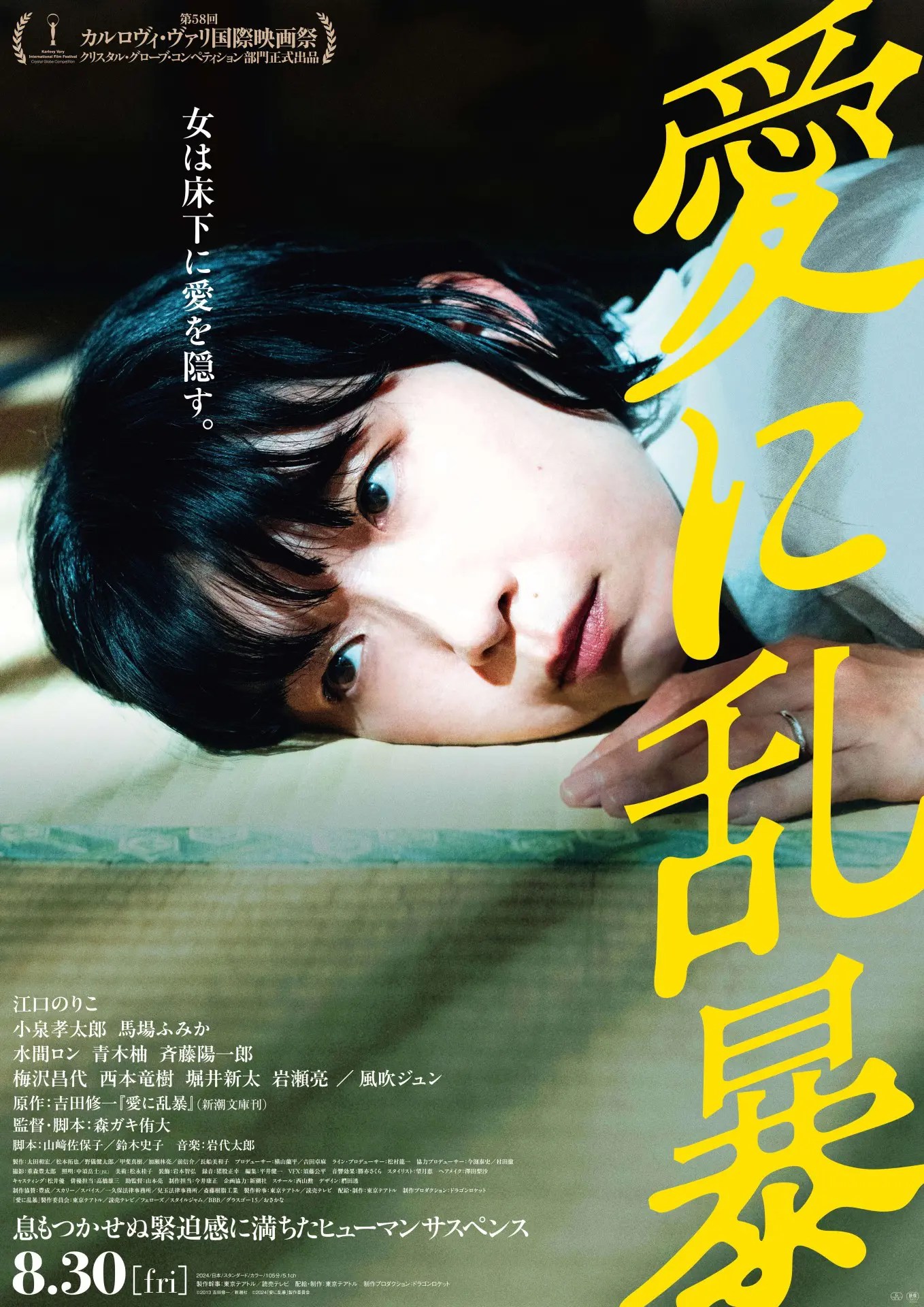
Rude to Love (愛に乱暴, Yukihiro Morigaki, 2024)

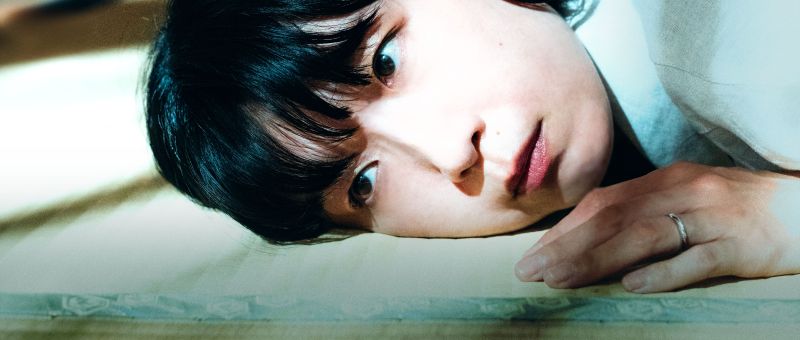
Momoko (Noriko Eguchi) can’t find her cat, Pi-chan. It hasn’t been home for days, and now there’s a stray prowling around near its water bowl. Her mother-in-law, Teruko (Jun Fubuki), can’t abide strays. They come into people’s homes and mess up their gardens. She shoos them away, making it clear they aren’t welcome here. It seems like Momoko’s not all that welcome either, and though her relationship with Teruko is civil enough, it’s clear Teruko has no great love for her and no desire to be any more friendly than she has to be to keep the familial peace.

In many ways, it’s Momoko herself that’s a stray cat and in trying to find Pi-chan she’s trying to reclaim her space within the domestic environment in which she fears she is imminently to be replaced, convinced that her husband, Mamoru (Kotaro Koizumi), is having an affair. At the core of Yukihiro Morigaki’s Rude to Love (愛に乱暴, Ai ni Ranbo) is a cry of despair from a middle-aged woman left with nowhere to turn. Someone in their quiet, residential district has been setting fire to the bins and it’s difficult to not think that the culprit is someone much like Momoko pushed to breaking point and desperate for some kind of release. For Momoko’s part, taking out Teruko’s rubbish has become a daily ritual and one of her key tasks as a dutiful daughter-in-law while she also goes out of her way to keep the place tidy, sweeping up the stray cigarette butts and tin cans that fall from other people’s loosely tied bags. But in other ways, we can see she wants things to change. She repeatedly approaches Mamoru with catalogues to talk about their plans for radically renovating their home, including the removal of a non-load-bearing pillar in the living room, but he generally ignores her.

In fact, Mamoru pays little attention to her at all and is frequently away on “business trips”. Momoko has a sideline in teaching other housewives how to make soap, but left her corporate job eight years previously when she married Mamoru. She tries approaching her old boss to expand the soap-making business and he suggests that she return to the office instead but almost certainly doesn’t really mean it and totally ignores her business proposal. Momoko knows that after so long out of the work force and as a middle-aged woman getting another corporate job is unlikely and the soap classes don’t pay enough to live on. If Mamoru leaves her, she’ll be left flat with nothing to fall back on. This is a key element of Mamoru’s betrayal and one of the reasons that Momoko holds fast to this domestic space to the point she would degrade herself by accepting Mamoru’s affair and begging him not to divorce her. 

Yet in other ways Momoko feels uneasy within it because she and Mamoru had no children. She looks on at other women with their babies and visits a doctor who tells her that her increasingly painful menstrual cramps are a symptom of ageing that she may have been able to ameliorate by giving birth to a child, but also that she is likely heading into the menopause so this maternal milestone is one that may already have passed her by. She can’t escape the feeling that she’s failed to make a success of her womanhood and channels all of her ambitions and desires into the remodelling project that her husband remains entirely uninterested in because he’s already decided to vacate this space. In the depths of her rage, Momoko finally takes a chainsaw to the foundations of her home in the hope of “freeing Pi-chan,” and ends up lying in a grave-like pit in the middle of her living room much like the deluded patriarch of The Crazy Family. 

The only person who seems to appreciate her efforts is the Chinese student, Li (Long Mizuma), who works at the local garden centre where he is treated poorly by some of the other customers. Mamoru never thanked her for anything, but Li expresses gratitude for her always keeping the rubbish drop tidy. Teruko resents her for something that is really a kind of misunderstanding, but has on some level some sympathy for her plight as a housewife. She idly remarks that she wishes she’d been widowed sooner, which sounds like a terrible thing to say, but also reflects the sense of doom a woman feels in her increasing age that a man does not. Men are never too old to start over but for a woman there are certain things for which is just “too late”, just as it was “too late” for Teruko to fulfil herself after her husband died. She tells Momoko that she still young enough to start over, but Momoko knows that in many ways she’s not. Still, at least the domestic space is hers to do with as she pleases no longer under the watchful eyes of her next-door neighbour and mother-in-law, stray cat no more but master of her own domain.


Rude to Love screens as part of this year’s Japan Foundation Touring Film Programme.

Trailer (no subtitles)

Based on the original novel Shuichi Yoshida “Rude to Love” published by Shinchosha

Images: ©2013 Shuichi Yoshida/Shinchosha ©2024 “Rude to Love” Film Production Committee

Bonds of Love (愛のきずな, Takashi Tsuboshima, 1969)

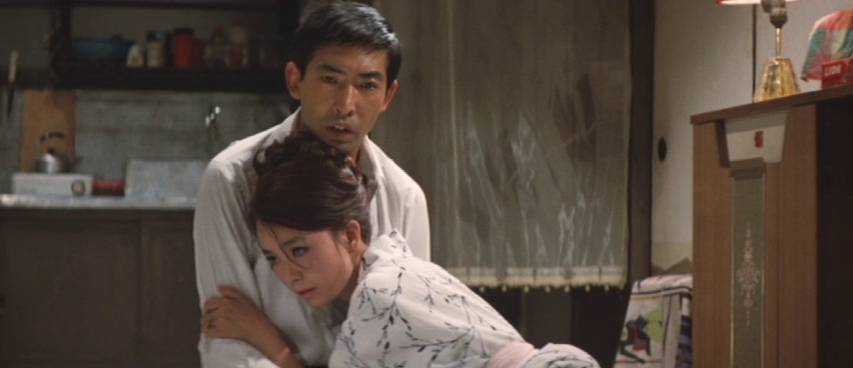
On a rainy night, a salaryman trapped in a loveless marriage and unsatisfying career chances on a beautiful woman dressed in kimono waiting by the side of the road. He decides to double back and offer her a lift, which she ill-advisedly accepts, but as it turns out he is actually the one in danger. Adapted from the Seicho Matsumoto short story Tazutazushi, The Bonds of Love (愛のきずな, Ai no Kizuna) has underlying misogyny that paints the woman at its centre as a sort of elemental spirit who bewitches men and leads them to their doom even while the hero himself is selfish and insecure, mired in an inferiority complex and incapacitated by wounded male pride.

The fact that Ryohei (Makoto Fujita) is already married comes as a bit of a shock, abruptly revealed as it is by the nameplate on the suburban home he returns to after a date with Yukiko (singer Mari Sono) having told her that he lives alone at the company dorm. It seems obvious that he’s dissatisfied with his domestic life and fed up with his overly materialist wife Sanae (Chisako Hara) whose constant gripes only seem to needle at his sense of inadequacy. Today, she’s misplaced an expensive ring he’d used his annual bonus to buy her and when he notices it simply sitting next to the sink, she remarks that it’s not all that nice anyway. Ryohei at least feels that she resents him for not being more successful and having the financial power to buy her the frivolous gifts and status symbols she clearly desires. The power dynamic is in any case unbalanced because Sanae is the daughter of his boss which means she in effect has total control over his career. One word to her father, and he’s toast, but at the same time she can only help him so far with his advancement despite nagging him constantly about his future prospects. Meanwhile, the other men at the office make fun of him. They describe Ryohei as an idiot who’s only in his position by virtue of being the boss’ son-in-law. 

This of course further needles at his wounded male pride, but dating Yukiko, who adores him completely, on the side restores his sense of masculinity. After he claims to have been staying out late playing mahjong, Sanae cautions him that one of his colleagues is being transferred because of his gambling and womanising habits. At his leaving do, Miyata (Sachio Sakai) lays into Ryohei and says he’s the one who taught him how to pick up women and pretend to be single as if this is the way they overcome their sense of impotence while under the company’s thumb. Ryohei appears not to like him, perhaps because he reflects the qualities in himself he is least proud of. The news of his transfer therefore spooks Ryohei knowing that the same fate may befall him if his affair with Yukiko is exposed. 

But when Sanae does eventually suspect he’s cheating on her and complains to her mother, the boss rings Ryohei and basically tells him not to worry about it because a man’s not a man if he doesn’t play around. The conflict that Ryohei has is essentially one of conflicting masculinities, the one in which he is effectively emasculated but defines his status through a hierarchical relationship with other men within the corporate structure, and the other in which he defines it through romantic conquest which also represents a kind of freedom. But being a fairly conventional man, in the end Ryohei cannot bear to have his salaryman persona ripped away from him and will do whatever it takes to maintain his relationship with his wife and by proxy his boss to preserve his career.

Realising Yukiko poses a threat to that, he decides the only solution is to kill her but it’s also true that he’s confronted by a much more robust vision of masculinity in the form of her estranged husband Kenji (Makoto Sato) who went to prison after stabbing another man in a jealous rage. It’s clear that Ryohei is afraid of Kenji and definitely doesn’t want to end up getting stabbed. His “love” for Yukiko does not stand up to that kind of scrutiny and it’s her assertion that she’s going to tell Kenji all about their affair and ask for a divorce that shifts him into crisis mode. After all, he’s in flight from domesticity. Leaving Sanae, and with it destroying his career might not solve his problems even if what he eventually chooses is just that, to be free of the burden of the salaryman dream and move to a small town to open a shop with a woman who is in thrall to him and therefore continually submissive and loving in contrast to Sanae who only ever makes him feel small.

Yet, we can’t actually be sure how much of what happens later is actually real or just Ryohei imagining things because of his guilty conscience and continuing sense of inadequacy. Essentially, he gets a second chance to make better choices and finally gains the courage to abandon his salaryman persona only to be immediately confronted by both his transgressions and violent masculinity. Tsuboshima crafts an atmosphere of malevolence and noirish dread coupled with a spiritual sense of retribution born of the constant rains and gothic thunderstorm that heralds the final confrontation in which Yukiko is herself a harbinger of death leading weak willed men towards their doom to which they go all too willingly. 


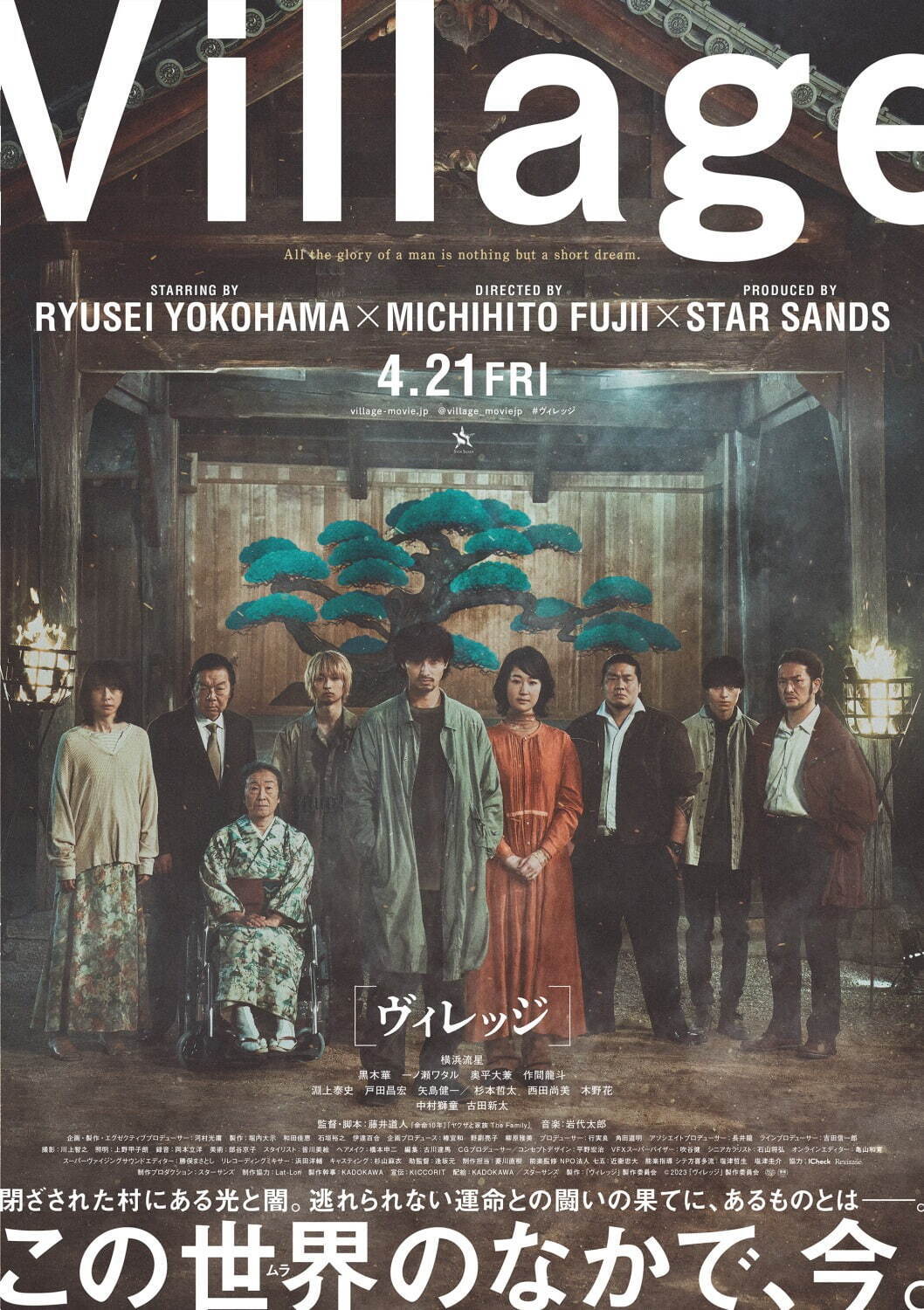
The Village (ヴィレッジ, Michihito Fujii, 2023)

The toxicity of life in small-town Japan is manifested in a giant recycling plant in Michihito Fujii’s poetic drama, The Village (ヴィレッジ). Closely aligned with the noh play quoted in the opening title card, the film charts a young man’s simultaneous blossoming and corruption as he finds himself at the service of a demonic mayor and fighting for his place in a village that doesn’t need him but requires a sacrifice. 

In the opening scenes, mist rises over the mountain accompanied by noh recitation before we eventually arrive at a noh recital. These two images would seem to signal a kind of innate Japaneseness which has been corrupted by the presence of the recycling plant despite the economic benefits it’s brought to the area. The mayor, and boss of the plant, Ohashi (Arata Furuta), wants to extend it out across the other mountains in the region and boasts that though there may have been resistance at first now everyone is grateful to them for everything they’ve done for the village. 

Yu’s (Ryusei Yokohama) father was the last holdout against the plant and apparently ended up killing a man in an altercation thereafter taking his own life and burning down their family home. Because of the stigma surrounding his father’s actions, Yu has been ostracised by his community and is used as a perpetual kicking bag not least by Ohashi’s thuggish son Toru (Wataru Ichinose) at his job at the plant. His mother has also turned to drink and developed a pachinko problem which has resulted in massive debts to yakuza loanshark Maruoka (Tetta Sugimoto) who’s press-ganged Yu into working at the illegal dumpsite which is how the plant really makes its money.

But his life begins to change when childhood friend Misaki (Haru Kuroki) returns to the village having apparently suffered a breakdown in Tokyo. Misaki’s resurfacing reinforces the purgatorial atmosphere as if everyone here were already dead. Having been away so long, only she immediately embraces Yu and simultaneously bonds with him in their outsider status. Encouraging him at work and at home, Yu gradually becomes more confident but equally dependent on the plant for his newfound status. When he’s suggested as the host of a TV documentary some of the locals object given his family background, but in contrast to his father’s opposition Yu is slowly seduced by the plant and the new life it offers him which seems almost too good to be true like a dream he is sure to be awoken from. In this, he mimics the man in the noh play who falls asleep in an inn and is transported to a world in which he is an emperor. He lives there happily for 50 years only to wake up again back in the inn and realise that really life is just a dream. 

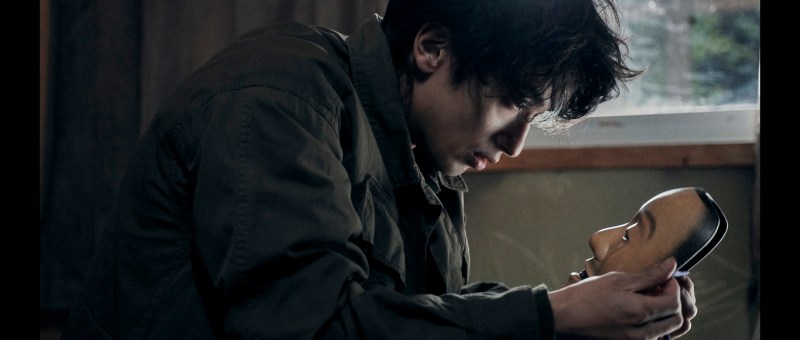
Misaki hands him back his noh mask as means of separating himself from the world around him. She says that it forces you to confront yourself, and also perhaps implies a deeper connection with an idealised vision of pre-modern Japan uncorrupted by the greed and cynicism of a man like Ohashi who claims that “position is all that matters.” Toru had told Yu that the village didn’t need him, Misaki and Ohashi say it does though for different reasons. Yet Ohashi darkly suggests that it also needs a sacrfice, and in an odd way just as his father before him it may be Yu who sacrifices himself even at the cost of his idealised life. His encroaching cynicism is directly contrasted with the idealism of Misaki’s younger brother Keiichi (Ryuto Sakuma) who like he once was is meek and diffident yet certain in his idealism and unwilling to along with the lies and wrongdoing that increasingly define village life. Eventually, he leaves the village altogether.

Yu meanwhile achieves his destiny in bringing things full circle, conducting a kind of purification ritual that aims to rid the village of Ohashi’s corruption as symbolised by the giant rubbish tip which is slowly consuming the landscape. Yu’s problem was that he tried to make his life on top of all this filth and toxicity only to realise what the price of that new life might be. Conjuring the strange and oppressive atmosphere of small-town life where past is always present and petty prejudices die hard, Fujii spins a poetic tale of fatalism and redemption amid the misty mountains and ancient chants of a slowly dying village.


Trailer (English subtitles)