Sorasoi (そらそい, Katsuhito Ishii, Shunichiro Miki, Yuka Osumi, 2008)

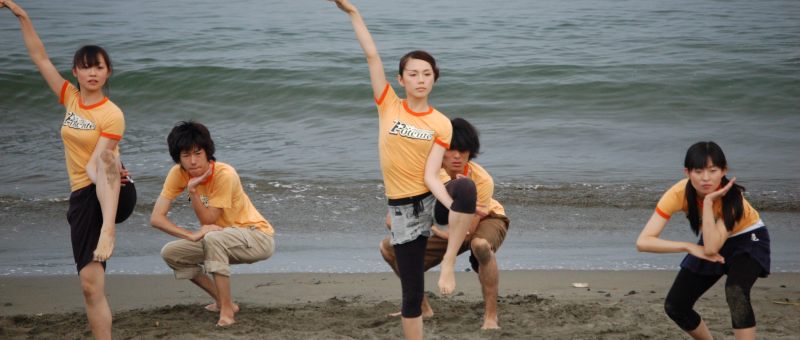
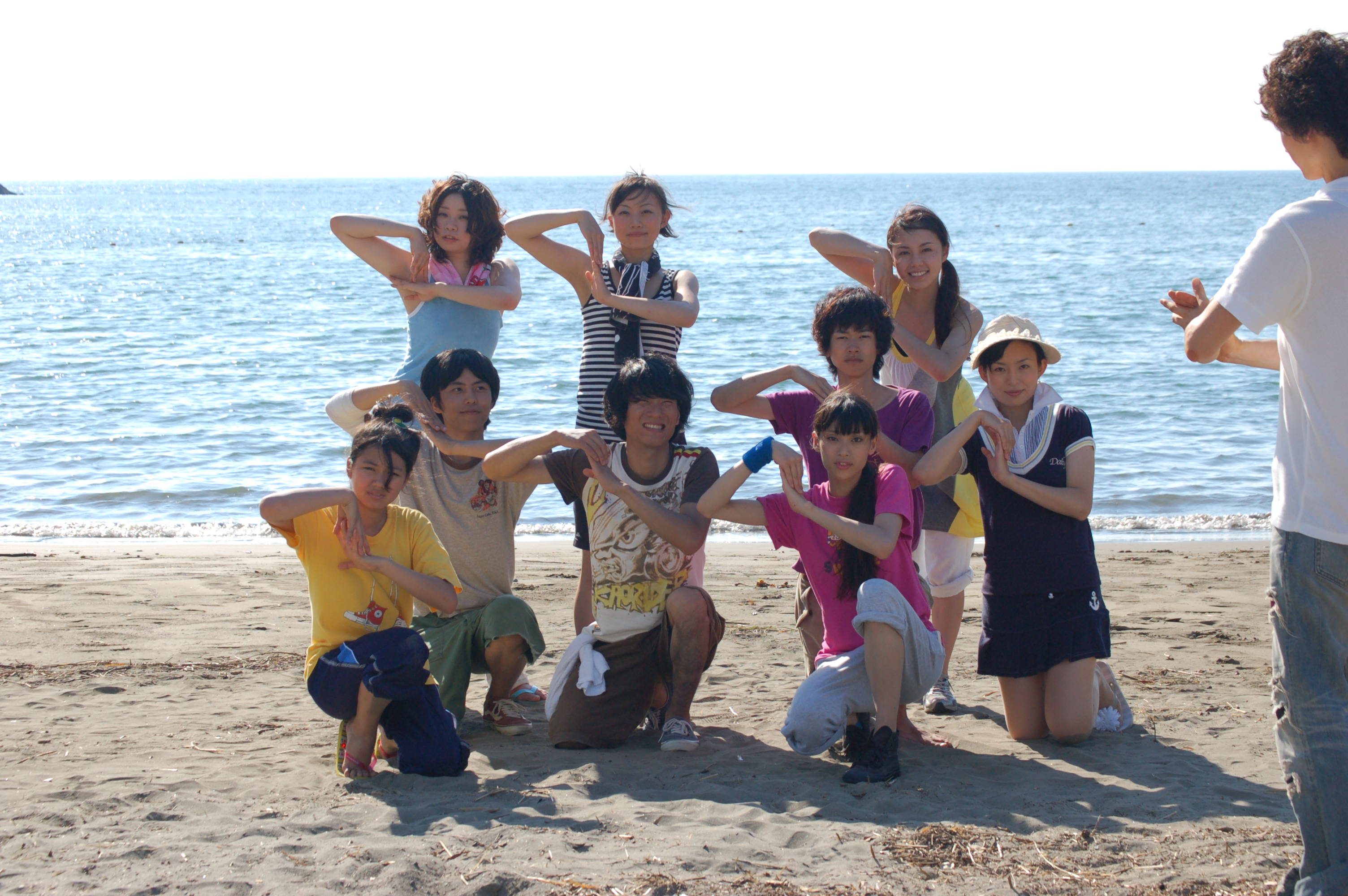
Students on a dance summer camp pick up a few lessons in authenticity and self-confidence while staying in an out of the way coastal hotel in Katsuhito Ishii, Shunichiro Miki, and Yuka Osumi’s goofy comedy Sorasoi (そらそい). Reuniting Ishii and Miki after Funky Forest, the film is less episodic in nature than the directors’ other work and quirky rather than surreal but otherwise offers some of the same lessons as those found in Party 7 as the students begin to discover new things about themselves and others while practicing dance on the beach. 

Led by teacher Tabe (Sota Aoyama) who claims to have been a top dancer with the Royal Ballet before an injury ended his career, the dance team consists of four girls and three boys all of whom Tabe regards as no hopers with little motivation to succeed. A trio of men lounging in donuts floating nearby in the sea gently mock them from a distance, but nevertheless utter a few words of encouragement as they leave the beach. Meanwhile, another young woman, Yuri (Sayuri Ichikawa), arrives to stay at the hotel after approaching the local tourist information office and asking for a reservation at somewhere that isn’t listed in the phonebook. 

Her request may echo that of Party 7’s Miki and her reasoning is similar in that she is clearly hoping to take some time out and doesn’t want to be bothered as evidenced by her decision to ignore missed calls and texts on her phone. The inn owner is forever trying to convince her to travel to a nearby beauty spot named the Cape of Love and its Lovers’ Bell though also dropping in casually that people sometimes take their own lives there which may be irresponsible given Yuri’s ambiguous mental state. In any case, she quickly catches the attention of student Ryu (Ryu Morioka) who begins pursuing her in a friendly if decidedly inappropriate way. 

The three guys tell each other that they’re only doing dance to get girls and that the fact the ones from the dance troupe aren’t interested in them can be excused because they are “different”. Engaging in stereotypically crude male banter one of them later tries to steal the girls’ underwear but as it turns out, at least two of them do actually like dancing and discover new things about themselves in the midst of their romantic pursuits, Ryu’s for Yuri and Atsushi’s (Atsushi Yoshioka) for Kano (Kanoko Kawaguchi ), a mysterious kimono’d woman who arrives to visit. The girls meanwhile are similarly focussed on romance with Ai (Ai Makino) besotted with the grumpy teacher Tabe and Kikka (Kikka) dropping entirely unsubtle hints that she’s in love with the seemingly straight Mako (Masako Satoh) who thinks she’s just playing around. 

They are all, however, keeping some kind of secret mainly because they fear being judged by others whether it relates to their sexuality, having embellished their CV, or having told a slightly bigger lie to help achieve their dancing dreams. What each of them learns is that it doesn’t matter very much if their dancing isn’t very good so long as they enjoy doing it and feel good about spreading that joy to others. Yuri, meanwhile, has some much more grown up dilemmas to consider especially as it transpires she may have been attempting to escape an abusive relationship with a degree of pressure placed on her from various directions to return because her boyfriend is “really a good guy” who made a “mistake” in a momentary fit of temper which is a fairly dated and uncomfortable sentiment to see presented so uncritically even in 2008. Nevertheless, the sense of discomfort is somewhat undercut in a counter courtship from Ryu who offers a sweet and romantic note that leaves the ball entirely in her court. 

In the best tradition of summer break movies, the film’s relaxed atmosphere adds to its laidback charm as do the unfussy indie visuals while the enthusiastic performances from a largely amateur cast of students from Ishii’s acting school (bar the participation of Warped Forest’s Fumi Nikaido and Ryu Morioka) reinforce the central messages of working hard at something you love whether it goes anywhere or not. The mutual solidarity of those around them with similar dreams affords the students the confidence to be more of who they are while clarifying what it is they may actually want out of life even if for some the future still seems uncertain.


Sorasoi is released in the UK on blu-ray on 17th July as part of Third Window Films’ Katsuhito Ishii Collection.

Original trailer (English subtitles)

Thorns Of Beauty (恋のいばら, Hideo Jojo, 2023)

“Can two women who like the same guy become best friends?” A loose remake of Pang Ho-Cheung’s 2004 Hong Kong comedy Beyond our Ken, Hideo Jojo’s Thorns of Beauty (恋のいばら, Koi no Ibara) finds a jilted ex teaming up with the current squeeze against a no good guy who has compromising photos of each of them he could potentially expose online anytime he feels like it. Not quite everything is as it first appears, yet as they plot revenge against the caddish Kentaro (Keisuke Watanabe) the pair begin to discover a bond that runs deeper than their shared quest for validation.

Momo (Honoka Matsumoto), a mousy librarian, first accosts Riko (Tina Tamashiro), an aspiring dancer who works at a nightclub, on a bus, staring at her intensely until she finally removes her earphones. In truth, Momo never quite shakes an edge of possibly dangerous eccentricity and there is always an underlying doubt that she is telling the truth when she explains to Riko that she and Kentaro were previously an item and he has private photographs of her she fears he may intend to post online. For whatever reason, Riko decides to hear her out and though insisting that Kentaro’s not that sort of guy seems to think there may be something in it. A photographer by trade, Kentaro has in the past photographed her without her consent claiming that he spends all day photographing things other people find beautiful and wanted capture something for himself in his free time. 

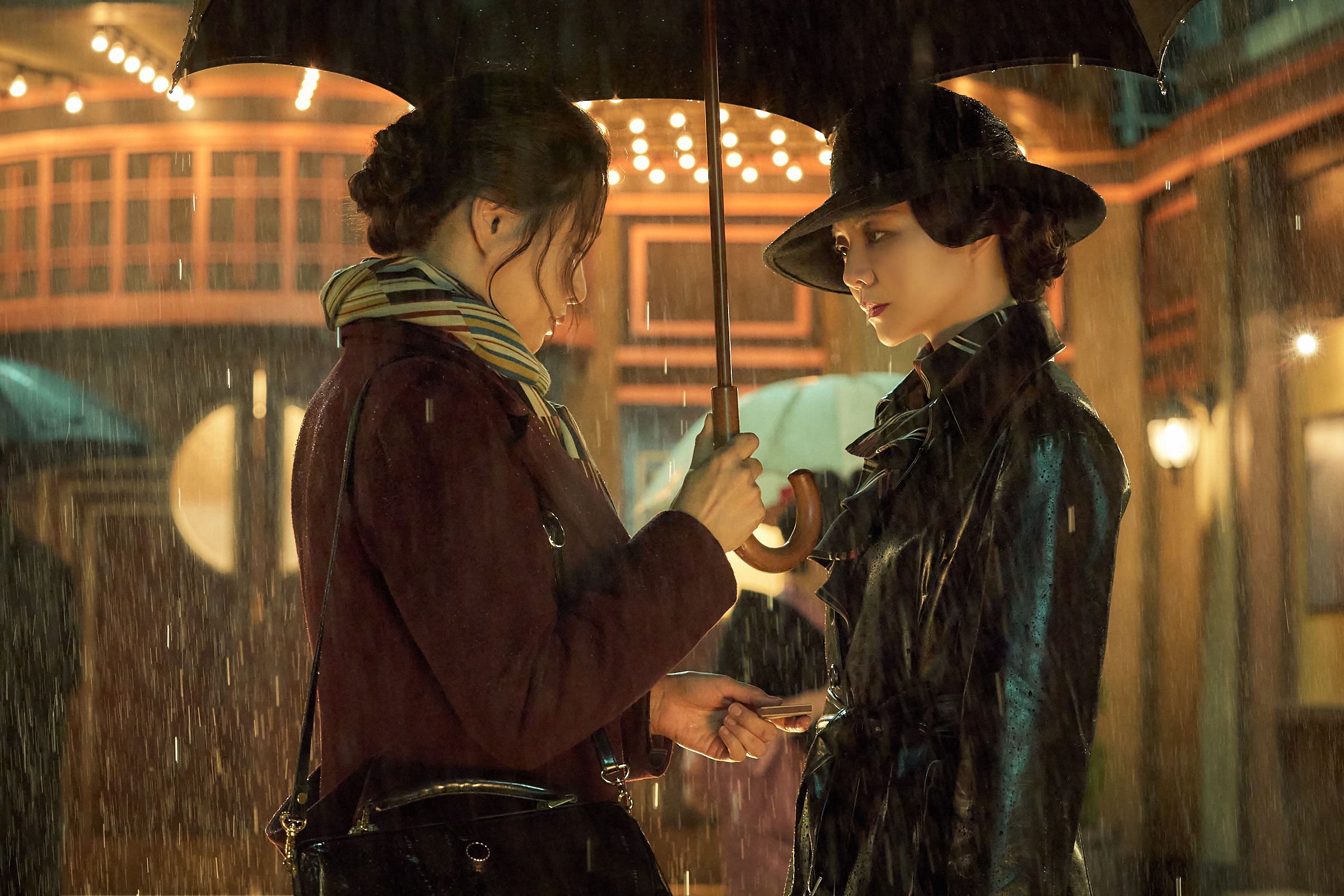
Much of the story is filtered through a version of Sleeping Beauty that Momo finds at the library where she works. As the two women bond in their shared quest for revenge, Jojo often plays with the image of them as “witches” lighting them in an eerie green while they dress in black with hats that cast shadows over their faces. Yet we also find ourselves wondering who the sleeping beauty is in this scenario, an unexpected candidate turning out to be Kentaro’s elderly grandmother who has dementia and spends her days collecting shiny things to build a vast fairytale castle. Momo comes to see herself as hoping to wake Riko from a moment of romantic fantasy with a man who in the end doesn’t really care for her which she likely knows but has allowed the relationship to continue mainly out of a sense of inertia. 

But in teaming up with Riko, Momo also begins to awaken from her own low self-esteem in believing herself to be inferior to someone like her. There are times when we wonder if this is going to turn into a Single White Female-style bid at identity theft as Momo seems to idolise her new friend possibly planning to eliminate her and reclaim her place in Kentaro’s life. In the end, however, both women are throughly awakened from their romantic illusions in realising that Kentaro is indeed that sort of person with a hard disk full of pictures of other women just like them while their friendship also begins to take on a distinctly homoerotic quality that clearly runs beyond simple friendship or female solidarity. 

As Momo reflects, Sleeping Beauty is a passive heroine who is asleep for the entirety of her own story. When she’s born, the fairies give her various gifts that turn her into a stereotypical figure of idealised femininity and leave her with nothing to want or strive for. Momo wonders if that doesn’t make her a little boring and if Sleeping Beauty actually wanted any of those things or in the end they were just burden to her. Momo would only be grateful for things she actually wanted like the ability to totally become herself, while Riko reflects on a “past life” as a woman living happily with her two sons by a lake in Switzerland. Cutting through the thorns of their illusions, they awaken each other to a sense of possibility each of them may long have forgotten. Strangely poignant in the touching quality of its central romance along with fairytale allusions, the film in the end allows both women to reclaim an image of themselves from a man who tried to take it from them without ever really bothering to look at it. 


Thorns Of Beauty screened as part of this year’s Nippon Connection.

International trailer (English subtitles)

Memento Mori (여고괴담 두번째 이야기, Kim Tae-yong & Min Kyu-dong, 1999)

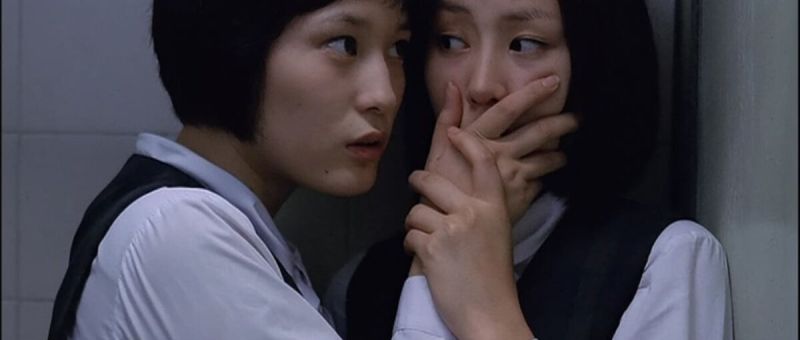
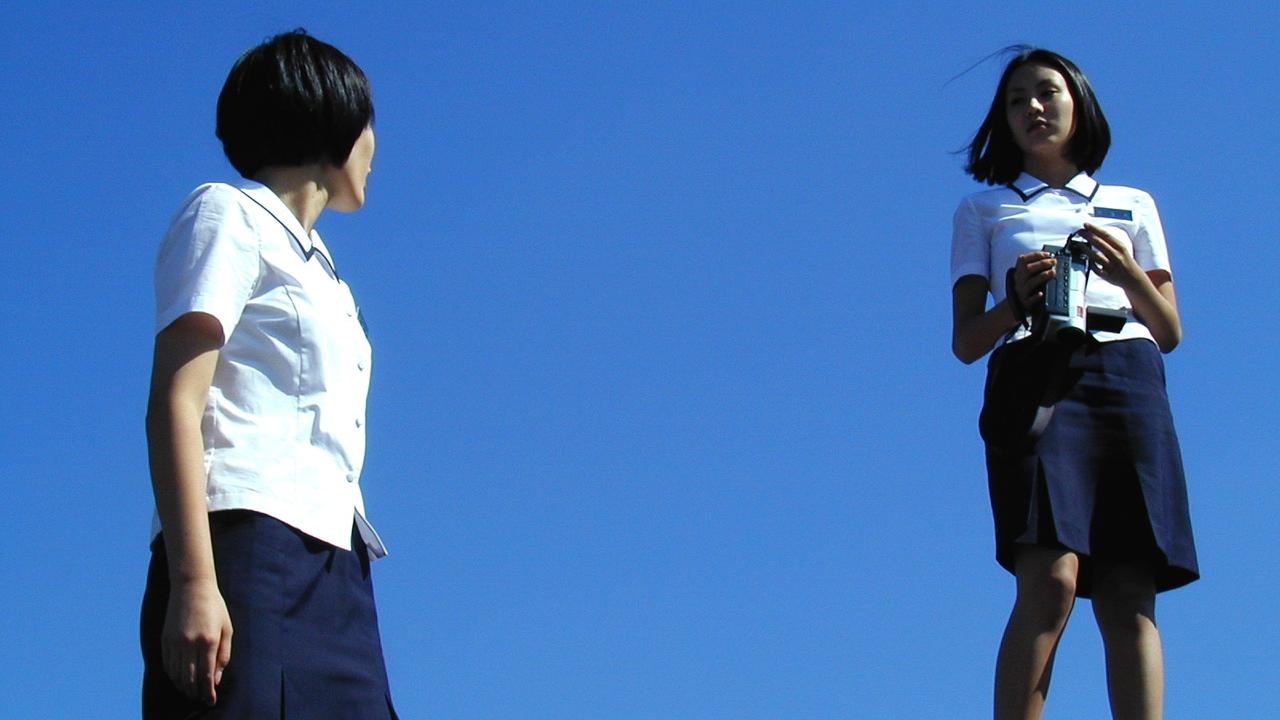
Internalised shame leads to tragic, unforeseen consequences in landmark South Korean horror Memento Mori (여고괴담 두번째 이야기, Yeogogoedam Dubeonchae Iyagi). The second in a thematic series of high school ghost stories, the film was radical for its time in its presentation of same sex romance in demonising not the love but the world that would not accept it while otherwise painting a fairly bleak picture of the educational landscape in which teachers are only ever symbols of a corrupt authority intent on enforcing oppressive patriarchal social codes.

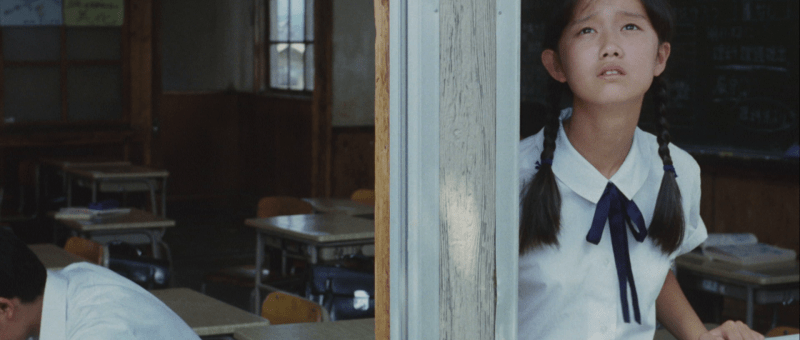
The film’s heroine is in many ways an audience member, or at least a fairly passive observer of the ongoing drama who only later inserts herself into the narrative. Min-ah (Kim Min-sun) discovers a mysterious “diary” near the sports ground and is quickly hooked on its cryptic contents even before realising that it details a lesbian relationship between two of her classmates who were at one point “close” but have since “drifted apart”. The author, Hyo-shin (Park Ye-jin), is already considered “weird” by her classmates and does seem to have an otherworldly quality, most particularly in her tendency to speak in an uncanny manner. She is also accused of being a “lesbian” by an obnoxious fellow student laying bare the way these teens already enforce a social prejudice which oppresses them all. 

Min-ah’s friend Yeon-an (Kim Jae-in) has been fasting for the last few weeks to try and get her weight down before the school’s physical health check up, while Ji-won (Gong Hyo-jin) is similarly concerned with her chest measurement. This is an all girls school, and there is a clear preoccupation with the ability to conform to notions of conventional femininity while all of the teachers that we see aside from the school nurse are male and enforce discipline with quite shocking levels of violence. Yeon-an and Ji-won land up in trouble for playing around with a video camera they’d brought in to record choir practice when it’s discovered by a teacher who reacts as if he thinks the girls are on some kind of whistleblowing mission. He clearly feels that his authority has been questioned, which also implies that he knows his behaviour is “wrong”, and punishes the girls for their “rebellion” against him. 

After Hyo-shin dies in an apparent suicide, it is rumoured that she may have been pregnant which would certainly explain her desire to get out of the health check. In a flashback, she suggests that she may have drifted into an inappropriate sexual relationship with a dejected teacher, Mr. Goh (Baek Jong-hak), who claims that he doesn’t get on with his “materialistic” colleagues while fed up with the vacuous teenage girls he’s supposed to be teaching. Yet Mr. Goh appears to have suffered little after Hyo-shin’s death despite being the apparent father of her unborn child, leaving only Hyo-shin’s vengeful spirit to enact some kind of justice. 

It’s Mr. Goh who did in some way disrupt the relationship between Hyo-shin and Shi-eun (Lee Young-jin) who seems to feel on some level betrayed while deepening her inner conflict as regards her sexuality. Unlike the other girls, Shi-eun presents in a slightly more masculine fashion, not least because of her athleticism, and is filled with an internalised shame about her relationship with Hyo-shin which she otherwise does not share. In the dreamlike scene which opens the film, Hyo-shin and Shi-eun are plunged into water tied at the ankle by the red string of fate which in popular mythology signifies a true romantic connection. But as they fall together, Shi-eun begins to panic and unties herself. She violently pushes Hyo-shin away who then continues to sink into the murky depths below. This act of physical rejection is repeated several times, most notably when Hyo-shin kisses Shi-eun in front of their classmates shortly after she has been struck in the face by their teacher. Shi-eun pushes her away, and thereafter ignores her before directly stating that she is “ashamed” and does not care what Hyo-shin decides to do with her life. 

It’s this rejection that the film posits as the cause of Hyo-shin’s suicide, though the romance itself is constantly overshadowed by death. Obsessed with the diary, Min-ah eats a “magic” sweet stuck inside which is described as some kind of love poison for which Hyo-shin has an antidote, only in the climax of the film it seems to be the reverse and a kind of prelude to a double suicide. In the dreamworld created by Hyo-shin’s spirit, the schoolgirls assemble for something that looks a lot like a wedding though ostensibly a birthday party in which the couple is accepted by the world around them only in reality it can never happen in part because Shi-eun herself does not permit it to. 

Directors Kim and Min hint at the feverish atmosphere with blown out whites and strange angles even before entering the menacing dreamscape of Hyo-shin’s revenge, lending a note of unsteadiness to Min-ah’s obsessive investigation of the diary that perhaps reveals something of herself even as it draws her towards a dark spiritual destiny. In any case, what it leaves behind is a deep sense of melancholy for the tragedy of the teenage lovers who in the end maybe the ones haunted by the world around them.


Memento Mori screened as part of this year’s Queer East .

Trailer (English subtitles)

Home Ground (홈그라운드, Kwon Aram, 2022)

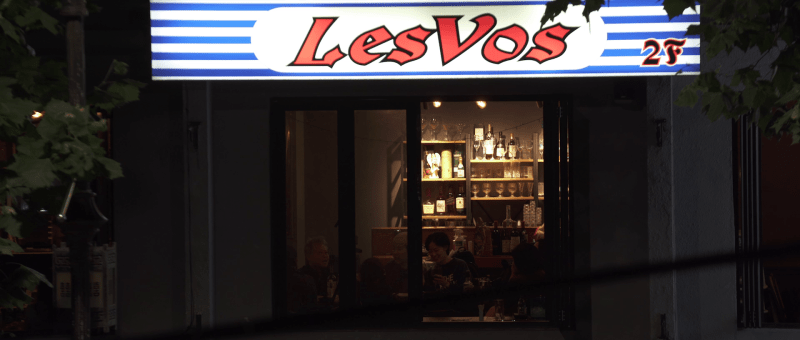
The ageing proprietor of an endangered lesbian bar reflects on the changing nature of queer culture in Korea over the last five decades in Kwon Aram’s contemplative documentary Home Ground (홈그라운드). “Home ground” is what many have come to regard spaces such as LesVos, but with changing times and the effects of the coronavirus pandemic maintaining them is becoming ever harder leaving the community with the few places to gather where they can come together in safety and solidarity. 

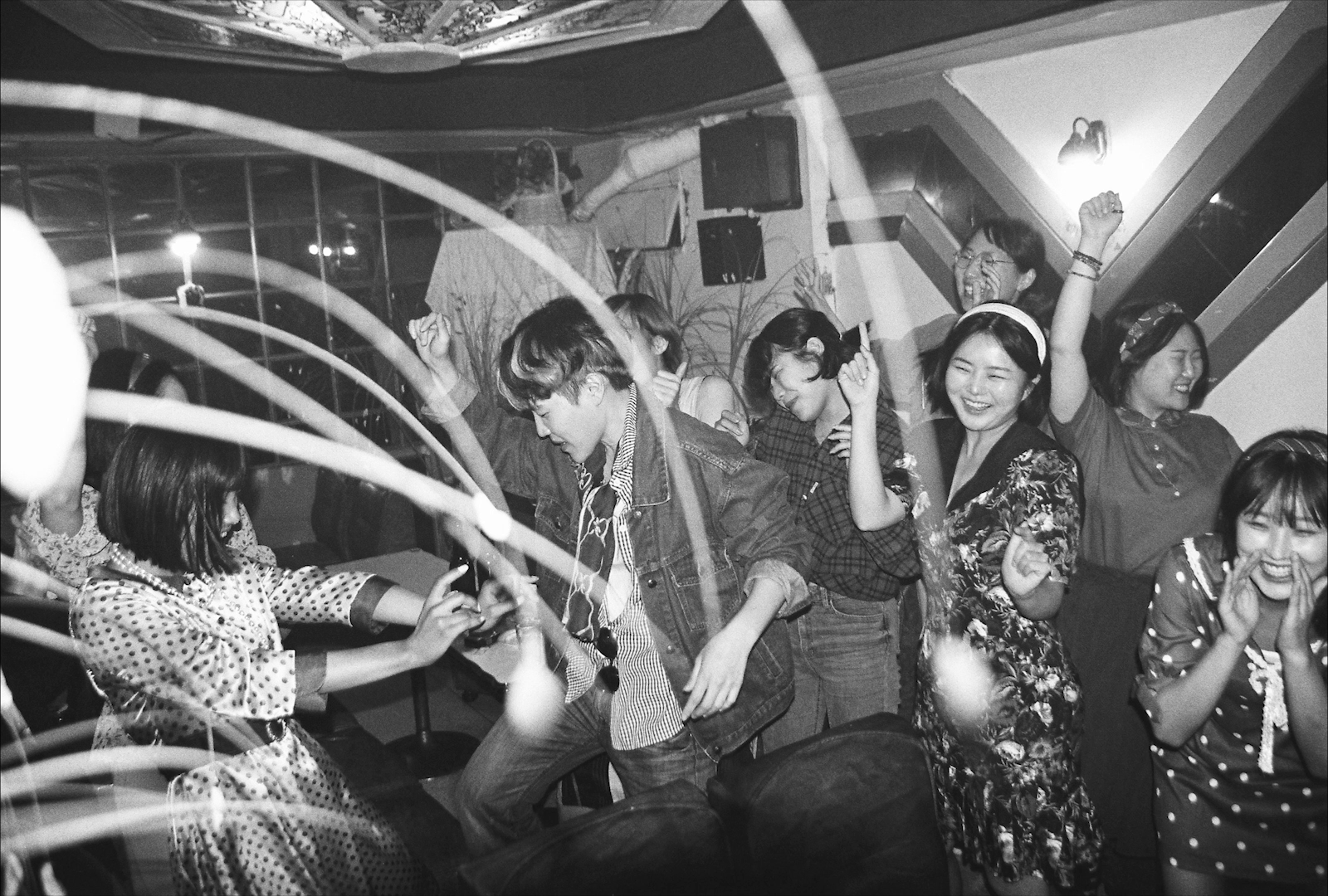
Though it has moved location, the documentary’s primary subject, Myong-woo, has run bar LesVos since in the late ‘90s. The first openly lesbian bar in Korea, it has provided a friendly and welcoming space for the LGBTQ+ community for almost 30 years though as Myong-woo relates times have certainly changed as they look back to the queer bars of Myeong-dong in 1970s including the legendary Chanel Tearoom which was raided by police in 1974 on the grounds of its scandalous “Decadence”. Kwon uses a mixture of stock footage and re-enactments to recreate the atmosphere of bygone eras as Myong-woo’s oldest friend Kkokji recalls the atmosphere at Chanel which had a strict no long hair rule and expected its patrons to dress smartly in suits. 

Like Myong-woo, Kkokji identifies himself as a transman and prefers to be address as “hyung” (older brother) though the pair are often mistakenly addressed as “auntie”. Myong-woo recalls breaking the heart of a boy in middle school whom he “dated” to fit in, knowing that he had to hide his sexuality though he seems to have been well accepted now in reuniting with a collection of school friends at LesVos. Kkokji meanwhile laments his difficulties finding employment because of his appearance and gender presentation while recalling a violent past as a street brawler and recruiter of women for bars in the ’70s and ’80s. 

LesVos by comparison seems to have been a more wholesome place, Myong-woo recalling that in the old days cherry coke and ice cream sundaes were firm favourites of the clientele. Before the bar existed, queer teens used to hang out in Shinchon Park where they found a sense of community along with an opportunity to meet new people in a comparatively safe place where they could be themselves. After checking with the licensing authorities who told him it was fine as long as he didn’t sell cigarettes or alcohol, Myong-Woo opened the bar to teens so they’d have a place to go that was safer than hanging out in the streets. 

Another former patron has created a safe space of her own in a queer-friendly dance studio where as she puts it they make life more fun and less lonely. Yet in the face of the pandemic, the community lost the ability to come together while faced with additional prejudice after the coronavirus cluster in an Itaewon club. As one interviewee relates, people began to blame LGBTQ+ people as if they were uniquely irresponsible without thinking about the reasons why the community feels the need to come together. Another adds that queer people were already “social distancing” before the pandemic, and that without queer spaces are often forced to hide who they are in a society which can often be hostile. 

Faced with the economic realities of the pandemic, Myong-woo worries he will have to close the bar while countless similar spaces have pasted closing notices on their doors. Myong-Woo himself is also ageing, a trip to the doctors revealing the toll standing for hours every day has taken on his feet while he’s also taken on another part-time job working in a kimbap shop with no money coming in through the bar. Even so he reveals how much he’s learning from his younger customers about how the community has changed while society largely refuses to. He reflects that he thought the young people of today had it better, but realises he is mistaken on attending a rally protesting the death of a transgender soldier who took their own life after being discharged from the army because of their transition. Myong-woo keeps the bar open to provide a place of refuge for those who may not have anywhere else to go, opening their doors on holidays for those who have only their queer family to rely on. “You can’t do it alone,” he reflects doing his best to preserve a small space of safety and solidarity amid a sometimes hostile atmosphere.


Home Ground screens at The Barbican 30th April as part of this year’s Queer East .

Bad Women of China (中华坏女人, He Xiaopei, 2021)

“Mum gave all her love to the Party and saved her grudges for family.” As she explains, documentarian He Xiaopei began her documentary Bad Women of China (中华坏女人, Zhōnghuá Huài Nǚrén) as a means of communicating with the mother who remained silent and distant towards her, yet nevertheless contemplates three generations of Chinese women through the prism of her own life as a lesbian who lived much of her life abroad. 

After many years living in the UK, Xiaopei returned to China with her grown-up daughter Qiao whom she ended up asking to interview her mother Yun Li in an attempt to improve her relationship with her. In a sense it works, Yun Li begins to talk about her life and history which as it turns out is very much intertwined with that of the Communist Party. The disconnection between them stems from Xiaopei’s sense of abandonment, unable to understand as a child why her mother decided to live separately from the family in a dorm at the Foreign Languages Institute where she studied and trained diplomats. In the prelude to the Cultural Revolution, Yun Li was branded a “rightist”. Sent to the country for re-education she seems to have overcorrected, leaving her family to prove her devotion to the Party. 

Then again, despite her hurt and longing Xiaopei is later forced to realise that she became a mother much like her own. Though she identified herself as a lesbian at a young age, Xiaopei married at random to have an attachment that was to life more than anything else and then had her daughter but became estranged from the husband with whom she had little in common. She too left Qiao behind for long periods of time while she went to study abroad, first as an economist and then intending to study feminism before eventually moving to the UK with longtime partner Susie and bringing her daughter with her. In the closing scenes of the film which are shot with sound only against a black screen, Qiao confronts her mother in the way Xiaopei was unable to do directly telling her that she felt neglected, that she wanted more love and a sense of reassurance Xiaopei was unable to give her. 

Qiao too is in many ways much like her mother and grandmother, a fiercely independent woman with complicated and fast moving love life. Yun Li had been something of a trailblazer, choosing a husband for herself and getting married on her own only informing her family afterwards in an age which still favoured arranged marriage. She was once struck dumb in childhood when an uncle who was taking care of her refused to let her attend school, and is insistent that a woman should be financially independent rather than rely on a man. Xiaopei broke with convention in divorcing her husband to embrace her authentic self by living openly as a lesbian albeit in the comparatively less conservative UK where she eventually married in 2005 if only to divorce some years later. 

This rebellious sense of autonomy is perhaps why Xiaopei titles the film “bad women” as each of them in some way reject social convention, though there is also the implication that Yun Li’s life was disrupted by her involvement with the Communist Party to which she remains devoted despite the way it treated her and the way she knows it to have treated others. Xiaopei reflects that Yun Li was never interested in fulfilling the stereotypical role of the good wife and mother, and realises that in the end neither was she though she tried to do her best and is in a sense received that Qiao wants her to be a partner and a friend in her life even if she could never fully reconcile with Yun Li who remained frustratingly distant from her. In a certain way, their reconciliation hints at a new sense of liberation in the modern society that allows the women to shake off the roles of mother and daughter and rebuild their relationship on a more equal footing even while the family scatters itself around the world increasing the physical distance between them but shrinking the emotional. 


Bad Women of China screens at Bertha DocHouse 27th April as part of this year’s Queer East 

Trailer (English subtitles)

Typhoon Club (台風クラブ, Shinji Somai, 1985)

A collection of frustrated teens find themselves trapped within a literal storm of adolescence in Shinji Somai’s seminal youth drama Typhoon Club (台風クラブ, Taifu Club). “You’ve been acting weird lately” one character says to another, but he’s been “acting weird” too and so has everyone else as they attempt to reconcile themselves with an oncoming world of phoney adulthood, impending mortality, and the advent of desires they either are unable or afraid to understand, or perhaps understand all too well but worry they will not be understood. 

Most of the teens seem to look to the pensive Mikami (Yuichi Mikami) as a mentor figure. It’s Mikami they call when some of the girls end up half drowning male classmate Akira (Toshiyuki Matsunaga) after some “fun” in the pool gets out of hand. Luckily, Akira is not too badly affected either physically or emotionally, but presents something of a mirror to Mikami’s introspection. Slightly dim and etherial, he entertains his friends by seeing how many pencils he can stick up his nose at the same time, but he’s also as he later says the first to see the rain once it eventually arrives. Notably he leaves before it traps several of the others inside the school without adult supervision and otherwise misses out on the climactic events inside. Even so, Rie (Yuki Kudo), who also misses out by virtue of randomly stealing off to Tokyo for the day, later remarks that he too seems like he’s grown though her words may also be a kind of self projection. 

Mikami’s kind of girlfriend, perpetual spoon-bender Rie, finds herself at a literal crossroads after waking up late because her mother evidently did not return home the night before. Eventually she sets off for class running all the way, but then reaches a fork in the road and changes her mind heading to Tokyo instead. Mikami has been accepted into a prestigious high school there, and perhaps a part of her wanted to go too or at least to get closer to him through familiarity with an unfamiliar environment. Unfortunately she soon encounters a firearms enthusiast (Toshinori Omi) who buys her new clothes and takes her back to his flat which she thankfully manages to escape even if she’s stuck in the city because of a landslide caused by the typhoon.  

Mikami, however, continues to worry about her unable to understand why he’s the only one seemingly bothered about her whereabouts believing she’s “gone crazy”. Trapped in the school, the kids try to ring their teacher Umemiya (Tomokazu Miura) for help but he’s already drunk and can’t really be bothered. In any case he has problems of his own in that his girlfriend’s mother suddenly turned up during class to berate him for stringing her daughter along and also having borrowed a large amount of money which obviously ought to have some strings attached, only as it turns out Junko leant the money to another guy she was seeing though it’s not exactly clear whether she and Umemiya actually broke up or not. “In 15 years you’ll be exactly like me” Umemiya bitterly intones into the phone when Mikami directly states that he no longer respects him deepening Mikami’s adolescent sense of nihilistic despair. 

Of all the teens, he does seem to be the most preoccupied with death. “As long as she’s an egg, the hen can’t fly” he and his brother reflect on discussing if it’s possible for an individual to transcend its species and if it’s possible to transcend it though death all of which lends his eventual decision a note of poignant irony even if its absurd grimness seems to be a strange homage to The Inugami Family. As he points out to his somewhat disturbed friend Ken (Shigeru Benibayashi), “I am not like you” and indeed Ken isn’t quite like the other teens. Obsessed with fellow student Michiko (Yuka Ohnishi) but unable to articulate his feelings, Ken pours acid down her back and watches her squirm as it eats into her flesh. Repeating pleasantries to himself as a mantra, he later attempts to rape her after violently kicking in the dividing walls of the school only to be stopped in his tracks on noticing the scar again and being reminded that he is hurting her. 

The storm seems to provoke a kind of madness, the teens embracing an elusive freedom entirely at odds with the rigid educational environment. The other three girls trapped in the school are a lesbian couple who’d been hiding out in the drama department and their third wheel friend who might otherwise have been keen to hide their relationship from prying eyes having previously been caught out by a bemused and seemingly all seeing Akira. But in this temporary space of constraint and liberation, the teens are each free for a moment at least to be who they are with even Ken and Michiko seemingly setting aside what had just happened between them. They co-opt the stage for a dance party and then take it outside, throwing off their clothes to dance (almost) naked in the rain while a fully clothed Rie does something similar on the streets of the capital. In some ways, in that moment at least they begin to transcend themselves crossing a line into adulthood in a symbolic rebirth. In any case, Somai’s characteristically long takes add to the etherial atmosphere as do his occasional forays into the strange such as Rie’s encounter with a pair of ocarina-playing performance artists in an empty arcade. “We want to go home, but we can’t move” Mikami says looking for guidance his teacher is unwilling to give him neatly underlining the adolescent condition as the teens begin realise they’ll have to find their own way out of this particular storm. 


Typhoon Club screens at Japan Society New York on April 28 as part of Rites of Passage: The Films of Shinji Somai

Say I Do to Me (1人婚禮, Kiwi Chow, 2023)

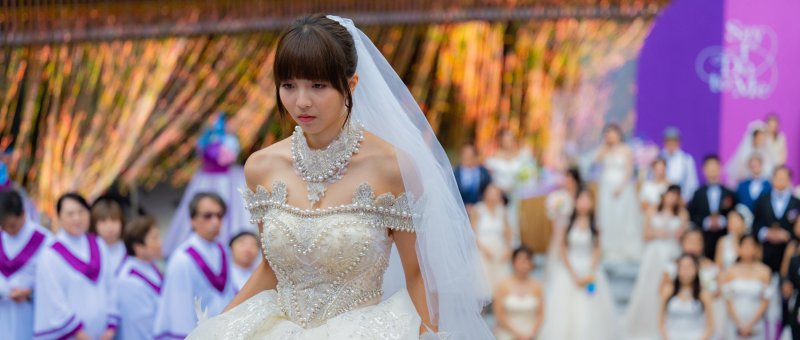
A struggling influencer’s bid for internet fame through marrying herself soon goes dangerously awry in Kiwi Chow’s anarchic take on contemporary social media mores and the need for authenticity, Say I Do to Me (人婚禮). Ping (real life YouTuber Sabrina Ng Ping) swears that she’s done with changing herself for others and is determined to enjoy life on her own terms, but the irony is she’s anything but honest with herself as she attempts to bury her abandonment issues and ambivalence towards marriage beneath her friendly clown persona. 

Despite telling all her followers that she sees no need to wait around for someone else to make her happy so she’s going to marry herself, Ping is in a longterm relationship with middle-school sweetheart Dickson (Hand Rolled Cigarette director Chan Kin-long) who handles the tech side of their YouTube channel. When their clown-themed videos failed to win an audience or pay the bills they started looking for something edgier, shifting their focus to their own relationship. When that too failed to set netizen’s hearts aflame, they started engineering fake romantic drama including a “real fake” wedding and Dickson cheating scandal. To get themselves out of the hole they’d dug, Ping comes up with the idea of “sologamy” in which she’ll get back at “cheating” Dickson with a solo wedding on the day they would have got married, while Dickson mounts a counter campaign wearing a giant monkey head to promote his “solo funeral” movement railing against fake affirmation of Ping’s embrace of “authenticity”.

Of course, authenticity is the one thing Ping isn’t selling. She’s telling everyone else they should be true to themselves, but has based the whole thing on a lie in still being in a relationship with Dickson while adopting a fake influencer persona of a woman who has herself together and is fully ready for commitment. The duplicity begins to eat away at her as she witnesses its effects on others including a middle-aged woman (Candy Lo Hau-Yam) she’d assumed to be in a perfect marriage who suddenly reveals she’s been unhappy for decades because she couldn’t accept her sexuality. Thanks to Ping, she’s decided to divorce her husband and live a more authentic life all of which leaves Ping with very mixed feelings. Meanwhile, she’s relentlessly pursued by a devoutly religious man who seems to be in love with her on spiritual level, and also comes to the attention of “Hong Kong’s last Prince Charming” who has hidden anxieties of his own. 

The film seems to ask if it really matters if Ping was “lying” when her example has made a “positive” difference in people’s lives in enabling to them to accept themselves and find true happiness even if in doing so they might necessarily hurt someone close to them. Dickson seems certain that the internet isn’t really real and you really don’t need to be “authentic” in your online persona, but is all too quickly addicted to the false affirmation of likes and shares and willing to compromise himself morally to get them, all while justifying his actions in insisting he’s only doing it to make Ping’s dreams come true. In the end, he is also playing a role for Ping but as she says coopting her dreams as his own just as her other suitors do. “No one here cares how I feel” she declares, realising her “fake” persona has become a kind of prop for others to hang their unfulfilled desires on. 

The problem is only compounded by the reckless actions of the solo funeral crew who quickly escape from Dickson’s control demonstrating the dark side of internet tribalism and accidental radicalisation. But Ping’s own worst enemy is herself, afraid to really look in the mirror and face her insecurity while simultaneously peddling the message that everyone’s lives will improve as long as they make a superficial gesture of self-love. What she discovers during a surprisingly violent cake fight, is that she’s not the only one battling internal insecurity to become her authentic self and there might be something in “sologamy” after all if it forces to you to confront the parts of yourself you don’t like and accept them too. Part absurdist treatise on the corrupting qualities of online validation and part surreal rom-com, Chow’s quirky comedy nevertheless comes around to its heartwarming message in allowing its heroine to make peace with herself and the world around her.


Say I Do to Me is in UK cinemas now courtesy of Haven Productions.

Original trailer (Traditional Chinese / English subtitles)

What Happened to the Wolf? (Na Gyi, 2021)

Two terminally ill women slowly fall in love while circling the spectre of death in Na Gyi’s poignant queer romance, What Happened to the Wolf?. Homosexual activity is currently illegal in Myanmar and carries a 20-year prison term. The situation has only declined since the military coup which occurred in 2021. Director Na Gyi has since gone into exile along with his wife, actress Paing Phyo Thu, while her co-star Eaindra Kyaw Zin was herself arrested for protesting against the junta.

Given these conditions, the film may seem in a way coy or perhaps oblique but is also filled with a sense of melancholy longing that culminates in a well earned moment of emotional serenity. As the husband of heroine later suggests, they’ve been unhappy for a long time and only now that she’s been diagnosed with terminal lung cancer and been given only a year at most to live does Myint Myat (Eaindra Kyaw Zin) begin to reflect on her life and regret its missed opportunities. The film opens with her attempting to take her own life, explaining that she did not want to be waiting around to die though has a few “things to take care of” that made her reconsider her decision. 

It’s in the hospital that she first encounters Way Way (Paing Phyo Thu), a rebellious young woman born with a hole in her heart who has had quite a tragic life but seems to Myint Myat to have come to an accommodation with the proximity of death. As she later begins to realise, Way Way’s vivacity is also an act of self-delusion to mask her fear of mortality but nevertheless her lust for life begins to reawaken something in Mying Myat who is beginning to wonder what her life which has largely been defined by ideas of conventional success has really been for. 

When she laments that she was raised with a “proper system”, it reads both as a mild rebuke against an authoritarian culture and a frustration directed at her own internalised repression. Na Gyi’s camera often shoots with lingering desire, a close up on Way Way’s neck pregnant with longing as a conflicted Mying Myat considers reaching out but cannot bring herself to do so. As she reveals to Way Way, she never saw the point in dancing only for the younger woman to try to teach her how which is really a way of trying to show her how to live. 

But Way Way also has her own troubles which have led her to push people away so they wouldn’t miss her when she’s gone, though most of all what she fears is being left behind alone. She rejects her brother out of a mix of guilt and love in feeling unworthy that he gave up his artistic desires of becoming a photographer to become a doctor in order to cure her disease. She takes pictures with his old-fashioned film camera and listens to cassette tapes on a classic walkman as if longing for a long lost past. With her retro sensibility it might seem as if the (slightly) older Myint Myat is falling for the embodiment of her own frustrated youth and she does indeed seem to meditate on the things she lost along the way much as her architect husband gave up painting to work for the father she resents while she poured everything into her business. 

The film’s title takes itself from a shadow play Way Way acts out while the pair are holed up in a “haunted” house hoping to see a ghost. A wolf comes across a peacock and is jealous of its beautiful feathers. The wolf pounces, but the peacock flies away unfurling its beautiful plumage as it goes. Myint Myat wonders what happened to the wolf after that, but Way Way doesn’t have an answer for her. In some ways it’s difficult to define which of them might be the wolf and the other peacock for each of them begins to rediscover a sense of beauty in their unexpected connection even while the spectre of death hangs over them both. The film might in a sense answer the question of its title though only in the most melancholy of senses even as the two women transcend themselves as they make their way towards a place beyond the clouds.


What Happened to the Wolf? screens at BFI Southbank 24th April as part of this year’s Queer East.

Original trailer (English subtitles)

The Dream Songs (너와 나, Cho Hyun-chul, 2022)

Teenage friends wrestle with a sense of mortality, frustrated longing, and future anxiety in the etherial feature debut from actor Cho Hyun-chul, The Dream Songs (너와 나, Neo wa Na). Set shortly before the 2014 Sewol ferry disaster and shot in a washed out soft focus with a hazy nostalgic quality, the oneiric drama finds its conflicted heroine coming to an appreciation of the solipsistic qualities of obsessive love while preparing to cross the line between adolescence and adulthood in fearing she may not return from her upcoming trip or that the her that returns will not be same and the world will have moved on without her. 

The trip is only four days, but for Sam (Park Hye-su) it represents the end of her adolescence and the beginning of adulthood. As the film opens, she wakes up in her classroom after having a disturbing dream that something bad is going to happen to her best friend Ha-eun (Kim Si-eun) who is currently in the hospital though only for broken leg after being hit by pedal bike on a zebra crossing. So upset is she, that Sam manages to convince her teacher to let her leave early to verify that Ha-eun is OK with her own eyes and try to convince her to come on the school trip to Jeju with her, broken leg and all, so that whatever happens happens to them together. 

In the repeated dream imagery, it’s being left on her own that Sam seems to fear. She doesn’t want to be the only one who survives or the only one who dies and leaves her friend behind though as she confesses there was something that felt peaceful in her dream on looking at a corpse that might have been her own. The school trip to Jeju is one that many teenagers take in a quite literal rite of passage, but it’s also tinged with additional anxiety in the painful reminders of the 2014 Sewol Ferry disaster, directly referenced via a radio broadcast, in which many school children taking the trip from the area where the film takes place lost their lives. Sam’s impending sense of foreboding causes her to reevaluate her relationships and especially that with her best friend Ha-eun for whom she has developed romantic feelings she is unsure can be returned. Afraid to leave without saying anything but also worried she may be rejected and end up imploding the friendship too, Sam’s internalised conflict ironically blinds to her Ha-eun’s individual suffering in having recently lost her pet dog as well as her disappointment on missing out on the trip while recovering from her accident. 

Cho frequently lands on the image of clocks, often stopped, which hint at time running out while there are frequent allusions to death and drowning from the bird Sam finds on the ground by the school to the girls’ final parting seemingly taking place in front of a stranger’s funeral with mourners talking outside while people carry funeral wreaths directly past them. While the lines between dream and reality continue to blur, Sam sees images of herself in the two little girls playing together in the park and another with her grandmother who “saves” a toy dinosaur from drowning in an environment in which it is unable to survive. She and Ha-eun chase a lost dog and eventually end up on opposite sides of a fence which is the outcome Sam most feared, but are eventually reunited and able to have a more emotionally honest conversation now that Sam has come to an understanding of the self-involved qualities of her romantic obsession. 

Even so, for the first part of the film it isn’t entirely clear if Sam’s feelings are indeed romantic or if it’s more a case of intense teenage friendship that causes her to be jealous of others that might be spending time with Ha-eun while preoccupied with the identity of the mysterious “Humbaba” whom Ha-eun apparently wanted to kiss in a diary entry Sam was presumably not intended to read. Sam’s feelings are made clear in a letter she doesn’t have the courage to send while she seems to fear that time may slip away from her and Ha-eun won’t be there when she returns from her trip. Yet what she ends up awakening to is more like self love, or at least no longer fearing “Joy” will fly away from her when she’s not looking. Cho’s hazy, poetic coming-of-age drama excels in capturing the joyful quality of teenage female friendship and diffidence of first love if tinged with a note of melancholy nostalgia in the wake of a devastating loss.


The Dream Songs screened as part of BFI Flare 2023

Original trailer (English subtitles)

Carmen from Kawachi (河内カルメン, Seijun Suzuki, 1966)

(c)1966 Nikkatsu Corporation

A naive girl from the mountains finds herself chasing consumerist success and urban independence only to encounter further exploitation before eventually transcending her subjugation and returning to the source of her trauma in an ironic picaresque from the characteristically anarchic Seijun Suzuki. Adapted from a novel from Toko Kon whose book also provided the source material for The Incorrigible, Carmen from Kawachi (河内カルメン, Kawachi no Carmen) loosely adapts Bizet’s classic opera but ironically discovers a much positive outcome for its relentlessly plucky heroine. 

In Kawachi, meanwhile, a rural mountain backwater near Osaka, Tsuyuko (Yumiko Nogawa) is a rather innocent young woman with a crush on the son of the local factory owner, Bon (Koji Wada), who seems to like her too but is equally diffident if presumably mindful of the class difference which makes a relationship between them unlikely to succeed. Tsuyuko’s friend tells her of a girl from school who now works in a cabaret bar in the city and has all the mod cons in her fancy apartment including an electric fridge, washing, machine, and double bed but Tsuyuko doesn’t seem to be too impressed. However, when a pair of local reprobates overhear her romantic conversation with Bon, they begin to feel resentful and decide to rape her. As they approach Tsuyuko, they are seemingly joined by a small crowd of men from the local area each chasing after her. On her return home, she simply bursts into tears but is greeted by an even worse sight, catching her mother (Chikako Miyagi) in a passionate embrace with a lecherous monk whose disgusting fisheye face continues to haunt her, a spectre both of a world of patriarchal exploitation and her own prudishness which is also coloured by the trauma of her rape. 

Tsuyuko is indeed followed around by various men who are all in their way disappointing in their desire to possess her body. “When a woman sleeps with a man just one time, the man thinks she belongs to him”, her school friend explains after she begins working in the bar in Osaka thinking that as her honour’s already lost she might as well try cabaret. Yet there is a kind of power play involved in the hostess life, the men all running after Tsuyuko who only has to stand still and can in fact manipulate them in turn. Then again, as soon as she starts work she ends up having too much to drink and sleeping with a sad sack salaryman who lied that he was also from Kawachi in an attempt to win her sympathy. Like many in the bar he thinks of her as a bumpkin still smelling of mountain soil and is disappointed she’s not a virgin but then becomes obsessed with her to the point of ruination. Kanzo (Asao Sano) embezzles a humiliatingly small amount of money from the financial company where he works and is fired, hanging out in the rain outside the bar just to catch a glimpse of Tsuyuko. Tsuyuko isn’t interested in him but ends up feeling bad about her role in his downfall and letting him move into her apartment where he becomes something like her wife, taking care of all the domestic arrangements and even ironing her smalls.

For all that, Kanzo’s not that bad. He’s a sweet, if pathetic, guy who takes her sudden announcement that she’s moving on with good grace explaining rather sadly that these have been the happiest days of his life but he never expected them to last. Rather than a jealous lover, he willingly lets her go even agreeing to put on a show of anger so she won’t feel bad about abandoning him. In many mays, Kanzo is one of the best men she’s going to meet, save perhaps wealthy artist Seiji (Tamio Kawaji) who seem to have no romantic interest in her but becomes a valuable friend and confident. Then again, it’s not just men. After taking a job as a model to try and move on from the cabaret life, she’s sexually harassed by a predatory lesbian boss who takes her in as a maid and then tries to force her attentions on her, possibly lacking the language for seduction in this less enlightened age. When Seiji had tried to explain that her boss is a lesbian, Tsuyuko had simply laughed and been unable to believe such a thing could be true.

Suzuki pulls back from the fashion entrepreneur’s home to frame it as a dollhouse stage set, Tsuyuko now merely another plaything but also herself playing a role in the newly aspirant society. She does so again when Seiji gets her the gig as a mistress for a loanshark who sets her up in a fancy apartment but only asks her to wander around in the nude apparently interested in little other than voyeurism. Tsuyuko only agrees because she continues to chase the dream of pure love with Bon whom she has reencountered by chance. He is now brought low as his factory has gone bust and he’s broke which dissolves the class difference between them. But Bon is also chasing an elusive dream, in his case of success back in Kawachi by building an onsen at the site of a mysterious waterfall no one has been able to find for decades. Just as Tsuyuko is forced to prostitute herself for Bon, Bon prostitutes himself for his dream in that as she discovers he is her partner in a porn shoot directed by the sleazy loanshark who quite clearly also gets off on the romantic drama in play and the destruction of the “pure” love between Bon and Tsuyuko. 

Part of Tsuyuko’s disillusionment had been caused by the discovery that not only was her mother sleeping with the creepy priest but that she was doing it for money and her father knew. Her troubles have largely be precipitated by male failure, firstly her father’s in his inability to support his family, secondly in the fragile masculinity of the local boys who assaulted her, and then finally in the weakness of Bon who chose his fleeting dream of local success over his love for her. Having inherited the loanshark’s riches after he is randomly killed in a plane crash, Tsuyuko discovers she no longer wants them and tries to free her mother from male exploitation by giving her money in part for a decent funeral for her father. Only then does she learn that her mother has already substituted her younger sister Senko (Ruriko Ito), forcing her to sleep with the priest and blaming Tsuyuko for it for having run away. 

Tsuyuko takes dark and destructive action to rid herself of the troublesome priest as if exorcising the roots of her trauma, no longer afraid of men or of sex but firmly in charge of herself and her body. Her mother is not, however, particularly happy to be emancipated if ironically expressing the same sentiment in that she need have no fear of loneliness or penury for she can always find company if she desires it. Unlike Carmen, Tsuyuko is not undone by toxic masculinity and frustrated male pride but eventually transcends them even if as her mother says she may never be free of the priest’s “dark magic” while she takes to the streets of Tokyo with a rose in her teeth looking, if not quite perhaps for love, then at least satisfaction. Brimming with the joie de vivre and anarchy that would later make him famous from the raucous club scenes to the ironic framing of the porno shoot and dramatic freeze frames as Tsuyuko finally loses her faith in men, Suzuki’s Carmen allows its pure hearted heroine not only to triumph over the forces that oppress her be they men or merely consumerism but to subvert them to her advantage.


Carmen from Kawachi screens at Japan Society New York on Feb. 10 as part of the Seijun Suzuki Centennial.

Original trailer (no subtitles)

Images: (c)1966 Nikkatsu Corporation