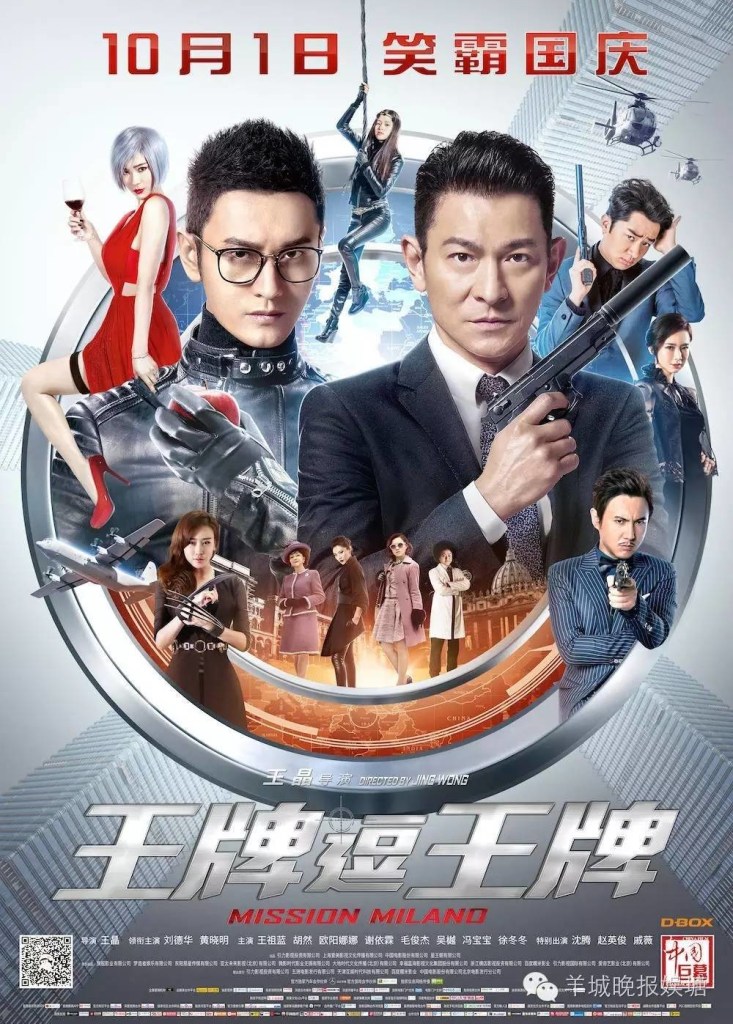
 Despite its title, Mission Milano (王牌逗王牌, Wángpái Dòu Wángpái) spends relatively little time in the Northern Italian city and otherwise bounces back and forth over several worldwide locations as bumbling Interpol agent Sampan Hung (Andy Lau) chases down a gang of international crooks trying to harness a new, potentially world changing technology. Inspired by the classic spy parodies of old, Wong Jing’s latest effort proves another tiresome attempt at the comedy caper as its nonsensical plot and overplayed broad humour resolutely fail to capture attention.
The film opens with its strongest scene as Andy Lau’s bumbling Interpol agent Sampan Hung escapes from a Parisian hotel room after being attacked by a machine-gun wielding, cross-dressing French maid. Like much of the rest of the film this sequence is not particularly connected to the subsequent goings on, but on his return to China Hung begins investigating reports that a top technology firm run by the descendants of a famous Robin Hood inspired criminal is about to unveil a new bio product known as Seed of God. During the meeting, the Swedish professor presenting the research is kidnapped by a Japanese vigilante group known as Crescent which Hung believes is working for the evil worldwide organisation KMAX. Teaming up with the tech firm’s CEO Louis Luo (Huang Xiaoming), Luo’s sister (Nana Ouyang), and sidekick (Wong Cho-lam), Hung sets out to retrieve the technology before it falls into the wrong hands.
Seed of God is a bioengineered crop which can flower even if thrown on stony ground. All it needs is water and away you go – instant mango tree wherever and whenever you want. This discovery could end world hunger, but it would also be very bad news for anyone involved in traditional agriculture. Hung and Luo recognise the danger and neither want to see this new technology end up with KMAX who would not be particularly interested in applying it ethically.
Originally reluctant teammates, Hung and Luo build up a buddy buddy relationship through competitive games before eventually agreeing to work together. Luo does most of the hardline fighting while Lau’s Hung backs him up with splapstick-style comic relief. Though often mildly exciting, the action sequences have a comedy vibe dominated by Hung getting thrown into ladies’ bathrooms or knocked back on his behind by a skilled lady assassin while Luo keeps losing his glasses to a particularly mean opponent. Unfortunately, Wong relies heavily on CGI for many of the action set pieces beginning with the obvious rooftops of Paris backdrop, right up to the sports car meets heavy duty lorry incident in the middle and aeroplane based finale.
The humour itself has a heavily retro feel filled with sexist jokes such as Hung crashing into hotel bedroom containing a confused topless woman in the opening sequence and a seduction section in the middle in which a key asset is wooed using her teenage love of Alain Delon and supposed desperation for male attention. Hung is clearly modelled on Bond and even has the agent number 119 though in truth he’s more like Maxwell Smart meets Inspector Gadget with his clean cut nerdiness and ubiquitous trench coat. He even has a Q-style tech specialist (named Bing Bing so we have the “classic” Li vs Fan joke) who’s made him a killer phone with every kind of spy feature conceivable including lightsaber, but can’t actually make a phone call. Add in genre tropes of unusual weaponry and laser filled corridors, and Mission Milano is looking very uninspired.
Despite its Italian destination, Mission Milano employs a frequent musical motif that it is distinctly Spanish – another clue to how all at sea the film is in terms of coherence. A minimal stab at romance between Luo and a friendly agent on the other side, and Hung’s ongoing pining for his ex-wife who left him because his world saving habit was just too stressful, attempt to add some character drama to the piece which remains lukewarm in approach to its cast. Lau turns in an uncharacteristically large performance, grinning and gurning his way through the lacklustre script, but not even his presence can heal the many problems plaguing the film. Never as funny as it desperately wants to be Mission Milano is a trying experience which, although intermittently amusing, (thankfully) proves instantly forgettable.
Original trailer (English/Traditional Chinese subtitles)
 First time writer/director Wang Yichun draws on her own experiences for What’s in the Darkness (黑处有什么, Hei chu you shenme), a beautifully shot coming of age piece with serial killer intrigue running in the background. Seen through the eyes of its protagonist, What’s in the Darkness neatly matches the heroine’s journey into adolescence with the changing nature of Chinese society.
 When
When  Hur Jin-ho’s A Good Rain Knows (호우시절, Howoosijeol) was originally developed as a short intended to form part of the China/Korea collaborative omnibus film Chengdu, I Love You which was created as a tribute to the area following the devastating 2008 earthquake. However, Hur came to the conclusion that his tale of modern day cross cultural romance required more scope than the tripartite omnibus structure would allow and decided to go solo (Chengdu, I Love You was later released with just Fruit Chan and Cui Jian’s efforts alone). Very much Korean in terms of tone and structure, Hur uses his central love story to explore the effects time, memory, culture, and personal trauma on the lives of everyday people.
 Evil, so a wise man said, begins when you start treating people as things. Fritz Lang’s Metropolis showed us a city that literally was its people – nothing but a vast yet perfectly functional machine with the workers little more than cogs to be replaced and discarded once worn out. Zhao’s Behemoth (悲兮魔兽, Bēixī Móshòu) is no fantasy but a very real journey through our own world and so we follow our narrator, a poetic, naked stand in for Dante’s Virgil, through hell and purgatory on a path to paradise only to find ourselves staring into a void filled with our unfulfilled desires and forlorn hopes.
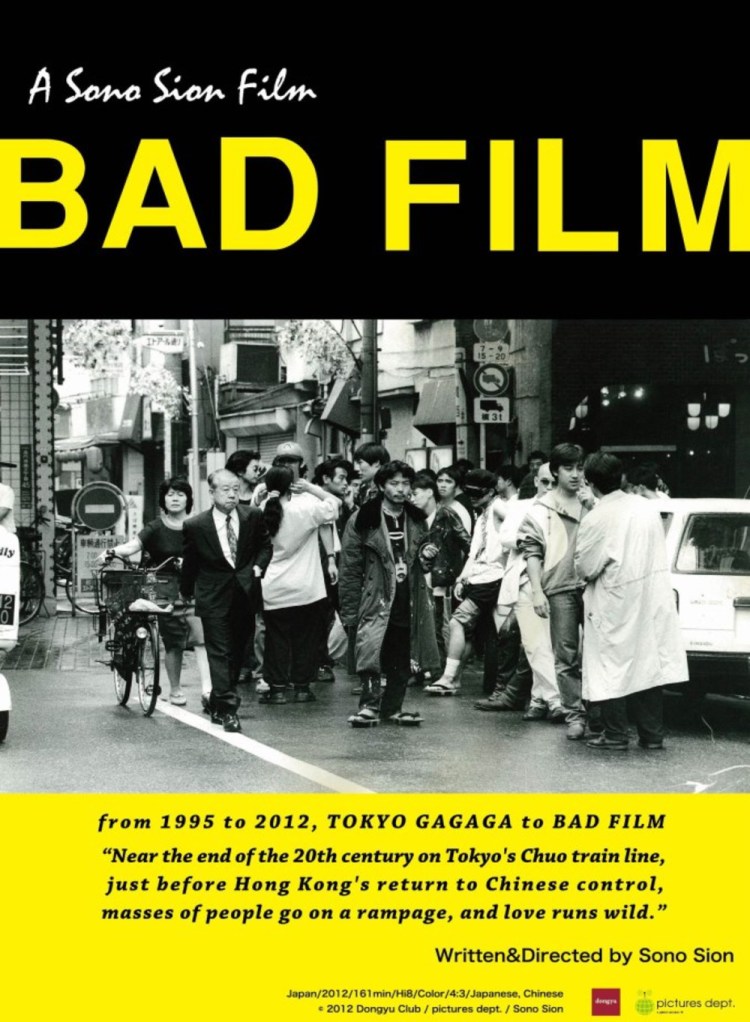 The recently prolific Sion Sono actually has a more sporadic film career dating back to the early 1980s though most would judge his real breakthrough to 2001’s Suicide Club. Back in the ‘90s Sono was most active as the leader of anarchic performance art troupe Tokyo Gagaga. Taking inspiration from the avant-garde theatre scene of the 1960s, Tokyo Gagaga took to the streets for flag waving protests and impressive, guerrilla stunts. Bad Film is the result of one of their projects – shot intermittently over a year using the then newly accessible Hi8 video rather the traditionally underground 8 or 16mm, Bad Film is near future set street story centring on gang warfare between the Chinese community and xenophobic Japanese petty gangsters with a side line in shifiting sexual politics.
 Chinese cinema screens are no stranger to the event movie, and so a Chinese remake of the much loved 1997 Hollywood rom-com My Best Friend’s Wedding (我最好朋友的婚礼, Wǒ Zuì Hǎo Péngyǒu de Hūnlǐ) arrives right on time for Chinese Valentine’s Day. Purely by coincidence of course! However, those familiar with the 1997 Julia Roberts starring movie may recall that My Best Friend’s Wedding is a classic example of the subverted romance which doesn’t end with the classic happy ever after, but acts as a tonic to the sickly sweet love stories Hollywood is known for by embracing the more realistic philosophy that sometimes it just really is too late and you have to accept that you let the moment get away from you, painful as that may be.
 Often, people will try to convince of the merits of something or other by considerably over compensating for its faults. Therefore when you see a movie marketed as the X-ian version of X, starring just about everyone and with a budget bigger than the GDP of a small nation you should learn to be wary rather than impressed. If you’ve followed this very sage advice, you will fare better than this reviewer and not find yourself parked in front of a cinema screen for two hours of non-sensical European fantasy influenced epic adventure such as is League of Gods (3D封神榜, 3D Fēng Shén Bǎng).
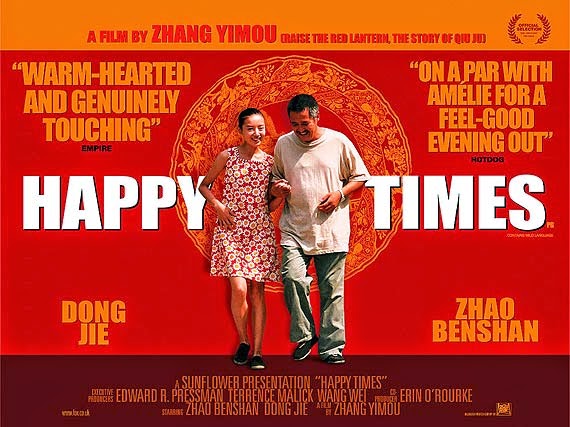 Possibly the most successful of China’s Fifth Generation filmmakers, Zhang Yimou is not particularly known for his sense of humour though Happy Times (幸福时光, Xìngfú Shíguāng) is nothing is not drenched in irony. Less directly aimed at social criticism, Happy Times takes a sideswipe at modern culture with its increasing consumerism, lack of empathy, and relentless progress yet it also finds good hearted people coming together to help each other through even if they do it in slightly less than ideal ways.
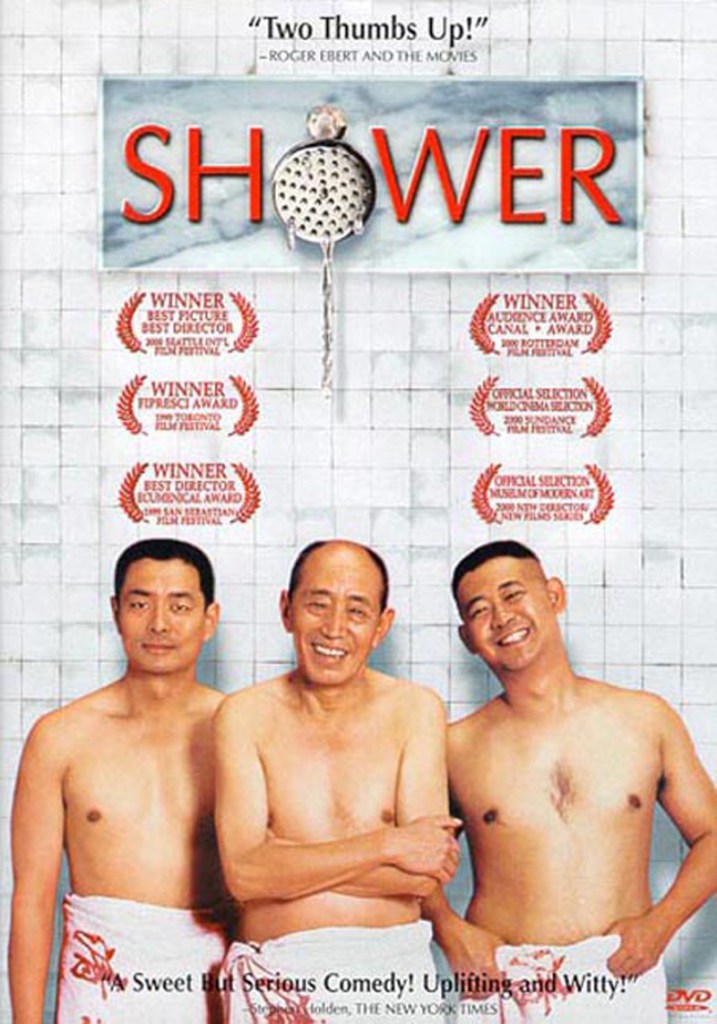 China is changing. Transforming faster than any other society at any other point in history. This brave new future, flooding in as it has across an ancient nation, has nevertheless left a few islands of dry land untouched by modern progress. Old Liu’s bathhouse is just one of these oases, far away from the big city with its frantic pace and high technology. In the city, you can step into a tiny cubicle and “undergo” a shower inside a contraption that’s just like a carwash, only for people. In Liu’s bathhouse you can relax for as long as you like, laughing and joking with old friends or just hiding out from the world.
