
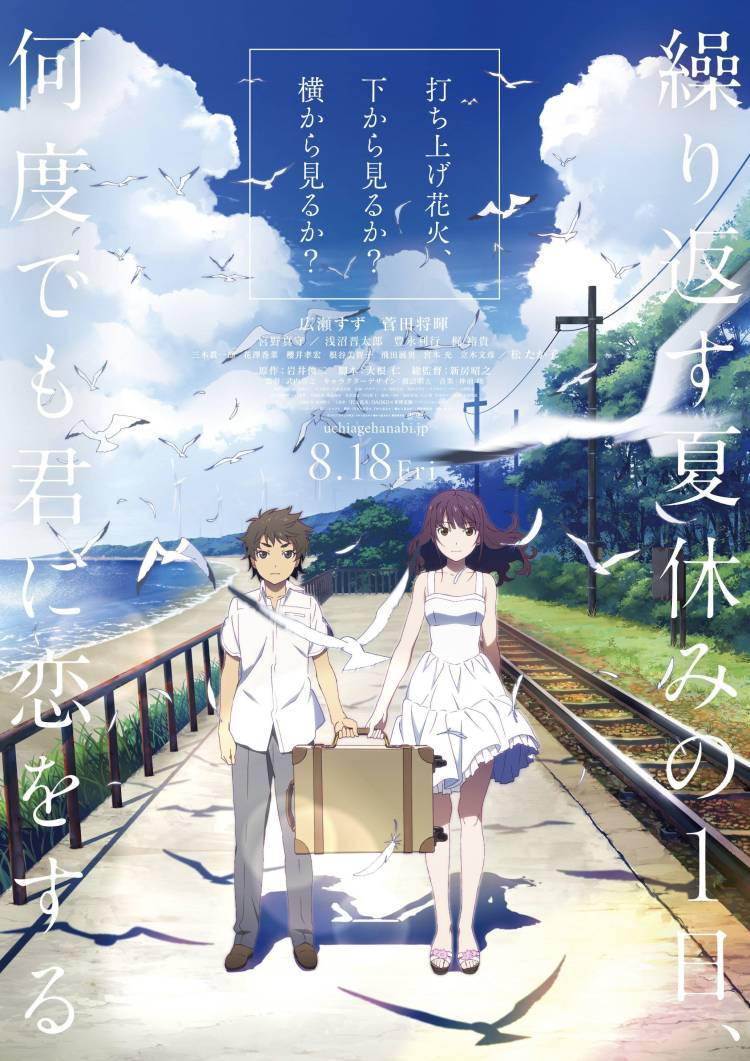
 Back in 1993, Fireworks, Should We See it From the Side or From the Bottom? (打ち上げ花火、下から見るか? 横から見るか?, Uchiage Hanabi, Shita kara Miru ka? Yoko kara Miru ka?), became something of a sliding doors moment for the young Shunji Iwai who received an award from the Directors Guild of Japan for what was in essence a single episode in an anthology TV series dedicated to the idea of “what if”. “What if” is, it has to be said, a constant theme in nostalgic Japanese cinema as slightly older protagonists look back on the hazy days of youth and wonder what might have been if they’d only known then what they know now. Scripted by Hitoshi One (Scoop!) and produced by Shaft, the anime adaption attempts to do something similar, floating in with a gentle summer breeze that could easily be from 30 years ago or yesterday while its conflicted hero ponders where it is he ought to stand to get the most beautiful view of life passing him by.
The central dilemma that seems to obsess the boys this particular summer is whether fireworks are flat or three dimensional and whether your perception of them changes depending on where you stand. Norimichi (Masaki Suda) risks falling out with his best friend Yusuke (Mamoru Miyano) and so has avoided revealing the fact that they both have a crush on the same girl – Nazuna (Suzu Hirose), who (neither of them have noticed) has a dilemma of her own. A chance meeting at the swimming pool seems primed to dictate the romantic fate of all concerned. Norimichi and Yusuke race for the affections of Nazuna who, in the original timeline, ends up asking Yusuke to see the summer fireworks with her even though it’s Norimichi she went there to meet.
Unfortunately Yusuke is a flake and nothing goes to plan. He stands Nazuna up to hang with his buddies and figure out the answer to their inane riddle leaving her to run into Norimichi who gets an unexpected glimpse at her inner turmoil. A mysterious orb salvaged by Nazuna from the nearby sea gives Norimichi a chance to start over, be braver, do things differently thanks to the benefit of hindsight, and so he begins a path to idealised romance by manipulating the events around him to finally “save” Nazuna from making a rash decision (or at least from making it alone).
In 1993, Nazuna’s dilemma was perhaps a little more unusual than it might seem now. Her twice married single-mother (Takako Matsu) is planning to marry again which requires the teenage Nazuna to leave her home behind to live with a strange man in a strange town. Though her new step-dad seems nice and is obviously trying his best, Nazuna is not of a mind to give in. She consents to accepting one of the ice-creams he’s bought to curry favour (after all, there’s no need to be “rude”), but is not about to go so far as to say thank you or to enjoy eating it together with the rest of the family when she could guzzle it sulkily in the comfort of her bedroom. Nazuna wants to escape, but her ideas of doing so are childishly naive even if she puts on a sophisticated front by joking about going to Tokyo to work on the fringes of the sex trade by lying about her age. Hence, she asks a boy she likes but barely knows to take her away from this place, but the boy is just a boy and not quite equipped for rescuing damsels in distress from suffering he doesn’t understand.
Like many Japanese teen dramas, Norimichi’s interior monologue takes on a rueful quality, as if he’s eulogising his youth while still inside it. He doesn’t know whether there’s a difference if you look at things from one angle or another because he’s not particularly used to thinking about things and his first few experiments with the orb are pure reactions to events rather than thought through decisions about effects and consequences. Nevertheless, use of the orb shifts him into a philosophical contemplation of what it is to live a life. Finally realising he should probably ask Nazuna what it is she really wants, the process the pair undergo is one of learning to live in the now rather than obsessing about the end of something that might never begin if you never find the courage to start.
In the end their beautiful dream world is ruptured by a drunken old man, shattering into a thousand shards of memory of things that never were. Fireworks wants to ask if you can have a more fulfilling life by simply changing your perspective, but its central messages never quite coalesce. There is something about Iwai’s original concept which inescapably of its time, sliding neatly into the melancholy world of early ‘90s teen drama drenched in nostalgia for an era not yet past. Reaching for poignant philosophising, Fireworks falls short through, ironically enough, focussing too heavily on a single point of view. An oddly “flat” exercise, Shinbo’s adaptation misses the mark in its climactic moments but perhaps manages to offer something to the lovelorn teens of today if only by yanking them back to a more innocent time.
Fireworks was screened as part of Fantasia International Film Festival 2018.
International trailer (English subtitles)
The original 1986 Seiko Matsuda song reprised by Nazuna at a climactic moment.

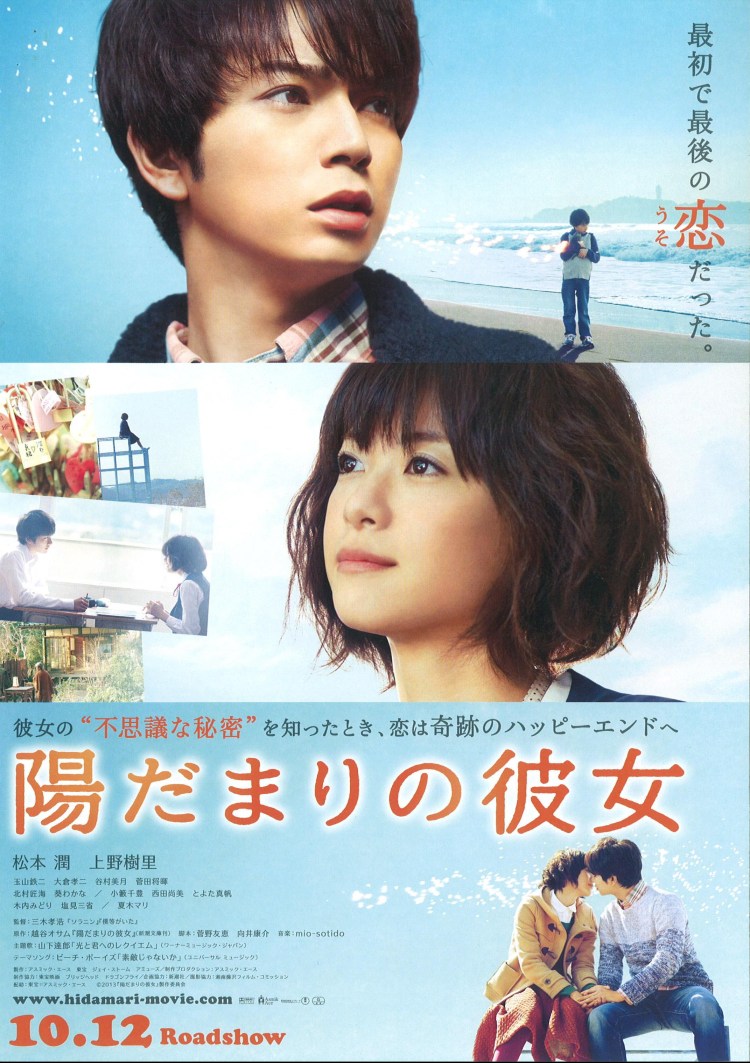 The “jun-ai” boom might have been well and truly over by the time Takahiro Miki’s Girl in the Sunny Place (陽だまりの彼女, Hidamari no Kanojo) hit the screen, but tales of true love doomed are unlikely to go out of fashion any time soon. Based on a novel by Osamu Koshigaya, Girl in the Sunny Place is another genial romance in which teenage friends are separated, find each other again, become happy and then have that happiness threatened, but it’s also one that hinges on a strange magical realism born of the affinity between humans and cats.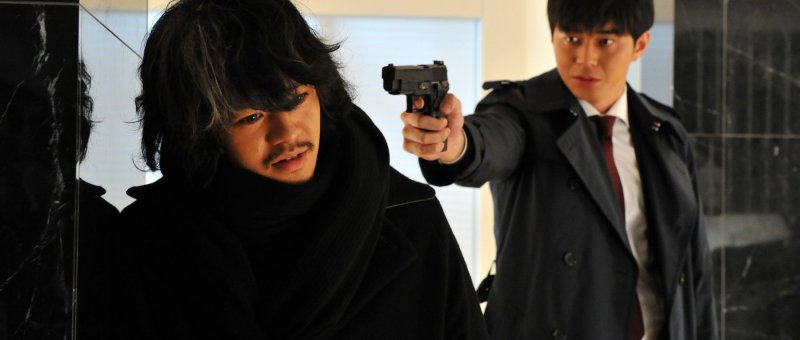
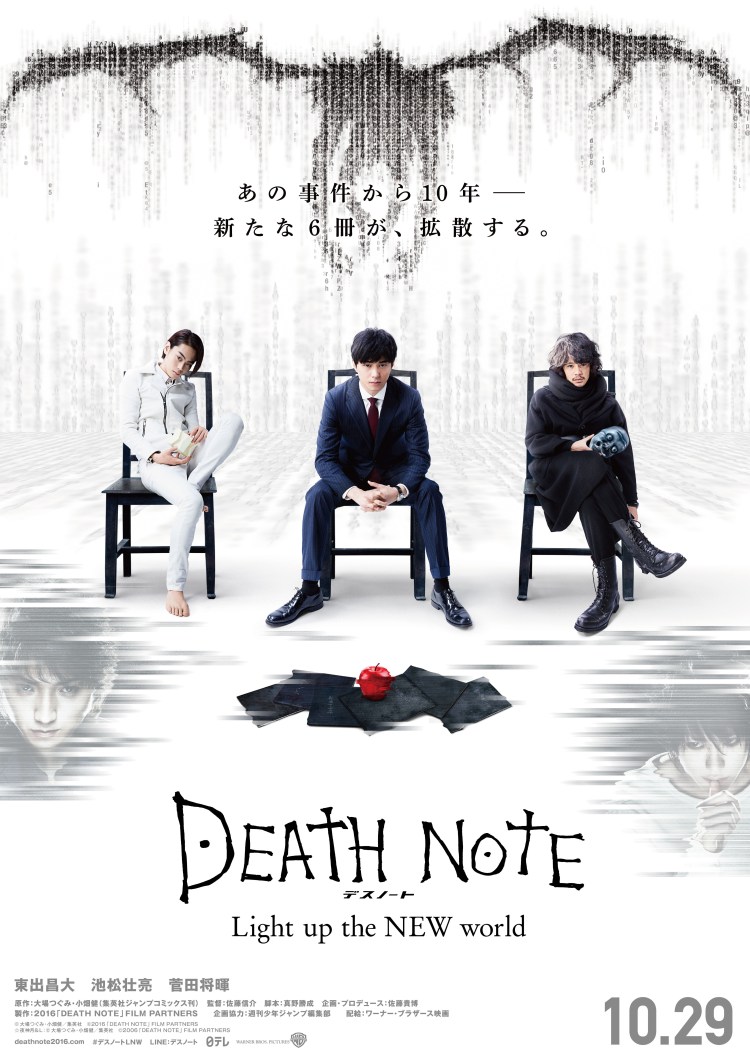 Tsugumi Ohba and Takashi Obata’s Death Note manga has already spawned three live action films, an acclaimed TV anime, live action TV drama, musical, and various other forms of media becoming a worldwide phenomenon in the process. A return to cinema screens was therefore inevitable – Death Note: Light up the NEW World (デスノート Light up the NEW World) positions itself as the first in a possible new strand of the ongoing franchise, casting its net wider to embrace a new, global world. Directed by Shinsuke Sato – one of the foremost blockbuster directors in Japan responsible for Gantz,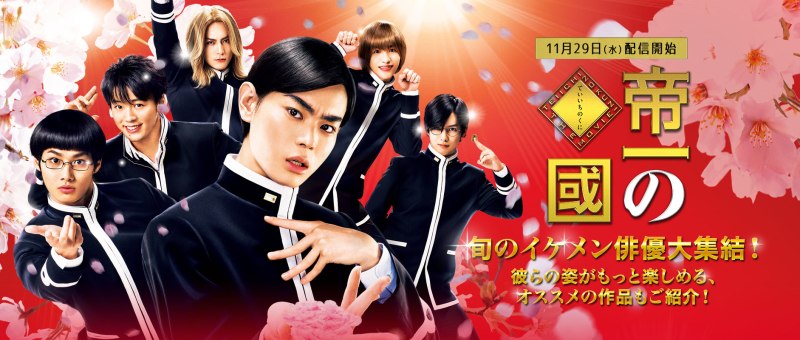
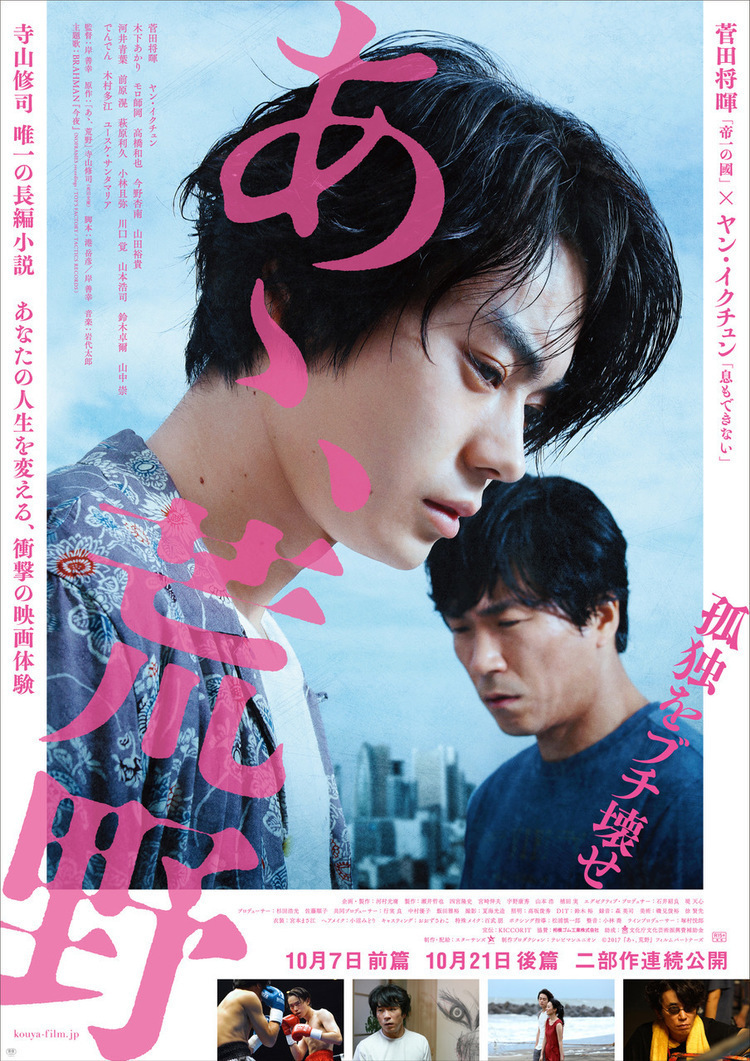
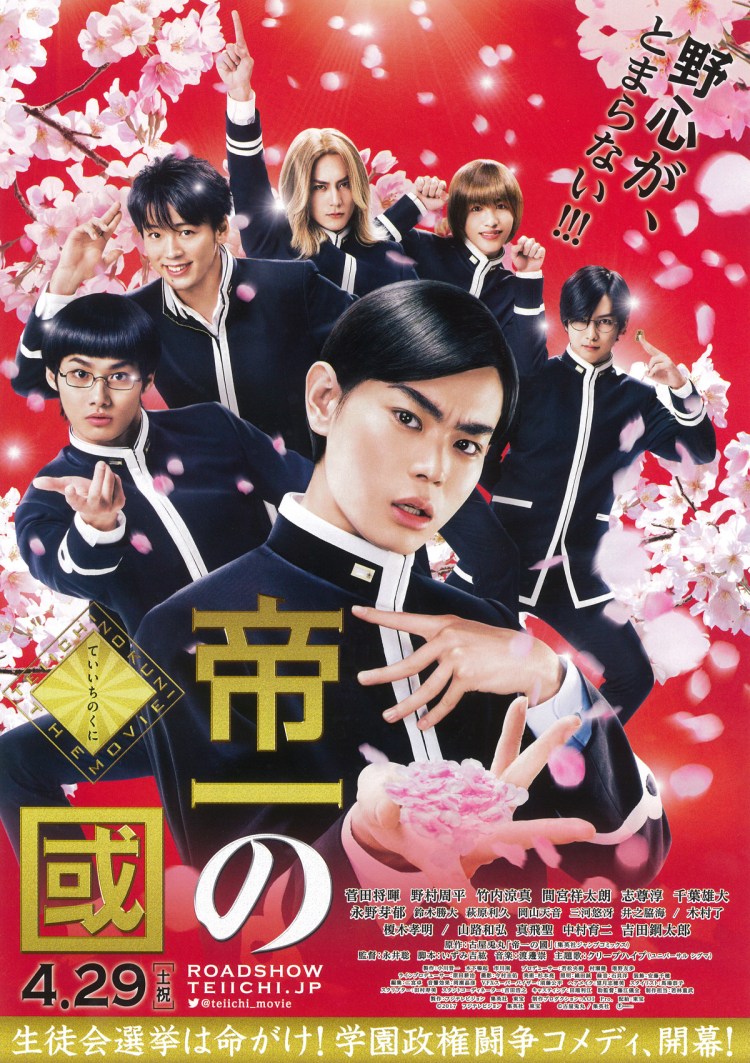 Back in the real world, politics has never felt so unfunny. This latest slice of unlikely political satire from Japan may feel a little close to home, at least to those of us who hail from nations where it seems perfectly normal that the older men who make up the political elite all attended the same school and fully expected to grow up and walk directly into high office, never needing to worry about anything so ordinary as a career. Taking this idea to its extreme, elite teenager Teiichi is not only determined to take over Japan by becoming its Prime Minister, but to start his very own nation. In Teiichi: Battle of Supreme High (帝一の國, Teiichi no Kuni) teenage flirtations with fascism, homoeroticism, factionalism, extremism – in fact just about every “ism” you can think of (aside from altruism) vie for the top spot among the boys at Supreme High but who, or what, will finally win out in Teiichi’s fledging, mental little nation?
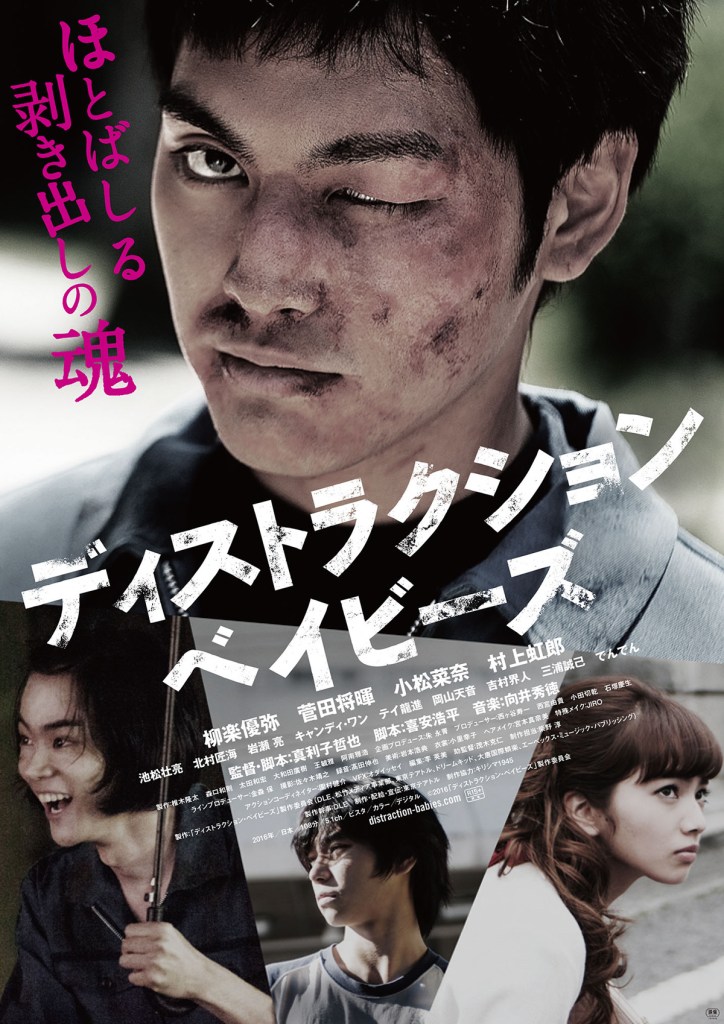 Post-golden age, Japanese cinema has arguably had a preoccupation with the angry young man. From the ever present tension of the seishun eiga to the frustrations of ‘70s art films and the punk nihilism of the 1980s which only seemed to deepen after the bubble burst, the young men of Japanese cinema have most often gone to war with themselves in violent intensity, prepared to burn the world which they feel holds no place for them. Tetsuya Mariko’s Destruction Babies (ディストラクション・ベイビーズ) is a fine addition to this tradition but also an urgent one. Stepping somehow beyond nihilism, Mariko’s vision of his country’s future is a bleak one in which young, fatherless men inherit the traditions of their ancestors all the while desperately trying to destroy them. Devoid of hope, of purpose, and of human connection the youth of the day get their kicks vicariously, so busy sharing their experiences online that reality has become an obsolete concept and the physical sensation of violence the only remaining truth.
 A Double Life (二重生活, Nijyuu Seikatsu ), the debut feature from director Yoshiyuki Kishi adapted from Mariko Koike’s novel, could easily be subtitled “a defence of stalking with indifference”. As a philosophical experiment in itself, it recasts us as the voyeur, watching her watching him, following our oblivious heroine as she becomes increasingly obsessed with the act of observance. Taking into account the constant watchfulness of modern society, A Double Life has some serious questions to ask not only of the nature of existence but of the increasing connectedness and its counterpart of isolation, the disconnect between the image and reality, and how much the hidden facets of people’s lives define their essential personality.
 There are two very distinct sides to the career of Tatsushi Omori. Brother of the well known actor, Nao, Omori may be best known to certain audiences for his hard hitting, often gloomy and pessimistic dramas of human misery such as festival favourite Ravine of Goodbye or the little seen
 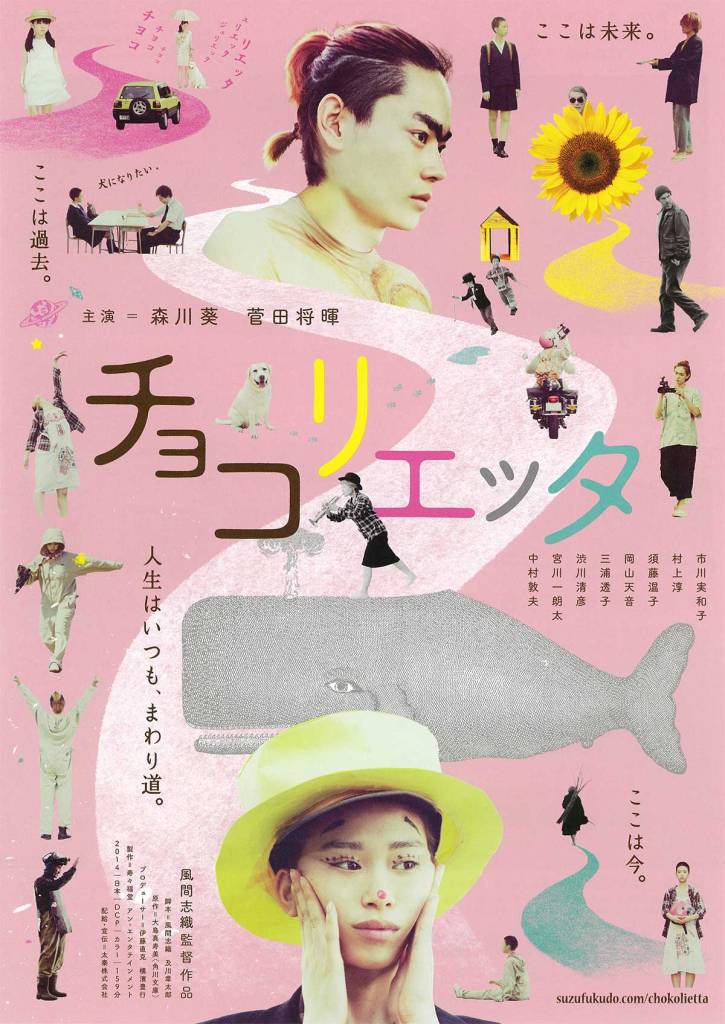 When examining the influences of classic European cinema on Japanese filmmaking, you rarely end up with Fellini. Nevertheless, Fellini looms large over the indie comedy Choklietta (チョコリエッタ) and the director, Shiori Kazama, even leaves a post-credits dedication to Italy’s master of the surreal as a thank you for inspiring the fifteen year old her to make movies. Full of knowing nods to the world of classic cinema, Chokolietta is a charming, if over long, coming of age drama which becomes a meditation on both personal and national notions of loss.
