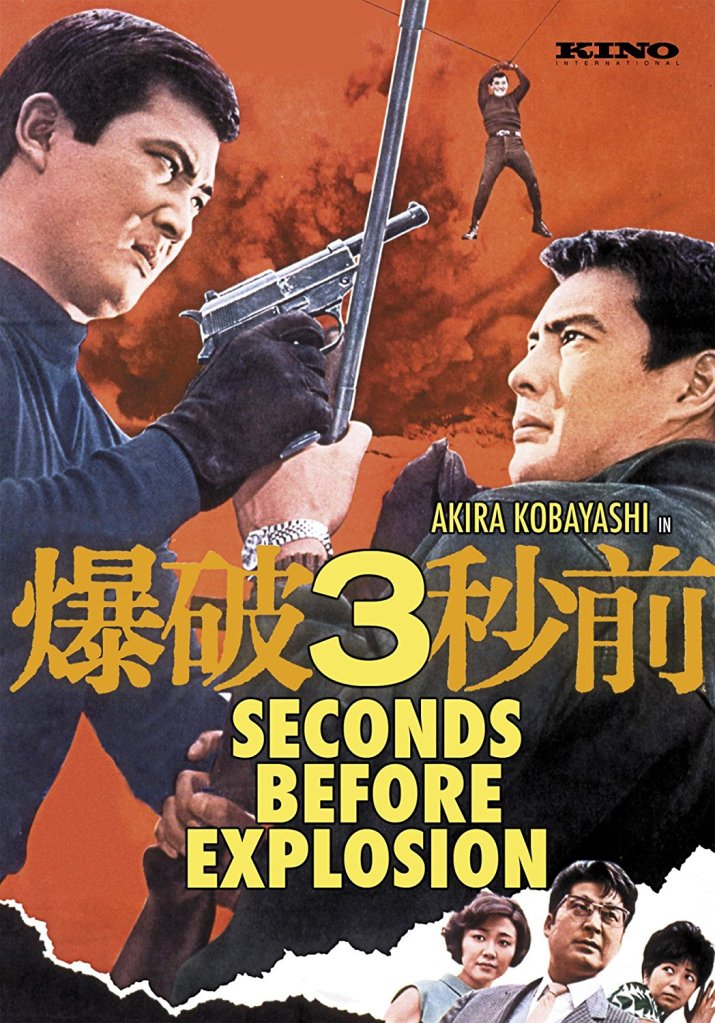
 If Nikkatsu Action movies had a ringtone it would probably just be “BANG!” but nevertheless you’ll have to wait more than three rings for the Kaboom! in the admittedly cartoonish slice of typically frivolous B-movie thrills that is 3 Seconds Before Explosion (爆破3秒前, Bakuha 3-byo Mae). Once again based on a novel by Japan’s master of the hard boiled Haruhiko Oyabu, 3 Seconds Before Explosion is among his sillier works though lesser known director Motomu Ida never takes as much delight in making mischief as his studio mate Seijun Suzuki. What he does do is make use of Diamond Guy Akira Kobayashi’s boyish earnestness to keep things running along nicely even if he’s out of the picture for much of the action.
Like most of the more outlandish Nikkatsu action fests, 3 Seconds Before Explosion has a complicated relationship with narrative but we begin with former boxer Yabuki (Akira Kobayashi) in the middle of being brainwashed with flashing lights and high pitched noises until he agrees to become a shady government (?) assassin. Perhaps in an effort to save our sanities too, he relents and his first job is ensuring some jewels which were stolen during in the war don’t get into the hands of an evil nazi who will presumably be wanting them for evil nazi business. Anyway, Yabuki does his ninja stuff and thinks he’s tracked the jewels down but runs into a former colleague, Yamawaki (Hideki Takahashi), who is working for a businessman who already has the jewels and wants to keep them. Yamawaki quit being a super spy because he fell in love, which Yabuki thinks is a bit lame but still knows his friend has right stuff and would rather not have to kill him or anything.
Somewhere between the less serious yakuza/gang movies Nikkatsu were making in the late ’60s and a spy spoof, 3 Seconds Before Explosion has its fair share of oddness from strangled dogs to the mini Chinese theme in which one of the henchmen, Yang, wanders around in traditional Chinese garb while another girl at the club enjoys flirting in Mandarin for no apparent reason. It also goes without saying that the evil Nazi is played by an American spouting unconvincing German whilst chewing the scenery to a pulp. Realism is not where we are, but there’s something a little old fashioned about the way Ida chooses to stage his weirdness even if the film is filled with crazy contemporary youth touches such as in the achingly hip Club Casba.
The interpersonal drama comes as Yabuki and Yamawaki face off about their life choices much more than the case at hand. Yamawaki grew tired of the spy life and decided to leave it behind for his lady love, only to get mixed up in all of these petty gangster shenanigans. Still, if he can keep Yabuki away from the jewels until the time limit he’ll be free forever. Nothing is really said about Yabuki’s brainwashing at the beginning of the film, but Yamawaki’s choice does seem to prompt him into a consideration of his own lifestyle. That said, life as a government assassin doesn’t seem so bad – Yabuki doesn’t even really kill people much, just spends his life sneaking into places and leaping heroically between rooftops whilst making use of clever gadgets to evade his foes. The gangsters, however, are pretty evil and keep killing people after claiming to let them go which offends Yabuki’s sense of honour.
Yabuki may not kill, but the film does seem to make a point of killing off all the female characters in case they get in the way of the manly stuff like fighting and making bombs. An innocent kidnapped secretary who had nothing to do with anything is machine gunned down, another girl is murdered by the evil Nazi, and a final one gets marched into a mine field by her boyfriend before returning for revenge and getting unceremoniously taken down anyway. To lose one woman is careless but to kill off (all) three in a short time seems a step too far or perhaps too “realistic” for this otherwise cartoonish approach to violence.
Lacking the visual flair of other Nikkatsu efforts, 3 Seconds to Explosion is never as exciting as its title promises. Despite the athletic displays of the slightly bulkier Kobayashi, there’s a kind of clumsiness to the action and a straightforwardness in approach which does not gel with the ridiculousness of the premise. On lower end of Nikkatsu’s B-movie output, 3 Seconds to Explosion does not stint on the silliness but could do with enjoying itself a little more rather than trying to corral its non-sensical plot into something with serious intent.
 Despite being among the directors who helped to usher in what would later be called the Japanese New Wave, Ko Nakahira remains in relative obscurity with only his landmark movie of the Sun Tribe era, Crazed Fruit, widely seen abroad. Like the other directors of his generation Nakahira served his time in the studio system working on impersonal commercial projects but by 1964 which saw the release of another of his most well regarded films Only on Mondays, Nakahira had begun to give free reign to experimentation much to the studio boss’ chagrin. Flora on the Sand (砂の上の植物群, Suna no Ue no Shokubutsu-gun), adapted from the novel by Junnosuke Yoshiyuki, puts an absurd, surreal twist on the oft revisited salaryman midlife crisis as its conflicted hero muses on the legacy of his womanising father while indulging in a strange ménage à trois with two sisters, one of whom to he comes to believe he may also be related to.
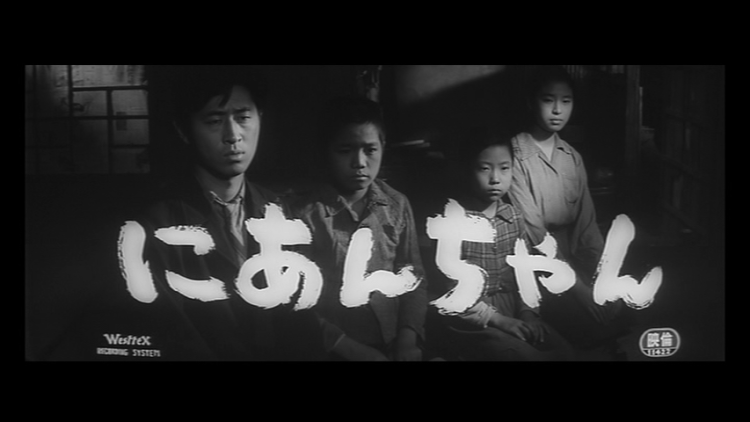 Like most directors of his era, Shohei Imamura began his career in the studio system as a trainee with Shochiku where he also worked as an AD to Yasujiro Ozu on some of his most well known pictures. Ozu’s approach, however, could not be further from Imamura’s in its insistence on order and precision. Finding much more in common with another Shochiku director, Yuzo Kawashima, well known for working class satires, Imamura jumped ship to the newly reformed Nikkatsu where he continued his training until helming his first three pictures in 1958 (Stolen Desire, Nishiginza Station, and Endless Desire). My Second Brother (にあんちゃん, Nianchan), which he directed in 1959, was, like the previous three films, a studio assignment rather than a personal project but is nevertheless an interesting one as it united many of Imamura’s subsequent ongoing concerns.
 Before Seijun Suzuki pushed his luck too far with the genre classic
 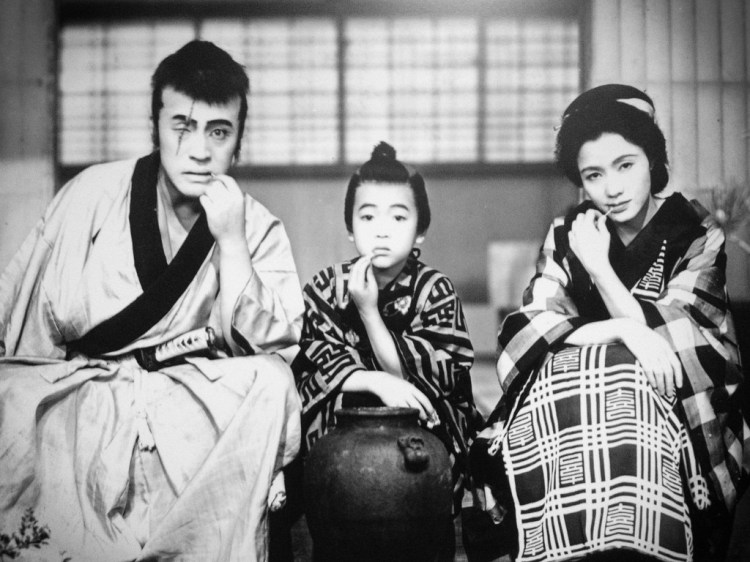 Sadao Yamanaka had a meteoric rise in the film industry completing 26 films between 1932 and 1938 after joining the Makino company at only 20 years old. Alongside such masters to be as Ozu, Naruse, and Mizoguchi, Yamanaka became one of the shining lights of the early Japanese cinematic world. Unfortunately, this light went out when Yamanaka was drafted into the army and sent on the Manchurian campaign where he unfortunately died in a field hospital at only 28 years old. Despite the vast respect of his peers, only three of Yamanaka’s 26 films have survived. Tange Sazen: The Million Ryo Pot (丹下左膳余話 百萬両の壺, Tange Sazen Yowa: Hyakuman Ryo no Tsubo) is the earliest of these and though a light hearted effort displays his trademark down to earth humanity.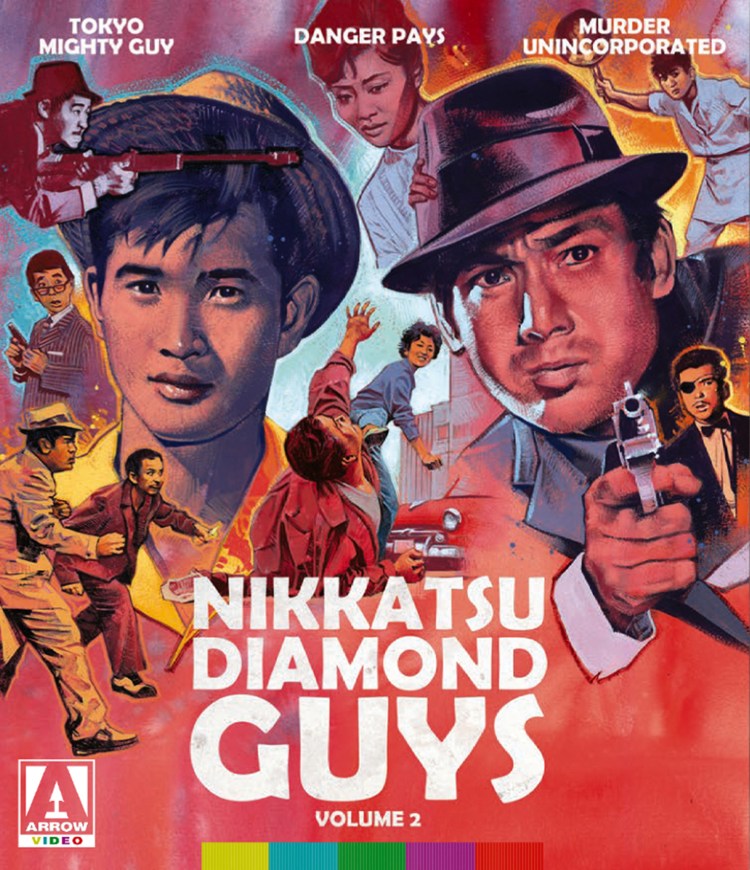
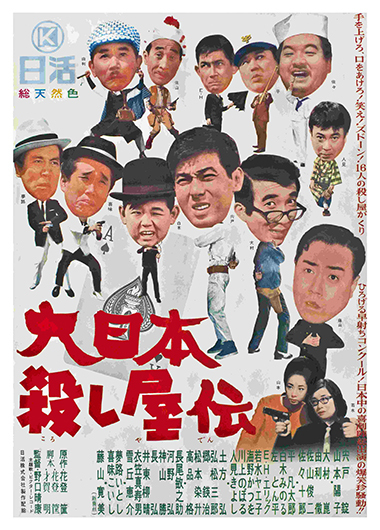 “If you don’t laugh when you see this movie, I’m going to execute you” abacus wielding hitman Komatsu warns us at the beginning of Haryasu Noguchi’s Murder Unincorporated (大日本殺し屋伝, Dai Nihon Koroshiya-den). Luckily for us, it’s unlikely he’ll be forced to perform any “calculations”, and the only risk we currently run is that of accidentally laughing ourselves to death as we witness the absurd slapstick adventures of Japan’s craziest hitman convention when the nation’s “best” (for best read “most unusual”) contract killers descend on a small town looking for “Joe of Spades” – a mysterious assassin known only by the mole on the sole of his foot.
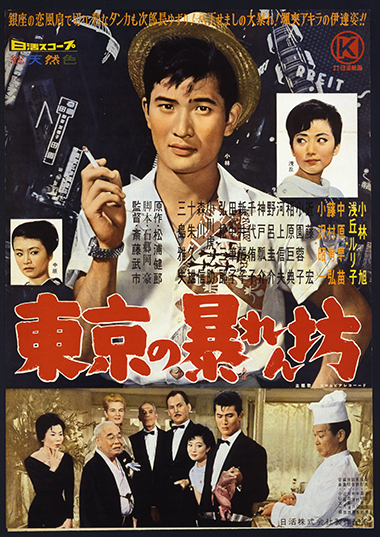 The bright and shining post-war world – it’s a grand place to be young and fancy free! Or so movies like Tokyo Mighty Guy (東京の暴れん坊, Tokyo no Abarembo) would have you believe. Casting one of Nikkatsu’s tentpole stars, Akira Kobayshi, in the lead, Buichi Saito’s Tokyo Mighty Guy is, like previous Kobayashi/Saito collaboration
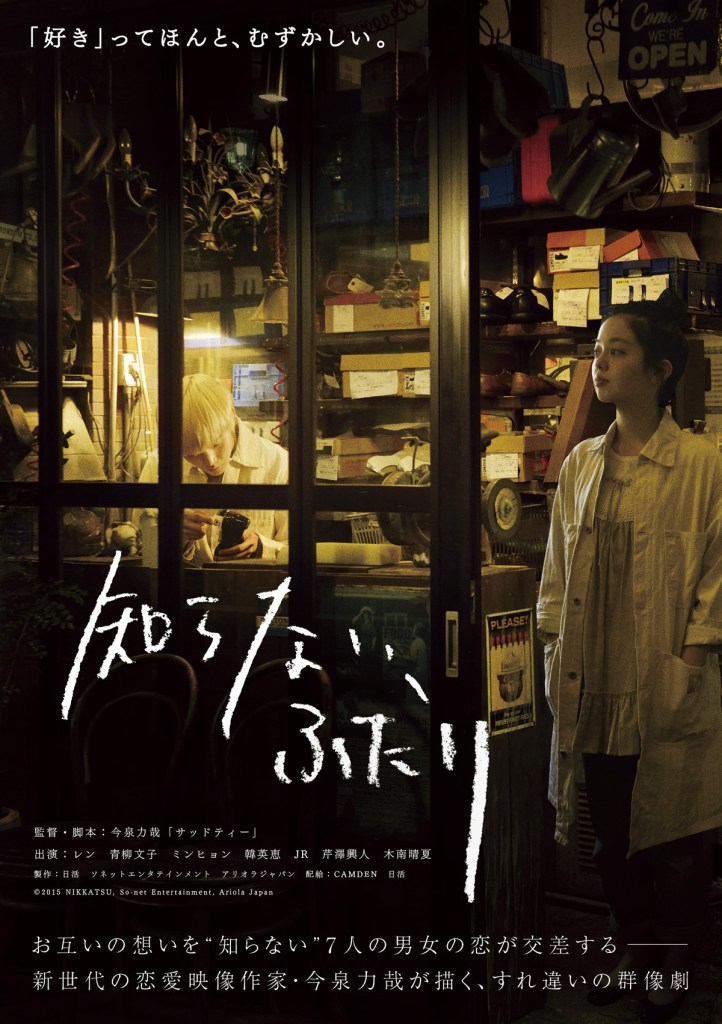 Ah young love! So beautiful, so complicated, so retrospectively trivial. Intrigue engulfs a group of young Koreans living in Japan, their co-workers, and even their English teacher and her fiancee in Rikiya Imaizumi’s indie youth meets boyband quirky romance movie, Their Distance (知らない、ふたり, Shiranai Futari). The aptly named picture paints a vista of misdirected love, miscommunication and misjudged honesty to show how messy romance can be even when it’s intent on being cute.
 Review of the Outlaw: Gangster VIP the Complete Collection dual format box set from Arrow Films first published by
