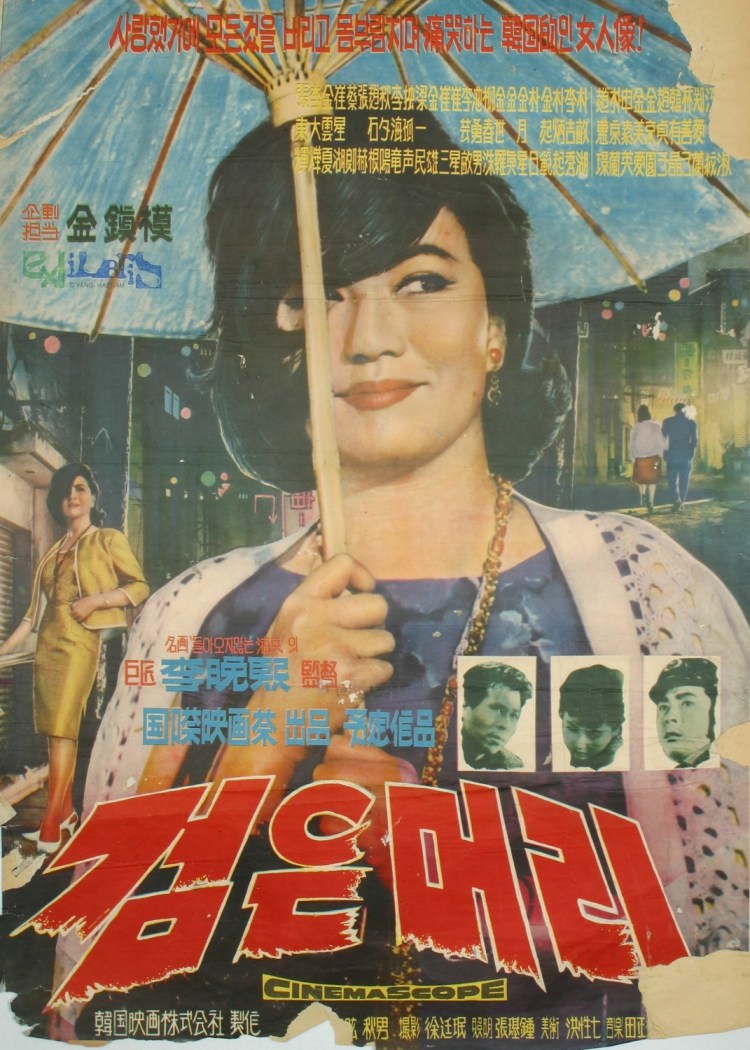
Black Hair (검은 머리, Lee Man-hee, 1964)

Black Hair 1964 posterFilm noir can be the most contradictory of genres. A moralistic world filled with immortality, fatalism mixed with existential angst, and a rage against society which is always tinged with a resignation to living on its margins. Genre in Korean cinema has always been a little more fluid than elsewhere and Lee Man-hee’s seminal crime thriller Black Hair (검은 머리, Geomeun Meori) is also a melodrama – the story of a self loathing man committed to his own arbitrary codes, and a woman he expects to pay the price for them.

In a brief prologue that has little to do with the ongoing narrative, ruthless gangster Dong-il (Jang Dong-hui) extorts a corrupt CEO by blackmailing him over some illicit smuggling. Meanwhile, across town, the gangster’s wife, Yeon-sil (Moon Jeong-suk), meets with a man, Man-ho (Chae Rang), in a hotel room. She’s come to pay him off, hoping it will be for the last time but Manh-ho, an opium addict, knows he’s onto an endless cash cow and refuses to put an end to their “arrangement”. Sometime ago, Man-ho raped Yeon-sil and has been blackmailing her for money and sexual favours ever since. Yeon-sil threatens to tell her husband and the police and suffer the consequences, but Man-ho knows she won’t. Dong-il’s gang have a strict rule about adultery and if Yeon-sil trusted him enough to believe he would believe her about the rape, she would have told him already.

Another goon hides behind a screen, snapping photos of Yeon-sil and Man-ho which he later passes on to Dong-il. The boss is shocked and shaken. He knows he has to enforce the rules he himself set down for the gang, but he never expected them to cost him his wife. Eventually Dong-il orders an underling to slash Yeon-sil’s face with a broken bottle, after which she is exiled from the gang. Anyone who tries to repair her scars or help her in any other way will be treated as an enemy.

At this point the narrative splits as Yeon-sil is cast down into a sleazy underworld, living with her blackmailer who pimps her out as a common streetwalker and then steals all her money to spend on drugs and booze. She pines for her husband whom she has been prevented from seeing, longing to at least explain why she did what she did and ensure he knows that her heart has always been with him. Dong-il, by contrast, is going to pieces – his gang no longer respect him, he feels guilty about the way he treated his wife, and he has no idea where to go from here.

Unlike other films of the era or film noir in general, Lee’s world view is non-judgemental in its treatment of the respective paths of Yeon-sil and Dong-il. Yeon-sil is left with no choice than to enter into a life of casual prostitution and the film forgives her for this – the fault is that of Dong-il and Man-ho rather than her own. Having been horribly scarred, she wears her hair longer on one side to hide her disfigurement but is constantly reminded of her emotional damage through its physical manifestation and the reactions it often elicits. Picking up a client in the street, she’s threatened with violence and cruel words for having “deceived” him when he catches sight of her disfigured face. A passing taxi driver witnesses the attack and challenges the man so Yeon-sil can escape. The cabbie then hires her and they spend the night together in a nearby brothel. He surprises Yeon-sil by being entirely unfazed about her facial scarring, offering to help her get it treated if that’s what she wants, and making it clear he would like to spend more time with her off the clock.

Yeon-sil’s life is completely controlled by her triangular relationship to the three men – her unforgiving husband Dong-il, the cruel and venal Man-ho, and the good and decent cab driver. After meeting the cabbie, Yeon-sil tries to see Dong-il again but his boys stop her. They say they’ll take her to see him, but really they’re planning quite another destination. Luckily, in a staggering coincidence, they’re spotted by the taxi driver who once again saves Yeon-sil, taking her home to stay with him and proposing they embark on a more formal relationship.

This is more of a problem than it seems for Dong-il’s guys who now fear their boss will find out they tried to kill his wife in an effort to wake him up from his ongoing existential malaise. The rules of the gang are tough and clear – adultery is not permissible, no woman is allowed to leave, no exceptions are to be made. Dong-il, however, is beginning to rethink the code he himself designed. A conversation with his childhood nanny throws up a number of interesting questions. She blames herself for giving Dong-il “evil” milk which has led to his spiritual corruption, though Dong-il later tells Yeon-sil that he did not choose evil so much evil chose him. He created these “evil” gang rules, but failed to live up to them in continuing to feel attached to Yeon-sil – he feels he must punish himself for the “sin” of being unable to forget her and abide by his own honour system which he now feels to be pointless and arbitrary. Effectively issuing himself a death sentence, Dong-il changes tack confirming that he has, in a sense, chosen evil even if it was a “choice” of refusing to resist the path set down for him. Suddenly realising the emotion he felt for Yeon-sil was love, he is struck by a terrible feeling of loneliness. 

As in much of Lee’s work, Yeon-sil and Dong-il are trapped by their own society and belief systems and finally perhaps by feeling. Yeong-sil is frequently captured behind bars or caught in a window, imprisoned within the frame as she tries to reconcile herself to her precarious position, daring to hope for a new, decent life with the good hearted taxi driver while also mourning her love for Dong-il and living with the humiliation caused to her by Man-ho. Lee’s structure is sometimes unclear as he introduces a fairly pointless subplot about the taxi driver’s modern woman little sister who has moved out to be independent but works in a hostess bar, inhabiting the same sleazy world as Yeon-sil and Dong-il, only more innocently, but never does much with it beyond contrasting the lives of the two women who occupy slightly different generations and have very different options open to them. There’s a fatalism and inevitability in the way Yeong-sil and Dong-il live their lives to which the taxi driver and his sister do not quite subscribe but Lee breaks with the genre’s trademark pessimism to offer the glimmer of a bittersweet ending and the chance of a new beginning for the much abused Yeon-sil now freed of her dark associations.


Black Hair is the second in The Korean Film Archive’s Lee Man-hee box set which comes with English subtitles on all four films as well as a bilingual booklet. (Not currently available to stream online)
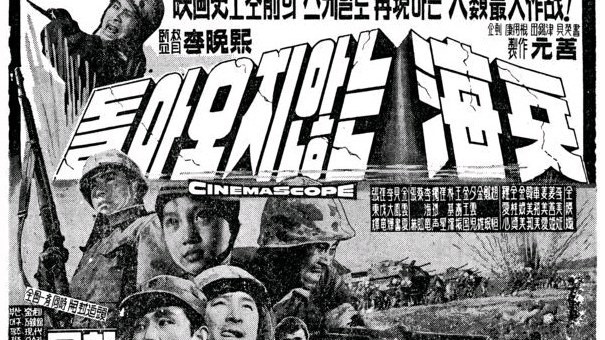
The Marines Who Never Returned (돌아오지 않는 해병, Lee Man-hee, 1963)

Marines Who Never ReturnedLee Man-hee was among the most prolific of Korean directors until his untimely death at the age of just 43 in 1975, but even among so many well regarded works The Marines Who Never Returned (돌아오지 않는 해병, 돌아오지 않는 해병, Doraoji Anneun Haebyong) has taken on an especial place in Korean film culture. Lee had himself served in the Korean War and brought his own ambivalent attitudes to the piece, expressing both an abject rejection of the senseless loss of life but also a warmth and nostalgia for the camaraderie born only out of such immediate danger. The film’s title, as melancholy as it is, points to this same ambivalence by signalling the eventually unhappy fates of these ordinary men but also according them a ghostly, unresolved future.

In the midst of the Korean War, a squad of South Korean soldiers is on patrol and taking fire from the Chinese in an urban environment. While they bide their time in a trench, a young girl and her pregnant mother run out of a nearby building. The girl runs clear but the mother is shot and killed in the crossfire. One of the soldiers is deeply struck by the scene and insists they at least make sure the little girl is safe. Pushing deeper into the building, the soldiers come upon a truly horrifying, hellish scene of men trussed up and hanging from the ceilings while bodies of the townspeople lie piled along the floor. The same soldier who wanted to save the little girl finds his own sister among the dead, just one face among so many.

From this point on the tale is narrated by the little girl, Young-hui (Jeon Young-sun), who is adopted by the troop of marines and smuggled around inside an old army kit bag so that the superiors do not find out about her presence. Young-hui proves a resilient little girl who obviously misses her parents but begins to care deeply for the soldiers who have taken her in. Giving each of her new uncles nicknames, Young-hui becomes the squad’s mascot and a symbol of everything it is they’re fighting for. Yet this makeshift family also has its share of difficulties. A problem arises when Young-hui recognises a new recruit, Choi (Choi Moo-ryong), as a man from her village. Choi is the brother of the man who joined the other side, took Young-hui’s father away and killed the sister of Private Goo, discovered so casually among the many dead in Young-hui’s village alone.

The conflict between Choi and Goo is emblematic of many ordinary families throughout Korea as fathers and sons, brothers and sisters, decided on different paths and found themselves on opposing sides of a war. Choi, as is pointed out, is not responsible for his brother’s actions – he clearly does not condone or agree with them, but still he feels responsible enough to understand Goo’s anger and resentment. Goo in turn realises his anger is pointless and misdirected but is powerless to change the way he feels. This situation is no one’s fault, but they’ll all pay the price anyway.

Lee spares no expense in recreating the hellish battles scenes more akin to the first war than the second with its outdated tanks, dugouts, and trenches. The easy, familial life of the camp soon gives way to action and danger as the squad meet their ends one by one. Away from the battlefield the men feel displaced within their own country – caught in the midst of a civil war yet also subjugated by foreign forces, barred from UN only bars and referred to as “tuppenny Koreans” by the “hostesses” in comparison to their big spending compatriots. Making his goodbye speech, the commanding officer instructs his comrade to return home and ask if anybody really needs to go to war, but rising from the trenches their thoughts are all for their fallen friends who will never see home again. These men remain “lost” on the battlefield, a lingering memory of loss and sacrifice which is impossible to resolve even so many years later.


The Marines Who Never Returned is the first in The Korean Film Archive’s Lee Man-hee box set which comes with English subtitles on all four films as well as a bilingual booklet but the film is also currently available to stream via the Korean Film Archive’s YouTube channel.


The Execution Game (処刑遊戯, Toru Murakawa, 1979)

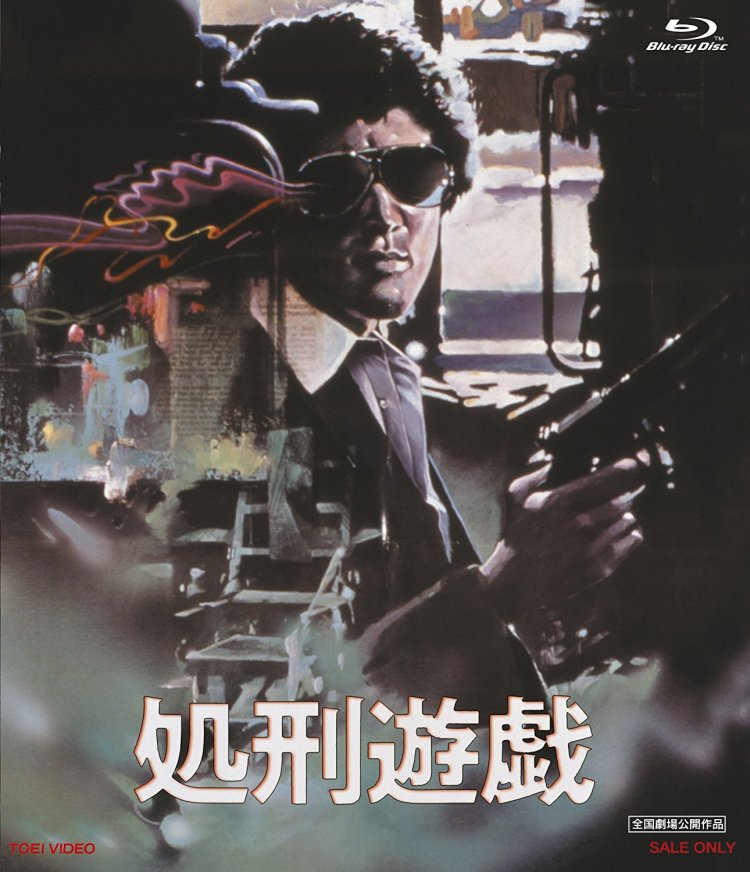
Execution Game BDA year on from The Killing Game, Narumi (Yusaku Matsuda) has returned to his old profession, now branded The Execution Game (処刑遊戯, Shokei yugi). Like Killing, Execution is a variation on the themes of The Most Dangerous Game – conspiracy, betrayal, double cross, and corruption, but all in all Narumi’s world hasn’t changed very much even as he seems to become ever more dead to himself as he walks the dark city streets, trench coat, sunshades, and cigarettes blocking out its remaining light and warmth.

Unlike Dangerous or Killing, Execution opens indoors as Narumi lies half awake in an empty, dark and dirty room. Coming to, he remembers a girl and a car followed by a bump on the head but not much else. His attempt to escape lands him suspended from the ceiling in another room that’s shifted from green to red, but as he will shortly find out this is all part of a weird job interview. The shady guys who kidnapped him simply wanted to test his skills and, finding them adequate, now intend to force him to take their assignment to knock off their old hitman because he’s become too “weird” and they don’t need him around anymore. Narumi’s not too happy about any of this but then he does quite like getting paid. As usual, his first job leads to a second which has some wider implications involving international espionage.

Following his previous experiences, Narumi’s personal life seems to be less of a disaster but then that might be precisely because he has no personal life. In contrast to his increasingly detached persona, Execution marks the first time in the series in which he appears to enter into an entirely consensual relationship with a woman whom he genuinely seems to care about. Unfortunately she is not all she seems and, in a sense, betrays him. Nevertheless, even if the relationship is “fake” or at least part of an ongoing operation to trap Narumi into working for people he might otherwise avoid, it does provoke a kind of opening up as far as Narumi’s past is concerned. His seaside boyhood (perhaps why he chose the riverside town for his “retirement” in Killing) and longing for the ocean provide a clue to his restless heart as the sound of waves becomes a repeated cue signalling Narumi’s hidden emotional ebb and flow.

Yet externally he’s even more silent and closed off than before. Narumi’s hitman credentials have never been stronger and he pulls of his hits with steely precision. He is fearless in the face of danger, wading into the bloody finale with barely repressed fury, making sure none of these mass manipulators will survive their attempt to turn him into a disposable tool to be destroyed after use. Once again his second job provides him with a motive to get back in shape, making space for yet another training montage, but this time the mirrors are about more than vanity. Narumi’s world has always been dark, born of night and chaos, yet he remains the only point of order despite the illicit, dangerous, and immoral nature of his occupation. 

Narumi’s interaction with the young woman who runs the watch repair shop where he tries to get his pocket watched fixed is perhaps the best indicator of his progress over the series. The girl is first very taken with his watch which is rare and expensive, but is also later captivated by his cool exterior. She flirts with him, subtly, but Narumi deflects it. His demeanour towards her becomes paternal, finally he warns her against chasing every shady guy she meets – she doesn’t see the danger. This Narumi, in contrast to his rather pathetic existence in the first two films, is of the world but not in it. He sees himself as occupying a very different space than this young girl, and is resigned to walking a lonely road. The Execution Game is an apt way to describe his life story, yet even as something of him dies something else rises in his self imposed exile and desire for both self preservation and old fashioned nobility even within the bounds of his world weary cynicism.


Original trailer (no subtitles)

Japan Foundation London’s Celebration of Culinary Cinema Returns for Second Helpings!

A-Tale-of-Samurai-Cooking-teaserFollowing their recent series of foodie films, The Japan Foundation London is back with a few more tasty morsels this August.

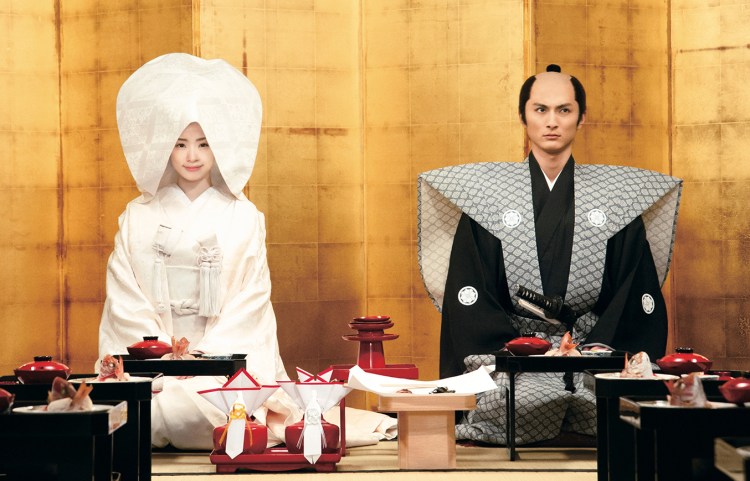
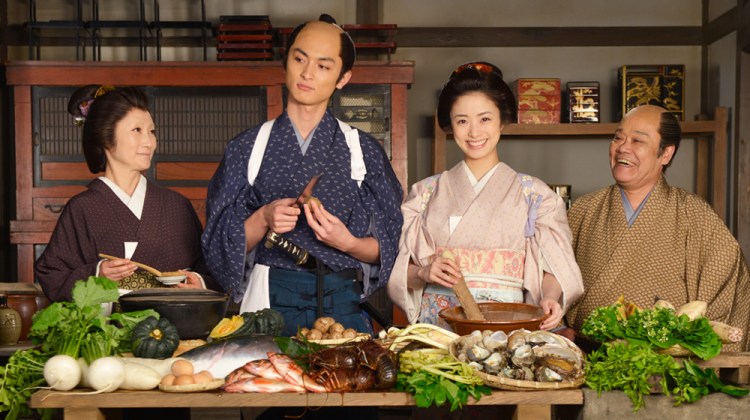
tale of samurai cooking still 2First up, A Tale of Samurai Cooking: A True Love Story proves that the way to a man’s heart is through his stomach (rather than through his chest with a sword). Headstrong Haru (Aya Ueto) gets “sent back” from her first marriage and then receives an interesting proposal from the Emperor’s own samurai cooks thanks to her awesome skills in the kitchen. Her husband to be, Yasunobu (Kengo Kora), is very unhappy about this seeing as he still wants to be a “real” samurai and is nursing a broken heart. Review.

A Tale of Samurai Cooking screens at Courthouse Cinema, 23rd August, 6.30pm.


chef of south polar stillBased on the writings of the real Jun Nishimura, Shuichi Okita’s The Chef of South Polar follows a put upon chef as he’s forced to leave his family and become the sole cook for seven research scientists marooned at the South Pole for a whole year. Despite the hazardous conditions Nishimura keeps churning out beautifully presented dishes while the guys all go slowly mad together. Review.

Chef of the South Polar screens at Courthouse Cinema on 24th August, 6.30pm


An stillNaomi Kawase’s An (Sweet Bean) is a less comedic tale of inter-generational friendship, social injustice and continuing stigma towards those suffering illness, and a celebration of tradition passed from one era to the next. Masatoshi Nagase plays a struggling doriaki chef who gets a few tips from a strange old lady (Kirin Kiki). He originally turns her down for a job at his stand because of her age and gnarled hands, but tasting her bean paste, there is no way he can refuse.
An (Sweet Bean) screens at Rich Mix on Saturday 26th August, 12.45pm.


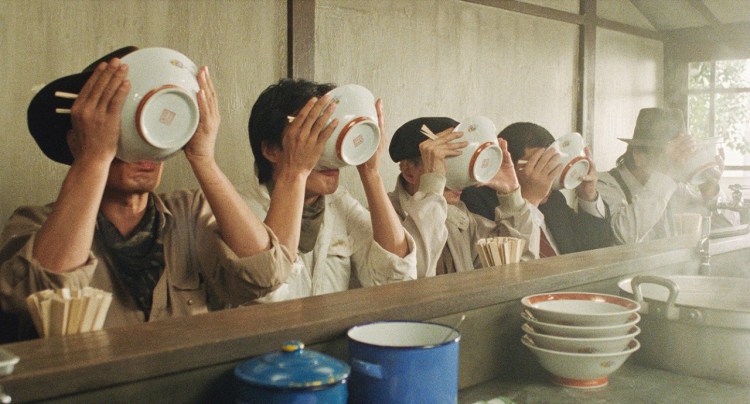
tampopo stillAnd finally the greatest food movie of them all – Juzo Itami’s Tampopo! This iconic comedy follows the titular widow as she tries to make a success of her ramen stand with the help of lonely truck drivers Goro and Gun. While Tampopo is busy with her noodles, Itami ventures off on a cultural odyssey to explore the various ways food is used and misused in Japanese society. Review.
Tampopo screens at Rich Mix on Saturday 26th August, 3.15pm.


You can find further details for all the films on the Japan Foundation London website. Tickets are free but must be reserved in advance and you can only register to attend two of the four screenings (if you apply for more than two you will be placed on the waiting list for the extra ones). A Tale of Samurai Cooking and Chef of the South Polar are currently fully booked but you can still apply to join the waiting list and be notified should spaces become available.

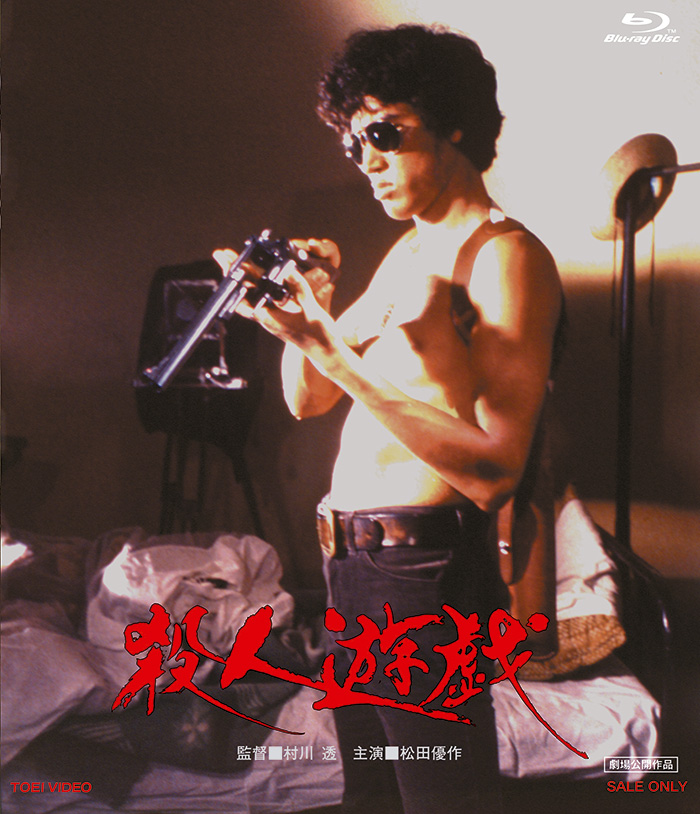
The Killing Game (殺人遊戯, Toru Murakawa, 1978)

the killing gameFollowing the success of The Most Dangerous Game, the second in what was to become a trilogy arrived within the year and once again stars Matsuda as the ice cold hitman Narumi. Sunnier in outlook, The Killing Game (殺人遊戯, Satsujin Jiken) unfolds along the same pattern as the first instalment as Narumi is dragged out of the shadows to intercede in a gang war only to find himself surplus to requirements.

Narumi (Yusaku Matsuda) has been retired from the killing game for the last five years and now lives a life of poverty and dissipation. Gone are his swanky apartment and stylish suits, now he lives in a bare hovel which is covered in dust and cobwebs, and he dresses like a farm boy in a white vest and jeans with a straw hat hanging on his back. He’s trying to lie low, but gets pulled into the kind of hostess bar he can’t really afford where he meets the first of two familiar faces which threaten to send him back into the middle of chaos. Akiko (Kaori Takeda), now a hostess at Bar Tako, is the daughter of the chairman Narumi bumped off in his last job before retiring but far from bearing a grudge against him, Akiko is grateful to have been set free. The second familiar face belongs to the same chairman’s former secretary/mistress, Misako (Yutaka Nakajima), who is now a mama-san at a bar popular with the local goons. All those years ago Narumi let Misako go in a moment of weakness and now regrets it but attempting to “reconnect” is going to land him right back in the thick of things.

Murakawa begins with a prologue which takes place in the noirish urban darkness of The Most Dangerous Game, but shoots in dreamy soft focus to emphasise that this is all memory before jumping forward five years. Exactly why Narumi has decided to give up a career in assassination is not revealed, nor is what he’s been doing the last five years, but he has apparently got himself an annoying sidekick who, in contrast to Narumi’s intense reserve, does not shut up. The first half of the movie is Narumi and his buddy trying to get by as outlaws including one humorous skit where they get themselves a van with a nudie pinup on the front plus a loudspeaker to humiliate debtors into paying up.

Things take a darker turn when Narumi runs into Misako – a chance meeting that seems almost like fate. Gradually the old Narumi begins to reappear. Deciding to pay Misako a visit he runs into her new man, gang boss Katsuda (Kei Sato), who figures out who he is and wants him to bump off another old gang boss. Narumi needs to get back in shape which he does via the tried and tested method of a training montage, lifting weights and running through the town with his trademark perm returning to its stylish buoyancy. This time around Narumi has buddy to help out, even if he only ends up being a liability, but the same strange dichotomy occurs – he may be an ace hitman, but Narumi is a mess without a gun in his hand.

Perhaps weathered by his experiences, Narumi is also much less cocky and much more unwilling to take a chance on trust. Once again he is betrayed by clients who’d rather not pay up and forced to play a “dangerous game” to bring the whole saga to a close in such a way as to keep both his life and the money. Rather than the surprising and largely inexplicable devotion of Dangerous’ Kyoko, Narumi finds himself torn between two women – the youthful Akiko who is grateful to Narumi for releasing her from an overbearing father, and the jaded Misako whose feelings for Narumi are complex, mingling fear, gratitude, attraction, and resentment into an irresistible storm of ambivalence. Again Narumi’s cool, animalistic aggression seems to be the key to his mysterious sex appeal but this time around there are no flickers of response as there were for the devoted Kyoko, these “relationships” are opportunistic and transactional.

Ironically titled, The Killing Game makes plain that Narumi will never be able to escape his chosen profession even if he wanted to. Without a gun in his hand Narumi is a pathetic wastrel, playing around at tuppenny schemes with his rather dim but talkative friend, and trying to play the big shot by buying out a hostess bar he is entirely unable to afford despite his recent windfall. The setting may be brighter, but Narumi’s word is still a nihilistic one in which he’s conditioned to expect betrayal and the only remaining vestiges of his humanity are his strange friendship with his bumbling sidekick and his ongoing fecklessness at coping with everyday life. Matsuda is as cool as ever in his effortless ability to cope with any given situation and kill with ruthless efficiency, but as Narumi edges ever closer to machine it is clear there is only one way to beat The Killing Game.


Original trailer (no subtitles)

The Most Dangerous Game (最も危険な遊戯, Toru Murakawa, 1978)

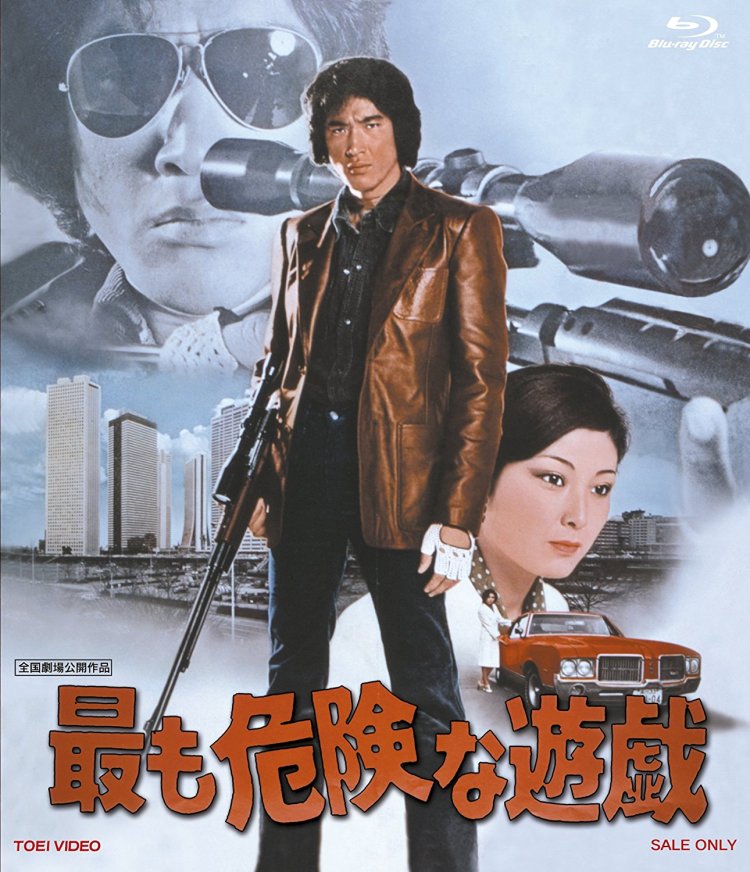
the most dangerousThe late Yusaku Matsuda remains an ultra cool pop culture icon thirty years after his death and forty after his reign as the action king of Japanese cinema. Though there were several other contenders for the crown – Sonny Chiba, or the tough guy yakuza stars Ken Takakura and Bunta Sugawara, to name but a few, it’s Matsuda’s intense screen presence which continues to endure as an example of mid-1970s extreme masculinity. This image was in large part created through his work with director Toru Murakawa in roles inspired by hardboiled novelist Haruhiko Oyabu in Resurrection of the Golden Wolf and The Beast Must Die, but before that it was the “Game” trilogy which helped to make his name.

The first of these, The Most Dangerous Game (最も危険な遊戯, Mottomo Kikenna Yuugi), introduces us to Narumi (Yusaku Matsuda) – a sleazy hitman with a gambling problem who is capable of pulling off the most daring and precise of hits but remains a disaster outside of his working life. After losing a mahjong game and getting roughed up by gangsters, Narumi gets a job offer from an arms company currently vying for a large government contract to develop a Star Wars-style air defence system. As reported in the news, a number of top CEOs are being kidnapped for ransom thanks to a plot by the Godai Conglomerate. The Tonichi Corporation want Narumi to rescue their kidnapped employee, Nanjo (Masanori Irie), who also happens to be the son-in-law of CEO Kohinata (Asao Uchida).

Unlike the later Resurrection of the Golden Wolf or The Beast Must Die, the corporate conspiracy and shady government military project are merely background and never really dealt with in any further detail. Nevertheless, it appears Narumi has got himself involved in a much darker world than even he is used to. Kohinata claimed to want to save Nanjo because of their familial connection, but as it turns out he doesn’t really care so much about his daughter’s husband as he does about wiping out the Godai and getting the lucrative government contract all to himself. He’s even willing to pay Narumi twice for doing the same job, but then perhaps he’s not really looking to pay at all. Conspiracy may extend further than just the corporate realm.

Narumi makes for a strange “hero”. His very 1970s bachelor pad is a monument to sleaze with its prominent topless pinups displayed like precious artwork in his living room and his well stocked personal bar – a strange thing to have when it’s clear he does not entertain many visitors. Dancing around with his gun and posing topless in front of the mirror Taxi Driver-style implies perhaps he’s not so confident with his chosen profession yet he’s clearly well known enough to get a phone call out of the blue from the Tonichi Corp. Despite his rather pathetic attitude at the mahjong game and equally pathetic exit after falling asleep during a lap dance at a sex parlour, Narumi’s professional exterior is one of infinite capability and powerful masculinity.

Yet, like many films of the era Narumi’s masculinity is also intensely misogynistic. Gangster’s moll Kyoko (Keiko Tasaka) becomes an unlikely (and inconvenient) love interest after Narumi tries to use her to bait her boyfriend. Lying in wait in Kyoko’s apartment, he surprises her coming out of the shower while she is half naked and vulnerable. She tries to escape, he stops her, phone’s the boyfriend, and begins raping her so that the gangsters can hear her distress over the phone. Kyoko stops struggling and apparently gets into the groove, falling instantly in love with Narumi’s awesome love making skills and following him back to his apartment where she stays for the rest of the film.

Nevertheless Matsuda is presented as the epitome of cool, unshaken by danger and always coming out on top with enough time to strike a pose as he takes down a target with automatic precision. Murakawa’s approach is of its time but leaning towards arthouse rather than Toei’s unusual brand of action cinema. Its vistas are noirish but filled with 70s paranoid claustrophobia while the hopeless, melancholy jazz score by Yuji Ohno adds to the moody hardboiled aesthetic. An exercise in style, The Most Dangerous Game is as cynical as they come but its wry commentary and occasional fits of gleeful comedy lift it above both the B-movie silliness of other contemporary action movies and the dour seriousness of later Matsuda/Murakawa collaborations.


Original trailer (no subtitles)

M (엠, Lee Myung-se, 2007)

“More specific, less poetic” the distressed author hero of Lee Myung-se’s M (엠) repeatedly types after a difficult conversation with his editor. Almost a meta comment on Lee’s process, it’s just as well that it’s advice he didn’t take – M is a noir poem, a metaphor for an artist’s torture, and a living ghost story in which a man shifts between worlds of memory, haunted and hunted by unidentifiable pain. Reality, dream, and madness mingle and merge as a single kernel of confusion causes widespread panic in a desperate writer’s already strained mind.

A young woman haunts the screen, pleading with us to remember her and be sad. She is a dream, a visitation into the mind of blocked writer Han Min-woo (Gang Dong-Won) whose publishers are eagerly awaiting the completion of his next manuscript. Back in the real world, the same young woman appears around Min-woo but seems to be in an entirely different plane of existence, completely invisible to the man she claims to love. Eventually Min-woo enters a mysterious back alley bar and finally engages with the girl, Mimi (Lee Yeon-Hee), before blacking out and forgetting all about the whole thing.

Reality resets once again and we realise Min-woo is about to be married to Eun-hye (Kong Hyo-Jin) – the daughter of a wealthy man who seems to approve of the marriage if not, exactly, Min-woo’s literary career. Min-woo should be happy – he’s getting married to a woman he appears to care for, has been successful in his career, and has everything pretty much set for life at only 29. Min-woo is not happy. Persistent writer’s block means he’s written almost nothing with a deadline approaching, he’s worrying about money, and somehow or other he can’t quite commit to Eun-hye – there is something nagging at his mind, but try as he might he cannot say what.

Min-woo is worried enough to visit a psychiatrist but the doctor offers little more than a bottle of prozac and an instruction to call back in the morning. His mental state is clearly fracturing but even objectively his manner is strange, suddenly shouting or issuing orders in a shocking break from his generally mild mannered exterior. As if the mounting pressure of his overdue manuscript weren’t enough, Min-woo is extremely insecure in his literary talents. He views himself as a successful hack, berating those who dare to praise his work as fans of cheap trash.

Yet his internal world seems to be defined by potboiler hardboiled with its rain drenched streets, foggy avenues, and smokey bars peopled by miserable whiskey drinking men and omniscient bartenders. Describing the process of piecing his fractured mind back together as re-editing a film in which several frames are missing, Min-woo quickly becomes lost inside his own internal landscape, trying to locate the wound to stem the bleed but finding it ever elusive. Mimi is more than a spectral figment of his imagination. A living personification of the living past, her presence haunts him with the power of mystery, like something unforgettable which has long been forgotten.

In the end, Min-woo’s creative madness is a salve for an internal scar but its final resolution may be its own undoing. A love story and a ghost story, Min-woo’s crisis is every man’s obsession with lost love. Guilt mingles with pain and regret but also with existential confusion and unresolvable loss. As he later puts it, you lose things, often the things which are most important to you – it is a part (and a privilege, in someone else’s words) of being alive. You try to bury your pain in oblivion but eventually the things you’ve lost will be returned in unclear or unexpected ways. Min-woo may have made peace with himself (or this aspect of himself), allowed a ghost to bid him goodbye, but then again, perhaps he only dreamed himself free and is forever condemned to remember and be sad.


Original trailer (no subtitles)

Gantz:O (ガンツ:オー, Yasushi Kawamura, 2016)

Gantz-oHiroya Oku’s long running manga series Gantz has already been adapted as a TV anime as well as two very successful live action films from Shinsuke Sato. Gantz:O (ガンツ:オー) is the first feature length animated treatment of the series and makes use of 3D CGI and motion capture for a hyperrealistic approach to alien killing action. “O” for Osaka rather than “0” for zero, the movie is inspired by the spin-off Osaka arc of the manga shifting the action south from the regular setting of central Tokyo.
Kicking off in Shibuya, the first scene features the demise of the franchise’s protagonist, Kei Kurono (Yuki Kaji), as he defeats one of the giant monsters terrorising the city and saves his friends but fails to save himself. A quick geographical cut takes us Osaka where there are reports of another disturbance, but the major threat turns out to be a depressingly commonplace one as a lone madman goes on a stabbing spree at a Tokyo train station.

17 year old high school student Masaru Kato (Daisuke Ono) gets himself mixed up in the incident when he ignores the crowds of people running in the opposite direction and comes to the aid of an injured old man. Sadly, Kato is repeatedly stabbed by the attacker and “dies” at the scene only to be resurrected in front of Gantz. Introduced to fellow players Suzuki (Shuuichi Ikeda) – an old man who “died” of a stroke, Reika (Saori Hayami) – an idol who was “killed” in a car crash, and the sardonic teenager Nishi (Tomohiro Kaku), Kato learns that he’s been given a second chance at life as a warrior in Gantz’s survival game in which he must fight off huge monsters within the time limit or die for real.

The entirety of Gantz:O revolves around this one climactic battle in the Osaka streets as Kato, Suzuki, Reika, and Nishi come into contact with the much more successful (but definitely less “nice”) Osaka detachment as backup in the fight against these fearsome monsters. As such, the main draw is furious action filled with bizarre scenes of carnage as the gang take down a collection of strange creatures often inspired by traditional folklore such as the huge winged tengu or shapeshifting priest-like boss. The visuals are extremely impressive displaying extreme fluidity of motion almost akin to live action photography.

Aesthetics are the key as the movie’s other elements are more or less inconsequential. As a bonus episode in the Gantz world, this is only to be expected and O makes no real attempt to do anything other than focus on the monster killing action. Thus character development is often shallow or non-existent, falling into genre clichés of cool heroes and depressed, brokenhearted women.

The question of self preservation vs altruism is central to the Gantz universe which begins from a position of nihilism and narcissistic self determination but gradually opens up to the importance of protecting one’s comrades, friends, family, and fellow human beings. Kato is the selfless hero the gang have been awaiting – his “death” results directly from his reckless attempt to help an injured person and his instinct is always to help those in need no matter the personal cost. His determination to save the lives of strangers is directly contrasted with his responsibility to the younger brother who is entirely dependent on him and would be lost should Kato lose his life. The film is ambivalent towards this dilemma as it constantly harks back to the people waiting for these secret warriors to come home, at once critical of them for risking their lives and acknowledging the fact that someone has to fight these monsters or everyone will die.

Despite the exposition heavy opening, Gantz:O does little to explain its world to the uninitiated and provides no logical explanations for its machinations leaving newcomers to the franchise with a host of unanswered questions but then all Gantz really wants to do is sell the message of altruism whilst destroying odd looking monsters in various bloody ways. Depressingly sexist, if edging away from the franchise’s nihilistic baseline, Gantz:O is an impressive visual spectacle but remains an essentially hollow, inconsequential addition to the Gantz canon.


Original trailer (no subtitles)

Girl in the Sunny Place (陽だまりの彼女, Takahiro Miki, 2013)

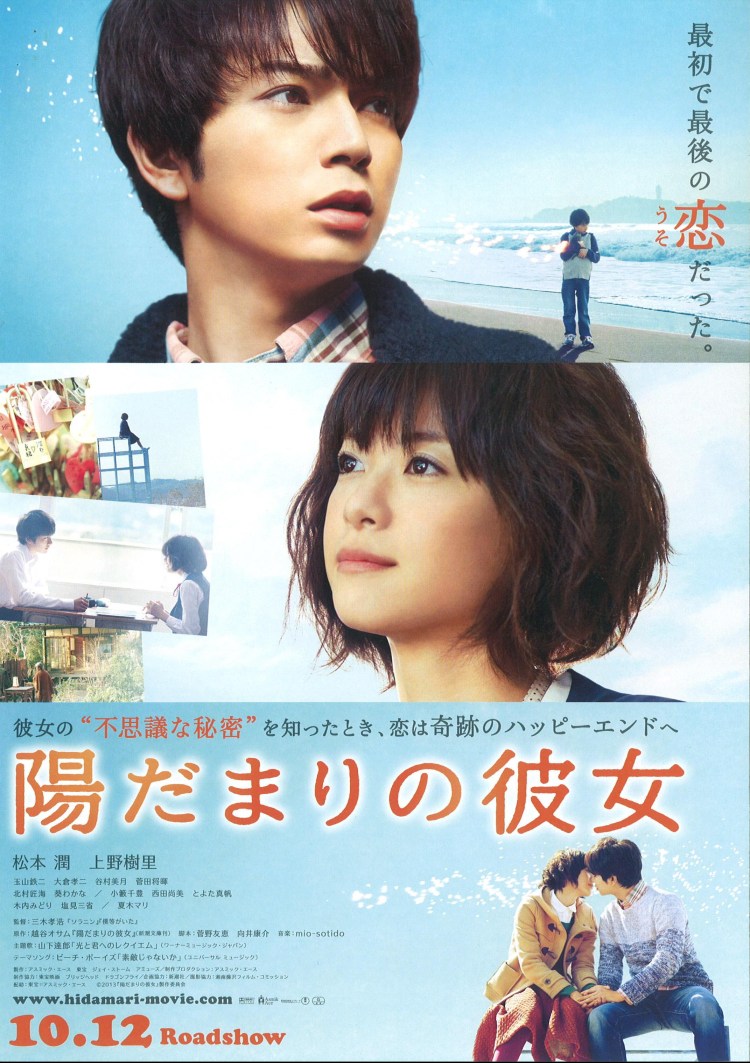
girl in the sunny placeThe “jun-ai” boom might have been well and truly over by the time Takahiro Miki’s Girl in the Sunny Place (陽だまりの彼女, Hidamari no Kanojo) hit the screen, but tales of true love doomed are unlikely to go out of fashion any time soon. Based on a novel by Osamu Koshigaya, Girl in the Sunny Place is another genial romance in which teenage friends are separated, find each other again, become happy and then have that happiness threatened, but it’s also one that hinges on a strange magical realism born of the affinity between humans and cats.
25 year old Kosuke (Jun Matsumoto) is a diffident advertising executive living a dull if not unhappy life. Discovering he’s left it too late to ask out a colleague, Kousuke is feeling depressed but an unexpected meeting with a client brightens his day. The pretty woman standing in the doorway with the afternoon sun neatly lighting her from behind is an old middle school classmate – Mao (Juri Ueno), whom Kosuke has not seen in over ten years since he moved away from his from town and the pair were separated. Eventually the two get to know each other again, fall in love, and get married but Mao is hiding an unusual secret which may bring an end to their fairytale romance.

Filmed with a breezy sunniness, Girl in the Sunny Place straddles the line between quirky romance and the heartrending tragedy which defines jun-ai, though, more fairytale than melodrama, there is still room for bittersweet happy endings even in the inevitability of tragedy. Following the pattern of many a tragic love story, Miki moves between the present day and the middle school past in which Kosuke became Mao’s only protector when she was mercilessly bullied for being “weird”. Mao’s past is necessarily mysterious – adopted by a policeman (Sansei Shiomi) who found her wandering alone at night, Mao has no memory of her life before the age of 13 and lacks the self awareness of many of the other girls, turning up with messy hair and dressed idiosyncratically. When Kousuke stands up to the popular/delinquent kids making her life a misery, the pair become inseparable and embark on their first romance only to be separated when Kosuke’s family moves away from their hometown of Enoshima.

“Miraculously” meeting again they enjoy a typically cute love story as they work on the ad campaign for a new brassiere collection which everyone else seems to find quite embarrassing. As time moves on it becomes apparent that there’s something more than kookiness in Mao’s strange energy and sure enough, the signs become clear as Mao’s energy fades and her behaviour becomes less and less normal.

The final twist, well signposted as it is, may leave some baffled but is in the best fairytale tradition. Maki films with a well placed warmth, finding the sun wherever it hides and bathing everything in the fuzzy glow of a late summer evening in which all is destined go on pleasantly just as before. Though the (first) ending may seem cruel, the tone is one of happiness and possibility, of partings and reunions, and of the transformative powers of love which endure even if everything else has been forgotten. Beautifully shot and anchored by strong performances from Juri Ueno and Jun Matsumoto, Girl in the Sunny Place neatly sidesteps its melodramatic premise for a cheerfully affecting love story even if it’s the kind that may float away on the breeze.


Original trailer (no subtitles)

Victory Song (必勝歌, Masahiro Makino, Kenji Mizoguchi, Hiroshi Shimizu, Tomotaka Tasaka, Tatsuo Osone, Koichi Takagi, Tetsuo Ichikawa, 1945)

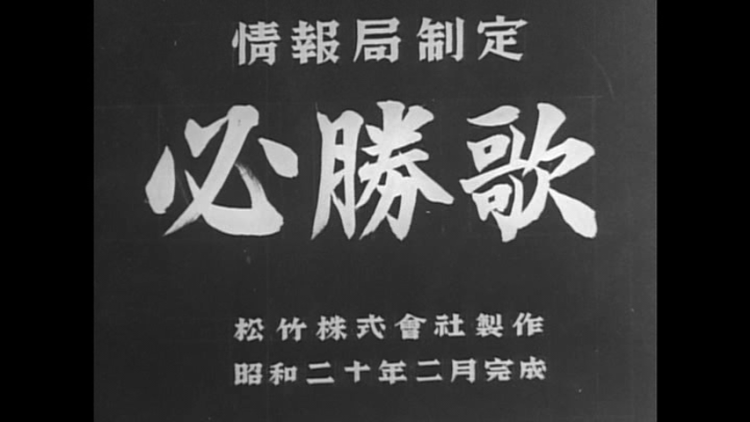
vlcsnap-2017-08-01-00h21m20s082Completed in 1945, Victory Song (必勝歌, Hisshoka) is a strangely optimistic title for this full on propaganda effort intended to show how ordinary people were still working hard for the Emperor and refusing to read the writing on the wall. Like all propaganda films it is supposed to reinforce the views of the ruling regime, encourage conformity, and raise morale yet there are also tiny background hints of ongoing suffering which must be endured. Composed of 13 parts, Victory Song pictures the lives of ordinary people from all walks of life though all, of course, in some way connected with the military or the war effort more generally. Seven directors worked on the film – Masahiro Makino, Kenji Mizoguchi, Hiroshi Shimizu, Tomotaka Tasaka, Tatsuo Osone, Koichi Takagi, and Tetsuo Ichikawa, and it appears to have been a speedy production, made for little money though starring some of the studio’s biggest stars in smallish roles.

The first scenes make plain the propagandistic intentions by starting in 660BC with a pledge of protection for the descendants of Amaterasu – ancestral mother goddess of Japan. Flash forward to 1941 and her sons are doing their best. Stock footage gives way to soldiers in the Asian jungle, taking a brief respite from the fighting to console each other with thoughts of home which is presumably where most of these small stories of resilience come from.

The soldiers appear to come from all backgrounds, the youngest of them seeming to be just a young boy whose strongest memory of home is his mother’s face. They chat cheerfully about their hometowns, never betraying any sense of fear, boredom or fatigue but the commander suddenly announces that they’re all “going home” until the next attack – taking a brief voyage of memory back to the motherland.

Within this framing sequence, the ordinary people of Japan go about their ordinary lives with cheerful forbearance. A young man cares for his parents after his older brother has given his life for the Emperor, serving on the home front by working himself so hard there’s a danger of going overboard and rendering himself out of action. His father argues that as long as everyone in Japan works as hard as they can, they can never be defeated. Community comes to the rescue again when a train gets stuck in the snow and the entire village gets out of bed to free it.

While the adults are giving it their all, the children are preparing to become fine subjects of the Emperor, training their minds and bodies to be of the most use whilst singing patriotic songs and performing military drills. Another segment finds the children praising their parents for their bravery, playing and roughhousing like any children would, but a hint of darkness emerges when a group of boys plays at war with their toy aeroplane. One little boy, Yuichi, has applied for the young pilots school without talking it over with his parents because he didn’t want them to be sad about him going away. His father, at least, is proud of him but upset at not being consulted. Practically measuring him up for the uniform, Yuichi’s father marvels at all the “young pilots” in the village – a chilling note seeing as none of these boys can be more than ten years old.

While the men go to war the women are at home waiting. Another persistent question relates to the fate of unmarried women – a positive motion for an arranged engagement is disrupted by the receipt of a draft card, prompting the male side to suggest they call the whole thing off. The woman, however, points out that every young man is in this position and she doesn’t see the point in expecting the worst. Life must go on, women must get married, and men must go to war. All of these things must be accepted without thinking too hard about it or there will be nothing for these gallant men to come home to.

The difficulties of wartime life extend to the fear and destruction of air raids, though a news report of the fire bombing of Tokyo reminds us that it could all have been much worse if it weren’t for the valiant efforts of the pilots and ground based defence forces keeping the threat from the skies at a minimum. Other reports detail dive bombing of hospital convoys while the wounded die happily knowing they’ve done their duty. Likewise the “special attack squad” prepare to meet their fates with stoicism and determination while their relatives are treated with especial esteem.

Interspersed with the vignettes and stock footage there are songs and dances bringing both entertainment and inspiration. The final message is one of resilience and unity, that Japan stands together to defend its ancient homeland in devotion to its Emperor, but then such a message would hardly be necessarily if the situation were brighter. Brief allusions are made to rationing, to the destruction and constant loss of life but these are all things which must be born for the glorious future. There is, however, much more stock put in remaining positive than there is in trying to deny the ongoing desperation. As propaganda films go, this one may backfire but does perhaps shine a light on the unspoken anxieties of ordinary people facing an extraordinary situation.


Final scenes including the “Victory Song” itself