Lonely Castle in the Mirror (かがみの孤城, Keiichi Hara, 2022)

Kokoro isn’t “lying” when she complains of a stomach ache to avoid going to school, it’s just that it’s the anxiety she feels at the prospect that is making her physically ill. Based on a novel by Mizuki Tsujimura, Keiichi Hara’s fantasy-infused anime Lonely Castle in the Mirror (かがみの孤城, Kagami no Kojo) explores the effects of school phobia in uniting a series of teenagers who each for one reason or another have turned away from education often because of bullying or the rigidity of the contemporary schools system. 

As we discover, Kokoro (Ami Toma) gradually stopped going to school after her life was made a misery by manipulative popular girl Sanada who operates a small clique of bullying minions yet appears all sweetness and light with the teaching staff. Unable to fully explain what’s been going on, Kokoro largely remains at home while her understanding mother (Kumiko Aso) explores opportunities in alternative teaching and tries to support her as best she can. Though the film is very sympathetic towards Kokoro and the children in insisting that it isn’t their fault they can’t attend school but the fault of an unaccommodating system, it perhaps misses an opportunity to fully commit to educational diversity when the end goal becomes getting Koroko back in class undaunted by the presence of her bully. 

Nevertheless, it offers her another outlet when the mirror in her bedroom suddenly becomes a magic portal that transports her to a fantasy fairytale castle where she meets six other school phobic teens who are all dealing with similar issues. A young girl in wolf mask informs her that they have until the end of the school year to locate a key which if turned will grant one, but only one, of their wishes. When the key is turned, they will all lose their memory so it’s unclear if they will know whether or not the wish was granted but in any case are left with a choice between achieving their dreams and the new friendships they’ve formed at the castle. The issues that plague each of them are various from bullying to dealing with grief, purposelessness, a feeling of not fitting in, parental expectations, and an implication of sexual abuse at the hands of a close relative. As the Wolf Queen tells them “collaboration is beautiful” and it is the connections they forge with each other that give them strength to go back out into the world while each vowing to pay it forward and make sure to stand up to injustice by protecting other vulnerable kids like themselves when they’re able to. 

Even so, Kokoro takes her time on even deciding whether or not to use the mirror and for some reason the castle is only open business hours Japan time. If they stay past five they’ll be eaten by wolves! Many things about the fantasy land do not add up and Kokoro begins to worry that it’s all taking place in her head, her new friends aren’t really real, and she’s being driven out of her mind by the stress of being the victim of a campaign of harassment she can’t even escape by staying home minding her own business. But through her experiences she is finally able to gain the courage to speak out against her bullying while supported by her steadfast mother and an earnest teacher who is keen to find the best solution for each of her pupils rather than trying to force them back into a one size fits all educational system. 

In any case, Kokoro’s quest is to find her way back through the looking glass to rediscover her sense of self and take her place in mainstream society free of the sense of loneliness and inferiority she had felt while being bullied by Sanada and her clique of popular girls though in an ironic touch the film does not extend the same empathy to her or ask why Sanada has an apparent need to need to pick a target to destroy. A variable animation quality and occasional clash of styles sometimes frustrate what is at heart a poignant tale of finding strength in solidarity and learning to take care of each other in a world powered more by compassion than an unthinking devotion to the status quo.


Lonely Castle in the Mirror screened as part of this year’s Nippon Connection.

International trailer (English subtitles)

To The Supreme! (もっと超越した所へ。, Santa Yamagishi, 2022)

Is it worth staying in a dissatisfying relationship just so that you’ll have someone to carry your rice? The idealist in all of us might want to say no, but it’s undeniably a strong argument. The four heroines of Santa Yamagishi’s To the Supreme! (もっと超越した所へ。, Motto Chouetsushita Tokoro e), adapted from the stage play by Shuko Nemoto, find themselves asking just this question as their relationships with a series of narcissistic, selfish men reach a crisis point on the eve of the coronavirus pandemic. 

Opening in early 2020, the film finds costume designer Machiko (Atsuko Maeda) reconnecting with middle school friend Reito (Fuma Kikuchi) who abruptly announces he’s moving in because he’s worried about her given the tone of her late night tweets. Former actress turned variety star Suzu (Shuri) lives with her gay best friend, Tommy (Yudai Chiba), after ending a 10-year relationship with petulant former child star Shintaro (Takahiro Miura) who is now seeing sex worker Nanase (Mei Kurokawa). Miwa (Marika Ito), meanwhile, is in a relationship with vacuous hipster Taizo (Reiji Okamoto) who spent an exorbitant amount of money on gold grills as a present and seems to be very concerned about this new virus going around. 

None of these men have a full-time job and all are (or were at one time or another) supported by their partner who is shouldering the responsibility for rent and domestic bills singlehandedly, not that there’s anything wrong with that in itself if were not such a blatant attempt to take advantage of the women they claim to love. In a flashback to 2018, we discover that Miwa was previously in a relationship with Reito and she’s carried on giving him pocket money every month for the last two years despite having moved on romantically. In his sudden announcement to Machiko that he’ll be stying by her side for the foreseeable future, it’s difficult not to wonder if he’s simply looking for a free place to stay especially as he largely continues to mooch off her while doing so claiming his live streaming channel is sure to take off soon. 

Shintaro had similarly been supported by Suzu during the time they lived together and put on a big show of letting her kept the apartment when he left even though the apartment was hers anyway because it was her name on the lease and she paid the rent while he wasn’t working. More practically minded, Suzu had been taking jobs that paid in light entertainment and variety only to be branded a sellout by Shintaro who was nevertheless jealous of her success. A former child star, he feels humiliated taking bit parts and even working as an extra but talks a big game to Nanase whom he often brands “stupid” and looks down on for being a sex worker. He makes her shout out that he’s the best actor as she climaxes and quizzes her about foreign directors when she says she struggles to watch the films of Shunji Iwai because they make her wonder if there’s something wrong with her eyesight. When she genuinely tells him that she enjoyed his “performance” after spotting him as an extra in a movie, he tells her that a sex worker’s opinion doesn’t count despite having been paying for just that kind of validation the entire time. 

Suzu runs into a similar problem in developing feelings for Tommy who rejects her in an incredibly insensitive way when she tries to make a move on him. During a heated argument, Tommy yells at Suzu for ruining all his plans because he wants to start a family and was intending to marry a woman Suzu being a prime candidate. The film flirts with but does not really get into Tommy’s internalised homophobia in which he seems to regard his sexuality as a barrier to achieving the life he wants given the still conservative culture has not yet legalised same sex marriage and makes life difficult for same sex partners who want to raise children together. He lets himself off the hook suggesting that his sexuality permits him to be “selfish” while admitting that he too has taken advantage of women’s feelings for him without really giving much thought to their own. 

Taizo is much the same. On the surface, it looks like he is genuinely solicitous of Miwa though it’s really more that he doesn’t want to get sick himself or be responsible for looking after someone who is ill. When Miwa goes to the hospital thinking she may be pregnant, she gets some other distressing news but all Taizo can do is focus on himself not wanting to accept the responsibility of becoming a father. When she looks to him for comfort, he fixates on his own relief. These men are selfish, self-involved, proud and fragile in their masculinity requiring the women in their lives to take care of all their basic needs without lifting a finger to help. But the film doesn’t quite let the women off the hook either, a sudden coup de théâtre bringing them together to reconsider making clear that they themselves enable the men’s behaviour by forgiving them if in part because they expect little better and having someone around who could theoretically help out, for example by carrying heavy bags of rice home from the store, might make life easier even if they never actually do it. Witty and slickly edited, Yamagishi ends with a sudden intrusion of eijanaika dancers as if literally to say “what’s wrong with that?”, which might present a rather cynical view of contemporary romantic relationships but one that is also admittedly difficult to argue with. 


To The Supreme! screened as part of this year’s Nippon Connection.

Original trailer (English subtitles)

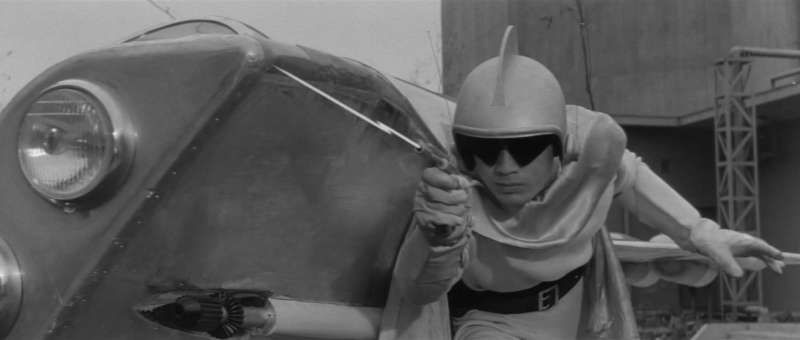
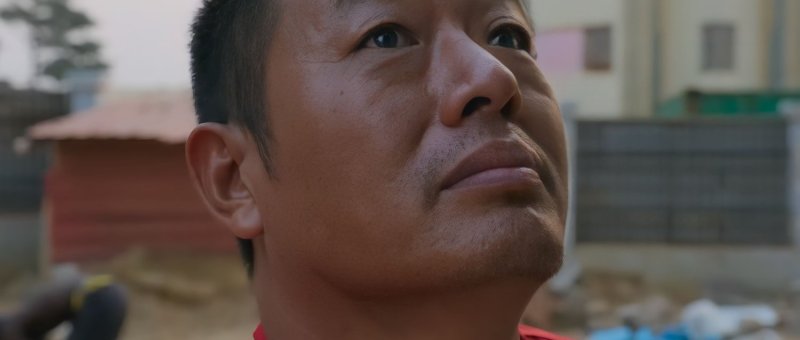
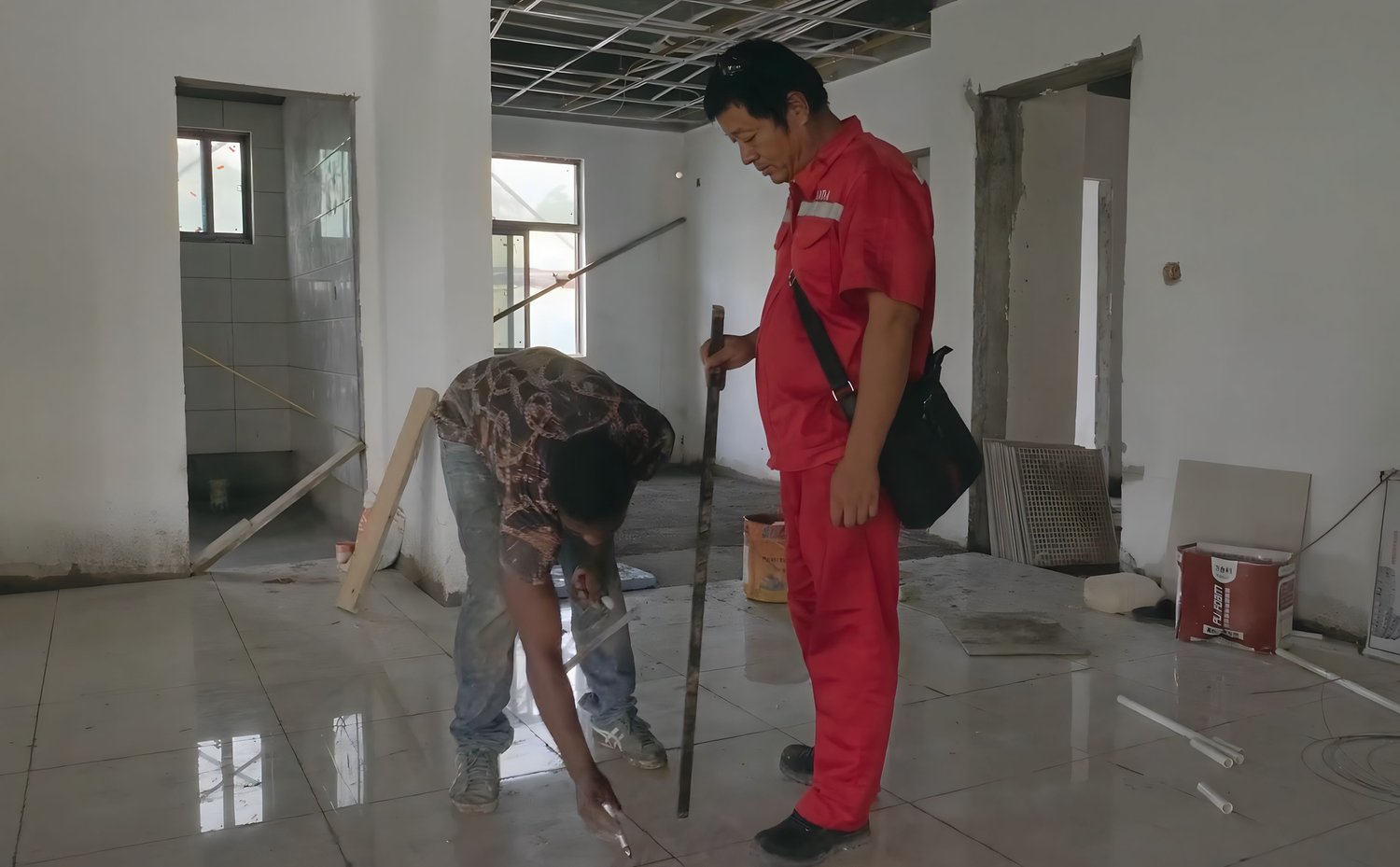
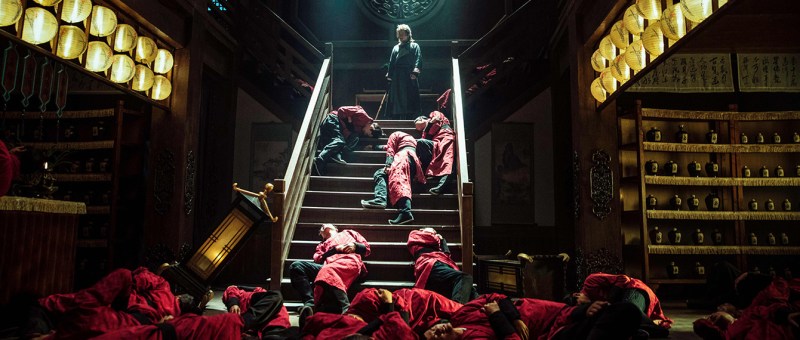
Mountain Woman (山女, Takeshi Fukunaga, 2022)

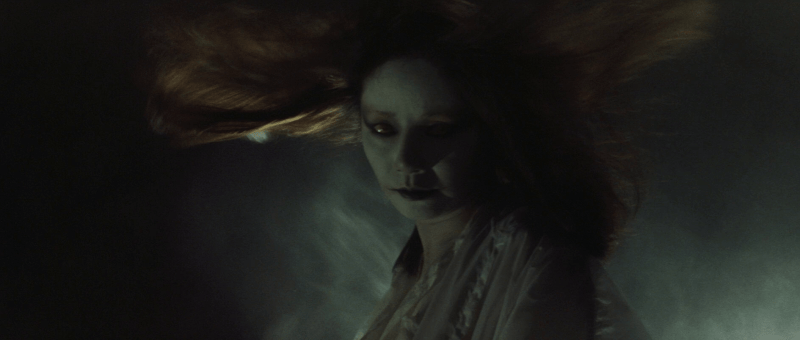
A young woman charged with disposing of the corpse of an infant has only a few words to impart as she lowers its body to the river, “Don’t be born human in your next life.” Set in late 18th century Tohoku where famine ravages the land, Takeshi Fukunaga’s bleak fable Mountain Woman (山女, Yama Onna) sees humanity in extremis pushed to its most inhumane but also offers refuge in spirituality and a retreat to a less sophisticated existence. 

Calling this existence sophisticated might be a stretch, but there is more than a little constraint attached to the idea of community in this typical farming village in a feudal society. Bad weather has produced two poor harvests, and the villagers are beginning to feel desperate. As the film opens, a woman goes through a painful and traumatic labour only for the midwife to silently offer a cloth to her husband (Takashi Yamanaka) who ignores her pleas and smothers the child. They have nothing to feed it, and perhaps a part of him thinks it’s kinder this way. A young woman, Rin (Anna Yamada), waits outside for the inevitable and accepts a few coins to spirit the baby’s body away. Rin’s family is shunned by the other villagers because of a crime her ancestors apparently committed, and it’s for this reason that they deal with the dead. 

When it comes to handing out the rice rations, the village chief gives Rin’s father Ihei (Masatoshi Nagase) only half but justifies it as a kindness explaining that he is entitled to nothing because his family owns no land (it was taken from them because of their ancestral crime) but even those tainted with the legacy of criminality are still considered part of the community and so they are doing what they can. It’s this liminal status that begins to eat away at Rin. She’s expected to support a community that as she later says considers her less than human and gives her nothing in return. When her father is caught stealing from the rice reserves, she selflessly claims responsibility and Ihei lets her, savagely beating his daughter in front of the village elders as if he thought that might be enough to settle the matter.

It’s at this point that Rin decides to leave the village, taking off her sandals and leaving them at the gate to imply that she has been “spirited away” though everyone likely knows she has walked into the mountains to die. Several times we see her gazing at Mt. Hayachine which is where locals believe souls go after death, praying to its goddess who was herself apparently a thief and sympathetic to those who find themselves in moments of desperation. As Rin tells her younger brother who is rejected by the community because he is blind, the goddess Hayachine accepts everyone the same, good or bad, rich or poor, unlike the hypocrites from the village desperate to find a scapegoat on whom to blame their plight. There is no longer any space for sentimentality in their lives. Listening only to an old shamaness who claims to be in contact with the gods, they squabble amongst themselves for what little that remains before deciding they must sacrifice a virgin girl to the Weather God to end the bad harvests. 

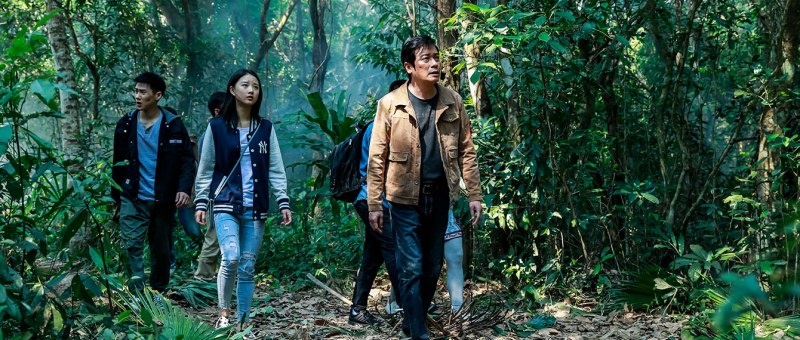
But what Rin discovers in the mountains is freedom in simplicity. Having broken a taboo in stepping beyond the Mountain God Stone, she is freed from the constraints of “civility” and later tells a man who has come to rescue her that she has no desire to return for only in the mountains has felt herself to be a true human being. She encounters another person there she assumes is the mysterious Mountain Man (Mirai Moriyama) and is kind to him though he never speaks and shows her only silent comfort. It may be this that later saves her life in a fable-like moment that frees her to return to the mountain and the only place she has ever felt alive, but also says something of the inhumanity of so-called civilisation that only in a “savage” land can she find comfort and serenity. Often shot in crushing darkness contrasted with the overwhelming light and beauty of the forest, Fukunaga’s bleak tale of human selfishness implies that only by shaking off the false sophistication of an oppressive “civilisation” can one discover true humanity.


Mountain Woman screened as part of this year’s Nippon Connection.

Original trailer (dialogue free)

Images: ©YAMAONNA FILM COMMITTEE

I Am a Comedian (アイアムアコメディアン, Fumiari Hyuga, 2022)

Can comedy change the world? Daisuke Muramoto was once one of the most popular comedians in Japan appearing regularly on television screens across the nation, but the moment he began to joke about serious subjects such as the Fukushima Nuclear Disaster, Comfort Women, discrimination against ethnic Koreans, and the US military bases on Okinawa, his bookings swiftly declined. Fumiari Hyuga’s documentary I am a Comedian (アイアムアコメディアン) in part explores the concept of freedom of speech in a nation in which taking about sensitive issues makes people uncomfortable and is also a portrait of a wounded idealist who in the end wants to make friends if only through “upsetting” people. 

Even Daisuke’s mother says he “upsets” her every time they meet so it’s often easier to communicate with him through text message and email. He can certainly be blunt and at times unthinking but it does not appear that he has any intention of hurting people’s feelings only of speaking his mind and perhaps encouraging them to think about things they’d rather ignore. It seems odd to him that the TV stations aren’t interested in his “controversial” comedy and especially NHK which is funded by the licence payer so doesn’t have to worry about upsetting sponsors. What it does have to worry about, however, is dealing with viewer complaints and so you can see why they’d rather self-censor than deal with aggressive telephone calls and letters from people who don’t agree with Daisuke’s point of view and are offended. 

Daisuke insists on his right to offend and plans to move to America where he thinks there is more freedom of speech and stand up comedy is necessarily “political”, but the inevitable paradox is that the issues he wants to comment on are all those of contemporary Japan. Talking to a Japanese comedian fluent in English who has been performing in New York for some years, he tries out a joke about Catholic priests but she just looks at him bemused not quite knowing what to say. Eventually she explains that though it’s not something people might be familiar with in Japan it’s been done to death in America and some comedians have based their entire careers on making jokes about the Catholic church so it’s not a good angle for his stateside debut. He may be able to speak his mind in America, but as an outsider as yet unfamiliar with the culture would he really have very much to say that isn’t simply recycled outrage aside from an actually quite funny Trump-related one liner? 

Getting a mad idea and diving straight in seems to be very on brand for Daisuke whose mother and school friends recall a sudden determination he had as boy to go to Brazil and become a footballer despite never having played football before and not belonging to any club (he started taking monthly lessons but soon gave up). His grand plan is to change Japanese society through laughter, confronting people with difficult issues and making them think so maybe they’ll take their new ideas to the ballot box. But most people, including his own father, think he’s being naive and if he really wants to change society he should get into politics instead. For all the support he receives from those who appreciate his frankness, there are also those who resent his attempt to inject his views into their entertainment. 

As for Daisuke himself, he admits to being a wounded soul occasionally insecure as a middle school dropout afraid that people look down on and laugh at him for unintended reasons. He recounts suicidal thoughts in his youth caused by his sense of futility and the fracturing relationship between his parents who later divorced. Several times, his routines turn dark and end on a worrying note of sadness as Daisuke abruptly retreats from the stage and thanks the audience for saving his life. After learning that his farewell tour will be cancelled because of the coronavirus, he cries backstage as if everything he has has suddenly been taken from him. In Japan he plays 1000-seater venues despite his controversial status, but finds himself once again playing tiny rooms in bars in an attempt to make it in America. Some of the things he says may upset people, but as he later suggests it’s less about liking or disliking than recognition and what he’s trying to do is see others equally, meeting them eye to eye with an unflinching gaze. Daisuke finds the humour in his tragedy and uses it as a reason to live like spotting a star in the darkness. Can comedy change the world? Maybe, or at least change the world within the man. 


I Am a Comedian screened as part of this year’s Nippon Connection.

International trailer (English subtitles)

Focus Hong Kong Returns to BFI Southbank 12th to 15th July

Focus Hong Kong returns to the BFI this July with three highly anticipated recent releases and the long-awaited restoration of a 1980s classic.

Where the Wind Blows

Philip Yung’s long-awaited return after 2015’s Port of Call is a complex historical epic exploring the corruptions of colonialism as morally compromised cops Aaron Kwok and Tony Leung Chiu-wai forge dangerous connections with organised crime. Review.

A Guilty Conscience

A cynical lawyer’s existence is upended when a case he’d assumed would be easy ends in a bereaved mother being sent to prison for seventeen years for a crime she almost certainly did not commit in this often hilarious courtroom drama which puts social inequality on trial. Review.

Let it Ghost

Comedic horror anthology mixing scares and satire from first time director Wong Hoi.

Nomad (4K Restoration, Director’s Cut)

Heavily censored on its release, Patrick Tam’s 1982 classic stars a young Leslie Cheung as an aimless young man from a wealthy family who spends his time hanging out with friends at the beach until his cousin’s romance with a fugitive from the Japanese Red Army threatens to upset their idle days.

Screenings take place at the BFI, London, 12th to 15th July. Tickets are already on sale via the cinema’s website and you can keep up to date with all the latest news via Focus Hong Kong’s official websiteFacebook PageTwitter account, and Instagram channel.

Okiku and the World (せかいのおきく, Junji Sakamoto, 2023)

“Where does Edo’s poop go?” it’s a question a child might ask but the rest of us somehow gloss over. In the modern world, if we were suddenly confronted with a lot of problematic poop, we’d have to pay someone to come and take it away and that person might then get paid twice for selling it on. In old Edo, however, manure merchants had to buy their raw materials (well, aside from those they could produce themselves) in the hope of selling them on to peasant farmers desperate for fertiliser. Junji Sakamoto’s Okiku and the World (せかいのおきく, Sekai no Okiku) takes a wry look at this circular economy in the dying days of the feudal era and in the end asks us if a samurai’s shit is really any better than anyone else’s.

In a sense it might be, given that historically samurai are better fed but even they are beginning to feel the pinch these days. Sakamoto opens in 1858 which is the year the Treaty of Amity and Commerce between Japan and the United States was signed opening the door to trade with other nations after two centuries of isolation. It is also 10 years before the Meiji Restoration and the eventual abolition of the samurai. Okiku (Haru Kuroki) is just one woman struggling with this moment of social change. Her samurai father Genbei (Koichi Sato) has been kicked out of his clan for challenging corrupt authority, so now she supports him teaching calligraphy at a local temple while the pair live in a rundown tenement in a forgotten corner of the city. 

Fittingly enough, Okiku’s name and the film’s title with it is written in hiragana, but the character usually used to write it is that for chrysanthemum which is also of course a stand in for Japan itself. Genbei muses on what the world is, defining it as an expanse of skies and lamenting that those who have only just realised that the world is vast are ironically unable to look past their small corner of it amid the chaos of the bakumatsu era and what he describes as continual “unrest”. But then politics have little relevance to those living in this particular corner of the world or for those who quite literally shovel the shit day in day out just to be able to shit themselves. 

Chuji (Kanichiro) and Yusuke (Sosuke Ikematsu) are manure men who purchase excrement from local communities and fine samurai houses to sell on to provincial farmers, transporting it by boat to a silo out in the country they occasionally bulk out with mud seeing as they’re paid by weight. Yusuke rails against his subjugation, revealing that at one particularly low point he was asked to wipe a samurai’s bum while otherwise constantly humiliated by their doorman who really does seem to think his shit’s better than anyone else’s. But as Yusuke points out, samurai or common man everyone eats and shits even if he describes himself as a literal bottom feeder who is nevertheless essential to the Edo-era economy. Without men like him, the samurai wouldn’t eat either because they’d have no crops to buy. Chuji may berate him for being all mouth and no trousers, but times are changing. Even he later mounts resistance by flinging his produce at a now powerless samurai. 

Okiku meanwhile has been rendered mute, her voice silenced by the cruelties of the feudal order leaving her struggling to rediscover her place. She has fallen in love with Chuji, but they think they come from worlds even as they witness them merging and realise there is only one vast expanse under an unending sky. In a decade’s time, it won’t mean anything that Okiku is a samurai’s daughter and Chuji an illiterate peasant but for the moment every step towards each other is transgressive and requires courage in breaking an unthinkable taboo. Sakamoto homes in on the muddiness of this “hopeless shitty world”, the unending drudgery and nihilistic futility of feudalistic life but finally offers his shit-shovelling heroes a new sense of possibility amid the ever expanding vistas of a new society. Presented as a series of black and white vignettes each except the last ending in a moment of vibrant colour, the film finally discovers a sense of serenity as Okiku prepares to reenter the world having finally come to understand her place within it.


Okiku and the World screened as part of this year’s Nippon Connection.

International trailer (English subtitles)

Hoarder On The Border (断捨離パラダイス, Takayuki Kayano, 2023)

A former concert pianist begins to see the world from a different angle after taking a job cleaning houses in Takayuki Kayano’s humanistic dramedy, Hoader on the Border (断捨離パラダイス, Danshari Paradaisu). Ritsuki (Ryo Shinoda) describes the path that took him to his new line of work as mere coincidence, but there is something satisfying to him in helping people get rid of all the rubbish in their lives both literal and metaphorical and doing so in a broadly sympathetic way that encourages the customer to think hard about what it really is they want and don’t want cluttering their existences. 

Ritsuki doesn’t seem to have that much literal clutter, only it also appears that he is more than a little conflicted with his way of life. Seemingly coming from a rather upper middle class family, Ritsuki had trained since childhood to become a concert pianist only to give up a promising future due to a hand tremor which may be psychosomatic. It may be no coincidence that in contrast to the upbeat dance music his boss plays while cleaning, Ritsuki prefers jazz rather than classical and may be looking for something with a little more freedom than the life of a concert pianist. 

Even so he quickly discovers how many of his relationships were based on his status as classical musician. His girlfriend of 11 years abruptly breaks up with him apparently no longer interested now that he is a mere piano teacher with a sideline as a house cleaner. His experiences place him well to empathise with some of his clients who are each in someway overwhelmed to the extent that it has prevented them getting rid of literal rubbish from their lives which continues to clog up their homes only further deepening their sense of internalised shame. Then again, one of his first clients, Asuka (Yumiko Nakamura), is in her own way “shameless”, unembarrassed when Rituski discovers a box of DVDs she describes as “precious” featuring herself in her previous career as a porn star. 

The film doesn’t go into what led to her home becoming a “trash house”, but perhaps does suggest there is a degree of shame involved in the proposed solution of welcoming more visitors to encourage her to keep the place presentable. The reason she needed it cleaned is that her son’s teacher has become fed up with her attempts to dodge a home visit while his usual behaviour has them thinking there may be something wrong in his family circumstances. As is later revealed, the teacher, Mariko (Tomu Muto), also lives in a trash home for unclear reasons but that seem to reflect her generalised anxiety in her inability to make decisions or take care of the rubbish in her life. She’s recently become engaged to a man who seems a little domineering but is also becoming suspicious of her reluctance to let him into her flat worried that it’s because she lives with another man while also hurt and confused by her rejection of intimacy.

Similarly, a care worker preparing to move back to the Philippines (Mac Sekioka) found himself living in a trash home after falling into depression following the death of his mother. The thing he didn’t want to get rid of was a Tupperware container containing a stew his mother had made for him he’d been keeping in the freezer for the last eight years and eventually shares with Ritsuki as a final ritual before moving on. Another old man meanwhile needs a little more persuading with the situation complicated seeing as the main reason his son wants them to intervene is that he suspects there may be valuable antiques trapped under all that trash. What led to Shigeo becoming a local pariah remains obscure save that he too seems to be suffering with guilt and grief, haunted by the figure of a tiny woman who claims he threw her away. In some cases, it seems like at some point it all became too much and what each of the clients needed was a helping hand to get them started, Ritsuki and his eccentric boss gradually freeing them of the burdens of their lives while restoring both peace and order as he too learns to move forward bonding with his new work family no longer quite so constrained but living in the freedom and happiness of an uncluttered existence.


Hoarder On The Border screened as part of this year’s Nippon Connection.

Original trailer (no subtitles)

The Roundup: No Way Out (범죄도시 3, Lee Sang-yong, 2023)

Ma Dong-seok has been cultivating an image of himself as an action star for quite some time. The kind of marquee name who generally plays the hero, Ma looks back to the genre’s heyday presenting an uncomplicated vision of righteous masculinity, a bruiser with a heart of gold. The Roundup: No Way Out (범죄도시 3, Beomjoedosi 3) is the third in a series of films that began with The Outlaws and is projected to total at least eight instalments each starring Ma as the maverick detective his superiors hate to love. 

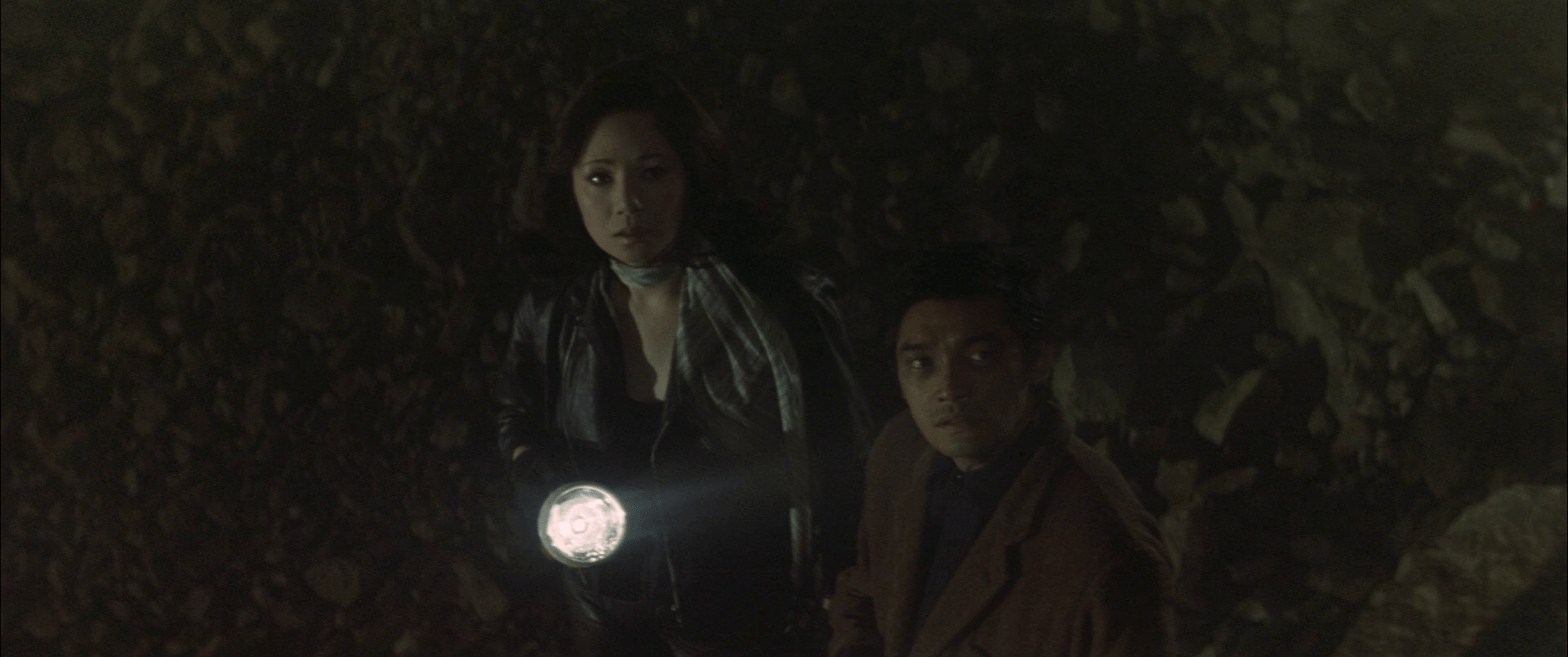
It’s true enough that you can’t get away from the more problematic elements of his unreconstructed good bad cop persona. We often see Seok-do (Ma Dong-seok) beat information out of suspects which the film treats as a cheeky joke in an otherwise tacit endorsement of police brutality that suggests red tape is the reason the guilty often evade justice. Meanwhile, in a step back from other Ma vehicles there are almost no women in the film and none in the police force. The heart of the case is the death of a 28-year-old woman who “fell” from a hotel room window and is later discovered to have died of a heart attack after being drugged in a club and dragged off by a random man who then literally threw her away to distance himself from the crime. The murder which Seok-do is supposed to be investigating is totally forgotten in his all encompassing drive to find out where the drugs are coming from which eventually descends into a battle of wits with a corrupt police officer who’s teamed up with a Korean-Japanese yakuza to skim his boss’ supply of new designer drug Hiper. 

There is a distinctly uncomfortable thread of xenophobia that runs through the series even if in this case the villainy is discovered closer to home in the form of police corruption. This time around, the threat is once again Japan which is apparently where Hiper originated though petty yakuza Tomo (An Se-ho) now manufactures it in Korea where he’s cut a freelance deal with dodgy cop Joo (Lee Joon-hyuk) to distribute it in the local night life scene without the knowledge of his boss back in Japan, Ichijo (Jun Kunimura). Joo has also cut a deal to sell the drugs to a Chinese gang, so it’s quite bad news for him when Ichijo gets wind of the situation and Tomo takes off with a suitcase full of pills for his own protection. Unluckily for him, Ichijo has already sent his most intimidating assassin, Riki (Munetaka Aoki), to find out what’s been going on behind his back. 

Problematic as it may be, Ma’s retro take on the action star is undeniably entertaining with his frequent hero moments and penchant for one liners. The first time he appears, we see him break up a street fight but mostly interested in finding out if the guy on the ground started it the implication being that perhaps if he did it’s none of his business but otherwise he’s going to have to intervene. Then again as he tells his exasperated boss, his personal motto is “punish and serve” and he’s here to get the job done even if that means wading in all fists blazing without much thought for regulations or procedure. At one point Seok-do and his guys stumble on a crime scene and walk around it touching everything in sight without bothering to even put on so much as gloves. 

In any case, Lee makes every punch land and quite literally as the screen seems to vibrate on contact almost as if the camera itself were taking a blow. Ma’s thunderous fists clash with the sound of justice as he all too easily disables hardened gangsters with one well placed slap. At times, his invincibility borders on the ridiculous but he does eventually allow himself be “defeated” if only temporarily as in his miraculous recovery from being run over by a gangster’s car. In many ways, Joo is Seok-do’s mirror, a bad bad cop with crazy eyes who kills without a second thought and behaves with narcissistic recklessness, overconfident in his abilities to sort his problems through his status as a law enforcement officer. Bruiser he may be, but Seok-do likes arresting people and never uses lethal force even when the opportunity is presented to him, symbolically snapping Riki’s katana and then proceeding to slap him seven ways to Sunday leaving the ice cool assassin collapsed amid a display of Japanese parasols. An end credits scene set three years later in 2018 sets up a fourth instalment and the return of a familiar face besides that of Seok-do himself who continues to charm as the world weary bruiser slapping down crime wherever it rears its ugly head. 


The Roundup: No Way Out is in UK cinemas now.

International trailer (English subtitles)

Gold Kingdom and Water Kingdom (金の国 水の国, Kotono Watanabe, 2022)

After centuries of conflict, two feuding countries finally begin to put the past behind them to work for a common future in Kotono Watanabe’s animated fantasy romance, Gold Kingdom and Water Kingdom (金の国 水の国, Kin no Kuni Mizu no Kuni). Adapted from the manga by Nao Iwamoto, this is very much a story of coming together to create a better future for all in which it’s always better to follow the most difficult path if it leads to longterm peace rather than opting for a quick fix like a dynastic marriage that won’t take place for another fifty years. 

In this case, the dynastic marriage actually works out but only because romantic heroes Sara (Minami Hamabe) and Naranbayar (Kento Kaku) end up meeting by chance and falling in love organically despite the class disparity and cultural differences between them. The kingdoms of Alhamit and Balkari had been feuding in part for the petty reasons of a dog and cat respectively doing their business on the wrong side of the border wall erected after previous war. Neither nation being very much interested in the dynastic marriage proposed by the previous generation in which Alhamit would give its most beautiful woman as a wife to Balkari’s cleverest man, Alhamit sent a cat instead while Balkari sent a dog. Poor Balkari engineer Naranbayar simply laughed off his new “bride” while Princess Sara of Alhamit decided to go along with the ruse knowing that to kick up a fuss would likely send both nations back to war. 

They happen to meet when Sara transgressively ventures beyond the wall in search of her dog, Lukman, who has fallen in a hole in the forest. With her pretty sisters needling her, Sara asks Naranbayar to pretend to be her new husband, little realising that he is the man she is intended to marry. The youngest of four sisters, Sara has always felt inferior and fears that she cannot live up to the title of Alhamit’s most beautiful woman but begins to fall for Naranbayar who is in fact very clever but also kind in the way most of her family aren’t. Naranbayar genuinely cares about the people of Alhamit and quickly works out that in this incredibly wealthy, “golden” desert city they will run out of water within 50 years while water is something the poor nation of Balkari has in abundance. 

An alliance will save the lives of people in Alhamit, but also also benefit those of Balkari in boosting its economy but not everyone is motivated towards a diplomatic solution with many in the court clearly agitating for war in which they would simply conquer Balkari to capture its resources. The King is under pressure in thinking of his historical legacy, not wanting to be seen as a weak monarch as his namesake earlier was in having restored with relations with Balkari rather than seeking to dominate it militarily. Under the sway of potentially corrupt shaman Piripappa (Chafurin) he rules with an authoritarian fist, while his haughty daughter Leopoldine (Keiko Toda) has appointed a handsome actor as an advisor to signal her opposition. 

Only through the genuine love which emerges between Sara and Naranbayar can the country be saved in turning away from pointless acrimony towards a more open future marked by mutual cooperation and friendship between two equal nations. Through falling in love with Naranbayar, Sara grows in confidence and learns to see herself as beautiful no longer inferior to her sisters but playing a full part in the life of the court as they work together to solve the water issue and return life to their arid land. Beautifully designed with its Middle-Eastern aesthetics and strong contrast between the desert kingdom of Alhamit and the beautiful forests of Balkari, the film also features charming paper art bookends and a watercolour credits sequence depicting a happier future for both nations as they forge a new society together. Heartfelt in its central romance, Watanabe’s charming love story positions cross cultural connection as the best means of overcoming centuries of pointless conflict along with allowing each of its heroes to become more of themselves as they work together to create a new world of love and peace in which all can prosper and live in happy harmony. 


Gold Kingdom and Water Kingdom screened as part of this year’s Nippon Connection.

International trailer (English subtitles)

Double Life (ダブル・ライフ, Enen Yo, 2022)

The heroine of Enen Yo’s Double Life (ダブル・ライフ) has a recurring dream of being trapped in an endless tunnel. No matter how long she walks, she can never see an exit, but she also claims that she is always awake to her true self. It is in a way her true self that seems to have gotten away from her as she struggles to overcome career disappointment and a moribund marriage to a passive aggressive salaryman who barely speaks to her and seems to resent her presence in his life. 

After giving up her dance career following an injury, Shiori (Atsuko Kikuchi) has been working as an assistant to movement coach Kumiko whose practice is closer to performance art than contemporary dance. Shiori had wanted to take part in one of Kumiko’s “Communicating Love” couples sessions and though her husband Ryo had originally agreed he cancels at the last minute with an abrupt text message he refuses to explain over the phone. He refuses to explain at home too, later giving an excuse that would have seemed reasonable if he’d offered it in a less abrasive manner but given his behaviour makes him seem guilty and evasive. Smelling another woman’s perfume on his shirt only deepens Shiori’s suspicions that he’s been having an affair. It’s for these reasons that she takes up the recommendations of a friend, Misaki, to contact a man who rents himself out for role play assignments to pose as her husband so that she can participate in the workshop even without Ryo’s cooperation. 

This might in someways seem perverse given that the workshop is about exploring intimacy as a couple, but as Kumiko explains it’s as much about coming to understand your own feelings as it is your partner’s. Shiori has in a sense hired Junnosuke to mirror her, conforming to her image of an idealised Ryo as the tender and loving husband he does not otherwise seem to be. Perhaps just incredibly good at his job, Junnosuke is a perfect fit for the exercise and is able to effectively pick up on Shiori’s buried anxieties echoing her dream of the tunnel but envisioning her as a beautiful butterfly dancing its way towards the exit. Shiori decides to hire him for an extended period and even rents a small flat to role play a happier marriage but also begins to lose sight of the boundaries of their “fake” relationship.

As Junnosuke says, once he’s in character it’s his lived “reality” until it’s not, but one also has to wonder what toll this lifestyle takes on the core “Junnosuke”, whether he can be said to exist at all and is able to have “authentic” personal relationships or whether not having them affects his life if he is able to derive emotional satisfaction through his various role playing activities. In any case as he later reminds Shiori he is a creature of her creation who only ever mirrored her desires and in doing so showed her who she is and what she wants along with the way out of the dark tunnel towards a more satisfying existence. 

Kumiko, who is herself dealing with a sense of loss, tells her something similar in explaining that she must rediscover her centre of gravity which is also a means of spiritual reorientation in recalibrating herself to her present physicality and learning move in tune with the rhythms of the body she has now not the one she used to have before the injury which she must fully accept as a part of herself. It’s rediscovering her love of dance that grants her mastery over her body and soul and allows her to find a way through her despair in accepting that she must change to meet the new future rather than remaining trapped in a disatfying present defined by a longing for an immutable past. 

Shot with a breezy poeticism that is at once lyrical and naturalistic, Yo’s gentle drama explores a process of healing conducted through theoretical role play that suggests that in certain cases literal authenticity is less important than the emotional in making an essential truth fully visible. In any case through living her “double life”, Shiori gains a new perspective on herself and others that finally allows her to see the light at the end of a tunnel she feared would never appear.


Double Life screens in Frankfurt 11th June as part of this year’s Nippon Connection.

International trailer (English subtitles)