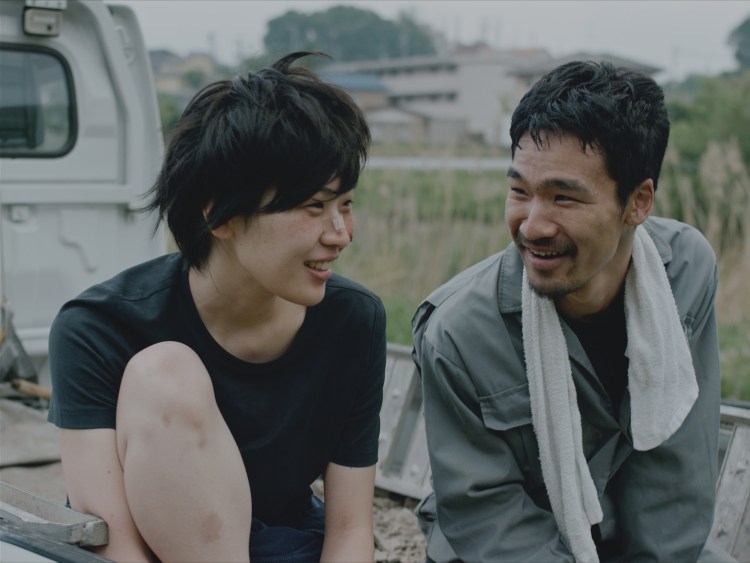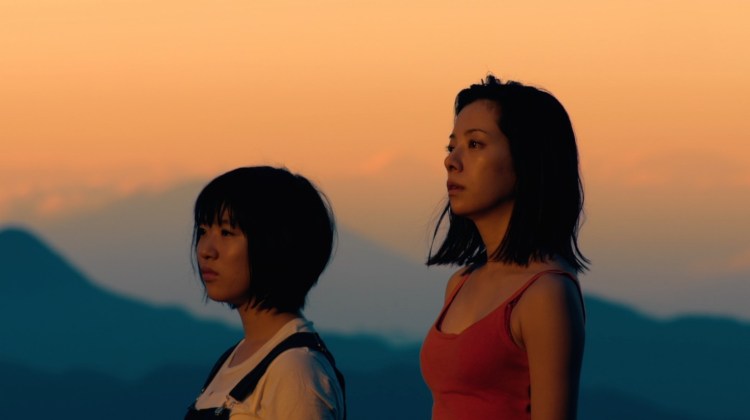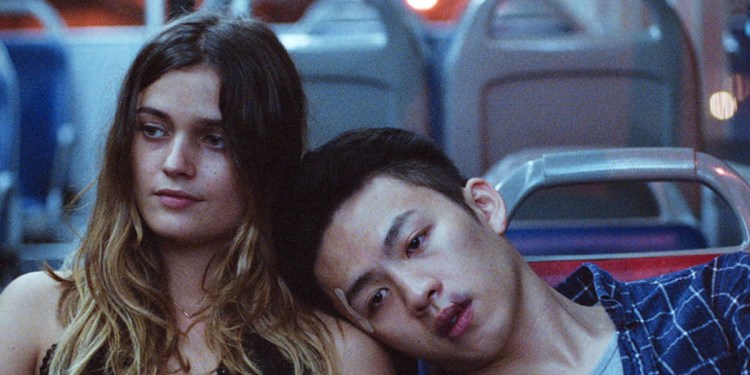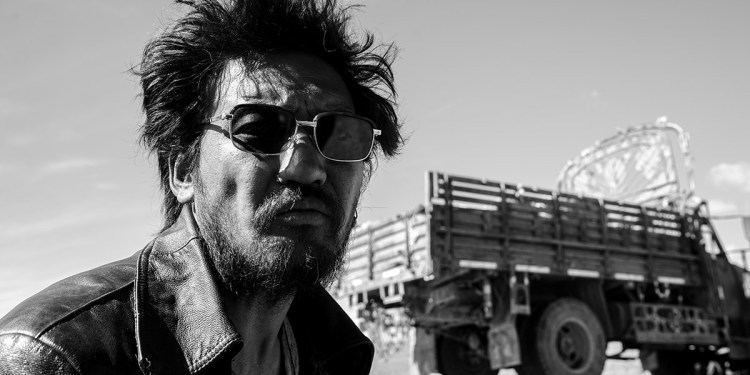
Smaller and Smaller Circles (Raya Martin, 2017)

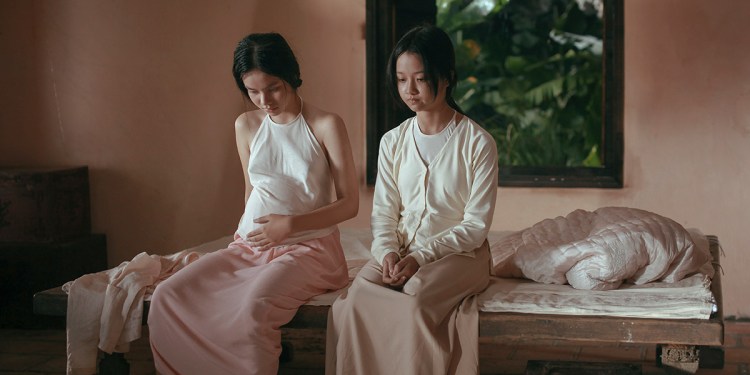
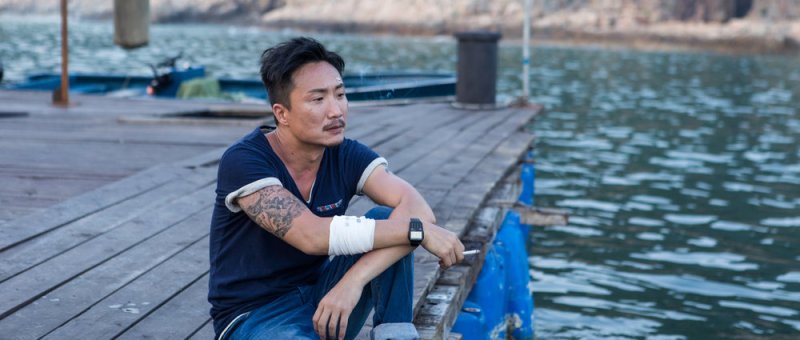
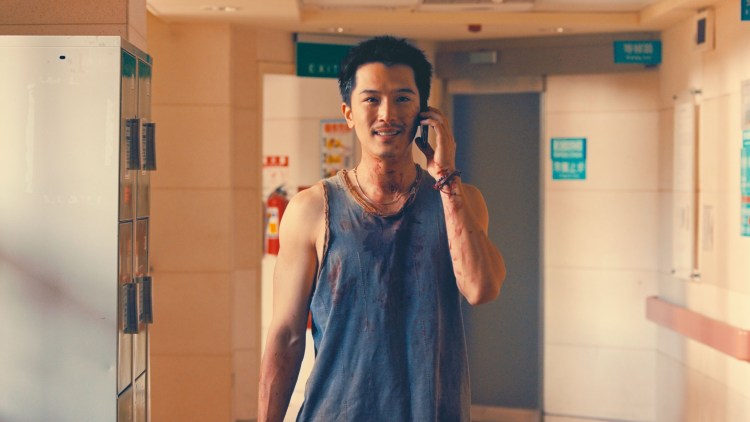
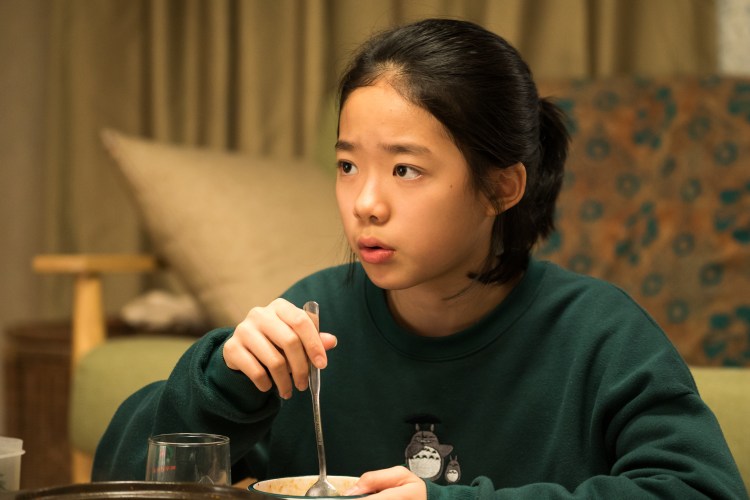
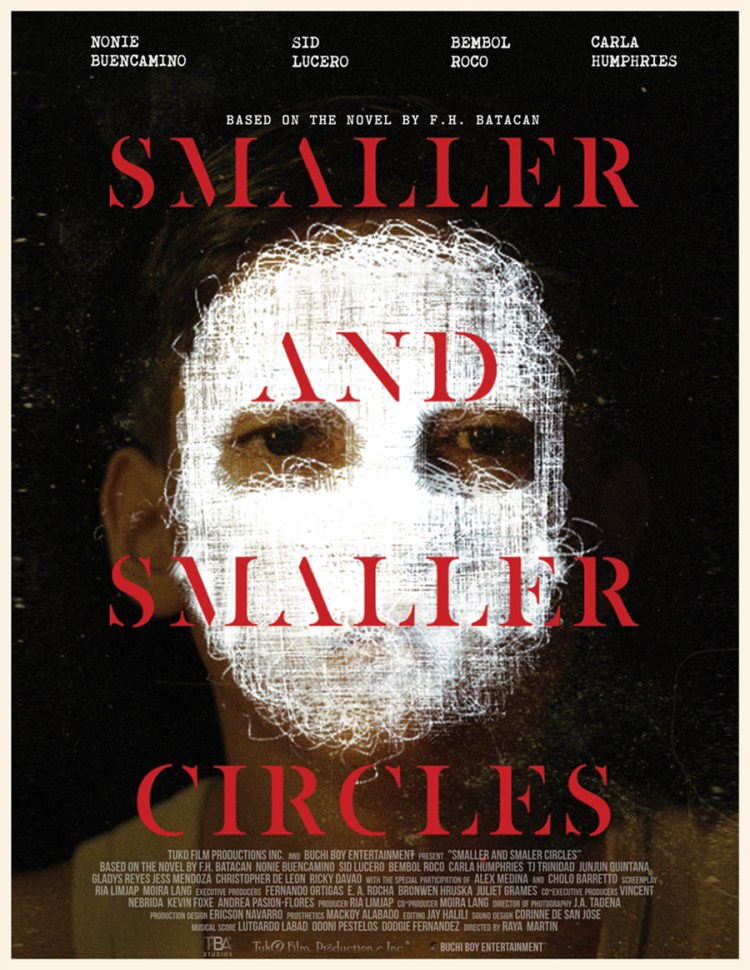
Smaller and Smaller circles poster“Time and forgetfulness are the allies of abusers” – a Catholic priest reminds his students as part of a history lesson regarding the supposedly bloodless revolution that led to the end of the Marcos regime. Festival favourite Raya Martin dials things back a little in adapting the award winning novel by F.H. Batacan, Smaller and Smaller Circles. Batacan’s novel is often described as the first real Philippine crime novel – something echoed in the ridiculous views of a lazy and self serving police officer who believes there are no serial killers in the Philippines, yet the Smaller and Smaller Circles of the title lay the blame for the heinous acts its centre not at the feet of an evil madman but at those of the society which so progressively damaged his soul as to render it irreparable.

Our hero is himself a priest. Father Gus Saenz (Nonie Buencamino) is a man of faith and compassion who, despite all the failings he can see in it, still believes the Church is the best way to help those in need. He is sickened and appalled by the institution’s intransigence when it comes to bad priests and is preoccupied by one in particular – Father Ramirez, whose inappropriate conduct with children he has doggedly reported for more than a decade only for him to continually escape punishment. In addition to the priesthood, Father Gus is also a teacher of philosophy and a forensic scientist who works as an occasional consultant to the local police. It is in this capacity that he comes to discover a series of murders involving young boys whose bodies were discarded on a local rubbish dump deprived of their hearts, genitals, and faces. With the assistance of his junior priest, Father Jerome (Sid Lucero), and a reporter (Carla Humphries) who was once his student, Gus attempts to solve the mystery behind this horrific series of murders before the killer strikes again.

Martin breaks with genre norms by giving us an immediate insight into the killer’s psychology as we witness the prelude to the killings while listening to his own explanations of why they must occur. The picture he paints of his childhood quickly frames his crimes as a murder of the self as the killer indulges in a compulsion to kill the weak, targeting teenage boys and stealing from them not only the breath of life but the spirit of it too. The first of our circles is the Church – the bad priests whose abuses are sanctioned by their organisation and mitigated by the “good” they leave behind. Father Ramirez was shuffled on and now works for a children’s charity but Father Gus’ attempts to warn the charity’s director fall on deaf ears and then cost him his funding. Only when Father Ramirez’ financial improprieties are discovered is his position finally questioned.

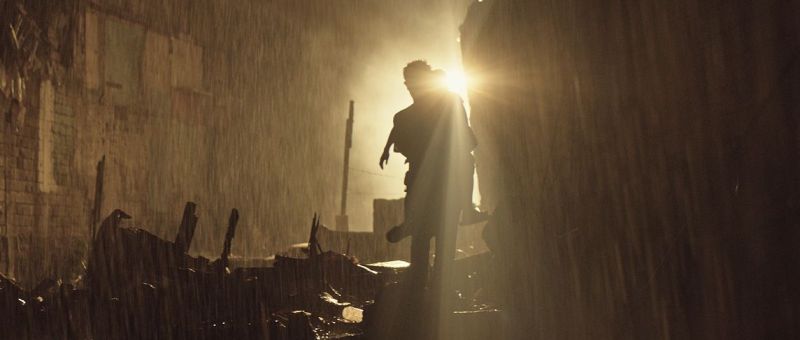
The second ring is poverty. All of these boys were poor and many of them were not identified right away because aside from their parents (if they had them) nobody was going to miss them. The film opens with a scene of children running over a rubbish dump and as the father of the first victim explains, his son was one of many who supported their struggling families by combing over the left overs of the better off looking for anything which might still be useful. Our third ring is bureaucracy – when Fathers Gus and Jerome meet the local councillor, they are surprised to find that she is efficient and committed, keen to do whatever it takes to look after her constituents even if it means going up against the Church or the wider government. However, she knew nothing of the murders and though she is quick to grant Father Gus all the access he needs, it is partly her own efforts to provide essential services to the poor which have enabled the crimes as those who claim to want to help others are really only helping themselves and wilfully turning those same mechanisms back on the people who need them most.

As a man of faith Father Gus does his best, refusing to give up on the killer, trying to ease his burden whilst in grave physical danger. Set in the Philippines of the late 90s, Smaller and Smaller Circles is filled with those still trying to come to terms with the traumatic past but finding its unpleasantness echoing in unexpected places. As such it finds unexpected resonance in the world of 2017 in which life is once again cheap and compassion thin on the ground.


Smaller and Smaller Circles is screening as part of the seventh season of Chicago’s Asian Pop-Up Cinema on 19th September at 7pm, AMC River East 21, plus introduction and Q&A with director Raya Martin.

Original trailer (English subtitles)
Adulthood (어른도감, Kim In-seon, 2018)

Adulthood poster 2Growing up is a funny thing, most of us are content to let it run as a background task while we get on with our daily lives but some of us are forced to contemplate the nature of “adulthood” from a transitionary perspective when confronted with independence delivered at an unexpected juncture. The debut feature from Kim In-seon, Adulthood (어른도감, Eoreundogam) is a coming of age tale but it’s also one about family, responsibility, integrity, and the social fabric as a teenage girl’s attempts to adjust to life alone are frustrated by the arrival of an irresponsible uncle with issues of his own.

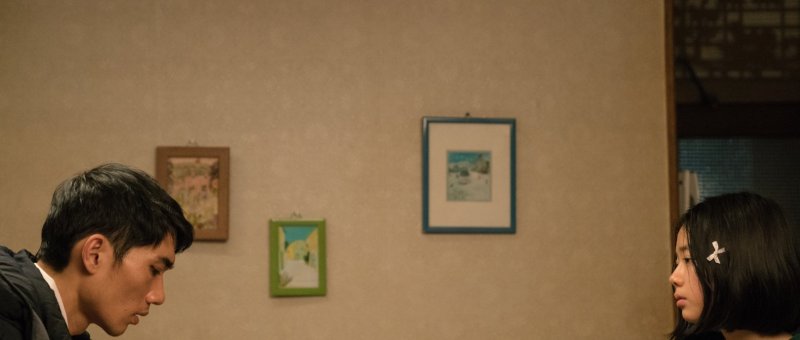
14-year-old Kyung-un’s (Lee Jae-in) father (Choi Duk-moon) has just passed away following a lengthy illness. Her mother left when she was small, and now Kyung-un is all alone. The funeral is lonely, and Kyung-un is otherwise unaccompanied, without friends or relatives to assist in the business of mourning. That is, until a good-looking young man suddenly jumps on the bus to the crematorium and bursts into tears. Jae-min (Um Tae-Goo) claims to be the younger brother of Kyung-un’s father whom she has never met. Sceptical, Kyung-un has no other option than to allow Jae-min to invade her life even though she felt as if she was managing fine on her own.

However, Jae-min’s intentions turn out to be less than honourable. He’s a conman and a gigalo who’s forever failing in various scams and deceptions, and despite Kyung-un’s prudent caution towards him, he manages to trick her out of her dad’s life insurance money thanks to making himself her legal guardian on a pretext of saving her from a foster home. Being the clever little girl she is, Kyung-un manages to track her errant uncle down to a shady part of town, but the only way she’s getting her money back is if she consents to become Jae-min’s accomplice and pose as his daughter in order to win over his latest mark, lonely pharmacist Jum-hee (Seo Jung-yeon).

Forced to care for herself from an early age thanks to her father’s illness, Kyung-un is a mature little girl who can manage perfectly fine on her own, even dealing with complicated formalities like submitting death certificates and dealing with insurance companies. At 14 she probably shouldn’t have to do any of this alone but doesn’t want to lose her independence or have her life further disrupted by being forced out of her home and into foster care. Despite her natural caution there is perhaps a part of her that wants to believe Jae-min’s story, even if the other part of her is cloning his mobile phone and going through his bag to try and figure out what it is he’s after.

Jae-min, however, is a selfish man child perpetually chasing quick fixes and conveniently deciding to ignore whoever might end up getting hurt in the process, though it’s also true that he’s not completely unaffected by the pain he causes to others. His moral scruples do not extend to cheating his niece out of her father’s money which is all she has to live on and probably means she will also become homeless seeing as her landlord (who hasn’t even noticed her dad has died) is pushing the rent up. Eyes always on the prize, Jae-min’s dream of opening a Japanese restaurant is real enough and he doesn’t much care what he has to do to make it a reality.

However, when Jae-min and Kyung-un are forced to start playacting family for the lonely Jum-hee, a genuine connection is set in motion. As it turns out, there’s a reason for Jum-hee’s continued aloofness and fear to engage and her interactions with the “widowed” father and daughter do indeed begin to shift something inside her too. Despite all the lying and the natural mistrust, something true bubbles to the surface even if the continued deceptions threaten to push it all back down again.

In the end perhaps that’s what adulthood means, understanding that sometimes people tell the truth when they lie. Kyung-un and Jae-min, both orphans, both lonely, both doing “fine” on their own, nevertheless come to realise that perhaps it’s not so bad to be doing fine on your own with someone else. It’s not perfect, and perhaps it’s not what you wanted, but then that’s “adulthood” for you. A promising debut from Kim In-seon, Adulthood is a warm and empathetic look at different paths to maturity as a little girl and a hollow man bond in their shared sense of aloneness and come to realise that independence does not necessarily require solitude.


Adulthood gets its North American premiere as the opening night gala of the seventh season of Asian Pop-up Cinema which takes place in Chicago from 12th September to 14th November 2018. Director Kim In-seon and actress Lee Jae-in will be in attendance for the opening night screening at AMC River East 21 on 12th September for an introduction and Q&A. Tickets are already on sale via the official website.

Original trailer (no subtitles)

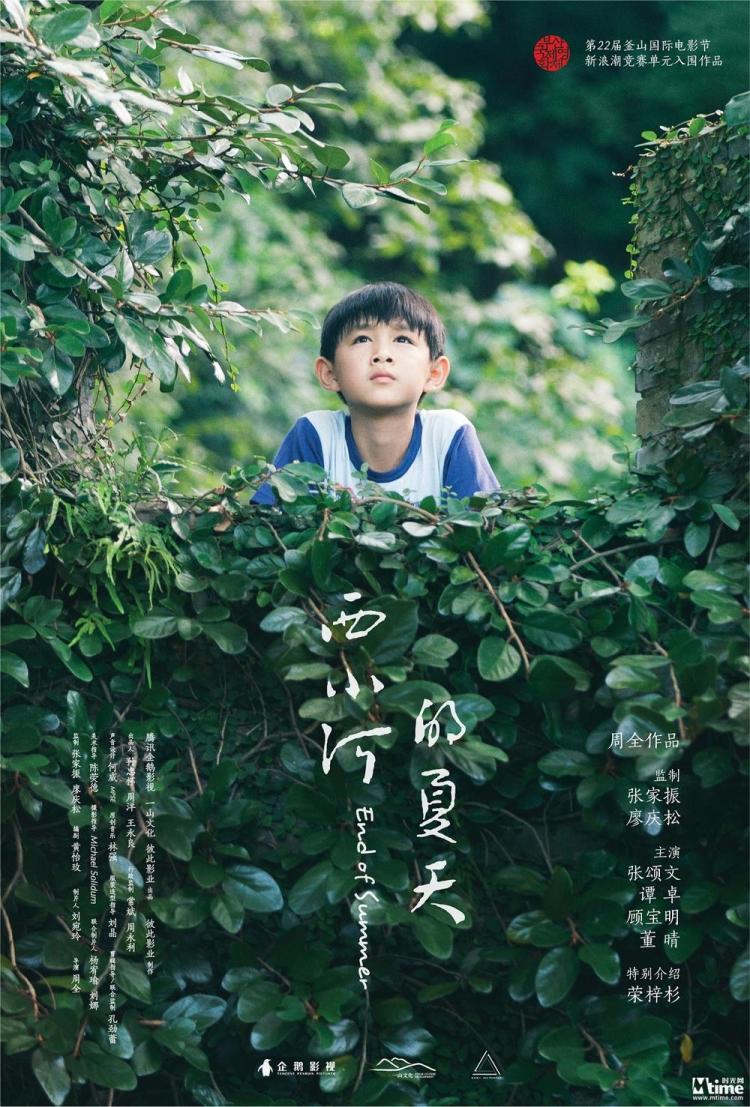
End of Summer (西小河的夏天, Zhou Quan, 2017)

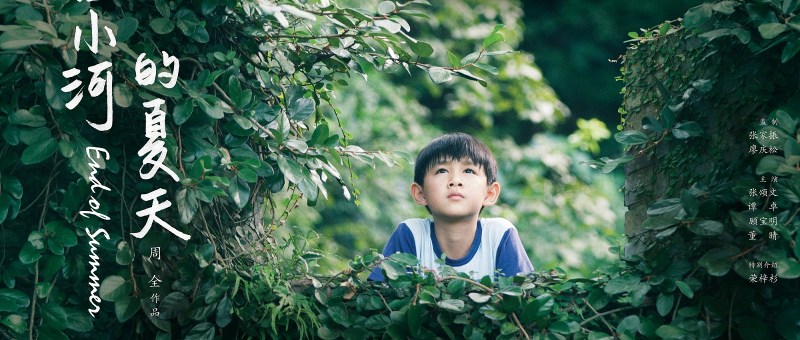
The End of Summer posterMany things were changing in late ‘90s China. For one little boy in the summer of 1998, however, nothing much mattered beyond the World Cup which was being broadcast in its entirety for the very first time. Part nostalgia fest for a more innocent world, Zhou Quan’s End of Summer (西小河的夏天, Xī Xiǎohé de Xiàtiān) is, as the title implies, a story of befores as its various protagonists attempt to resolve a series of personal crises that will lead to great changes preceding the autumn of 1998.

Football obsessed little boy Xiaoyang (Rong Zishan) has to keep his love a secret because his dad, Jianhua (Zhang Songwen), thinks all sports are frivolous and has forbidden his son to play with the other children. Jianhua is also a high ranking teacher at Xiaoyang’s school and demands high levels of discipline and commitment from his family, even forcing Xiaoyang to dob one of his friends in under heavy questioning about a playground fight. Bored and lonely at home, Xiaoyang has begun to bond with an older man at their courtyard who also loves football and has promised to help Xiaoyang train for the upcoming school tryouts next term if only he can persuade his dad to sign the consent form.

Meanwhile, there’s trouble brewing on the home front. Xiaoyang’s mother Huifang (Tan Zhuo) is a successful Peking Opera performer whose career is skyrocketing now that she’s been nominated for a prestigious award. Jianhua has also been earmarked for a promotion at work and is covering for a sick colleague, but the arrival of a new teacher threatens to dangerously unbalance the carefully won equilibrium of the Gu family.

Miss Shen (Dong Qing) is indeed a harbinger of social change. The polar opposite of Huifang, Miss Shen is a hippyish free spirit who plays the guitar and sings folk songs in a local cafe with her boyfriend. She teaches the children English through singing songs and playing games, always cheerful and energetic with an adorable smile and easy going personality. Xiaoyang proves himself unusually astute for his years when he misinterprets an innocent scene between Miss Shen and his father, correctly guessing that Jianhua has developed a mild crush on the lovely young woman though perhaps not realising that Miss Shen is merely naive and entirely oblivious to her boss’ ulterior motives.

The camera first catches Xiaoyang caught between two football teams, standing motionless and staring vacantly ahead. He remains caught between two worlds while prompted a little early towards the compromises of adulthood as he experiences the moral outrage of realising his rigid, authoritarian father maybe breaking all the rules of conventional morality by stepping out on his mum. A victim of China’s one child policy, he is often intensely lonely, left alone at home with nothing to do but study while his mother is out rehearsing and his dad increasingly staying out late to offer “guidance” to Miss Shen.

Xiaoyang’s loneliness finds a mirror in the grumpy old man from across the way, Zheng (Ku Pao-Ming), who appears to have fallen out with his family and is missing his own absent grandson, Bao. Zheng picks up the fatherly responsibilities Jianhua has failed to fulfil – supporting Xiaoyang in his football dreams, giving him little bits of life advice, listening intently to his worries regarding his parents’ marital problems without trying to sugarcoat the seriousness of the issues or making a pretence of humouring a perspicuous little boy as they turn detective and catch Jianhua in the act but just miss out on his humiliating defeat and the epiphany which accompanies it as he is forced to confront the fact that he has become a sad old man. Jianhua’s major problems stem from an intense lack of self confidence as his growing son begins to reject his rigid authority and his wife’s increasing success punches a hole through his male pride. Temporarily boosted by the possibility of a promotion, he decides to try rebelling by chasing a younger woman who is very much not his type, little knowing that she sees him only as a venerable teacher and is shocked by his improper interest in her.

Meanwhile change is on the horizon everywhere. The courtyard is earmarked for “redevelopment”, and Mr. Zheng’s family are constantly trying to convince him to come and live with them in the city. By the end of the summer everything will have changed, some things for the better and some perhaps not but there will at least be a shift as each is forced into a reconsideration of their present circumstances. End of Summer is gentler than its title would suggest, a wistful look back one dramatic summer in the childhood of a sensitive little boy, but what it lacks in impact it makes up for with sincerity and a good deal of warmth.


End of Summer was screened as part of the New York Asian Film Festival 2018.

International trailer (English subtitles)

Interview with director Zhou Quan from the 2017 Busan Film Festival.

BFI London Film Festival Confirms Complete Programme for 2018

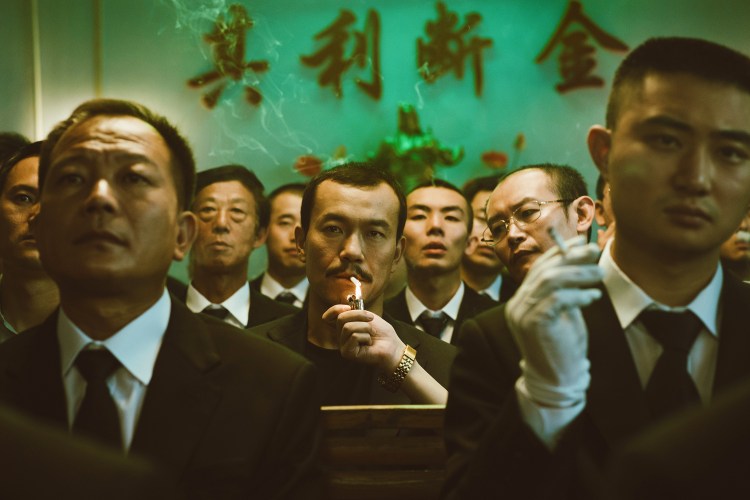
1272508_burning_924331The BFI London Film Festival returns for 2018 with a packed programme of the best in recent international cinema. As usual there are a fair few East Asian films on offer including the long awaited return from Lee Chang-dong, the latest from Jia Zhang-ke, and Bi Gan’s 3D followup to Kaili Blues.

Cambodia

the prey poster low res

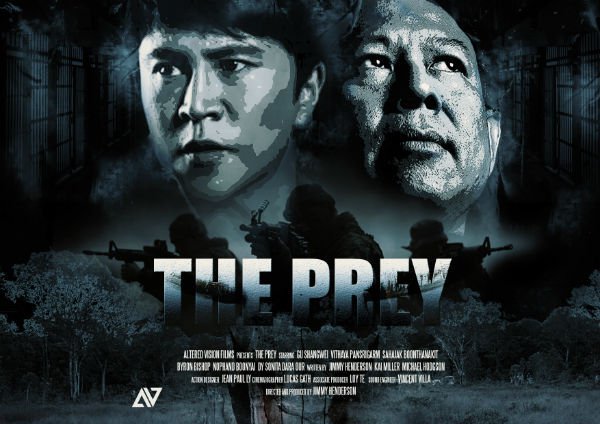
  • The Prey – Jimmy Henderson’s Jailbreak followup follows an undercover cop arrested during an operation who subsequently gets drawn into a corrupt prison warden’s sideline of sending prisoners out as targets for hunters while the Chinese military plan a rescue mission.

China

ashes08020203-r-c

  • Ash is Purest White – in the latest from Jia Zhang-ke, Zhao Tao plays a gangster’s moll who goes to prison on his behalf only to find that her loyalty has not been valued.
  • Dead Pigs – Cathy Yan satirises the modern Chinese economy through the tales of a collection of people caught up in the machinations of a shady real estate conglomerate.
  • Long Day’s Journey into Night – a man returns to his home village after many years for his father’s funeral and to look for lost love in Bi Gan’s Kaili Blues followup.
  • Shadow – Zhang Yimou returns to the world of period epics with a tale of proxy war as a great general (Deng Chao) makes use of a double to combat palace intrigue.
  • Suburban Birds – an engineer finds a diary of a boy with the same name giving way to a tale of adventure when one of the boy’s friends goes missing in Qiu Sheng’s debut feature.

Hong Kong

Family Tour still 1

  • A Family Tour – A Chinese director living in exile in Hong Kong travels to Taipei to present a controversial film banned in the Mainland, but also to see her mother who is travelling around the island on an old persons’ package tour. Not wanting to attract attention, she follows the coach around pretending to be a local.

Indonesia

May the devil take you still 1

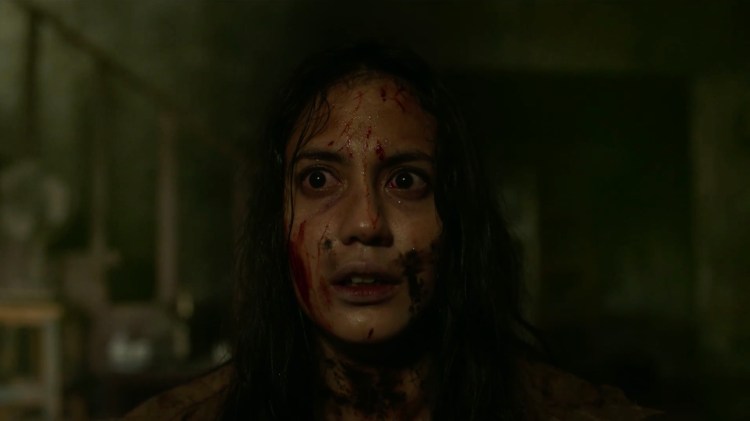
  • May the Devil Take You – a young woman pays a long overdue visit to her estranged father who is dying. With doctors unable to identify a cause for his condition, the supernatural begins to raise its head.

Japan

Aasako 1 & II

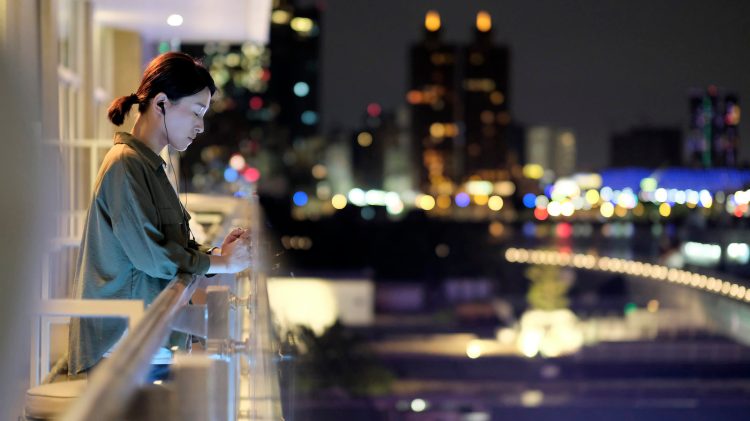
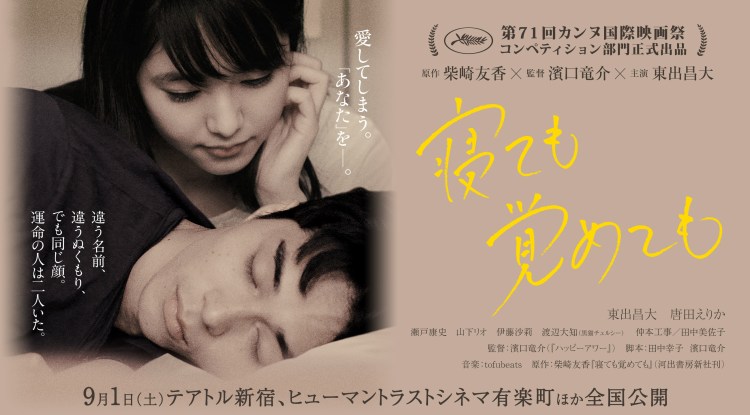
  • Asako I & II – Ryusuke Hamaguchi adapts Tomoka Shibasaki’s novel in which a young woman spots a man who looks exactly like her long absent lover in cafe, only he has a completely different personality.
  • Mirai – a little boy learns to cope with the arrival of his baby sister in the latest from Mamoru Hosoda.
  • Of Love & Law – Hikaru Toda reunites with Love Hotel’s Kazu and Fumi and explores their lives and work at an Osakan law firm specialising in minority issues. Review.

Korea

Last Child still 1

  • Believer – Lee Hae-young offers a Korean take on Johnnie To’s Drug War.
  • Burning – the long awaited return by Korean auteur Lee Chang-dong, Burning adapts a short story by Haruki Murakami and revolves around three people – a novelist, another man, and a fashion model, as they become embroiled in a strange incident.
  • Last Child – moving drama in which a bereaved family takes in the boy their son died saving only to discover all is not as it seems. Review.
  • Little Forest – gentle tale in which a wounded young woman retreats to her country home to figure things out. Review.
  • The Spy Gone North – Yoon Jong-bin’s thriller follows a South Korean spy on an infiltration mission in the North.

The festival will also be previewing the first two episodes of Park Chan-wook’s BBC TV series, The Little Drummer Girl.

Events

  • Lee Chang-dong screentalk – director Lee Chang-dong will be taking part in a screentalk at the BFI on 20th October, 12pm

The BFI London Film Festival takes place at various venues across the city from 10th – 21st October 2018. Full details for all the films as well as screening times and ticketing information are available via the official website. Priority booking opens for Patrons on 4th September, for Champions on 5th September, and Members 6th September, with general ticket sales available from 13th September. You can also keep up to date with all the latest news via the festival’s Facebook page, Twitter account, Instagram, and YouTube channels.

Camera Japan Announces Complete Programme for 2018

camera japan logo

Camera Japan, the premiere Dutch showcase for Japanese film, returns for its 13th edition this September with another fantastic selection of recent indie and mainstream cinema. This year’s classic section will also present four films from horror maestro Nobuo Nakagawa including his celebrated adaptation of Yotsuya Kaidan.

Contemporary cinema

tremble all you want still 1

  • Being Natural – a rural man’s peaceful existence is threatened by hipster hippies from Tokyo who insist on opening a cafe in his house. Review.
  • blank 13 – a young man gets to know his late father through guests at the funeral in the directorial debut from actor Takumi Saitoh.
  • The Blood of Wolves – Koji Shirashi pays homage to Battles Without Honour in a tale of dodgy cops and treacherous yakuza. Review.
  • Call Boy – a haunted young man becomes a gigalo in the latest from Daisuke Miura.
  • Cyclops – a man recently released after serving time for the death of his wife goes after the “real” killer in this twisty neo-noir. Review.
  • Dear Etranger – a divorced father has married again and has two step-daughters but is conflicted on hearing that his second wife is pregnant. Review.
  • Death Row Family – the son of a yakuza boss is falsely imprisoned and then forced to commit a crime when he gets out in the black comedy debut of Yuki Kobayashi.
  • Destiny, The Tale of Kamakura – An absent minded writer goes on a quest to the afterworld when his wife is taken there by mistake. Review.
  • Dynamite Graffiti – biopic following porn pioner Akira Suei through ’70s and ’80s Japan. Review.
  • Flower and Sword – historical comedy about a Buddhist monk obsessed with flower arranging.
  • Foreboding – prequel to Kiyoshi Kurosawa’s Before We Vanish in which a factory worker worried about her husband’s strange behaviour stumbles on the alien invasion. Review.
  • Ice Cream and the Sound of Raindrops– astonishing one take teen drama in which a group of youngsters rehearsing a production of Simon Stephens’ Morning react to having their play abruptly canceled. Review.
  • Inuyashiki – superhero action in which an old man and an angry teen get a cyborg upgrade on the same day. Review.
  • Kanazawa Shutter Girl – manga adaptation in which a disaffected teen tries to reconnect with the present through photography.
  • Liverleaf – a bullied transfer student fights back in this strangely pitched revenge drama. Review.
  • Moon and Thunder – a young woman from a disordered family background strives for a “normal” life but is forced to confront the past when a childhood friend resurfaces. Review.
  • Mori, the Artist’s Habitat – portrait of eccentric artist Mori Kumagai by master of the surreal Shuichi Okita. Review.
  • One Cut of the Dead – Real zombies mess up the shoot for a horror movie in Shinichiro Ueda’s hilarious comedy. Review.
  • Pumpkin and Mayonnaise – a young woman working as a hostess to support her musician boyfriend is tempted by the resurfacing of an ex. Review.
  • Rokuroku: The Promise of the Witch – yokai horror anthology from Yudai Yamaguchi.
  • Room Laundering – a young woman who house sits in apartments where bad things happened develops the ability to see ghosts. Review.
  • The Scythian Lamb – a depopulating town joins a scheme to rehome low risk ex-cons in Daihachi Yoshida’s thoughtful drama. Review.
  • Tokyo Vampire Hotel – feature cutdown of Sion Sono’s epic TV series about a war between rival vampire clans. Review.
  • Tremble All You Want – a shy young woman is forced to break out of her fantasy bubble when a co-worker shows an interest in her. Review.
  • The Trial – John Williams relocates Kafka’s The Trial to modern day Tokyo.

Documentary

Vibration yellow monkey

Nobuo Nakagawa

Yotsuya Kaidan

  • The Adventure of Tobisuke – a puppeteer suffers a head injury saving a woman’s life and can only count up to three but her mother knows of a golden fruit which can restore his memory…
  • Black Cat Mansion – a doctor takes his sickly wife to a nobleman’s house where she can recover in peace only she begins having strange visions…
  • The Ghost of Yotsuya – an ambitious samurai falls in love but is refused marriage on the grounds of his lowly status. He kills his bride’s father and marries her anyway only to consider killing her too when he gets a better offer…
  • Jigoku – a theology student who blames himself for a deadly car crash makes his way to the gates of hell…

Animation

mary and the witch's flower still 1

  • Brave Storm – mecha adventure in which heroes from the future come back to the present to stop aliens taking over.
  • A Letter to Momo – a girl moves to a remote island following the death of her father and makes friends with a series of yokai.
  • Mary and the Witch’s Flower – a bored little girl embraces her magic destiny when she finds a flower that gives her witch’s powers for one night only. Review.
  • Pom Poko – Tanuki fight back in this charming Studio Ghibli anime from the late Isao Takahata.

Camera Japan 2018 takes place across two weekends in Rotterdam (26 – 30th September) and Amsterdam (4th – 7th October). Full information on all the films as well as ticketing links can be found on the official website. You can also keep up to date with all the latest news via Camera Japan’s official Facebook page, Twitter account, and Instagram channel.

Raindance Film Festival to Host Four East Asian World Premieres

Bad Poetry Tokyo 2London’s Raindance Film Festival returns from 26th September to 7th October with a handpicked selection of independent filmmaking from across the globe. This year is a fairly thin one for East Asian cinema, but there are a number of films from Japan, many of which are making their world premiere at the festival, as well as two from China.

A Crimson Star  (Japan, World Premiere)

Crimson Star still 1Shy schoolgirl Yo bonds with nurse Yayoi during a hospital stay. When she runs into her again some time later it’s under very different circumstances – Yayoi has become a sex worker. Trapped in an abusive home, Yo eventually decamps to Yayoi’s and demands to stay the summer, but Yayoi’s burgeoning romance threatens to destroy their fragile bond…
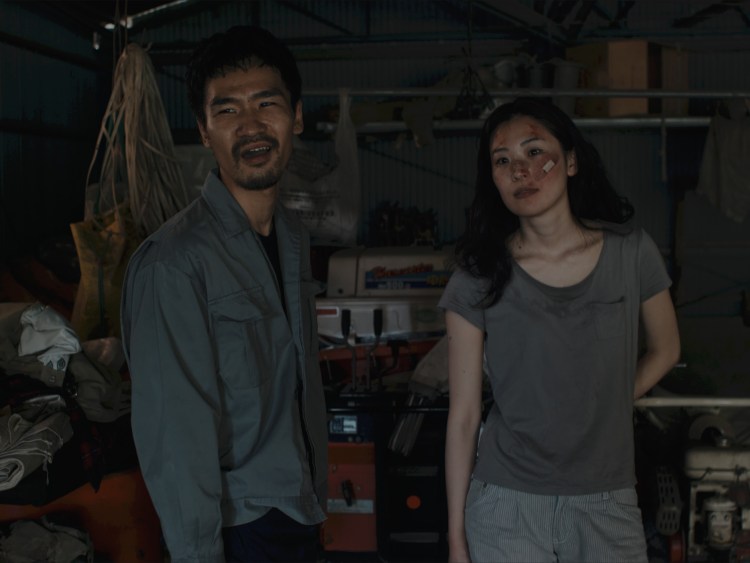
Bad Poetry Tokyo  (Japan) 

Bad Poetry Tokyo still 1Jun works in a hostess bar to save money to move to LA and pursue her dreams of becoming an actress, but having suffered violence from a customer and a romantic betrayal she decides to abandon the capital for her peaceful hometown. However, there are troubles to be found everywhere, not just in Tokyo….
Feelings to Tell  (China, World Premiere)

Screenshot 2018-08-22 16.48.10A painter journeys into the mountains and falls in love with a local girl destined to become a mountain goddess.
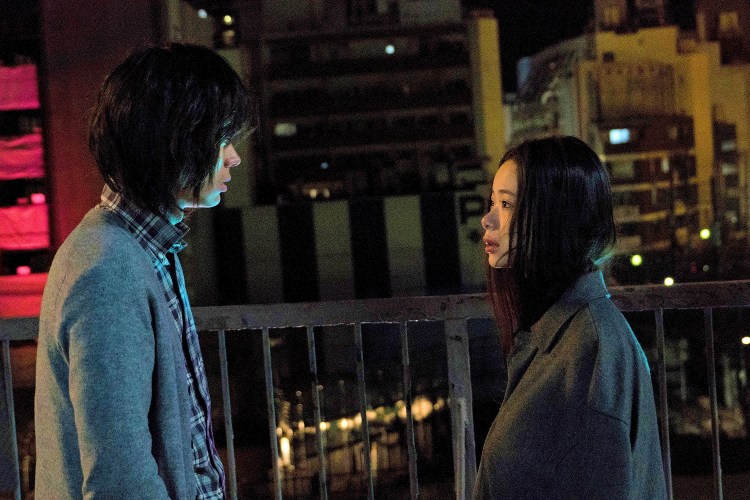
Love at Least (Japan, World Premiere) 

love at least still 1Yasuko suffers with a sleep disorder as well as manic depression and is looked after by her boyfriend Tsunaki (Masaki Suda) but their relationship is threatened by the resurfacing of Tsunaki’s ex.

Matsuchiyo – Life Of a Geisha (Japan, World Premiere)

Matsuchiyo - Life Of a Geisha still 1Ghostroads director Ken Nishikawa returns to Raindance with an extremely personal documentary as he examines the life of his mother – a geisha.

Room Laundering (Japan)

Room Laundering still 1A Japanese real estate law requires landlords to inform prospective tenants if something unpleasant has previously happened in the property, but it doesn’t specify how long you need to keep that up. Thus some unscrupulous types have come up with a “room laundering” scheme in which they get people who don’t mind a little unpleasantness to move in for a short period of time to “purify” the living space. Miko is just such a woman and the arrangement suits her well enough, until, that is, she develops the ability to see ghosts. Review.
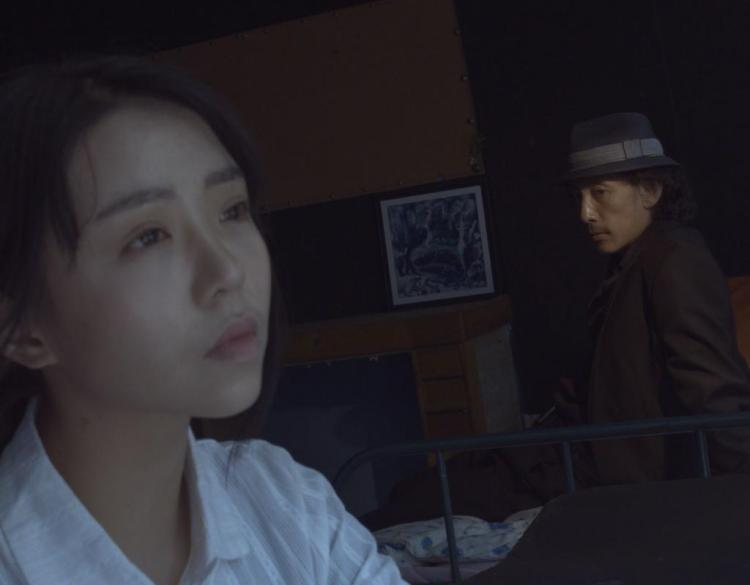
The End of Wind (China)

end of wind still 1A white collar worker in the middle of an existential crisis, an ex-con recently released from prison after being convicted of a crime he did not commit, and a refugee from North Korea seek release but find only more emptiness in the debut feature from Fog Forest.

Raindance Film Festival takes place at Vue Piccadilly, 26th September to 7th October. Tickets are already on sale via the official website. You can also keep up with all the latest details via the festival’s official Facebook page, Twitter account, Instagram, and YouTube channels.

Toronto International Film Festival 2018: Koreeda, Lee Chang-dong, Jia Zhangke in packed East Asian Programme

Aasako 1 & IIThe Toronto International Film Festival (TIFF) returns from 6th to 16th September and, as usual, brings with it an impressive selection of highly anticipated cinema from East Asia including Koreeda’s Shoplifters, the latest from Zhang Yimou and Jia Zhangke, and a long awaited return from Lee Chang-dong.

Cambodia

Graves without a name still 1

  • Graves Without a Name – Rithy Panh’s documentary followup to The Missing Picture explores the continuing effects of the Cambodian genocide.

China

ashes08020203-r-c

  • An Elephant Sitting Still – four troubled people make their way to Manzhouli where an elephant is said to be sitting still, free of worldly troubles in the first, and sadly last, film from Hu Bo who took his own life shortly after the film’s completion.
  • Ash Is Purest White – Zhao Tao stars in Jia Zhangke’s latest attempt to chart the course of modern China through crime thriller as a gangster’s moll takes the fall for her man only to be released and discover the world has changed and he has someone new.
  • Baby – Yang Mi stars as a woman who was abandoned at birth because of a genetic defect and tries to stop the same thing happening to another baby in Liu Jie’s latest social drama.
  • Hidden Man – Eddie Peng stars in Jiang Wen’s ’30s epic as a spy who comes back to China with revenge on his mind but finds himself in the middle of something much bigger.
  • Legend of the Demon Cat – Director’s Cut – Chen Kaige directs Shota Sometani as a monk who comes to China to study and ends up investigating a mysterious cat entity with the help of an eccentric poet (Huang Xuan)
  • Long Day’s Journey Into Night – a man returns to his home village after many years for his father’s funeral and to look for lost love in Bi Gan’s Kaili Blues followup.
  • Shadow – Zhang Yimou returns to the world of period epics with a tale of proxy war as a great general (Deng Chao) makes use of a double to combat palace intrigue.
  • The Crossing – a schoolgirl turns smuggler to keep up with a wealthy friend in Bai Xue’s coming of age drama.

Japan

©© 2018 FUJI TELEVISION NETWORK/GAGA CORPORATION/AOI PRO. INC. ALL RIGHTS RESERVED.

  • Asako I & II – Ryusuke Hamaguchi adapts Tomoka Shibasaki’s novel in which a young woman spots a man who looks exactly like her long absent lover in cafe, only he has a completely different personality.
  • Complicity – first time director Kei Chikaura charts a course of cross cultural interaction through the tale of an undocumented man from China trying to survive in Japan who is unexpectedly offered the chance to become an apprentice to a soba chef.
  • Killing – Shinya Tsukamoto takes on the samurai drama as a ronin (Sosuke Ikematsu) falls for a farmer’s daughter (Yu Aoi) while the winds of change blow all around them.
  • Shoplifters – Hirokazu Koreeda’s Palme d’Or winning drama follows a family of shoplifters who take in an abused little girl.
  • Vision – Juliette Binoche goes rare herb hunting in Japan in the latest from Naomi Kawase.

Korea

1272508_burning_924331

  • Burning – Lee Chang-dong makes a long awaited return with an adaptation of a Haruki Murakami short story in which a lonely author’s burgeoning crush on a childhood friend is threatened by a wealthy playboy.
  • Hotel by the River – Hong Sang-soo’s latest follows a poet, his sons, and two women to a gloomy hotel.
  • Our Body – a disaffected middle-aged woman becomes obsessed with a graceful female runner in Han Ka-ram’s pressing social drama.

Singapore

Folklore still 1

Taiwan

Cities of last things 1

  • Cities of Last Things – Ho Wi Ding works backwards from the suicide of a depressed policeman to find out what prompted him to take his own life.

Thailand

Manta Ray 1

  • Manta Ray – a fisherman takes in a Rohingya refugee in the debut film from Phuttiphong Aroonpheng.

Tibet

jinpa 1

  • Jinpa – delivery driver Jinpa knocks over a sheep and then finds himself picking up a hitchhiker also called Jinpa who is on a journey to avenge the death of his father.

Vietnam

third wife q

  • The Third Wife – a 14-year-old girl becomes the third wife of a wealthy landowner in 19th century Vietnam.

The Toronto International Film Festival runs from 6 – 16th September, 2018.

The complete festival programme as well as full information on all the films can be found on the festival’s official website, and you can keep up with all the latest details through the official Facebook page, Twitter account, Instagram and YouTube channels.

Asian Pop-Up Cinema Returns for Season Seven

DearEx

Chicago’s Asian Pop-Up Cinema returns for its seventh season from 12th September to 14th November with eight film screenings to take place at AMC River East 21 plus an additional nine films screening for free at various venues around the city.

Sept. 12, 7pm: Adulthood

Introduction and Q&A with Director Kim In-seon and Actress Lee Jae-in.

Adulthood

14-year-old Kyung-un meets her uncle Jae-min for the first time at her father’s funeral. Jae-min is, as it turns out, a conman and even cons his bereaved niece out of her inheritance. To get her money back, Kyung-un agrees to pose as Jae-min’s daughter so he can woo his next mark lonely pharmacist Jum-hee, but not everything goes to plan…

Sept. 19, 7pm: Smaller and Smaller Circles

Introduction and Q&A with Director Raya Martin

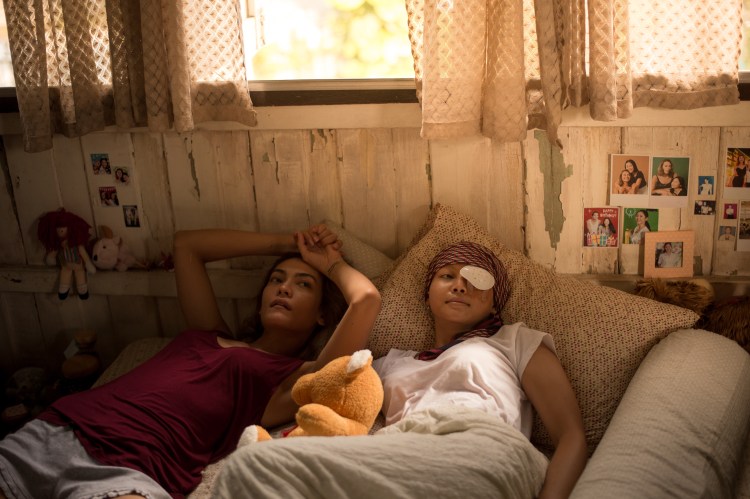
SmallerAndSmallerCirclesRaya Martin adapts the novel by F.H. Batacan in which two priests investigate a series of killings targeting young boys in the slums of Manila.
Sept. 25, 6.30pm: Namiya

Free screening at Claudia Cassidy Theater at the Chicago Cultural Center

Namiya banner

Three orphans hole up in a disused shop which used to belong to an agony uncle (played by Jacki Chan!) in Han Jie’s adaptation of the Keigo Higashino novel. Review.

Sept. 26, 7pm: Sad Beauty

Introduction and Q&A with Director Bongkod Bencharongkul

Sad Beauty

Actress Bongkod Bencharongkul steps behind the camera for her second directorial outing in which the friendship of two women is tested by the need to dispose of a body.

Sept.28: Singing with Angry Bird

Free screening at Illinois Institute of Technology. Time TBC.

SingingWithAngryBird

Korean Kim Jae-chang runs a children’s choir in Pune, India and has earned the nickname “Angry Bird” thanks to his fiery temper. Though the choir has had a positive effect on the children’s lives, some of the parents have yet to see the value and so Angry Bird has decided to train the parents alongside the children for a joint concert.

Oct. 2, 7pm: Concerto of the Bully

Introduction and Q&A with Director Fung Chih-chiang and Art Director Chet Chan 

ConcertoOfTheBully

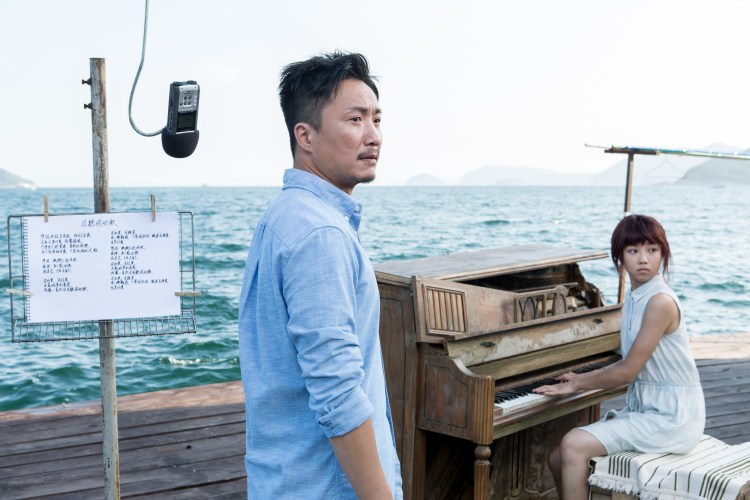
Chow, a singersongwriter popular on the internet, has been captured and is being held against her will on a raft while waiting for her pop-star boyfriend to pay the ransom. Gifted with extremely good aural memory, she decides to offer “musical therapy” to the kidnapper in order to facilitate her escape…

Oct. 3, 7pm: When the Sun Meets the Moon

WhenSunMeetsMoon

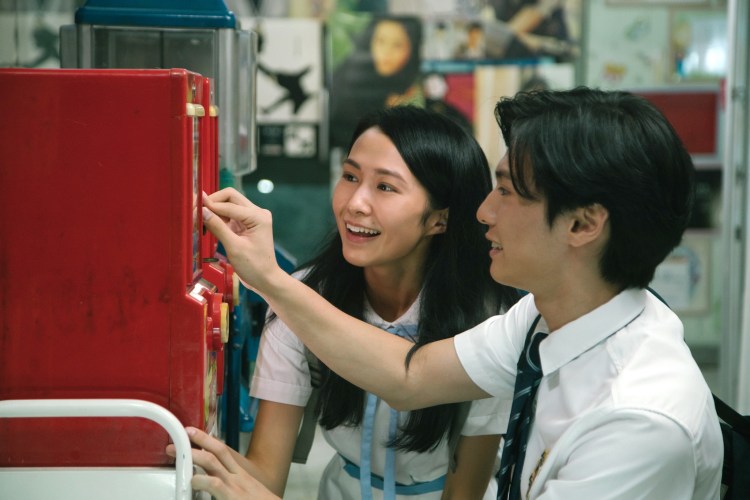
Astrology fans Sun and Moon meet during a power cut following a freak rainstorm in 1992. They fall in love but Sun is sent away to boarding school and eventually leaves the country. Their love, however, endures…

Oct. 6: Any Way the Wind Blows

Free screening. Time/location TBC

AnyWayTheWindBlows

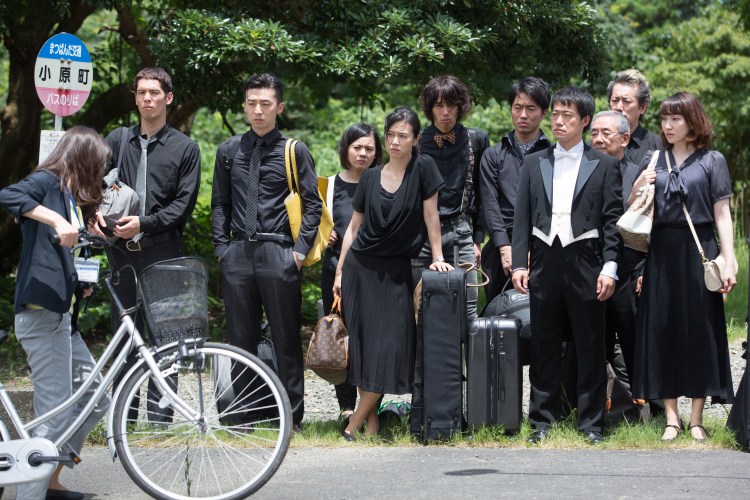
A civil servant accidentally invites the Tokyo Wind Orchestra to Yakushima by mistake having intended to invite a more prestigious organisation. Realising they weren’t wanted, the musicians attempt to leave the island but find themselves trapped by the civil servant who is desperate to cover up her error…

Oct. 24, 7pm: Walking Past the Future

Introduction and Q&A with director Lee Rui-jin and producer Zhang Min

Walking past the future still 1

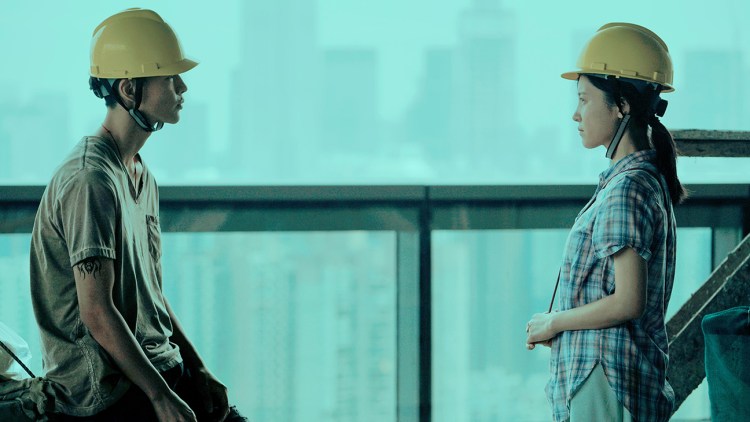
Yang Yao-ting’s parents have been forced to return to their home village in Gansu after losing their jobs in Shenzhen but after 25 years pretty much everything has changed. Hoping to get her family a home in the city, Yang Yao-ting finds herself returning to Gansu as a volunteer in a series of high risk medical tests…

Oct. 26, 2pm: Ritoma

Free screening at Flashpoint Chicago

Ritoma

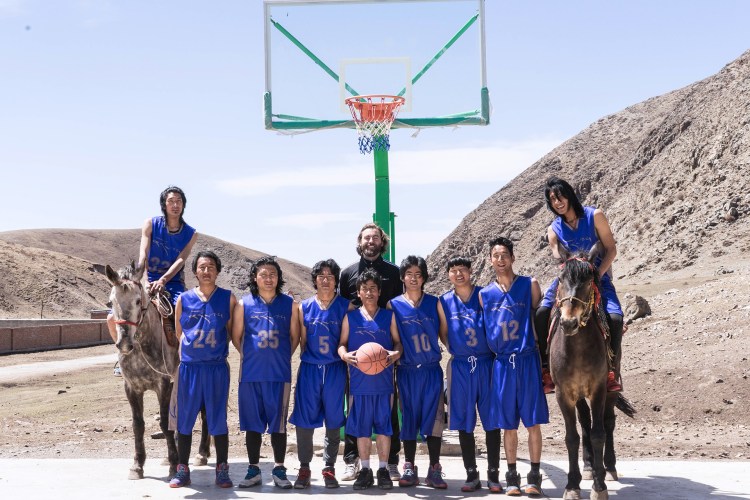
Ruby Yang’s documentary focuses on the unlikely popularity of basketball among nomadic tribes in Tibet.

Oct. 27, 2pm: Made in Vietnam

Free Screening at Chinese-American Museum of Chicago

MadeInVietnam

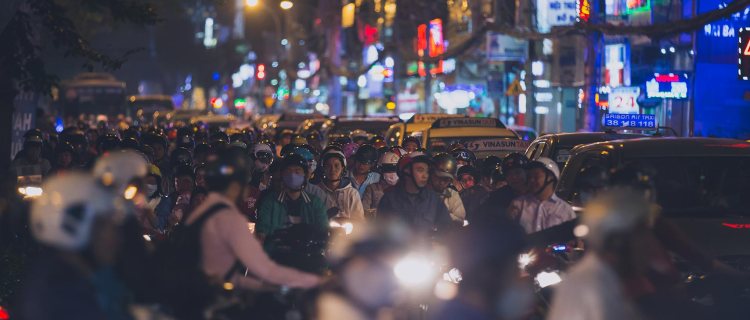
Thi Vo left Vietnam for Hong Kong as a child after the war, later emigrating to Canada when he was four years old. Thirty years later he attempts to find his father and discover the secrets of his past.

Nov. 8, 7pm: Dear Ex

Introduction and Q&A with Director Hsu Chih-yen.

Dear Ex still 1Chengxi’s dad has just died. He’d left the family sometime before and despite the best efforts of Chengxi’s mum, Chengxi knew perfectly well that it was to be with another man. The problem now is Chengxi’s dad has left everything to his new partner Jay and Chengxi’s mum is not at all happy about it…  Review.
Nov. 3: Asian Three-Fold Mirror 2016: Reflections

Free Screening at Illinois Institute of Technology. Time TBC.

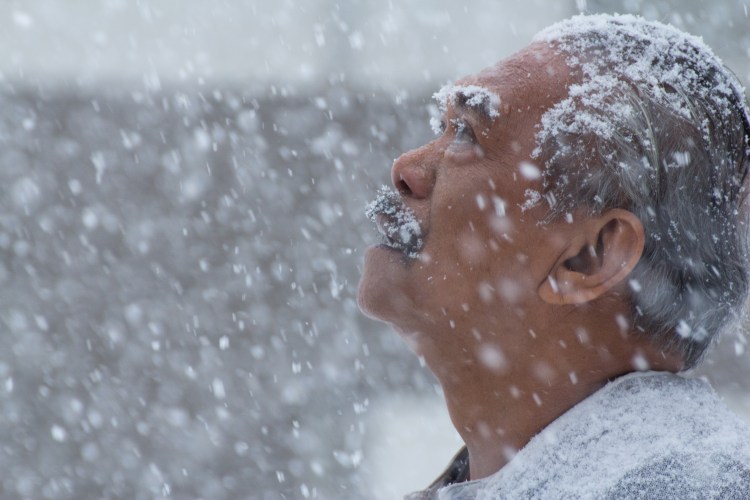
A co-production between the Tokyo International Film Festival and Japan Foundation Asia Center, Asian Three Fold Mirror: Reflections features three short films – one from Japan, one from the Philippines and another from Cambodia.

Shiniuma – Filipino director Brillante Ma Mendoza tells the story of Marcial who is forced to return to the Philippines after years living in Japan.

SHINIUMA-AsianThreeFold

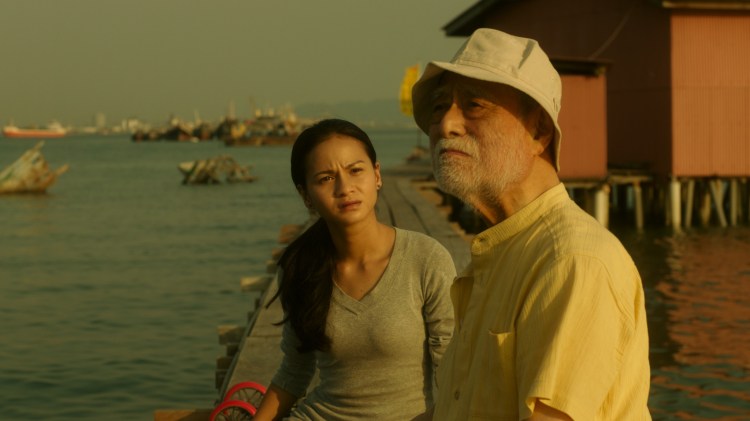
Pigeon – Isao Yukisada follows a Japanese man living in Penang who raises pigeons on his roof.

PIGEON-AsianThreeFold

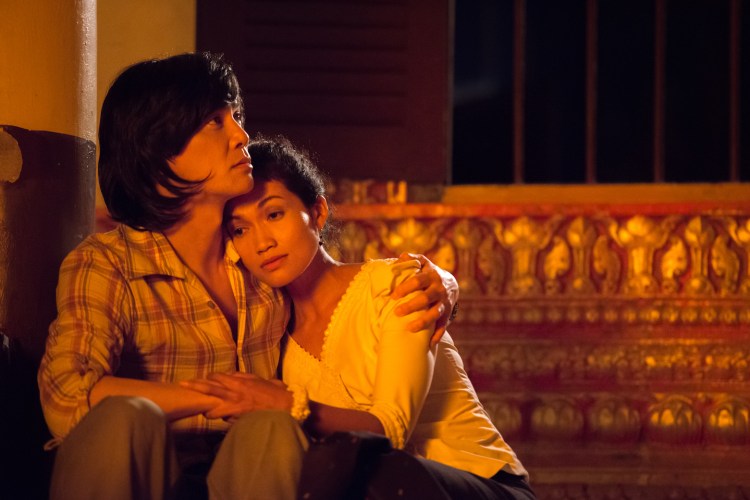
Beyond the Bridge – a Japanese man building a bridge in Phnom Penh falls in love with a local girl and vows to marry her, but…

Beyond The Bridge

Nov. 11, 1pm: Happy Hour

Free Screening at The Screening Room at the Ambassador Hotel

HappyHour

Ryusuke Hamaguchi’s five hour exploration of the everyday lives of a group of middle-aged women living in Kobe.

Nov. 14, 7pm: One Cut of the Dead

Introduction and Q&A with Actor Takayuki Hamatsu

One Cut of the Dead still 1

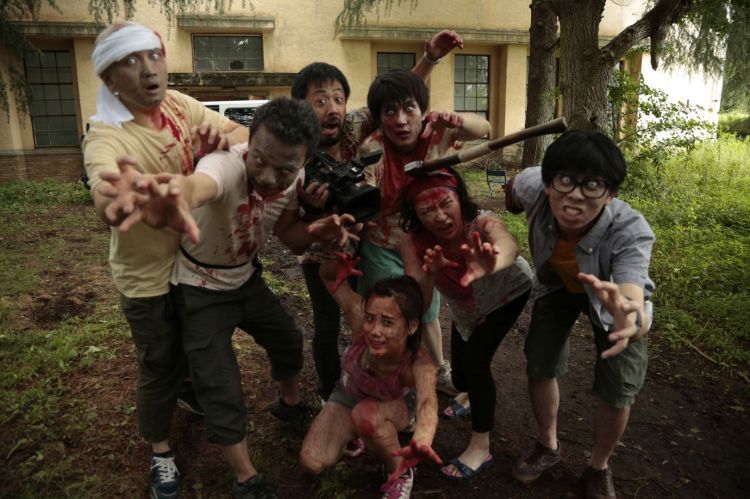
A horror shoot is invaded by real zombies in Shinichiro Ueda’s anarchic comedy! Review.

Full details for all the films are available via Asian Pop-Up Cinema’s official website. You can also keep up with all the latest news by following Asian Pop-up Cinema on Facebook, Twitter, and Instagram.

London Korean Film Festival 2018: Documentary Fortnight

Another World We Are Making

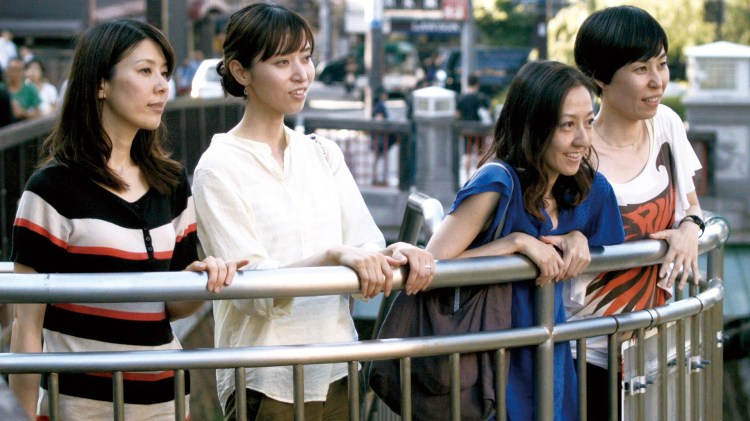
The London Korean Film Festival has always made a space for documentary in its packed out programme but for this year’s edition they’ve decided to go a little further and give it a spotlight of its own with two weekends dedicated to the art. On August 11/12, and 18/19, six short and feature lengths films will be screened with directors Kim Dong-won and Song Yun-hyeok making an appearance to present their work.

11th August – Birkbeck Cinema

11.30am: A Slice Room

slice room still 1

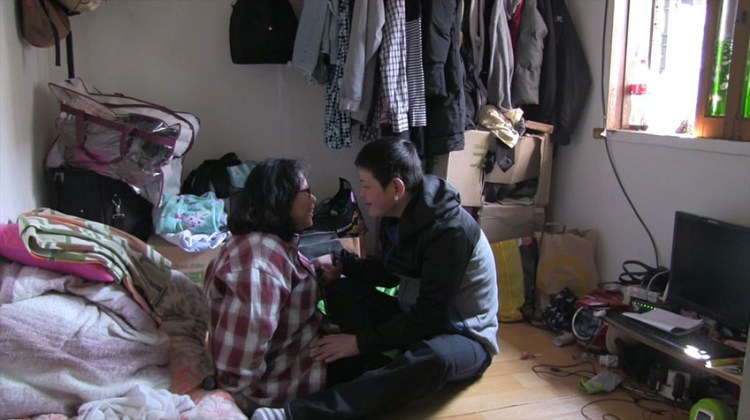
Song Yun-hyeok examines the social reality behind the prosperous facade of contemporary Korean society through the lives of those living in “slice rooms”. Director Song Yun-hyeok will also be in conversation with Nam In Young following the screening.

2.30pm: The Sanggyedong Olympics / The 6 Day Struggle at the Myeongdong

6 day struggle

Kim Dong-won’s 1988 documentary Sanggyedong Olympics follows the resistance movement towards urban regeneration amongst a community north of Seoul who had been unfairly evicted from their homes without proper compensation or adequate time to find new accommodation. Kim planned to stay only one day but ended up living amongst the community for three years.

The 6 Day Struggle at the Myeongdong Cathedral, completed during 1996-7, looks back at the pivotal 1987 sit-in which became a catalyst for the June democracy movement.

Following the two short docs, Kim Dong-won will also be in conversation with Nam In Young.

12th August – Birkbeck Cinema 

1.30pm: Repatriation 

repatriation still 1

In what many consider his masterpiece, Kim Dong-won examines the lives of the “unconverted” – North Korean “spies” who refuse to renounce their communist beliefs despite longterm imprisonment in the South. Refused the possibility of returning to the North on release, most were left without support in South Korea facing economic hardship and social stigma, dependent on solidarity networks to help them integrate into society. Kim follows two such men over a decade as they try to rebuild their lives in the fluctuating political climate of the ’90s.

The film will be followed by a conversation with Kim Dong-won chaired by Chris Berry.

4.45pm: Roundtable 

A roundtable panel discussion chaired by Professor Chris Berry discussing the Korean independent documentary scene from the late ’80s to the present. Nam In Young of Dongseo University will provide an overview of filmmaking collectives within the sociopolitical history of South Korea while directors Kim Dong-won and Song Yun-hyeok will be on hand to offer their personal experiences.

18th August – Korean Cultural Centre

3pm: Soseongri 

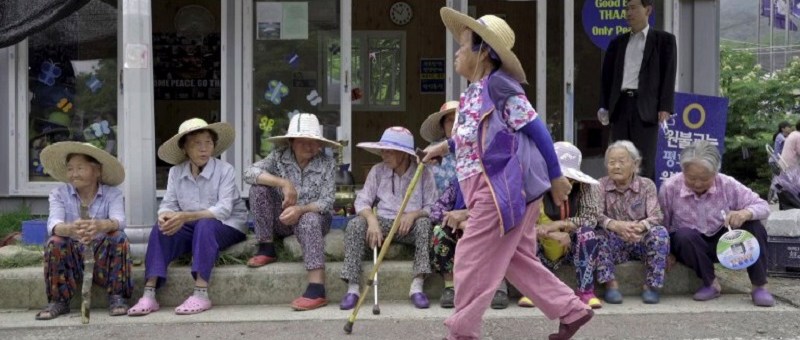
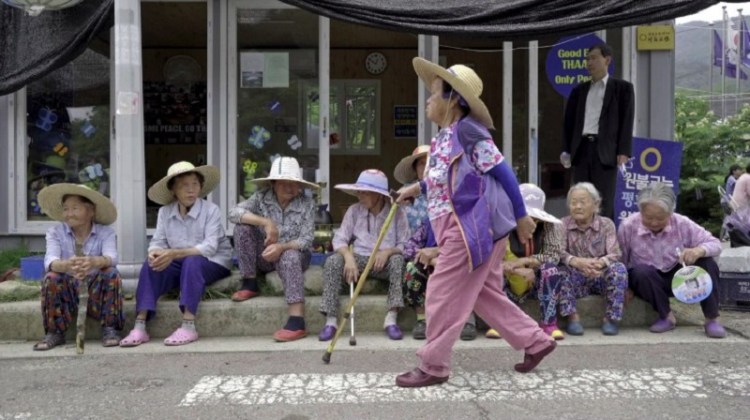
SKOREA-FILM-DIPLOMACY-DEFENCEPark Bae-il’s Soseongri follows a community of elderly farmers facing rural depopulation problems who find themselves in conflict with the police when the decision is taken to place the THAAD anti-aircraft system in their village.
19th August – Korean Cultural Centre

3pm: Jung Il-woo, My Friend 

Jung Il-woo, My Friend 

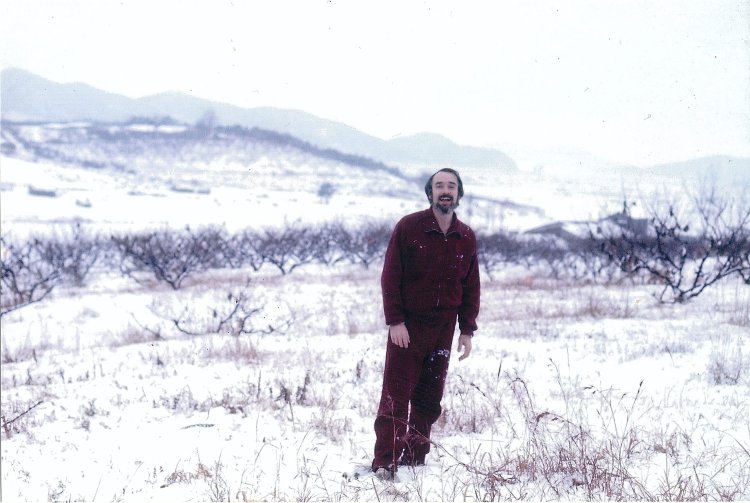
Kim Dong-won’s most recent film pays tribute to North American Jesuit priest, Jung Il-woo, who dedicated his life to improving the lives of the poor in South Korea.

All the events are free to attend but tickets must be booked in advance via the links above. Full details for all the films are available via the official website, and you can keep up with all the latest news via the festival’s  Twitter, Facebook, Flickr, Instagram and YouTube channels

Tokyo Vampire Hotel (東京ヴァンパイアホテル, Sion Sono, 2017) [Fantasia 2018]

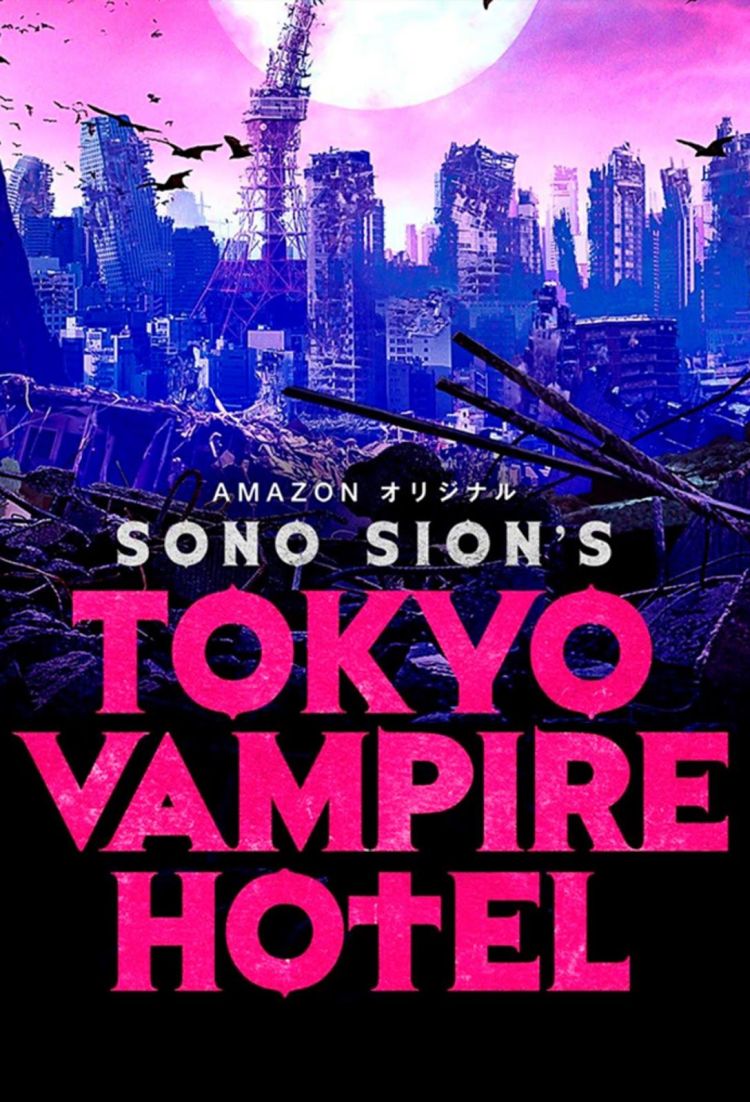
Tokyo Vampire Hotel PosterAbridging a work of fiction can be a taxing task. The job of a judicious abridger is the use their own judgement to reduce a larger work to its most essential elements either for those who, for one reason or another, need a more immediate digest or for those looking for greater accessibility. When it comes to a work of art, abridgement can be a dubious task and, unfortunately, the temptation is simply to excise the “best bits” shorn of all the “heavy stuff” and supporting material. Sion Sono who had been in a particularly prolific phase was given something of an unusual opportunity in creating Tokyo Vampire Hotel (東京ヴァンパイアホテル) – a chance to do as he pleased with a sizeable budget to create a television series for Amazon Prime, which is to say marrying mainstream commercial concerns with idiosyncratic artistry. The 6.5hr, eight episode, series was released via the streaming platform in June 2017 (initially in Japan only with international streaming available a few months later) but Sono also took the step of creating a 2hr22min feature length cut for film festival distribution.

The titular Tokyo hotel is the lair of a sect of modern day vampires. As a long prophesied war between rival clans – the Corvins in Japan and the ancient Draculas of Romania, brews, the Corvins have engineered a plan to lure lonely unsuspecting Tokyoites to an exclusive singles mixer where they will not only be given a sizeable fee for attending but also tempted with the possibility of meeting the love of their life, never suspecting that all this is too good to be true and they are really being recruited for a kind of blood farm to feed the various appetites of their bonkers captors.

Meanwhile, “the chosen one”, Manami (Ami Tomite), is about to come of age. Born during an “auspicious” alignment of the stars, Manami is one of three children given special vampire blood and thought to be all powerful, species saving hybrids. As such she is wanted by every side and is eventually “rescued” from a massacre at a restaurant by ice cool vampire K. (Kaho) – a Japanese vamp currently working for Dracula.

It has to be said that Sono’s original TV cut is extremely convoluted and initially confusing. The hotel, a Japanese vampire hub, is connected to the vampire capital in Romania by a magical tunnel with the narrative flowing freely between both spaces. What we lose in condensing to feature length is the entirety of the extensive back story with the consequence of shifting the focus from the protagonist of the TV series, Manami, to the more exciting figure of second lead K. whose gradual disillusionment with becoming a puppet in someone else’s revolution coupled with romantic heartbreak eventually reawakens her sense of “humanity” as she becomes committed to “saving” Manami from becoming yet another slave to the Dracula cause.

Meanwhile, Sono satirises modern Japan’s ambivalence towards romance as a collection of youngsters are forced into an extreme situation in order to successfully couple off and form a “traditional” family solely to satisfy the demands of a bunch of vampire overlords standing in for a bloodsucking state. Yamada (Shinnosuke Mitsushima), the conflicted hero of the Corvins who longs for escape from his unwanted immortality and an egotistical, individualist world harbours intense resentment towards his own “hypocritical” father who “sold” him to the vampires as a baby in return for various favours by which he has now become the “Romantic Party” Prime Minster of Japan preaching traditional family values and a “wholesome” future for the little children who otherwise face a difficult existence in a country which has “lost its way”.

Sono doubles down on his usual sense of romanticism as his flamboyant vampires adopt an oddly foppish, Regency era aesthetic whilst speaking in a deliberately theatrical manner filled with bold philosophical statements and a florid sense of repressed melodrama. Harking back to Bad Film – another attempt to reorder extensive footage into a narratively cohesive whole, the conflicts are often about love more than death with suffering and sorrow marking the lives of our gloomy immortals, oppressed by their own inability to transcend their natures and find the escape they so desperately crave.

Sono seems to reemphasise their unhappy fates by engineering an altogether different, infinitely abrupt ending which, in contrast to the TV drama, hands the victory back to the people but does so in historically uncomfortable fashion as the victorious hotel guests revel in acts of atrocity against their captors which are framed as a kind of genocide and accompanied by stills from violent classical paintings featuring scenes of unbridled carnage. A contrarian to the last, Sono mutilates his own endeavour and then frankensteins it into something else, twisting his own words and tying himself in knots in the process. Viewers seeking clarification would be well advised to invest their time in the 6.5hr experience rather than opting for the convenient shortcut of an edited version, but there is certainly plenty to ponder in Sono’s truncated tale of love and death in post-Olympic Tokyo.


This review refers to the theatrical cut of Tokyo Vampire Hotel which was screened as part of the Fantasia International Film Festival 2018. You can also stream the original TV drama in most territories via Amazon Prime.

Trailer for the TV drama (no subtitles)