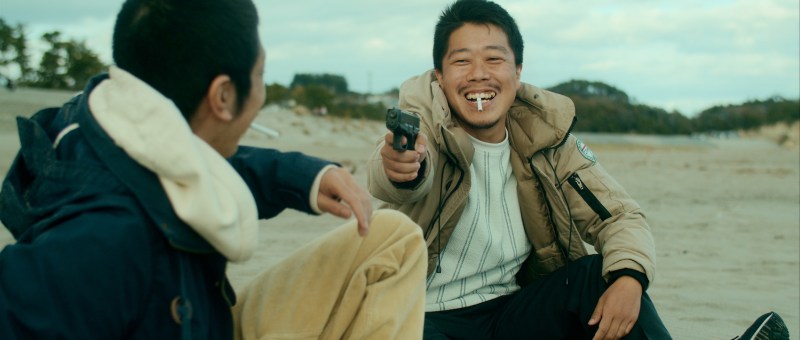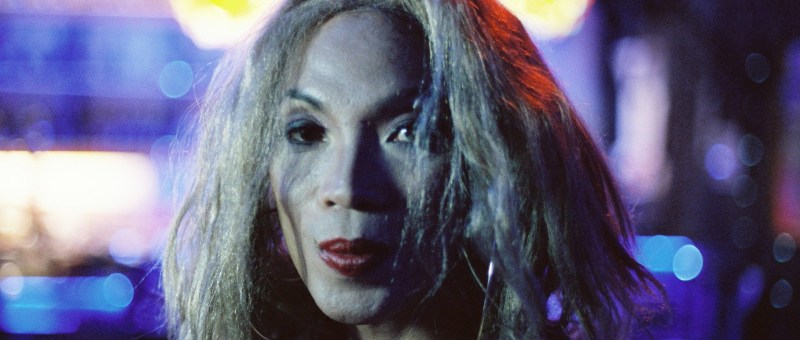
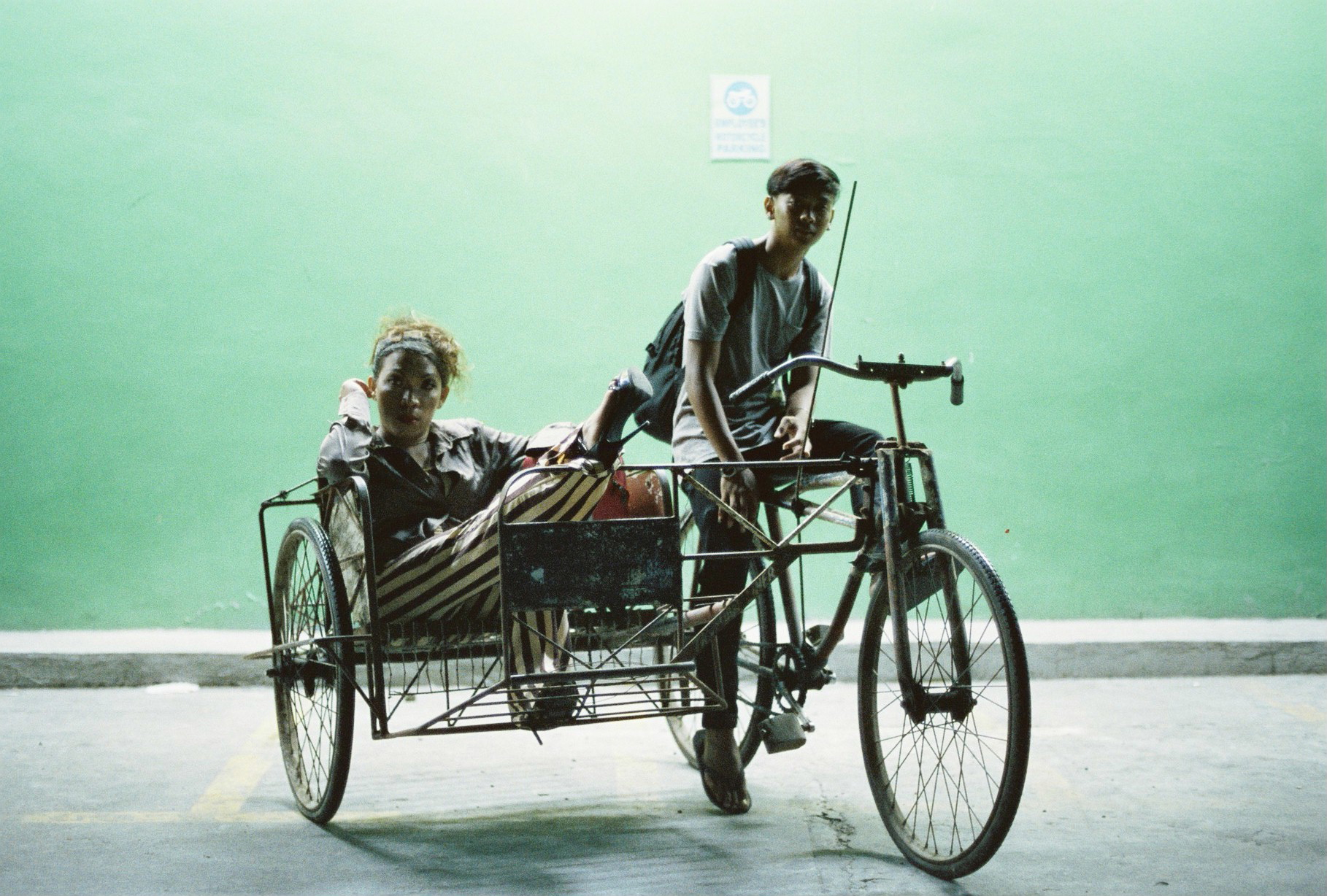
Asog (Seán Devlin, 2023)

A non-binary former teacher bonds with a student during an impromptu road trip in the wake of a typhoon in Seán Devlin’s hilariously empathetic dramedy, Asog. As the opening title card explains, everyone in the film is a survivor of Typhoon Yolanda (also known as Super Typhoon Haiyan) which struck in 2013 causing mass devastation and loss of life, but it’s also clear that the effects of the storm are still being felt not least in the waves of corporate colonialism that keep lapping at the shores.

As Jaya (Rey Aclao) recalls in their voice over, Yolanda took everything from them when the TV station where they filmed their TV show was plunged underwater ending their career as a presenter. Returning to teaching they can see that the storm has created a generation of traumatised children struggling to allay their fear and anxiety or otherwise deal with loss. Arnel (Arnel Pablo) lost his mother some time previously and seems to have been more or less abandoned by his father of whom he eventually goes in search at the behest of his aunts keen to start preparations for her memorial service. 

Jaya is also beginning to question their relationship with partner Cyrus (Ricky Gacho Jr.) which is only further strained when they abruptly quit their job after arguing with their boss, announcing that they plan to travel to Sicogon to enter a gay beauty pageant. It’s on the way that they meet up with Arnel who is travelling in the same direction but confused and alone having had to jump off a bus after dropping half his traveling expenses, which he was cradling in coin in his hands, in the road. Arnel perhaps hopes that his teacher whom he knows as “Mr. Andrade” will take him under their wing, but as it turns out Jaya doesn’t really have it together either. They’re travelling on a shoestring mainly by push bike and side car and sleeping on benches at railway stations. 

In any case, their journey takes them through the ravaged landscape until they finally reach the island and hear from its remaining villagers of what’s happened there, a corporate invasion which offered them aid but only if they surrendered their rights to their ancestral property. The venue for the beauty pageant is in the new resort built on top of stolen land while a small number of islanders who’ve refused to leave continue to fight for their rights and it seems are winning. Devlin casts real locals as the aggrieved islanders, and tells their story through the roundabout medium of a children’s story in which a swarm of mosquitos eventually deposed a king because though they were small, there were a lot of them, they stuck together, and they didn’t give up. 

Jaya likens the corporatising takeover as akin to that of the Philippines itself by Philip the Second of Spain who gives the islands their name and becomes in a way the crabby king of the fairy tale. They recall a story about Laurence Fishburne remarking in an interview that the Filipino people made him feel far more welcome than he ever had in America, though Jaya has often felt unwelcome themself. An old lady complains to see them putting on makeup on a bus and when they make a witty retort it’s Jaya and Arnel who are thrown off the bus. Cyrus and his previous partner had tried to have a child via a surrogate but the birth mother changed her mind, stating that she did not want the baby to be raised by a gay couple so had decided to keep it. But by contrast the old lady in Sicogon tells them that there have always been people like Jaya and that had they a name in an older language, Asog, so they always have been and belong here an integrated and accepted part of their culture. 

Through their journey together Jaya becomes a kind of mother figure to the young Arnel who felt alone in his grief abandoned by a father who abruptly left him behind. Grief changes shape, but it doesn’t end they advise him, quoting Keanu Reeves, revealing that they have learned to see their own mother who died when they were a child in the beauty of flowers or sunlight or passing birds as Arnel will too in time. The passing crisis allows Jaya the chance to quite literally rebuild their relationship with Cyrus while feeling grateful that at least they have this time to wait around together. As they said, their job was to help people cast away their troubles, countering despair with joy and laughter and togetherness which in itself gives the mosquito to the courage to keep swarming, fighting for its rights and refusing to be beaten by intimidating corporatising colonialists.


Asog screened as part of this year’s BFI London Film Festival.

Festival trailer (English subtitles)
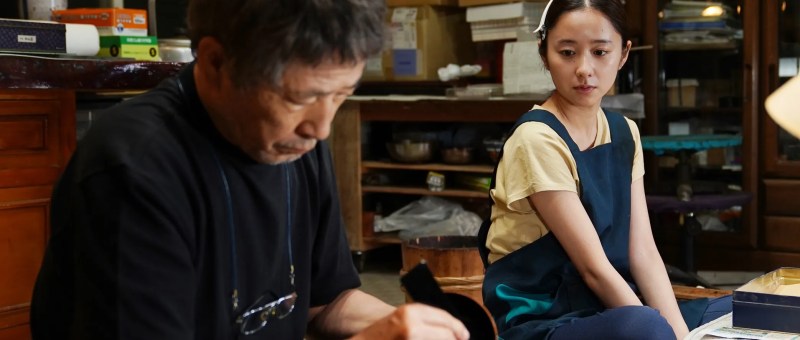
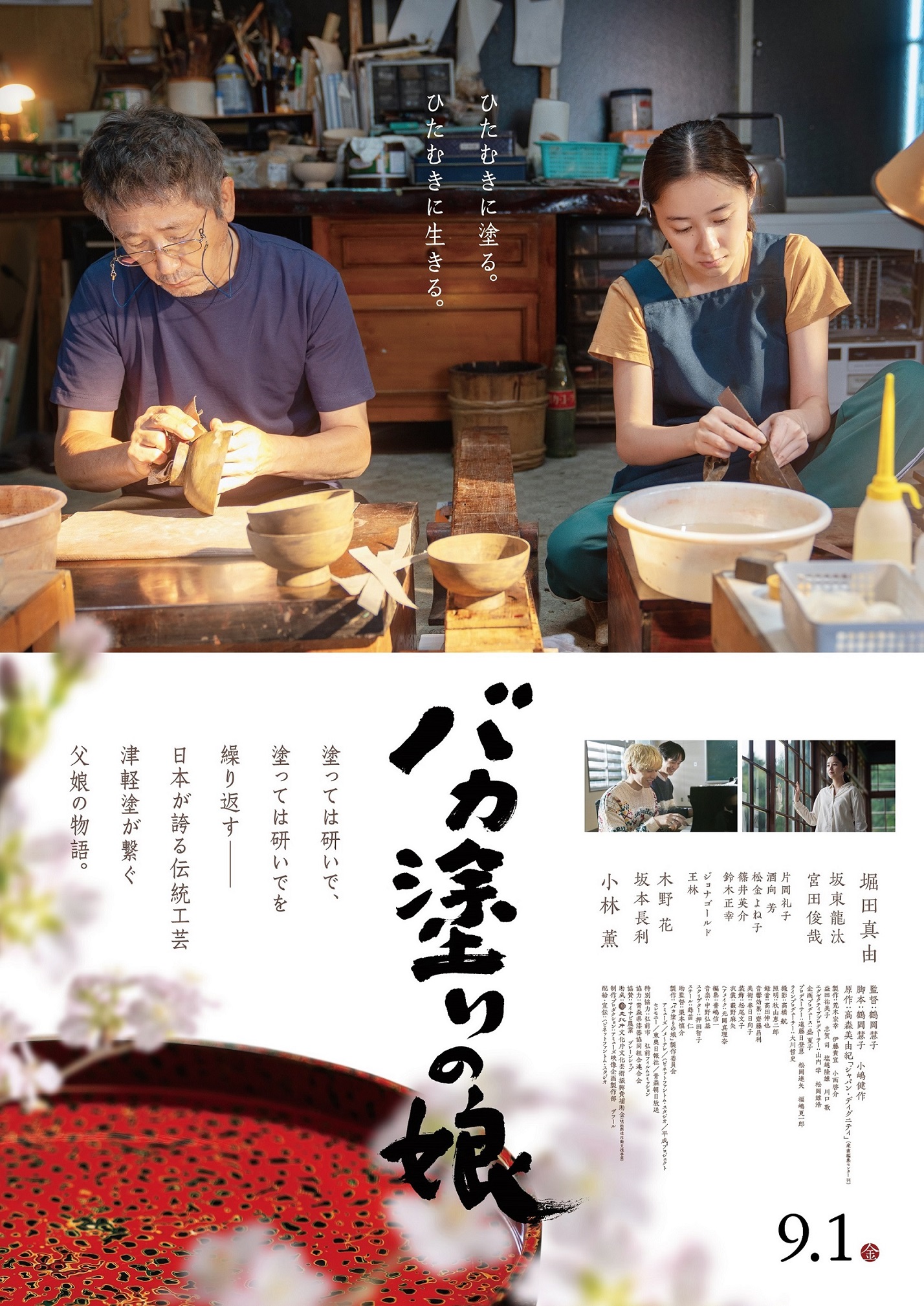
Tsugaru Lacquer Girl (バカ塗りの娘, Keiko Tsuruoka, 2023)

Which traditions should we keep and which should we lose? A young woman finds herself frustrated by outdated gender norms in her desire to take over the family lacquerware business in Keiko Tsuruoka’s gentle rural drama, Tsugaru Lacquer Girl (バカ塗りの娘, Bakanuri no Musume). While her family, save older brother Yu (Ryota Bando) who has already rejected lacquerware, do nothing but run her down and claim she’ll never be a success at anything all she wants to do is devote her life to a traditional craft her father no longer believes has any kind of future. 

Even so, Seishiro (Kaoru Kobayashi) is dead set on Yu taking over the business to the point that they have become semi-estranged. He calls Miyako (Mayu Hotta) “clumsy” and complains that she has no aptitude for anything unlike Yu who was always good at anything he tried. Miyako too later suggests that she was her brother’s opposite, while he was cheerful and outgoing she is shy and melancholy but then perhaps it’s hard to be cheerful when everyone’s always telling you you’re useless and doing everything wrong. In an interesting parallel, Yu is also trapped by outdated social codes in that he is gay and he and his partner have decided to move to London where they can legally get married and live their life out and proud in a way they feel they cannot do in contemporary Japan. 

Lacking other direction in her life, Miyako has been working a part-time job in a local supermarket which she hates while her father occasionally allows her to help him finish big orders though it’s clear her salary is now their main source of financial support. A local inn keeper who is a good customer of theirs explains to some of his guests that craftsmen rarely construct large pieces such as tables because they are no longer cost effective while fewer young people are willing to take up apprenticeships leaving the traditional art in danger of dying out despite the frequent remarks that everything tastes better out of a lacquerware bowl which is after all in the modern parlance “sustainable” in that it will last for many decades and can easily be repaired if damaged. 

Seishiro doesn’t seem to have a reason for rejecting the idea that Miyako might take over aside from basic sexism in preferring to hand the business over to his first born son. It might be tempting to think that he dissuades her because he thinks there isn’t a future in lacquerware, but if that were the case he could simply retire. Her mother (Reiko Kataoka), who left the family some years ago in part it seems because of her own animosity towards lacquerware and its lack of financial promise, seems to feel much the same comparing Miyako to a more successful cousin who has kids and a high powered job at an international trading firm, telling her that she should be settling down and getting married suggesting that she is simply incapable of becoming a successful lacquerware artist and should at best keep it as a hobby. 

Her mother had also shut down her desire to learn piano as a child by telling her there was no point because she’d never be good at it. Miyako’s decision to prove herself by re-laquering an abandoned piano in her disused school is then an act of rebellion against both parents showing them what she can and will achieve along with the direction she has chosen for her life. Not everyone respects it even if her father begins to come around but really it doesn’t matter because the decision is hers alone whatever anyone else might have said. Far from being insular, the embrace of traditional culture gives Miyako new opportunities and allows her to grow in confidence until she’s finally ready to set off along her own path. Even so, it seems there are some traditions she thinks it would be better to lose, such as her father’s sexism and the homophobia that has forced her brother to emigrate in order to live a happy life just as he is. They call it “fools lacquer” because no one but a fool would go to all this trouble to make a bowl but in many ways that’s the point. Miyako pours all of herself in to the lacquer, piling layer on layer dotted by handfuls of thrown rice that give it its pattern much as she herself is slowly tempered by the world around her.


Tsugaru Lacquer Girl screened as part of this year’s Camera Japan.

Original trailer (English subtitles)
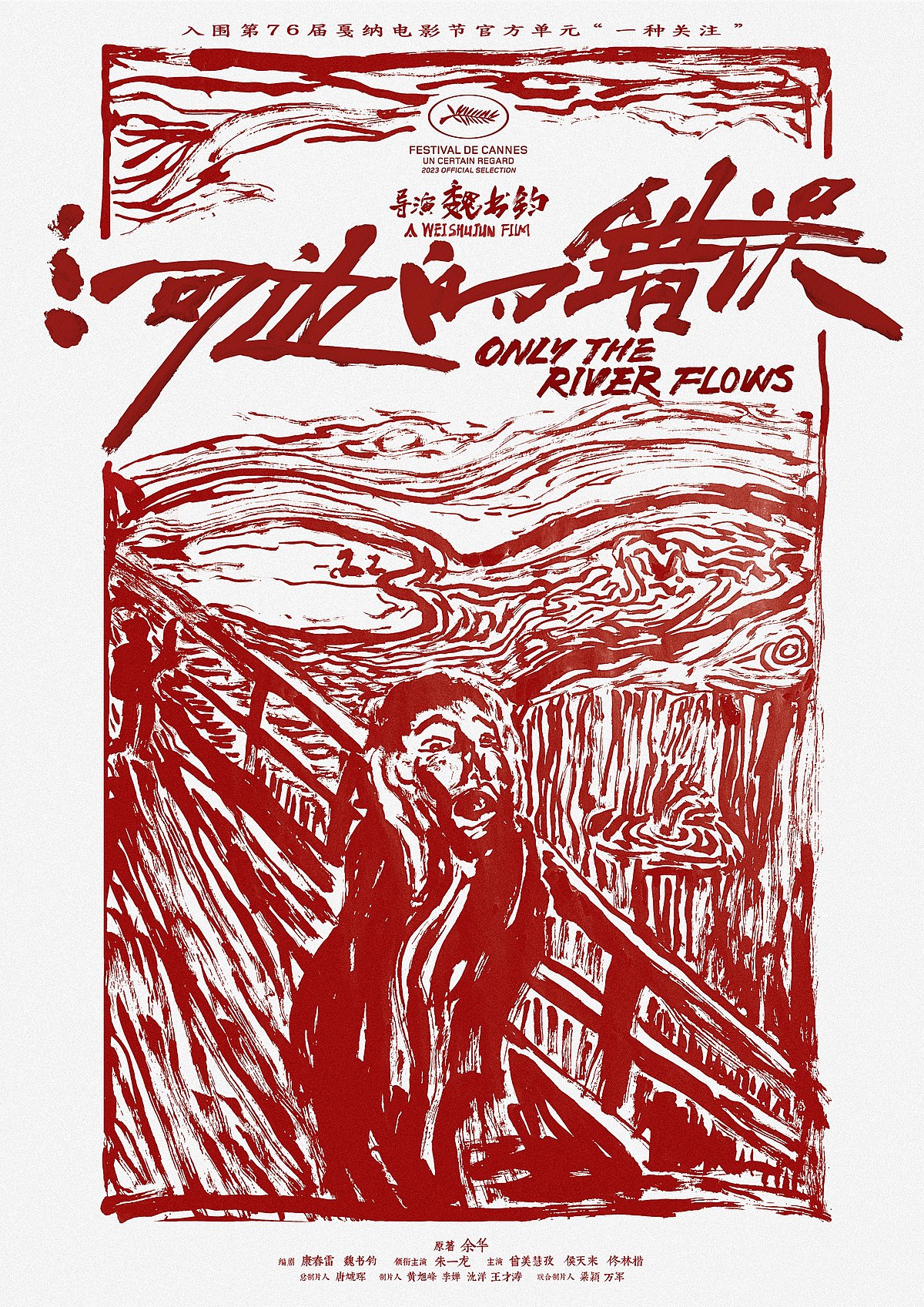
Only the River Flows (河边的错误, Wei Shujun, 2023)

Spoiler warning

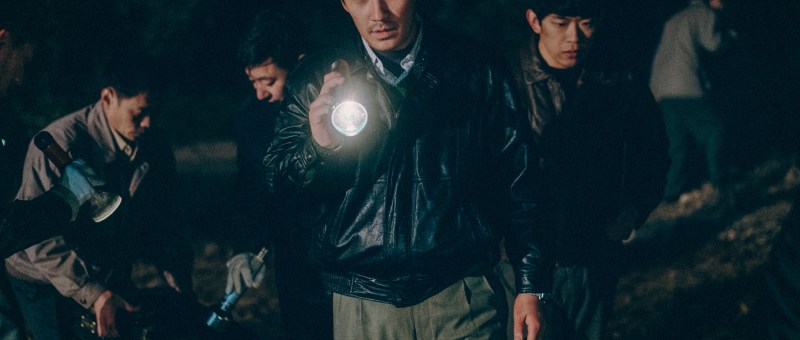
In the opening moments of Wei Shujun’s Only the River Flows (河边的错误, Hébiān de Cuòwù) children run through an abandoned building playing cops and robbers amid the ruins of a changing China. One could argue that detective Ma Zhe (Zhu Yilong) is little different from the boy who chases after the other children with a plastic toy gun in his hand and an apparent love of justice in his heart only to enter a room and find himself on the edge of precipice looking down on a digger several floors below already sweeping up the rubble while Ma and his police partner look on obliviously. 

Wei fully recreates the aesthetics of sixth generation cinema, filming on grainy 16mm with a score that immediately echoes the films of the 1990s. Yet this small town in southern China is also a noirish place full of dank corridors and crumbling buildings that reflect the slow death of the old factory system along with the accompanying anxiety and displacement. Ma Zhe is also somewhat displaced. As he’s first introduced it’s as the only plainclothes detective in a room full of policemen in military uniform. His genial boss sells a message of “collective glory” that sounds somewhat outdated and is continually undermined by the fact he seems to do little himself and in fact continually instructs Ma to close the case he is working on even if he isn’t really convinced that primary suspect really is the guilty party. 

Based on a novel by Yu Hua, the film’s Chinese title more accurately means “a mistake on the river bank” which could refer to the murder itself, a strange case of an apparently well liked old lady killed with a sharp object, or to an encounter Ma later has with the suspect who is referred to only as “The Madman”. Apparently adopted by the old woman, Granny Four (Cao Yang), to stave off loneliness after her husband’s death (presumably they had no children of their own) the Madman is middle-aged with some kind of learning difficulties and otherwise mute and docile never having displayed any signs of violence or volatility. Yet in his way Ma is also a “madman”, increasingly out of touch with objective reality and driven near out of his mind by his preoccupation with the case. 

Pushed past his limit, Ma feels himself stalked and eventually descends into a lengthy dream sequence in which he watches his recollections projected on a cinema screen only for the negative to dissolve in flames as if it were burning a hole in his memory. His own perceptions are not reliable as confirmed by the confusion surrounding a commendation he received at a previous posting that he can no longer find, while a friend he contacts says he can’t remember him every receiving it and would have been surprised if he had as back then Ma was drinking quite heavily. Overburdened by the case, he begins drinking again and is also filled with paternal anxiety while his pregnant wife spends her time to trying to construct the image of their family by completing a jigsaw puzzle featuring a picture of a mother and child. 

The couple are told, by a very unsympathetic doctor, that there is a small chance the baby may be born with a genetic abnormality that could result in cognitive impairment. While Ma leans towards an abortion (the one child policy in this era perhaps influencing his decision) his wife is determined to keep it, calling Ma a heartless man but also suggesting that the fate that has befallen him is some kind of karmic retribution. He feels the Madman in himself echoed in the fate that awaits his child and is unwilling to accept it, wondering what their life would be like with the world the way it is.

His sense of “madness” is centred in his individuality as the member of a collective and something that he finds echoed in the frustrating dead ends of his case. Several witnesses saw the body but did not report it, fearful of their own secrets being exposed. More deaths soon occur, not exactly related to the first but somehow as a result of it as if murder were catching and Ma is a point of infection bringing a hidden truth to light that accidentally exposes something others would have preferred remain private. Ma’s quest is to quell the madman within himself, as perhaps he does in once again putting on his uniform and joining the collective even if it means accepting their truth above his own or the doubts in his heart. A brief coda featuring Ma and his wife happily bathing their son in an atmosphere of warmth and comfort might suggest that order has been restored were it not for the unsettling look in the child’s eyes in the film’s final frame. Beguiling and mysterious, the film lends itself to multiple viewings in its consistently slippery realities and noirish sense of existential dread as Ma attempts to find himself amid the contradictions of ‘90s China in a land very much under construction. 


Only the River Flows screened as part of this year’s BFI London Film Festival and will be released in UK & Irish cinemas in spring 2024 courtesy of Picturehouse Entertainment.

International trailer (English subtitles)
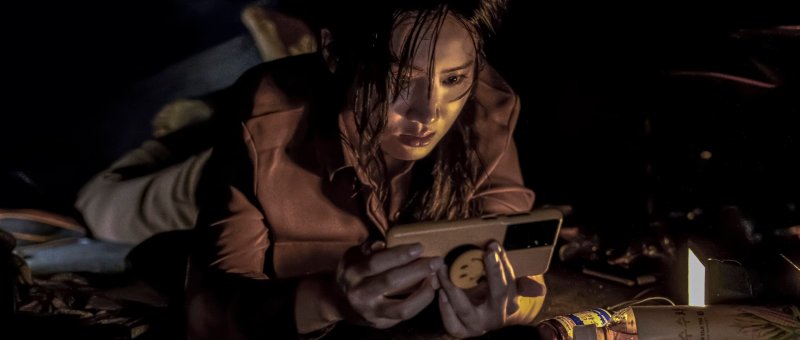
Drive (드라이브, Park Dong-hee, 2023)

“Be sincere if you want other people’s money” an influencer is told during a contract negotiation, but as she’s forced to admit in Park Dong-hee’s tense kidnap thriller Drive (드라이브) her whole world is hollow. Even so, sincerity was it seems something people wanted from her and tragically did not get, though for others what undoubtedly sells is a fantasy life of “easy” money and total independence free from an oppressive work culture if not quite from the patriarchal society. 

An opening sequence charts the gradual evolution of Yuna (Park Ju-Hyun) from shy young woman venturing into streaming to rising star of the online world. As someone points out she’s good at negotiating though is prepared to screw over even those closest to her in the hope of advancement while indulging in underhanded tactics such as encouraging companies to break contracts with other streamers with the promise of covering their damages. She’s also secretly plotting to throw over her long time manager and join a large media conglomerate even if, as it turns out, the boss is about to make her an indecent proposal. 

Yet the truth she’s confronted with after being kidnapped is that none of it’s quite real. She doesn’t actually have vast wealth, nothing really belongs to her but is merely on loan to use as endorsements. Stuffing her in the boot of her own car, the kidnapper asks for a million won which Yuna can’t pay leading them to force her to livestream her own kidnapping and hopefully earn the remainder of the money from her adoring fans. The problem is that no one really believes she has actually been kidnapped. Everyone assumes it’s a publicity stunt while the kidnapper tells her if she doesn’t get the money she’ll be driven into a scrapyard and never seen again. 

Now dependent on her “fans” whom she had previously described as “creeps”, Yuna is repeatedly told to reveal her real self. The boot of the car becomes a kind of purgatorial space, Yuna later coming to the realisation that the reason she’s not been able to escape is that she has not yet succeeded embracing herself as she is. Her YouTube persona is constructed as much for herself as others, to protect herself from unpleasantness or the stigma of being unsuccessful. She invents a life for herself as the daughter of a businessman who took his own life after his business failed, but prides herself on being a good businesswoman even if that means some underhanded tactics but then she’s not the only one playing dirty in the influencer game.

Yuna certainly has a “drive” to succeed, but the paradox lies in the enigma of the degree to which people, including herself, expect or deflect sincerity. Some obviously crave it, desperate to believe that Yuna really is their friend who cares for them deeply while others want the exact opposite, a hollow figure onto which they can project their image of contemporary success and fantasy of living the high life. It seems that success has made Yuna less forgiving, adopting a haughty attitude and frequently dismissing those around her. If she wants to get out of the boot, she’s going to have to face her authentic self finally looking at her own reflection in the blank screen of a tablet long after the stream has ended. 

The kidnapper challenges her to debase herself, asking how far she’ll go to save her life but equally if her “fans” are willing to pay to save her while other streamers later get in on the action too, mainly getting in the way and willing to endanger Yuna’s survival for their own livelihood. In someways exposing the hollow artifice of influencer culture, the film eventually pulls back to ask if it isn’t a frustrated desire for connection fuelled by those who long to be seen and are in effect attempting to fill an emotional void with the quantifiable love of an online following. At the peak of her success, Yuna realises her time may be ending as young stars creep up behind her and she has to run to stay in the game but in the end can no longer run from herself or the hollowness of her life whether she really does end up on the scrap heap of contemporary culture or not. 


Drive screens in Chicago Oct.7 as part of the 17th season of Asian Pop-Up Cinema 

International trailer (English subtitles)
Tea Friends (茶飲友達, Bunji Sotoyama, 2023)

Japan’s rapidly ageing society has provoked an epidemic of loneliness but also perhaps new business opportunities in Bunji Sotoyama’s empathetic social drama Tea Friends (茶飲友達, Chanomi Tomodachi). The phrase may sound innocuous enough, but given some potentially outdated cultural connotations the men who spot the advert cunningly placed in a newspaper to catch the eyes of older readers may have reason to assume that it’s more than just tea and chat on offer. Though as it turns out, it’s not just the old who are lonely as a younger generation in turn often in conflict with their parents also attempt to seek security and comfort in found family.

That said, there’s something a little cult-like about the way that Mana (Rei Okamoto), a former sex worker, talks about her organisation which aims to cure late life loneliness through what others might describe as an elderly sex ring. Employing a collection of older women, she accompanies them to meet new clients where they silently slide viagra over the table. The gentleman caller subscribes to a plan to purchase “tea” and anything that happens inside the hotel room they subsequently go to is just “free love” rather than “prostitution”. Mana sees herself as running a “community safety net” and helping elderly people who might otherwise have become isolated and depressed keep active as part of one big happy family along with the other members of staff who have, like her, become estranged from their parents and relatives. 

For Yoshiki, one of the men who escorts the ladies around, it’s that he views his father as a failure for leaving a well-paid corporate job to open a bakery which subsequently went bankrupt and has led to him living in his car. He thinks that in the end it’s better not to try at all than be left with the humiliation of things not working out. But then for Mana herself it’s more a sense of parental rejection. After a difficult childhood, her now terminally ill mother continues to reject her on the grounds of her history of sex work while she continues to crave the unconditional love of a family. Like a mother hen, she nestles those around her into the Tea Friends organisation which operates out of her own home and strives to create a place where everyone can feel they belong. 

Which is all to say she’s the loneliest one of all, but as someone else later cautions her you can’t cure your own loneliness with the loneliness of others. What she sees as a social enterprise others may see as a deliberate attempt to take advantage of vulnerable people who have admittedly been let down by an indifferent society and are in need of the money even more so than comfort or validation. At the other end of the spectrum, a young woman working at Tea Friends discovers that she is pregnant but her boyfriend immediately rejects her, insisting that he refuses to take responsibility and revealing that he is already married. Chika wants to have her baby, but everyone seems to be telling her that she shouldn’t. The doctors seem to look down on her after realising she isn’t married and the father most likely not in the picture, while an attempt to inquire about benefits at the town hall leads only to judgement as the clerk pithily tells her that they’re there for when you need them but she shouldn’t “depend” on them too much virtually calling her a scrounger and implying she’s been irresponsible in becoming a single mother. 

As another of the older women admits, being used was better than being ignored and at least being part of Tea Friends gave her a sense of purpose and acceptance if only for a time. In any case, Mana’s attempt to find unconditional love from her new “family” largely flounders as even those she’d come to believe herself close to desert her when the threat of legal proceedings enters the picture leaving her to face the music alone while she continues to protect them insisting that they’ve done nothing wrong even if it it was technically against the law. An old man’s devastation on picking up the phone and getting no answer suggests that Mana might have had a point when she said it was a social service seeing as no one else seems keen to tackle the problem of late life loneliness even if she did go about it in a problematic way. As Mana often says, righteousness does not equal happiness and it is often outdated social brainwashing that keeps people unhappy and not least herself as she struggles to find the unconditional love lacking in her life that would enable her to cure her own loneliness even in the prime of her youth.


Tea Friends screened as part of this year’s Camera Japan.

Original trailer (English subtitles)
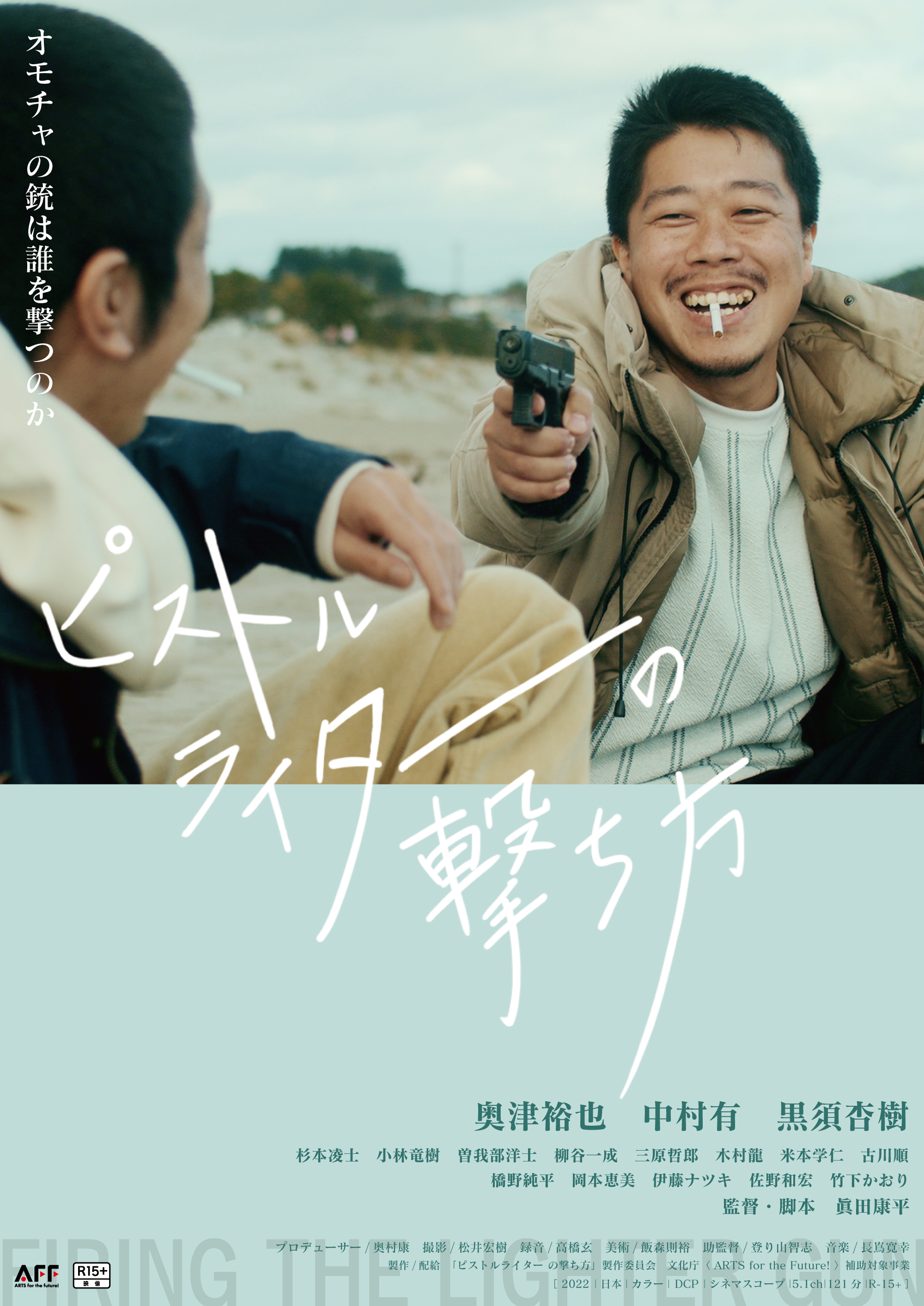
Firing The Lighter Gun (ピストルライター の撃ち方, Kohei Sanada, 2022)

“Whatever got you here, it can’t be any good” a resident of a flophouse reflects on their moribund circumstances suckered to into debt bondage by exploitative yakuza who force them to risk their lives doing clean up in a nuclear exclusion zone. Kohei Sanada’s bleak indie drama Firing the Lighter Gun (ピストルライター の撃ち方, Pistol Lighter no Uchikata) takes place after second nuclear disaster has left even more of the land unsurvivable. The heroes have been quite literally displaced, left without a place to return to or call a home, but are also emotionally alienated unable to envisage an escape for themselves from this otherwise hopeless existence.

Having recently been released from prison, Ryo (Yu Nakamura) remarks that the area has changed since he’s been away but his friend Tatsuya (Yuya Okutsu) counters that he doesn’t really think so. In any case, Tatsuya lives with a huge inferiority complex most evident on his attendance at a school reunion he didn’t want to go to where he sits sullen and dejected among those who’ve moved up in the world not least his ex, Shoko (Emi Okamura), who left him for a guy with a steady government job but still drops by to care for his ageing mother who suffers from dementia and the legacy of domestic abuse. Tatsuya is not a yakuza but his work is yakuza adjacent in that he drives a van full of equally hopeless men recruited for a dodgy operation offering cleanup services in the nuclear exclusion zone. 

Though the jobs are supposed to pay well with a bonus for the hazardous nature of the work, most of it is being skimmed by the yakuza bosses who deduct vast amounts from the men’s pay-packets for “expenses” such as the right to sleep in a communal flophouse where they charge them exorbitant amounts for snacks and drinks which they have to buy because they aren’t allowed to go out. Nor are they allowed to quit the job, trying to run incurs a 50,000 yen fine on top of any debts they’re supposed to be working off. An unexpected addition to Tatsuya’s van one day is Mari (Anju Kurosu), a sex worker, who’s been forced to work for the gang to pay off a debt incurred by an ex who’s since run off. 

As she later says, it’s a waste of time dreaming about a home, life is easier when you no longer expect one. But despite themselves a gentle bond soon arises among the trio of dispossessed youngsters who each feel trapped by their circumstances but are uncertain if they still have the strength to contemplate escape. Tatsuya’s sense of impotence is embodied by the cigarette lighter he carries around which is shaped like a pistol and realistic enough to cause a yakuza bodyguard a moment of concern but of course of no real use to him. As Ryo puts it, Tatsuya’s problem is that he still cares about those around him and is not heartless enough to treat the flophouse men like the “disposable tools” others regard them to be. He is constantly belittled by grinning boss Takiguchi (Ryoji Sugimoto) who blames him for everything that goes wrong and calls him useless and ineffectual, while the flophouse boss also regards him as soft for refusing to beat one of the men who had tried to escape. 

Ryo meanwhile swings in the opposite direction, giving in to a sense of hopelessness that sees him shift towards yakuza violence but perhaps eventually allows him to bounce back and take a chance on escape even if it maybe short-lived or spent in constant hiding. Tatsuya may feel trapped by responsibility to his mother, but is otherwise psychologically unable to move forward staking all his hopes on the rumour of a new power plant hoping it will ignite the town in the way the construction of the last one did despite knowing its attendant risks. Unlike Ryo, he says there’s no point in running, despite himself still yearning for a home. The flophouse men are no different, the few who escape are soon drawn back to other similar kinds of work because there is no other hope for them. Still, once the final shots have been fired there is a kind of clearing of the air and the light of a new dawn even if few seem to be able to see it. 


Firing The Lighter Gun screened as part of this year’s Camera Japan.

Original trailer (no subtitles)

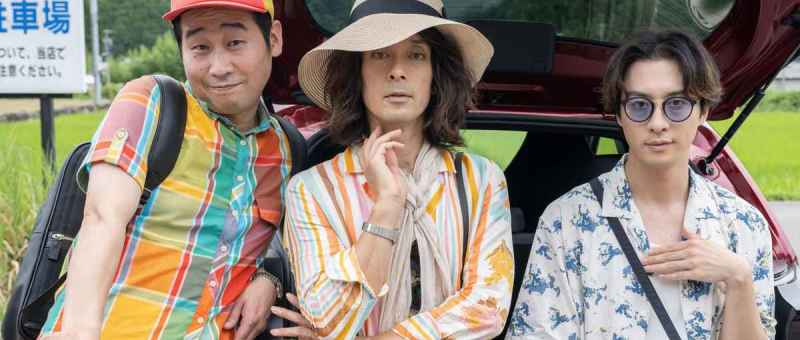
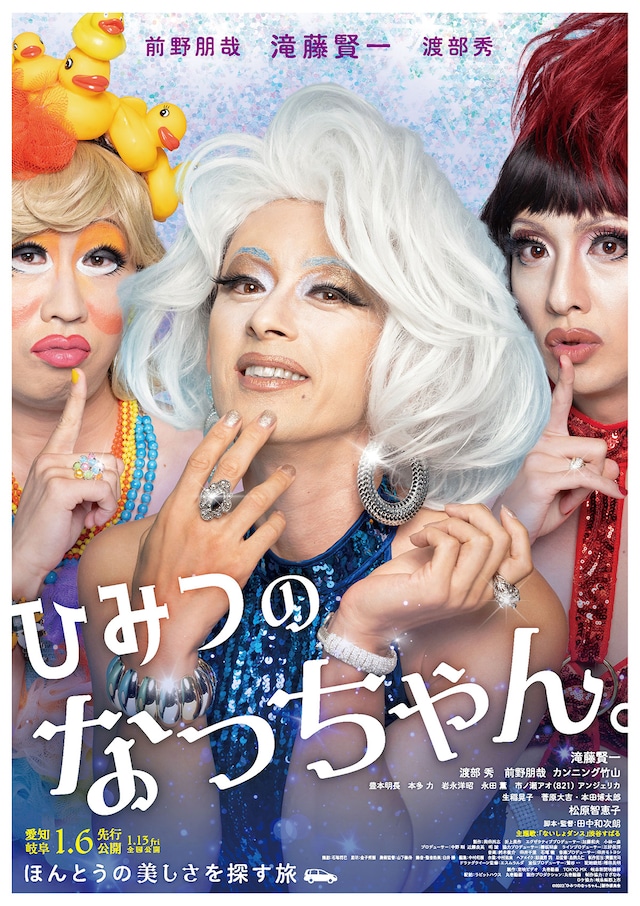
Natchan’s Little Secret (ひみつのなっちゃん。, Yasujiro Tanaka, 2023)

On learning that their friend and mentor has died, a trio of drag queens vows to do whatever it takes to fulfil her wishes and ensure her family never know about her sexuality in Yasujiro Tanaka’s road trip comedy Natchan’s Little Secret (ひみつのなっちゃん。, Himitsu no Natchan). In some ways it may seem old-fashioned, that rather than ensuring her family knew who she really was they decide to honour Natchan’s desire for secrecy but nevertheless meditate on the nature family while finally landing on a poignant sense of loss for all that secrecy entails.

Virgin (Kenichi Takito), an accountant by day and former drag queen who’s lost the taste for dancing, and Morilyn (Shu Watanabe) who works at the bar Natchan owned, are forced to confront the fact that in many ways they didn’t even know Natchan at all. They don’t know her address or hometown and have only the vague idea that she was estranged from her family. Virgin reflects that she was “secretive”, but in the end none of them really know what to do now that she’s gone. Another drag queen turned TV celebrity, Zubuko (Tomoya Maeno), laments that some take their secret to their grave realising that’s exactly what Natchan has done. That’s one reason why the trio become obsessed with the idea of cleaning out Natchan’s flat to make sure that her family don’t find anything they weren’t expecting. 

But then again, the trio frequently refer to the gay community as their family while claiming Natchan as their own. Without really thinking about it, Morilyn allowed hospital staff to assume he was family in a more legal sense and started making funeral arrangements. He also packs up some of Natchan’s property without realising he could be accused of theft while trying to tidy up her life. They may feel that the birth family are in a sense intruding, reasserting ownership over someone they never accepted in life and preventing those who truly loved them to honour their wishes. Yet Natchan’s mother (Chieko Matsubara) turns out to be sweet old lady who is in her way hurt that she and her son became estranged wishing that they could have been closer while he was alive.

It’s she who eventually invites them to Natchan’s rural hometown which is famous for a particular kind of festival dance. None of them are sure they want to go, partly because they fear accidentally blowing Natchan’s cover but also the social attitudes of what they imagine to be a more conservative, traditional area. Only it appears quite the reverse is true. Residents at the inn where they stay actually have a fierce curiosity about drag and enthusiastically enjoy a risqué routine performed by Morilyn and Zubuko while even a manly man later shrugs his shoulders and claims it’s not so different from Gujo Odori which also makes people sparkle. 

Maybe Natchan’s little secret is that she was a person who had learned to see the beautiful things in life and wanted others to see that they were beautiful too even if some told them that weren’t or they didn’t feel that they were. Virgin describes Morilyn’s straightforward living as a beautiful thing, especially as he recounts being made to do karate by conservative parents afraid of what the neighbours would think of their effeminate son, an experience he describes as emotionally destabilising and has led to a degree of repression as an adult. Virgin is out at work and well liked by a collection of female colleagues but now only dances alone at home and keeps it as her own kind of secret. Yet through their various adventures on the road the trio begin to come to new acceptances of themselves as they prepare to say goodbye to Natchan while comically affecting the tropes of conventional masculinity in an attempt not to give the game away. They wander through queer spaces in search of her and rediscover their own sense of family realising that they did know Natchan after all or at least all that was important to know as did others even if they pretended not to because that seemed to be how she wanted it. Finding liberation amid the Gujo Odori, the trio finally say goodbye but also discover a new sense of solidarity and self-acceptance joining the dance at which all truly are welcome. 


Natchan’s Little Secret screened as part of this year’s Camera Japan.

Original trailer (no subtitles)

Life of Mariko in Kabukicho (探偵マリコの生涯で一番悲惨な日, Eiji Uchida & Shinzo Katayama, 2022)

It’s all go in Kabukicho in Eiji Uchida and Shinzo Katayama’s zany tale of aliens, serial killers, and secret assassins. The film’s Japanese title (探偵マリコの生涯で一番悲惨な日, Tantei Mariko no Shogai de ichiban Hisanna Hi), the most tragic day in the life of detective Mariko, may hint at the melancholy at the centre of the story in putting the titular investigator front and centre even while her success is fuelled by her position on the periphery but this is also very much the story of an area and community in a shrinking part of the city. 

It’s true enough that Mariko’s (Sairi Ito) karaoke bar seems to have become a local community hub filled with a series of regulars each of whom have stories of their own. Born and raised in Kabukicho, Mariko knows every inch of the area and thanks to the confessional quality of her work has her finger truly on the pulse which is what makes her such a good detective. Her case this time around is though a little more difficult as she’s been hired by the FBI to track down an escaped space alien because all aliens apparently belong to the US. This one’s been liberated by a mad scientist, Amamoto (Shohei Uno), who they say wants to team up with the alien for ill intent.

In what seems to be a nod to cult 1983 horror movie Basket Case, Amamoto carries the alien around in a picnic basket from which it occasionally irradiates people when frightened. Meanwhile, a serial killer is also stalking the area. One of Mariko’s regulars, Ayaka (Shiori Kubo), is keen to catch him though not for justice but the reward because she’s become obsessed with a bar host who’s been spending a lot of time with another customer because she can pay more. Mariko turns her offer down on the grounds that she doesn’t want to enable her romantic folly and otherwise seems rather uninterested in the serial killer case perhaps because no one’s hired her to solve it, but she also refuses a job from another regular who wants to track down his estranged daughter after being forced on a suicide mission by his former yakuza associates possibly because she suspects he won’t like the answer when she finds her. 

Home to the red light district, Kabukicho has a rather seedy reputation but here has a kind of homeliness in which the veneer of sleaze is of course perfectly normal and unremarkable. A yakuza intimidates a love hotel worker while standing directly in front of a rotating electric dildo in an S&M-themed room later visited by one of Mariko’s regulars with her nerdy film director crush who is so sensitive he can barely walk after exiting the cinema so moved is he by the cinematic expression. Most of the regulars are in their own way lovelorn and lonely, perhaps no less Mariko herself who has an attachment to a middle-aged ex-chef (Yutaka Takenouchi) who now runs a moribund dojo teaching ninja skills to anyone willing to learn. Despite the warmth of the community, life in Kabukicho can be hard as the host later echoes looking around his tiny apartment and sighing that he’s tired. It took so much out of him just to get this little and he barely has it in him anymore. 

Mariko too has her sorrow and buried trauma, hiding out in her bar but secretly imprisoned within the borders of Kabukicho as a kind of self-imposed punishment linked to her tragic past. The intersecting stories paint a vivid picture of an absurd world in which the innocuous civil servant next to you might be a secret assassin or you could turn a corner and run into a serial killer, not to mention a mad scientist with an alien in a basket. But for all its craziness it has a kind of integrity in which the strange is also perfectly normal and Mariko becomes a kind of anchor restoring order to an unruly world. As she’s fond of saying thing’s will work out and it’s difficult not to believe her or the defiantly upbeat spirit even among those depressed and downtrodden otherwise unable to escape the confines of a purgatorial Kabukicho.


Life of Mariko in Kabukicho screened as part of this year’s Camera Japan.

Original trailer (English subtitles)

The Best is Yet to Come (不止不休, Wang Jing, 2020)

A man denied a fair chance in life because of his impoverished background comes to identify with the plight of those carrying the hepatitis B virus in Wang Jing’s true life drama, The Best is Yet to Come (不止不休, bùzhǐ bùxiū). Inspired by the story of Han Fudong, a journalist who exposed the societal prejudice against those with a previous diagnosis of the disease, the film’s Chinese title “no pause no rest” makes clear how tirelessly he strived to reveal the truth even at the potential cost of destroying his dream of becoming a professional reporter. 

Han Dong (Bai-Ke) came to Beijing in 2003 in the hope of landing a job at a paper, but just like everywhere else journalism is a largely closed profession almost impossible to break into without elite qualifications and connections. At a jobs fair, Han Dong tries to pass off his reluctance to hand over a CV as a recruitment tactic to get people to remember him, circulating copies of his portfolio instead though recruiters quickly lose interest on realising they are all self-published articles posted online. Once he admits that he only finished middle school, it’s game over no matter how talented a writer and investigator he may turn out to be. 

It’s this sense of unfairness, of being turned away on the grounds of a few words on a piece of paper that eventually leads him to sympathise with those carrying the hepatitis B virus after investigating a company that claims it buys blood, discovering that they provide a service helping people to forge health certificates for job and school applications. Vox pop-style interviews recreated in the manner of the time feature several people describing the various ways their lives have been ruined simply because they happen to carry the virus, many of them infected since birth or early childhood. One man has been trying to apply for jobs and graduate schools for several years but finds the offers are always withdrawn after the health screening, while another woman recounts that her fiancé cancelled their engagement because his family could not accept someone with hepatitis B. 

This is also in the immediate aftermath of the SARS epidemic which perhaps caused a preoccupation with infectious disease which may be largely unfounded in the relative difficulty of passing on the hepatitis B virus. After landing a golden opportunity of an unpaid internship compensated only with 50% article fees, Han Dong finds himself conflicted. He knows the forgery operation is illegal and a threat to public health, but also cannot blame the people who make use of it when their lives have been rendered so impossible that is difficult for them simply to live. An early assignment had seen him cover a mine collapse and witness a destraught mother bounced into accepting compensation for her son’s death while shouted at by the foreman (played by film director Jia Zhangke who also produced) for having the temerity to ask to see his body. Han Dong got a front-page byline as co-author with his mentor figure, Huang (Zhang Songwen), but wonders what the point is if nothing ever changes and the truth is not enough on its own. 

For obvious reasons, films about crusading journalists are rare in Chinese cinema given that whistleblowing is not regarded as a virtue and those who try to expose wrongdoing are often shouted down or hounded into silence as seen with the doctor who drew attention to the poor medical practices in rural blood clinics that caused an HIV epidemic in farming communities, and most recently with the physician who tried to raise awareness of the new respiratory illness that later developed into a global pandemic. Journalists who report problematic stories can also find themselves facing prosecution and imprisonment. Han Fudong’s writings did however lead to an eventual change in the law and the destigmatisation of hepatitis B while he himself overcame the educational elitism of the contemporary society to achieve his dreams of becoming a professional reporter. As such, Wang’s dramatisation of his life may be in a way subversive if subtly so in hinting at a greater role for a currently not so free press in the modern China while also embracing a central philosophy that one need not simply accept an unacceptable status quo but actively reject and challenge it and that by doing so something might actually change. 


The Best is Yet to Come screens in Chicago Sept. 30 as part of the 17th season of Asian Pop-Up Cinema 

International trailer (English subtitles)
Ripples (波紋, Naoko Ogigami, 2023)

Sometimes it’s useful to feel like a rock in the stream and let it all flow past us, but our actions affect others in ways we barely understand reverberating and rebounding until ripples become waves and in their time small tsunamis. In Naoko Ogigami’s Ripples (波紋, Hamon), the effects of the 2011 earthquake and the Fukushima Daiichi nuclear disaster continue to radiate while some find themselves reeling unable to reorient themselves in a world which has become somehow threatening. 

Middle-aged salaryman Osamu (Ken Mitsuishi) suddenly disappears on his wife and teenage son after becoming intensely afraid of radiation only to return years later claiming that he has cancer. In his absence his wife, Yoriko (Mariko Tsutsui), has become a devotee of a strange cult, Green New Life, which peddles special purifying water and preaches otherwise wholesome virtues of solidarity and sacrifice. But even if Yoriko superficially agrees that it’s better to affect tolerance and put others before herself she’s secretly seething with frustration and resentment. She clearly does not want to take Osamu back, remembering how he left her to care for his bedridden father who knowingly or not made inappropriate sexual advances towards her. 

The cult’s anthem preaches that there is no fear if you have faith which might explain Yoriko’s devotion along with that of many others who similarly find themselves attracted to new religions in the wake of unsettling events such as natural disaster or global pandemic. But then can we really say that what the cult promises is any different to that of other organisations which at least portray themselves as scientific authorities. It transpires that the real reason Osamu has returned is that his doctor has recommended an experimental new treatment that is not covered by medical insurance and costs a significant amount of money but all Osamu has to go on is desperation and his faith in the medical establishment that the supposed cure is any more effective than Yoriko’s holy water (it turns out not to be). There is after all a lot of money in fear and people’s desire to be free of it. 

But Yoriko is afraid of many things. Her petty prejudices are exposed when her now grownup son returns home on a business trip with a hitherto undisclosed fiancée in tow who happens to be deaf. Yoriko probably would not have liked it anyway whoever Takuya (Hayato Isomura) had brought but resolutely fails to hide her disgust that he chosen a woman with a disability. She remarks that people at the church find inspiration in seeing disabled people “suffer and endure”, which is a fairly offensive thing to say in any case even if she later confesses his prejudice outright to a colleague at the supermarket where she works claiming that it’s different because it’s her son and she doesn’t see why he had to choose a woman “like that”. While the cult leader pushes her towards what are superficially at least more wholesome values of love and acceptance, Mizuki (Hana Kino) pulls her back towards her darker impulses but also a kind of liberation in her desire not to be bound by the old-fashioned conservative values that encourage her to fulfil the stereotype of the perfect wife over and above her own happiness or fulfilment. 

The dryness of her life is echoed in the zen sand garden she meticulously rakes into the shape of waves each morning while the water many feared contaminated after the earthquake is really a symbol of the life and vitality she continues to deny herself. Yet in an odd way, it’s human connection that perhaps begins to awaken her in her devotion to Mizuki who reveals that she was so overwhelmed with despair that she became unable to fix the damage in her apartment after the quake struck and has been living amid the ruins ever since. Ogigami turns her quirky gaze to life’s absurdities, the ridiculous things we cling to in order not to be afraid, but eventually allows Yoriko to find the courage to dance in the rain rather than fear its arrival having blown straight through her various “faiths” to become something that is at least more resolutely herself. 


Ripples screened as part of this year’s Camera Japan.

Original trailer (no subtitles)