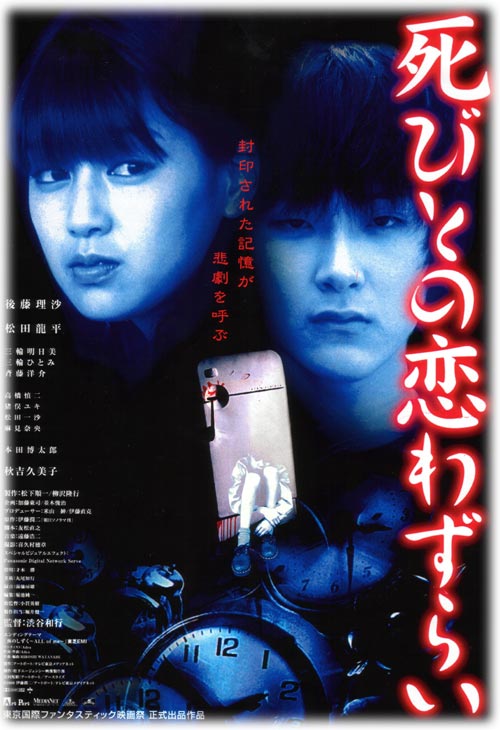
 What is it about ghosts and high school girls? Maybe it’s shrines and graveyards mothers ought to be warning their daughters about rather than moody guys with motorbikes. Anyway, the somewhat salaciously titled Love Ghost (死びとの恋わずらい, Shibito no Koiwazurai) is not quite the film it claims to be, though it is haunted by the violent spirit of strong emotion. Innocent high school romance is suddenly infected with the cruel complications of adult love, mental illness, and suicide as a strange curse descends over a previously peaceful town.
Taking on the classic “mysterious transfer student” role, protagonist Midori (Lisa Goto) is about to set off for her first day in a new school after moving back to her home town ten years after her father left the family for another woman. Midori is frequently plagued by a recurring nightmare in which she indulges in the local practice of Tsuji-ura whereby girls wait near the temple and ask a passerby what they think their chances are with their current crush. Only, Midori’s visions have started to bleed into the real world and often end in a storm of fire and blood. For this reason she finds herself unable to enter the school building but is rescued by new classmate, Suzue (Asumi Miwa), who shows her another way in. On the way the pair meet clueless popular boy Kotaro (Takahashi Shinji) who is instantly smitten with the new girl, much to Suzue’s consternation.
Kotoro is, to put it mildly, a little on the dim side and either hasn’t noticed that the entire population of the school, including his good friend Suzue, is love with him or is just refusing to acknowledge it. Romance is the major occupation of the school girls who spend their break times reading tarot cards and talking about Tsuji-ura and the handsome boy dressed in black who often appears there, be he a force for good or ill. Midori isn’t really interested in her classmates but is captivated by the near silent boy at the back of the room whom everyone else is ignoring. She eventually recognises him as a boy she knew before she left and used to play with all the time. Meeting up on the roof, Ryusuke (Ryuhei Matsuda) reveals he’s been waiting for her to come back all this time. However, there is definitely something strange about this quiet boy, not to mention the ever expanding mould stain in Midori’s bathroom…
There’s a lot of obviousness in Love Ghost, but this is later revealed to be a master stroke undercutting the extreme reversals of the big reveals. Madness quickly takes hold in the school, fortunately it does not claim many victims though those who do succumb find themselves cutting their own throats out of sense of heartbroken helplessness unable to accept the fact that their romantic destinies are not the ones they would have chosen.
On the one hand there are Midori’s recurrent memories of her idyllic childhood playing with Ryusuke in beautiful green, sunlit forests which later gives way to tentative teenage romance – a perfectly natural development. However, that’s set against the increasing strangeness of the environment with its oddly ethereal atmosphere. The other girls are experiencing a dangerous kind of romantic madness turning to obsessive, unrequited love yet Midori’s own experience is seemingly a gentle and innocent one. Of course, there’s more to it than that, and Midori’s world is also “unreal” in a hundred other ways. As usual, her link to the curse is tied up with her long buried past which must once again be exposed to the light in order to move forward and finally bid goodbye to the ghosts of forgotten cruelty.
Love Ghost’s central curse is a little confused and never satisfactorily explains itself. There might be more to say about the way the intense emotions of adolescence don’t always dissipate on reaching adulthood in the way they are supposedly intended to, or about the obsessive preoccupation the schoolgirls have with romance, but Love Ghost isn’t interested in any of that. In fact, it’s a little confused what it is interested in but at heart its a series of intertwined ghost stories as Midori haunts herself whilst still alive with memories of the childhood cruelly ripped away from her by the selfish actions of a stranger which have also left her with a deep seated sense of unresolved guilt. An imperfect exercise, Love Ghost has little to recommend it aside from providing an early outing for later star Ryuhei Matsuda yet does offer a poetic, if poorly put together, take on a teen ghost story that is like to offer more to fans of supernatural romance than of J-horror gore.
Love Ghost is available on R1 US DVD from Tokyo Shock.
US release trailer:
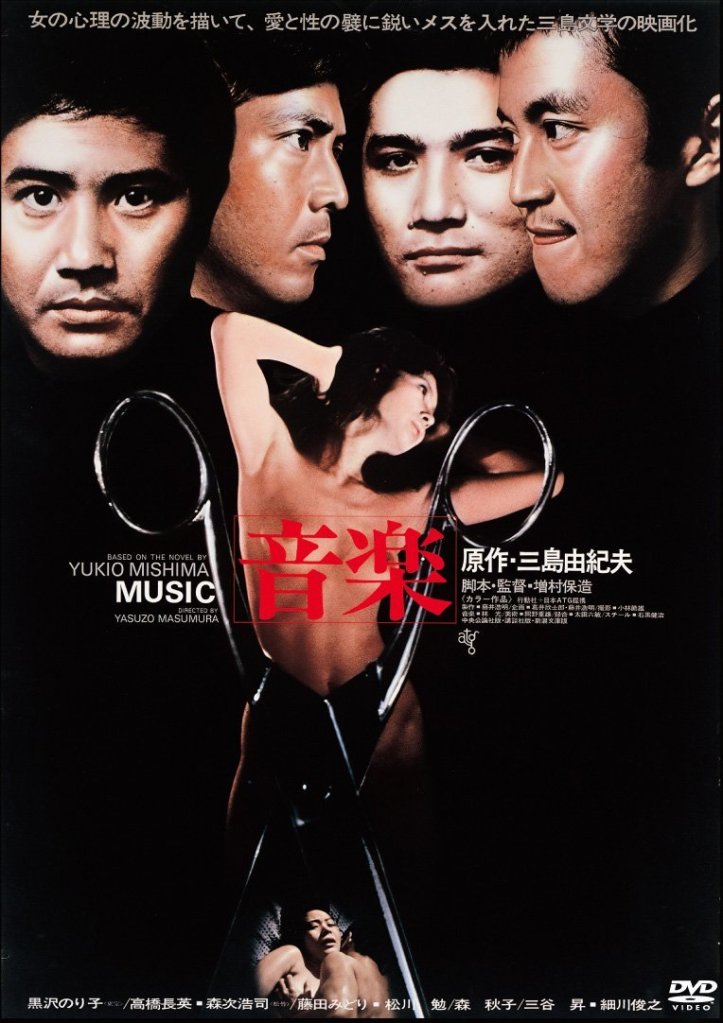 If the under seen yet massively influential director Yasuzo Masumura had one recurrent concern throughout his career, passion, and particularly female passion, is the axis around which much of his later work turns. Masumura might have begun with the refreshingly innocent love story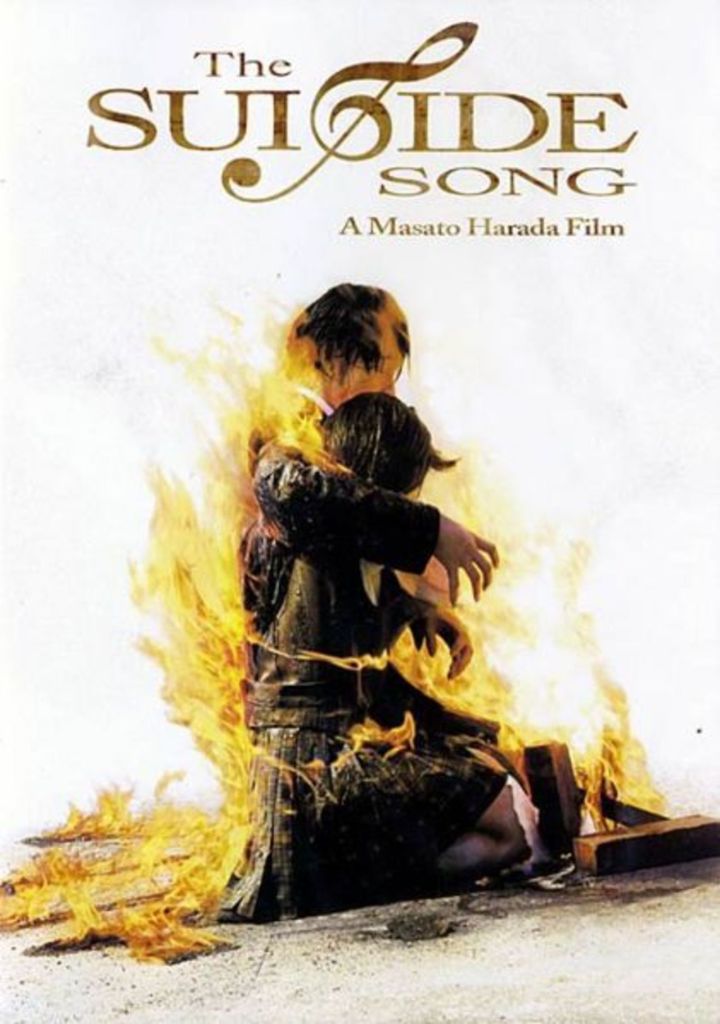
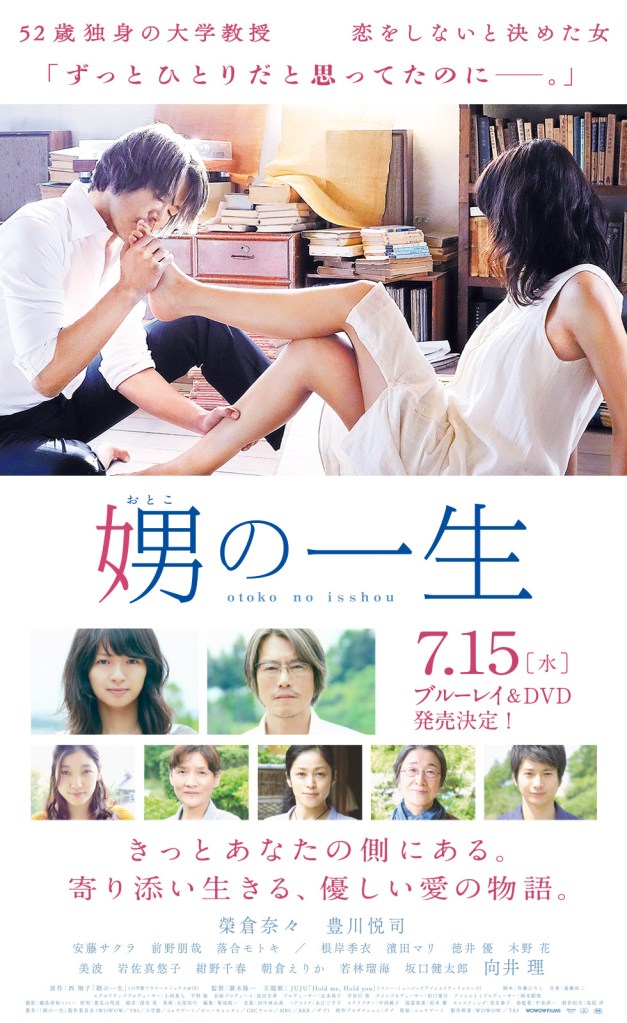 Ryuichi Hiroki has one of the most varied back catalogues of any Japanese director currently working. After getting his start in pink films and then moving into V-Cinema, Hiroki came to prominence with 2003’s Vibrator – an erotically charged exploration of modern alienation, but recent years have also proved him adept at gentle character drama. Her Granddaughter (娚の一生, Otoko no Isshou), though coming with its own degree of strangeness, is another venture into the world of peaceful, if complicated, adult romance.
 “The Rainbow Man” sounds like quite a cheerful fellow, doesn’t he? How could you not be excited about a visit from such a bright and colourful chap especially as he generally turns up after the rain has ended? Daiei have once again found something happy and made it sinister in this 1949 genre effort which is sometimes called Japan’s first science fiction film though there isn’t really any sci-fi content here so much as a strange murder mystery with a weird drug at its centre.
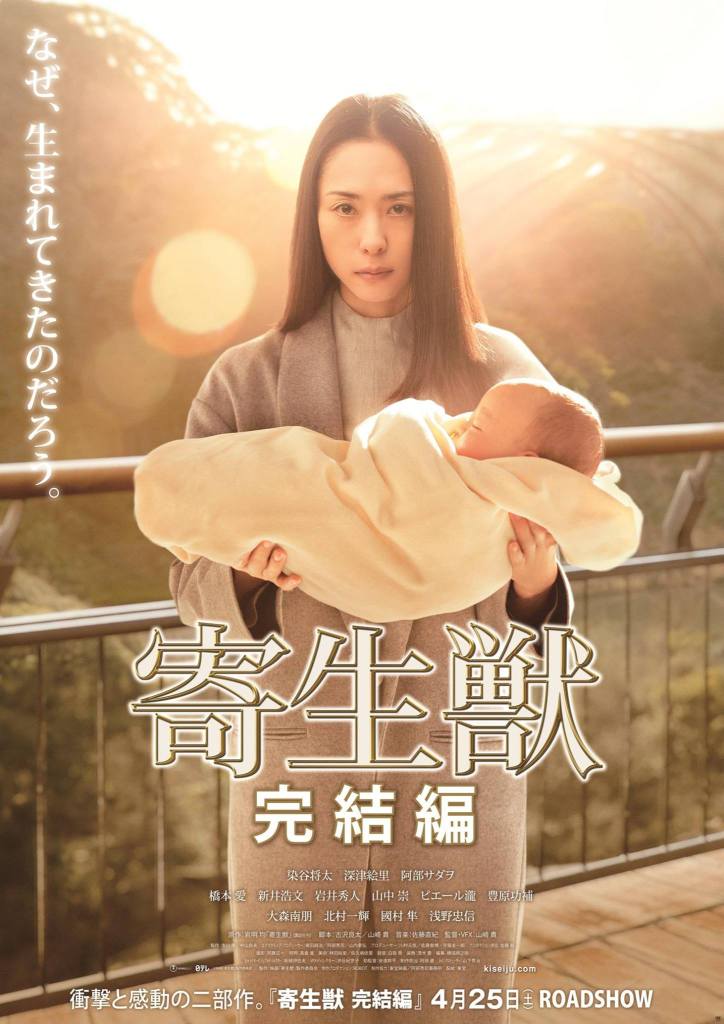 Review the concluding chapter of Takashi Yamazaki’s Parasyte live action movie (寄生獣 完結編, Kiseiju Kanketsu Hen) first published by
 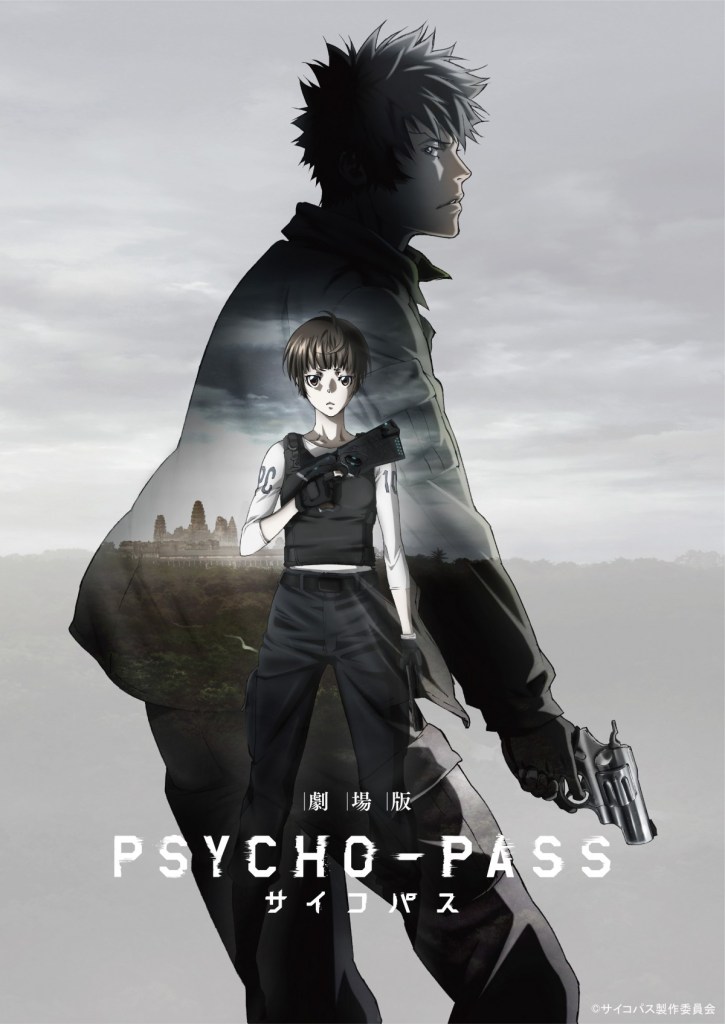 The Japan of 2116 is a peaceful place. Crime is at an all time low thanks to the Sybil system which monitors the nation’s citizens issuing them a “Crime Coefficient” rating assessing how likely they are to commit a crime. When a potential criminal’s Psycho-Pass reaches an unacceptable level, the Public Safety Bureau are called in to hopefully put a stop to any criminal activity before it has the chance to occur.
 Masamune Shirow’s cyberpunk manga Ghost in the Shell burst onto the scene in 1989 and instantly became a genre classic. Mamoru Oshii then adapted the manga into a much lauded anime movie in 1995 which almost came to define cyberpunk animation even if it emerged towards the end of the genre’s heyday. A sequel, Ghost in the Shell: Innocence followed in 2004 as well as a TV anime spin-off Ghost in the Shell: Stand Alone Complex. Now with the 20th anniversary of the original animated movie, the series has yet again been adapted into a series of entirely new anime OVAs under the name of Ghost in the Shell: Arise. Ghost in the Shell: The New Movie (攻殻機動隊 新劇場版, Kokaku Kidotai – Shin Gekijoban) is the big screen outing of this latest incarnation scripted by Tow Ubukata who also produced the very GITS influenced Mardock Scramble.
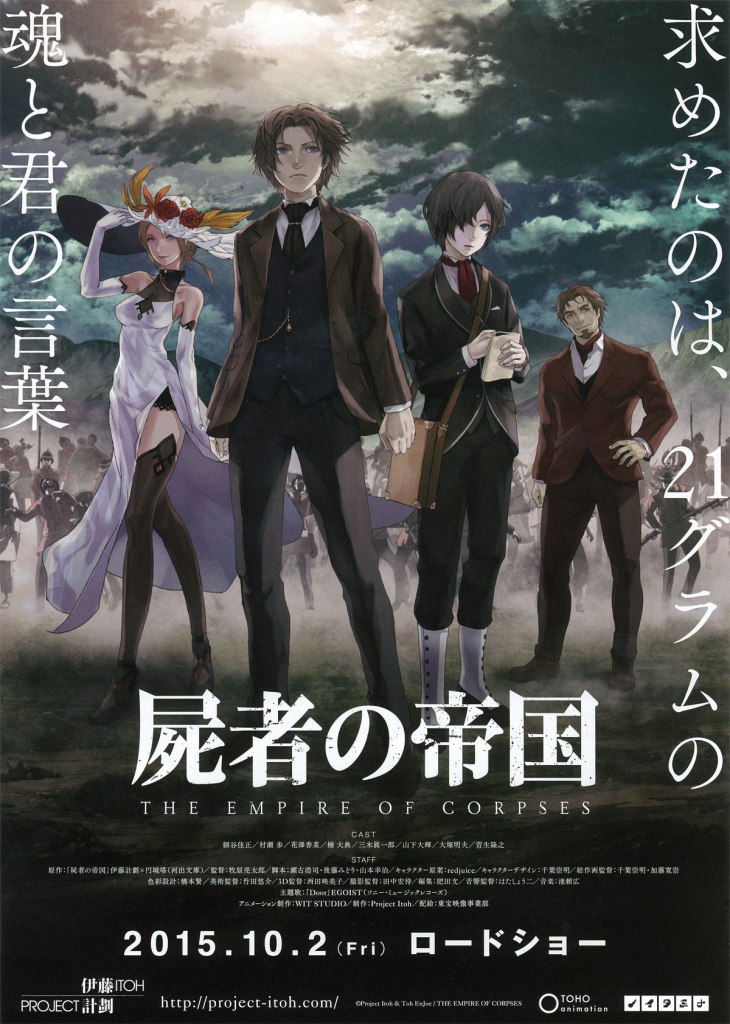 Empire of Corpses (屍者の帝国, Shisha no Teikoku) is what would happen if someone’s vast library of Victorian literature was destroyed in a fire and then someone tried to put all the not too singed pages back together based on their knowledge of international pop culture. Inspired by Project Itoh’s novel of the same name and the first of three planned adaptations of his works, Empire of Corpses is a very specific kind of absurd, boys own action adventure based around the idea of empire supported by a zombified proletariat.
 Harmony – the word itself sounds peaceful. A coalescence of sympathetic sounds, the feeling of wholeness and happiness. However, if given the choice, would you like to live in a world of peace and plenty in which your body is almost government property and your personal freedom is limited in favour of ensuring the survival of the species, or would you rather take your chances with the world as it is complete with its violence, sadness and pain if it meant you could be free to live in which ever way you see fit? Michael Arias’ adaptation of the Project Itoh novel addresses just this question in all its complexity as utopia turns out to have a heavy entrance fee.
