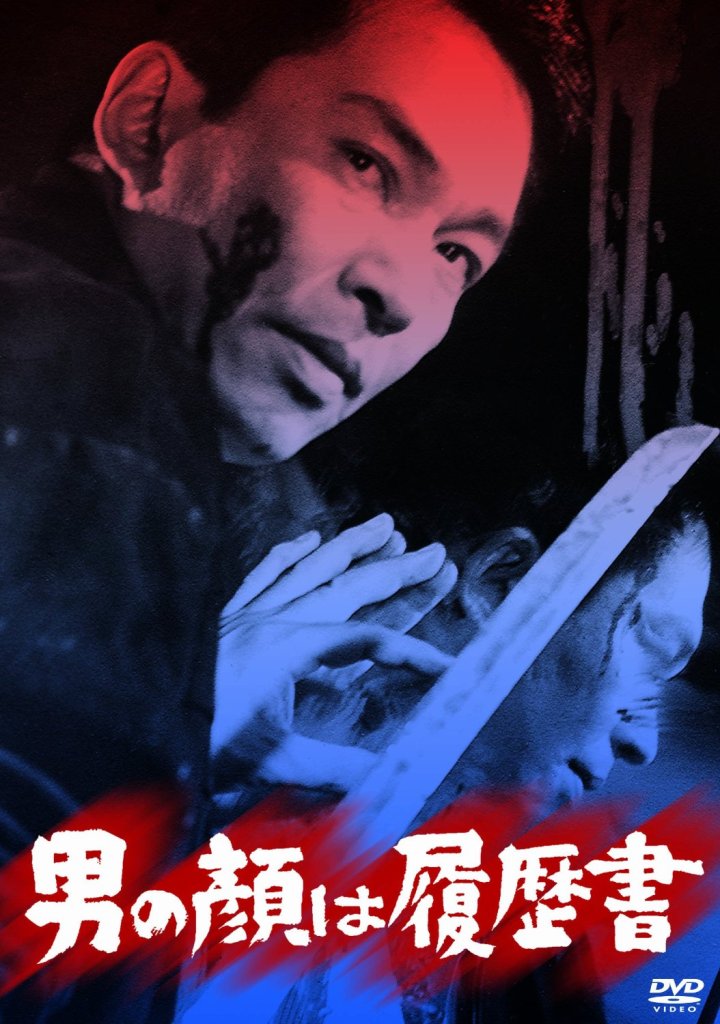
By a Man’s Face Shall You Know Him (男の顔は履歴書, Tai Kato, 1966)

by a man's faceJapanese cinema has not been as shy as might be supposed in examining uncomfortable topics concerning the nation’s mid 20th century history but perhaps prefers to tackle them from a subtle, sideways viewpoint. By a Man’s Face Shall You Know Him (男の顔は履歴書, Otokonokao wa Rirekisho) is, in essence, a fairly straightforward gangster pic – save that the rampaging gangsters are a mob of “zainichi” Koreans rather than post-war yakuza or petty hoodlums. Less about what it is to be an outsider or the quest for identity in second generation immigrants, Kato’s film is about what it says it is about – a man’s face.

The film begins in the contemporary era when morose doctor Amamiya is contemplating a transfer to an island posting which proves unappealing to him. Shortly after, a badly injured man is brought in following a car accident and, though Amamiya originally suggests the man be taken to a hospital as his chances of survival are slim, he changes his mind after lifting the sheet and recognising the man on the stretcher. The two men go back a long way – firstly to the battlefield where “Shibata” was a private in the army serving alongside Amamiya and secondly to an incident which dictated the rest of Amamiya’s life when he ran the local GP’s office and also happened to own the deeds to some land a bunch of Korean gangsters wanted to get their hands on. Thanks to their earlier association, “Shibata” now returning to his Korean name “Choi” was able to assist Amamiya in mitigating the gangster onslaught as he himself was a member of the gang.

Perhaps more to do with the production styles of the time, all of the “Korean” gangsters are played by Japanese actors and only ever speak Japanese even to each other. Nevertheless, they all want “revenge” for Japan’s treatment of Korea and Koreans during the years of occupation and warfare. In 1949 Japan is still in ruins and the gangsters see this as a prime opportunity to finally take Japan apart and presumably also profit in the process. The leader of this particular gang has set his sights on taking over the “New Life Marketplace” (a pregnant title if ever there was one) with the intention of turning it into an “entertainment district”. His guys, including one totally crazy foot soldier played by a particularly manic Bunta Sugawara, run roughshod over the town until finally raping and murdering Japanese women which they dismiss as par for the course given Japan’s treatment of Korean women over the past thirty years.

This is not a subtle examination of Korean Japanese relations in the post-war environment, these are gangsters and movie gangsters are generally all the same. They say they want to destroy Japan but ultimately they want what all gangs want – to control the area and extort maximum profit. Choi, and the young female Korean Gye, were born in Japan, have never even been to Korea and can’t really claim to have a great deal of Korean cultural knowledge. All they have are their names, now reclaimed after Japan’s wartime defeat. Throughout the war years, Choi used the Japanese version of his name “Shibata” and tried to pass himself off as Japanese (apparently successfully) but is now committed to embracing his Korean heritage even if it once again sees him placed in a subjugated position.

Amamiya returned from the war and took over his father’s medical clinic in his home town. He’s cynical and apathetic. He treats the people who come in to his clinic without discrimination but he doesn’t care very much about the area either. The only thing he really cares about is his nurse, Maki, with whom he’s been having a passionate affair and seems to be deeply in love. Amamiya makes an enemy of the Koreans early on when he fights off some guys who are hassling his nurse proving that he’s no pushover. The title deeds for the land the market is built on also belong to Amamiya who is unlikely to surrender them. The townspeople first turn to the regular Japanese yakuza who are unable to help with their currently depleted manpower leaving Amamiya as their only form of salvation.

When Amamiya’s hotheaded brother turns up and starts causing all sorts of trouble with the Koreans as a way of avenging Japan’s wartime defeat, Amamiya is dragged into a battle he had no desire to fight. Shunji was too young to fight in the war but is a representative of the younger generation who can’t accept the new post-war society and what they see as their older siblings failure to support the nation. Though a strong attraction develops between Shunji and Gye, their love story becomes another casualty of the harsh post-war world. Reluctantly, Amamiya becomes the last defender of these put upon people leading to a High Noon style solo stand against the Koreans whilst the terrified populace look on in fear and hope.

Kato creates a colourful world rich in symbolism such as the early scene in which Choi’s red blood drips down the white sheet accidentally recreating the Japanese flag. Amamiya’s prominent scar becomes both a plot point and a symbolic motif as it echoes the film’s title in bearing out his “history”. A man’s life is indeed written on his face, and Choi’s wife’s urging to her daughter that they watch Choi’s face as he fights for his life is another indication that one’s true nature is seen most clearly in times of duress. The film closes on an ambiguous note, in one sense, but closes its thematic line neatly. Amamiya faces a choice and no choice at the same time but through his face we know him and so we understand.
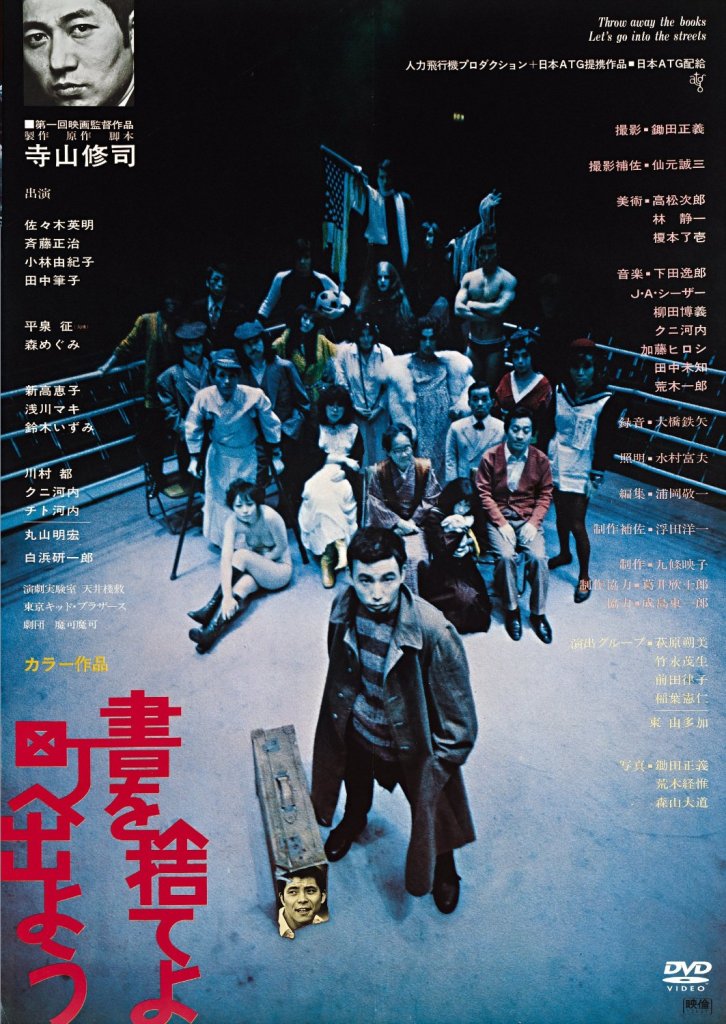


Throw Away Your Books, Rally in the Streets (書を捨てよ町へ出よう, Shuji Terayama, 1971)

throw away your booksCaught in a moment of transition in more ways than one, Throw Away Your Books, Rally in the Streets (書を捨てよ町へ出よう, Sho o Suteyo Machi e Deyo) is a clarion call to apathetic youth in the dying days of ‘60s youthful rebellion. Neatly bridging the gap between post-war avant-garde and the punk cinema of the ‘70s and ‘80s, Terayama experiments gleefully with a psychedelic, surreal rock musical which is first and foremost a sensory rather than a cerebral experience.
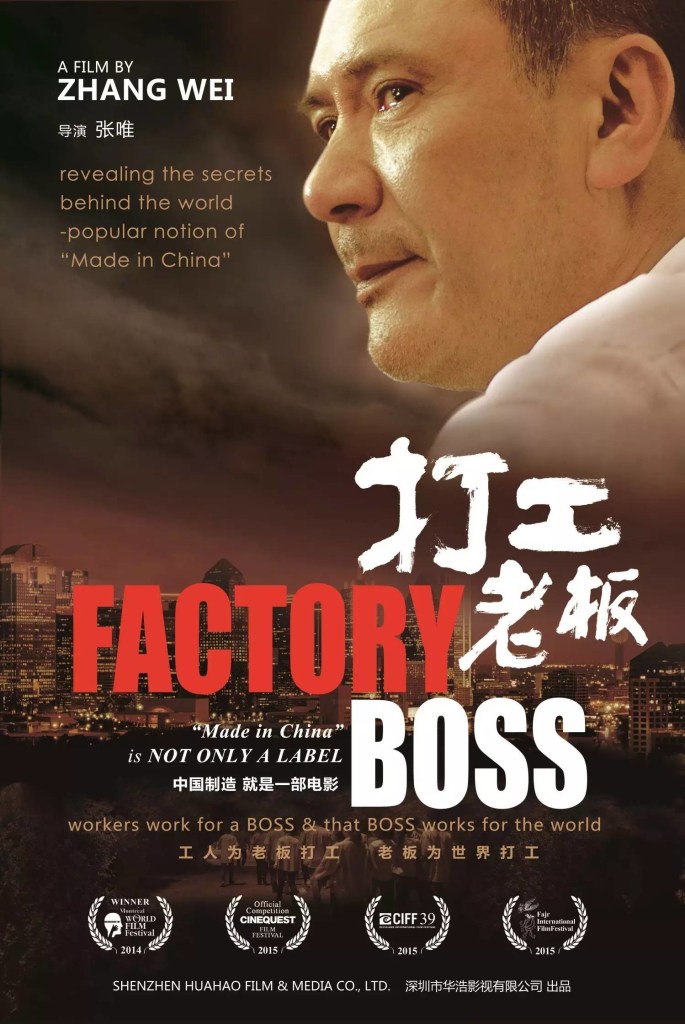
The film opens with an uncomfortably long black screen which has a subtle soundscape running behind it. Just when you begin to think there’s something wrong with the video, a young man dressed in a trench coat (collar turned up) appears and berates our idiocy for haven fallen for the trick. What are we doing here, sitting in a dark room waiting for something to happen when the real action is, and always has been, out in the streets? We’re trapped in here – we’re the ones inside the screen, the boy is free to smoke and we are free only to watch him do it.

It becomes clear that we are also trapped within the realm of his unrealisable dreams. He worked at a factory but he didn’t like it so he quit. He wanted to be a boxer but it frightened him so he gave up. He hears a story of a Korean boy who built a glider and tried to fly home on his own only to crash somewhere over the ocean. He envies the moments of blue skies the Korean boy flew through as the brief fulfilment of a dream. From this point on he builds a glider in his mind but is perpetually unable to launch finally seeing it too go up in flames.

The boy says he comes from a dead end place where he lives with his unemployed father, needy grandmother and younger sister whose attachment to her pet rabbit is beginning to raise eyebrows. He finds another outlet for his youthful masculinity in the local football team (football is the most manly because the ball is bigger) where an older brother substitute tries to introduce him to the better things in life including sending him to a local prostitute to “make him a man” and teaching him about “sophisticated” western dining and marxist discourse. Throughout all of this the boy remains alone, perpetually observing from the outside but never successfully finding his way in. There’s a repeated riddle – what has one way in and two ways out? We expect an answer that carries some profound weight about the nature of human existence but, no, after all it’s just a pair of trousers.

Terayama travels from black to white – beginning with the bleak opening which is all darkness and silence, he takes us to an ending of blinding white light and the eclipse that will come to us all. The boy tells us the the film will be over soon and no one will remember him – that’s all that’s left to show, a blank white screen and the images of men who will shortly disappear. However, this is not the end though we see the white screen interrupt us a few more times, the boy has another monologue in which he tells us how the film has consumed him so that the lines between reality and fantasy have become indistinguishable. The film crew have become his family, the actor playing his father is, in a sense, his father, the 28 day shoot has become an entire universe which lives and dies inside the film. A film is something which only lives in the dark, when we flick on the lights, the magic is broken and it dies.

The boy says he loved this world but does not love the cinema yet the film is rife with cinematic references and Terayama is always careful to remind us we’re watching a film by deliberately making us aware of the camera. He calls out Polanski, Oshima, and Antonioni by name and even sings a love song to Ken Takakura as well as pledging his devotion to female leading yakuza actress Junko Fuji. Yet the world of the film is totally its own encompassing proto-punk rock songs, surrealistic imagery and inserted street art quoting artists and dreamers including the Russian futurist poet Mayakovsky. As in his other work Terayama also employs Godard style colour filters from the violent green of the boy’s family life to the standard colouring of the football club and the purple tinged insert scene in which a group of hopefuls read out classified ads featuring men seeking men, missing wives and mothers, and finally a couple of obvious scams.

Way ahead of its time and successfully anticipating the anarchic pop-punk movement which was to come some years later Terayama’s youthful masterpiece remains one of the most important if inscrutable films of the era. Sadly, Terayama died at the young age of 47 in 1983 walking into his own blank white screen but even in this first feature length effort he imprinted all the pain and rage of his times into a story of a young man lost and confused in the modern consumerist era. It calls on youth to awaken, go out into the streets and do something, anything, but also has little faith that it will. We’ll go on watching Ken Takakura to feel like a tough guy before going back to being vaguely disappointed with our circumstances but doing nothing much of anything at all about it. We too, live only in the film, inside the dream, until the screen burns white and our dreams dissolve with it.


This trailer was created for a specific film screening (The North Star Ballroom is where the screening took place) but does have subtitles. It’s a little NSFW though, be warned.

Factory Boss (打工老板, Zhang Wei, 2014)

factory bossGenerally speaking, capitalists get short shrift in Western cinema. Other than in that slight anomaly that was the ‘80s when “greed was good” and it became semi-acceptable to do despicable things so long as you made despicable amounts of money, movies side with the dispossessed and downtrodden. Like the mill owners of nineteenth century novels, fat cat factory owners are stereotypically evil to the point where they might as well be ripping their employees heads off and sucking their blood out like lobster meat. Zhang Wei’s Factory Boss (打工老板, Dagong Laoban) however, attempts to redeem this much maligned figure by pointing out that it’s pretty tough at the top too.
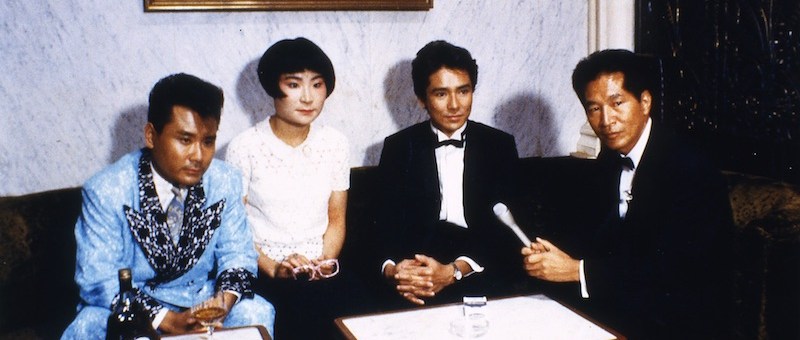
Shenzhen used to have over 1000 toy factories, but following the worldwide financial crisis, there are barely 100 left. Dalin is one of the lucky ones still holding out, if just barely. The employees haven’t been paid in a couple of months and there are debts outstanding which are only being held at bay thanks to a series of promises. The boss, Lin Dalin, has negotiated a massive deal to manufacture a large order for an American company which just might save them but he’s also biting off a little more than he can chew. The workforce are starting to get antsy – they’ve already burnt a car on the forecourt and some are talking about a walkout. To get this order through he’ll have to ask for even more from his already over stretched employees.

Just around this time, a young, ambitious reporter has developed a bee in her bonnet about workers’ rights at the local factories and has taken an undercover job at Dalin hoping to expose some of its shortcomings to the outside world. What she finds is worse than she’d ever imagined – faulty ventilation systems, air thick with the sickening smell of melting plastic, illegal “overtime” schedules, no breaks, shortened lunch times and a culture of shame and bullying intended to cow workers into playing along.

The film encourages us to see Lin as a generally “good” person. It says he wasn’t like this prior to the financial collapse and that it’s the current environment that has turned him into a ruthless exploiter of the “tools” at his disposal – i.e. his employees. Following on from the communist system, factories are still run like work groups where the employee base becomes a surrogate family with everyone living in shared workers accommodation on the complex. The workers also get lunch at the factory (but this comes out of their final pay).

Lin, like a feudal lord, sees himself as a paternal figure who has a duty to protect these people, but this means ensuring the factory’s survival. This is how he justifies his increasingly exploitative behaviour to himself, that if the factory goes under all of these people, and some of them are now old having worked there for 25+ years, will lose their jobs and with all the other factories in the same position, they will be left with nothing.

However, though Lin never behaves in an extravagant or intimidating fashion, it is also true that he lives all alone in a mansion drinking imported wine and chatting to his daughter via a shiny macbook while she studies overseas. He complains there’s little profit in his business these days, but he doesn’t seem to be tightening his own belt while his employees worry about their futures.

One of Lin’s friends has sold his local factory and relocated to Burma where the labour is even cheaper and there are even fewer labour laws. Lin is reluctant because he wants to make his nation great again and reverse the meaning attached to the phrase “Made in China” whilst also helping to build a better future for the people under his care but he is also at the mercy of market forces.

Thanks to a late in the game change of sympathies from our lady reporter, we’re pointed towards the real villains which would be the international corporations who manufacture in China because it’s cheaper but are squeamish about the country’s treatment of the working classes. These companies say they enforce strict conditions and make personal factory inspections, but their commitment is only really halfhearted. They know the reason why the labour is so cheap, but they drive the prices down anyway preaching against sweatshops but knowing, economically speaking, that there is no Earthly way these targets can be met on time and on budget with workers’ rights fully respected to the degree stated in their own mission statements. As soon as labour laws are revised in China and wages necessarily rise, they will simply switch to using cheaper labour forces in less developed parts of the world.

To be frank, this is just capitalism. A business is a business and each will constantly be looking to maximise their own profit margin. They will push and push until they feel resistance, and then they will push some more to find out how much their opponents will push back. No matter which way you spin it, the little guys will pay. Yes, Lin too is a victim, but it’s a little rich to pretend the consequences for a man like him are the same as they are for his employees. China has moved from the “Iron Rice Bowl” system of guaranteed lifetime employment to the relative insecurity of global capitalist society but its modernisation has been so rapid that the base line workers have been left with the rawest deal – poor pay and conditions coupled with the constant pressure of possibly being let go or being forced into exploitative arrangements just to keep a job which barely feeds you.

Factory Boss is an interestingly constructed look at the little seen life of the everyday factory which has a healthy level of naturalistic feeling detail. Zhang does however fall into a slightly didactic approach, particularly in his hagiographic depiction of Lin, and some of the later monologues appear oddly theatrical in contrast to the straightforward nature of the rest of the film. He catches China in the midst of its transformation, trapped in a moment of indecision as it finds itself cast in the role of middle man offering its services in the service of the enterprise of others while the individual dreams of men like Lin who long to set up on their own are crushed by forces beyond their control. Redeeming the figure of the fat cat is a nice a idea and Zhang certainly succeeds in casting Lin as a decent man corrupted by circumstance but his central message that the middle man needs love too and the real mean daddies are greedy corporate overlords is one which, true as it may be, can’t help feeling a little trite.


Reviewed as part of the Asia House Film Festival 2016.

No More Comics! (コミック雑誌なんかいらない!, Yojiro Takita, 1986)

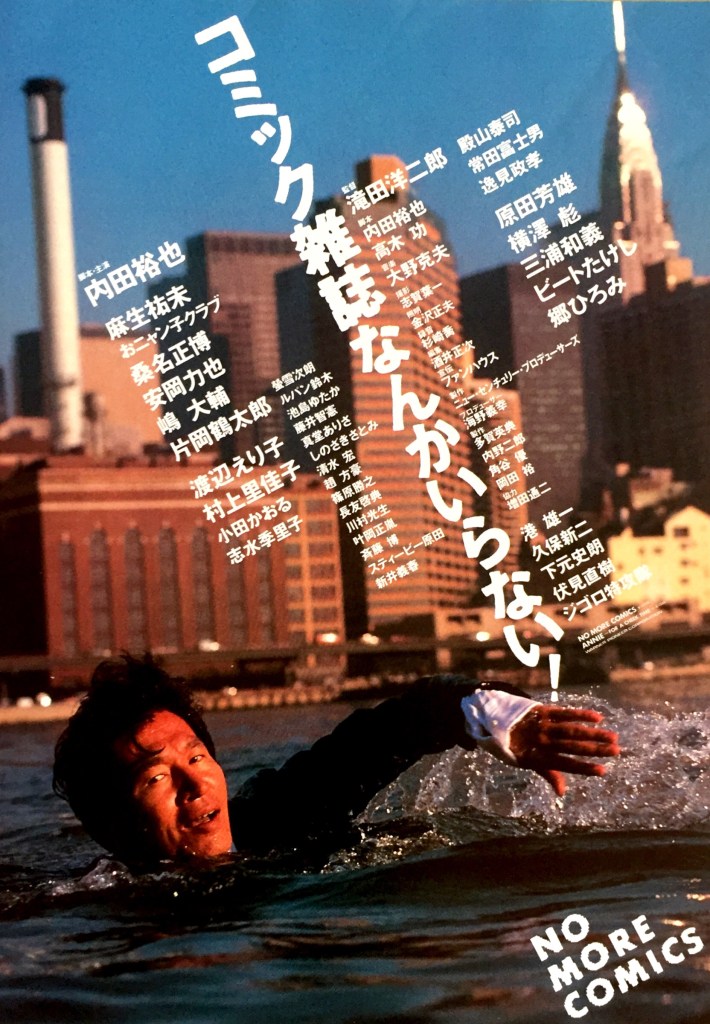
No More ComicsThe word “paparazzo” might have been born with La Dolce Vita but the gossip hungry newshound has been with us since long before the invention of the camera. Yojiro Takita’s 1986 film No More Comics! (コミック雑誌なんかいらない, Komikku zasshi nanka iranai AKA Comic Magazine) proves that the media’s obsession with celebrity and “first on the scene” coverage is not a new phenomenon nor one which is likely to change any time soon.
Kinameri (Yuya Uchida) is a hack reporter on a gossipy news magazine programme which reports on all the sordid personal details of the private lives of celebrities. In a bit of neat meta commentary, we first meet him when he’s doggedly following real life top actress of the time Kaori Momoi (making a brief self cameo) as she tries to board a plane at the airport. Kinameri keeps on asking his inappropriate questions about her alleged relationship with a screenwriter whilst Momoi successfully ignores him before finally reaching the relative sanctuary of the security cordon preventing Kinameri from actually boarding the plane with her. Of course, his interview attempt has failed but he plays the footage on the programme anyway justifying her silence as a lack of denial and that he has therefore “proved” that the rumours are true.

Kinameri is both respected and ridiculed by his colleagues who praise his probing journalistic techniques which see him doggedly refusing to give up on a story but also find his intensity amusing seeing as he’s mostly chasing cheating spouses rather than uncovering the next great political scandal like his heroes who exposed Watergate. Having graduated from a top Japanese university in political sciences, this is far from the line of work Kinameri would want to be doing and its vacuity coupled with his own failed ambitions push him further and further into a spiral of self loathing and depression.

It’s not only celebrities either. Even if you could make a case that those in the entertainment industry have entered into a pact with the media and are, therefore, fair game, civilians and particularly victims of crime should be off limits. Kinameri will literally stop at nothing to scratch a up a story including attending the funeral of a murdered 14 year old girl and quizzing her mother over the rumours that the girl had been engaging in prostitution to try and elicit some kind of social commentary about the youth of today. After his programming starts to decline in popularity he’s relegated to the late night slot which involves visiting various shady places such as strip clubs, snack bars that are actually yakuza hang outs, and even the set of a porn film where he gets a cameo feeling up the lead actress in the front of a convertible.

While all of this is going on, Kinameri is also receiving some bothersome cold calls offering to sell him gold as an investment proposal. His elderly neighbour is visited by a woman from the company and does actually buy some but Kinameri smells a rat and his journalistic instincts kick back in. His bosses at the network aren’t convinced though – dodgy gold dealers doesn’t sound like a ratings winner after all and even when Kinameri agrees to even shadier assignments so he can pursue his leads, they still aren’t really behind him. Eventually they catch up but it’s almost too late.

Kinameri keeps doing what he’s paid to do, even if he clearly despises everything about it. Asking trivial and ridiculous questions and being ignored anyway, conducting a vacuous meet and greet with a gang of up and coming idol stars, even posing as a gigolo – there are no lengths to which he will not sink in pursuit of his story. By the film’s finale he’s still the frontline reporter, looking on while a vicious yakuza (played by a young Takeshi Kitano) commits a brutal murder right in front of the cameras. No one is moving, no one is trying to stop this, everyone is manoeuvring to get the best coverage. Kinameri has had enough and, with a look of rage and contempt on his face, he launches himself through the widow in a last minute attempt to make a difference but once again, lands up flat on his face and, finally, excluded from the action.

Years ahead of its time, No More Comics! takes an ironic look at invasive media coverage of celebrity gossip which clogs the airwaves while the real story is wilfully ignored. Ironically, Kinameri even becomes something of a celebrity himself, well known for his dogged interviewing style. He receives countless answerphone messages from “fans” (somehow ringing his personal phone number) either praising his efforts or berating him for not pushing his targets harder. When a young aspiring journalist stops him in the street and asks for advice, Kinameri doesn’t even answer but just walks away with a look of contempt and sadness on his face. Finally, after his mad dash into a crime scene in the final reel, he becomes the news himself. All of his fellow reporters suddenly want to know “what happened”, “what was it like”, “did you go in to save him or for the story?” etc. Still stunned and probably in need of medical attention, Kinameri looks directly into the camera, puts his hand across the lens and states “I can’t speak fucking Japanese”.

Filled with rage and shame, No More Comics! is a Network-esque satire on the world of live broadcast reporting exposing the seedier sides of journalistic desperation. Ahead of its time and sadly still timely in the age of 24hr coverage which mainly consists of the same trivial stories repeated ad nauseum, its messages are needed more than ever.


Unsubtitled trailer:


Wandering Home (酔いがさめたら、うちに帰ろう, Yoichi Higashi, 2010)

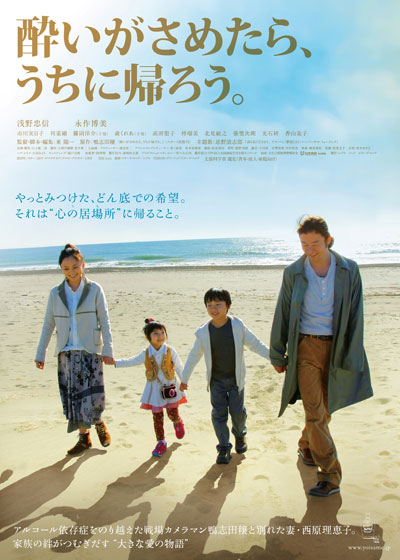
wandering homeAlcoholism is not a theme which has exactly been absent from the history of cinema. From the booze drenched regret of Days of Wine and Roses to the melancholic inevitability of Leaving Las Vegas and the disdaining irony of Barfly, there has been no shortage of unsympathetic portrayals of drunkenness when it comes to the silver screen. Yoichi Higashi’s Wandering Home (酔いがさめたら、うちに帰ろう, Yoi Ga Sametara, Uchi Ni Kaerou) walks something of a middle road here as it embraces the classic “issue drama” mould but also aims for a naturalistic character study in adapting the true life memoirs of photojournalist Yutaka Kamoshida (husband of well known mangaka Reiko Saibara).
The film begins with a touch of magical realism as Tsukahara (Tadanobu Asano) literally falls off his barstool and has a vision of his wife and two children urging him to get up. Of course, they aren’t “real”. Tsukara lives with his mother after his marriage to a successful mangaka broke down due to his alcoholism. Returning home and ignoring his mother’s advice to get something to eat, Tsukarahara has another drink whilst swearing that this time he’ll be sober when he sees his kids but shortly after retreats to the bathroom to vomit where he experiences a massive haemorrhage and is taken to hospital. Things have already gone too far, he’s told he’s lucky to be alive and the next time this happens he will die.

Swearing to finally come off the booze, Tsukahara goes home but is immediately tempted by a side dish in a restaurant which contains alcohol. He makes the wise choice not to buy the vodka in the off-licence but eventually talks himself into buying beer which he drinks right away and then falls over and hits his head on the way home. His ex-wife, Yuki (Hiromi Nagasaku), and his long suffering mother have gone through this too many times before to even be disappointed. Eventually, they ship Tsukahara off to a residential facility in the hope that they can finally help him beat the booze for good.

Wandering Home is inspired by the real life story of a photojournalist which has also inspired a few other films including the following year’s Kaasan which told the same story from the point of view of Kamoshida’s mangaka wife. Therefore, the ending of this story might perhaps be known to you already but needless to say it isn’t an altogether happy one. The film doesn’t go into the reasons Tsukahara started drinking save for emphasising that it’s rarely one root cause that starts someone on the road to alcohol addiction. Tsukahara’s father had been an alcoholic and had also behaved violently in the home – something which Tsukahara despised and yet he ultimately became exactly like his dad. Having started to drink as a young teenager he drifted into an aimless life and then witnessed a number of traumatic events in his career as a photojournalist which also left their mark on him.

Though the film is never shy about the disruption Tsukahara’s drunkeness causes to his family, it mitigates the effects by casting them as surreal episodes such as the only scene in the film where Tsukahara is shown to be violent towards his wife in which another soot covered version of himself emerges from a zipper in his back to shout abuse and trash the place as his children retreat in horror to their bedroom. It’s not Tsukahara, it’s the alcohol, the film tries to say but actually lays the message on a little thick and often neglects the trauma that his behaviour is, in turn, causing to his own son and daughter.

That said, there is remarkably little animosity between Yuki and her ex-husband despite the way that he has behaved. Yes, the pair are divorced but Yuki is called right away when Tsukahara is taken to hospital and when she brings the children to visit him the couple talk warmly with no bitterness or recrimination. The children too are happy to see their father and do not seem afraid of him in any way at all.

Higashi does, however, fall into standard “issue drama” tropes and perhaps spends too much time exploring the rehab facility where Tsukahara is sent for treatment. Though hearing something of the other characters’ paths to alcohol dependency is enlightening, it can’t help but feel more like a public information film at times than the affecting character drama it should be. Small touches like Tsukahara’s longing for something a simple as being able to enjoy curry again like everyone else on the ward or his more frequent difficulties of being able to distinguish a hallucination from something he’s doing for real lend weight to the central story but they can’t quite save it.

Higashi’s tone is generally straightforward and mostly avoids melodrama or sentimentality except during the film’s ending. This sounds like a strength but turns out to be a weakness as something about Tsukahara’s plight never quite grabs the heartstrings in the way it seems to want to. The film’s unsentimental depiction of alcohol dependency and one man’s struggle to try and regain his place within his own family is an admirable one, but Wandering Home ultimately falls far short of its intended destination.


The Japanese dvd/blu-ray release of Wandering Home includes English subtitles!

Unsubtitled trailer:

Our Family (ぼくたちの家族, Yuya Ishii, 2014)

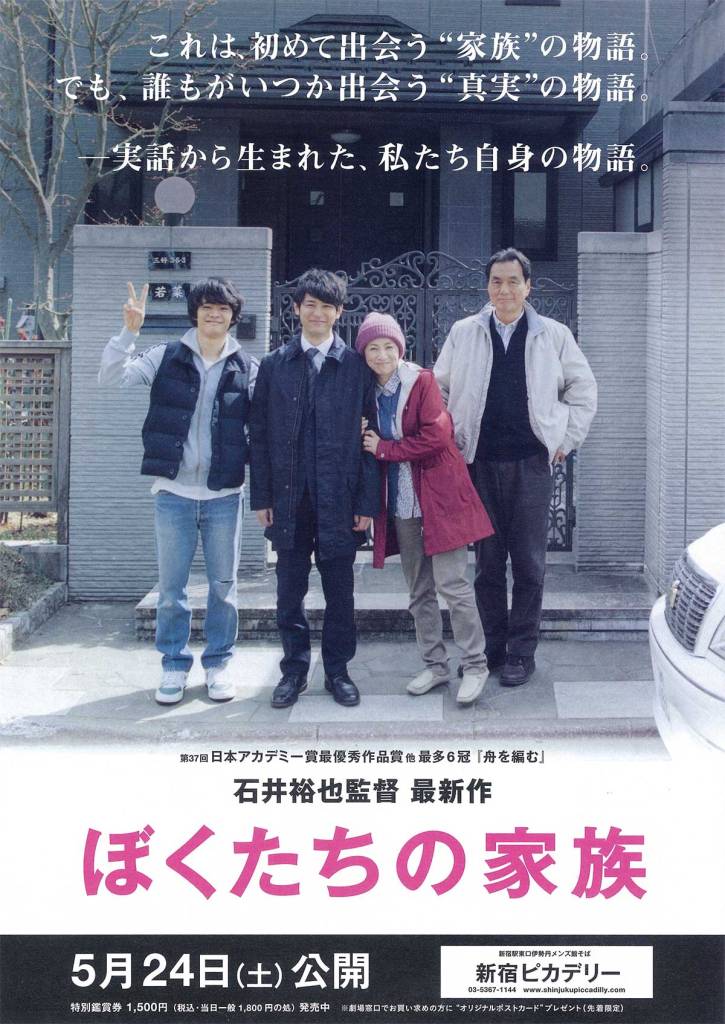
Our FamilyYuya Ishii’s early work generally took the form of quirky social comedies, but underlying them all was that classic bastion of Japanese cinema, the family drama. If Ishii was in some senses subverting this iconic genre in his youthful exuberance, recent efforts have seen him come around to a more conventional take on the form which is often thought to symbolise his nation’s cinema. In Our Family Ishii is making specific reference to the familial relations of a father and two sons who orbit around the mother but also hints at wider concerns in a state of the nation address as regards the contemporary Japanese family.
Reiko (Mieko Harada) is an ordinary Japanese housewife in late middle age with a husband still working and two grown up children. She’s been worrying lately that she seems to forget things and she also has periodic trances almost like someone pressed the paused button. This all comes to a head when she and her husband Katsuaki attend a family dinner with their in-laws to celebrate the news that their eldest son, Kousuke (Satoshi Tsumabuki), and his wife are expecting their first child. Having behaved quite strangely all night long, Reiko finally ends by repeatedly addressing her daughter in law by the wrong name and muddling up details about the baby. Reiko’s still young but the natural assumption is perhaps that she’s slipping into senility, dementia or possibly even Alzheimer’s but a visit to the doctor turns up something that no one was expecting as they’re eventually made to understand that Reiko may only have a week left to live.

This devastating news of course sends shock waves through each member of the family and not least Kousuke who’s just learned he’s about to become a father. One of the things Reiko was most distressed about was that she’d wake up one day and her family would have fallen apart. It seems she grew up in an unhappy home and was determined not to replicate the experience for her children. Perhaps she did have cause to worry as there were definite cracks in the foundation of this household even before Reiko’s illness in that youngest son Shunpei (Sosuke Ikematsu) seems to have had a strained relationship with both his father and his older brother. In contrast to the other two men, Shunpei, still a student, is much more laid back and easy going though his father perhaps thinks him feckless and irresponsible. He meets his mother sometimes and she lends him money behind the father’s back but they talk more like friends than a mother and son.

Perhaps this division between the men in her life has been playing on Reiko’s mind but there are other problems too. Part of the bubble generation, Reiko and Katsuaki have been living well beyond their means for years and have amassed considerable personal debt. In fact, Katsuaki remortgaged the house a while back and made Kousuke a guarantor on their loan. Their best option would be to file for bankruptcy but doing that would leave Kosuke liable for the return of the mortgage so Katsuaki is reluctant to pursue that option. Now that Reiko’s in hospital money is at the forefront of everyone’s mind as they contemplate paying not only astronomical medical fees but potentially also paying for a funeral too.

This financial strain spills over into Kousuke’s new family as, when talking to his wife about needing to help out his parents, Kousuke discovers that Miyuki is just about as unsupportive as one could be. She brands Kousuke’s parents as irresponsible dreamers still living in the bubble era and suggests their predicament is both their own fault and their responsibility as, at their age, they should have been saving money for just these kinds of situations. Scornfully she insists that she doesn’t want to be “that kind of parent” and retires to bed in outrage. Having also refused to even accompany Kosuke to visit his mother in hospital (seeming to miss the point that he might be looking for her support rather than asking for appearance’s sake), poor Kousuke is left all alone trying to deal with the impending birth of his child and death of his mother all in a few short weeks.

The crisis does, at least, bring the three men a little closer together as it requires a kind of unilateral action that pushes previous resentments and ill feeling into the background. Reiko’s condition also means that she says some things that she would never have revealed directly to her family which both hint at some of her suffering over the last thirty years but also the deep love she has for her them. Katsuaki is revealed as a fairly ineffectual man who cares deeply but is blindsided by his wife’s condition and unable to face the facts leaving the bulk of responsibility to his oldest son. This kind of family abnegation is anathema in Japan – one would never want to be a burden to one’s children but Katsuaki is now both financially and morally dependent on Kousuke. Kousuke himself is not quite mature enough for this level of responsibility despite his impending fatherhood and his younger brother Shunpei may appear indifferent to everything but is merely putting a brave face on things though he may be the most dependable (and emotionally intelligent) of the three.

By the end, there is a glimmer of hope. The family can be repaired if you’re willing to work at it which means being willing to face the problems together and without any secrecy. Everyone, including the older generation, has in some senses “grown up”, facing the future together having accepted themselves and each other for who they are. Like applying a touch of kintsugi, their glittering wounds have only made them stronger and made each refocus on what’s really important. Neatly moving into a more dramatic arena, Ishii proves he’s still among Japan’s most promising young directors able to marry an idiosyncratic indie spirit with a more mainstream mentality.


The Hong Kong DVD/blu-ray release of Our Family includes English Subtitles!

Unsubtitled trailer:

Chokolietta (チョコリエッタ, Kazama Shiori, 2014)

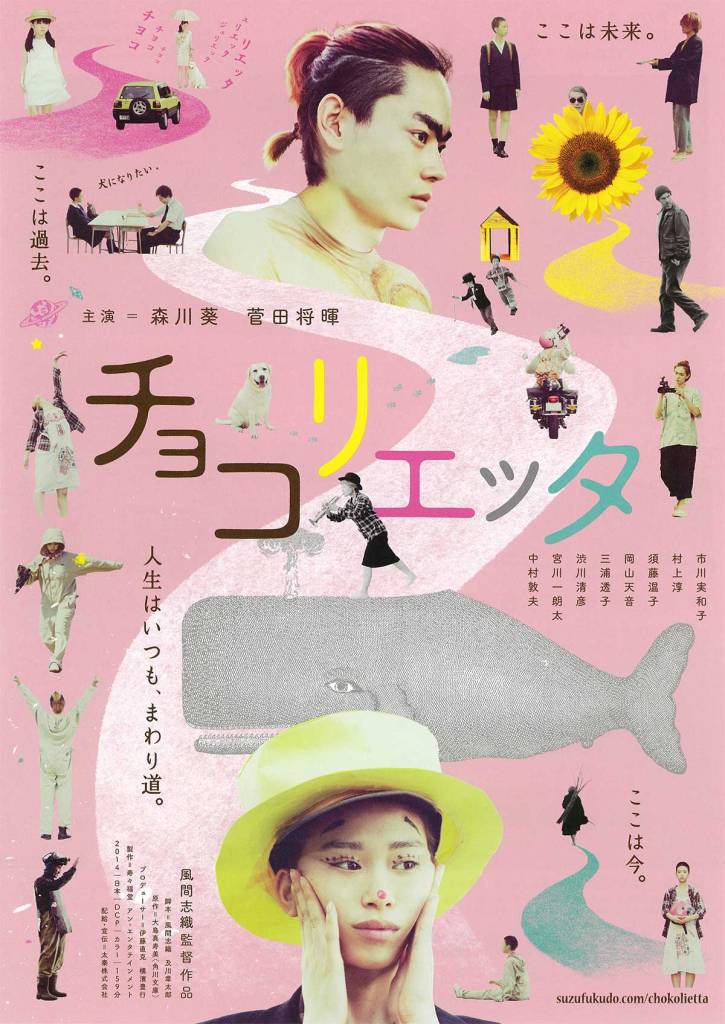
ChokoliettaWhen examining the influences of classic European cinema on Japanese filmmaking, you rarely end up with Fellini. Nevertheless, Fellini looms large over the indie comedy Choklietta (チョコリエッタ) and the director, Shiori Kazama, even leaves a post-credits dedication to Italy’s master of the surreal as a thank you for inspiring the fifteen year old her to make movies. Full of knowing nods to the world of classic cinema, Chokolietta is a charming, if over long, coming of age drama which becomes a meditation on both personal and national notions of loss.
The story begins in the summer of 2010 when five year old Chiyoko (Aoi Morikawa) is involved in a car accident that results in the death of her mother. Flash forward ten years and Chiyoko is a slightly strange high school girl and a member of the film club. Her parents, as far as she knows, were both big fans of Federico Fellini – in fact the family dog is named “Giulietta” after Fellini’s muse and later wife Giuletta Masina. As a child, Chiyoko also received the strange nickname of “Chokolietta” from her mother which also seems to be inspired by the star. Sadly, their Giulietta has also recently passed away removing Chiyoko’s final link to her late mother and once again forcing her to address the lingering feelings of grief and confusion which have continued to plague her all these years.

At this point Chiyoko goes looking for the DVD of La Strada they watched in film club last year which leads her to the now graduated Masamura Masaoka (Masaki Suda). Masaoka is an equally strange boy with possible sociopathic tendencies though he does own a large collection of classic DVDs and the pair settle down to return to the world of Fellini. Eventually Masaoka convinces “Chokolietta” to star in a movie for him and the two take off on a crazy road trip recreating La Strada where Masaoka stands in for the strong man Zampanò and Chiyoko plays the fragile Gelsomina.

Thankfully, the partnership between Chiyoko and Masaoka is not quite as doom laden and filled with cruelty as that between Gelsomina and Zampanò. Though Masaoka often talks of the desire to kill and Chiyoko the desire to die, both appear superficial and are never presented as actual choices either will seriously act on. Masaoka is cast in the role of the strong man but he more closely resembles The Fool as he gently guides Chiyoko onto a path of self realisation that will help her finally learn to reach a tentative acceptance with the past and begin to move forward rather than futilely trying to remain static. Of course, he’s also forcing himself into a realisation that he doesn’t have to play the role he’s been cast in either and so it doesn’t follow that one has to behave in the way people have come to expect simply because they expect it.

Technically speaking the bulk of the story takes place in a putative future – around 2020, or ten years or so after the death of Chiyoko’s mother in 2010. 2010 is also a significant date as it’s the summer before the earthquake and tsunami struck the Japan the following March causing much devastation and loss of life as well as the resultant nuclear meltdown which has continued to become a cultural as well as physical scar. The journey the pair make takes them on a fairly desolate route past no entry signs into ghostly abandoned shopping arcades still strewn with the remnants of a former, bustling city life but now peopled only by a trio of silent, stick bearing men. This is a land of ghosts, both literal and figural but like most things, the only way out is through.

Taking a cue from Fellini, Chiyoko has frequent visions of her her deceased mother and fantastical sequences such as boarding a whale bus like the whale in Casanova or suddenly seeing Gelsomina and an entourage of dwarfs trailing past her. Her world is a fantastical one in which her daydreams have equal, or perhaps greater, weight to the reality. Her now empty indoor dog house comes to take on a symbolic dimension that represents an entirety of her past her life as if she herself, or the dog she claimed to want to become, had been hiding inside it all along. The film returns to La Strada in its final sequence only to subvert that film’s famous ending as where Zampanò’s animalistic, foetal howling spoke of an ultimate desolation and the discovery of a truth it may be better not to acknowledge, here there is a least hope for a brighter future with the past remaining where it belongs.

However, Chokolietta runs to a mammoth 159 minutes and proves far too meandering to justify its lengthy running time. Truth be told, the pace is refreshingly brisk yet the central road trip doesn’t start until 90 minutes in and there are another 30 minutes after it ends. It’s cutesy and fun but runs out of steam long before the credits roll and ultimately lacks the necessary focus to make the desired impact. That said there are some pretty nice moments and a cineliterate tone that remains endearing rather than irritating all of which add up to make Chokolietta an uneven, if broadly enjoyable, experience though one which never quite reaches its potential.


Unsubtitled trailer:

Bonus – here’s an unsubtitled trailer for La Strada (which is possibly the most heartbreaking film ever made).

Also the other two Fellini movies mentioned in the film:

Casanova

and Amacord (original US release trailer)

Kikujiro (菊次郎の夏, Takeshi Kitano, 1999)

b97b89932bReview of Takeshi Kitano’s 1999 masterpiece Kikujiro AKA Kikujiro’s Summer (菊次郎の夏, Kikujiro no Natsu) first published by UK Anime Network.


When thinking about the career of iconoclastic Japanese director Takeshi Kitano, “cute” is not a word which immediately springs to mind. Nevertheless, it’s a fairly apt one for describing the bittersweet tale of one summer in the life of a lonely little boy and the roughhousing ex-yakuza who becomes his reluctant guardian.

Masao is a mournful looking schoolboy who lives alone with his grandmother. It’s almost the school summer holidays and all the other kids are excited about family trips and activities but Masao’s grandmother still has to work so they won’t be doing anything and he’ll have to entertain himself throughout all of the long, hot break. Seeing as all of his friends have gone away, and after finding a photograph of his parents and another of his mother and grandmother with him as an infant, Masao decides to take off for an adventure of his own to track down his long absent mum. However, he doesn’t get very far before some bigger boys have taken all his money and actually seem annoyed he doesn’t have more. Luckily, a former neighbour and her husband turn up and get the money back for him but they explain the town where Masao’s mother lives is too far for a little boy to travel all on his lonesome. The wife makes her husband, Kikujiro (Kitano) take the boy on summer trip of their own but what they find there isn’t exactly what either of them had been expecting.

In many ways, Kikujiro is in the best tradition of odd couple road trips. Kikujiro didn’t really want to escort this sad little boy on a strange family holiday but his wife insisted (and she gave him quite a lot of spending money) so he reluctantly takes Masao on a journey but introduces him to some of his favourite pursuits such as gambling on bicycle races and hanging out in hostess bars. Little by little he starts to warm to the boy and the pair go on to have several strange encounters throughout their trip, largely down to Kikujiro now being broke after losing all the money gambling at the beginning.

Sending a little boy off with a total stranger doesn’t seem like the best idea in retrospect, even if it’s preferable to letting Masao head off alone. Kikujiro is very much not an appropriate baby sitter which makes for a lot of comedic scenes from an outsider’s view though perhaps Masao’s grandmother might not find it so funny if anyone ever decides to tell her about any of this. There is only one scene in the film where something very untoward threatens to befall Masao involving a “scary man” in a park but luckily Kikujiro turns up just in the nick of time. This episode is, in truth, a little hard to take alongside the otherwise fun encounters which showcase Kikujiro’s own clownish, immature qualities.

The film is seen more or less through the innocent viewpoint of Masao and broken up into chapters seemingly taken from his “what I did on my holidays” scrapbook project. Perhaps not having the material to complete this inevitable post-summer assignment was one of the motives for Masao finally taking off on his own to solve the mystery of his absent mother but what his teacher’s going to make of this strange collection adventures is anyone’s guess (perhaps if he’s lucky no one will believe it anyway).

The story doesn’t finish once Masao and Kikujiro have reached the furthest point of the journey but carries on through their way back too as Kikujiro tries to cheer the boy up and begins to reflect on his troubled relationship with his own mother. The true reason for film’s name becomes apparent towards the end as Kikujiro mournfully watches Masao run off back home perhaps feeling sorry for him but also a little wistful that his own summer adventure is over and he might never have such a fun trip again.

Warm and funny, Kikujiro employs a hearty dose of sardonic black humour for its tale of a childlike gangster’s growth process as he morphs into the figure of a guardian angel for a sad little boy. Aided by Joe Hisaishi’s wistful score and the beautiful landscape of a Japanese summer by the sea, Kikujiro proves a slightly unusual entry in Kitano’s filmography (though only up to a point) and an often underrated one though it ranks among his highest achievements for its sheer poetic power alone.


Kikujiro is re-released on blu-ray today in the UK courtesy of Third Window Films who will shortly also be re-releasing Dolls and, it’s recently been announced, Kids Return and A Scene at the Sea.

This is the only trailer I could find and it’s from the original US VHS release so it’s extremely irritating (sorry), film is not this annoying (promise).

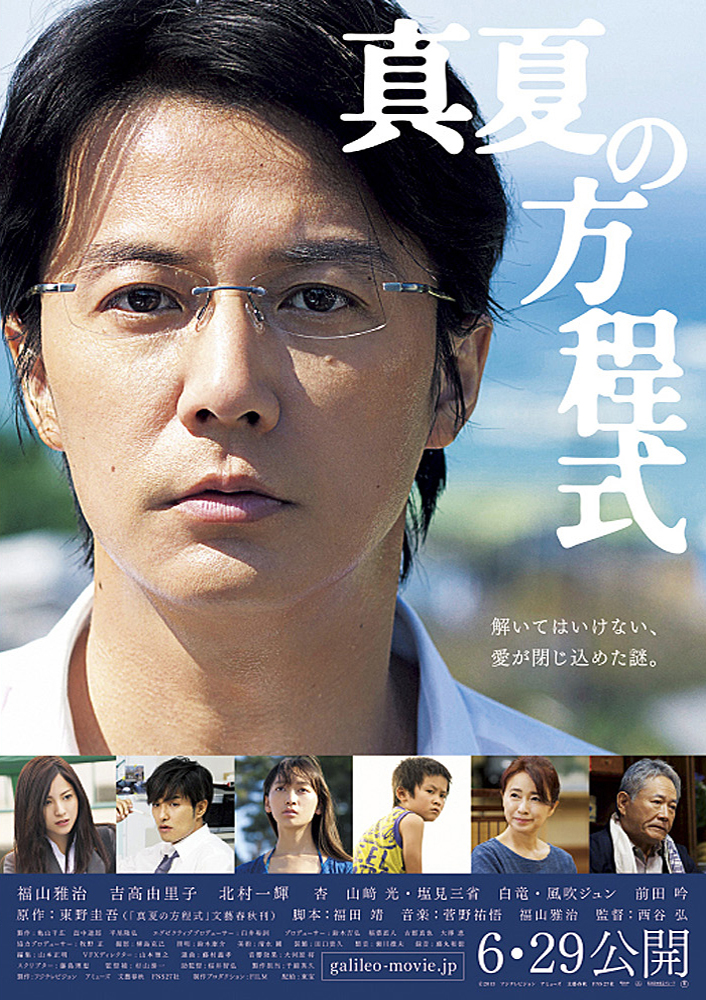
Midsummer’s Equation (真夏の方程式, Hiroshi Nishitani, 2013)

midsummer's equationSometimes it’s handy to know an omniscient genius detective, but then again sometimes it’s not. You have to wonder why people keep inviting famous detectives to their parties given what’s obviously going to unfold – they do rather seem to be a magnet for murders. Anyhow, the famous physicist and sometime consultant to Japan’s police force, “Galileo”, is about to have another busman’s holiday as he travels to a small coastal town which is currently holding a mediation between an offshore mining company and the local residents who are worried about the development’s effects on the area’s sea life.

As fans of the series will know, Manabu Yukawa is a fastidious and difficult man who likes things just so. On the train he ends up encountering a small boy who annoys the other passengers by answering his phone. Apparently he can’t turn it off because all sorts of notifications will be sent to his parents and they’ll go into panic overdrive. The old man across from him doesn’t believe this and grabs the phone away from the small boy after an undignified tussle. In an uncharacteristic move, Yukawa comes to the boy’s rescue by taking back the phone and wrapping it in foil so it won’t go off again – problem solved.

The boy, Kyohei, turns out to be the nephew of the inn owners at the place where Yukawa is staying. After another guest is found dead in mysterious and suspicious circumstances, little Kyohei immediately raises several doubts of his own which endears him to Yukawa who is sad to hear that the boy hates science classes at school. Still, Yukawa concedes there are some odd details in this case especially as the dead man is an ex-Tokyo policeman. Before long Detective Kishitani has been dispatched to assist in  the investigation of another strange mystery.

Again based on a novel by Keigo Higashino, the fourth in his Galileo series, Midsummer’s Equation (真夏の方程式, Manatsu no Houteishiki) is something of a departure as it takes place in an idyllic summer seaside town and is more like some of Higashino’s other mysteries as it places secrets of the heart at its core. Yukawa is generally a difficult man who can’t stand children, in fact they bring him out in a rash. However, for some reason Kyohei doesn’t seem to have this effect on him and he becomes determined to teach the boy the joy of science through a series of experiments while also investigating the central mystery. The incurably curious little tike becomes almost like a mini deputy to Yukawa as he begins to piece together what exactly has happened but it turns out Kyohei may have a different part to play than had originally been suspected.

In the usual mode, it’s not so much a whodunnit as a whydunnit and a how will they catch them. The mystery’s solution is heavily signposted from the beginning and there aren’t a lot in the way of twists. In contrast with some of the other Yukawa mysteries, particularly those from the TV drama, there aren’t a lot of clever scientific shenanigans either and though the central murder is plotted in quite an elaborate way, it’s also a panicked adaptation to circumstances which could be enacted by anyone, anywhere.

Long term series director Hiroshi Nishitani pulls out all the stops here and leaves the small screen far behind as he creates a surprisingly artistic take on a fairly run of the mill murder mystery. Beginning with the repeated motif of the falling red umbrella, he takes care to create a nuanced visual poetry which is quite different in approach both to the construction of the TV series and the other big screen outing which adapted Higashino’s most famous novel, The Devotion of Suspect X. Suspect X never quite managed to marry its roots as the theatrical adaptation of a TV drama and as an adaptation of a hugely popular and award winning book into something which was convincing on both levels. Midsummer’s Equation has an easier time with this as it’s slightly separated from the TV drama series and largely succeeds in becoming a standalone adventure for its famous detective.

Masaharu Fukuyama returns to the role with which he’s become most closely associated and once again captures Yukawa’s detached, though not necessarily uncaring, exterior with ease. He’s ably assisted by a fairly starry supporting cast which includes veteran actress Jun Fubuki, Tora-san’s Gin Maeda and the relatively young actress Anne (Watanabe) as well as the returning Yuriko Yoshitaka as the reluctant Detective Kishitani and cameo appearances from Kazuki Kitamura and Tetsushi Tanaka as Kyohei’s father.

Midsummer’s Equation is Higashino in a more forgiving mood as his hardline moralism never really kicks in and he’s content to merely be sorry for this rather complicated mess of affairs. Here, there’s hope for the future and the possibility of a path forward now that long buried secrets have been uncovered and the truth set out to bloom in the sunlight. He makes it plain that secrets are the root of all evil and that only by embracing the truth, and all of the truth, can you ever be able to make informed choices about your future. This is a lesson that Yukawa wants to pass on to little Kyohei who might be too young to understand the exact implications of his role in the affair (though he seems to have figured some of it out), but will undoubtedly have a few questions as he grows up. A well crafted addition to the series, Midsummer’s Equation proves another enjoyable excursion for Yukawa which succeeds not only in terms of its intricately plotted mystery but also as an intriguing and emotionally satisfying character drama.


The Hong Kong release of Midsummer’s Equation includes English subtitles.

A Chorus of Angels (北のカナリアたち, Junji Sakamoto, 2012)

chorus of angelsAs you read the words “adapted from the novel by Kanae Minato” you know that however cute and cuddly the blurb on the back may make it sound, there will be pain and suffering at its foundation. So it is with A Chorus of Angels (北のカナリアたち, Kita no Kanariatachi) which sells itself as a kind of mini-take on Twenty-Four Eyes (“Twelve Eyes” – if you will) as a middle aged former school mistress meets up with her six former charges only to discover that her own actions have cast an irrevocable shadow over the very sunlight she was determined to shine on their otherwise troubled young lives.

Haru has been working as a librarian in the city for the last twenty years and has finally reached retirement age but before that she was a school teacher in Japan’s frozen north. Before she can even think about enjoying her new found freedom, a pair of policeman turn up at her door to ask her a few questions about one of her former pupils, Nobuto, who is a suspect in a murder case. It seems that they found Haru’s address amongst Nobuto’s possessions and are keen to find out what kind of relationship she had with him and anything she might know about his current whereabouts. Haru is shocked to the core but remembers that she always gets a New Year card from one of Nobuto’s classmates, Manami, and decides to return home at long last to try and put to rest some wandering ghosts.

Like much of Kanae Minato’s work, A Chorus of Angels is a perfectly constructed mystery only this time much more of the heart than of the head. Consequently, it would be wrong to reveal too much of the plot but suffice to say that a traumatic incident twenty years ago left a profound effect not only on each of the children but also on their teacher and others in the surrounding area. Re-encountering each of her six pupils again, Haru discovers that each of them has been harbouring a deeply buried sense of guilt and shame, believing themselves to have been responsible for what happened that day. That sense of unresolved trauma has prevented each of them from fully getting on with their lives, as if some part of each of them was frozen in time when they were just primary school children singing in a choir and feeling proud of themselves for the first time in their lives.

Their teacher, Haru, also left a part of herself behind in that snowy northern landscape. Having committed something which some would regard as a sin, she’s hounded off the island – or perhaps allows herself to be, giving in to a punishment that she sees as befitting her own sense of guilt. However, as is customary for Minato, Haru’s “crime” is not such a black and white affair. If she betrayed someone, that person understood and, ultimately, only wanted the best for her. That she sacrificed the things that might have allowed her to go on living a happy life is the kind of tragic irony Minato is known for and the lonely, cold and shut off appearance of Haru’s twenty years of librarianing exile is another perfect example. She didn’t really do anything wrong except for try to live, and yet she’s paid for that with the next twenty years of her life and not only that, in robbing the young children who’d come to see her as something of a guardian angel of her very presence, she’s left them to pay too. Guilt grows like a mountain until it eclipses even the brightest of suns.

Despite its unfeasibly starry cast which radiates around veteran actress Sayuri Yoshinga and includes such young talents as Hikari Mitsushima, Mirai Moriyama, Ryuhei Matsuda, Ryo Katsuji, Aoi Miyazaki and Eiko Koike, A Chorus of Angles is actually fairly ordinary in terms of its directorial style and though it manages to stay on the right side of saccharine, never quite manages to make its tear-jerking set-up quite as moving as it seems to want to be. That said, it does boast some extraordinarily beautiful scenes of the Hokkaido snowscape which is a perfect setting for this chilling, frozen ghost story in which no actual ghosts appear. The children’s childhoods are all blissful blue skies and sunny summer days but in the future there’s only snow and cold winter sunshine. Just stay alive, it would be enough – to live is to suffer, but you have to go on. The important thing to learn is that it’s one thing to forgive everyone else, but there comes a time when you have to forgive yourself, too.


The Hong Kong release of A Chorus of Angels includes English subtitles!

Unsubtitled trailer: