 Italian cinema once had a hearty appetite for genre fare, but has long since abandoned the weird and wacky in favour of the arty or the populist. You wait years for an Italian superhero movie and then two come along at once. Following on from Gabriele Salvatores’ much younger skewing The Invisible Boy which perhaps owed more to Spy Kids than anything else, first time director Gabriele Mainetti brings us a bloody, R-rated yet humour filled look at the superhero genre filtered through Japanese manga and anime rather than US comic books.
The film begins with an aerial shot of Rome accompanied by loud panting which turns out to belong to petty criminal Enzo (Claudio Santamaria) who is currently running hell for leather away from the various policemen who are chasing him. Eventually he dives into the Tiber where he accidentally puts his foot through the lid of some barrels which have been dumped in the river and gets covered in some kind of gunk. After finally getting home he’s violently sick and shaky but probably thinks it’s just from being cold and wet or some other random thing picked up in the water.
At this point, he decides to sell his genuine rolex watch through a fence he knows, Sergio (Stefano Ambrogi), who currently works for a gangster named “Gypsy” (Luca Marinelli). Sergio ends up taking him on a job which is supposed to involve extracting drugs from inside a pair of dope mules but one of them is in a fairly bad way and Sergio’s refusal to take him to a hospital sees the other one grab his gun and shoot him. Enzo is caught in the shoulder and falls nine floors down to the street below but actually is pretty much OK. Later he realises his gunshot wound is healing surprisingly quickly and he’s apparently super strong too. With great power comes great responsibility? When you’re as isolated as Enzo, maybe not so much.
Enzo is 100% not a match for The Chosen One. He is totally disinterested in his fellow human beings and just wants to be left alone. In fact, the first thing he does when he figures out he has superpowers is steal an entire ATM (he didn’t know about the anti-theft dye) and use the cash to buy a fridge full of yoghurt and some more porn to add to his collection. He isn’t even really very bothered about his friend’s death except that he’d rather not attract the attention of Gypsy and his henchmen.
However, Sergio had a grown-up daughter, Alessia (Ilenia Pastorelli), with some kind of psychological condition which has her in an infantilised state where she’s obsessed with the 1970s Go Nagai mecha anime series, Steel Jeeg. After Enzo, against his better judgement, jumps in to save her from Gypsy she becomes convinced that he’s the real Steel Jeeg and tries to persuade him to use his powers for the good of all humanity.
The de facto antagonist of the story, Gypsy (real name “Fabio”), is a petty gangster and former wannabe reality TV star with grand ambitions. The deal that Sergio was working on was part of a larger collaboration with the Neapolitan mafia who are starting to wonder where all their drugs have got to and are just about ready to come looking for them themselves. Gypsy’s yearning for fame is further irritated by the presence of the so called “Super Criminal” who is already a star on YouTube and immortalised in graffiti all over the city. A violent psychopath with a taste for flamboyant outfits and cheesy music, these twin pressures are fit to send Gypsy way over the edge.
Mainetti ties in current social concerns with the constant TV news reports about large scale protests against austerity and a series of terrorist incidents which are later said to be a mass conspiracy perpetrated by the mafia to try and influence government policy (seemingly successfully). Conversely, he satirises modern society’s dependence on social media with everyone whipping out their phones to try and capture Enzo’s superhuman capabilities and Gypsy’s attempt to make himself a YouTube star with some superhero stuff of his own as well as frequently mocking his former attempt to become a big name celebrity through taking part in a TV reality show.
Ironically, the actress playing the difficult role of Alessia was herself a star of Italy’s version of Big Brother and this is her first acting role. It has to be said that her performance is nothing short of extraordinary as she perfectly captures the strange innocence of this wounded child woman who seems to have experienced a number of traumatic incidents in her past which have pushed her further and further into her anime themed delusional world. In many ways she is the heart of the film using her own superpowers of love and innocence to try and reawaken Enzo’s humanity and push him towards becoming a functional human being who is able to recognise the potential for good his new found powers may have.
Though filmed for an extremely modest budget, They Call Me Jeeg displays extremely high production values mostly concentrating on in camera effects backed up with inventive cinematography. Refreshingly opting for a more grown-up approach, the film doesn’t stint on blood or violence either but is careful to avoid becoming exploitative and is also frank in dealing with its difficult romantic subplot. An impressive debut feature from Mainetti, They Call Me Jeeg succeeds not only in providing action packed entertainment but also manages to mix in a fair amount of humour to its subtly melancholic atmosphere eventually climaxing in an unexpectedly moving finale.
Reviewed as part of the Cinema Made in Italy festival at London’s Ciné Lumière in March 2016 where it screened under the title They Call Me Jeeg Robot.
There doesn’t seem to be an English subtitled trailer around yet but this film is so much fun I can’t even tell you!
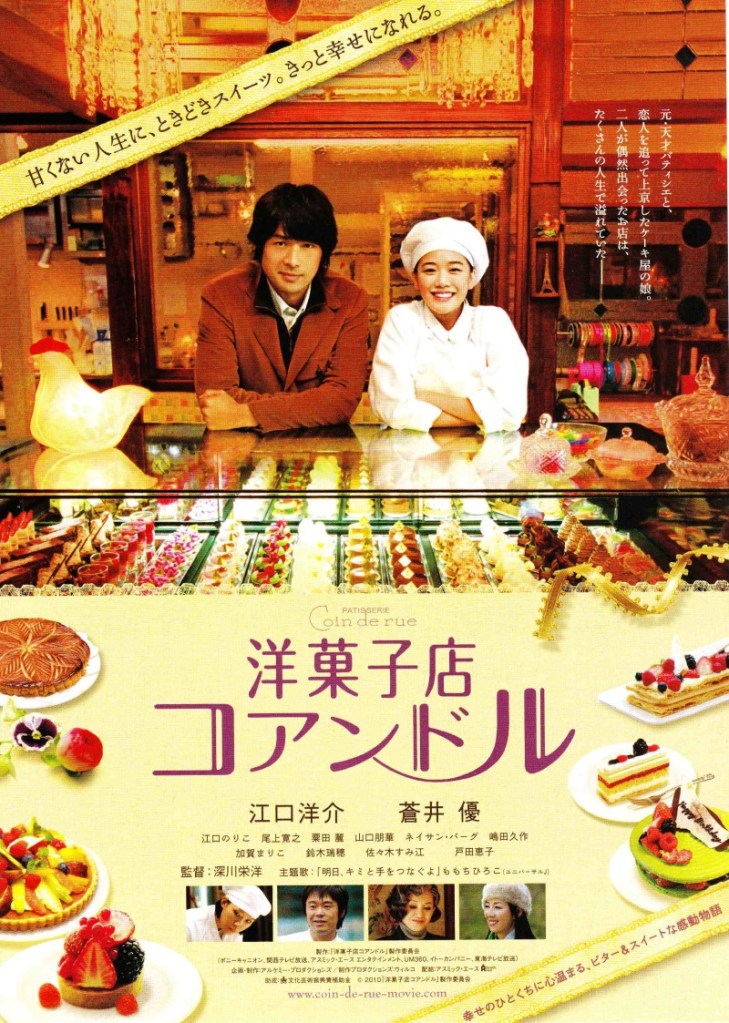 You know how it is, when you’re from a small town perhaps you feel like a big fish but when you swim up to the great lake that is the city, you suddenly feel very small. Natsume has come to Tokyo from her rural backwater town in Kagoshima to look for her boyfriend, Umi, who’s not been in contact (even with his parents). When she arrives at the patisserie he’d been working at she discovers that he suddenly quit a while ago without telling anyone where he was going. Natsume is distressed and heartbroken but notices that the cafe is currently hiring and so asks if she may take Umi’s place – after all she grew up helping out at her family’s cake shop!
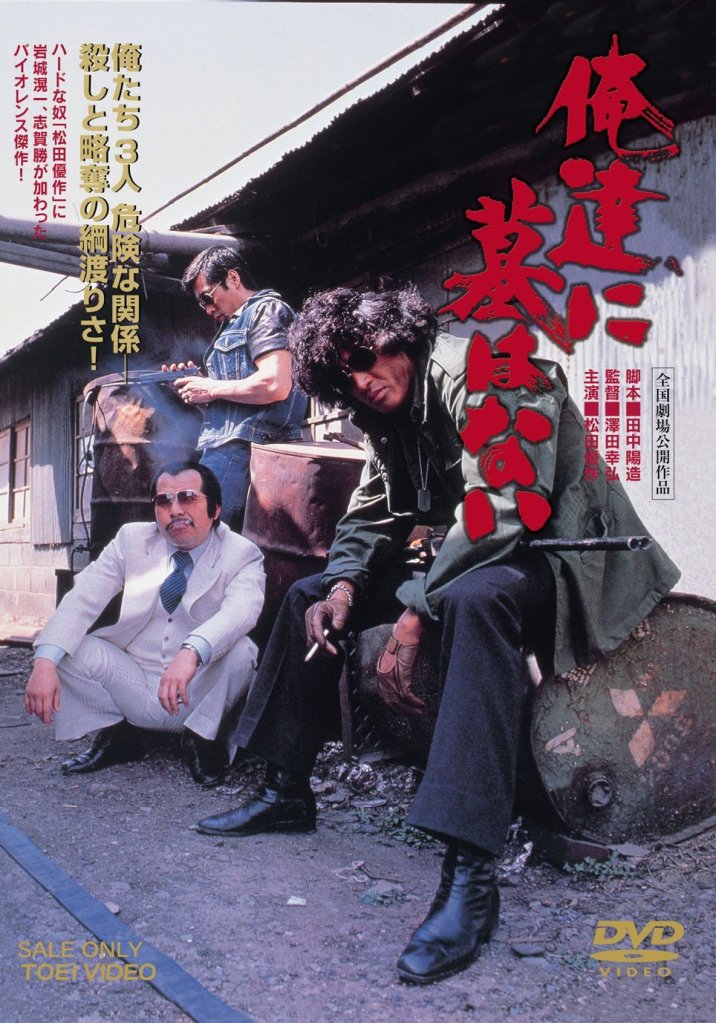 Though he might not exactly be a household name outside of Japan, the late Yusaku Matsuda was one of the most important mainstream stars of the ‘70s and ‘80s. Had he not died at the tragically young age of 40 after refusing chemotherapy for bladder cancer to star in what would become his final film, Ridley Scott’s Black Rain, he’d undoubtedly have continued to move on from the action genre in which he’d made his name. No Grave For Us (俺達に墓はない, Oretachi ni Haka wa Nai) is fairly typical of the kinds of films he was making in the late ‘70s as he once again plays a cool, streetwise hoodlum mixed up in a crazy crime world where no one can be trusted.
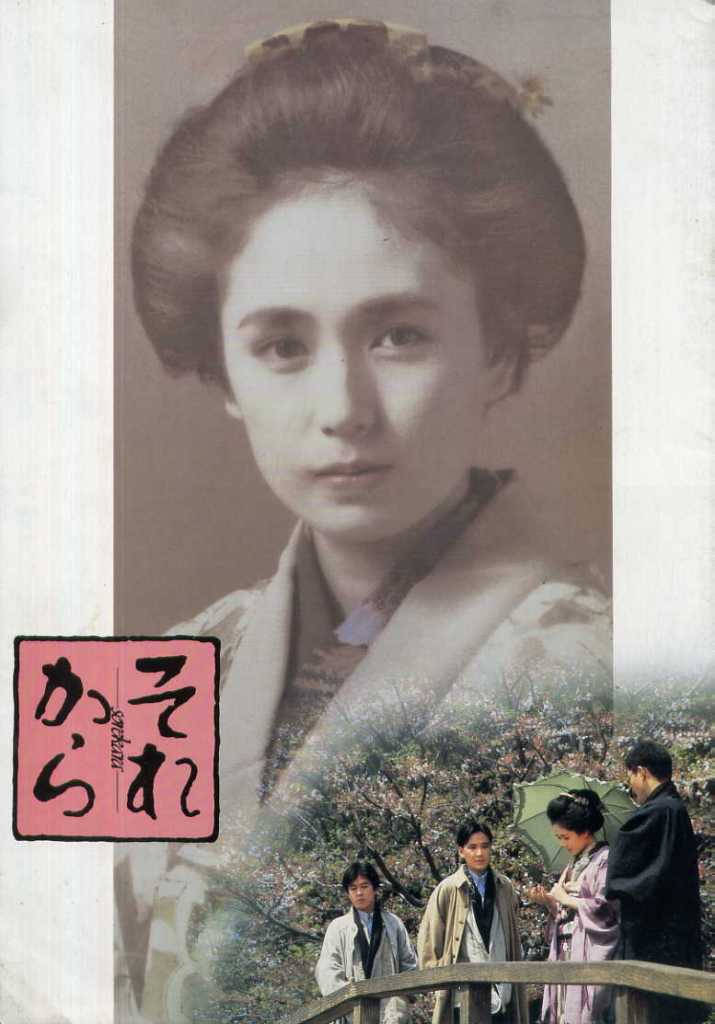 Yoshimitsu Morita had a long and varied career (even if it was packed into a relatively short time) which encompassed throwaway teen idol dramas and award winning art house movies but even so tackling one of the great novels by one of Japan’s most highly regarded authors might be thought an unusual move. Like a lot of his work, Natsume Soseki’s Sorekara (And Then…) deals with the massive culture clash which reverberated through Japan during the late Meiji era and, once again, he uses the idea of frustrated romance to explore the way in which the past and future often work against each other.
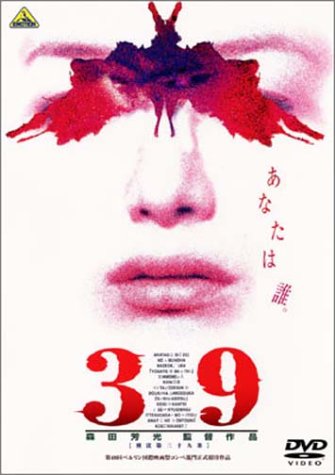 Article 39 of Japan’s Penal Code states that a person cannot be held responsible for a crime if they are found to be “insane” though a person who commits a crime during a period of “diminished responsibility” can be held accountable and will receive a reduced sentence. Yoshimitsu Morita’s 1999 courtroom drama/psychological thriller Keiho (39 刑法第三十九条, 39 Keiho Dai Sanjukyu Jo) puts this very aspect of the law on trial. During this period (and still in 2016) Japan does nominally have the death penalty (though rarely practiced) and it is only right in a fair and humane society that those people whom the state deems as incapable of understanding the law should receive its protection and, if necessary, assistance. However, the law itself is also open to abuse and as it’s largely left to the discretion of the psychologists and lawyers, the judgement of sane or insane might be a matter of interpretation.
 In late June of 1945, one woman is escorting another through a US checkpoint in Berlin. The young American soldier is somewhat cocky and feigns an officious sort of suspicion that causes him to demand the bandaged woman reveal her face – just to be sure. The obvious agony she feels just beginning to unwind the various layers which hide her identity is enough to convince him that he’s made a cruel mistake and he lets the pair pass.
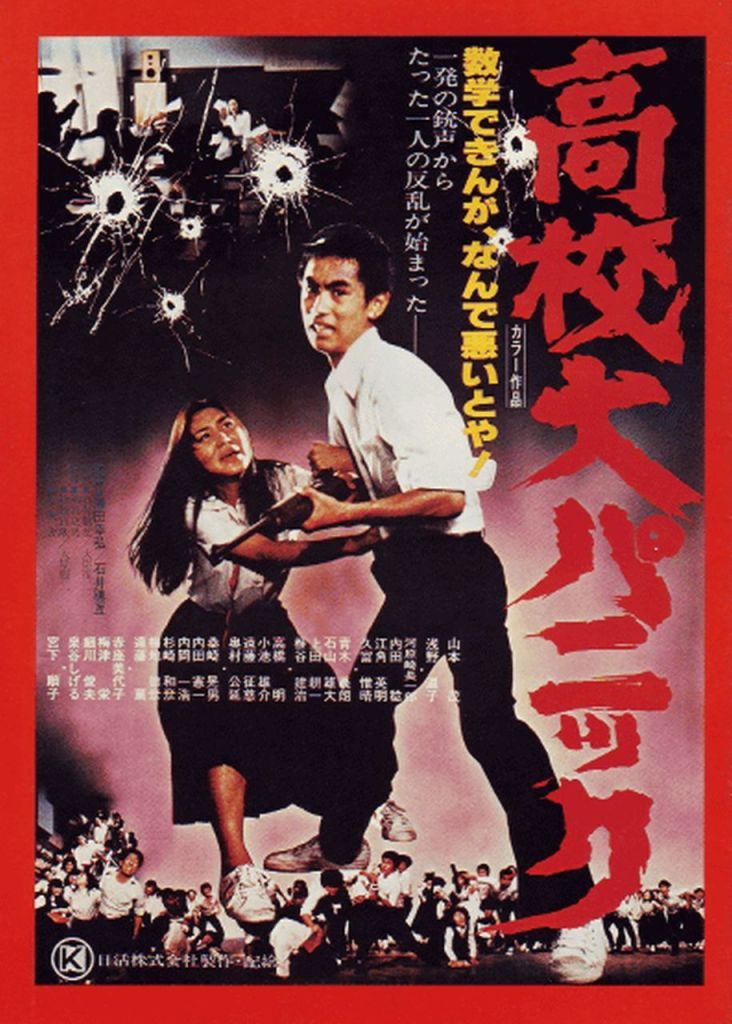 Sogo (now Gakyruu) Ishii was only 20 years old when Nikkatsu commissioned him to turn his smash hit 8mm short into a full scale studio picture. Perhaps that’s why they partnered him with one of their steadiest hands in Yukihiro Sawada as a co-director though the youthful punk attitude that would become Ishii’s signature is very much in evidence here despite the otherwise mainstream studio production. That said, Nikkatsu in this period was a far less sophisticated operation than it had been a decade before and, surprisingly, Panic High School (高校大パニック, Koukou Dai Panic) neatly avoids the kind of exploitative schlock that its title might suggest.
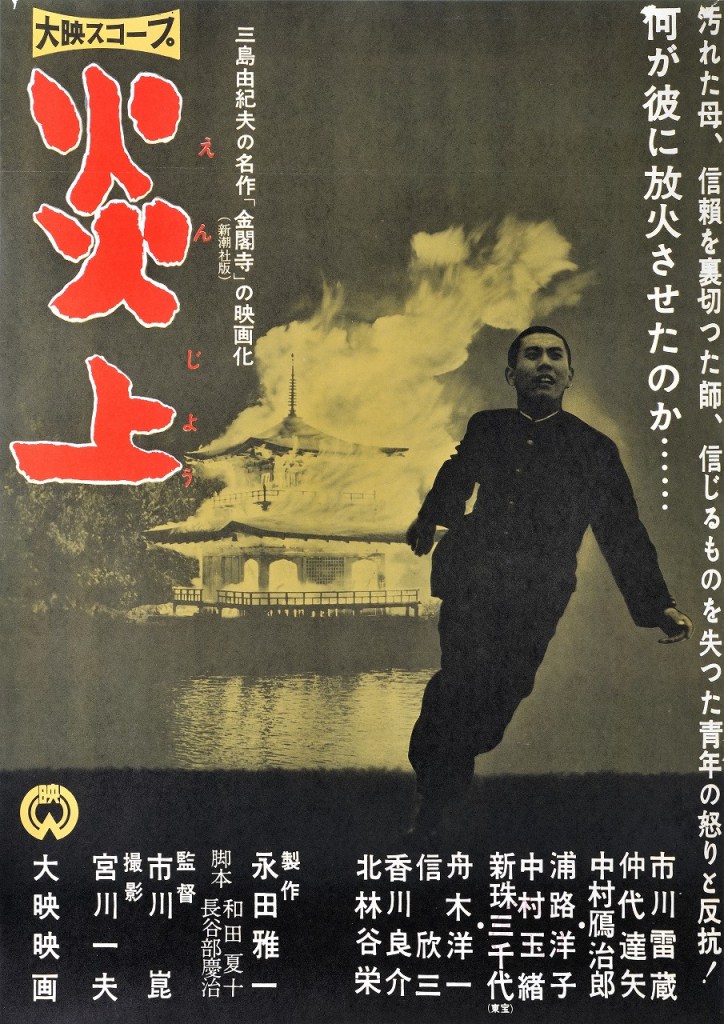 Kon Ichikawa turns his unflinching eyes to the hypocrisy of the post-war world and its tormented youth in adapting one of Yukio Mishima’s most acclaimed works, The Temple of the Golden Pavilion. Inspired by the real life burning of the Kinkaku-ji temple in 1950 by a “disturbed” monk, Enjo (炎上, AKA Conflagration / Flame of Torment) examines the spiritual and moral disintegration of a young man obsessed with beauty but shunned by society because of a disability.
 Windows on Worlds