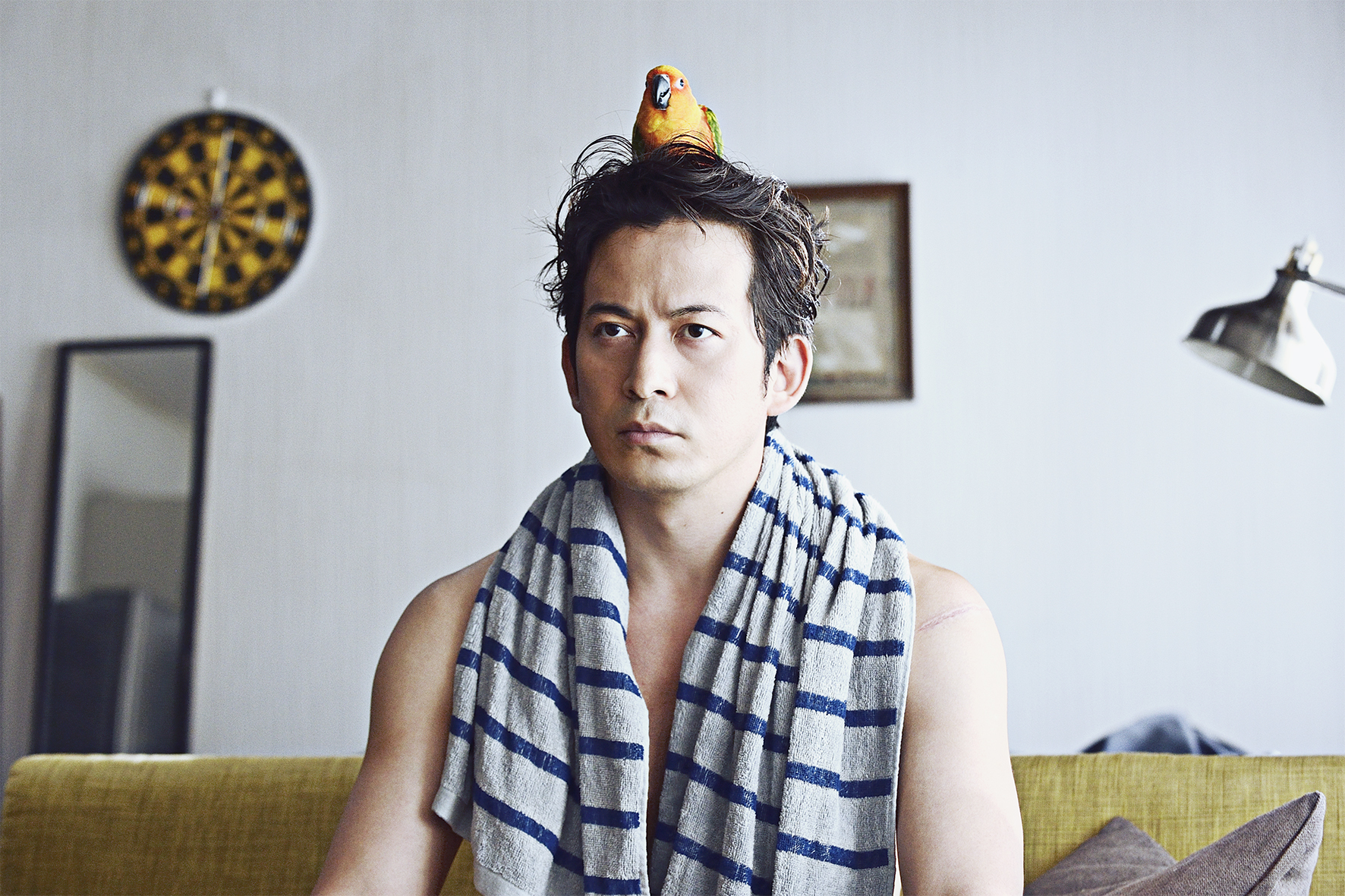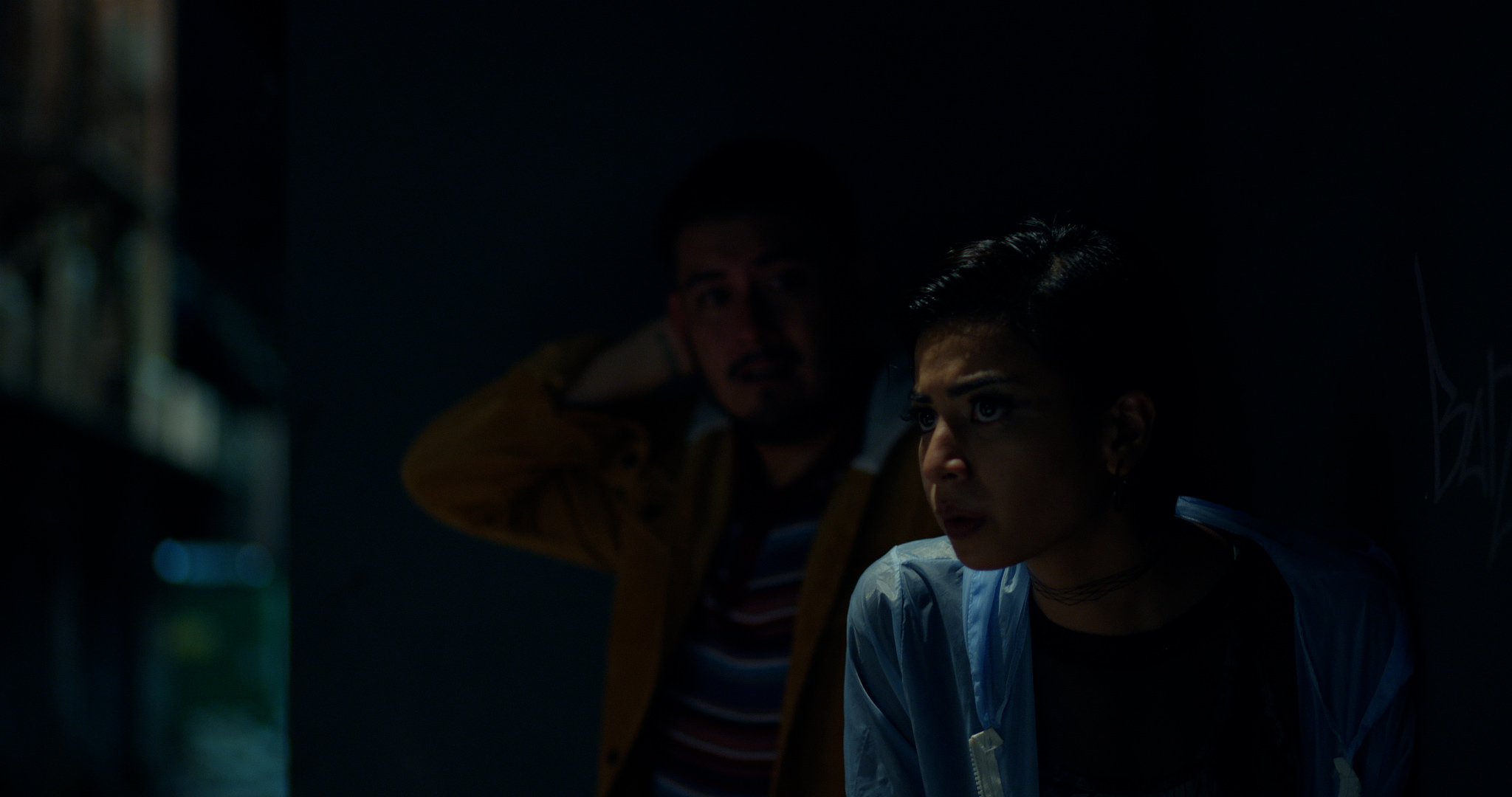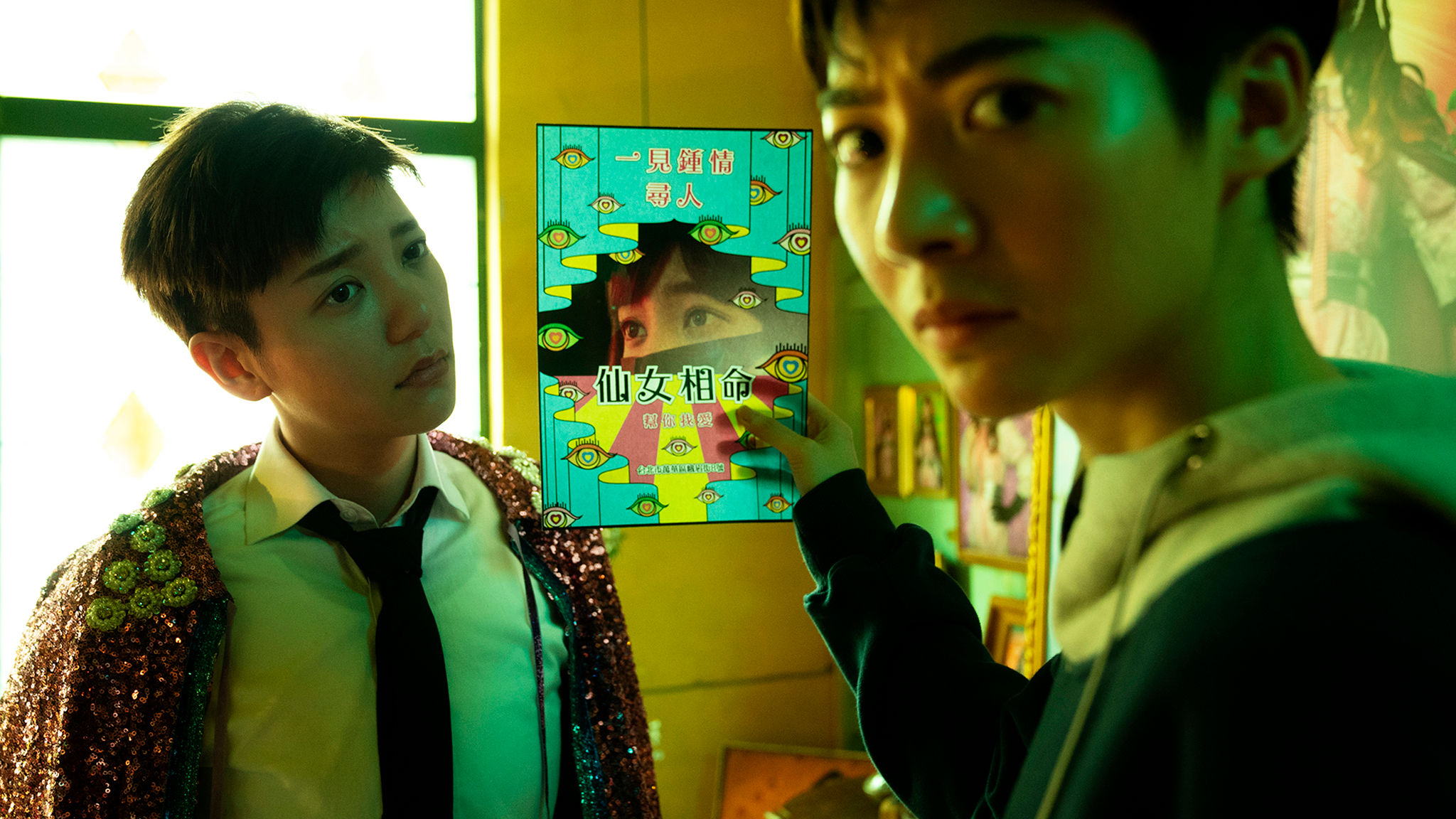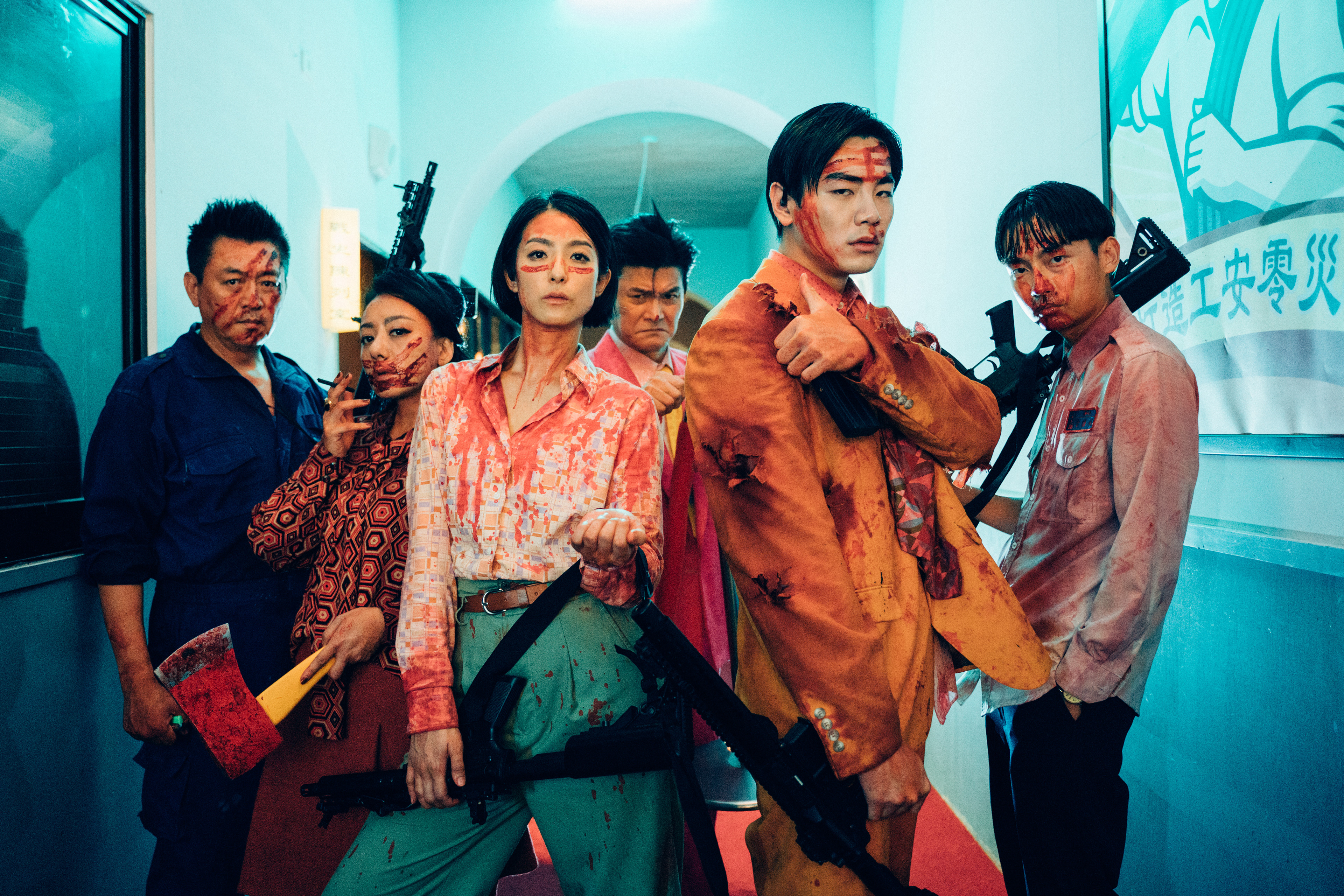
The Triple Cross (いつかギラギラする日, Kinji Fukasaku, 1992)

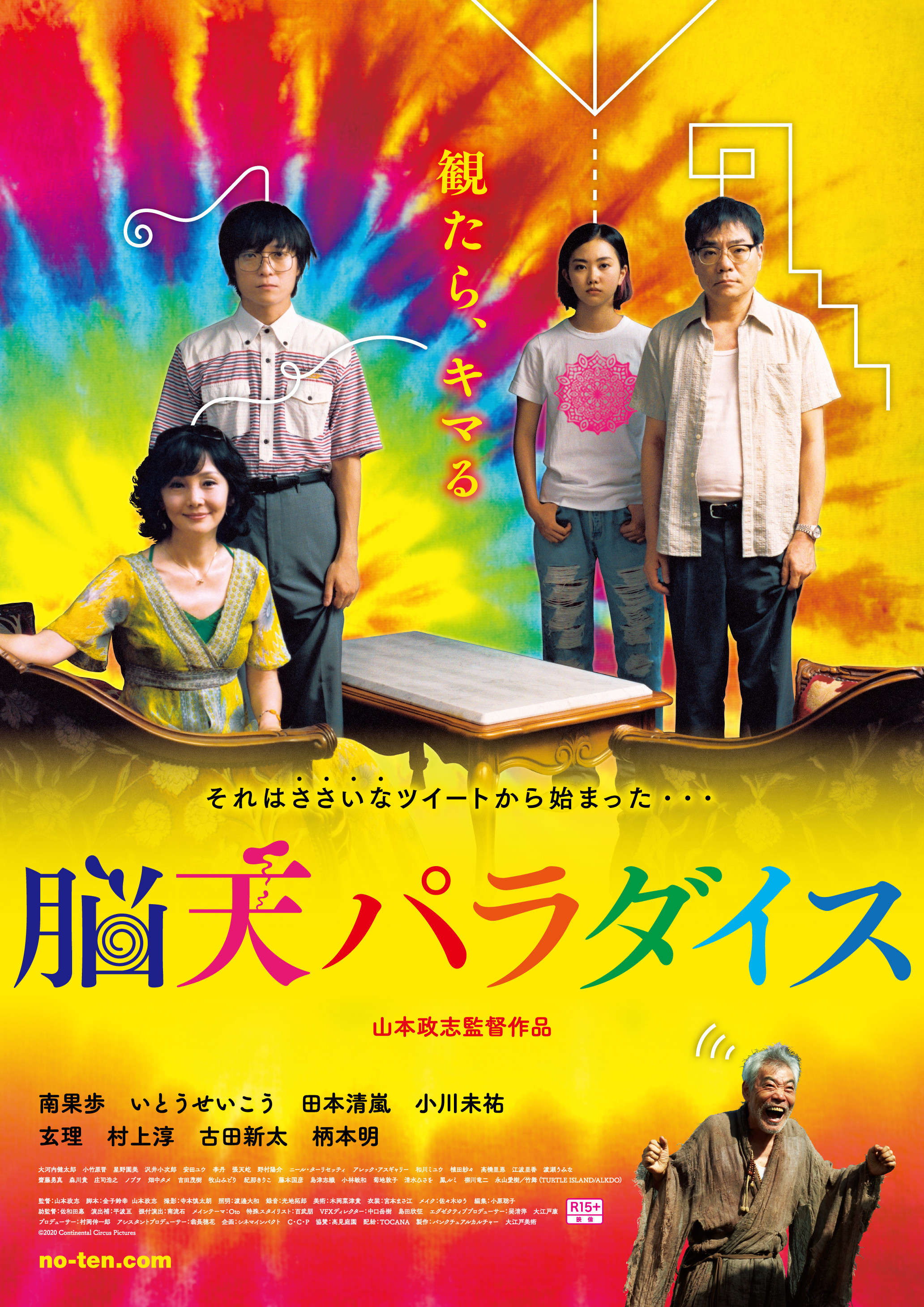
“It’s never over for men like me” laments the hero of Kinji Fukasaku’s infinitely zeitgeisty 1992 action thriller The Triple Cross (いつかギラギラする日,  Itsuka Giragira Suru Hi), though the director might as well be talking for himself. Fukasaku is most closely associated with the jitsuroku gangster genre which he helped to create at Toei in the mid-1970s with the hugely influential yakuza cycle Battles Without Honour and Humanity. Through the difficult ‘80s, he’d sustained his career with a series of commercial projects and critically acclaimed prestige pictures, which is perhaps why he felt secure enough to go all in with an absurdist take on the death spiral of the Bubble Era. 

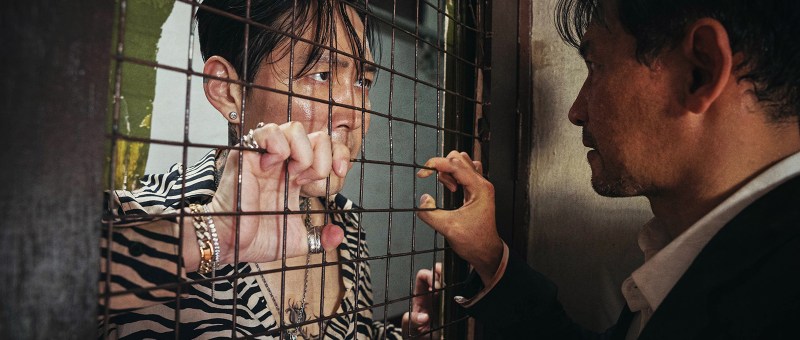
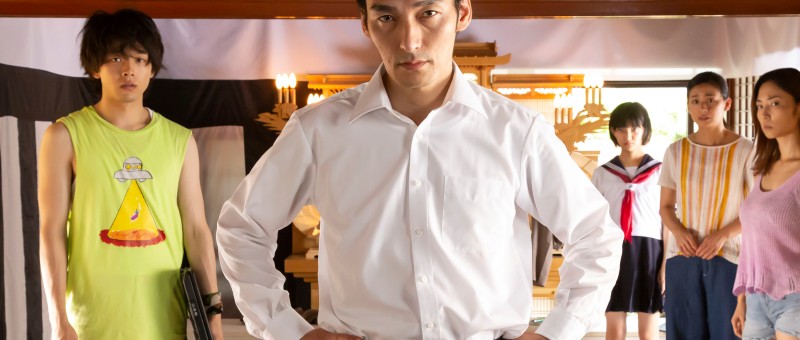
As the film opens, a trio of veteran crooks commits a series of flawless armed robberies which makes them all very wealthy. In an age of excess, crime is perhaps for them more a way of life than a means of survival save for one, Imura (Renji Ishibashi), who has massive debts from loansharks and is living with a constant sense of anxiety that his failures as a man and as a father may result in his beloved wife (Kirin Kiki) and daughter leaving him (for which he wouldn’t blame them). Kanzaki (Kenichi Hagiwara), the veteran gangster, enlists his girlfriend Misato (Yumi Takigawa) along with Imura to scout a possible new job their “boss” Shiba (Sonny Chiba) is planning up in Hokkaido. When they get there it turns out that Shiba has taken up with an extraordinarily irritating much younger woman, Mai (Keiko Oginome), and through her has befriended a young guy, Kadomachi (Kazuya Kimura), who’s come up with a plan to rob the takings from a nearby resort which he has heard run to 200 million yen transported in cash by car via remote mountain road. 

Kadomachi, who later claims he was once a police officer, is an annoyingly entitled young punk with bleach blond hair who wants the money to open a live music venue in order to support real rock and roll. So manic he seems to be on something, it’s a surprise that the guys agree to work with him though after a quick hazing they apparently decide he’s OK only to bitterly regret their decision when it turns out he was mistaken about the amount being transported. As veteran pros, the trio know that it’s better to just be happy with what you can get and move on, but they had each hoped this job might be the last and the disappointment proves too much for Imura who flips out and points a gun at his friends intending to take the lot but is calmly talked down only for Kadomachi to grab a gun and start shooting, making off with the whole 50 million. 

Deliberately down with the kids with his pulsing club score, Fukasaku seems to be taking a swipe at the Bubble generation who want everything now and fully expect to get it. Shiba pays the price, essentially, for refusing to act his age, trying to be young and hip like Mai and Kadomachi, while Imura is perhaps the opposite unable to escape from the post-war era with its poverty and vicious loansharks while also facing discrimination as a zainichi Korean which further deepens his anxiety for his teenage daughter. Yet getting her hands on the money Mai confesses that she has absolutely no idea what to do with 50 million yen, spending 50,000 on a handkerchief just because while even Kadomachi is eventually struck by a sense of futility in realising the money has corrupted him though he knows that it will eventually slip through his fingers. “People, life, they pass us by” he muses sadly while Mai confesses all she wanted was for someone to “notice” her, which they eventually perhaps do only it’s in the context of a nationwide manhunt. 

The vacuous youngsters are finally slapped down by the calm and collected Kanzaki whose lack of ostentation serves him well in the ensuing war on two fronts as he goes up against not only Kadomachi but the loanshark he was in debt to in an attempt to get his hands on the money. Fukasaku takes the jitsuroku and turns it inside out for a tale of Bubble-era excess filled with increasingly elaborate action sequences culminating in a high octane car chase and a shoot out with the entire garrison of the Hokkaido police force, yet as before crime only yields futility, the money floating away in Hakodate harbour, while we end on a trademark note of irony that shows us banks on every street corner, money is literally everywhere. What does crime mean now, what is the point of such ceaseless acquisition in an age of plenty? For Kanzaki, perhaps it just spells opportunity and well you can’t argue with that. 


Original trailer (no subtitles)

Letter to an Angel (Surat untuk Bidadari, Garin Nugroho, 1994)

A lonely, motherless child’s infinite “curiosity” threatens to destabilise the intensely traditional world in which he lives in Garin Nugroho’s melancholy Sumba fairytale, Letter to an Angel (Surat untuk Bidadari). Taking ownership of a borrowed camera, the boy seeks instant images in order to make sense of his existence and thereafter to explain the way sees the world to those around him, but often finds that his messages go unheard while his society finds itself pulled towards a fractured modernity anchored by corrupted male authority. 

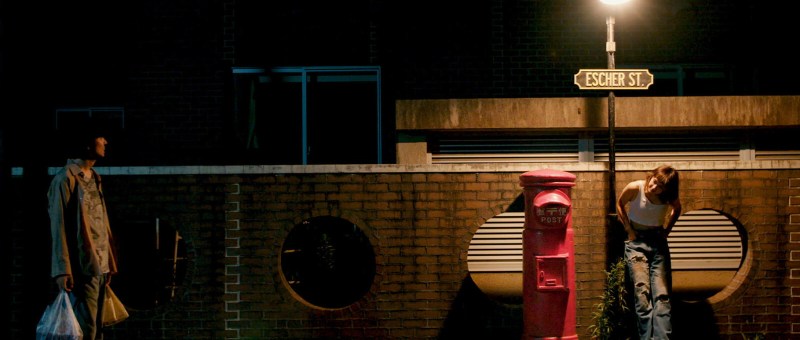
At nine years old, Lewa (Windy) is in a way no one’s child and everyone’s. While his father works his land, Lewa rides his horse or spends time with the local women in search of echoes of the mother he lost in infancy. Somewhat literal, he finds it difficult to follow his Indonesian textbook, stumbling over the simple phrase “this is my mother” which might under the circumstances be an insensitive sentence at the best of times, but in this case because the illustration is of a typical Indonesian woman rather than a woman from his community and does not resemble him or the image he had in his mind of his mother. Asking his father about her elicits only partial history as he shows him the wreckage of the bus accident in which she died, Lewa becoming mistakenly fixated on the poster of Madonna (in name at least literally “the mother”) pasted on the side, snapping it with a polaroid camera gifted to him by a sympathetic travelling performer. 

“Pictures show reality” he muses, talking to another of his maternal figures, Berlian Merah (Nurul Arifin), the village’s most beautiful woman. Beauty can, however, be a curse though she perhaps won’t quite know that. Evil local big wig land grabber and Elvis obsessive Kuda Liar (Adi Kurdi) desires her and so manoeuvres to have her husband killed. Not content, he later goes after Lewa’s other mother figure, the school teacher who told him of an angel who could heal the sick and bring the dead back to life. Muddling images in his mind, Lewa skips school and writes letters to the angel as if she were his mother, looking for comfort and guidance but finding little more than frustrating silence. Kuda Liar hassles his father for his land, and his mothers for their bodies, thinking nothing of throwing little Lewa himself off a cliff simply for the crime of existing. 

Yet Lewa is repeatedly saved by his village chief who insists that Lewa is a good kid and being “curious” is no bad thing. It’s that curiosity, however, that repeatedly gets him into trouble, especially when he takes a photo of something he shouldn’t and offends a neighbouring village, triggering a long dormant feud into a moment of mass violence. “I don’t understand why I’m told I’m a bad person when all I wanted was to show my father’s real face” he writes in a letter on another occasion, unable to understand why others are not curious in the same way as he is, unwilling to see his version of the truth as mediated by the “reality” of his photographs. 

Garin Nugroho too is determined to capture a certain kind of “reality” of the lives of the islanders as they practice their traditional culture, including footage of a series of rituals as they are performed complete with bloody acts of animal cruelty while Kuda Liar is at least forced into performative contrition in a “ceremony of forgiveness” for throwing Lewa off the cliff (into water, he is unharmed), demonstrating the way such ceremonies are used to mediate disputes within the community unlike the more “civilised” trial which occurs at the film’s conclusion, charged with discerning a more concrete notion of “reality” but in actuality setting out to prove a preconceived narrative, unwilling to hear the truths of others. It’s this contradictory authority that Lewa struggles to parse, looking desperately for his mother while inheriting only problematic visions of masculinity from his distant, angry father, to the “mad” uncle Malaria (Fuad Idris), and the cruel eccentricity of Kuda Liar. Eventually it imprisons him with the notion that he must be “rehabilitated”, presumably to become less “curious”, taking away from him the means to define his own reality for himself but allowing him perhaps to find that which he had been looking for.   


Letter to an Angel streamed as part of this year’s San Diego Asian Film Festival.

Trailer (English subtitles)

Blue Ribbon Awards Announces Nominations for 63rd Edition

Presented by film critics and writers in Tokyo, the Blue Ribbon Awards has announced its nominations for the 63rd edition honouring films released in 2020 which has admittedly been a difficult year though as the list of nominees demonstrates nevertheless a strong one for cinema. This year there will be no physical ceremony but the winners are expected to be announced in mid-February.

Best Film  

  • True Mothers – heartbreaking drama from Naomi Kawase in which a young couple adopt a baby only for the birth mother to resurface
  • The Asadas – latest from Ryota Nakano starring Kazunari Ninomiya inspired by the life of photographer Masashi Asada.
  • Underdog – boxing drama from Masaharu Take.
  • Ito – Heisei love story inspired by the classic Miyuki Nakajima song, directed by Takahisa Zeze, and starring Nana Komatsu & Masaki Suda
  • A Beloved Wife – An unsuccessful screenwriter is henpecked by his understandably irate sake-guzzling wife in this autobiographical take on a toxic marriage.
  • Kyou Kara Ore Wa!!: The Movie – big screen outing for the TV drama adaptation of the high school delinquent manga by Hiroyuki Nishimori directed by Yuichi Fukuda.
  • Theatre: A Love Story – A self-obsessed writer slowly destroys the joy and hope of a woman he claims to love then turns it into art in Isao Yukisada’s dark romance
  • Demon Slayer: Kimetsu no Yaiba the Movie: Mugen Train – record breaking movie of the hit TV anime in which a boy in the Taisho era tries to heal his younger sister after she is turned into a demon.
  • The Confidence Man JP: Princess – sequel in which the gang of scammers try their luck in Malaysia
  • Wife of a Spy – 8K wartime drama from Kiyoshi Kurosawa in which Yu Aoi tries to stop her husband Takahashi Issei from blowing the whistle after witnessing atrocity in Manchuria.
  • The Voice of Sin – Shun Oguri stars as a reporter investigating a 30-year-old unsolved case.
  • Any Crybabies Around? – a young man flees his family in embarrassment after going viral for getting drunk and being naked at a festival only to return two years later to make it up to them.
  • First Love – boxing drama from Takashi Miike
  • Fukushima 50 – Setsuro Wakamatsu draws inspiration from Ryusho Kadota’s nonfiction book to pay tribute to the workers who stayed behind during the crisis at the Fukushima Daiichi Nuclear Power Plant.
  • Mother – Masami Nagasawa stars as an abusive mother who pushes her teenage son towards murder.
  • Mishima: The Last Debate – documentary focussing on Yukio Mishima’s address to the students at the University of Tokyo in 1969
  • Midnight Swan – ex-SMAP member Tsuyoshi Kusanagi stars as a transgender woman who takes in a little girl neglected by her parents.
  • Minoriyuku – drama about an apple farmer who was born with a stammer and dreams of becoming a comedian.
  • Mio’s Cookbook – Haruki Kadokawa period drama in which a woman who lost her parents in a flood discovers a talent for cooking.
  • Yowamushi Pedal – live action adaptation of the popular high school bicycle racing manga.

Best Director

  • Eiji Uchida (Midnight Swan)
  • Naomi Kawase (True Mothers)
  • Kiyoshi Kurosawa (Wife of a Spy)
  • Nobuhiro Doi (The Voice of Sin)
  • Ryota Nakano (The Asadas)

Best Actor

  • Shun Oguri (The Voice of Sin)
  • Tsuyoshi Kusanagi (Midnight Swan)
  • Koichi Sato (Fukushima 50)
  • Kazunari Ninomiya (The Asadas)
  • Mirai Moriyama (Underdog)

Best Actress

  • Yu Aoi (Wife of a Spy)
  • Mana Ashida (Child of the Stars)
  • Hiromi Nagasaku (True Mothers)
  • Masami Nagasawa (Mother / Confidence Man JP: Princess)
  • Asami Mizukawa (A Beloved Wife)

Best Supporting Actor

  • Satoshi Tsumabuki (The Asadas / I Never Shot Anyone)
  • Ryo Narita (The Cornered Mouse Dreams of Cheese / Ito)
  • Masahiro Higashide (Confidence Man JP: Princess / Wife of a Spy)
  • Gen Hoshino (The Voice of Sin)
  • Ken Watanabe (Fukushima 50)

Best Supporting Actress

  • Sairi Ito (Theatre: A Love Story / Step / Junihitoe wo Kita Akuma / Hotel Royal)
  • Nana Eikura (Ito)
  • Haru Kuroki (The Asadas)
  • Becky (First Love)
  • Aju Makita (True Mothers)

Best Newcomer

  • Daiken Okudaira (Mother)
  • Sakurako Konishi (First Love)
  • Nao (Mio’s Cookbook / Stigmatized Properties)
  • Misaki Hattori (Midnight Swan)
  • Hio Miyazawa (his)
  • Nana Mori (Last Letter)

Best Foreign Film

  • Mr Jones
  • Never Look Away
  • The Painted Bird
  • 1917
  • Abe
  • Cats
  • Judy
  • Bombshell
  • Little Women
  • Tenet
  • Onward 
  • The Kindness of Strangers 
  • Harley Quinn: Birds of Prey 
  • House of Hummingbird
  • Parasite
  • The Farewell 
  • Ford v Ferrari (AKA Le Mans ’66 in some territories)
  • Midsommar 
  • A Rainy Day in New York 
  • Wonder Woman 1984

Sources: Eiga NatalieSports Hochi

Theatre: A Love Story (劇場, Isao Yukisada, 2020)

The problem with tortured artists is that rather than be content with destroying themselves, they destroy someone else instead. Japanese cinema has a preoccupation with narcissistic heroes, and even if he does have a rare degree of self-awareness the protagonist of Isao Yukisada’s adaptation of the novel by comedian Naoki Matayoshi, Theatre: A Love Story (劇場, Gekijo), is among the most insufferable in the sheer depths of his resentful self-loathing. The “a love story” suffix is an addition for the English title though it proves true enough in that this is a story about a love of theatre which is really a love of life and possibility only our gloomy hero is still far too much in the shadows to be able to see it clearly. 

Nagata (Kento Yamazaki), whose fear of intimacy appears to be so great that he never gives away his first name, is first found wandering the streets like a zombie, muttering the words “How long will I last?” to himself before coming to a pause in front of a gallery window in which is displayed a painting of a monkey screaming under a full moon. The vision of existential despair appears to match his own and he’s obviously captivated by it, as is a young woman, Saki (Mayu Matsuoka), who quickly walks away after he creates awkwardness by intently staring at her. She tries to escape because, to be honest, not only is he a class A street creep, but he seems as if he might actually be disturbed. He asks her to go on a date the next day (today is too hot), later confessing he wanted to take her for a drink but is broke all of which makes it sound like he wants money as well as her phone number. Feeling sorry for him she gives in and is seemingly not even that bothered when he attempts to order her drink for her without asking what she wants at a nearby cafe. 

In many ways, the “meet cute” of Nagata and Saki typifies the entirety of their relationship which spans the better part of an ill-defined decade. The nicer she is to him, the more resentful he becomes. What the pair have in common is “theatre”. He’s a pretentious, avant-garde playwright, she’s a bubbly aspiring actress whose faith in the genius he keeps insisting he has only reinforces his sense of insecurity. The problem isn’t so much that lack of success is eating away at him, as it is that he actively resents the successes of others. He even becomes irritated when Saki praises Clint Eastwood, as if Clint Eastwood were his competition. Nagata simply can’t stand it when other people are praised as if the mere fact of someone else’s happiness actively depletes his own, has taken something from him, or is solely a reflection of his failures as an artist and a human being. It is really is all about him. He even refuses to take Saki to Disneyland because then he’d be in competition with Disney and if Saki said anything nice at all about the experience it would just piss him off. 

What seems impossible to understand is why Saki stays, especially after Nagata moves in with her and continues to bum around paying no rent while she works three jobs and tries to finish her uni degree. Eventually she asks him for a small contribution, maybe just something towards the utility bills, but he bizarrely replies that it’s her apartment and it’s irrational to pay for someone else’s utilities which is odd seeing as he’s just got out of the bath and has therefore clearly been using the facilities. In his voiceover, he confesses that he said that in order to avoid having a serious conversation and perhaps to mask a sense of internalised shame over essentially being a kept man, something which is only finally brought home to him by an old acting acquaintance, Aoyama (Sairi Ito), who offers him some freelance writing work but that only seems to deepen his artistic crisis as he battles a sense of selling out in neglecting his playwriting. 

If Saki is underwritten it is partly intentional in that we see her only through Nagata’s eyes and he barely looks, seeing in her only a source of a salvation he is too afraid to accept. He snaps at her and calls her stupid, causes her anxiety, embarrasses her in front of her friends and is, as Aoyama puts it, “a jerk”. His behaviour is in any case abusive, but he’s so blinkered that he never notices that she’s the same as him, anxious on an existential level and in search of mutual protection. By the time he’s done with her, she’s no longer so bright and cheerful, well on the way to alcoholism born of depression and sense of failure on reflecting that she’s a woman approaching 30 who has probably failed to make it as an actress in Tokyo, is exhausted by her city life, and has been slowly destroyed by Nagata’s mix of feigned indifference and possessiveness. Aoyama and his best friend from school Nohara (Kanichiro Sato) make a final desperate intervention to save Saki, pointing out that in his toxic narcissism he destroys her to save himself, unable to bear the idea of her awakening to that which he deeply believes but does not want to acknowledge, that really he’s just no good. 

“As long as we have theatre there’s no need to despair” Nagata finally exclaims, rediscovering a love for the form in its capacity to remake the world, to show him both what is and could be as he rewrites his tragic, delayed coming-of-age romance as an emotionally authentic stage play now convinced, like the old Saki, that he really does want everyone to be happy after all. Theatre: A Love Story is the age old tale of the curtain coming down on an arc of one’s life, accepting that something has ended and that it’s OK, it’s just the way life is. Saki, somewhat problematically declares she wouldn’t have it any other way because she loved Nagata for everything he was and if he’d changed he wouldn’t be the same. In a sense we’re left with Nagata’s artistic validation and a tacit condonation of his emotionally abusive behaviour, but then Yukisada undercuts the final message with a melancholy credits sequence in which he perhaps hands back to Saki even in her passivity as she finally looks for an exit.   


Currently available to stream via Amazon Prime Video in the UK (and possibly other territories).

Original trailer (no subtitles)

A Woman’s Sorrows (女人哀愁, Mikio Naruse, 1937)

Arriving perhaps in a moment preceding a major change, Mikio Naruse’s A Woman’s Sorrows (女人哀愁, Nyonin Aishu) finds itself on one side of a divide in which it is, paradoxically, a woman’s conservatism that is thought a barrier to her marriage. As usual slightly ahead of his times, Naruse doesn’t so much attack the idea of marriage either arranged or love, but subtly arcs out the patriarchal cage the bars of which only become visible to his conflicted heroine after she has wilfully allowed herself to be locked inside. 

Opening on location, a thriving Tokyo street scene, Naruse introduces us to the “conservative and indecisive” heroine Hiroko (Takako Irie) at her part-time job at a record store. We learn that Hiroko has recently been to an omiai marriage meeting, and that at least according to her friend she has been harbouring a longterm crush on her sensitive, progressive cousin Ryosuke. Hiroko denies having feelings for her cousin claiming that she thinks of him as a brother and that he dislikes her for being too “conservative”. One might think that a truly conservative woman wouldn’t be working in something as modern as selling records, but Hiroko is indeed a kimono-wearing holdout who has almost fully internalised the properness of the patriarchal order. Her indecisiveness, however, perhaps tells us that she isn’t quite as comfortable with it as she seems and is in a sense forcing herself to accept something she thinks she has no power to resist. 

It is also true that Hiroko’s family is poor. Despite confiding to Ryosuke that her husband gave her trouble, failing in one sense at least by dying and leaving his family with debts, Hiroko’s mother is keen that she marry and marry well. Her prospective match Shinichi is from a well to do family and has also offered to pay for the education of Hiroko’s younger brother Masao, so the marriage is undoubtedly financially advantageous if not immediately essential. “Since I cannot marry someone I love, anyone will do” Hiroko silently sighs, resigning herself to a conservative vision of a woman’s life. For his part, Ryosuke rejects Hiroko because he believes her conservatism runs so deep as to lead her to reject love as improper, that love would in fact be a barrier to her marriage which she would feel duty-bound to refuse. 

Hiroko feels that the match is in a sense too good for her, much better than she had a right to expect. Nevertheless, it’s her seeming conservatism that presents a potential problem in that it is assumed that despite working in a record shop she wouldn’t know how to dance in the modern fashion. Far from censorious, Hiroko’s mother is worried that the young girls these days all go to “dance halls” while Hiroko is quiet and demure. As it happens, Hiroko knows how to dance, though perhaps they should have been thinking about the problem from the other side in that men who like going to dance halls don’t necessarily like to go with their wives, and those looking for “conservative” women often do so because they want to lead “modern” lives outside the home. Having agreed to the marriage, Hiroko finds herself an outsider, treated as unwaged maid by her new in-laws who all exclaim how glad they are to have someone so reliable as their new daughter-in-law especially as they’ve recently disowned oldest daughter Yoko (Ranko Sawa) for running off with her lower class fiancé. 

As so often in Naruse’s cinema, modern girl Yoko acts as a mirror for the outwardly conservative Hiroko. Yoko determines to marry for love, but is actually far more conservative than she seems in that she is entirely unwilling to surrender her comfortable middle class life and continues to resent the man she married, Masuda, because he cannot keep her in the manner to which she had become accustomed. Shinichi had warned Yoko about “frivolous” men, an ironic comment seeing as we’d just heard him dismiss a woman he’d been seeing as “just a girlfriend” laying bare his rather misogynistic view of women as a means of passing time, but Masuda is the very opposite of frivolous, serious in his intentions even while Yoko rejects him solely because of his lack of socioeconomic status. Yet like Hiroko Yoko is perhaps herself also conflicted, forcing herself to reject Masuda whom she loves out of a mistaken pride that tells her it would be wrong to suffer for love when she could have done as Hiroko did and married well for a comfortable but emotionally unfulfilling life. 

Unhappy in her marriage, Hiroko claims that she could have put up with being treated as a maid but can’t stand being treated as a doll, believing herself mere decoration in Shinichi’s life. Nevertheless she continues to believe it’s her duty to “manage” as good wife, bearing her sorrow and loneliness gracefully until pushed into a moment of crisis by Yoko’s rather melodramatic love life. Overhearing the family declining to invite her to join their game of mahjong on the grounds she’s too conservative and is perfectly happy with her life of drudgery, Hiroko is stirred by Yoko’s assertion that she’d never be so “submissive” despite the fact that’s exactly what she’s been in leaving Masuda to return to her upper middle class life with the Hories who are not perhaps as grand as they seem with only the one maid and Mrs. Horie’s constant penny pinching. 

Yet the subversive conclusion isn’t so much that Hiroko begins to realise she has choices and agency after all along with the right to leave a marriage that isn’t working, but that she, temporarily at least, rejects marriage itself in favour of independence while Yoko chooses love in defying her family to return to Masuda who, by then, has done something quite foolish in a mistaken attempt to prove himself worthy of her. Rather than leaving Shinichi for Ryosuke, she tells him that she needs time to figure herself out, to “reconstruct my life by myself”, vowing to find out what is the most beautiful thing in the world so that she can see something more important in herself. It’s a startlingly progressive statement for the Japan of 1937 which is edging closer towards a kind of darkness despite the otherwise cheerfully internationalist atmosphere with its Western jazz music and record shops, dance halls, department stores, trains, and telephones, the contradictions of the age symbolised in the Horie’s awkward home with its mix of Western and Japanese furnishings. It turns out, Hiroko is the most “modern” woman of all, who ever would have thought?  


Moving On (남매의 여름밤, Yoon Dan-bi, 2019)

Life is a series of partings, but somehow they never seem to get any easier. The heroine of Yoon Dan-bi’s award-winning debut feature Moving On (남매의 여름밤, Nammaewui Yeoreumbam) seems to have already developed a healthy sense of nostalgia for an irretrievable past despite her young age, acutely aware of her silent grandfather’s aching loneliness though somehow unable to ease it. Yet it’s the complicated business of family that she finds herself sorting out one difficult summer while temporarily displaced, living in a sense in the past as her equally lost father attempts to rediscover some kind of foothold in the modern society by moving back into his childhood home.

Teenage Ok-ju (Choi Jung-un) takes one last look around her old apartment before her dad Byunggi (Yang Heung-joo) drives them to grandpa’s, a place and indeed man she doesn’t know particularly well. In fact, she’s worried he might not even know they’re coming. When they arrive, it turns out grandpa isn’t there, he’s in hospital after being struck down by heatstroke. As they will every other time we see them bar the last, Ok-ju and her younger brother Dong-ju (Park Seung-joon) enter the house alone, waiting patiently for their father to come back while still not really quite at home, fearful of causing a disturbance in an unfamiliar environment. When they finally return it seems as if Ok-ju’s hunch might have been right, her father asks grandpa for permission to stay to which he merely gives a few words of assent. 

Byunggi paints their stay as something like a summer holiday, which it is in a way, a brief moment of pause while they figure out what to do next. What he hasn’t told the kids is that he’s broke, selling factory second sneakers on the street in an unsuccessful attempt to make ends meet while he studies to pass an exam to get a better job. They’re piling into grandpa’s two-bed, two-storey home because they don’t have money for rent. Yet like any teenage girl Ok-ju has the usual worries. She wants $700 from her father for cosmetic surgery, partly as she later explains to her aunt Mijung (Park Hyun-young) because the boy she’s been seeing only texts her when she texts him leaving her feeling insecure in her looks and mistakenly believing he’d be more proactive if her eyes were more generic. Later she swipes a pair of her dad’s trainers to give to him as a birthday present, trying to buy his attention, and then another trying to sell them to get the money her dad wouldn’t give her not realising the trainers are fake. The awakening she gets is then two-fold, firstly that she made a huge mistake turning to crime and secondly realising that her dad’s a fraud, a failed businessman who’s resorted to peddling knock offs and moving back in with his father because he can’t support his family. 

Meanwhile, she’s still harbouring a great deal of resentment towards her absent mother who has for unknown reasons left the family. She argues with her cheerful brother Dong-ju who still wants to maintain contact with her, angrily accusing him of having no pride when quite the reverse is true. It’s she who is too proud to admit she misses her mother and too hurt to forgive her for her abandonment. She rejects Dong-ju’s right to choose for himself, insisting that he shouldn’t see their mother because she doesn’t want to, trying to enforce sibling solidarity but only further driving a wedge between herself and her brother as she reduces him to tears in the absurdity of her misplaced rage. With father and mother both discredited, only the arrival of aunt Mijung provides an alternative source of adult reliability but aunt Mijung has problems too, sneaking out at night to drink and smoke while contemplating a middle-aged divorce from her possibly abusive husband. 

There’s an odd kind of symmetry in the secondary family that is thrown together at grandpa’s, Ok-ju and Dong-ju younger versions of Byunggi and Mijung living in their childhood home now cast in the parental roles if somewhat awkwardly. They have each in a sense failed, Byunggi unemployed and separated from his wife and Mijung heading for a divorce. They’ve come “home” to be children again, get a reset on middle-aged disappointment while contemplating future loneliness as they consider the problem of grandpa, asking themselves if he might not be better off in a home as his health declines especially after the kids go back to school and they’ll need to hire a carer. Mijung wants to sell, but it’s impossible to sort the desire to do right by dad from the material lure of turfing him out his own house to unlock its hidden equity. Figuring out what’s going on, Ok-ju is further disappointed in her father. After all, it’s just not right. But he fires back at her that stealing his dad’s house out from under him isn’t so different from what she did when she took the shoes, which is a point but maybe not the one he thinks he’s making. 

Still, sometimes events can overtake you. Walking downstairs late one evening Ok-ju is struck by the sight of her grandfather sitting sadly alone listening to a melancholy song from his youth about lost love, overcome with nostalgia and a deep sense of loneliness, a longing for something or someone perhaps the family of bygone days. The Korean title, “a brother and sister’s summer night”, has its sense of poignancy too as the pair are forced to contemplate summer’s end, processing loss as they adjust to the new normal of their unusual family circumstances Ok-ju finding an adult accommodation with disappointment as she prepares to “move on” from this summer interlude into a much less certain world. Shot with warmth and naturalism, Yoon’s debut captures a family on the brink of disintegration but does perhaps find a kind of solidarity in the siblings’ self-reliance as they face the summer night alone but also together. 


Moving On streamed as part of this year’s New York Asian Film Festival.

Festival trailer (English subtitles)

The Long Darkness (忍ぶ川, Kei Kumai, 1972)

Golden age Japanese cinema is generally resistant to the idea of romance as salvation. There may be a romantic happy ending, lovers uniting despite the mounting odds, but their happiness is often overshadowed by the anxieties of the world in which they live. Adapted from the novel by Tetsuo Miura, Kei Kumai’s post-war romance The Long Darkness (忍ぶ川, Shinobugawa) meanwhile insists that it’s love that will save you in the end as its dejected, insecure heroes find the courage to go on living precisely because of the strength and validation they discover in loving and being loved.

The hero, Tetsuro (Go Kato), feels himself to be cursed, overcome with a sense of shame and anxiety because of the dark shadow that hangs over his once prosperous family. His oldest sister committed suicide for love on his sixth birthday, while another sister then took her own life some time later out of guilt for having contributed to her death. His oldest brother whom he describes as sensitive and eccentric disappeared in grief, while the next oldest took a job at a Tokyo lumber yard and supported him as a student but later disgraced the family by running off with money he’d fraudulently accumulated in the name of opening his own company. Tetsuro is convinced that there is something genetically wrong with the family line and is intensely anxious that it will one day consume him too. 

That might be why he’s unexpectedly bashful for a man of 27 in courting the pretty waitress of a local bar, Shino (Komaki Kurihara), whom he first met while celebrating the graduation of some other students after making a belated return to university. Shino too is carrying her own burdens which lead her to feel unworthy of happiness in that she was raised in the red light district and her family, evacuated to rural Tochigi during the war, is now impoverished and living in a shrine. The proprietress at her restaurant has pressured her into an engagement with a prosperous car salesman whom she doesn’t like but feels unable to refuse on the grounds that he will take care of her sick father. The car salesman tries to rape her so she’ll have to marry him which, as her father points out, does not speak well for his character or the prospect of a happy marriage. Her father is clear, he wants his daughter to be happy and in this age a woman’s happiness does largely depend on the man she marries. He tells her to find a man she loves more than life itself and marry him without a moment’s thought. 

The forces which divide them aren’t so much to do with class, politics, money, or custom but with internalised shame and the deeply held belief that they are “bad” people who do not deserve to be happy. “Can I go on living?” Tetsuro’s only remaining sister tearfully asks him, burdened both by her traumatic family history and by a visual impairment that further convinces her she cannot expect to be a part of regular society and has no prospect of a happy future. He almost turns away after noticing her crying but realises that’s what his absent siblings might have done and resolves to behave differently, reforging his his familial bonds with love and compassion in place of the gloominess and futility that had long overshadowed his family home. Just as Shino’s father had anointed Tetsuro a “good person” he could entrust his daughter to, Tetsuro’s sister and mother affirm that Shino too is “good” and her presence brings light and laughter back into their lives after years of lonely suffering. 

“We’ve spent our whole lives worrying about appearances” Tetsuro declares, “it’s time we stop”. Affirming that her new in-laws are also “all good people”, Shino too admits that she realises the “uselessness” of her old life “never saying what I want or don’t want, going along with everything”, liberated by the transcendent power of love that allows her to overcome her fear and insecurity to claim her own agency, the jingling bells of a farmer’s horse cart echoing from below as if in celebration. Shooting in a classic 4:3 monochrome with occasional intertitles and voiceover, Kumai emphasises the literary quality of the tale spanning the rundown lumberyards of post-war Tokyo to the frozen north of Tetsuro’s frosty home but finally argues for the freedom and possibility to be found in the contemporary era by making an active choice for happiness rather than submitting oneself to a fated misery out of misguided obedience to austere and oppressive social codes. “Everyone’s jealous of you” an old woman cackles catching sight of the newly-wed couple on the train to their new life, and you can well understand why. 


Original trailer (no subtitles)
Snake Princess (新蛇姫様 お島千太郎, Tadashi Sawashima, 1965)

Hibari Misora fights Edo-era corruption once again in another jidaigeki musical adventure from Tadashi Sawashima. Snake Princess (新蛇姫様 お島千太郎, Shin Hebihimesama Oshima Sentaro) sees her doing double duty as a sake-loving stage performer in love with a reluctant revenger, and an austere princess mourning the murder of her confidant and only friend but, as in some of her other films, the resemblance is never remarked upon nor is it any kind of plot point. There isn’t even really a “snake princess”, though snakes and the supernatural do play their part and there is perhaps less space for the derring-do and swashbuckling musical numbers which typically characterise a Hibari picture. 

The film opens with stage performer Oshima (Hibari Misora) waking up from a drunken snooze on a riverbank and realising she’s been left behind by her acting troupe. Running into the mysterious Ittosai (Minoru Oki) on her way, she hurries on to the next town to catch them up while he heads in the opposite direction towards Karasuyama and the Princess Koto (also played by Hibari Misora). Meanwhile, in the town, a rowdy samurai starts a drunken fight in an inn, demanding to drink with the innkeeper’s pretty daughter Suga (Tomoko Ogawa). The innkeeper refuses, offering the excuse that his daughter is at the palace with the princess, but the samurai doesn’t take no for an answer and starts thrashing about with his sword eventually killing the innkeeper for the offence he feels has been caused to him. The innkeeper’s son Sentaro (Yoichi Hayashi), a former pupil of Ittosai, then kills the samurai in revenge and is forced on the run, taken in by the leader of Oshima’s acting troupe, Juzo (Takashi Shimura), who apparently knew his father well. 

What ensues is of course a tale of intrigue and revenge mixed with mild romantic melodrama. Oshima begins to fall for Sentaro, but is warned that he is from a prominent non-samurai family and as such is unlikely to marry a travelling actress, itinerant players then belonging to a kind of underclass which is in part one reason why it is so easy for Sentaro to hide among them. Even so he is also subjugated by the samurai who frequently object to being ordered around by “commoners”, insistent on their privilege the refusal of which is the reason Sentaro’s father had to die. 

Meanwhile,  the Princess Koto is herself oppressed within the feudal system as a female ruling a clan in the absence of her father who has placed her in charge while he remains in the city. While Oshima falls for Sentaro, the relationship between Koto and Suga is perhaps transgressively equally close, Koto describing Suga as the only one she can trust within her own court and plaintively asking her to stay by her side forever. Unfortunately however Suga is murdered by the male court conspirators attempting to wrest power from the princess on her way back with evidence of their smuggling plot after meeting Ittosai on Koto’s behalf. Misled into thinking that Koto had his sister killed, Sentaro plots revenge but on learning the truth asks her why she hasn’t dealt with the wrongdoing among her own retainers, only later realising that even as the leader of the clan she lacks the power to do so and remains in a precarious position. 

Arguably, Oshima has more freedom, fearlessly walking the roads alone, drinking and gambling with the men refusing to abide by traditional social codes though perhaps in some ways permitted to do so precisely because of her position within the entertainer underclass. A further gender reversal sees the fallen Sentaro temporarily resorting to sex work as a host at an inn drinking with a melancholy noblewoman who fully expects to bed him for her five Ryo only for Sentaro to become indignant and throw the money back in her face, much to Oshima’s approval though she later becomes jealous and irritated questioning him if he’s ever done this sort of work before as if it would actually change her feelings for him. While Sentaro is forced into but then rejects the subjugated female role, Oshima chooses the male solution of trying her luck at the gaming tables, occasionally charging into a fight wielding a nearby object such as a handy water bucket. 

The snake theme of the title links back to the supernatural appearances of Suga’s silent ghost, protecting the princess with a wall of serpents when Sentaro plans to attack under the false assumption that she was responsible for his sister’s death. Musical numbers are largely restricted to a lengthy stage performance featuring Oshima and Sentaro’s evolving act utilising several sets and elaborate design while Sawashima ups the game a little from the lower tier Toei norm with varying locations shifting from a set-bound snowscape as Oshima is carted off by local goons, to a shot-on-location set piece as the conspirators take down a spy in the rocky desert. Revenge is eventually taken not only for the murders of Sentaro’s father and sister, but for the samurai transgressions of the Edo era, restoring order by wiping out the bad apples but also allowing Sentaro to free himself from his class-bound destiny and pursue a life, and love, of his choosing regardless of contemporary social codes.


Musical sequences (no subtitles)
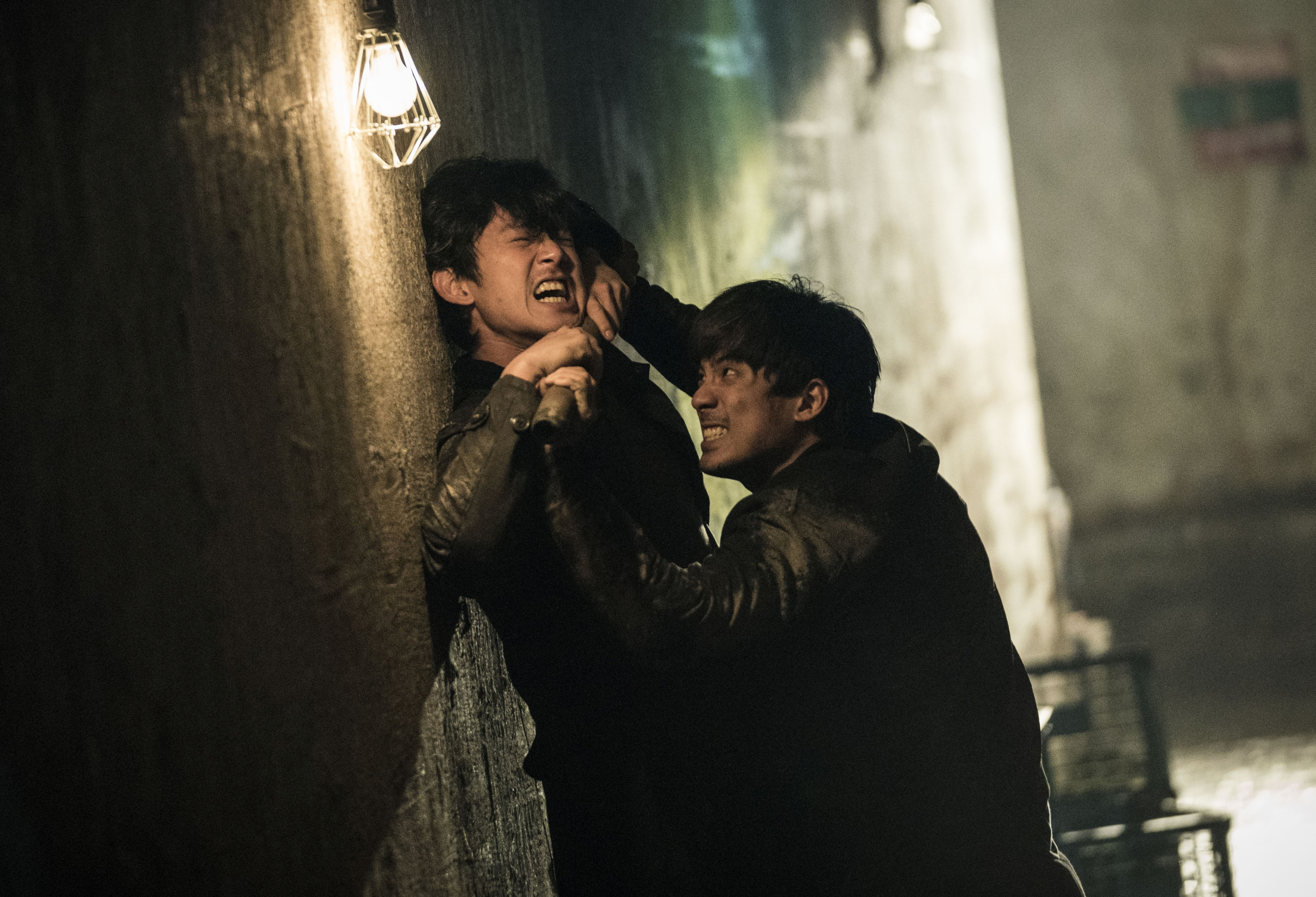
Chasing the Dragon II: Wild Wild Bunch (追龍II:賊王, Wong Jing & Jason Kwan, 2019)

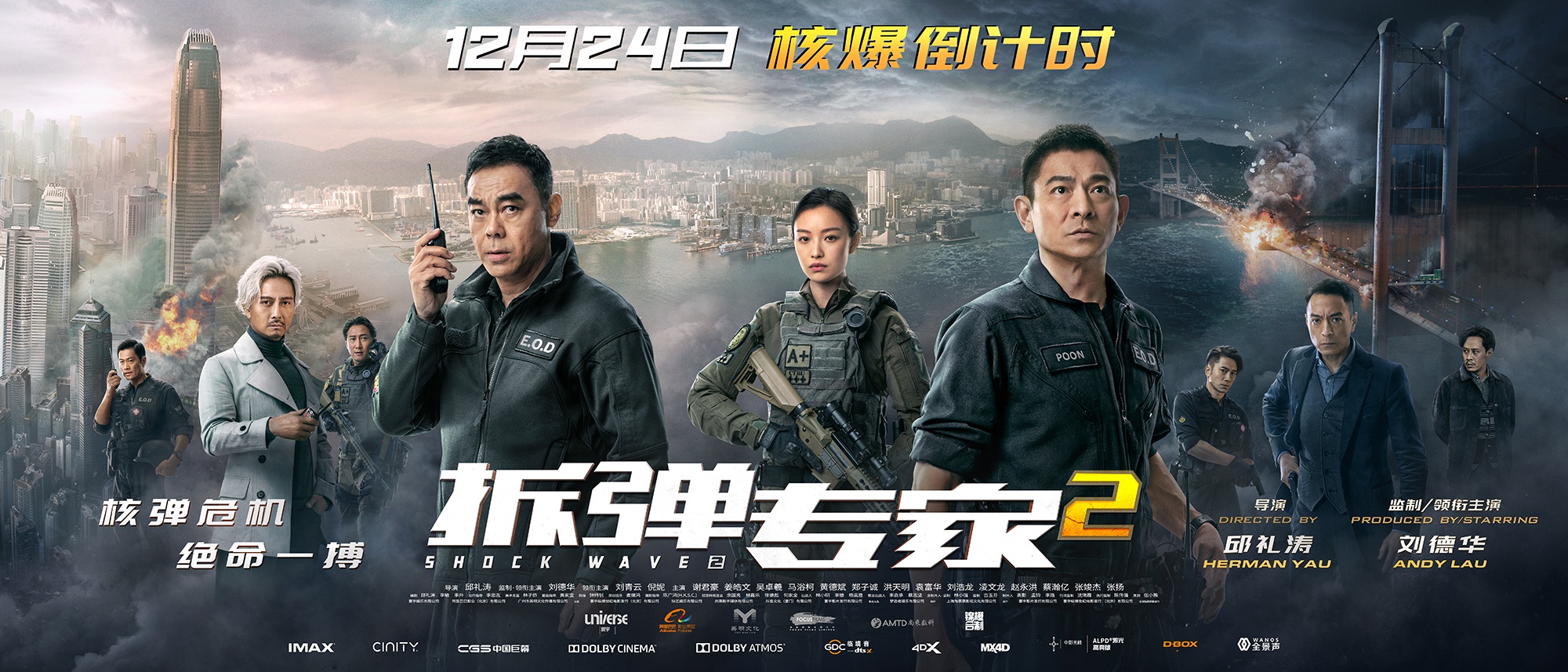
In the grandest tradition of Hong Kong “sequels”, Chasing the Dragon II: Wild Wild Bunch (追龍II:賊王) has almost no connection to 2017’s Chasing the Dragon which starred Donnie Yen and Andy Lau as famed ‘70s gangster Crippled Ho and bent copper Lee Rock respectively. It is however part of a planned trilogy of films directed by Wong Jing and Jason Kwan “celebrating” legendary Hong Kong “heroes”. Abandoning the grand historical sweep of the first film, Wild Wild Bunch situates itself firmly in 1996 on the eve of the handover when, it claims, Hong Kong was close to a lawless state seeing as the colonial British authorities were already in retreat and therefore largely disinterested in governing. 

It’s this laxity, coupled with an age of excess, which has enabled the rise of real life kidnapping kingpin Cheung Tze-keung (Tony Leung Ka-fai) also known as Big Spender and here known as Logan Long. Logan makes his money by ransoming the richest figures not only in Hong Kong but the wealthier stretches of the Sinosphere and the Mainland cops are after him because they see him as an inconvenience from old Hong Kong they’d rather not inherit. Accordingly, they enlist veteran Hong Kong policemen, Inspector Li (Simon Yam Tat-wah) and bomb disposals expert He Sky (Louis Koo Tin-lok), to help them because they’ve heard that Logan is in need of a new explosives guy after the last one blew himself up. Sky is supposed to go deep undercover in Logan’s gang to save his next victim and take him down in the process. 

Though inspired by the real life legend, Sky’s infiltration is obviously fiction and in actuality Cheung Tze-keung was caught before his kidnapping of Macau gambling magnate Stanley Ho, here Standford He (Michael Wong Man-tak), could take place though setting the tale in the former Portuguese colony famous for its casinos (illegal in Mainland China) adds another meta level of colonial critique in situating itself firmly in the world of wealthy elites corrupted by their fabulous wealth. Real life gangster Cheung was apparently a well-liked figure, branding himself as a loveable rogue and less altruistic Robin Hood who liked to spread his wealth around by giving out lavish gifts seemingly at random though also enjoying living the high life himself. Logan is much the same, holing up at his mansion safe house in the rolling hills with his criminal “family”, declaring himself a fair man. If you cross him he’ll be sure to investigate fully but if he finds you betrayed him his revenge will be merciless. He cares deeply about his guys but also, perhaps unwittingly, terrorises them to the extent that they all pretend to enjoy eating durian fruit to please him, while reacting to tragedy with old-fashioned gangster ethics in trading his own girlfriend and a significant amount of cash to a gang member whose pregnant wife ended up dead because of his cowardly brother Farrell (Sherman Ye Xiangming) who is frankly a walking liability. 

Sky too is a family man, constantly worrying about his elderly mother and giving instructions to Li as to how to look after her if anything goes wrong and he doesn’t make it back from Macau. Sky’s mum is also quite concerned that her son has never married, and there is something quite homely in the strangely deep friendship between Li and Sky which has its unavoidably homoerotic context in Li’s cheerfully intimate banter in which it often seems he’s about to kiss his brother-in-arms which might not go down so well with the Mainland censors board who are otherwise so obviously being courted with the heroic presentation of the PRC police force only too eager to clear up the mess the British left behind. 

Then again, Cheung Tze-keung’s case was notable in that is presented an early constitutional conflict to the One Country Two Systems principle seeing as he was a Hong Konger tried (and sentenced to death) on the Mainland for crimes committed outside its jurisdiction, something which had additional resonance in the climate of summer 2019 in which vast proportions of the city came out to protest the hated Extradition Bill. In any case, Wild Wild Bunch owes more to classic ‘90s Hollywood actioners than it perhaps does to local cinema with its frequent bomb disposal set pieces and final climactic car chase which nevertheless literally pushes Logan over the line and into the arms of the PRC, the flamboyant gangster taking a bow as he tears up his ill gotten gains with a rueful grin in acknowledging his loss to a superior power. 


US release trailer (English / Traditional Chinese subtitles)
Call from Darkness (真夜中の招待状, Yoshitaro Nomura, 1981)

“In today’s society, everyone is warped in some way” according to the investigative psychologist at the centre of Yoshitaro Nomura’s Call From Darkness (真夜中の招待状, Mayonaka no Shotaijo, AKA Midnight Invitation). Adapted from the novel by Shusaku Endo, Nomura’s late career psychological mystery places the dark past at the centre of familial implosion as increasingly estranged brothers find themselves falling victim to the same “curse”, called to destruction by the extreme resentment of one who feels himself wronged both personally and on a familial level. 

The film opens, however, with the heroine, Keiko (Asami Kobayashi), visiting a psychiatrist and visibly perturbed by the strange, twitching figures which surround her in the waiting room. The patient immediately before her is irritated by the psychiatrist’s “childish games”, eventually leaving the room in exasperation with the medical staff who refuse to take his symptoms seriously, convincing him that his pain is all in his mind and his lame leg is merely a manifestation of repressed trauma. Nevertheless, Keiko has not come for herself but for her fiancé, Tamura (Kaoru Kobayashi), who has suffered a nervous breakdown after all three of his brothers mysteriously disappeared leaving him feeling as if he must be next. As Dr. Aizawa (Etsushi Takahashi) points out, disappearances are a matter for the police but he does agree to help treat Tamura’s paranoia in the belief that his family circumstances are a series of unfortunate and improbable coincidences rather than a concerted effort to wipe out his bloodline. 

As it turns out, that is not quite true and Tamura perhaps has reason to worry but then there is no one targeting him, in fact no one very interested in him at all, but still he will be sucked into a vortex of guilt and pain despite having, as it turns out, a different name and minimal connection to those who are his brothers by blood. The youngest of the four boys, Tamura was adopted into another family who had no children of their own at eight years old. His mother had already passed away and after his father too died not long after his adoption he never returned to his ancestral home in Kumamoto and had little contact with either of his brothers besides Kazuo (Tsunehiko Watase) with whom he had remained close and who would often visit him when he came to Tokyo on business. The fact of his brothers’ disappearances does not perhaps concern him emotionally, at least until Kazuo too goes missing, as much as its strangeness threatens his ordinary, conventional life not to mention his engagement to Keiko whose parents do, as expected, urge her to reconsider in light of the dark shadows around Tamura’s family history. 

That’s perhaps one reason Keiko is so keen to delve to the bottom of the mystery, not only to cure Tamura’s depression but to defend her choice of husband and therefore the future direction of her life. Aizawa, meanwhile, proves a strange and slightly dubious guide despite his presentation as a figure of infinite authority. He persuades the pair that the answer lies in dreams, intrigued by a recurring nightmare Kazuo had apparently been having about travelling through tunnels and valleys towards a mysterious castle, a dream that Tamura eventually begins dreaming too. Aizawa and Keiko find themselves making a bizarre visit to a spirit medium, while Aizawa later recommends experimental hypnotherapy treatments, diagnoses based on glanced body language, and describes the oldest brother, Junkichi (Makoto Fujita), as a probable misanthropic sadist based on a series of drawings he made of a man with serious deformities. He later walks back some of these statements as strategy in his quest to help Tamura, but you have to admit that his practice is esoteric to say the least. 

Central to events, the deformed man turns out not to be an invention of Junkichi but a very real “victim” and perhaps symbol of the “warped” society Aizawa alludes to at the film’s conclusion. We learn that the young man suffered from rheumatism and was recommended experimental treatment which led to his deformity and apparently left him brain damaged, unable to look after himself. The mysterious calls the brothers receive late in the night are reminders of the harm they have caused, beckoning them towards a spiritual retribution though there is of course no real way to atone, the young man can never be restored. It’s this sense of dread that leads Aizawa and others to describe what’s happened to the brothers as a “curse” though it’s one largely self-imposed if perhaps precipitated by the intense resentment of the wounded parties which sends itself through the air, and the telephone lines, to convince the brothers they must pay though, in real terms, the young man’s fate is not really their fault only that of the doctors who developed the drug and administered it if, as Aizawa implies, they were aware of what could happen if they went too far. 

Nevertheless, it seems that responsibility must be taken though the extents of that responsibility, rather than the secrecy or the events themselves, eventually corrupt the previously pure and strong relationship between Keiko and Tamura. He wants to end it with money, she is disappointed in his cynical conservatism and lack of compassion. Aizawa meanwhile, believes that the brothers were drawn to death, tired of the business of living and perhaps looking for an exit and an excuse to give in to despair. Nomura slips into painful negative for his explanatory flashbacks, while undercutting a sense of reality through the dissolves and superimpositions of his ethereal dream sequences, but finally returns us to the “warped” society of the present day as the survivors look for new ways of living with a newfound darkness.