On Happiness Road (幸福路上, Sung Hsin-yin, 2017)

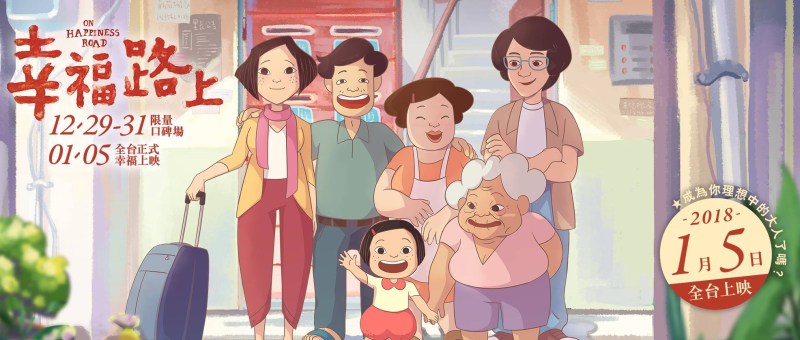
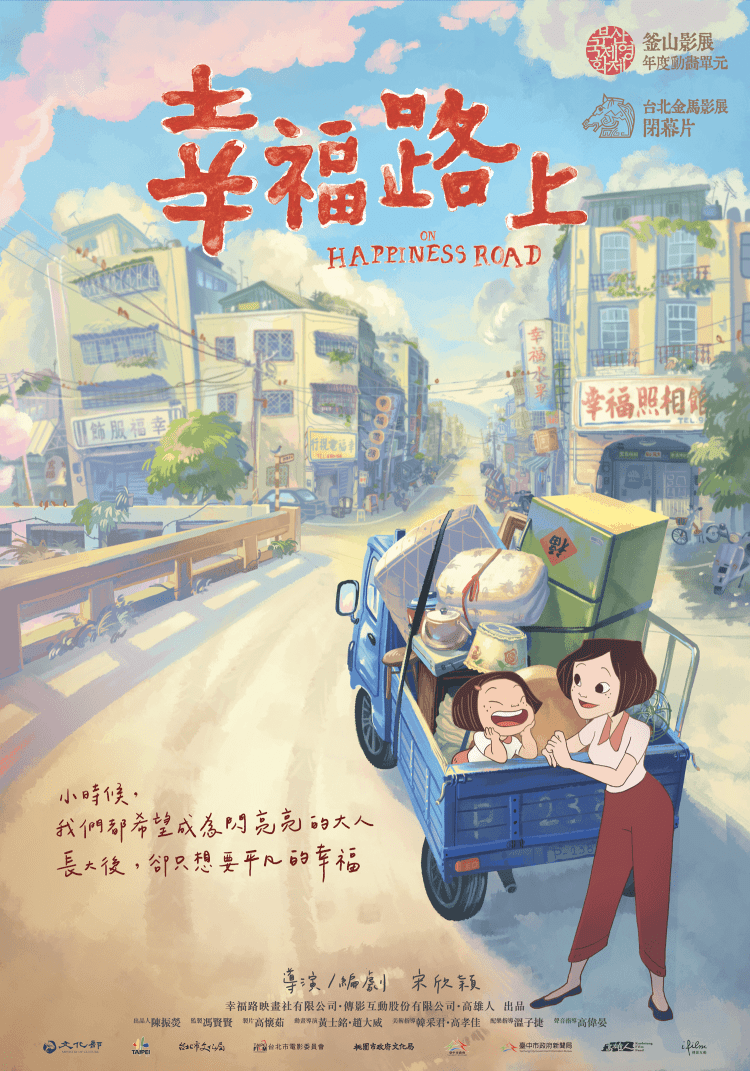
On happiness road posterSung Hsin-yin attempts a series of impossibles with her debut feature, On Happiness Road (幸福路上, Xìngfú Lùshang). In a bold move she has crafted what is possibly the last Taiwanese animated feature while attempting to pack 40 years of turbulent political history into the story of a lost middle-aged women ruminating on her cheerful, uncomplicated childhood on the distinctly humble Happiness Road. Battling the weight of parental expectation and the false promises of a better life overseas, her heroine, Chi, makes an enforced return to source on hearing that her beloved, part-aboriginal grandmother has passed away.

Chi (Gwei Lun-mei), an unhappy 30-something woman, receives the call in America where she has been living with her American husband. Unbeknownst to her family, Chi’s marriage is all but over and she finds herself at something of a crossroads, half wondering if it’s time to come home to Taiwan and half humiliated in being seen to have returned with her tail between her legs. She comes home, alone, to mourn her grandmother but finds herself wandering back through the streets of memory and fantasy recalling all the small details and minor incidents that brought her to his point in the hope of figuring out where it is she needs to go next.

Chi was born in 1975 on the very day that Chang Kai-shek died. Chang was by then a brutal dictator but the brainwashed little Chi who still sees his picture everywhere and has been taught to respect his many virtues idolises him all the same. Her family, uneducated ordinary working people, speak Taiwanese Hokkien at home but at school she has to speak Mandarin – the “official” language, all dialects are banned. Thus little Chi finds her parents’ language backward and embarrassing, their failure to adapt to “modernity” a hurdle in her own forward development.

As time moves on, Chi’s “Taiwaneseness” becomes something she feels she must sacrifice in order to purse the conventional success expected by her parents and the society at large. Little Chi, riding in the back of a pickup truck with her parents on the way to Happiness Road, asks them one of the biggest questions of all – what does “happiness” mean. Her parents, unable to answer, shush her, but her father (Chen Po-cheng) seems pleases his daughter has such big thoughts and wonders if she might become a philosopher one day. Oh no, replies her mother (Jane Liao). There’s no money in that – she’ll be a doctor! Her parents want for her all the material comforts of the settled middle classes, but her society tells her to attain them she must leave her nativeness behind – speak Mandarin, forget about granny’s ancient wisdom, and eventually go abroad leaving the “old fashioned” island far behind.

Chi has done everything she was supposed to do. She studied hard, got a good degree, got an OK job, and then ended up going to America almost on a whim. She reached the destination expected of her, but still she isn’t happy. Her marriage is failing as she and her American husband want very different things out of life and Chi wonders if she really belongs in this insincere culture which, at the end of the day, has never quite accepted her. In America she experienced mild forms of racism but then didn’t her half-American friend, Betty (Li Chia-hsiu) – blonde with blue eyes but speaking only Mandarin, experience exactly the same thing in Taiwan? Pregnant but seeking an escape from an unhappy marriage, Chi also worries what the future will be if she chooses to come home and raise her half-American child alone in a perhaps unforgiving society.

Yet reuniting with Betty she discovers that even if her life has not quite turned out the way she planned, she is blissfully happy as a single mother to two children, blonde like her but with brown eyes. Chatting with the ghost of her late grandmother who still has a few lessons to impart, Chi learns to see with the eyes of her heart and comes to realise that sometimes the road to happiness passes through a few uncertain turns but that that’s OK. Her parents, whom she feared would judge her for a failed marriage and a child born after divorce, are predictably enough only too happy at the prospect of their only daughter coming home for good and finally making them grandparents no matter the circumstances surrounding the origin of both those events. Chi may not have wanted the “road” her parents and her society had attempted to lay down before her, but discovers that departing from it is not failure and that “happiness” is a concept you are free to define for yourself. Beautifully animated and filled with whimsical flights of fancy, On Happiness Road is a sometimes melancholy but heartwarming tale of life in modern Taiwan as one lost woman finally discovers the road home and realises it has been waiting for her all along.


Screened at the 20th Udine Far East Film Festival.

International trailer (English subtitles)

Satan’s Slaves (Pengabdi Setan, Joko Anwar, 2017)

Satan's Slaves posterBad things happen in houses where they don’t pray. So says a kindly Imam in Joko Anwar’s chilling horror remake Satan’s Slaves (Pengabdi Setan). Taking inspiration from a 1982 classic, Anwar updates the tale of supernatural dread and familial breakdown for the new century while maintaining the early ‘80s setting and pushing back still further into the superstitious, gothic past. The family, threatened by financial, social, and spiritual pressures is stretched to breaking point by supernatural unease. Advised that the cure for their ills is religion, they begin to conform but, unlike the original, godliness cannot save them from a greater evil and if the family chooses to save itself, it will be through acts of selfless love rather than brutal adherence to a set of outdated social codes.

As the film begins, eldest daughter Rini (Tara Basro) – a 22-year-old former college student, has given up her studies and become the defacto maternal figure to her small family while her mother, Mawarni (Ayu Laksmi ), remains bedridden after a long illness. Mawarni was once a famous singer and the family’s breadwinner, but having been out of the spotlight so long her music has begun to go out of fashion. Royalties have dried up and there is little prospect of any further income. Lacking the funds to pay for ongoing hospital care, the family have brought Mawarni home to care for her themselves though the father (Bront Palarae), worrying about feeding his children, secretly urges his wife to be on her way to a better place, as a disturbed Rini hears him say from outside the door. Soon enough, Mawarni is gone, but not forgotten. Strange noises fill the old mansion as Mawarni’s bell continues to tinkle in the night, her records play without warning, and radios reset themselves to play her song. When dad leaves the siblings – 16-year-old Tony (Endy Arfian), 10-year-old Bondi (Nasar Annus), and 7-year-old Ian (M. Adhiyat) who is deaf and mute, in Rini’s care to head into the city in search of money, the kids are left to deal with the legacy of his moral cowardice all alone.

Adopting the trappings of the classic European gothic chiller, Satan’s Slaves sets itself in an old fashioned villa located in a forest some distance outside of the city. If the house were not creepy enough on its own, it is also conveniently located next to the local graveyard where Mawarni has now been laid to rest (in theory, at least). Moving in “next door”, a kindly Imam and his spiritually open minded son Hendra (Dimas Aditya) promise to provide pastoral care to the bereaved children but find themselves engulfed by the house’s increasing power to isolate and terrorise.

Tipped off by Hendra, Rini discovers a dark and disturbing secret regarding her mother’s former life and her own origins. Devolving into a vast conspiracy involving satanic fertility cults and their apparently omnipresent spy networks, Satan’s Slaves revels in its oppressive atmosphere of supernatural dread and human impotence as the children find themselves surrounded on all sides by faceless, umbrella wielding zombies lying in wait to tear their home apart.

Rini is told, by an old friend (Egy Fedly) of their grandmother’s (Elly D. Luthan), that the fertility cult requires child sacrifice but that the cult cannot take the child unless the family gives it up. She is being asked, quite literally, to put her life (and those of her siblings) on the line in order to save “the family”, yet “the family” or more particularly hers already has its problematic elements. Rini’s grandmother, recently deceased in mysterious circumstances, was not originally accepting of her daughter-in-law because of a class difference and also because of her occupation as an “entertainer” which was not considered respectable at the time. She only warmed to Mawarni once the children were born which was already some years into the marriage as Mawarni, finding it difficult to conceive, became desperate for a child and for her mother-in-law’s acceptance.

Rather than the lack of spiritual rigour which the Imam blames for the increasing demonic presence, it is these social taboos which seem to have opened the door to evil. The kids try the religious solution, but unsurprisingly it doesn’t help them. Literally haunted by their late mother who feels herself “abandoned” by her family, her loving husband hastening her death now that she is no longer economically useful and has become an unbearable burden, the only way to defeat this curse is to reverse it through unconditional familial love and solidarity even given what Rini now knows about her history. Oppressive in atmosphere yet filled with an eerie beauty as shadowy figures slowly colonise the misty Indonesian forest, Satan’s Slaves challenges the idea of “the family” in the face of strict patriarchal social codes and finds that in order to survive it must salvage itself through acts of defiance and self identification.


Screened at the 20th Udine Far East Film Festival.

Original trailer (English subtitles)

Little Forest (리틀 포레스트, Yim Soon-rye, 2018)

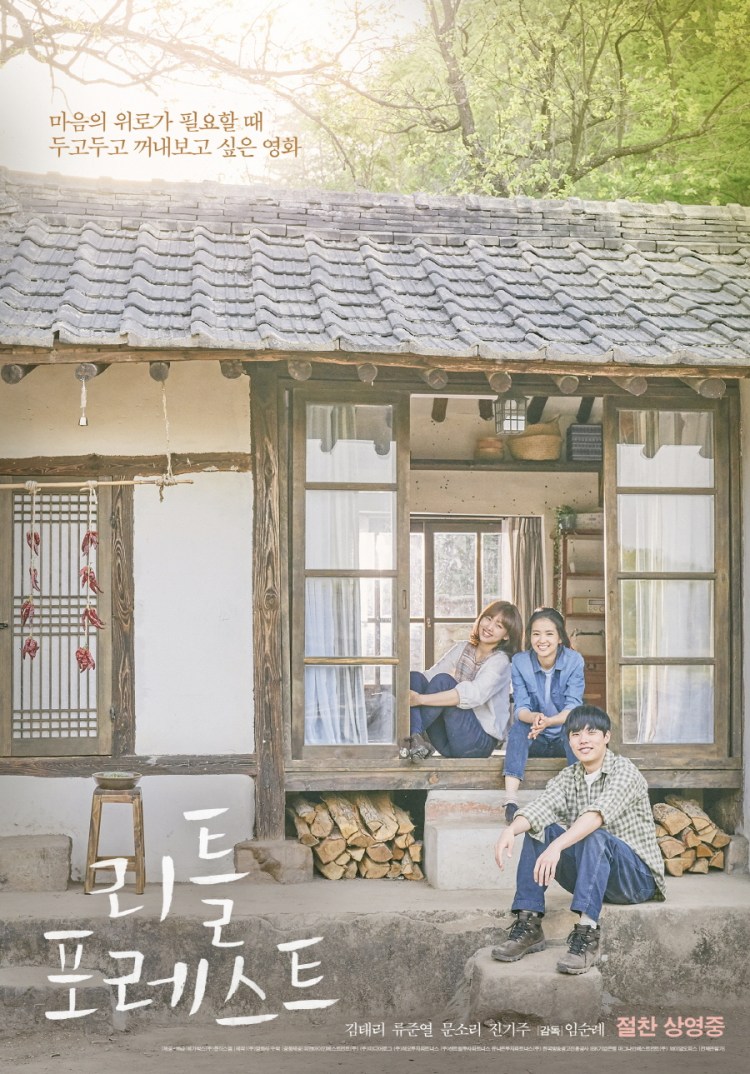
Little forest korean posterWhen you don’t know what to do, you go home. The logic seems sound and indeed the idea is common in many cultures, but the heroine of Little Forest (리틀 포레스트) has gone home to an empty, snow covered house with the intention of burying herself away rather than basking the unconditional support of the people who raised her. Yim Soon-rye, leading light of the Korean New Wave, takes the original manga by Daisuke Igurashi which was previously adapted as a two-part, four hour exploration of Japanese rural life by Junichi Mori, and relocates it to Korea finding that urban malaise and youthful indecision are from isolated phenomena.

Hye-won (Kim Tae-ri) has come home “for a few days”. What she wants is to be alone for a while, to take a time out from her life before trying to figure out what to do next. Accordingly, as she’s in hiding, she didn’t want anyone to know she’s here but perspicacious aunt Bok-soon has spotted smoke on the horizon and come running. Bok-soon thought that Hye-won’s long absent mother who abandoned her in the last year of high school might have been making a rare visit and is surprised to find her daughter instead, though perhaps not quite so much as you’d think. Nothing stays secret for long in a village, and Hye-won’s return is soon discovered first by the slightly unwelcome attention of the older village ladies and then by her treasured childhood friends, Eun-sook (Jin Ki-joo) and Jae-ha (Ryu Jun-yeol) who gives her a pet dog to look after in the hope that she will be eventually decide to stay for good.

Hye-Won faces many of the same problems as the heroine of Mori’s Japanese adaptation, but whereas Ichiko had come back in defeat and heartbreak, Hye-won’s flight is mostly pride mixed with fear and awkwardness. She admires Jae-ha who once lived in the city but eventually came home to be himself, rejecting the conformist salaryman life to be his own his boss, but knows deep down that her decision to retreat to the country is a cowardly attempt to delay dealing with the problems of adult life. After her mother left, Hye-won went to Seoul for university where she, along with her boyfriend, was studying for a teaching exam which only he passed. Wounded, Hye-Won has run away. Refusing her boyfriend’s calls and cocooning herself inside her childhood home she delays the inevitable breakup conversion along with the galling need to congratulate him on his exam success while silently nursing her own humiliating failure to match him.

Rather than the strained relationship Ichiko had with her long absent mother, Hye-won’s feelings run more towards a healthy competition – she wants to exceed her mother in all things but most especially as a cook. Unsatisfied with the tasteless pre-packaged nature of big city food, Hye-won came home because she was hungry, spiritually but also physically. Rejoicing in nature’s bounty, she finds new and exciting ways to cook the various fruits and vegetables grown by her own hand, living closely with the land and running with the rhythms of the seasons. In Seoul she ate cold food all alone, at home she shares her table with her two friends eager to see what she’s come up with to combat the latest glut while filling their souls with the warmth of friendship.

Despite her mild resentment and lingering anger towards her mother for disappearing so abruptly, Hye-won eventually comes to a kind of acceptance, realising that her mother’s “little forest” was raising her but seeing as she declared to her intention to repot herself somewhere else, her mother’s work was done and now it’s time for Hye-won to find her own little forest and set about tending to that. Still unsure if she’s in the country because that’s where she needs to be or is merely afraid to leave and risk failure, Hye-won eventually finds the strength move forward, breaking out of her extended period of hibernation to look for her answers wherever they may lie. Filled with the joy of home cooking and soulful down-home wisdom, Little Forest adapts itself well enough to the Korean climate, finding that life in the country, hard as is it may be, offers its own rewards in the simple pleasures of unconditional friendship and the natural freedom to enjoy all nature has to offer.


Screened at the 20th Udine Far East Film Festival.

International trailer (English subtitles)

The Promise (เพื่อน..ที่ระลึก, Sophon Sakdaphisit, 2017)

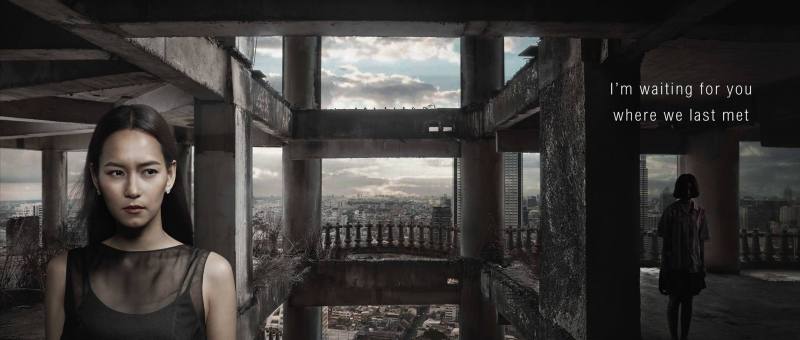
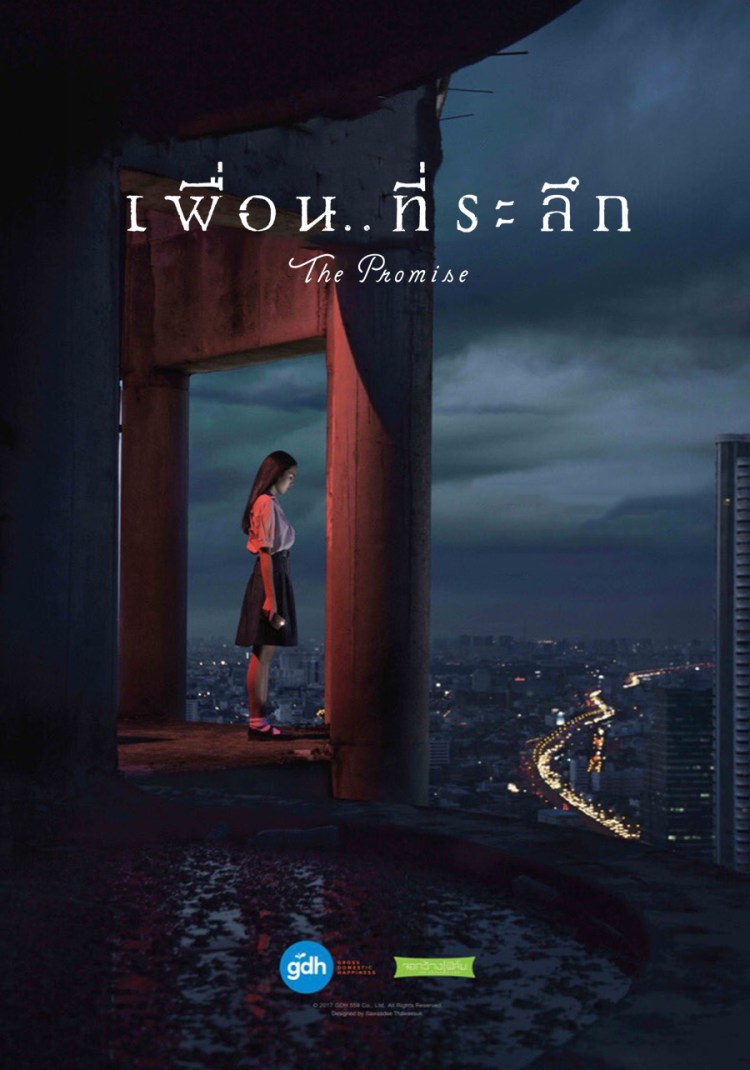
The Promise Thai 2018 poster20 years on the Asian financial crisis continues to loom large over the region’s cinema, providing fertile ground for extreme acts of transgression born of desperation in the wake of such a speedy decline. Sophon Sakdaphisit’s ghost story The Promise (เพื่อน..ที่ระลึก, Puen Tee Raluek) places the financial crisis at its centre in its cyclical tales of betrayed youth who find themselves paying heavily for their parents’ mistakes through no fault of their own. Yet there is a fault involved in the betraying of a sacred promise between two vulnerable young people made half in jest in a fit of pique but provoking tragic consequences all the same. Sometimes lonely death chases the young too, trapping them in solitary limbo growing ever more resentful of their heinous betrayal.

In 1997, Ib (Panisara Rikulsurakan) and Boum (Thunyaphat Pattarateerachaicharoen) are best friends. Daughters of wealthy industrialists making an ill fated move into real estate with the building of a luxury tower block destined never to be completed, Boum and Ib may have been separated by being sent to different schools, but they spend all of their free time together, often hiding out on the construction site fantasising about sharing an apartment there and listening to sad songs on Ib’s ever present Discman.

When the crisis hits and their fathers are ruined, the girls pay the price. Not only are they left feeling betrayed and humiliated in being so abruptly ejected from their privileged world of mansions and horse riding, but also suffer at the hands of the fathers they now despite – Ib more literally as she is physically beaten by her strung out, frustrated dad. Already depressed, Ib talks ominously about a gun her mother has hidden in fear her father may use it to kill himself. When Boum falls out with her mum, she gives the go ahead for a double suicide but can’t go through with it after watching the twitching body of her friend, lying in a pool of blood after firing a bullet up through her chin.

20 years later, Boum (Numthip Jongrachatawiboon) is a successful industrialist herself, apparently having taken over her father’s company and turned it around. The economy is, however, once again in a precarious position and Boum’s business is floundering thanks to a set back on a high profile project. The idea is floated to finish the tower left incomplete by the ’97 crisis to which Boum reluctantly agrees. Meanwhile, Boum’s daughter Bell (Apichaya Thongkham) is about to turn 15 – the same age as she was when she agreed to die with Ib, and has recently started sleepwalking in ominous fashion.

Sophon Sakdaphisit neatly compares and contrasts the teenagers of 20 years ago and those of today and finds them not altogether different. In 1997, Boum and Ib keep in touch with pagers and visit photo sticker booths in the mall, splitting earphones to listen to a Discman while they take solitary refuge at the top of a half completed tower. In 2017, Bell never sees her friend in person but keeps in touch via video messaging, posting photos on instagram, and sending each other songs over instant messenger. Yet Bell, in an ominous touch, still graffitis walls to make her presence felt just as her mother had done even if she fetishises the retro tech of her mother’s youth, picking up an abandoned pager just because it looks “cool”.

In 2017, the now widowed Boum appears to have no close friends though her relationship with her daughter is tight and loving. A “modern” woman, Boum dismisses the idea that a malevolent spirit could be behind her daughter’s increasingly strange behaviour but finds it hard to argue with the CCTV footage which seems almost filled with the invisible presence of something dark and angry. Realising that the circumstances have converged to bring her teenage trauma back to haunt her – Ib’s suicide, the tower, her daughter’s impending birthday, Boum is terrified that Ib has come back to claim what she was promised and plans to take her daughter in her place in revenge for her betrayal all those years ago.

Bell is made to pay the price for her mother’s mistakes, as she and Ib were made to pay for their fathers’. Motivated by intense maternal love, Boum nevertheless is quick to bring other people’s children into the chain of suffering when she forces a terrified little boy who has the ability to see ghosts to help her locate the frightening vision of her late friend as she darts all over the dank and spooky tower block, threatening the financial security of his family all of whom work for her company and are dependent on her for their livelihoods.

In order to move forward, Boum needs to address her longstanding feelings of guilt regarding her broken promise – the suicide was, after all, her idea even if she was never really serious and after witnessing her friend die in such a violent way, she simply ran away and left her there all alone and bleeding. Yet rather than attempting to keep her original promise Boum makes a new one with her imperilled daughter – that she will keep on living, no matter what. The slightly clumsy message being that commitment to forward motion is the only way to leave the past behind, accepting your feelings of guilt and regret but learning to let them go and the ghosts dissipate. Sophon Sakdaphisit makes use of the notorious, believed haunted Bangkok tower to create an eerie, supernaturally charged atmosphere of malevolence but the ghosts are in a sense very real, recalling the turbulence of two decades past in which fear and hysteria ruled and young lives were cut short by a nihilistic despair that even friendship could not ease.


Screened at the 20th Udine Far East Film Festival.

International trailer (English subtitles)

The Scythian Lamb (羊の木, Daihachi Yoshida, 2017)

Scythian Lamb posterSometimes life hands you two parallel crises and allows one to become the solution to the other. So it is for the bureaucrats at the centre of Daihachi Yoshida’s The Scythian Lamb (羊の木, Hitsuji no Ki). The prisons are overcrowded while rural Japan faces extinction thanks to depopulation. Ergo, why not parole some of those “low risk” prisoners whose problems have perhaps been caused by urban living and lack of community support on the condition that they move to the country for a period of at least ten years and contribute to a traditional way of life. The prisoners get a fresh start where no one knows them or what they might have done in the past, and the town gets an influx of new, dynamic energy eager to make a real go of things. Of course, there might be some resistance if people knew their town was effectively importing criminality, but that’s a prejudice everyone has an interest in resisting so the project will operate in total secrecy.

Not even civil servant Tsukisue (Ryo Nishikido), who has been tasked with rounding up the new recruits, was aware of their previous place of residence until he started to wonder why they were all so unusual and evasive. Tsukisue likes to think of himself as an open-minded, kind and supportive person, and so is disappointed in himself to feel some resistance to the idea of suddenly welcoming six convicts into his quiet little town, especially on learning that despite being rated “low risk” they are each convicted murderers. Thus when a “murder” suddenly happens in the middle of town, Tsukisue can’t help drawing the “obvious” conclusion even if he hates himself for it afterwards when it is revealed the murder wasn’t a murder at all but a stupid drunken accident.

The ex-cons themselves are an eccentric collection of wounded people, changed both by their crimes and their experiences inside. Many inmates released from prison find it difficult to reintegrate into society, especially as most firms will not hire people with criminal records which is one of the many reasons no one is to know where the new residents came from. Yet, there are kind and understanding people who are willing to look past the unfortunate circumstances that led to someone finding themselves convicted of a crime such as the barber (Yuji Nakamura) who reveals his own difficult past and happiness in being able to help someone else, or the woman from the dry cleaners (Tamae Ando) who is upset by other people’s reaction to her new recruit who, it has to be said, looks like something out of Battles without Honour. Tsukisue doesn’t know anything about these people save for the fact they’ve killed and has, unavoidably, made a judgement based on that fact without the full details, little knowing that one, for example, killed her abusive boyfriend after years of torture or that another’s crime was more accident than design.

Tsukisue later becomes friends with one of the convicts, Miyakoshi (Ryuhei Matsuda), whose distant yet penetrating stare makes him a rather strange presence. Miyakoshi is the happiest to find himself living in the small coastal town, enjoying the lack of stimulation rather than resenting the boredom as some of the other new residents do. Despite his obvious inability to “read the air”, Miyakoshi is quite touched by Tsukisue’s kindness and by the way he treated him as a “normal” person despite his violent criminal past, excited to have made a real “friend” at last. Trouble begins to brew when Miyakoshi joins Tsukisue’s garage band and takes a liking to another of its members – Aya (Fumino Kimura), another returnee from Tokyo with a mysterious past though this time without a prison background. Tsukisue has had a long standing crush on Aya since high school but has always been too shy to say anything. He thought now was his chance and is stunned and irritated to realise Miyakoshi might have beaten him to it and, even worse, given him another opportunity to disappoint himself though doing something unforgivable in a moment of pique.

The bureaucrat in charge of the scheme wanted it kept secret in part because he was afraid the criminals might find each other and start some sort of secret murderer’s club (betraying another kind of prejudice) which actually turns out not to be so far fetched, though the main moral of the story is that kindness, understanding, and emotional support go a long way towards keeping the peace. Meanwhile, another of the convicts has taken to “planting” dead animals inspired by a plate she finds on a refuse site featuring a decoration of a “Scythian Lamb” – a plant that grows sheep which die when severed from their roots, and the evil fish god Nororo sits atop the cliffs in reminder of the perils of the sea. The Scythian Lamb is a poignant exploration of the right to start again no matter what might have gone before or how old you are. It might not always be possible to escape the past, and for some it may be more difficult than others, but the plant withers off the vine and there’s nothing like good roots for ensuring its survival.


Screened at the 20th Udine Far East Film Festival.

Original trailer (English subtitles)
Tomorrow is Another Day (黃金花, Chan Tai-lee, 2017)

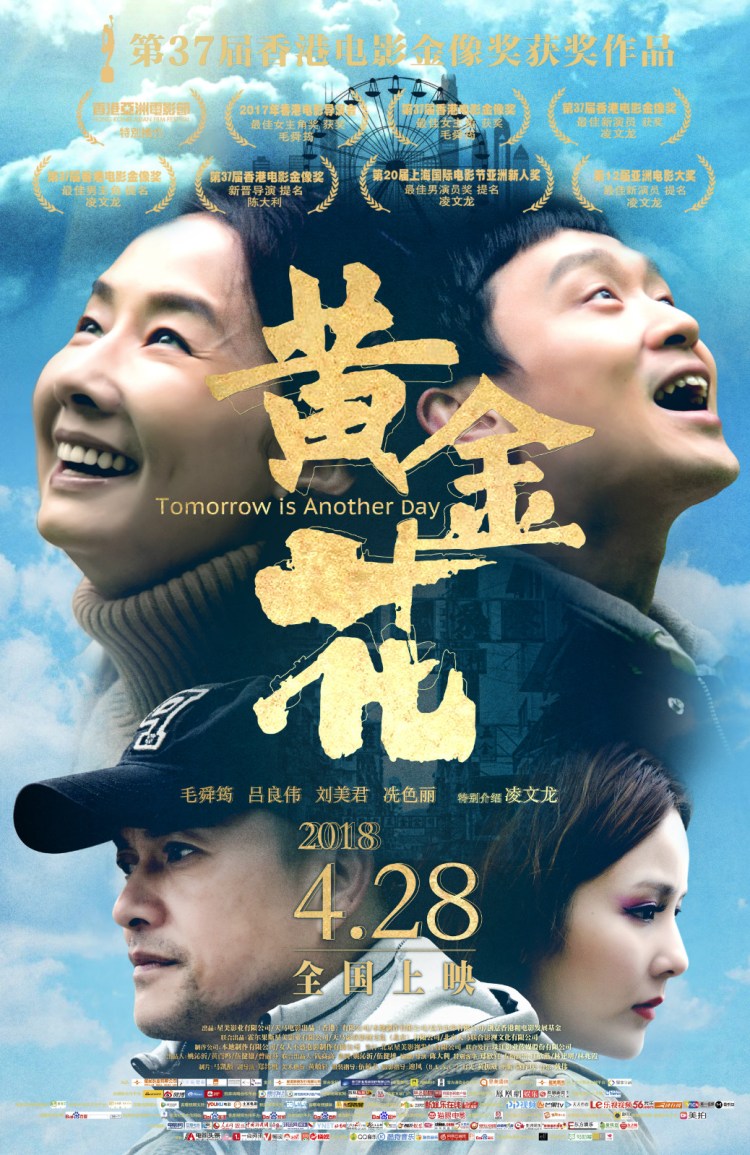
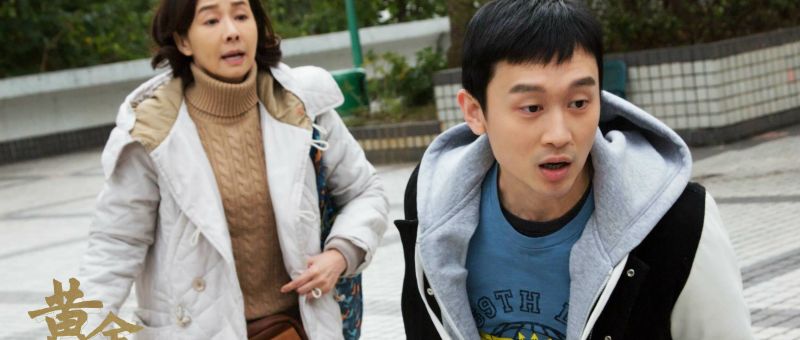
tomorrow is another day posterMiddle-aged malaise is fast becoming a dominant theme in Chinese language cinema, but the pressures faced by the heroine of the debut feature from Ip Man screenwriter Chan Tai-lee are compounded by a series of additional responsibilities and the relative lack of support available to help her cope with them. Tomorrow is Another Day (黃金花) is, in many ways, a family drama with a sympathetic depiction of the demands of caring for a child with special needs at its centre, but it’s also the story of a marriage and of the essential bonds between a mother and a son as the family struggles to survive in a sometimes hostile environment.

Mrs. Wong (Teresa Mo), interviewed at a community centre, relates the routines of her daily life to a camera crew. Describing herself as a “regular housewife”, Mrs. Wong’s existence revolves around caring for her husband (Ray Lui) – a driving instructor, and her 20-year-old autistic son, Kwong (Ling Man-lung). She tells the film crew she is happy with her life and on one level she is, but she also fears her philandering husband is up to his old tricks again. Mr. Wong is indeed having an affair with one of his pupils, a much younger nurse called Daisy (Bonnie Xian Seli) who seems to have well and truly got her hooks into him. Knowing of her husband’s string of extra-marital affairs which has spanned the entirety of the marriage, Mrs. Wong has made a decision to turn a blind eye for the sake of her son but this latest dalliance has proved difficult for her to bear. After Daisy randomly invites herself into the family home when Mrs. Wong is shopping, the couple argue and Mr. Wong walks out leaving Mrs. Wong to care for Kwong all alone.

Kwong, usually cheerful and well behaved, experiences occasional meltdowns when told he can’t have something that he wants, often resorting to frustrated acts of self harm including bashing his head against nearby solid objects. Though Kwong is not violent towards others, he is now a grown man and much stronger than his mother who finds it difficult to help him calm down on her own. Mr. Wong’s forearms are a mess of scars and bruises received whilst trying to restrain his son from hurting himself, and the physical strain of caring him has often weighed heavy on his conflicted father’s mind.

Though Mrs. Wong and Kwong experience frequent discrimination from those who are unaware of his needs – other mothers pull their children out of the playground when Kwong comes to play, and Mrs. Wong finds it difficult to get a part-time job when her prospective employers spot Kwong standing beside her, the other neighbourhood housewives have become used to Kwong’s way of being and are keen to help out where they can. Like Mrs. Wong, many of the other women have their own problems whether worrying about the (lack of) academic progress of their sons, or trying to combat the potential loneliness of early widowhood through friendship and community. Hearing of Mrs. Wong’s marital problems via the neighbourhood grapevine (another source of humiliation for Mrs. Wong), everyone has taken her side against the villainous Daisy but they’re also worried Mrs. Wong may consider harming herself while faced with so many conflicting pressures.

Mrs. Wong however, has half her mind on revenge and has taken to watching crime documentaries which give her the idea that she could get herself a convenient alibi by going to the Mainland by official means and then smuggling herself back in to off Daisy in the hope that her husband might finally remember his responsibilities. Daisy, it has to be said, is a one note villain and it’s difficult to see why she is so intent on pursuing a dead end romance with a middle-aged, married, driving instructor without coming to the conclusion that she must love causing trouble, especially as Mr. Wong seems to find her quite irritating even once he’s taken the “decision” to leave his family for her. Mr. Wong himself is also a bundle of contradictions but emerges as a weak willed man who has never been able to fully commit to his marriage and struggles with the responsibility involved in being the father of a child with special needs. Though he eventually seems to reconcile himself to his role as his son’s father and his wife’s husband, there is something conceited in his belief that his family will simply take him back when he has caused them so much pain and suffering by his hastily taken decision to abandon them.

Kwong is more perceptive than his mother gives him credit for, and Mrs. Wong too is eventually forced to consider the effect her darkening mindset has had on his emotional wellbeing. Tomorrow is Another Day offers no easy answers in its sympathetic portrayal of a middle-aged woman driven to extremes by a series of conflicting pressures but eventually finds finds comfort in living in the now as the family begins to find its way home, cutting through the noise of a high pressure city to rediscover what it is that’s really important.


Tomorrow is Another Day receives its US premiere as the closing night film of the sixth season of Chicago’s Asian Pop-Up Cinema programme on 16th May, 2018. The screening begins at 7pm, AMC River East 21 and tickets are already on sale via the official website.

Asian Pop-Up Cinema will return for the seventh season in the autumn – make sure you’re up to date with all the latest information by following the festival on Twitter, Facebook, Instagram, and Vimeo.

Original trailer (Cantonese with English/Traditional Chinese subtitles)

The Running Actress (여배우는 오늘도, Moon So-ri, 2017)

running actress posterIn international eyes at least, Moon So-ri is one of Korea’s most prominent actresses. She has worked with such highly esteemed directors as Lee Chang-dong, Hong Sang-soo, and Park Chan-wook, yet she continues to face the same kinds of issues as many women in the film industry despite her immense critical success and popularity at the box office. The Running Actress (여배우는 오늘도, Yeobaewooneun Oneuldo) is her first feature as a director and brings together three of her short films which neatly form a tryptic depicting the trials and tribulations of the contemporary actress.

Moon also stars in the films, playing a character called Moon So-ri, apparently inspired by her “real” life. Kicking off with the first segment titled The Actress, Moon introduces the fears and anxieties which recur throughout most notably in her preoccupation with gaining good roles and worrying that she is losing out on them though not being “pretty” enough. Her friends, attempting to be supportive, only add to her discomfort by assuring her that she is pretty “in her own way” and reminding her that in any case she is a wonderful actress. Confidence at rock bottom, Moon laments that her industry prefers airheaded beauty to technical skill and is unwilling to accept that women continue to exist past the age of 25 without suddenly morphing into spiky aunties and salty grandmas. Unexpectedly running into a producer whilst hiking, she gets a temporary boost when it seems he has her in mind for a dream project with a director she’s long wanted to work with but is dismayed when she realises the character has a college age child meaning she’ll be making a possibly irreversible step into playing suffering mothers rather than interesting women with nuanced character arcs.

Meanwhile, she runs into the producer and his friends at an inn on the way down and is forced to endure a drinking session with two starstruck fans whose increasingly drunken conversation turns to the rude and loutish in which they too begin picking apart Moon’s looks while mocking her acting skills, one of them even offering a slightly offensive caricature of her award winning performance as a disabled woman in Lee Chang-dong’s Oasis (the title of which he seems to have forgotten).

Moon’s fears and insecurities follow her into her family life in the second chapter, The Running Actress, which finds her attempting to juggle the demands of being a wife and mother with her acting career. In a running joke, everyone seems to assume that mega famous actress Moon So-ri must be filthy rich but like everyone else she has trouble making ends meet, especially as she is constantly worrying over where the next job is coming from. As if that wasn’t enough she also has to put up with her mother continuing to treat her like a petulant teenager (which to be fair her behaviour sometimes mimics) and trading photo opportunities for free dental work, while her adorable little daughter is sharp as a tack. 

The social and the professional come together in the final segment which sees Moon attend the funeral for a director she once worked with years ago and to tell the truth did not particularly like. Planning to show her face but not stay very long, Moon is dismayed to realise she is one of an extremely small number of mourners which include a drunken actor she doesn’t really get on with either, and an aspiring young actress who may have been involved in an improper relationship with the late director in the hope of furthering her career. In a lovely human touch, Moon breaks away from the rapidly declining situation at the wake to spend some time with the director’s young son who has been left all alone watching a few home videos his father shot by means of a handheld projector.

The film takes its title from a humorous moment in the second chapter in which Moon suddenly orders her driver to stop the car and jumps out to run away screaming, making a bid for frustrated freedom from her often exasperating life and career. Moon is obviously not afraid to poke fun at herself or her industry, taking her (presumably very real) fears and insecurities and exposing them for all to see. Taking a cue from Hong Sang-soo, Moon’s deadpan style only adds to the comic effect of her razor sharp dialogue which is filled with small moments of everyday humour somehow assuming wider dimensions thanks to the well crafted nature of the script. Addressing real problems faced by women today in all walks of life, The Running Actress is a warm and funny effort from the veteran performer turned first time director and will hopefully pave the way for an interesting second career.


Screened at the 20th Udine Far East Film Festival.

Original trailer (Korean subtitles only)

Mori, The Artist’s Habitat (モリのいる場所, Shuichi Okita, 2018)

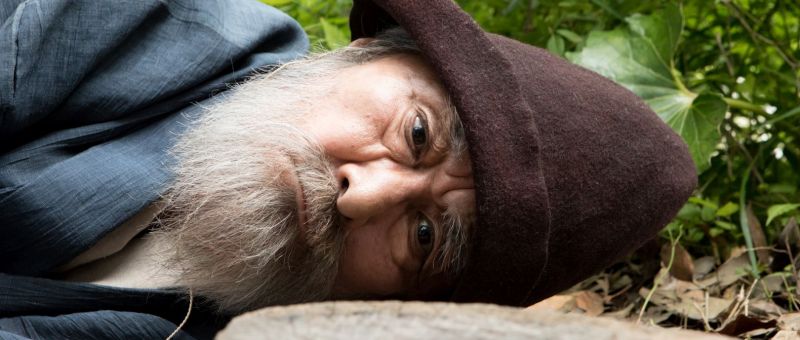
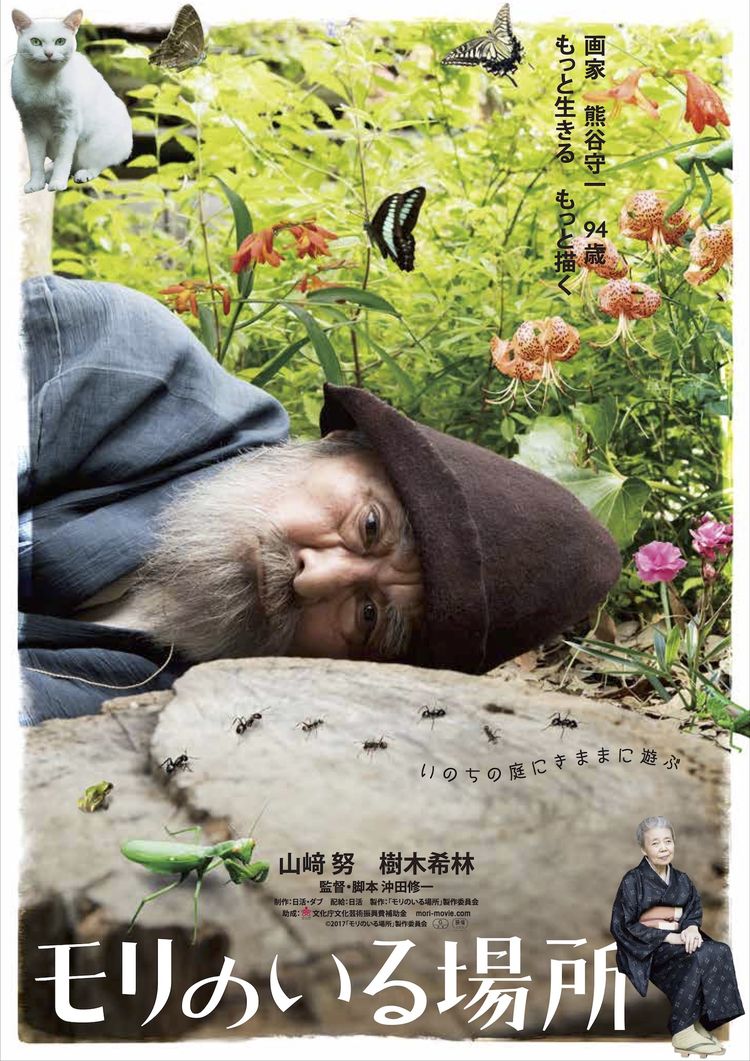
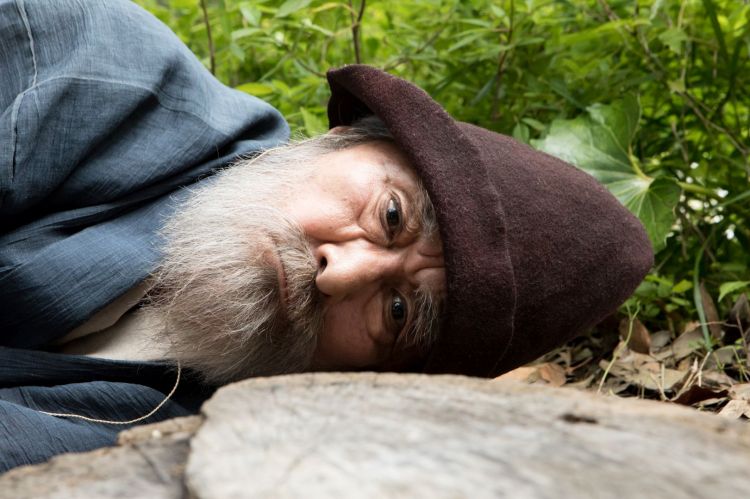
Mori an Artist's Habitat PosterThe world is vast and incomprehensible, but a lifetime’s study may begin to illuminate its hidden depths. At least it’s been that way for the hero of Shuichi Okita’s latest attempt at painting the joys and perils of a bubble existence. Mori, The Artist’s Habitat (モリのいる場所, Mori no Iru Basho) revolves around the real life figure of Morikazu Kumagai (Tsutomu Yamazaki), a well respected Japanese artist best known for his avant-garde depictions of the natural world, as well as for his eccentric personality. When we first meet him the early 1970s, Mori (a neat pun on his given name which uses the character for “protect” but also means “forest”), is 94 years old and has rarely left his beloved garden for the last 30 years. A man out of time, Mori’s world is however threatened by encroaching modernity – a gang of mobbed up property developers is after his land and is already in the process of constructing an apartment block that will rob Mori’s wonderful garden of its rightful sunlight.

Okita introduces us to Mori through an amusing scene which finds the Japanese emperor “admiring” one of his artworks only to turn around in confusion and ask how old the child was that made this painting. Spanning the Meiji and the Showa eras, Mori’s artwork is defined by its bold use of colour and minimalist aesthetic which outlines only the most essential elements of his subjects. As his wife of 52 years, Hideko (Kirin Kiki), explains to the various visitors who turn up at Mori’s studio/home hoping to commission him, Mori only paints what he feels like painting when he feels like painting it. Getting him to do anything else is a losing battle.

Painting mainly at night, Mori spends his days observing the natural world. Wandering around his garden he stops to sit in various places, gazing at the ants, and playing with the fish he put into a small pond dug way down into the earth over a period of 30 years. Despite his distaste for “visitors”, Mori has consented to be the subject of a documentary, followed around by a photojournalist (Ryo Kase) and his assistant (Kaito Yoshimura) keen to capture him in his “natural habitat”. The photographers, natural “shutterbugs”, gaze at Mori in the same way he gazes at his trees and insects. An irony which is not lost on the reticent artist.

Okita neatly symbolises Mori’s world as a place out of time by hovering over his desk on which lies a disassembled pocket watch. Eventually the watch will be repaired and time set back in motion but until now Mori’s garden has been a refuge of natural pleasures which itself contains the world entire. Receiving a surprise visitation from a supernatural being (Hiroshi Mikami), Mori is given an opportunity to explore the universe but turns it down. Firstly he doesn’t want to leave his wife on her own or see her “tired” by his absence, but secondly his garden has always been big enough for him and given thousands of years he fears he may never be able to explore it fully.

The garden, however, may not survive its owner. The 1970s, marked by early turmoil, later became a calm period of rising economic prosperity in which society began to move away from post-war privation towards economic prosperity. Hence our big bad is a property developer set on building apartment blocks – a symbol and symptom of the move away from large multi-generational homes to cramped nuclear family modernity. Unbeknownst to Mori, his garden has become a focal point for the environmental protest movement who have begun to set up signs and slogans around his home attacking the property developers for ruining a national landmark which has important cultural value in appreciating the work of one of Japan’s best known working artists.

Having lived through so much turmoil, Mori takes this in his stride. He knows his garden won’t last forever, and is resigned to the nature of the times. Mori may prefer to spend his days in quiet contemplation resenting the constant interruptions from all his “visitors” but makes time to talk seriously with those who seek his guidance such one of the developers (Munetaka Aoki) who’s brought along one of his son’s drawings, convinced that he must be a “genius”. Mori takes one look and tells him frankly that it’s awful, but adds that that’s a good thing – those with “talent” rarely do anything of note and even if it’s “bad” art is still art. Nevertheless there are those who try to profit from his work for less than altruistic purposes – the  hand-painted nameplate from outside the house is forever being stolen and he’s constantly petitioned to provide his services in service of someone else’s business.

Okita’s characterisation of the later life of a famous artist is another study of genial eccentricity as its hero commits himself fully to living in a way which pleases him, only bristling at those who describe his gnome-like garden presence as resembling a “Chinese Hermit Sage”. Mori himself is, of course, another living thing enjoying the natural world to its fullest and if it’s true that his time is ending there is something inescapably sad in looking up from the shadows of apartment blocks and finding nothing but lifeless concrete.


Screened at the 20th Udine Far East Film Festival. Mori, The Artist’s Habitat will also be screened as the opening gala of the 2018 Nippon Connection Japanese film festival, and will receive its North American premiere at Japan Cuts in July where Kirin Kiki will also receive the 2018 Cut Above Award.

Original trailer (no subtitles)

Everything Goes Wrong (すべてが狂ってる, Seijun Suzuki, 1960)

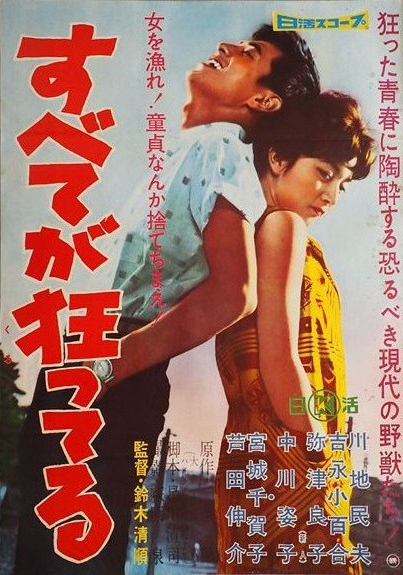
Everything goes wrong posterThe Tokyo of 1960 was one defined by unrest as the biggest protests in history filled the streets urging the government to rethink the renewal of the security treaty Japan had signed with America after the war in order to provide military support in the absence of a standing army. Yet the protests themselves are perhaps an indication of the extent to which the nation was already recovering. With the Olympics just four years away, post-war privation had been replaced by a rapidly expanding economy, dynamic global outlook, and increased possibilities for the young who enjoyed both greater personal freedom than their parents’ generation and a kind of optimism unthinkable merely ten years previously. Nevertheless, this sense of the new, of unchecked potential was itself disorientating and had, as some saw it, led to a moral decline in which youth aimlessly idled its time away on self indulgent pleasures – namely drink, drugs, promiscuous sex and American jazz.

This dark side of youth had become a talking point thanks to a series of notorious “Sun Tribe” movies produced by the youth-orientated Nikkatsu studios. The films were so controversial the studio was eventually forced to stop making them, but all they really did was tone down the shock factor to one of mild outrage. Seijun Suzuki, picking up the Sun Tribe mantle, goes further than most in Everything Goes Wrong (すべてが狂ってる, Subete ga Kurutteru), painting post-war malaise as a tragedy of generational disconnection as the chastened wartime generation, accepting their role in history, watch their children hurtle headlong down another alleyway of self destruction but are ultimately unable to save them.

Our “hero”, Jiro (Tamio Kawaji), is as someone later poignantly puts it, “a nice boy”. A student, he spends his spare time on the fringes of gang of petty delinquents who get their kicks freaking squares, engaging in acts of casual prostitution, and enacting non-violent muggings. Jiro’s main problem in life is his fierce attachment to his single-mother, Masayo (Tomoko Naraoka). After Jiro’s father was killed in the war (apparently run over by a Japanese tank), Masayo became involved with a married man who has been supporting herself and Jiro for the last ten years. Young enough to have an almost completely black and white approach to moral justice, Jiro cannot stomach this fact and accuses his mother of being a virtual prostitute, accepting money for sex without love.

Jiro repeatedly accuses the older generation of hypocrisy, that they lie about their true feelings and motivations whilst denying their responsibility for the war which took his father’s life. Yet, Nambara (Shinsuke Ashida), his mother’s lover, is a kind and honest man who answers every question put to him honestly and with fierce moral integrity. He admits his responsibility for the folly of war – something he feels keenly seeing as he is a weapons engineer by trade, but rejects Jiro’s characterisation of his relationship with Masayo as something essentially immoral. His justifications are perhaps, as Jiro puts it, “philanderer’s clichés”, but that doesn’t mean they aren’t true. Nambara, as a young man, entered into an arranged marriage with the daughter of a now deceased general. The marriage is loveless and emotionally dead, but Nambara is an earnest person and will honour the commitment he made to his first wife even if it brings him personal pain. Masayo has always known this and even if he cannot legally marry her, Nambara has given her his heart and will also honour that commitment in continuing to try and make her son see that he is not the enemy, just another man who loves his mother.

There is something quite ironic in Jiro’s strangely conservative moral universe which rejects the “impure” nature of his mother’s romance, while the older generation are better positioned to understand that things are never as simple as they seem. Jiro is rigid and unforgiving where his parents are flexible and empathetic. He rejects his mother for being a “whore” but throws money at a girl who is in love with him because he thinks that’s what women “want”. Unable to accept her emotional needs, he thinks of her as a prostitute and thereby abnegates his responsibility – the exact opposite of the “goodness” Nambara displays in offering financial support for a woman he loves which (in his eyes) has no particular strings and is given only with the intention of making her life easier.

Jiro, infected both by mother and madonna/whore complexes, is profoundly disturbed when another young woman tries to point out that aside from being his mother Masayo is also a woman with normal human needs both emotional and physical. Following his botched attempt to blacken Nambara in her eyes, he drags his mother to a breezy youth fuelled beach party where he throws her into a tent full of lithe young male bodies and tells her to have her fill. Nambara, still determined to talk Jiro around, laments to Masayo that they never had the opportunity to experience the kind of freedom that these youngsters feel themselves entitled to. If only they were not so trapped by the social codes of their era, they might have been happy. Yet these youngsters, with everything in front of them, are anything but – determined to destroy themselves in nihilistic confusion, caught in a moment of flux when nothing is certain and everything is possible.

At the film’s conclusion, a cynical journalist remarks to a sympathetic mama-san that “today, goodwill between people can’t exist anywhere, everything has gone wrong”. Jiro’s tragic fate is that he, like many “nice” kids like him, cannot reconcile himself to the moral greyness of the post-war world in which the “heroic sacrifice” of their parents’ is hypocritically held up as wholesome entertainment. Unable to accept the love and kindness of Nambara who only wants to act as a father to him and continues to believe that “one day he will understand” even after Jiro has hurt him deeply both emotionally and physically, Jiro has only one direction in which to turn.

Suzuki weaves Jiro’s tale around that of his friends – the unhappy delinquents and the struggling workers, women used by men who promise them love but reject their responsibilities, women who think they have to trade something to win love which ought to be freely given, and the older generation who can do nothing more than look on with sadness as youth destroys itself. Suzuki’s sympathies lie with everyone, but more than most with the Nambaras of the world who are desperately trying to fix what was broken but find that in a world that’s already gone crazy kindness is met with suspicion while money, corrupting true emotional connection, has become the only arbiter of bitter truths.


Nippon Connection 2018 to Open with Mori, The Artist’s Habitat

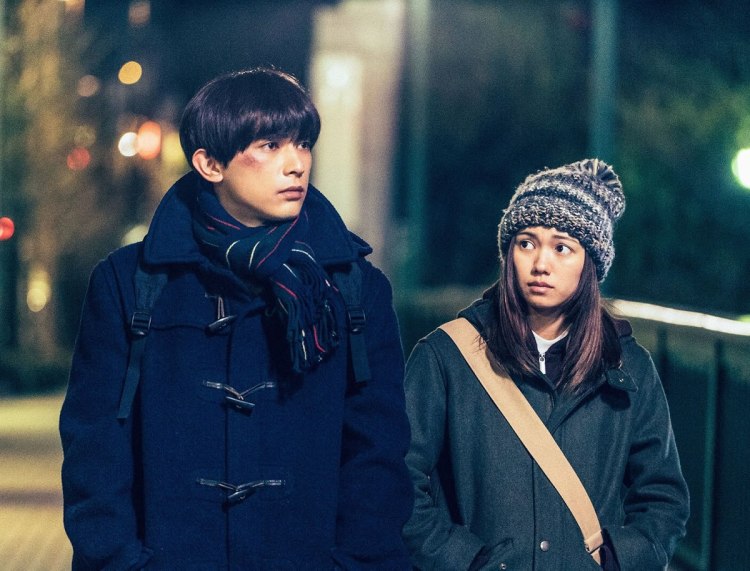
39415762940_128b534524_oNippon Connection, the largest showcase for Japanese cinema anywhere in the world, returns with over 100 brand new and classic films screening in Frankfurt from 29th May to 3rd June. The festival will open with the latest from Shuichi Okita, Mori: The Artist’s Habitat, and pay tribute to guest of honour Shinobu Terajima with screenings of Oh Lucy!, The City of Betrayal, and Dear Etranger, plus a special presentation of Ryuichi Hiroki’s Vibrator. The programme in full:

Nippon Cinema

River's edge still 1

  • Bamy – school friends reunite after many years, but their burgeoning romance is frustrated by a dark secret – the ability to see ghosts!
  • Birds Without Names – A young woman lives with an older man for reasons of convenience while continuing to pine for the violent boyfriend who has been missing for the last eight years in Kazuya Shiraishi’s dark romance. Review.
  • The Blood of Wolves – Koji Yakusho stars as a rogue cop trying to keep a lid on a yakuza gang war as Kazuya Shirashi updates Battles Without Honour for the bubble era. Review.
  • The City of Betrayal – an unhappy housewife and a depressed young man begin an unwise affair in Daisuke Miura’s romantic drama – with award presentation for guest of honour Shinobu Terajima. Review.
  • Dear Etranger – Tadanobu Asano stars as a “batsuichi” step-father encountering unexpected resistance from the elder of his second wife’s two daughters as the new couple expect their first child.
  • Destiny: The Tale of Kamakura – Mystery author Masakazu wakes up one morning to discover his wife has disappeared in the legendary city of Kamakura where humans and spiritual creatures co-exist.
  • Enokida Trading Post – Kiyohiko Shibukawa stars in this small town comedy in which a young man returns home from Tokyo to start afresh.
  • Flower and Sword – Samurai flower arranging!
  • Foreboding – Kiyoshi Kurosawa presages the apocalypse in this companion piece to Before We Vanish. Review.
  • Hanagatami – Nobuhiko Obayashi completes a personal passion project in examining youth on the brink of war.
  • Moon and Thunder – Yasuko, a young woman living alone, is prompted into a reevaluation of her life after her family unexpectedly descend on her home.
  • Mori: The Artist’s Habitat – Shuichi Okita returns with another portrait of an eccentric in the serene and sometimes surreal life of artist Mori Kumagai. Opening Night Gala.
  • Occult Bolshevism – A seance in an abandoned factory provokes malicious results in this horror feature from Ring scriptwriter Hiroshi Takahashi.
  • Oh Lucy! – a middle-aged office lady gets a new lease on life after an eccentric English teacher gives her a blonde wig and rechristens her “Lucy”. Review.
  • Outrage Coda – Takashi Miike closes out the Outrage trilogy.
  • Pumpkin and Mayonnaise – Tsuchida works as a hostess to support her aspiring musician boyfriend but her life is derailed when he finds out about the nature of her work while the resurfacing of an ex-lover also awakens long buried feelings.
  • Recall – A corporate scandal is exposed when an innocent woman is killed by a tire flying off a truck.
  • River’s Edge – A gay student bullied by his classmates discovers a dead body near a polluted river and shows it to his best friend in Isao Yukisada’s adaptation of the classic ’90s manga.
  • Blue Film Woman – a young woman attempts to blackmail the corrupt banker responsible for the deaths of her parents in Ken Mukai’s pink film from 1969.
  • Vibrator – a 30-something freelance writer embarks on a journey of self discovery after a chance meeting with a truck driver in Ryuichi Hiroki’s 2003 adaptation of Mari Akasaka’s novel
  • The Third Murder – Hirokazu Koreeda puts justice on trial in a tense courtroom drama in which a once convicted murderer pleads guilty to a second crime while his cynical lawyer becomes ever more uncertain his client is telling the truth. Review.
  • Tremble All You Want – a painfully shy woman with a long standing unrequited crush on a high school classmate reaches a crisis point when a bashful colleague confesses his love for her. Review.
  • We Are – coming of age story in which seven friends part ways after high school some heading to Tokyo some staying behind but their paths always crossing.

Nippon Visions

wilderness still 2

  • Breath of Rokkasho – childhood friends and former political activists are forced to question their ideals.
  • Cyclops – A man wrongfully incarcerated for the murder of his wife decides to look for the real killer alongside the policeman riddled with regret that he helped frame an innocent man.
  • The Hungry Lion – When a teacher is arrested for an inappropriate relationship with a minor, a video circulates online depicting him with another girl. As the girl rumoured to be on the tape, Hiromi’s life spirals out of control.
  • Ice Cream and the Sound of Raindrops – Shot in one 74 minute continuous take, Daigo Matsui’s drama follows six teens auditioning for a local theatre production.
  • The Name – A depressed former salaryman leading a series of double lives is given a sense of new possibilities by the appearance of a mysterious high school girl. Review.
  • The Night I Swam – A sleepy little boy goes on a snowy adventure in this magical, dialogue free odyssey. Review.
  • Noise – A stabbing spree in Akihabara continues to reverberate 10 years later in Yusaku Matsumoto’s debut feature. Review.
  • One Cut of the Dead – Real zombies invade the set of a horror movie in Shinichiro Ueda’s hilarious behind the scenes farce. Review.
  • Party ‘Round the Globe – Hirobumi Watanabe returns with another deadpan classic in which he stars as a lonely man on a roadtrip with a neighbour.
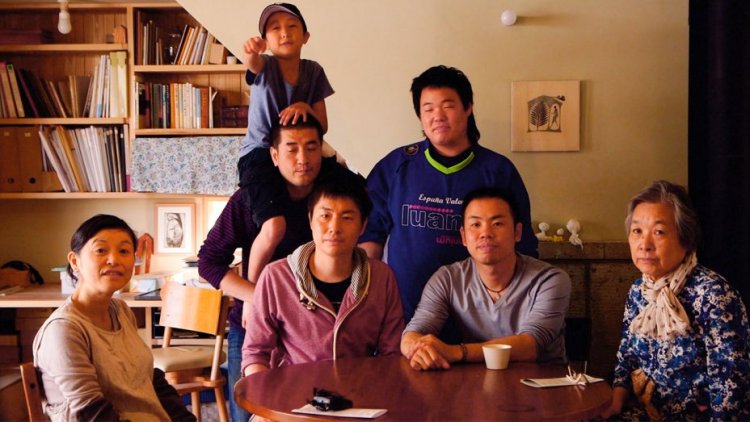
  • Passage of Life – an undocumented Burmese family living in Tokyo face intense pressure because of their precarious status.
  • Strange Fruit: Shorts – three short films by Kohei Nakayama, Noriko Yuasa, and Tetsuhiko Tsuchiya.
  • Topknot Detective – Australian mockumentary examining the creation of the titular TV series.
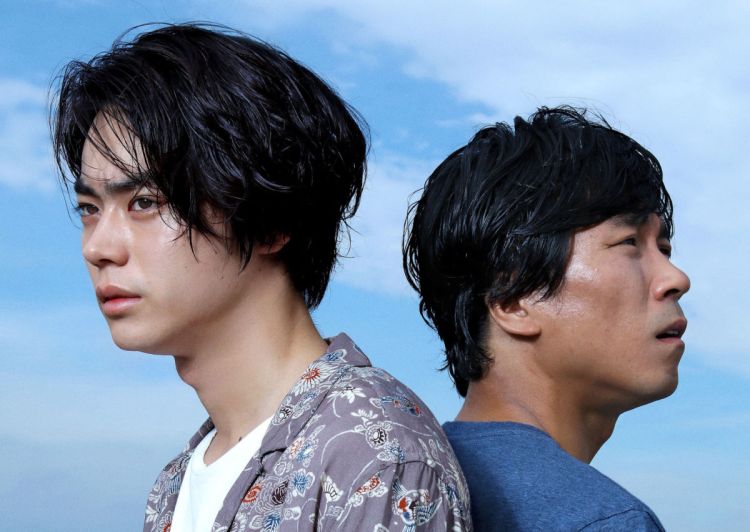
  • Wilderness – two men bond in the boxing ring in Yoshiyuki Kishi’s adaptation of the novel by Shuji Terayama.

Nippon Animation

The night is short still

Nippon Docs

Of love and law still 1

  • Danchi Woman – Akiko Sugimoto follows an 85-year-old woman who has been living in a danchi for over 30 years only to face upheaval when the estate is scheduled for demolition.
  • Exclusive Screening by NHK World-Japan – showcase of three NHK docs featuring traditional subjects including tea ceremony and ninjas, plus the docudrama following the life of Hokusai’s daughter Oei starring Aoi Miyazaki and Ryuhei Matsuda.
  • A Free Man – Andreas Hartmann follows a young man wilfully living on the streets to pursue a life of freedom.
  • Inland Sea – Kazuhiro Soda explores a traditional fishing village slowly dying out due to depopulation.
  • Japan Institute of the Moving Image: Short Docs – two documentary shorts focussing on the 2008 Akihabara attack and a young man who wanders the streets doing odd jobs.
  • Love and Walbachia – Sayaka Ono considers the interplay between love and gender.
  • Of Love and Law – Hikaru Toda reunites with Kazu and Fumi as they fight tirelessly to win recognition for those underrepresented in Japan’s conformist society. Review.
  • Ramen Heads – Koki Shigeno follows ramen chef Osamu Tomita.
  • Trace of Breath – Haruka Komori captures the life around a small garden centre in a town which was heavily affected by the 2011 earthquake and tsunami.
  • Zen and Bones – Takayuki Nakamura tells the amazing story behind Japanese/American monk  Henry Mittwer.

Nippon Retro

samurai rebellion still 2

  • Kiru – Also known as Destiny’s Son, Kenji Misumi’s Kiru is the story of a young boy who trains to become a skilled swordsman and then sets out on a journey to learn the secrets of his past.
  • On the Road Forever – sequel to Kiru in which the hero tracks down a man who may have been involved with the death of his father.
  • Red Peony Gambles Her Life – first instalment in the Red Peony series in which Junko Fuji plays female gambler Oryu.
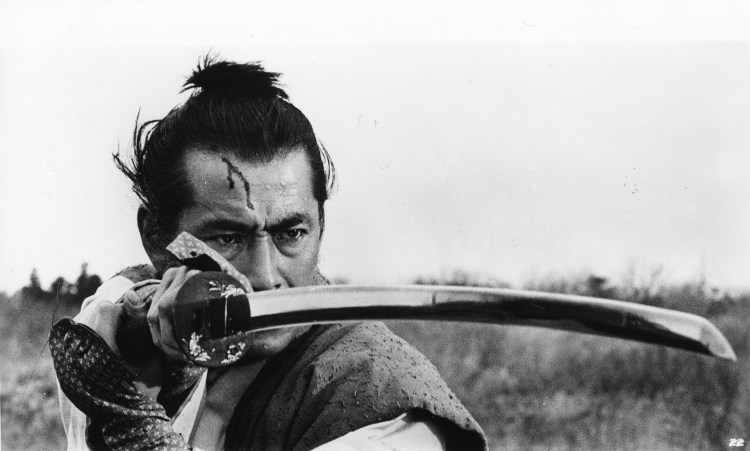
  • Samurai Rebellion – a model samurai (Toshiro Mifune) decides he’s had enough of feudalism when his son is force married to the lord’s cast off only to have her called back once he’s fallen in love with her in Masaki Kobayashi’s enraged drama. Review.
  • Sanjuro – sequel to Yojimbo in which Mifune reassumes the role of the wandering hero to fight corruption.
  • Kurama Tengu – Screening of the 1928 silent film with benshi accompaniment. German subtitles only.
  • Sword of Doom – Tatsuya Nakadai stars as Kihachi Okamoto’s nihilistic swordsman.
  • Thirteen Assassins – remade by Takashi Miike in 2010, 13 Assassins follows the plot to take down a corrupt lord who raped a woman and murdered her husband but got away with it because of his connections.
  • Yojimbo – Kurosawa’s classic in which wandering ronin Sanjuro comes to the rescue of a town caught up in a gang war.

Nippon Connection takes place in Frankfurt, Germany from 29th May to 3rd June. Tickets are already on sale via the official website where you can also find full details on all the films as well as timetabling information. Unless otherwise stated, films screen in Japanese with English subtitles. In addition to the films the festival will also host a series of events including director talks and workshops in a rich cultural programme. You can keep up with all the latest information by following the festival on Facebook, Twitter, YouTube, Flickr, and Instagram.